
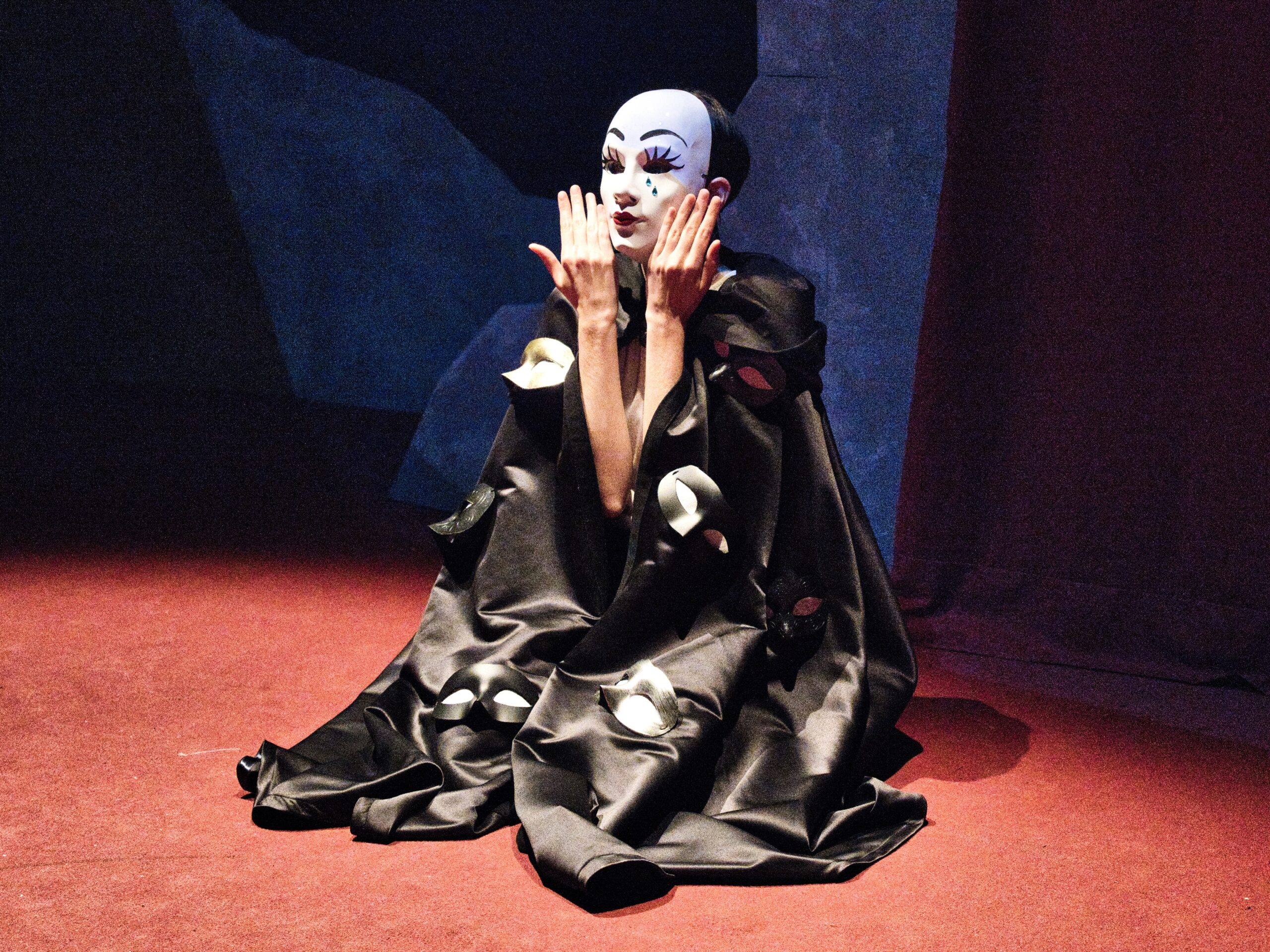
Who is Claude Cahun? – Southwark Playhouse Borough, London
A promising concept, Who is Claude Cahun? does a lot more explaining than it does exploration of a complex, compelling identity.
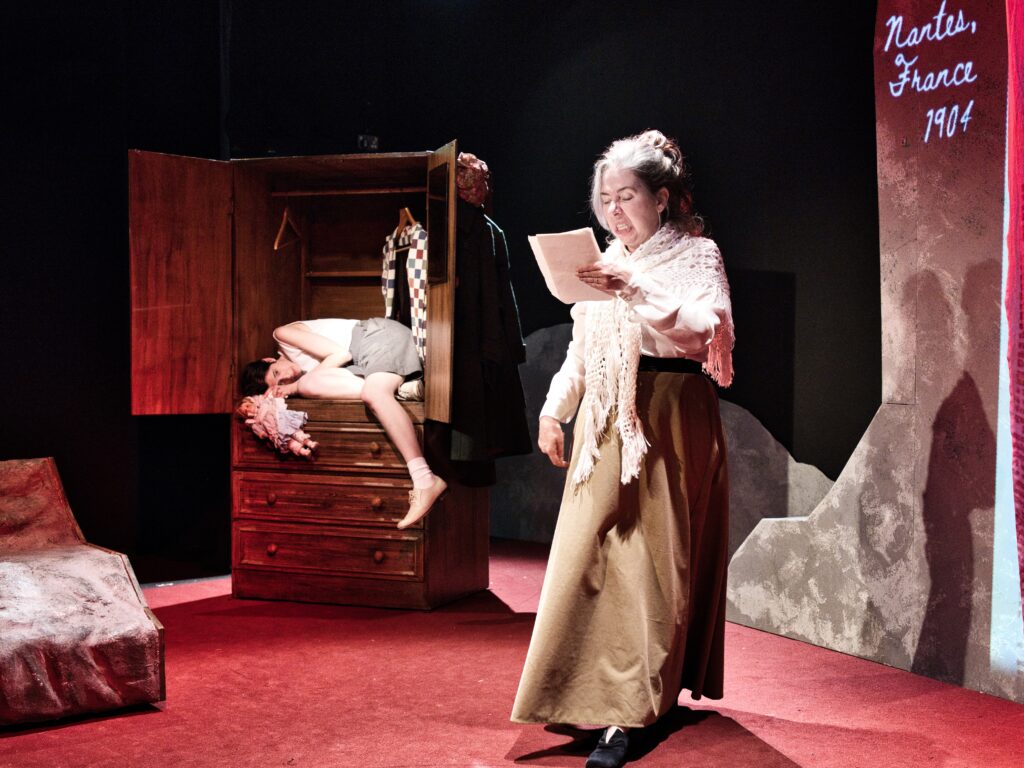
Who is Claude Cahun?
Well, to start off with, I’ve seen the play now and I’m still not sure I know the answer to this question. Or at least not more than I did before. Because Claude Cahun is discussed in relation to this play as a chronically overlooked figure, but I knew them before this as they often pop up in exhibitions about early 20th century avant-garde and Surrealist art. And yes, I’m using they/them pronouns, and not anachronistically. Although we have much better language to express gender identity today than anyone did 100 years ago, there’s good evidence that Cahun thought of themselves as existing outside of a male/female binary.
To give the facts, in case you don’t frequent as many art exhibitions as I do (which is too many, so I don’t recommend it), Claude Cahun was born Lucy Schwob, in Nantes in 1894. They grew up in a literary Jewish family, marked by early experiences of their mother’s mental illness, and anti-Semitism at school in France that caused them to move to a school in Surrey instead. In the Paris of the 1920s they met their life partner Suzanne Malherbe, who later adopted the pseudonym Marcel Moore. Cahun produced striking work as an artist, particularly in photography, blurring lines of gender, identity and performance. They often collaborated with Moore in art as in life.
In 1937 the pair settled in Jersey, becoming active in resistance and propaganda activities after the Nazi occupation in 1940. They were arrested and sentenced to death, but the sentence was never carried out and Cahun died in 1954. Moore died in 1972.
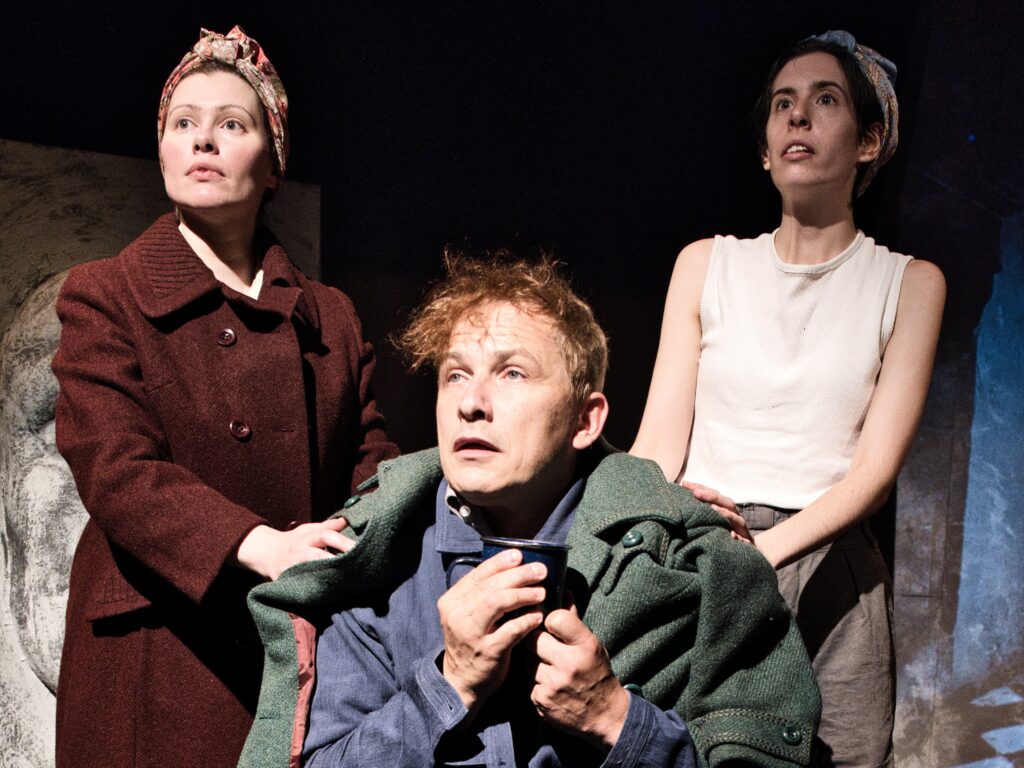
What Did Claude Cahun Do During The War?
So there we go. A fair amount of exposition, albeit high level, and it didn’t take me over two hours to go through it. Not so Who is Claude Cahun? by D.R. Hill. The play is very exposition-heavy. Scenes and flashbacks are all fixed in time and place as part of the projections (Jeffrey Choy). Rivkah Bunker plays Cahun, with Amelia Armande as Moore, and Sharon Drain, Ben Bela Böhm and Gethin Alderman inhabiting various additional characters. It alternates between fairly naturalistic style and a sort of Brechtian, Surrealist non-naturalism, for instance whenever the inexplicably horny André Breton and Georges Bataille appear. I didn’t mind the switches in style, but I did find that minor characters tended to be a bit one-dimensional: kooky Surrealists, orderly Germans, and so on.
And as for Cahun and Moore, they spent a lot of time doing things, or paying lip service to questions of identity, rather than exploring them. What Did Claude Cahun Do During the War? is a question we do get the answer to, moreso than who Claude Cahun was. Even the incorporation of Moore and Cahun’s photographs fails to get beneath the surface. As a device I liked the projection of photographs, some were very clever (like the bus!) and it did lend a Surrealist air to proceedings. But restaging well-known photographs of Cahun taken by Moore doesn’t lend those missing insights into who they were.
I don’t know what I think would work better, short of a good look at/serious trim of the text (a screaming match about the Dreyfus Affair is a scene I would reconsider, for instance). It’s an idea that should work. A play I was really looking forward to, in fact. But it doesn’t quite land. I liked the set (Juliette Demoulin), the lighting (Matthew Biss), and the period costumes (Carla Joy Evans). A little more chemistry between Claude and Marcel may also have helped. Or a little more connection between main protagonists and audience. But still, I wonder after all this, who were Claude Cahun and Marcel Moore?
Salterton Arts Review’s rating: 2.5/5
Who Is Claude Cahun? on until 12 July 2025. More info and tickets here.
Trending
If you see this after your page is loaded completely, leafletJS files are missing.