
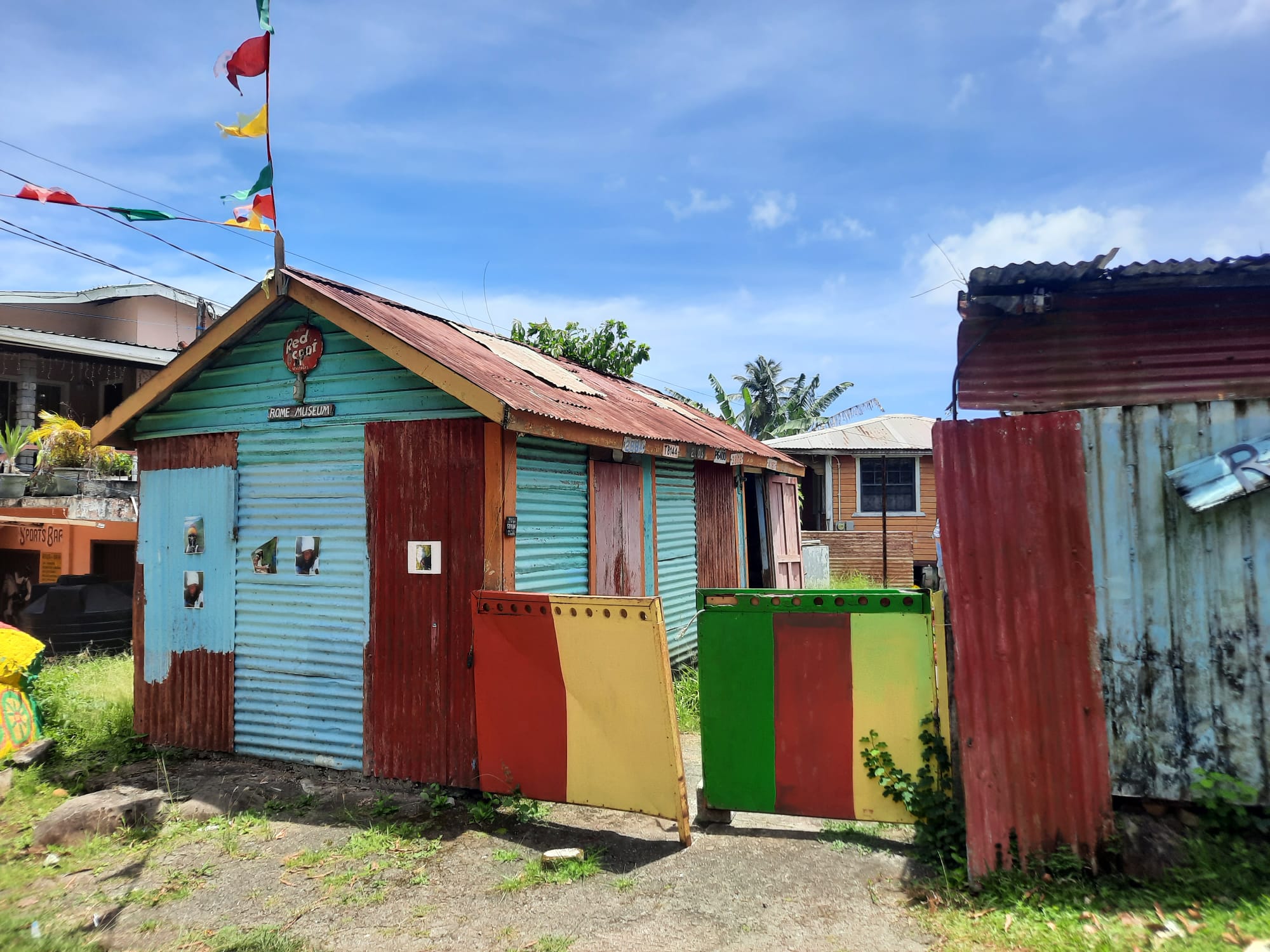
Rome Museum, Grenada
Finishing up today in Grenada, we visit a very special spot in Rome Museum, a private labour of love and memory store for a community which has seen rapid change.
Rome Museum
In some ways, I have saved the best for last. This is my fourth post about Grenada. I introduced the tri-island state here, with some ideas for combining relaxation and cultural activities. Then we visited the Grenada National Museum, followed by the Grenada Nutmeg Museum. But today we visit a museum that wasn’t even on my radar before arriving in Grenada, and yet ended up being a highlight.
I found out about it because I was being characteristically thorough. I had been a little disappointed to learn the Carriacou Museum was closed due to hurricane damage last year. So I thought I would take a look and check there weren’t any more museums I should visit instead during my stay. And on this website, I found an entry for Rome Museum. As an aside I also found the House of Chocolate Museum in St George’s. I did visit, but am unable to describe it as anything other than a shop. So much for that.
But Rome Museum was intriguing to say the least. There was no more than a tempting glimpse on the Grenada Museums website, but I found more of a description here:
“Though small, Rome’s Museum is packed with big personality and invites you to take look back at what life was like in Grenada decades ago. Proudly curated by Joseph Rome, the rustic museum located in St. Andrew is full of Grenadian relics, from dated kitchen items to tools and everyday household items. See how Grenadians baked bread and pastries in mud ovens or marvel at handmade juice extractors, husk hairbrushes, irons you fill with charcoal and stoves and a fridge powered by kerosene. Open weekly Monday to Friday from 9am to 4pm, Mr. Rome expertly entertains with full demonstrations of how the items were used and takes pleasure in encouraging you to try them yourselves.”
Rome Museum – Grenada Tourism Authority
But how to get there? The village it’s located in is not on the tourist trail, or even bus routes. And the Urban Geographer and I didn’t hire a car while we were there. But there’s always a way to figure things out in Grenada. We hired a driver for a day (my birthday, in fact – niche museums is exactly how I like to spend the day), so we could visit a few places we couldn’t get to alone. On that note I highly recommend both River Antoine Rum Distillery and Belmont Estate as well. And by including a run down to Grenville and then a short diversion inland, we would be able to include Rome Museum on our itinerary! And so we were on our way!
Locating Rome Museum, and a Small Setback
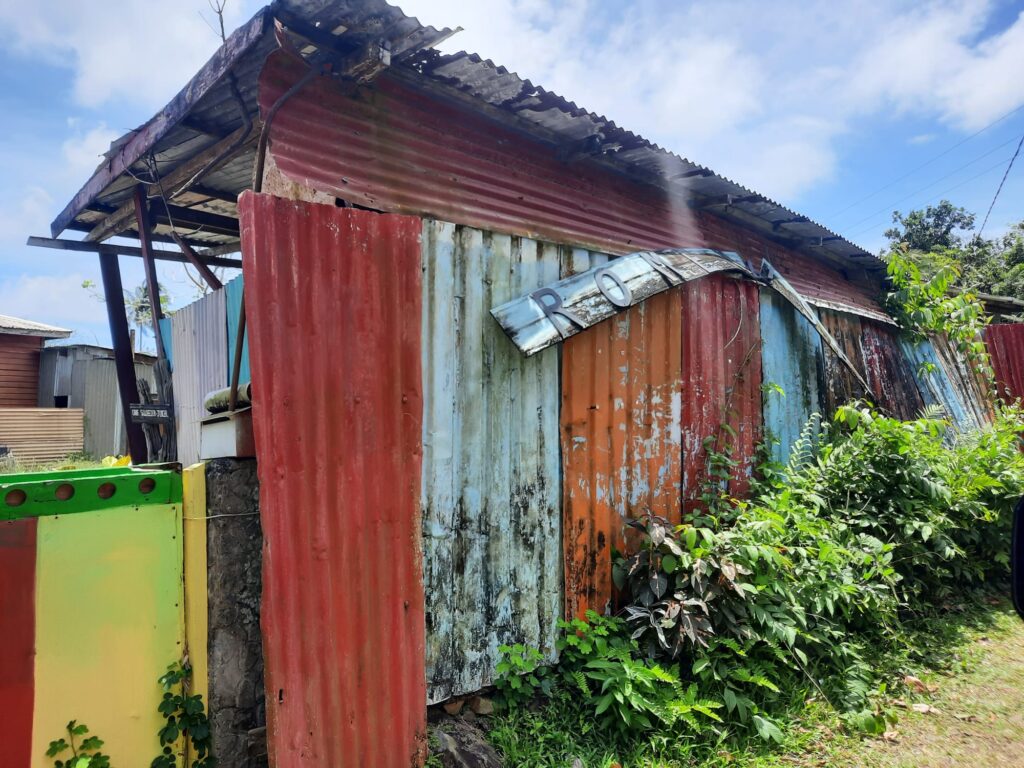
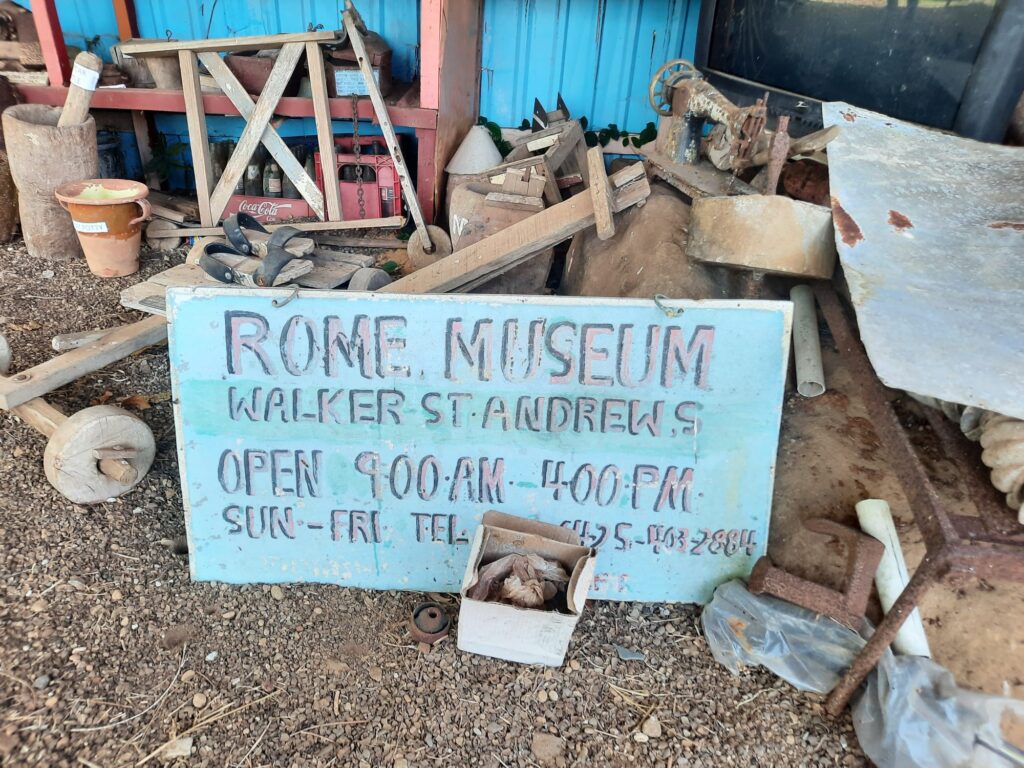
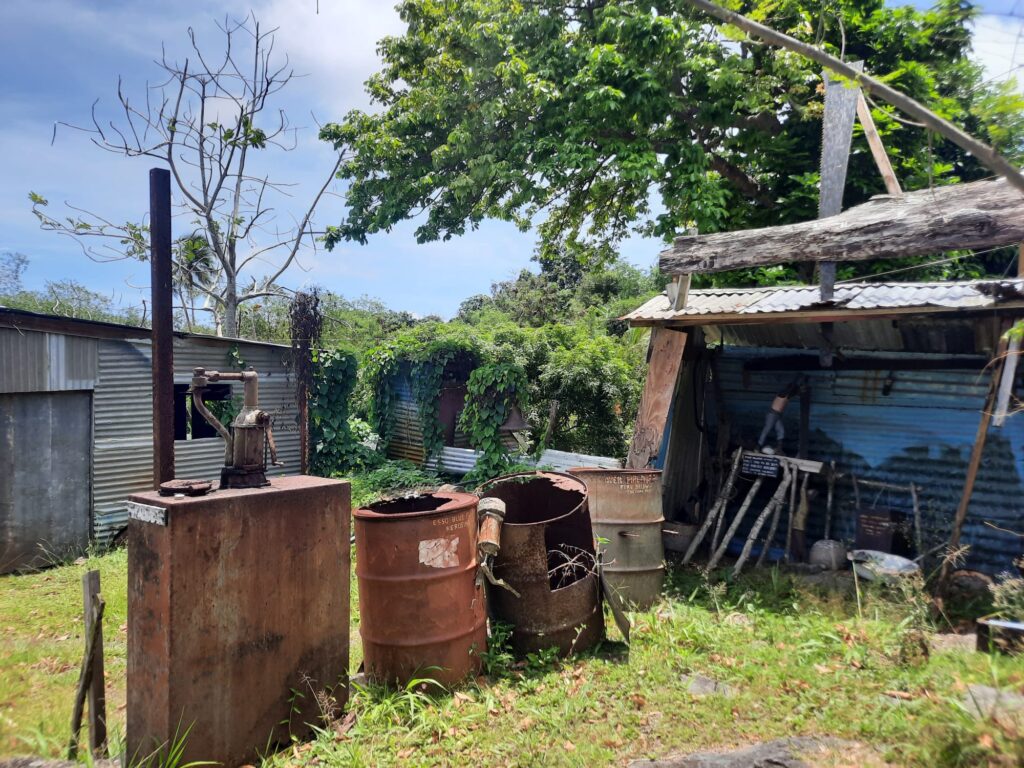
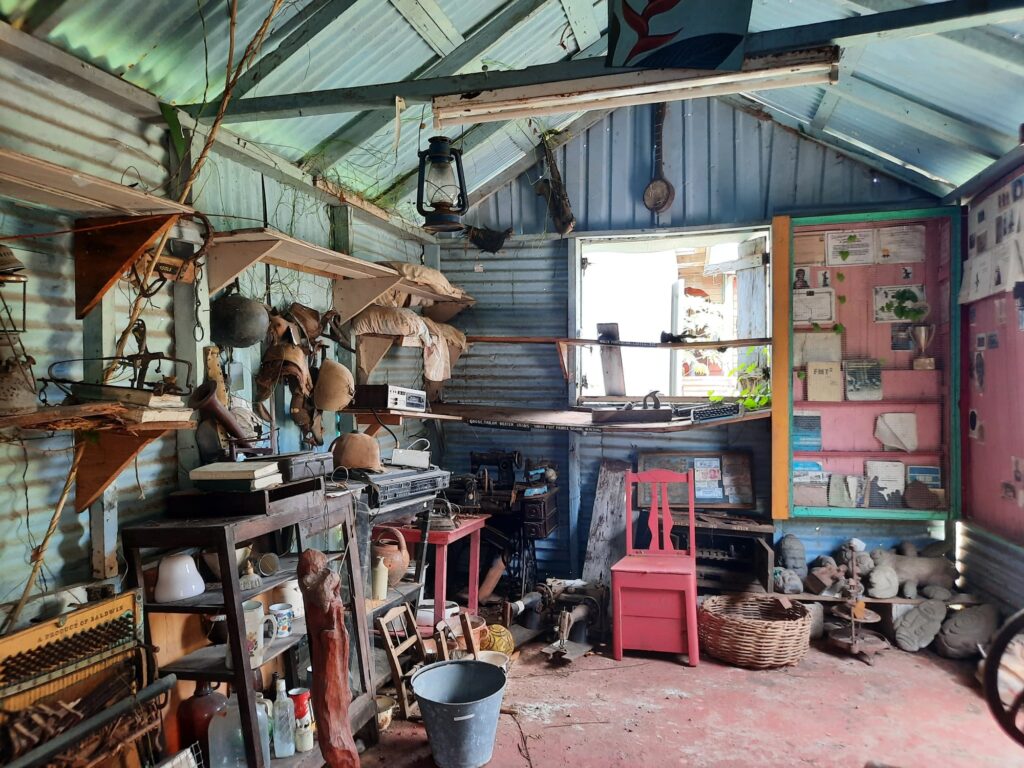
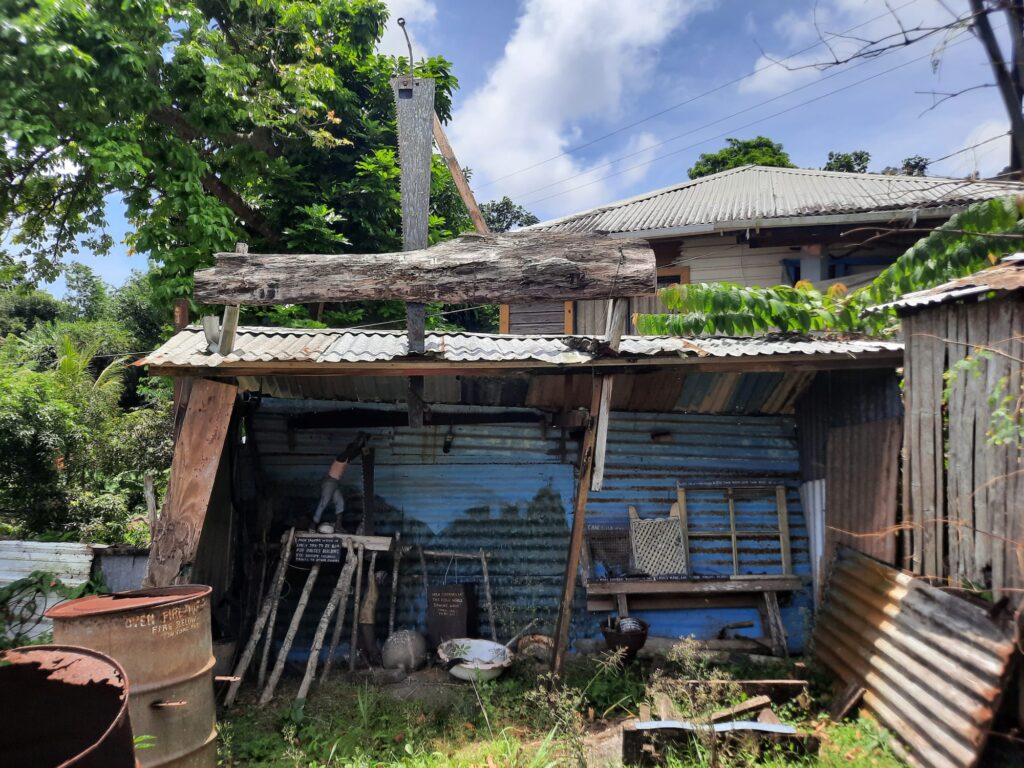
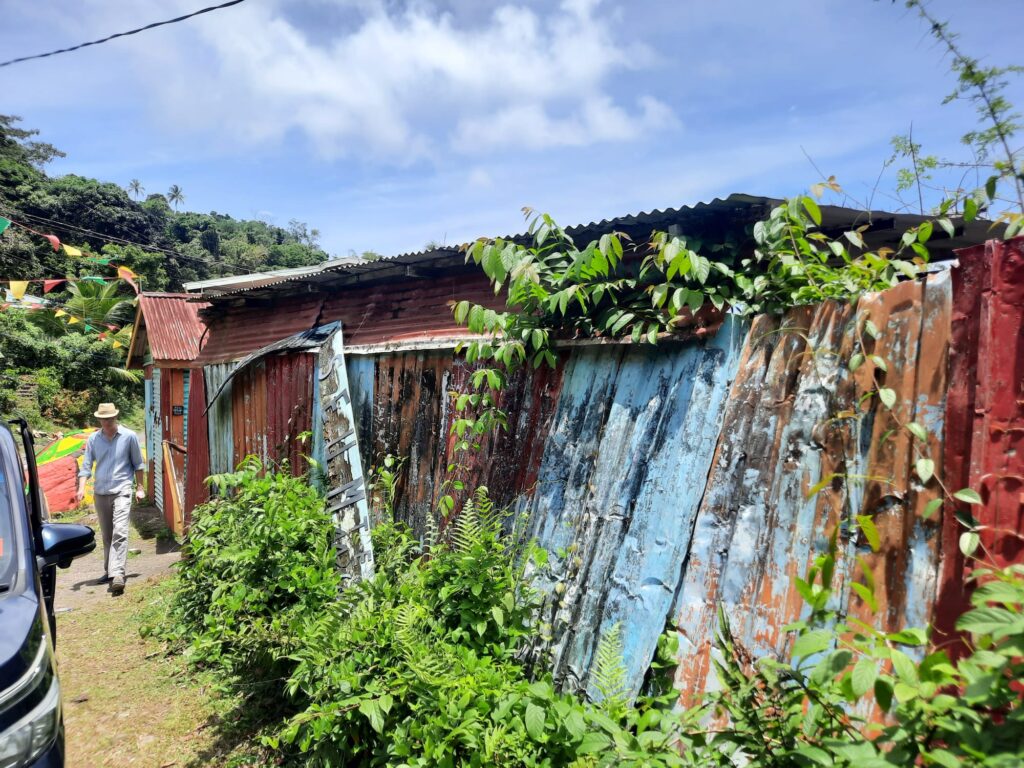
The first job was to find Rome Museum. We could find it on Google Maps, but our driver hadn’t ever been to the villages in the area. But Grenada is a friendly place, so we found our way by getting close enough and then asking for directions to “the museum”. As you can see from a few of the images, once you arrive the bold colours tell you you’re in the right place.
But then we had a setback. We came during the posted opening hours. But a museum such as this isn’t quite going to play by the rules. Life intervenes. The museum didn’t seem open. Again, the community came to the rescue. Someone went to Mr. Rome’s house to announce visitors were here, and out popped… not Mr. Rome, but his sister. Mr. Rome, it transpired, had an appointment and wouldn’t be back for a while. Thankfully, though, we had a willing guide to show us around. Not quite the tour described in the quote above, but unique and informative nonetheless.
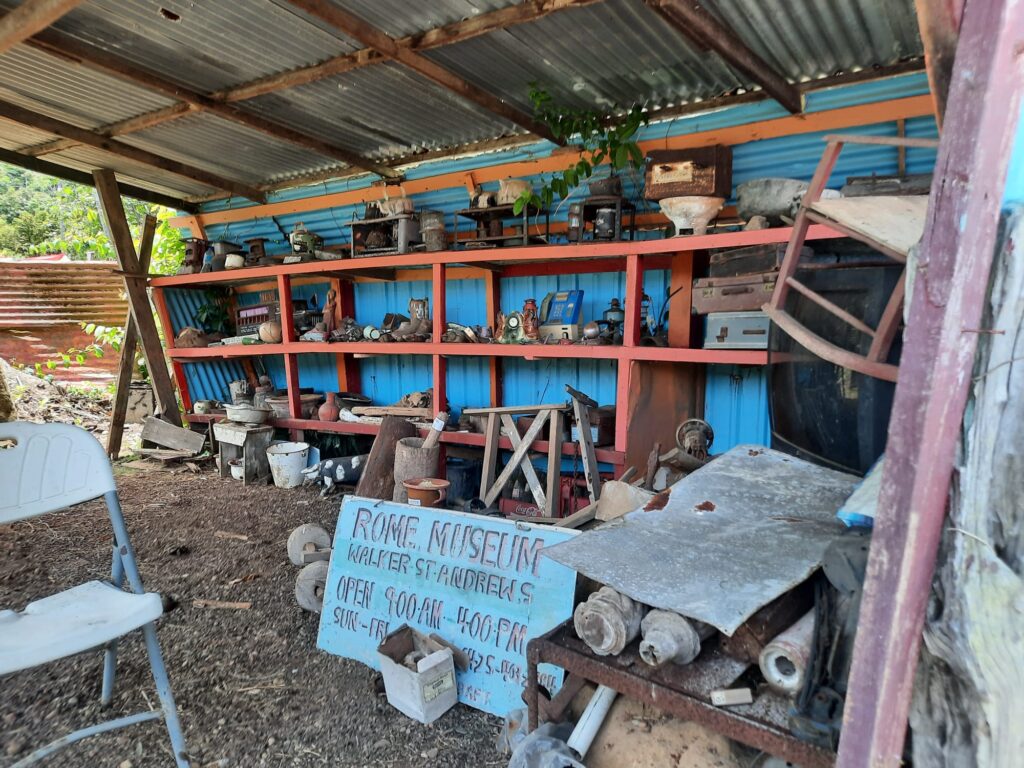
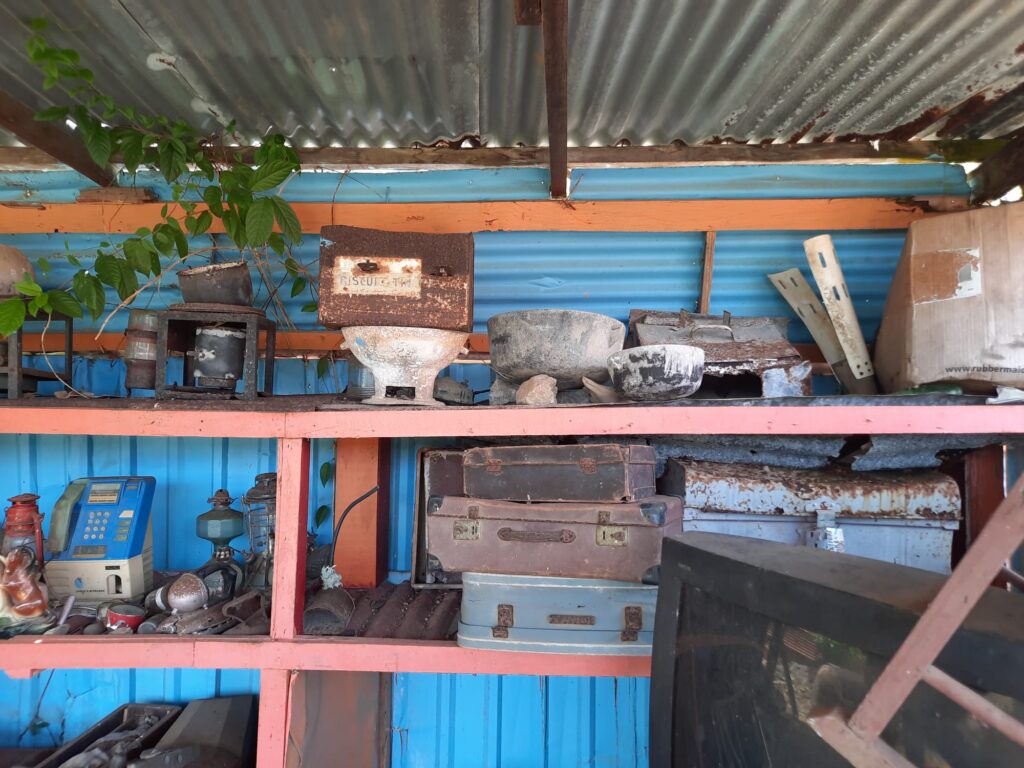
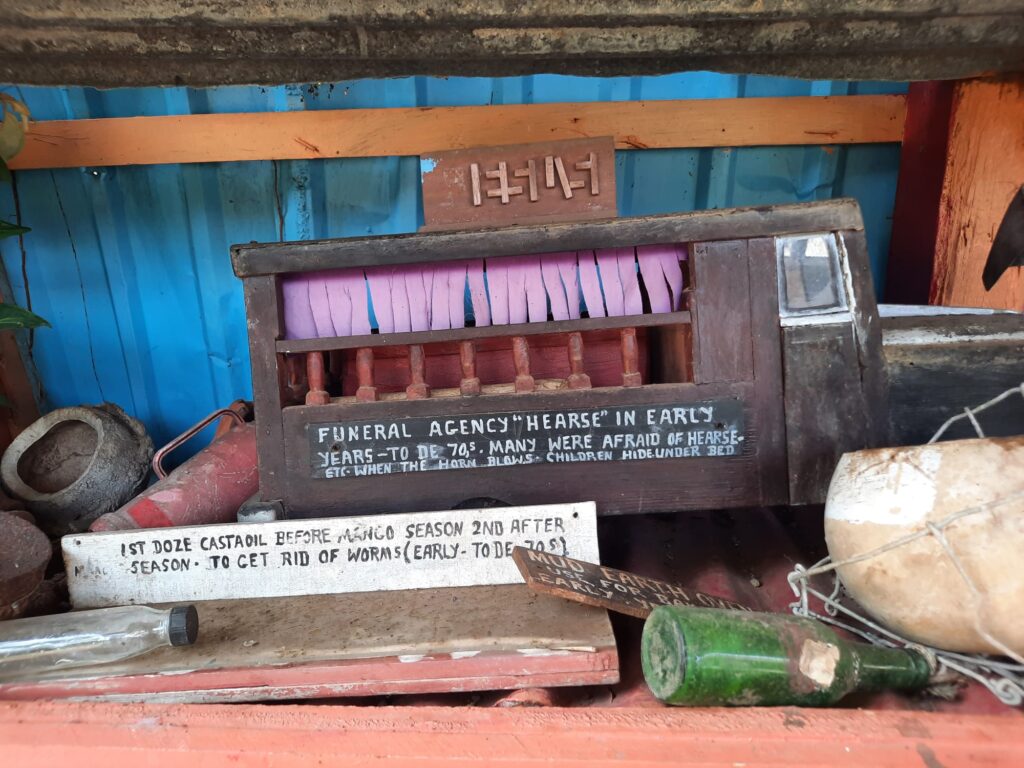
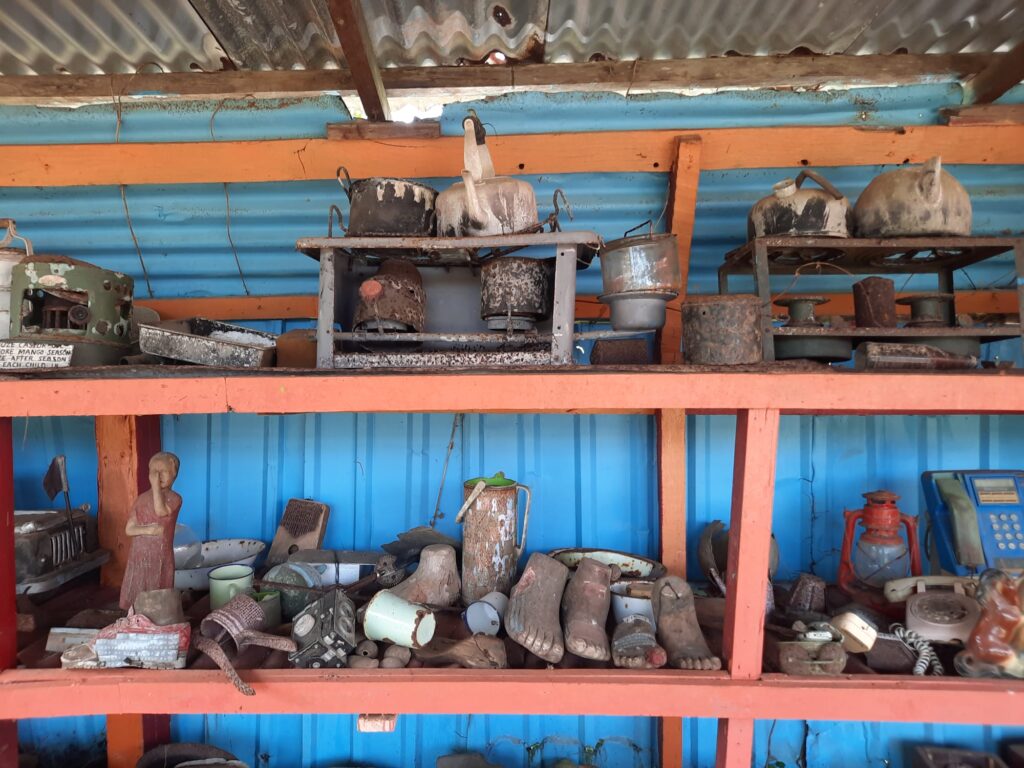
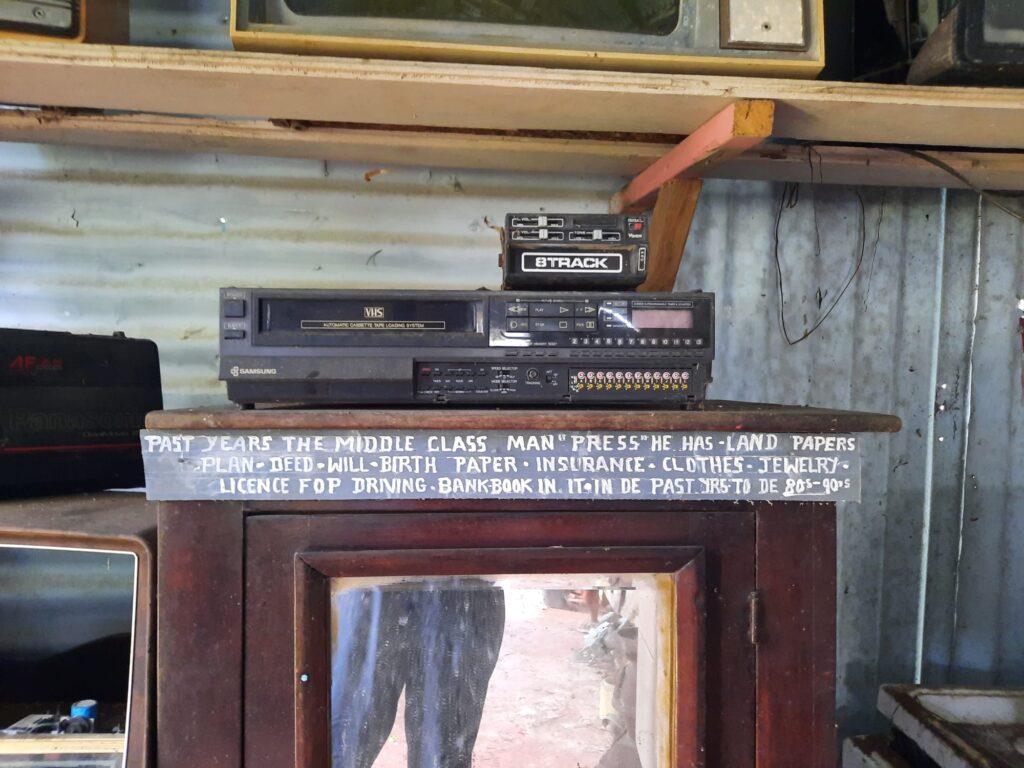
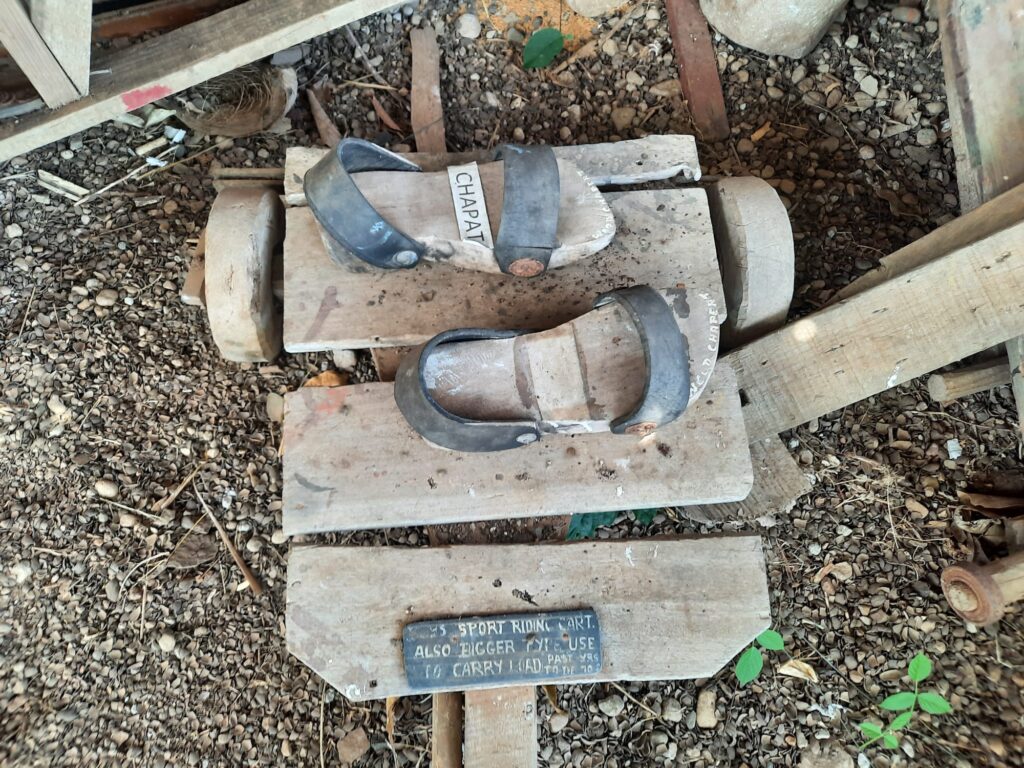
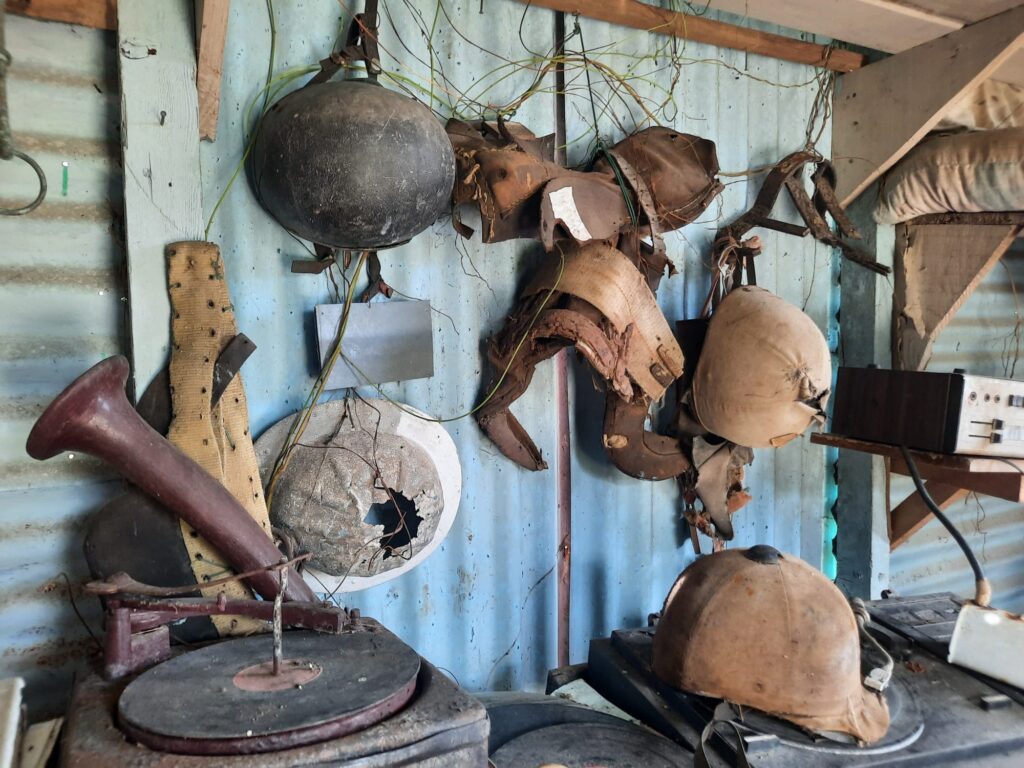
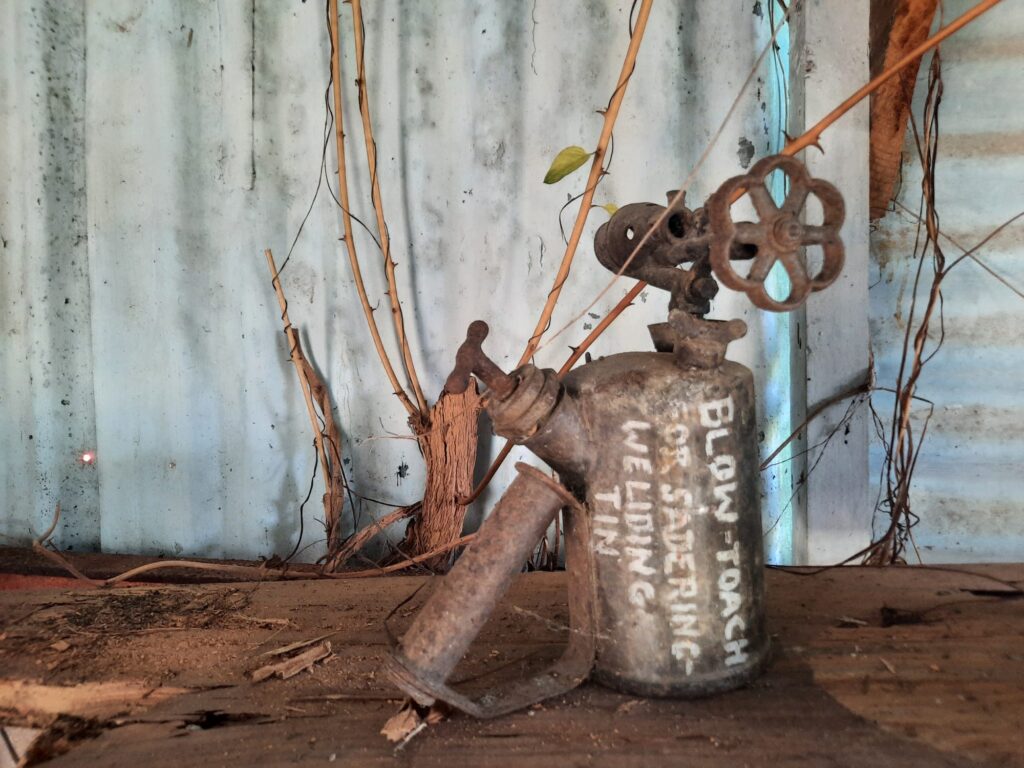
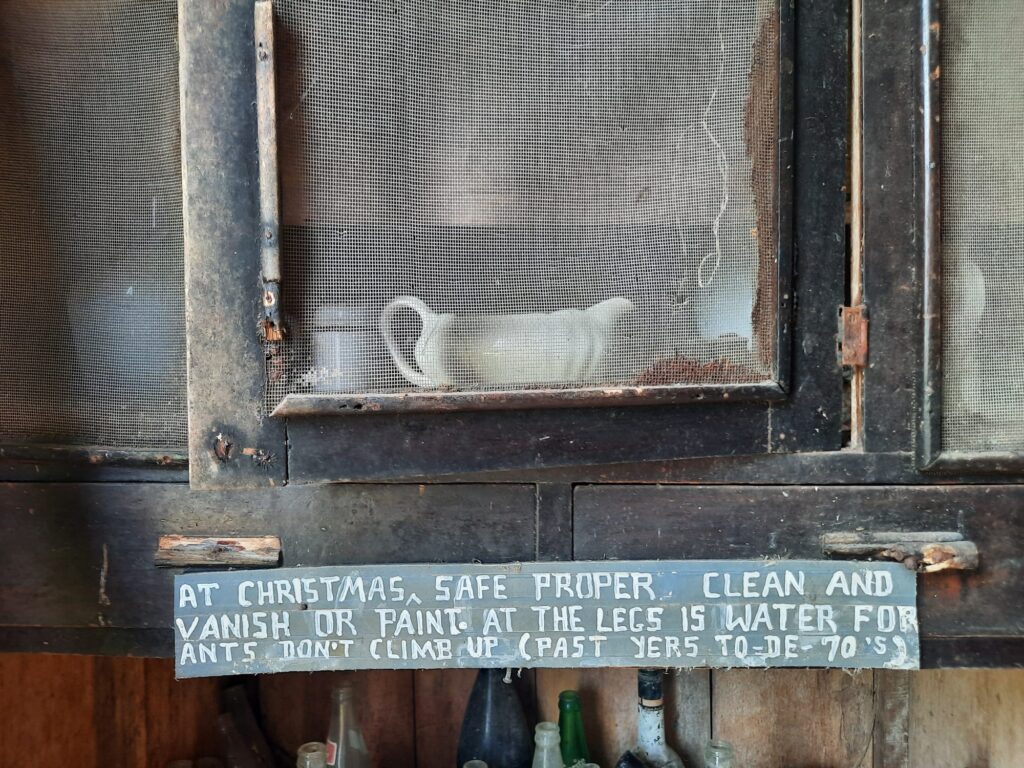
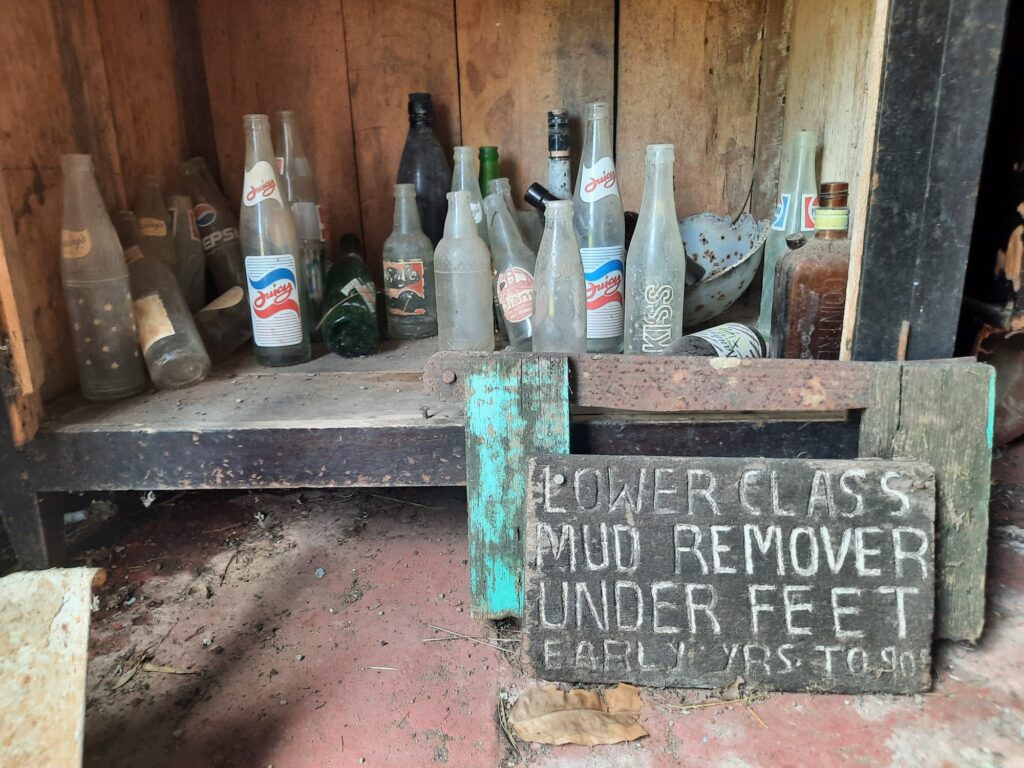
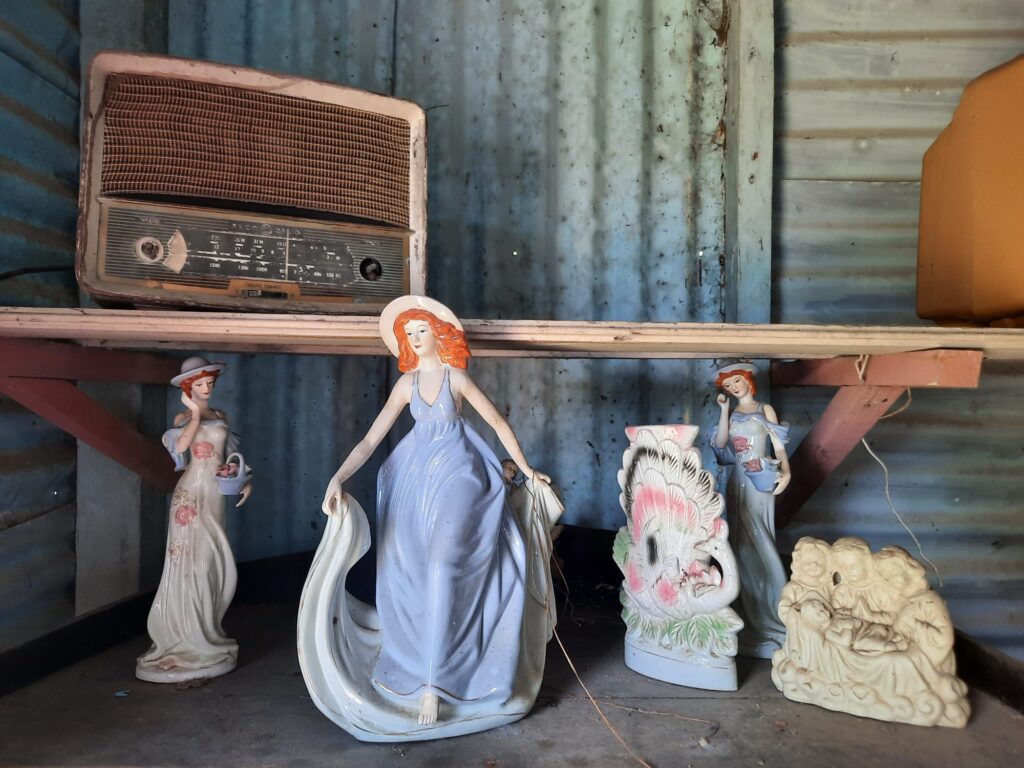
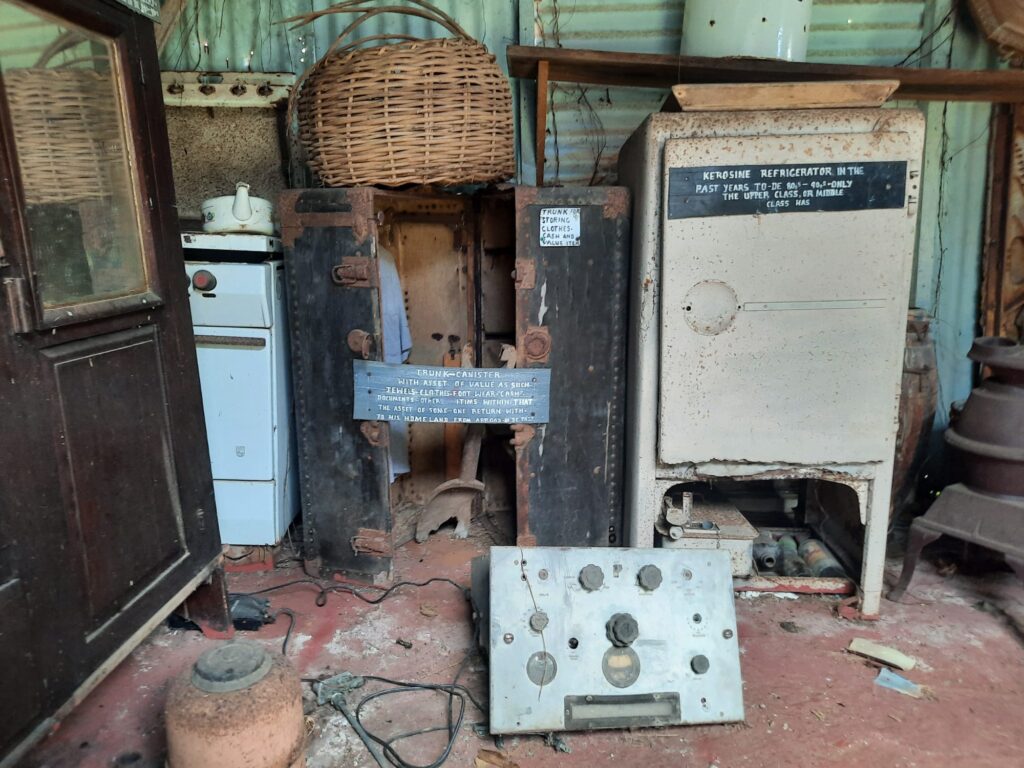
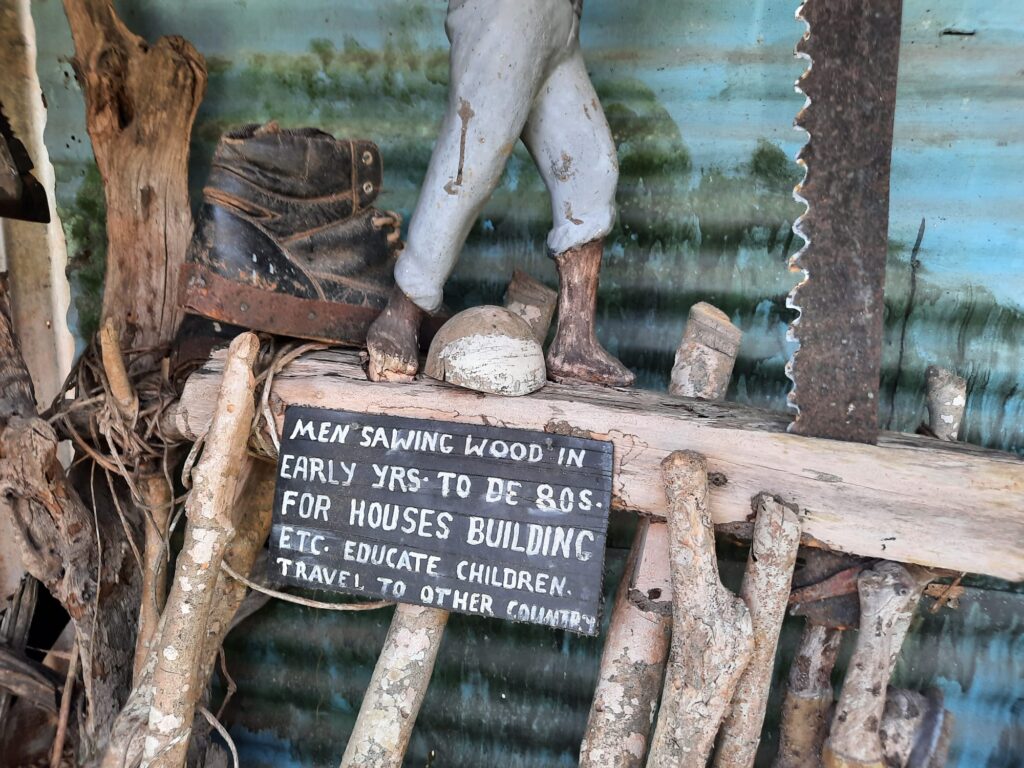
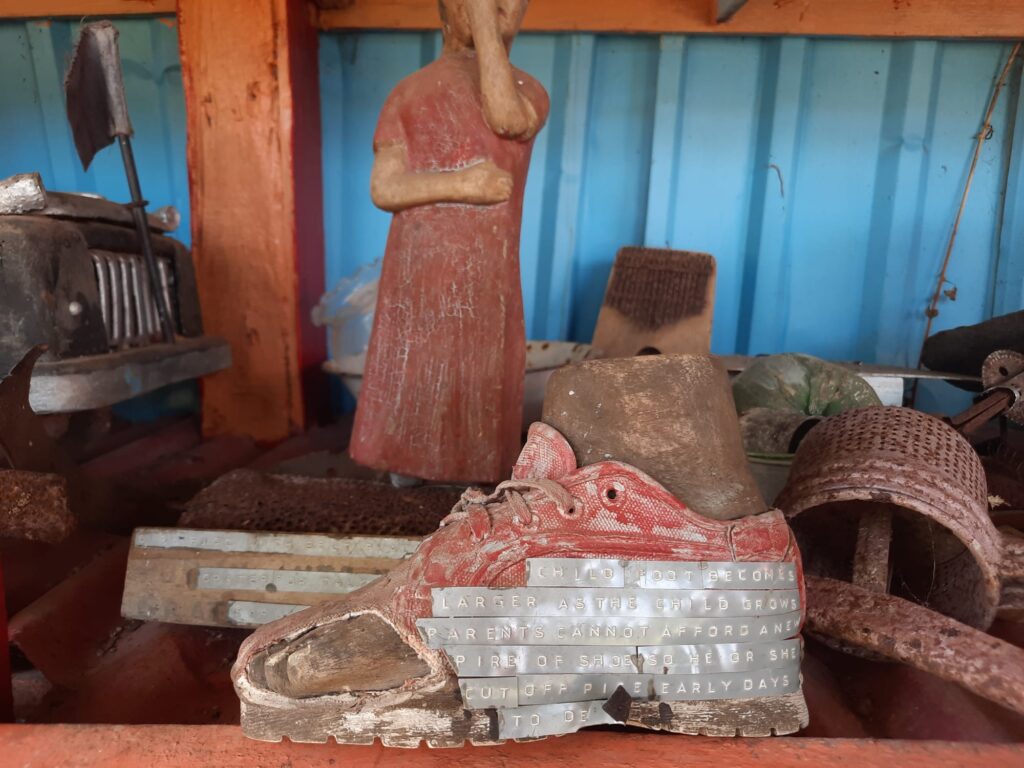
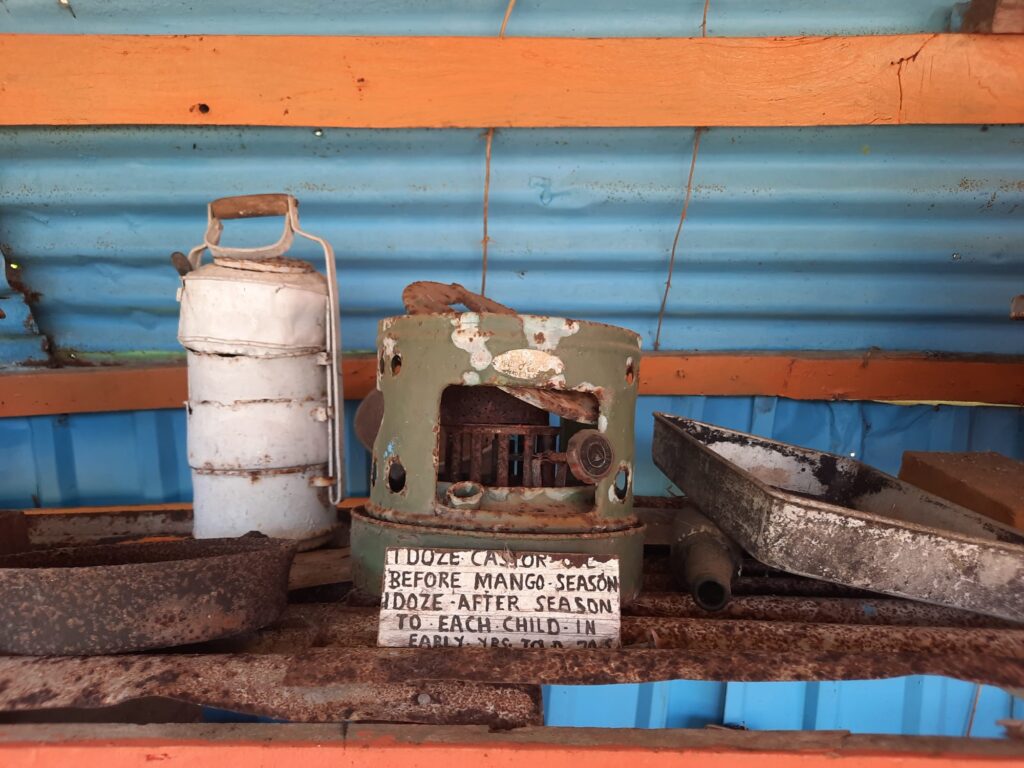
The images clearly show the set up. Mr. Rome has created a number of outbuildings and lean-tos to shelter his collection. This collection includes tools, household objects, decorative objects and more, and spans a time period from before electricity to abandoned VCRs. Many objects have charming handwritten labels explaining their use or context. A small cupboard, for instance, reads “PAST YEARS THE MIDDLE CLASS MAN “PRESS” HE HAS LAND PAPERS, DEED, WILL, BIRTH PAPER, INSURANCE, CLOTHES, JEWELRY, LICENCE FOR DRIVING, BANKBOOK IN IT. IN DE PAST YRS TO DE 80S-90S.” Elsewhere a model of a hearse reads “FUNERAL AGENCY “HEARSE” IN EARLY YEARS – TO DE 70S. MANY WERE AFRAID OF HEARSE, ETC, WHEN THE HORN BLOWS, CHILDREN HIDE UNDER BED.”
It’s Peter van Mensch’s ‘object as data carrier’ model I often write about. Somewhere between functional identity and contextual identity, Mr. Rome carefully makes memories and other intangible associations physical so they’re not forgotten.
The Instinct to Collect and Preserve
But why does such a museum exist? What led Mr. Rome to collect these things and put the label “museum” on them?
Collecting, first of all, is a deeply human behaviour*. Since we first had objects of note, we have wanted to preserve them and share them with/show them to others. Museums are relatively new (a few centuries, anyway), and many, even now, start life as private collections. So it’s not unusual for individuals to collect, and for those collections to become museums once they reach a certain size, value, or other measure of significance.
I would posit, though, that we have something slightly different here. Rome Museum is not a collection under ‘museum conditions’ as we typically know them. It’s an act of preservation, of transmission of stories and ways of life in the face of immense change. Grenada recently celebrated 50 years of independence. I hope Mr. Rome would not mind me saying he is an older gentleman. Imagine the change he’s seen in his lifetime: in politics, in consumer goods, in local industries, in how people do things.
And with a loving eye, it seems, he has spotted all those objects that survive because they’re overlooked. The natural hairbrush replaced by a plastic one. The kerosene refrigerator: once only for the ‘upper class’, now replaced in all homes by electric ones. I imagine a lot of these objects were a bit rusted and unloved before they arrived at Rome Museum. These will be the things moved out into the yard when a newer model came along, discarded.
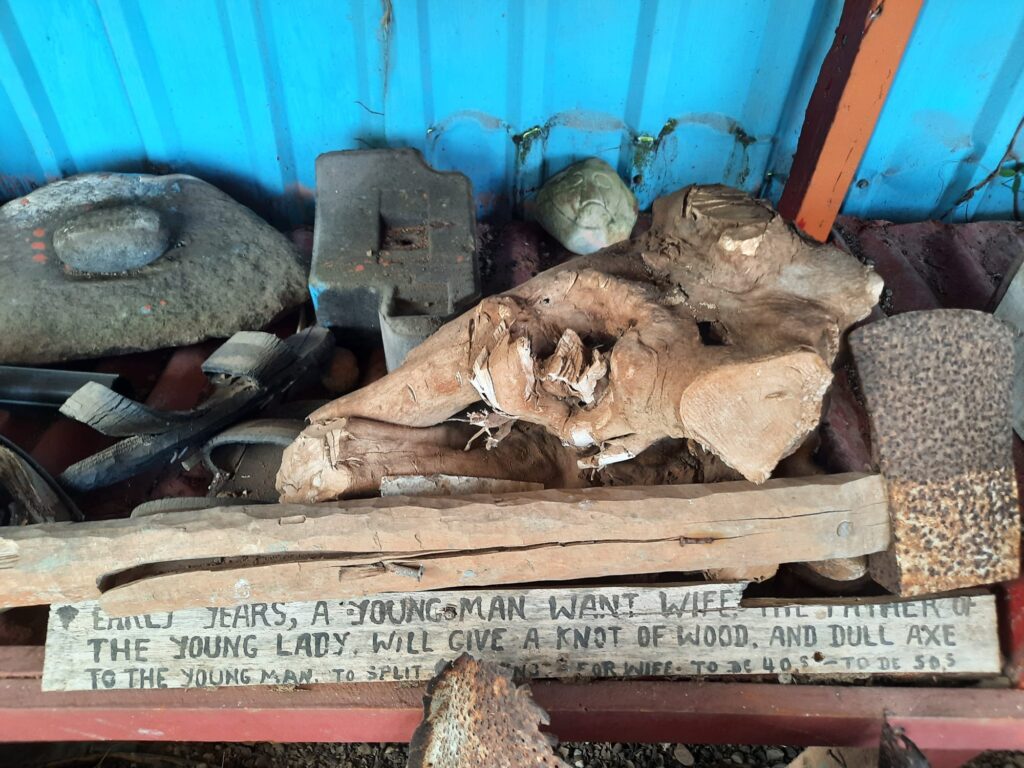
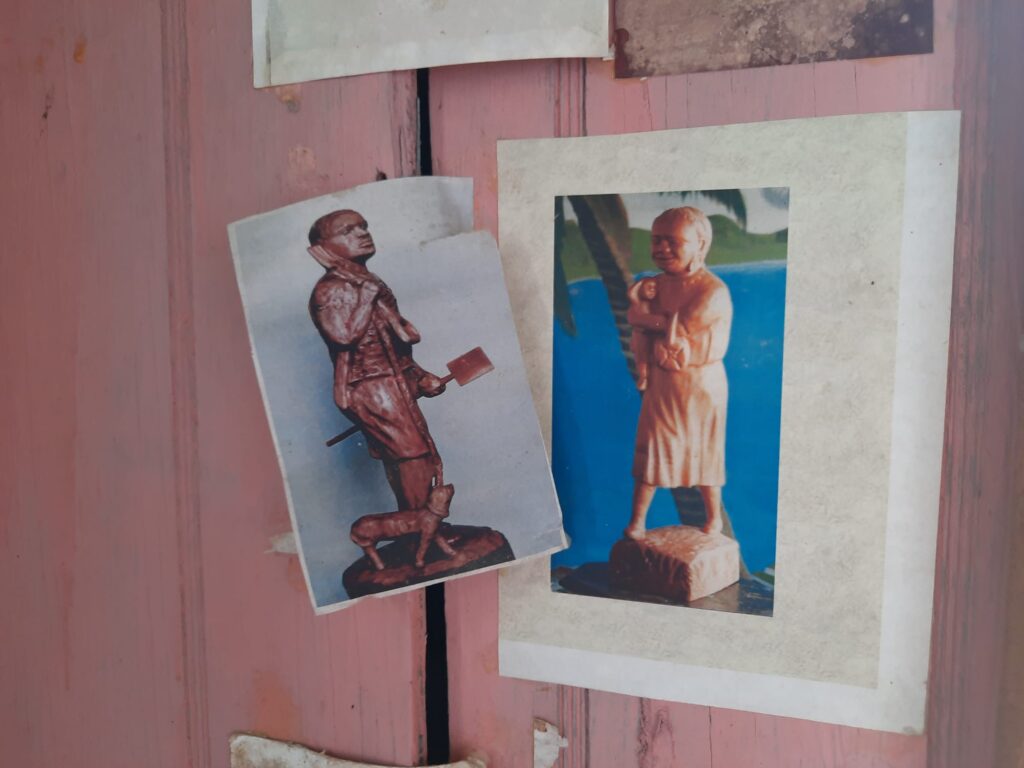
But Mr. Rome, with his artist’s eye (the image directly above shows his work as a sculptor) has seen their potential. To tell stories. To act as physical reminders of how things used to be. Even to preserve tradition: somewhere above is a knot of wood, with the story of how a young man would be given a dull axe and told to split it to win the hand of his beloved. This led to a good conversation between ourselves and Mr. Rome’s sister, who in the end gave the seal of approval to our relationship.
A Slightly Poignant Goodbye to Rome Museum
Am I glad I found out about Rome Museum and found a way to include it on my itinerary? Absolutely! If nothing else, it led to interesting conversations. The Manager at our hotel, for instance, was thrilled we’d found out about it. She recalled visiting, and seeing an old glass Fanta bottle of the type that was once a staple purchase for Grenadian families at Christmas. By sharing our interest in this museum and its heritage preservation project, we learned more about the place we were visiting, and made connections with people we wouldn’t otherwise have made.
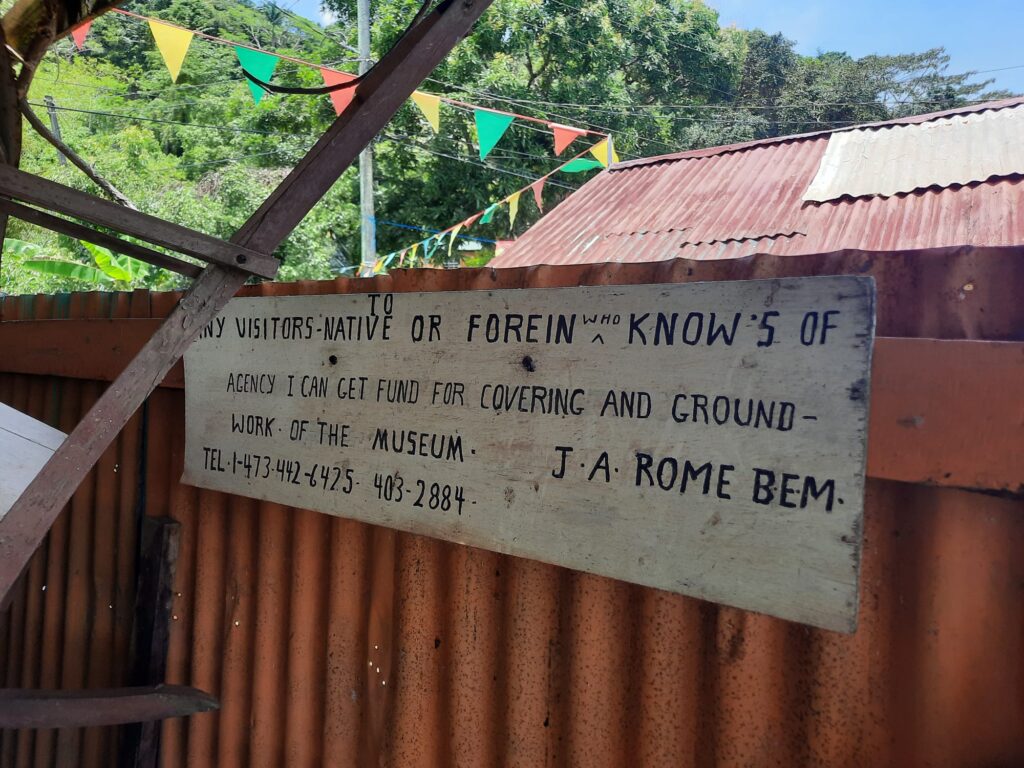
But the sign in the last image above left me with a sense of regret that I couldn’t do more than visit, leave a donation, and share the story of Rome Museum via my modest platform. This is so clearly a labour of love, established on modest means and without professional support. The collection does suffer from the climate, and I think the museum’s fate is probably far from assured in the coming years. It would be wonderful to see it at least documented, and ideally preserved. If not, I’m glad to have had the chance to see it, and to hear, if not from Mr. Rome, then from his sister who brought a slightly different angle to bear on the collection.
If you love museums as much as I do and are in Grenada, you must visit. Maybe you will meet Mr. Rome and can pass on my regrets that I didn’t get to hear from him about his collection firsthand. Grenada operates on a parish level, and I saw a few different names for the location of the museum: St Andrew (parish), Plaisance or Tuilleries or Walker (villages). But the important thing is that the Google Maps pin is correct, and that’s enough to get you there. Where there’s a will, there’s a way!
Salterton Arts Review’s rating: 4/5
Trending
If you see this after your page is loaded completely, leafletJS files are missing.