
Kiefer / Van Gogh – Royal Academy, London
Artistic inspiration takes form in Kiefer / Van Gogh, exploring how the places, subjects and intentions in Van Gogh’s work have inspired Anselm Kiefer over the years.
Why Kiefer / Van Gogh?
The latest exhibition at the Royal Academy (aside, of course, from the Summer Exhibition) sees an interesting pairing of artists take over the upstairs Gabrielle Jungels-Winkler Galleries. Frequent readers will know I tend to like this space as it caters to my relatively short exhibition attention span. I like to be able to take everything in an exhibition in, which becomes more difficult the more rooms you have to traipse through.
Who is this pairing, then? Well the title gives it away somewhat. It’s Anselm Kiefer and Vincent Van Gogh. At first glance they don’t seem to have too much in common. Well, both white, European males, I guess. But one is Dutch and the other German. One a post-Impressionist painter and the other decidedly modern and working mostly in mixed media. But appearances can be deceiving, and in this case it’s an exhibition about the influence of one artist on another.
Picture a young Anselm Kiefer, just eighteen years old (so the early 1960s). He’s received a travel grant to follow in Van Gogh’s footsteps, through the Netherlands and Belgium and in France from Paris to Arles. A quote from Kiefer at the outset of the exhibition reads:
“Contrary to what one might expect of a teenager, I was not overly interested in the emotional aspect of Van Gogh’s work or in his unhappy life. What impressed me was the rational structure, the confident construction of his paintings, in a life that was increasingly slipping out of his control.”
I mean to me that doesn’t sound like he’s dismissing the emotional turmoil of Van Gogh’s life entirely. But the point is that the young artist was greatly influenced by his forebear. This exhibition brings together works by Van Gogh with both early works by Kiefer, and works made in 2019 that reflect on this important influence. It’s been produced in close collaboration with the Van Gogh Museum, who interestingly mounted something similar in the spring which included new works by Kiefer. Variations on a theme, but not close enough to being the same exhibition to be marketed as such.
Taking a Step Back: Anselm Kiefer
I’m going to take a guess that you’re familiar enough with Vincent Van Gogh to make sense of this review. But Anselm Kiefer might be more of an unknown quantity. So let me tell you a little more about him. Kiefer was born in Donaueschingen, Germany, on 8 March 1945. The dying days of WWII, that is. The type of circumstance that has an inevitable effect on a life. He grew up surrounded by the destruction of Allied bombings. Kiefer’s father was an art teacher, but he resisted following in these footsteps at first. He initially started a degree in law and Romance languages at the University of Freiburg, before switching to art after a couple of semesters. Kiefer’s eventual teachers included Peter Dreher and Joseph Beuys.
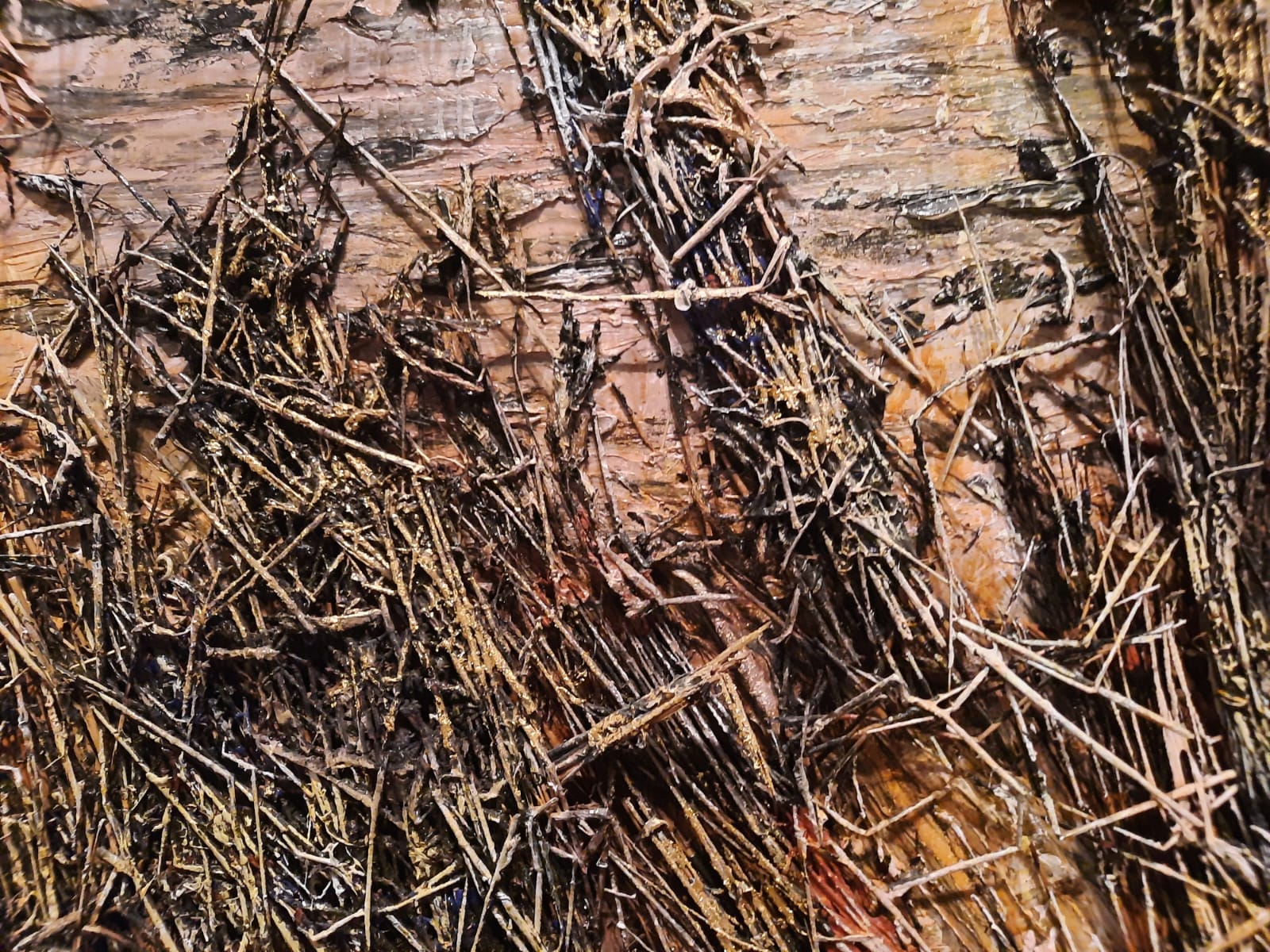
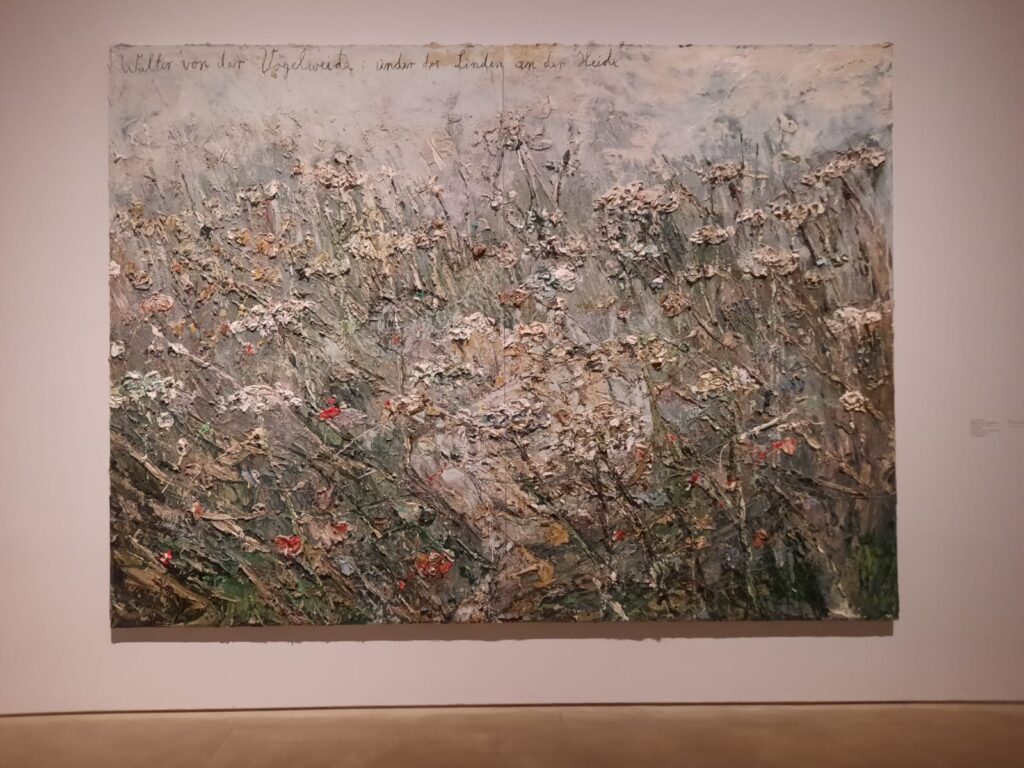
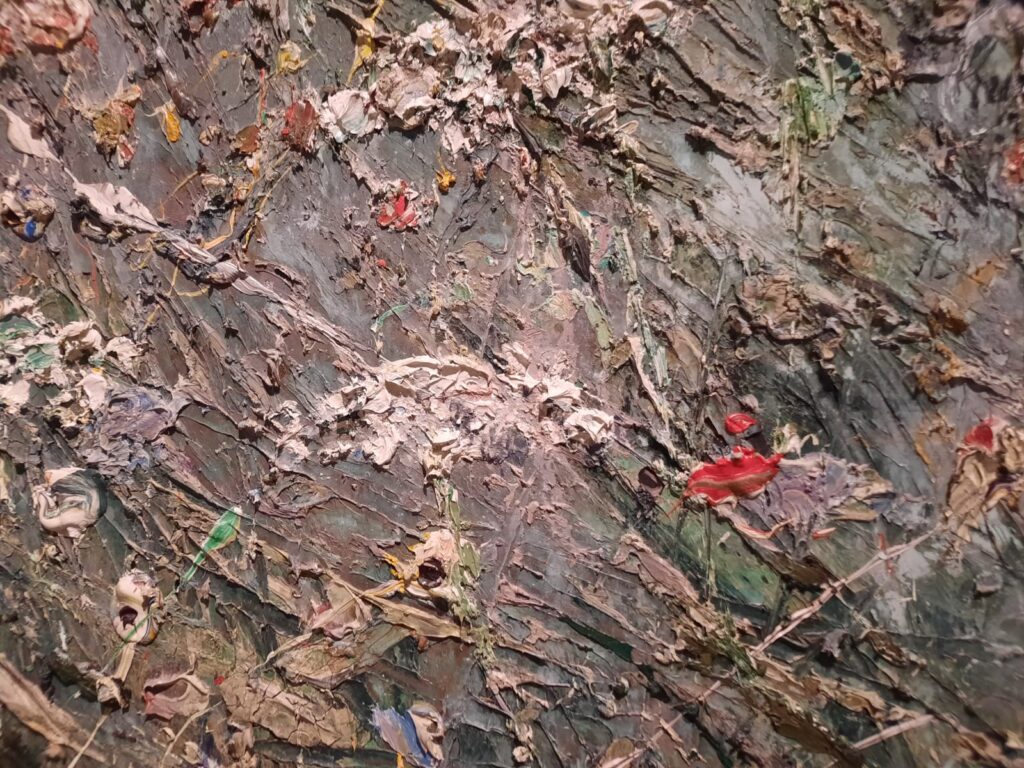
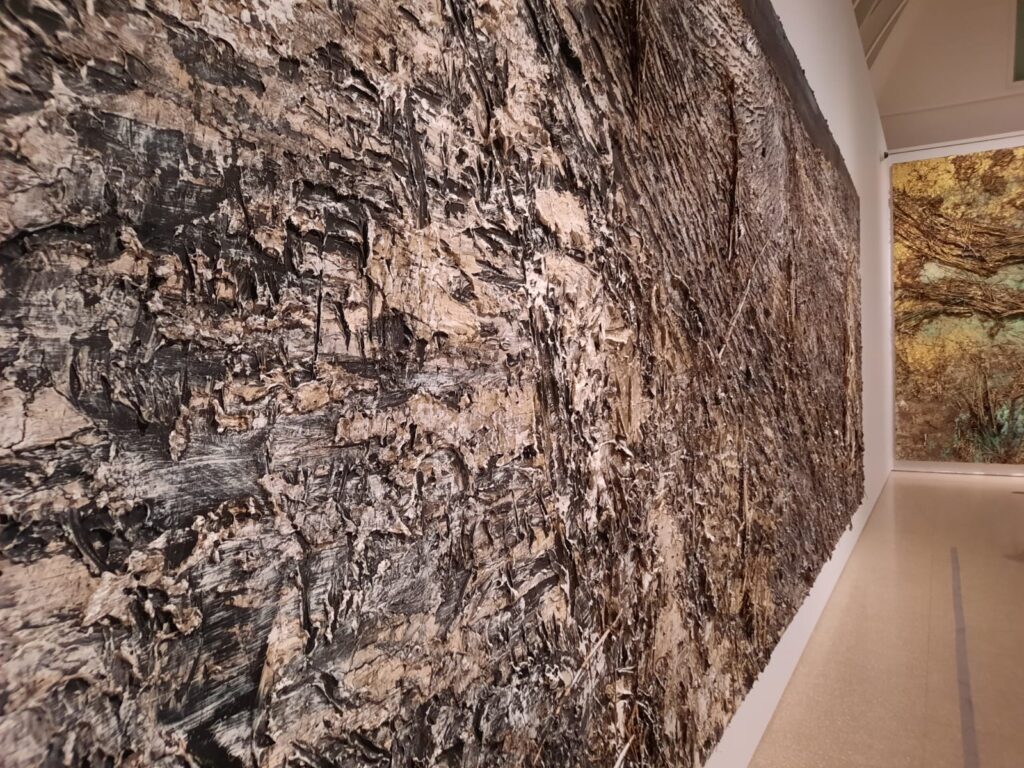
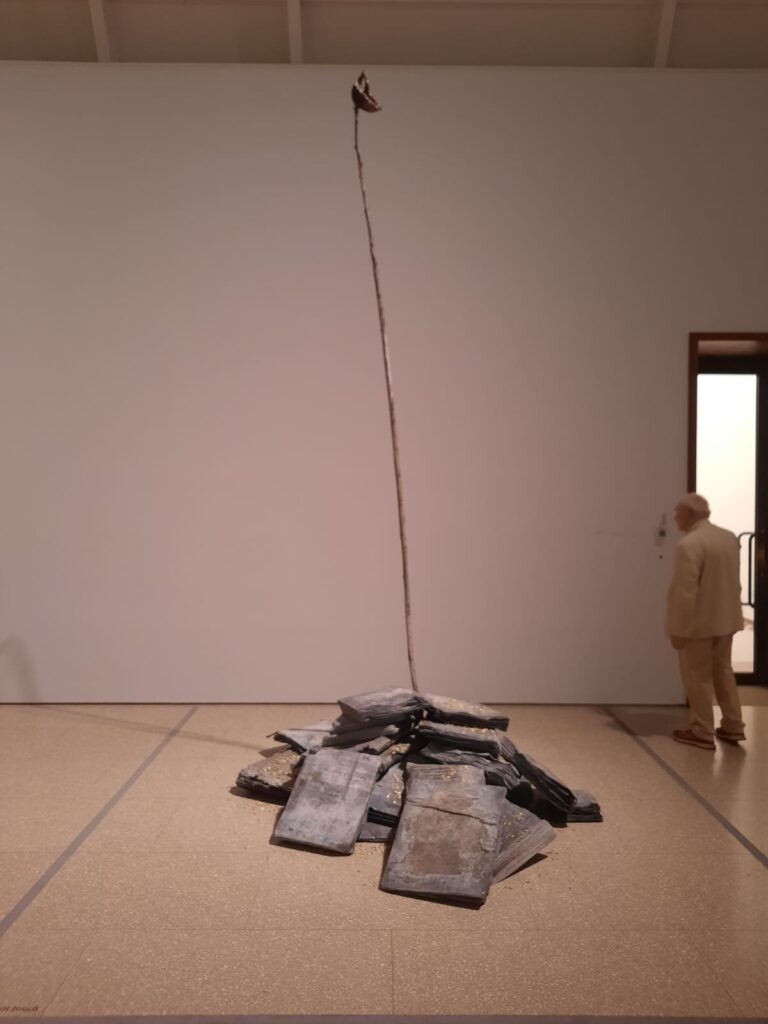
Kiefer’s art is by no means all about Van Gogh. Mythology and literature are also sources of inspiration for his work. He works, as I mentioned earlier, in mixed media. Largely meaning works on canvas, but as well as paint there might be straw, lead, or other materials. We see examples of these works in the current exhibition. Kiefer has a recurring interest in the alchemical properties of materials, and sometimes subjects them to processes including acid baths or burning to represent their energy and potential.
Over the years, Kiefer’s work has delved into subjects as varied (and yet connected) as myths and folklore, confronting Germany’s recent history, architecture, and, um… pleasure. As well as the mixed media works his art has encompassed photography, durational pieces, installations, and book design. Now aged 80, Kiefer’s is a long and varied career which has provoked conversation both within his home country of Germany, and also the wider art community.
An Art Historical Encounter
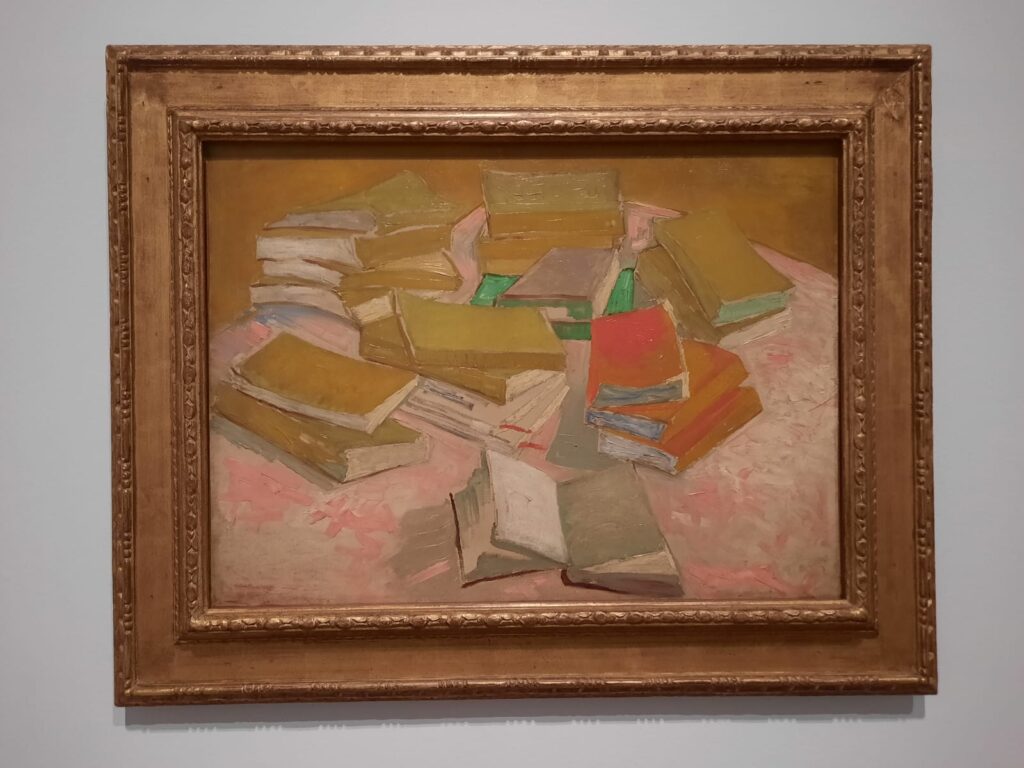
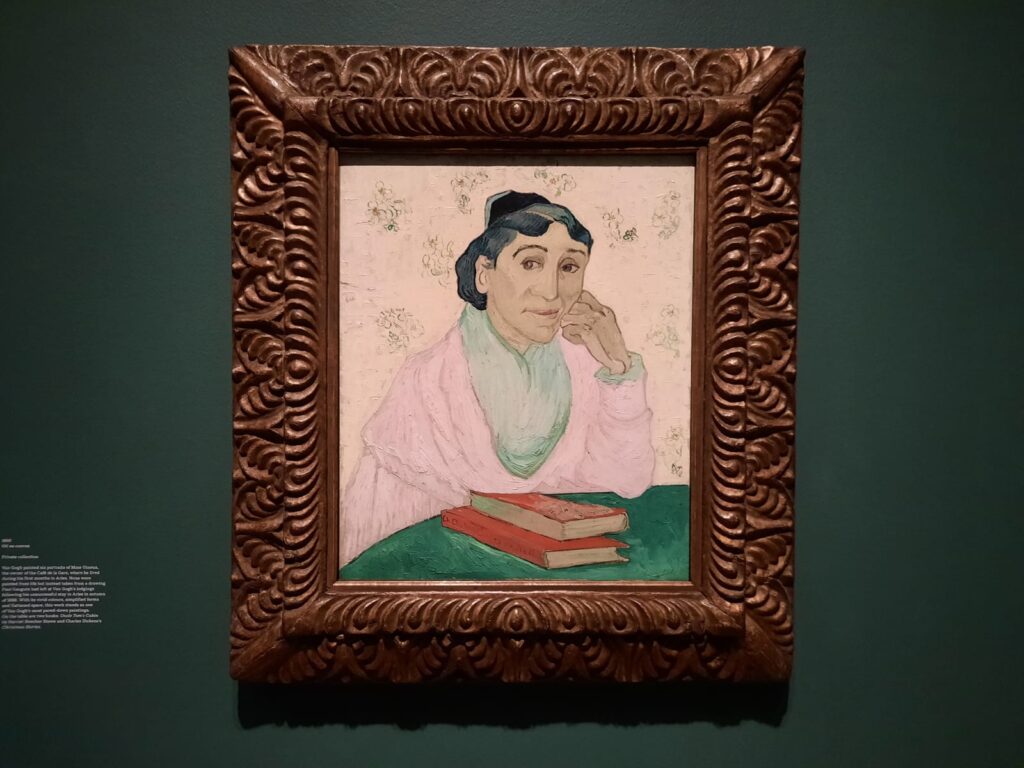
So, back to Kiefer / Van Gogh now. One of the things I like about this space is that its simple layout of three rooms allows for a good flow, but also impressive vistas as you enter each in turn. This time around, the first room is a surprise in that it’s almost all works by Kiefer, mostly large-scale. The only contribution by Van Gogh is Piles of French Novels, an 1887 work which introduces a literary thread connecting the two artists. The remainder are by Kiefer.
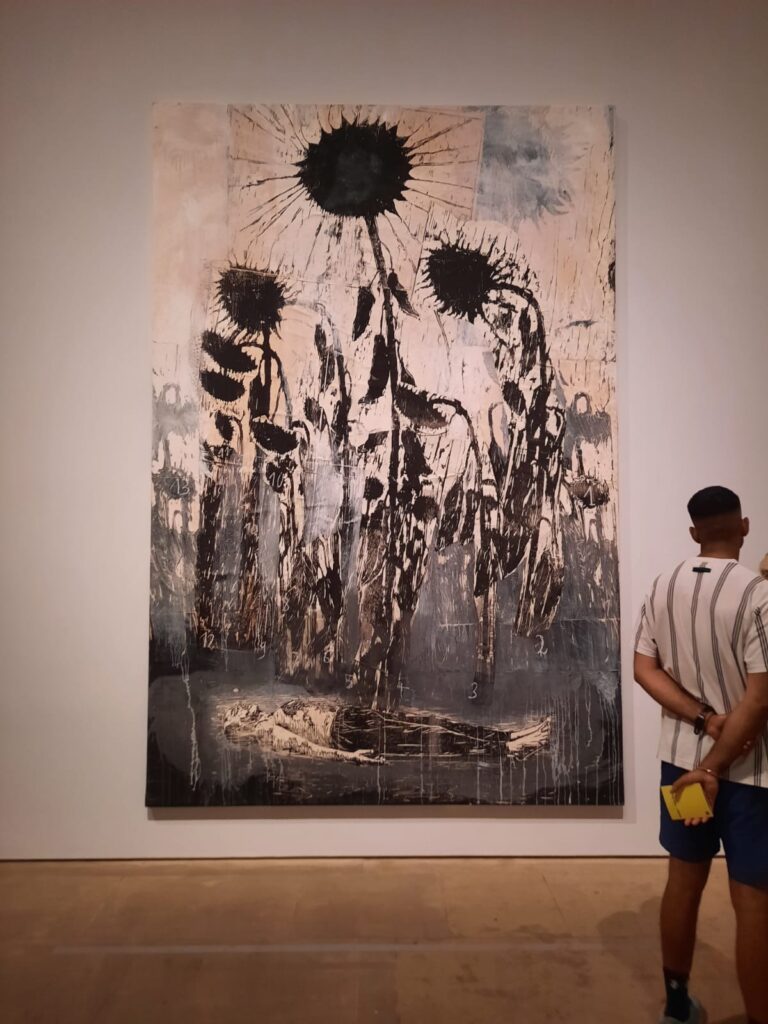
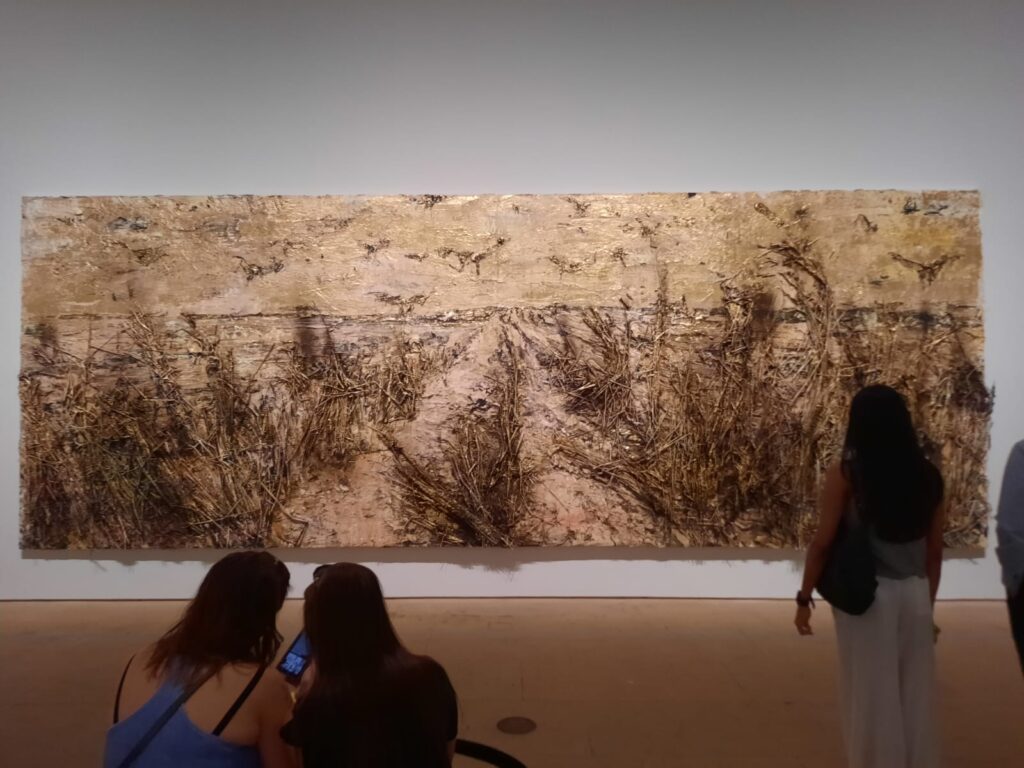
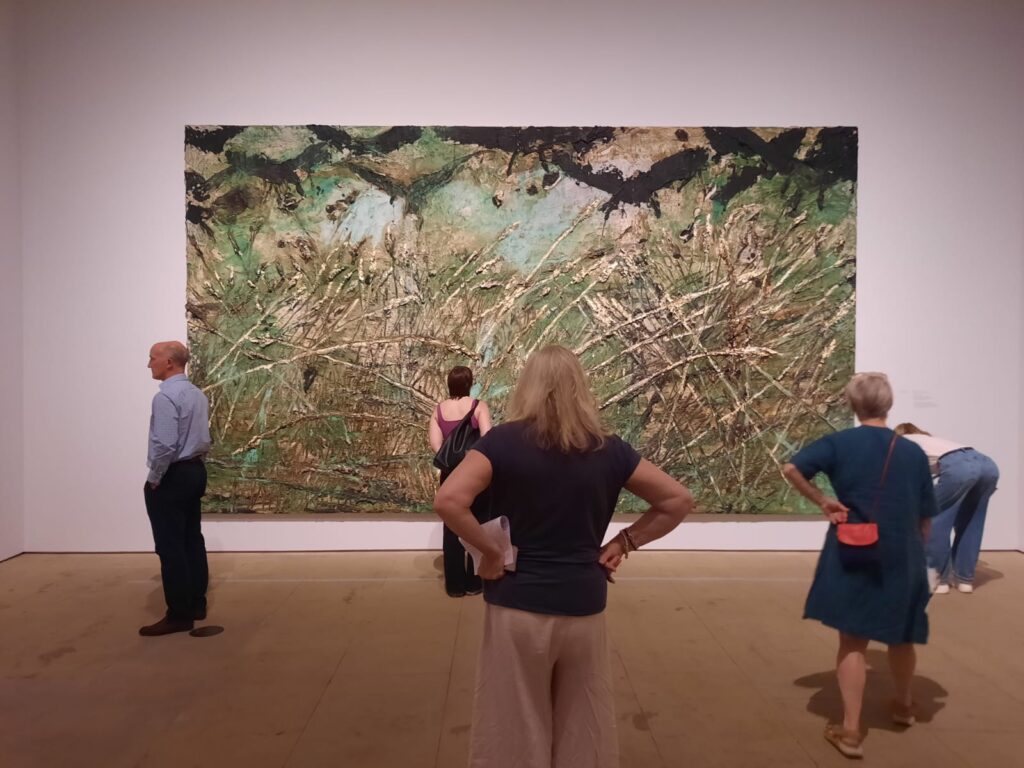
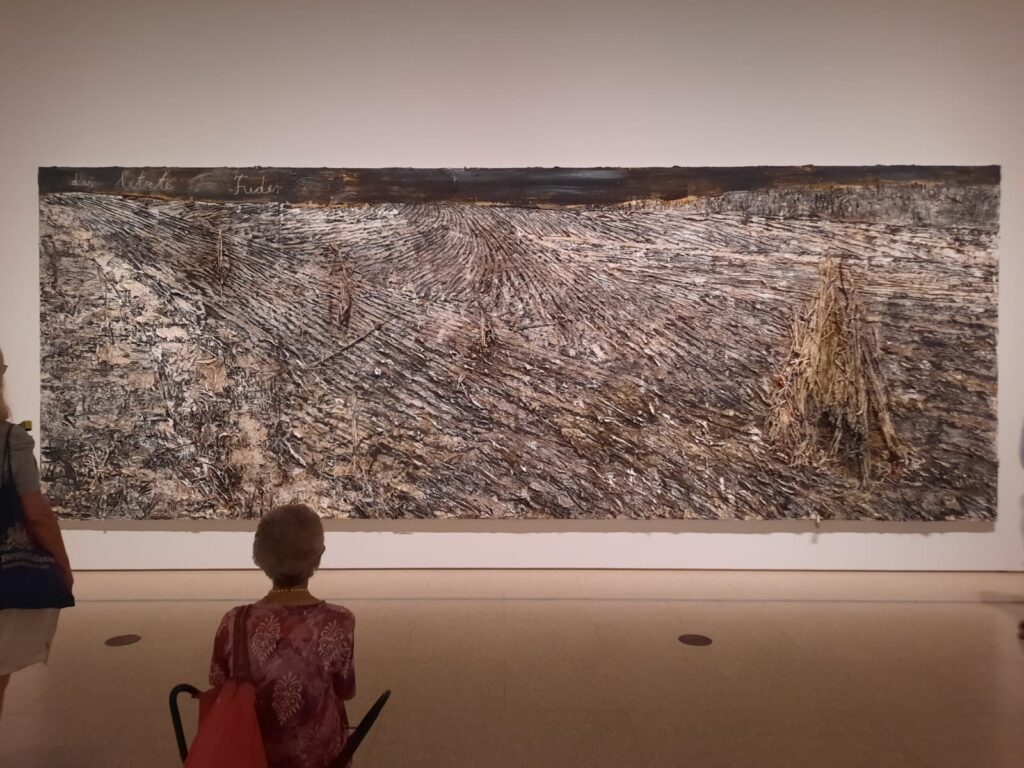
Already at this early stage we feel Van Gogh’s influence. Directly across from the entrance is a 2019 work, The Crows. That high horizon line, the crows circling, the impasto texture of the straw. The shellac and gold leaf may not be a leaf from Van Gogh’s book, so to speak, but the rest is. More Van Gogh-esque compositions, including a vase of sunflowers, round out the first impression.
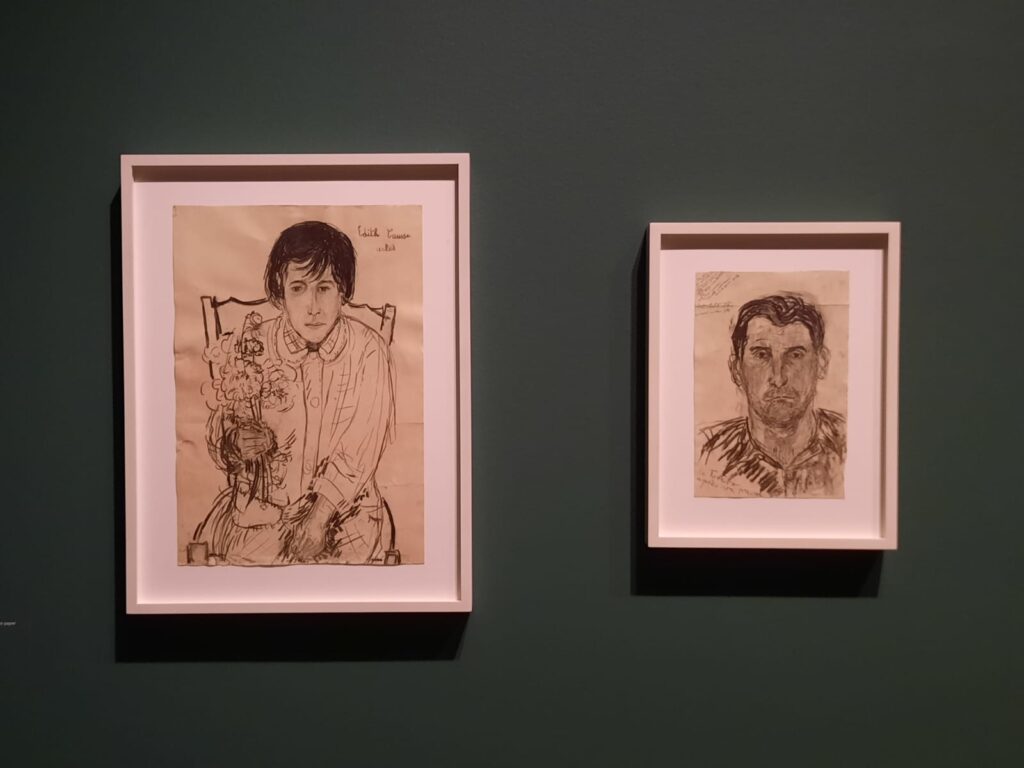
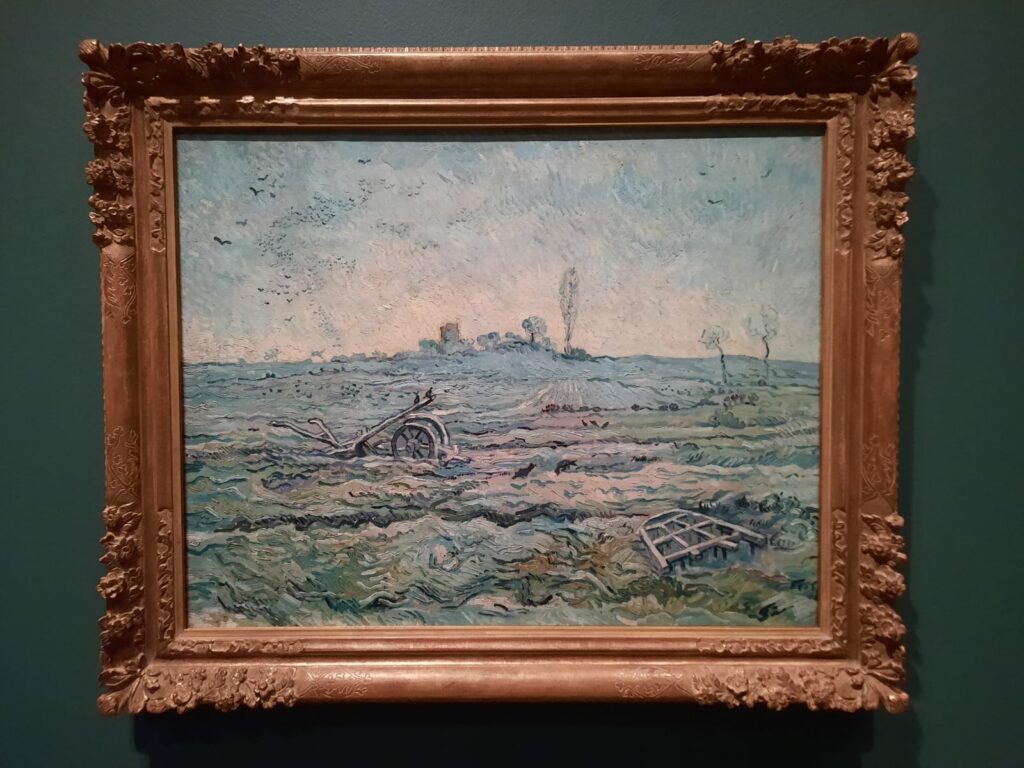
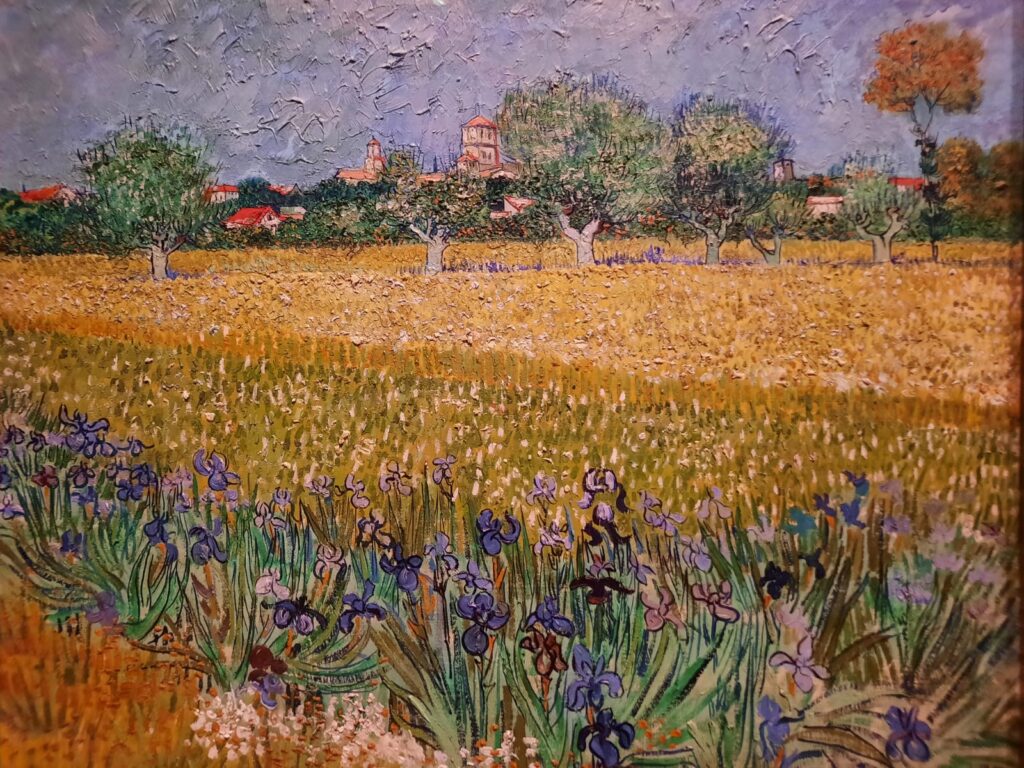
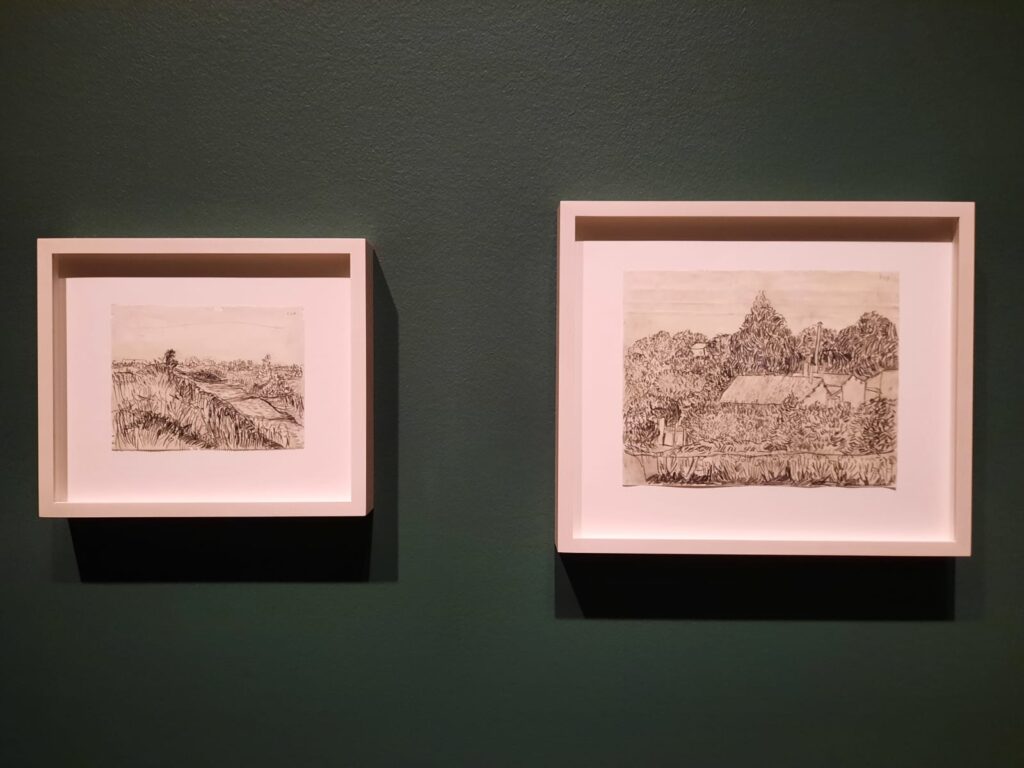
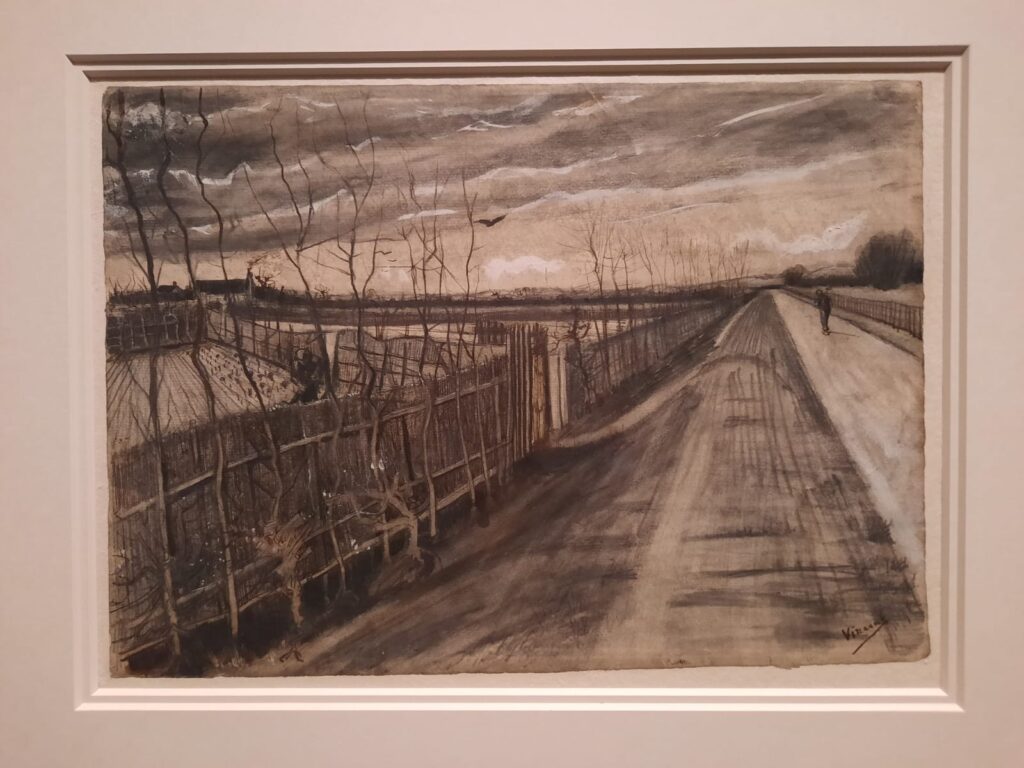
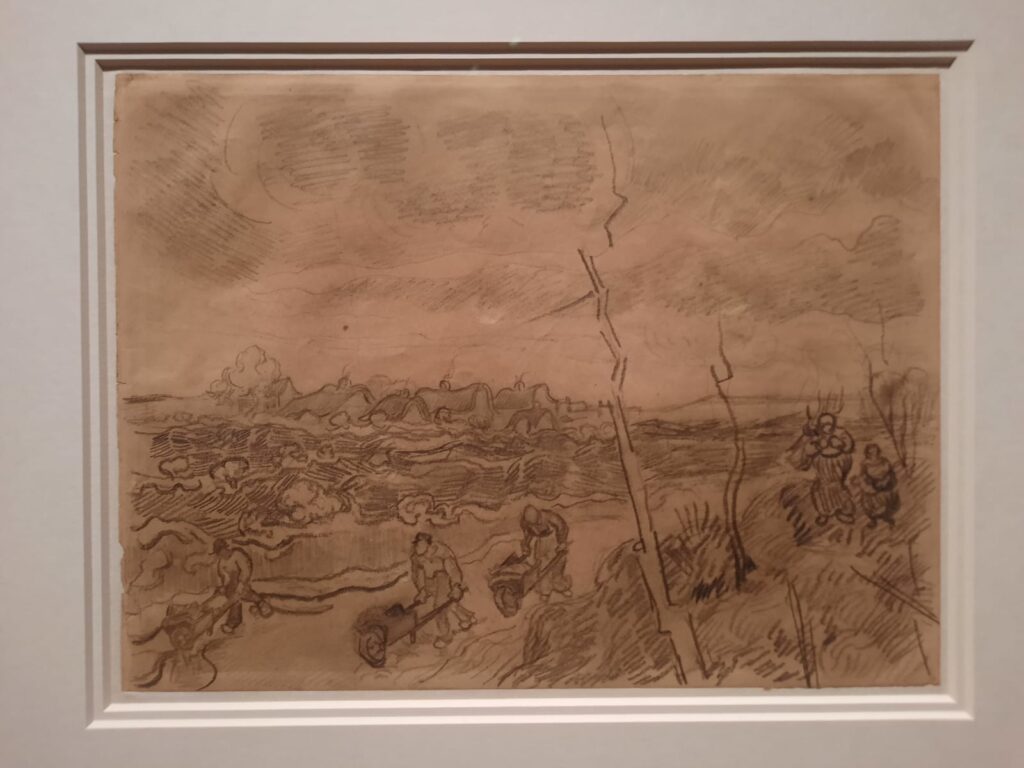
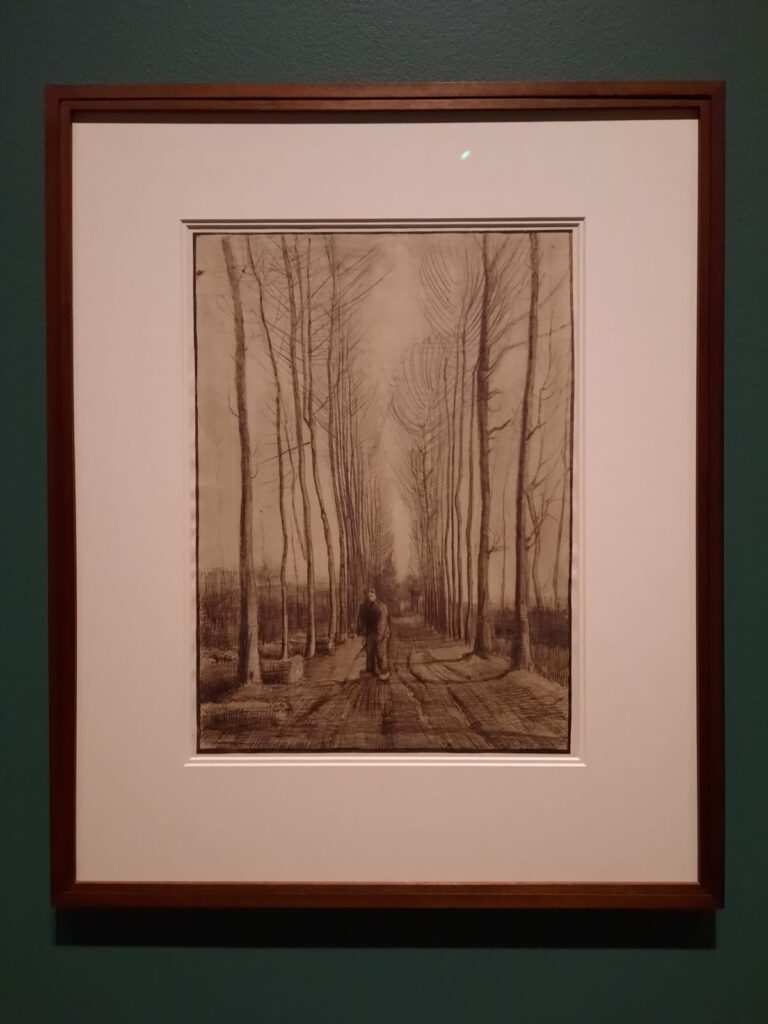
Moving into the next room, there’s more balance between the two artists. We’re in Arles now, where Van Gogh lived in 1888-89, and Kiefer visited in the summer of 1963. Both captured the town’s inhabitants and landscapes, in works on paper and canvas. There’s a beautiful painting by Van Gogh, again that high horizon line with a town hidden by trees at the top, irises at the bottom, and fields in between. For the works on paper it’s sometimes hard to tell whose works are whose. Except, of course, when Van Gogh’s characteristic swirling outlines creep in.
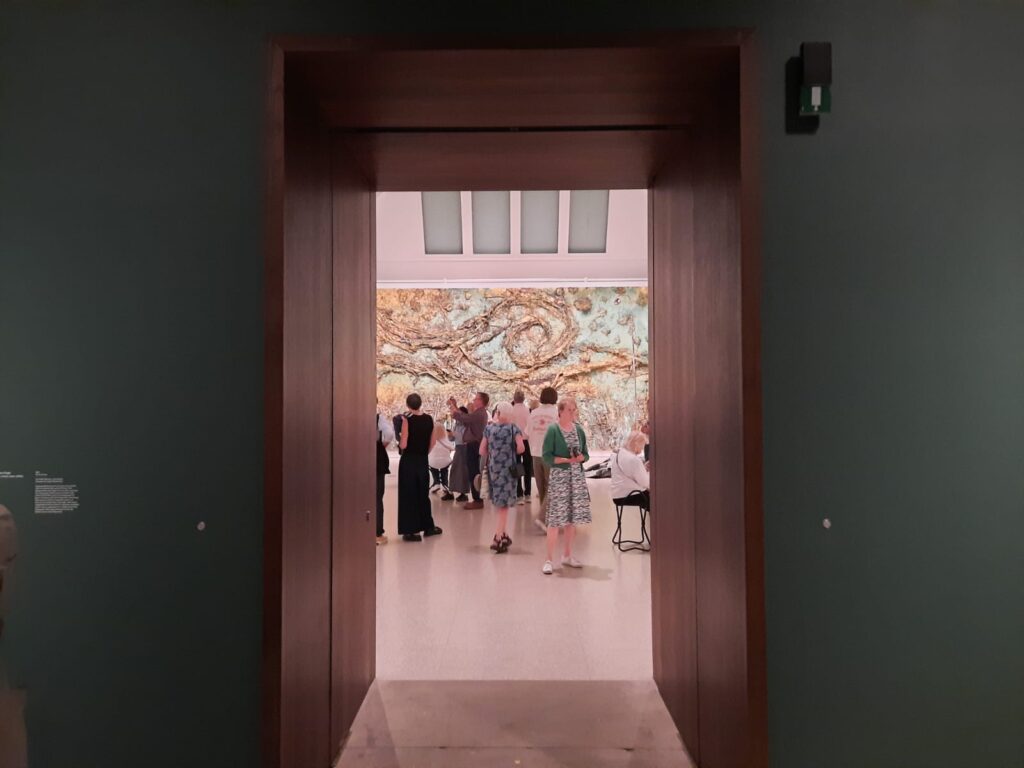
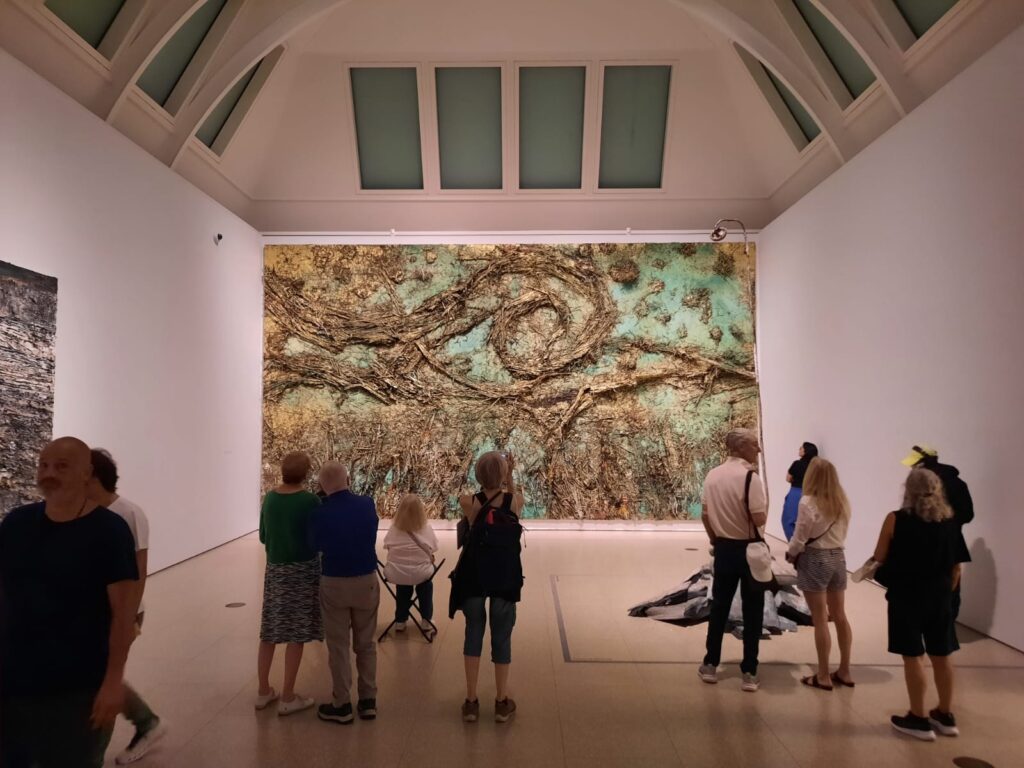
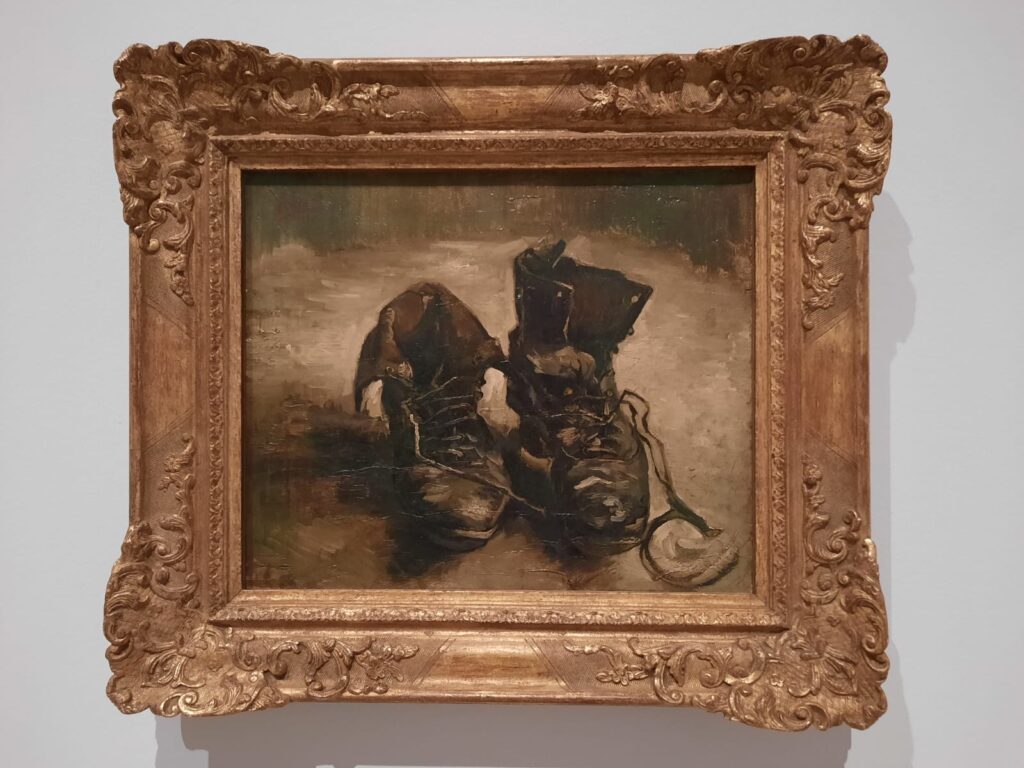
And then we have that impressive vista as we enter the final room. The Starry Night (2019) by Kiefer, here courtesy of the artist and White Cube. No denying that connection any more, it’s drawn across the canvas in swirling straw and gold. The other works in this room by Kiefer are similarly monumental, and include one sculpture and an example of his incorporation of metal objects projecting from his canvases (in this case a scythe). Again there’s just one work by Van Gogh, a small painting of an old pair of boots.
The point the exhibition is trying to make is about how both artists paint objects or views as conduits to say something more profound about the human experience. I’m not sure if the selection of works quite pulls it off. But then again I would have been very surprised if MoMA had loaned Van Gogh’s own Starry Night for the occasion.
Compare and Contrast
So actually, reflecting on the exhibition, is it more of a Kiefer exhibition with a supplement of Van Gogh, rather than an exhibition of both artists as the RA describe?
“Vincent van Gogh has had an enduring influence on Anselm Kiefer. See work by both artists side by side this summer.”
https://www.royalacademy.org.uk/exhibition/kiefer-van-gogh
There might actually be about the same number of works by both artists, overall. But given that Kiefer’s dominate two of the three rooms, it feels a little unbalanced. I think for me this also comes back to the presentation. Kiefer’s monumental works with space to breathe against light walls, most of Van Gogh’s a little more crowded on dark walls.
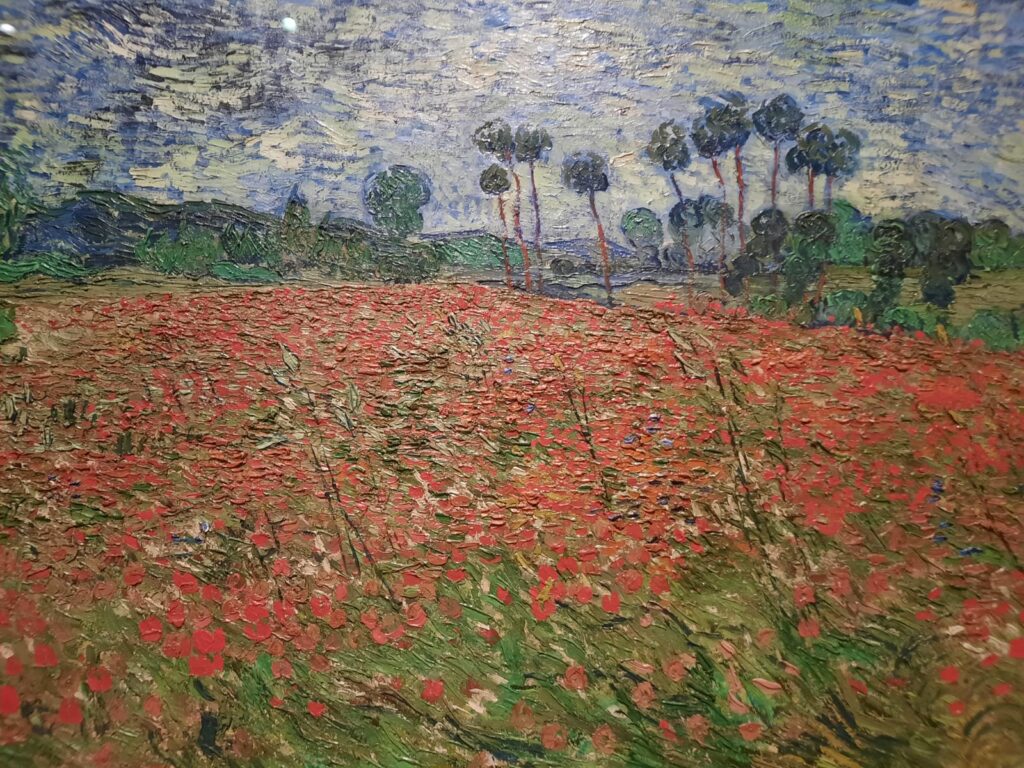
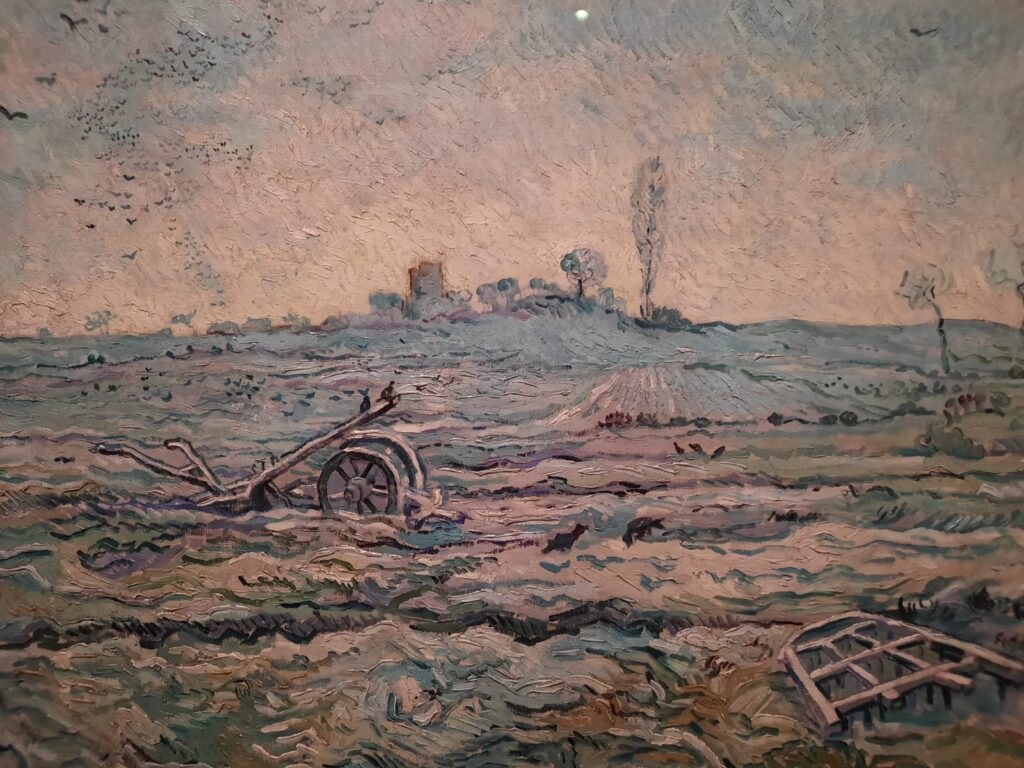
I did come away from the exhibition with a deeper understanding of Kiefer’s work, and the way that he deconstructs his influences and turns them into something new. And I must say it’s always nice to see an exhibition even partly about Van Gogh that isn’t totally oversubscribed. They’re always paintings that you want to spend time with, get up close to. Reproductions don’t do Van Gogh justice.
So the exhibition gets an overall seal of approval from the Salterton Arts Review. It probably won’t rock your world. But it’s a nice look at a long-running inspiration and how that has been reflected in Kiefer’s older and newer works. The large-scale canvases really are very impressive, and displayed beautifully. You could do much worse for an hour or so’s entertainment.
Salterton Arts Review’s rating: 3.5/5
Kiefer / Van Gogh on until 26 October 2025
Trending
If you see this after your page is loaded completely, leafletJS files are missing.