
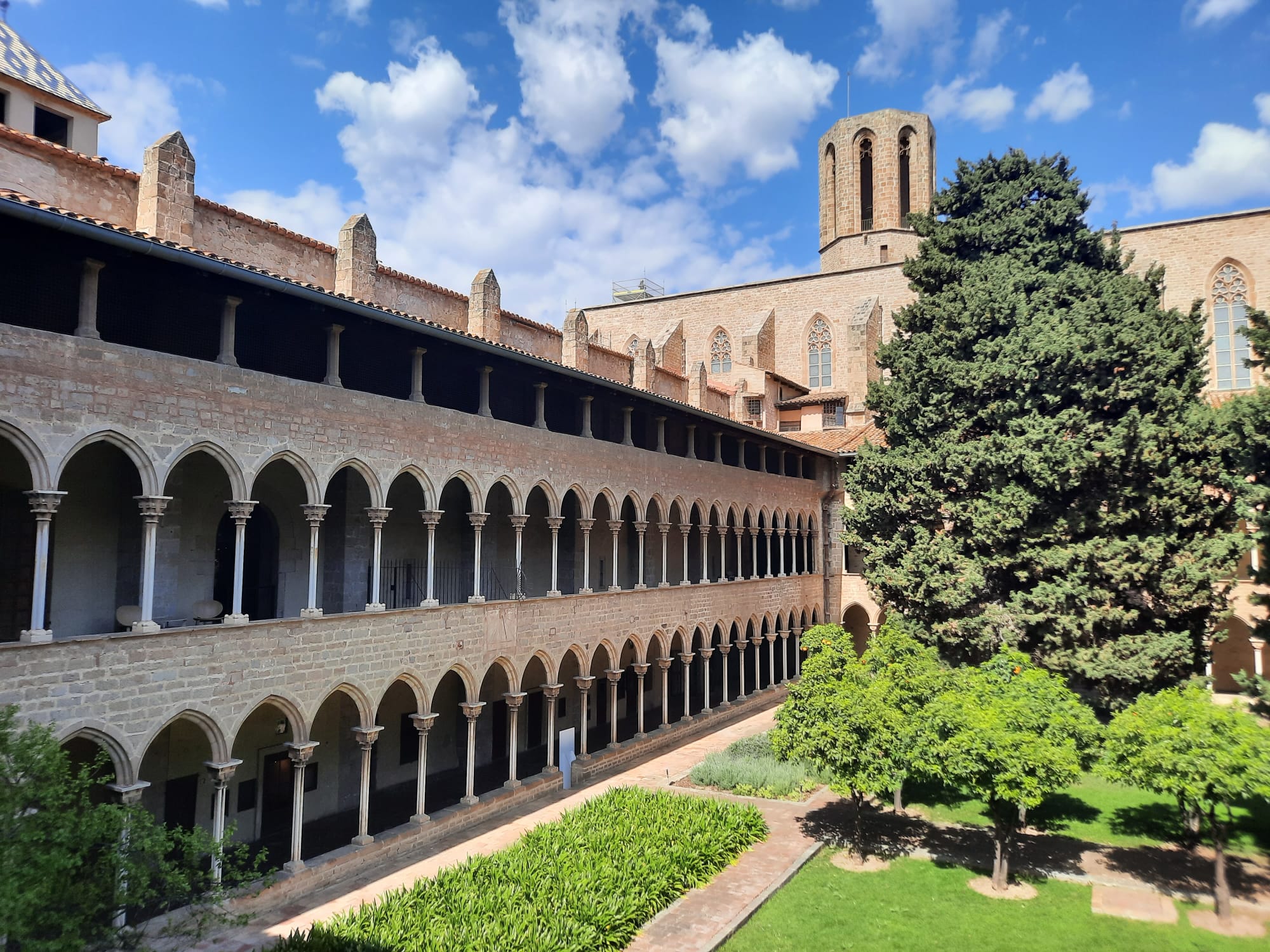
Reial Monestir de Pedralbes (Royal Monastery of Pedralbes), Barcelona
Back in Barcelona for a conference, I found unexpected calm and beauty at the Reial Monestir de Pedralbes on a quiet Sunday afternoon.
A Fortunate Return: First Steps Towards Pedralbes
I found myself back in Barcelona by good fortune, almost 18 months after my first visit. This time, like before, I wasn’t here primarily for tourism. But between conference sessions and other commitments, I had a few opportunities to add more experiences to my Barcelona repertoire.
Last time I stayed in the elegant grid of the Eixample district, close to Gaudí’s icons and many of the city’s most popular museums. This time, though, I was based almost all the way on the other side of the city, in Les Corts, cut through by the Avinguda Diagonal, one of Barcelona’s most important thoroughfares. It’s a leafy, hilly part of town, where the pace is slower and the tourists fewer. I arrived earlier than expected on my first day, and with an unexpected free hour ahead of me, I consulted Google Maps for nearby points of interest.
When I saw the Reial Monestir de Pedralbes was within walking distance, I took it as a sign. This was a site I hadn’t managed to see on my last trip, and one I’d heard was well worth the effort. That I ran into a former colleague during my visit and was able to catch up on the past few years of news just cemented for me that it was meant to be!
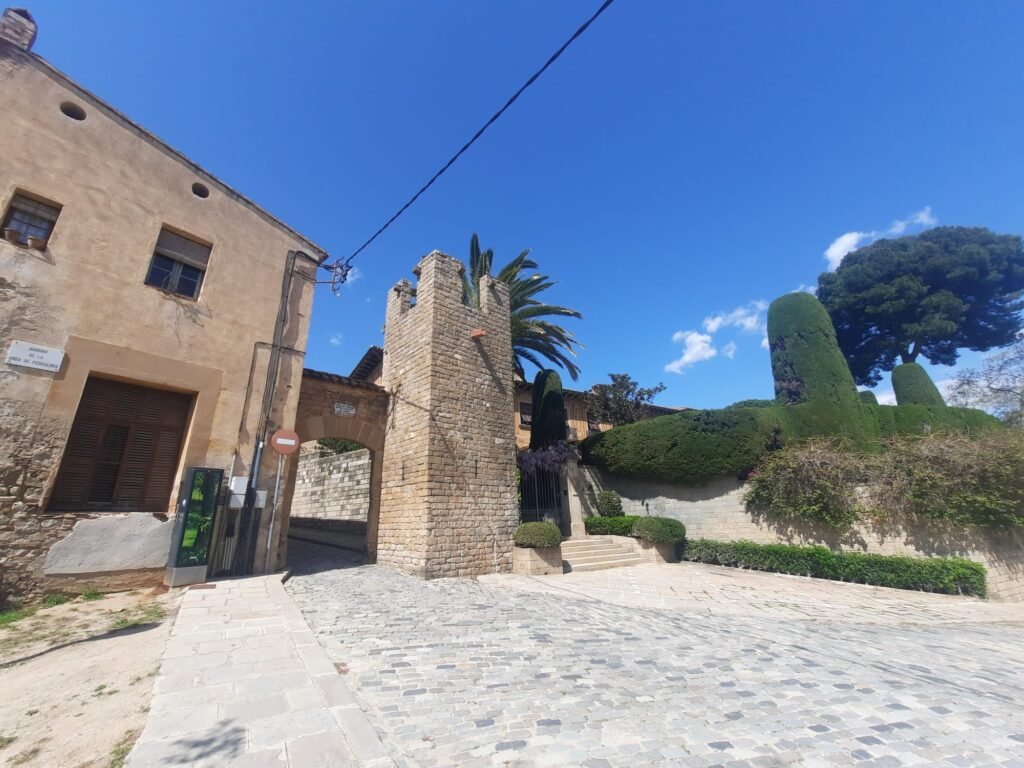
Tucked away in a quiet corner of the city’s upper west, Pedralbes isn’t on the standard first-time itinerary. But with its history, setting, and architecture, it’s an excellent place to explore. A peaceful haven that feels worlds away from La Rambla or Passeig de Gràcia. And so, with a spring in my step and the afternoon sun above me, I set off uphill to see what I could find.
The Reial Monestir de Pedralbes: A Royal Foundation in a Time of Turmoil
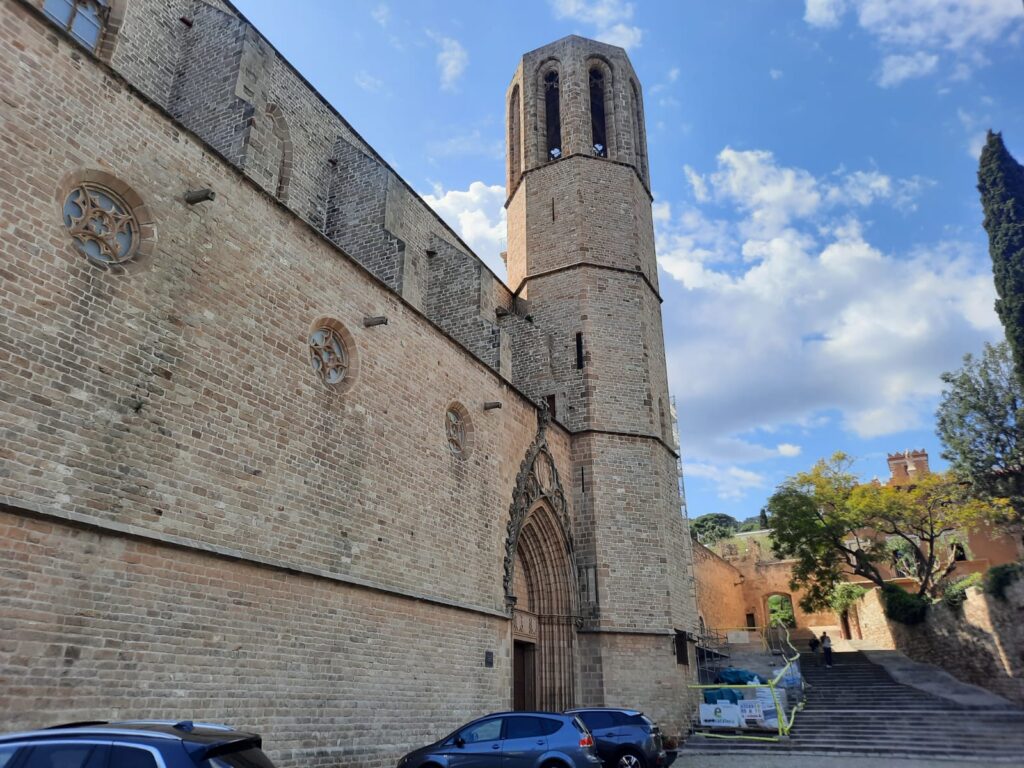
Pedralbes Monastery was founded in 1326 by Queen Elisenda de Montcada, wife of King Jaume II of Aragon. As far as royal patrons go, Elisenda was unusually hands-on. She secured papal permission for the monastery to follow the rule of the Poor Clares, an order of Franciscan nuns, and remained closely involved in its operation throughout her life. After her husband’s death, she even moved into an adjoining palace and lived out her final years next to the women she had installed there.
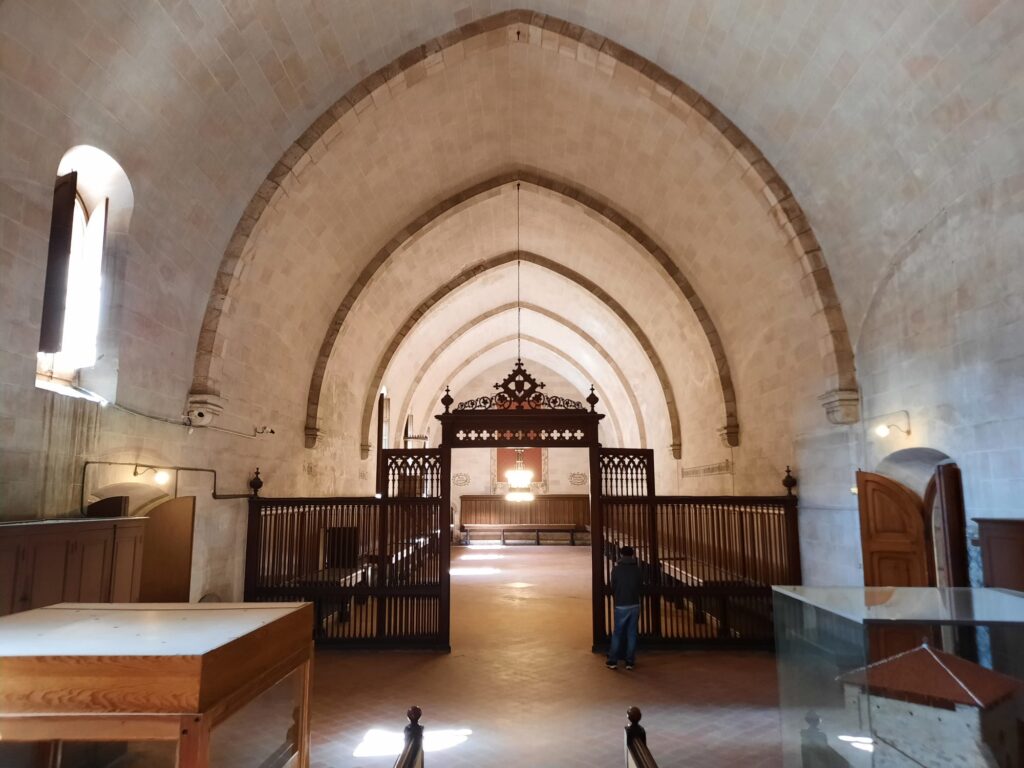
Its name, from petras albas, or “white stones”, speaks to the luminous quality of the local stone used in its construction. And though its setting today feels suburban, in the 14th century this would have been a quiet rural hillside far from the fortified bustle of Barcelona’s Gothic Quarter. Barcelona in the early 1300s was both wealthy and politically volatile, and Pedralbes reflects both currents. Its beauty was made possible by royal wealth and religious power, but it was also designed as a refuge (spiritual and physical) from a changing world.
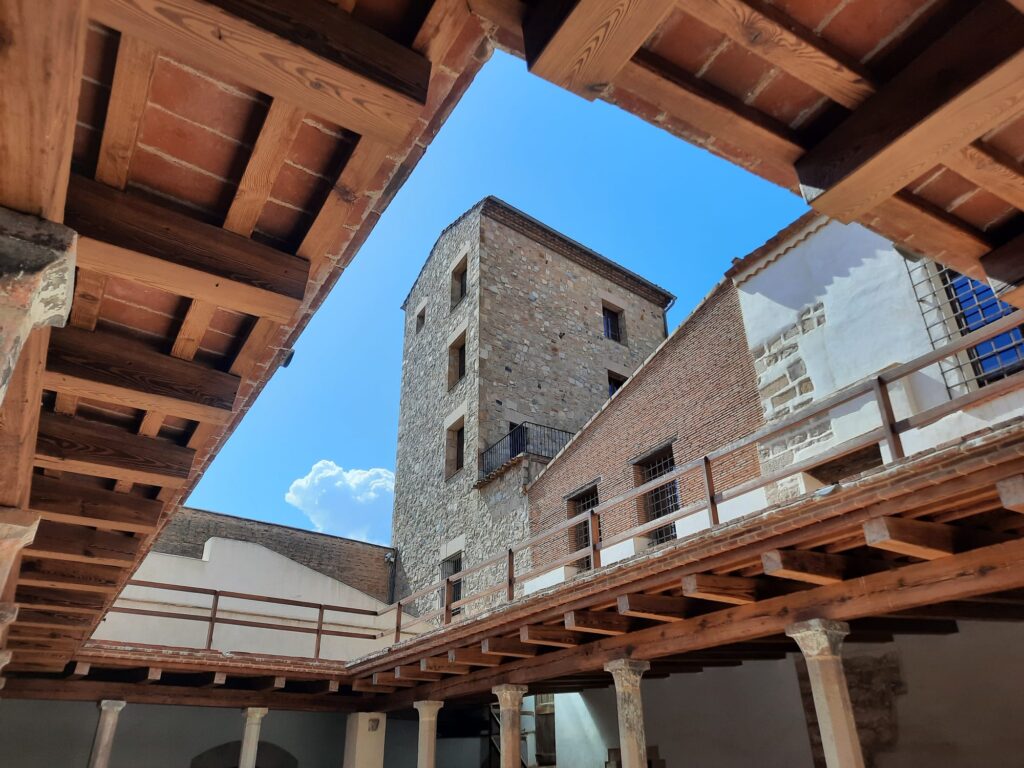
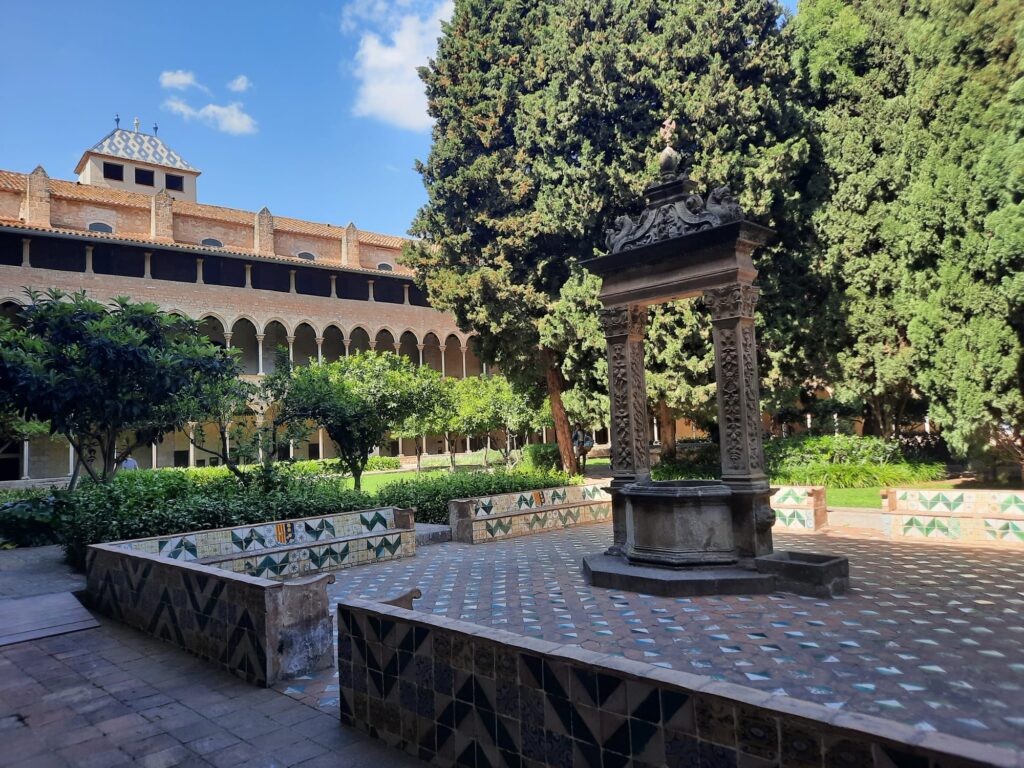
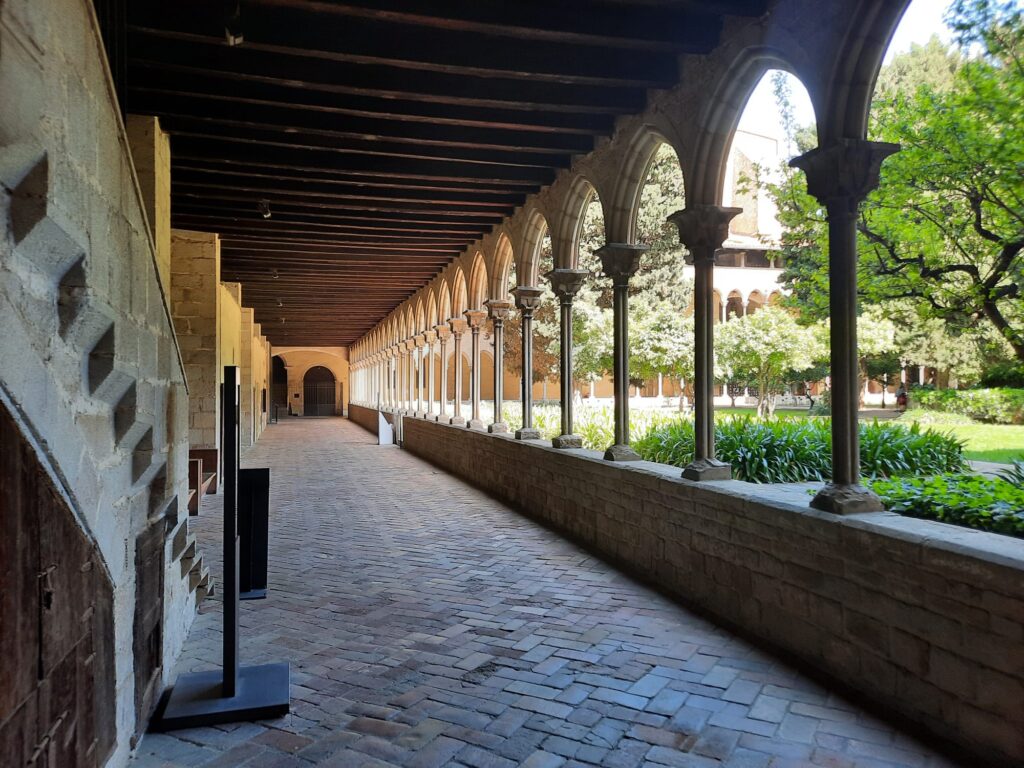
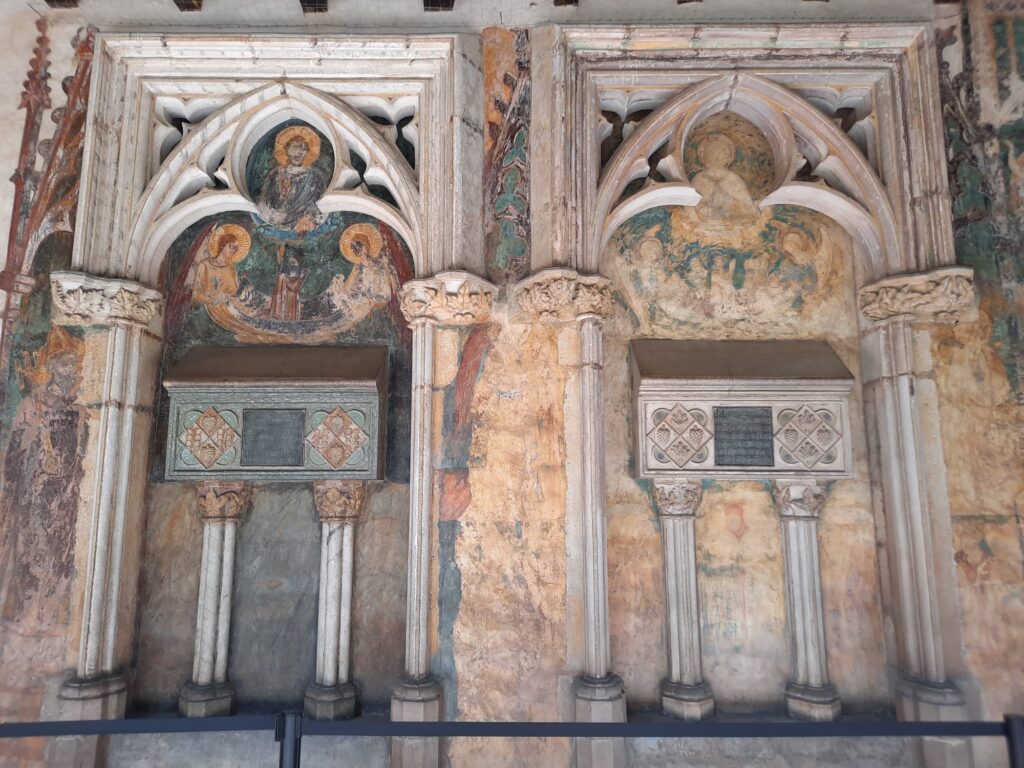
The Monestir’s early years coincided with the spread of the Black Death and internal unrest across Catalonia. Yet remarkably, the cloister and its surrounding buildings survived largely intact. It’s one of the best-preserved examples of Gothic monastic architecture in Spain. In fact, it’s difficult to think of another site in Barcelona that gives such a clear window into the city’s medieval religious life, except perhaps the backstreets around the cathedral, or the Romanesque and Gothic holdings of the MNAC.
Monastery, Fortress, Museum
The Monestir was built for retreat and contemplation, but that didn’t mean it escaped the turbulence of later centuries. Like many monasteries in Catalonia, it faced the threat of dissolution in the 19th century, when anti-clerical sentiments were running high. The Poor Clares were expelled more than once. But Pedralbes somehow held on. And when other religious houses were destroyed, ransacked or repurposed, it endured.
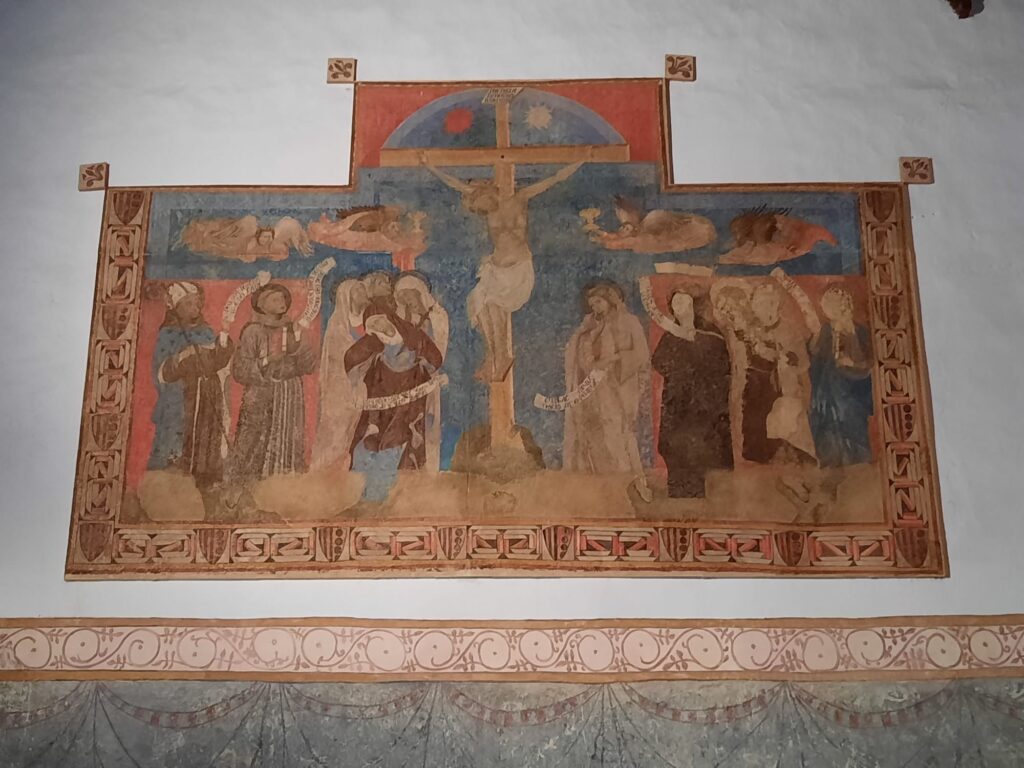
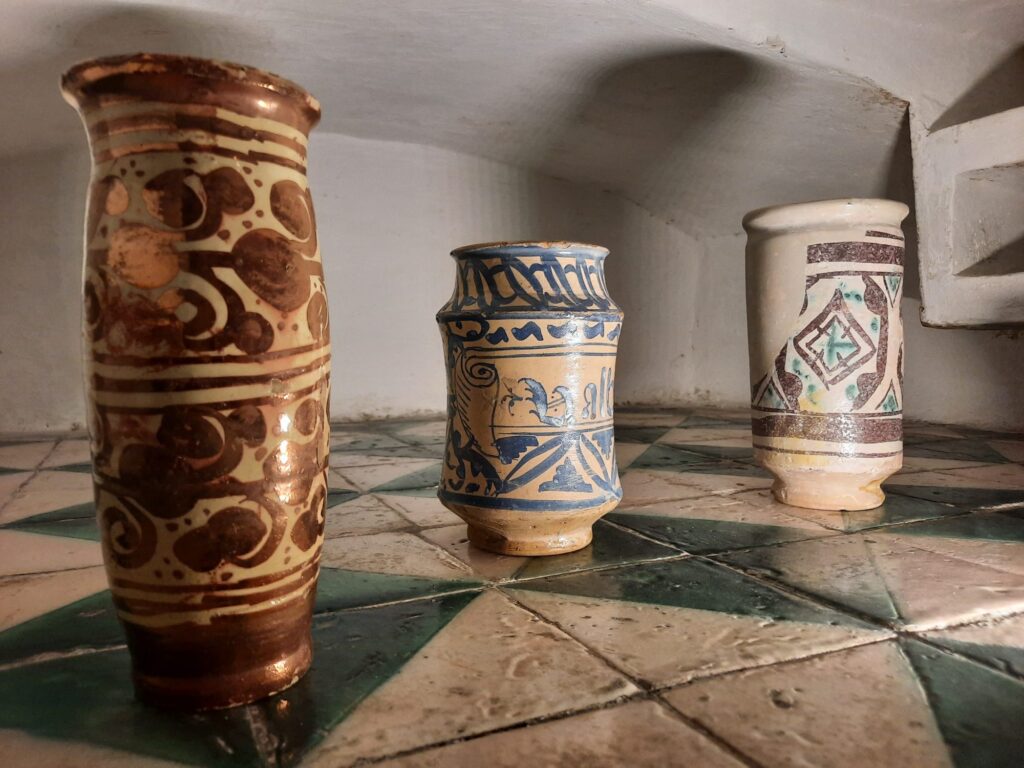
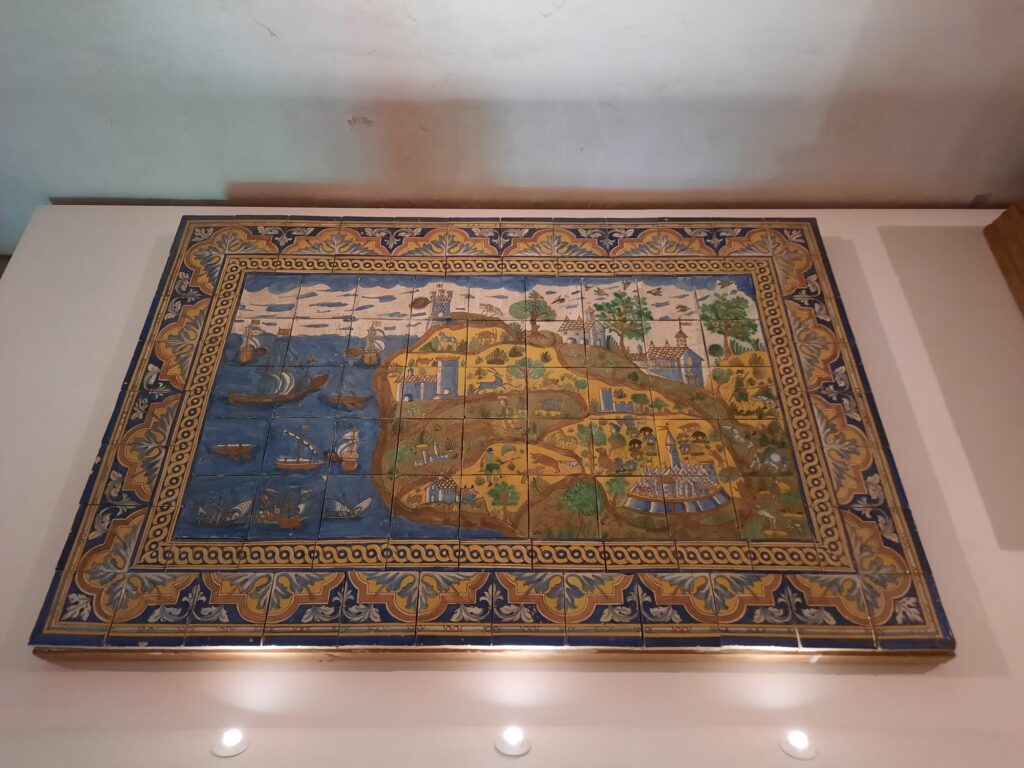
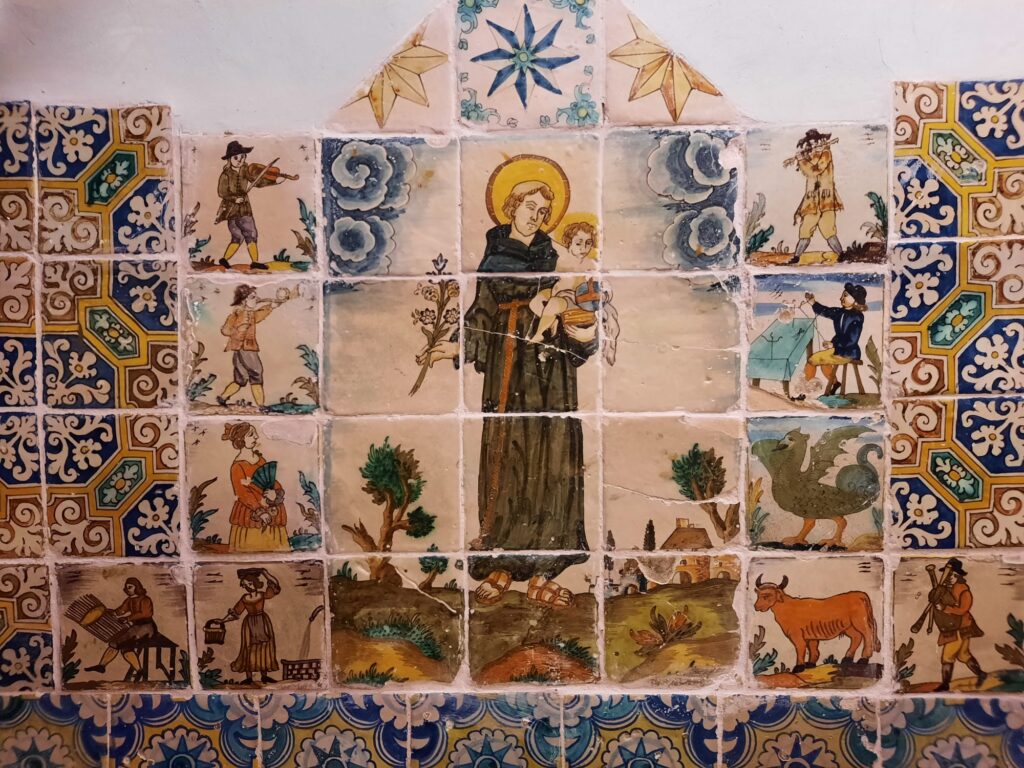
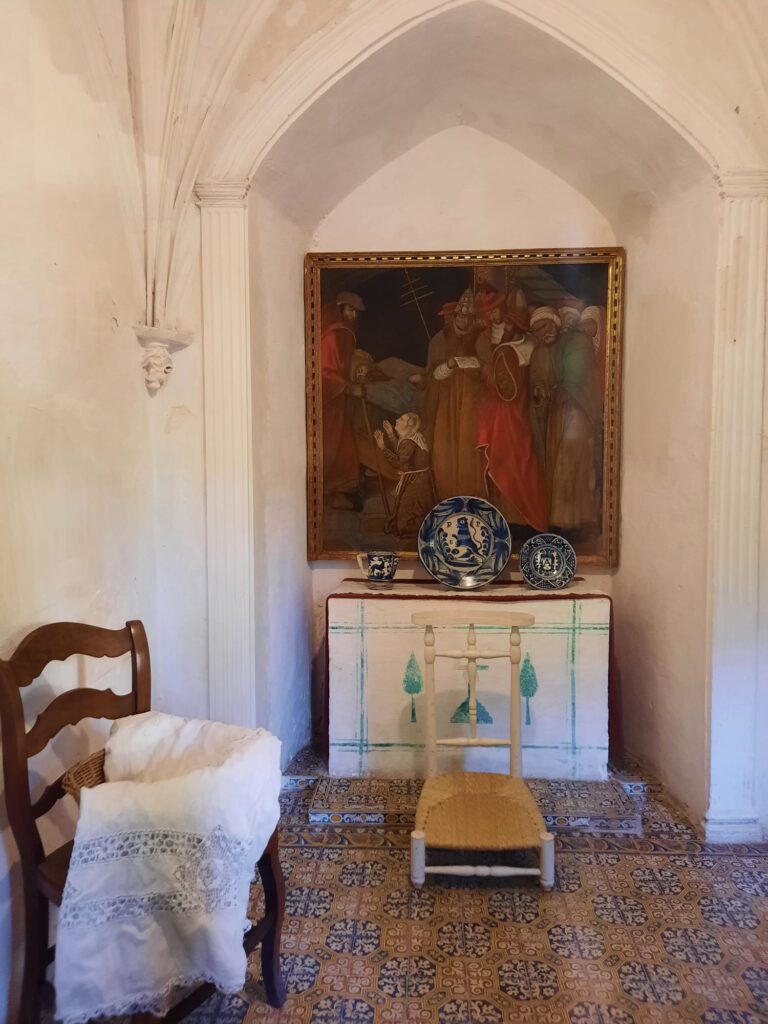
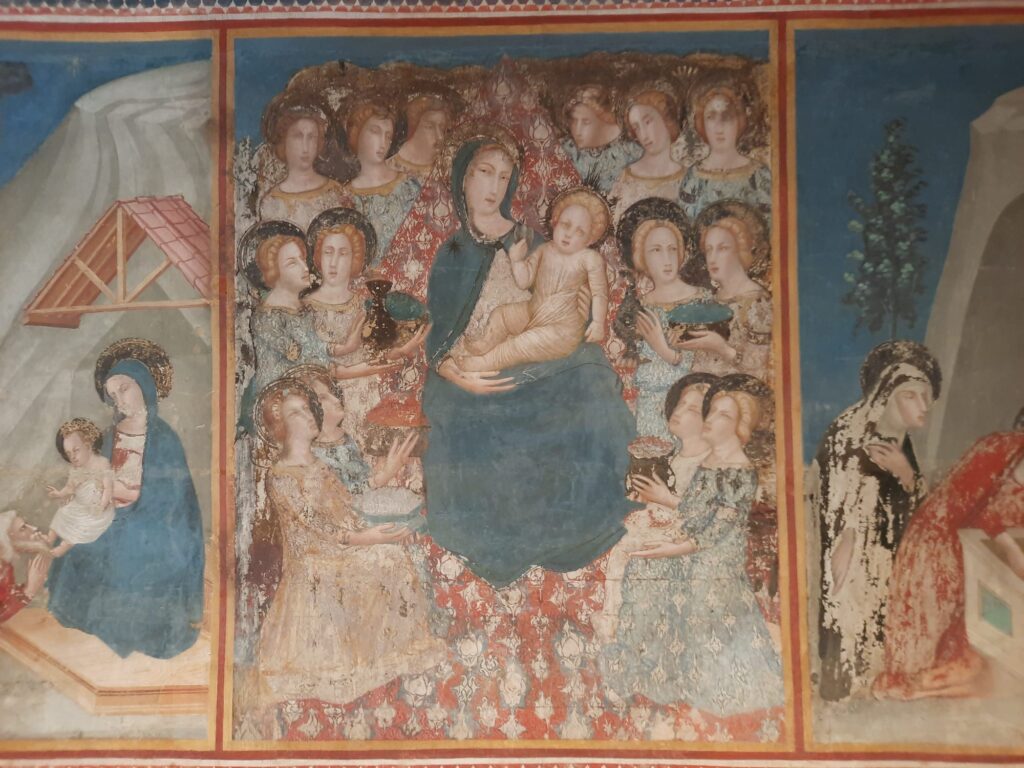
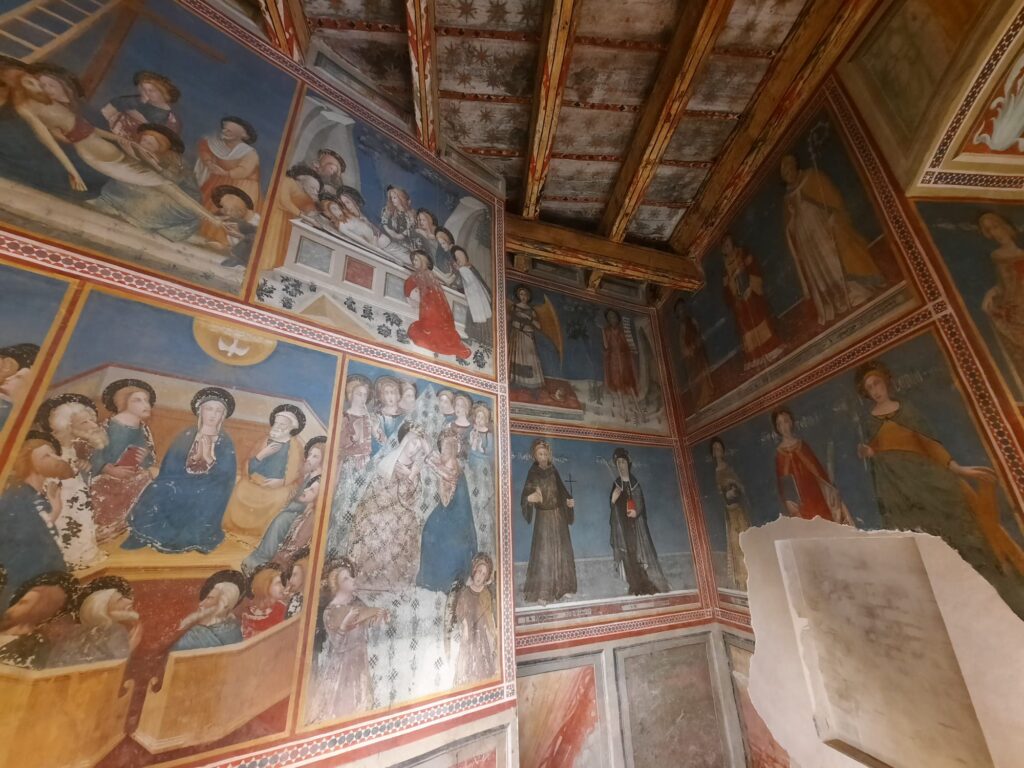
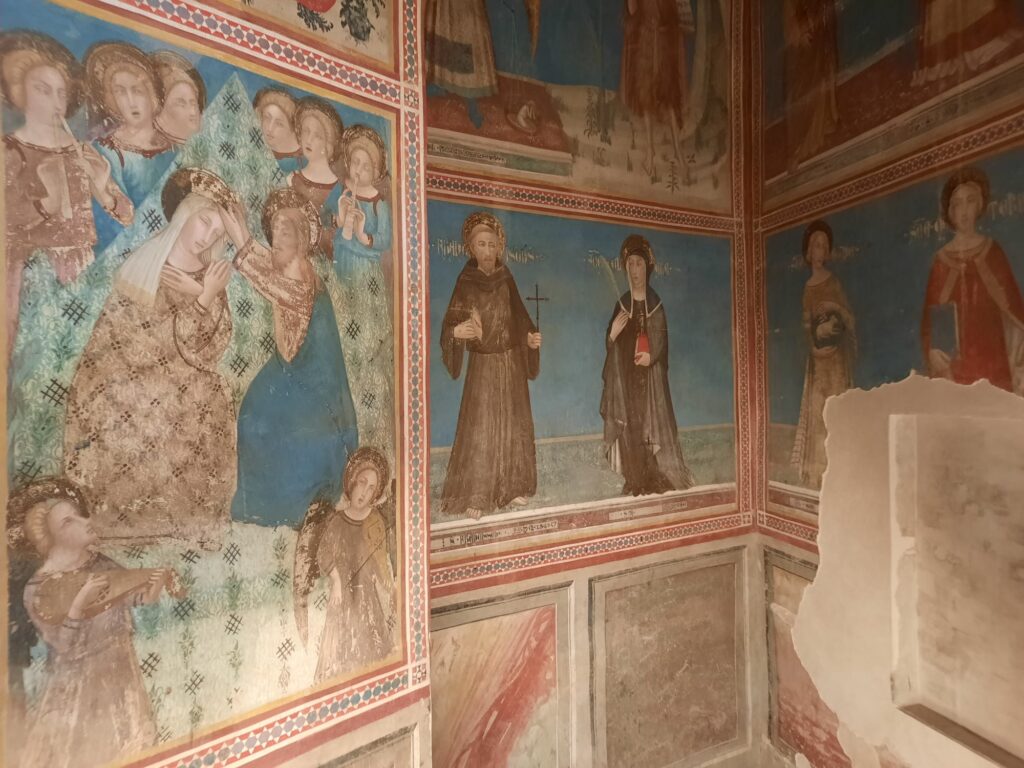
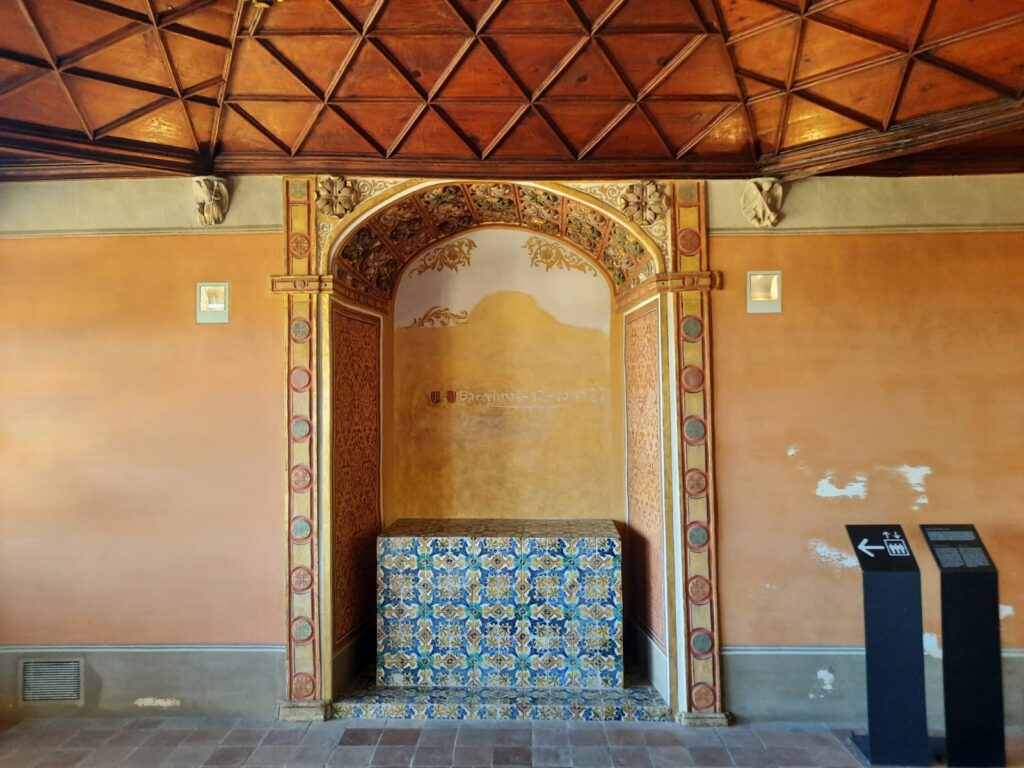
The monastery eventually transitioned into a mixed space – part religious community, part museum – and this hybrid identity remains today. The last nuns only left in 1983, and even now, a small community of Poor Clares lives nearby. What we see when we visit is not just a collection of rooms or artworks, but the legacy of centuries of quiet, cloistered life. Inside the museum spaces, you’ll find devotional art, liturgical objects, and fragments of everyday life. There’s less grandeur than you might find in central Barcelona’s churches, but more intimacy. The frescoes by Ferrer Bassa, painted in the 1340s in St Michael’s Chapel, are a highlight. Seemingly influenced by Giotto, they’re some of the most beautiful Gothic paintings in Catalonia.
Like many religious institutions that have adapted to modernity, Pedralbes now plays multiple roles: spiritual sanctuary, heritage site, museum. But above all, it remains a place of quiet. Which, in a city as full-on as Barcelona, feels very special.
Through the Cloister: A Peaceful Sunday Visit
Again by good fortune, my visit coincided with the first Sunday of the month. This is when many of Barcelona’s museums, including the Reial Monestir de Pedralbes, offer free entry. It’s one of the city’s best-kept secrets, and always worth checking before you plan your weekend wanderings. It can make things busy, but the Monestir is a big enough space to accommodate a lot of visitors.
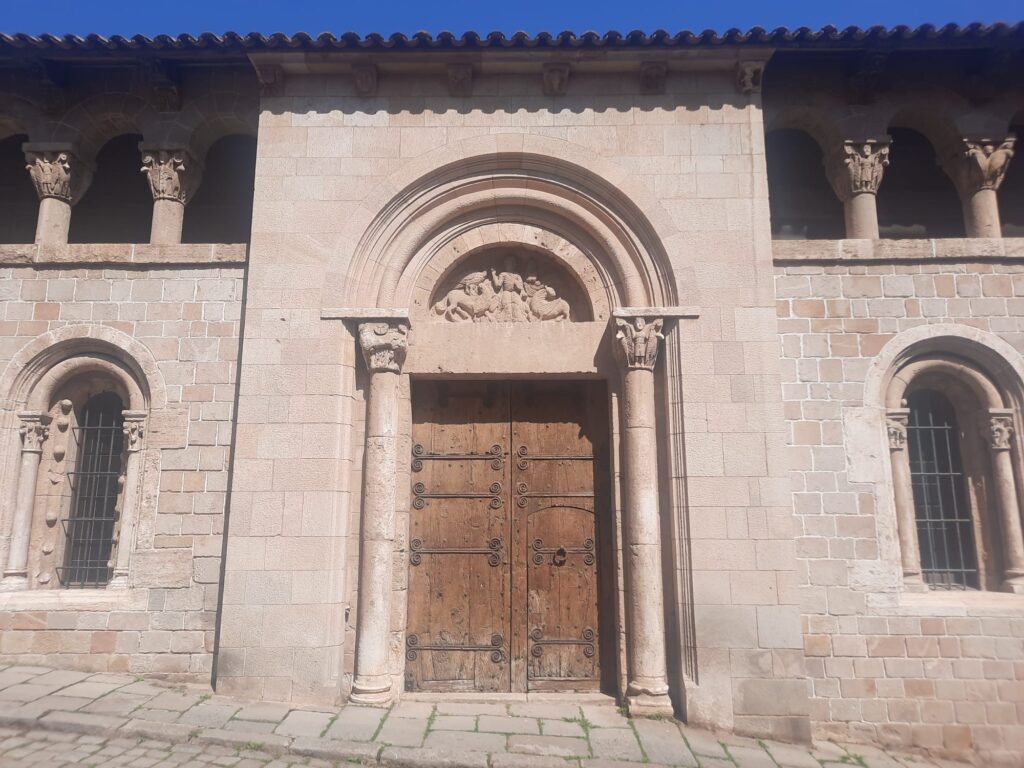
Finding the entrance was straightforward enough, but the visit route was a little less clear. I ended up walking around the cloister in reverse order. Not that there’s really a wrong way, but it felt slightly backwards until I got my bearings. Once I did, everything fell into place.
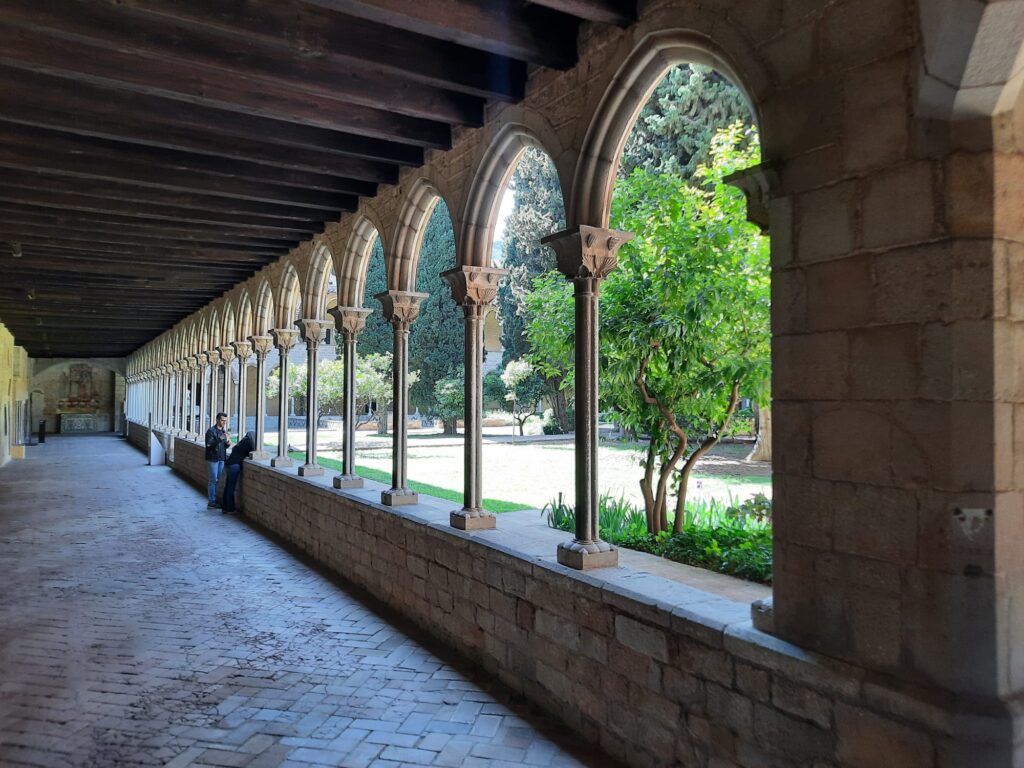
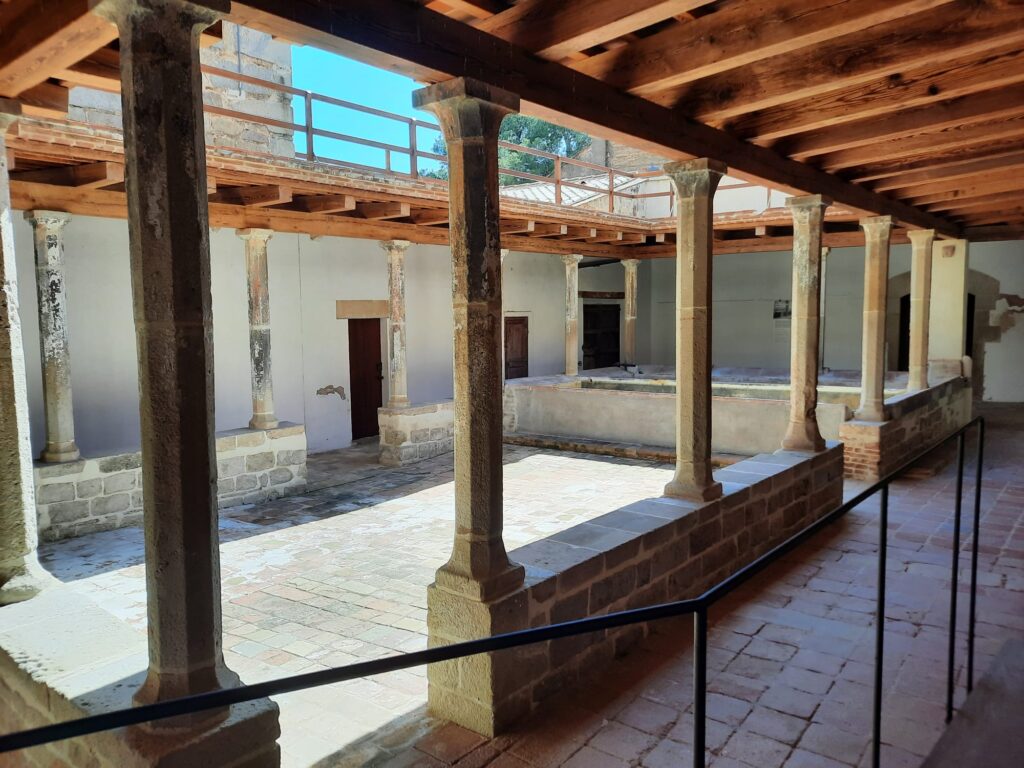
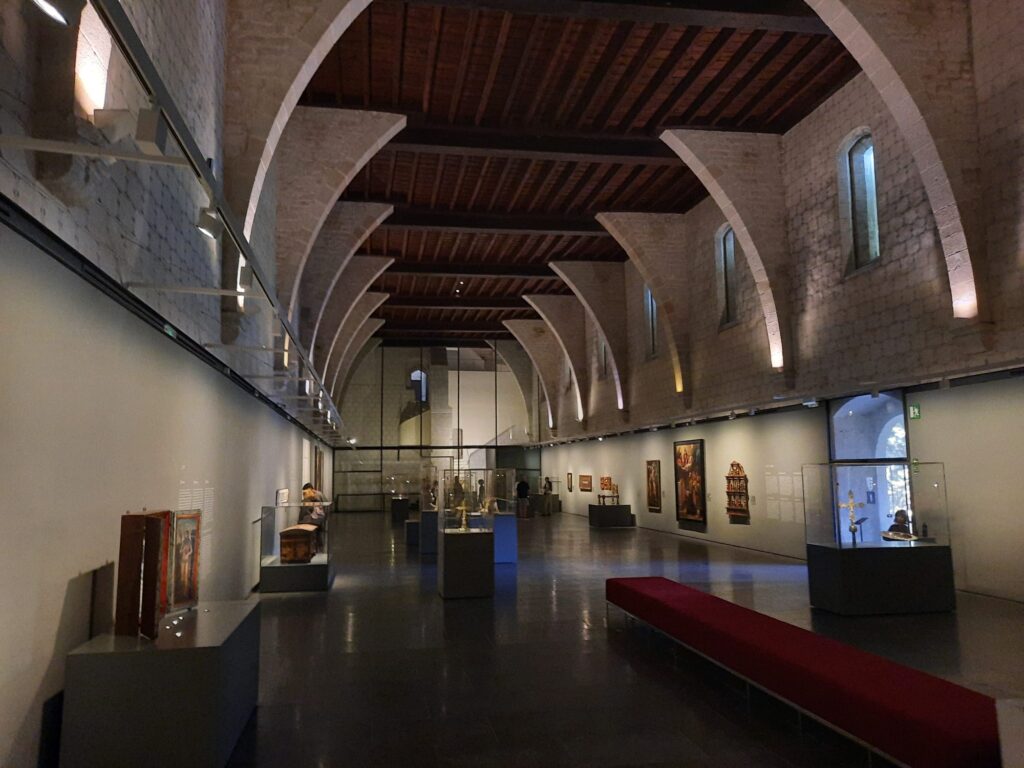
The ground floor includes the central cloister garden, framed by soaring arches and weather-worn stone. It’s a peaceful, almost contemplative space, with the soft sounds of the garden offering a natural hush. In contrast to some of the grander and more crowded religious sites I’ve visited (like the Basilica of St Anthony in Padua to take one example), here there’s space, physically and mentally, to rest.
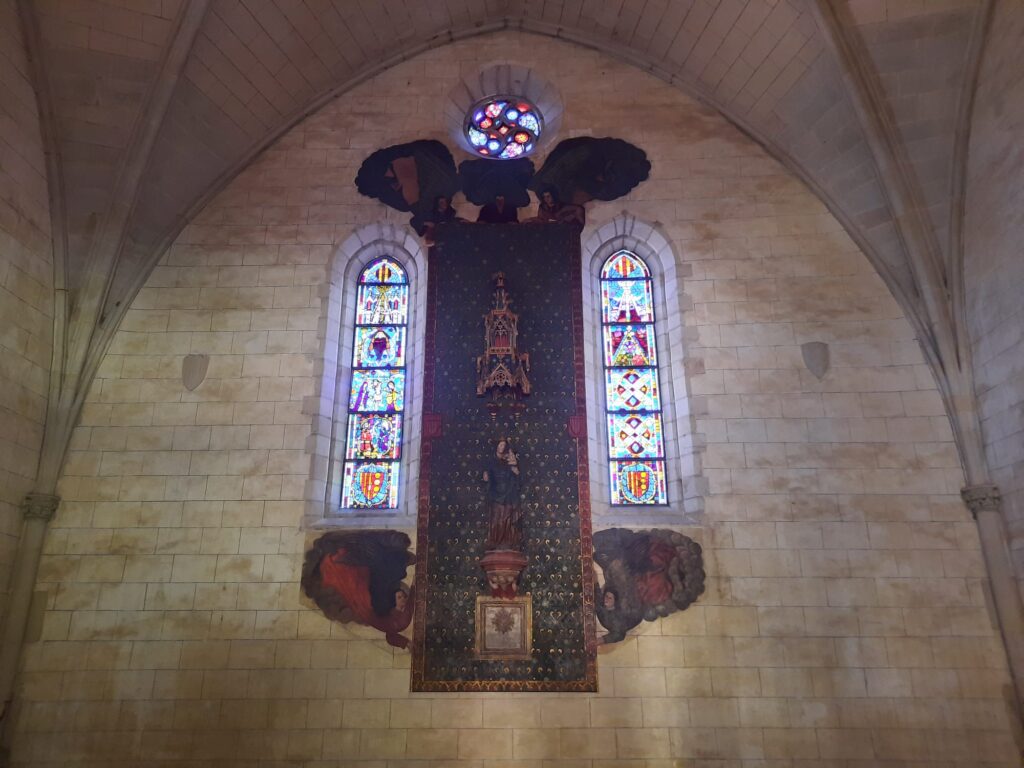
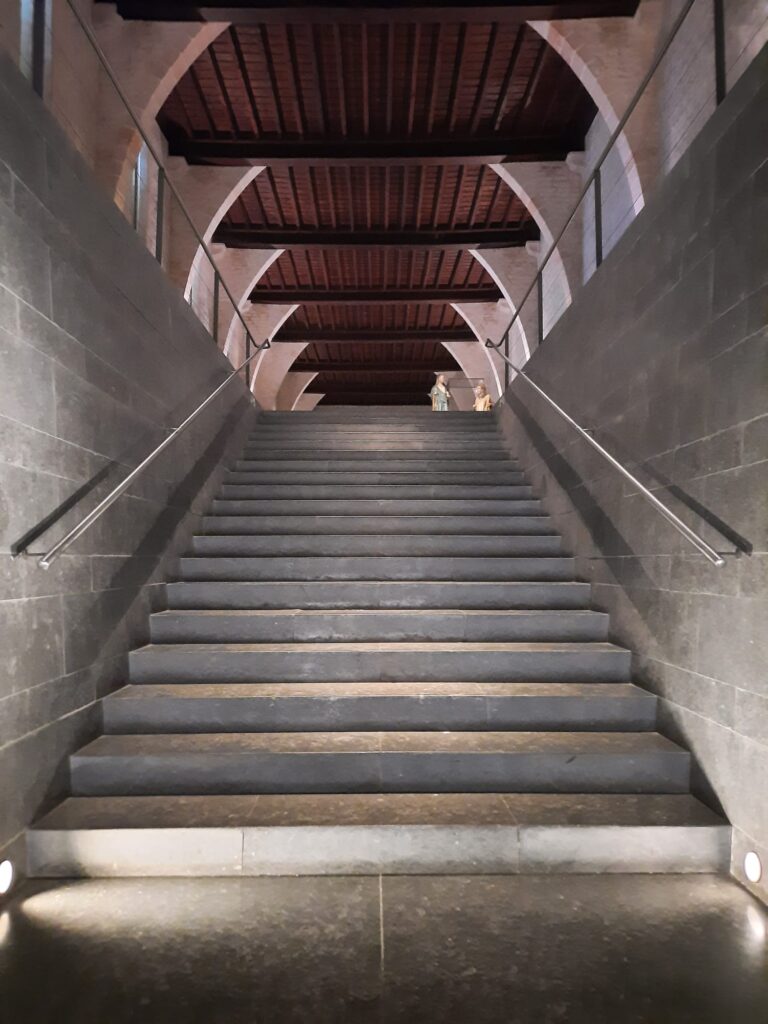
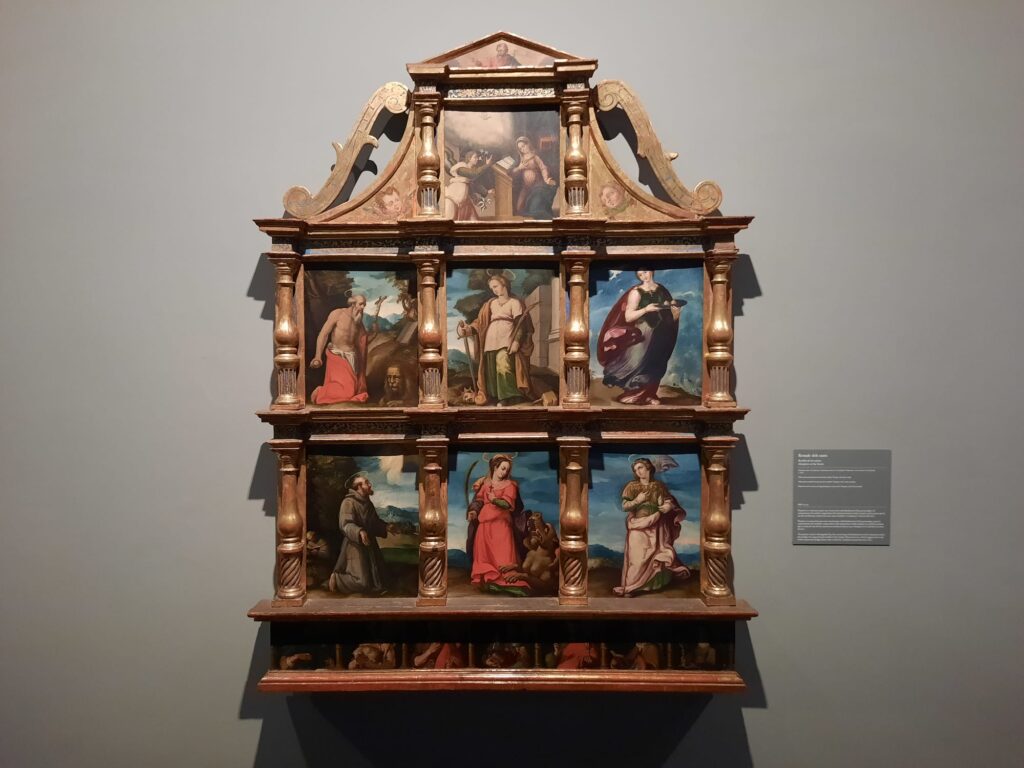
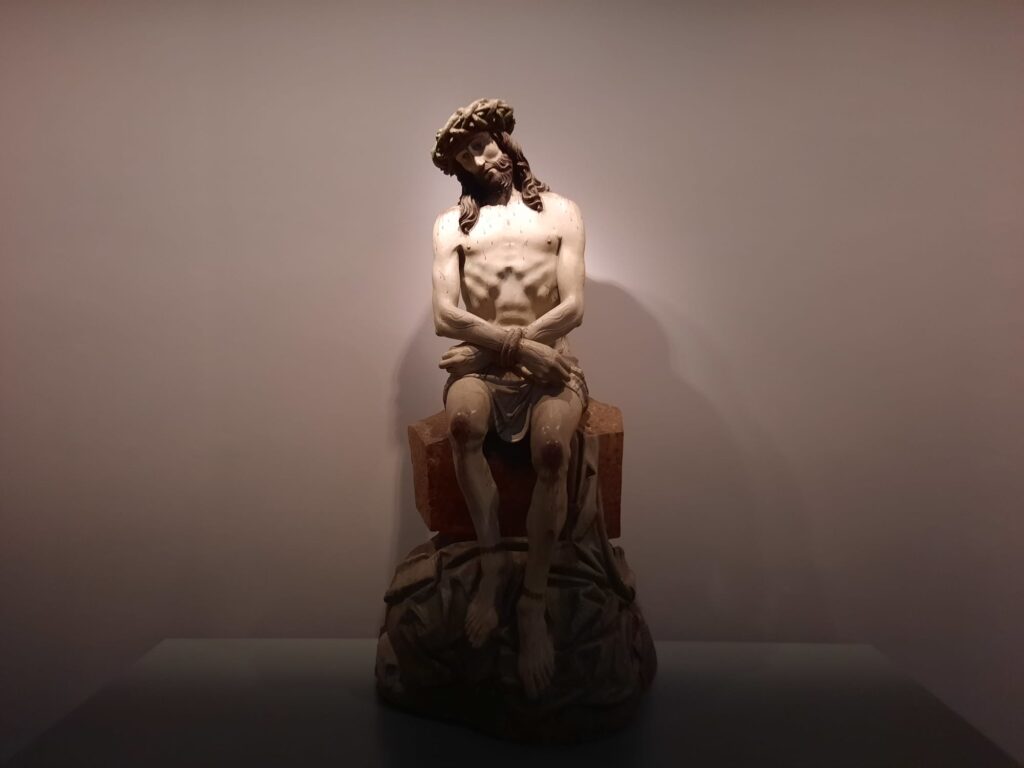
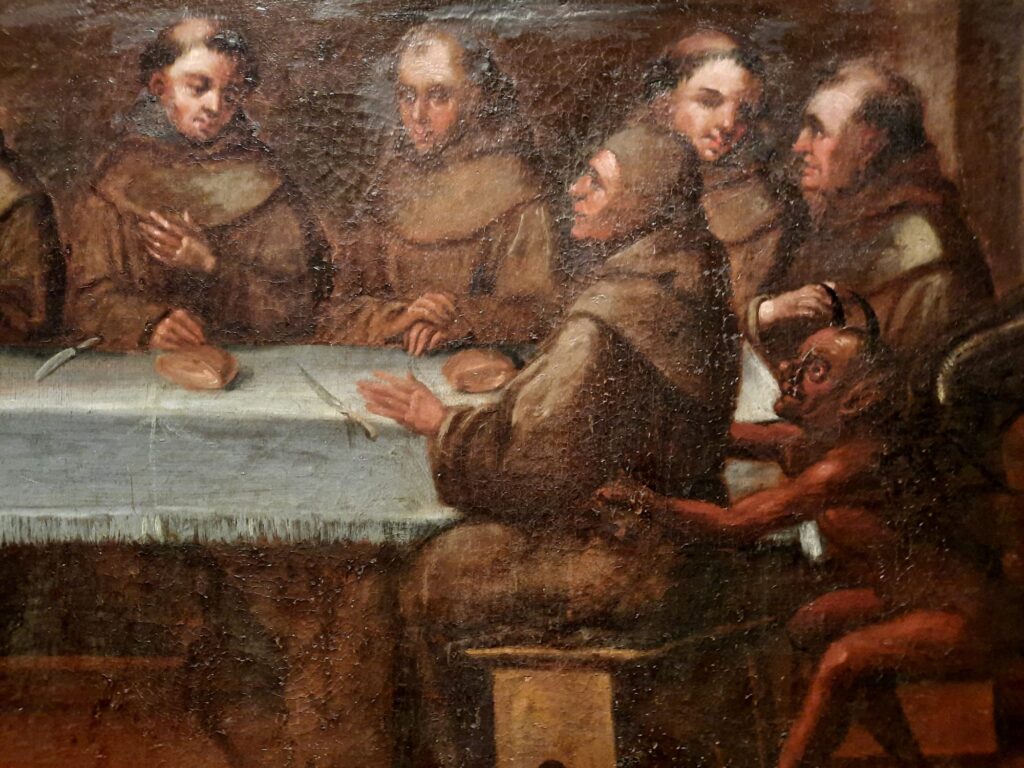
After exploring the ground level, a staircase leads up to the first-floor museum. The collection includes religious artworks, altarpieces, and sculptures, many drawn from the life of the monastery and its former inhabitants. After a gentle meander through this upper floor, the route takes you back down and up again to the first-floor spaces around the cloister.
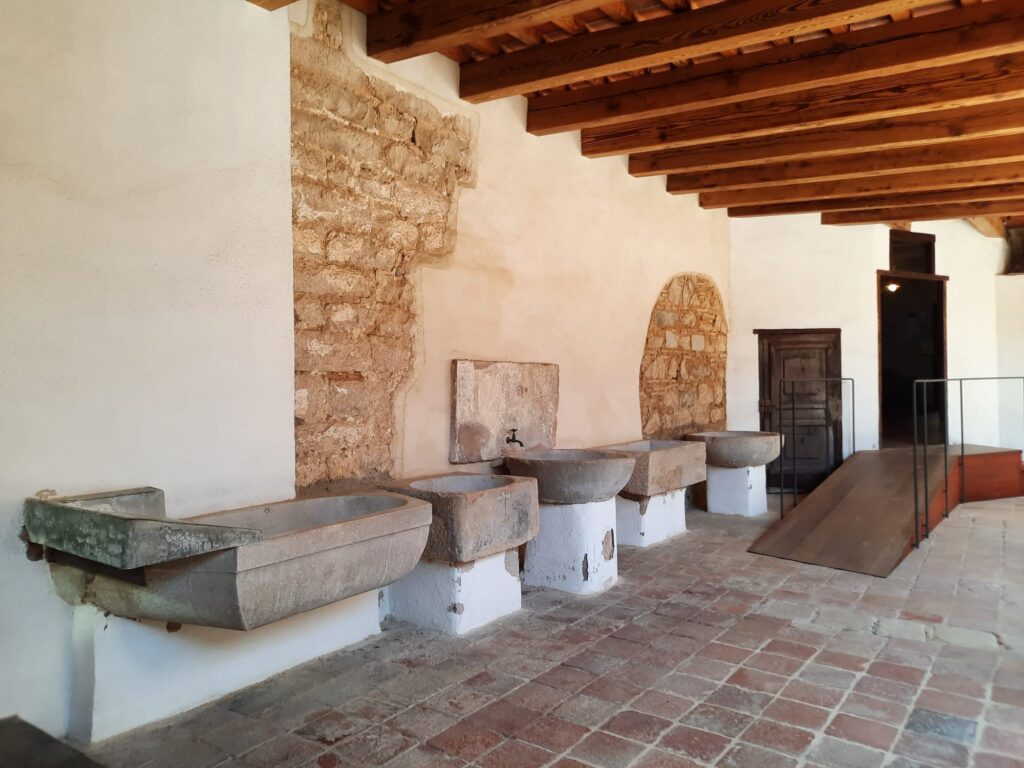
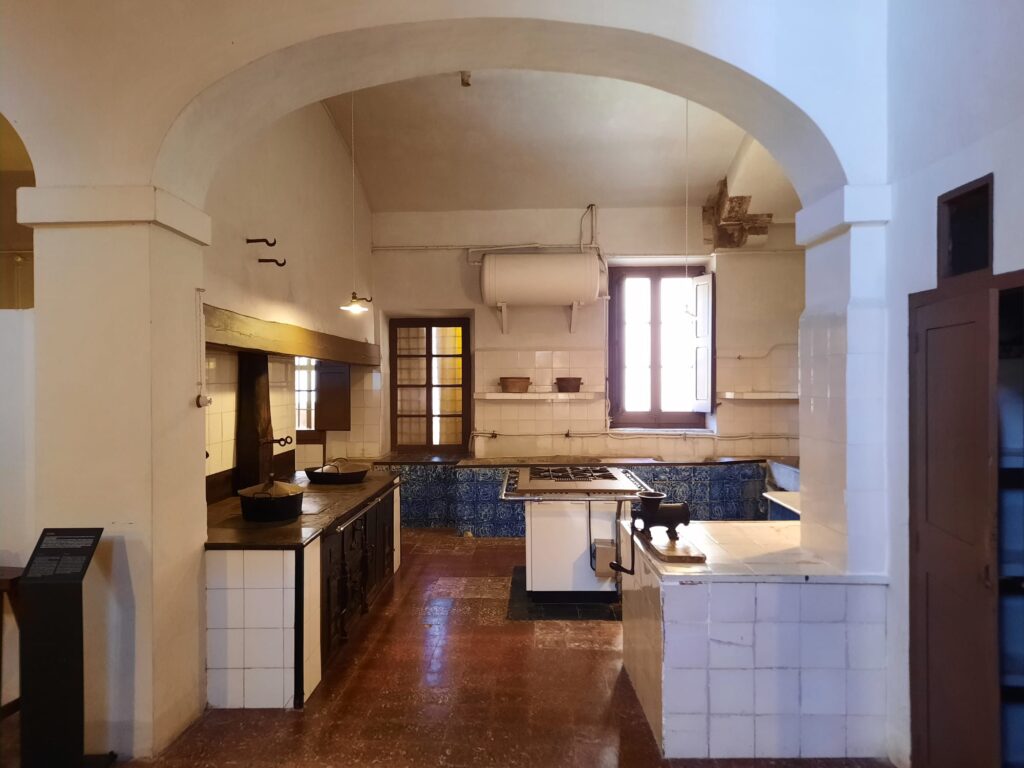
Small touches bring the past vividly to life. The simple kitchen and the stone-walled laundry courtyard offer a glimpse into the rhythms of daily labour that supported a life of devotion. Here, spiritual retreat and practical reality were carefully balanced, as reflected in the architecture itself.
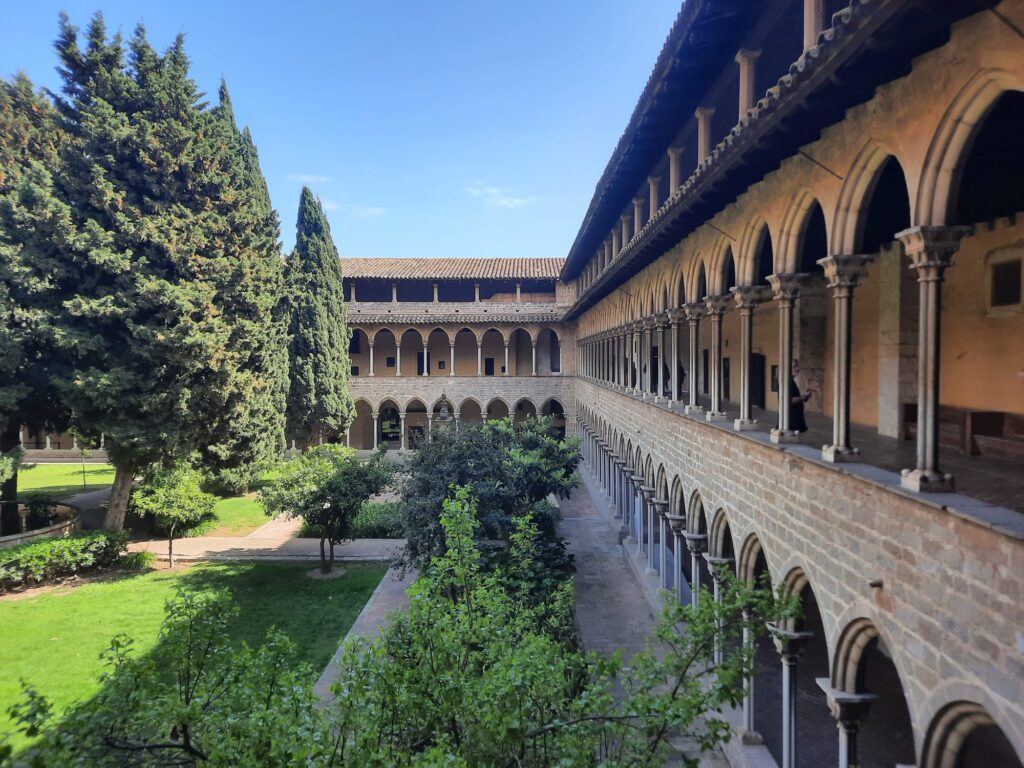
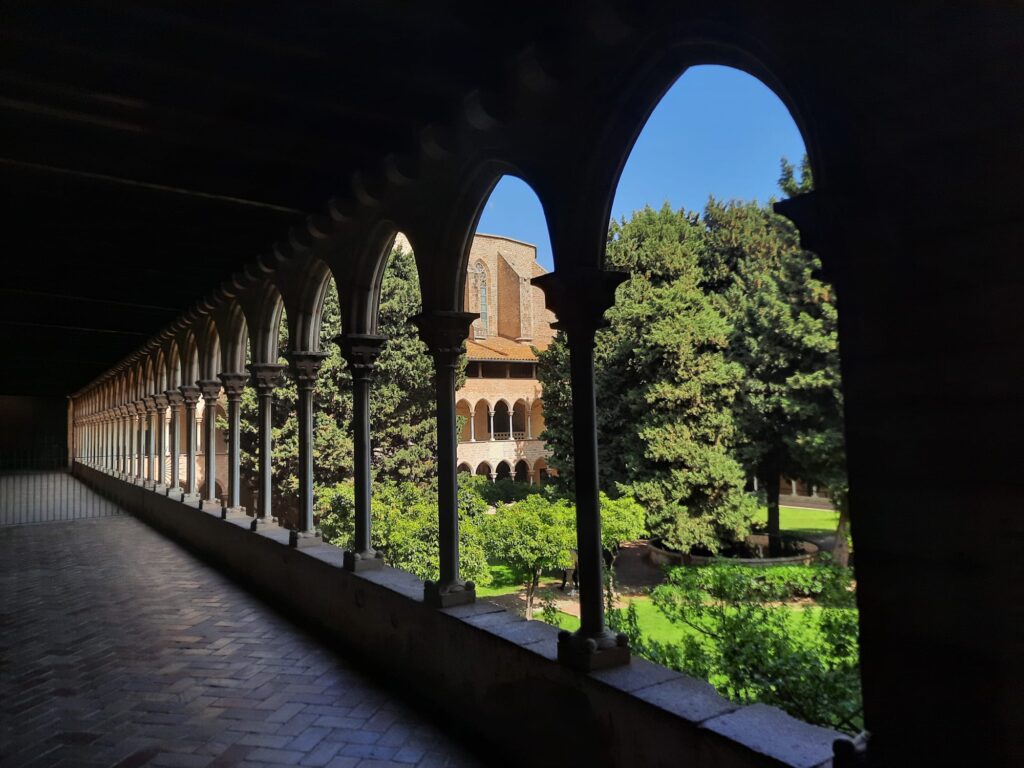
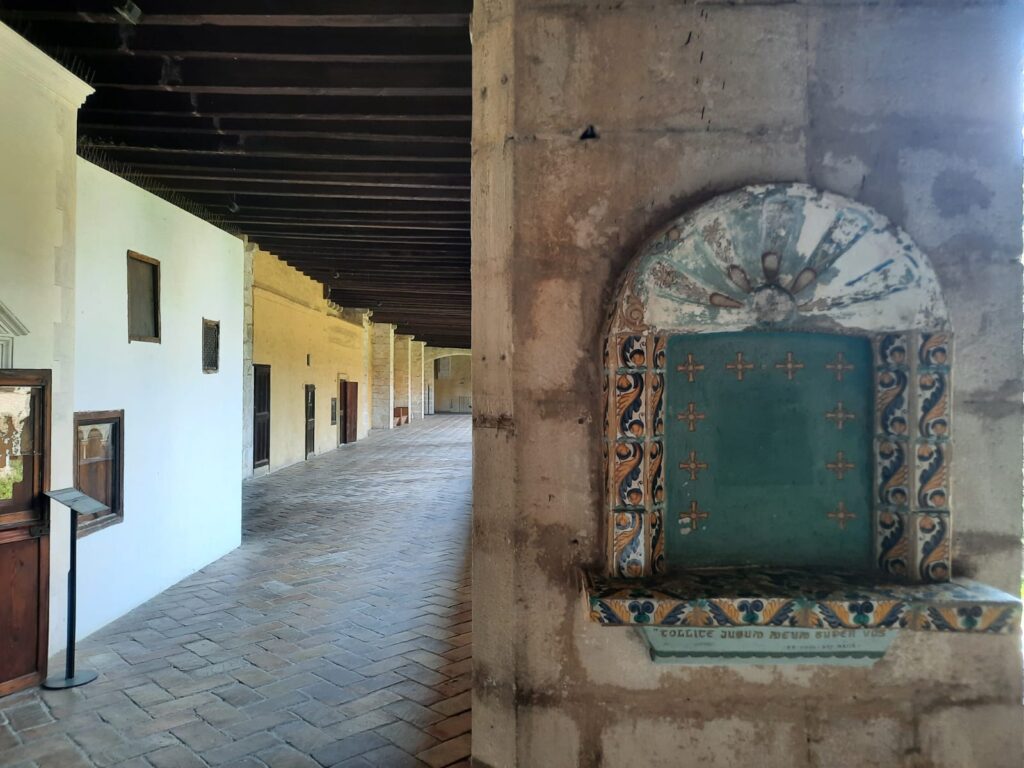
A Room of One’s Own (and Several Wardrobes)
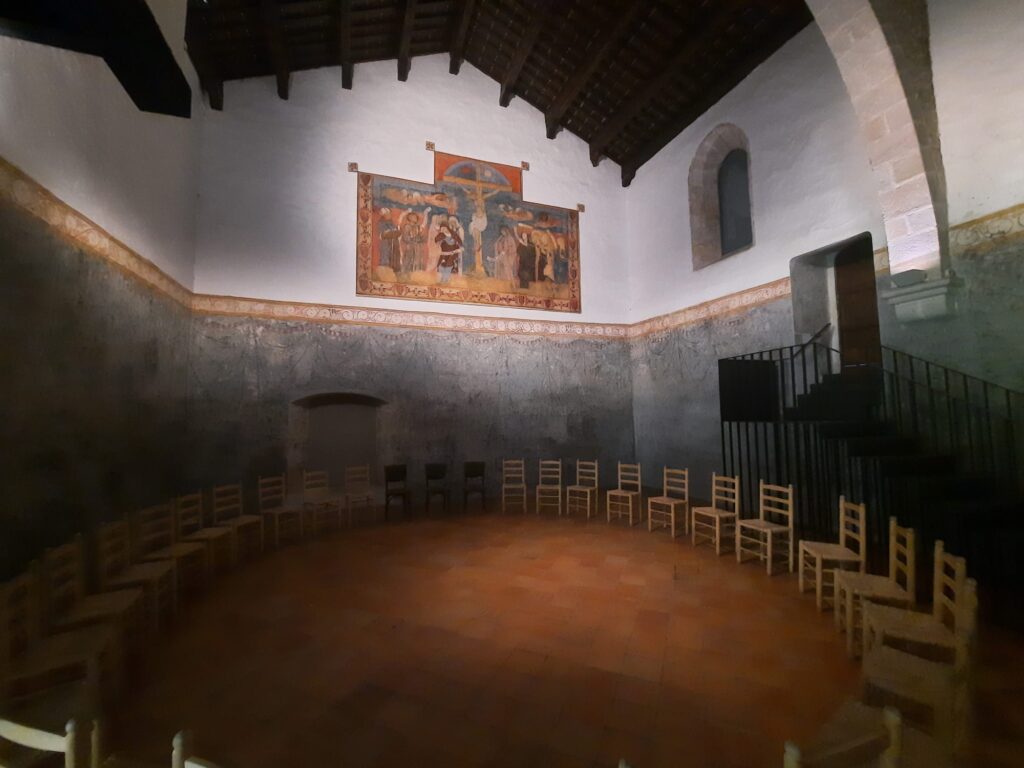
The Reial Monestir de Pedralbes is full of evocative corners, but the clear standout is St Michael’s Chapel, its walls painted with delicate 14th-century frescoes by Ferrer Bassa. It’s an intimate space, all ochres and gentle blues, showing the Passion of Christ with a quiet intensity. For anyone who has visited the Capella dei Scrovegni in Padua, as I did a few years ago, the comparison is striking. This may not be Giotto, but the spirit is similar: a small space, filled with feeling. A very small space on this occasion, originally painted as a private space for Abbess Francesa ça Portella. I was also reminded of some of the Eastern Orthodox churches I’ve seen: less for style, more for atmosphere. A sense of being enclosed in devotion. The space is recently reopened after extensive renovations.
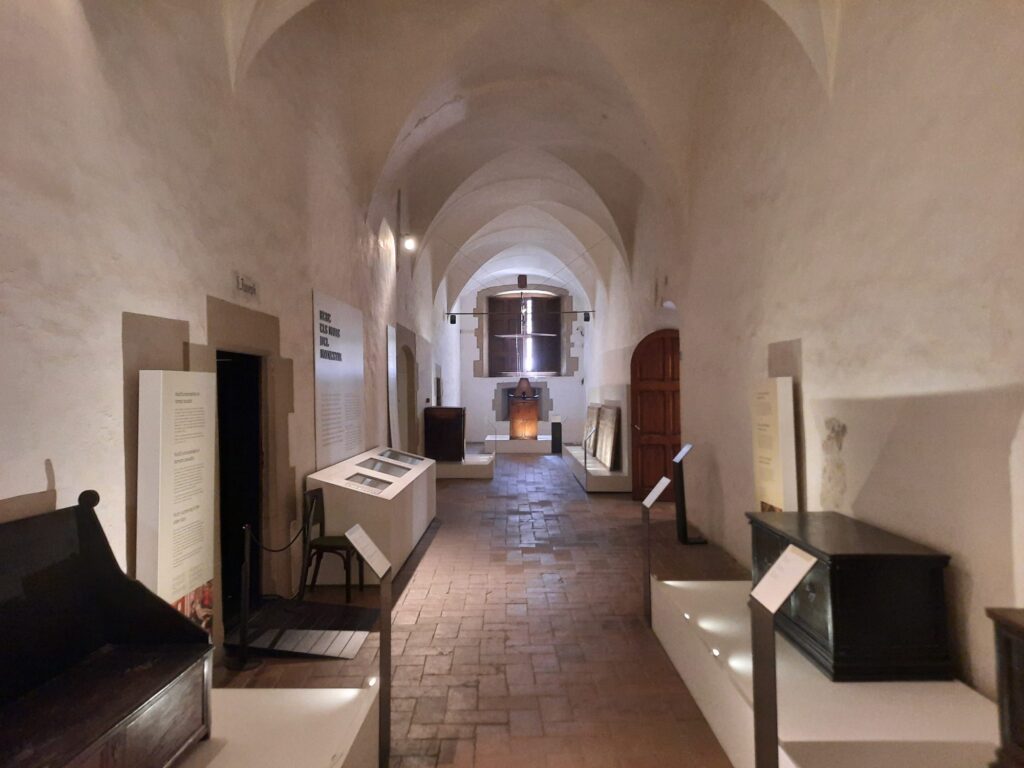
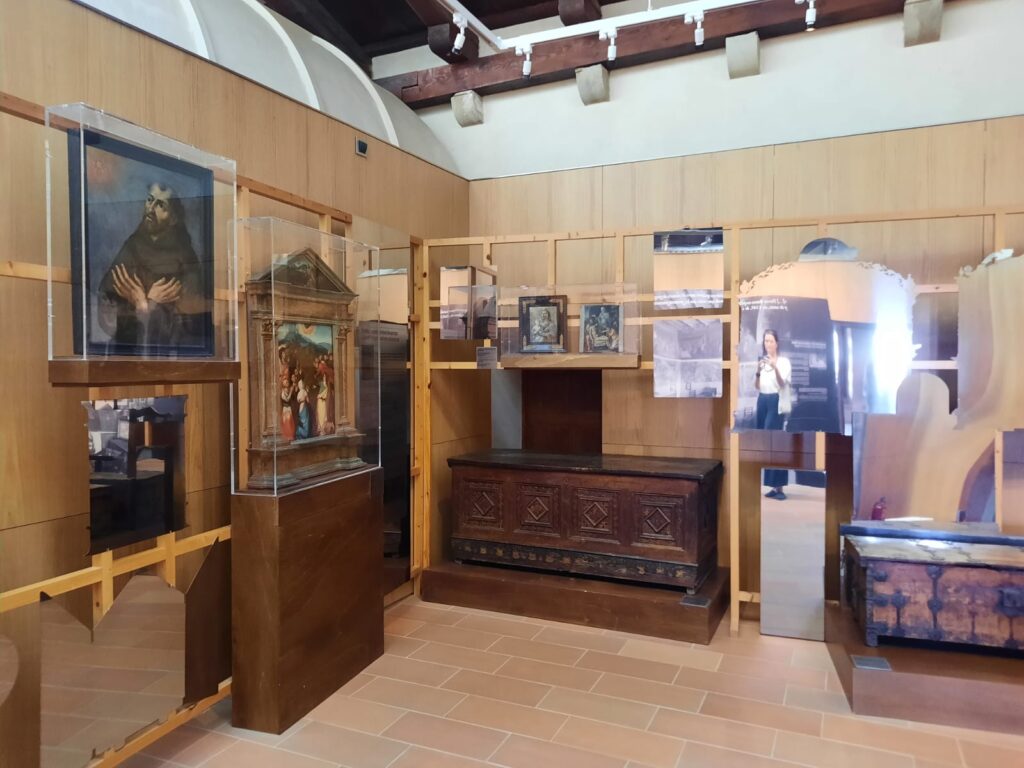
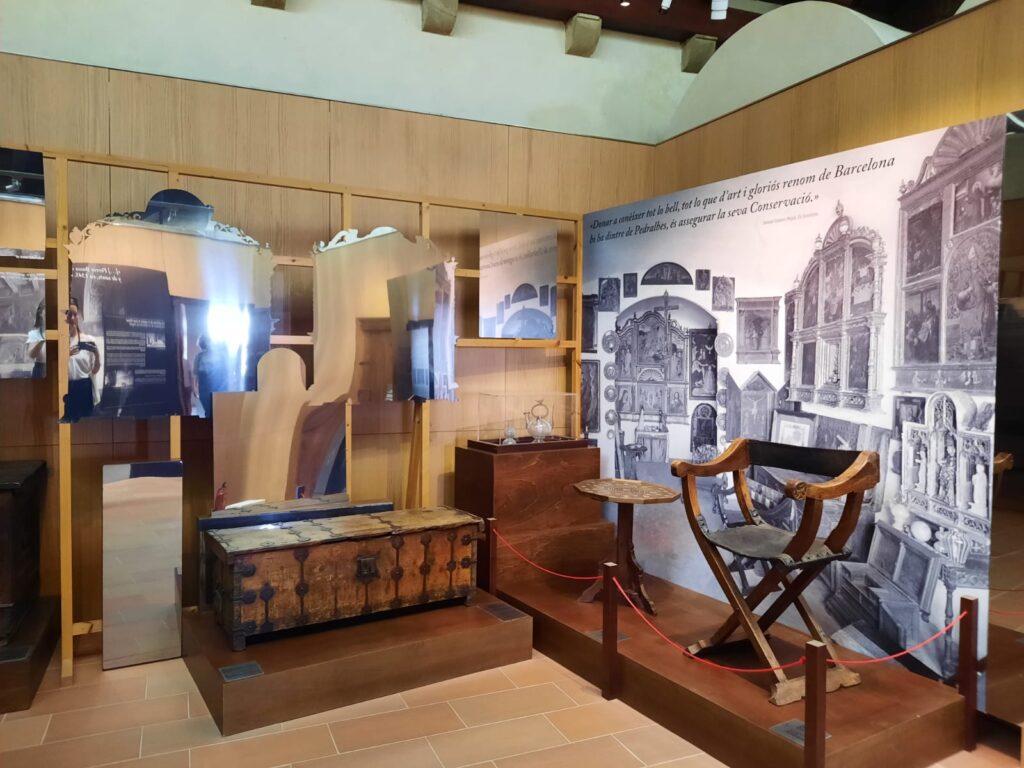
Elsewhere, the museum brings the convent’s history to life. There are nun’s cells recreated behind glass, giving a sense of how simply and sparsely the nuns lived. Their wooden beds and shelves contrast beautifully with the rich decoration in communal devotional spaces. One of the most oddly memorable exhibits for me, though, was a temporary exhibition on the monastery’s historic furniture. Wardrobes, camp beds, chests, stools: items that feel completely ordinary, and yet have become historic artefacts through survival and reuse. They speak to the lives lived here. Not grand, but grounded.
Upstairs, a display case shows items lost from the collection over time, missing objects from archival images replaced cleverly with shaped mirrors. It’s a poignant touch, and a reminder that, while this place has seen 700 years of change, even quiet spaces aren’t immune to the forces of history.
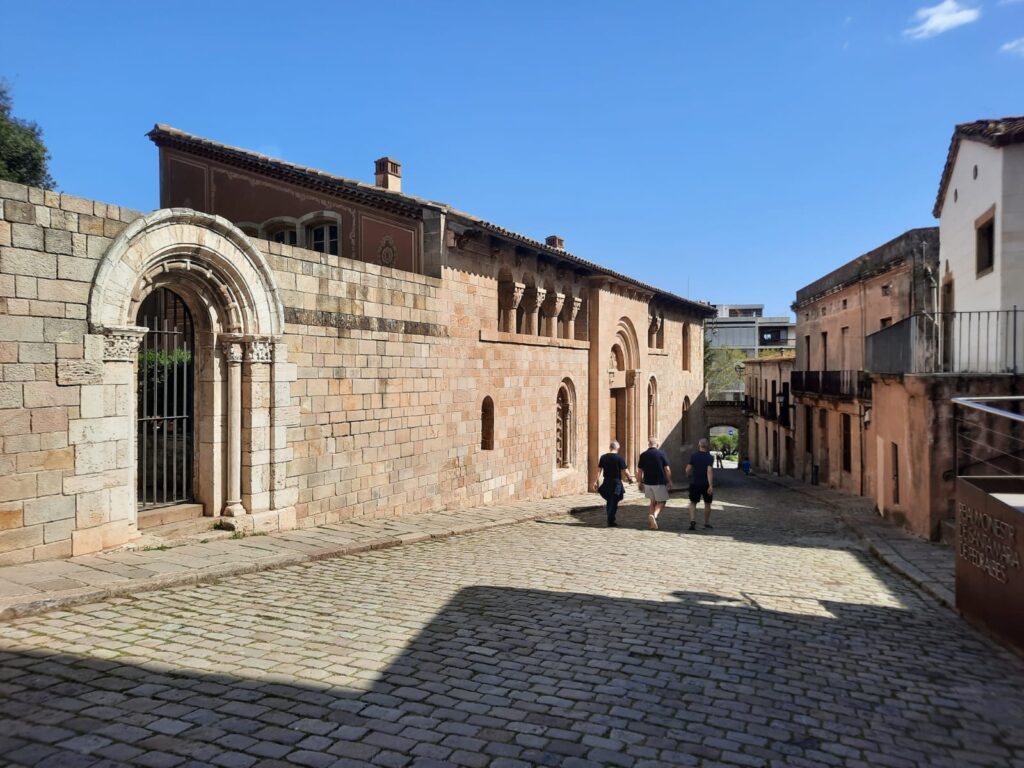
The Reial Monestir de Pedralbes: A Fortunate Sunday
Sometimes the best experiences come from a few chance decisions lining up just right. I hadn’t planned to visit the Reial Monestir de Pedralbes. But arriving early on a Sunday, staying nearby, and remembering it was the first Sunday of the month (with free museum entry), all combined to make it possible. I’m so glad they did.
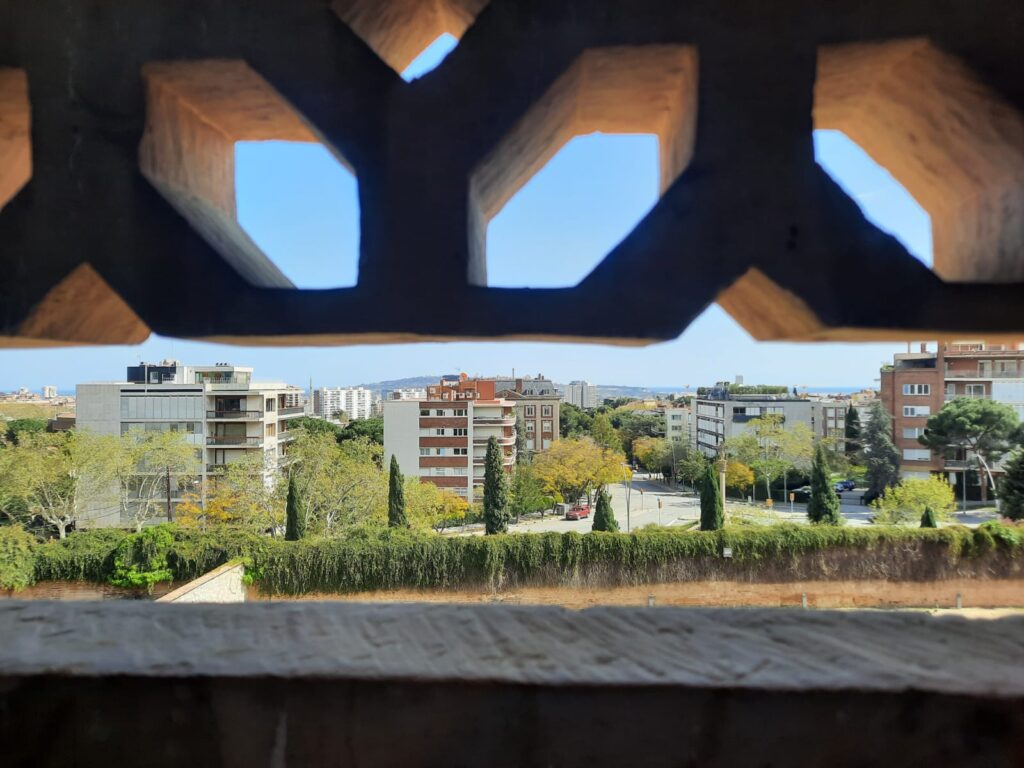
It made for a perfect couple of hours on a warm Sunday afternoon. The Monestir is peaceful and thoughtfully presented, its cloisters and chapels inviting quiet reflection. Though once on the edge of the city, it’s now firmly part of Barcelona’s fabric, and yet somehow still feels like a world apart. Technically, Pedralbes is within walking distance of other sites, including Park Güell. But I wouldn’t rush it. The Monestir is best appreciated without a ticking clock, its silence and spaciousness offering an antidote to the busy city.
If you do visit (and I hope you do), my top tip is to round out your trip with a stop at Petanca Pedralbes. This lovely outdoor café is set beside a pétanque court, and has shady tables, cold drinks, and exactly the sort of low-key atmosphere that suits the mood of the Monestir. A fitting end to a peaceful afternoon.
Salterton Arts Review’s rating: 4/5
Trending
If you see this after your page is loaded completely, leafletJS files are missing.