
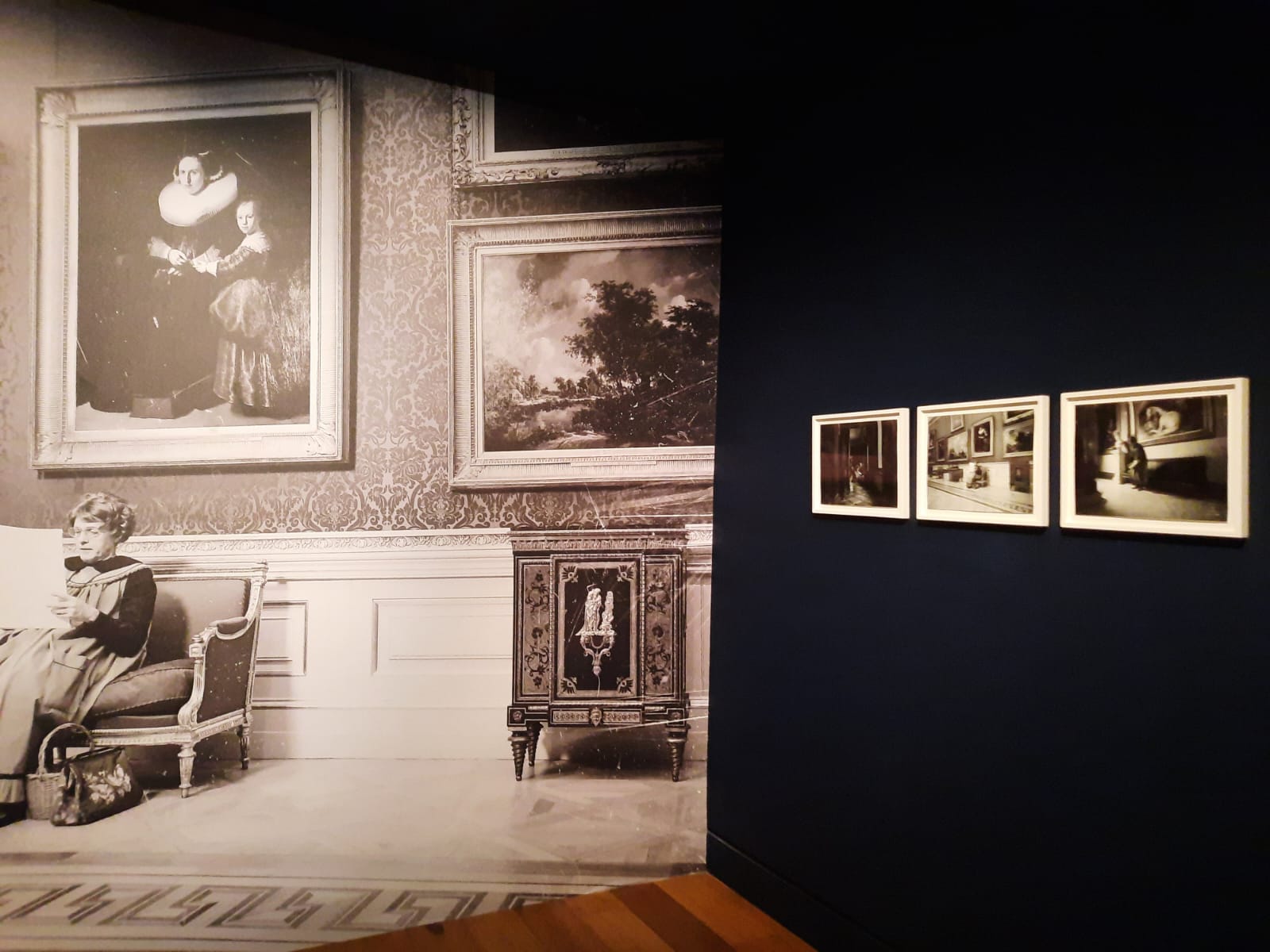
Grayson Perry: Delusions of Grandeur – The Wallace Collection, London
Grayson Perry transforms the Wallace Collection with Delusions of Grandeur. New works meet Old Masters. Reality and imagination blur beautifully.
Grayson Perry at the Wallace Collection
The very, very astute amongst you may recall that there was already a connection between Grayson Perry (Sir Grayson Perry, actually) and the Wallace Collection, before this exhibition. It was in the form of Perry’s contributions to the audioguide for this exhibition on Frans Hals. In conversation with Wallace Collection Director Xavier Bray, Perry’s commentary was insightful, funny and engaging. I could easily describe today’s exhibition in similar terms. So this is clearly a fruitful relationship between an artist and an institution that might not be the most obvious pairing at first glance.
Grayson Perry is fast becoming a favourite artist of mine here on the Salterton Arts Review. I’ve travelled before to see his work in Bath and Salisbury. But this is my first time seeing an exhibition of his work in London. And, as I say, the Wallace Collection is not the most obvious pairing. You can read a lot more about the history of the collection here (the first installment of my Covid Diaries series! Ah, that takes me back).
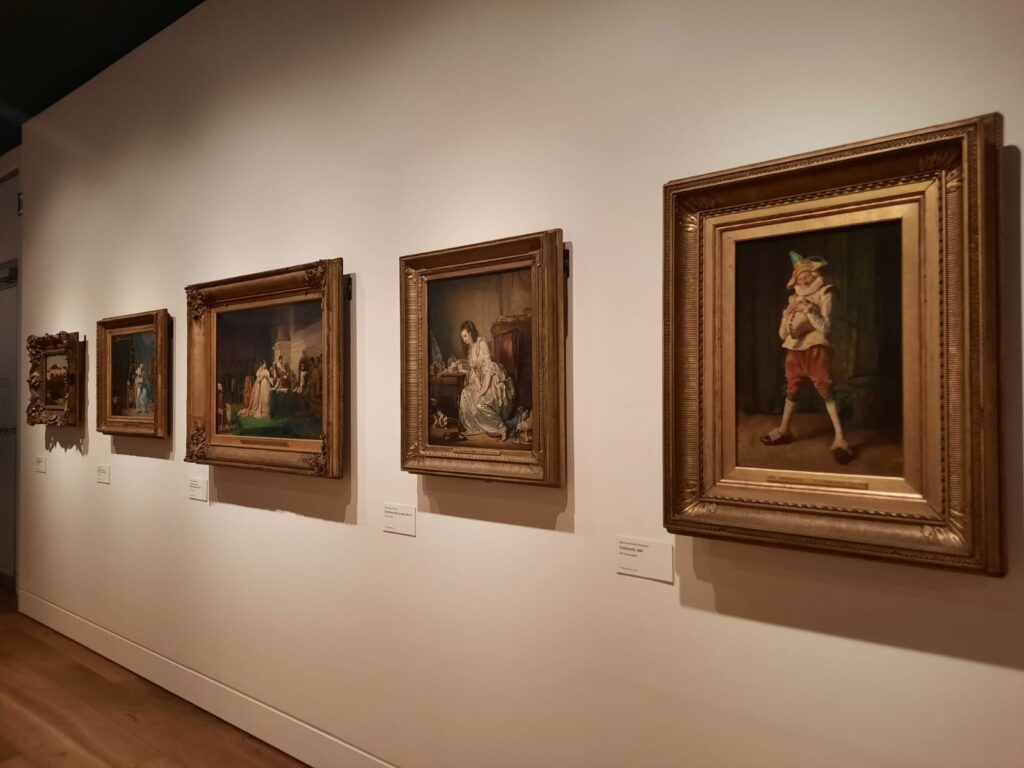
But in a few words, the collection was built up by several marquesses of Hertford and Sir Richard Wallace, who we can all assume was the illegitimate son of the fourth marquess. It is an impressive but very traditional grouping of mostly Old Masters, Rococo art, and arms and armour. And until very recently, the conditions of the bequest prohibited any loans from the collection, so it stayed put in Hertford House just north of Oxford Street.
Grayson Perry, on the other hand, is a contemporary artist born in Chelmsford in 1960. His work is multi-disciplinary, including ceramics, tapestries, printmaking, drawing, film, performance, and now AI. He is known for challenging the status quo of British society, and for his female alter ego, Claire. He won the Turner Prize in 2003 and is a frequent arts correspondent and TV presenter as well as continuing to create innovative and thought-provoking art.
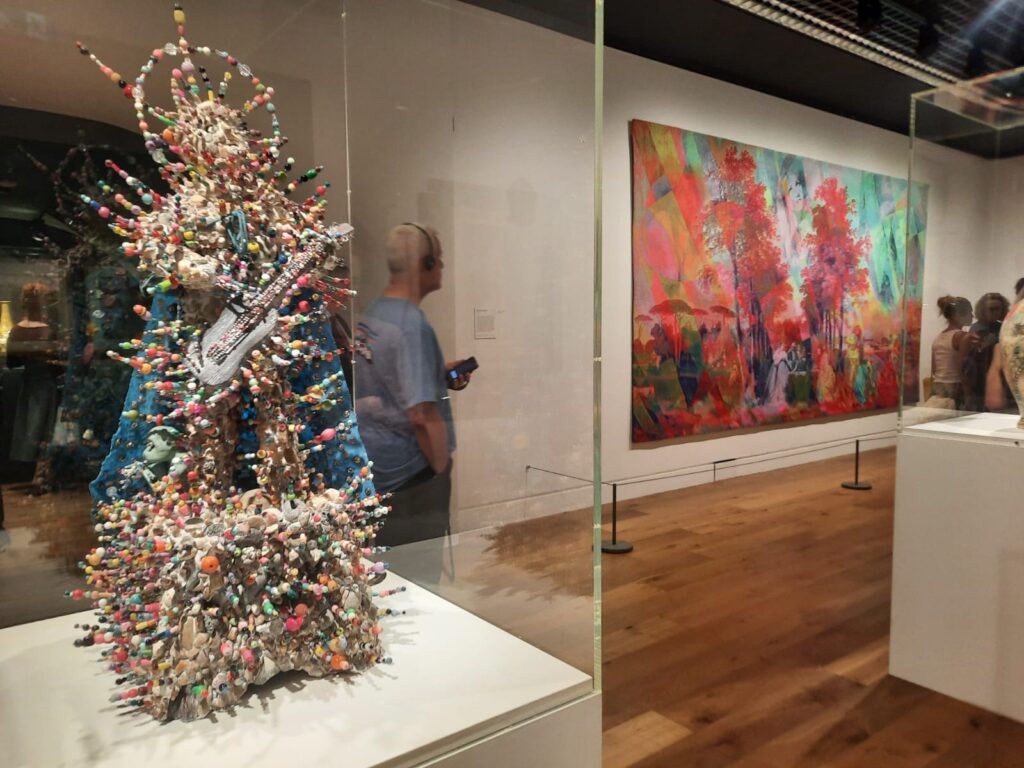
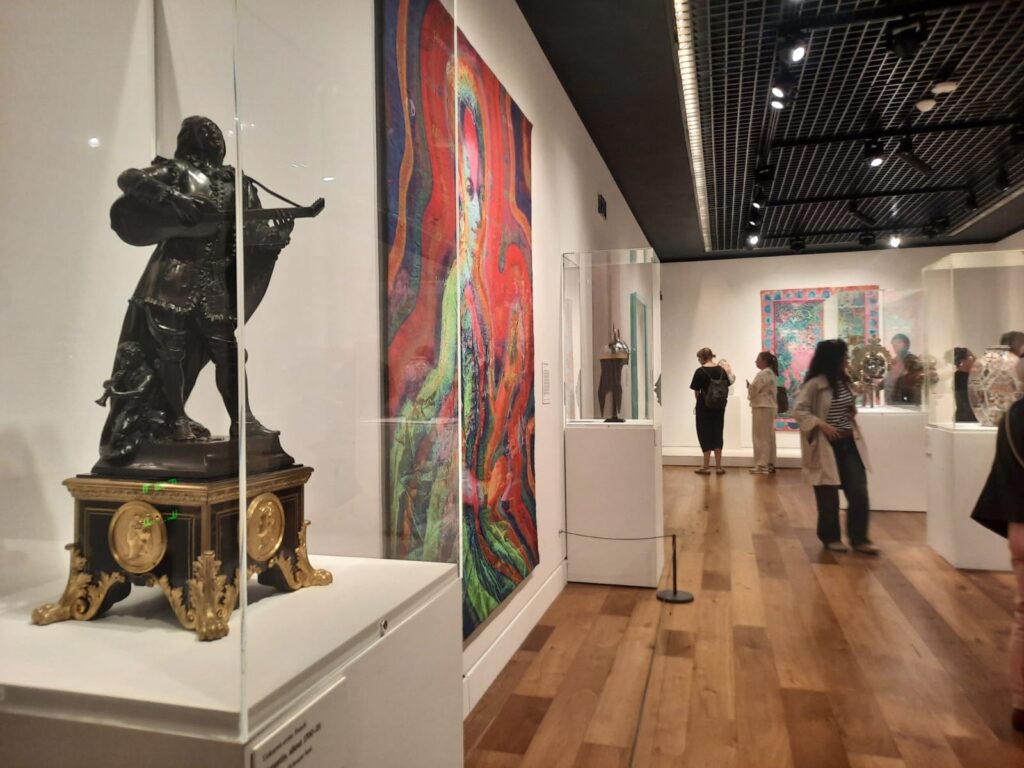
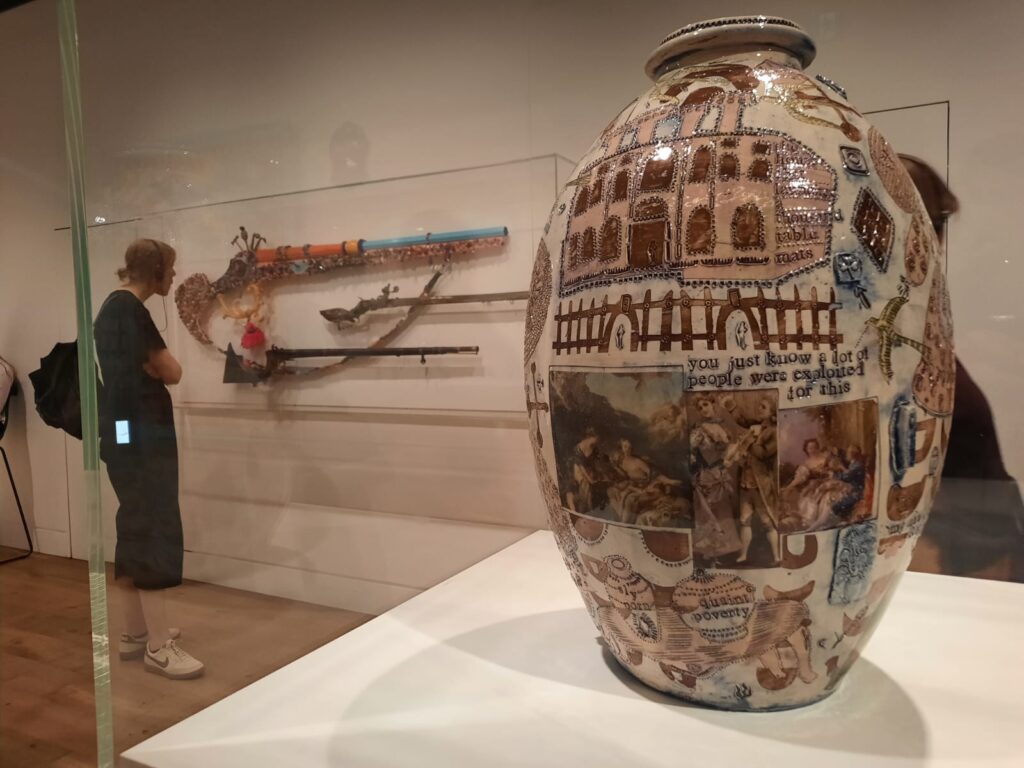
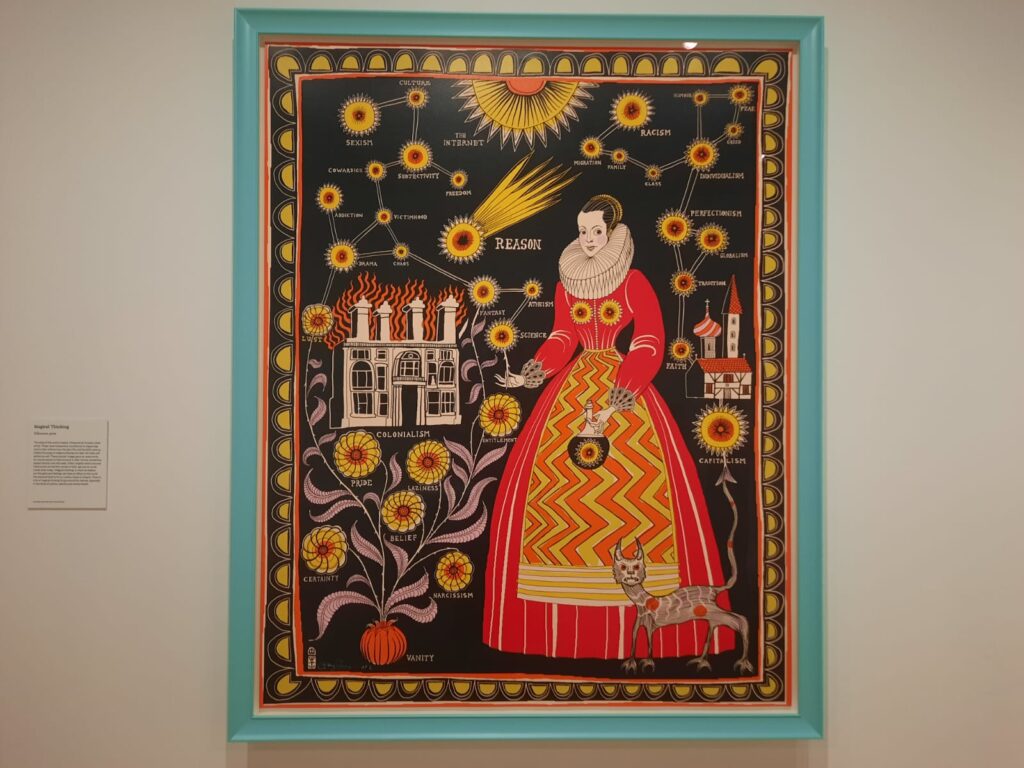
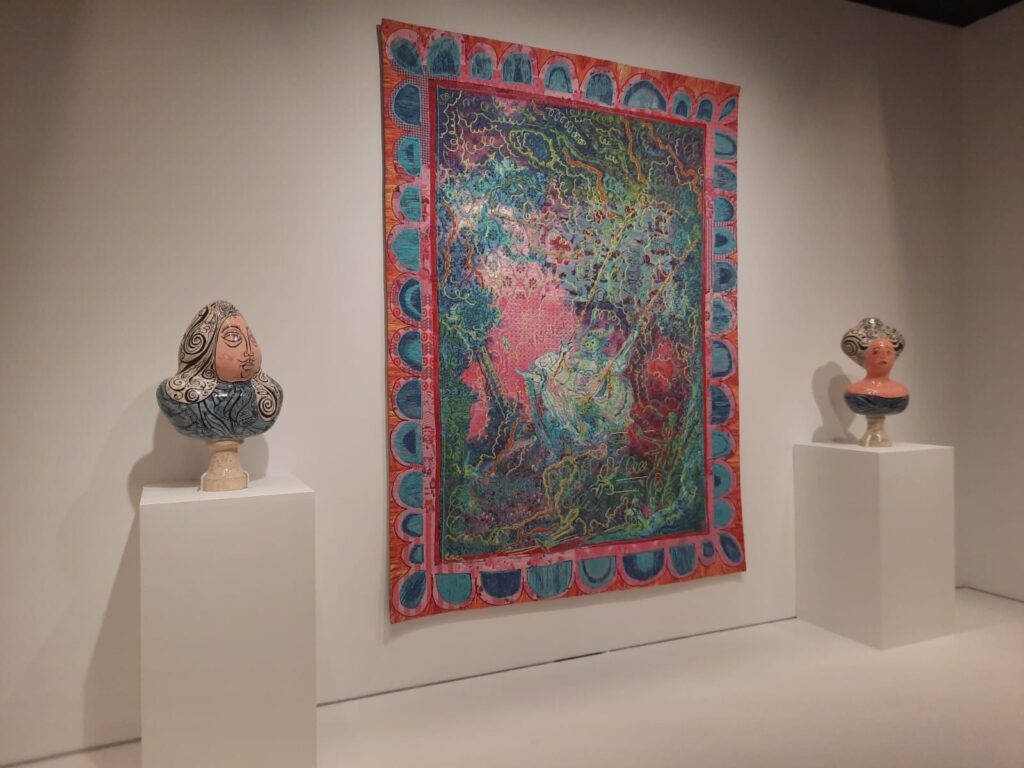
Delusions of Grandeur
So how do the two come together? In Delusions of Grandeur, Perry creates worlds and characters in order to blend new work with the existing Wallace Collection. The magic of it is leaving the audience guessing at where the line between fiction and reality might lie. Or perhaps in creating a situation where it doesn’t really matter.
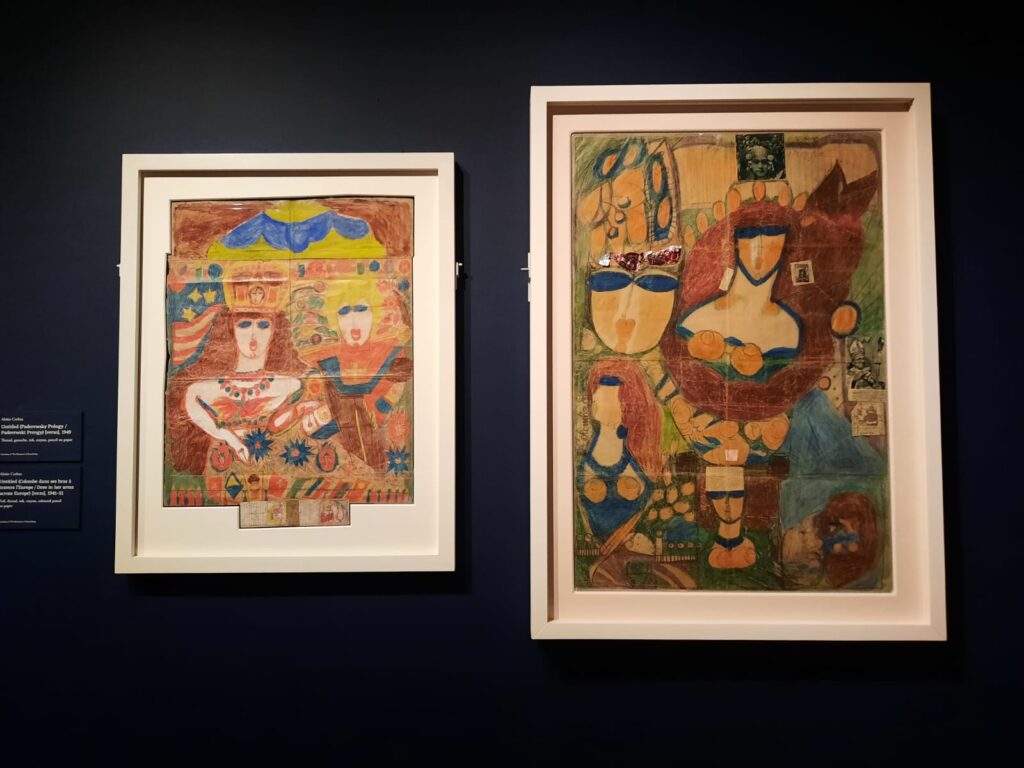
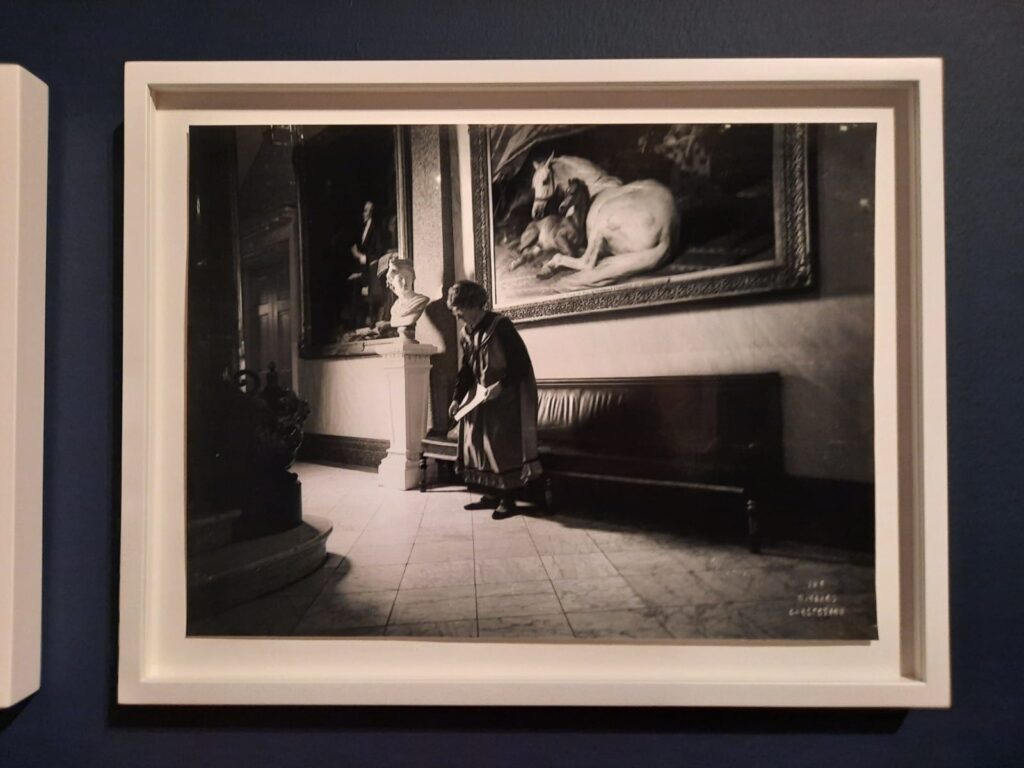
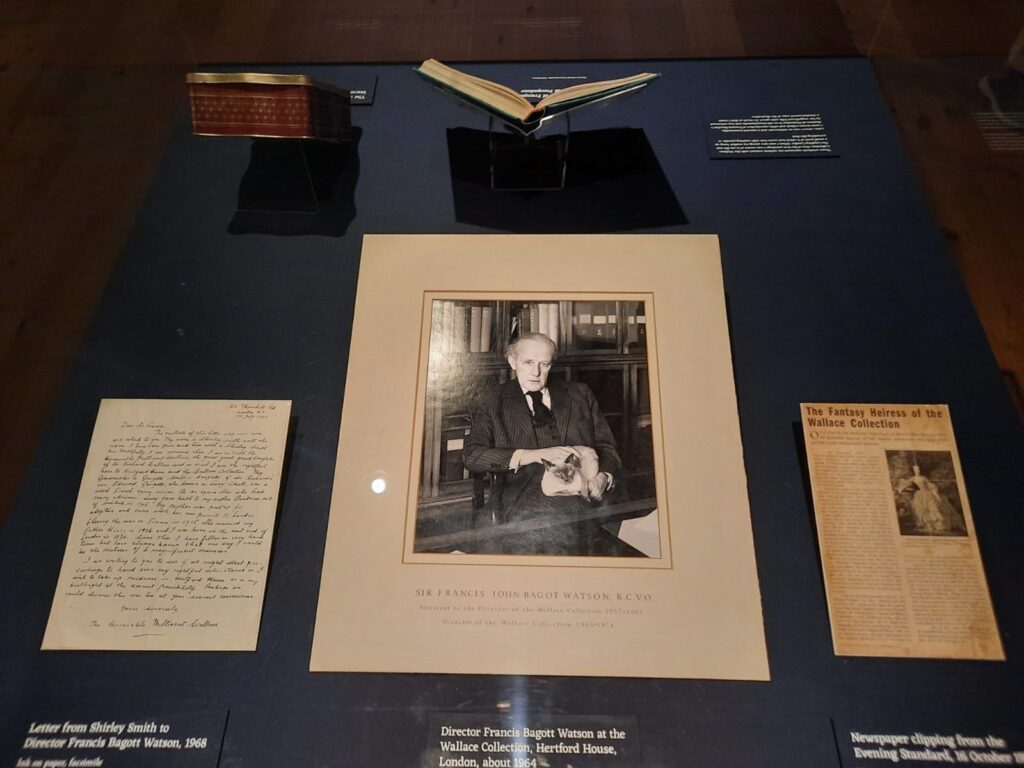
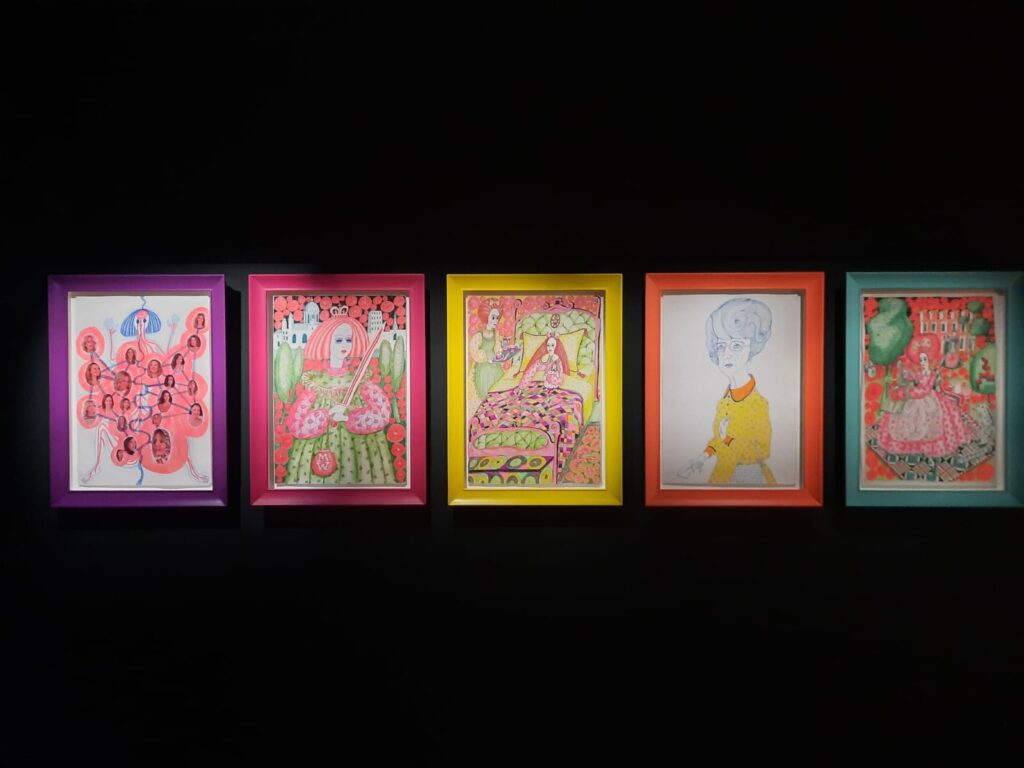
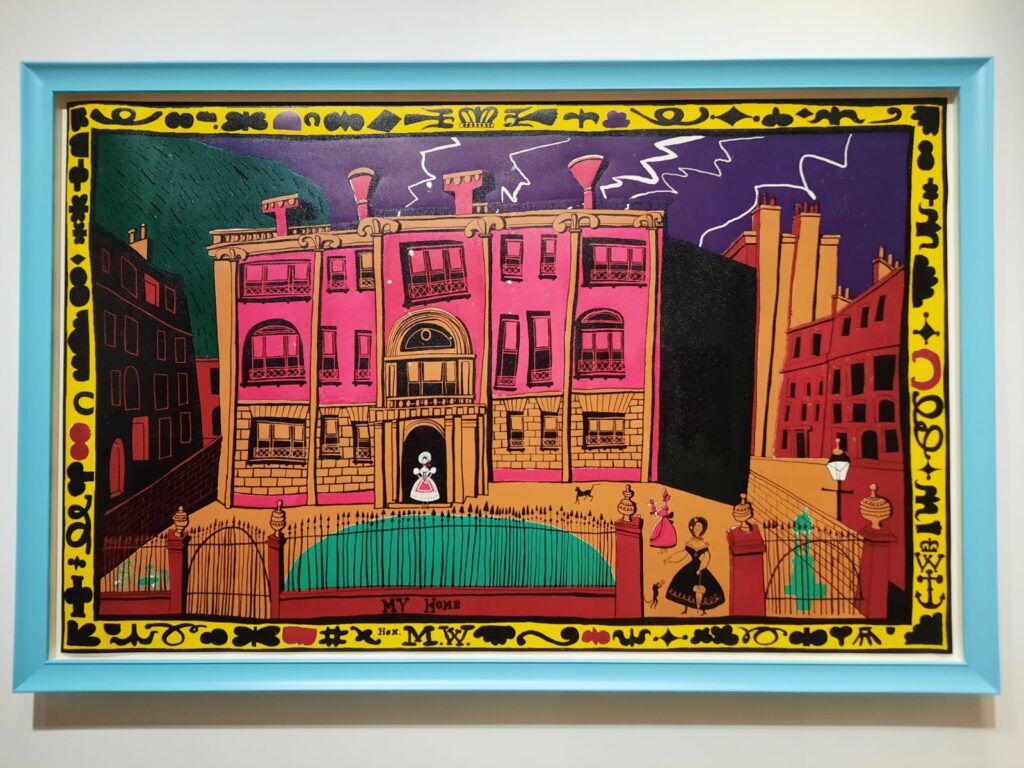
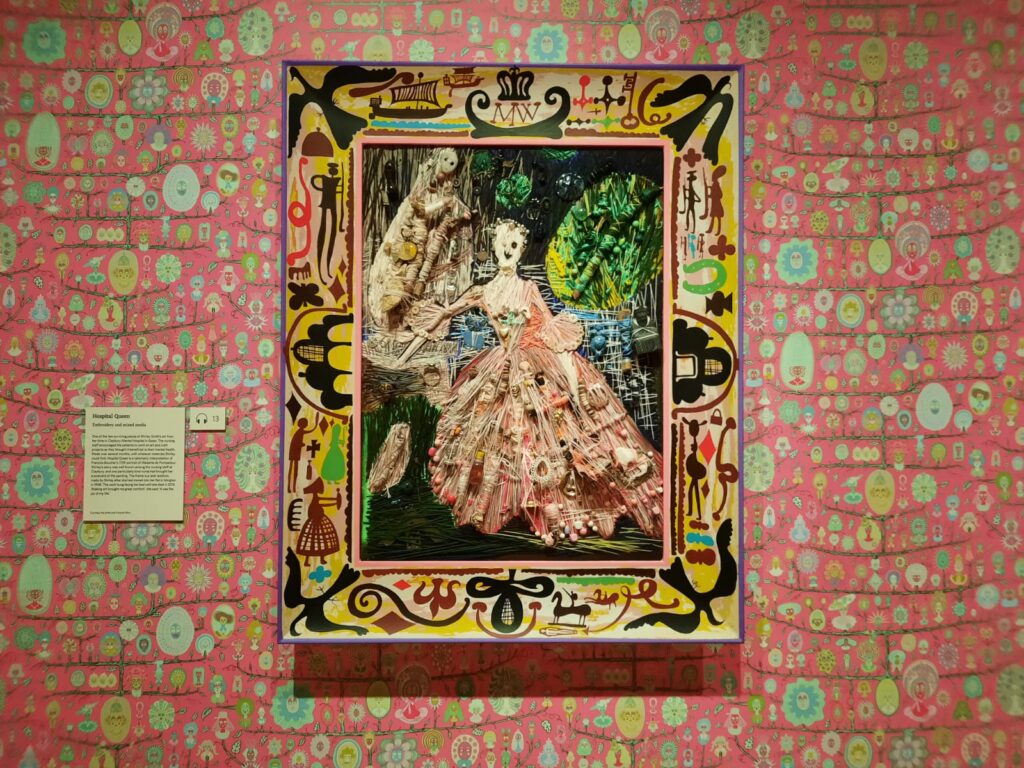
Meet Shirley Smith. Or, as she also comes to be known (at least to herself), the Honourable Millicent Wallace. Shirley’s life was not an easy one. Some of the artworks in the exhibition deal with periods of homelessness, violence, and poor mental health. So what a wonderful thing to discover she was actually Millicent, great-great-granddaughter of Sir Richard Wallace, and the rightful heir to Hertford House and the Wallace Collection. A much gentler existence.
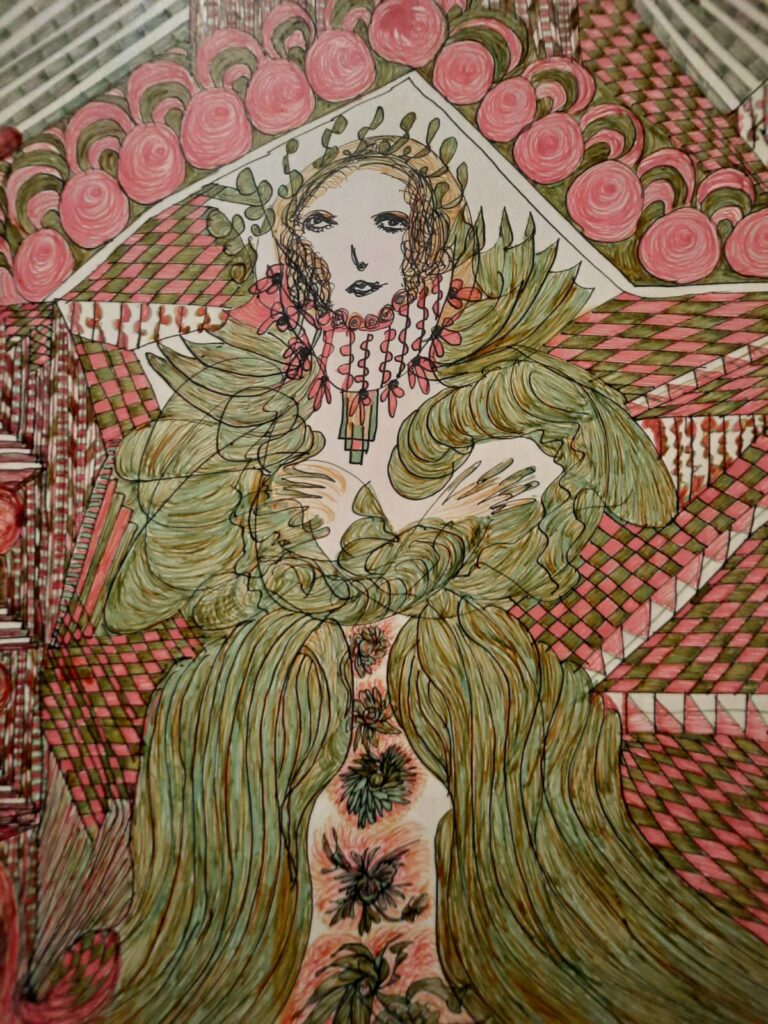
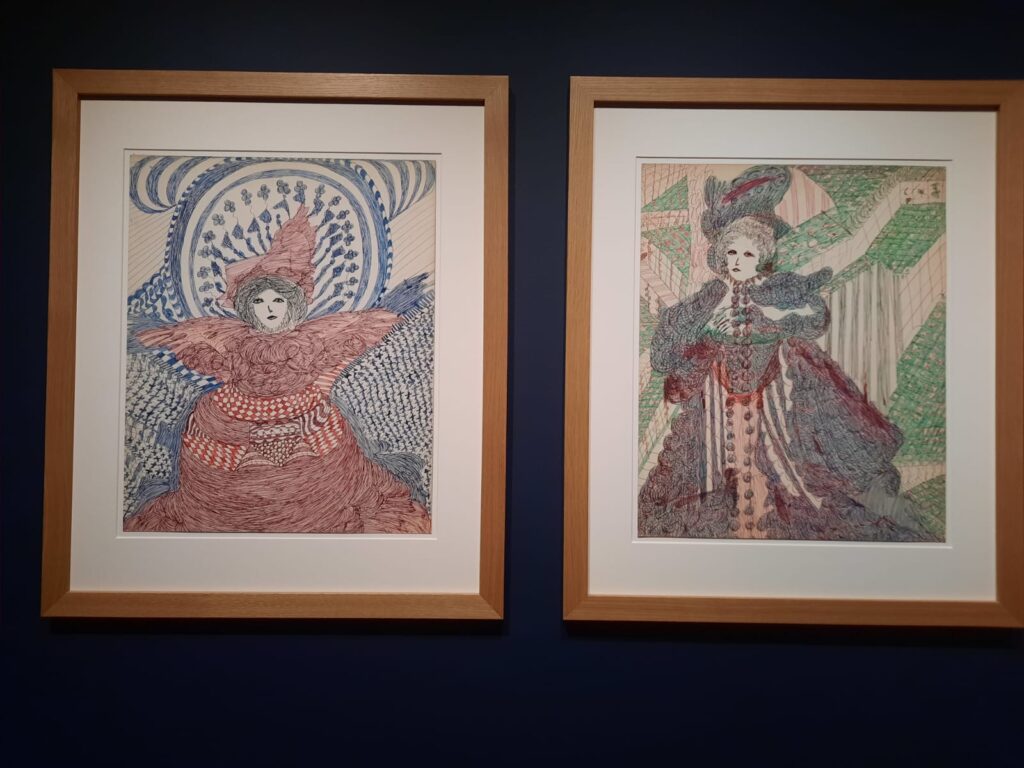
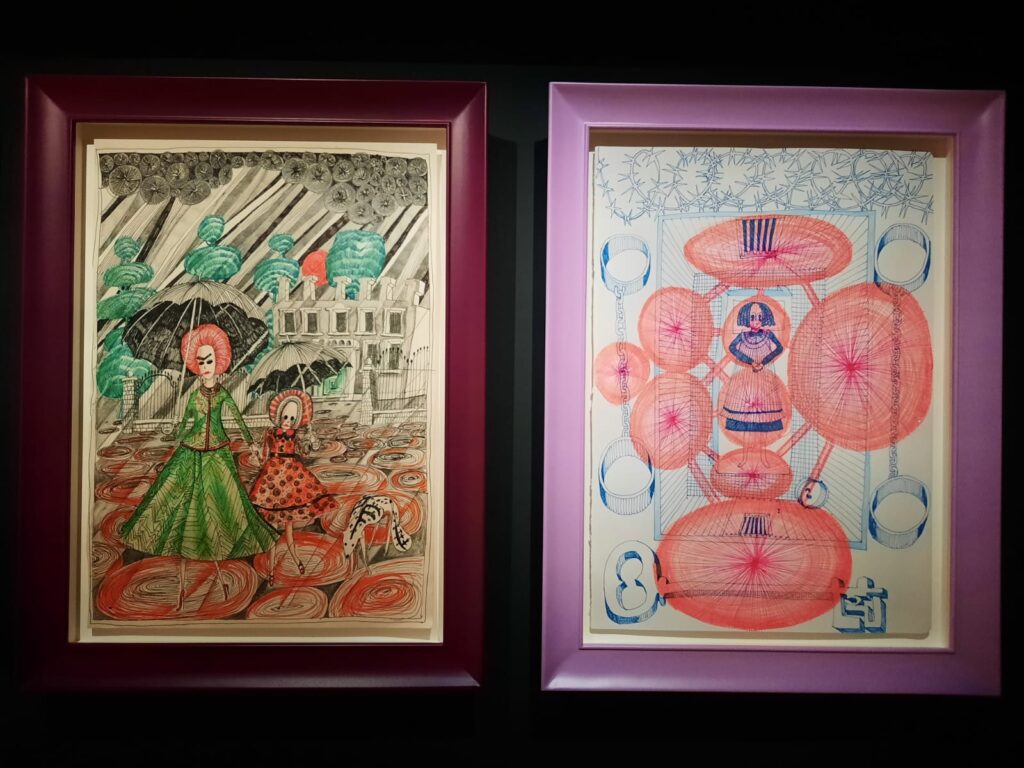
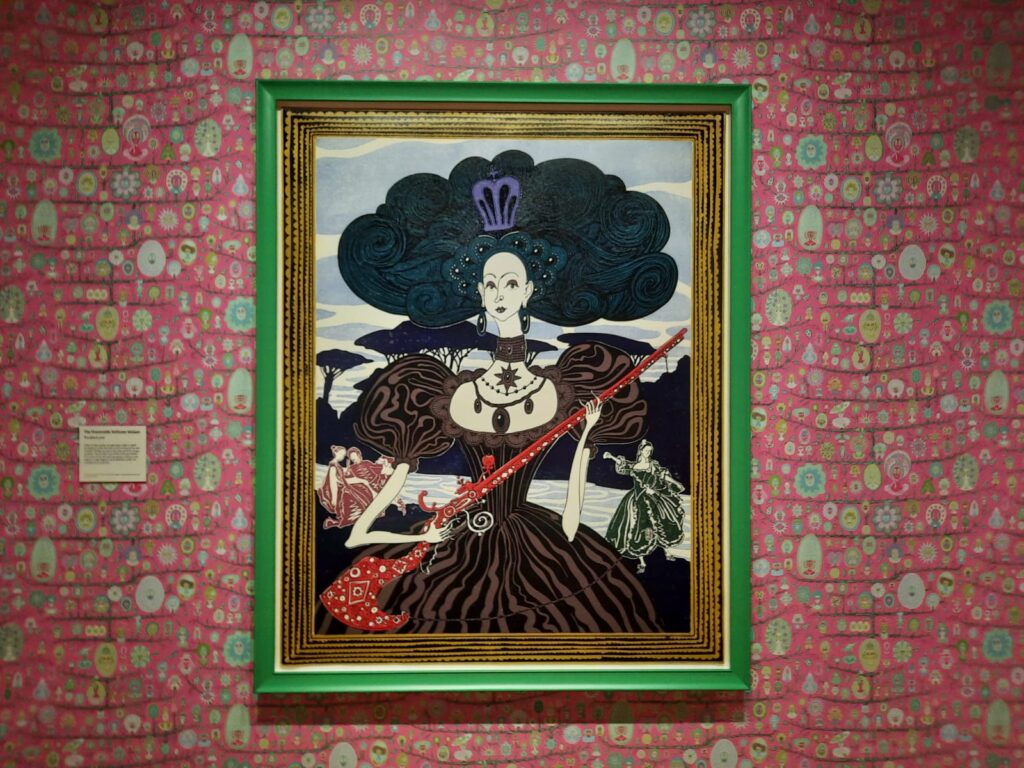
As well as making contact with the Wallace Collection in order to assert her claim as heir, Smith/Wallace created art that helped her to work through some of her challenging experiences. Some of the drawings in the exhibition are hers, although the astute may notice a passing resemblance to Perry’s own style. No matter. The lens of Smith/Wallace’s story is a remarkable way to break the Wallace Collection free from the confines of history, tradition, museum norms, and boring facts. Instead, this rather conservative institution tumbles through the looking glass into a new world of bright colours, and reinterpreted ‘facts’.
Shirley Smith as a Spontaneous Artist
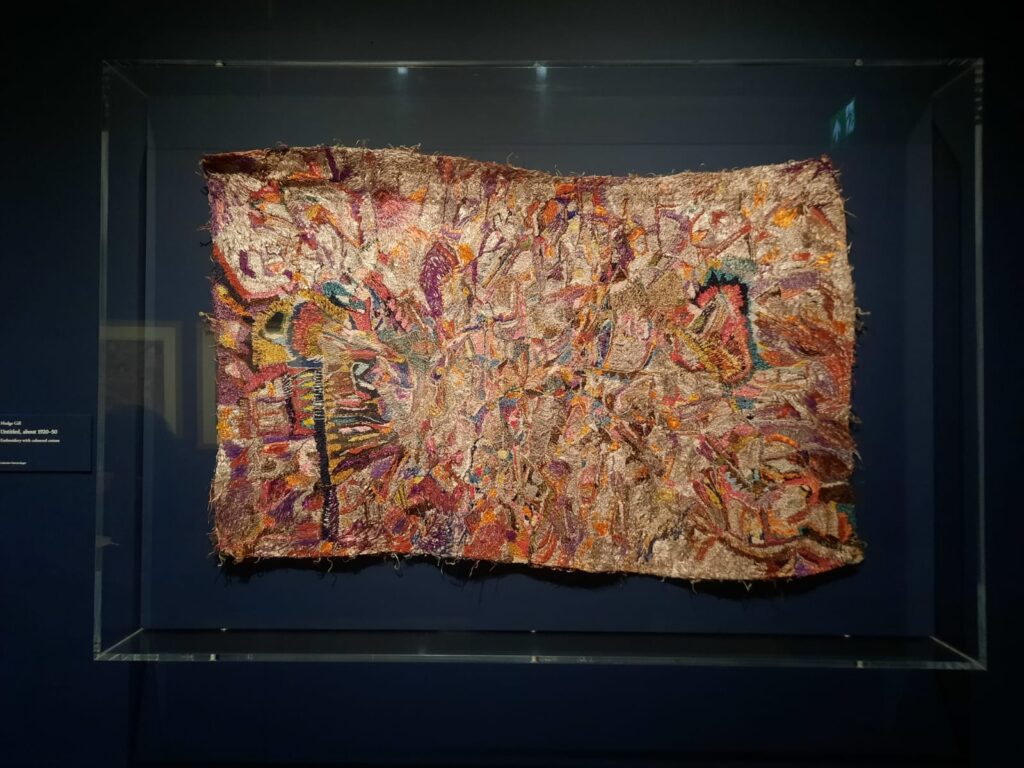
The cleverest curatorial device comes right at the start of Delusions of Grandeur. The first room introduces us to Shirley Smith/Millicent Wallace, but Perry doesn’t stop there. He sets her story alongside works by two real female “outsider artists”: Madge Gill and Aloïse Corbaz. It’s a brilliant bit of stage-setting. By opening with artists whose work was once dismissed or misunderstood, Perry sows the seed of doubt. Which of these stories are real, which are imagined, and does it actually matter?
I’ve written before about Madge Gill here, and there are other posts on the Salterton Arts Review that circle around the subject of so-called “outsider art.” I say so-called because the terminology has always felt unsatisfying to me. ‘Art brut‘, ‘outsider art’, ‘naïve art’. Each carries its own baggage, and none quite captures what I find so compelling in these artists’ work. Perry offers a better phrase: “spontaneous artists.” I rather like that. It suggests creativity bubbling up unstoppably, regardless of formal training or social constraints.
The Centre Pompidou and Grand Palais are about to mount a major exhibition of art brut in Paris, and in a recent video (see here, in French) they make the point that this category of art also depends on the person who sees it, and chooses to preserve it. That’s Perry’s role here: to recognise Smith/Wallace as an artist, and to validate her voice. It’s an astute act of curation, and it places Smith/Wallace in a lineage of artists who found their way into public view through the advocacy of others. Later in the exhibition I saw hints of other spontaneous artists, including Judith Scott and her wrapped objects.
Into the Gallery
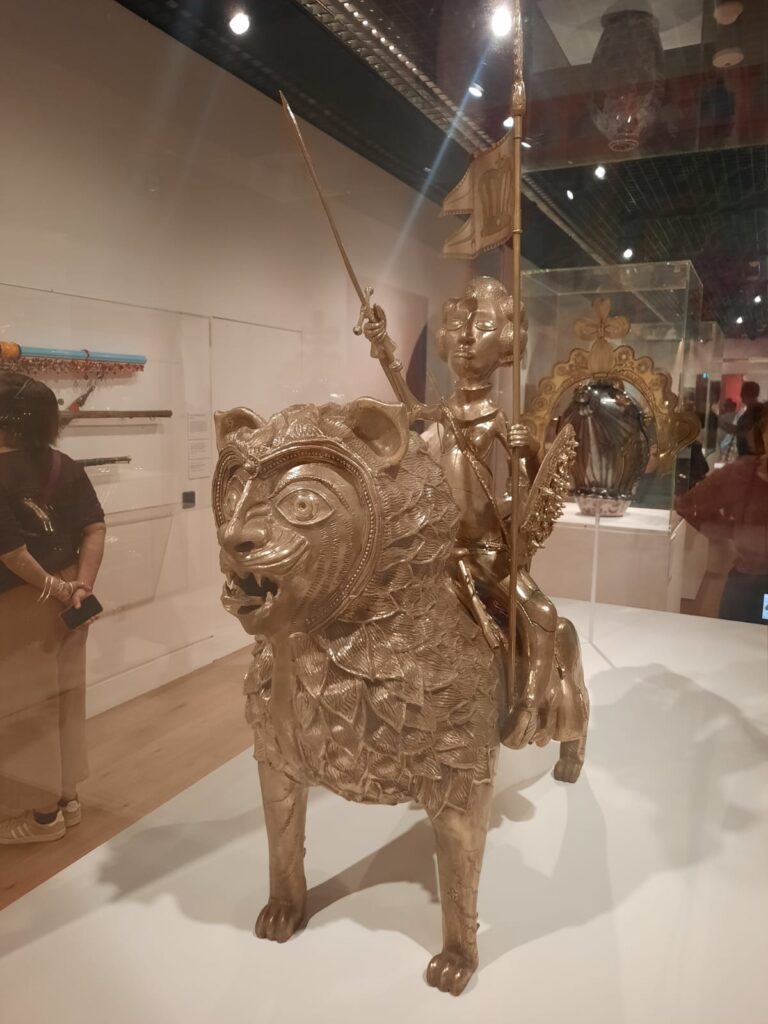
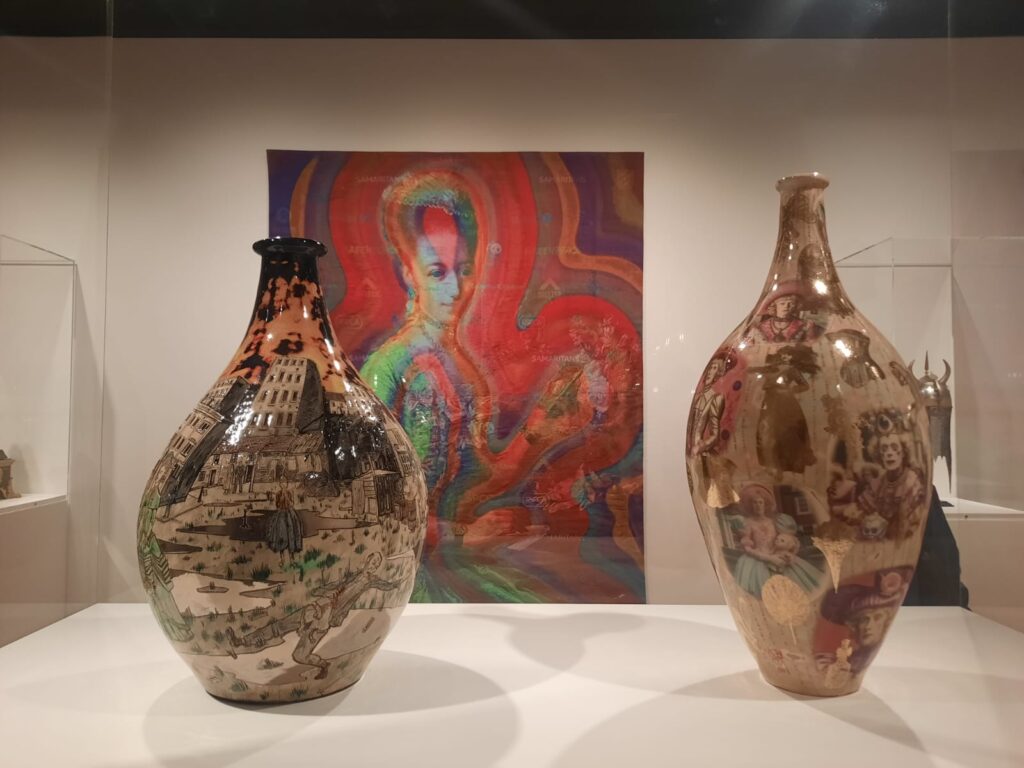
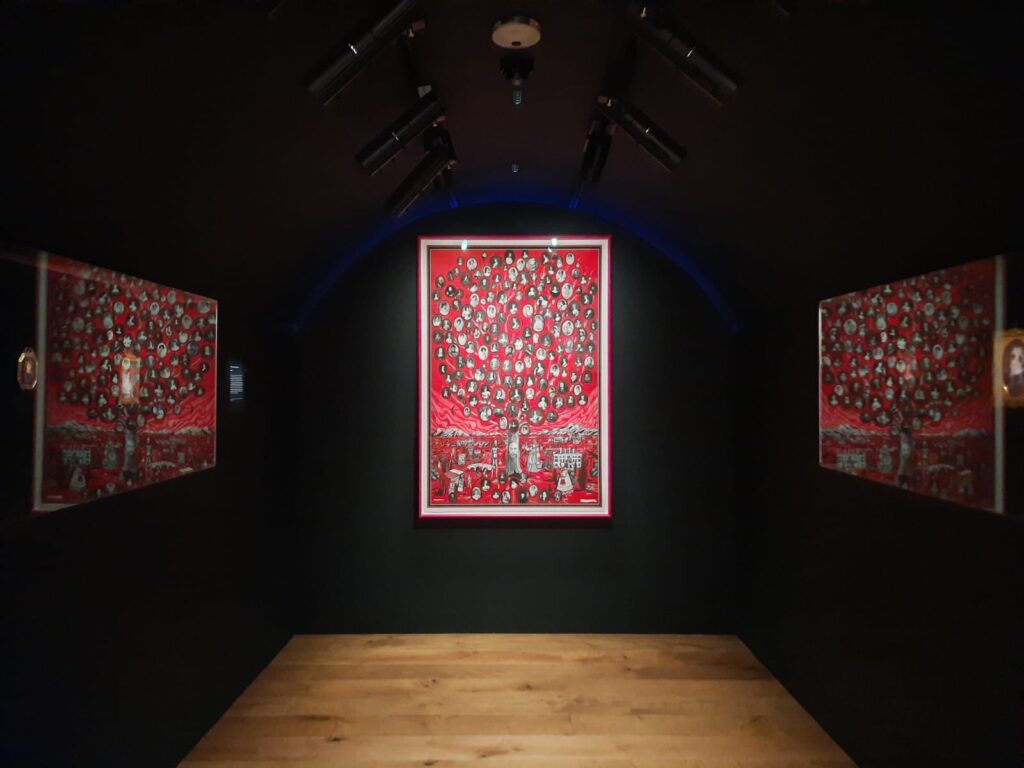
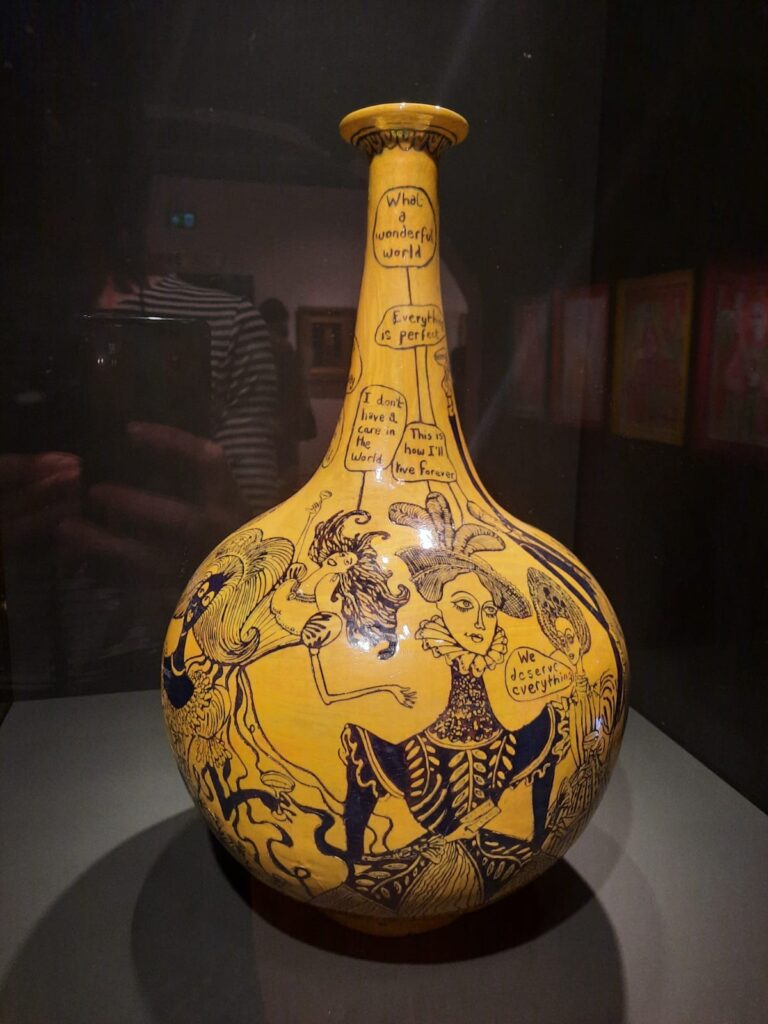
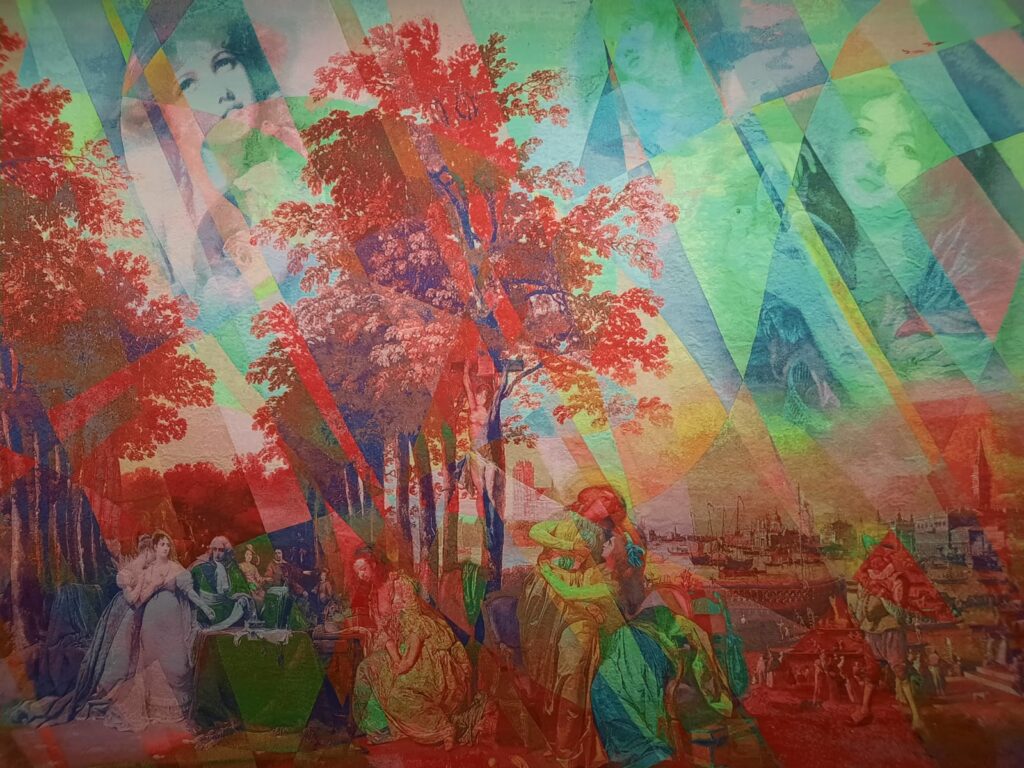
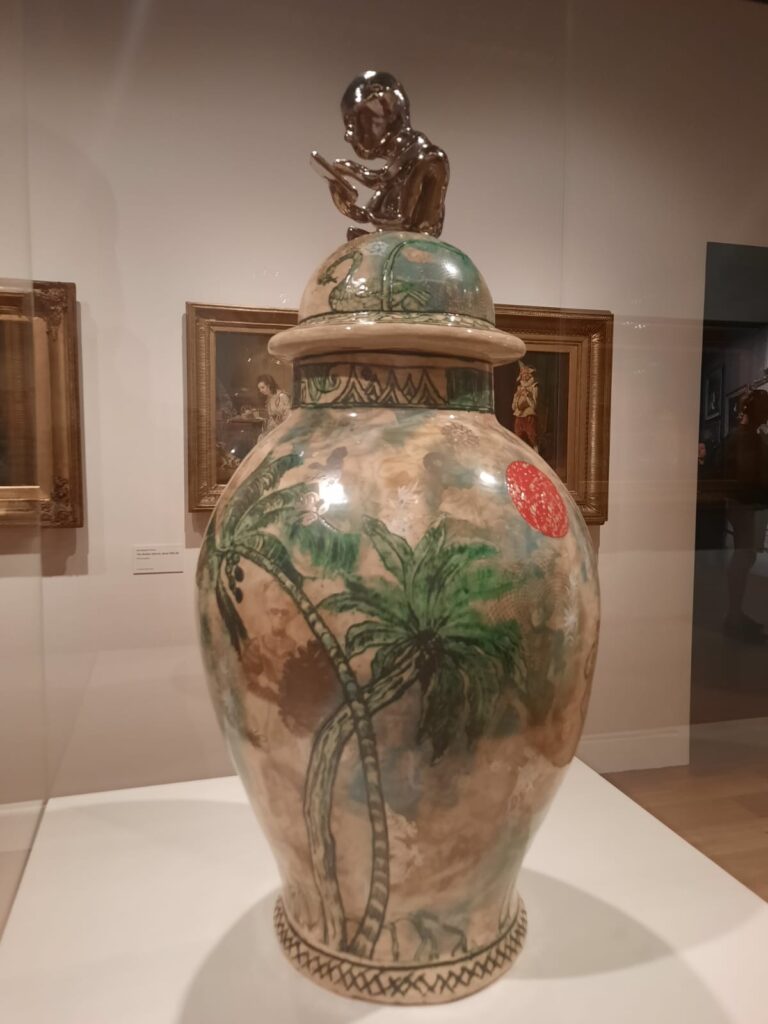
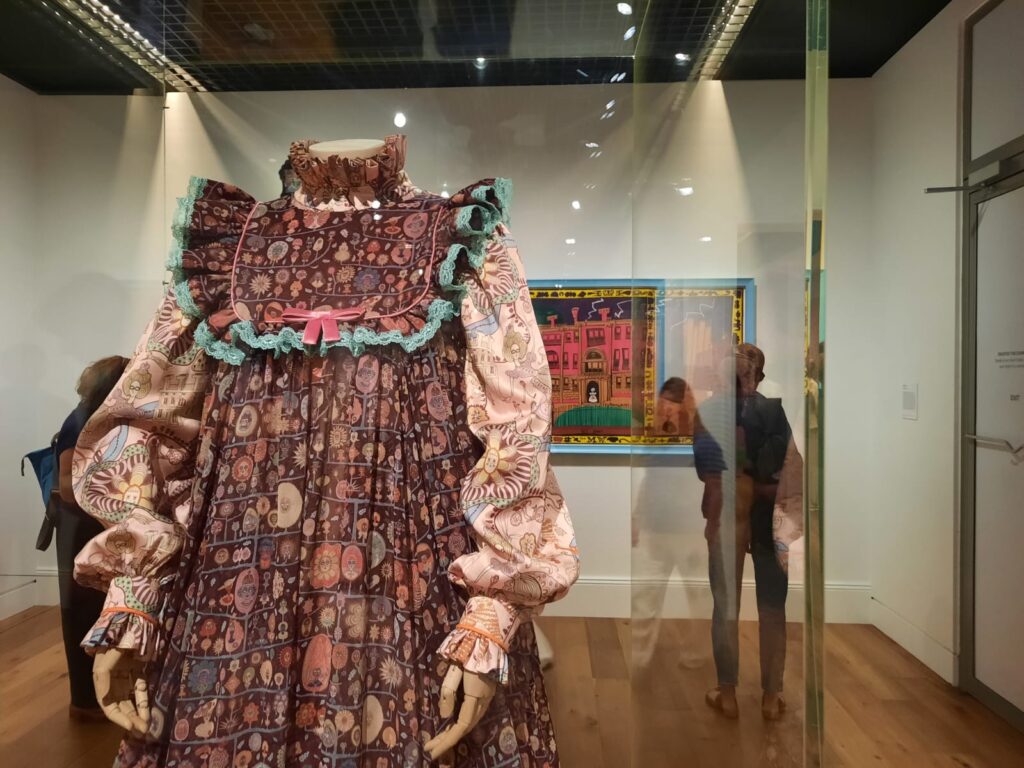
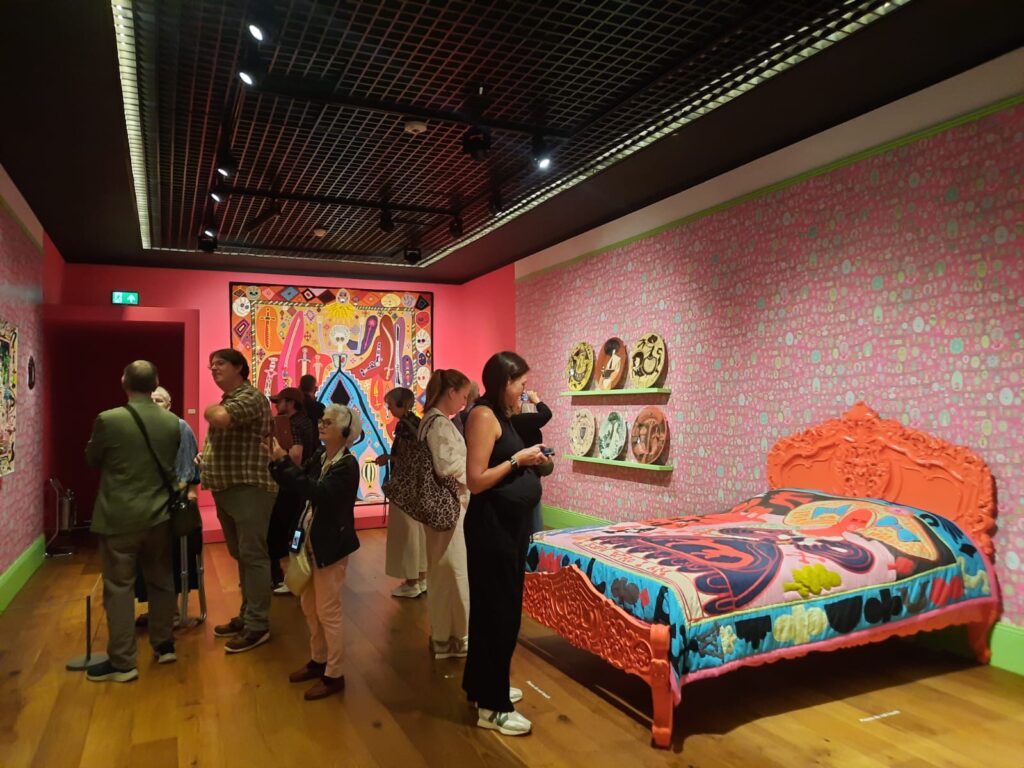
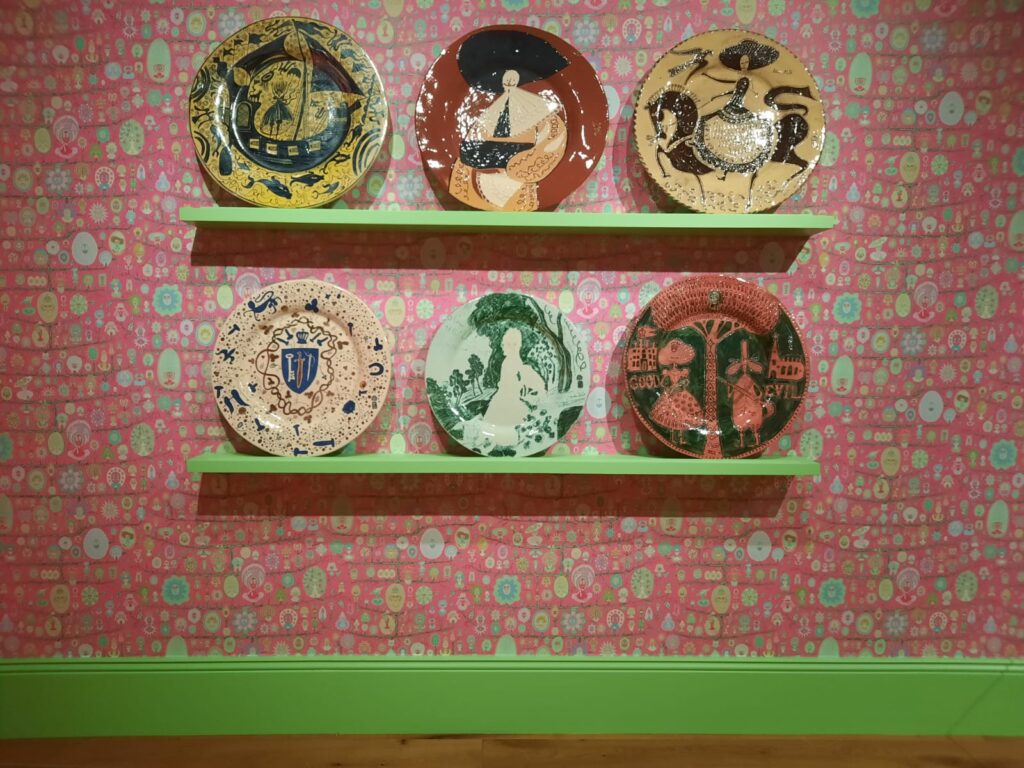
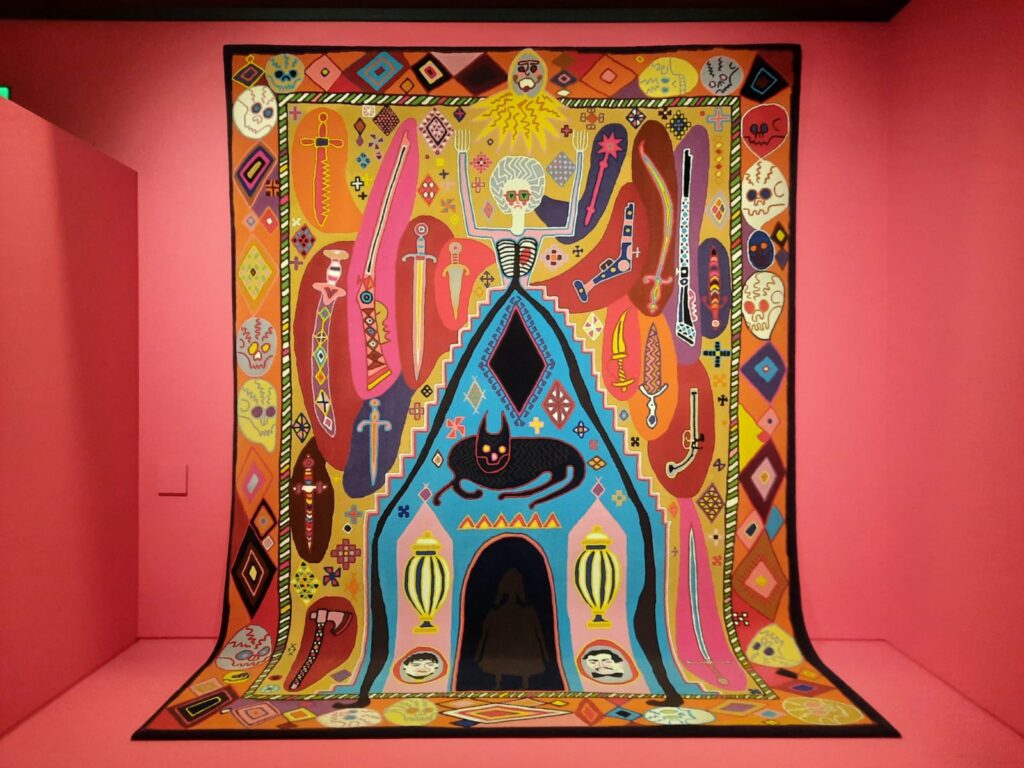
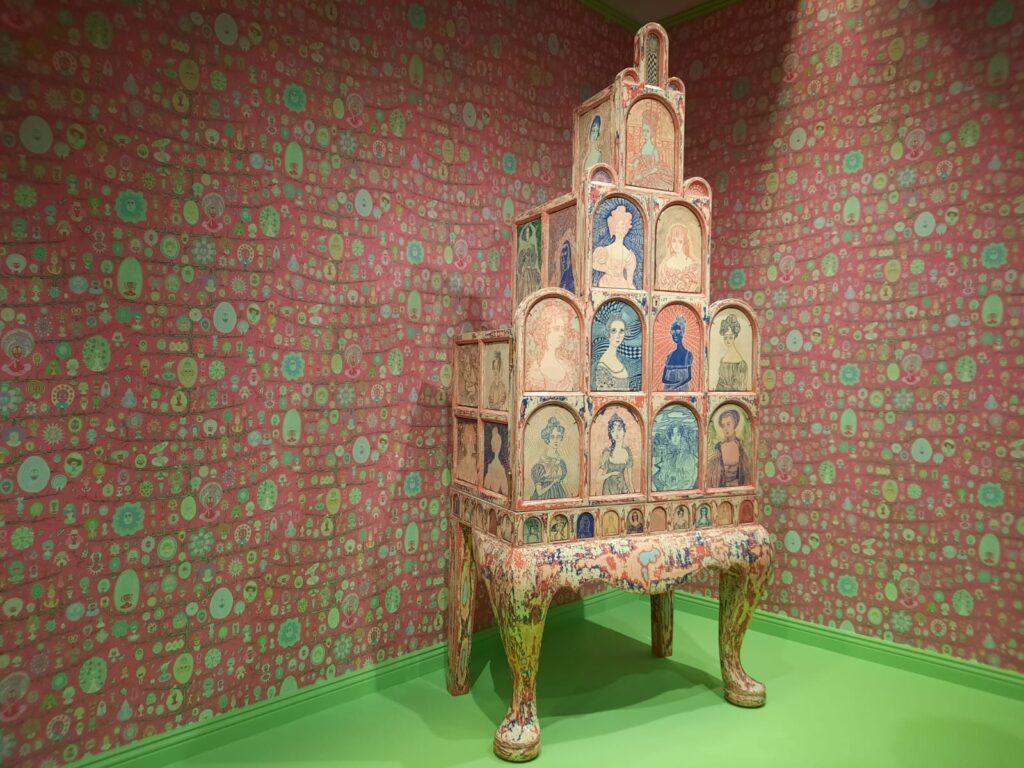
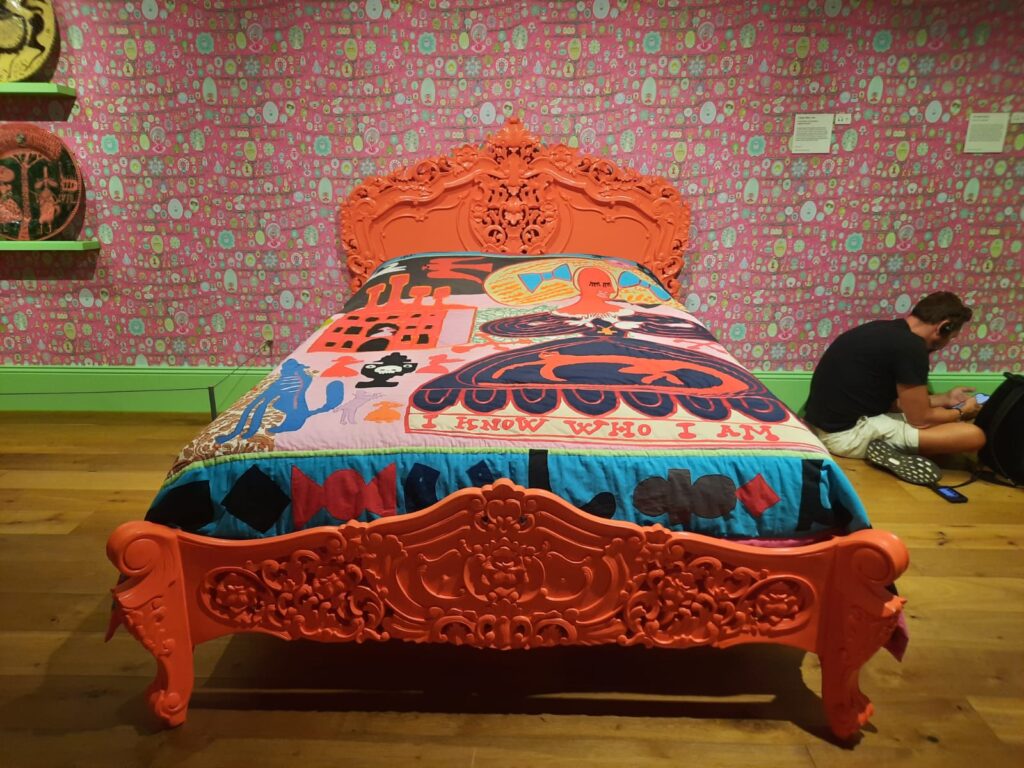
From that opening gambit we step into the heart of the exhibition. A long gallery split into sections, with smaller rooms branching off like tributaries. Here, Perry (or sometimes Smith/Wallace) lays out a riotous spread of new work. Sculpture, drawings, ceramics, tapestries, furniture, even costume. It’s a reminder of just how comfortably Perry ranges across media.
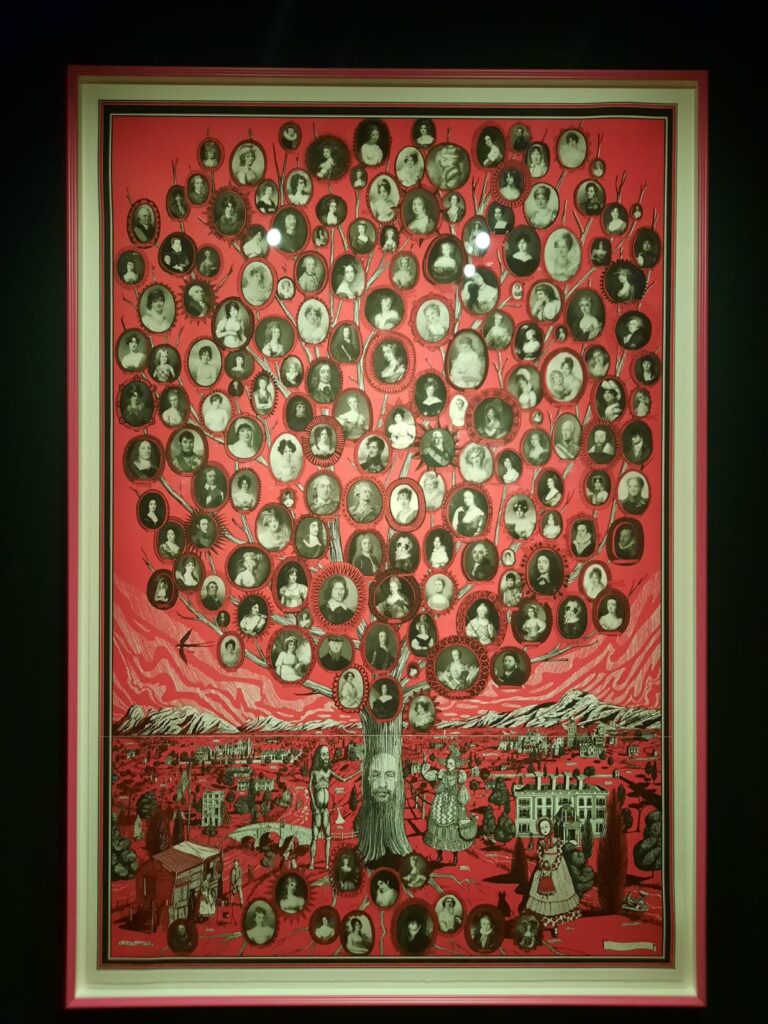
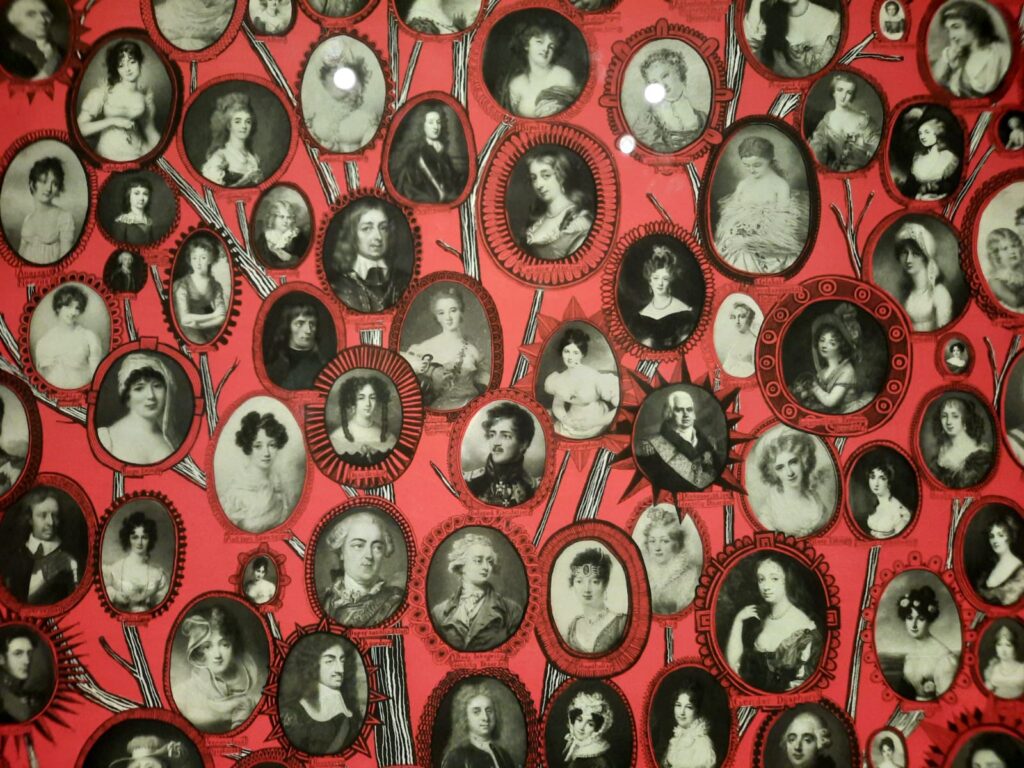
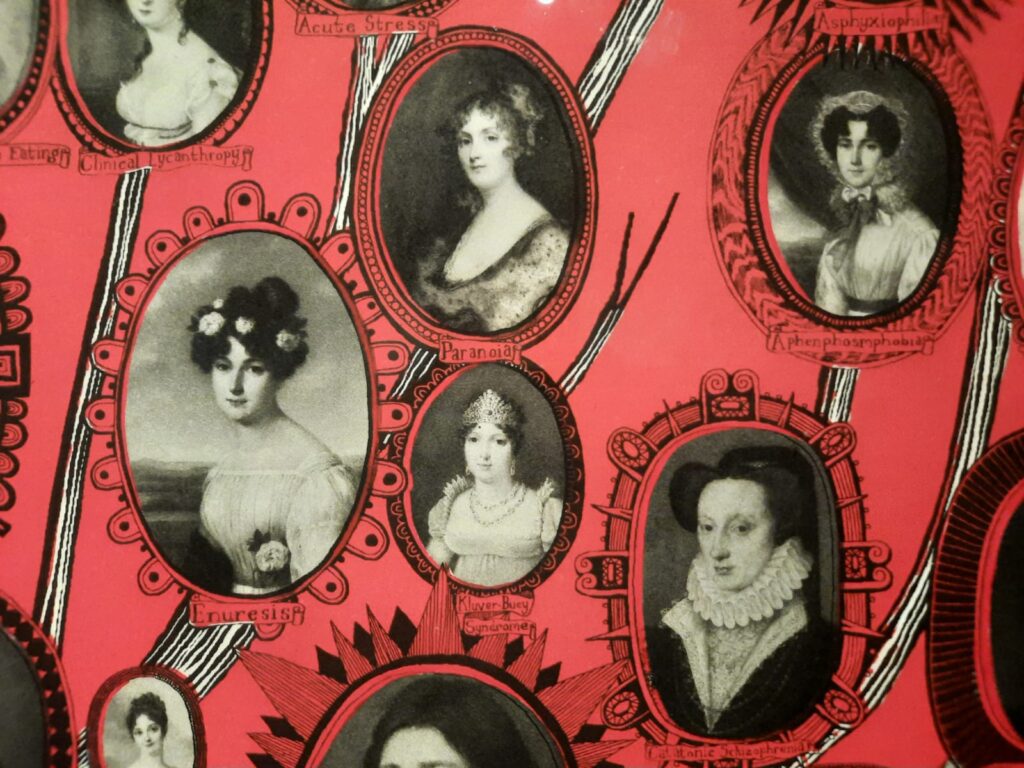
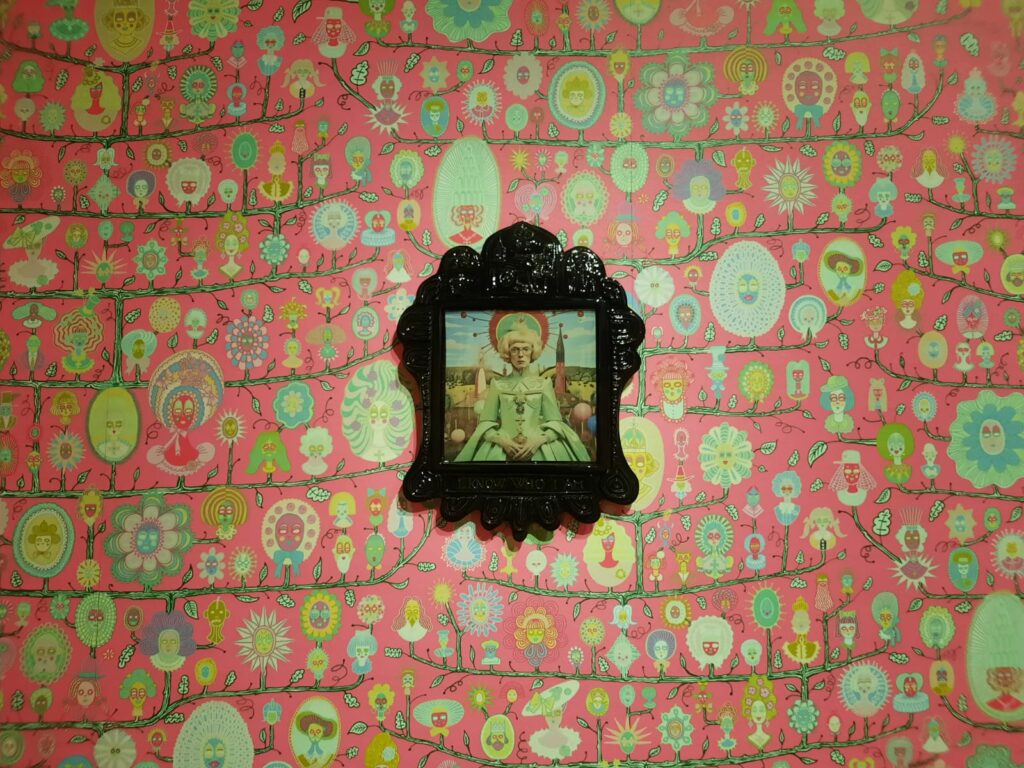
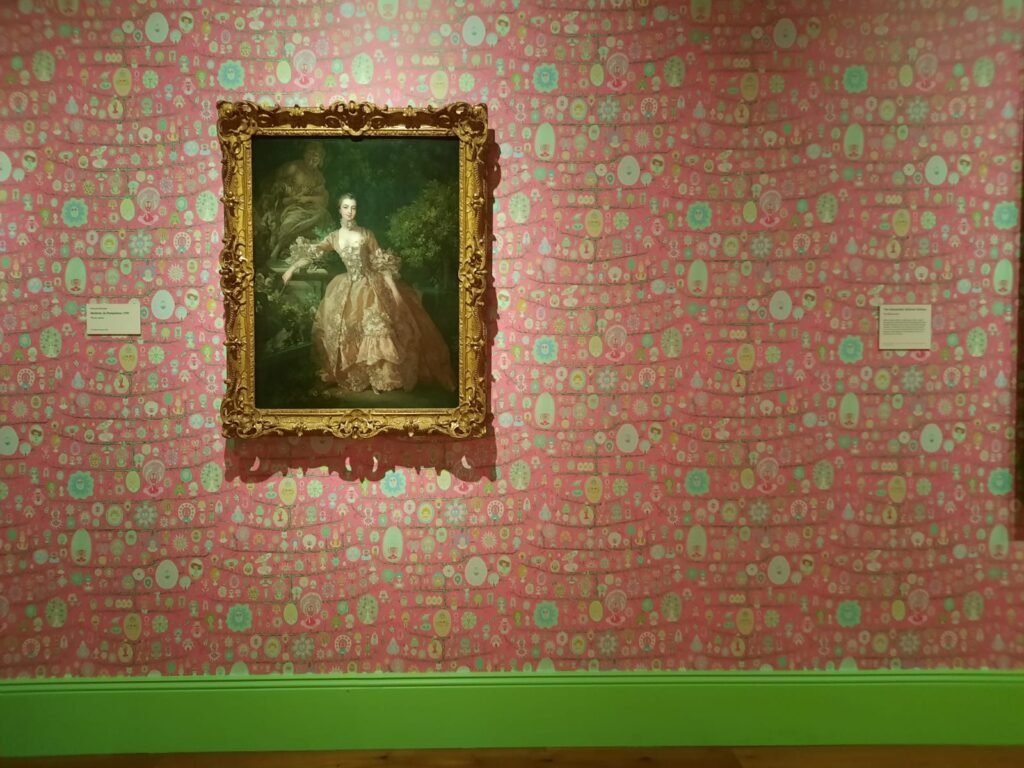
Fans will notice familiar figures. Alan Measles, Perry’s childhood teddy bear and long-time artistic alter ego, crops up on the ceramics. Other pieces riff directly on the Wallace Collection itself: tapestries that lift motifs from the Old Masters, or the witty family tree of miniature portraits reconfigured as a dynastic chart of hereditary mental illnesses. Throughout, works from the Wallace Collection are tucked in among Perry’s new creations, in conversation across the centuries.
One of the strongest currents running through Delusions of Grandeur is mental health. Perry approaches the subject with a great deal of compassion. Towards Smith/Wallace, certainly, but also towards anyone who might recognise something of themselves in her story. The idea that trauma, instability and exclusion can give rise to alternate identities, even delusions of grandeur, is treated here not as pathology to be mocked but as imaginative self-preservation. Through art, Smith/Wallace is able to conjure a safer, kinder world where she is valued.
This is where Perry’s intervention feels most important. He pulls the Wallace Collection out of its gilt-edged comfort zone and straight into 21st-century conversations about art, mental health, and British society.
Sir Grayson Perry in Your Ear
One of the Wallace Collection’s best habits is offering free audio guides, complete with the hardware. None of this “bring your own headphones” nonsense (and let’s face it, I never do). It works particularly well here because the exhibitions are always small enough that listening to every track doesn’t feel overwhelming.
As with Frans Hals: The Male Portrait, Perry’s own commentary is the real highlight. He speaks with such candour and ease that it feels almost like a private tour, as though he’s letting you in on confidences rather than reciting a script. There’s no jargon and no hiding behind theory. Instead, he’s upfront about why he’s made each piece, the technical processes and influences that underpin them, and what he really thinks about the contemporary art scene. It’s refreshing, and it adds immeasurably to the world-building at the heart of Delusions of Grandeur. Honestly, the audio guide isn’t an optional extra here, so bear that in mind if you visit and take one!
That said, I could have done without the add-on at the end. Director Xavier Bray pops up on the final track to remind visitors of the shop and the limited edition merchandise (a Perry bedspread, yours for £10K, though I’d be curious how much of that goes to the Indian textile workers who made it). I appreciate that museums need to balance the books, but to slip in such a sales pitch after Perry’s thoughtful reflections felt jarringly out of place. Sometimes the magic is best left unbroken.
Final Thoughts
I loved this exhibition. It is bright, colourful, clever, funny, kind, thought-provoking, and a good amount of weird. It re-energises the very traditional Wallace Collection, so much so that when I wandered into the permanent galleries afterwards, they felt unexpectedly fresh despite being familiar ground. No small achievement for any artist.
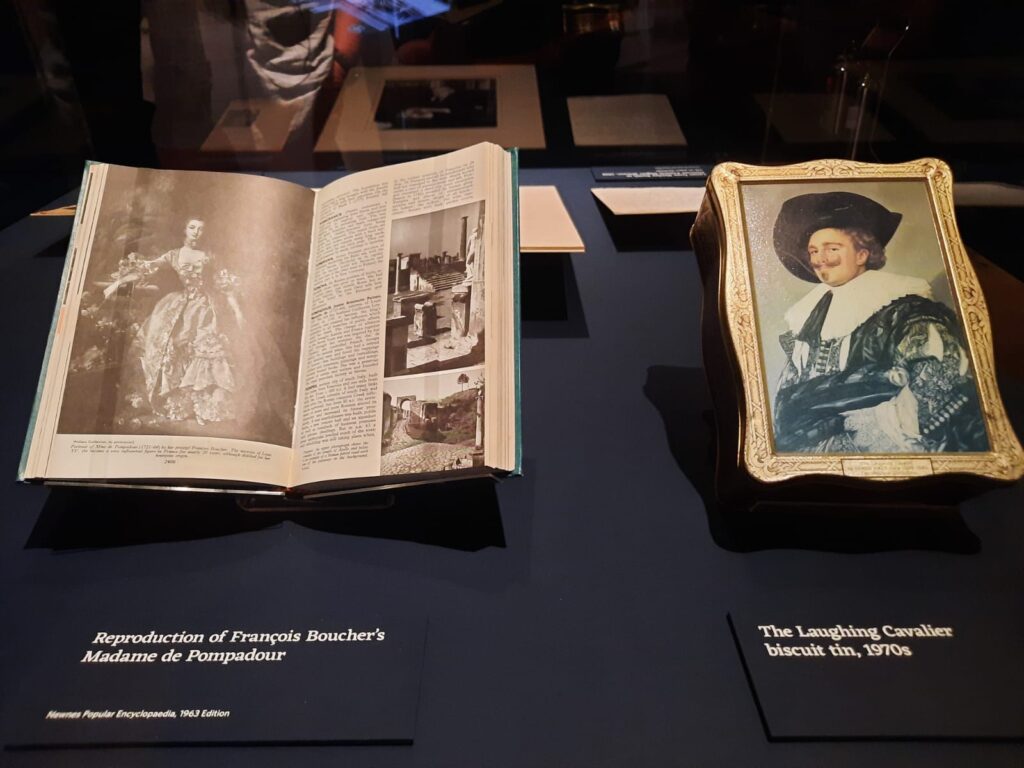
Part of the reason it works so well is that Perry isn’t parachuting into Hertford House from the outside. He’s been here before, literally and imaginatively. Childhood memories of paintings like The Laughing Cavalier surface in the exhibition, and you get the sense that the Wallace Collection has been one element of his visual landscape for decades. That makes this well of reinterpretation feel particularly deep: he’s drawing both on the collection in front of him and on his own connection to it.
As always with Perry, there’s a hopeful note running through the whole enterprise. His work acknowledges “the state of things” with clear eyes, but also insists on the presence of compassion and generosity alongside the harsher stuff. It’s an attitude that feels both bracing and oddly comforting.
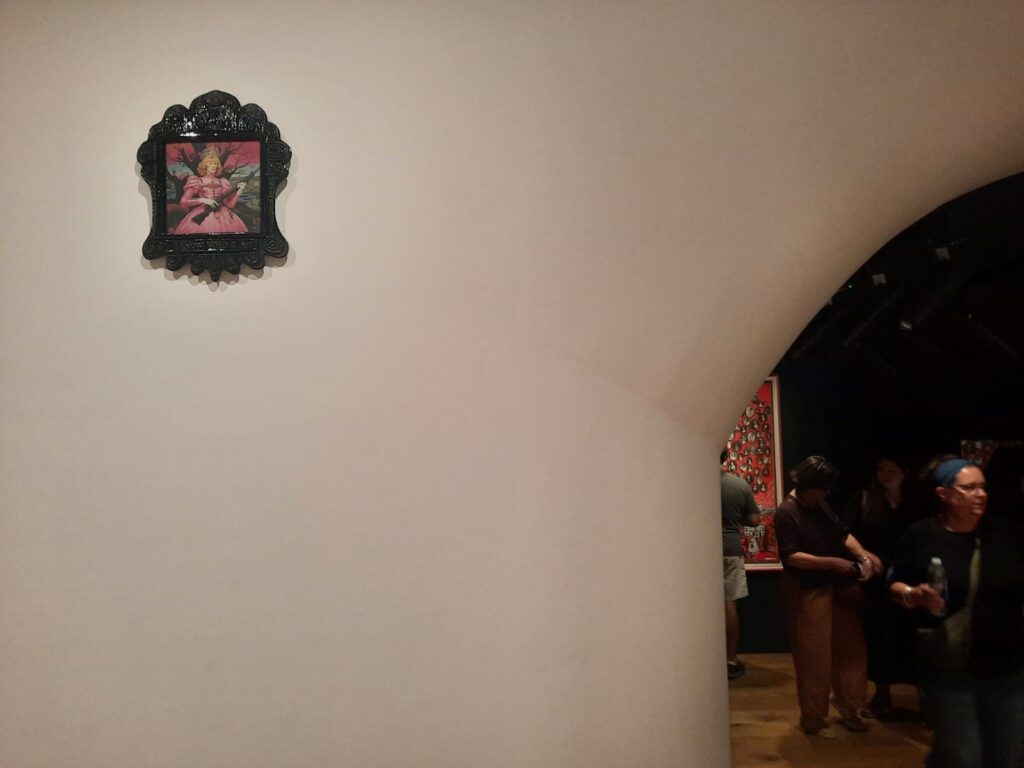
There are hints here, too, of where Perry might head next. A few framed AI-generated images are scattered through the show, produced as an edition where every piece is unique (because, after all, why not, when the machine is doing the labour?). They suggest an artist who is still experimenting, and is open to the opportunities of the ‘AI Revolution’. Bray, naturally, reminds us that some are available in the shop.
But in the end, the question of what’s real and what’s not in Delusions of Grandeur is beside the point. The framing device gives Perry endless space to play, and he makes the most of it. I enjoyed meeting Shirley Smith (or the Honourable Millicent Wallace, depending on how you look at it) and I hope she found what she was searching for in her new identity.
Salterton Arts Review’s rating: 4.5/5
Grayson Perry: Delusions of Grandeur on until 26 October 2025. Tickets cannot be bought in person so you may as well buy online in advance.
Trending
If you see this after your page is loaded completely, leafletJS files are missing.