
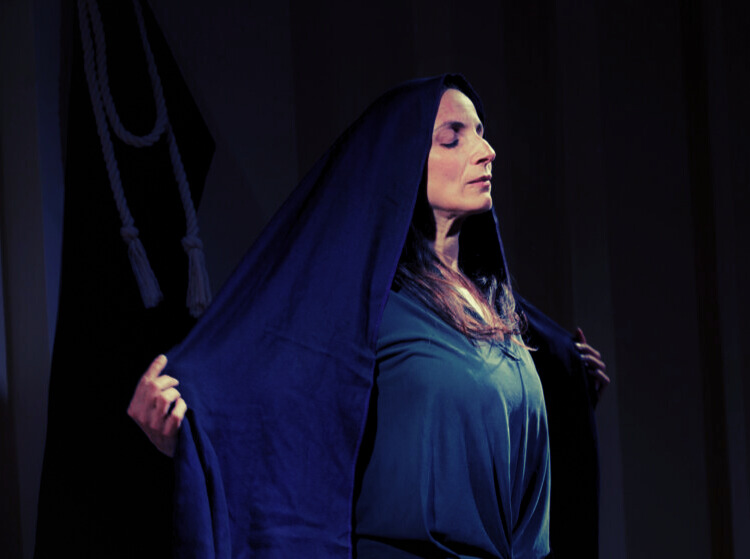
The Popess: Instructions For Freedom – The Glitch, London
The Popess: Instructions for Freedom brings to light the little-known story of the Guglielmites, a 13th-century religious sect. Elena Mazzon tells this tale with humour, directness, and a contemporary feminist eye.
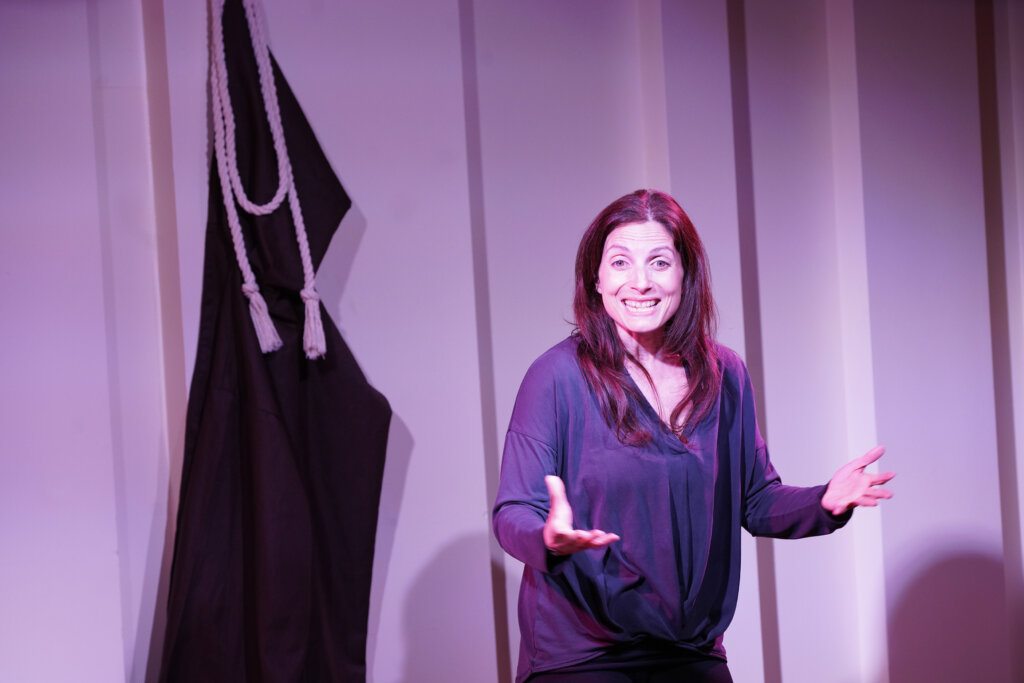
The Popess: Instructions for Freedom
The Popess: Instructions for Freedom takes as its starting point the unusual history of the Guglielmites, a small religious sect in 13th-century Milan. They believed a woman named Guglielma was the Holy Spirit incarnate, and would bring about a new age of Christianity. Before her death, she appointed the nun Maifreda as her Popess, someone who would lead this new Church. For a time, the group dared to imagine a world where a woman might hold the highest office of all.
Of course, this vision did not sit comfortably with the established Church. To the authorities, the Guglielmites were heretics and a threat to the order of things. The movement was quickly and violently suppressed, its leaders condemned, and the whole story pushed to the sidelines of history. What remains, though, is a glimpse of how ordinary people wrestled with questions of faith and power. And how women occasionally found space to imagine a role for themselves in systems designed to exclude them. It is also a reminder of how easily personal belief can turn into an act of defiance, and how institutions respond when their authority is challenged. This history may feel far away, but it still has a spark of relevance. Enough, certainly, to make it worth bringing to the stage.
Bringing Medieval Heretics Back to Life
This is a really interesting story to tell. Though at such a distance that audiences today might not always feel immediately connected. Religion looks very different to us now. Elena Mazzon bridges that gap with a lively format: the show is delivered straight to the audience, with moments of participation, and even a hymn I found myself humming on the way home. She shifts between roles: the Popess Maifreda, an Everywoman guide, and various characters (mostly women, but also one man) met along the way. They are 13th-century figures but modernised in speech and attitude, which helps make their world accessible without feeling forced.
The production is very simple (just one performer, a few props and costumes, and some lighting by Lis Barlow) but it makes the most of those resources. The audience participation sections didn’t always feel completely comfortable for Mazzon, and personally I could have done with a little bit less of that and a few more scripted lines. There’s a fair amount of exposition needed to get the story across, which is harder when trying to draw confessions out of “Cathars” who don’t know who or what Cathars are. But the audience was nonetheless warm and willing, and stayed engaged throughout.
Alongside the humour and storytelling, there is a quieter thread of critique: a reminder of the limits placed on women in religion and society, and of how easily unorthodox belief can be crushed when it comes up against vested interests. It brought to mind The Dreamer of the Calle de San Salvador, which explores a woman’s deeply held if unusual faith and the suspicion it provoked. Like that book, The Popess is a story that sticks: unusual, unexpected, and engagingly told.
Salterton Arts Review’s rating: 3/5
The Popess: Instructions for Freedom on until 8 September 2025. More info and tickets here.
Trending
If you see this after your page is loaded completely, leafletJS files are missing.