
Top – Queer Britain, London
Claye Bowler’s Top at Queer Britain transforms the artist’s seven-year wait for gender-affirming surgery into an unflinching archival installation.
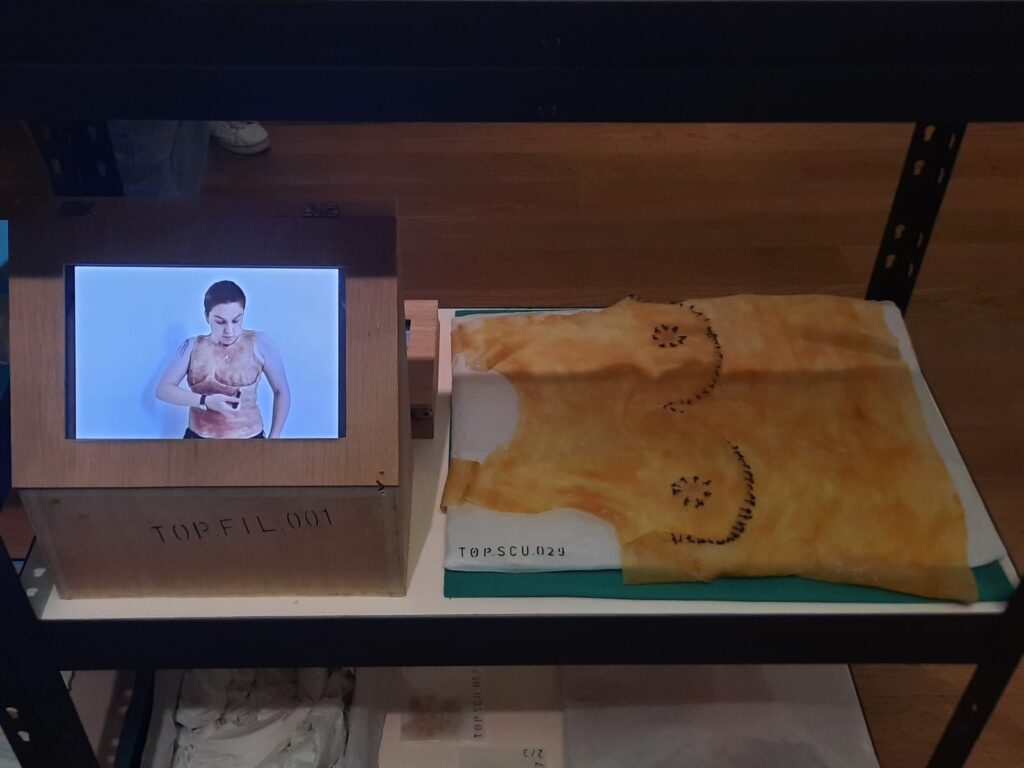
Content warning: lots of representations of breasts, mentions of surgery, medical care. The exhibition itself contains human tissue, bodily fluids, and images of surgery.
Top
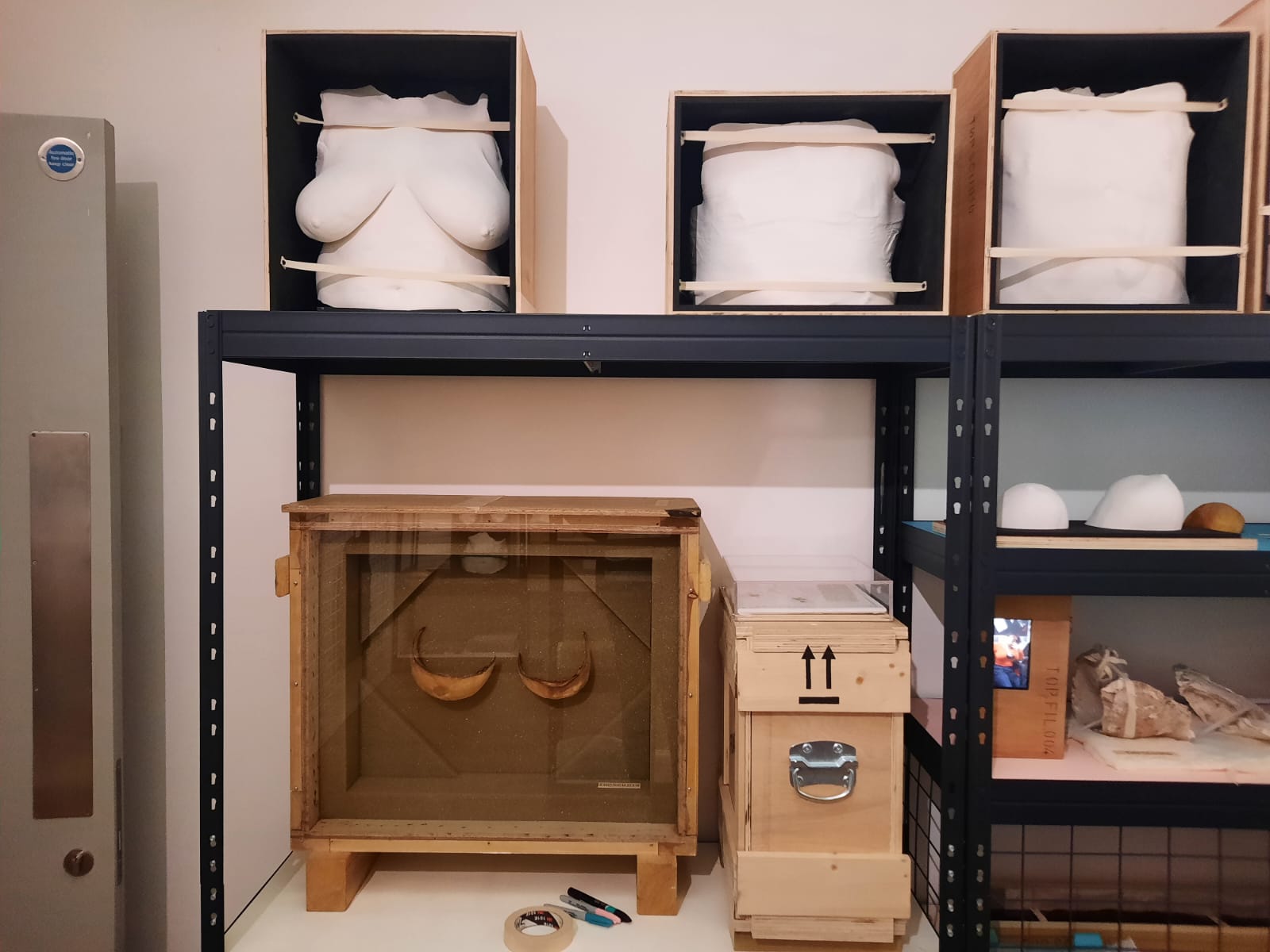
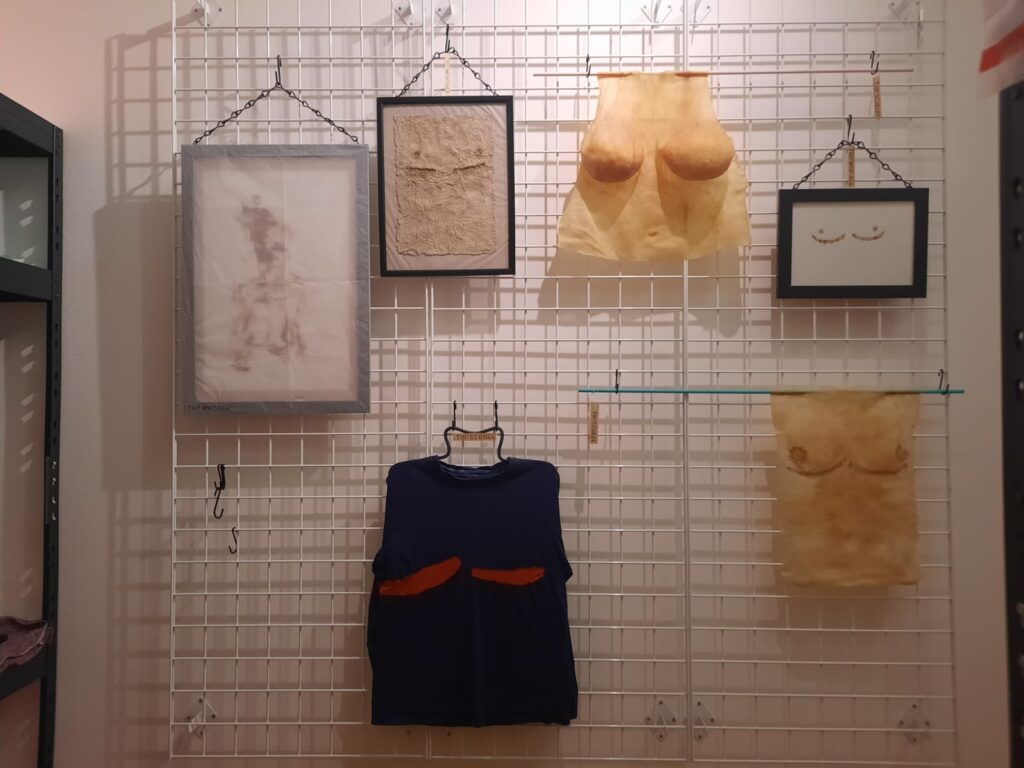
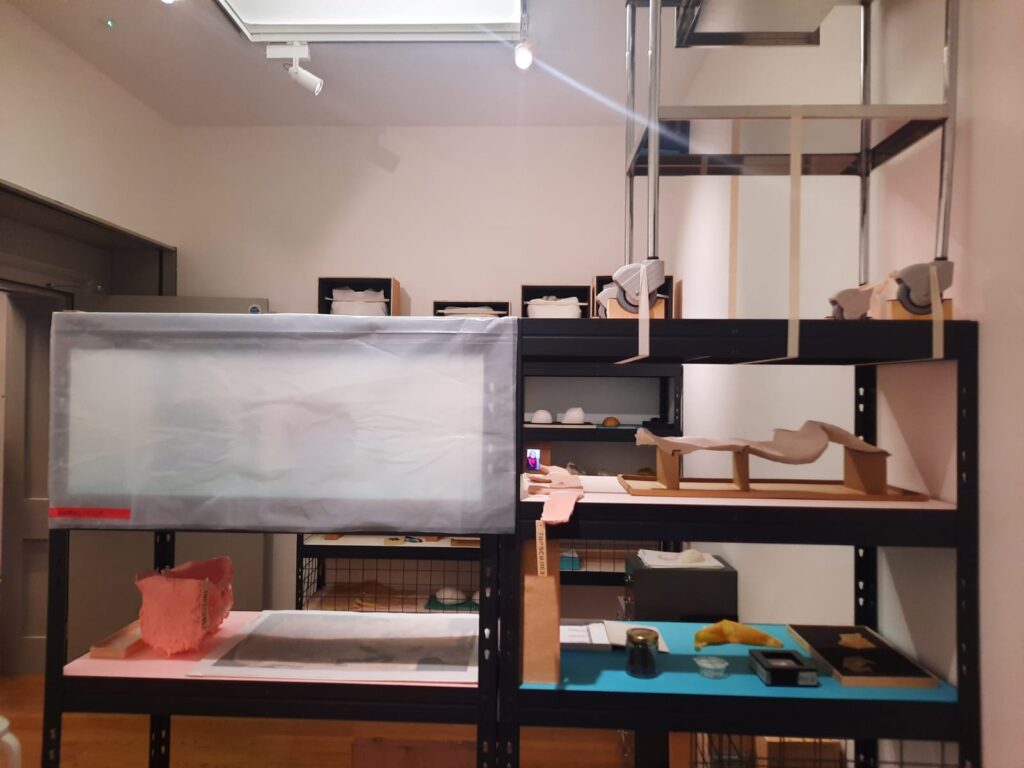
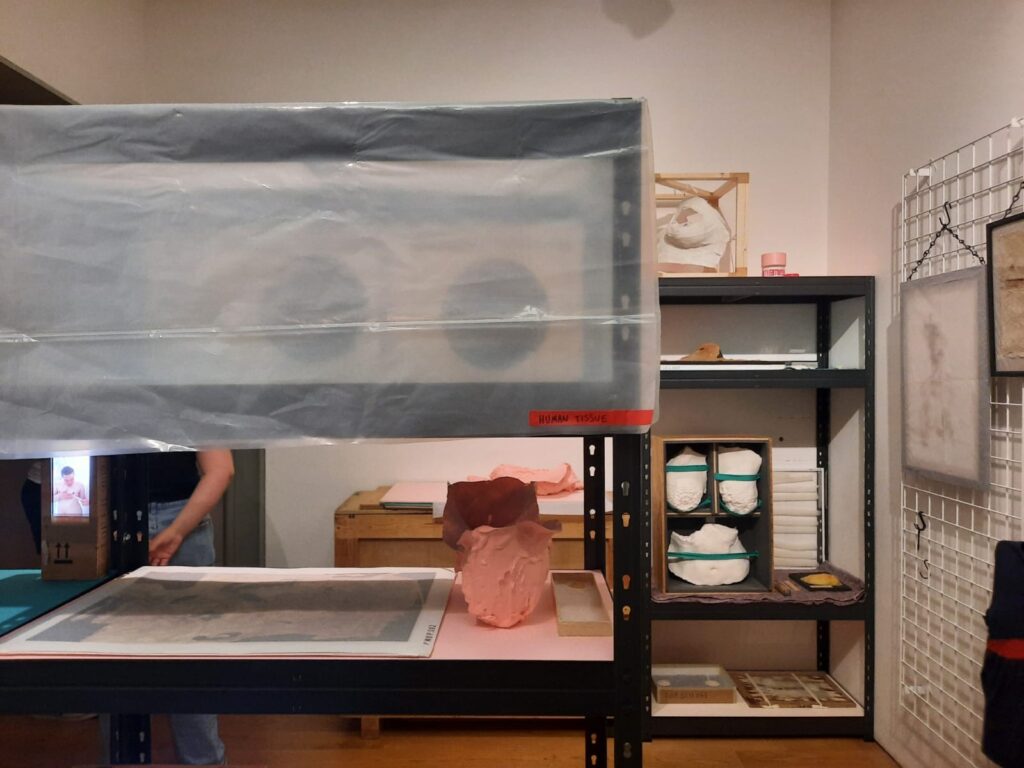
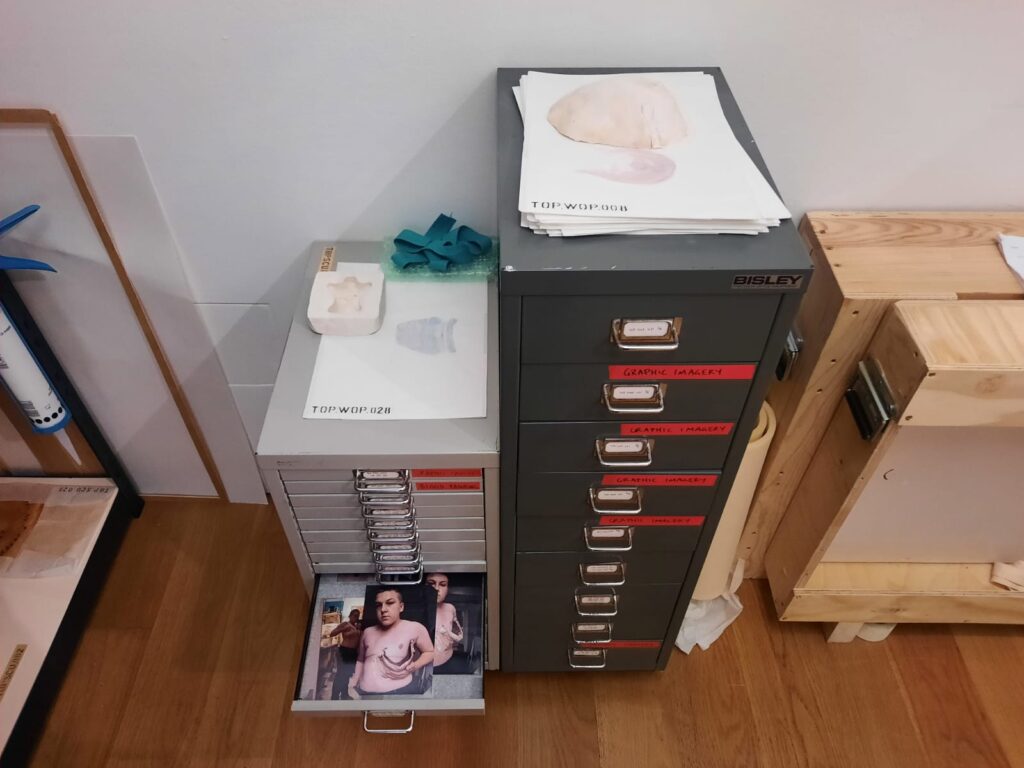
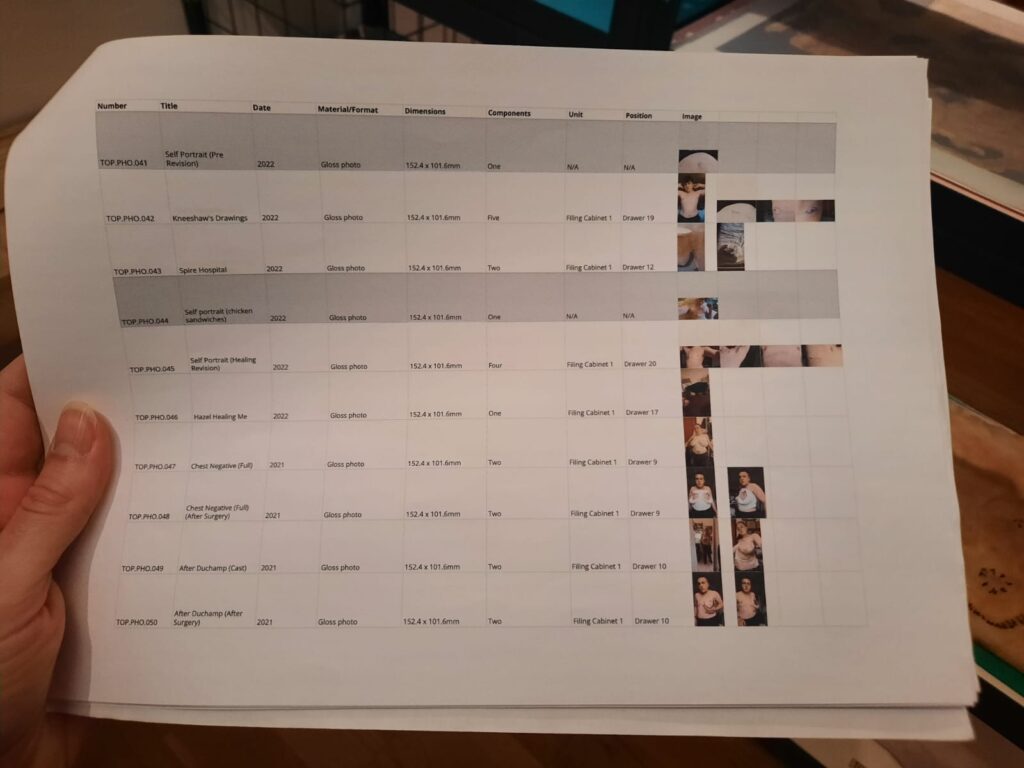
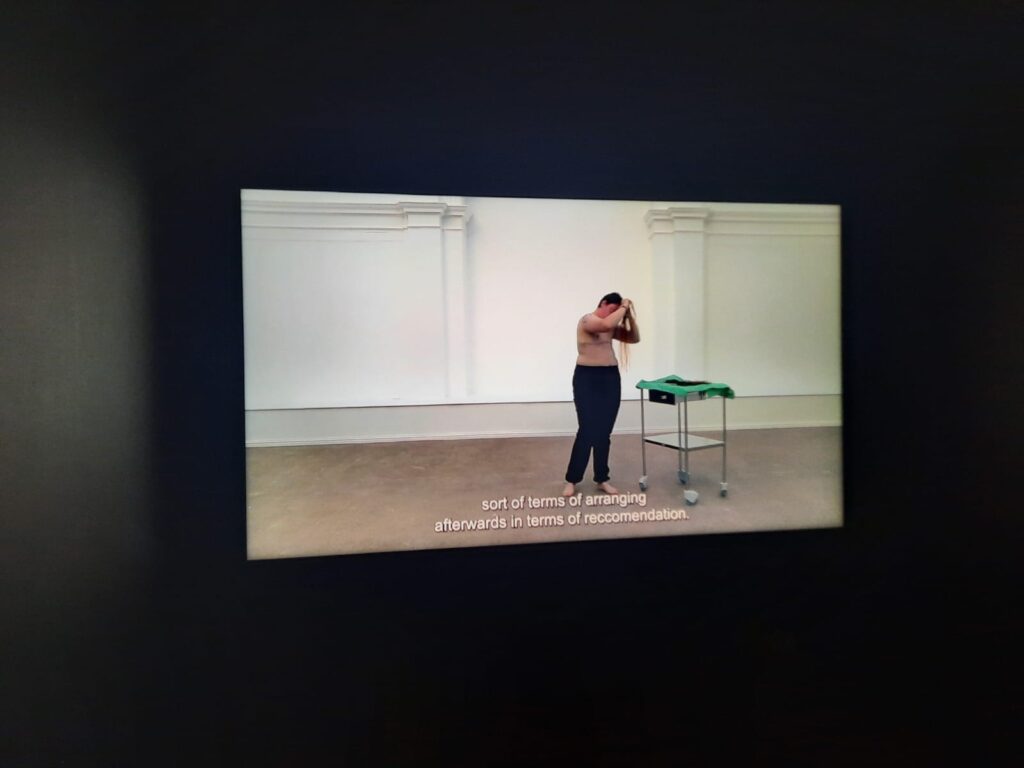
Top by Claye Bowler is on now at Queer Britain. It’s an intimate, archival-installation piece mapping a seven-year journey through the UK’s healthcare system to access gender-affirming top surgery. Bowler, who also works as a museum registrar, brings that institutional lens to the work. Top is disguised as a museum store full of drawers, unlabelled objects, letters, drawings, and collected ephemera. The lack of overt labels in many cases forces the viewer to be bold and explore (eg. can I open that drawer?), mirroring how trans people must often navigate the medical system without clear guidance or full knowledge. Bowler’s professional experience in collection and registration (i.e. what museums collect, how they store, what they deem worthy of documentation) becomes a metaphor for which trans lives get recorded, preserved, or erased.
Bowler’s practice has engaged with queer/trans narratives and archives before. He questions what stories cultural institutions choose to keep and produce alternative archives of memory, identity, body. In Top, Bowler’s inclusion of preserved human tissue, fluid-drawings (blood etc.), letters and materials traces the physicality, emotionality, and procedural grind of this aspect of transition. It is shocking at times, but it’s also deeply personal documentation, both methodical and rigorous. As someone who’s worked in museums, the “behind-the-scenes” setting feels accurate. The drawers, the inventory, the desire to explore. It cleverly underscores the ambiguity and agency in those spaces.
The Emotional Honesty of Past, Present, and Future Bodies
What I appreciated most was the frankness of Top. The emotional honesty of past, present, and future bodies. The confrontation with what it means to be subject to medical processes over years; what care delays do. In the UK, waiting times for gender-affirming care are long. Surveys and reports suggest waits of 3–5 years (or more) for many trans people for initial appointments with Gender Identity Clinics (GICs), and surgery waits can extend even further. Bowler’s archive reflects this tension between patience, struggle, resilience, and cost.
But there are limitations. The density of themes (medical, bureaucratic, physical, emotional) in just one room with a film-screening space next door means some threads feel less developed. The fluid/drawing-media and preserved tissue are powerful, but for some viewers they may be overwhelming or confrontational. There is generous room for reflection, but also moments where the archive mode (which often keeps one at a small remove) underplays the possible effect that more immersive or interpretive framing might bring.
In terms of wider resonances: Bowler’s archive-style work reminds me of artists like Cassils who make work about bodily transition, visibility, and medical institutions, or artists such as Laurence Philomène whose work also invokes personal history, queerness, and medical treatment and transition. Top adds to a growing field of trans art in the UK that demands both private and public attention. Especially important during a time when gender care policy is under strain. If Top has a weakness, it’s that some visitors might miss the subtleties unless they are willing to open drawers, read small texts, linger. But it’s a rare show that gives that opportunity, and does so with clear integrity.
It’s also a good chance to see the current exhibition at Queer Britain, marking 50th anniversary of the UK’s first Pride March, before they close for refurbishment.
Trending
If you see this after your page is loaded completely, leafletJS files are missing.