
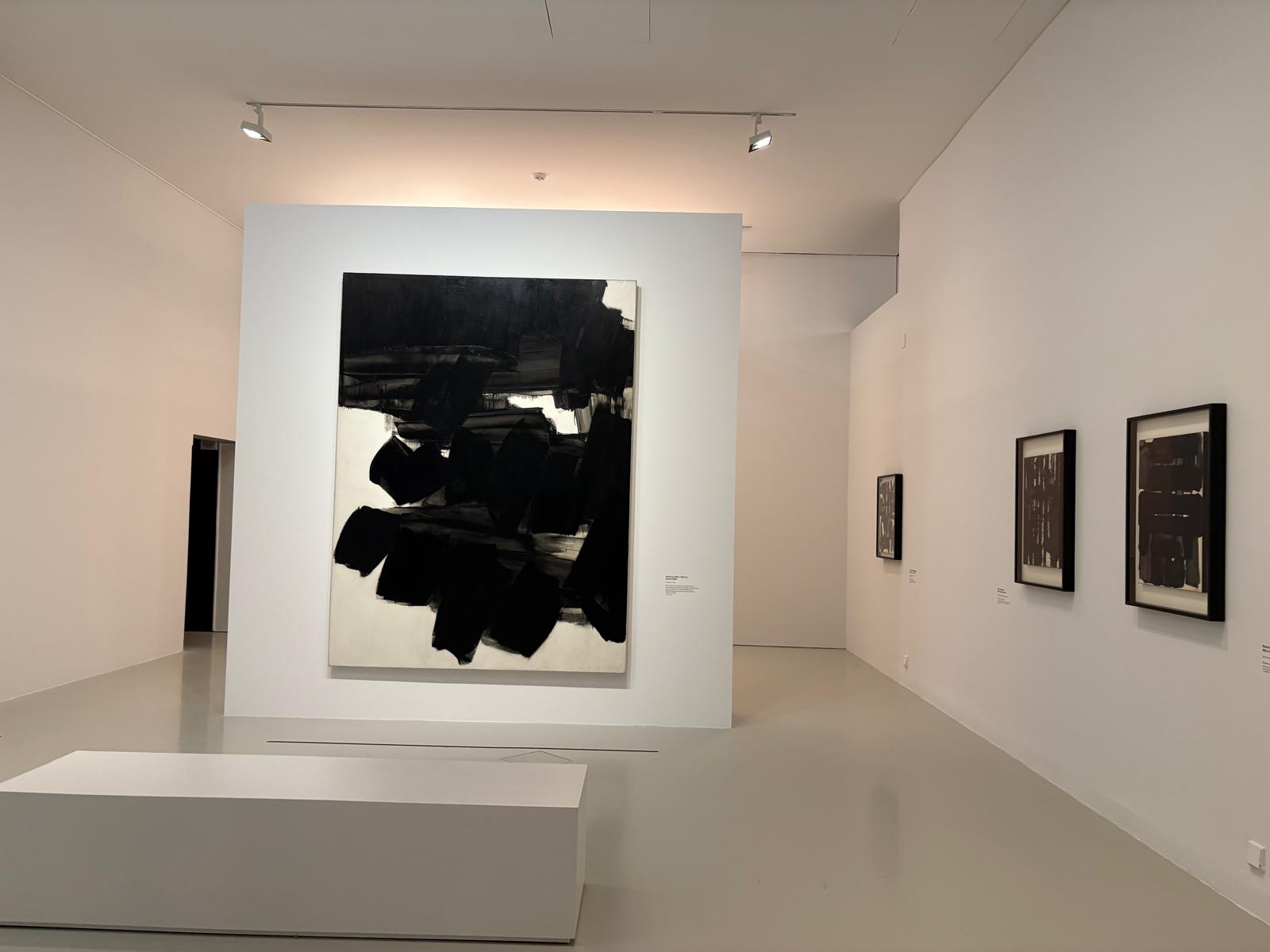
Pierre Soulages. La Rencontre – Musée Fabre, Montpellier
Showing inspirations and connections beyond Pierre Soulages’ work alone, the Musée Fabre shows new sides to “the painter of black”.
Pierre Soulages. La Rencontre
Any serious discussion of the Musée Fabre should account for its relationship with Pierre Soulages (1919–2022), a painter whose career not only reshaped postwar abstraction in France but who also cultivated a long-standing personal and institutional connection with Montpellier. Soulages is a rare figure whose work is both austere and visually magnetic, paradoxically severe and seductive in equal measure. His death in 2022 at the age of 102 capped a lifetime of rigorous practice, marked by a slow, deliberate sense of purpose.
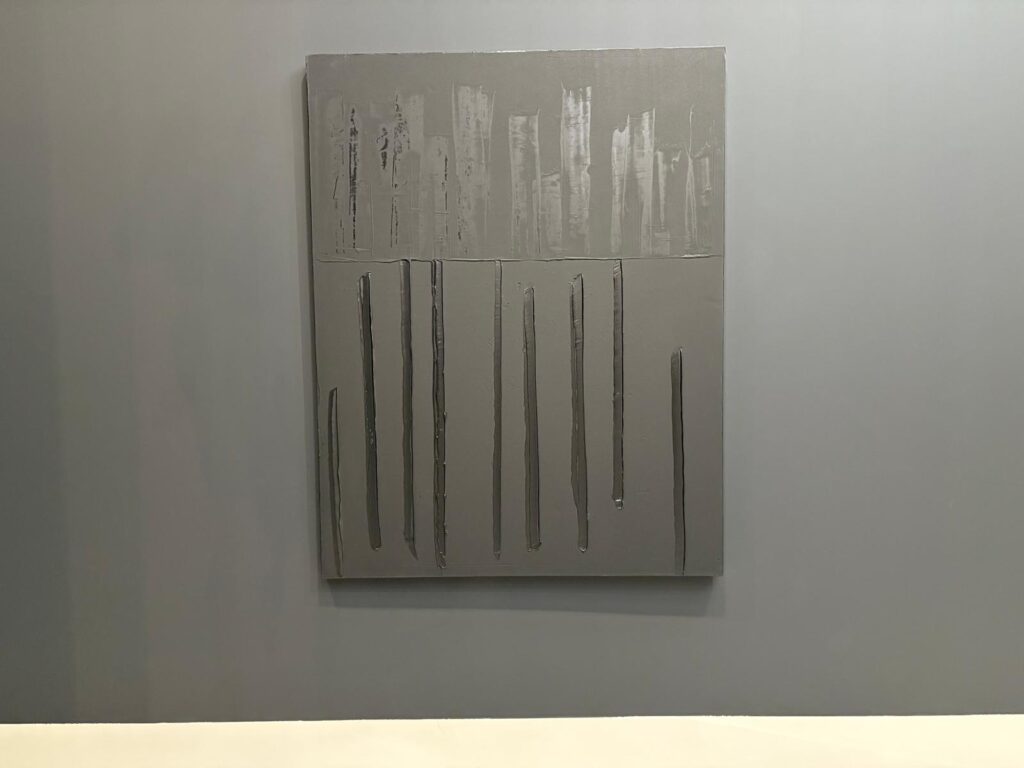
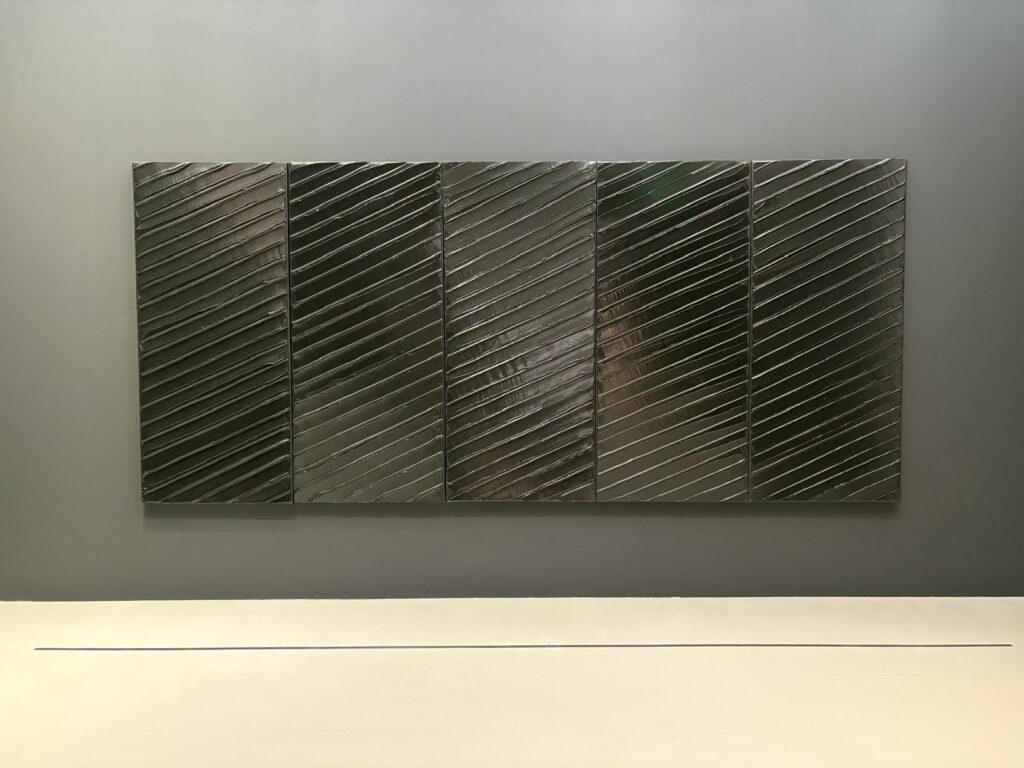
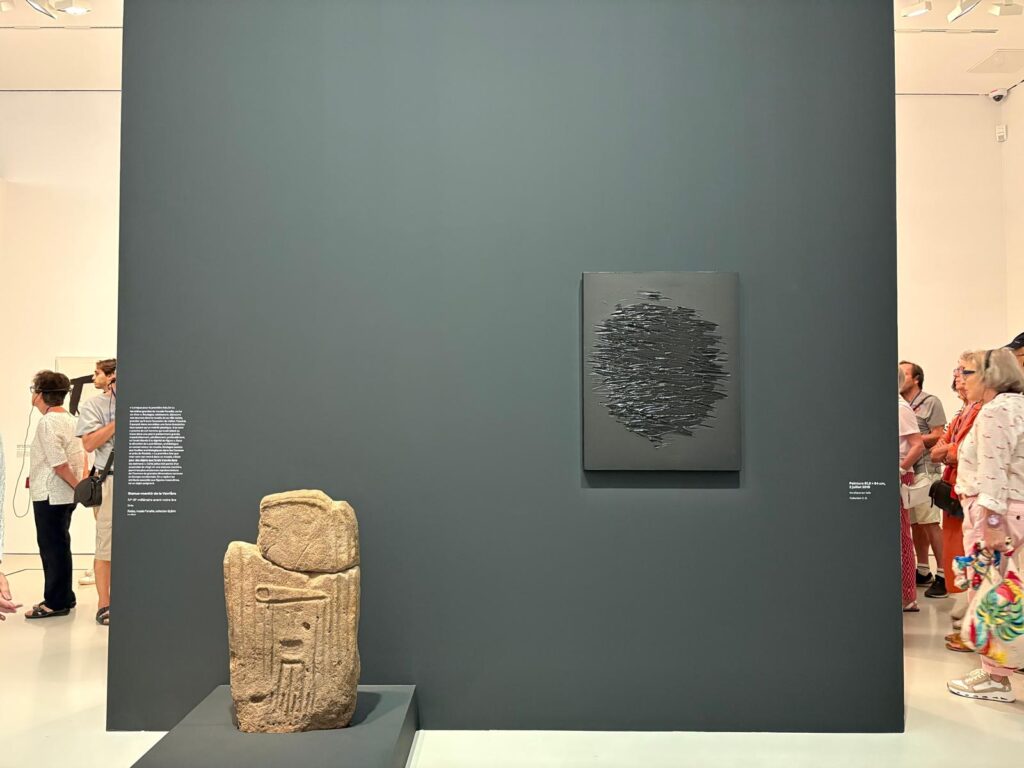
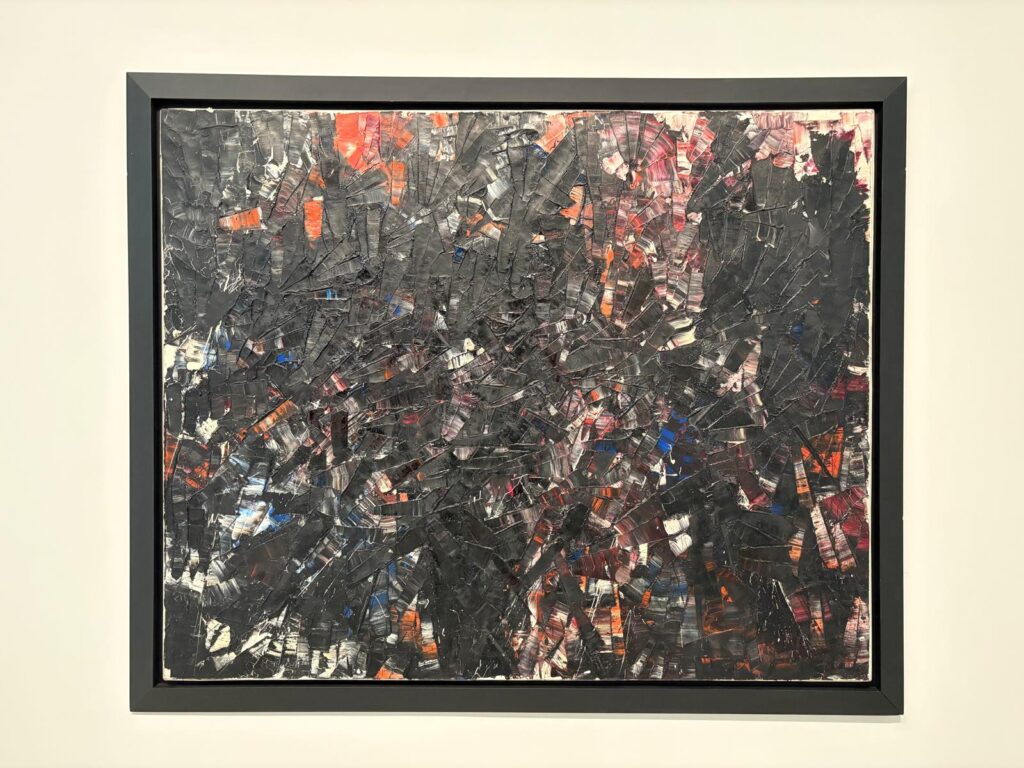
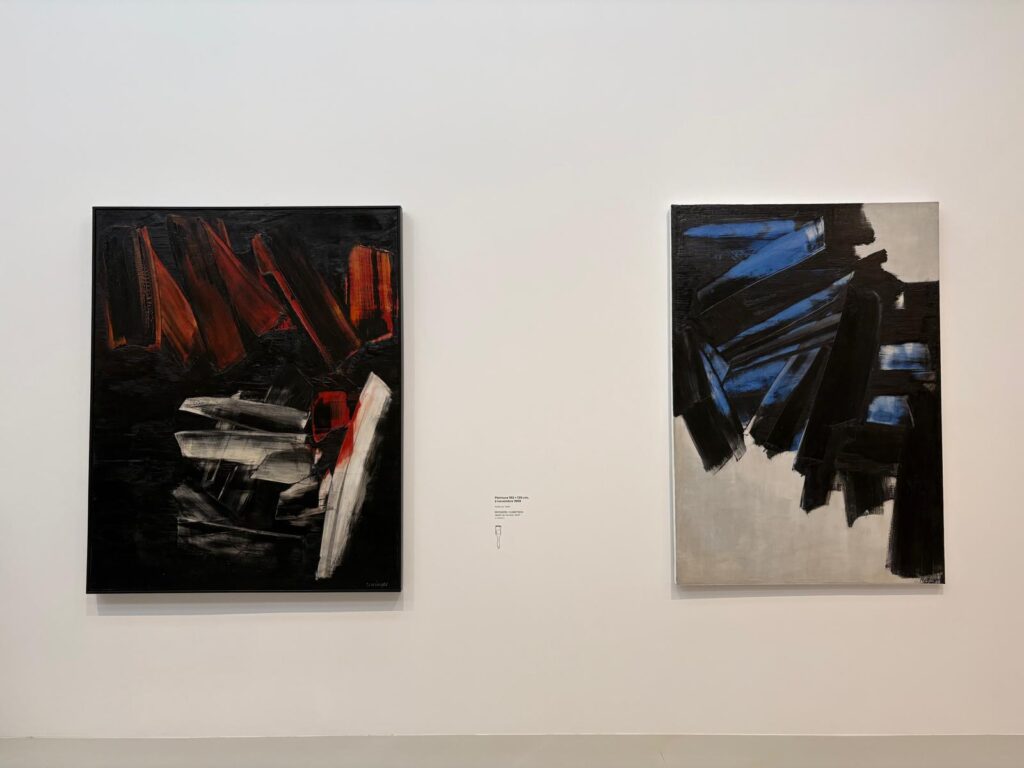
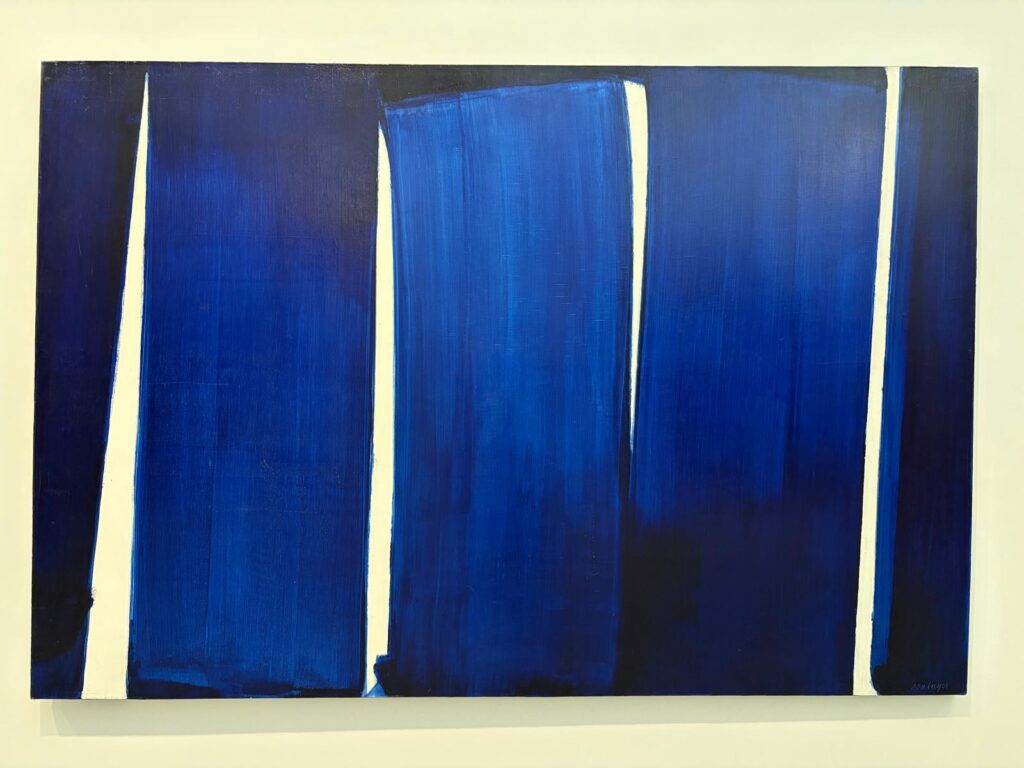
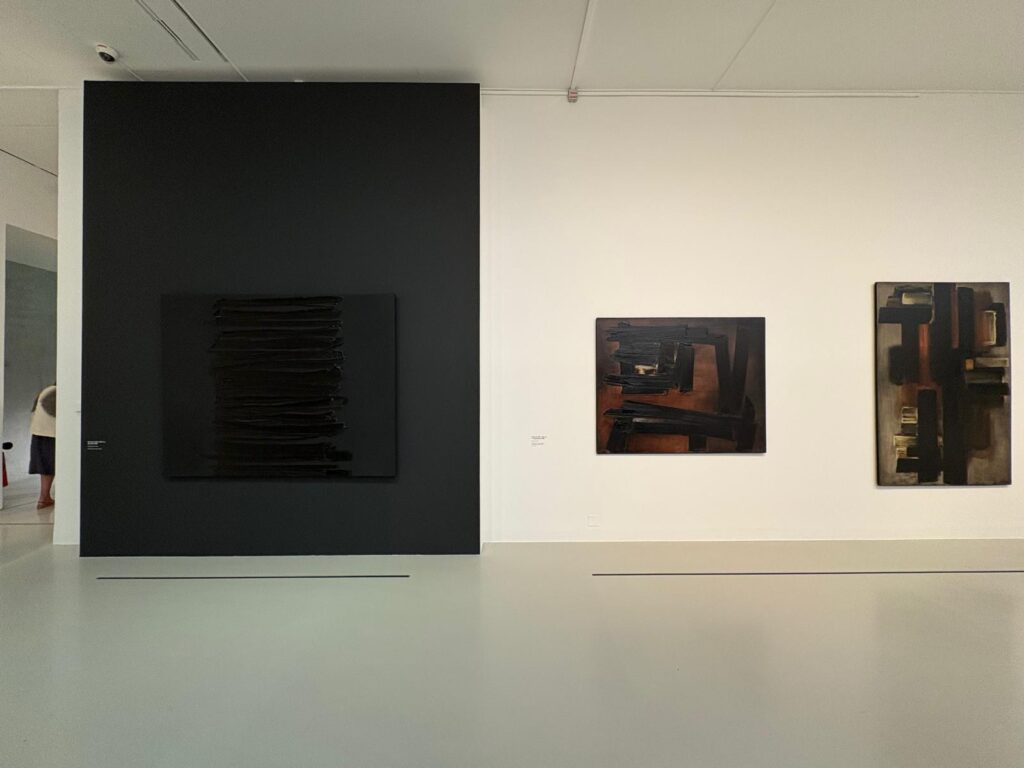
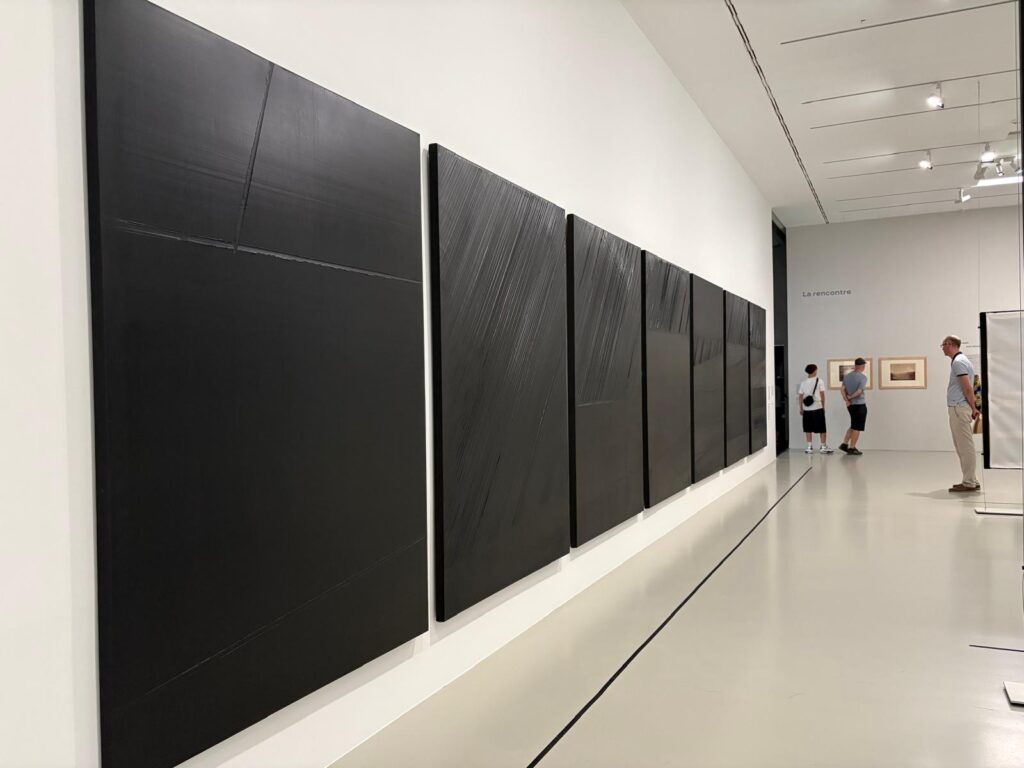
Born in Rodez, a region that remained central to his identity, Soulages came to prominence in the aftermath of WWII. In contrast to the kinetic energy of American Abstract Expressionism, his work focused on the materiality of paint itself, stripped of narrative. Black became not the absence of colour but a generator of it, an idea he developed most profoundly in his outrenoir paintings from the late 1970s onwards. These works, characterised by dense black surfaces manipulated with tools to reflect and refract light, marked a decisive shift. Soulages no longer painted with colour but with the physical interaction between matter and light.
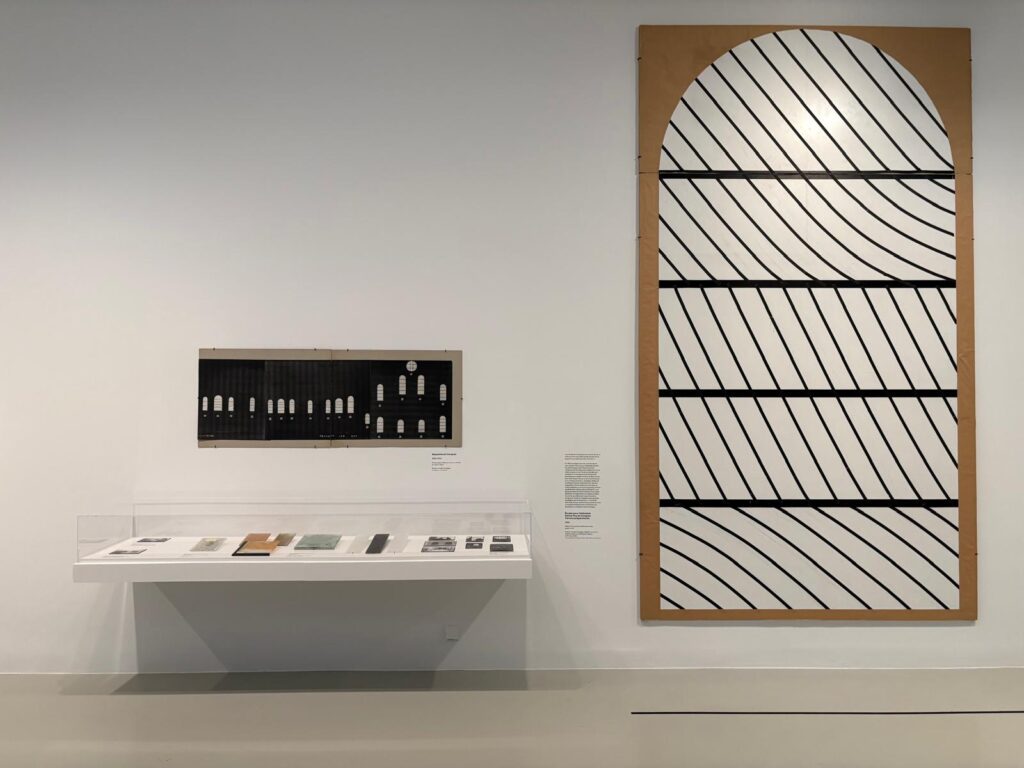
Throughout his career, Soulages maintained a dialogue with architectural space, light, and surface, principles most famously realised in his stained glass designs for Conques Abbey. His connection to Montpellier and the South of France was deepened through donations of major works to the Musée Fabre, and later through the establishment of the Musée Soulages in Rodez.
A Homecoming for Soulages’ Work
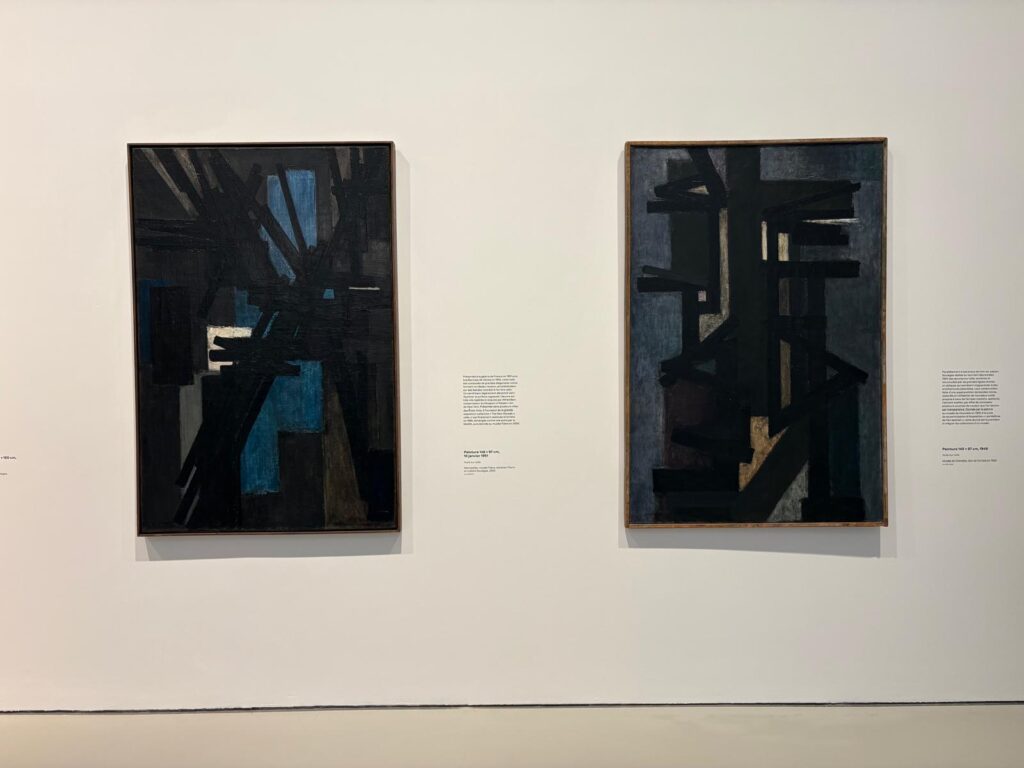
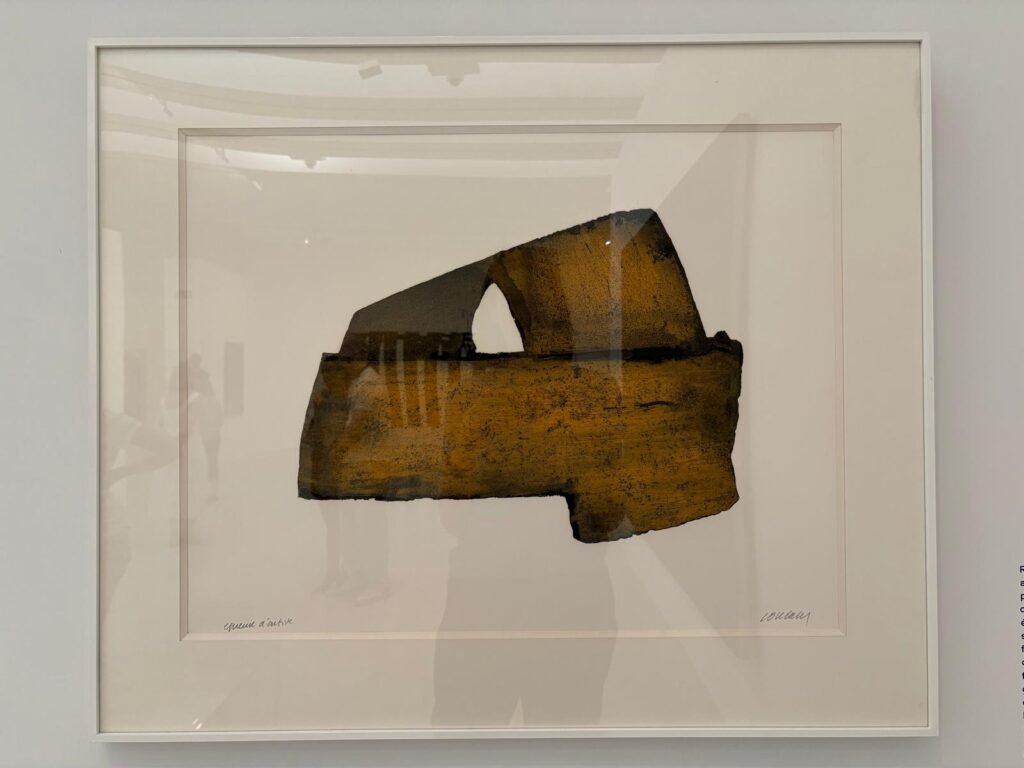
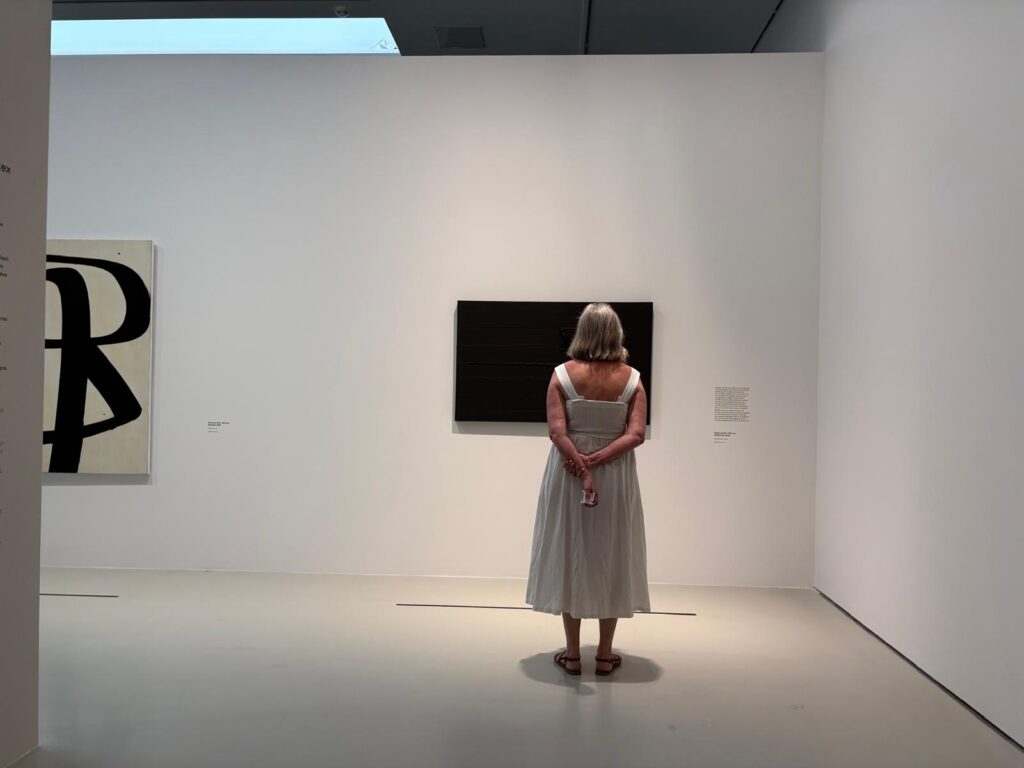
Soulages discovered the Musée Fabre in 1941, while training as a drawing teacher in Montpellier, and found it inspirational. He cemented that bond in 2005, donating twenty paintings and depositing ten more. We saw the results in our last post. La Rencontre, staged two decades later in the very institution that shaped his early vision, spans three floors and over 1,200 m². It presents around 120 works (paintings, works on paper, sculptures and designs for stained glass) drawn from the Musée Fabre, the Musée Soulages in Rodez, private collections, and the Colette Soulages archive.
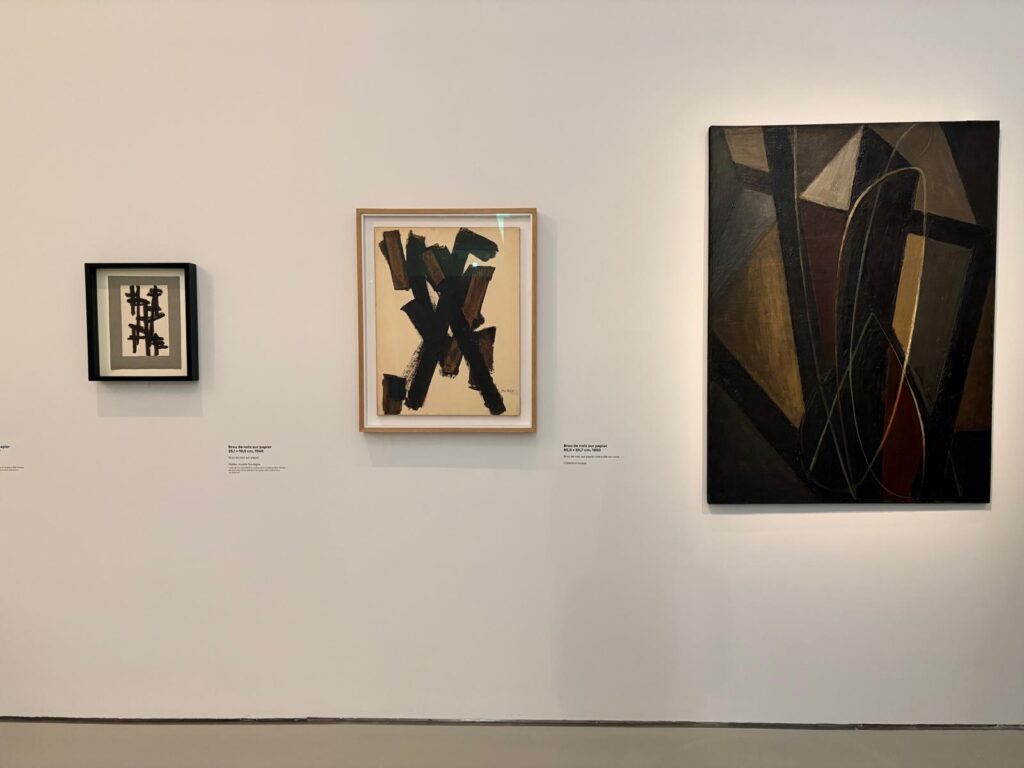
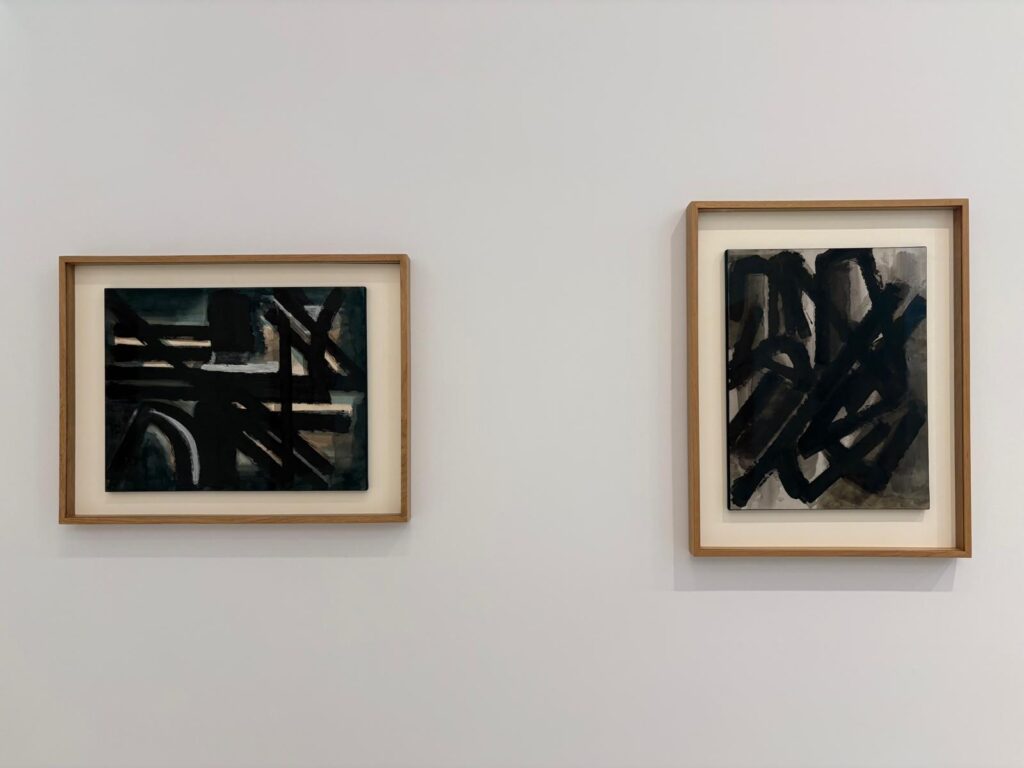
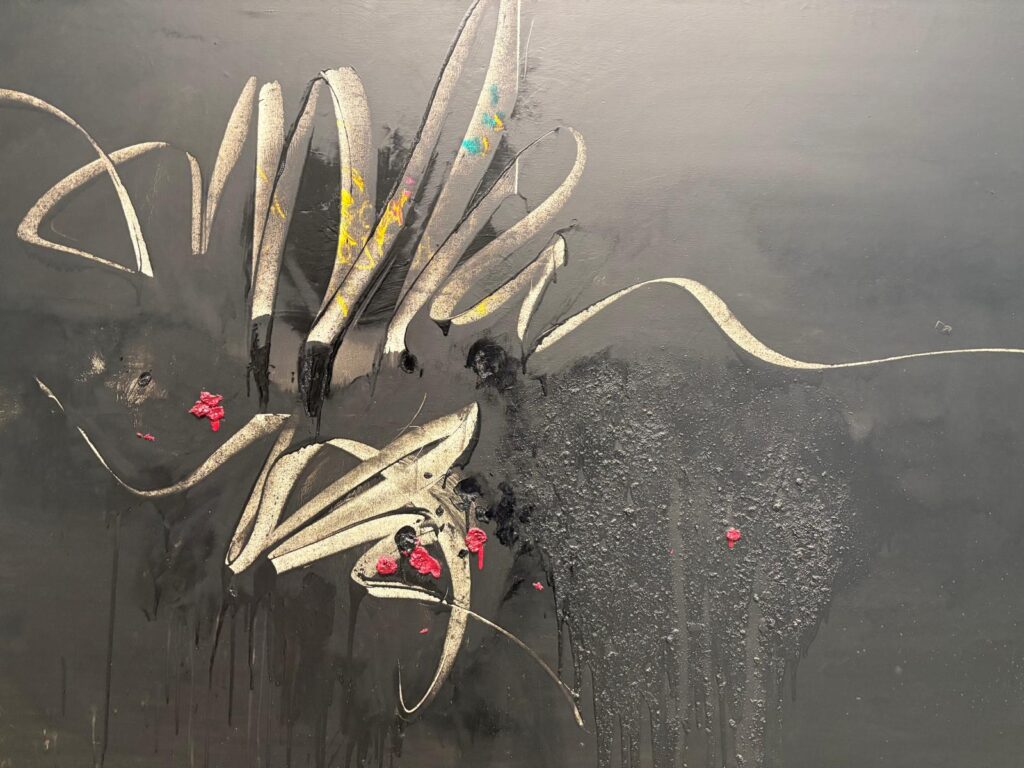
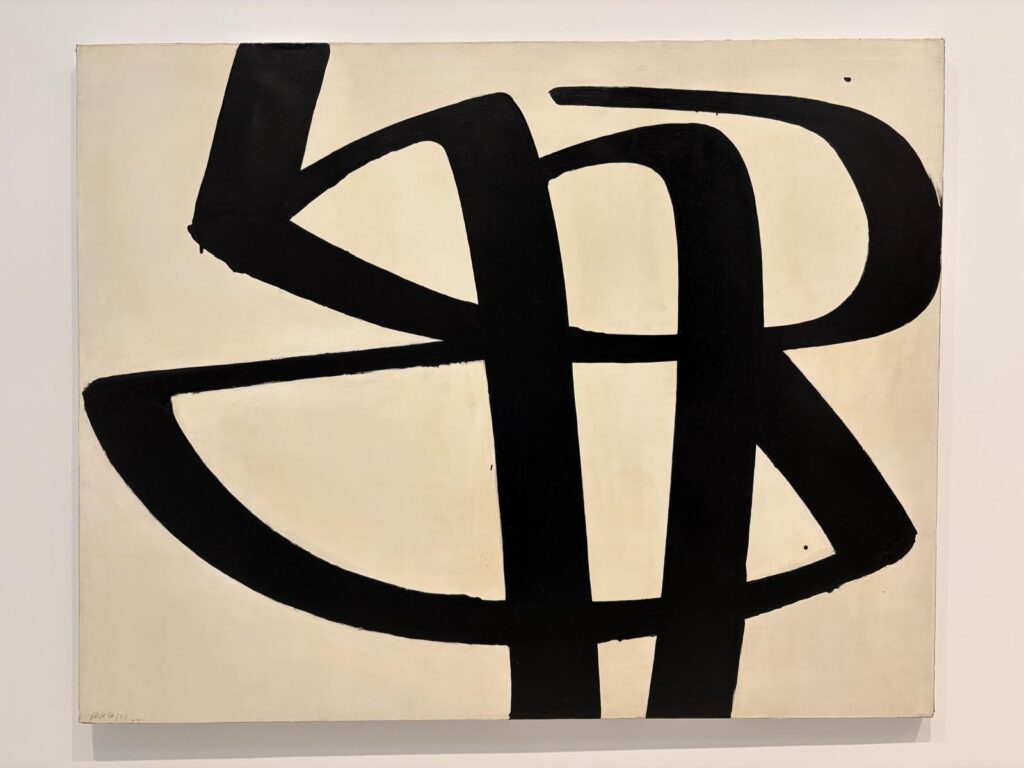
The exhibition unfolds in six thematic chapters: Matter; Constructing Painting; Writing & Silence; Noir-Lumière & Clair-Obscur; Whites & Transparencies; and The Space of Painting. This structure foregrounds Soulages’ exploration of surface and light rather than following a chronological arc. Matter presents early tar-like textures and walnut ink on paper. Constructing Painting examines his use of homemade tools and architectural form. Writing & Silence evokes the gestures of calligraphy. Noir-Lumière and Clair-Obscur reveal how black becomes luminous, as in the outrenoir works. Whites & Transparencies shows his interest in contrast, light, and glass. Finally, The Space of Painting considers how paintings occupy and transform physical space.
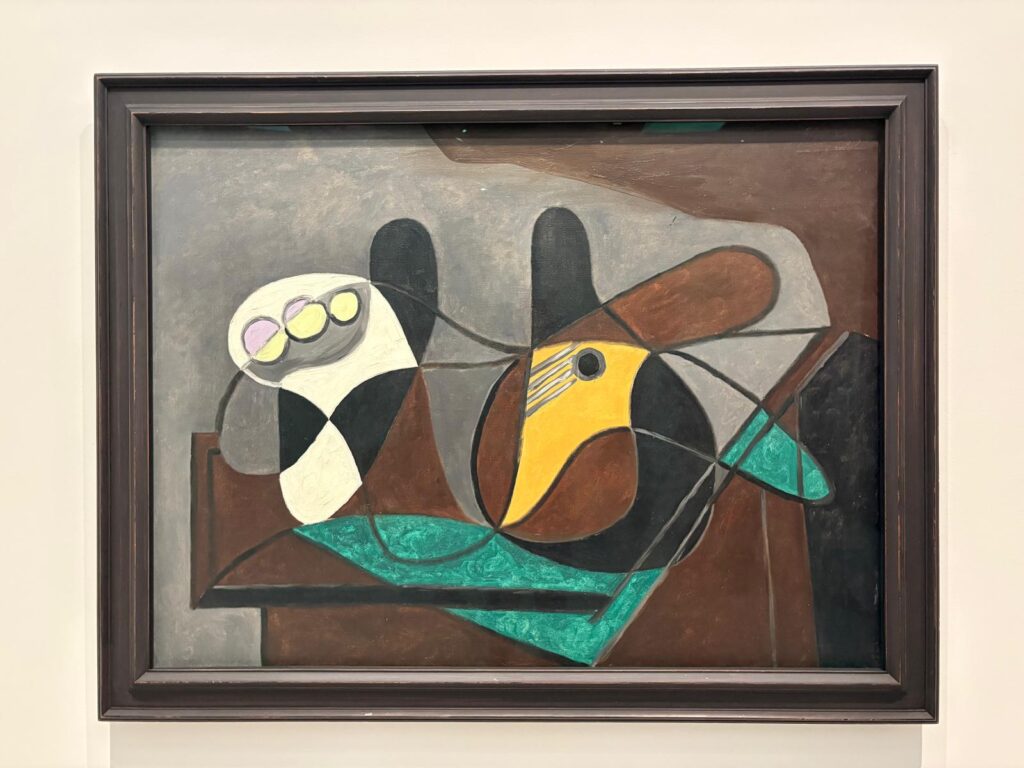
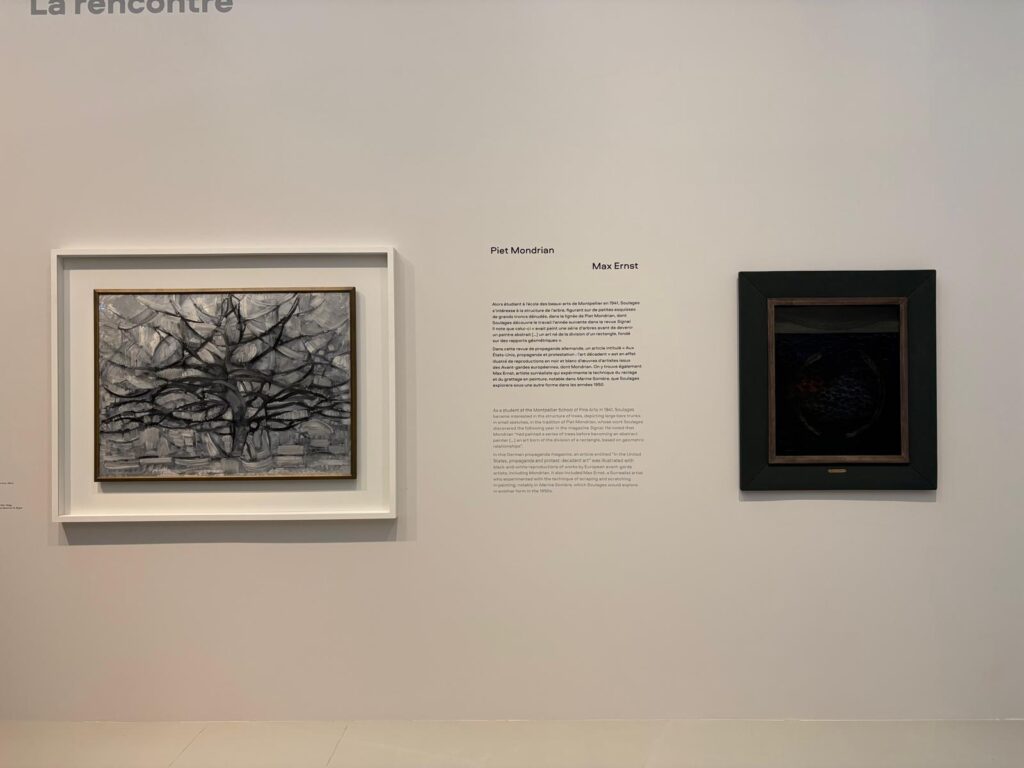
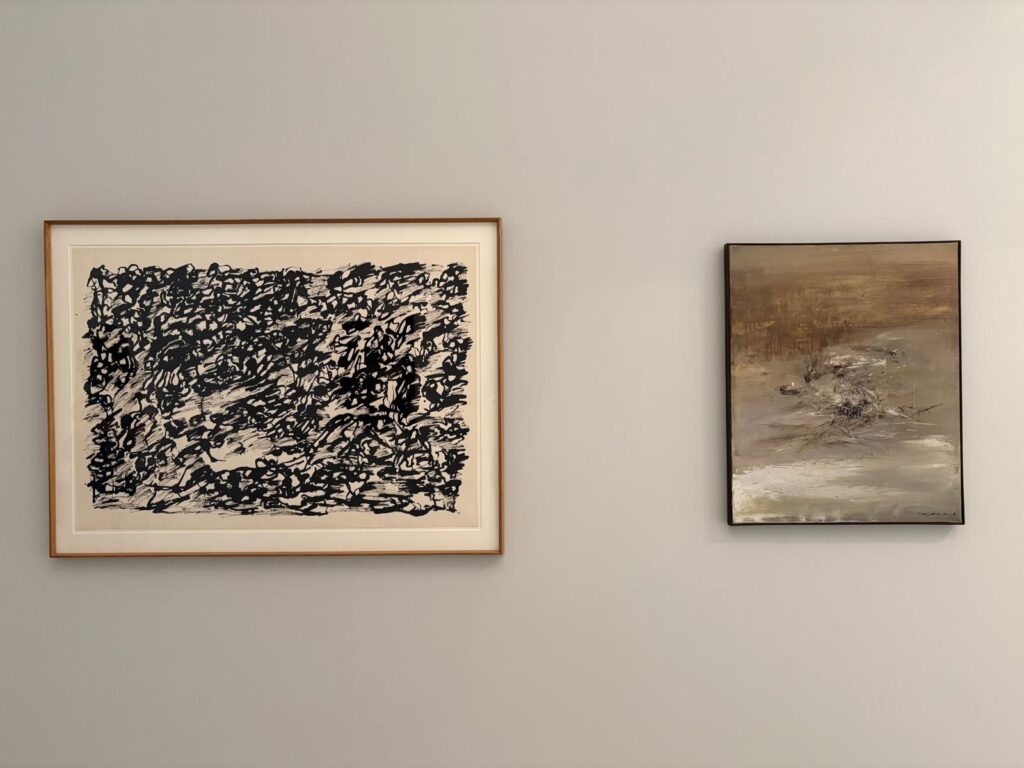
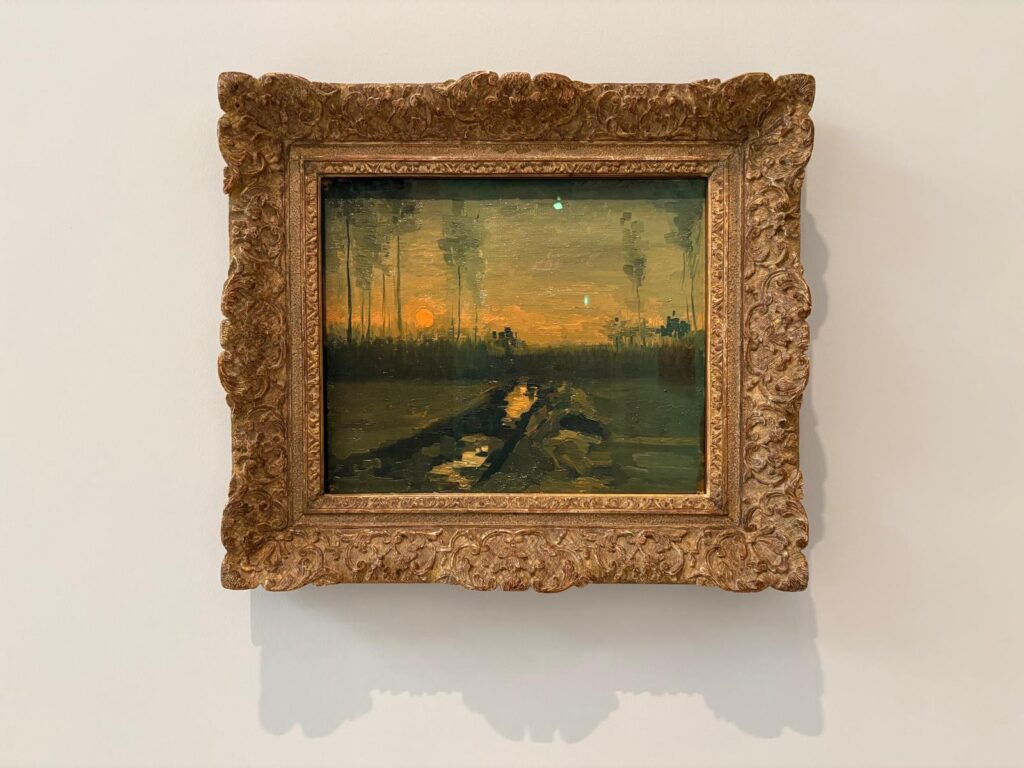
Dialogues with art history punctuate the display. Picasso, Rembrandt, Cézanne, Courbet, Van Gogh, Mondrian, Zurbarán, and Zao Wou‑Ki appear in conversation. The contrast reveals Soulages’s pursuit of painting in an almost philosophical manner. A small Cézanne canvas next to an outrenoir makes otherwise unimagined connections across abstraction.
The curatorial logic mirrors Soulages’s own aesthetic, in that it is non-linear, cyclical, and material. You sense echoes between eras and media. Moments from the 1940s converse with late 2010s paintings. That break in time is precisely what La Rencontre is aiming to stage and celebrate.
Re-Situation Within an Artistic Context
Despite the scale, La Rencontre never feels overwhelming. The six sections offer a clear but unobtrusive structure. One leads naturally into the next. Changes in tone are managed spatially and visually, often through the juxtaposition of materials and scale. A painting catches light differently than a walnut ink drawing. Large canvases breathe, while vitrines draw attention to paper and process. The curation is intelligent in the sense that it is ordered, but not rigid.
What prevents monotony (particularly in a show so committed to black) is that careful inclusion of other artists. Works by Rembrandt, Mondrian, and Zao Wou-Ki aren’t there to explain Soulages, or to create a strict influenced/influencer relationship. They act more like punctuation. Their colour, figuration, or handling of light breaks the rhythm and sharpens attention. You look back at the Soulages works differently after each encounter. The curators have understood this well.
I always tend to enjoy exhibitions that place artists back into their context. And in that sense, this exhibition does a great job of recreating the experimental context of mid-century (primarily Western) artists. Form, gesture, material, surface: each artist here confronts these elements differently, but with a similar urgency. Soulages thus comes into focus not as “master of black,” but as a peer among other seekers of artistic truths.
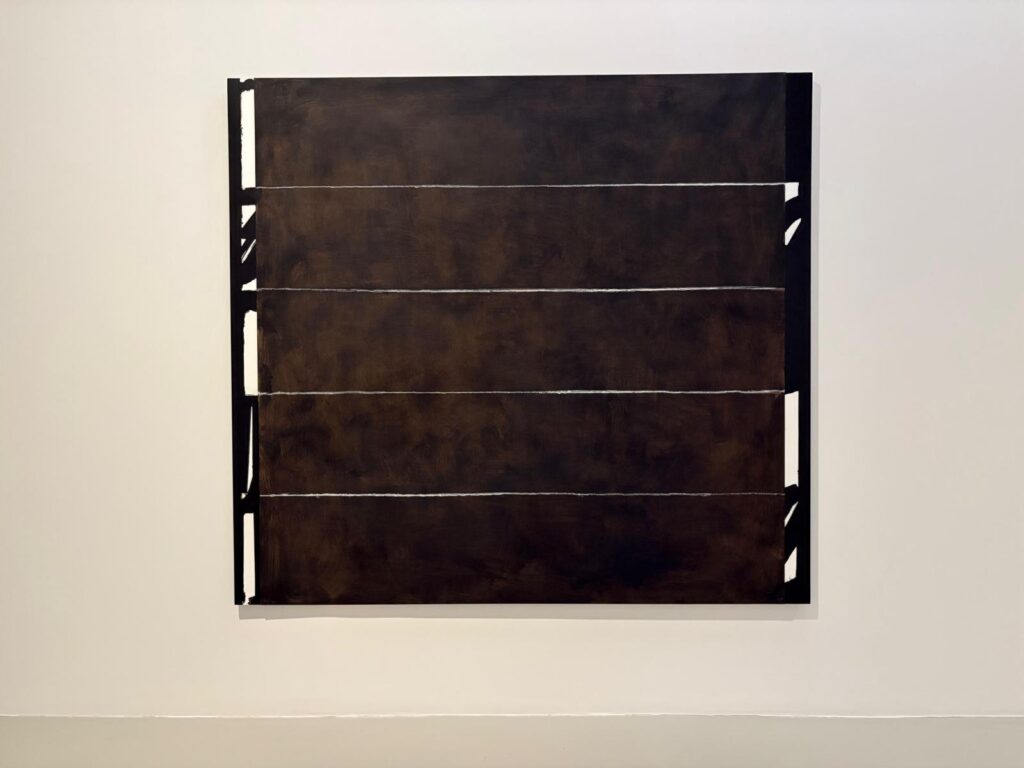
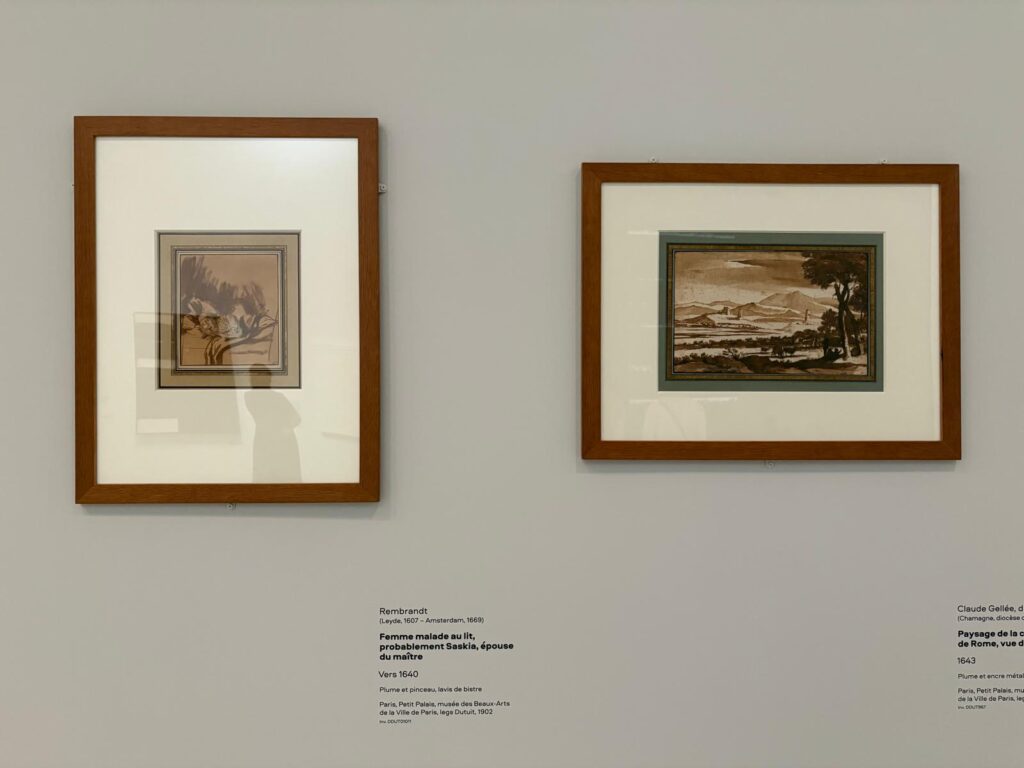
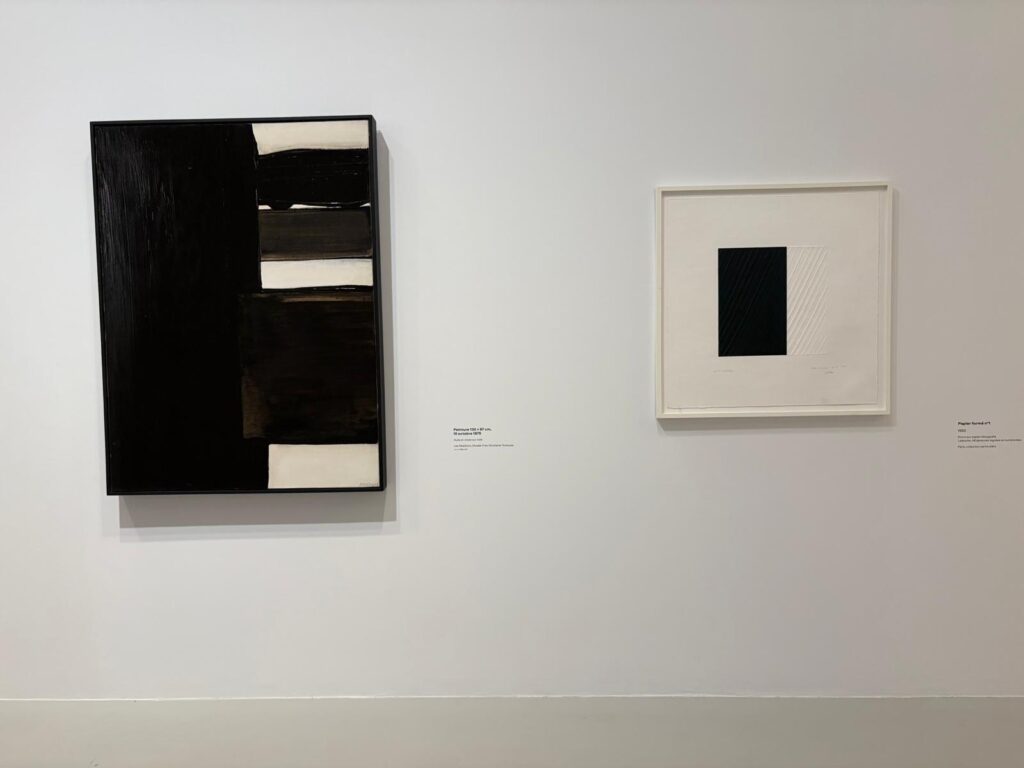
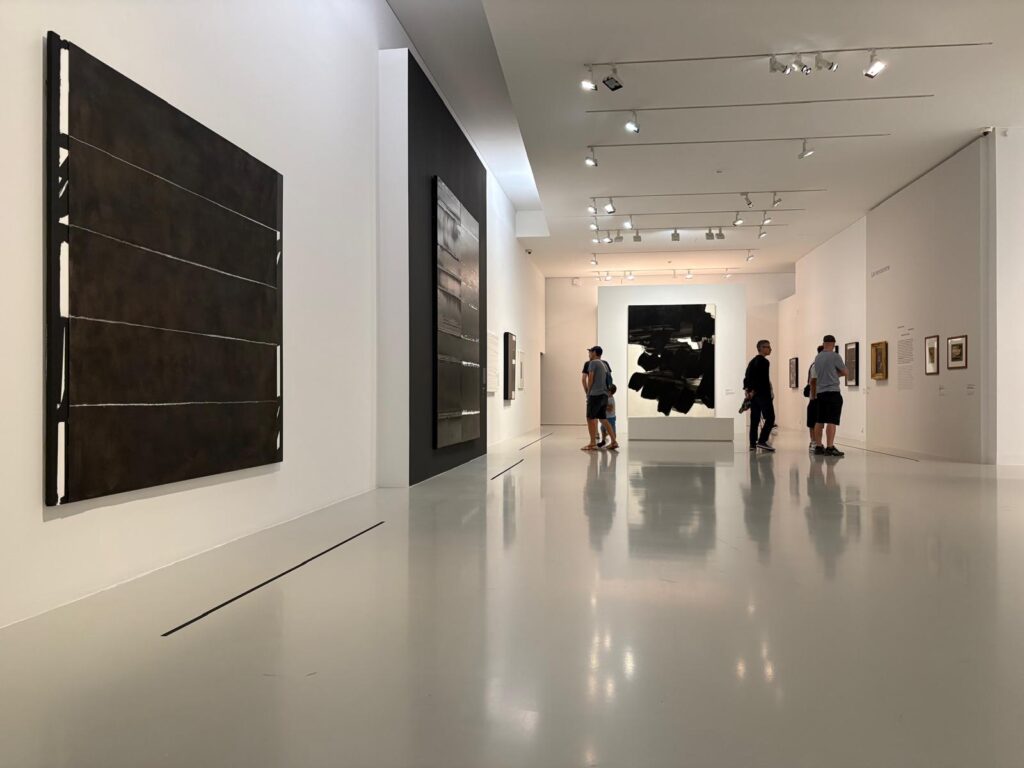
A Serendipitous Visit
This trip to Montpellier was brief, and not strictly for art. But it feels serendipitous that the only exhibition I saw here was of Pierre Soulages, a painter with strong ties to this region, and whose work has meant something to the city for many decades. His retrospective at the Musée Fabre in 2007 was one of the first major exhibitions held after the museum’s reopening. This new one, La Rencontre, forms a kind of echo or continuation.
It was also, for me, a chance to see Soulages properly. I’ve rarely encountered his work at scale, and almost never in such varied media. I always find that I come to know an artist best this way: immersing myself for a time in all the variations and forming a mental picture that goes beyond what you can learn in books. Here you can see how much he edits, experiments, and pares down. And how physical these paintings are.
This wasn’t a planned stop, but La Rencontre proved an unexpected highlight. Soulages’ connection to Montpellier gave the exhibition a sense of being local without not parochial. For a painter I’ve rarely seen outside isolated works, it offered a more sustained encounter. I left with a clearer sense of the questions his work keeps asking.
Salterton Arts Review’s rating: 4/5
Pierre Soulages. La Rencontre on until 4 January 2026
Trending
If you see this after your page is loaded completely, leafletJS files are missing.