
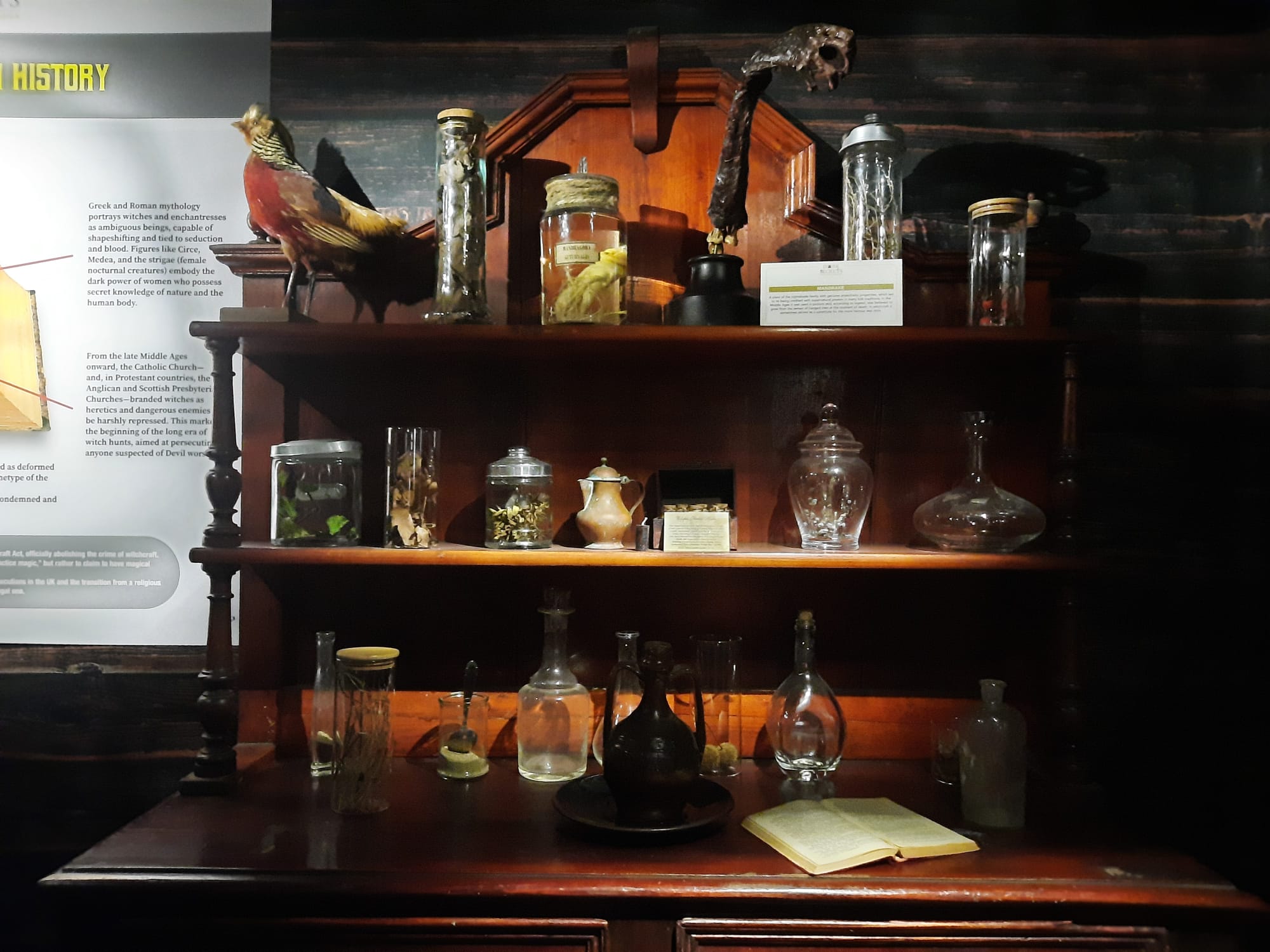
Dark Secrets: An Esoteric Exhibition – The Vaults, London
Aimed at those with a deep interest in the mysteries of the world or the macabre, Dark Secrets can be fun as long as you take it for what it is.
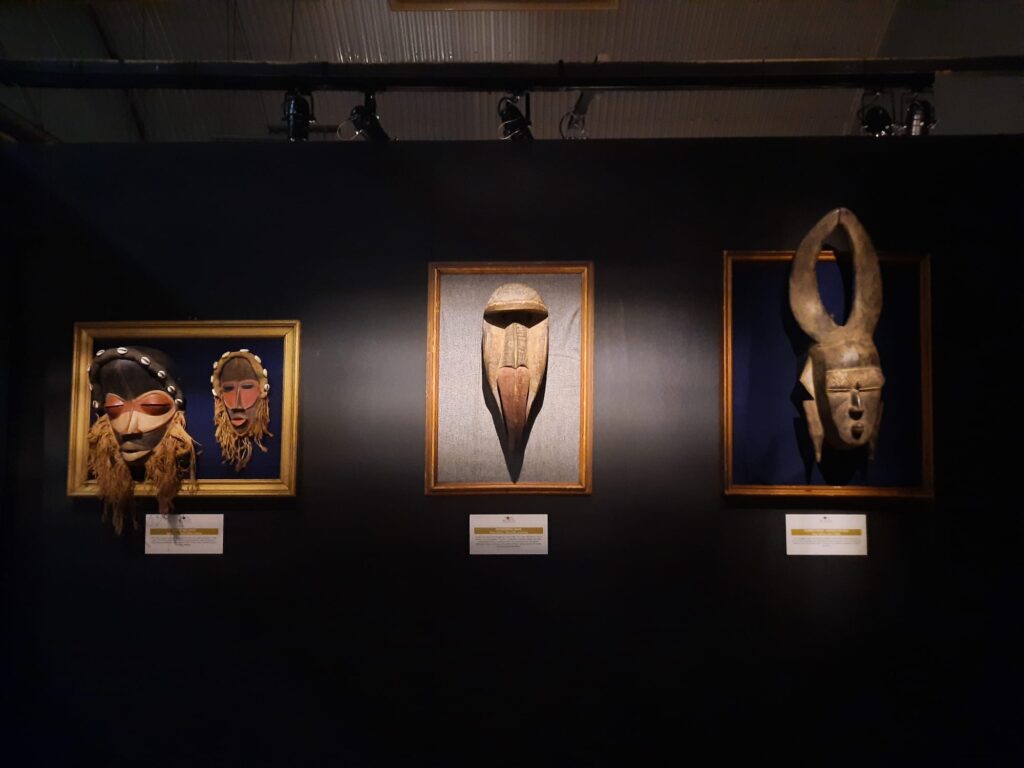
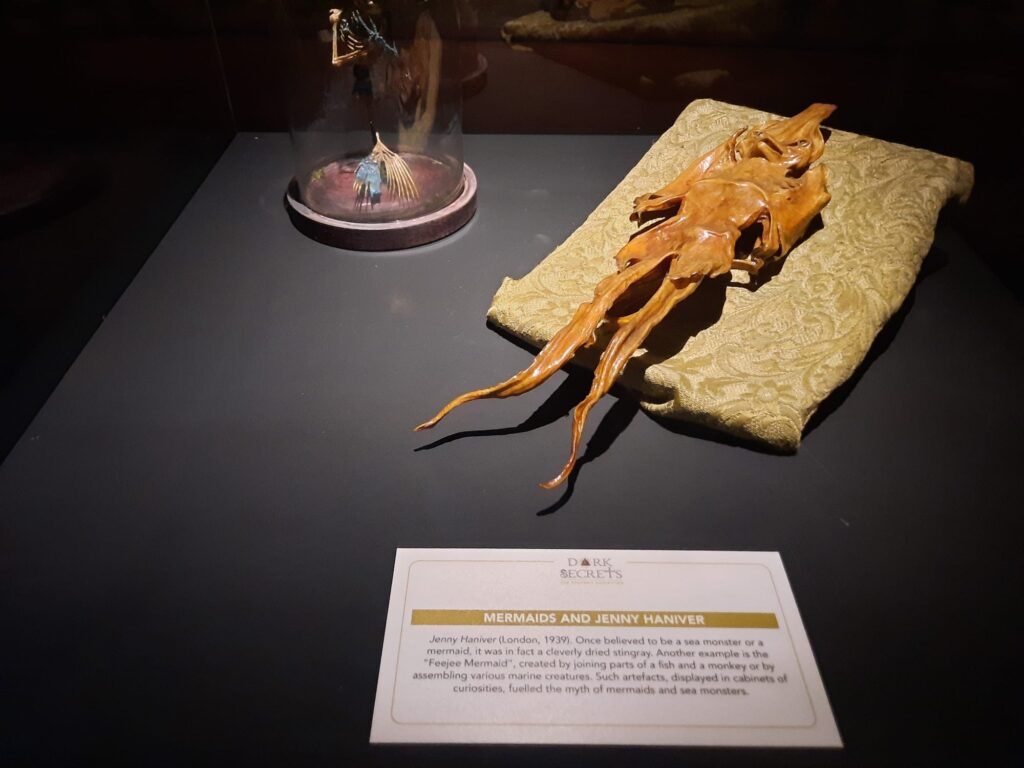
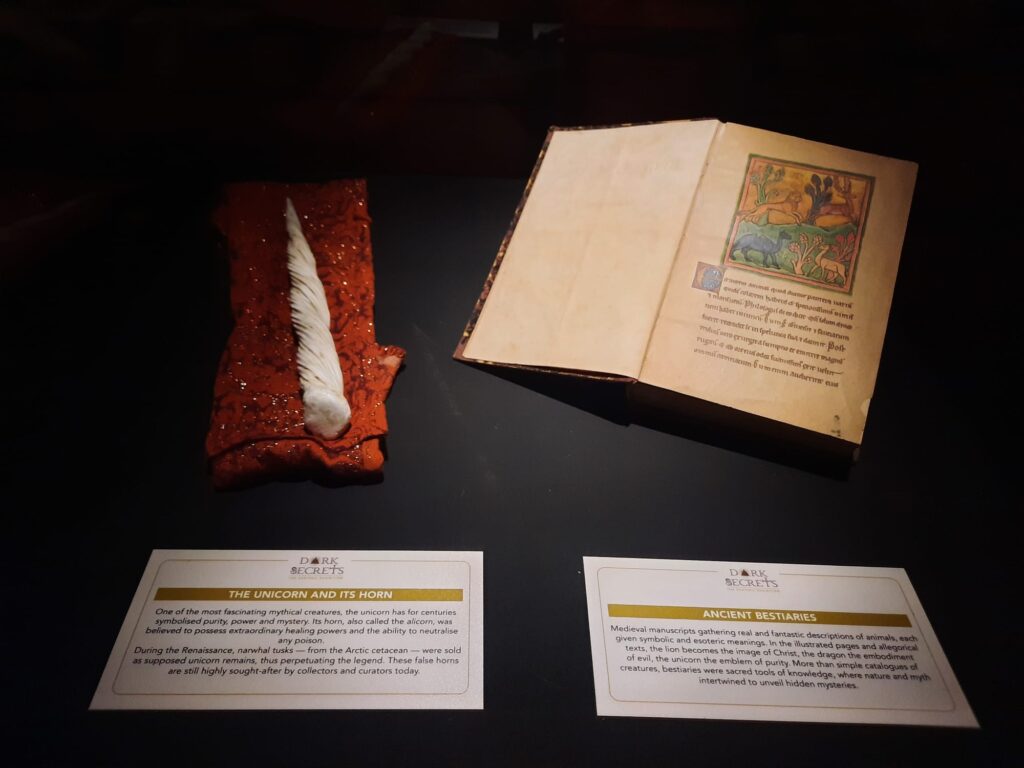
Dark Secrets
It’s funny sometimes going back to a place you’ve known in a previous iteration. I felt that way when I saw this exhibition in a building I once worked in. And today’s exhibition is in The Vaults under Waterloo Station, previously home to VAULT Festival. Since the theatre festival moved out, Italmostre, an Italian company specialising in commercial exhibitions, have moved in. They first staged Serial Killers, which frankly is not my thing. But the idea of Dark Secrets: An Esoteric Exhibition intrigued me. Enough to take up an offer to come and see it for myself.
The Dark Secrets website explains that the exhibition “represents the point of convergence between occult sciences, supernatural phenomena, ancient beliefs and esoteric doctrines”. It promises 27 rooms covering a real range of different topics, from Druids to Tarot to Witchcraft, Freemasons, Knights Templar – basically you name it, they have it. The website also frames the exhibition as taking a rational approach, evoking visitors’ critical faculties to understand how to spot fraudulent phenomena, as well as the results of more scientific approaches to trying to explain the inexplicable.
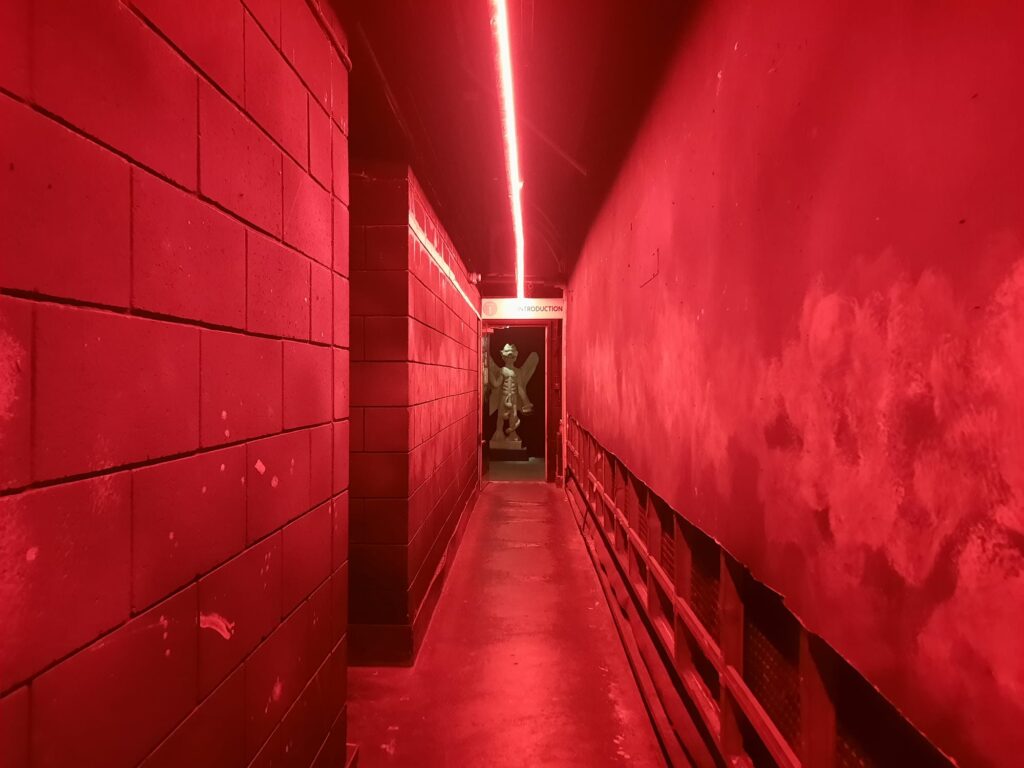
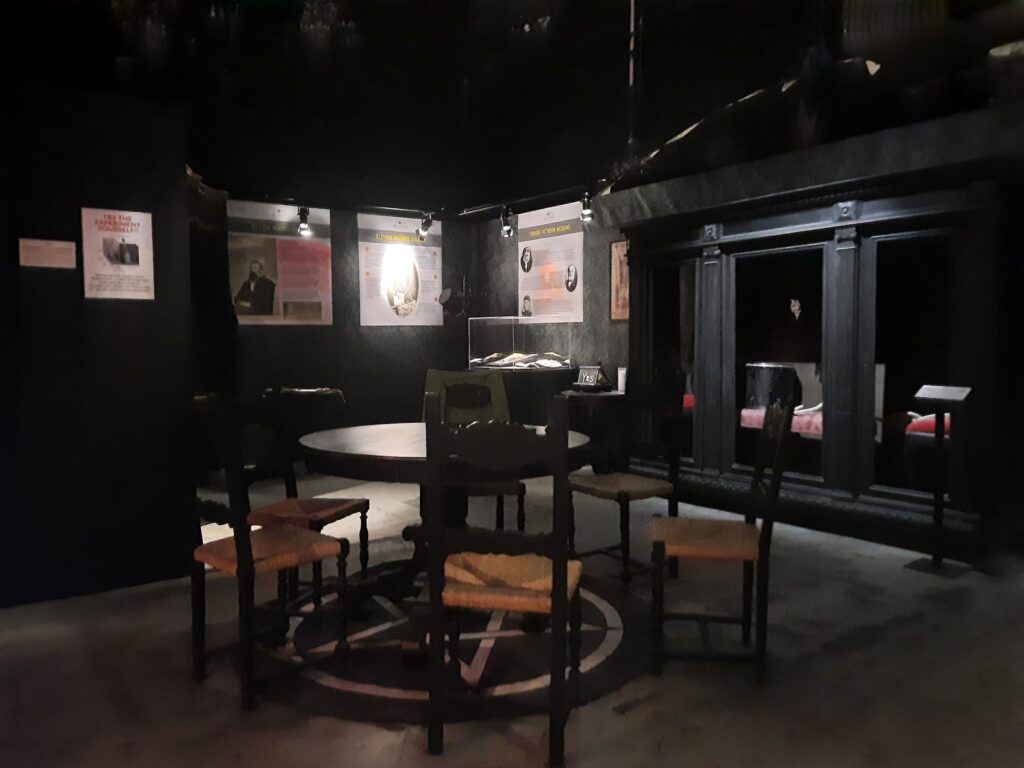
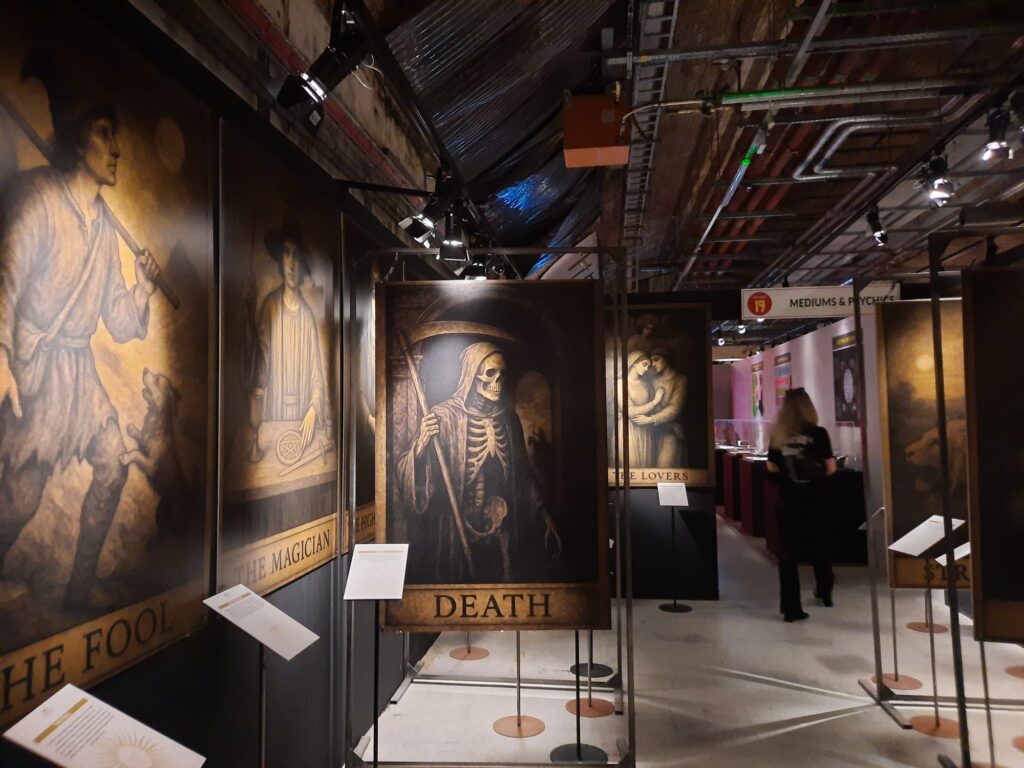
And so I headed to Waterloo to check all this out for myself. It was interesting to see how they have used the space, first of all. In the VAULT Festival days, each arch of the vaults was essentially its own separate performance space. Several of these are now joined, and segmented into rooms using walls and curtains, creating an easy one-way flow. And that one-way flow is, broadly speaking, chronological. As in it starts with the mythical, moves through organisations with their origins in the Middle Ages, a bit of 19th century Spiritualism, and towards the end you start to get topics like ‘Science and the Paranormal’.
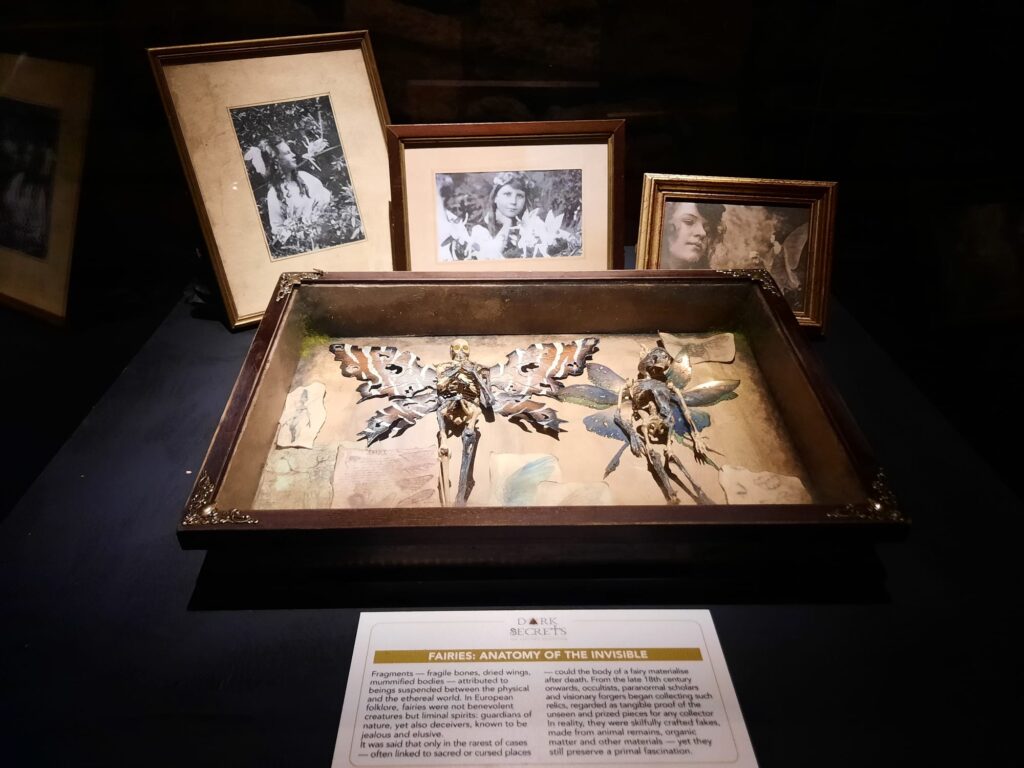
Real or Not Real?
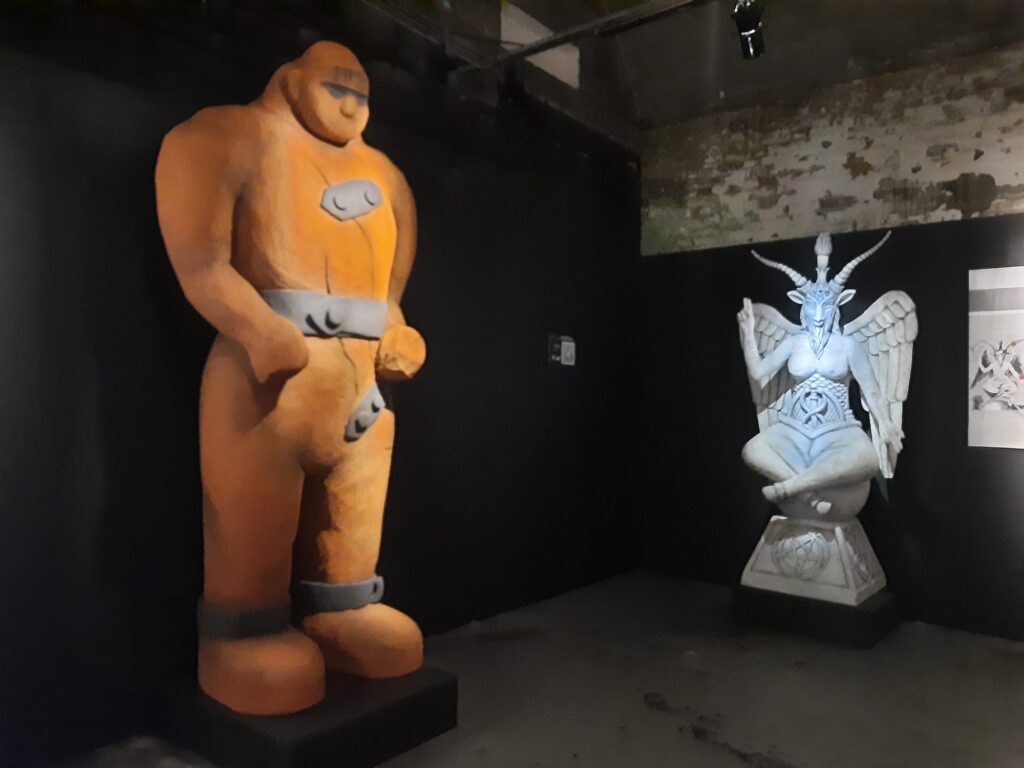
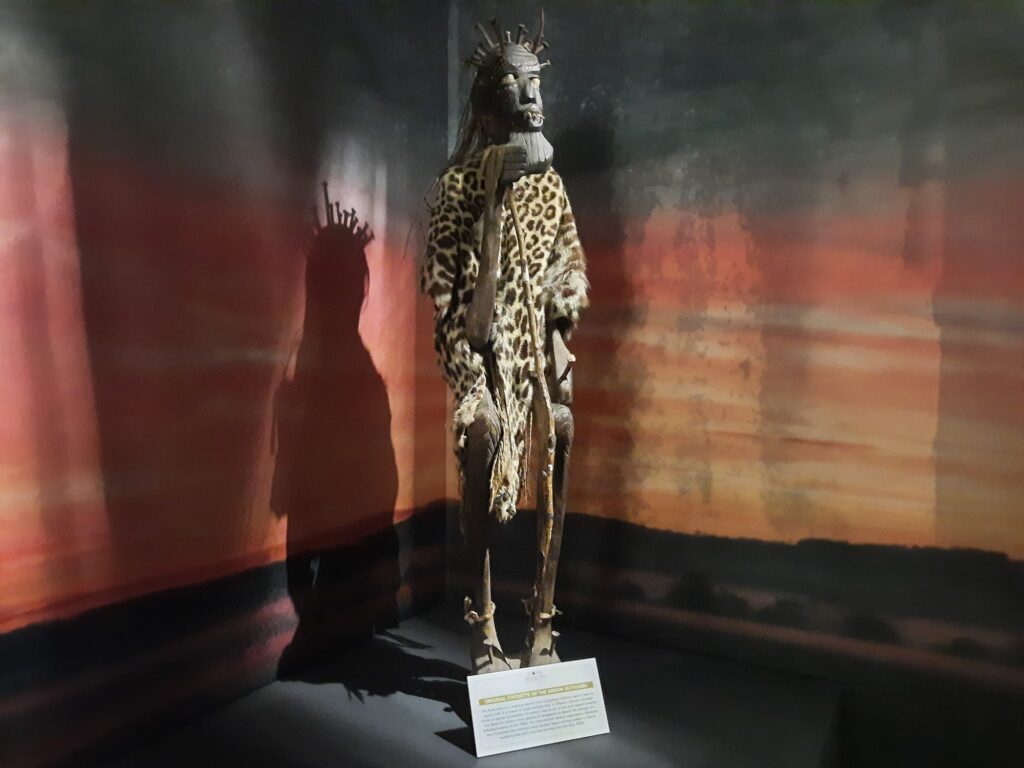
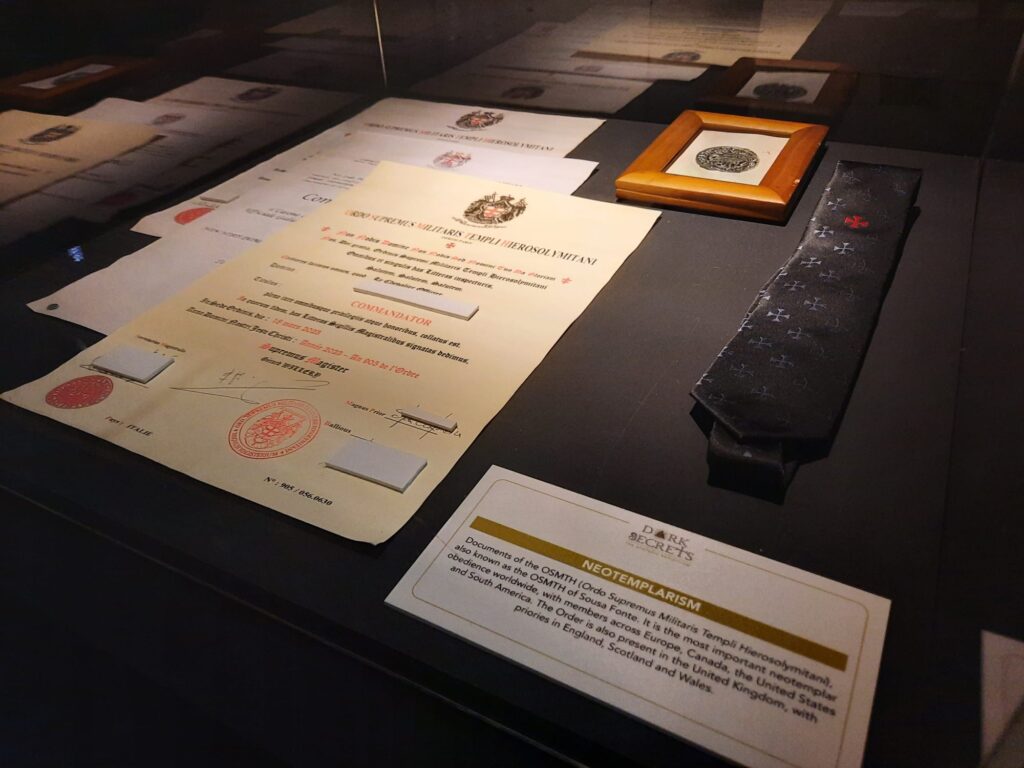
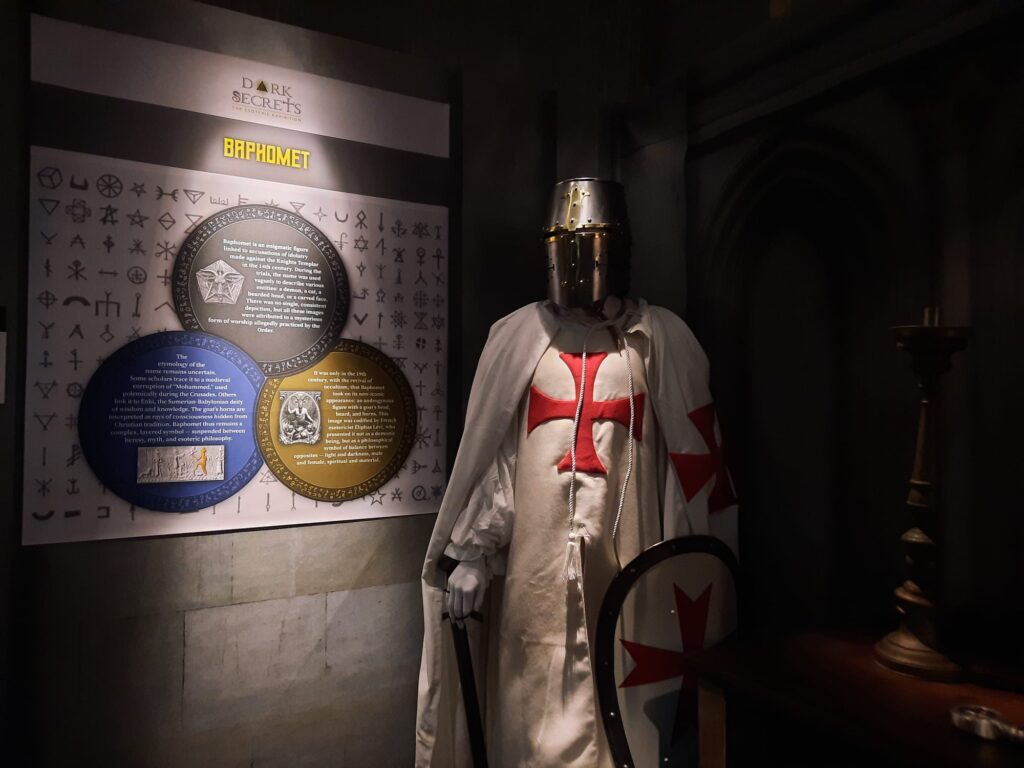
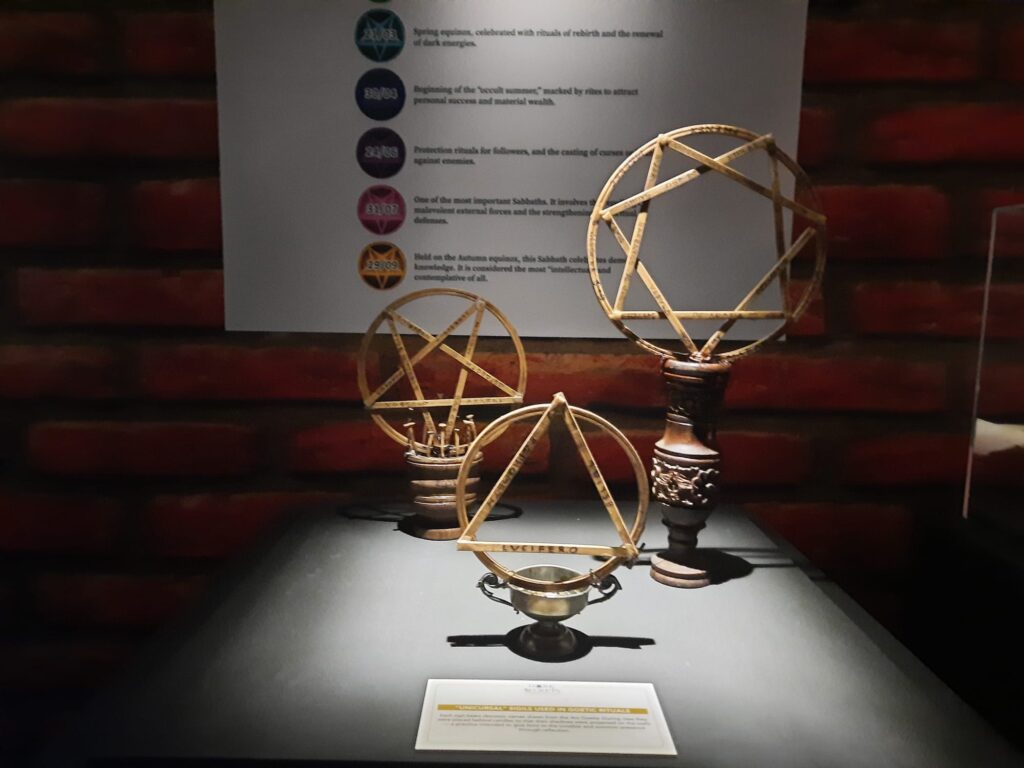
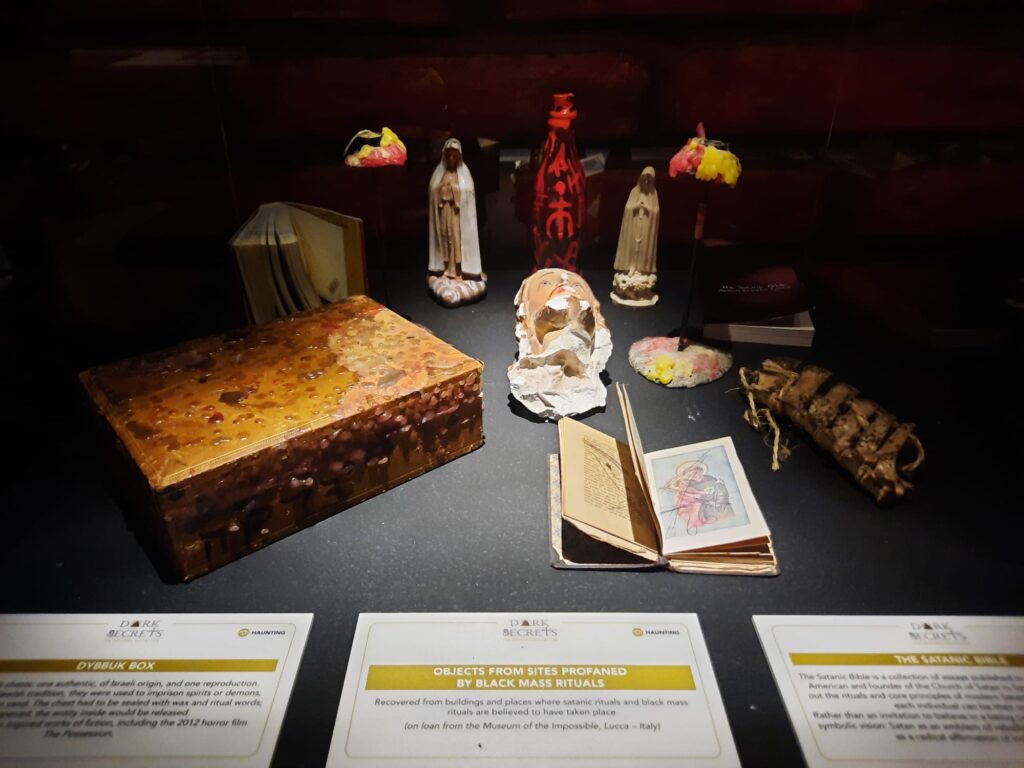
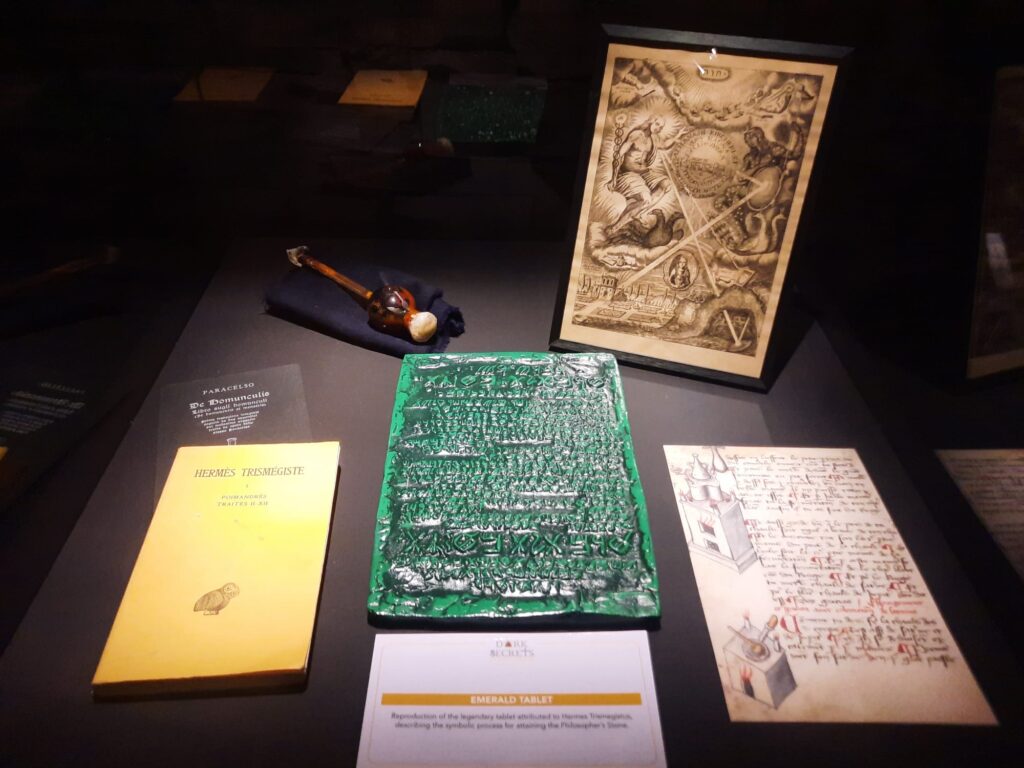
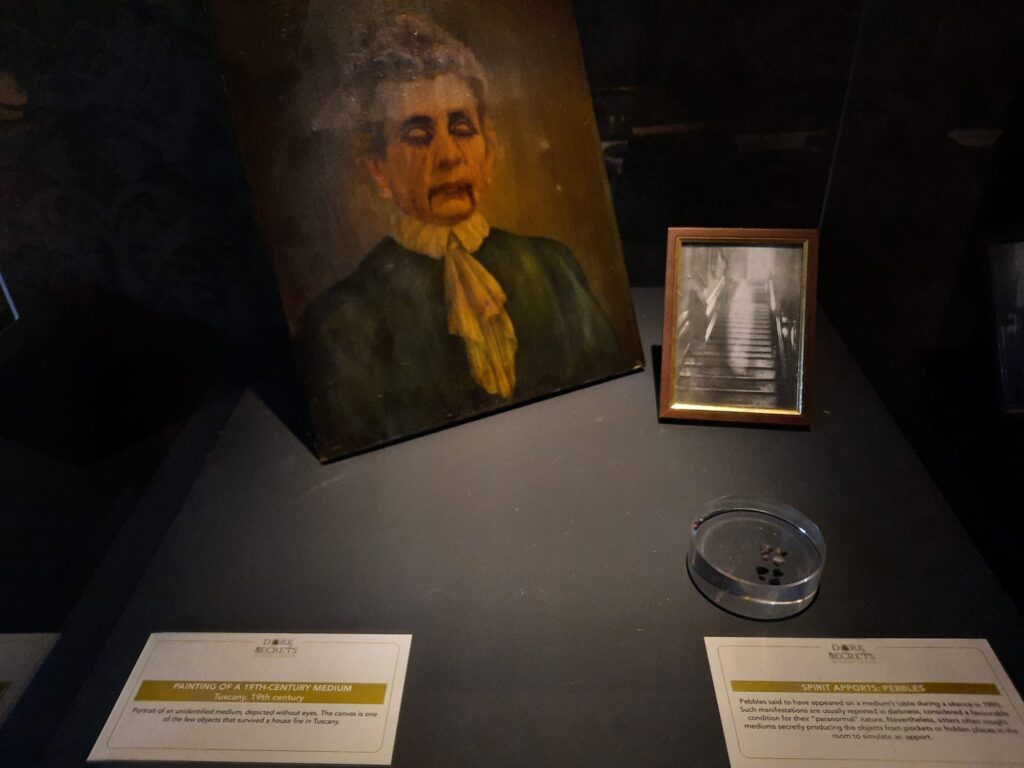
One of the first things I looked at was the exhibition’s approach to its artefacts. Were they genuine or were they props? And how were they labelled? Dark Secrets, as you can tell by the website and marketing approach generally, is about creating a certain atmosphere and appealing to curiosity and a certain amount of morbidity. You don’t necessarily need to track down the genuine Man in the Iron Mask’s mask in order to achieve that. And so a lot of what’s on view are what I would call props or set dressing. For instance where books are referenced, these are generally a reproduction page inserted into a reasonably old, but different, book. Or the very obvious props, like a Golem. A real one would have been seriously impressive.
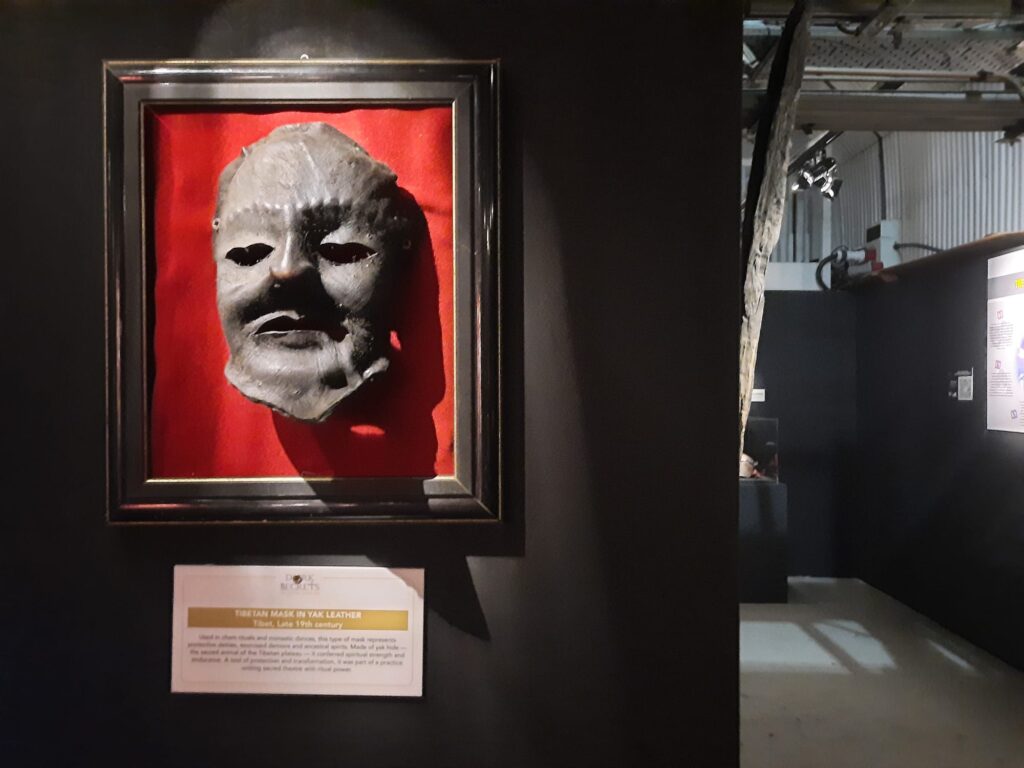
In terms of the labelling, this was not consistent throughout.* Some objects were labelled as being replicas. This perhaps gives the impression that other objects would be genuine. But to take one example, if a ‘Tibetan Mask in Yak Leather’ were late 19th century as per the label, I don’t think it would be screwed directly to the backing plate. So what I understand from that is that it’s a modern reproduction of a type of object typically dating from the late 19th century. The other option is that it’s genuine, and it’s the object conservation standards which are wrong.
Does this matter? I’ve just nerded out across two paragraphs like the historian or museologist that I am. But I actually had a really good time getting up close to the objects and making my assessments of ‘real or not real’. And then reporting back to my exhibition companion, who was less interested in this but humoured me. Other reviews and visitor feedback suggest that some people did expect more ‘genuine’ objects and were disappointed not to find them. But can you get genuine proof of witchcraft, or secret organisations, or miracles? That is perhaps fundamentally the subject of this exhibition. OK I’m nerding out again, must stop.
*One other small labelling complaint is about attention to detail: in a few places I noticed the description for a case didn’t line up with the objects inside it. Perhaps these are changes between the Italian original and UK version.
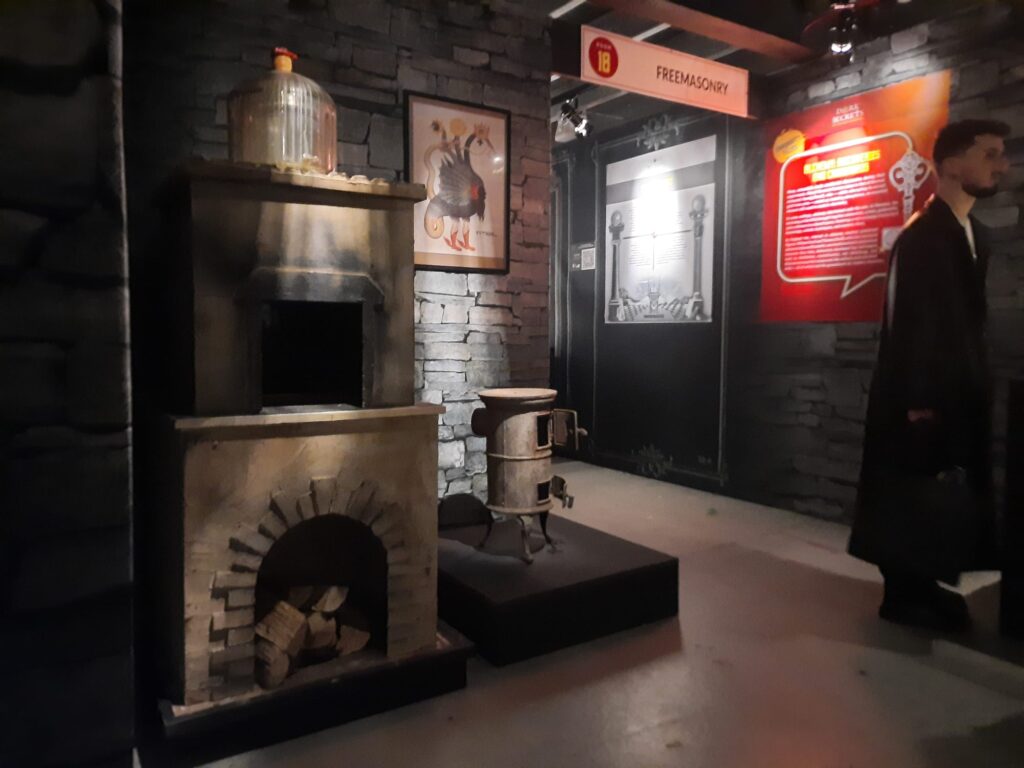
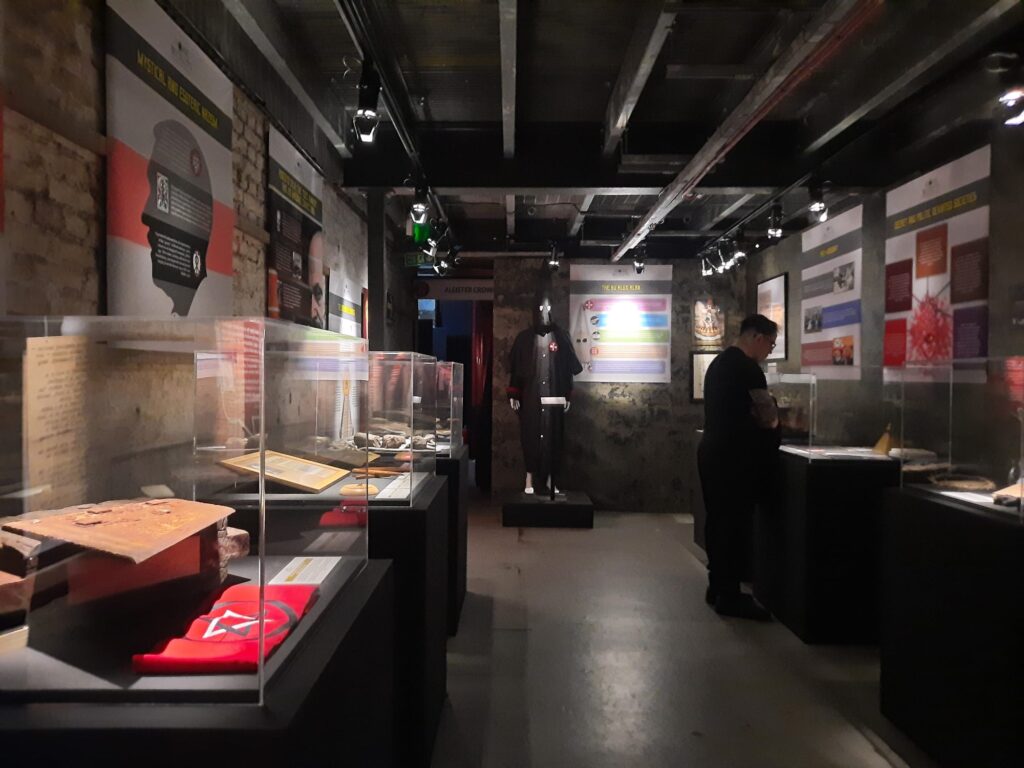
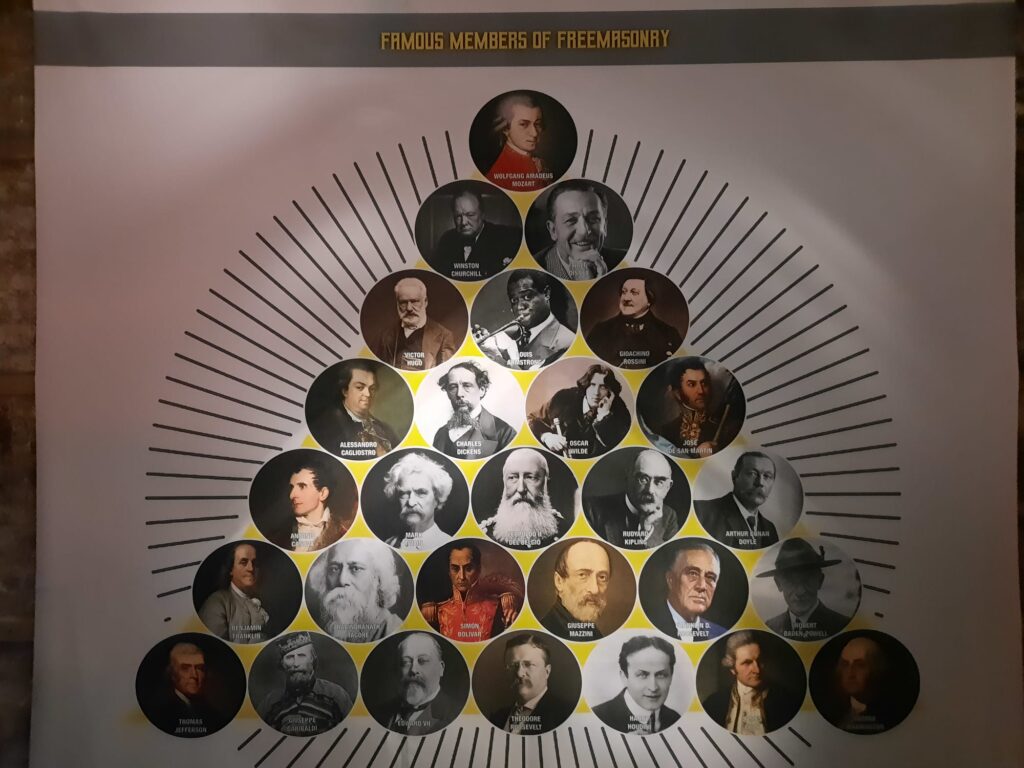
Of Human Remains and Murder Victims
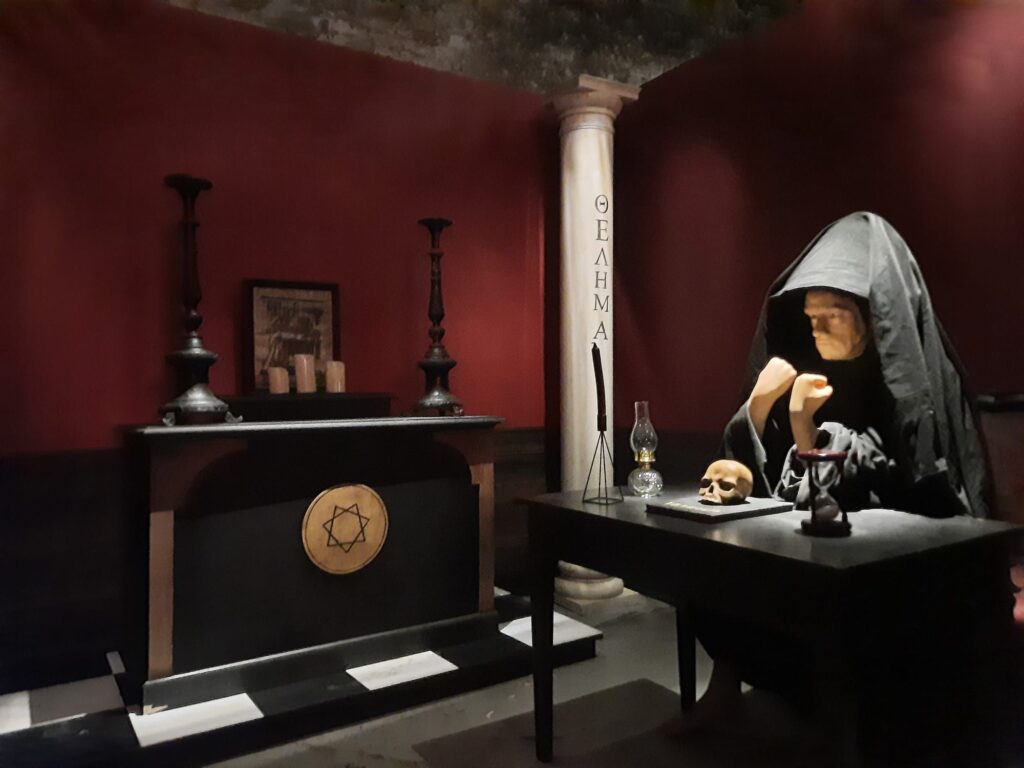
Alright, my museological musings aren’t quite finished yet. Something else I noticed was the incorporation of human remains into the exhibition. My investigations (ie. getting right up close to some objects) suggested some of the remains may have been real, while most were not. I assume that if there were real remains that Italmostre have had to abide by the Human Tissue Act (which we learned about here). It hardly seems worth it, unless the remains are clearly very old, or if they’re not real after all.
Adjacent to the topic of human remains, there is one very graphic exhibit in the exhibition which I didn’t like at all. This was a full-scale replica of the partially dissected remains of one of Jack the Ripper’s murder victims. Again this is a topic we’ve touched on before: the continuing lurid interest in the women’s deaths rather than their lives does a disservice to both those specific women, and women generally.
This brings me onto another topic, though: the audience. The other visitors at Dark Secrets during my time there seemed a fairly self-selecting bunch. The Marilyn Manson t-shirts and suchlike gave it away. I think for the most part the exhibition will attract those with a pre-existing interest in one or more of the topics. But it can be a very confronting exhibition. I saw one woman making good use of the chairs scattered around as some of the more graphic displays made her feel faint. Her partner deftly navigated her around the ‘Ritual Crimes’ room without seeing the aforementioned diorama. So if you’re squeamish, bear that in mind.
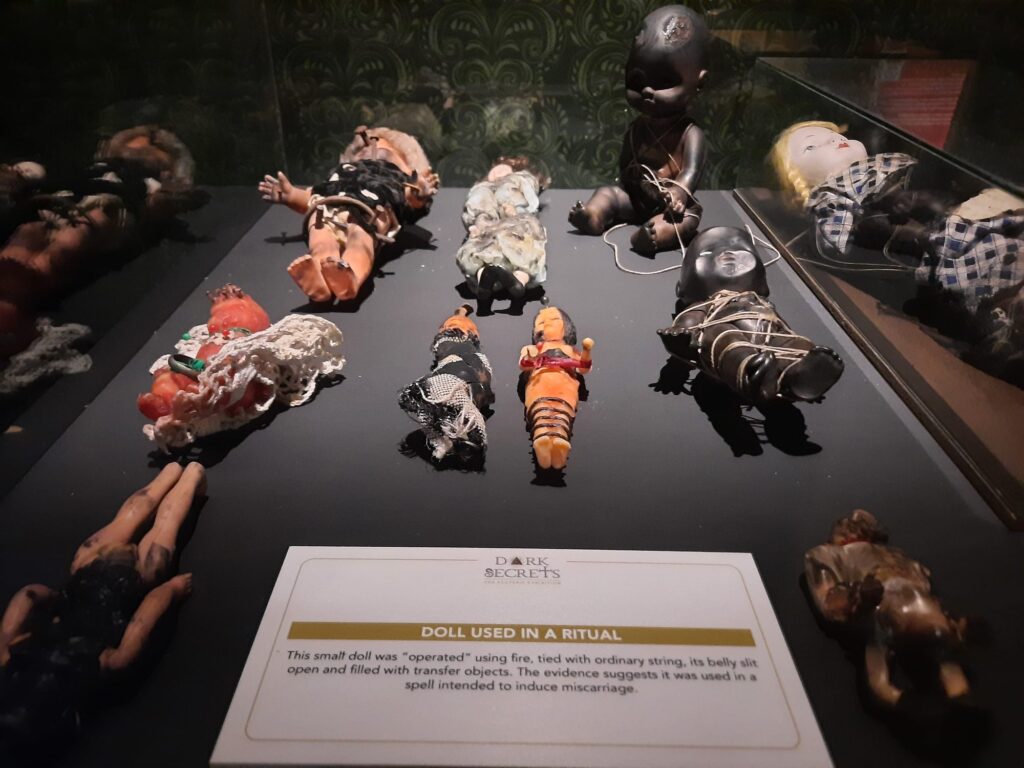
Final Thoughts
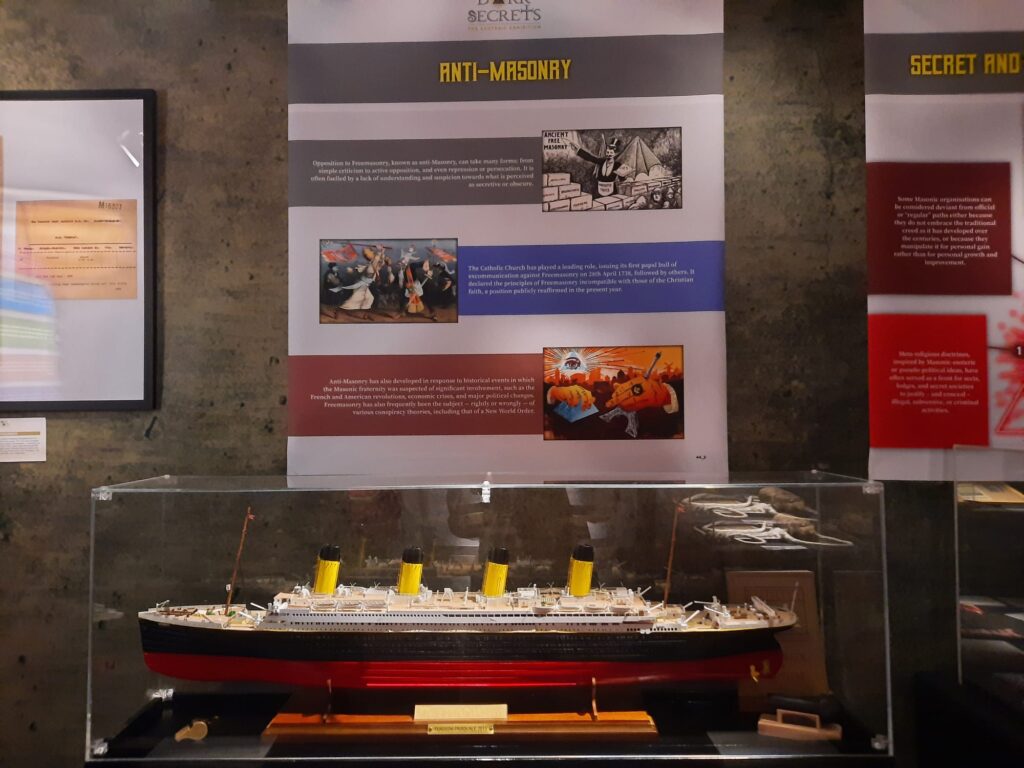
I am sometimes the first to be critical of museum exhibitions that fall short in some way. But what we all need to remember with Dark Secrets is that it isn’t a museum exhibition. If you are expecting that, then I understand some of the feedback I’ve seen. If you go into it expecting entertainment, on the other hand, you will probably enjoy yourself. This is for a few reasons. Firstly the number of topics is just so vast that there will probably be something that interests you. Sure, there’s really quite a lot about the Freemasons (and if you want something detailed on them with plenty of genuine artefacts you can go here). But I quite like a bit of spiritualism, and the Urban Geographer liked the bit about CIA experiments. Everyone’s happy!
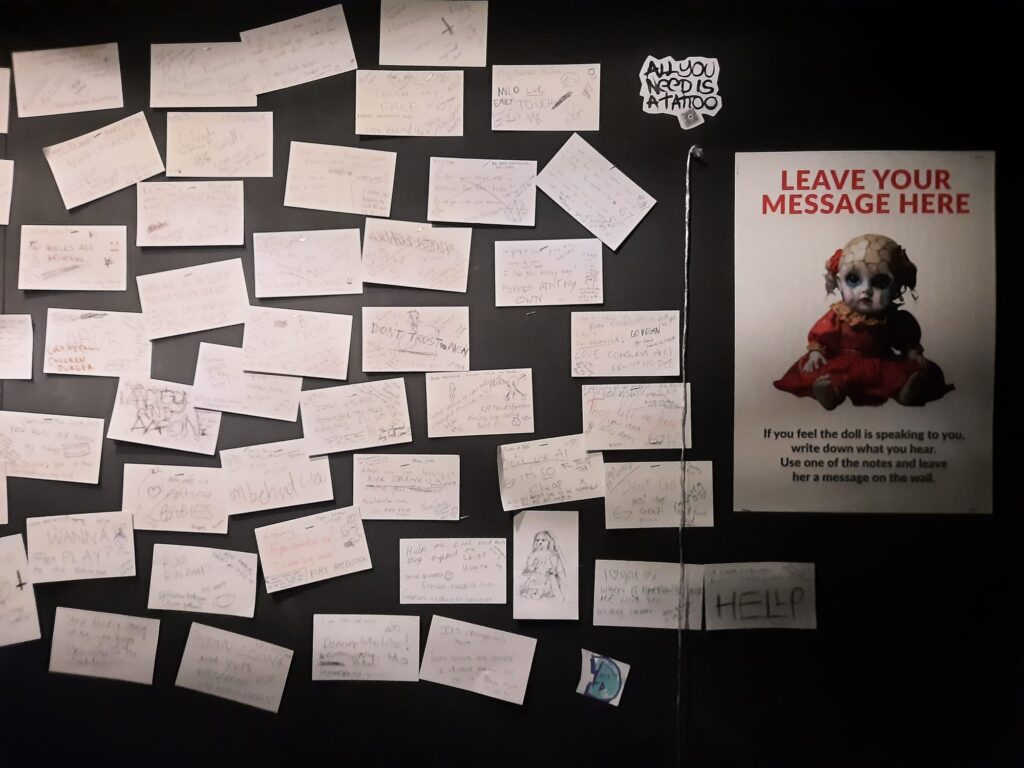
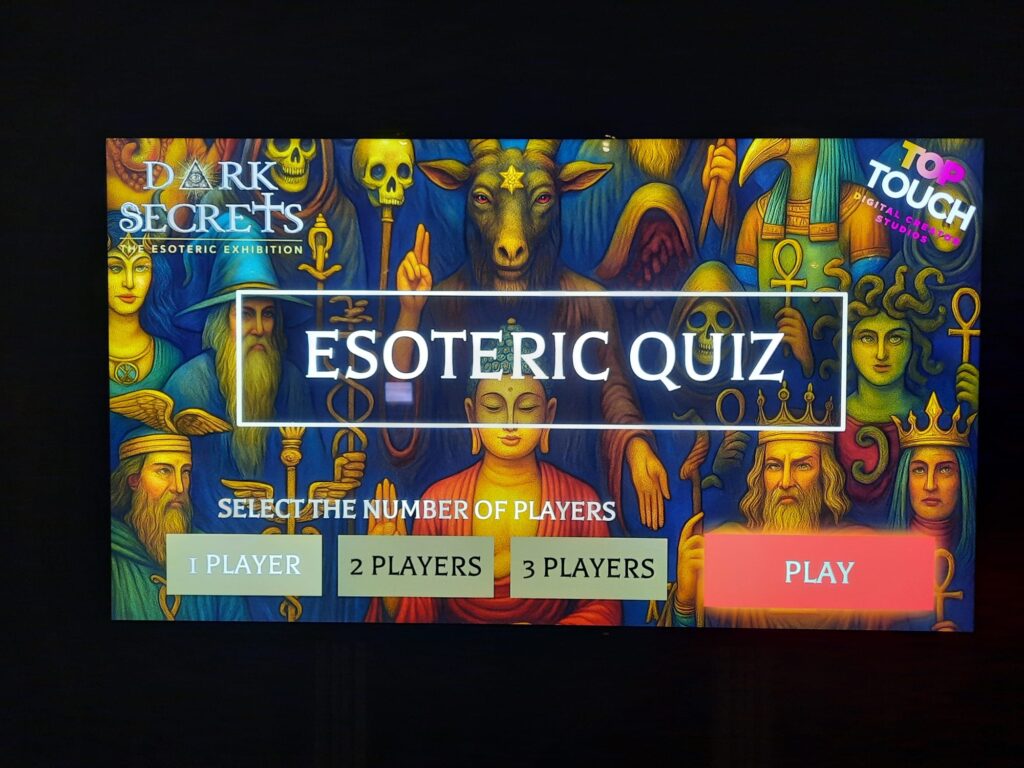
Secondly there are lots of interactives. You can do a quiz to test your knowledge, or take a turn as Pepper’s Ghost. You can even share a ghostly message from a haunted doll. Or try out a VR experience of Solomon’s Temple (or torture, which again I find morally a bit iffy but nonetheless did in the name of research). Lastly, Italmostre have had a good go at making Dark Secrets relevant to its setting. Most, if not all, rooms link the topic back to a UK example through supplementary information on the walls. I didn’t know who Aleister Crowley was, maybe you do. But I liked some of the local detail about witchcraft (I mean James I wrote the book on it, literally).
So come at it intending to have a bit of fun and you probably will. If you want Dark Secrets to be your source for serious investigation of the paranormal, I’m not sure you’re in the right place. Whether or not I visit any future Italmostre exhibitions in this space will depend very much on subject matter. But I did rather enjoy myself playing museological detective and learning about a few different topics. Each to their own!
Trending
If you see this after your page is loaded completely, leafletJS files are missing.