
Tamga and Kyrgyz History
Our final post on Kyrgyzstan takes in the village of Tamga and its surrounds – a small window into the changes the places and people of this region have experienced in recent decades.
Introducing Tamga and its Surrounds
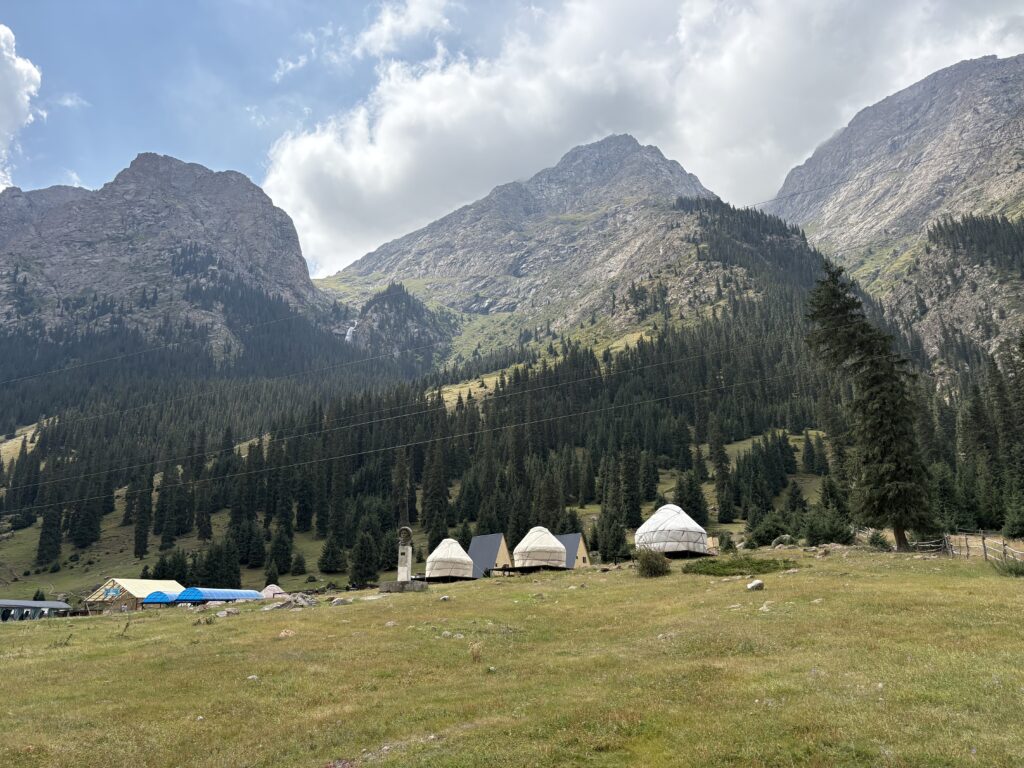
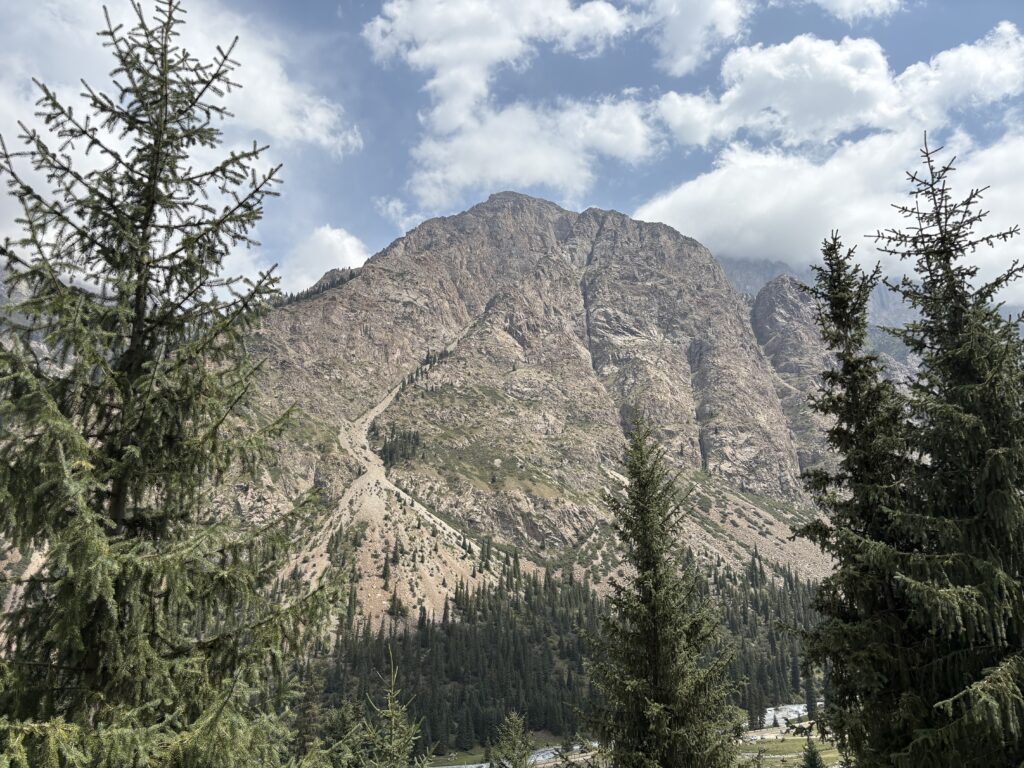
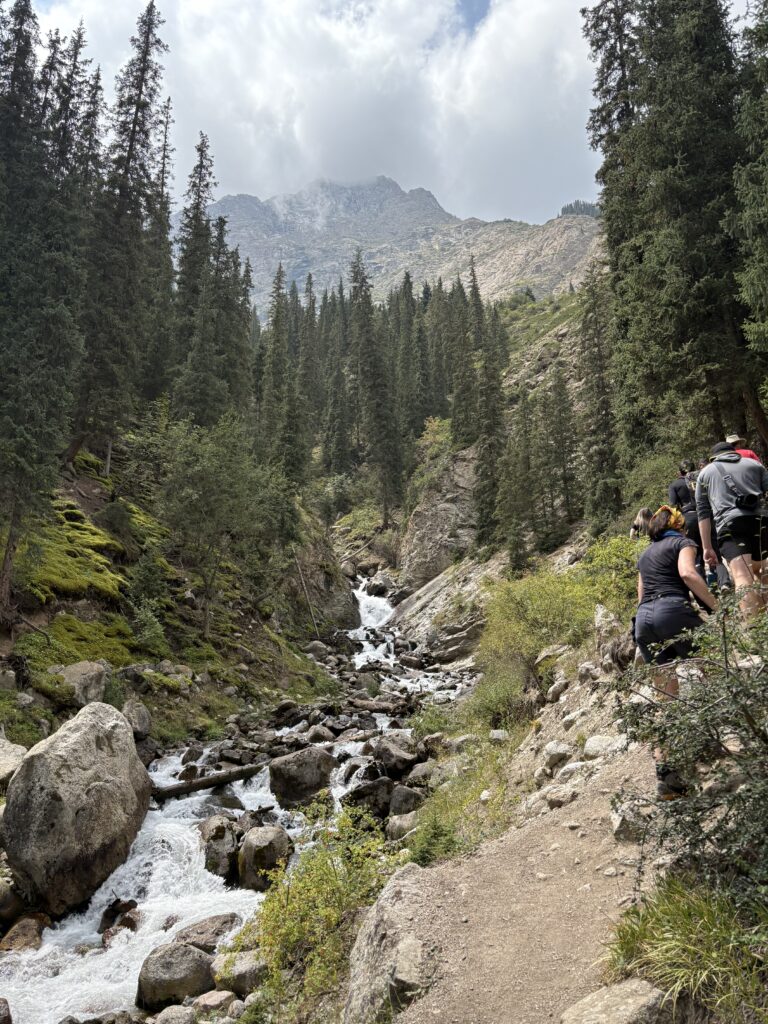
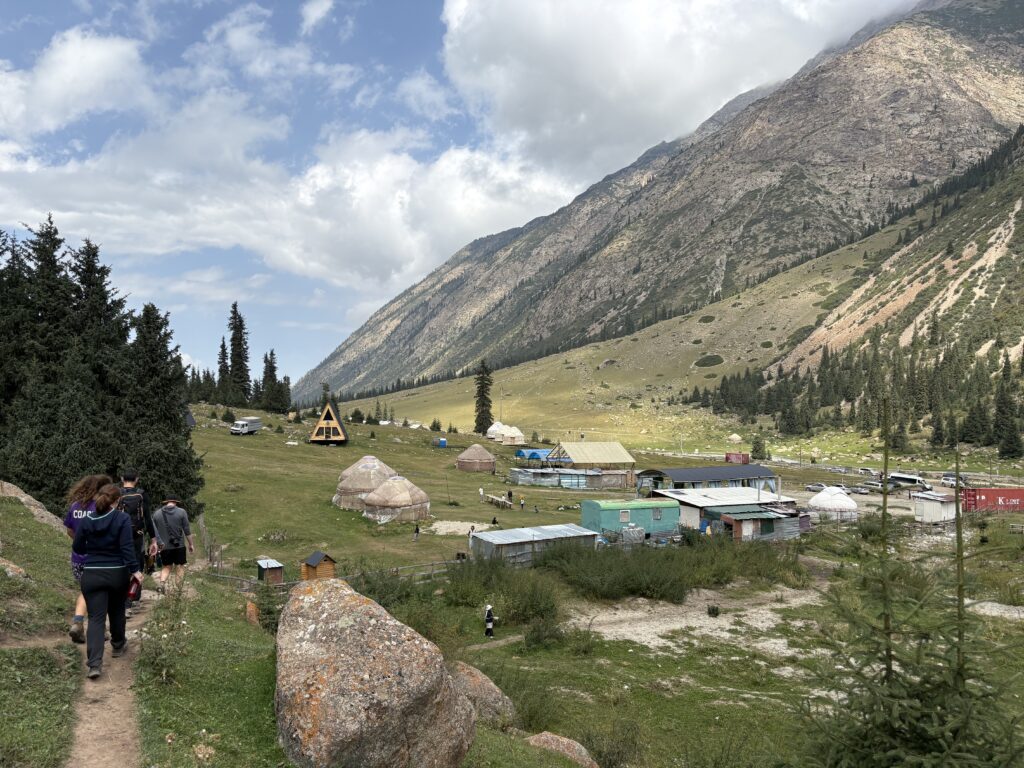
In my last post, I described a multi-day hike through the Jukku Valley and along the Arabel Syrt in Kyrgyzstan’s Tien Shan Mountains. I explained how the logistics of the trip were facilitated by the existence of a newish road back down from the plateau, built to service a gold mine. That road deposited us in the Barskoon Valley, near the southern shore of Issyk-Kul (Kyrgyzstan’s largest lake). Our destination to rest and recuperate after our adventures was the nearby village of Tamga.
The Barskoon Valley is a noted location for resting and recuperating, including, possibly, by Yuri Gagarin. More on this in a moment. But a note on the valley itself first. Barskoon’s location, leading from Issyk-Kul up to the Arabel Syrt and onwards to China, has made it a strategic location for centuries. Like the next door Jukku Valley, this was a minor Silk Road route. A Silk Road-era town shrunk in importance as trade did, and a modern town began as a Russian Empire military post. There were at least two notable residents from the earlier period. Abu Mansur Sabuktigin, born in 942, went from being enslaved to becoming a prominent general and founder of the Ghaznavid dynasty. Mahmud al-Kashgari was an 11th century scholar who wrote the first comparative dictionary of Turkic languages and drew a map of the world with Barskoon at its centre.
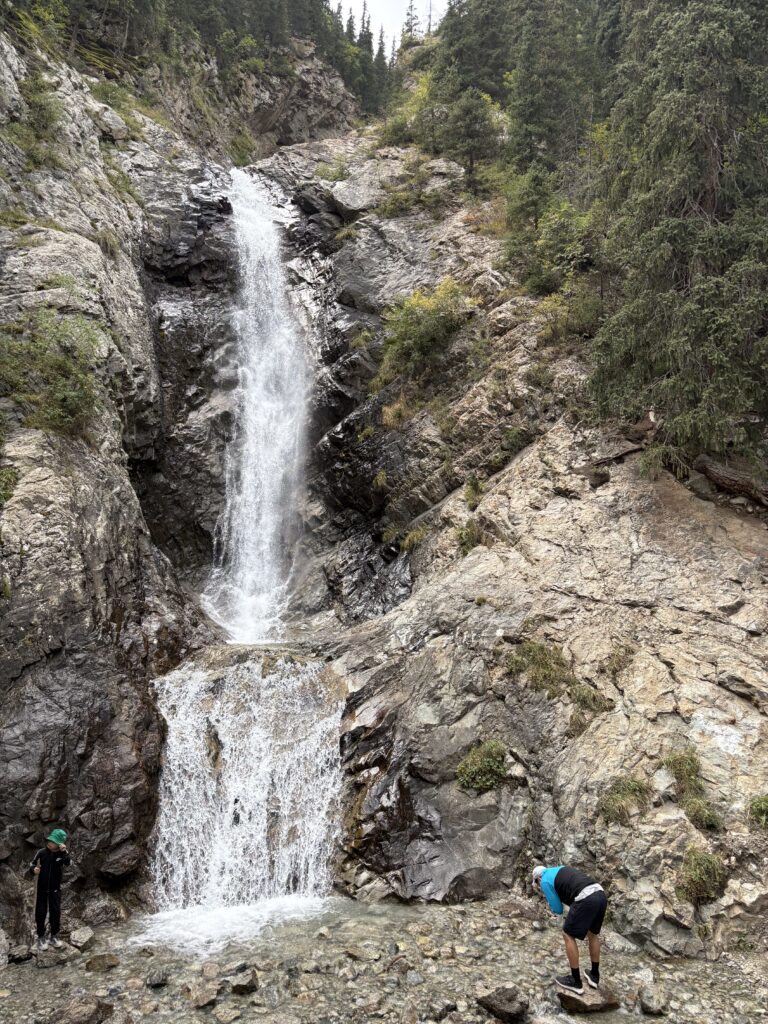
Today, people visit Barskoon for its waterfalls. It’s also a base for trekking and horse riding, and popular with picnicking locals. To the West of Barskoon is Tamga. It’s named for a nearby rock, Tamga-Tash, with a 3rd-8th century Buddhist inscription. Locals didn’t recognise it as such, though: the word tamga means livestock brand or clan symbol.
Russian and Soviet Tamga
I’ll be honest. After hiking for a week with only freezing mountain rivers and lakes to clean off in, the main attraction of Tamga was the comfort of our guesthouse, run by an elderly Russian lady who was once a mountaineer. But after a shower, a sauna, another shower and a rest, I was ready to go and have a look around the town.
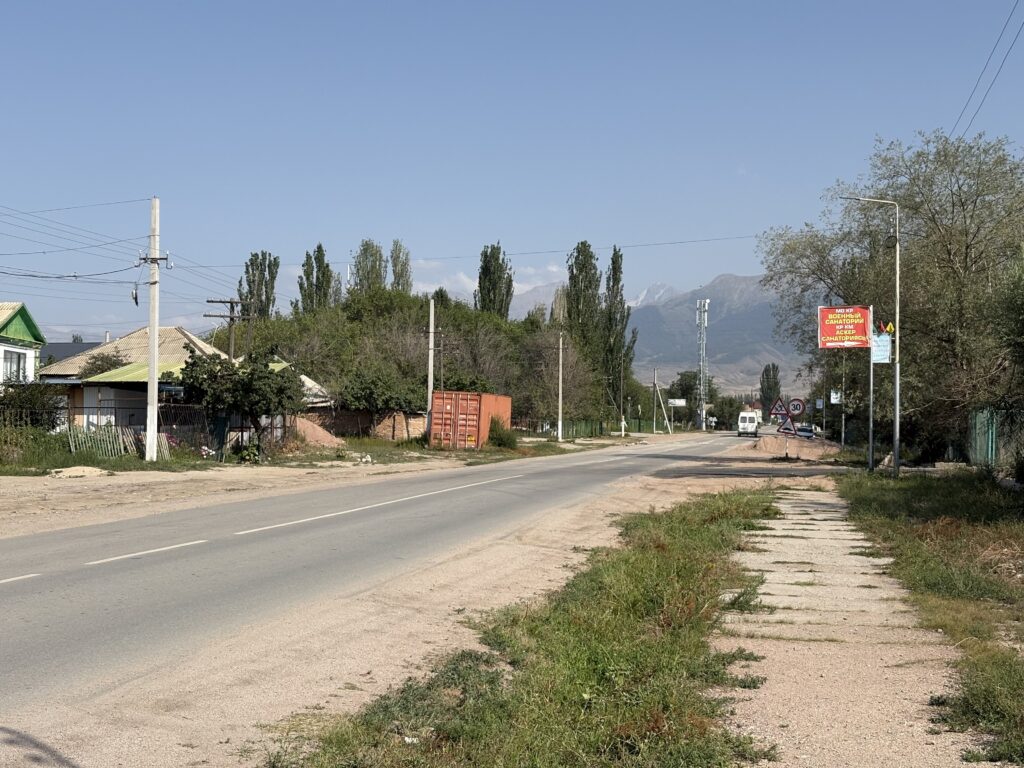
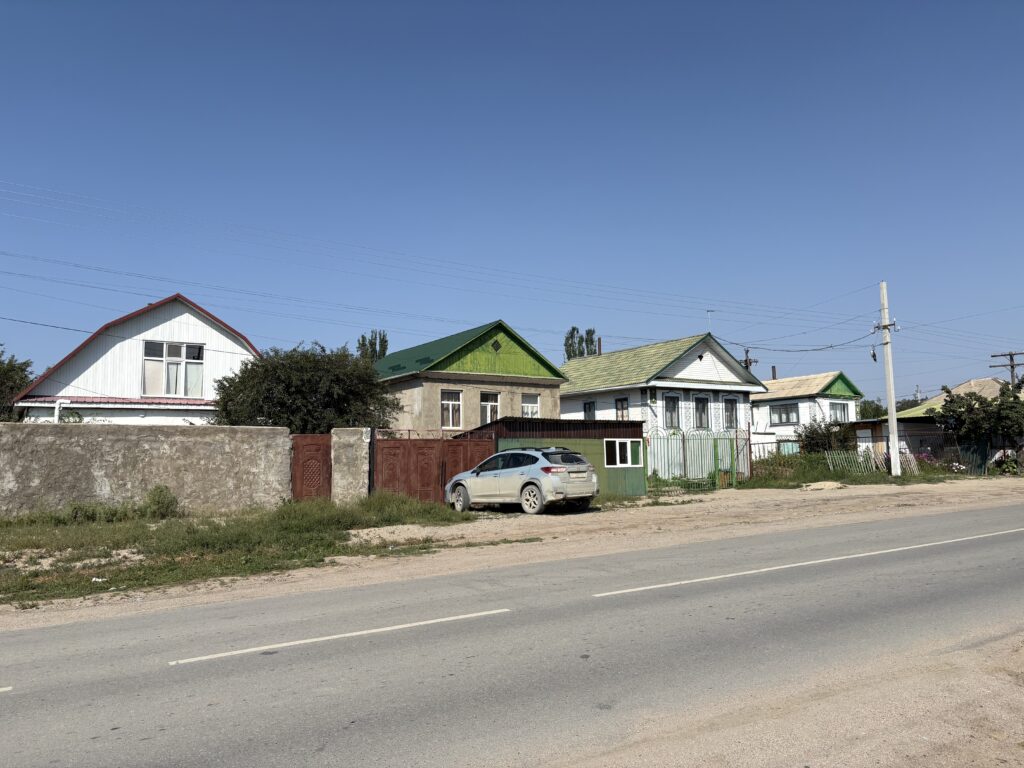
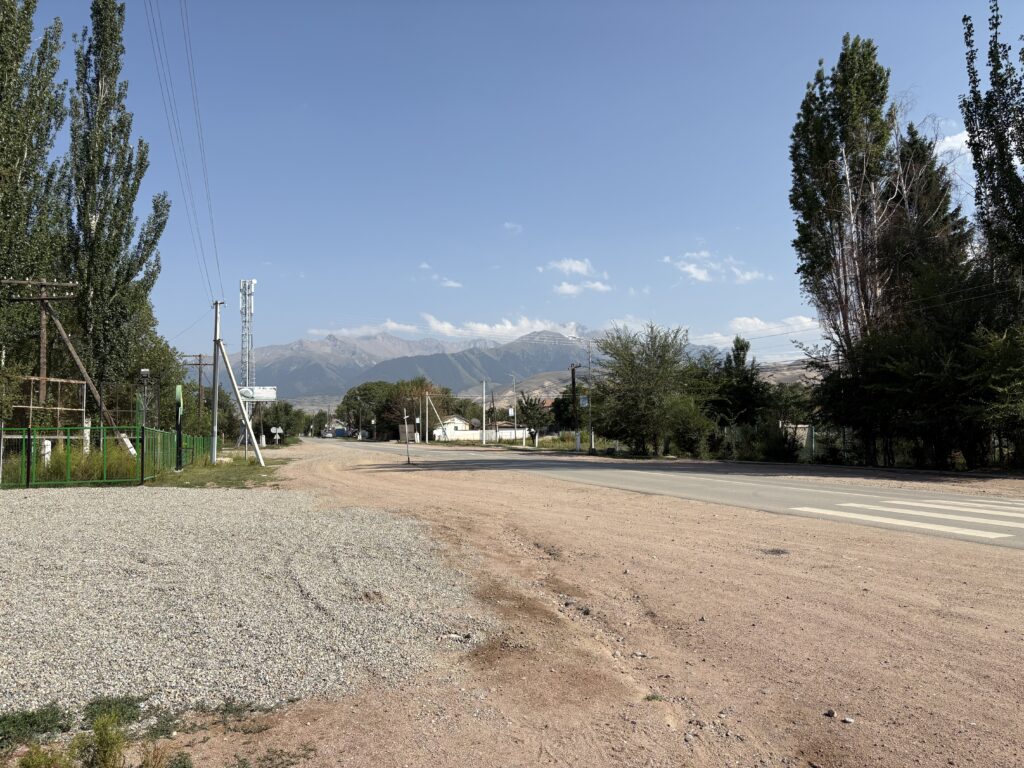
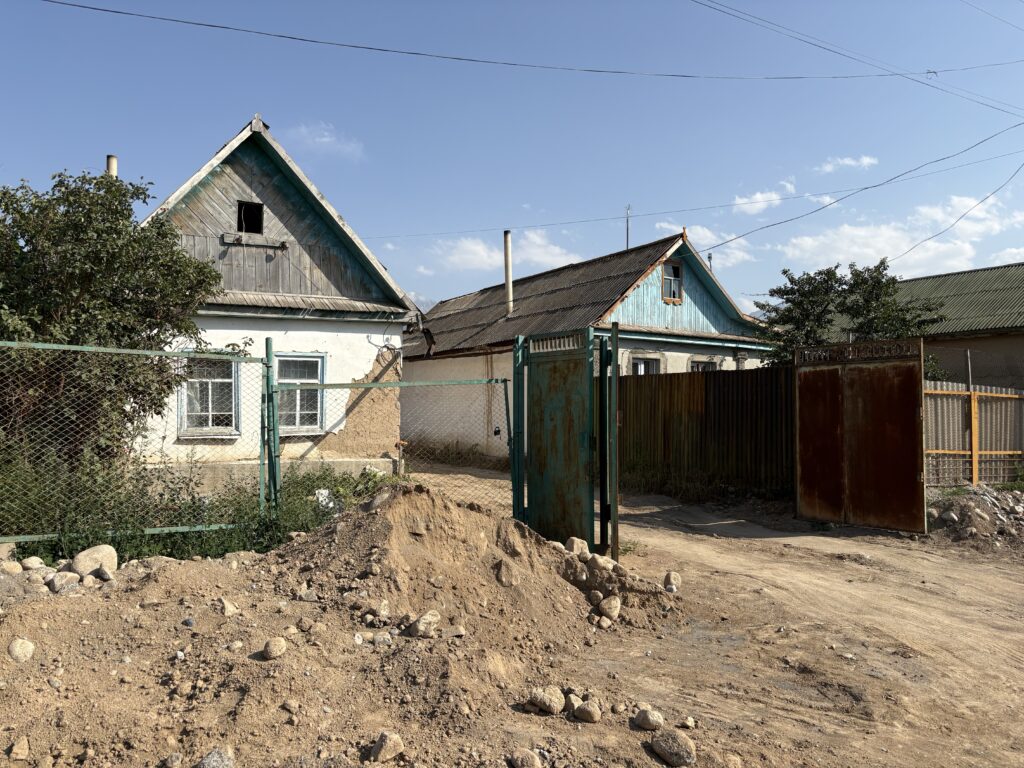
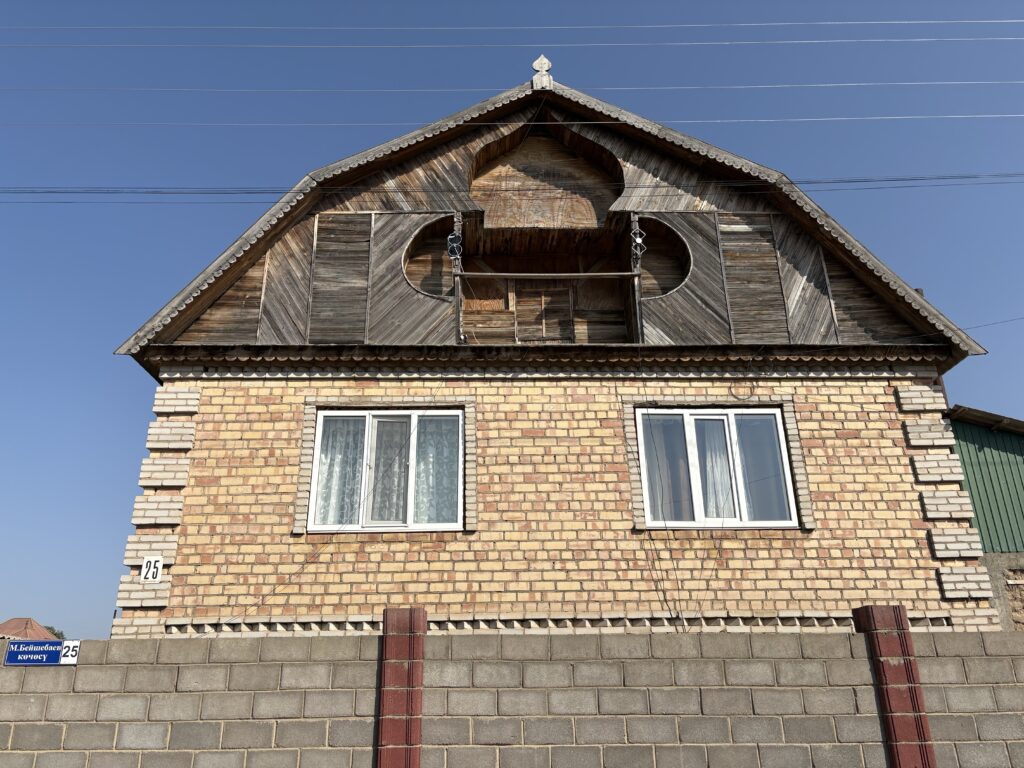
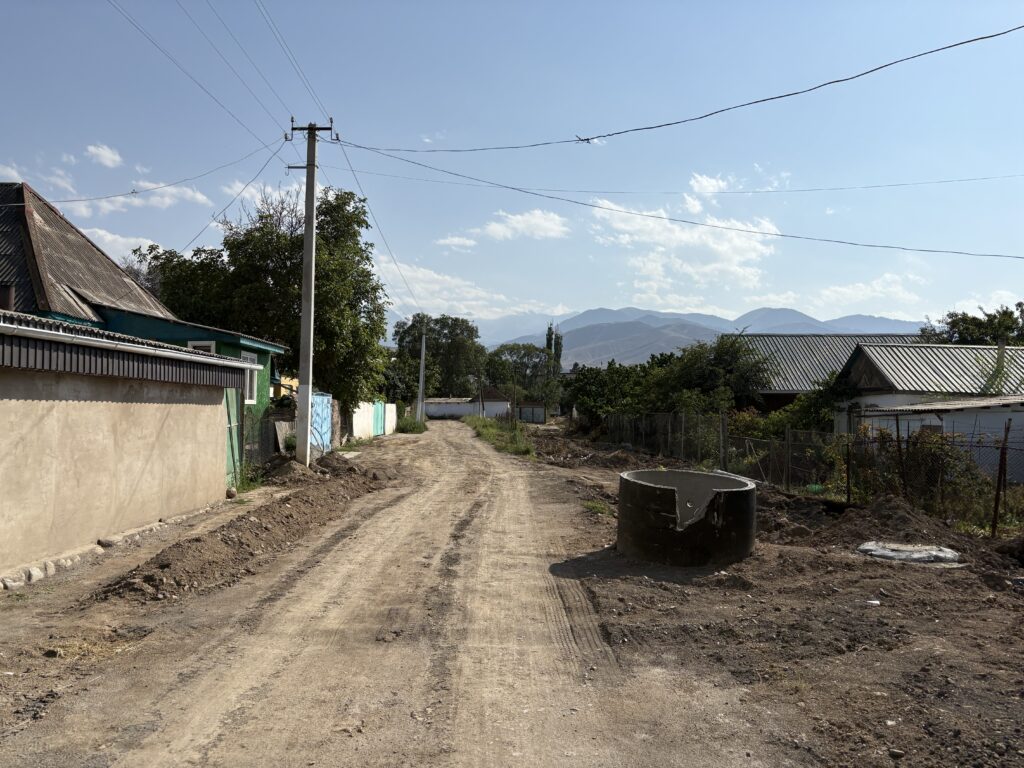
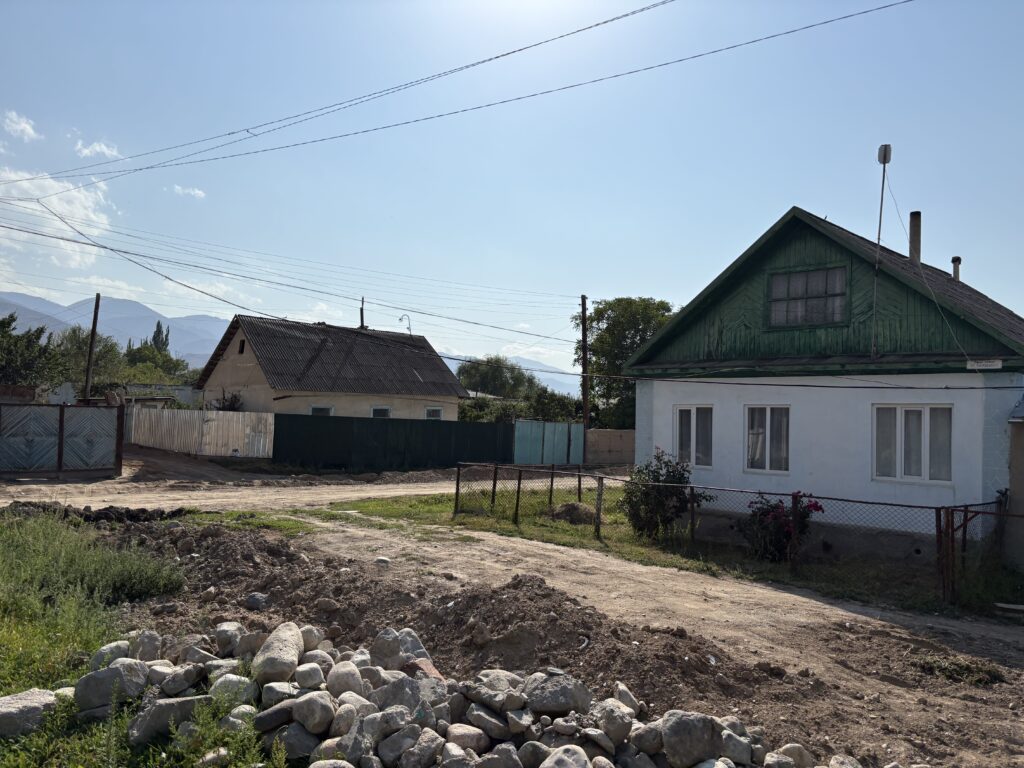
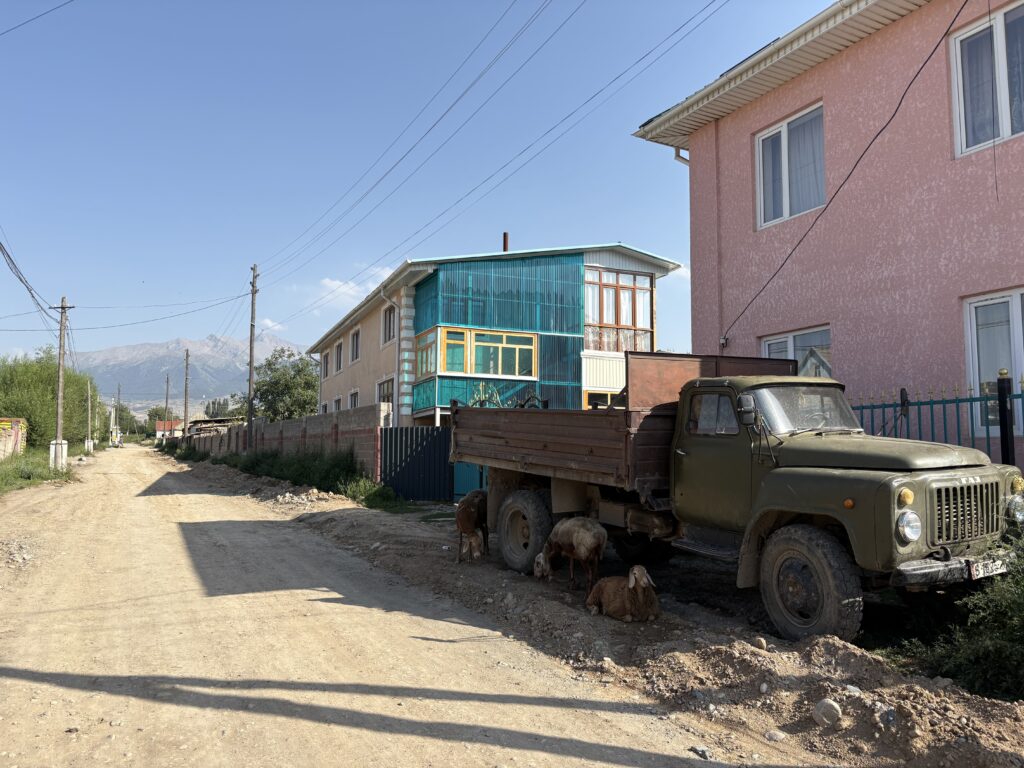
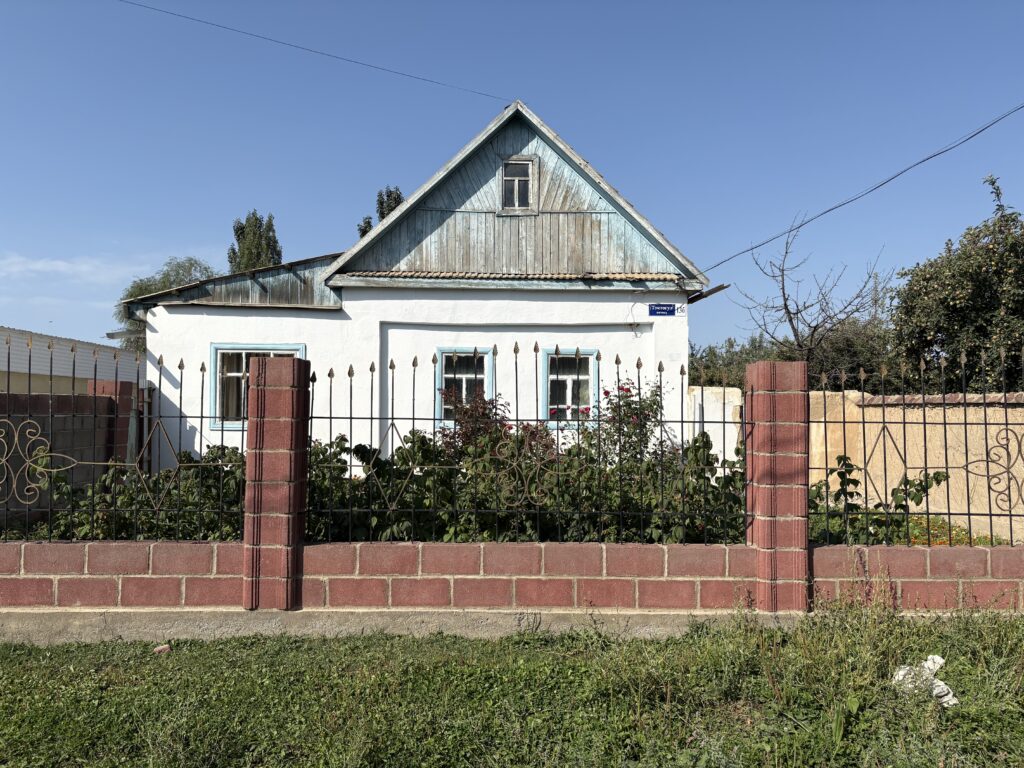
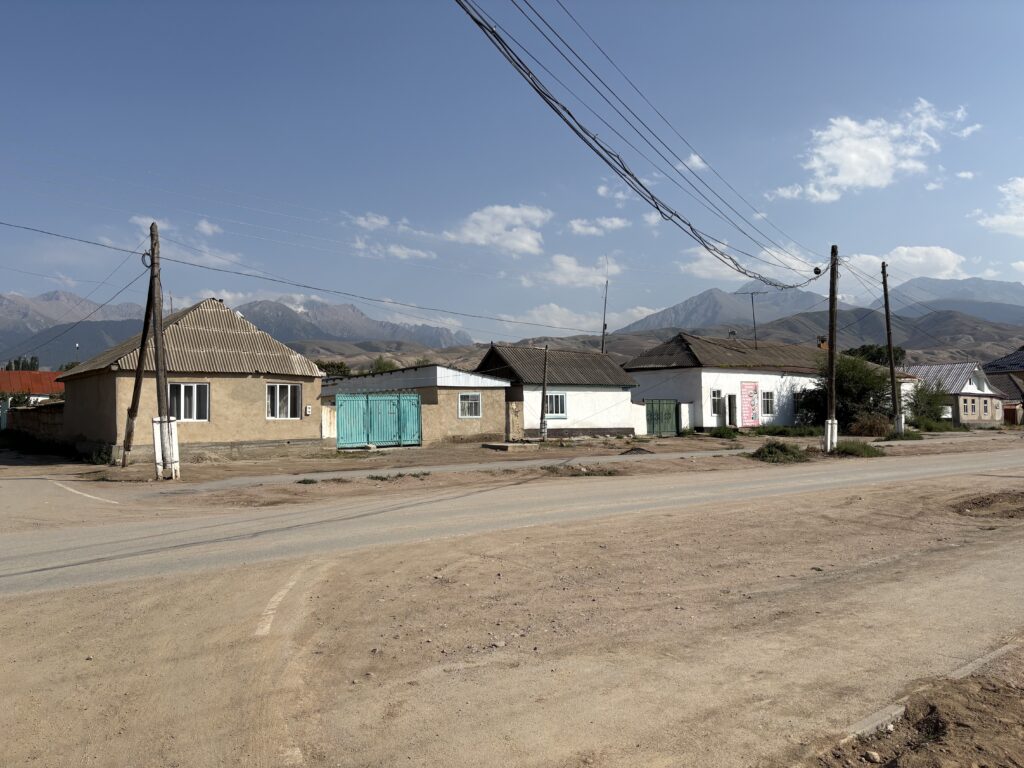
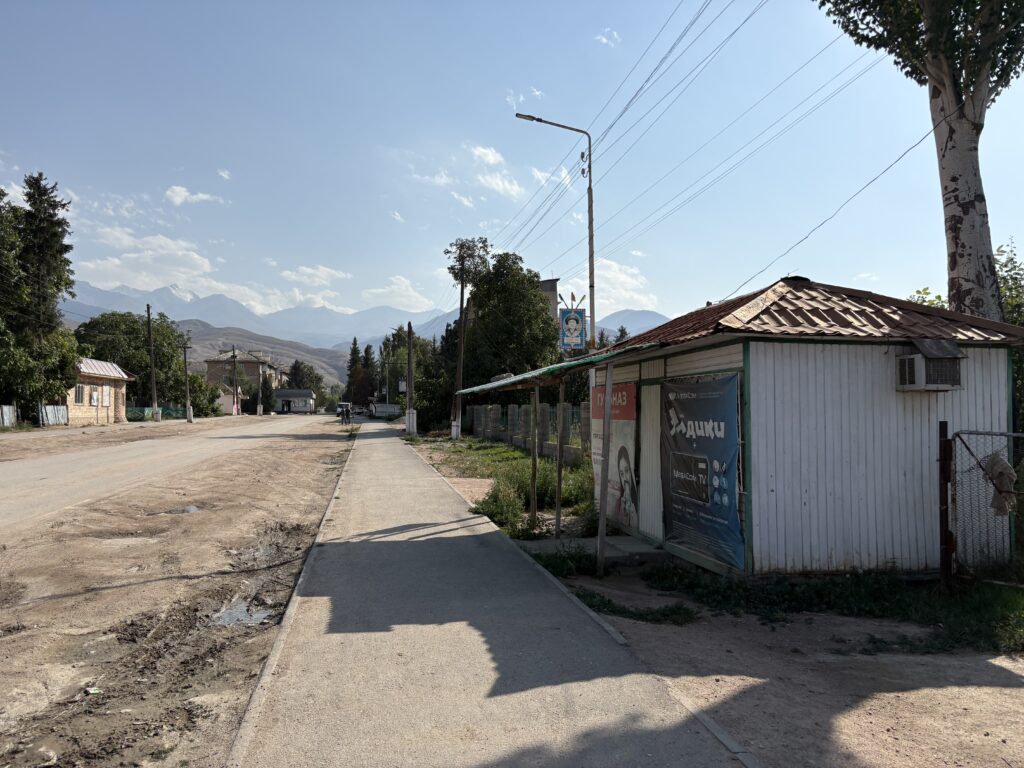
Tamga’s low-rise buildings and wide streets, between a lake and the mountains, actually reminded me quite a lot of my native New Zealand. The buildings have a different kind of charm, though. There’s very little in the way of reliable information about Tamga online, but I’m guessing the settlement dates back to the Russian Empire period. The older houses certainly have a Russian influence, with decorative wooden gables. There was probably a military element to the town from its inception, and during the Soviet period even more so. In fact, during the Soviet period, Tamga was within a restricted zone due to secret naval testing in Issyk-Kul lake, so not just anybody could live or travel here. There was also a military sanitorium, which still exists today but I don’t think is a military facility any more.
The sanitorium is actually part of what I initially found interesting about Tamga. When I learned we were staying there after our hike, I looked it up in my guidebook. I was surprised to read the following: “Yuri Gagarin famously holidayed here after taking part in the world’s first manned space flight in 1961. The sanitorium where he stayed is still open for business, although it has certainly experienced leaner times since Kyrgyz independence.”
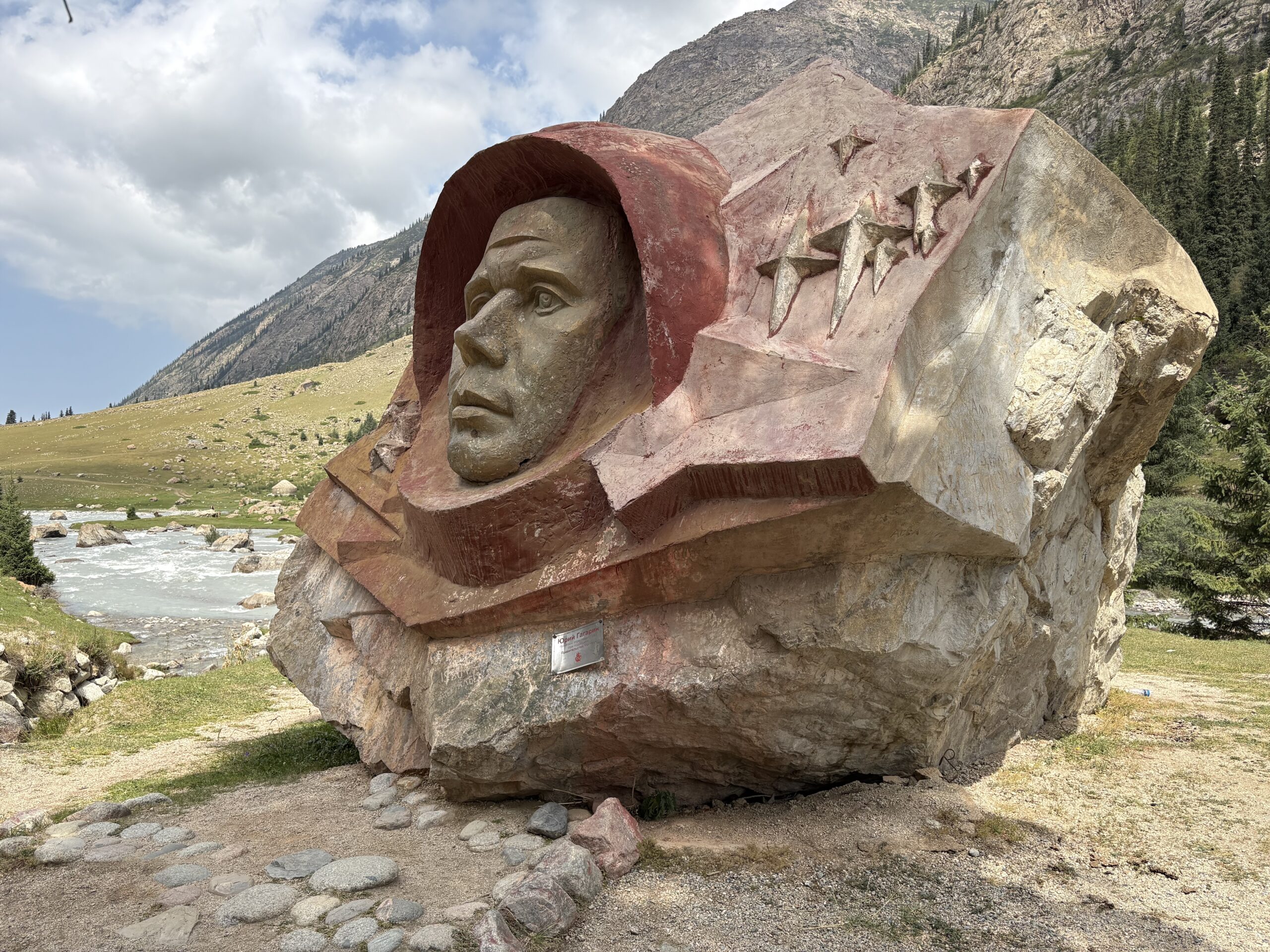
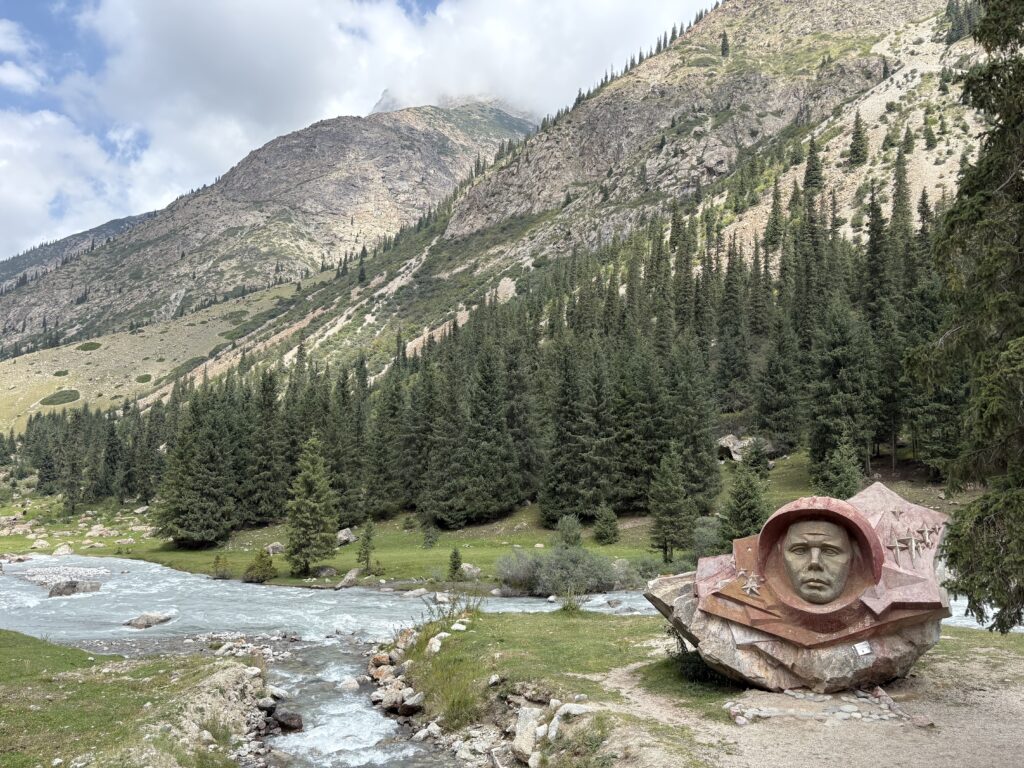
Wow, Yuri Gagarin! Certainly explains the bust of him in Barskoon Valley. And I know the USSR used the wide plains of Central Asia for spacecraft reentry. But is it true? The answer is, I don’t know. It’s certainly part of the town’s lore. And Gagarin definitely visited the area. But whether that was three times including after his space flight, or once in 1964, depends on your source.
Independent Tamga
Let’s think that through a little bit more. It makes for a much better connection if Gagarin came here to recuperate after his space flight. But, being a military town with plenty of Soviet pride, is it possible that his mere presence was enough to inspire multiple monuments?* I would say definitely possible. If you read this account, the whole thing was an act of hero worship: Gagarin touches a rock and thus marks it out for a higher purpose. If you read this account, it was a labour of love (and a bit more hero worship). Uncouth visitors had scribbled all over a rock with Gagarin’s name on it. The sculptor, Valentin Barskov, dedicated himself to writing this wrong, even if it meant going without payment.
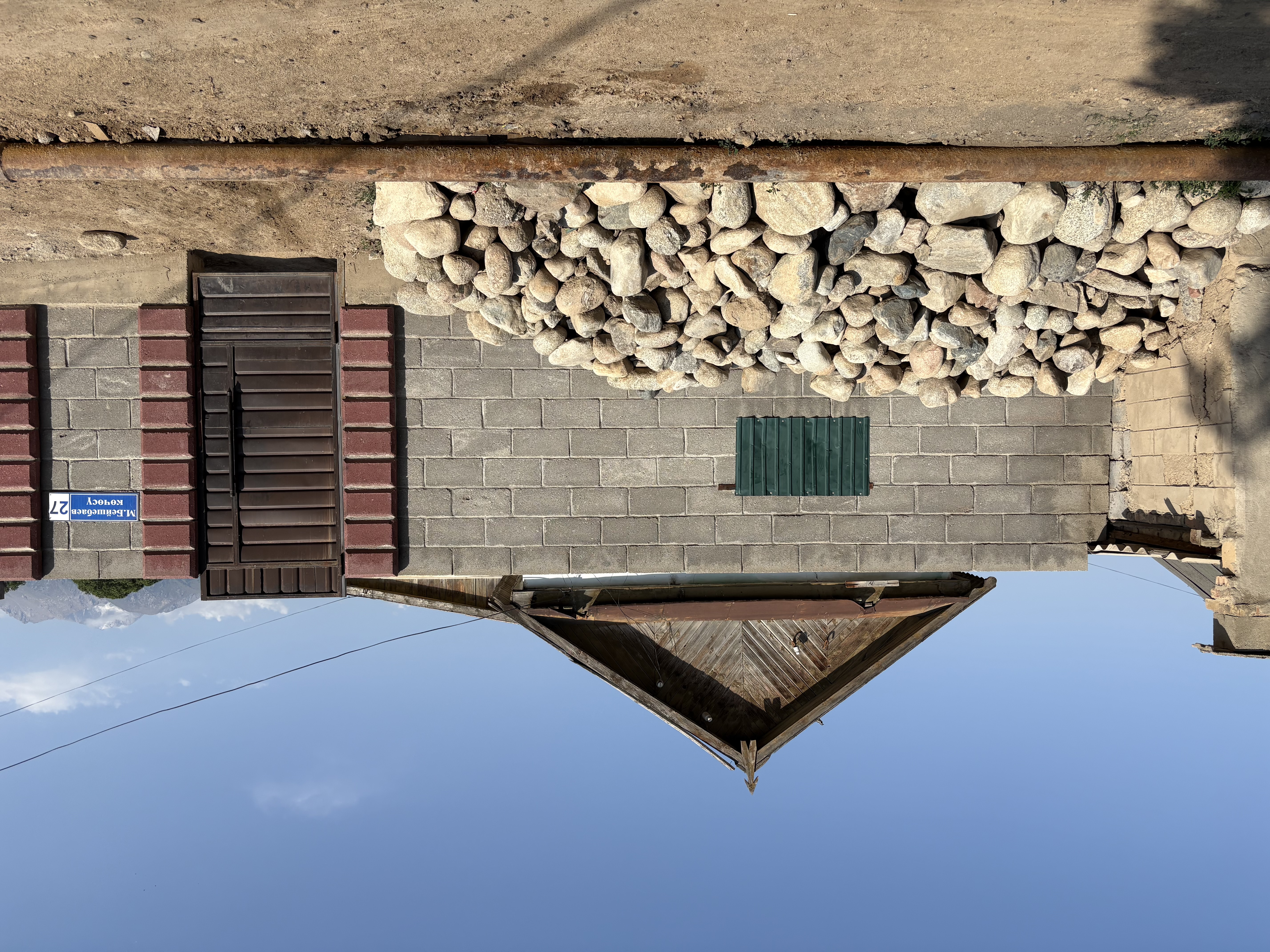
Things have changed, though. Tamga is no longer a village supporting important and secret military work for the USSR. There’s no USSR, for a start. Tamga is now a village in independent Kyrgyzstan, open to all and sundry. Like the rest of the country, the demographic profile has shifted over time. A lot of ethnic Russians have left, creating a sizeable ethnic Kyrgyz majority. Not all Russians, though – our guesthouse owner is one who has stayed. But Tamga is now a village of Russian houses with, I’m guessing, mostly Kyrgyz owners.
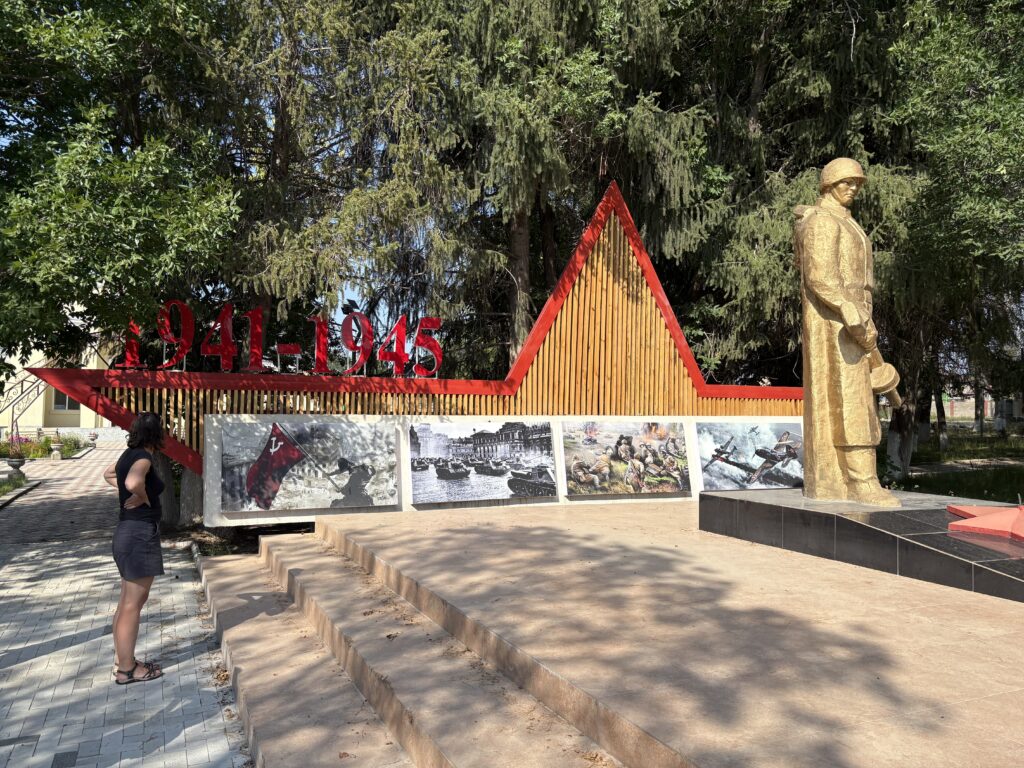
Sentiment has shifted over time, too. And the monument to dear old Yuri is a good gauge. From a symbol of pride in the Soviet period, the monument was damaged and more or less destroyed post-1991. I read somewhere it was covered in concrete at one point. The restored appearance today suggests an unrealistically peaceful acceptance of the country’s Soviet period. But that acceptance does seem to have come, eventually. Likewise the town’s war memorial is very nicely restored, and very Soviet (the big red star gives it away). Most war memorials I saw in Kyrgyzstan were still very Soviet in nature. I guess the victims were fighting in the Great Patriotic War, though, so it’s not an easy bit of history to rewrite.
*As well as the big sculpture, there’s a bust on a plinth you can just about make out in the first set of images above.
What Does This Tell Us About Kyrgyz History?
For me, Tamga was a microcosm of Kyrgyz history. Ancient roots nearby. A formal start as part of the Russian Empire. Secret Soviet goings on, and immense pride in the visit of a hero. A much more indifferent response to that Soviet past in recent years. But finally an acceptance.
That ambivalence towards the Soviet Union is replicated across modern Kyrgyzstan. A nostalgia for some aspects, but a rejection of the repressions of the era. Actually that’s a trend seen across a lot of the former Eastern bloc: late stage capitalism has a lot of people nostalgic for a time where things were simpler and everyone had a steady job. Just don’t think about the food shortages or the restrictive policies.
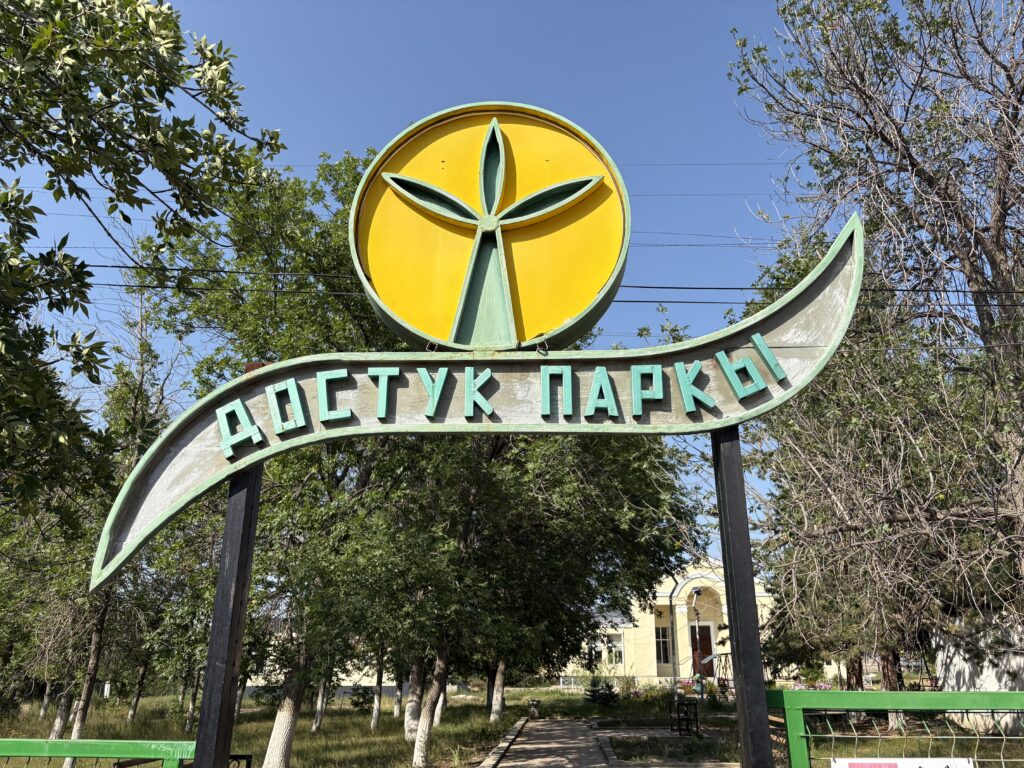
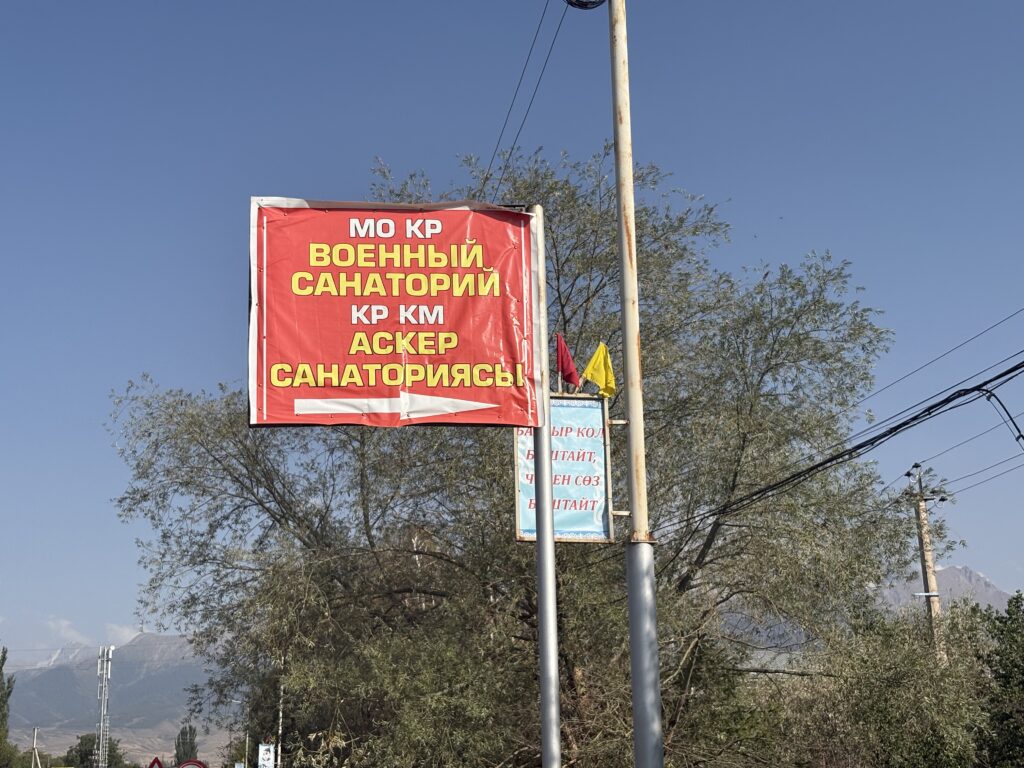
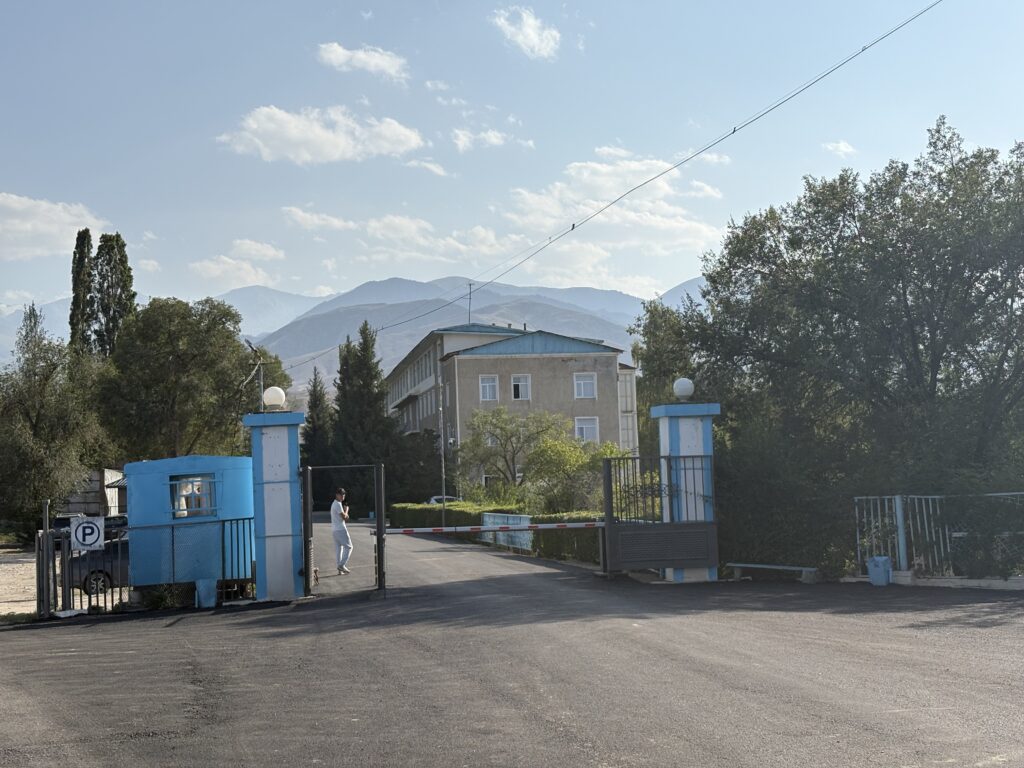
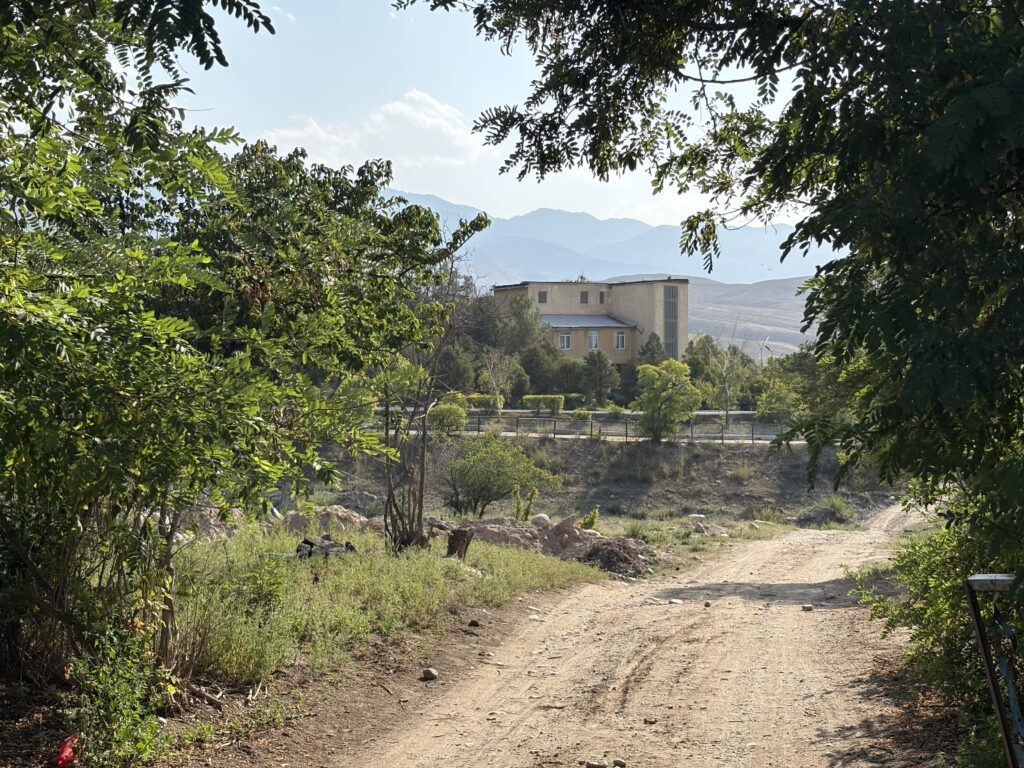
The sanitorium Gagarin stayed in (whether in 1961 or 1964 I don’t know) is maybe a good place to finish. It took me a while to find it, until I noticed the big red sign one street up from my guest house. A little bit of Cyrillic reading goes a long way in these parts. I followed the street all the way down to the end, and found what was clearly the sanitorium behind a perimeter. Some people online have managed to visit, stay, or find a little museum there. After some miming with the security guard which established I was just a tourist with no legitimate reason to be there, I turned back again. I took a photo of the sanitorium, once host to the heroic cosmonauts and sportsmen of the Soviet Union, and headed back to my guesthouse for dinner.
Change and continuity seems to be the thing, here. Since the time of the Silk Roads, populations in these valleys have ebbed and flowed. Tamga, post-USSR, seems to have settled into a quieter rhythm. But if it was good enough for Yuri Gagarin to vacation here, it’s good enough for me, too.
Trending
If you see this after your page is loaded completely, leafletJS files are missing.