
Trekking the Tien Shan Mountains, Kyrgyzstan
A first trip to Central Asia provides an opportunity to think about history, continuity, nature and culture, all while traversing the incredible landscapes of the Tien Shan Mountains.
Back for Another Hiking Trip
It’s been a while since we’ve done posts about hiking here on the Salterton Arts Review. We do the odd walking tour, but those are a bit different. I’m talking multi-day, proper hikes. You can see previous ones I’ve done here: Hadrian’s Wall and the Inca Trail.
Isn’t this an arts and culture blog, though, you ask? Yes it is. But luckily, the Salterton Arts Review finds arts and culture everywhere. And of the two hikes I mentioned above, one is full of Roman archaeology, and the other Incan. Not to mention the natural history you can find by getting away from cities and towns and out into the countryside. There’s the flora and fauna, but also the different uses of landscapes over time, and their meanings to the people who have inhabited or passed through them.
This post is about a hiking or trekking trip I did in Kyrgyzstan. Why Kyrgyzstan? It’s a slightly long story involving a challenging year and a surfeit of annual leave. But it also came down to chance, in the end. In the market for a new and interesting destination, an ad for this trip from Much Better Adventures started following me around the internet. It was meant to be: the trip was the perfect blend of physical challenge, cultural experience and stunning landscapes. It’s not for everyone, though. You need a good level of physical fitness, the right equipment, and the ability to be away for more than a week and out of phone and internet range for several days. But for those who meet that description, I highly recommend it.
Over the following sections I will attempt to give you a sense of the landscapes, flora, fauna and people I encountered on my trek through the Tien Shan Mountains, as well as discussing some interesting points around continuity and evolution in the uses of these spaces, and the expectations outsiders bring to anywhere remotely associated with the idea of a Silk Road. These are all my own ramblings and personal opinions, but I’m happy to answer any questions in the comments section. And I hope you enjoy seeing and learning more about this fascinating place.
The Romance and Reality of the Silk Road(s)
I’m going to start by setting the scene, imaginatively speaking. Central Asia still conjures, for the Western tourist, visions of the Silk Road. Names like Samarkand and Almaty bring to mind dusty caravans of camels and traders winding their way to bustling bazaars. It’s very much tied up in Orientalist ideas of the ‘exotic East’.
Travel companies lean into this. The itinerary for the tour I went on talks about 1930s explorers and a valley “once trafficked by caravans heading to China along the ancient Silk Road”. Is it incorrect? No. Do I understand why they do it? Yes, they’re appealing to my sense of romance to sell me something. But is it the full picture? Also no.
If you remember, we learned a fair bit about the Silk Road when there were rival exhibitions at the British Museum and British Library a while ago. At the British Museum we learned that it was not one Silk Road but rather Silk Roads: an extensive network spanning continents, where goods, people and ideas intermingled. At the British Library we looked at one Silk Road hub, Dunhuang, as a representative cosmopolitan, multicultural community.
I say this because there are numerous challenges to our romantic, simplified idea of the Silk Road. And yet, people still arrive in Kyrgyzstan with an expectation of what they will find. I was struck, during my tour, by something one of our guides said. Some tourists found it disappointing, according to him, to learn they would be following a road for several days. A bit of a loss of romance when there are families piled into trucks passing you, clouds of dust in their wake. Or is there?
The point that I want to make is that the Western mental image of the Silk Road is of something that has never really existed. That extensive network was always a way to get people and things from A to B. And there should be no expectation that the people of Kyrgyzstan have eschewed modern technology in order to remain picturesque and ‘traditional’, while we as Western tourists live in comfort and embrace mod cons. By passing through these places on the Silk Roads, we are participating in an ongoing and constantly evolving cultural exchange that has taken as many forms as there are grains of sand in an Orientalist desert.
Starting Point: Landscape and Myth
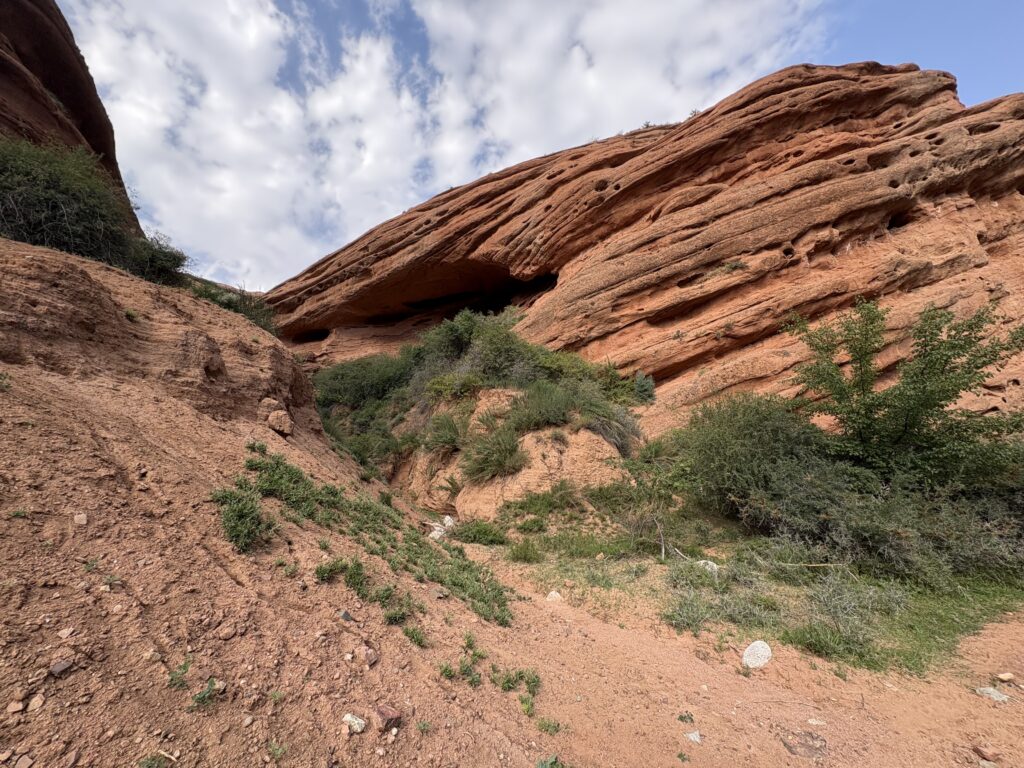
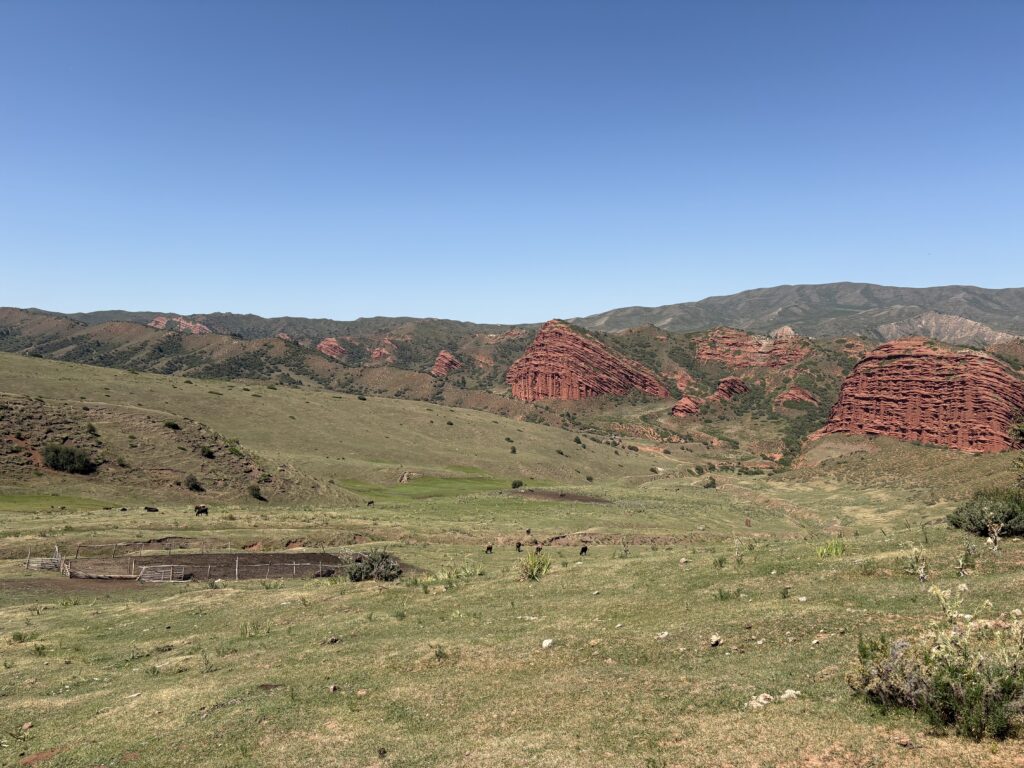
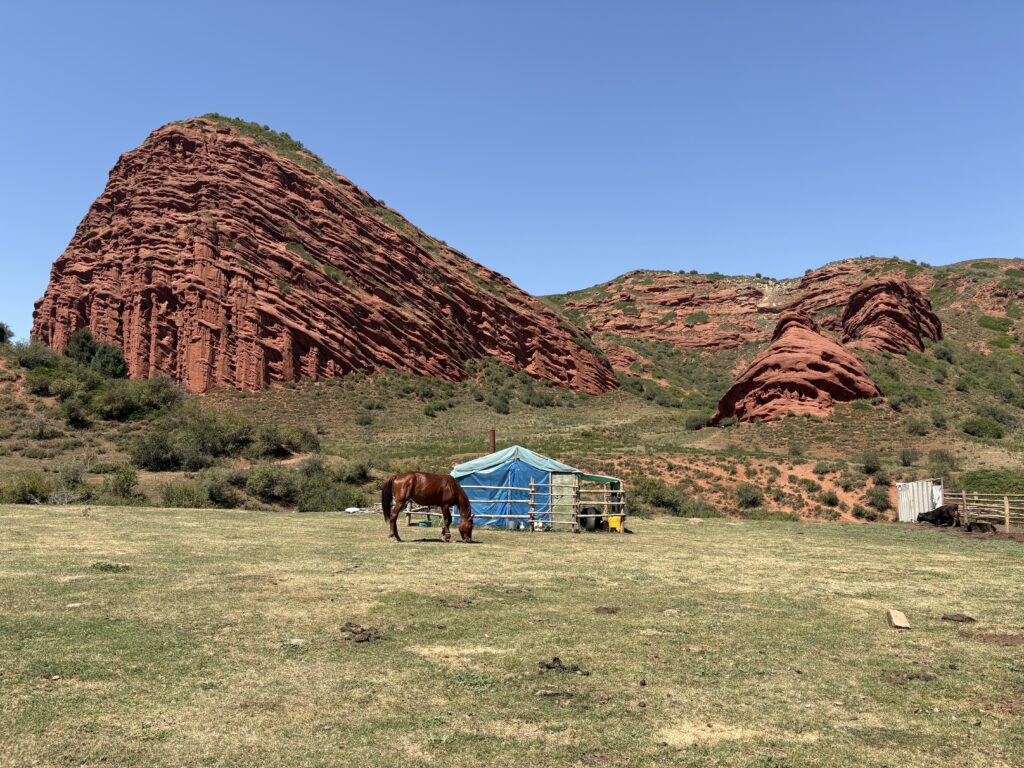
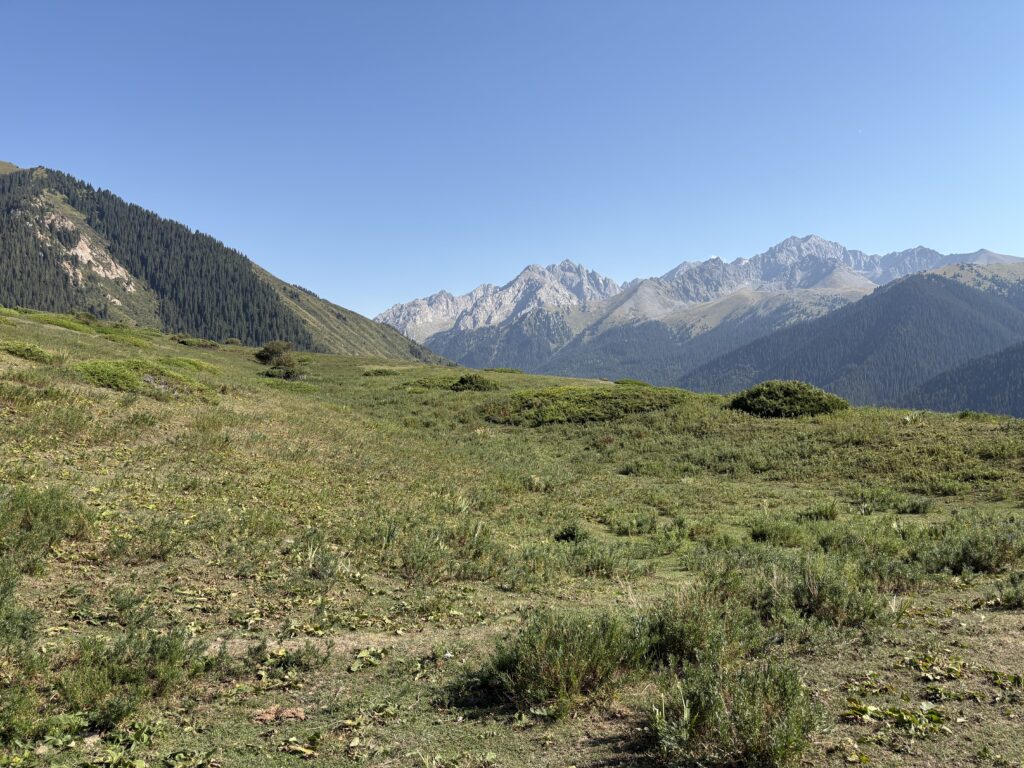
My trip to Kyrgyzstan started off, fairly naturally, in the capital, Bishkek. If you follow the blog you will have read a number of posts from there in recent days. That was just a short stint, though, before we headed out along the southern shore of Issyk-Kul, the country’s biggest lake, towards the Tien Shan Mountains. Along the way, we stopped for a warm-up hike along Konorchek Canyon, a striking landscape of red rock formations.
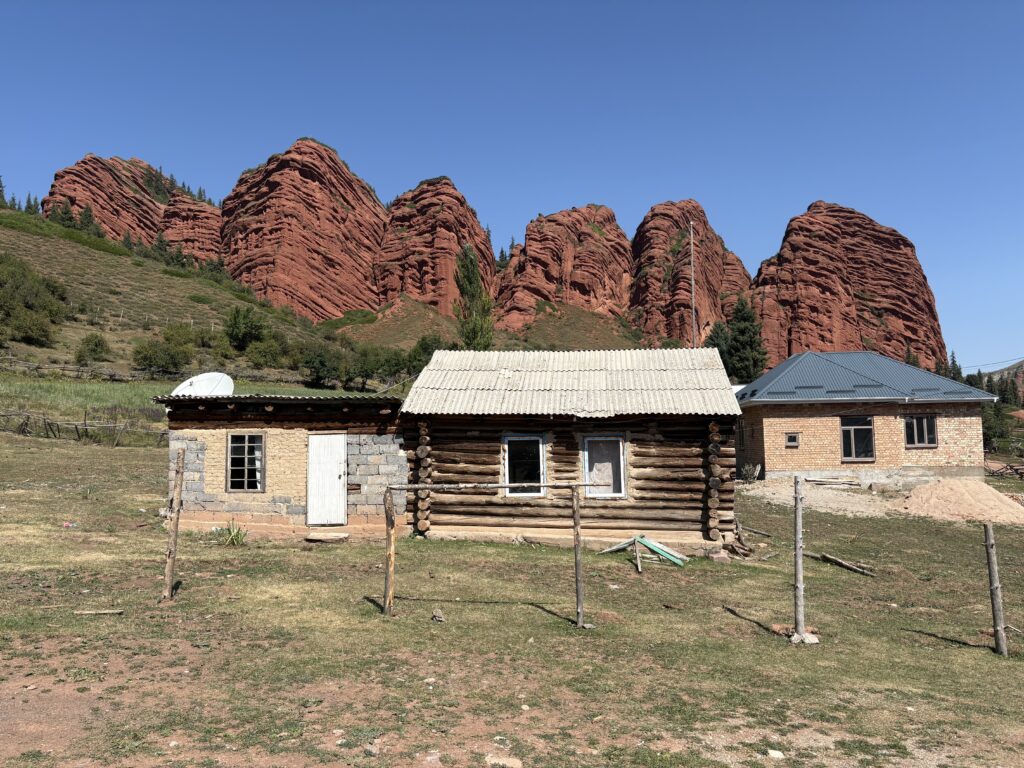
After a night in Karakol, we drove to the starting point of five-and-a-bit days’ walking. This was Jeti-Ögüz, or ‘Seven Bulls’. And we had time for a story as we checked our gear and prepared to start our walk. The tale of seven bulls and a broken heart. We begin in a time of warring rulers. One was possessed of a beautiful wife (women, as you’ll come to see, are very much possessions in this story). The other was jealous, coveting a beautiful wife of his own. The second ruler stole her from his rival, and war broke out. The first ruler threatened to destroy the opposing tribe unless his wife was returned to him. The mistake he made was not specifying that he wanted her back alive.
Things turned out just about how you would expect. The evil ruler organised seven days of festivities, slaughtering a bull each day. On the seventh day – the day the woman was due to be returned to her husband – he killed her with his bare hands. But at the moment of her death, supernatural justice was meted out. Hot water (there are hot springs nearby) gushed into the valley, killing the ruler and his entourage. You can still see the bulls today, transformed into stone. And a little further on, a rock shaped like a broken heart.
Although it’s a fairly grim story, this was a wonderful way to start our hiking. The first two days took us through valleys and canyons and past similar rock formations. Not all of them have their own legend. But the fact that some do is a connection to Kyrgyz history, storytelling, and former and current ways of life. It takes local people to unlock this meaning, whether through the retelling of stories, or through documenting them for posterity.
The Jukku Valley to Arabel Syrt
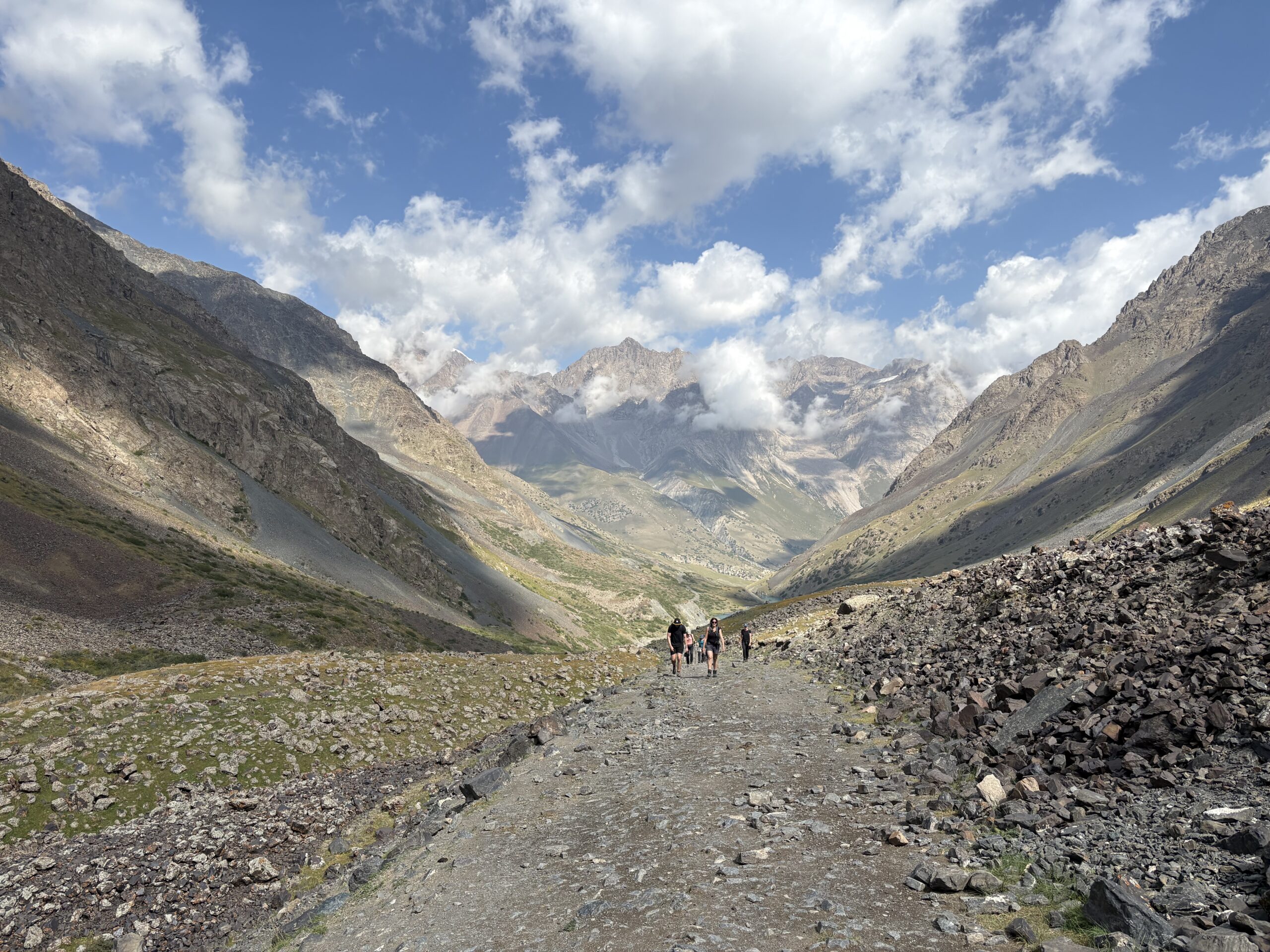
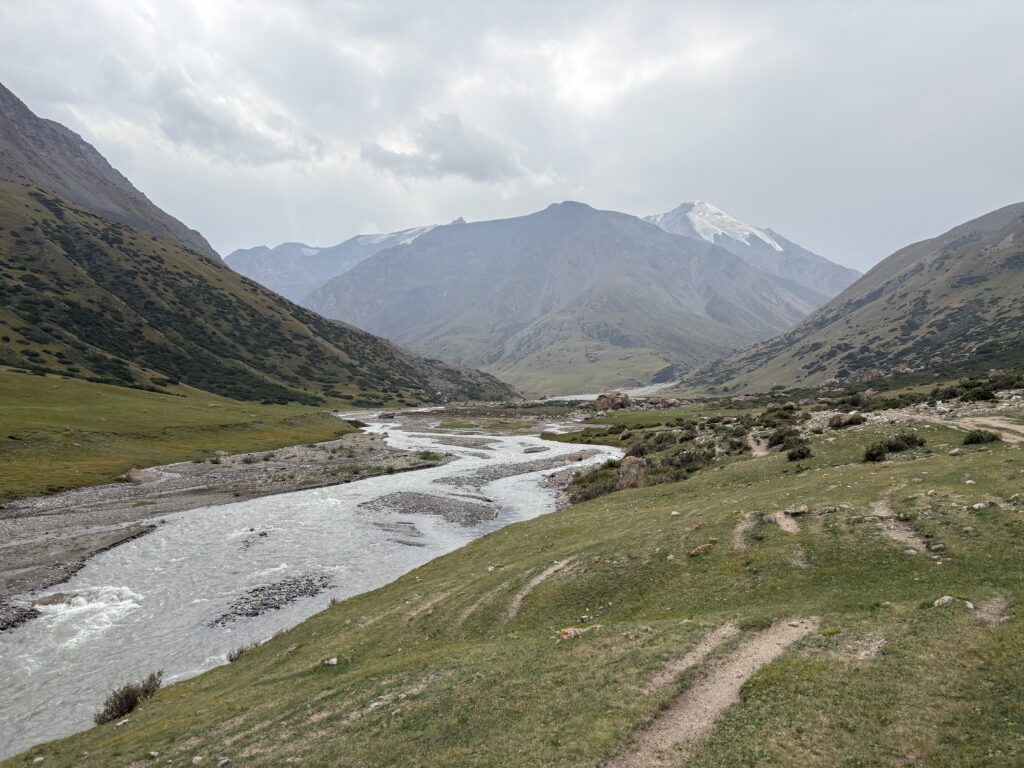
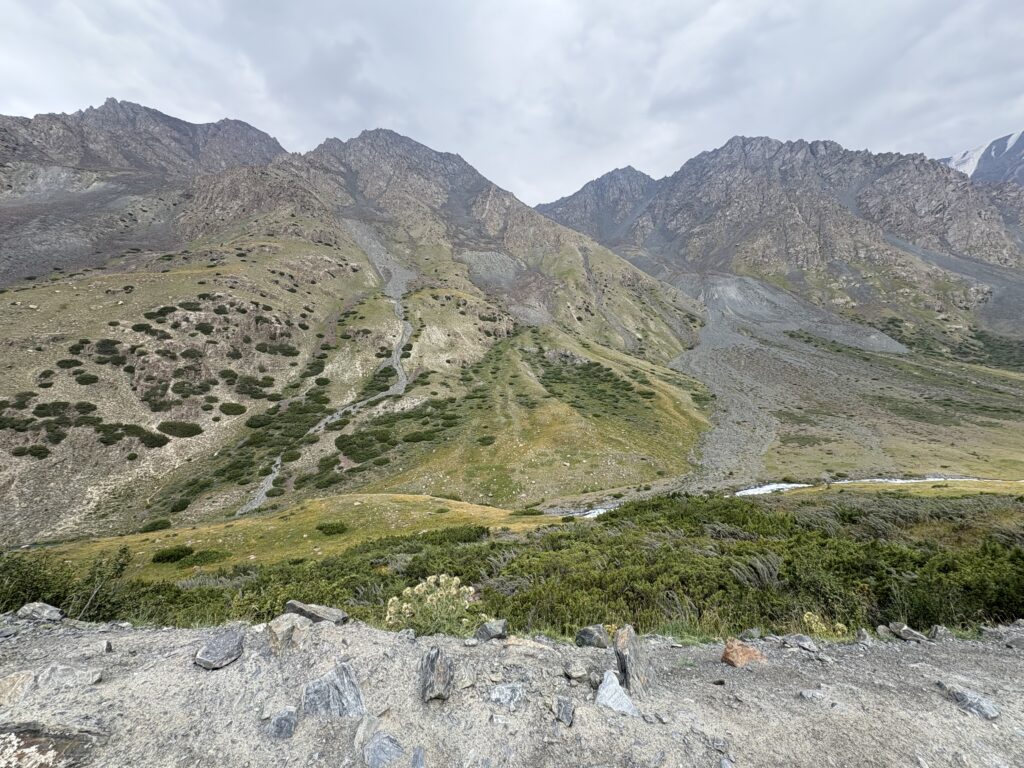
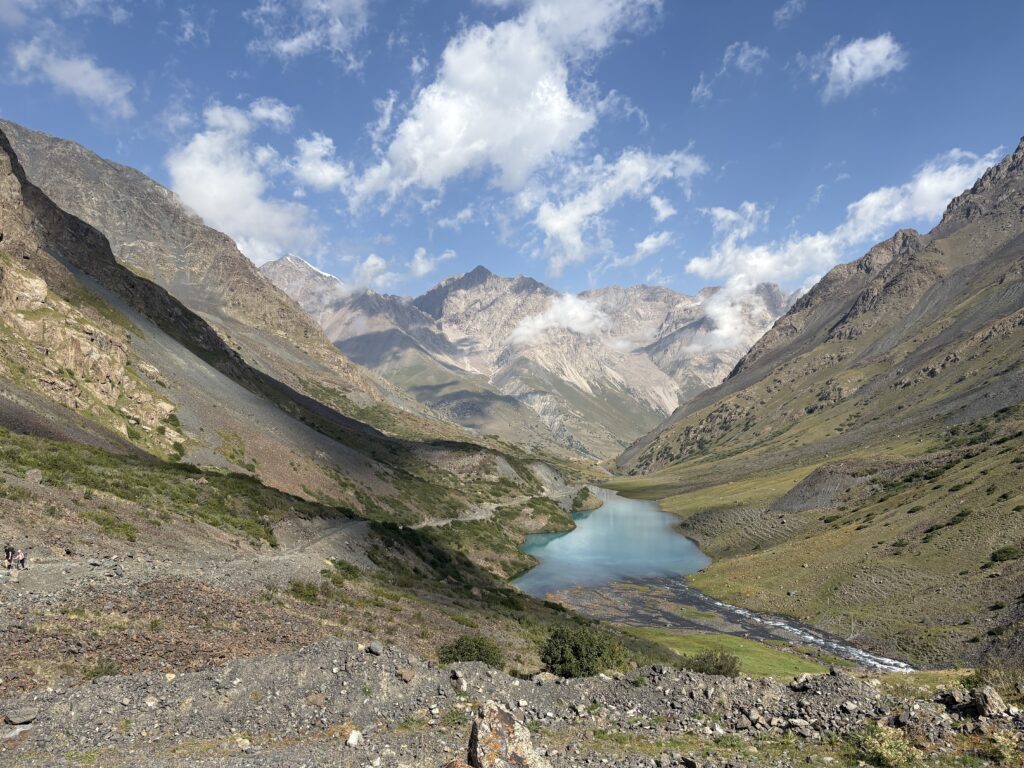
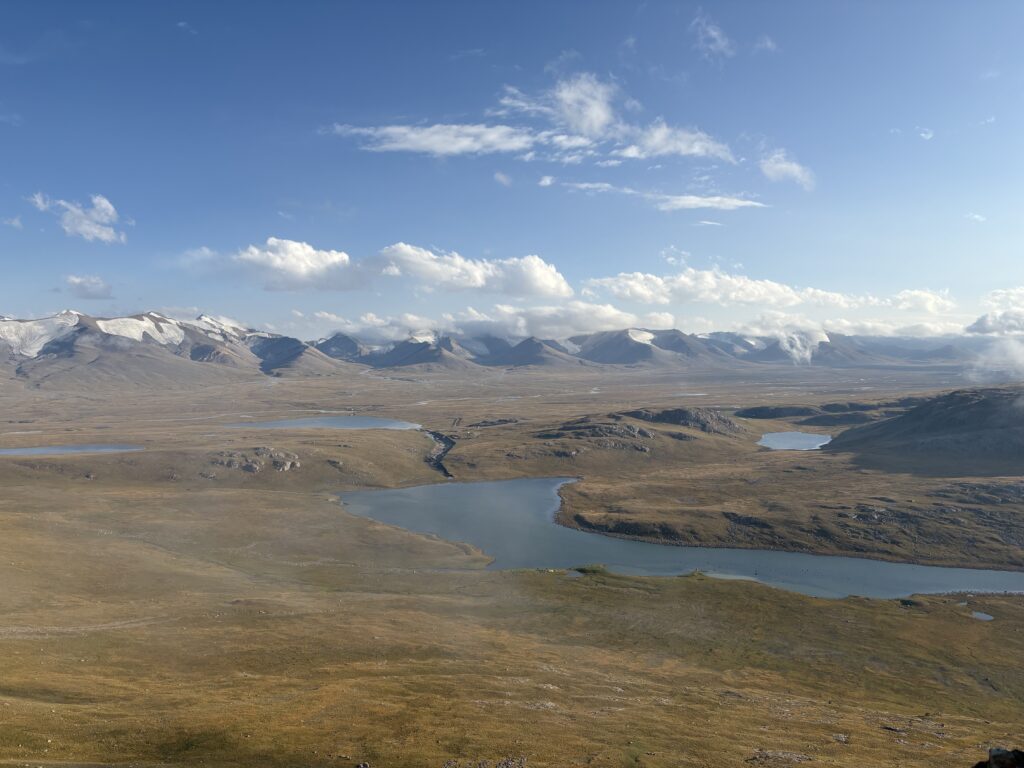
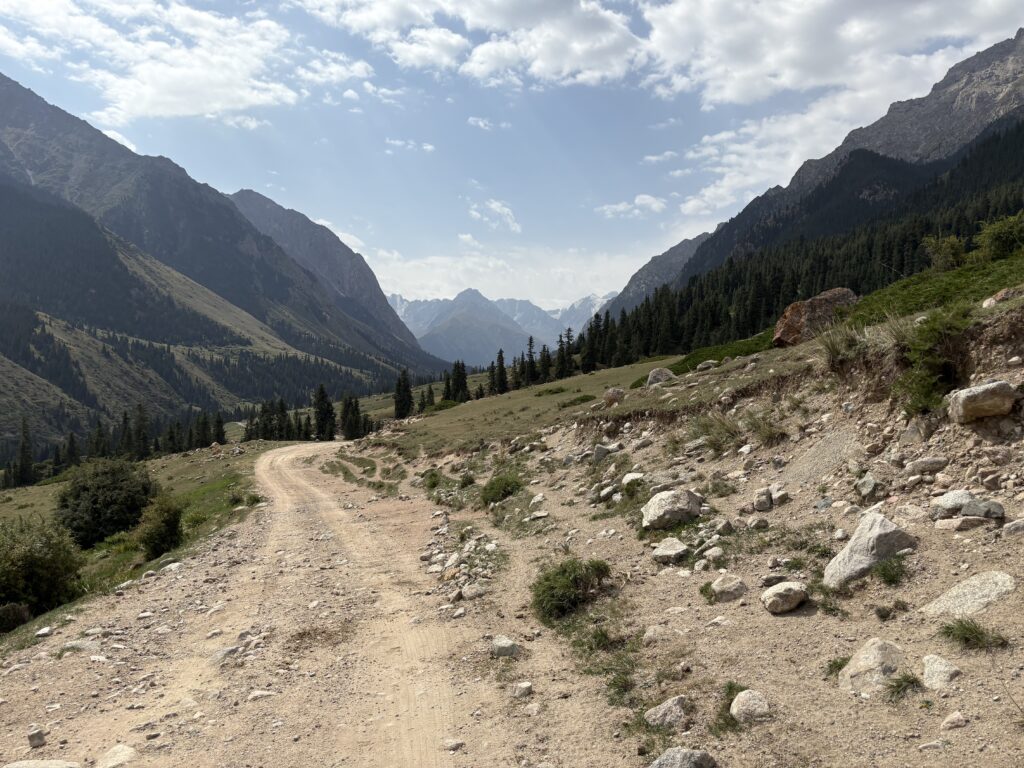
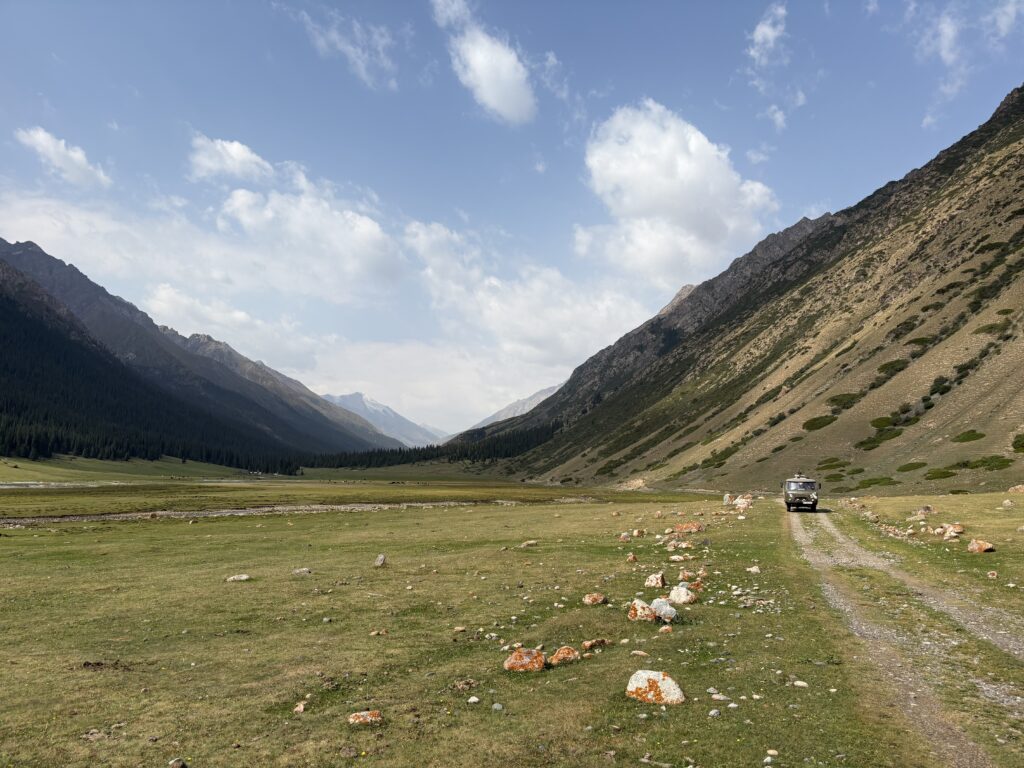
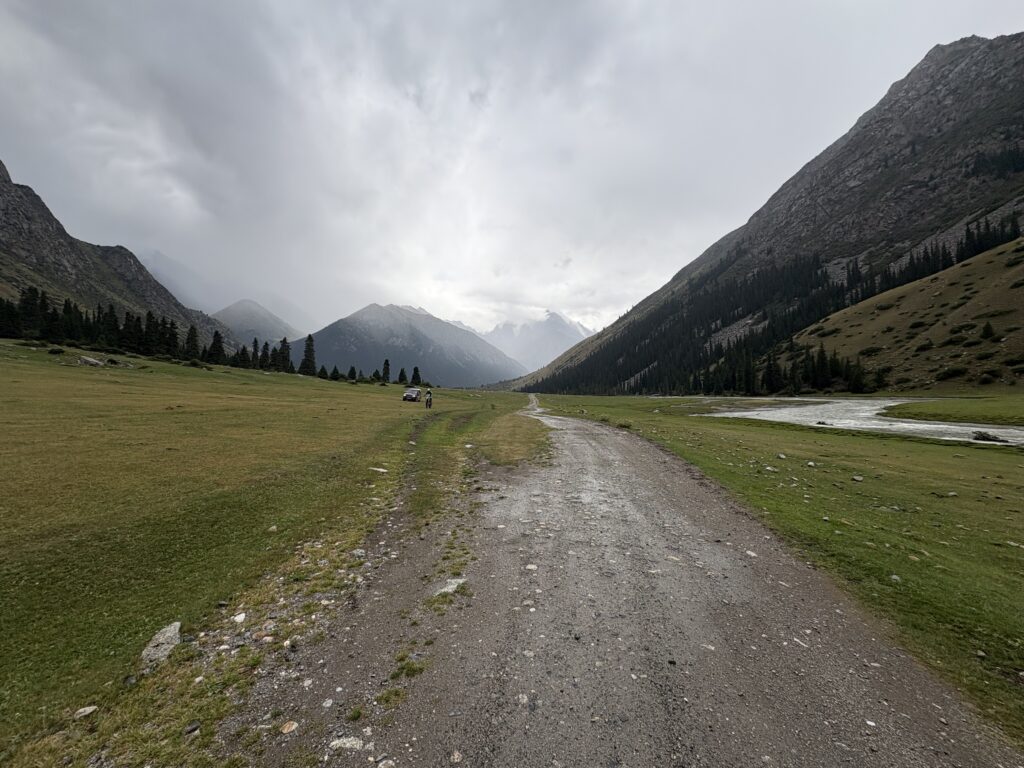
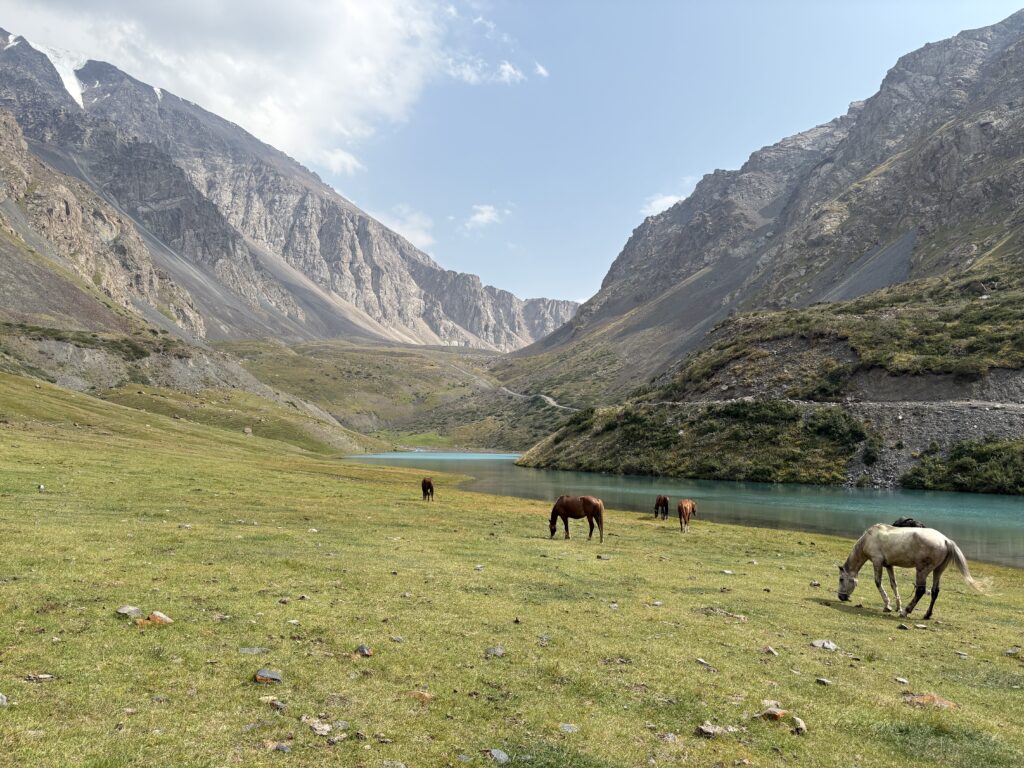
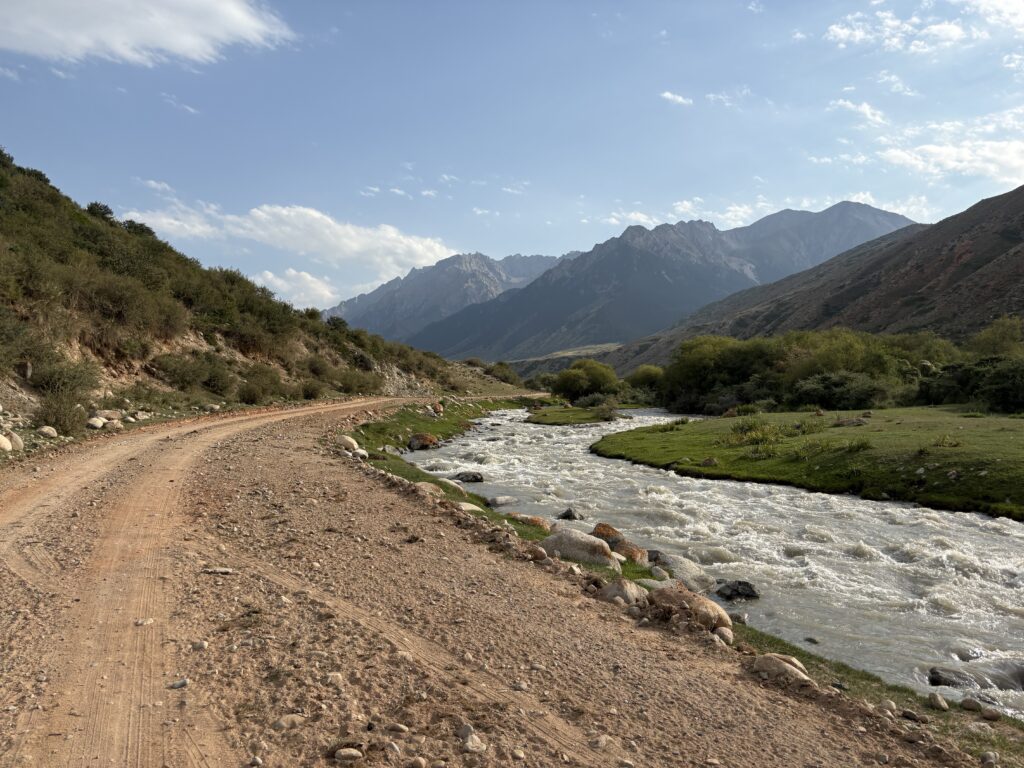
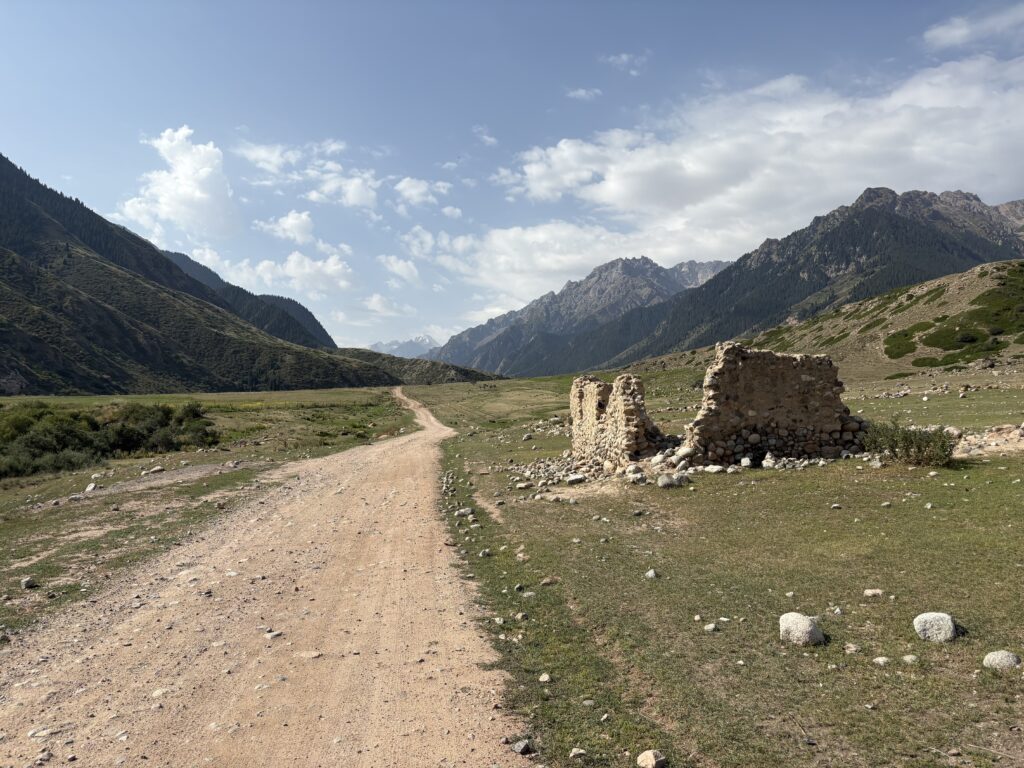
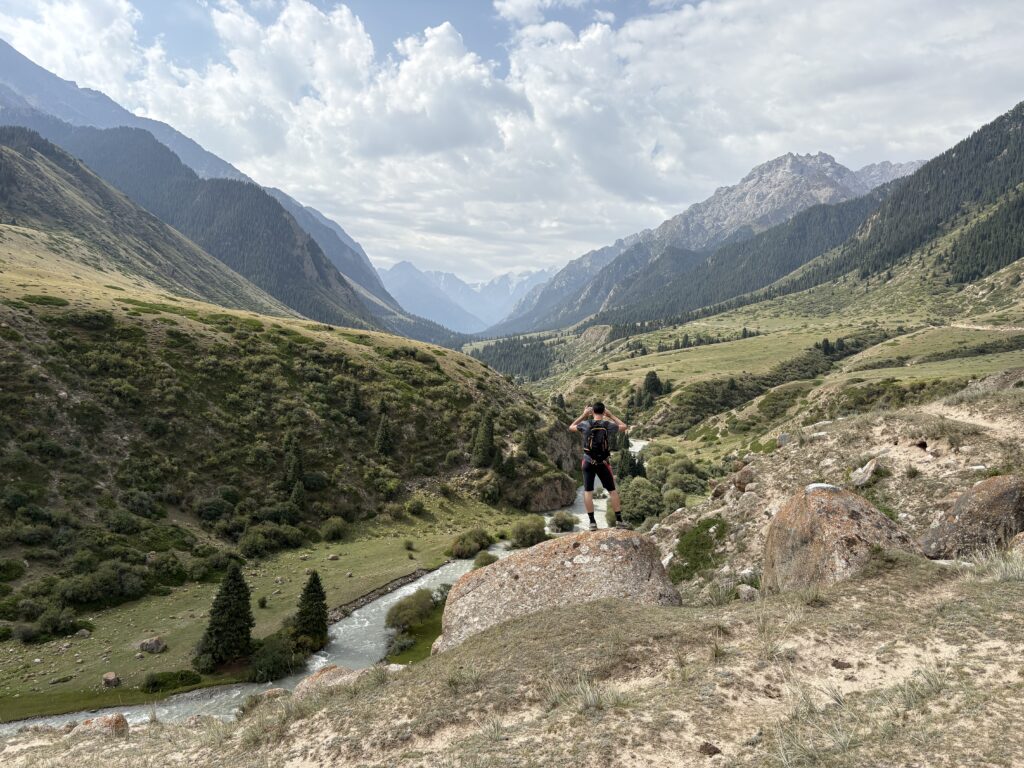
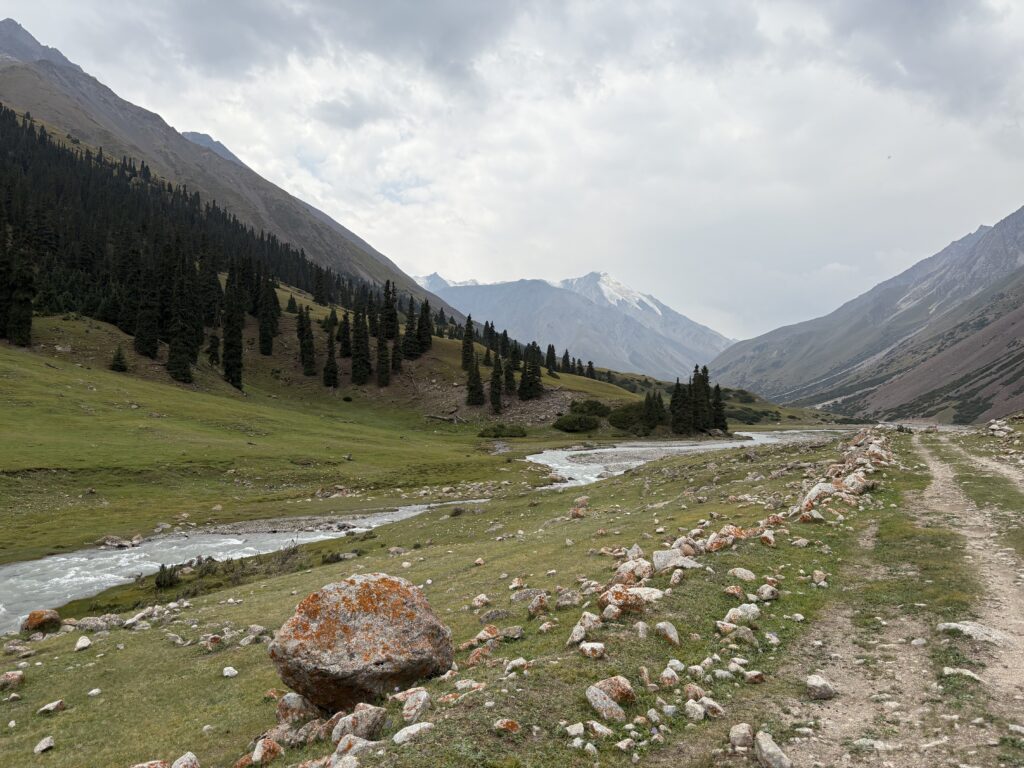
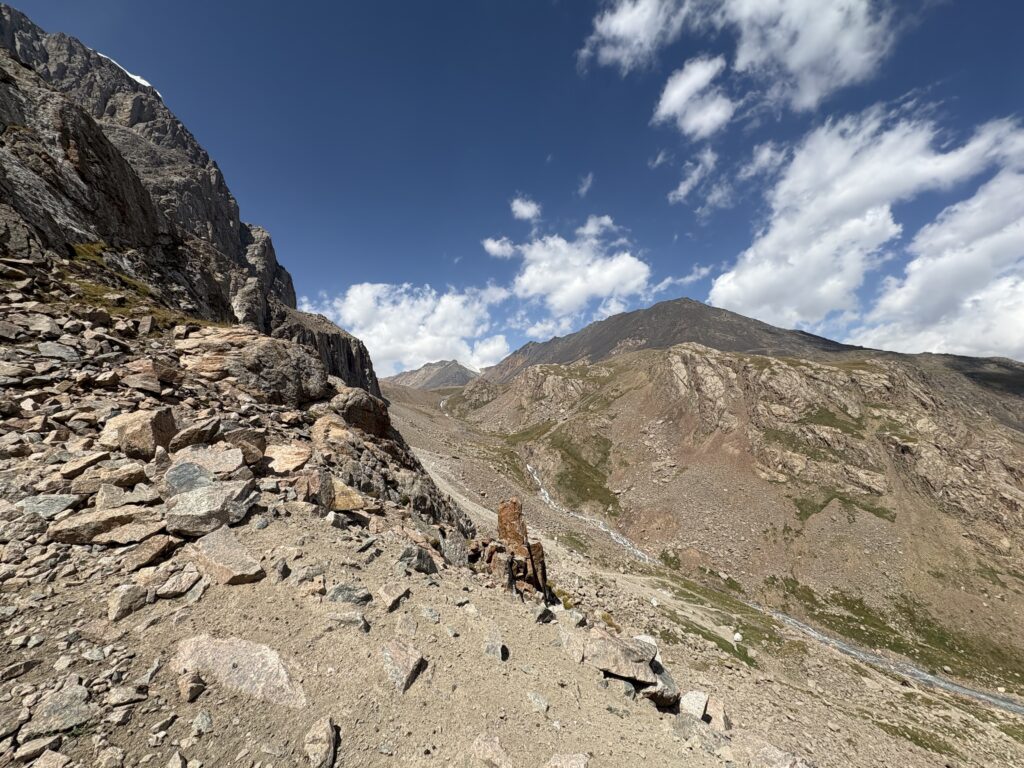
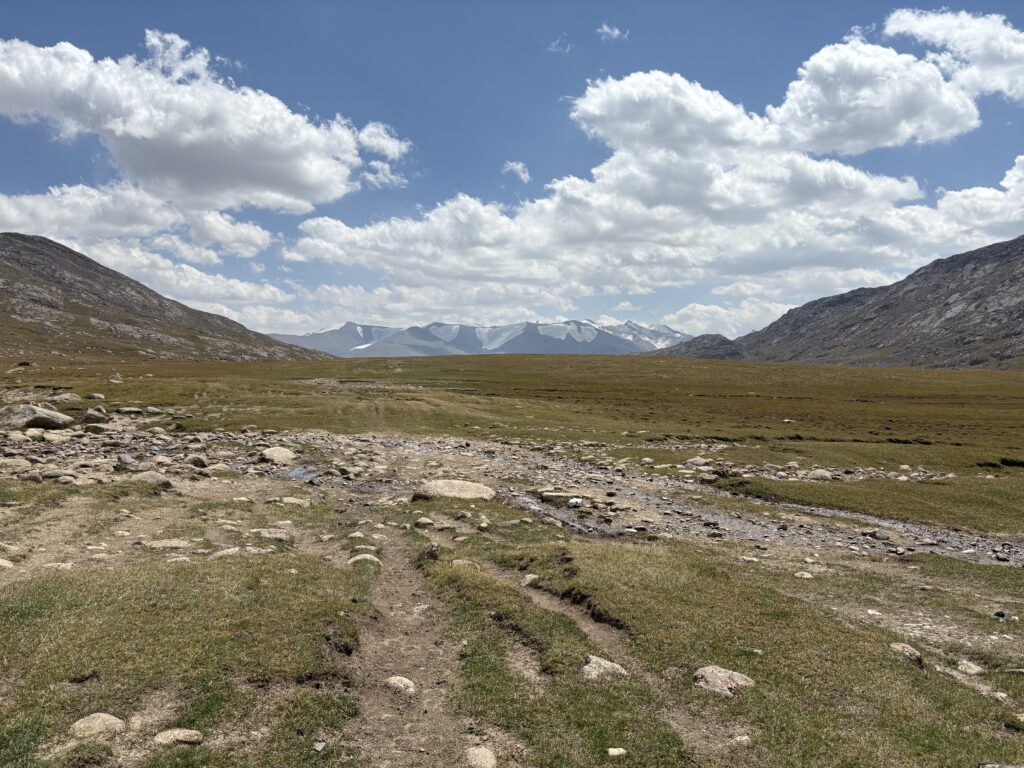
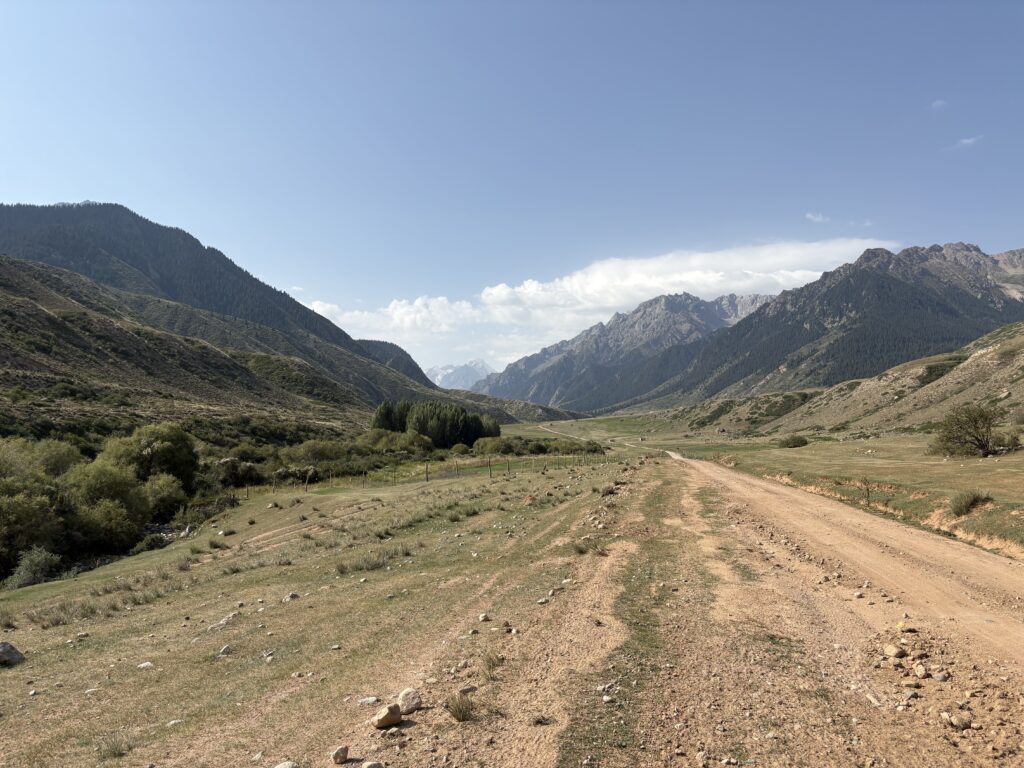
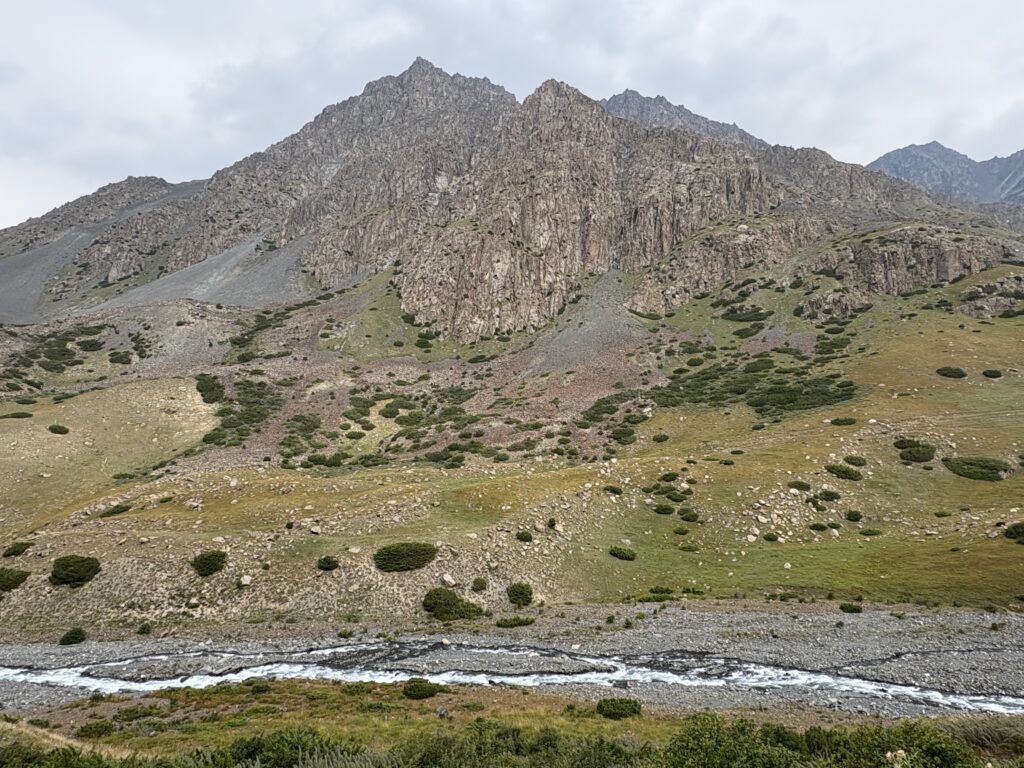
For the next few days of hiking we followed the Jukku Valley (also written – excluding Cyrillic – as Juku, Zhuuku or Zaouka) up to the Jukku Pass and then along the Arabel Syrt (Plateau). This is the stretch that tour companies proclaim as the/a Silk Road. It’s also a beautiful landscape, changing as you climb to look what I consider to be alpine.
Coming back to the discussion at the start, though, the idea of this as a landscape untouched aside from caravans passing through is an absolute myth. We’ll come onto the use of summer pastures in the next section. But this is the section of our hike where some people are nonplussed to be following a road and making way for cars. Personally I found it an interesting cultural exchange: in some cases we were taking photos of local people moving livestock or driving past, while they were taking photos of the tourists paying good money to head up the valley on foot.
The Jukku Valley has always been a path to get from Issyk-Kul (the lake I mentioned earlier) to China. Definitely part of the Silk Road network, but also important for other reasons. It has been, for instance, a conduit to escape political oppression on either side. Dungan people (a Chinese Muslim group) fleeing into what is now Kyrgyzstan, for instance. Or Kyrgyz people fleeing the hardships of famine, political persecution or collectivisation during the Russian Empire and Soviet periods. There was a huge wave of such migration in 1916 in response to conscription into WWI, and another peak in the 1930s. Our guides told us that there are still human remains along the valley from those who didn’t make it.
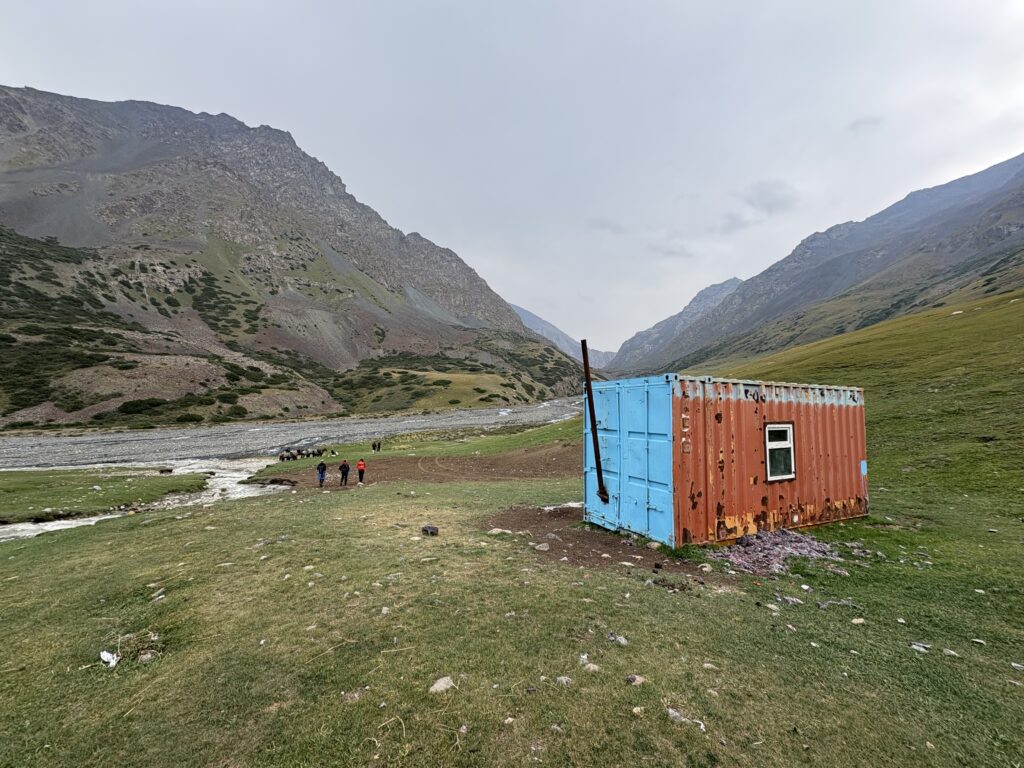
The end of our hiking trip was also an interesting lesson in contemporary Kyrgyzstan. The Arabel Syrt is accessible today thanks to infrastructure for a nearby goldmine. Having reached our van and packed our bags and selves back in, we had a wait for a gap between heavy vehicles driving up the winding road. Without that road, would this trip still be on offer? Perhaps, but I’m not sure. The Kumtor Mine has been a focus of protest and international relations in recent years. Locals staged a blockade in 2013, unhappy that more profits from this important mine were not trickling down to benefit them. In 2021, the Kyrgyz government nationalised the mine, seizing control from Canadian company Centerra Gold.
As well as being personally challenging and inspiring, my hike along the Jukku Valley and Arabel Syrt was thus a lesson in centuries of history and intercultural exchange.
Tradition and Continuity in Kyrgyzstan’s Highlands
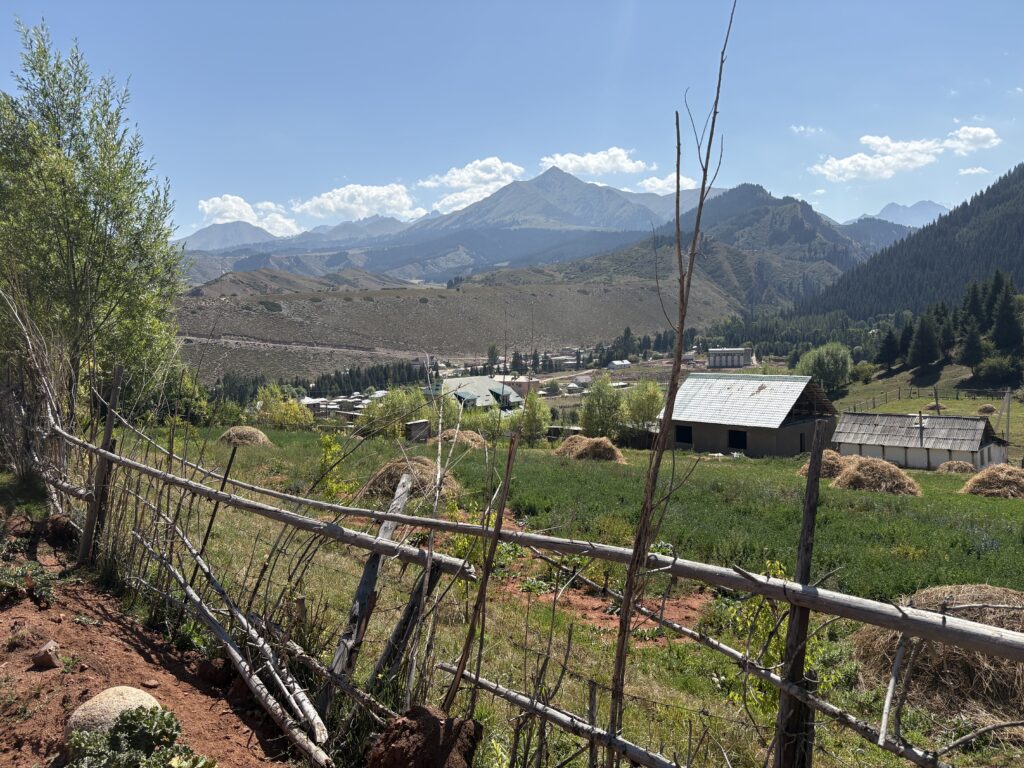
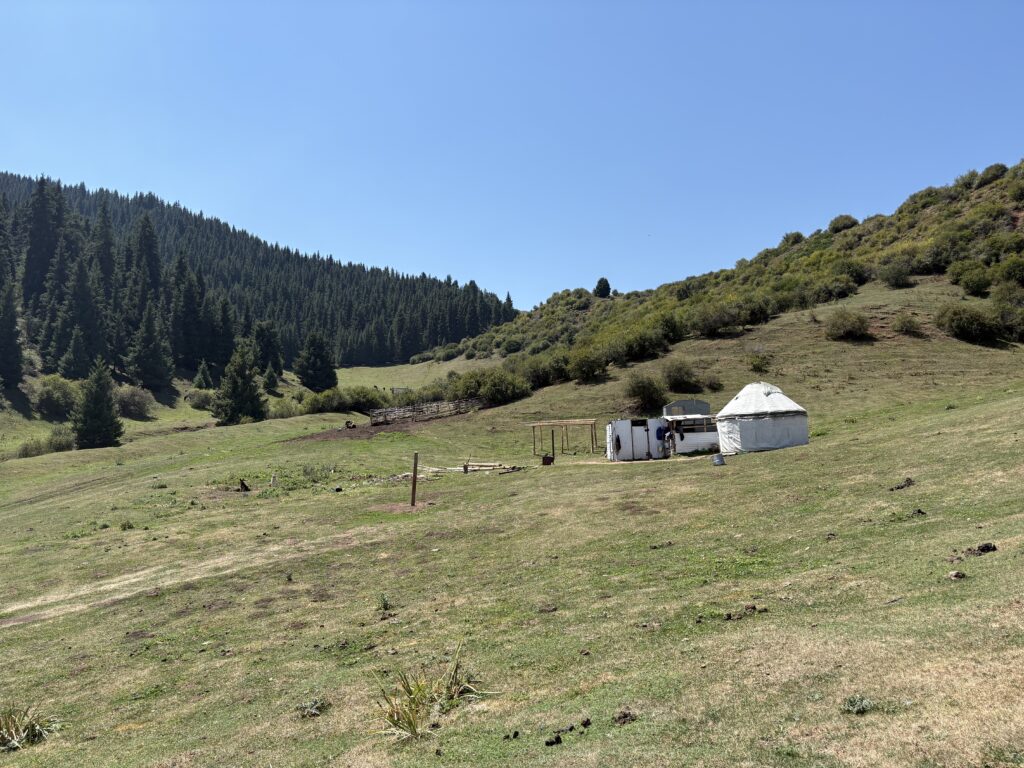
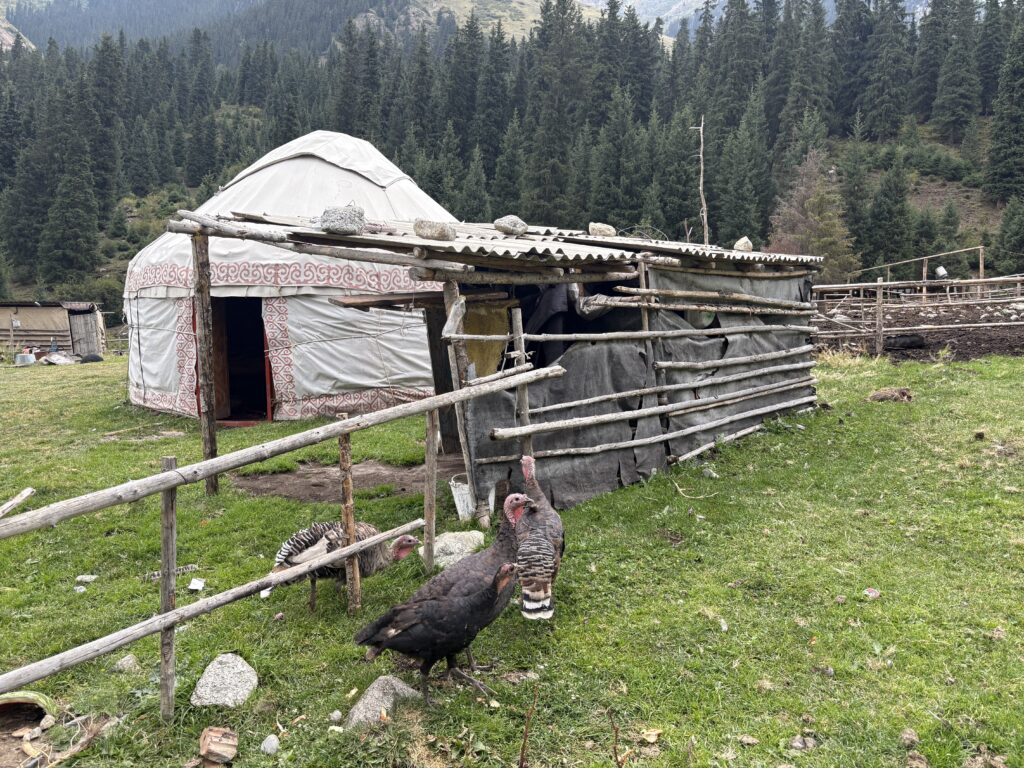
One aspect of hiking in Kyrgyzstan’s highlands which makes it hard to shake notions of the romantic Silk Road entirely, is the concept of Jailoo. Jailoo are summer pastures. Some families who are settled in towns or villages during the winter months still head up to the Jailoo during the summer to live as pastoral nomads: grazing their flocks on the alpine pastures.
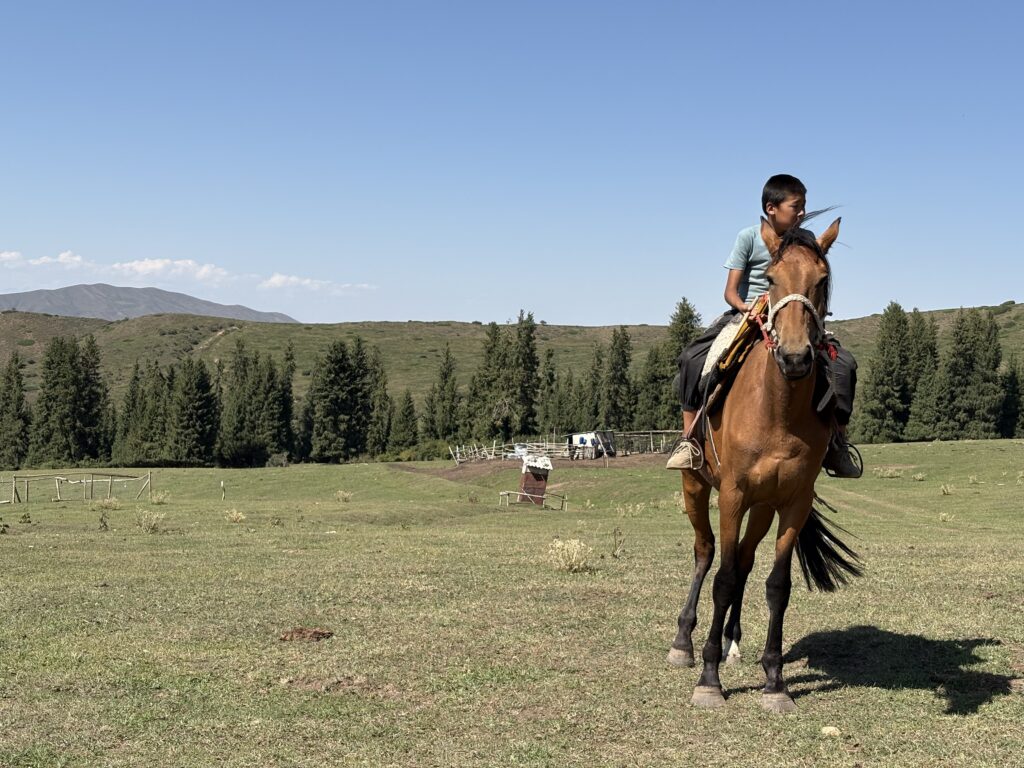
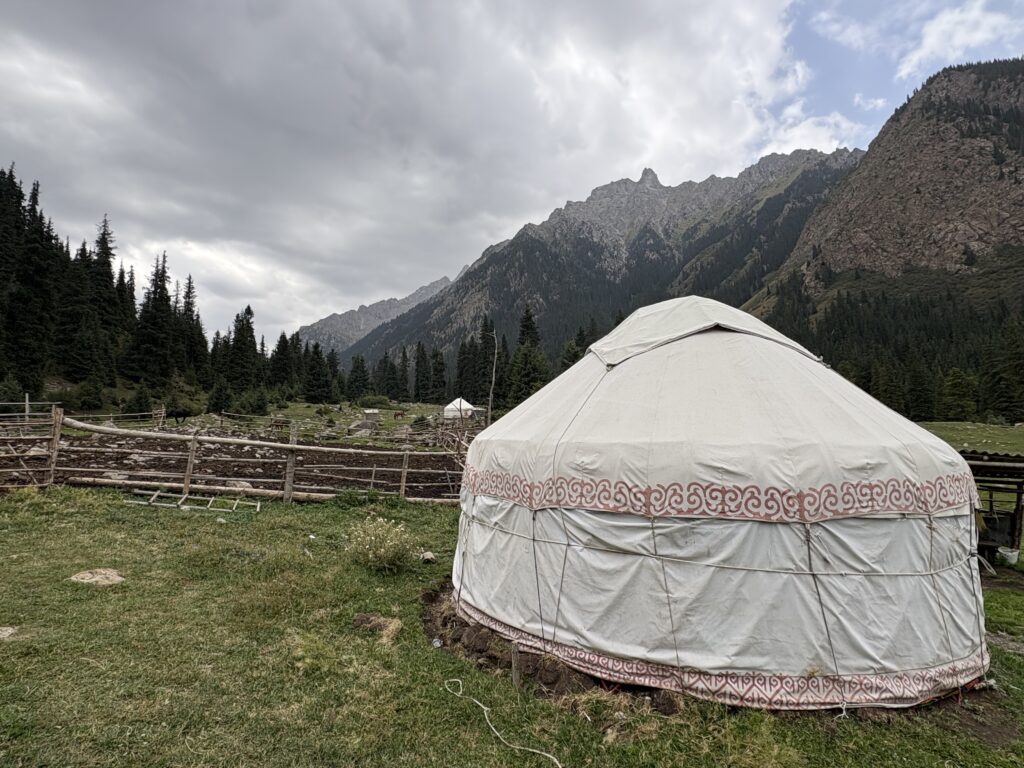
As a tourist, this is almost unbearably picturesque. In a landscape otherwise empty of human intervention a group of yurts hoves into view, perhaps with a livestock pen. If you’re lucky, the children might ride over to you on horses, curiosity and the possibility of earning a little money acting as a lure. As with the Silk Road concept generally, there are modern touches which belie how timeless this way of living seems. Some of the families have clearly driven up here with their gear. There’s often a plastic layer under the outer felt of a yurt, these days. But it’s a connection to a nomadic past that has survived decades of Russian and Soviet ‘encouragement’ to settle.
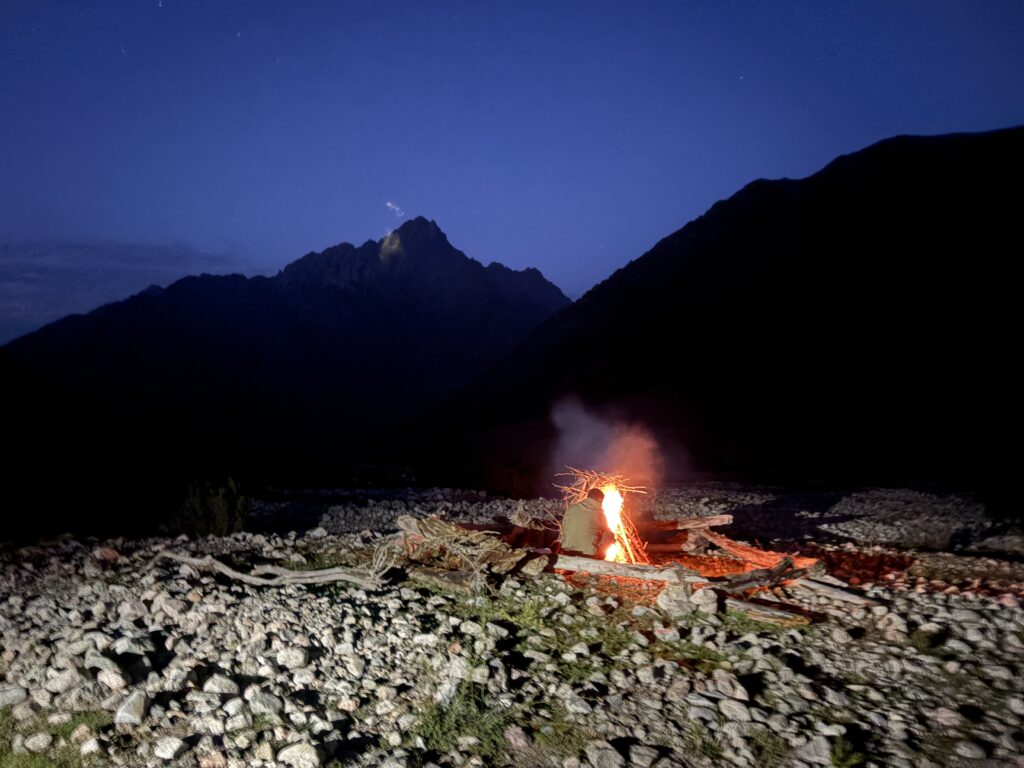
As I’ve said before in previous posts, there’s basically no such thing as a landscape untouched by human hand. Centuries or more of nomadic grazing have shaped the landscapes we hiked through. In fact one evening our camp was in the way of a farmer rounding up his cows, who had spent the late afternoon looking at us with doleful eyes. Kyrgyzstan and a nomadic, pastoral lifestyle are inextricably linked.
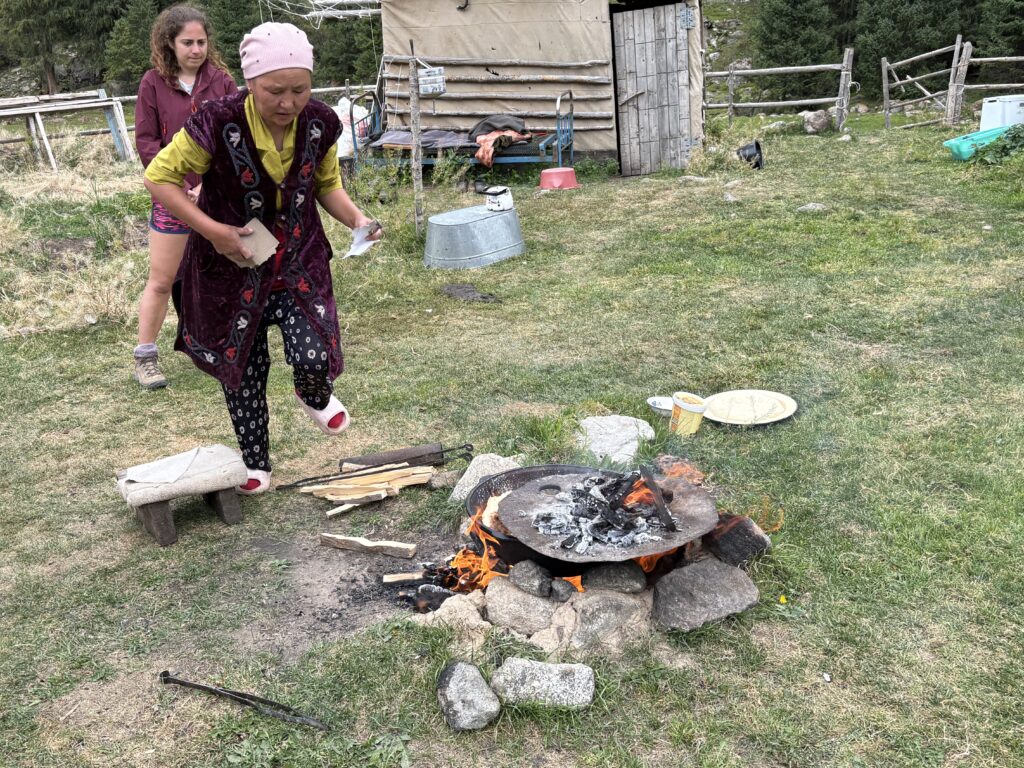
One of the most special experiences during our trip was an opportunity to visit a family spending their summer on the Jailoo. It was a serendipitous moment: they were running late cooking the bread which was meant to be our special surprise, so instead of tearing into it on the road, we got to go and watch it being cooked. We piled into a yurt, drank some kumis (fermented horse milk) and shared delicious fresh bread and homemade jam between us. It’s easy to romanticise a pastoral life when this is your introduction.
Absorbing Culture Through Nature
I’ve talked a lot about history and Kyrgyz culture in this post. Or at least about my brief but inspiring experience of them while trekking the Tien Shan Mountains. To finish, I’d like to talk about natural history, and how this is also a way to learn about a place.
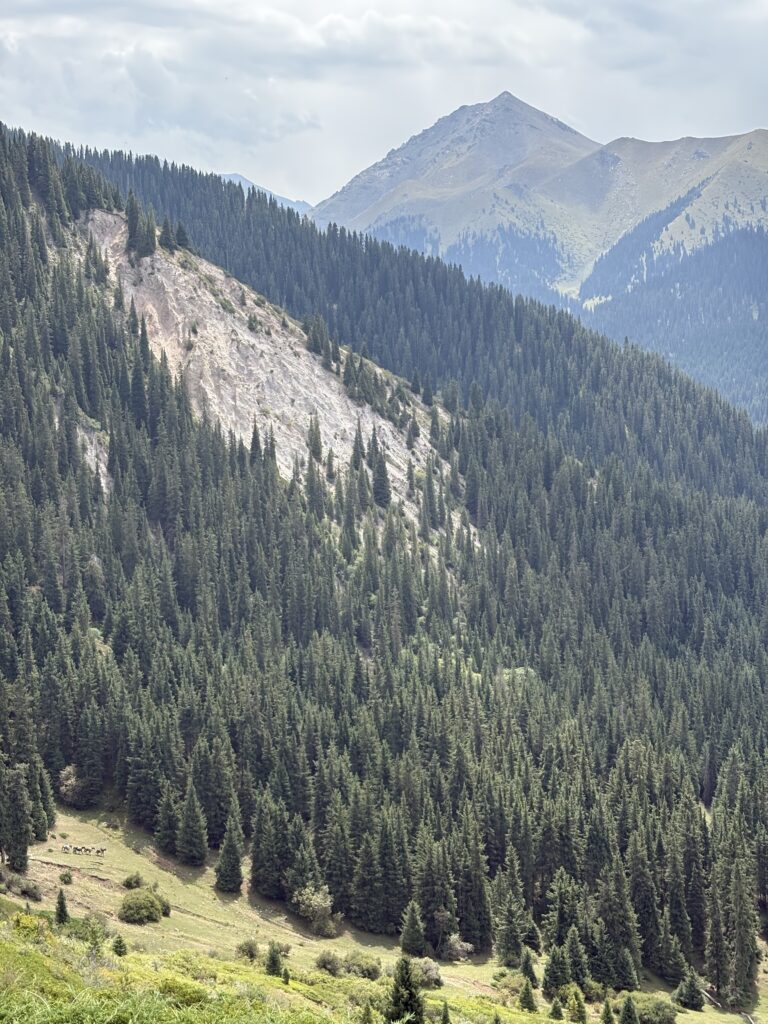
The Tien Shan Mountains and Jukku Valley are home to a lot of flora and fauna. In terms of the fauna, we mostly saw farm animals: sheep, goats, cows and horses. But as we climbed higher we began to see marmots. And there are apparently ibex, martens, wolves, snow leopards, and more. In terms of birds, you can see vultures, golden eagles and falcons. Although you’ll need a guide well-versed in local birds to tell you which one’s which.
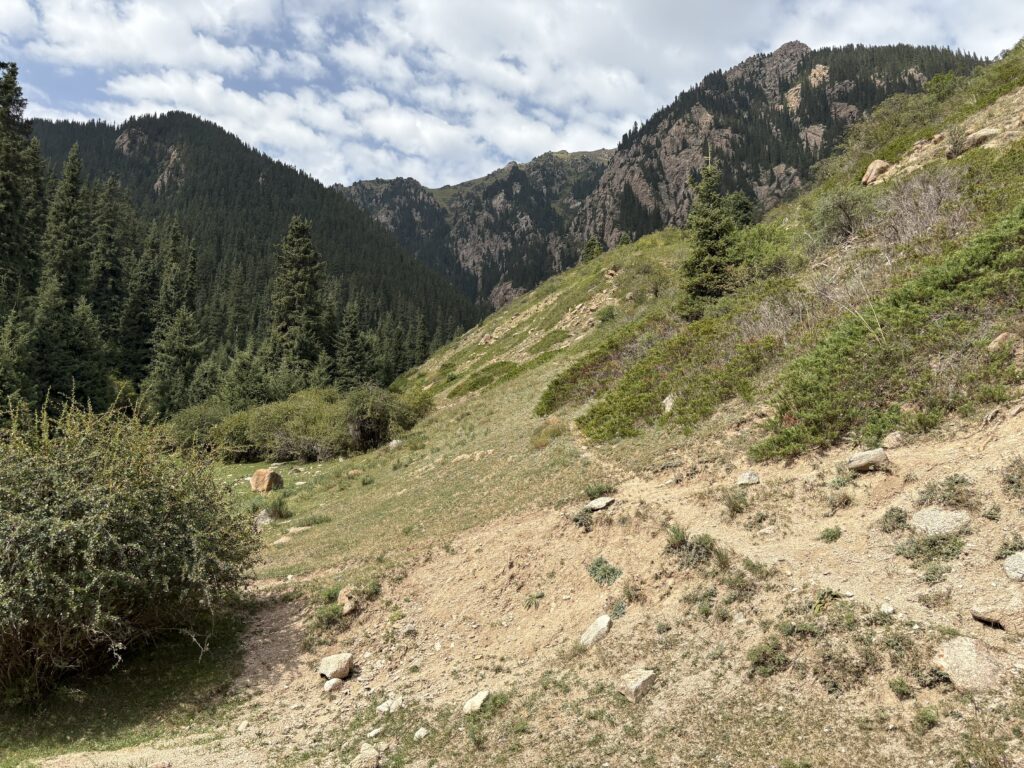
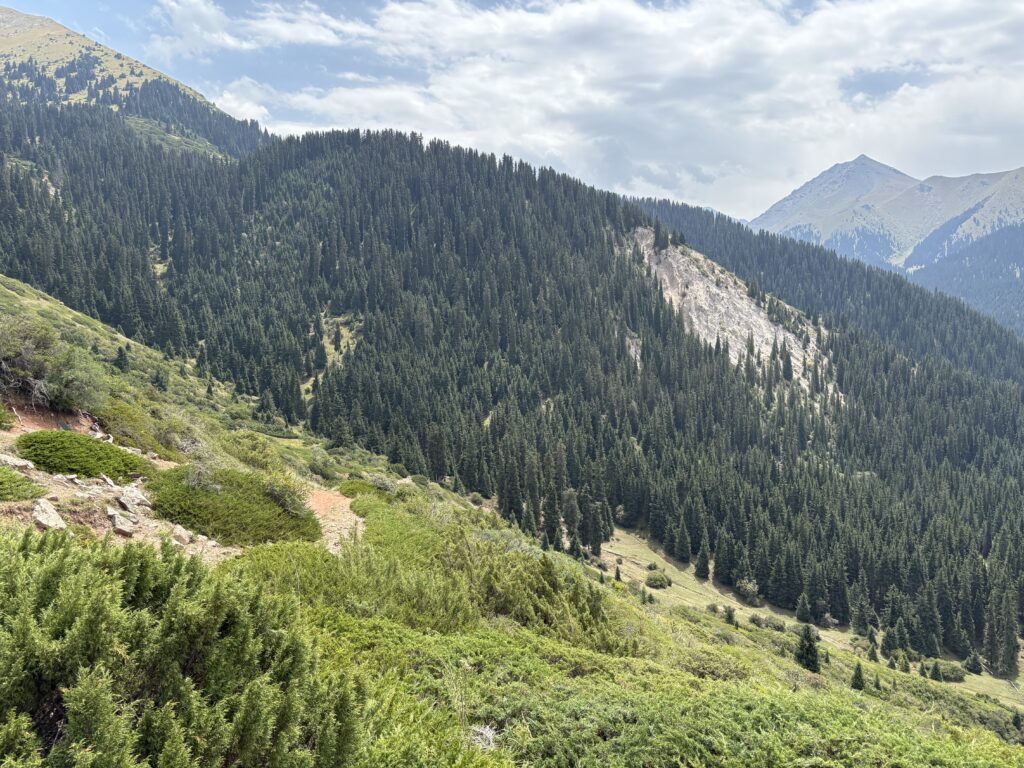
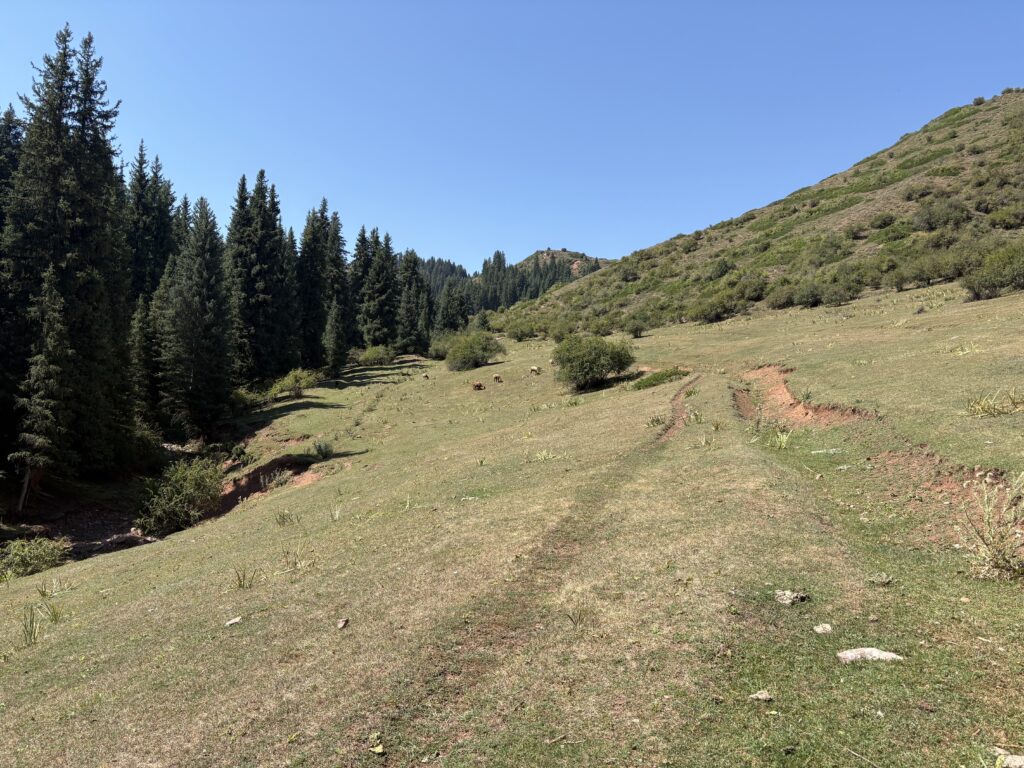
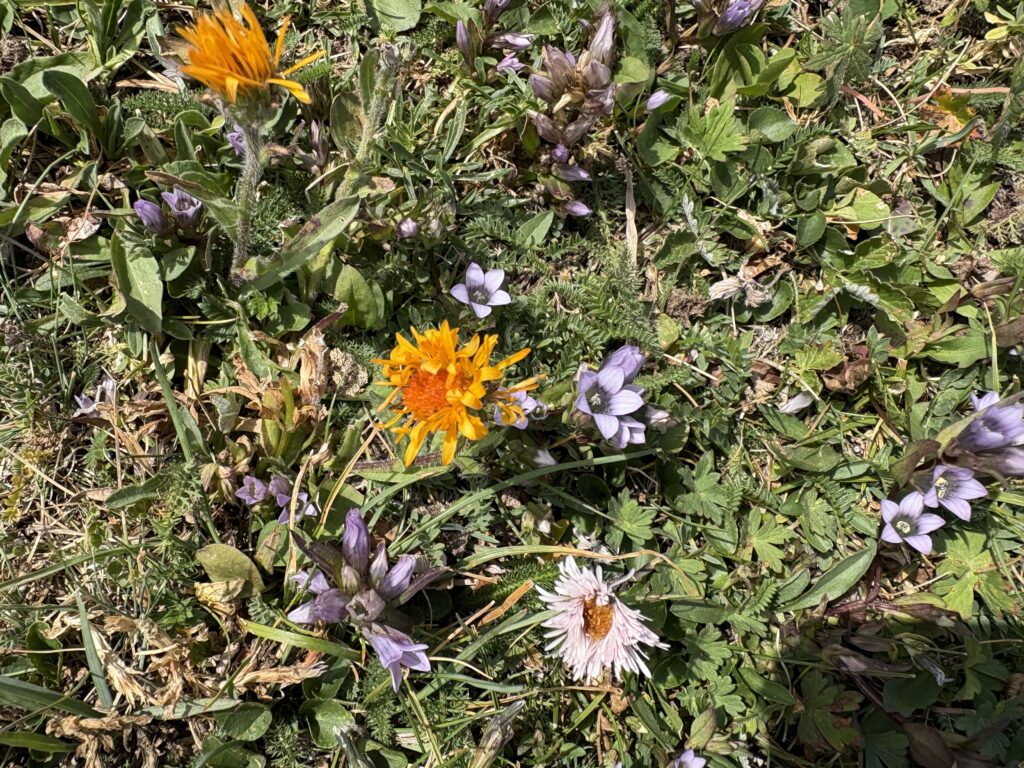
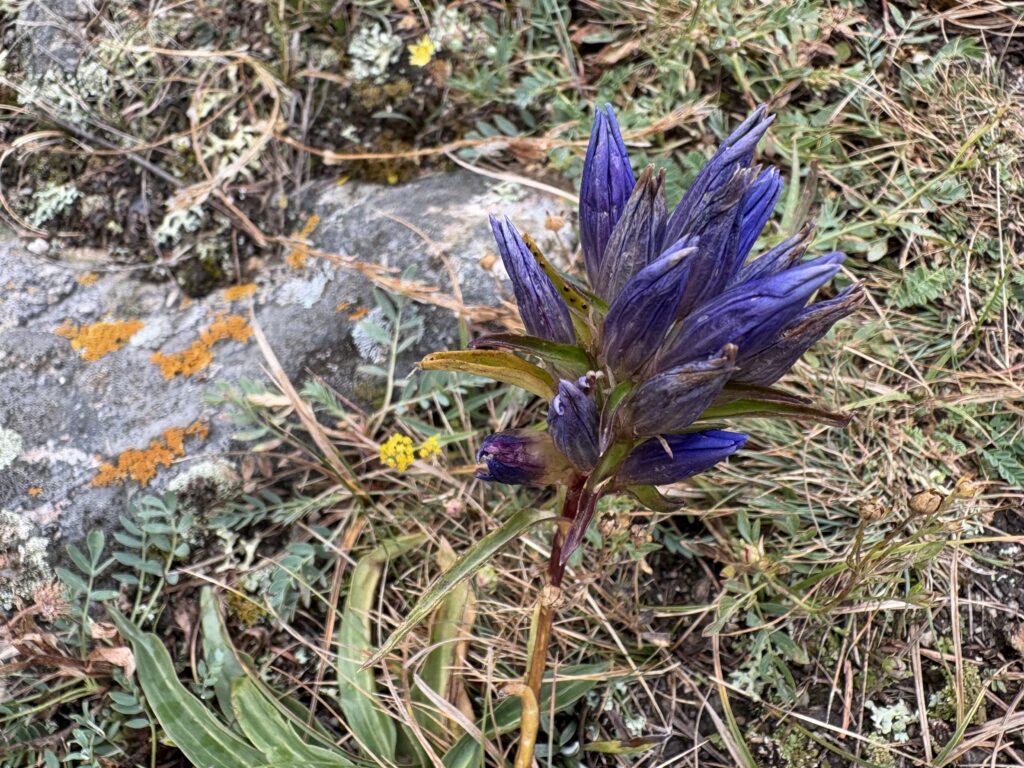
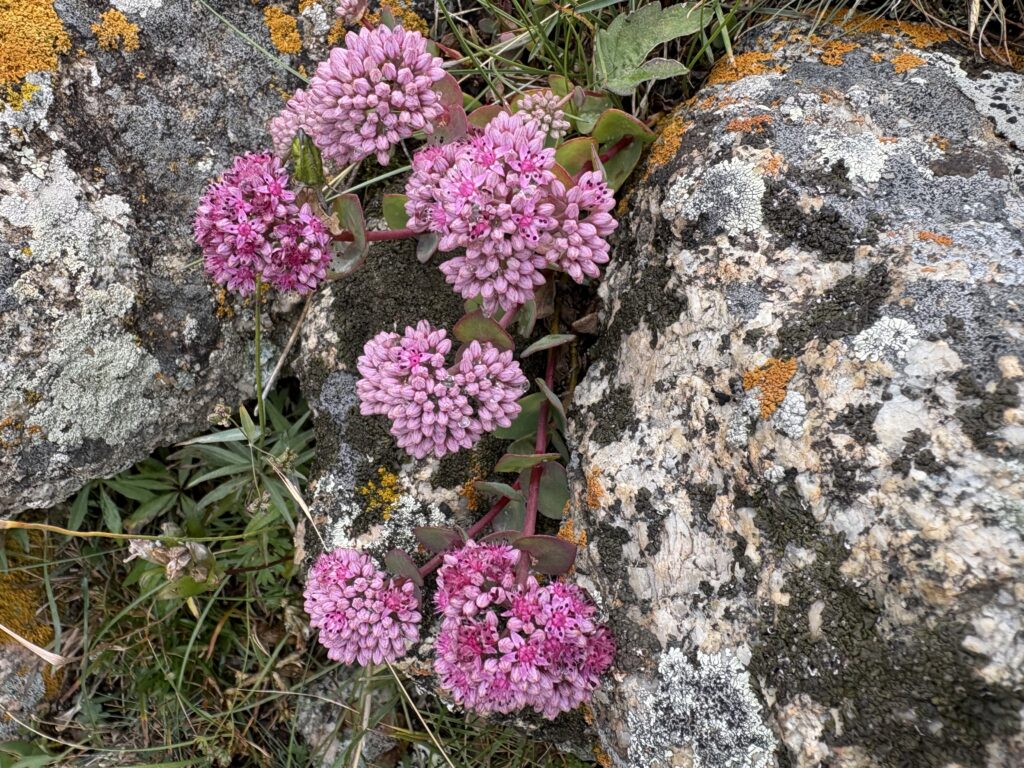
The flora of the Tien Shan mountains changes considerably with the altitude. The lower reaches are forested, with many examples of the elegant Tien Shan pine. As you get higher these cede to pastures, with edelweiss and other small flowers a common sight. Actually, between the marmots and the edelweiss, I was struck more by the similarities to European alpine landscapes than the differences.
Taking the time to appreciate the landscapes of Kyrgyzstan and the flora and fauna within them was a good reminder for me to slow down and be in the moment as we progressed along the trail. Just as you can’t know the legend behind every rock formation, you can’t recognise everything you’re seeing. Choosing a good company with local guides goes a long way to bridging the gap. Between our guides’ stories about their lives and families, their knowledge of our route and what we would encounter along it, and the curiosity of other people we met along the way, I would say we all had an excellent first foray into an incredibly rich and varied region of Kyrgyzstan.