Long-time London resident and avid museum and theatre-goer. I started this blog in 2014, and got serious about it in 2020 when I realised how much I missed arts and culture during lockdowns. I go to a lot more events than anyone would think is sensible, and love sharing my thoughts in the forms of reviews, the occasional thought piece, and travel recommendations when I leave my London HQ.
Huelin, a working-class neighbourhood of Málaga, continues today to be a place of innovation and, increasingly, home to several cultural institutions.
Introducing Huelin
On my final day in Málaga, I had a good few hours before heading to the airport in the afternoon. And I chose to spend those hours in the neighbourhood of Huelin. There were two reasons behind this. Firstly, I was very interested in the museum called Colección del Museo Ruso, or the Collection of the Russian Museum. More on this below and in my next post. And I also like doing walking tours when I’m in a new place, as a way to get out and about. For Huelin, I followed one which has since disappeared from the internet. Never mind, as it wasn’t the best walking tour PDF: for a start I got lost several times. And it is light on background about this very interesting neighbourhood. Lucky for you I have researched that myself, and am about to tell you more.
Huelin is a historically working-class neighbourhood. In fact, it was the first dedicated working-class neighbourhood in Málaga. It is named for Eduardo Huelin Reissig, the son of a merchant of British descent. After spending time in New York as a young man, he returned to Málaga and began exporting wine and nuts. Other business ventures included a hat and cap factory, and being a founding partner in the Bank of Málaga. Queen Isabella II gave him a knighthood for his industrial and commercial activity.
But the neighbourhood of Huelin relates specifically to Huelin’s foray into the sugarcane industry. For workers in his sugar mill, Huelin wanted to implement the type of paternalistic working-class live/work neighbourhood seen, for example, in Saltaire in Yorkshire. Until then, his workers had been living in overcrowded, poor conditions in El Perchel and La Trinidad. Huelin wanted to build them independent houses close to the factory. Building began in 1870.
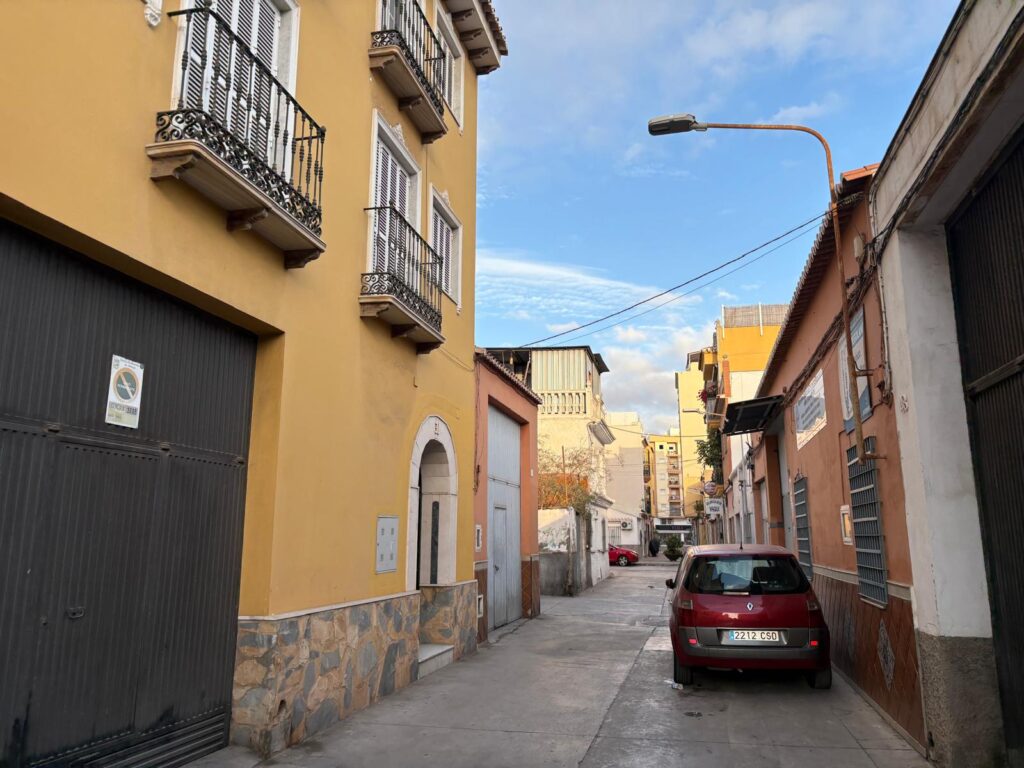
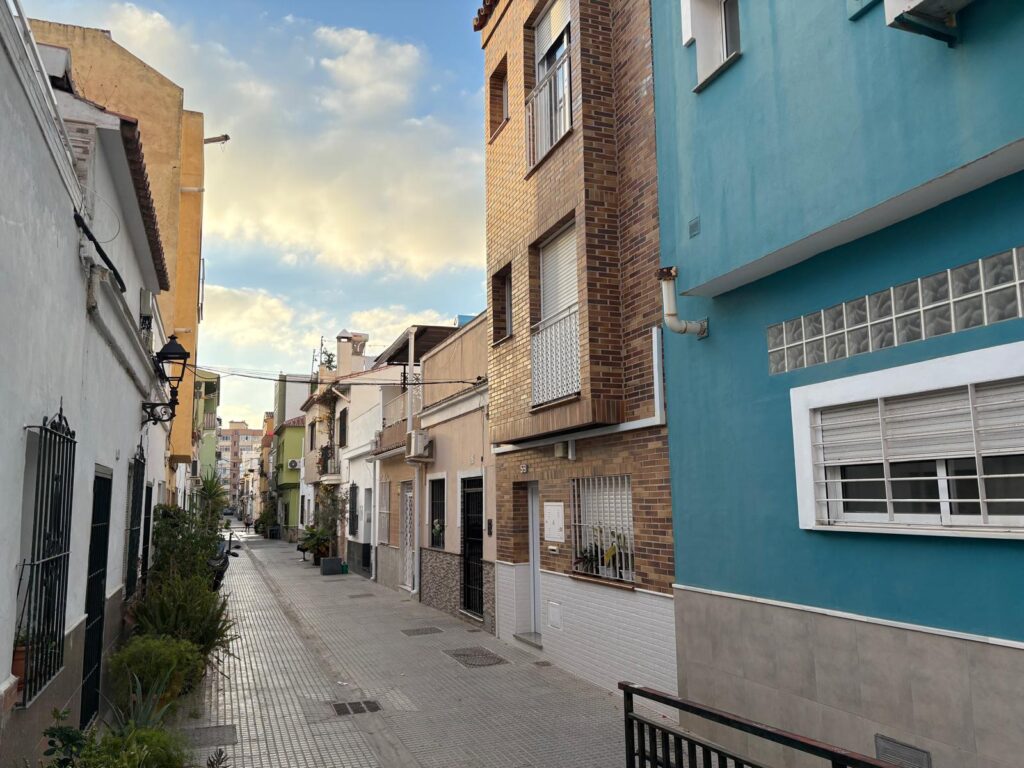
In later years, Huelin continued to reflect housing trends. Low-rise housing from the 1920s is of a typically Málagan style, with streets forming an L or U shape thanks to back-to-back gardens. The modest houses represent the conservative values of the dictatorship period.
Enough talk, though. Let’s get stuck in, and explore! I’ve extended the walk a little, starting in the Old Town and showing you some of the sights I saw along the way.
On Our Way to Huelin From Málaga’s Old Town
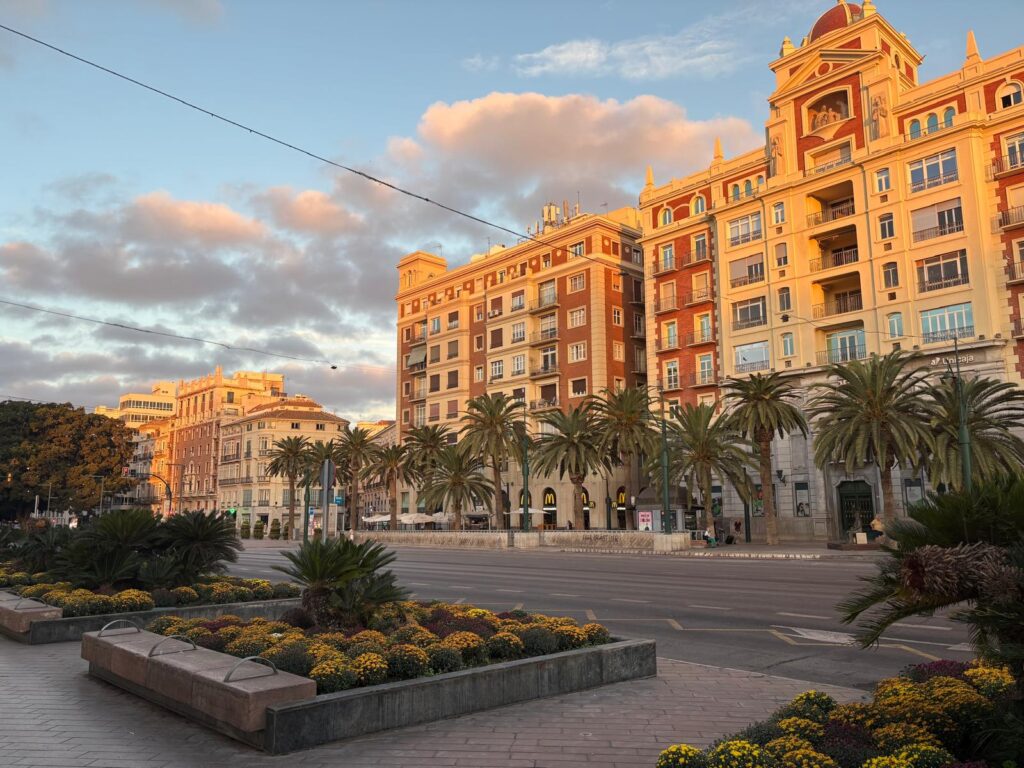
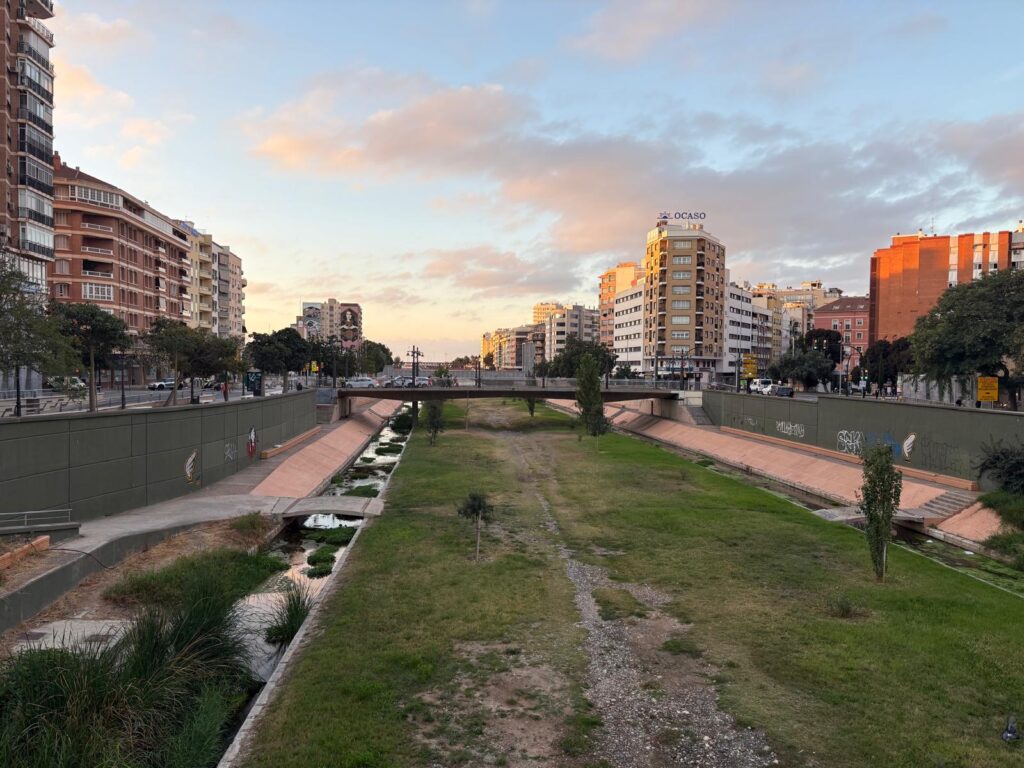
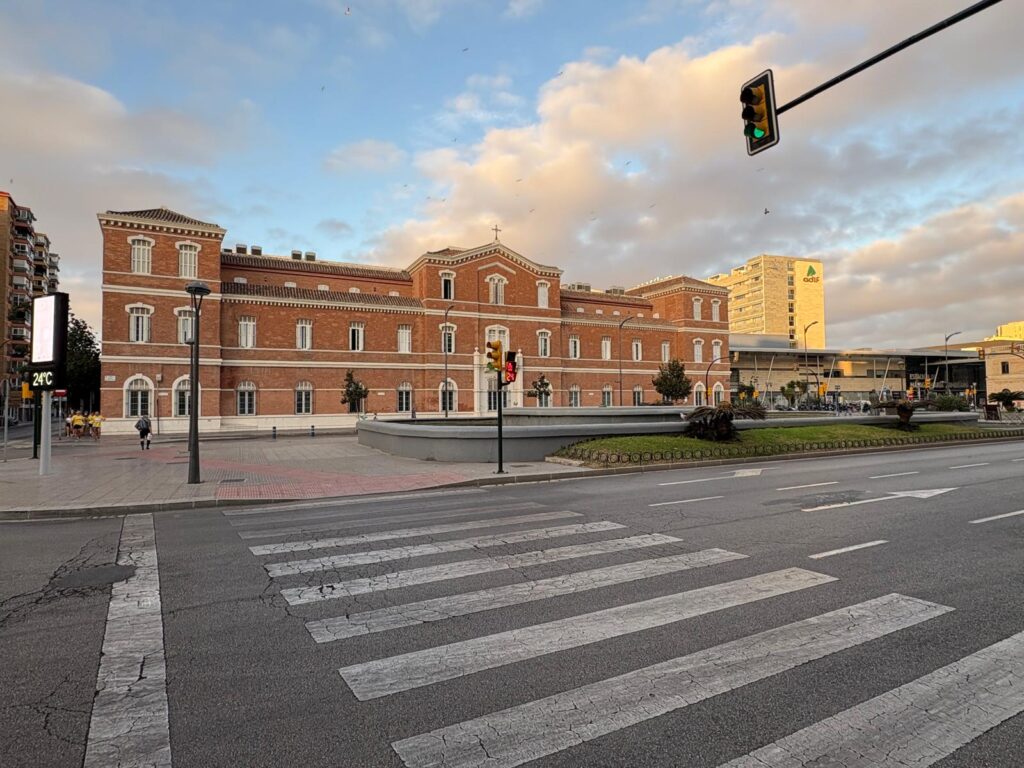
And as promised, here we are in the Old Town. The walk from my hotel took me past Málaga’s cathedral. Officially the Santa Iglesia Catedral Basílica de la Encarnación, most people know it as La Manquita, or The One-Armed Lady. This is because funds raised to finish the cathedral’s second tour were diverted, either to roadworks or to help the American colonies escape the British yoke. The view above shows the missing ‘arm’, or tower. You need a ticket to enter, which in my opinion is worthwhile as the interior is very impressive.Continuing on our merry way, we come to some striking buildings along the Plaza de la Marina. The beautiful morning light makes even McDonalds look fancy!And then we cross the Guadalmedina. The name comes from Arabic, and means ‘river of the city’. The river, like others in the area, has high seasonal variations. As such, it’s dry most of the year.Things start to look a bit more modern on the other side of the river. The Guadalmedina has always been a dividing point, with the city historically contained on the east bank.This side isn’t without its historic buildings, though. This is the Asilo de las Hermanitas de los Pobres (Asylum of the Little Sisters of the Poor). An 1868 building by Diega Clavero Zafra, it is still active as a care home for elderly residents.
We Arrive in Huelin
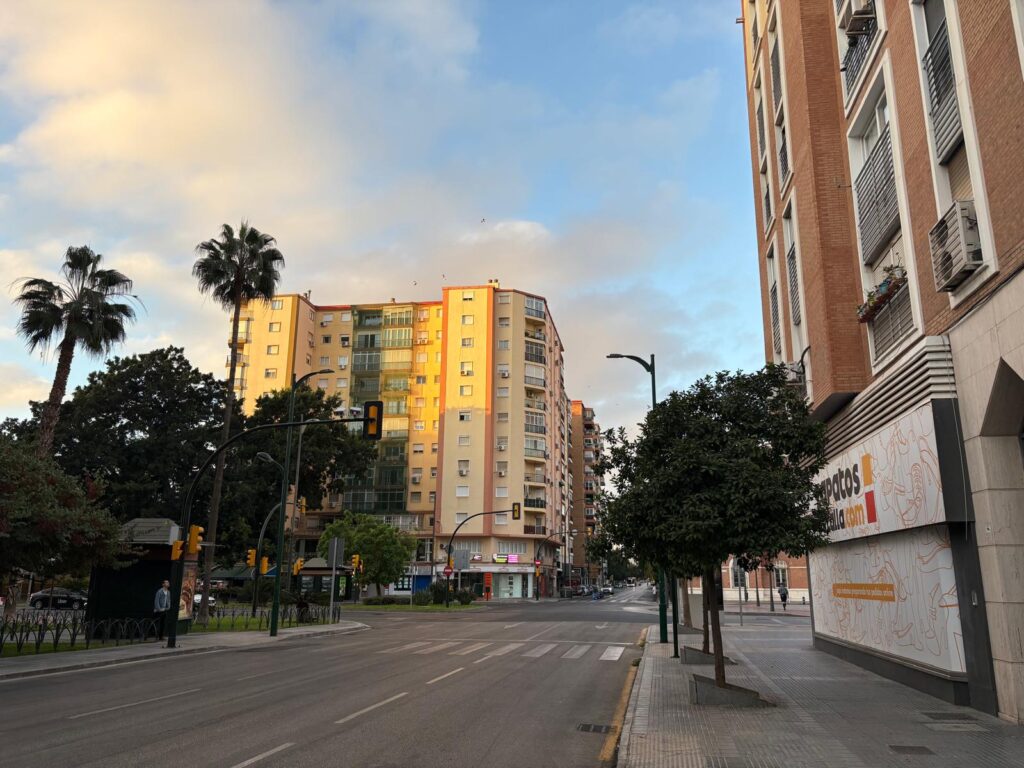
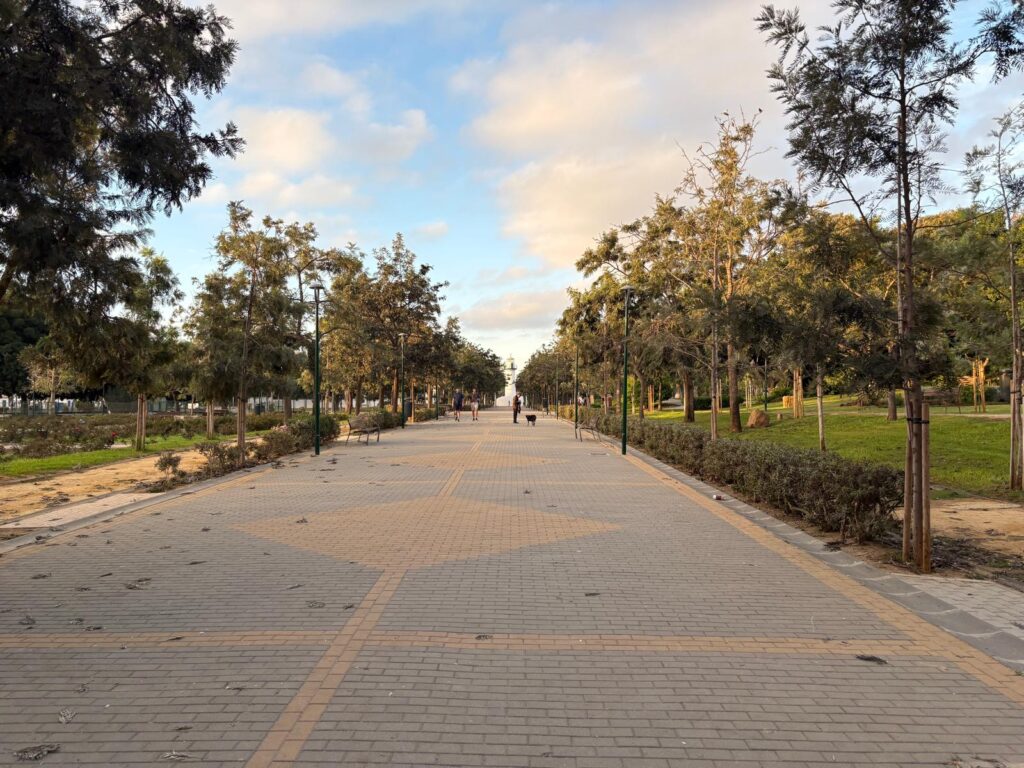
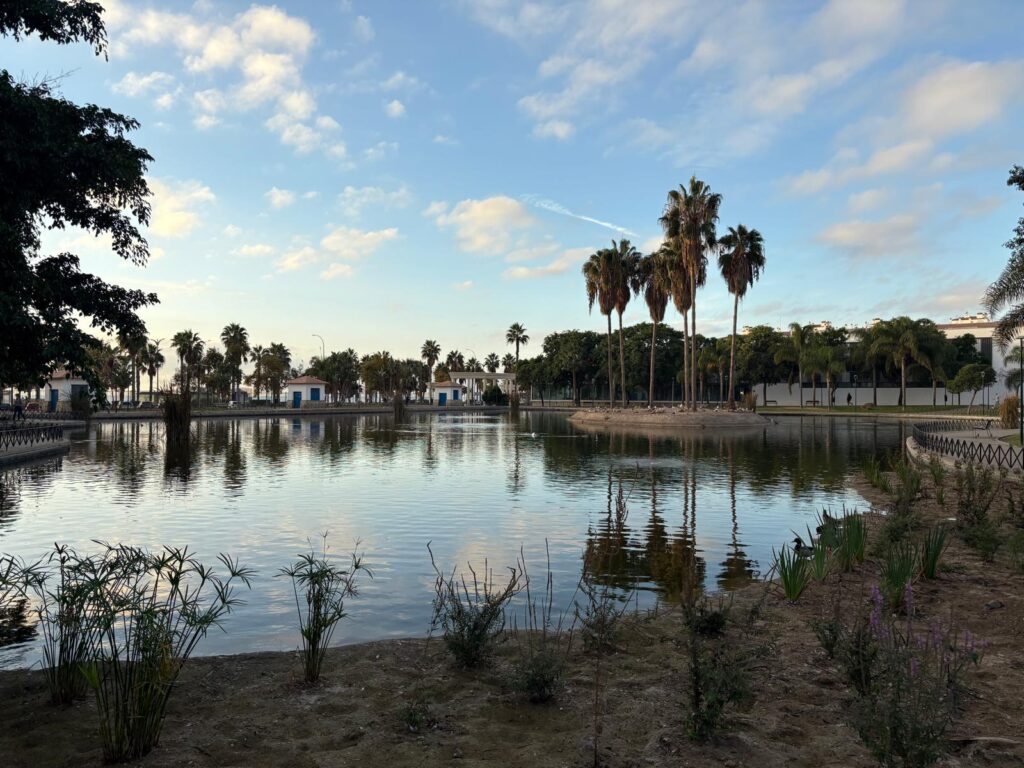
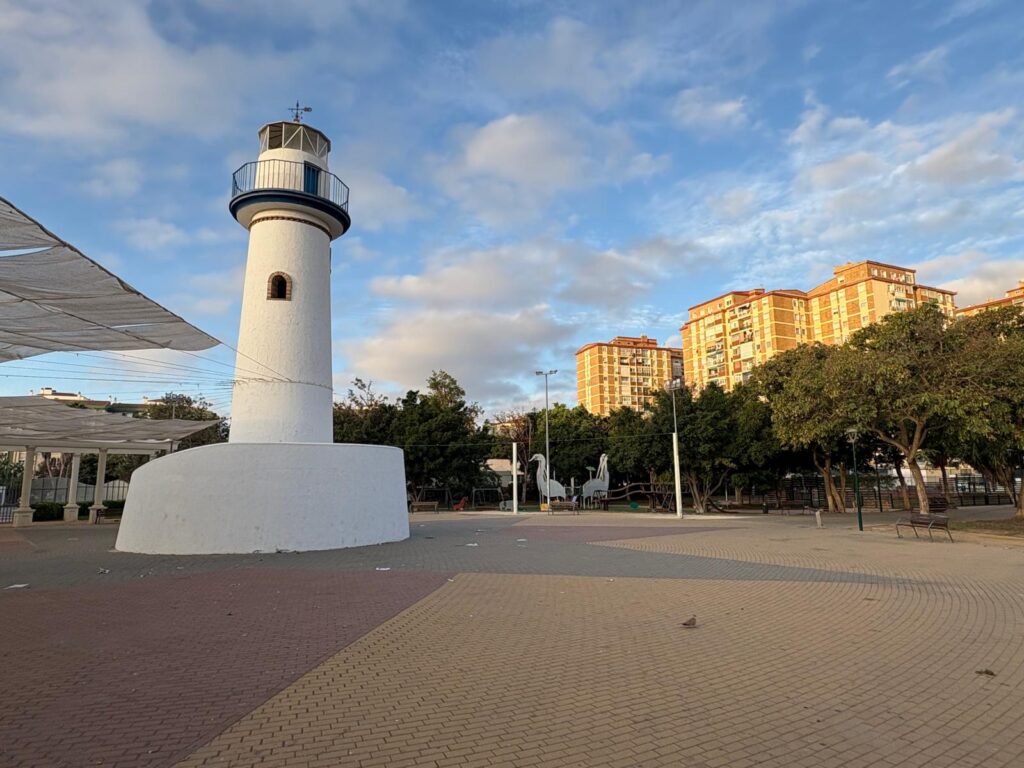
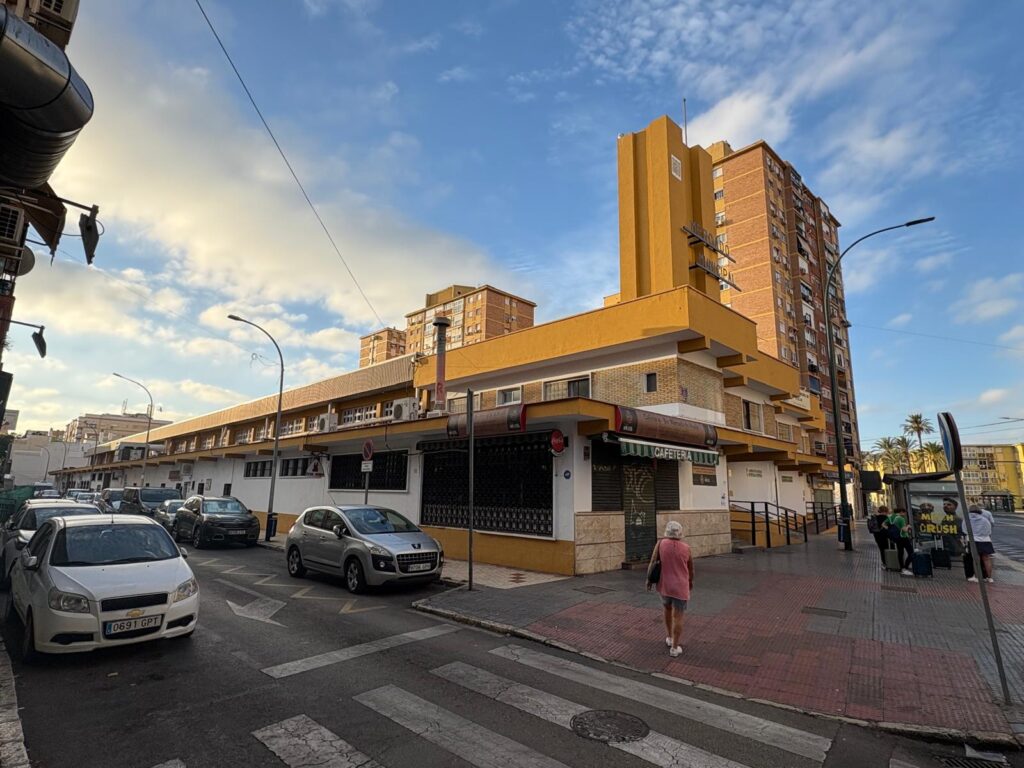
We’ve arrived now in Huelin. This spot is where the walking tour I followed begins, although it doesn’t give information about the park. Again, luckily for you, I’ve filled the gap with my own research. The Parque de Huelin, or Huelin Park, lives up to the industrial reputation of the area, being built on (formerly?) contaminated ground. There were several factories here in the 19th century. Turning this space into a park was part of a 1990s effort by the Mayor of Málaga to regenerate the area and create green spaces amongst dense residential areas.There’s also a lighthouse in the park: we’re not that far from the beach but not that close, either, so the placement feels odd. Did it move here from somewhere else? Or did the shoreline move? I’m not sure, my research has failed me on this occasion. As points of interest go, though, it’s rather nice.Here is some of that dense residential Huelin that I was just talking about. Still fairly low-rise, though. I’m on a detour to a spot I saw on Google Maps but not on the walking tour.And this is what I was looking for. It’s the Mercado Municipal (Municipal Market) de Huelin. It’s apparently a great place for fresh produce or a cheap breakfast. I didn’t venture inside, but did admire the exterior, dating to 1974.
Trying to Make Sense of this Walking Tour
On we go now to try to find what the walking tour map calls the ‘Autonomous districts’. But on my print-out this meant following a winding path around several streets, without any street markings or names. For someone with a limited sense of direction, a definite challenge!OK, so what the PDF guide described was as follows. “Next to the old tobacco factory are several architectural examples from the autonomous period of the dictatorship. Built between 1923 and 1927 in one of the few styles unique to Málaga, are the La Serna group of towers (1946-1950), Barriada Girón (1955), both by unknown architects, and the Church of San Patricio (1950), by Fernando Guerrero Strachan and Enrique Atencia. The buildings are architecturally protected and represent the typical L- or U-shaped structure of residential spaces from those times, when religion occupied a central location.”
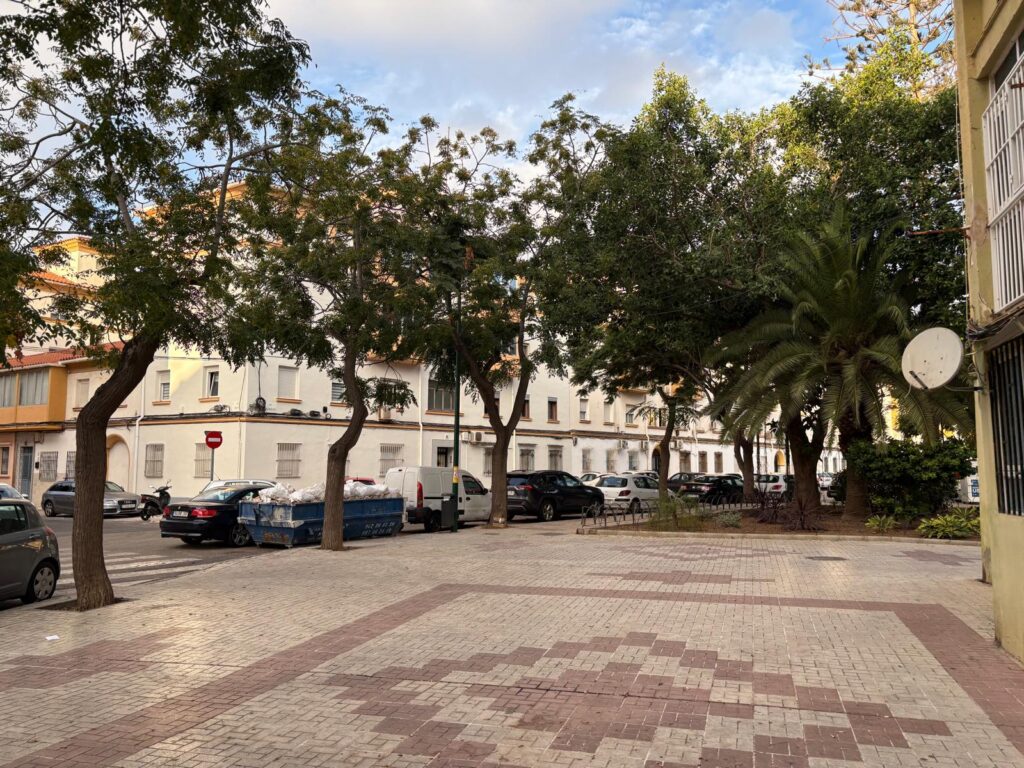
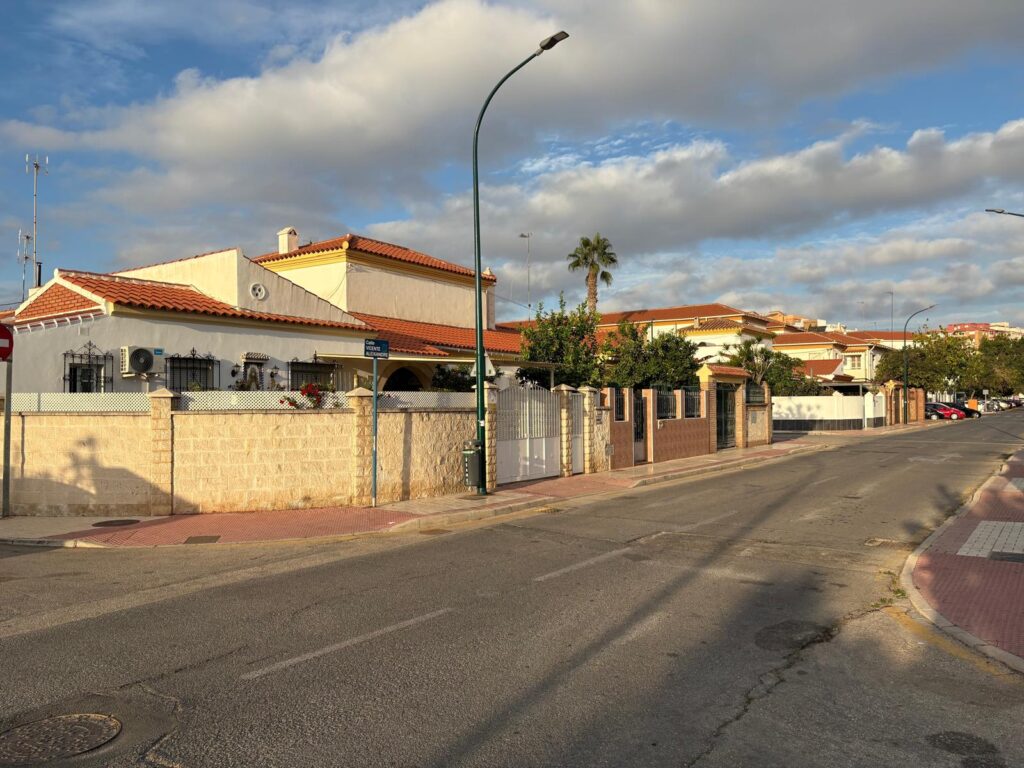
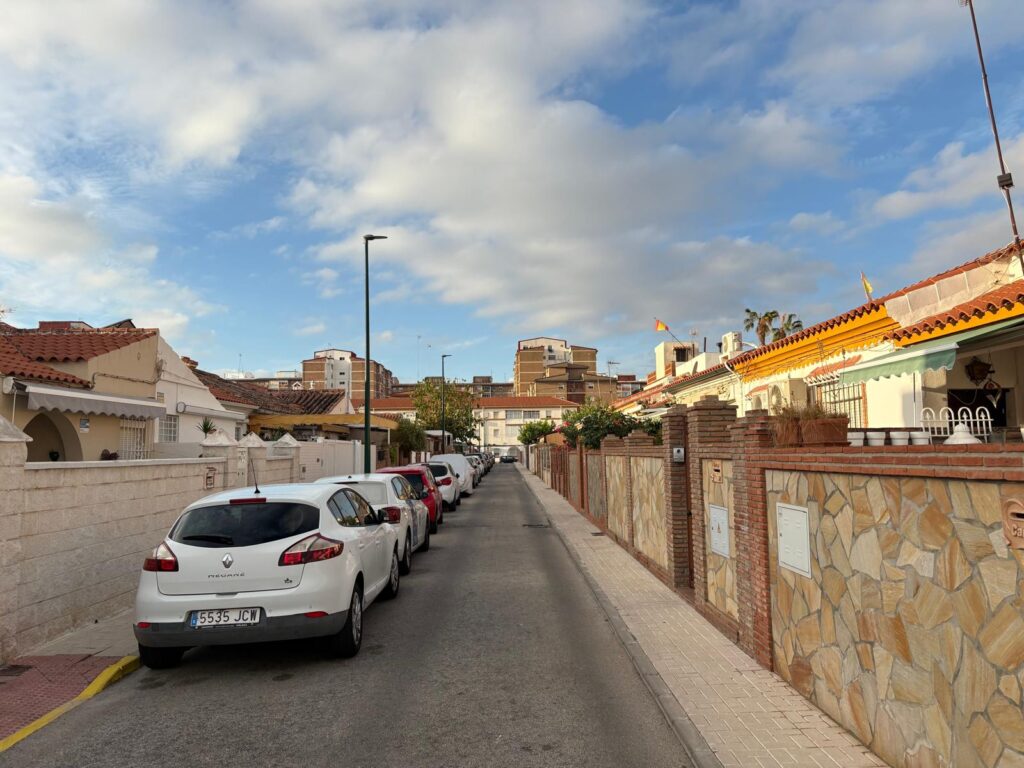
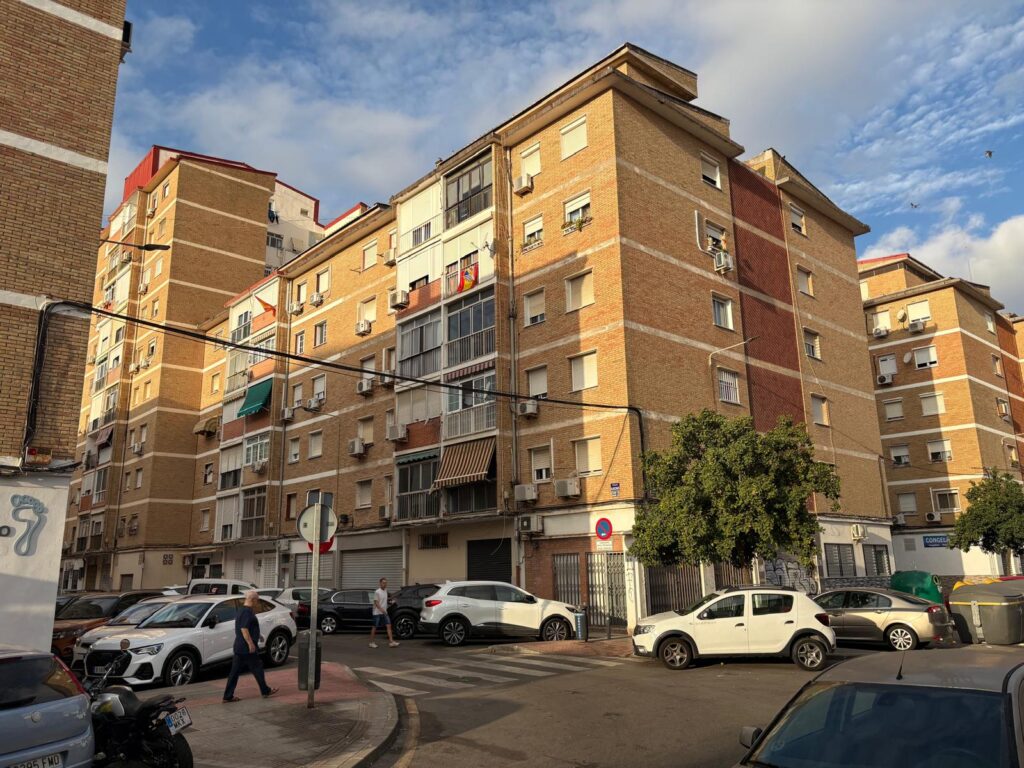
Annoyingly, the only one of these I definitely saw was the church, but I didn’t take a picture. You can see it here. As for the others, I am still unclear on whether I saw them or not. These residential streets arguably have a U shape on a map. Are these them?Or are these bigger blocks something to do with it? Unclear. I gave up at this point and went off to find a sight I knew I would definitely be able to locate.
We Try to Find Some Other Huelin Landmarks with Mixed Success
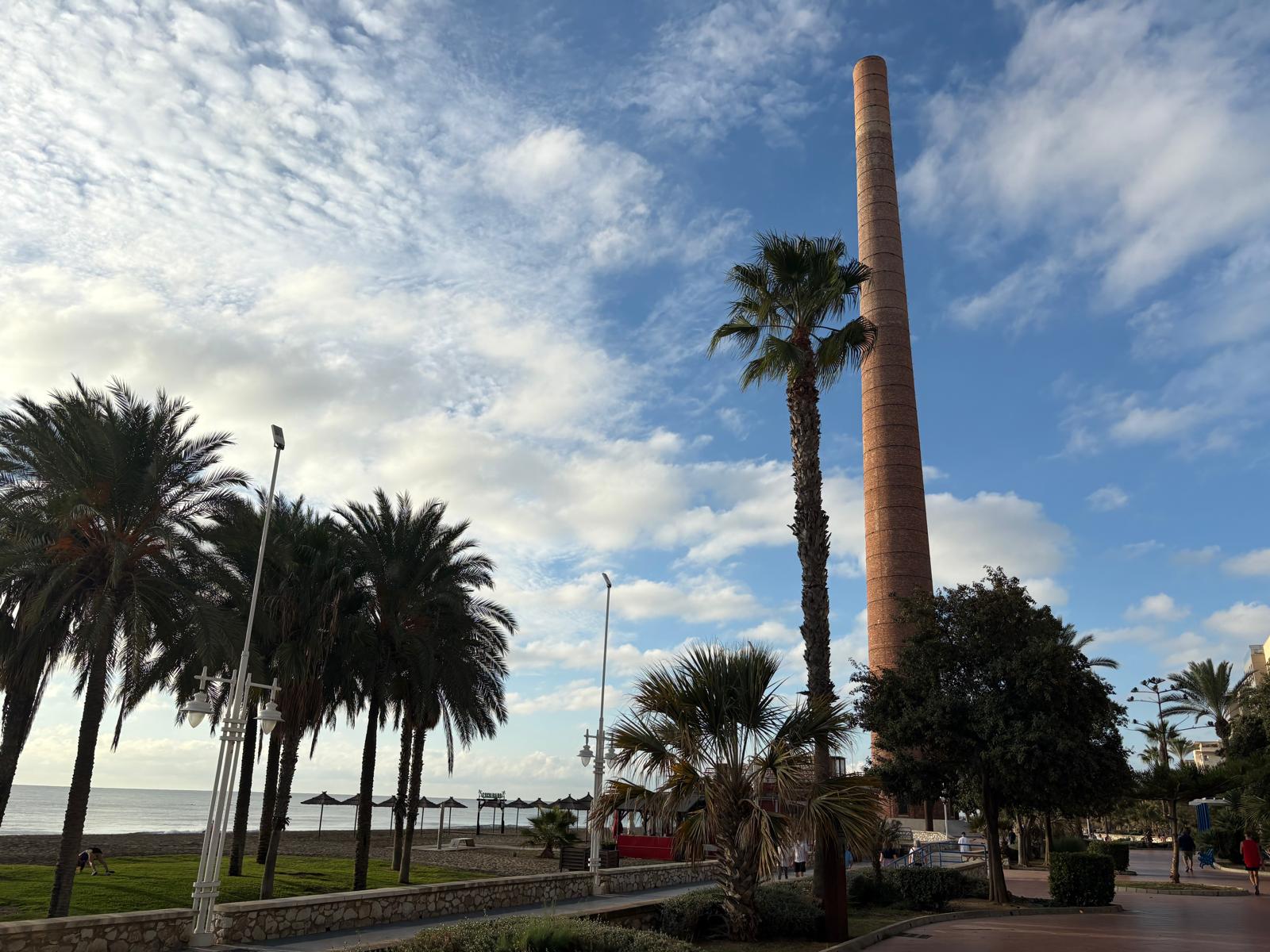
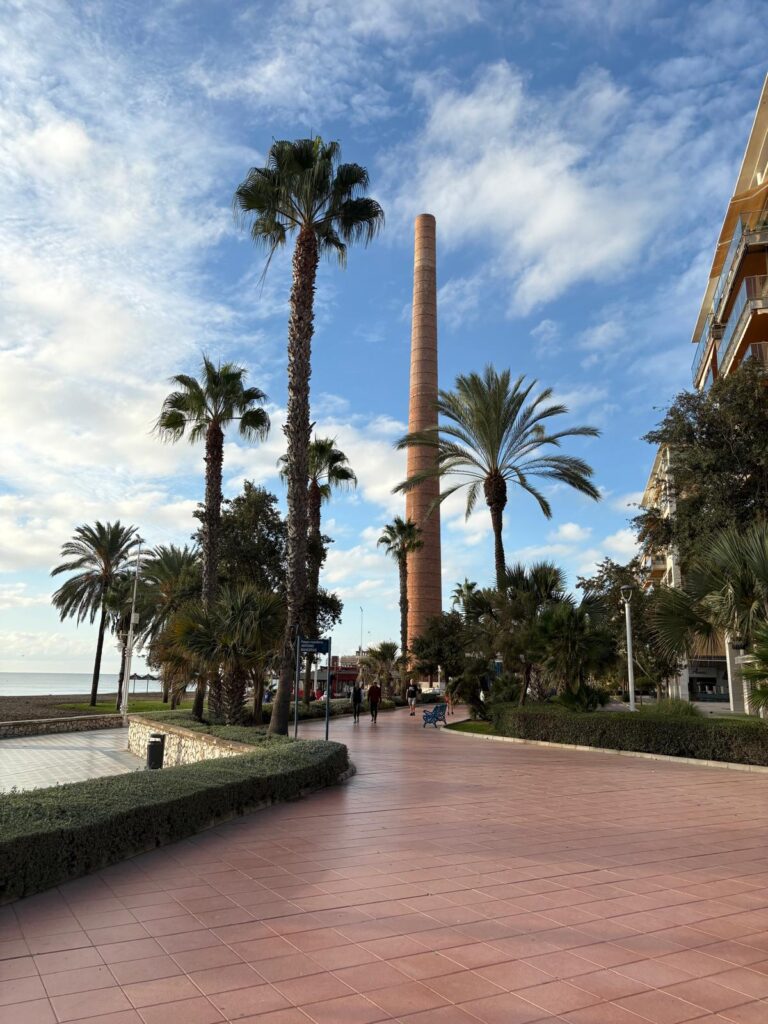
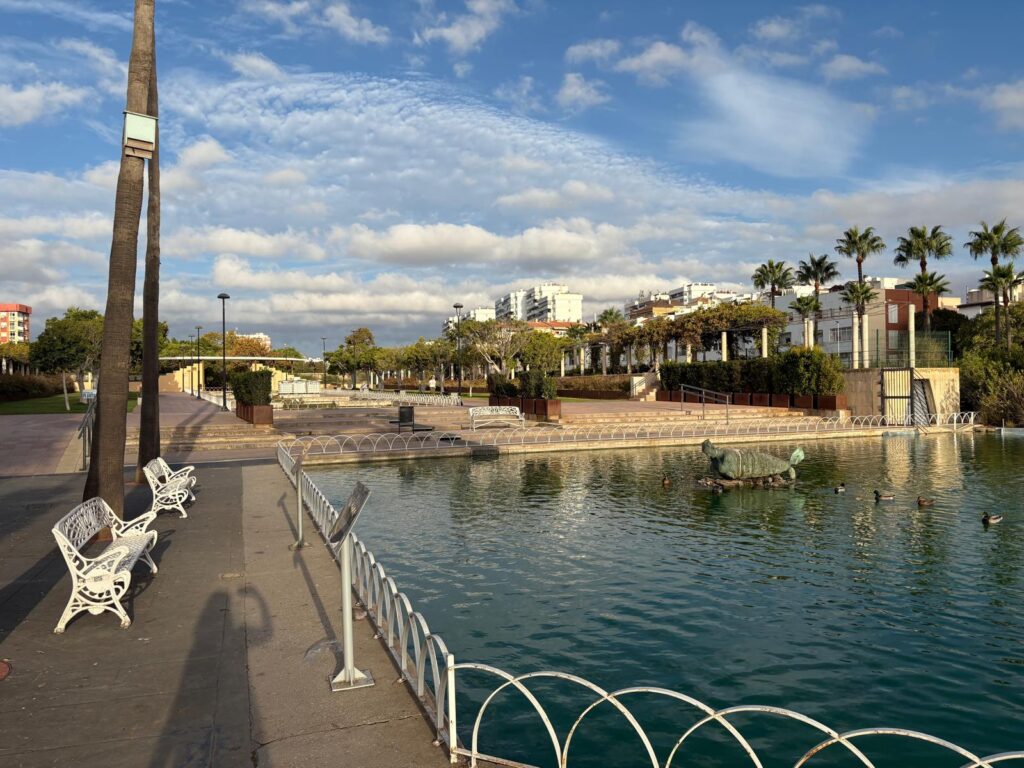
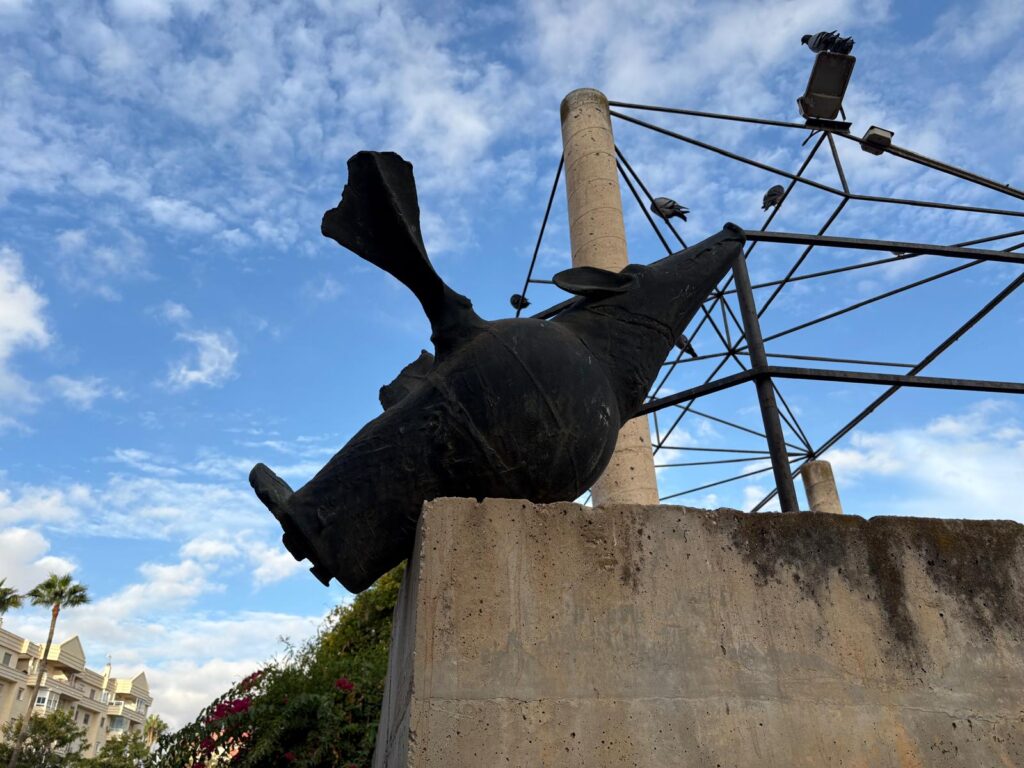
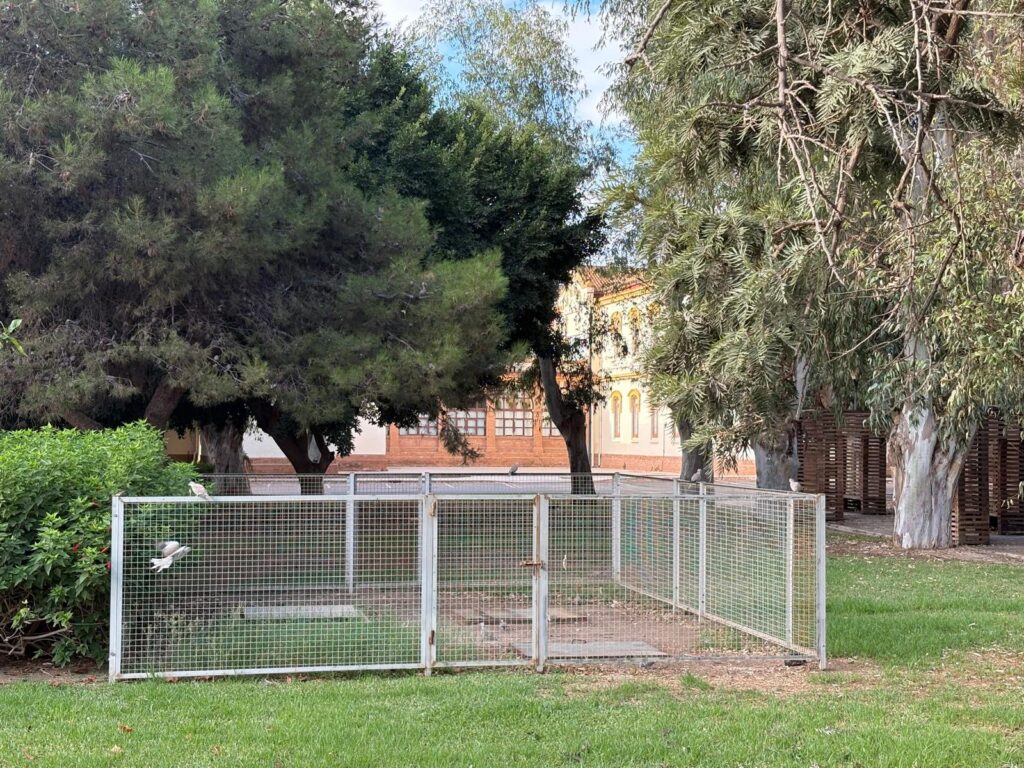
See what I mean? No mistaking this! We’re over by the beach now, and this is the Los Guindos Smokestack, formerly of the Los Guindos lead smelter. Part of Huelin’s industrial heritage, and once a source of employment for local residents. The smokestack is apparently known locally as Mónica, due to graffiti that remained on the chimney from 1993 until restoration in 2007. It’s 106 metres high – designed to move toxic fumes up above the lungs of local residents and into the atmosphere.This one was also easy to find: the Parque del Oeste, or Western Park. Opened in 1992, it’s also part of that regeneration push at the time. It has fountains and lakes, a sports area, and apparently a mini zoo. I didn’t see the zoo: being a residential rather than central city area, the sights were actually fairly spread out, and I was flagging by this point.I did, however, see some of the park’s sculptures, by German artist Stefan von Reiswitz.And then we have one of the worst photos I’ve ever taken for a walking tour post! The subject is not this functional area in the foreground, but the building in the background. What I was looking for was La Térmica Social Innovation Centre. I think I followed the map too literally, though, as the side I came up to didn’t look like a public entrance. Formerly a hospital (for victims of industrial accidents) and orphanage, it opened as a cultural centre in 2013.
La Tabacalera and a Beachfront Walk
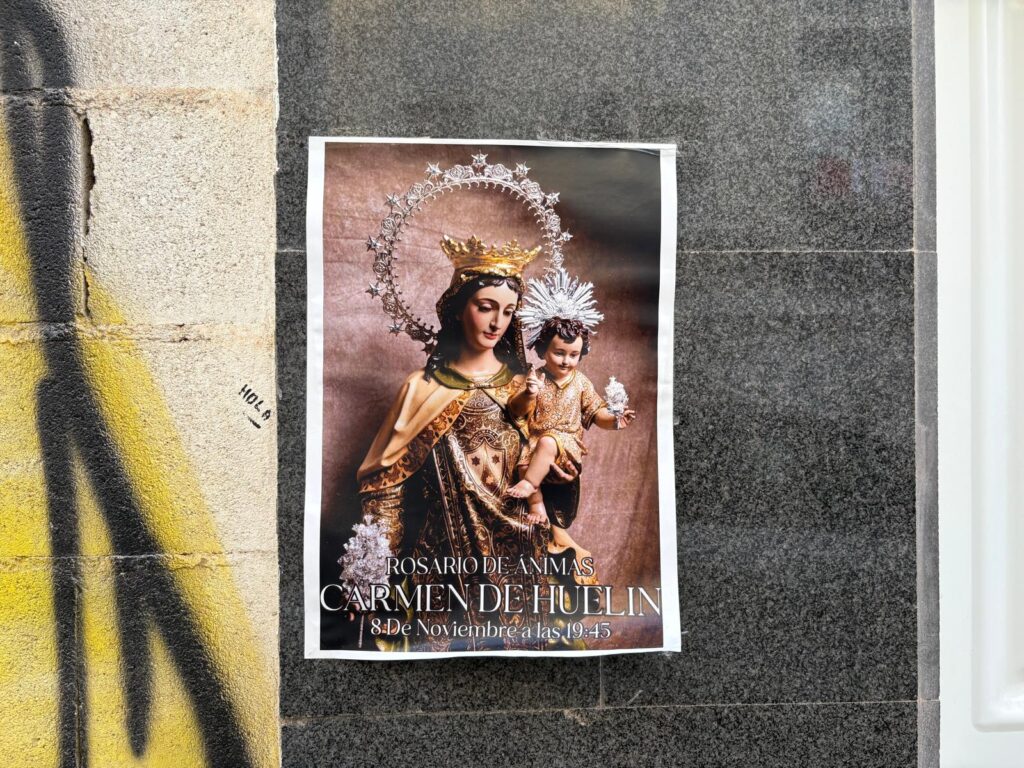
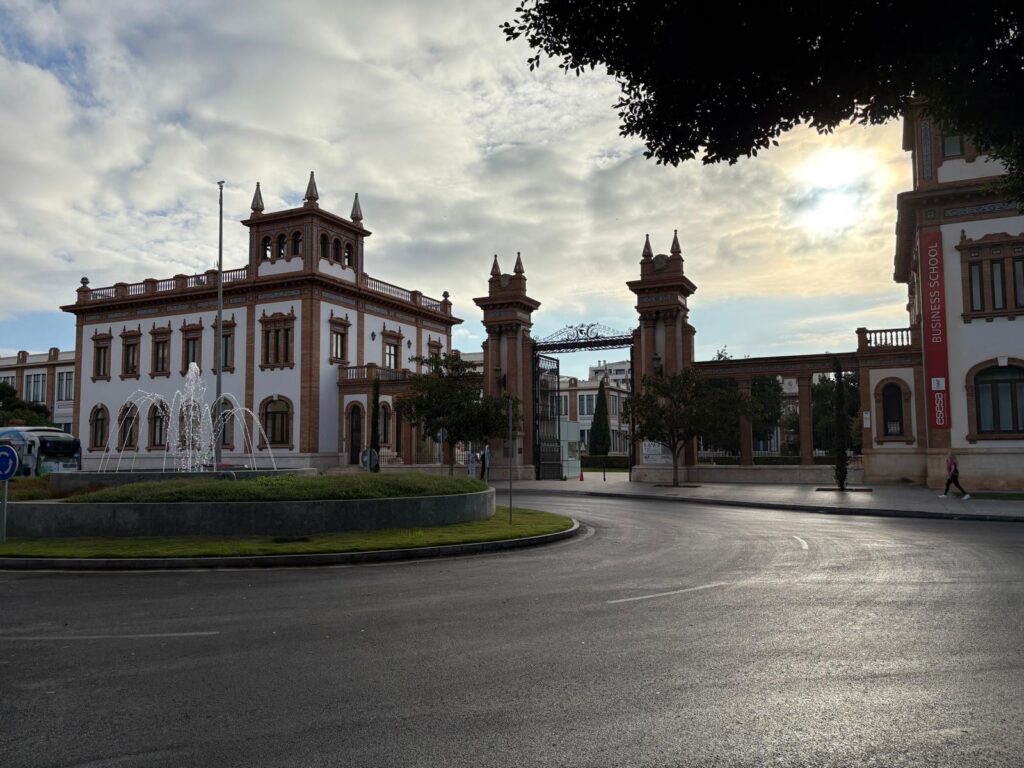
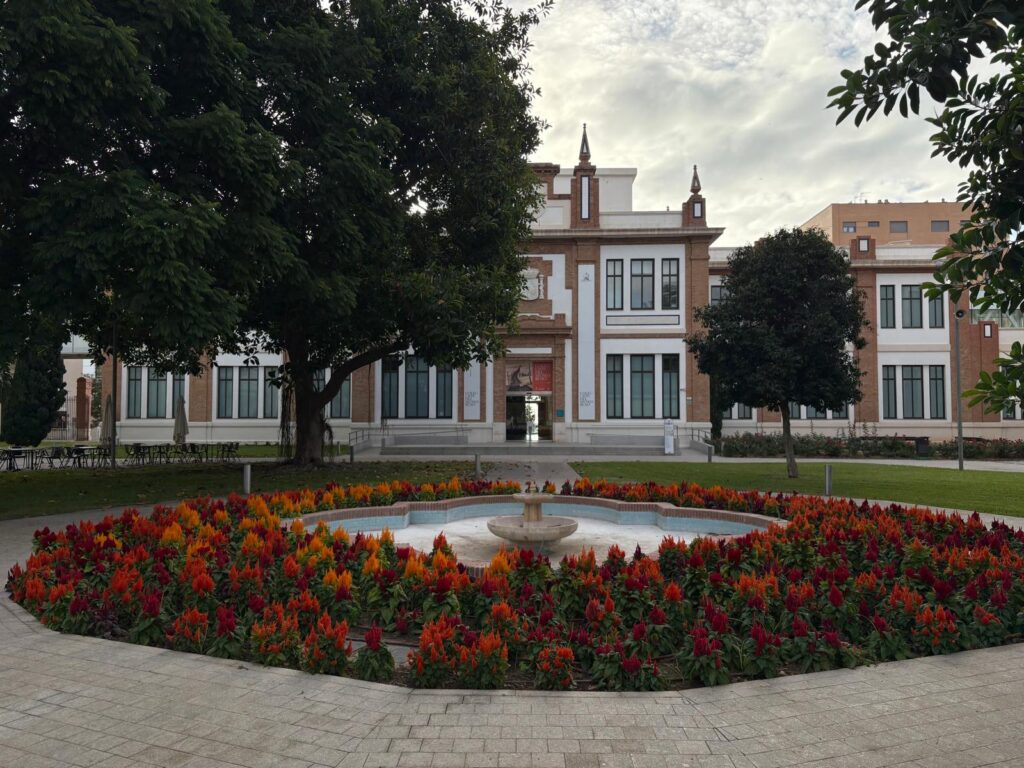
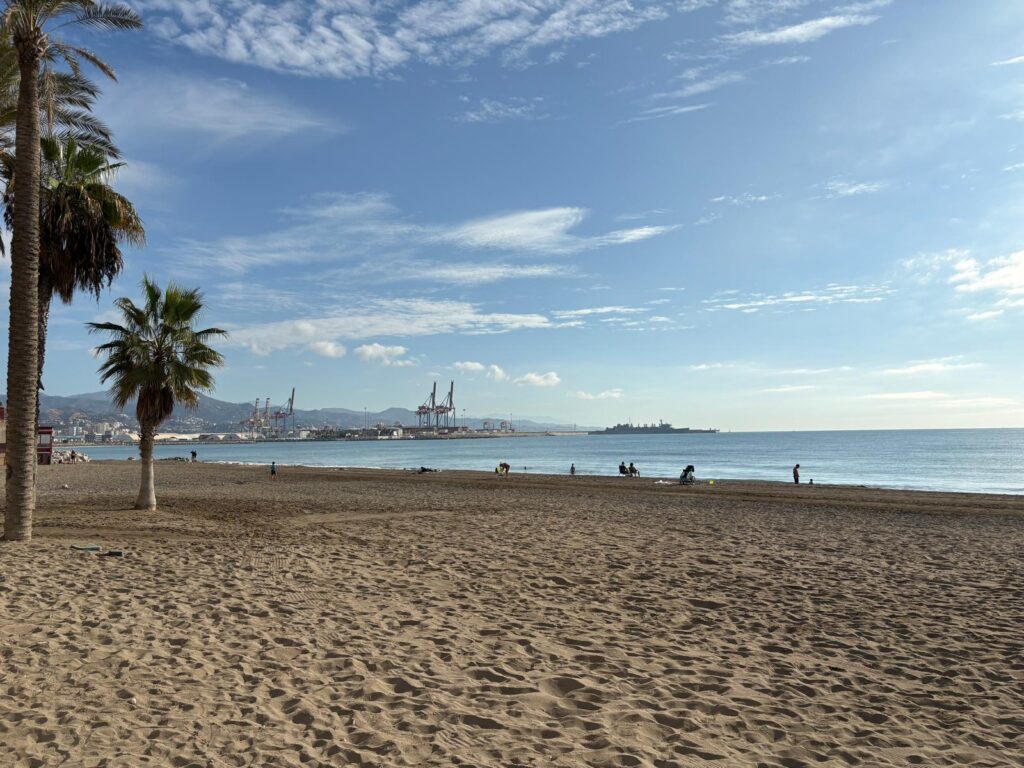
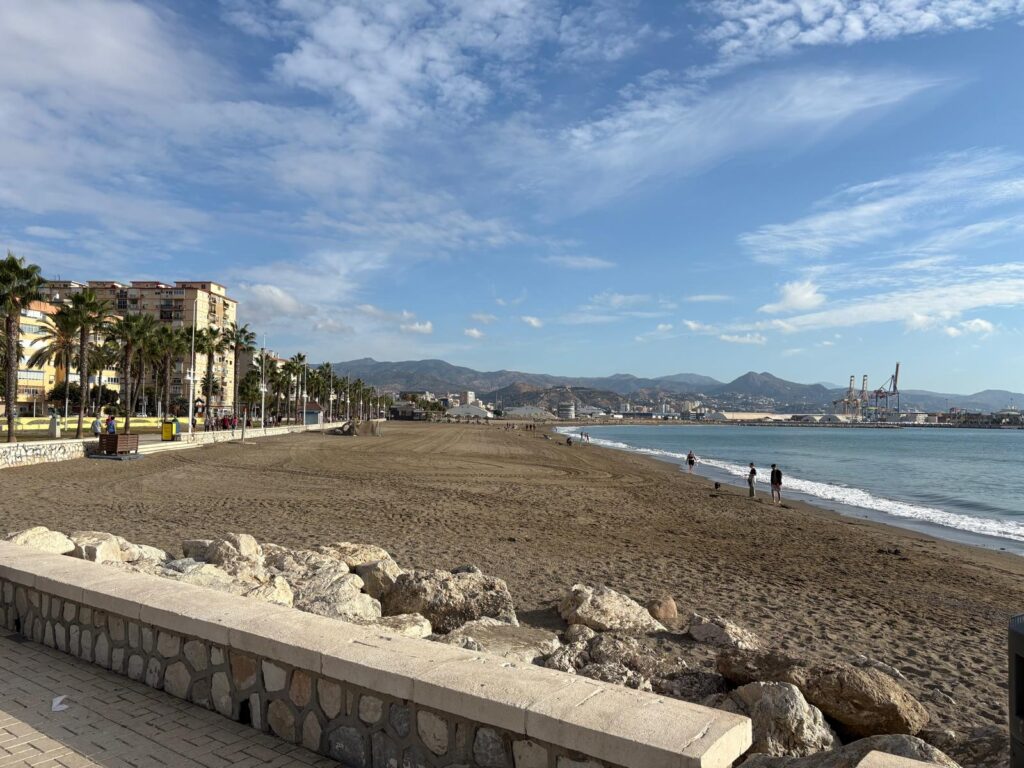
And now we backtrack a little to what, for me, was the main event. La Tabacalera. In case you didn’t glean it from the name, this is a former tobacco factory complex. There was increased demand for tobacco after WWI, and this was one of several factories the Spanish state authorised to meet it. Eleven pavillions were built on this campus between 1923 and 1927, although it seems the factory didn’t begin to operate until 1932. It has a strong local architectural style. The factory was in use until 2002, and became municipal property in 2004.Today there are a number of different institutions here today. The Public Tax Management Agency, for one, in a former tobacco drying shed. Other municipal agencies include the Municipal Computer Centre, and Social Welfare Office. And there’s a National Digital Content Hub and High Technology Incubator, as well. Then we have cultural institutions. The Museo del Automóvil y la Moda de Málaga (The Automobile and Fashion Museum of Málaga), for one. A really intriguing combination, but not what drew me here.This is the one. This building houses the Colección del Museo Ruso (Collection of the Russian Museum). It’s an outpost of the Russian State Museum Collection St. Petersburg, which opened in 2017. Not super great timing given the subsequent situation of war between Russia and Ukraine, sanctions, shifting public opinion, and all that. I find outpost museums interesting anyway, and really wanted to see how this institution had handled those challenges. That will be the subject of my next post.Having passed through the museum we come out the other side, and bid farewell to La Tabacalera.And look at that, we’re at the beach. Having explored the heritage of Huelin and more, a stroll along here sounds a perfect way to end my time in Málaga. It’s a little quieter here than it is closer to the Old Town, and I join people exercising, walking dogs, and spending time together in the sunshine.Sometimes it takes a return visit to a place to feel like you’re getting under its skin. For me it was like that with Málaga. My trip a few years back left a lasting impression. But it’s only the second time around that I feel like I’m getting off the beaten track. Huelin is a fascinating neighbourhood, and hopefully one that will attract more tourists as the cultural offering grows.Just one final point. Remember above when I quoted the walking tour PDF as saying that religion used to be very important in this area? I’m not sure that’s very different today. The more things change, the more they stay the same.
Trending
Travelers' Map is loading... If you see this after your page is loaded completely, leafletJS files are missing.