
Marie Antoinette Style – V&A, London
The V&A’s latest blockbuster exhibition Marie Antoinette Style focuses on the queen’s lasting impact on fashion, design and art. Are there no more pressing lessons to learn from this stylish queen?
Marie Antoinette Style
It was a tale of two very different exhibitions when I was last at the V&A. Design and Disability took steps in the right direction in terms of centering and celebrating the impact of disabled people in designing their world. It’s not a perfect exhibition but is a step in the right direction. Marie Antoinette, on the other hand, is very much in the camp of the blockbuster exhibitions. The V&A, with its focus on applied art and design, has found a nice vein of these in the form of fashion-focused, highly produced exhibitions. Their recent Chanel one comes to mind as an example.
But this one is about Marie Antoinette. So let’s start, as always here on the Salterton Arts Review, at the beginning, and find out more about her.
Maria Antonia Josepha Johanna was born an Archduchess of Austria in 1755. Her mother was ruler of the Habsburg Monarchy, and her father the Holy Roman Emperor. She was not a gifted student but was a good musician as a child. The French King Louis XV had his eye on her as a prospective match for his grandson: in what sounds like a rom-com-worthy makeover, her teeth were straightened, hair and wardrobe fixed, and she was taught the gliding walk of the French court. Her marriage by proxy to Louis Auguste in 1770 sealed an important diplomatic alliance.
Now Dauphine of France, Marie Antoinette (for she had adopted the French version of her name) arrived in the country a few months later. The reaction was mixed, and she didn’t have a particularly easy time at court. In 1774 her husband became King Louis XVI on his grandfather’s death, and Marie Antoinette queen consort. Rumours (not all unfounded) of profligacy and decadence abounded. The French court at this time was the height of fashion and luxury, while France was in financial crisis. Over the next few years there were scandals and blunders, although it’s easy for us to look back with the benefit of hindsight and think we could do better. Anyway, we all know where things ended up: in Revolution, an attempted Flight to Varennes, imprisonment, trial, and execution. Marie Antoinette died on the 16th of October 1793, at 37 years of age.

Marie Antoinette’s Stylish Legacy
That was an incredibly brief overview of a short but eventful life. Today’s exhibition isn’t really biographical, so I wanted to set the scene before we get into the V&A’s chosen topic. Which is Marie Antoinette’s legacy. The V&A website uses phrases like “the most fashionable queen in history”, and talks about her “timeless appeal” driven by her “style, youth and notoriety”. The idea is to explore how Marie Antoinette and her court continue to be an important cultural touchstone in different artistic forms like fashion, film, and art.
Perhaps I’m overthinking it, but it seemed a curious choice to me. At this moment in history, if anything Marie Antoinette’s function should be as a cautionary tale. That was certainly the case when I saw The Glorious French Revolution (or: why sometimes it takes a guillotine to get anything done) at the New Diorama Theatre last year. Disconnection between rulers and ruled, the power of public image and of calumny: these are very relevant topics at the current moment. Sometimes, if you don’t get on top of the rumours you’re plastering the walls with gold and jewels, it costs you your head.
There is an attempt within the exhibition to contextualise Marie Antoinette as a complex figure trying to manoeuvre her way through even more complex politics. And there is a sombre section within the exhibition which covers Marie Antoinette’s imprisonment and death. But to go with a celebration of how this Rococo queen continues to inspire beautiful, luxurious designs, still feels ever so slightly like an exhibition within an echo chamber. Which is funny, because I said something very similar for different reasons about Design and Disability. It’s not that the deeper story is overlooked completely. I just found favoured form over substance, much like the doomed lady’s public reputation.
Beautiful Objects, Beautifully Displayed
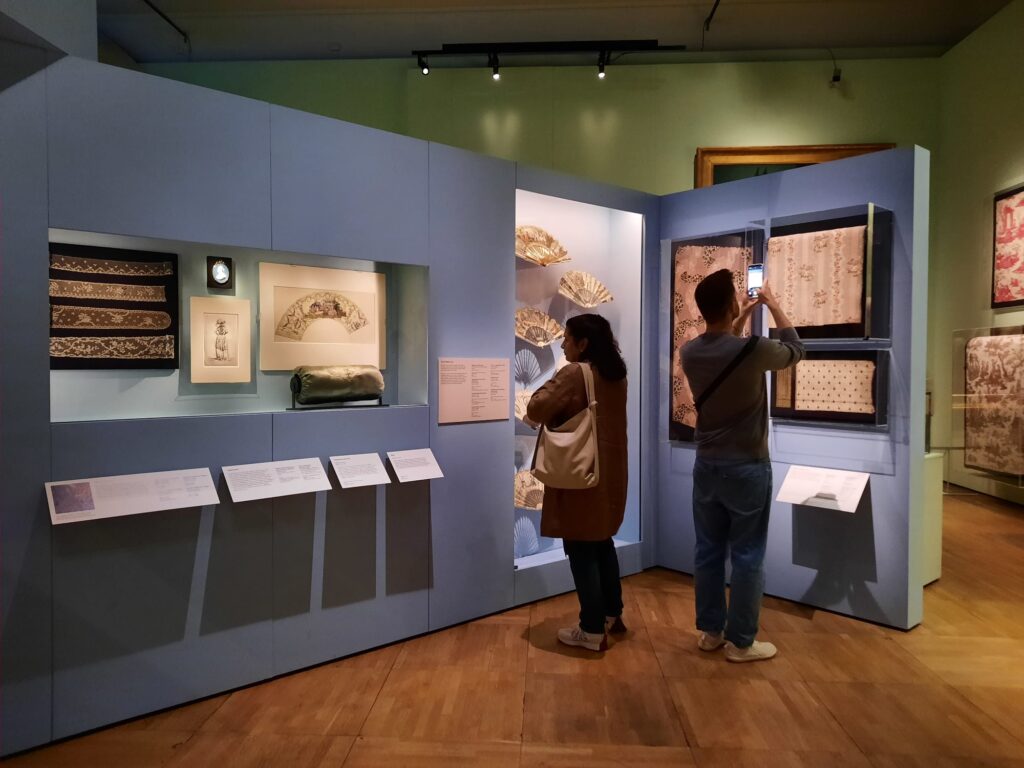
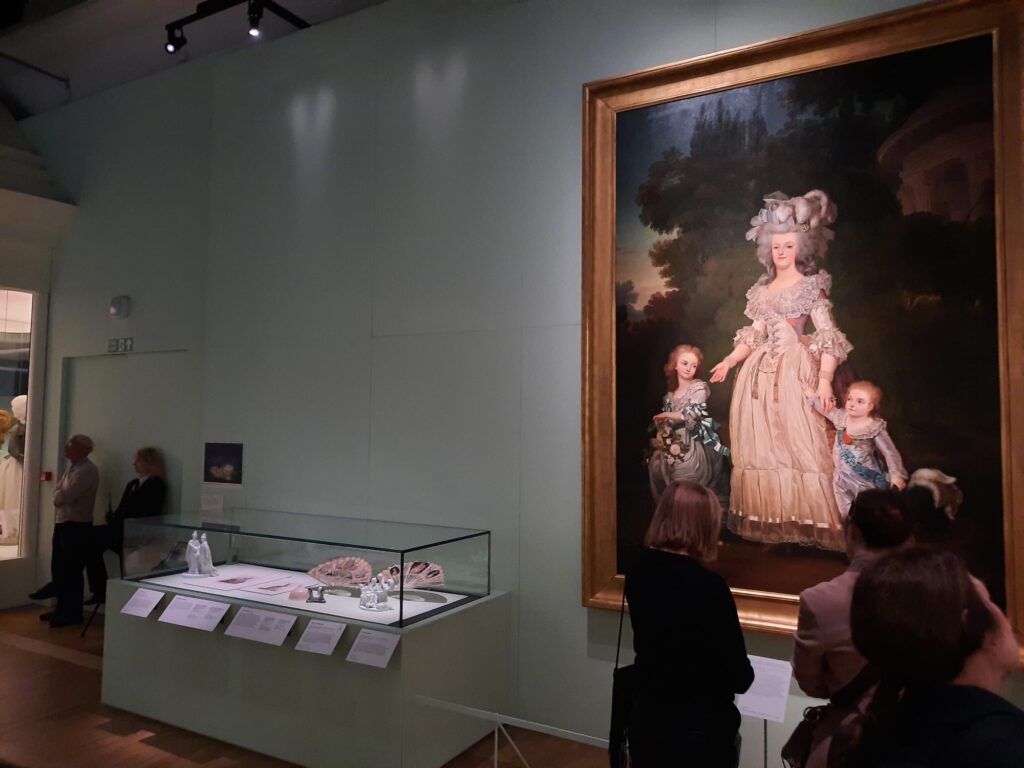
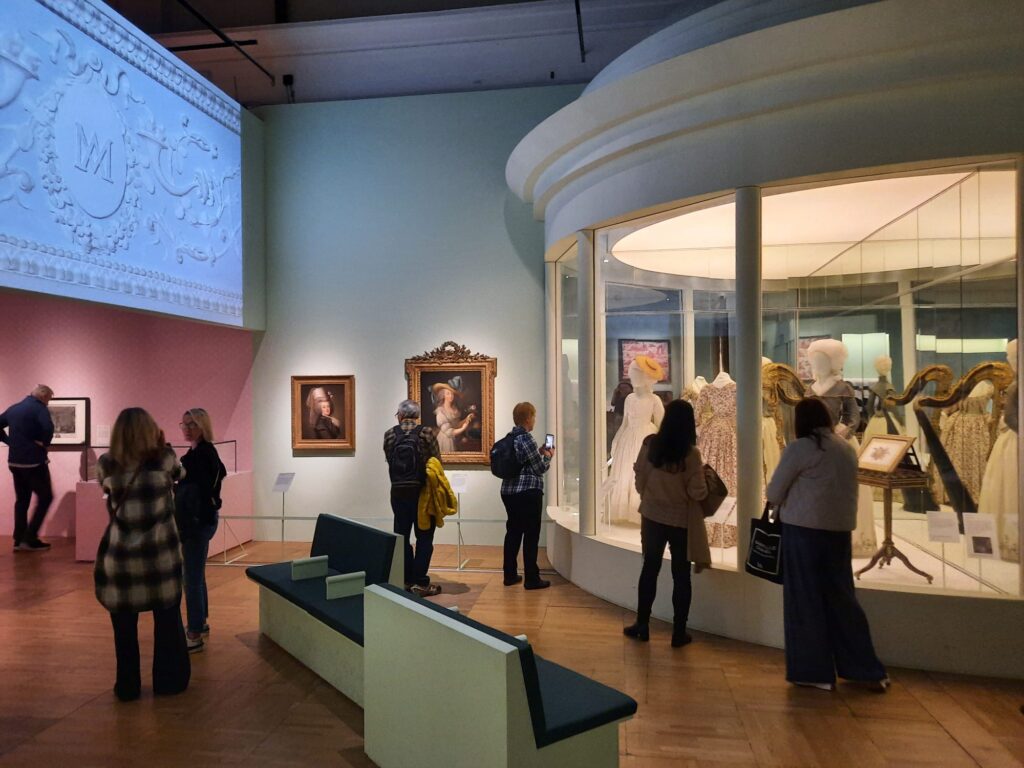
What form it is, though. Marie Antoinette is undoubtedly a beautiful exhibition. Sponsorship by a celebrity designer (Manolo Blahnik on this occasion) probably helps. But the design team also have a good eye.
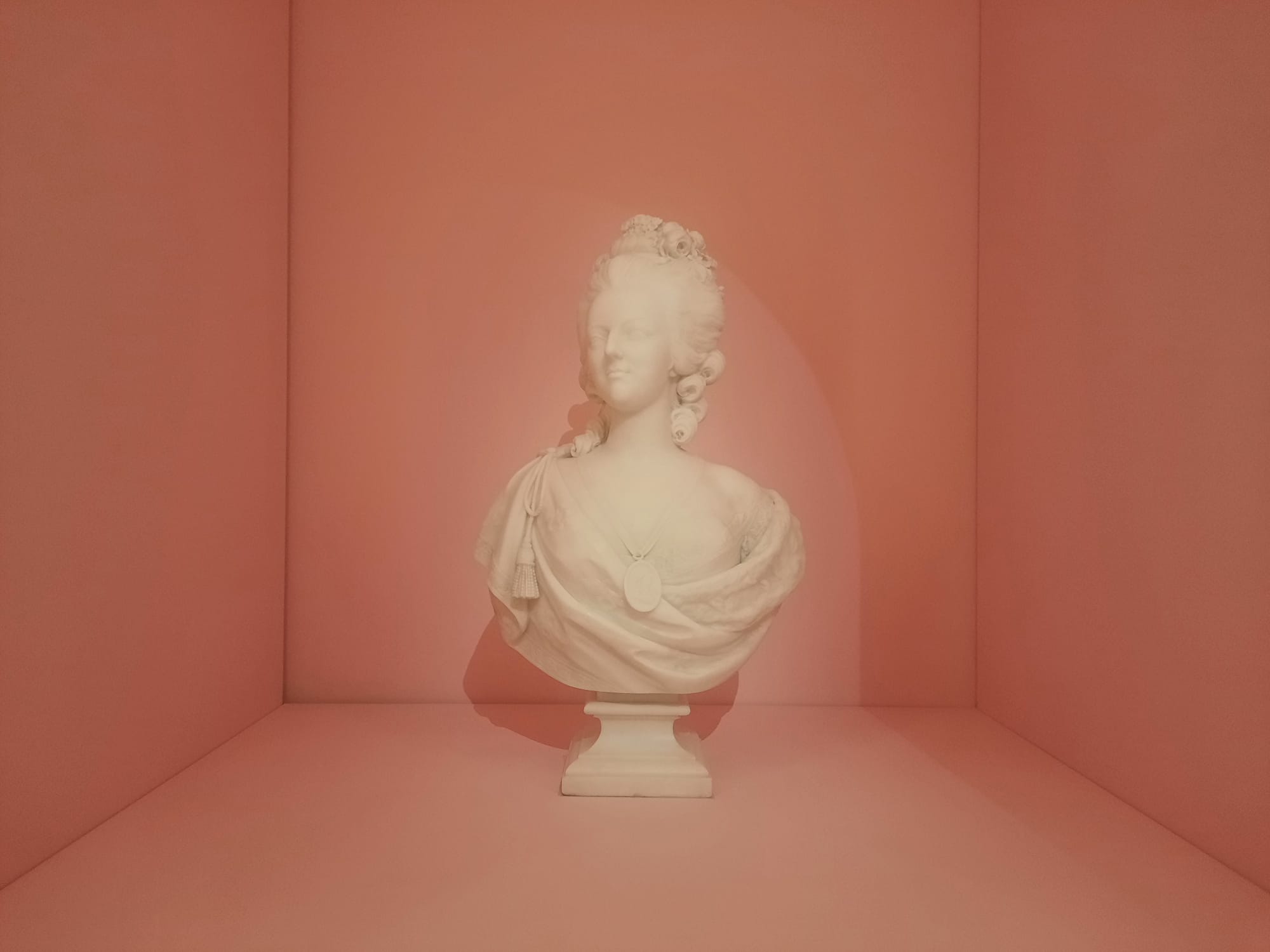
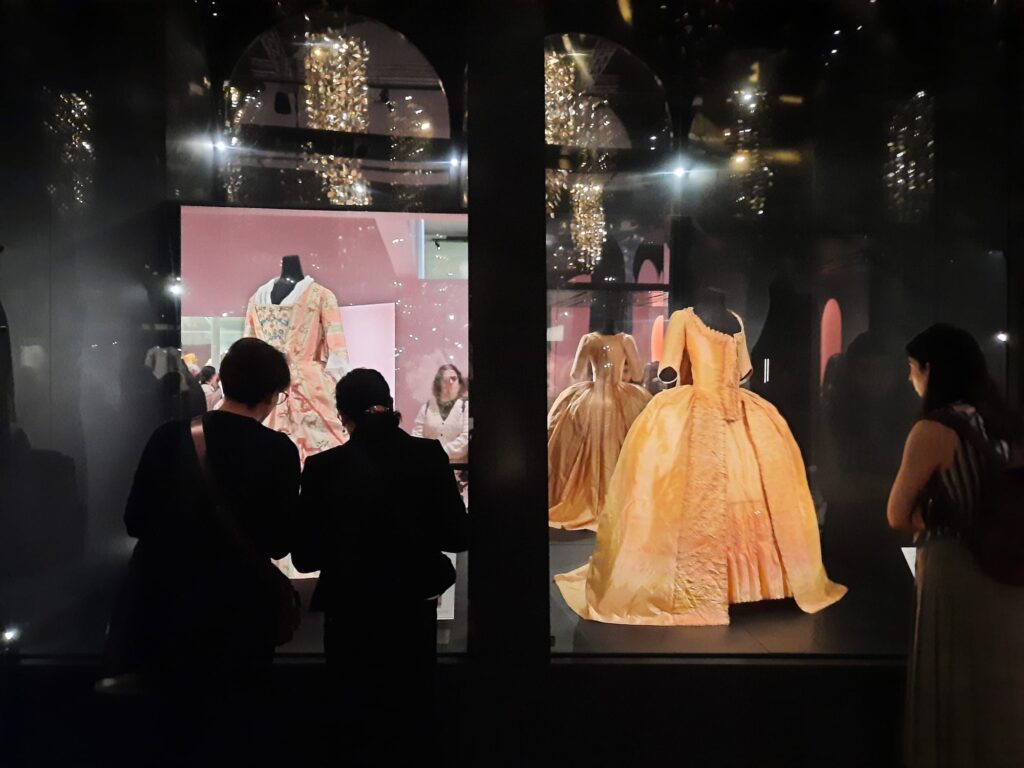
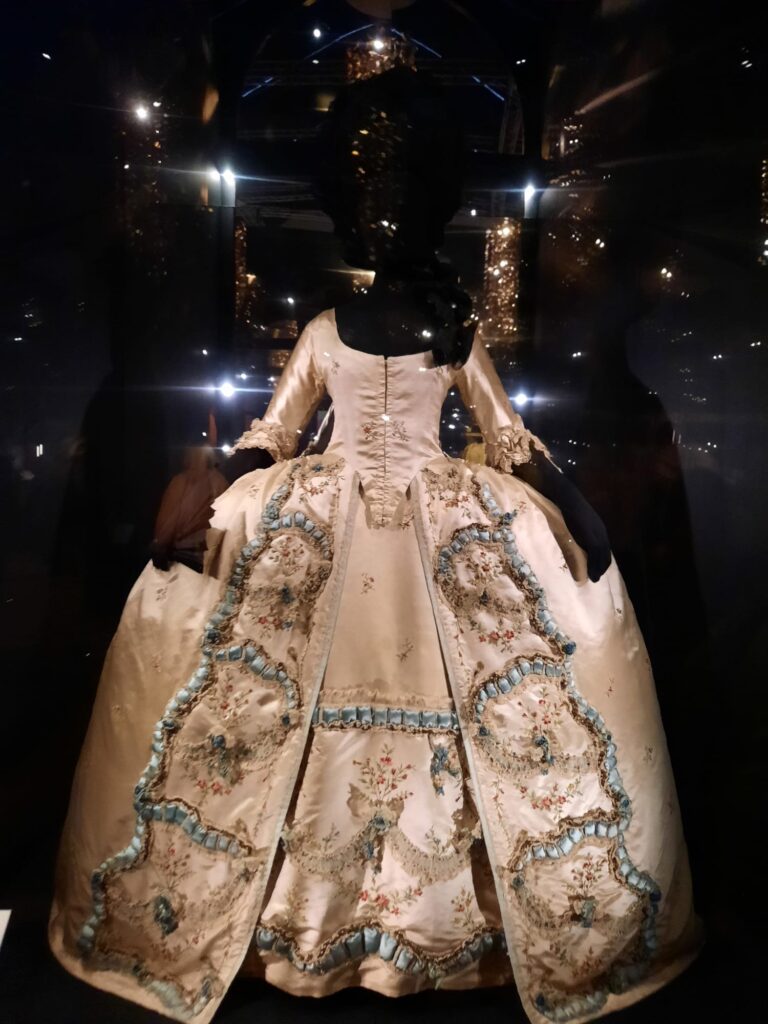
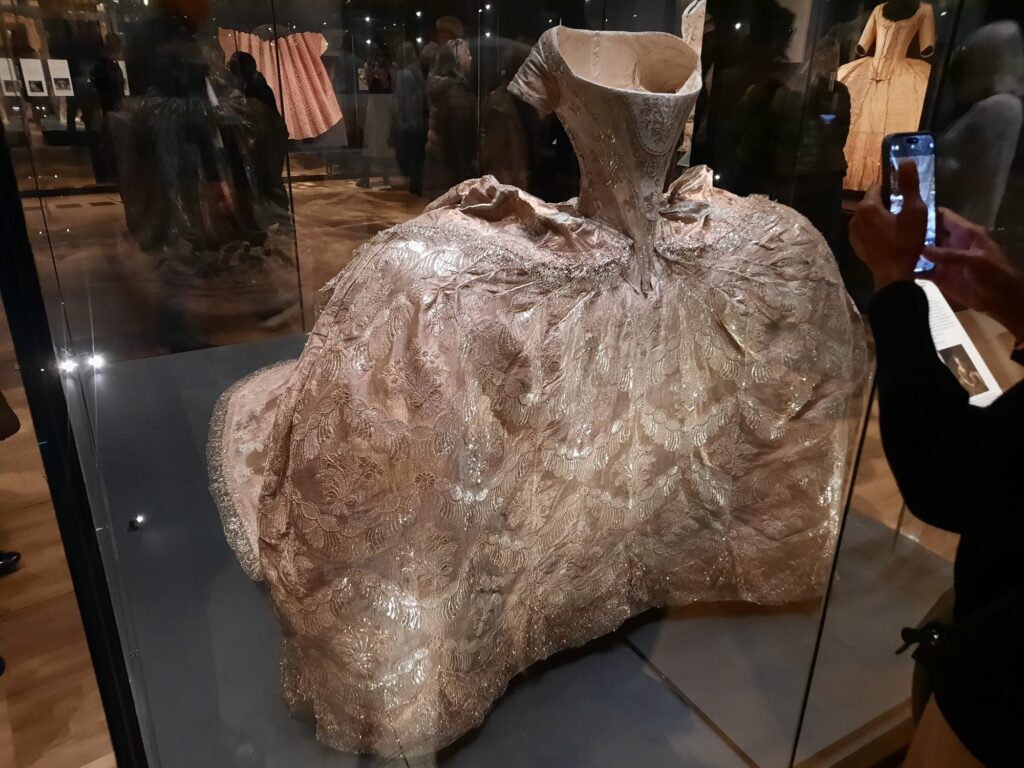
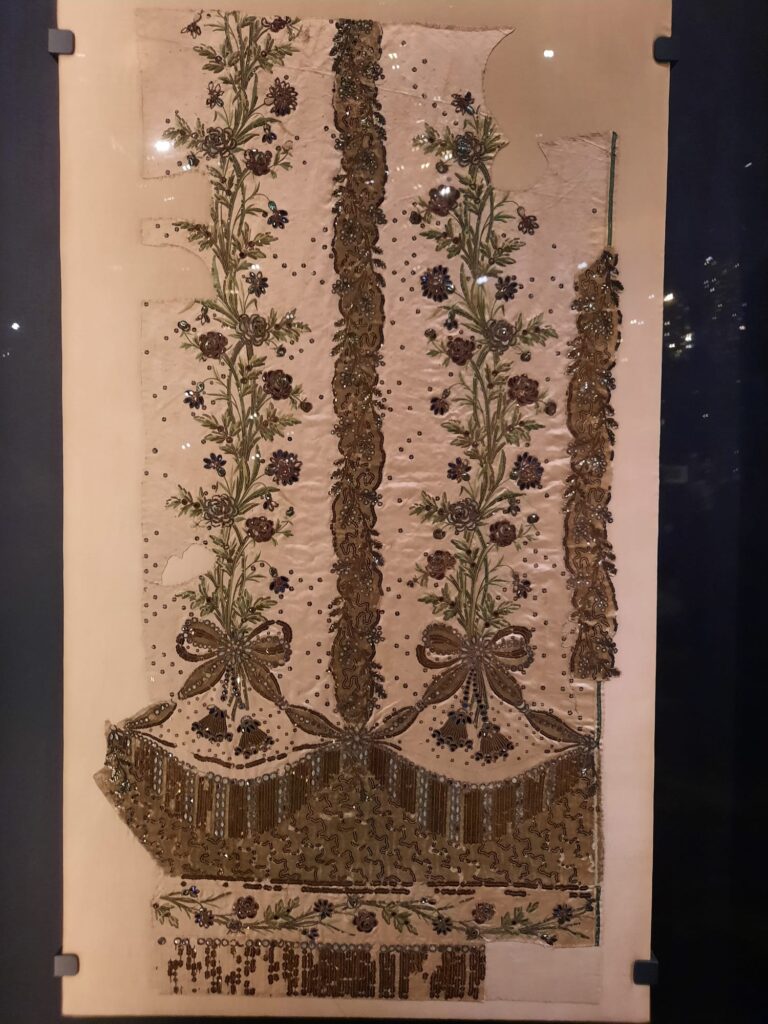
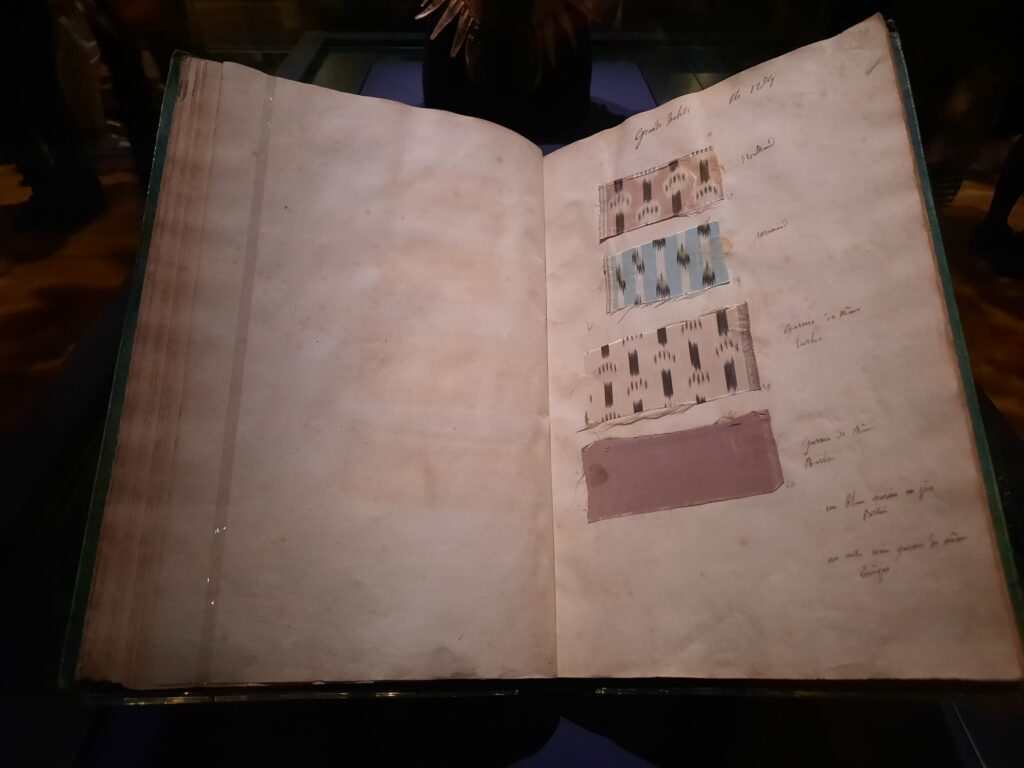
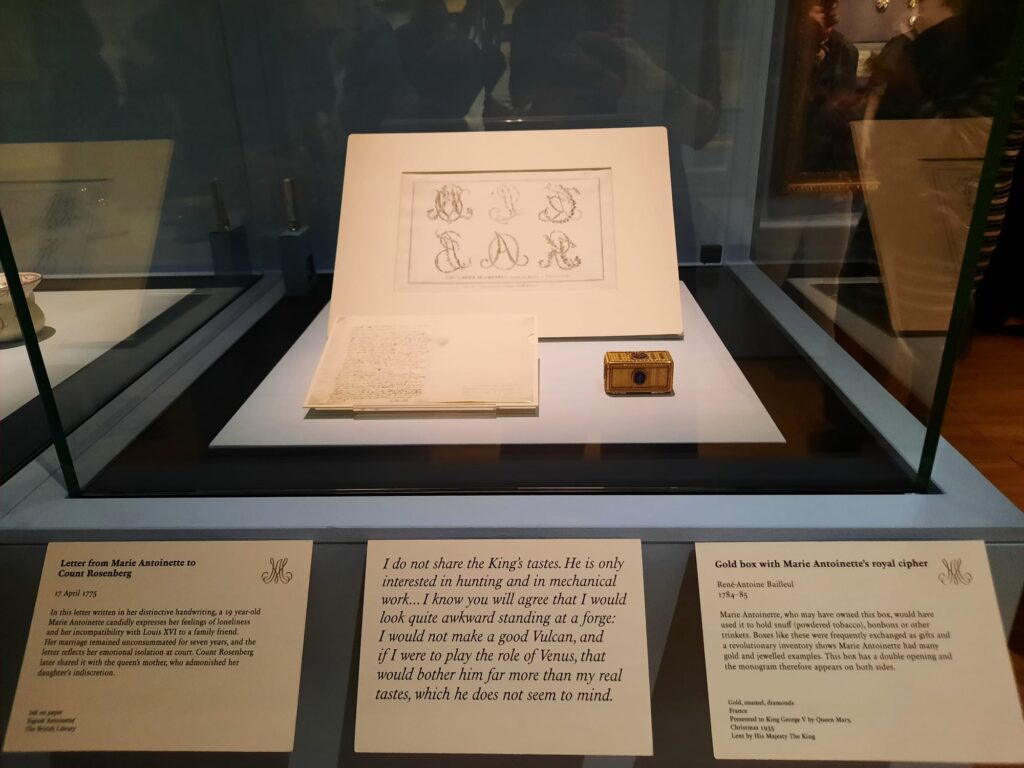
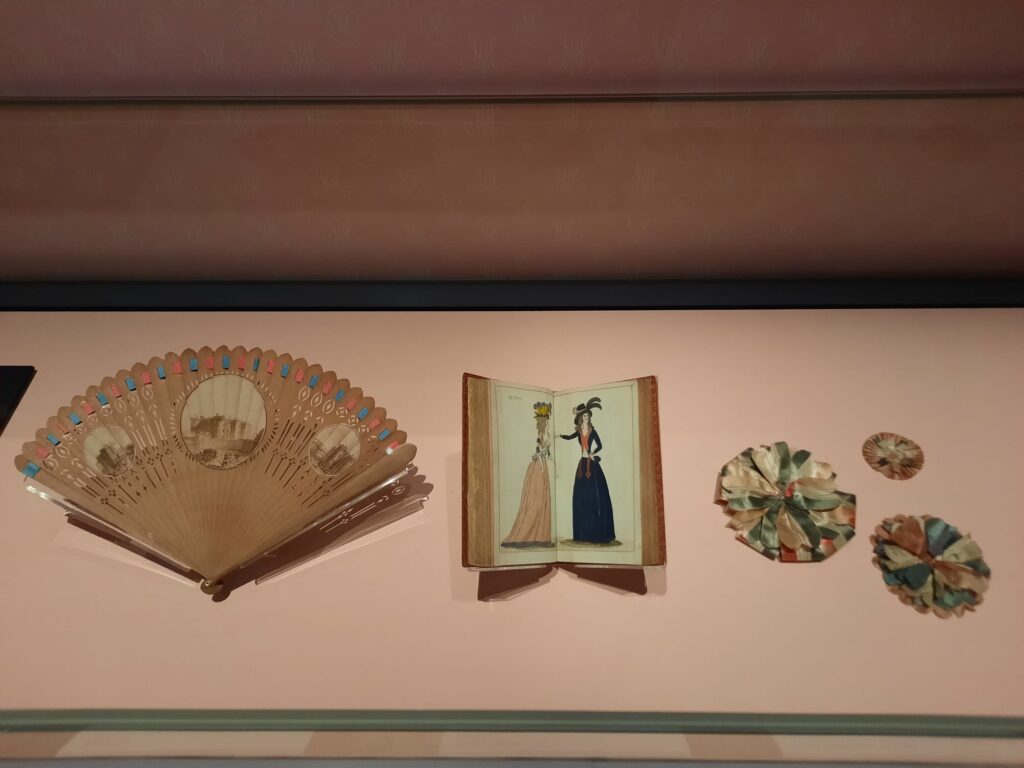
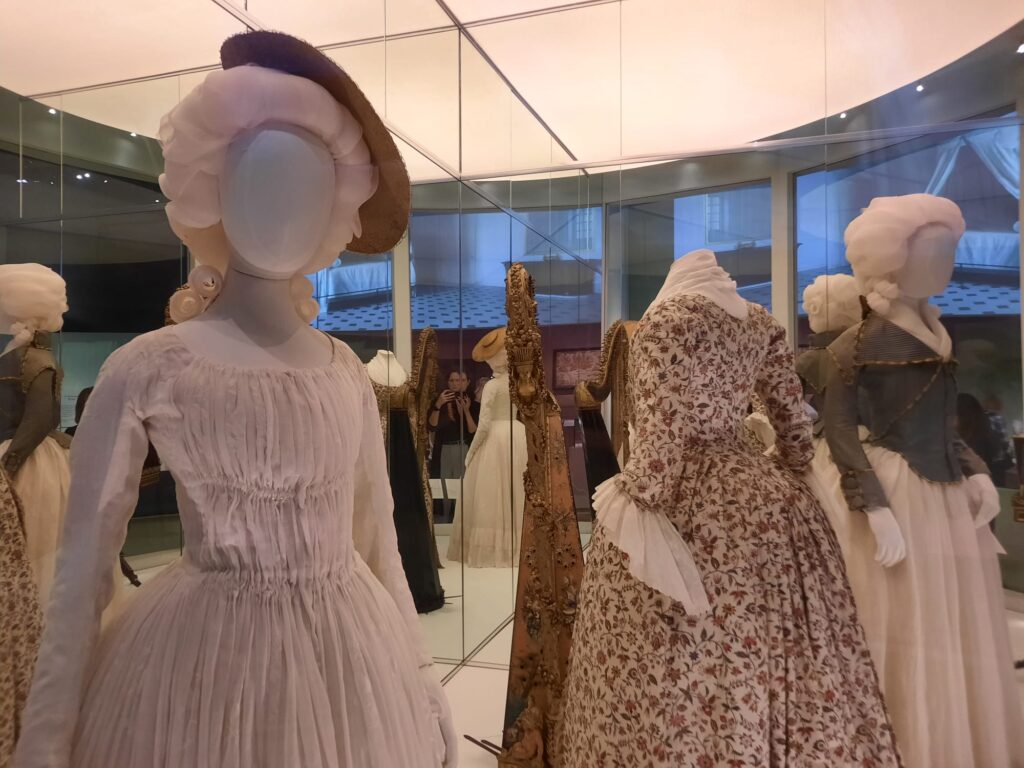
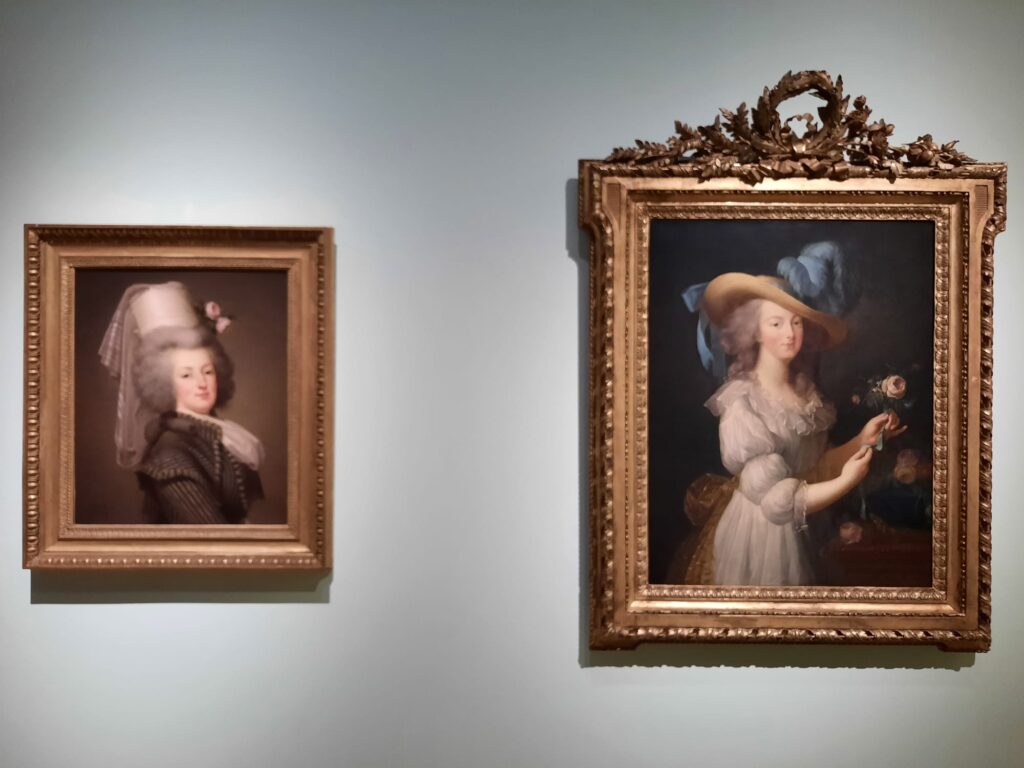
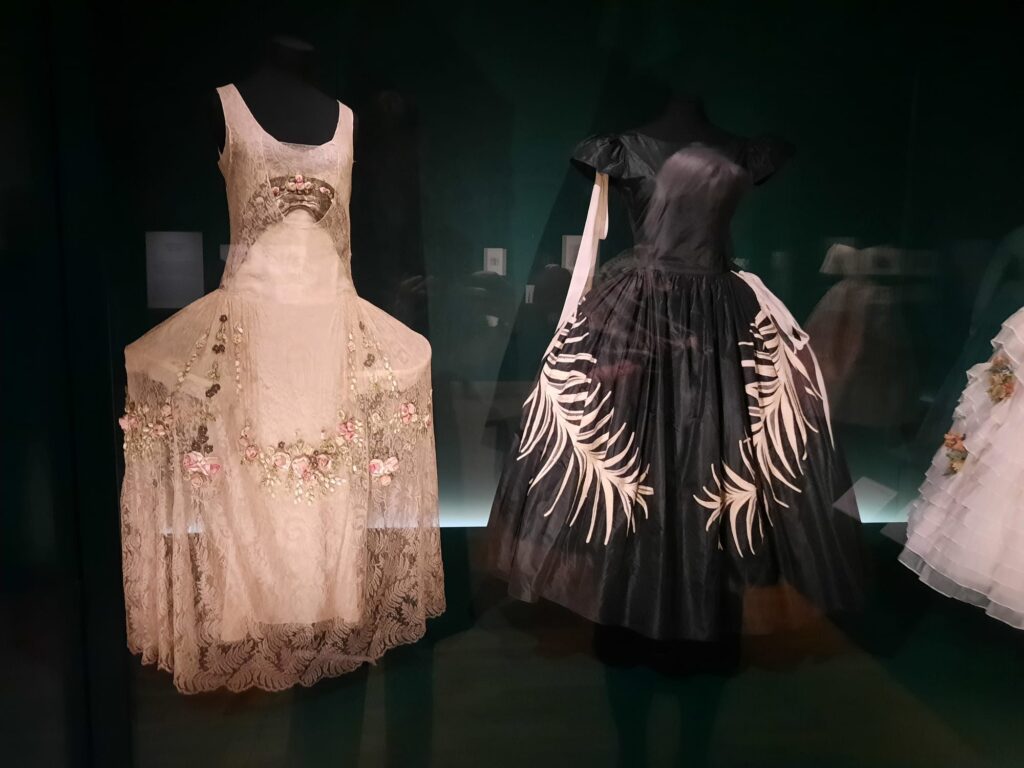
The exhibition opens with a rumination on image. There’s a bust of Marie Antoinette, and an animated portrait. The text talks about her immense influence, and how she became a target for dissenters. Then it’s through into a darkened, Hall of Mirrors-inspired room with sumptuous court fashions. Marie Antoinette’s personal possessions were of course looted and plundered and sold off during the Revolution, but a few scraps remain, including a literal scrapbook of sample fabrics from her gowns. Every time one of her genuine possessions is on view, it’s denoted on the label with a special symbol.
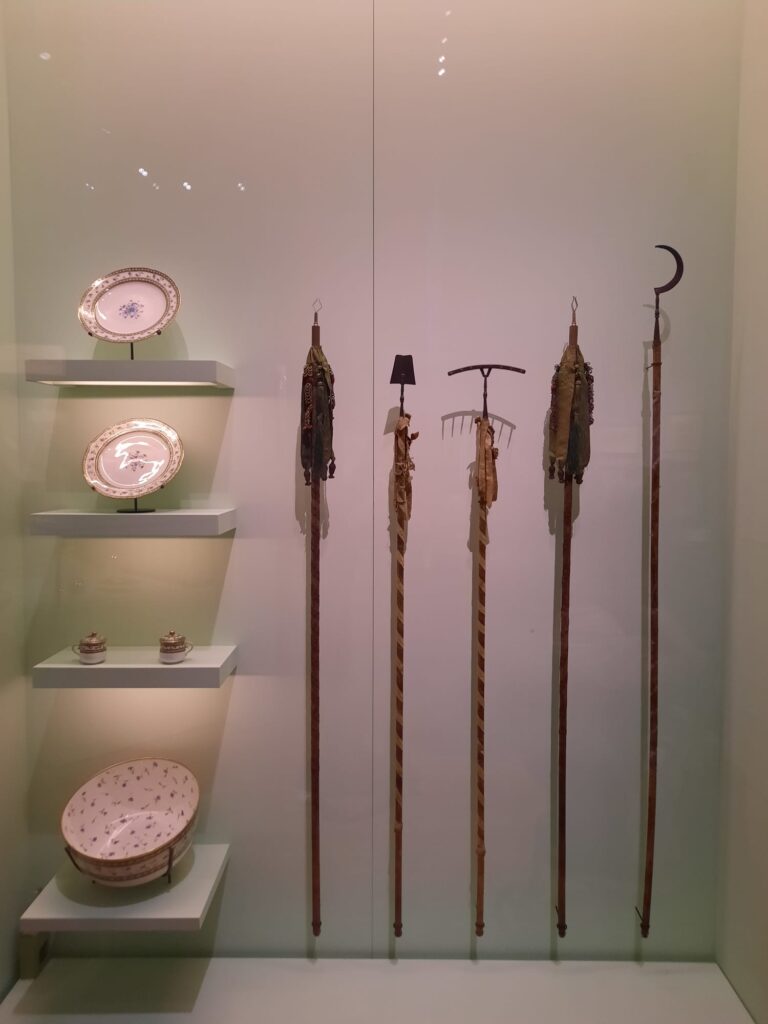
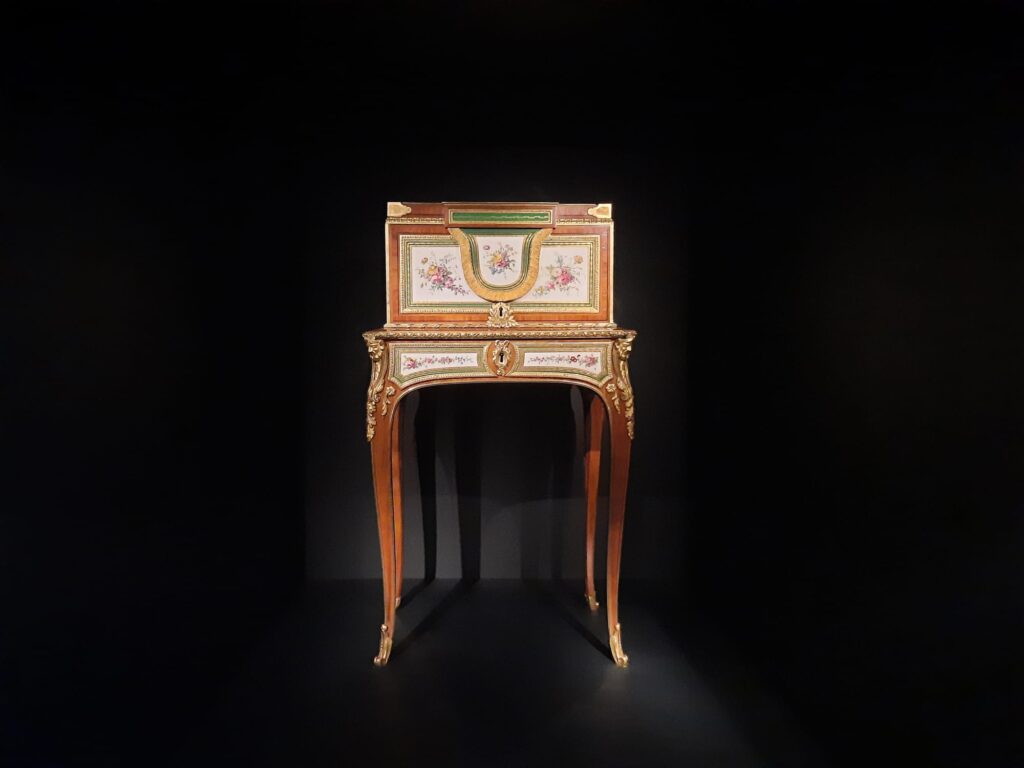
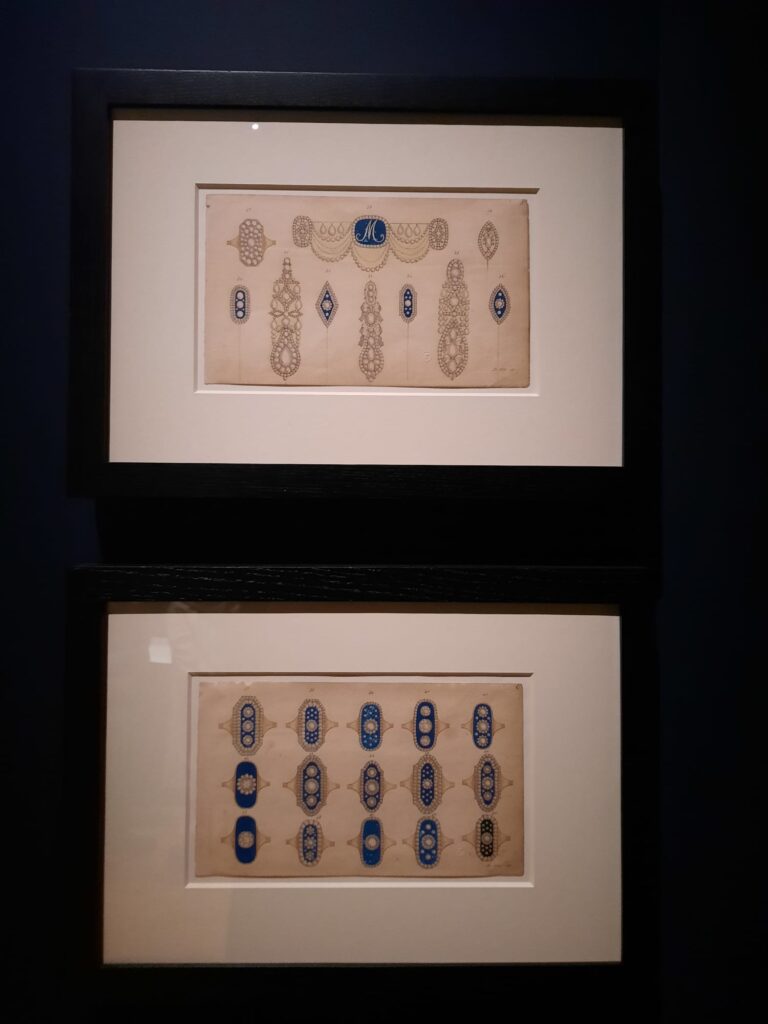
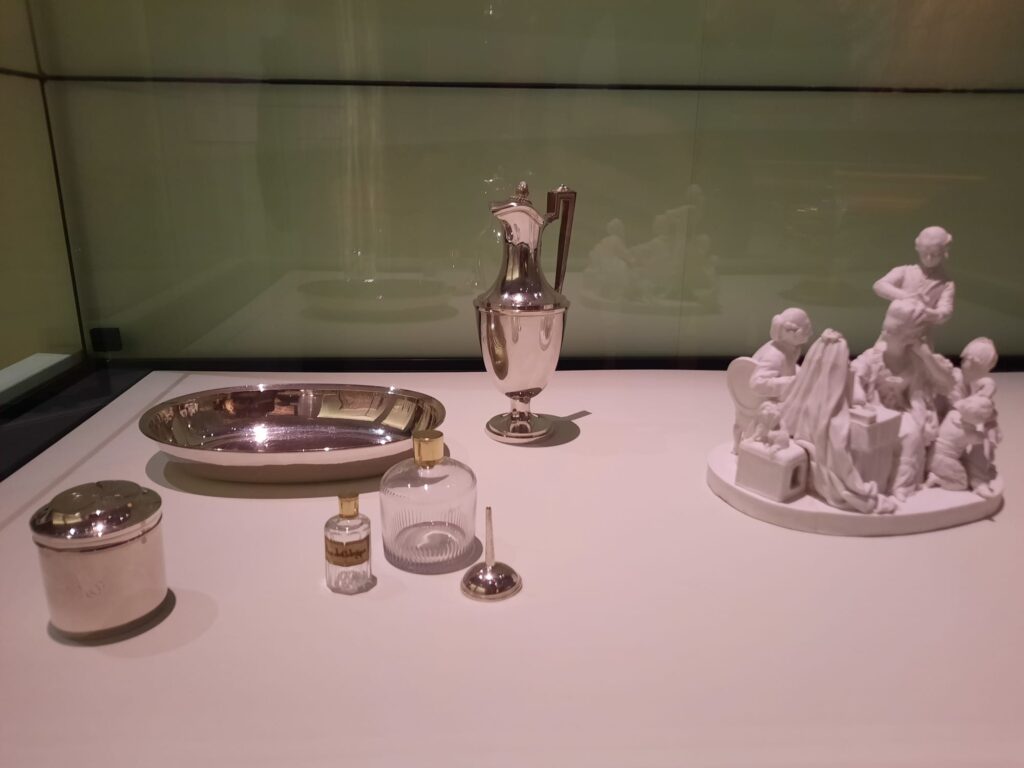
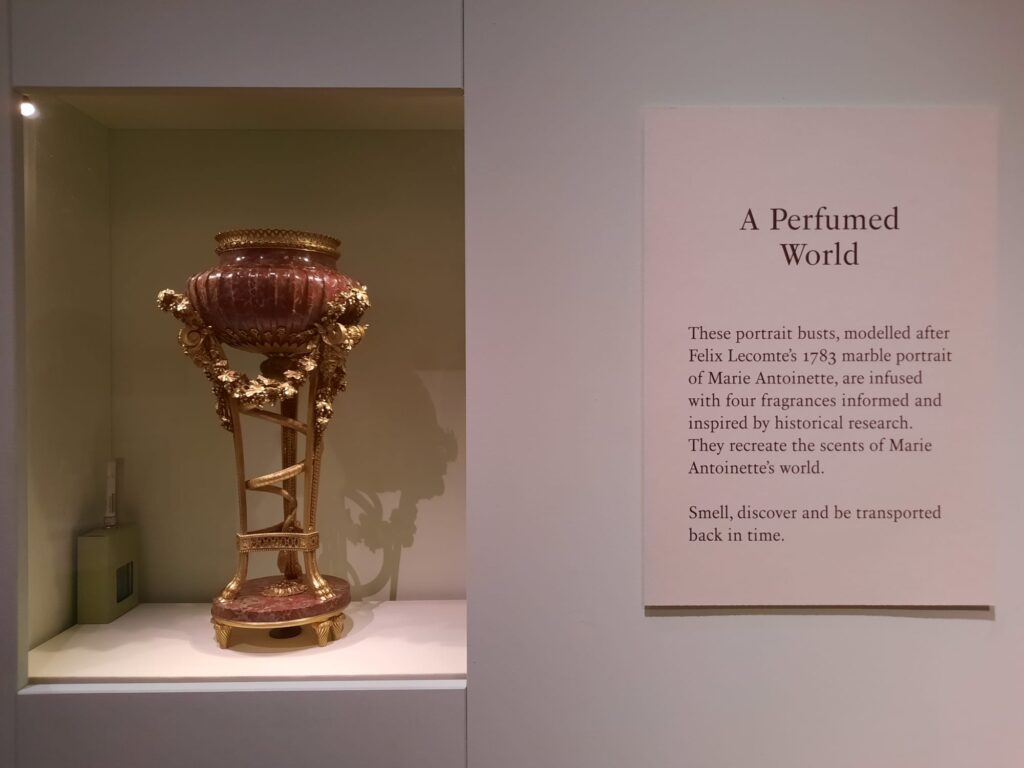
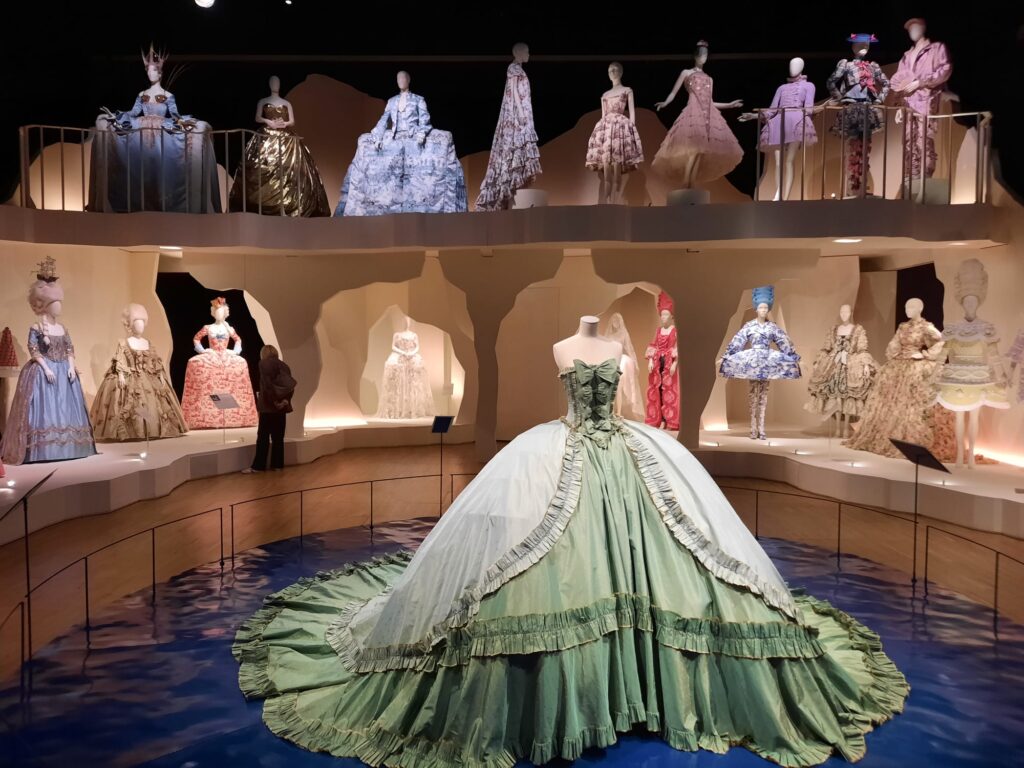
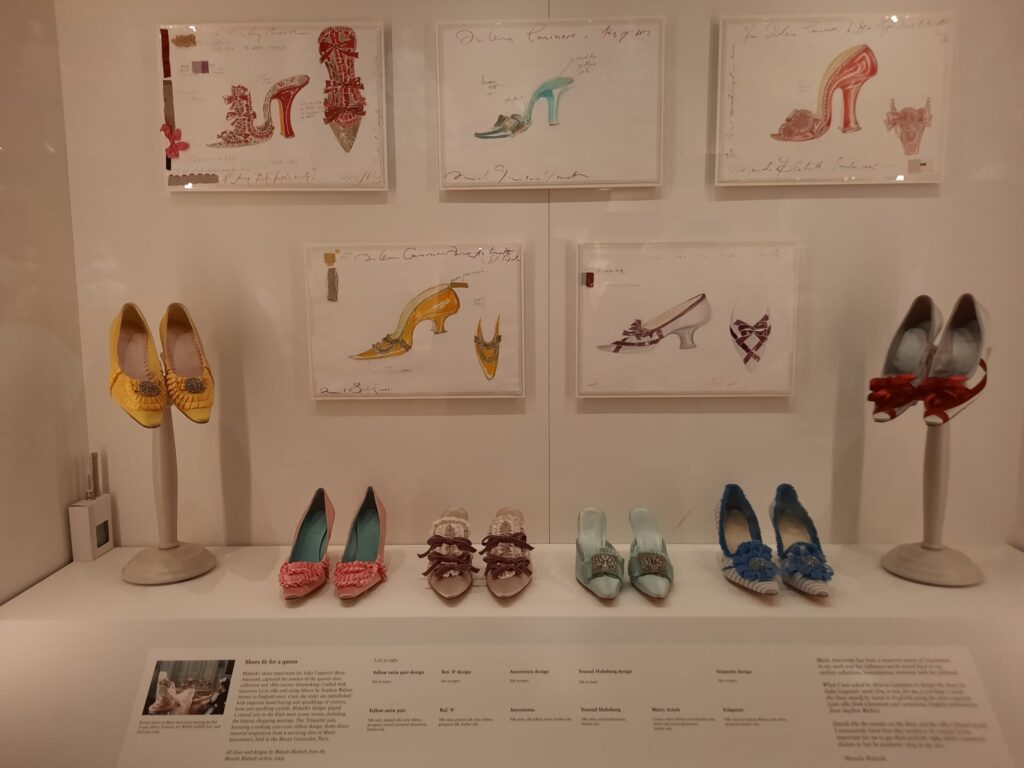
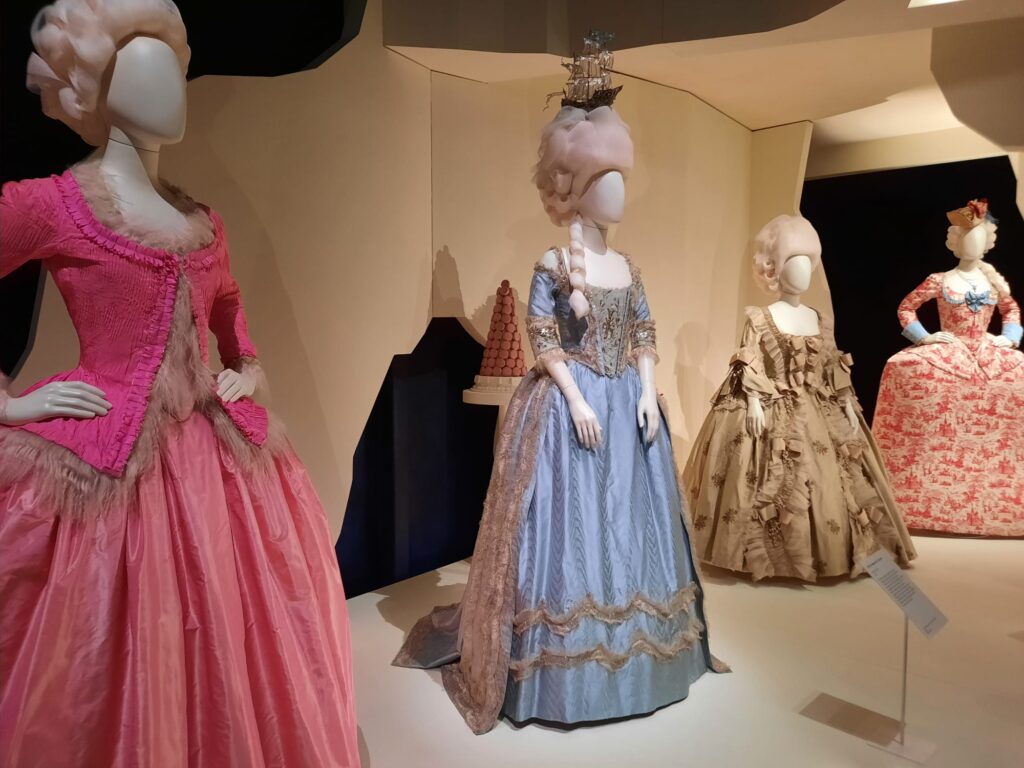
From fashion we move through other types of design: jewellery, furniture, household objects, porcelain, there are even designer garden tools on display. It’s sumptuous, elegant, refined, the height of luxury. It even smells wonderful. Then, after the rupture of the queen’s imprisonment and death, the focus shifts to Marie Antoinette as inspiration. The climax is a large, mezzanined gallery of gowns from couture collections, ceremonies and film. The nearby accessories display contains, of course, shoes by Manolo Blahnik for Sofia Coppola’s 2006 film Marie Antoinette. Sometimes the inspiration is obvious, other times it takes more fashion knowledge than I possess to understand the link. But they’re all gorgeous.
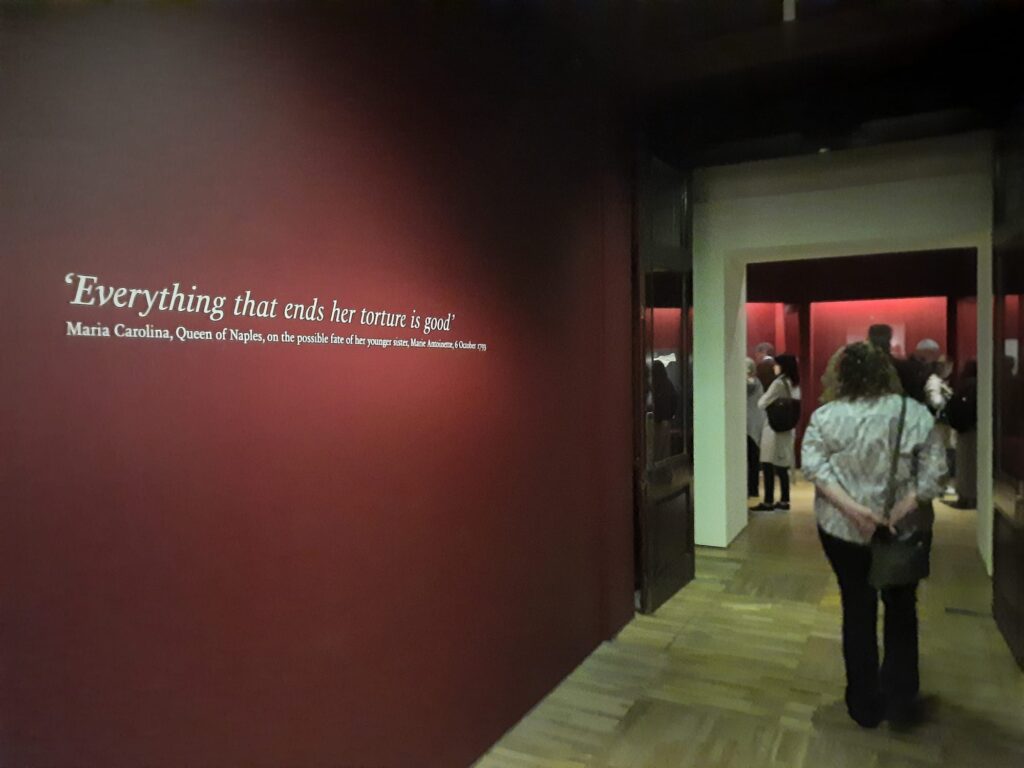
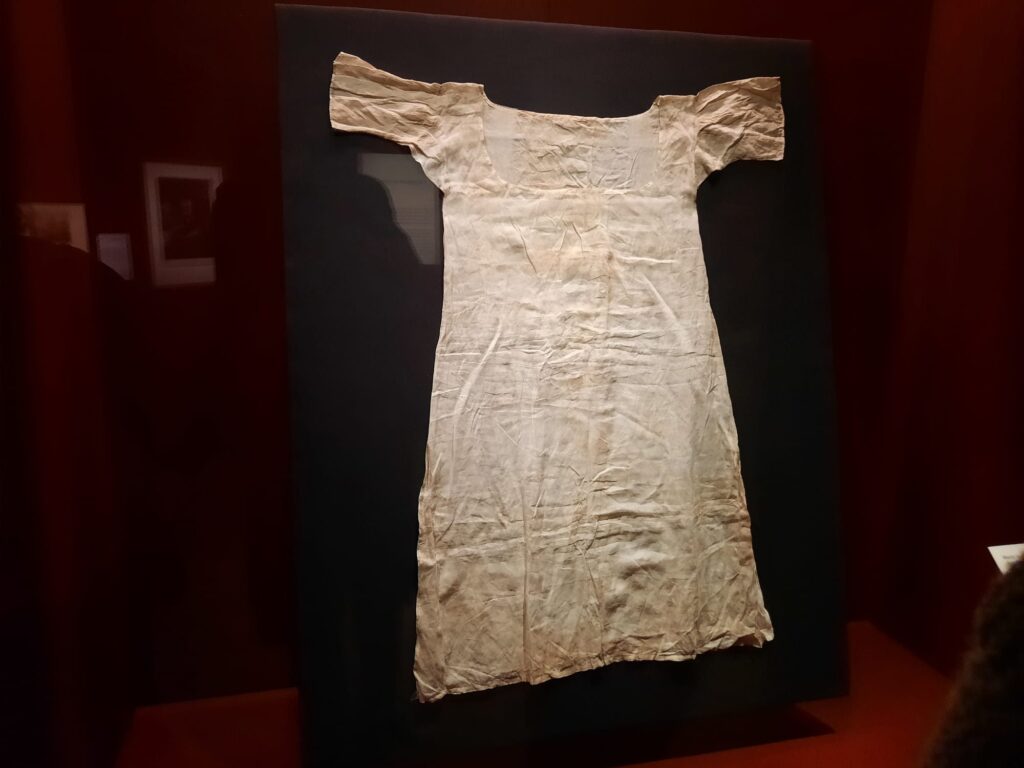
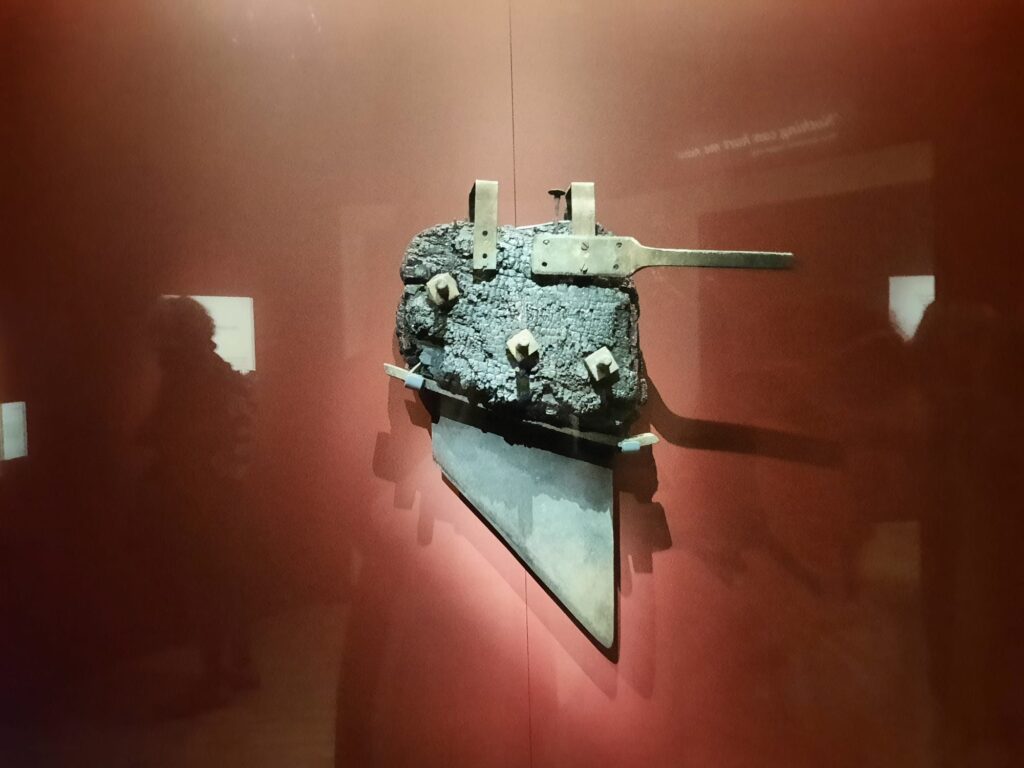
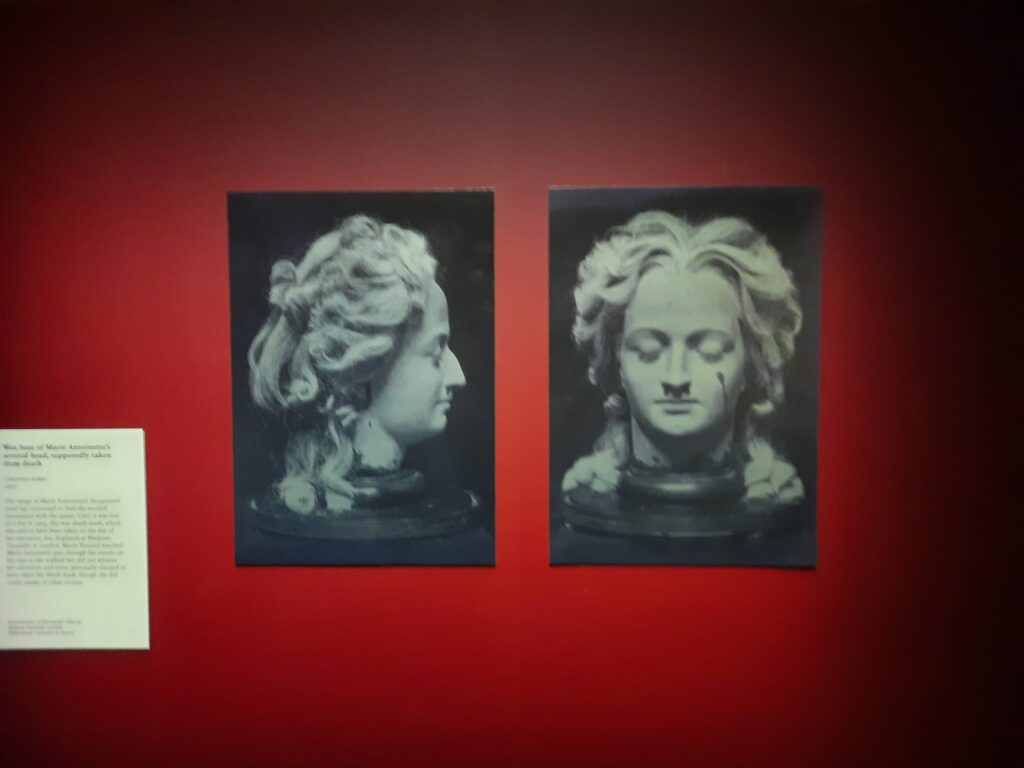
The Visitor Experience
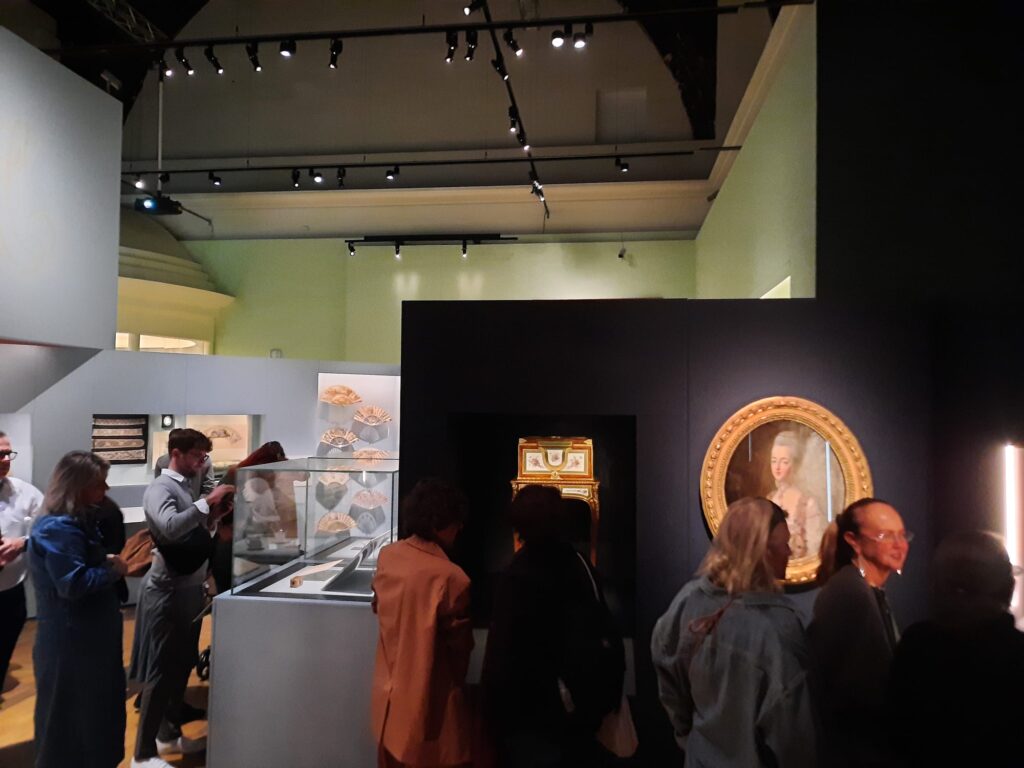
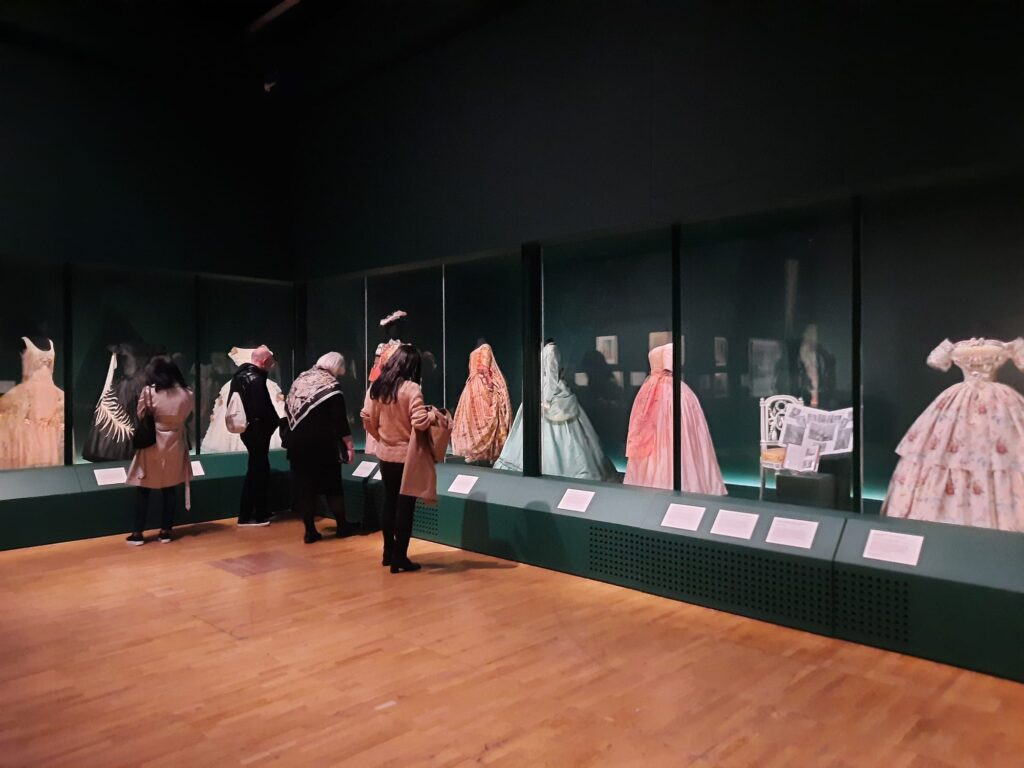
Because this is more of a blockbuster exhibition, I did make an effort to visit off-peak. And it mostly paid off. It was still busy, but not the worst I’ve experienced. There are challenges, though. Namely the small nature of some of the exhibits and the need to read the labels to understand what you’re seeing or how it’s connected to Marie Antoinette. That creates a few bottlenecks. Then there’s the fact that this is a very Instagrammable exhibition, and people are trying to get the right shots. But that aside, the exhibition does flow well and is not too overwhelming despite its multi-sensory nature.
The other thing about the exhibition design is that it transports you to a different world. If you skip over the prison and death bit, it’s all so beautiful. There’s music and scent. Mirrors reflect you back to yourself amongst the beautiful gowns, almost like you’re at the party. And once you emerge past the image of Marie Antoinette’s death mask, it becomes beautiful once more. A beautiful legacy. So unless you’re an overthinker like me, you’re likely to have quite a wonderful time.
Even as an overthinker, I did enjoy it. The Rococo and Romantic styles aren’t my favourite. But it’s nice to wander through all that luxury as a moment of escapism. Frankly, I don’t blame the woman for heading off to her fake hamlet with her designer gardening tools and creating a pastoral idyll for herself. She had a lot on her plate. And coming back to the exhibition and visitor experience, the labels and texts do a fairly good job of contextualising and reframing, within the confines of an aesthetic focus on Marie Antoinette’s life. A lot to read and learn for those who are interested.
Final Thoughts
So did I judge Marie Antoinette Style too harshly? I started out by questioning whether it is radical enough. And I still think that’s a valid thought. It’s an exhibition that focuses on the surface, and doesn’t take those designer gardening tools and dig beneath. But this is, after all, the nation’s museum for design and creativity. Not its museum for long-term political trends and critique (maybe the British Museum instead for that, or not a national museum but somewhere different entirely?). So I understand why this is the exhibition’s focus, and feel there’s a decent amount of discussion within that framework. I just think there are different lessons to learn from Marie Antoinette right now.
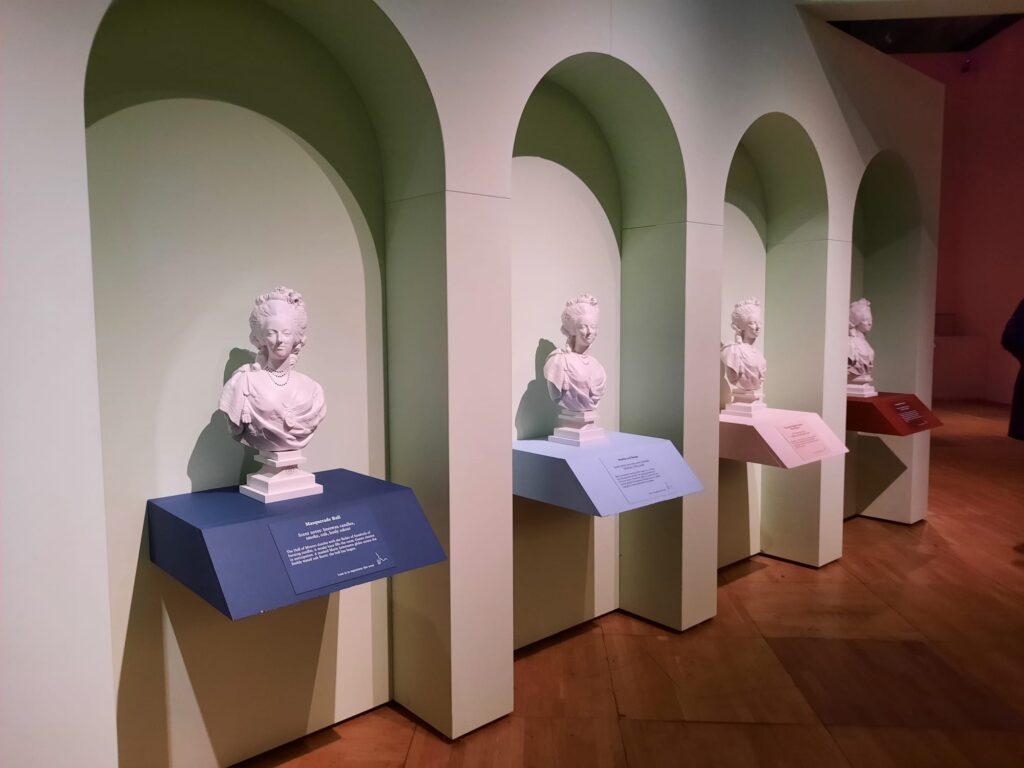
As I said above, it’s an undoubtedly beautiful exhibition. It’s also a well-researched one, and one which brings together a quantity of the queen’s own property you’re unlikely to see again. I always think that’s a good reason to go and see something. Museologists can also take note of the multi-sensory aspects. Things like a bespoke scent for an exhibition can feel a little gimmicky, but I think given the subject matter it makes sense here. Also look out for the perfumed busts, evoking experiences from Marie Antoinette’s life from masquerade balls to a prison cell. No, really: scent notes of mildew, cold stone, sewage, river, and juniper.
I’m sure this will be another sell-out exhibition so don’t leave it too long if you’re planning to go, and don’t count on buying tickets on the day. Do see what else is on when you visit – if Marie Antoinette Style is all sumptuousness and luxury, other displays may just bring you back down to earth.
Salterton Arts Review’s rating: 3.5/5
Marie Antoinette Style on until 22 March 2026
Trending
If you see this after your page is loaded completely, leafletJS files are missing.