
National Museum of Archaeology (Mużew Nazzjonali tal-Arkeoloġija), Valletta
With some of the most interesting archaeological sites in Europe in Malta, Valletta’s National Museum of Archaeology is a must-see.
The National Museum of Archaeology
It’s no secret here on the Salterton Arts Review that I love archaeology. I actually wanted to be an archaeologist when I was younger, until I realised that the reality was less Indiana Jones or Howard Carter and more unglamorous camping and fine work with small tools. But never mind, I am very fortunate to have the opportunity to scratch my archaeological itch whenever I’m travelling.
And this is why it’s perhaps surprising that Malta hadn’t been on my travel radar sooner. It’s one of the best archaeological destinations in Europe. Especially for Neolithic sites. When I visited, in October 2025, I had a handful of places I definitely wanted to see (post coming soon). And to supplement the ‘piles of old rocks’, as the Urban Geographer is wont to say, I also wanted to see the National Museum of Archaeology.
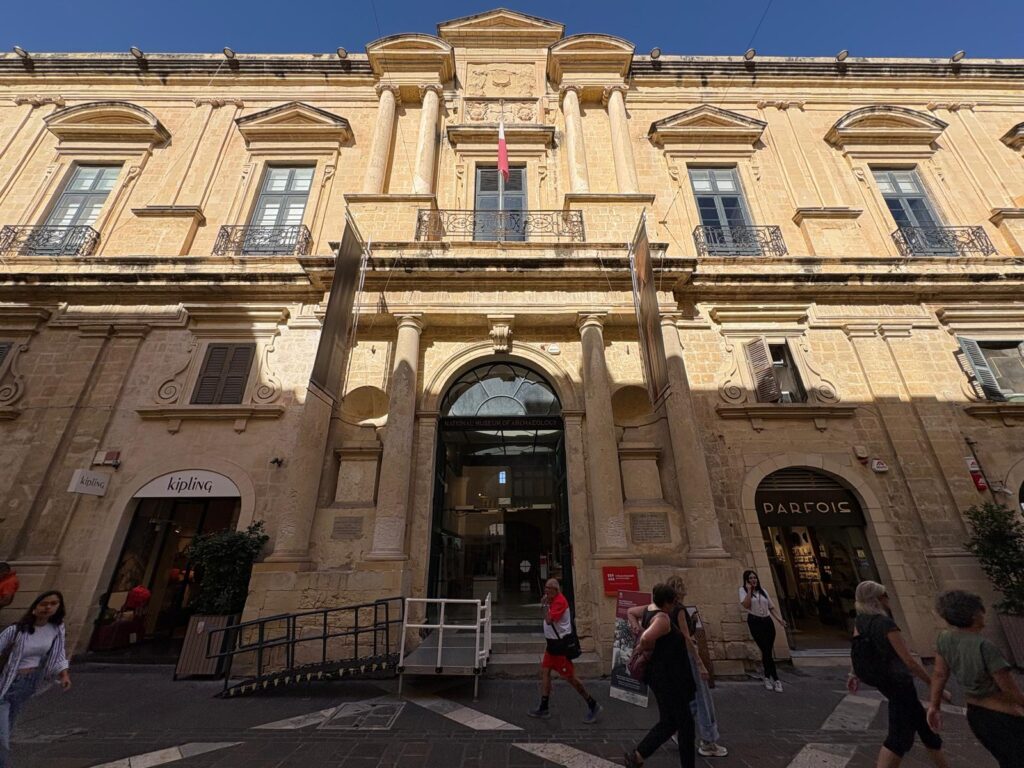
And so this was our first museum stop in Malta. The building itself is also a point of interest. I’ve spoken in my guides to Malta and Valletta and its surrounds about auberges (‘inns’). In the Maltese context, these were the headquarters of the different langues (nationalities) of the Knights Hospitaller, who arrived in Malta in 1530 after being evicted from Rhodes by the Ottomans. Because the Knights moved around a bit in their initial decades in Malta, you can find examples of auberges in Mdina, Birgu (Vittoriosa) and Valletta. The National Museum of Archaeology is in the 1571 Auberge de Provence, which has seen a lot of changes over the years but retains an impressive staircase and the Gran Salon with early 19th century decoration.
The museum has been here since 1958, but was originally a National Museum housing fine art as well as archaeology. Before 1958 the museum was in the Xara Palace in Mdina and then the Auberge d’Italie in Valletta.
Malta’s Rich Past
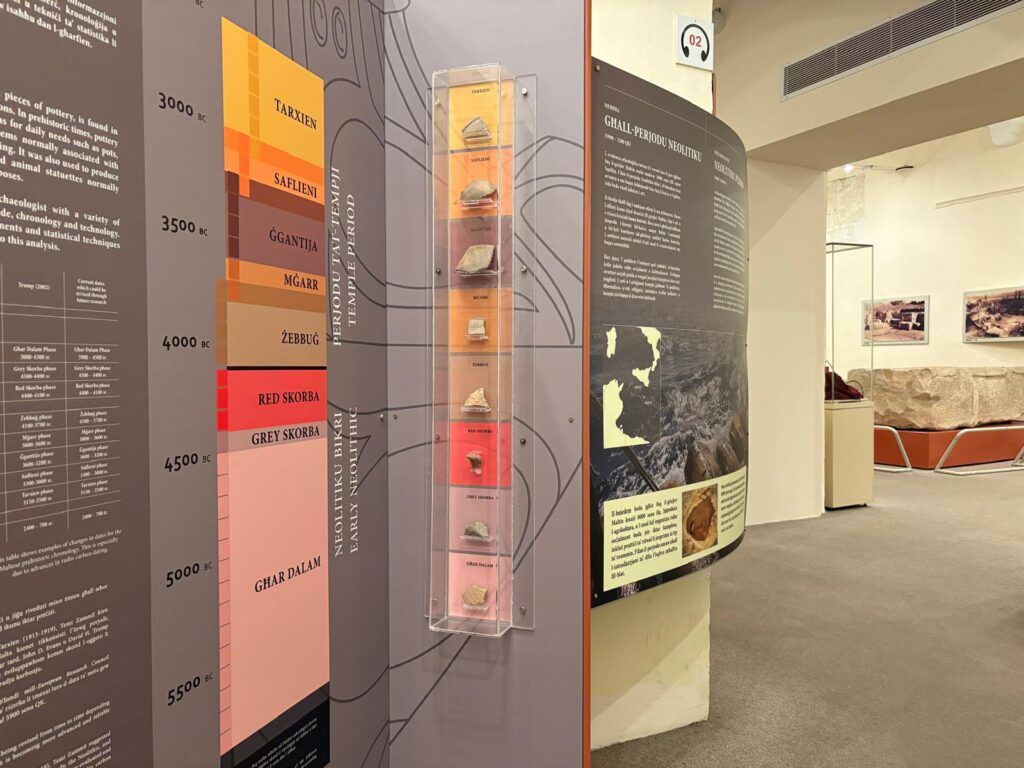
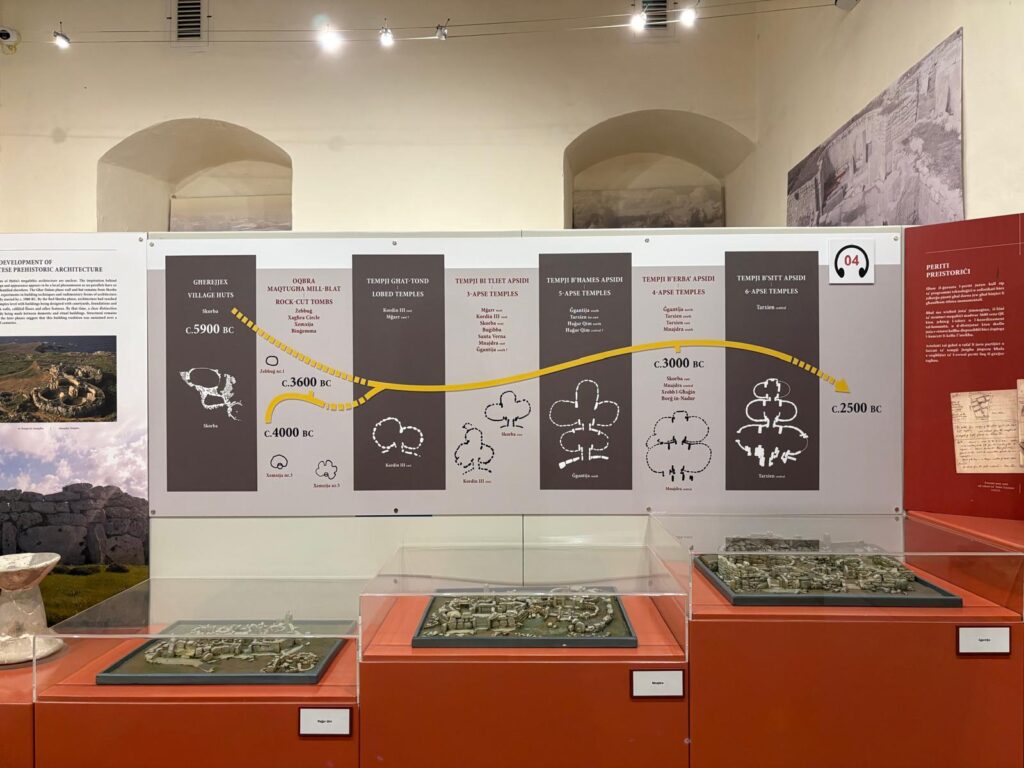
So what is it that makes Malta such an exciting place for archaeology? Well it’s mostly the culture known as the Temple Builders, who arrived in Malta around 5500 BCE. We know relatively little about them. They likely came from Sicily, and lived fairly simple lives as farmers. Around 3600 BCE their society began to change. It seems (from their unfortified dwellings) that they were a peaceful society. They began to focus more on religion around this time. They built temples and underground burial chambers, including the oldest free-standing megalithic structures in the world, older than the Pyramids and Stonehenge. Their society disappeared around 2500 BCE. We’re not sure why but probably some combination of natural disasters, famine, invasion, or epidemics. They were replaced by another wave of migration from Sicily, this time a Bronze Age culture.
The Temple Builders are what makes Malta’s archaeology so unique, but there are also many other riches. Malta, over the millennia, has also been home to Phoenicians, Carthaginians, Romans, Byzantines, Arabs and Normans. Then in more recent times we get to the Knights Hospitaller, followed by the French and the British.
Malta’s archaeological sites, including Ġgantija on the island of Gozo, were stops on the Grand Tour for some 18th and 19th century aristocrats. Archaeology wasn’t really a science at the time, so any excavations tended to be fairly destructive. One of the first people to bring a scientific approach to archaeology in Malta was Sir Themistocles “Temi” Zammit, a doctor by training. He kept meticulous records of his excavations of several sites, many of which are now part of Malta’s UNESCO World Heritage listings. He was also the first director of the National Museum.
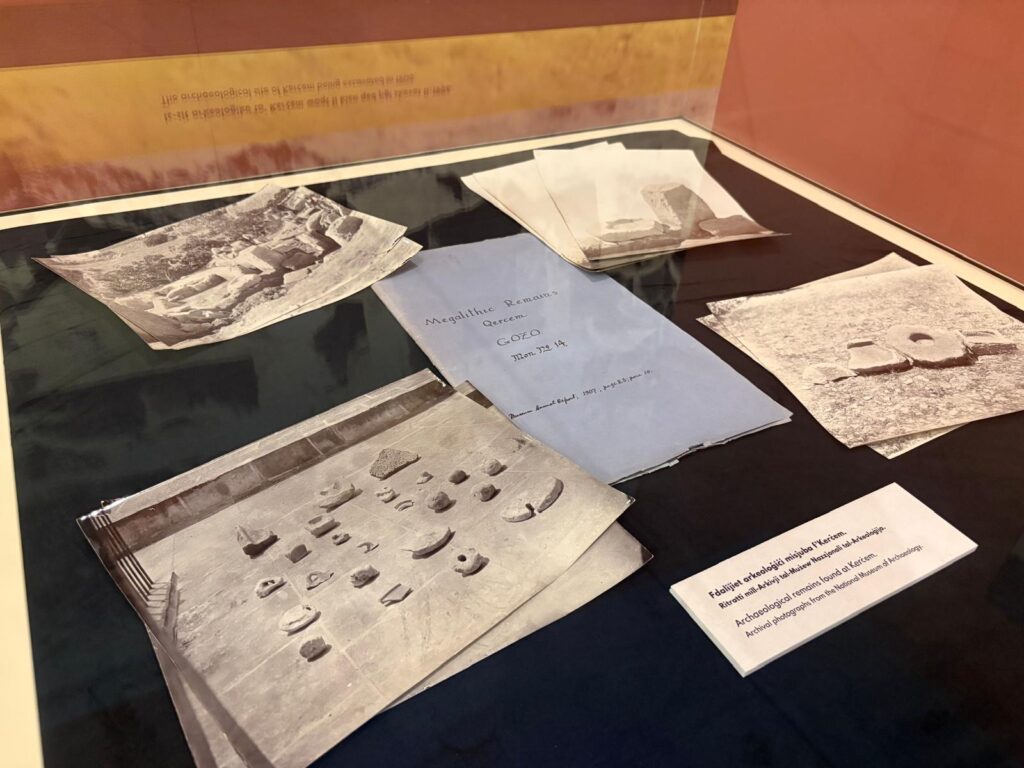
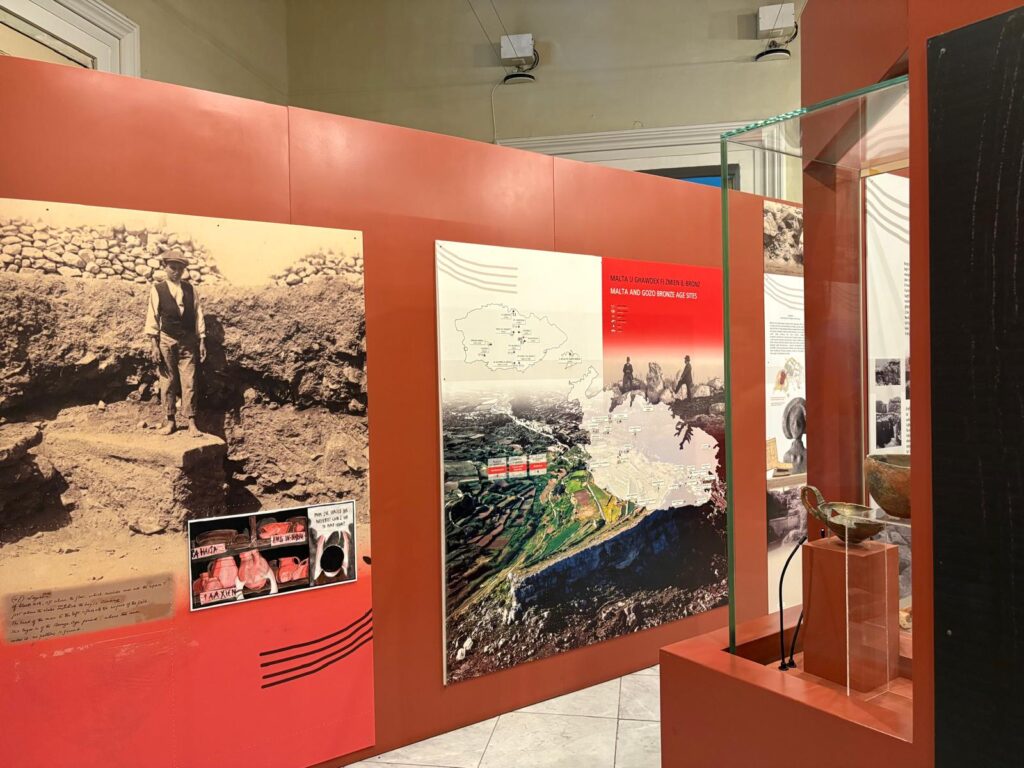
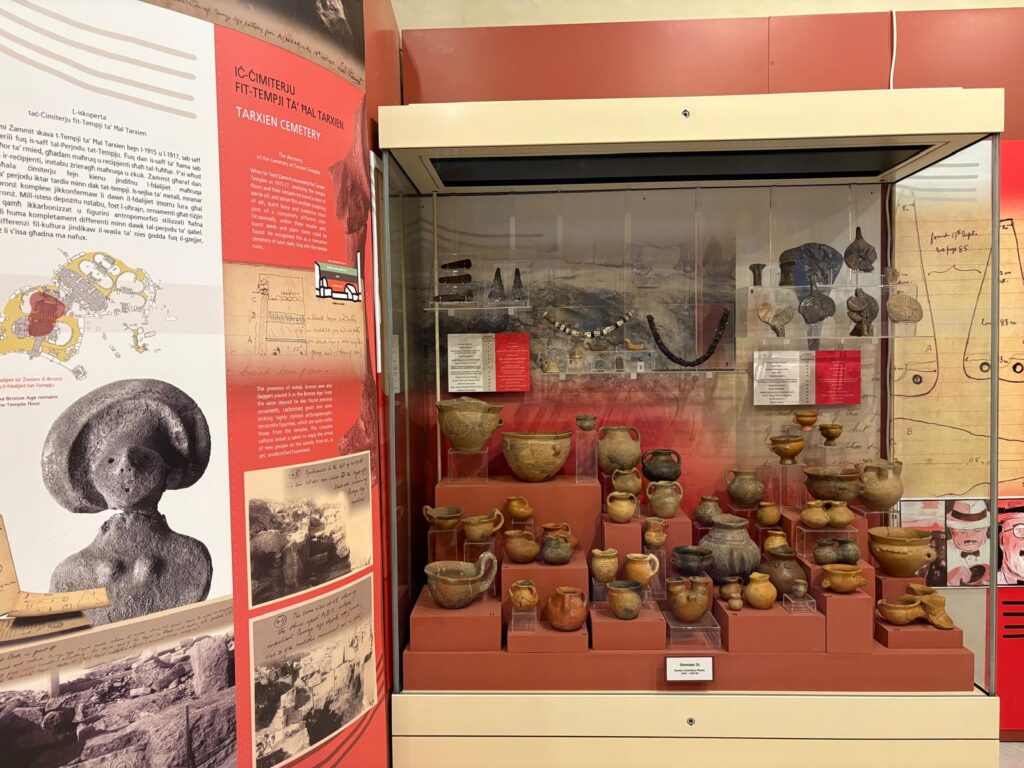
Archaeological Treasures
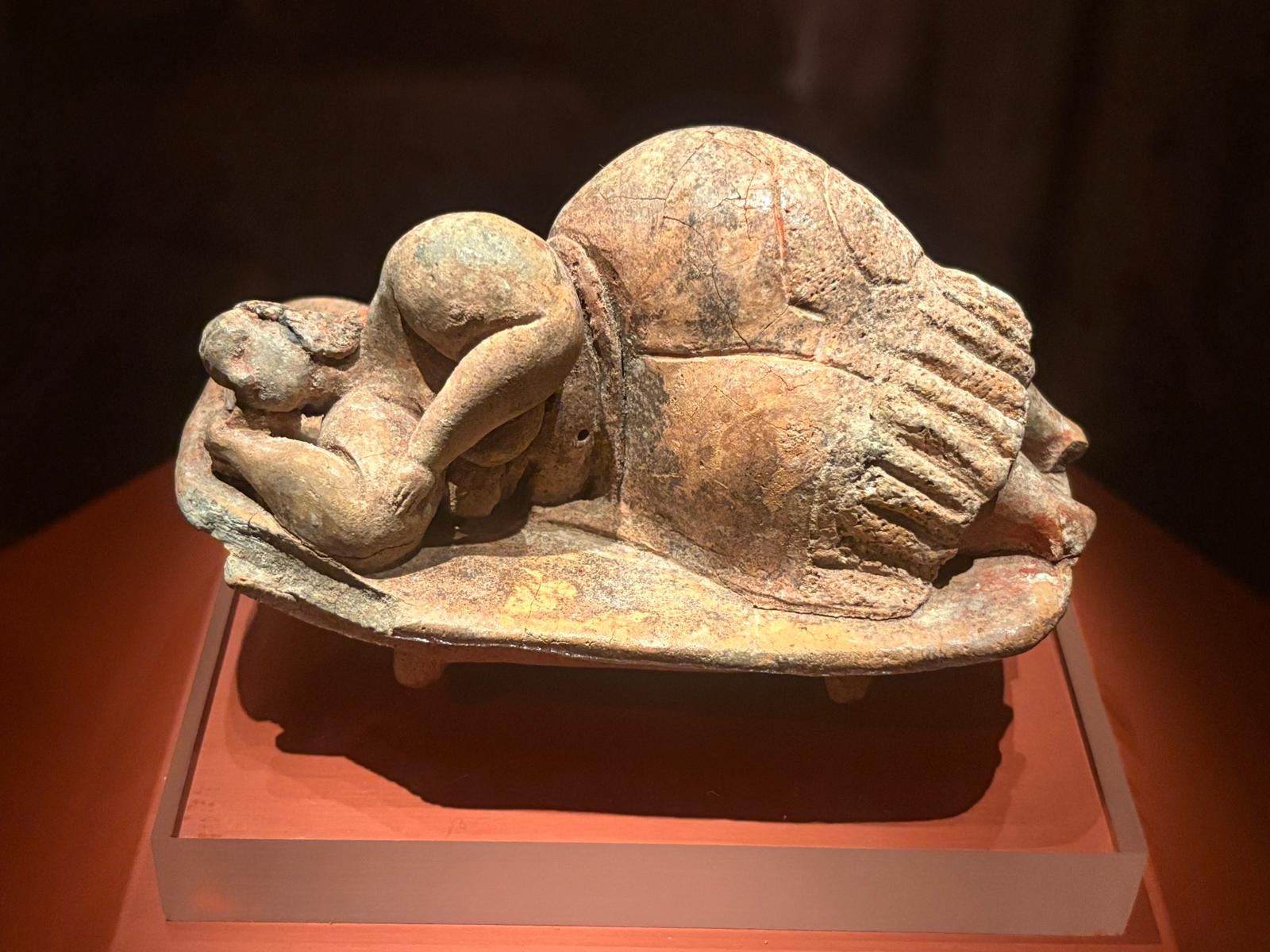
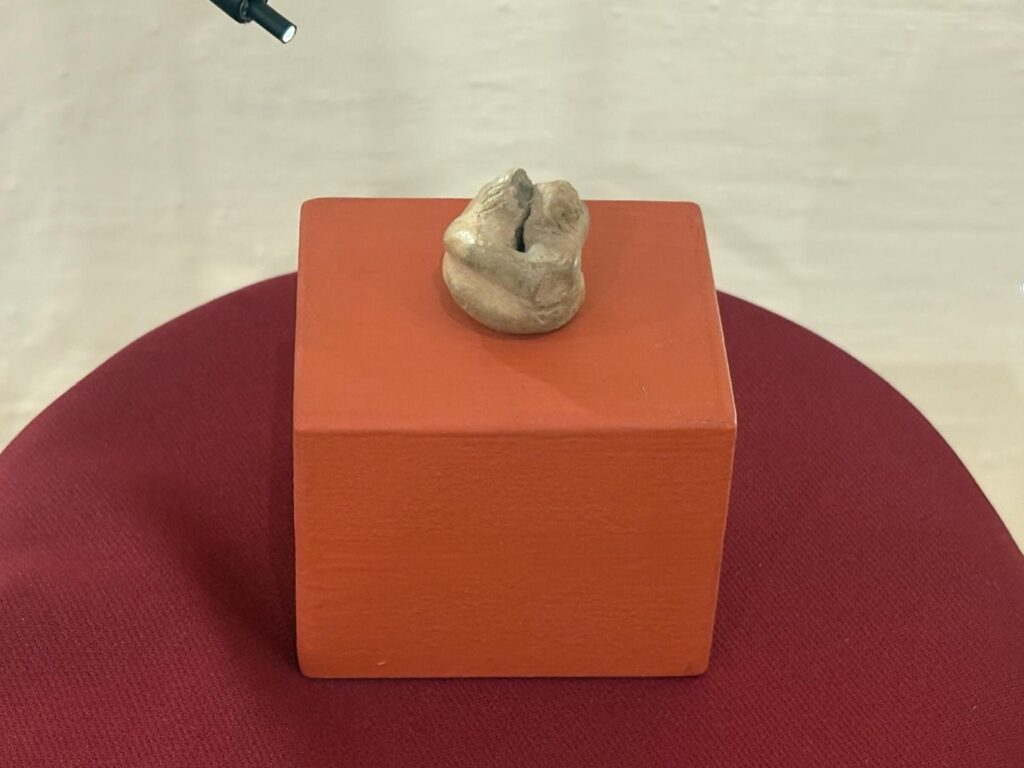
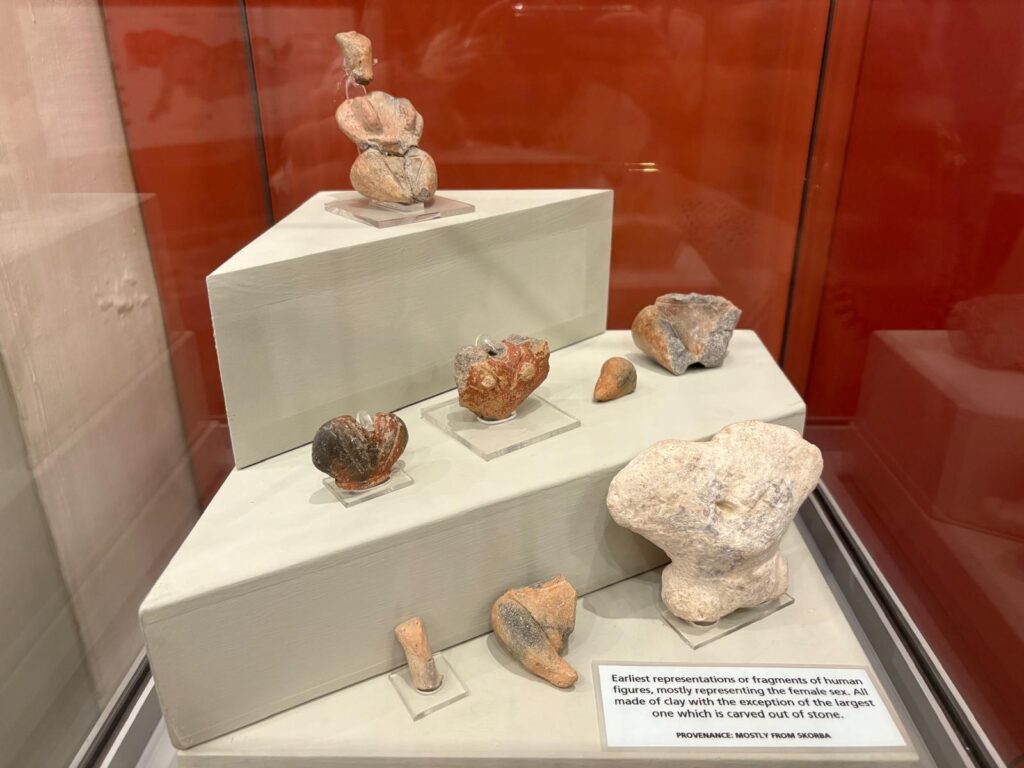
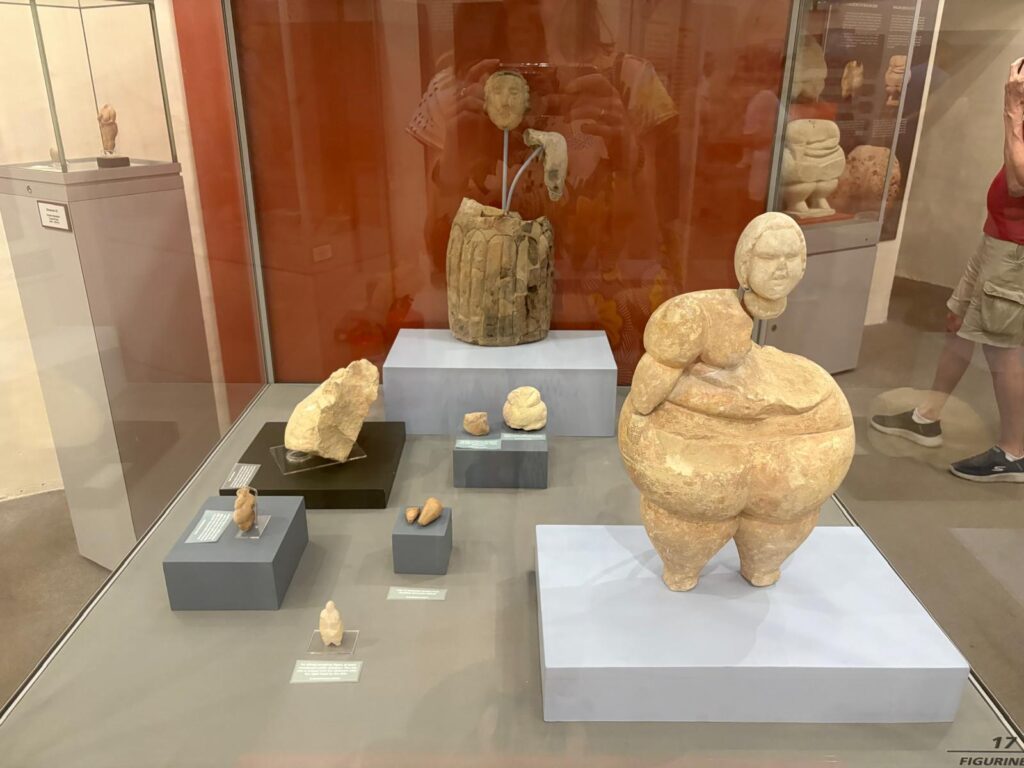
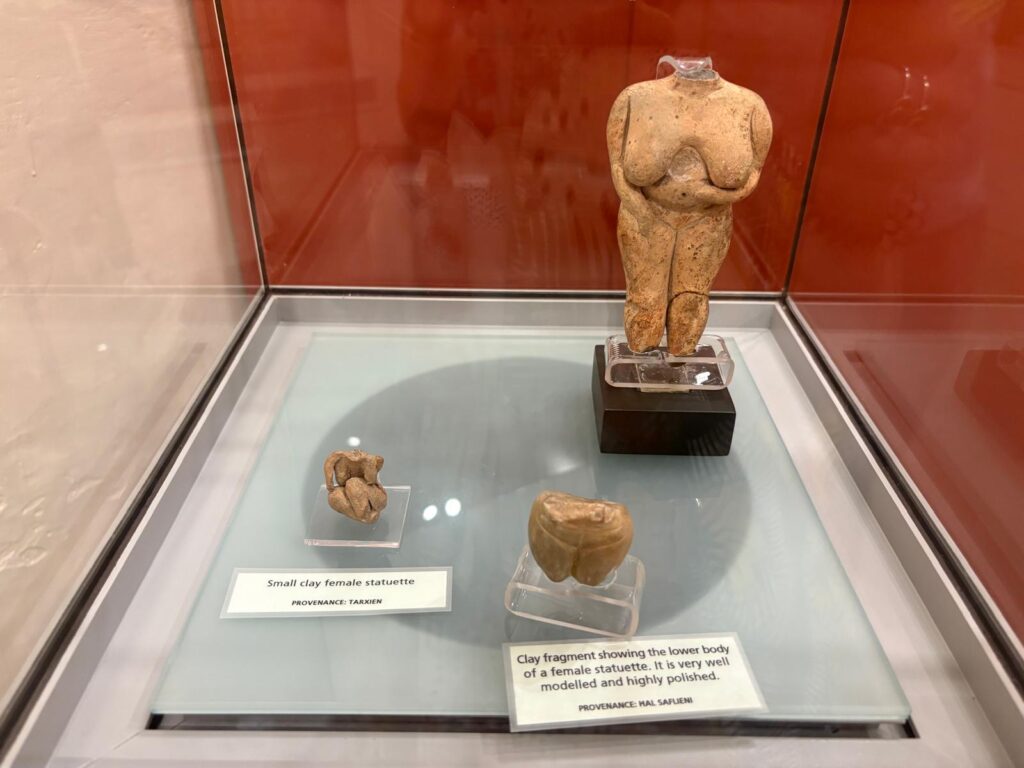
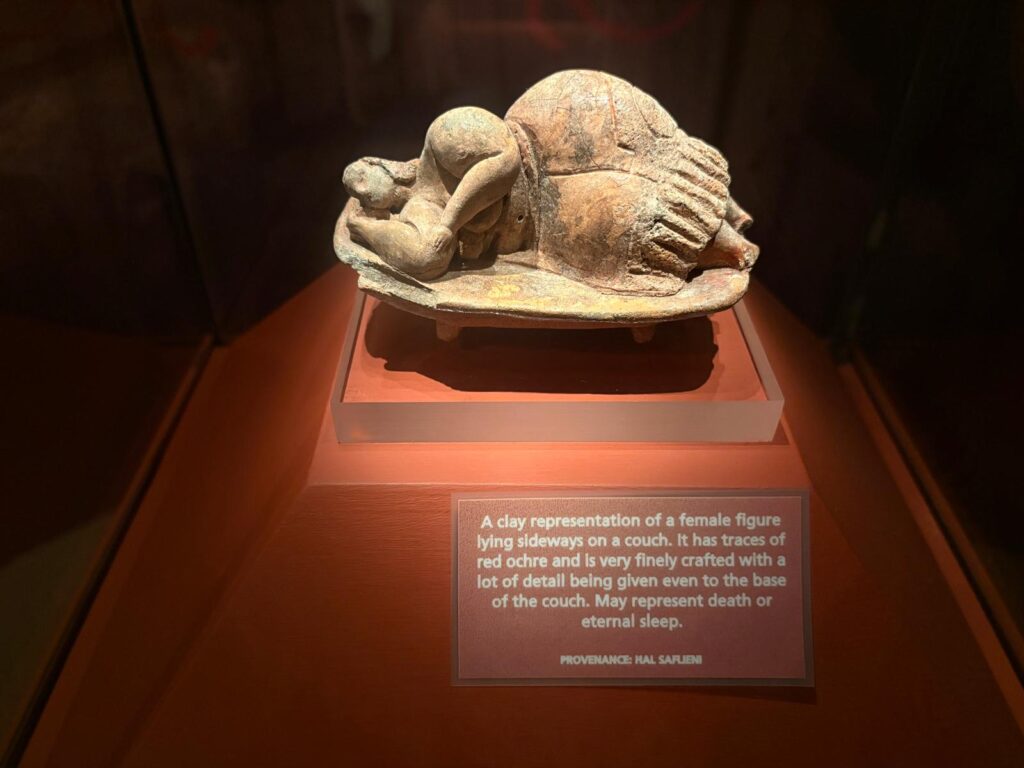
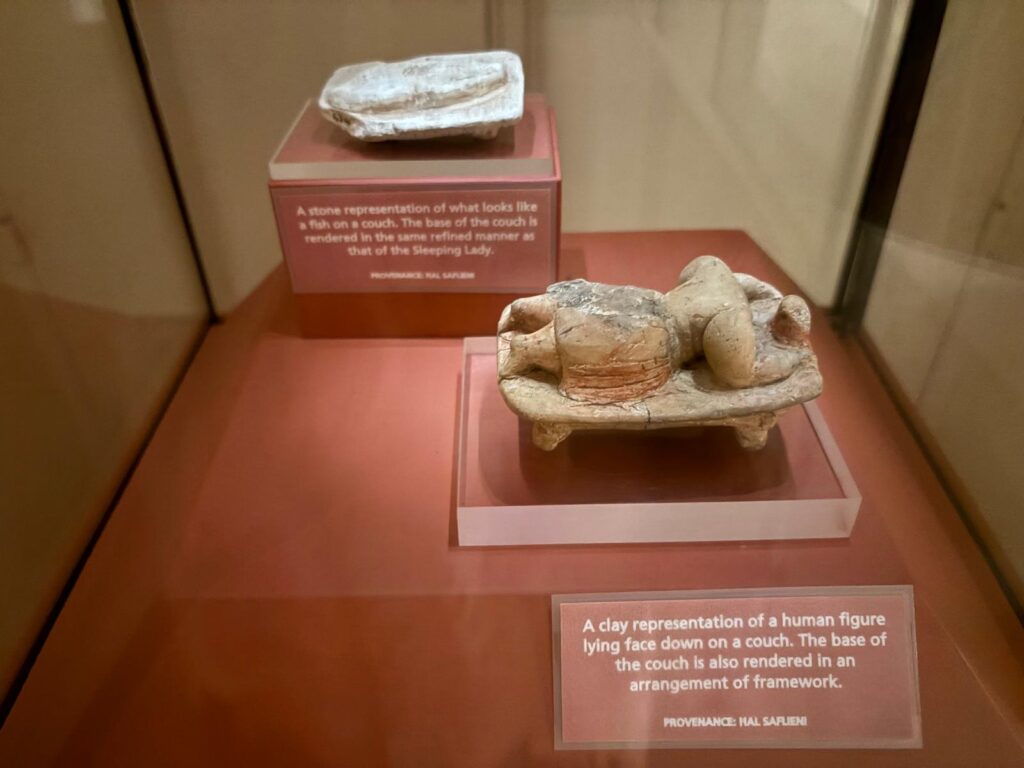
Megalithic temples don’t necessarily lend themselves to museum displays, though, do they? Well luckily for us, the Temple Builders of Malta also turned their hands to smaller-scale objects. It seems their religion involved a focus on fertility, or a fertility cult, as they left behind many rounded, often female, figures. Of these, the most stunning is the sculpture known as The Sleeping Lady. Unlike many Neolithic clay figurines which were broken in ancient times, perhaps ritually, the Sleeping Lady is almost completely intact. You can see details of her hair and clothing, while the couch she sleeps on sags under her weight.
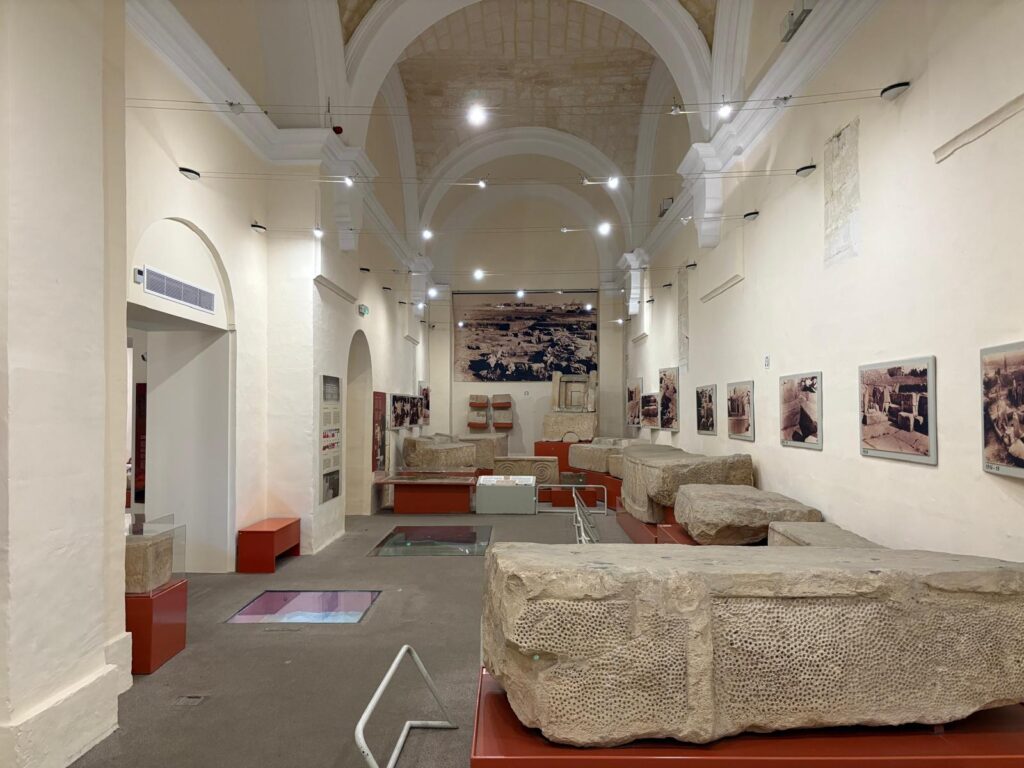
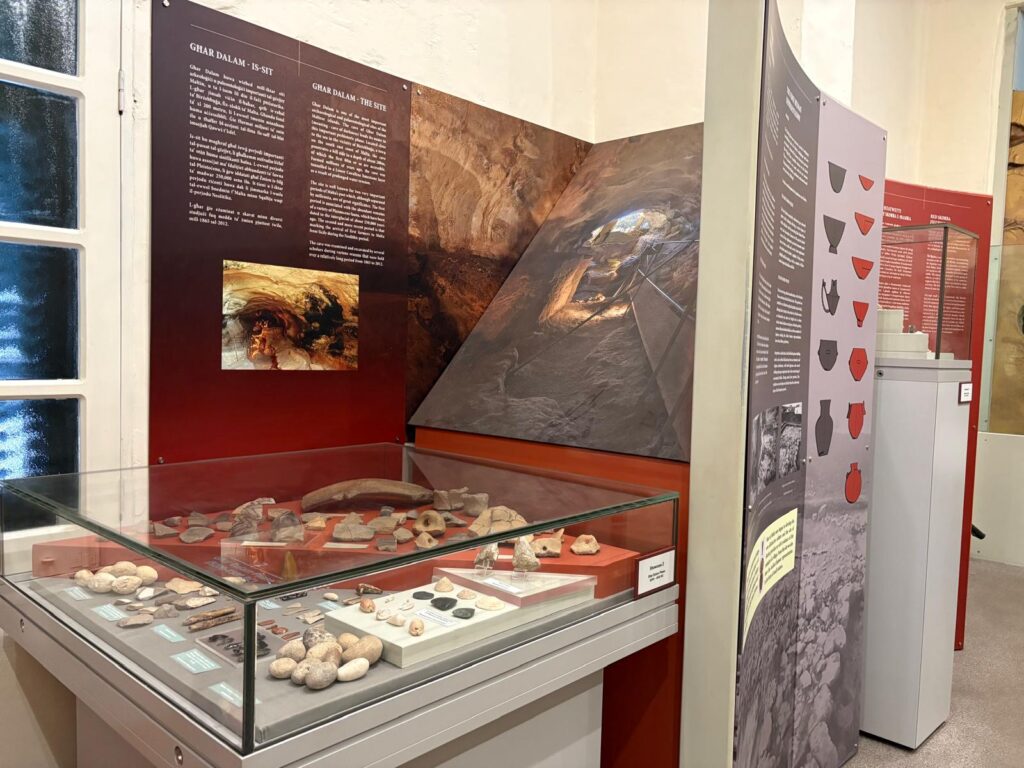
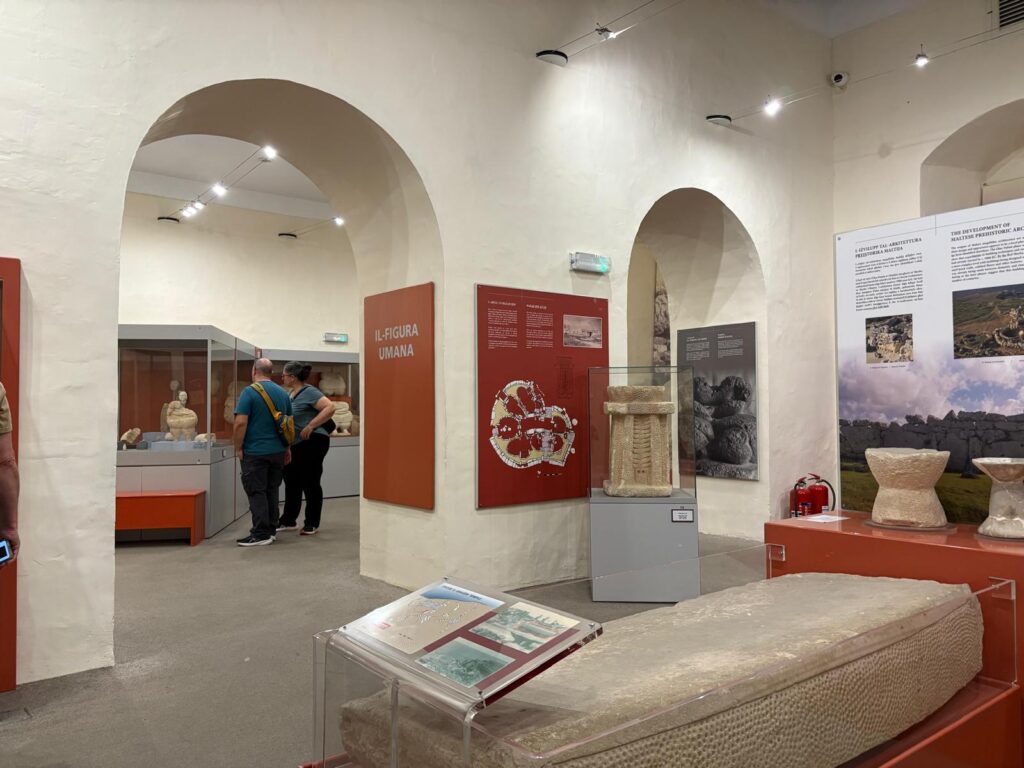
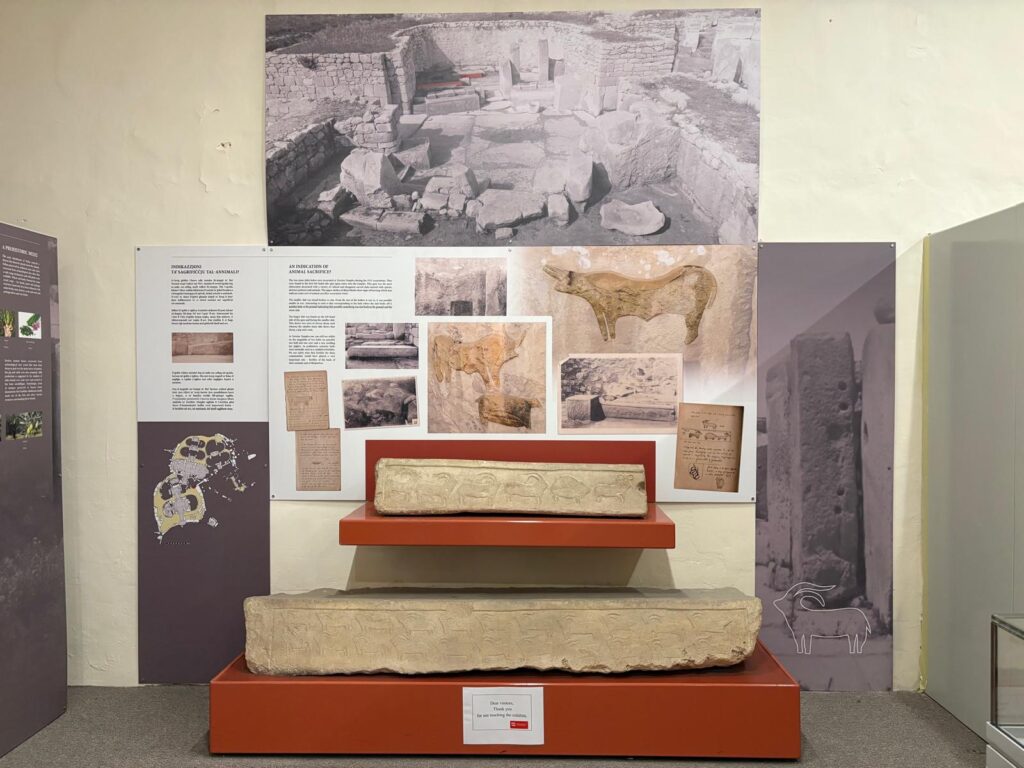
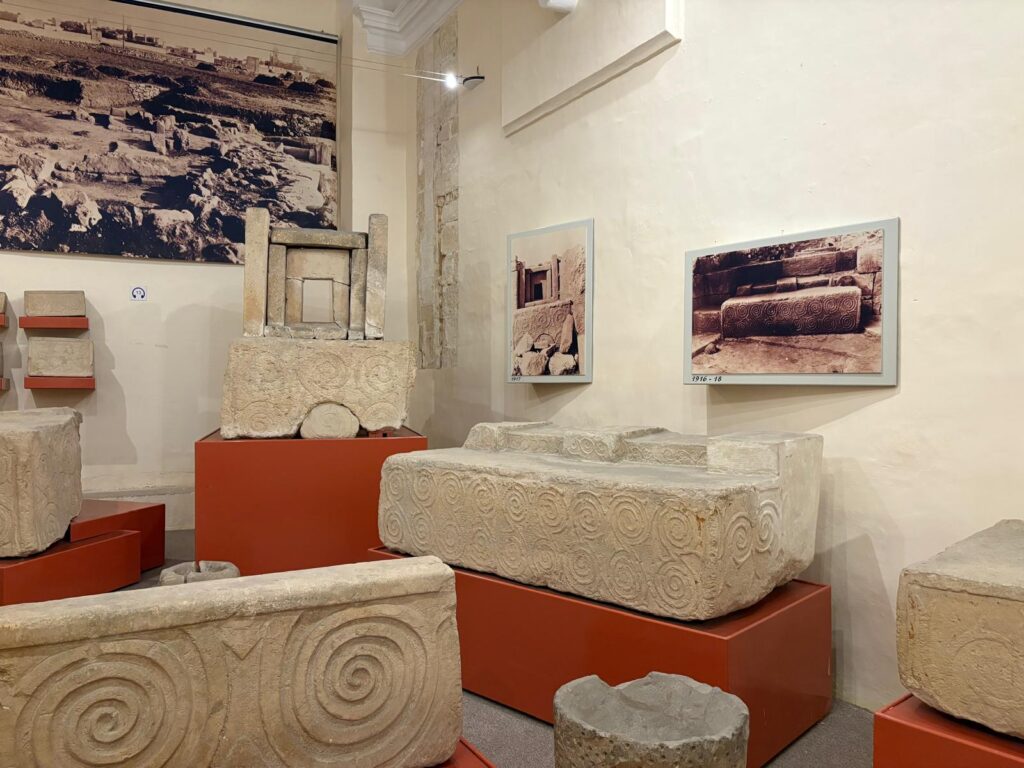
The Sleeping Lady gets pride of place within the museum’s ground floor prehistory galleries. Frankly, I would have paid an entry price to see this one artefact alone! But she is in good company, with many other Neolithic figures, ranging in size and completeness. There are also altar stones brought to the museum for safe-keeping, with images showing them in situ. Also on the ground floor is a gallery on the 1925 Antiquities Protection Act which has helped keep many of these sites and artefacts safe.
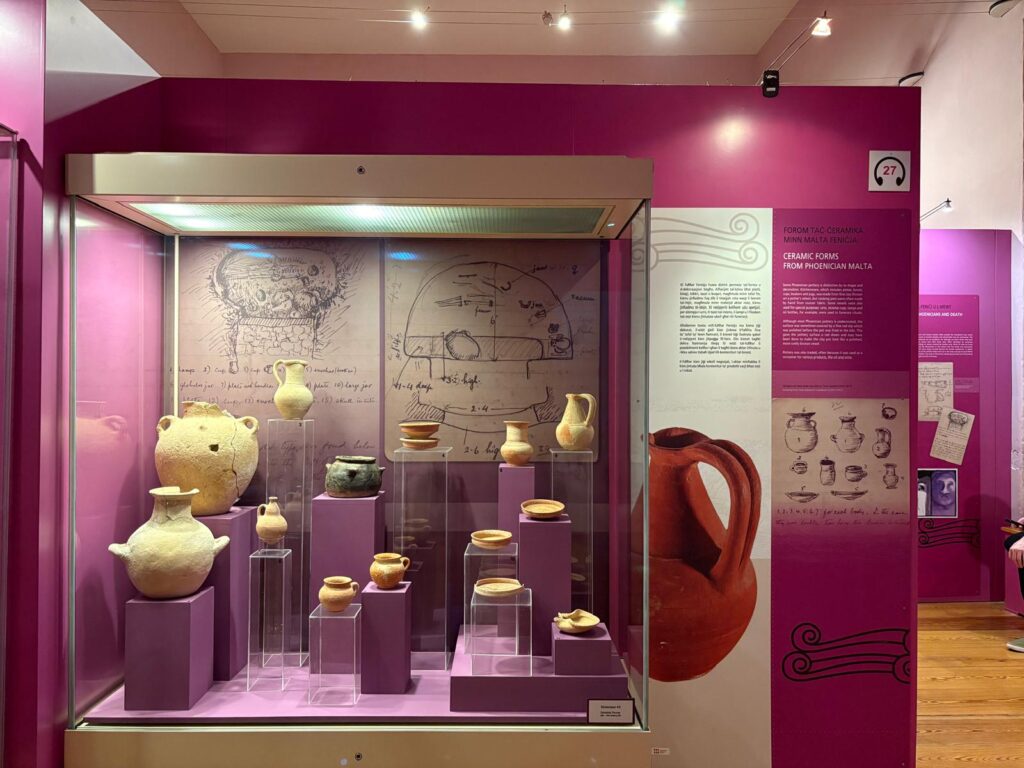
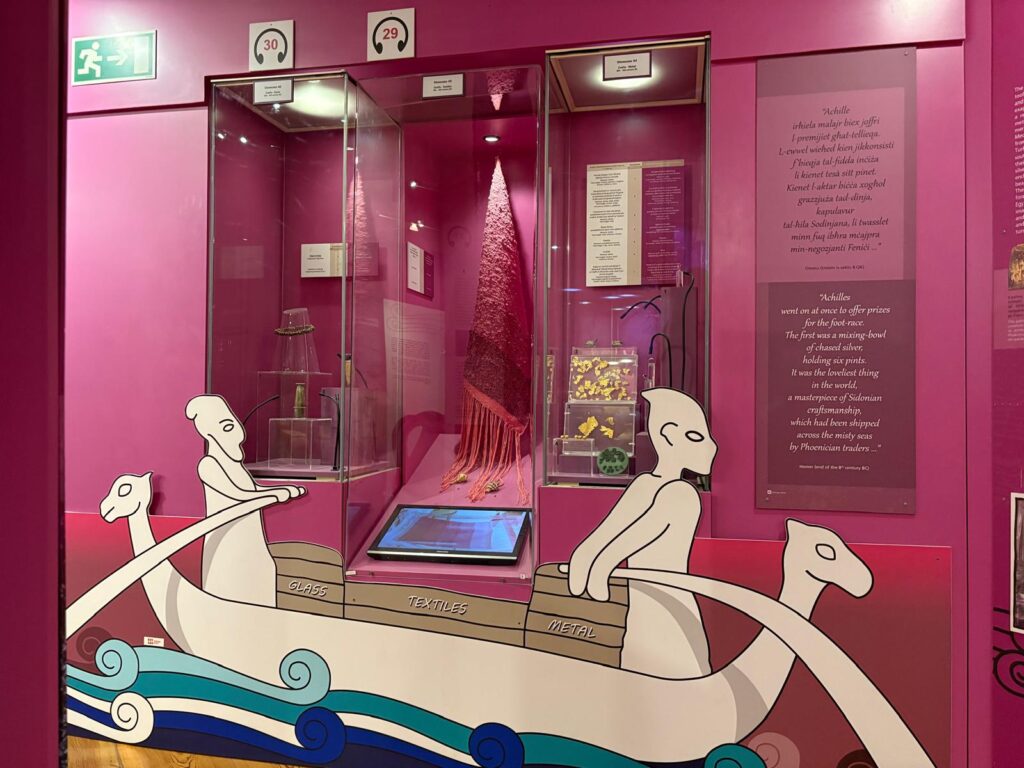
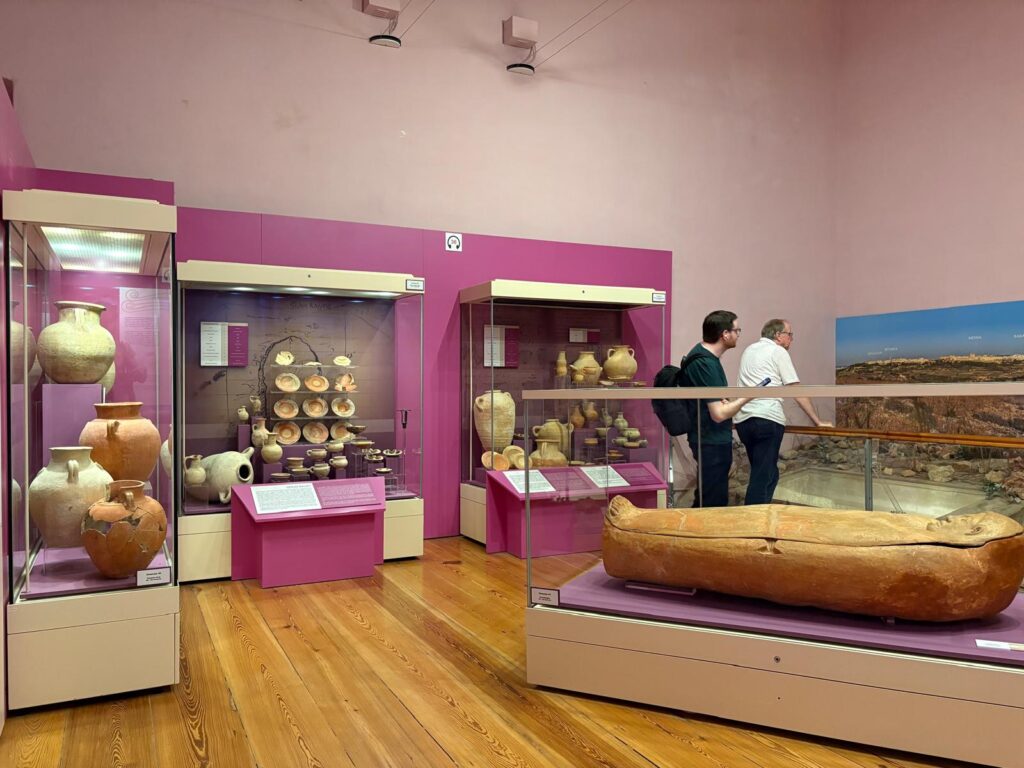
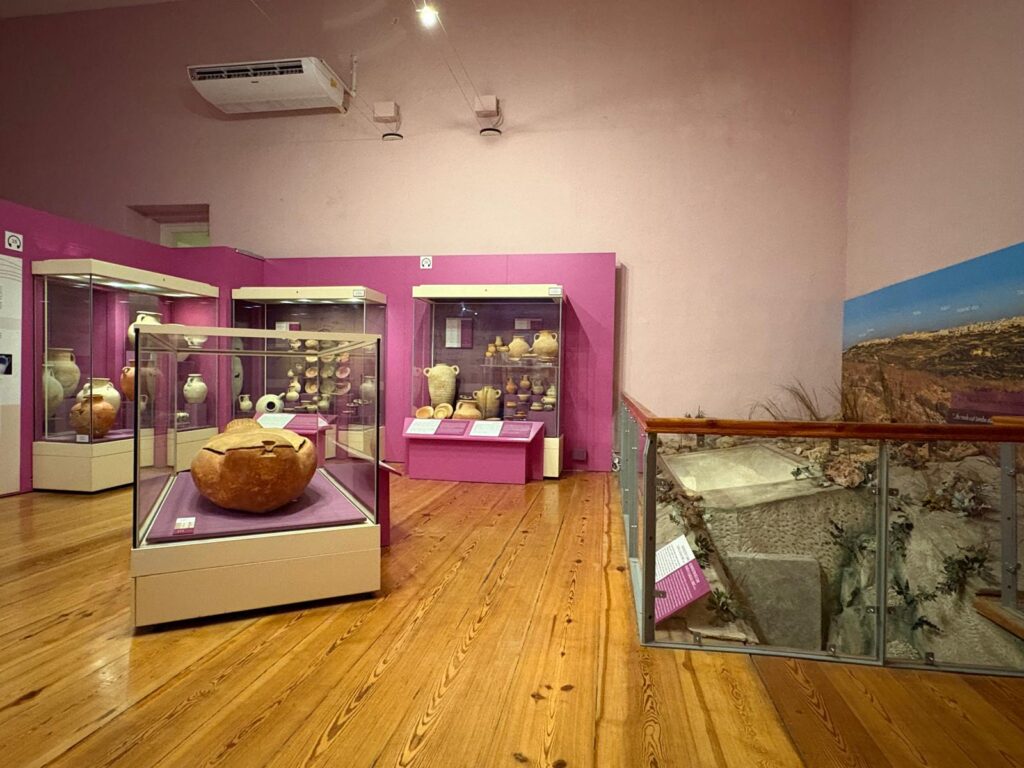
Upstairs, we move forward in history. There are displays on the Bronze Age people who replaced the Temple Builders, and on the Phoenicians. Interesting displays include an anthropomorphic sarcophagus, intricate gold items, and a display on Malta’s mysterious ‘cart ruts‘.
After popping your head into the Gran Salon, and checking out temporary exhibitions, the only thing left is a numismatic collection (for me, not the most interesting part of archaeology). So that does mean there’s something of a gap. Or an abrupt ending, perhaps. No place to go to see Malta’s archaeological record after the Phoenicians, in any case. I know there are thoughts of expanding the museum at a future date, so perhaps the timeline can then be extended.
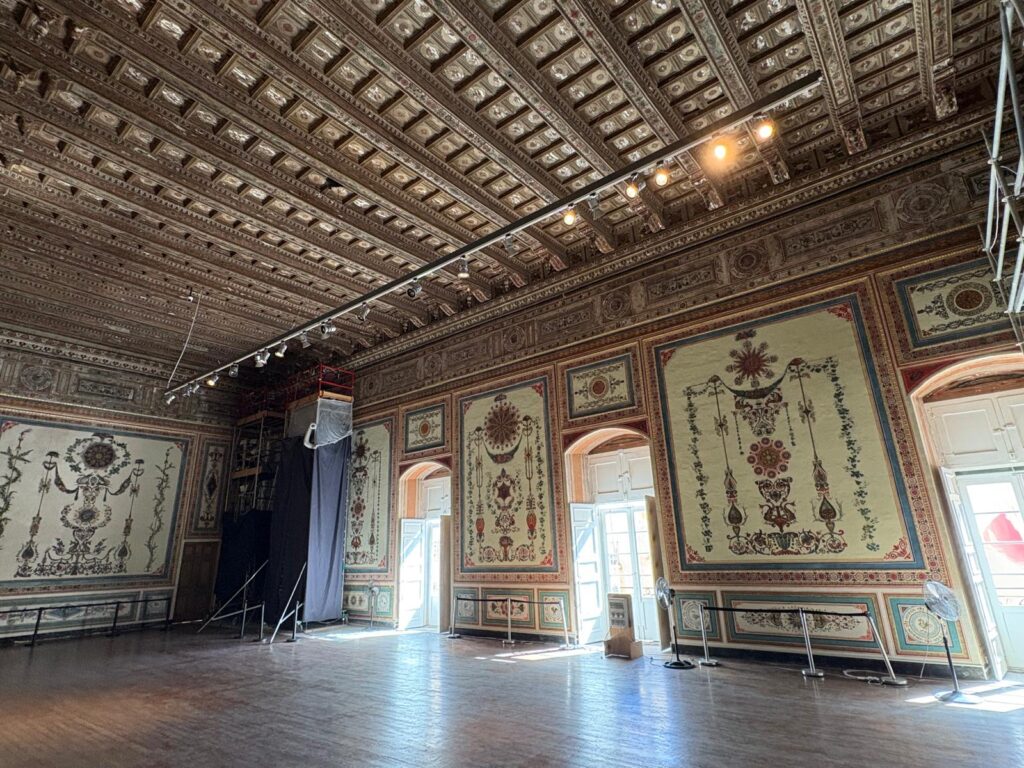
Visiting Malta’s National Museum of Archaeology
I’ve been up front about the fact that I would have come here for the Sleeping Lady alone. But would I recommend it generally for visitors to Malta?
Yes, I believe I would. The museum displays are a little old-fashioned, sure. Classic display cases, quite text heavy, just in need of a bit of a facelift. But the quality of the objects is high, and the texts are informative. If you’re new to Malta, this is a good place to learn about those early inhabitants, so that when you visit an archaeological site or two you understand what you’re looking at. Those places could well have a small onsite museum of their own, but those typically don’t give as good an overview.
There’s also not really anywhere else in Malta to learn about the Phoenicians. Or the Bronze Age inhabitants. Temple Builders and Knights Hospitaller dominate the historic built environment, with other groups having left smaller traces. So that is a good opportunity, as the Phoenician objects are interesting in and of themselves. Finally, it’s also a good opportunity to see inside an auberge. There are a few others you can visit in Malta, but many are in private use so can only be admired from the outside.
I hope, if you visit, that you enjoy the museum as much as I did. We’re going to go on now to one final section dedicated to the temporary exhibitions on view when I visited.
Temporary Exhibitions
I learned in preparing this section that the distinction between permanent display and temporary exhibition wasn’t always very clear to me!
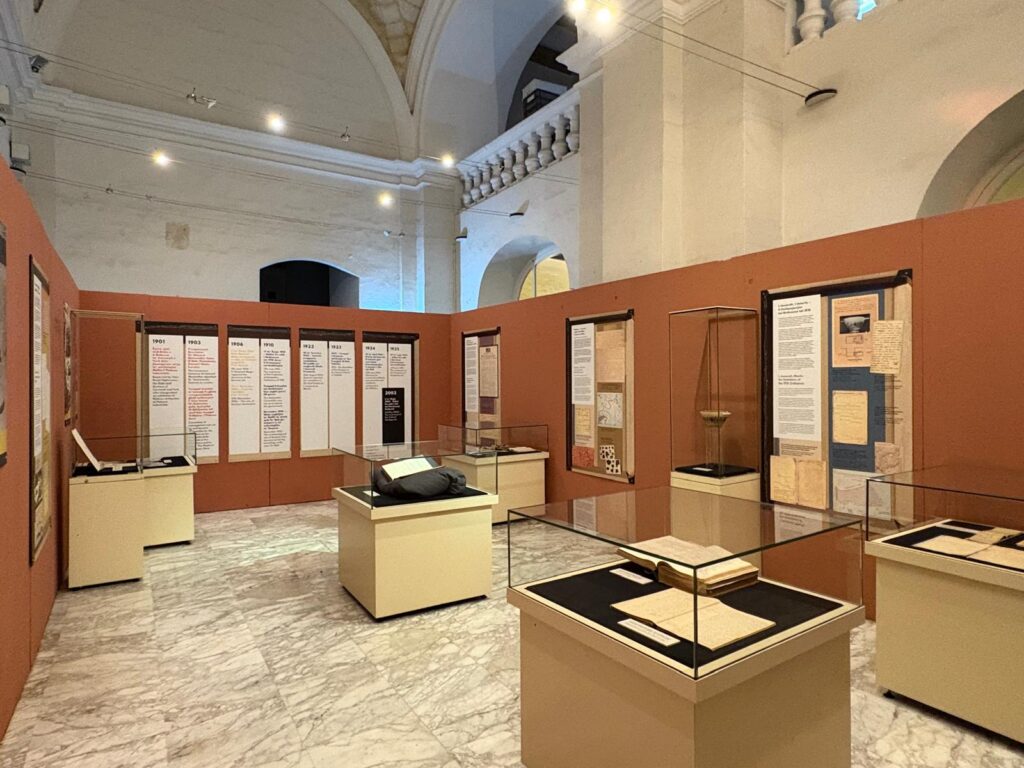
First up, for instance, that ground floor display From Destruction to Preservation: Towards the Antiquities Protection Act (1925) was actually a temporary exhibition, running from October 2025 to January 2026. It’s a shame that one’s not permanent as the context on the history of archaeology in Malta complements the displays of archaeological artefacts very well.
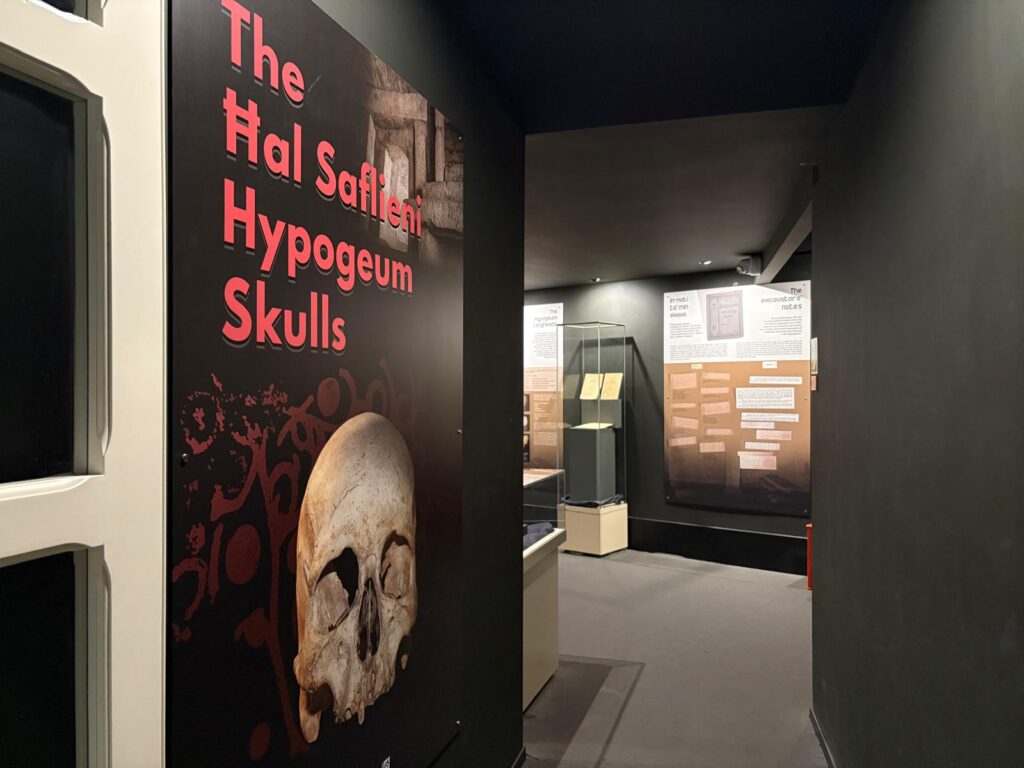
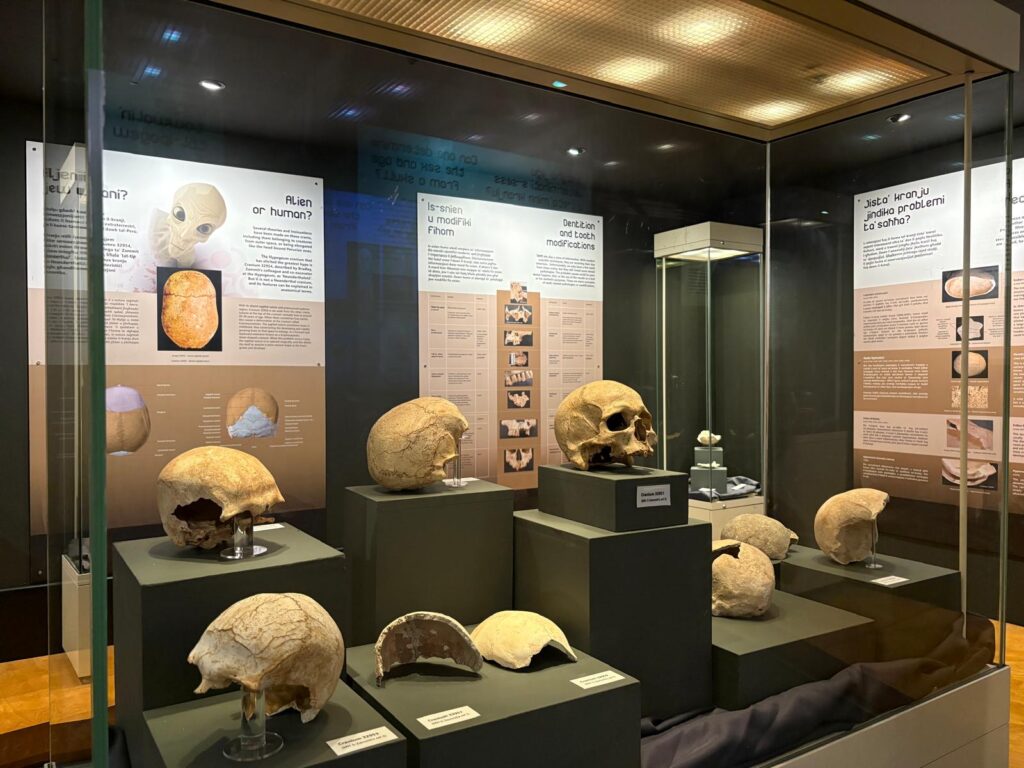
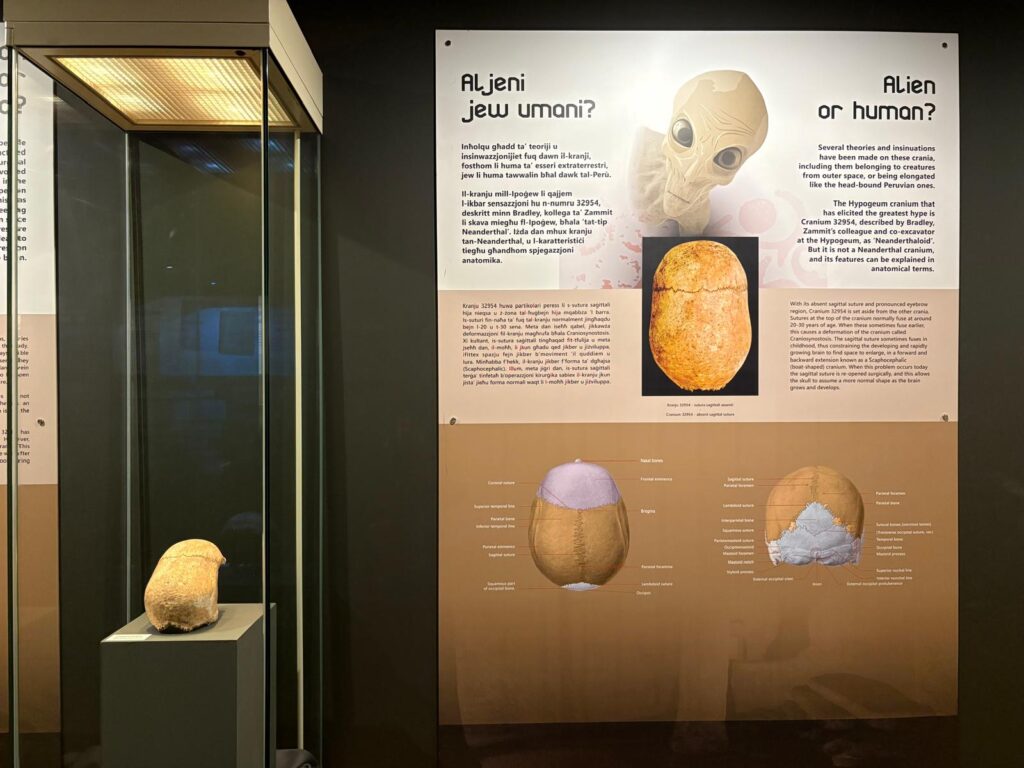
And one that I thought was definitely a temporary exhibition turns out to be semi-permanent. It probably started out as a temporary display, Alien Headaches? The Hypogeum Skulls Enigma. That version, running from December 2020 to April 2021, was the first time in many years that skulls from the Ħal Saflieni Hypogeum had been on display. The Hypogeum is an extraordinary archaeological site, a vast underground burial chamber. Fr. Emmanuel began its excavation after discovery in 1902, and after his death Themistocles Zammit took over. Much of the thick layers of human remains were already discarded and lost by this point, but Zammit preserved what he could. His description of some of them as ‘long-headed’ led to conspiracy theories of ancient aliens, but both the former exhibition and this iteration, The Ħal Saflieni Hypogeum Skulls, make it clear that he just meant some skulls were longer rather than rounder.
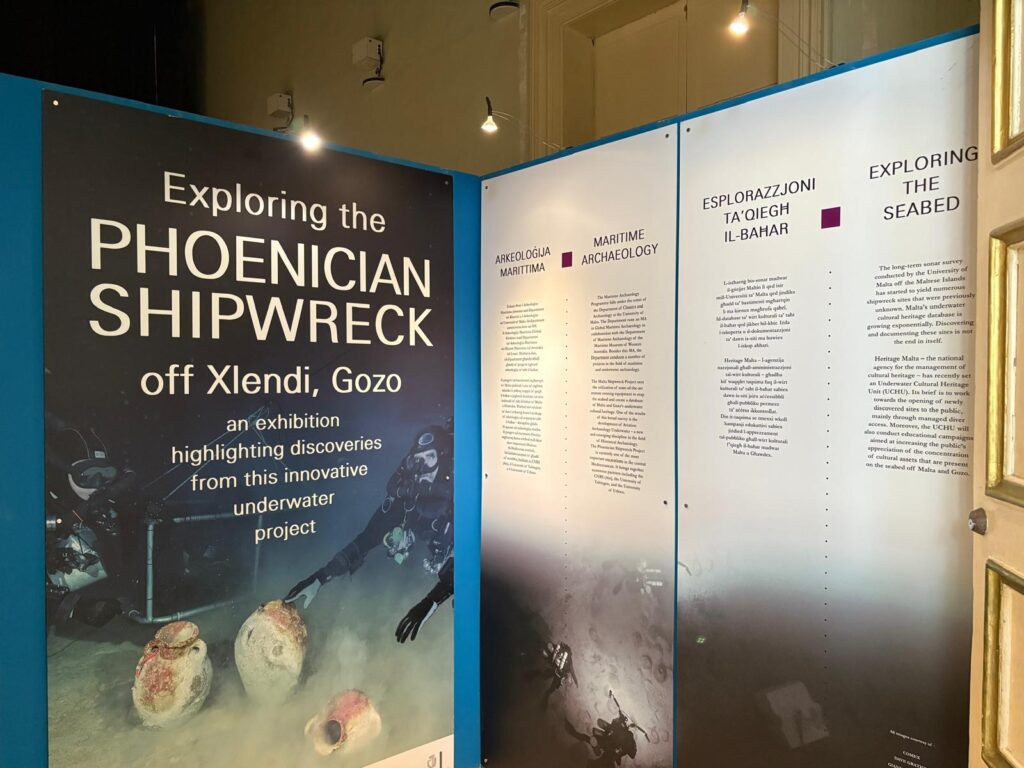
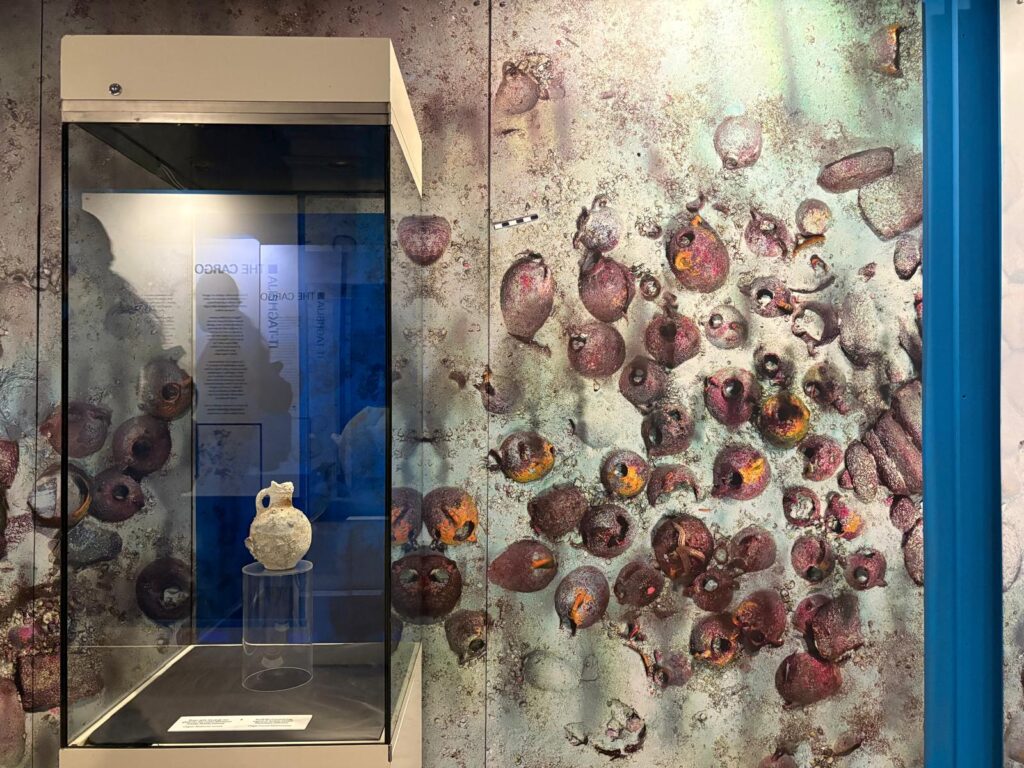
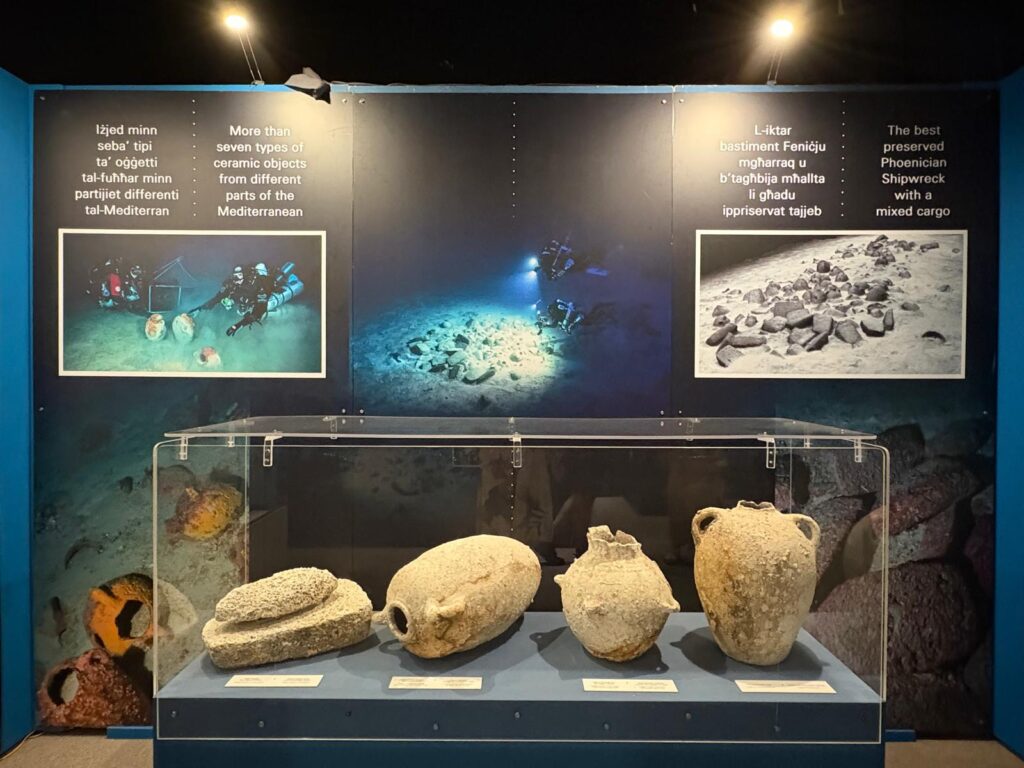
Finally, the only one I correctly identified as a temporary exhibition was Exploring the Phoenician Shipwreck off Xlendi, Gozo. This is an interesting display about underwater archaeology. Again rather text heavy, with a few amphorae to illustrate the point. But Malta is rich in underwater archaeological and dive sites, albeit mostly from the country’s later history, so this is a nice way to incorporate that story.
Trending
If you see this after your page is loaded completely, leafletJS files are missing.