
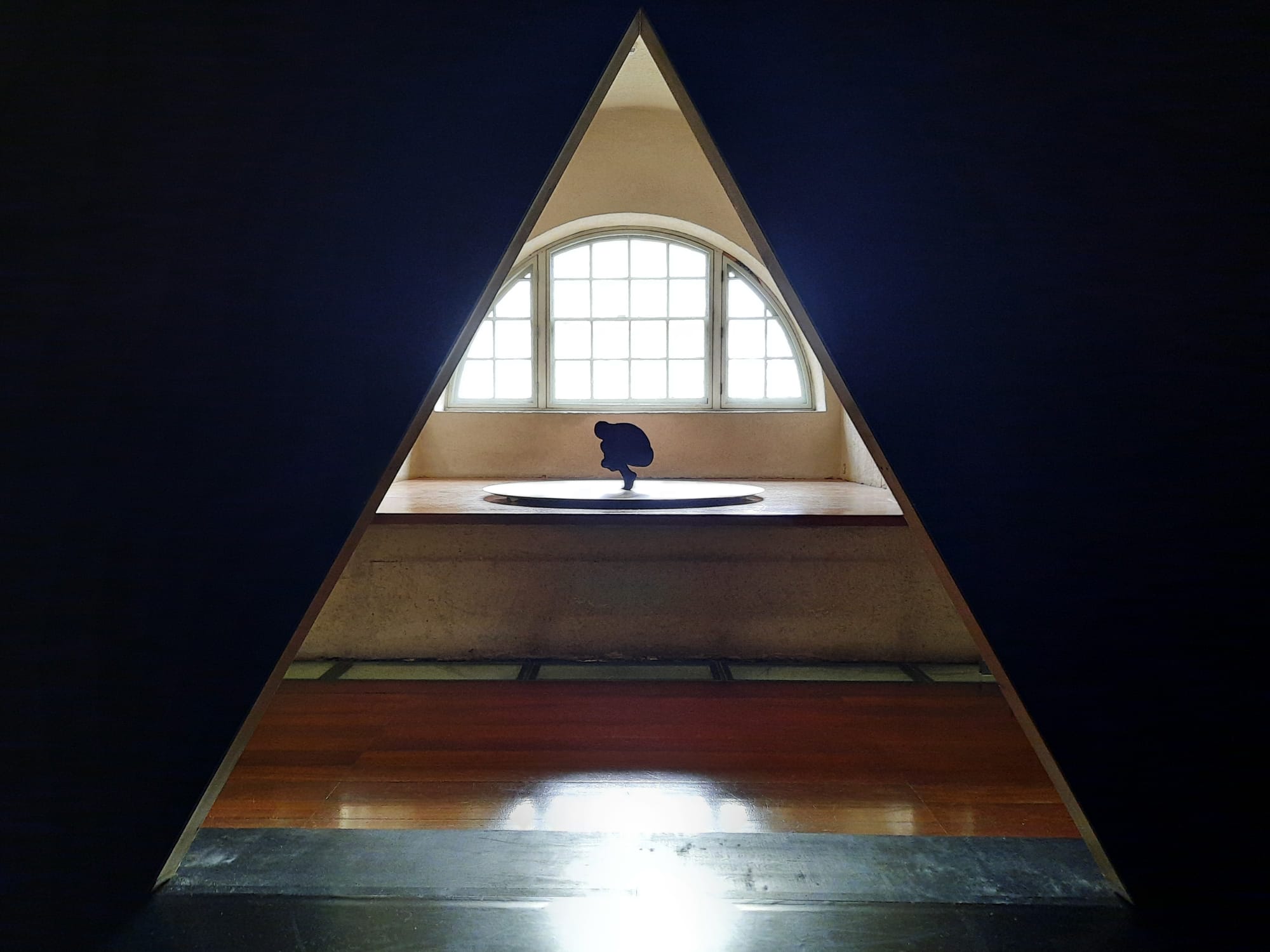
Wayne McGregor: Infinite Bodies – Somerset House, London
Wayne Mc Gregor emerges as a key collaborator and experimenter in the age of AI in Infinite Bodies at Somerset House.
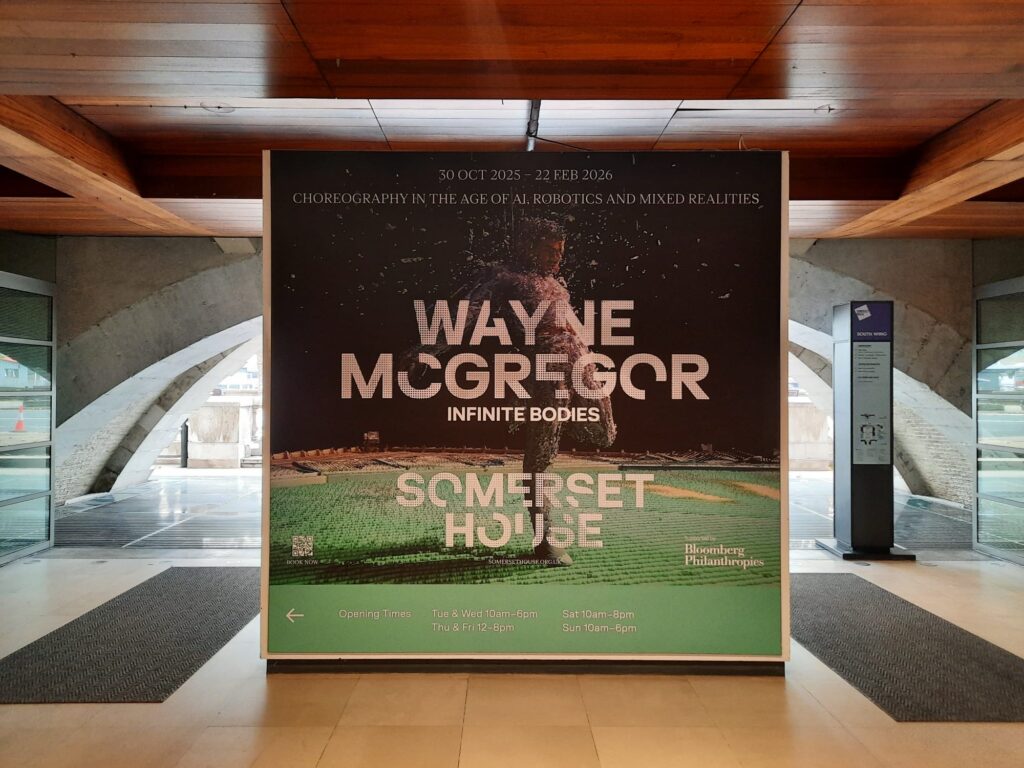
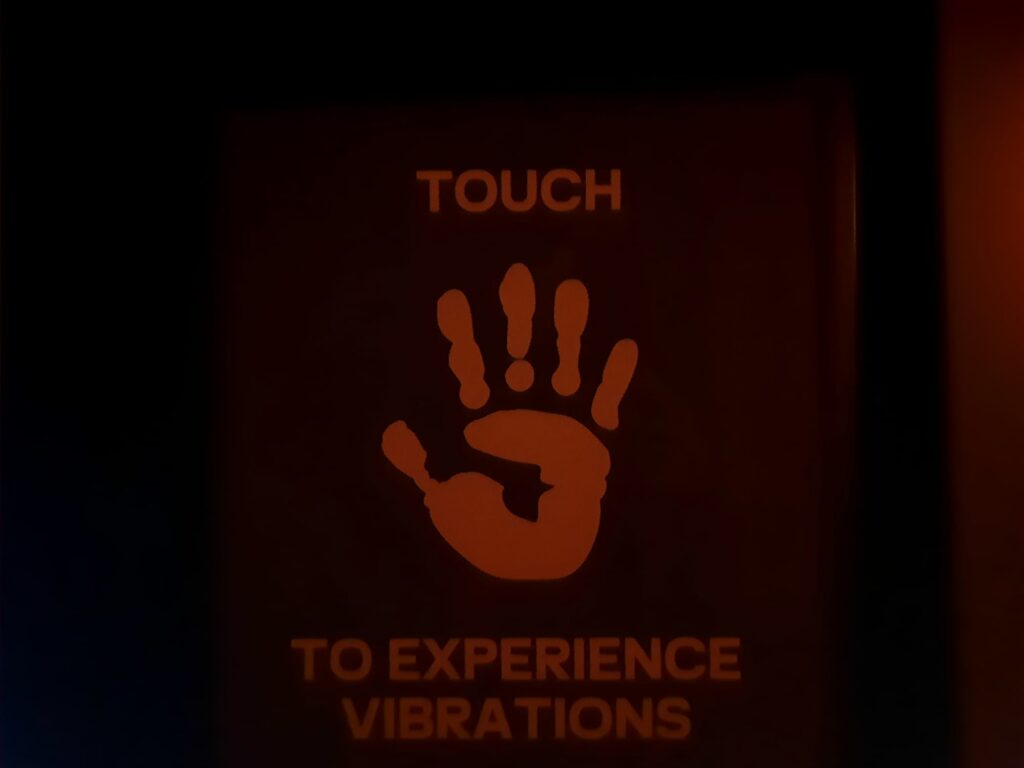
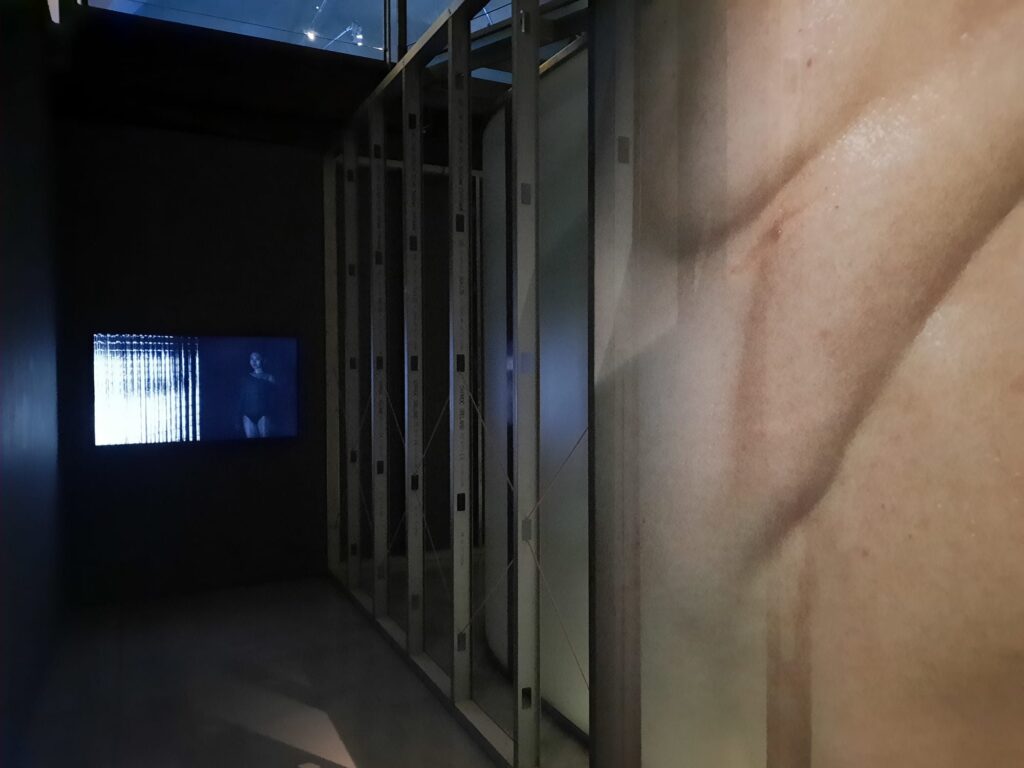
Wayne McGregor at Somerset House
It’s that time of year when I start trying to rush around the exhibitions of the London winter season. Expect a flurry of ‘LAST CHANCE TO SEE’ posts in the coming weeks. But thankfully today’s exhibition is one that’s on for some time still, which is perfect as I urge you to see it if you can. It’s part of Somerset House’s programming marking 25 years as an arts venue, and is on in their Embankment Galleries. But now for a bit of an introduction to the man of the hour.
Wayne McGregor has been such a constant in British dance over the last few decades that it’s easy to forget quite how unusual his creative path has been. He’s the Royal Ballet’s first Resident Choreographer from a contemporary background, the founder of Studio Wayne McGregor, and a serial collaborator with everyone from scientists to pop artists. His work pops up everywhere (the Royal Opera House, Paris Opera Ballet, the Venice Biennale), managing to strike a balance between recognisable and fresh. What holds it together is a questioning of how bodies think and how movement shapes us.
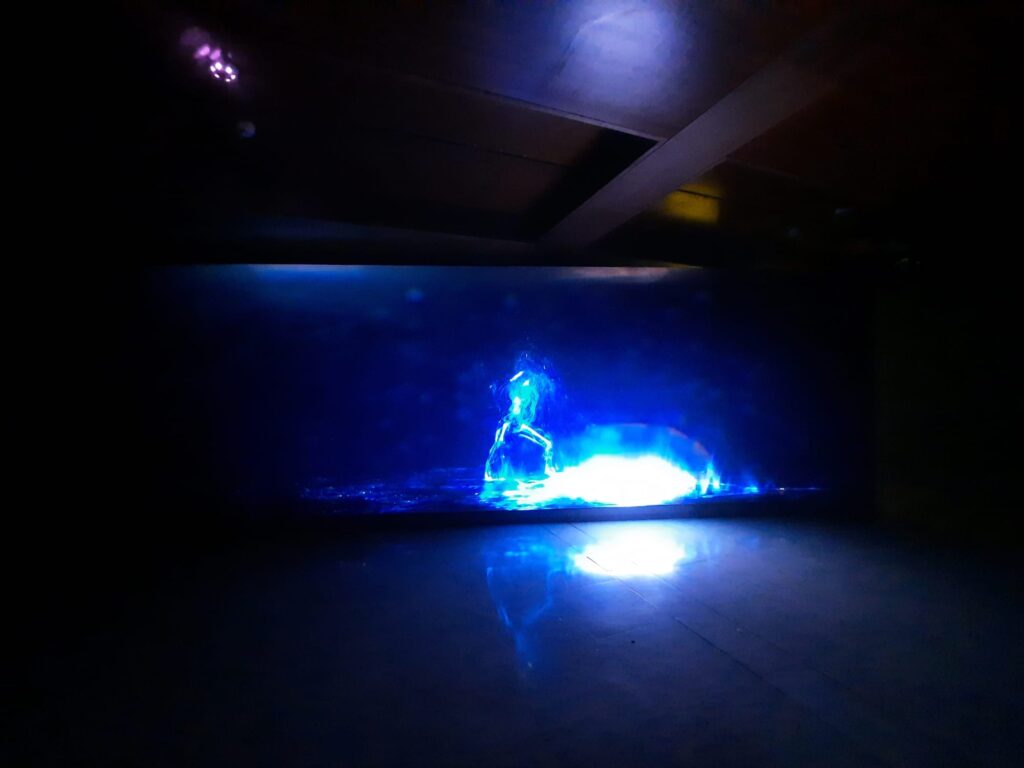
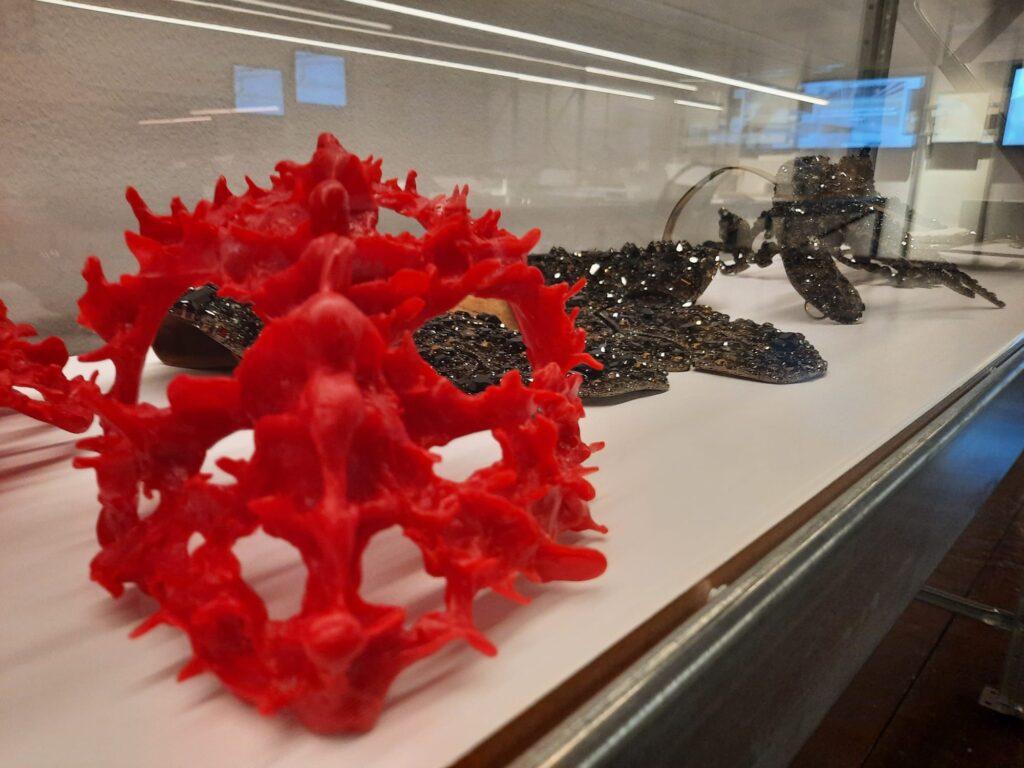
Infinite Bodies at Somerset House isn’t a greatest-hits retrospective. It’s much stranger and more personal than that. It feels like being invited into McGregor’s brain: full of experiments, research, motion-capture skeletons and emerging ideas. He’s been working with technology for so long (long before AI was the anxiety of the moment) that you can tell he’s in full command of the bandwagon, not a recent jumper-on. Even at its most polished, the exhibition has a quality of making processes visible, something I’ve admired in his work.
Infinite Bodies: AI That’s Thoughtful (and Fun)
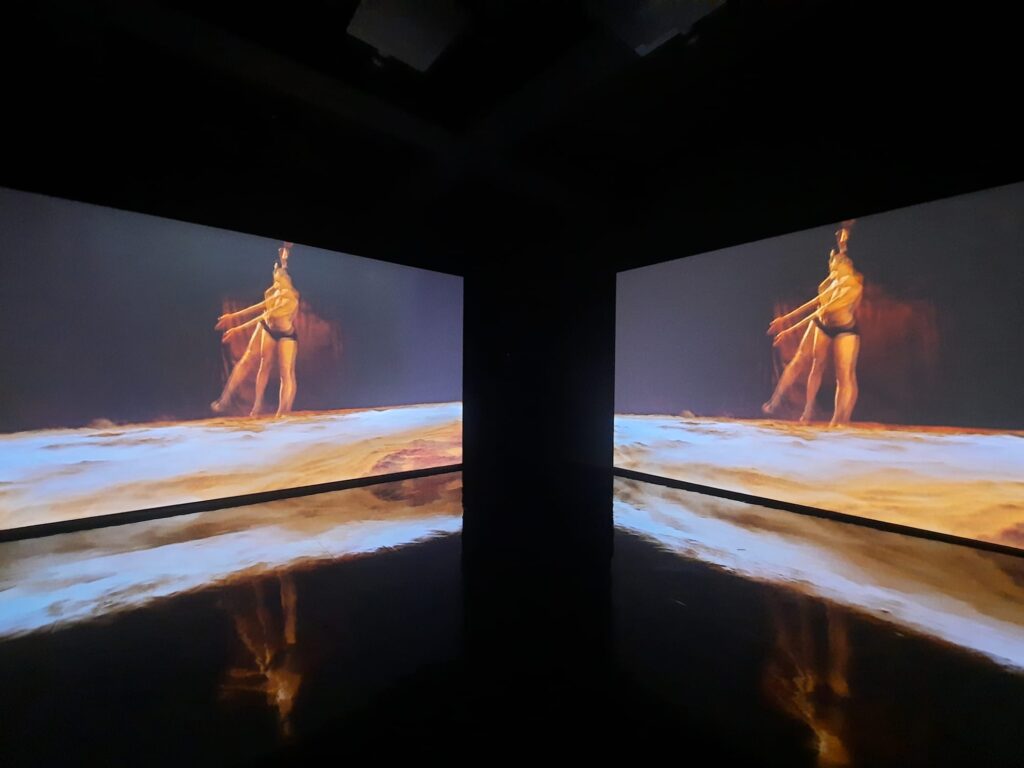
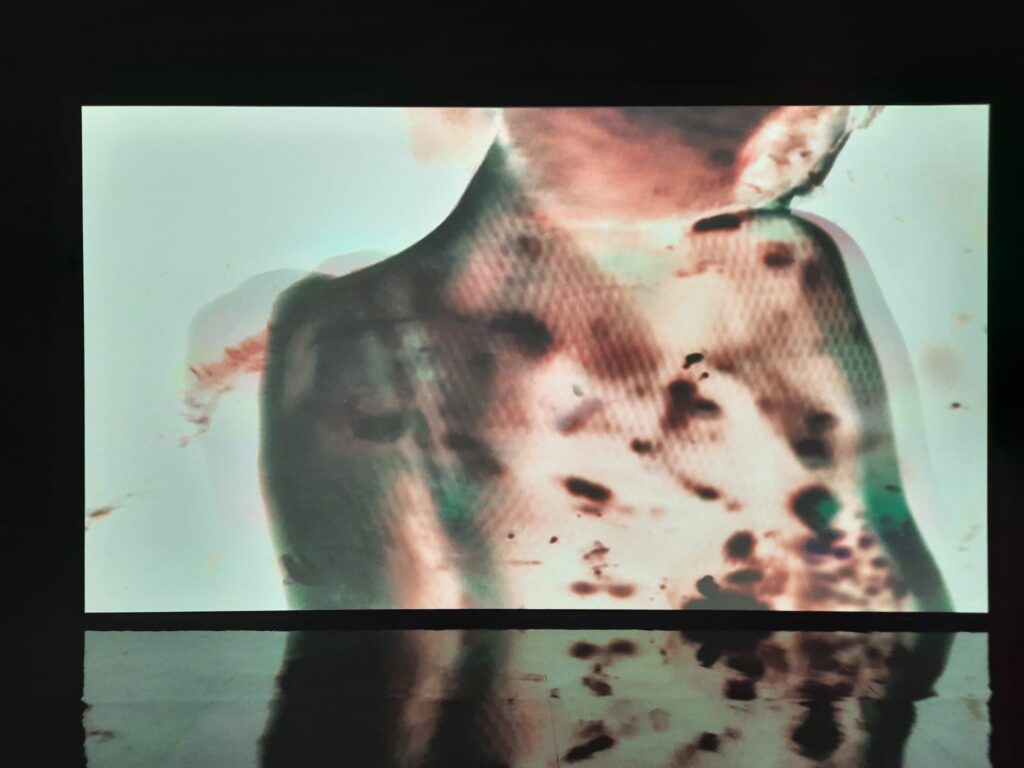
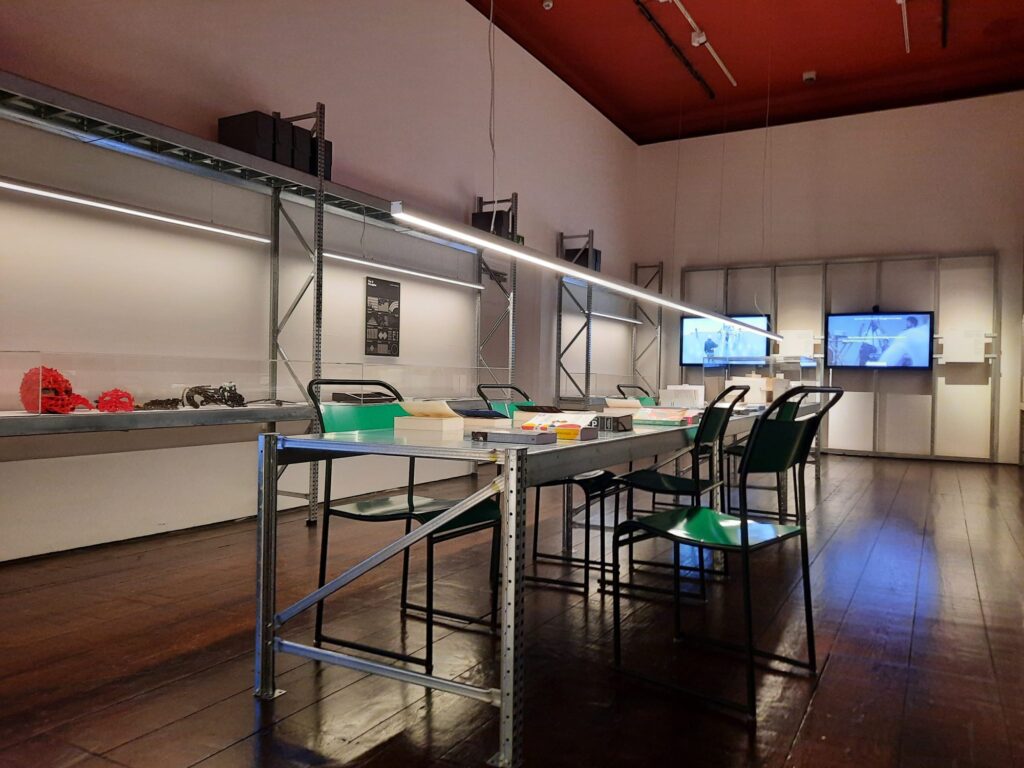
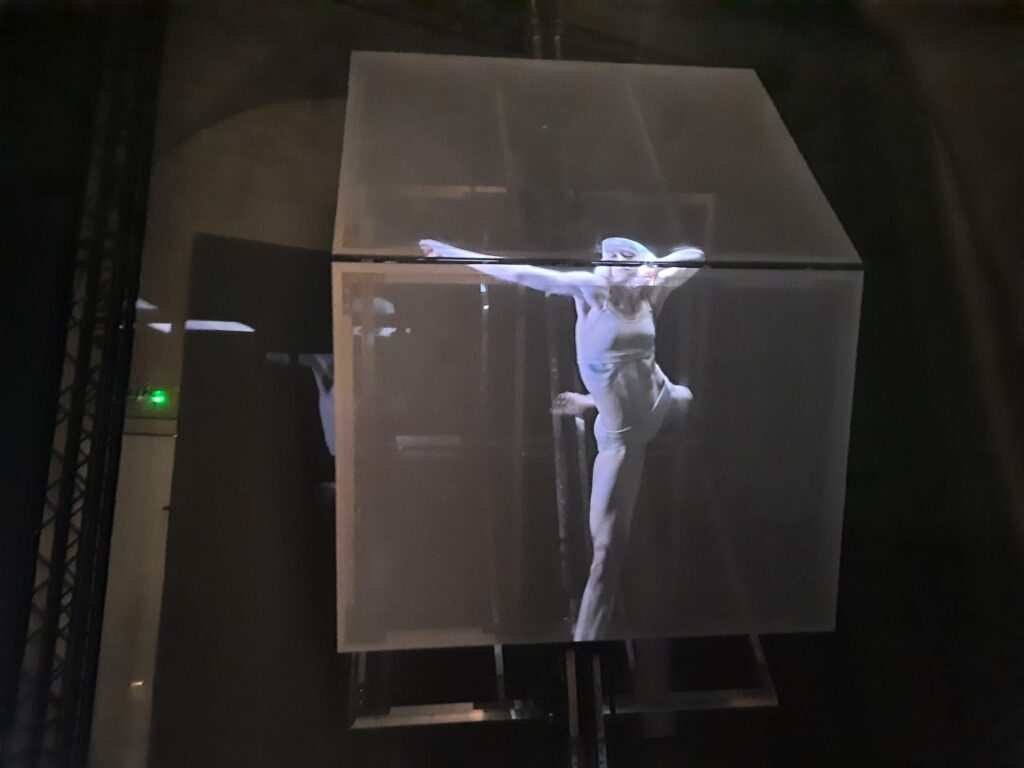
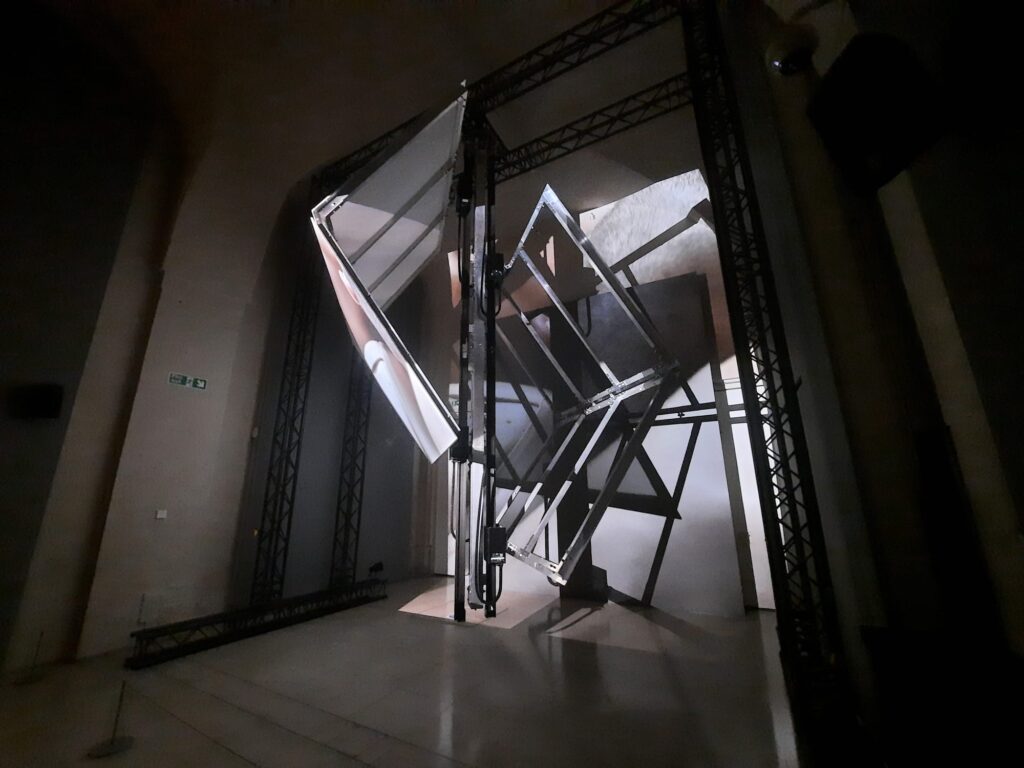
Infinite Bodies consists of a number of technology-forward exhibits, many interactive, and many collaborative, as well as a sort of workroom which gives insights into McGregor’s process. What struck me most, and what sets this apart from a lot of creative-AI exhibitions, is how McGregor’s approach is genuinely human-centred. Not in the way companies will tell you they’re implementing AI ethically, but in the way the installations only really come alive when you’re physically in them. There’s no sense of “technology replacing the artist.” Instead, this is a genuine example of ‘human in the loop‘. It feels like a conversation between you, the McGregor archive, and the systems he’s developed and collaborated on over the years.
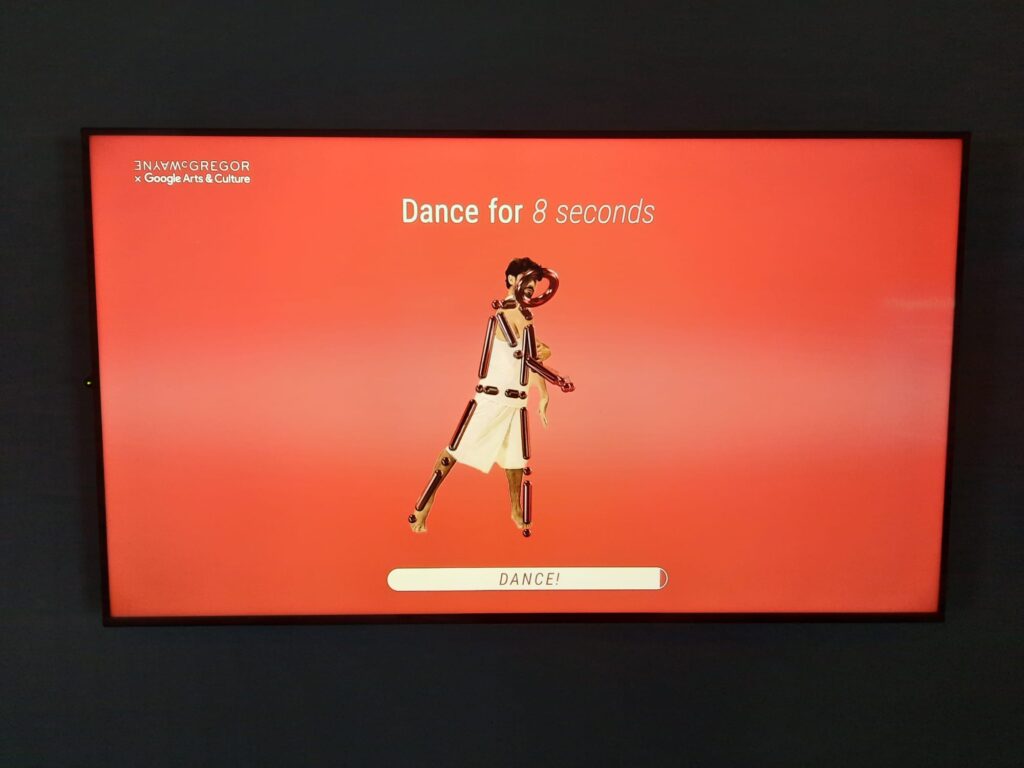
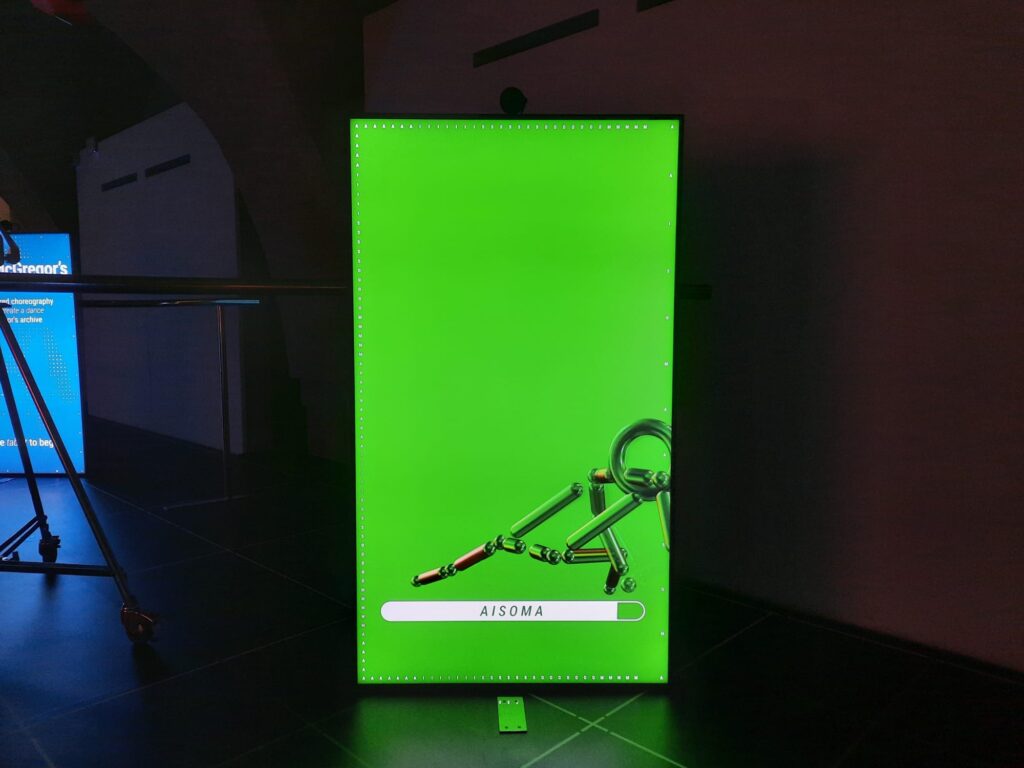
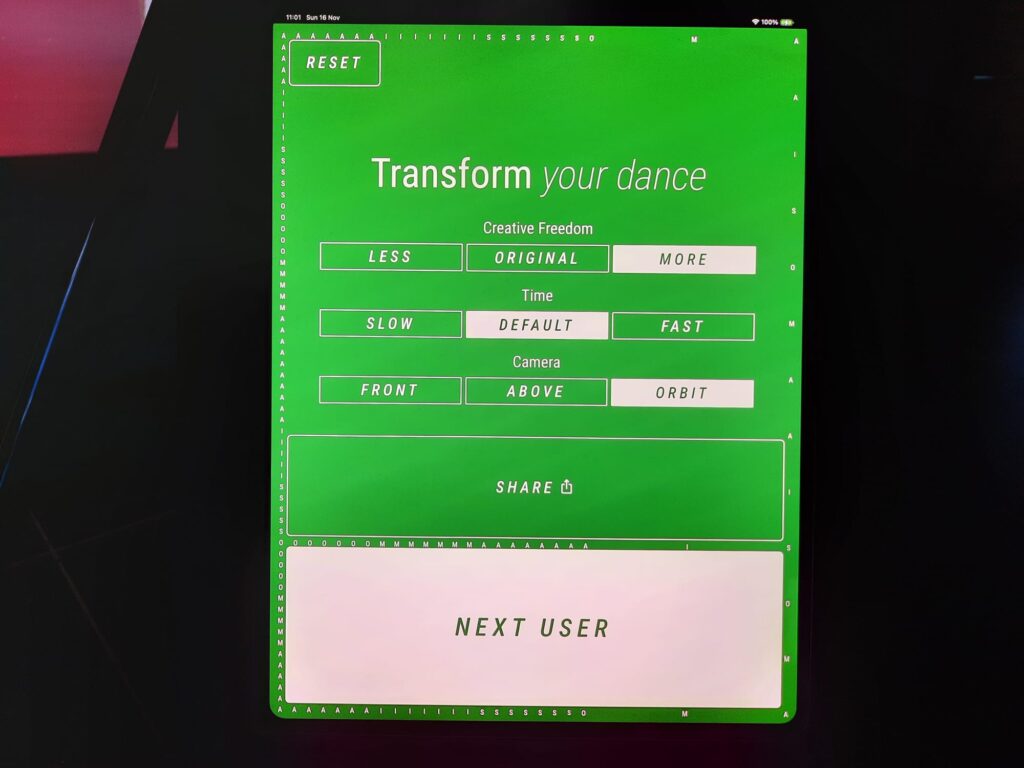
AISOMA, a machine-learning choreography tool, is a good example. You give the system an eight-second dance reference and it offers variations based on McGregor’s movement vocabulary. On paper that sounds a bit embarrassing, but in practice it was great fun. Especially on a quiet Sunday morning when I more or less had the room to myself. I tried a sequence, then pushed and pulled it via the different parameters, and saw how the system exaggerated my choices. It felt intelligent, rather than just playing with random dials for effect.
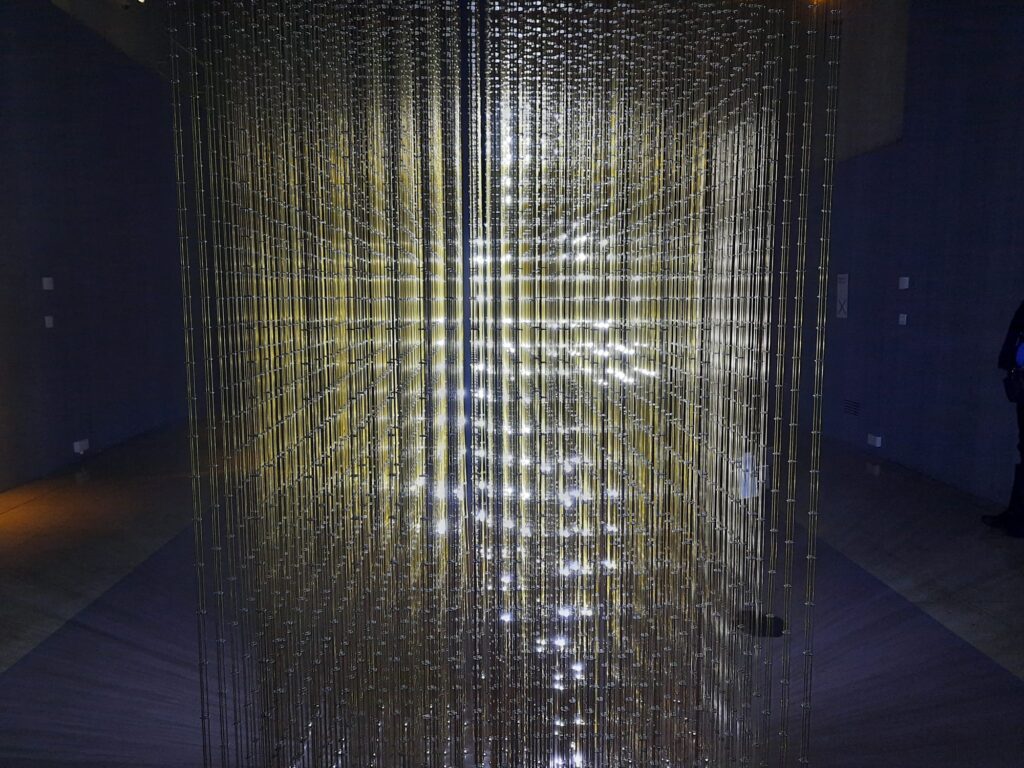
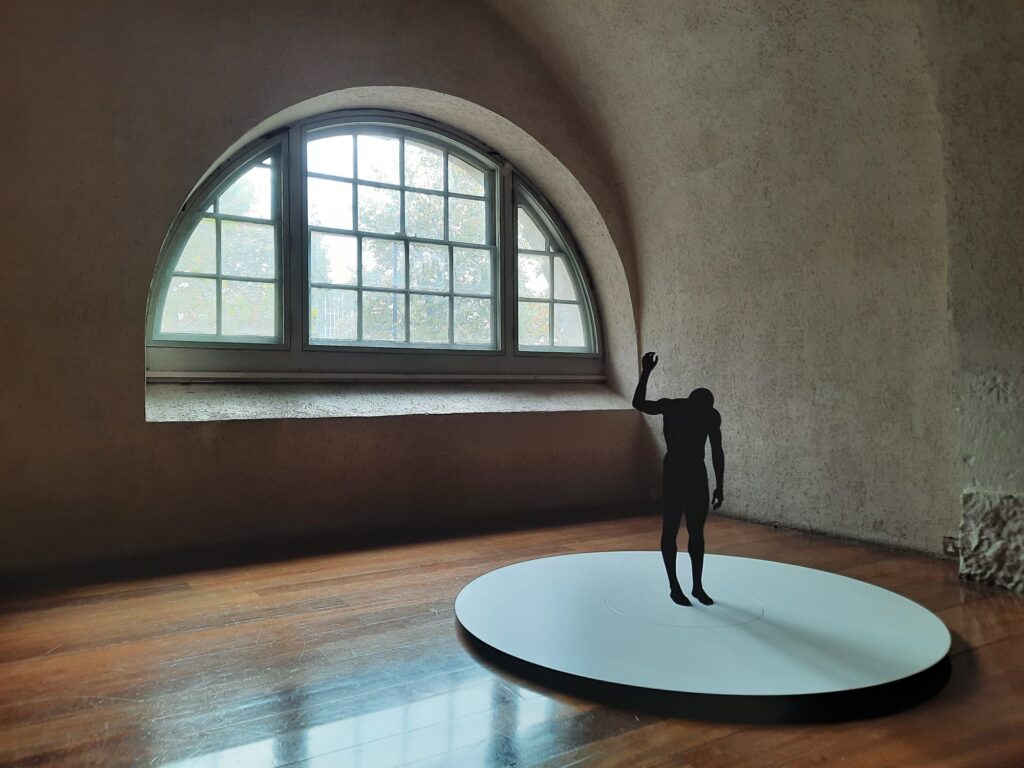
Other pieces are delightfully simple. My favourite was Future Self (2012), a collaboration between McGregor, Random International, and Max Richter. An interactive sculpture turns your shadow into rippling LED light. It doesn’t require instructions, and is inclusive of everyone from professional dancers (who we see interacting with it in a recording) to, well, everyone. There’s just the surprise and pleasure of seeing your body echoed back at you in a different form. It feels very physical and immediate in an exhibition full of tech.
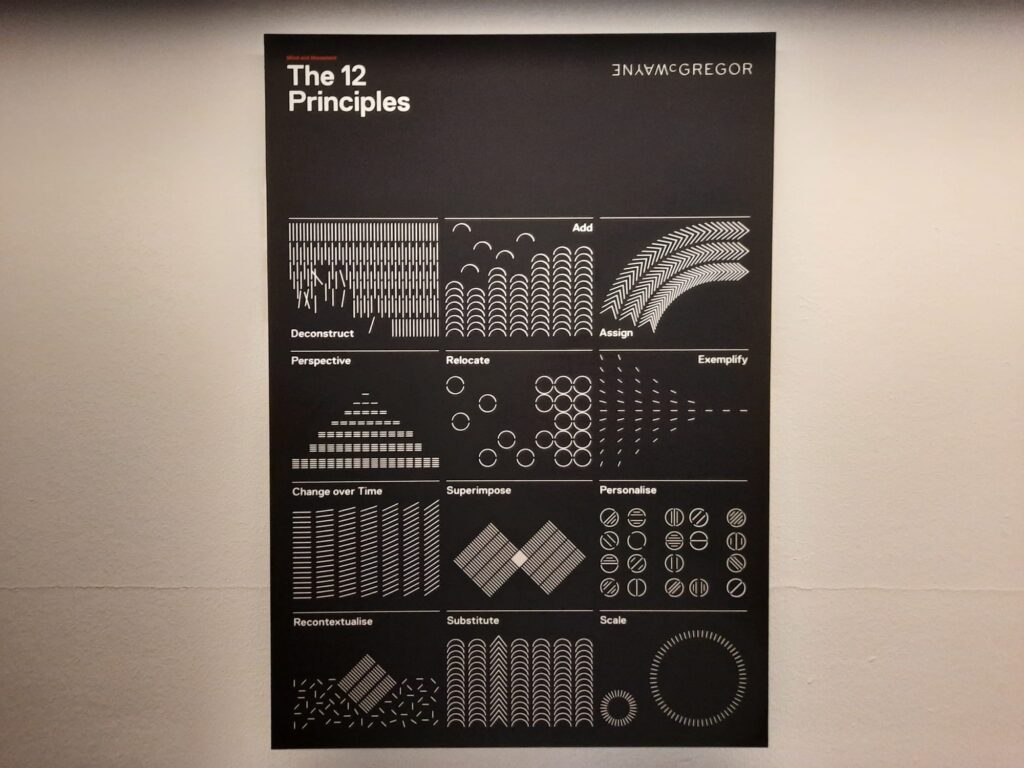
Participation and Observation
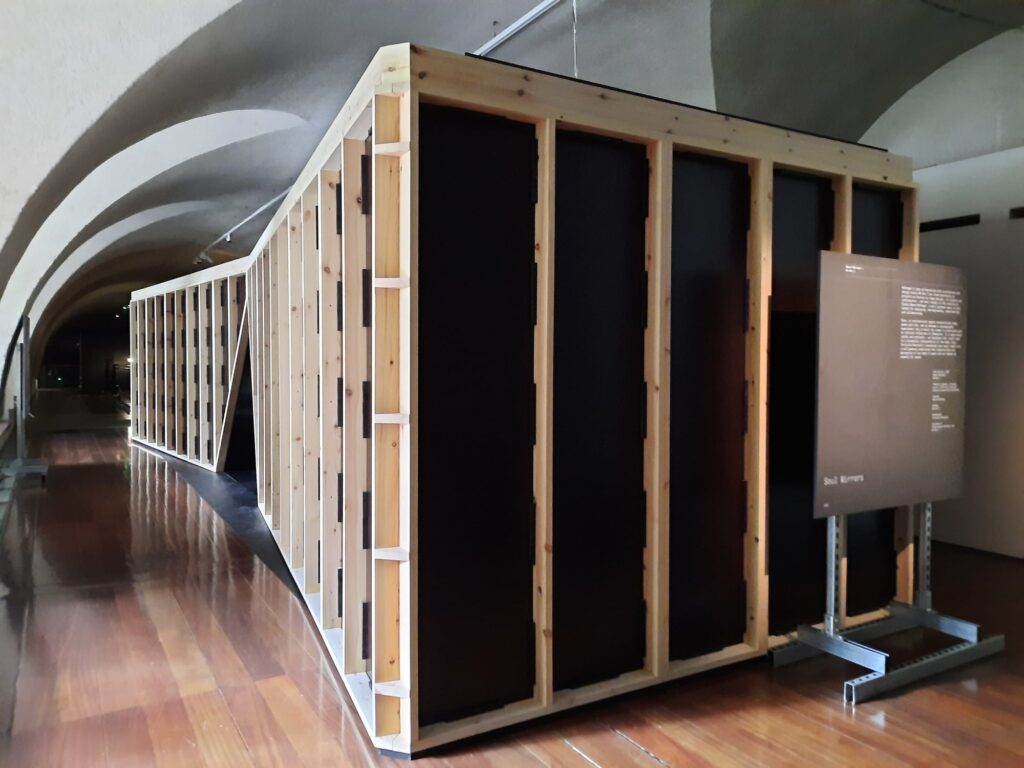
This was my first time in Somerset House’s Embankment Galleries, and the layout is a little complex. Visiting the exhibition involves choices on what to see first, and a little backtracking. At one point I had to ask a gallery assistant where the exit would be, in order to get my bearings. In a more traditional exhibition this might be irritating, but it sort of works here. Movement and choice become part of the viewer experience.
What I appreciated is that the installations aren’t treated as gadgets. They’re choreographic environments in their own right. Some demand your participation. Others require your observation. All get you thinking about what is irrevocably human about movement and dance, even when it’s a machine executing the final product. And because so many works respond to presence, Infinite Bodies makes you constantly aware of your body and how you are moving through the space.
I liked that it’s one of the few shows involving cutting-edge tech that doesn’t sideline the viewer into passive onlooker mode. Instead you’re encouraged to be a collaborator, even if only for a few seconds. I contrast this with some of the visually impressive but ultimately passive exhibitions I’ve seen at nearby 180 Studios, for instance. The participatory nature of the exhibition aligns beautifully with McGregor’s long-standing interest in physical intelligence: the idea that the body knows things, sometimes before the mind does.
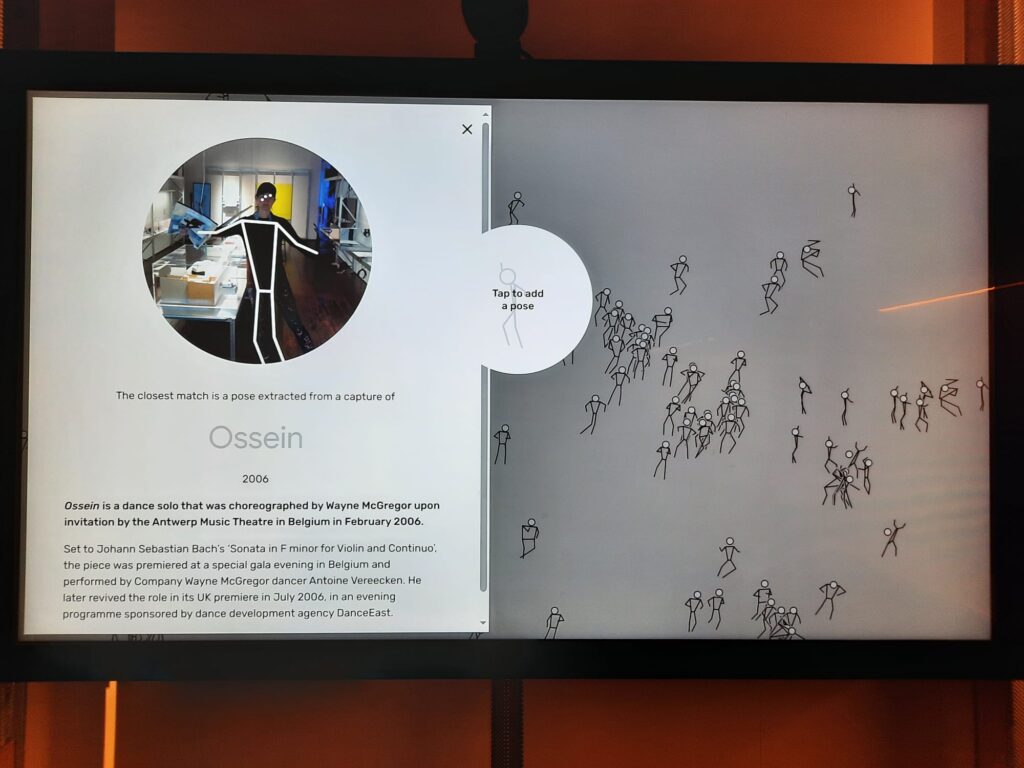
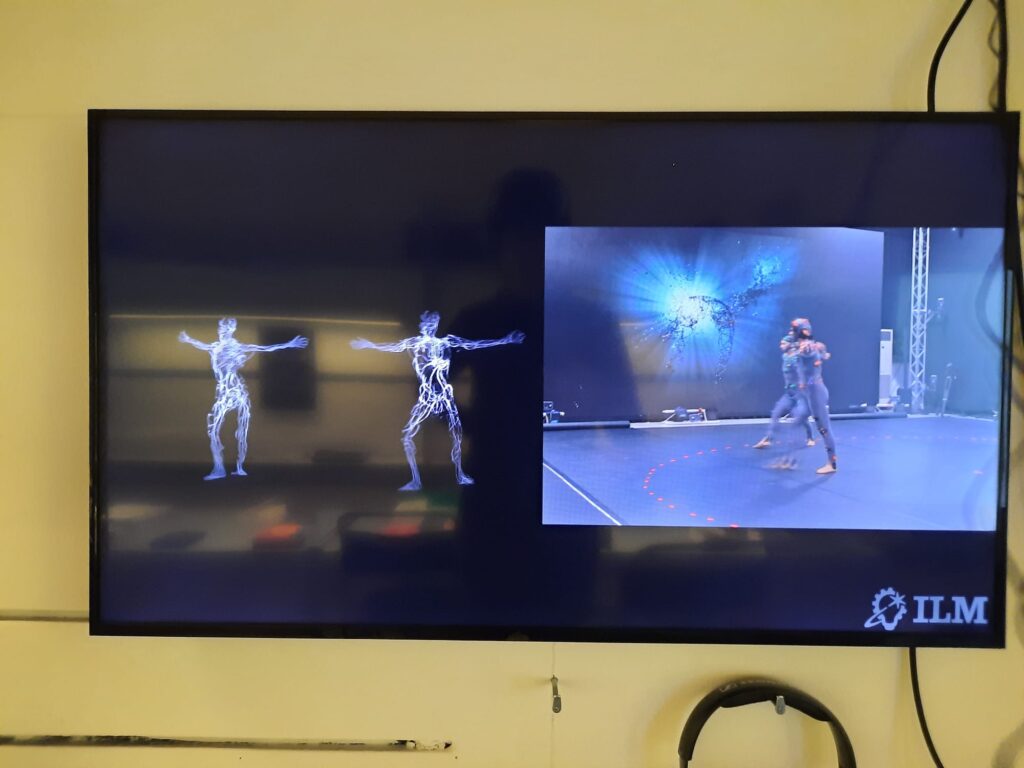
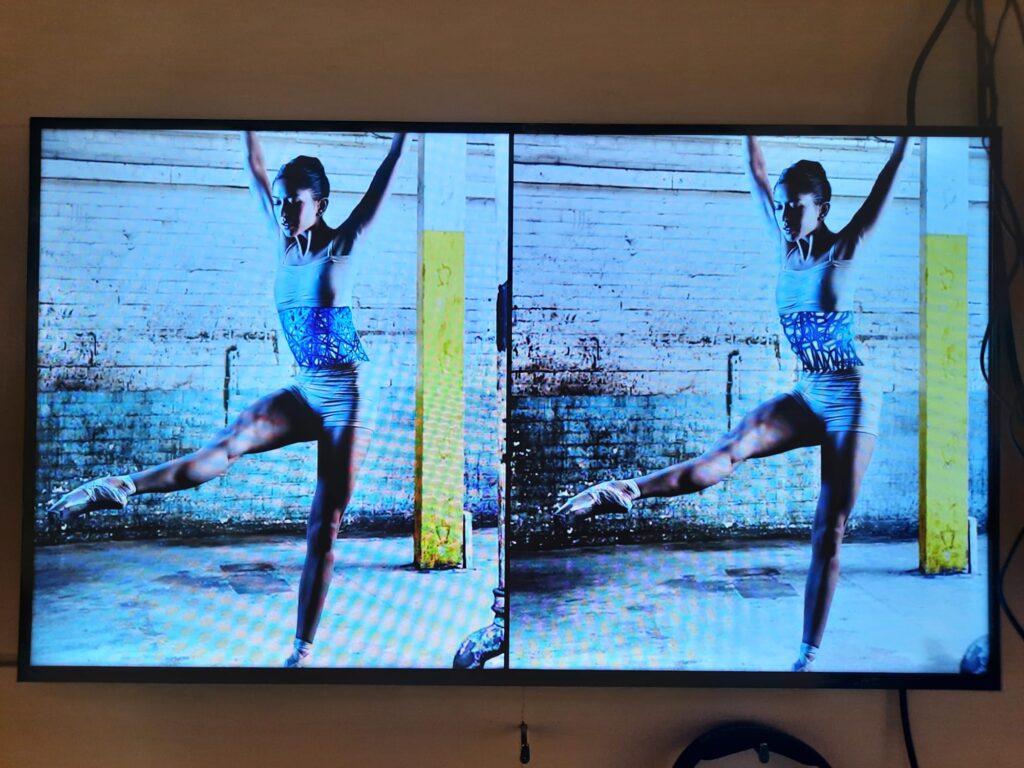
Human-Centred AI
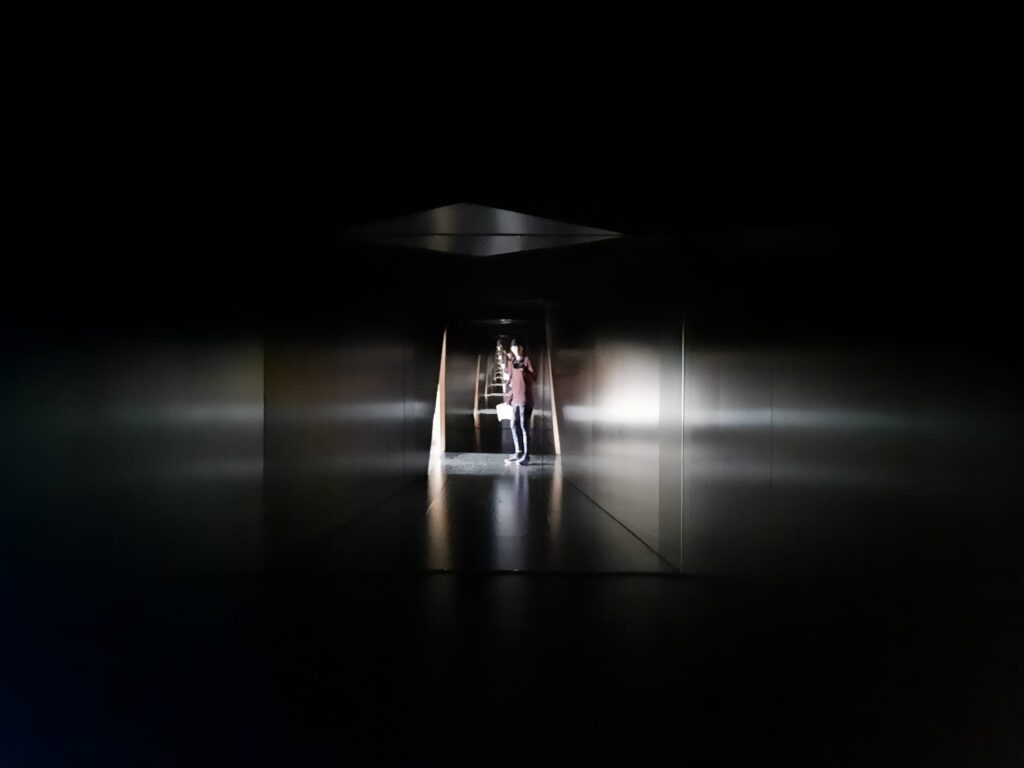
What stayed with me after leaving Infinite Bodies wasn’t the technology, but the sense that McGregor, after decades as a choreographer, is constantly expanding the boundaries of how humans move. The installations that work best here are the ones that remind you of your own physicality, whether that’s through a series of little mirrors following you around the room (Audience, 2008) or the odd thrill of seeing a machine reinterpret your gestures.
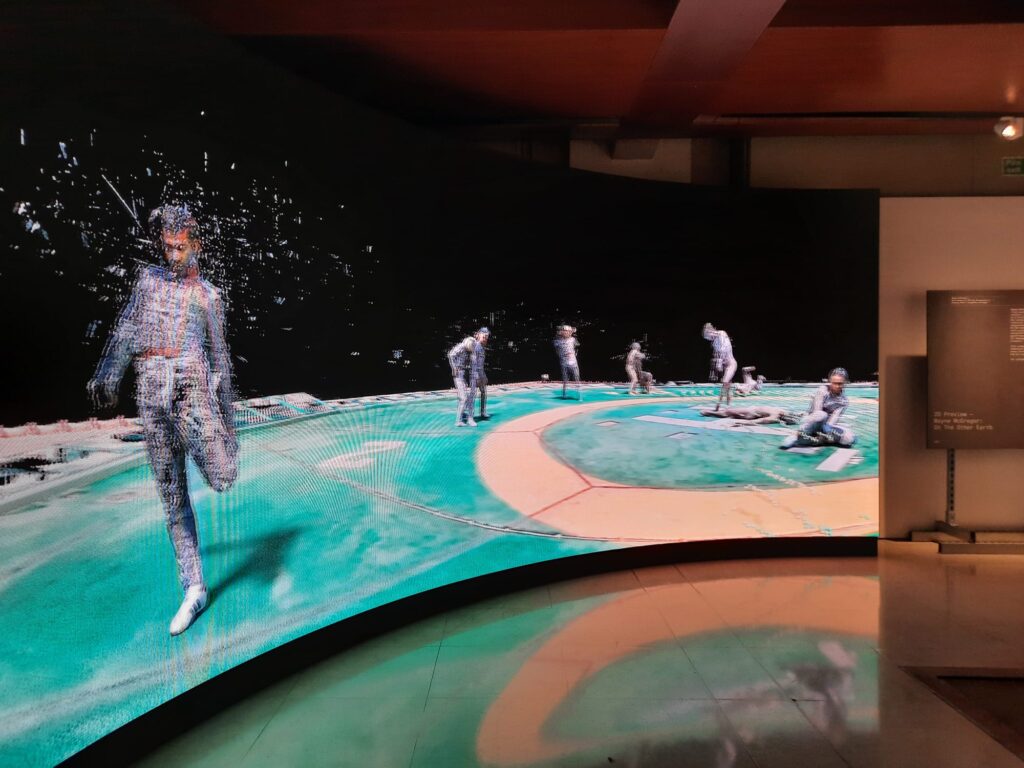
It isn’t a perfect exhibition. Firstly, to get the full experience you also need to see On the Other Earth (second location and ticket). That’s kind of annoying and I didn’t do it. I would also love a bit more of an explicit invitation to interact with one or two of the exhibits. There were moments when I wasn’t sure if I was supposed to be stepping inside something or not. But mostly the gallery assistants were friendly and helpful on that front. Lastly, Company Wayne McGregor are in residence during the exhibition, doing warm-ups and ‘activating’ some of the exhibits. They were supposedly warming up when I was there, but I didn’t see them. Perhaps bad timing, being in the wrong gallery at the wrong time?
I left the gallery thinking far less about ‘AI art’ and far more about movement. And in the middle of what can sometimes feel like an overwhelming technological moment, it was reassuring that the most interesting AI experiments I’ve seen recently very much place humans at the centre of everything.
Salterton Arts Review’s rating: 4/5
Wayne McGregor: Infinite Bodies on until 22 February 2026.
Trending
If you see this after your page is loaded completely, leafletJS files are missing.