
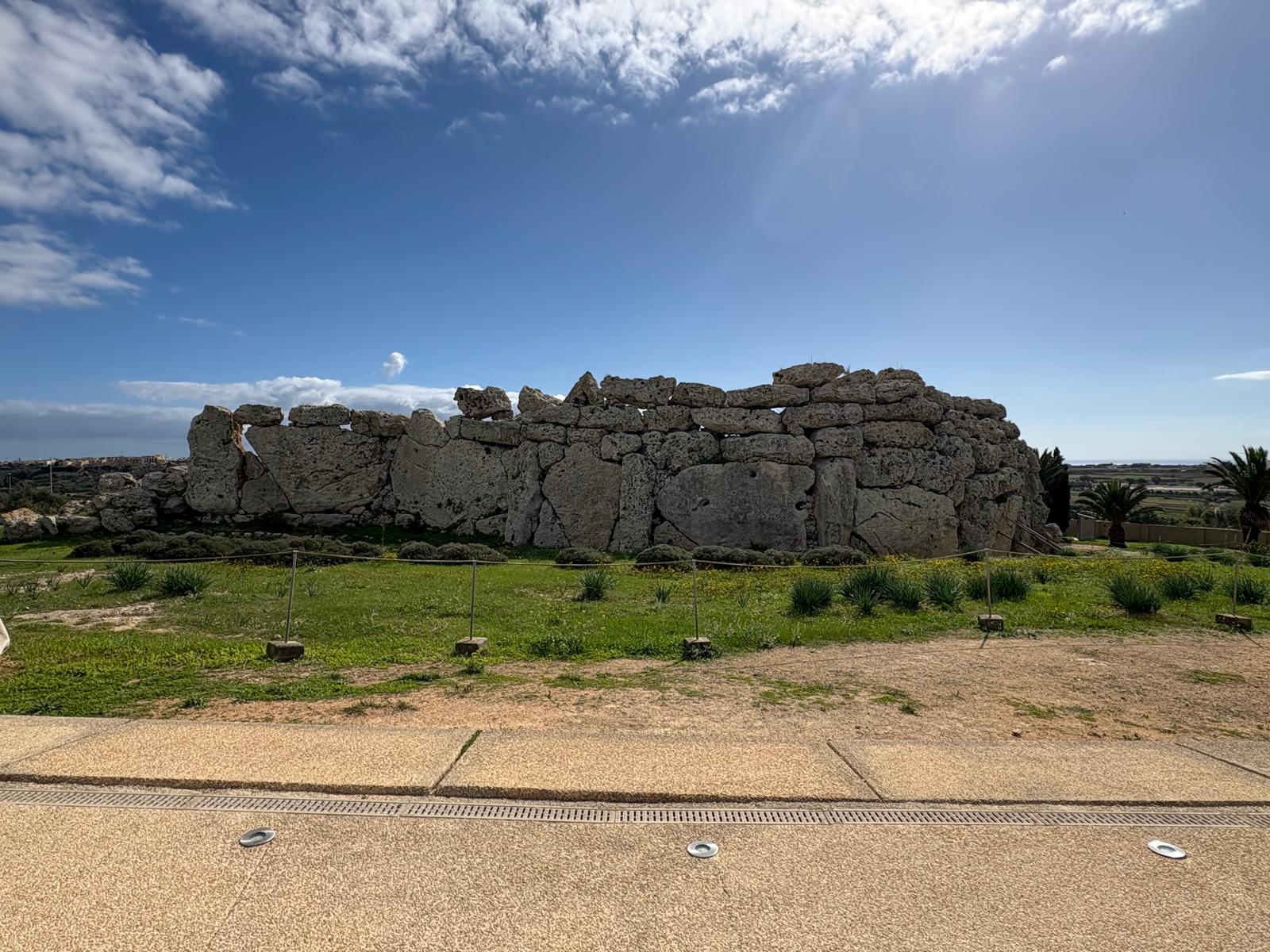
Malta’s Neolithic Sites
The historian in me was most excited about Malta’s Neolithic sites. With so many options to choose from despite Malta being a very small country, which ones should visitors prioritise?
A Guide to Malta’s Neolithic Sites
Long time readers know I love archaeology. If there is an archaeological site within reach during a holiday, I will be there. Then I get to share the details here with you on the blog: for instance Pre-Inca sites in Lima, or places like El Born in Barcelona, the acropolis in Lindos, Rhodes, or Lesnes Abbey a bit closer to home. The Urban Geographer has been known to describe archaeological sites as “a pile of old rocks”. But, luckily for me, it’s not him who organises our holidays!
And so I was very keen to check out some of Malta’s archaeological sites while I was there. I took a look at the Heritage Malta website to start my planning. And was immediately disappointed to learn that I was already too late to book advance tickets to one of Malta’s most unique archaeological sites, Ħal Saflieni Hypogeum. This UNESCO World Heritage Site, an underground burial chamber, is very fragile. Fewer than 100 people per day get to see it, all on guided tours. If you’re currently planning your own trip to Malta, check out ticket availability here and book if you can. Otherwise, see below for more information on how to get last minute tickets.
So that covers what I almost didn’t see. What about what I did see? In the end I saw three different Neolithic sites during my week in Malta. I snapped up some of those last minute tickets and saw Ħal Saflieni Hypogeum, combining it with a trip to Ħal Tarxien Prehistoric Complex. And while in Gozo, I went to Ġgantija. Ħal Saflieni and Ġgantija I definitely recommend. Ħal Tarxien I think could probably be swapped for another site depending on your itinerary. I’ll go over those other sites below, including one I would definitely head to on a return trip.
Malta’s Temple Builders
I did a very quick overview of the history of Malta’s prehistoric peoples in a previous post. A key point to remember is that there was not continuous settlement in Malta, but rather waves of migration one after the other. The wave we are interested in, the so-called Temple Builders, arrived around 5500 BCE. They didn’t start out as temple builders, but simple farmers, likely hailing from Sicily. But about 2000 years into their life in Malta, things began to change.
Around 3600, it seems religion took on a greater role in the lives of Malta’s inhabitants. Using only stone tools, they were able to build elaborate structures from local limestone, featuring complex layouts, spiral and animal motifs and ceremonial niches. It seems their religion focused on fertility and ancestors: lots of burial chambers, and sculptures of rounded human figures. It’s likely they had specialised roles within society like masons and priests. This generally indicates a peaceful and prosperous society: you can only have specialised jobs if it doesn’t take the entire community focused on food and safety in order to survive. Their unfortified dwellings also point to a peaceful existence.
The Temple Builders disappeared from Malta around 2500 BCE. Theories around the disappearance of their culture include possible environmental collapse due to deforestation and dwindling resources. But they left behind them the world’s oldest freestanding Megalithic structures. Yes, that’s right, several of the structures I describe below are older than the pyramids in Egypt and also Stonehenge. That they have survived is testament to the skill of their construction. It’s a wonderful legacy, as indicated by UNESCO World Heritage status for several of the sites: Ħal Saflieni Hypogeum on its own, and the Megalithic structures as a group.
Ħal Saflieni Hypogeum
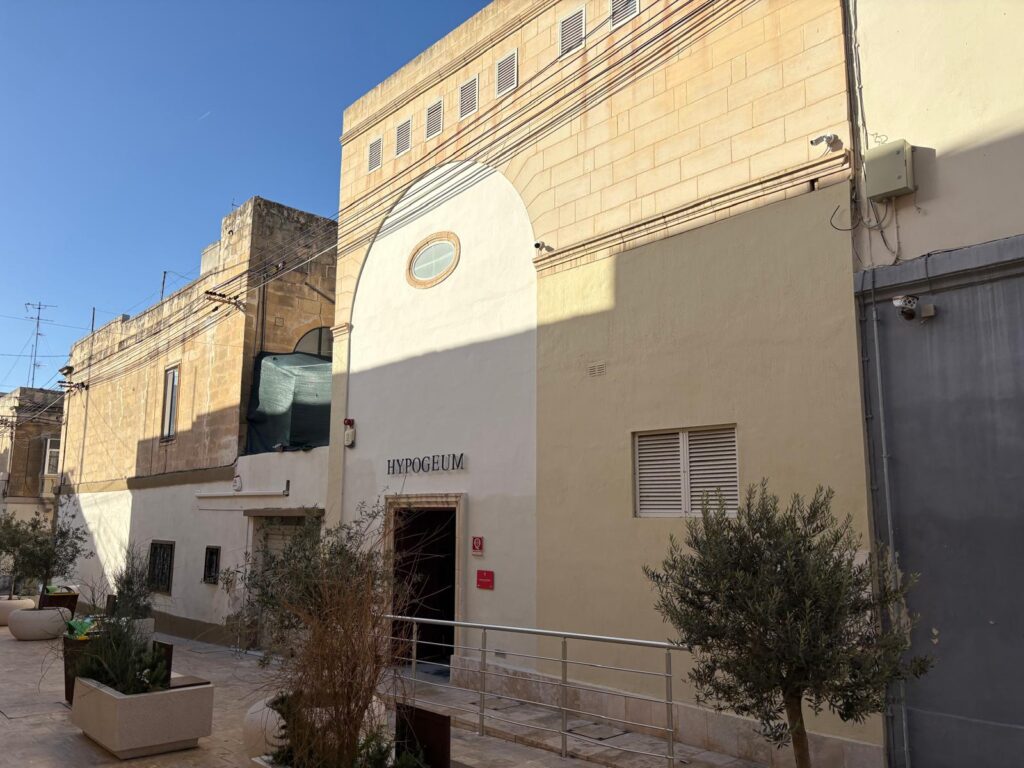
Right. A little note on practicalities, first. You absolutely must, if possible, book your ticket to Ħal Saflieni Hypogeum well in advance. You can do so on the Heritage Malta website. If you miss out on these, a small number of next-day tickets are sold in person each day, from the ticket desks at Fort St Elmo or the Gozo Museum of Archaeology (and in theory from other sites from 12PM but I wouldn’t risk it). I managed last minute tickets, but it’s definitely a more expensive and riskier option.
The Ħal Saflieni Hypogeum was discovered by accident in 1902, by a stone mason digging foundations for houses. Foreseeing annoying delays, the find was not reported until the houses were finished, which of course caused significant damage to the upper levels. It became public property in 1903 and underwent excavations through to 1911.
Despite these early hardships, it’s a truly remarkable site. ‘Hypogeum’ means ‘underground’ in Greek: this was an underground burial chamber and sanctuary. Visiting today, it’s hard to imagine what the space was like either in Neolithic times or when it was first discovered. Because the term ‘burial chamber’ hardly covers it. Human remains eventually filled every chamber in a thick layer: when one chamber ran out of room, someone dug through the wall and created the next space. This is the reason for the slightly labyrinthine layout and the openings halfway up the walls. Intermingled with the remains were ritual objects, some of which can be seen today in the National Museum of Archaeology.
Visits today are strictly by guided tour. Each group first goes into an antechamber to put on protective shoe coverings, then watches a video in a next room. This is actually a neat trick to manage temperature and humidity: they do something very similar at the Capella dei Scrovegni in Padua. Part of what needs protecting are delicate wall paintings, a remarkable survival.
The Ħal Saflieni Hypogeum is an incredible place, and the limited tickets and guided tours make visits feel very special. We can only wonder at what this place meant to Malta’s Temple Builders and how they used it, but I felt closer to them here than at the other, Megalithic sites I visited.
Ħal Tarxien Prehistoric Complex
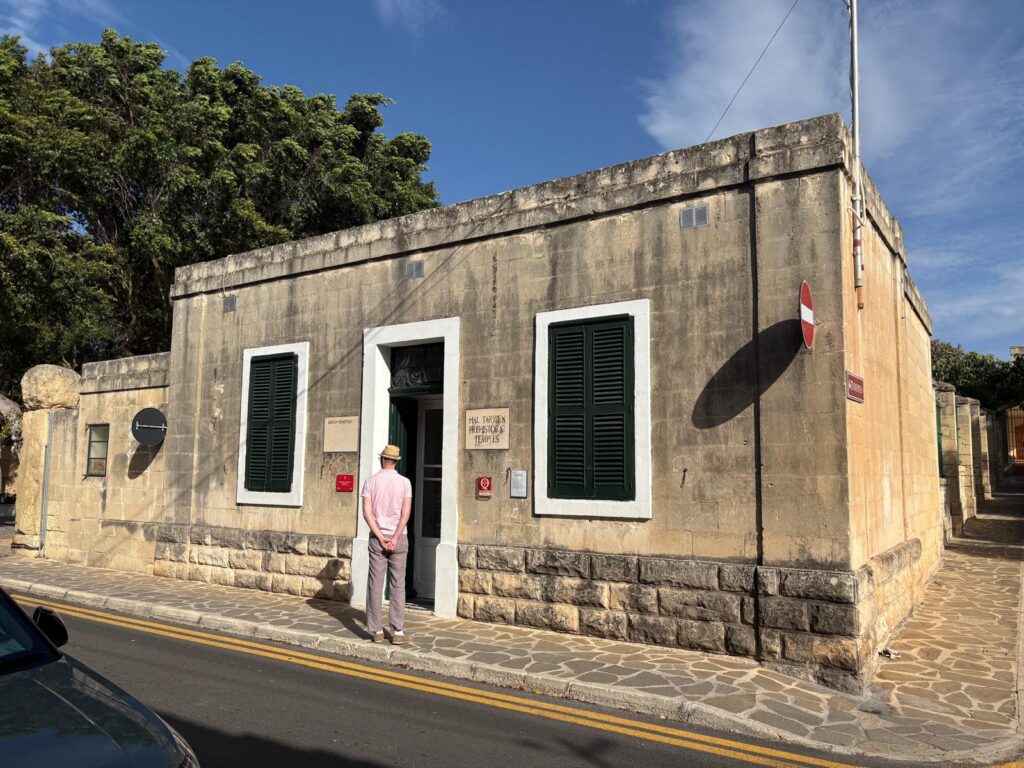
I actually visited Ħal Tarxien Prehistoric Complex before Ħal Saflieni Hypogeum, but I couldn’t wait to tell you about the latter, which I consider to be Neolithic Malta’s main event. If anyone’s wondering, by the way, the “Ħal” in Ħal Tarxien and Ħal Saflieni means ‘village’. So Ħal Tarxien is something like Temple Village. As well as being the name of this complex, it’s the name of a village near Valletta, one of the oldest inhabited villages in the world.
Like the discovery of Ħal Saflieni during the excavation of foundations, Ħal Tarxien was also a chance find. This time it was a farmer, Lorenzo Despott, who kept turning up big stones in his field, and suspected there was more to it. Sir Themistocles Zammit, a key figure in early Maltese archaeology, undertook the excavations between 1915 and 1919.
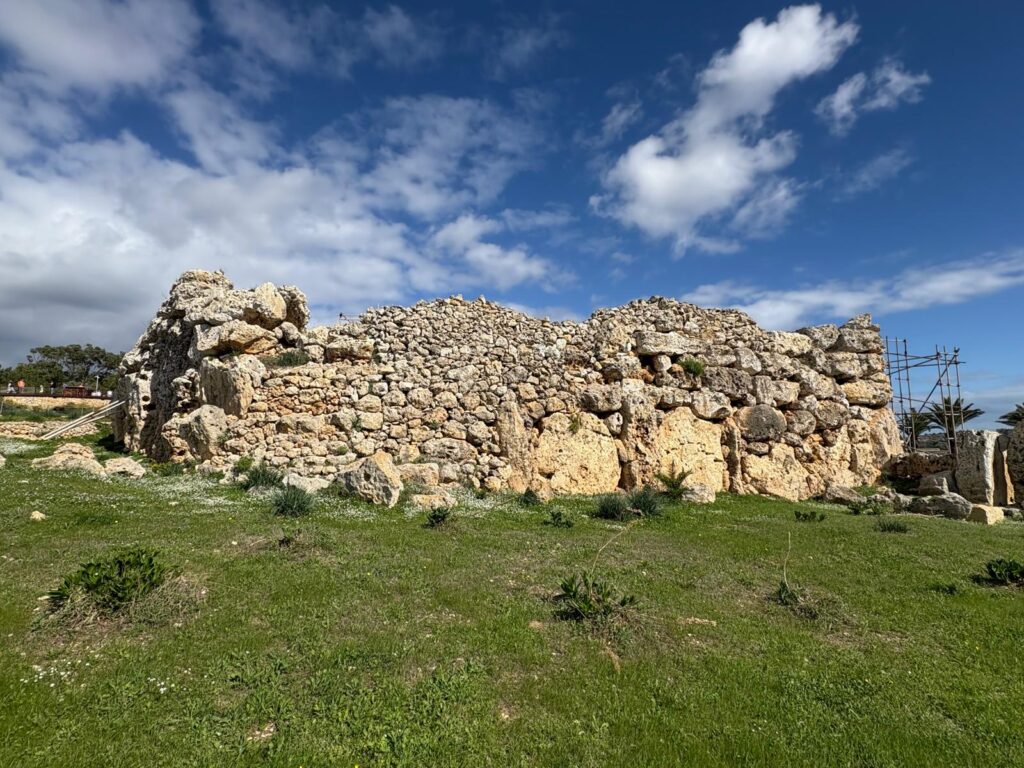
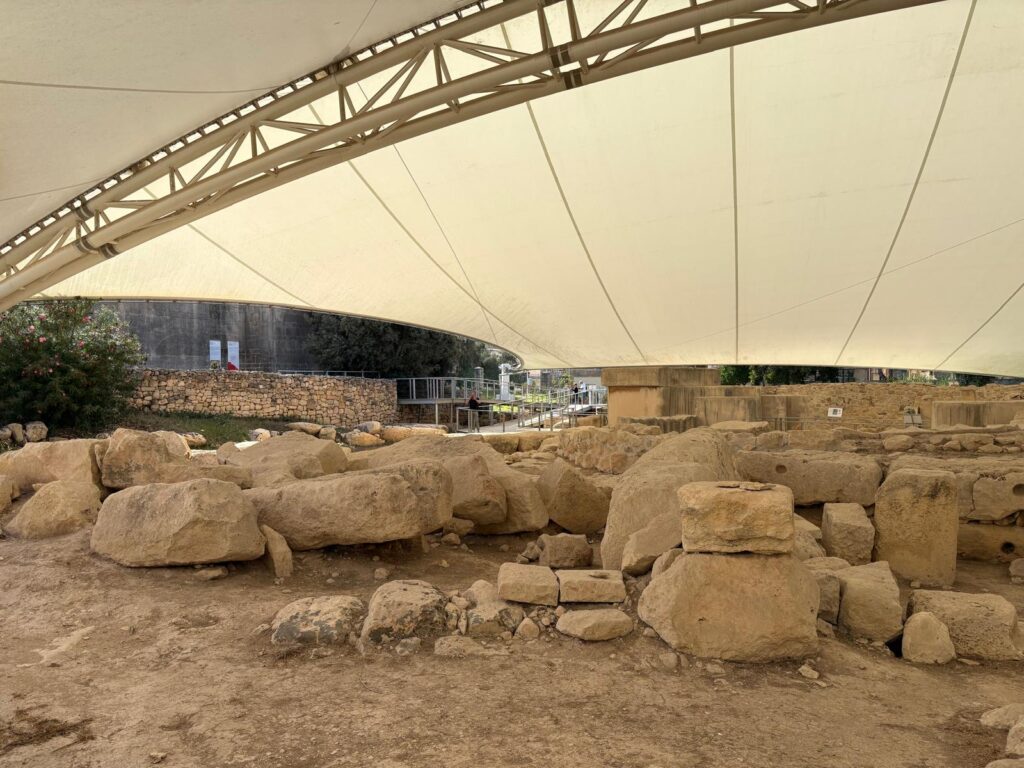
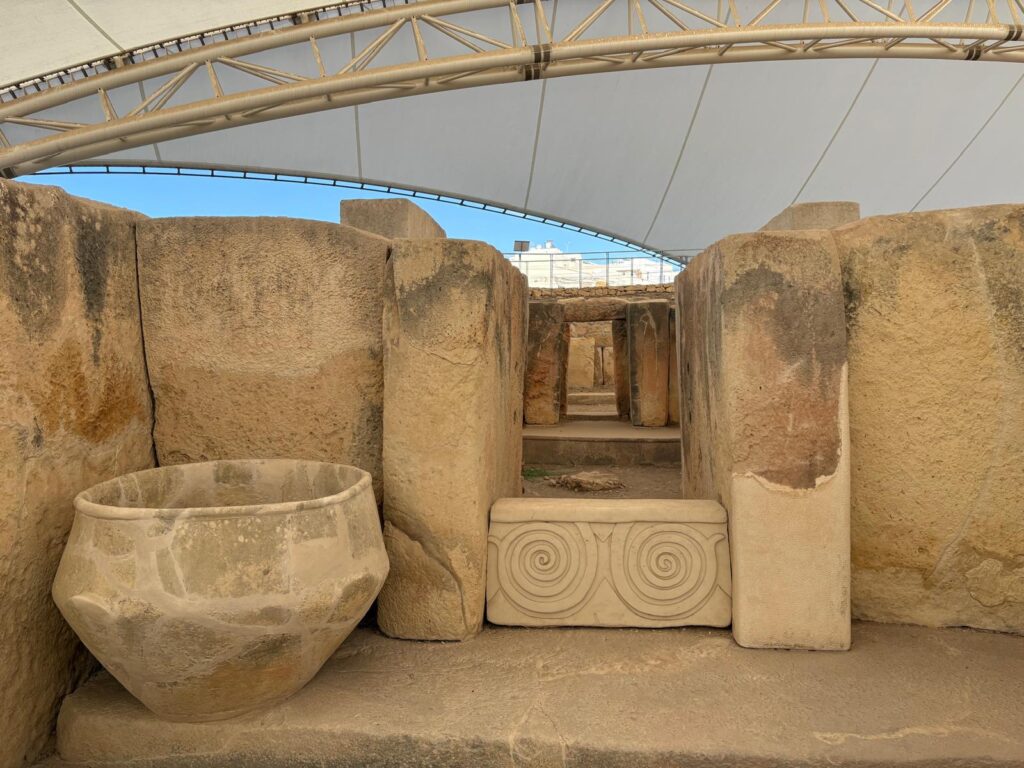
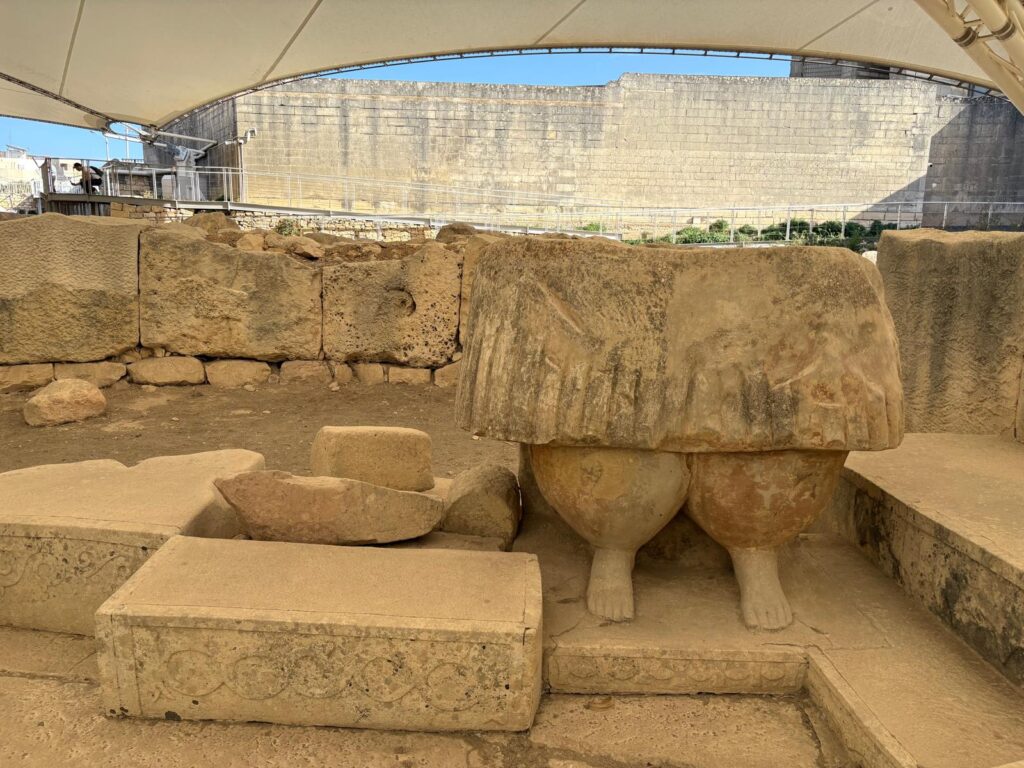
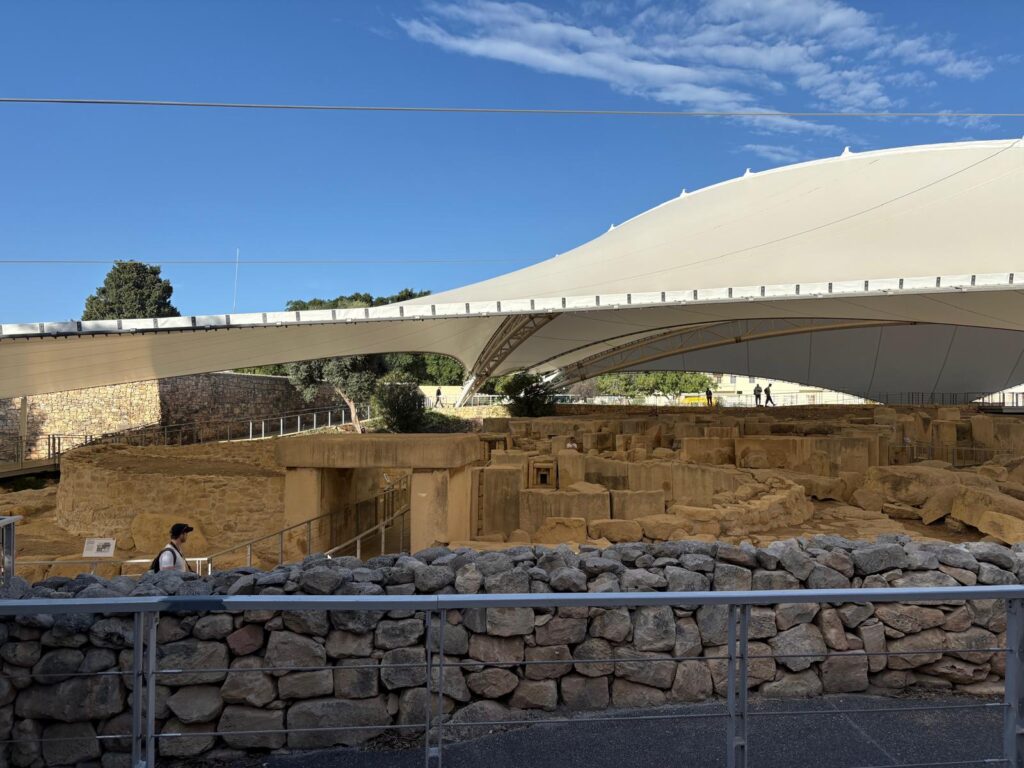
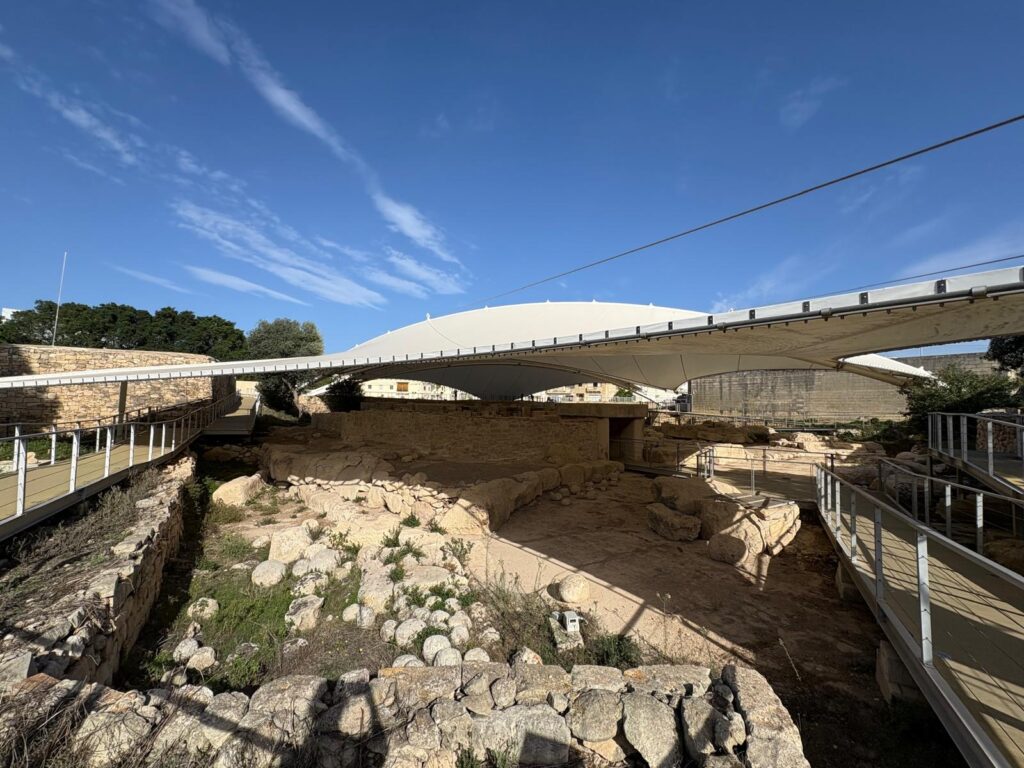
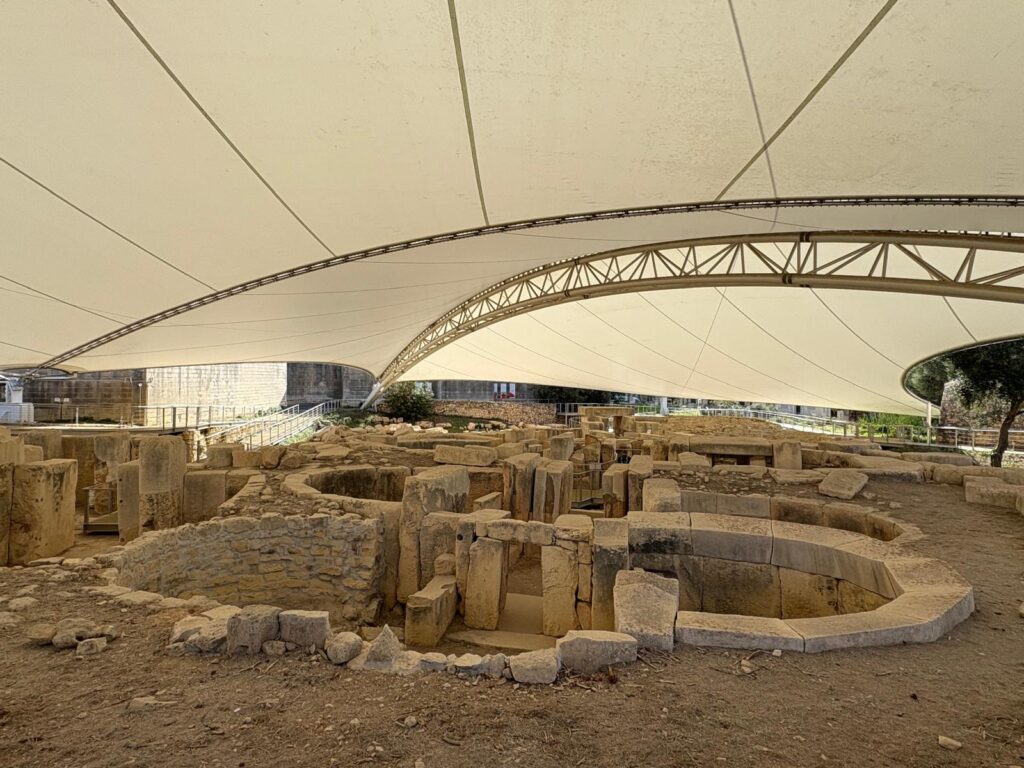
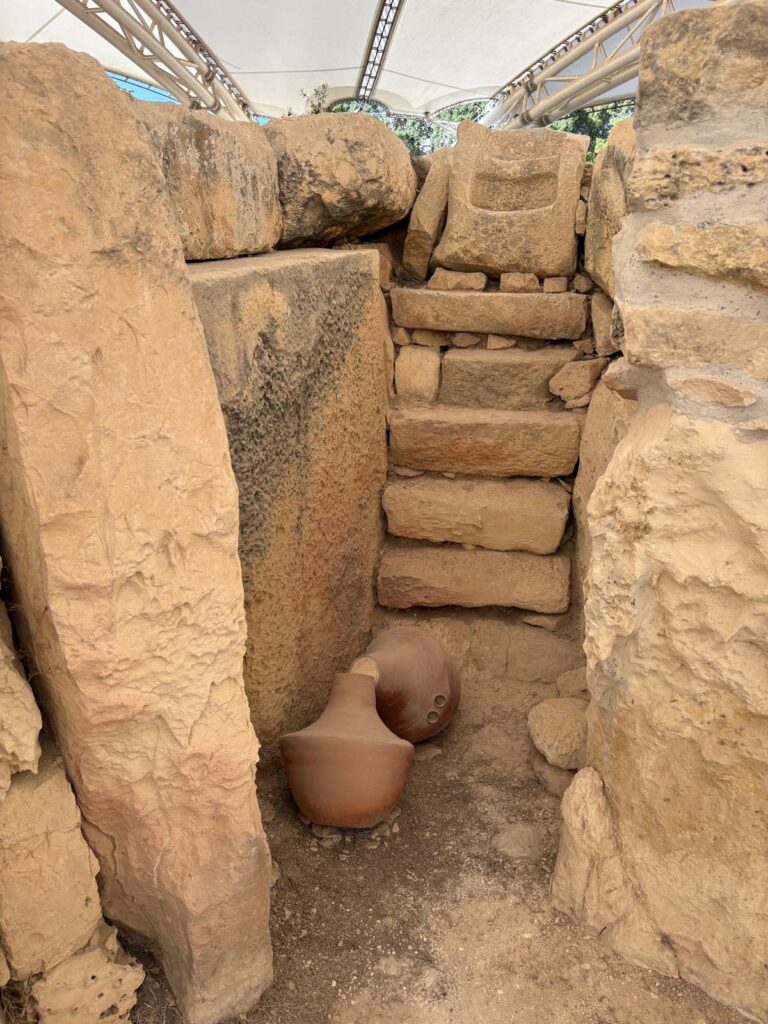
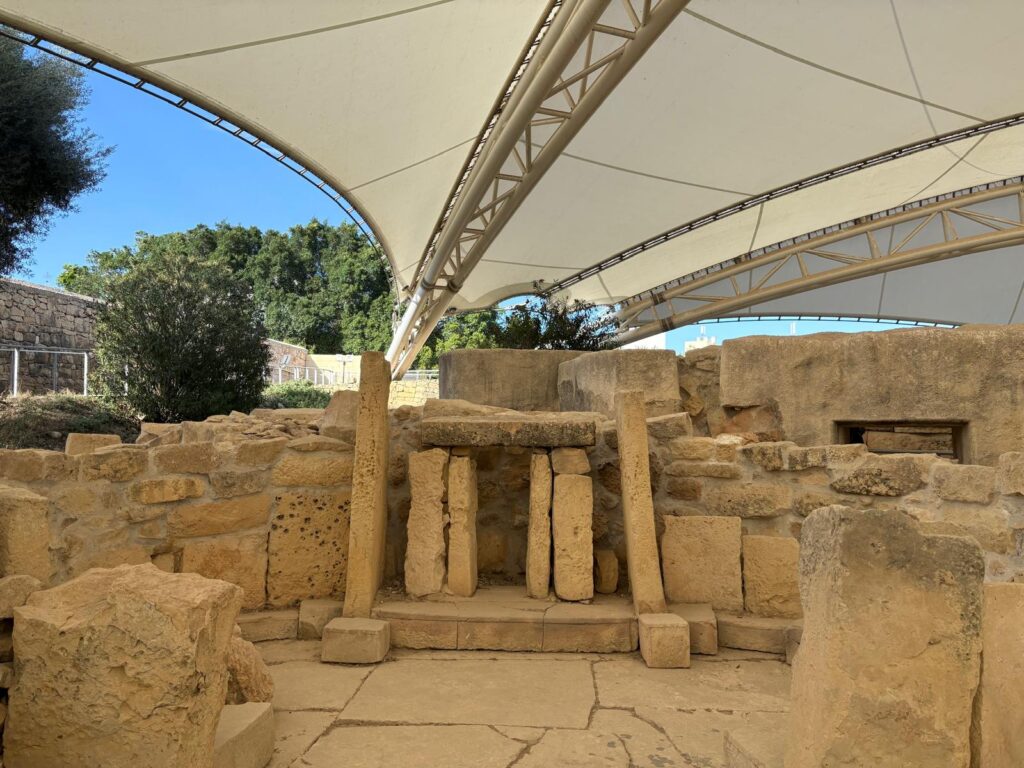
Ħal Tarxien consists of four Megalithic structures (megalithic meaning ‘big stones’). The Temple Builders first constructed them, but the Bronze Age people who came next in Malta adapted the complex for their own use. Sculptures of animals and animal bones found here point to the type of rituals that took place. Multiple hearths suggest the use of fire. The Bronze Age people, in their time, used Ħal Tarxien for cremation and burials.
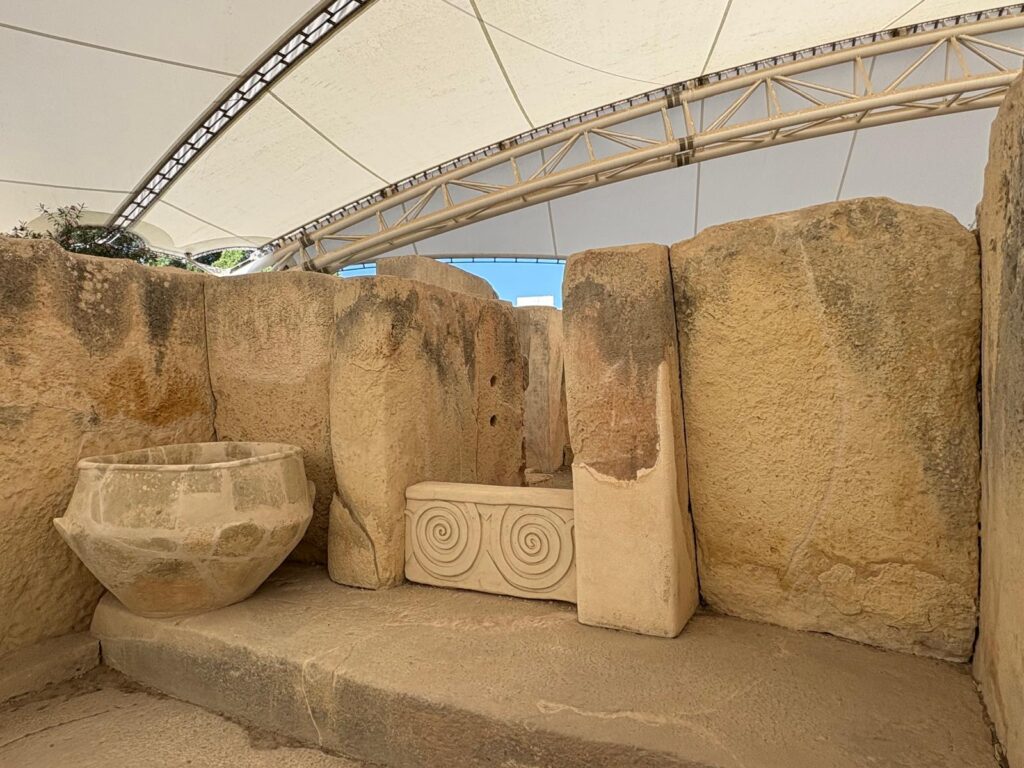
For archaeology lovers, Ħal Tarxien is worth the bus ride from Valletta. Or you can easily combine it, as we did, with a visit to Ħal Saflieni. There’s a small museum on site, but it’s nothing to write home about. It’s mostly about wandering around the ruins, and appreciating what they tell us about Malta’s past. In a few places, replicas of decorated stones now in the National Museum of Archaeology give an indication of their original placement.
Ġgantija
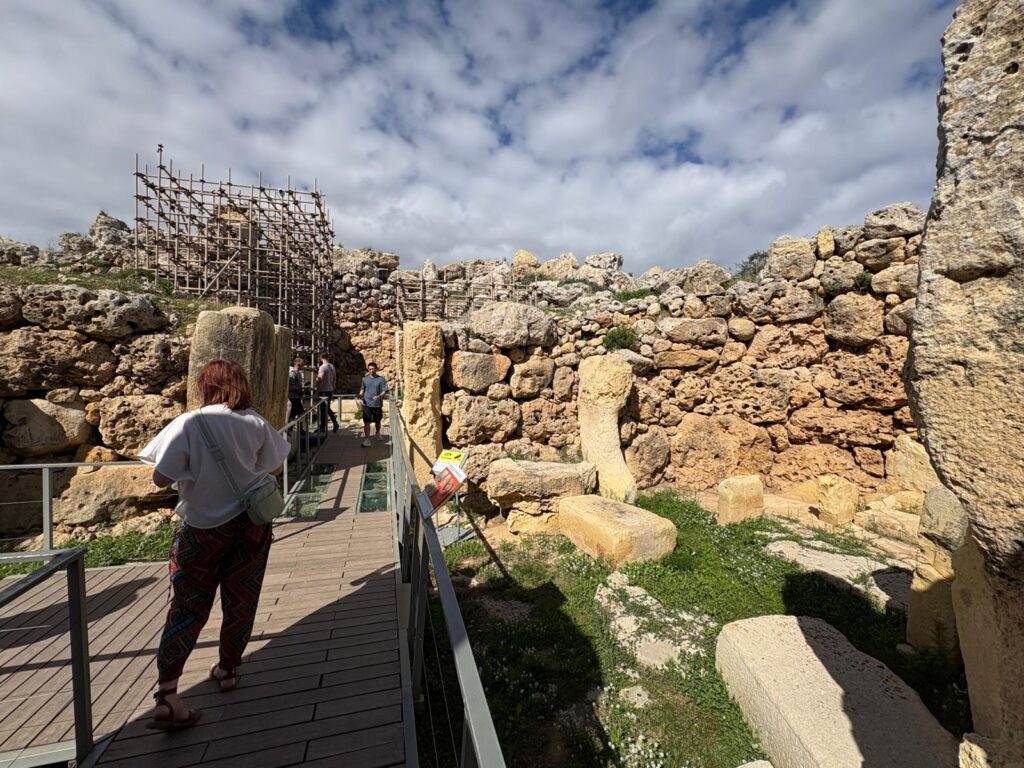
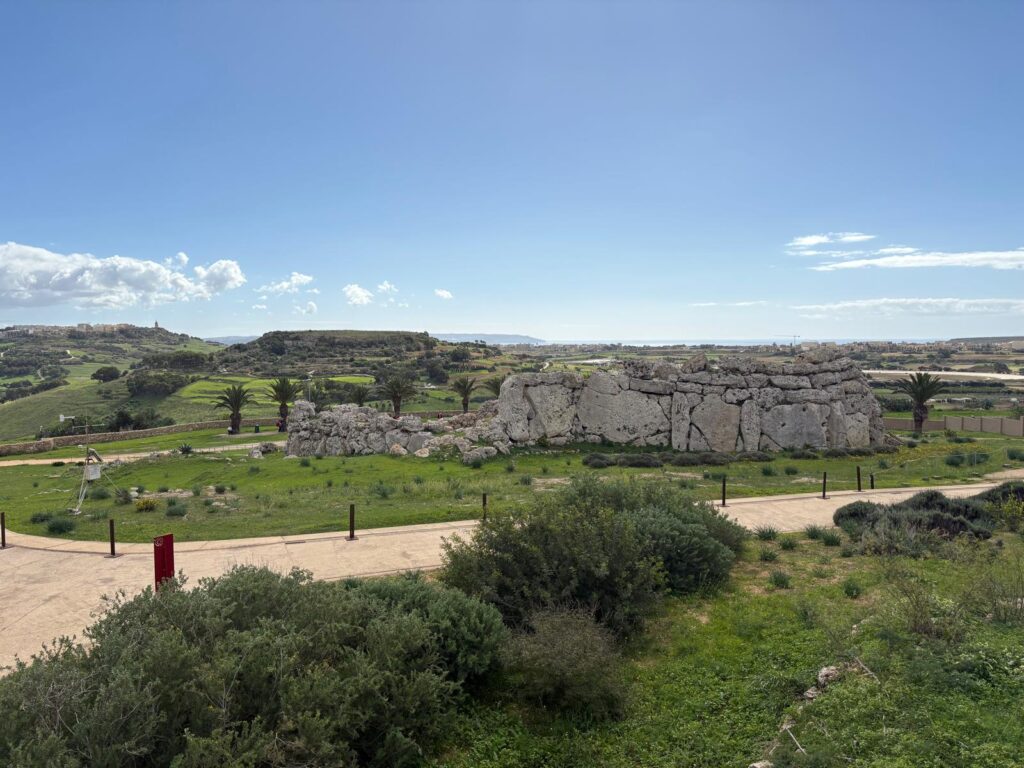
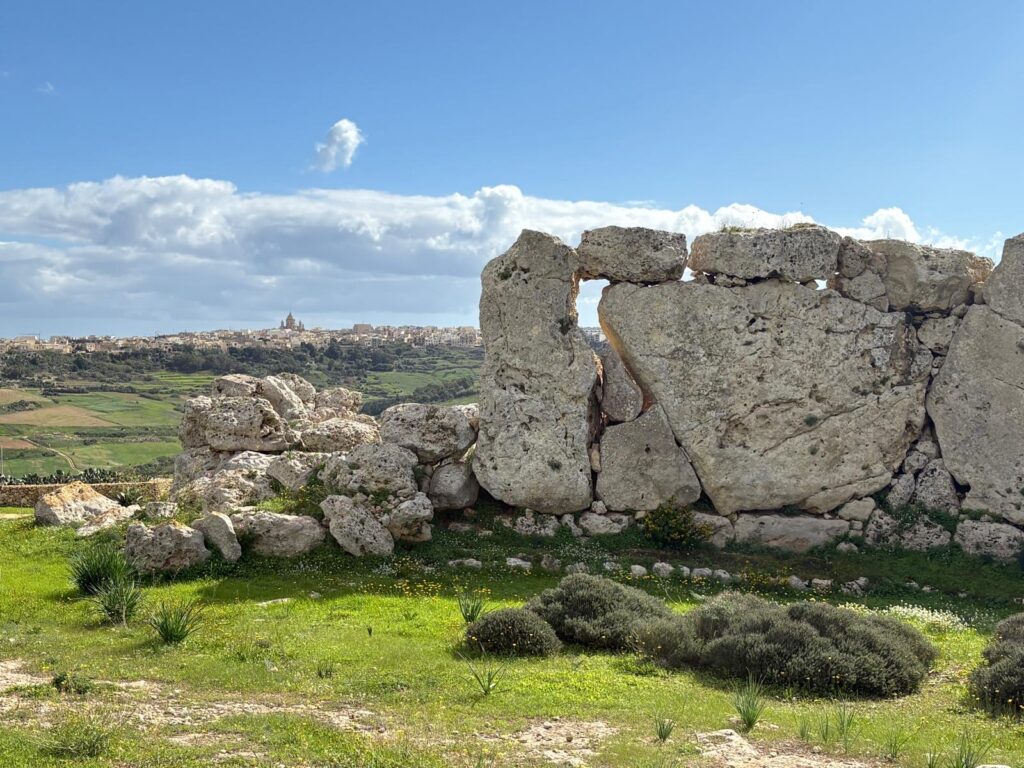
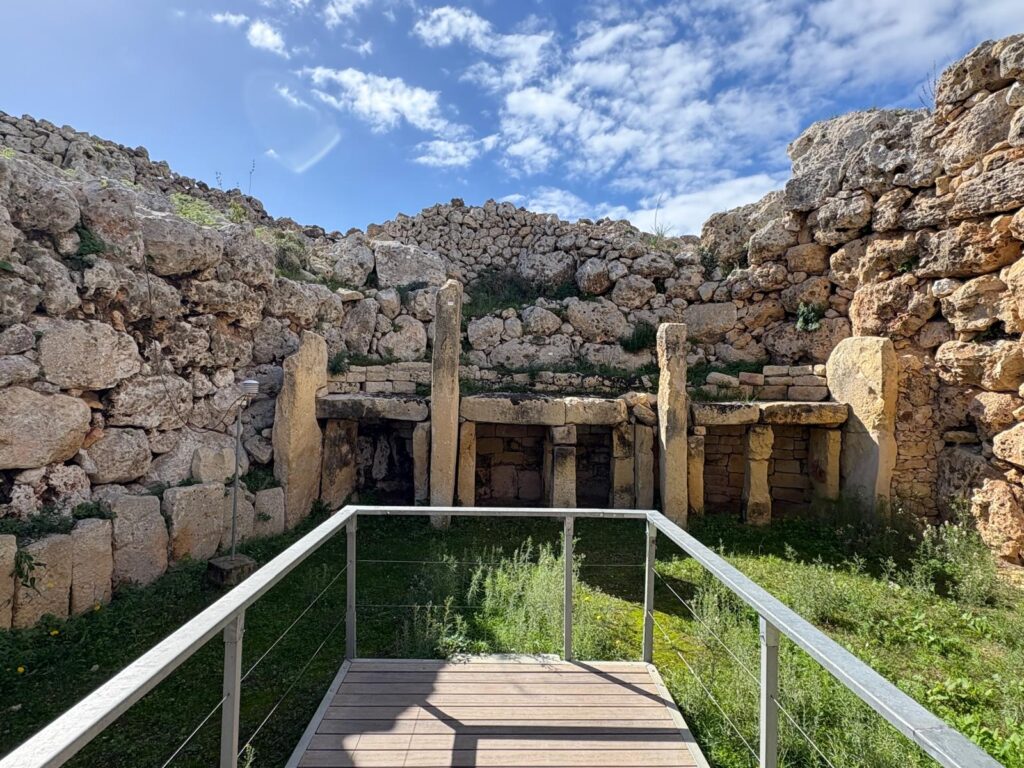
For any culture or archaeology lovers heading to Gozo, a visit to Ġgantija is a must. I liked it for two reasons: its archaeological value, and learning that it was a frequent stop on the Grand Tour.
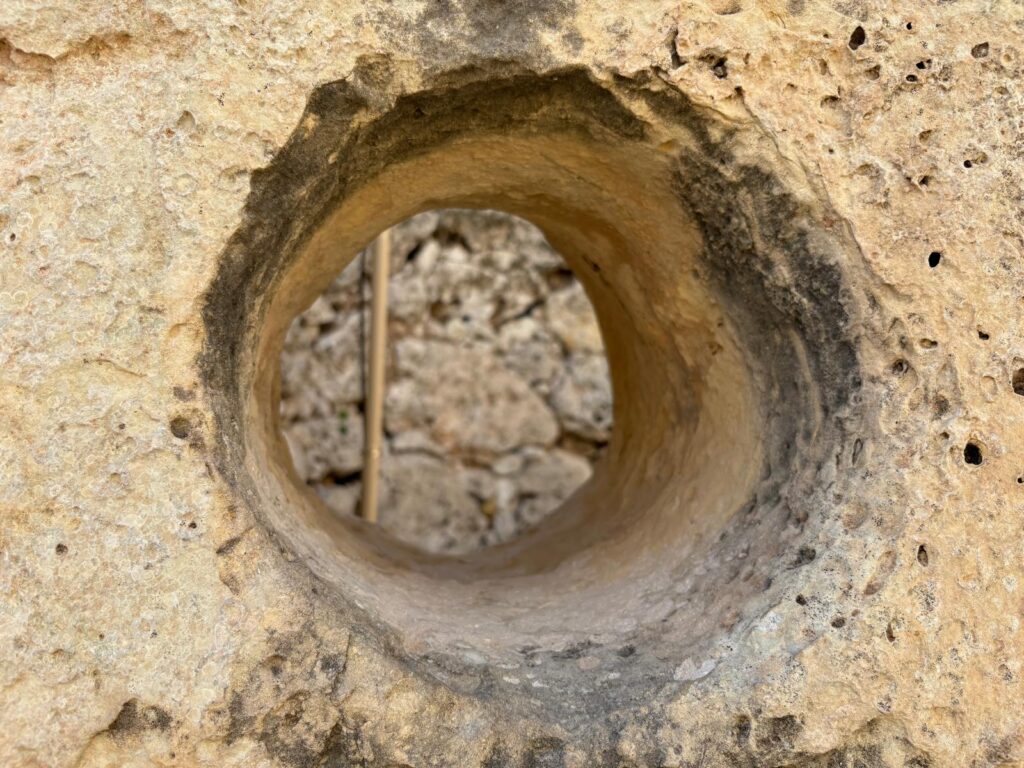
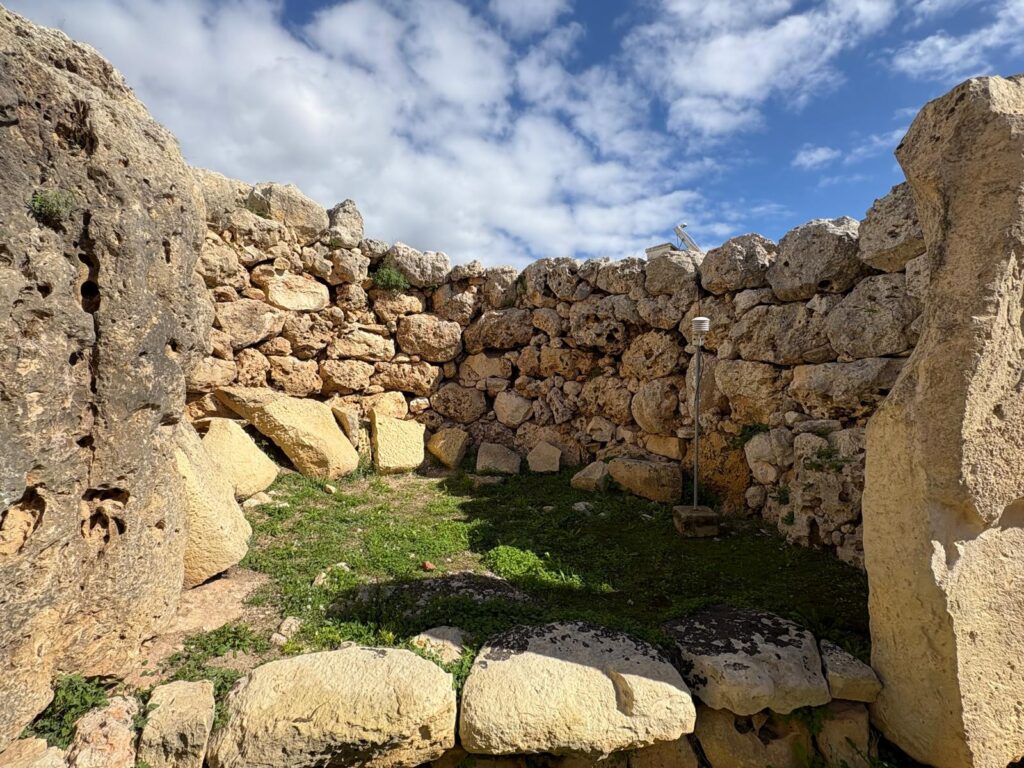
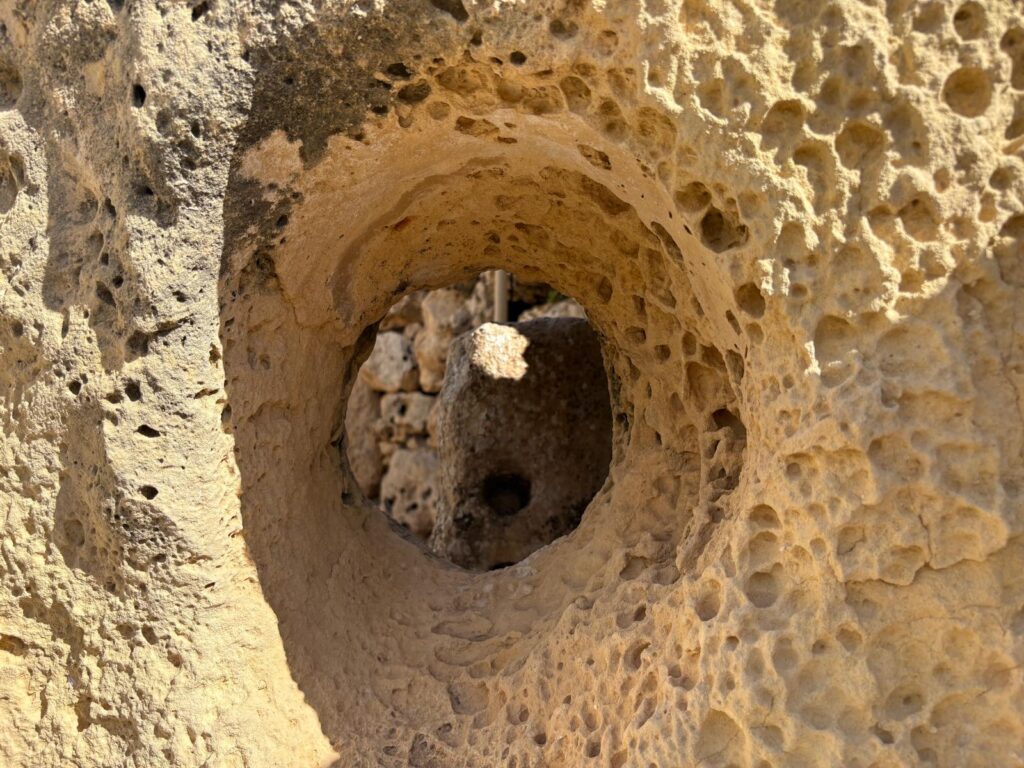
If weather permits, Ġgantija is within walking distance (about 3KM) from Gozo’s capital Victoria (Ir-Rabat). This time, the introductory museum is a lot more substantial than that at Ħal Tarxien. By the time you exit, you will understand something about the two limestone structures, and their history. They date to between 3600 and 3200 BCE, so once again the work of the Temple Builders. Discoveries here once more included wall paintings (in red ochre), animal bones, and hearths. There were also what could be libation holes in the floor in several places, for liquid offerings. Ġgantija had a large forecourt where people probably assembled during ceremonies.
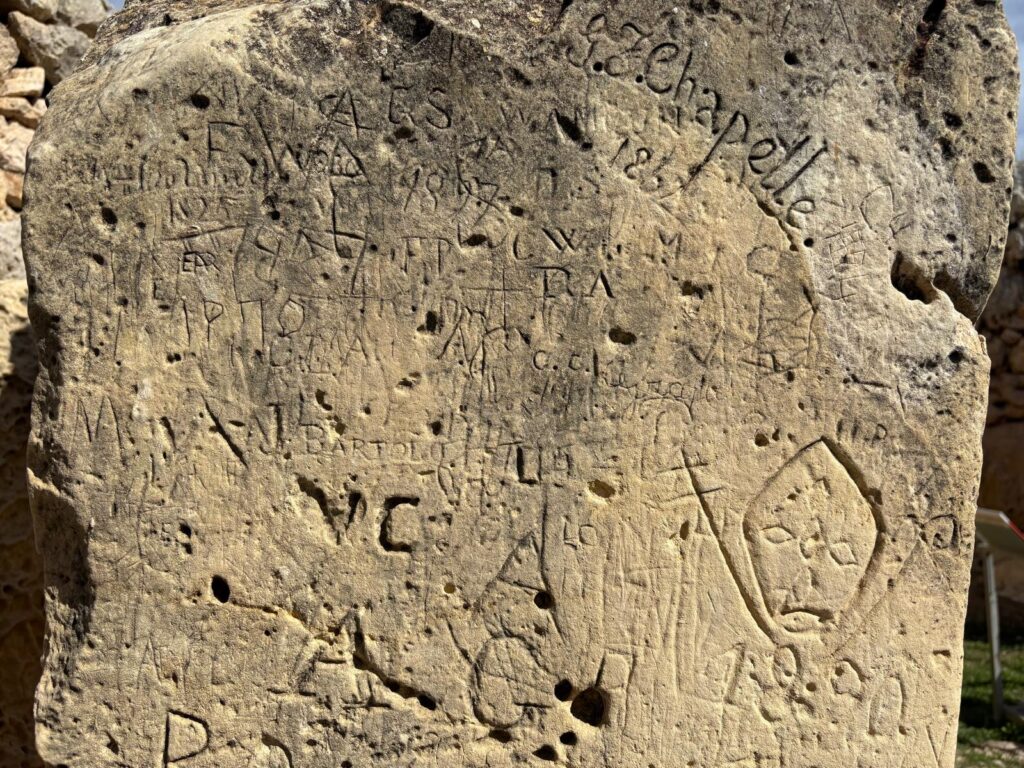
Unlike the sites discussed so far, which were forgotten and had to be rediscovered, Ġgantija has long been partly uncovered. The meaning of its name, ‘Place of Giants’ (or ‘Giantess’) points to later myths to explain the site. During the Grand Tour, the European aristocracy’s way of creating cultured young men from the 17th to 19th centuries, Gozo was one possible stop, for the purposes of seeing Ġgantija. One positive outcome from this early tourism is the existence of charming early watercolours of Ġgantija. The downside is that excavations happened here well before modern archaeology existed, and knowledge and objects have been lost as a result.
Ġgantija is nonetheless a really atmospheric, interesting place to visit. This and Ħal Saflieni Hypogeum are my two must-sees in terms of Neolithic Malta.
Other Neolithic Sites in Malta
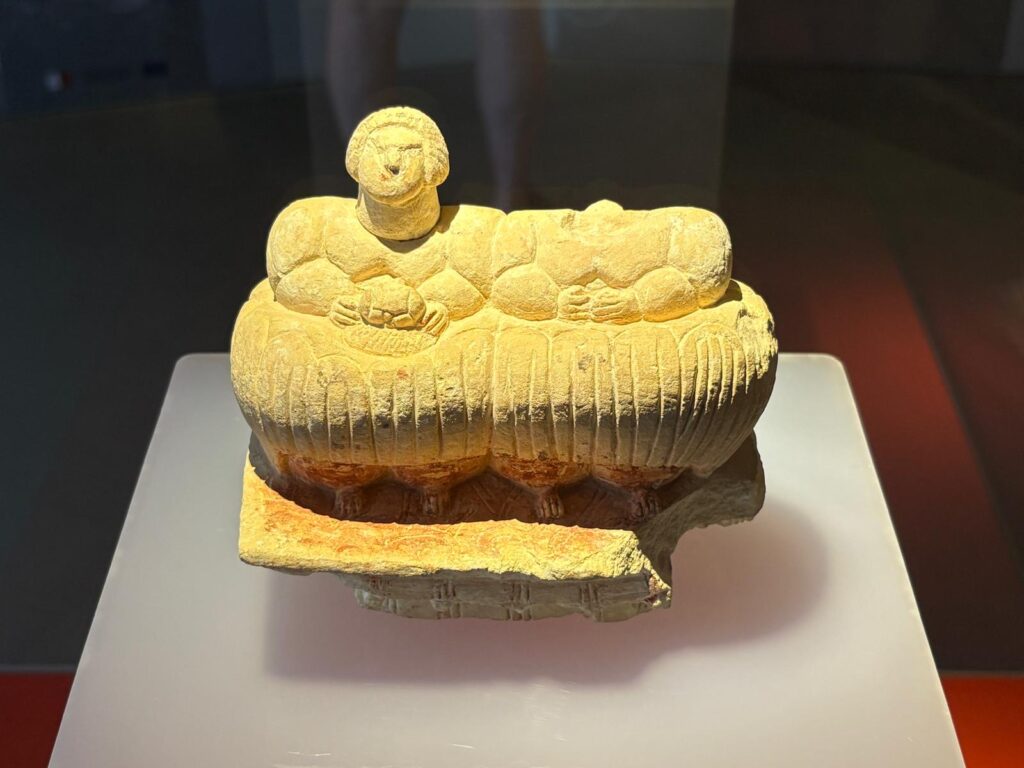
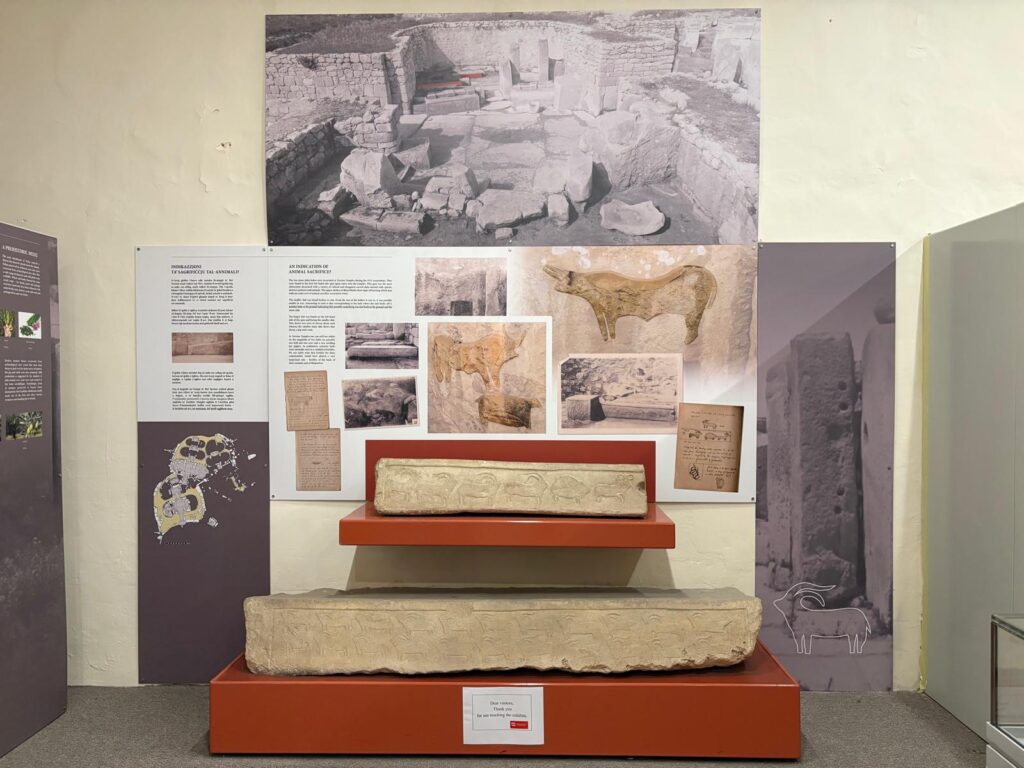
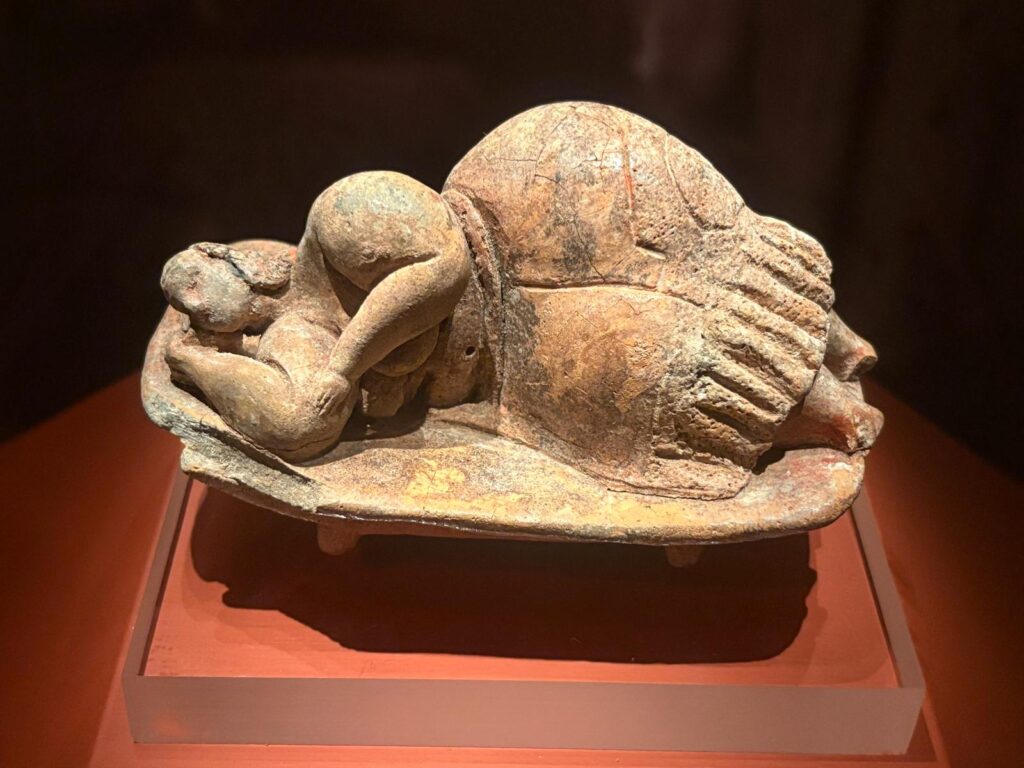
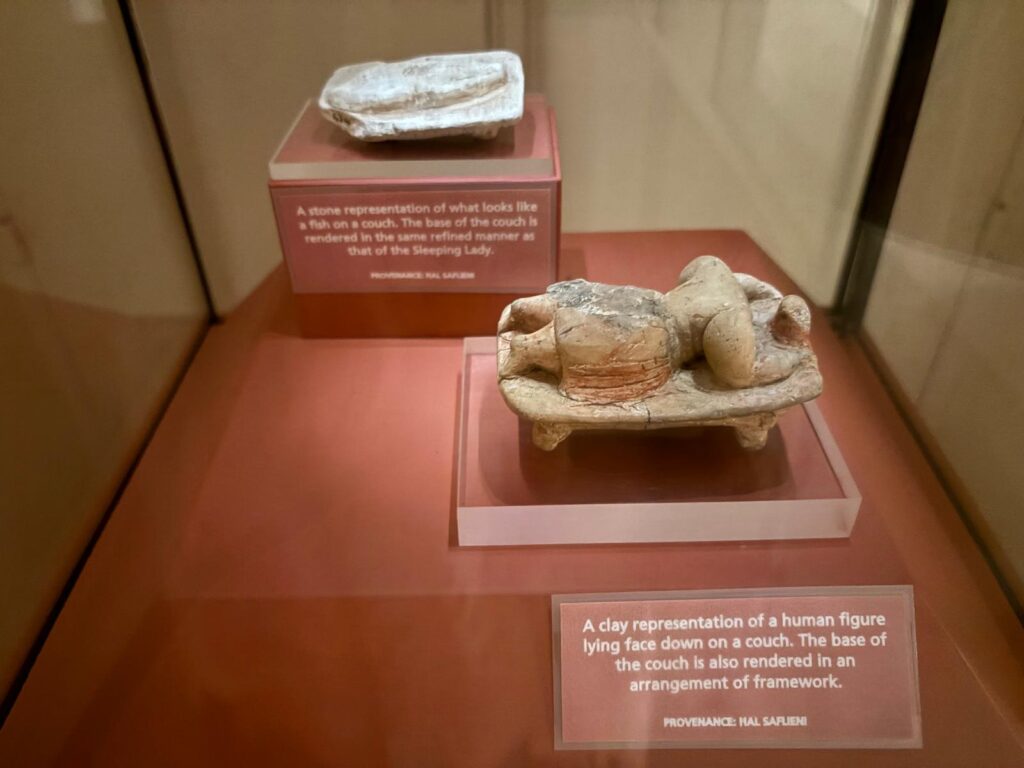
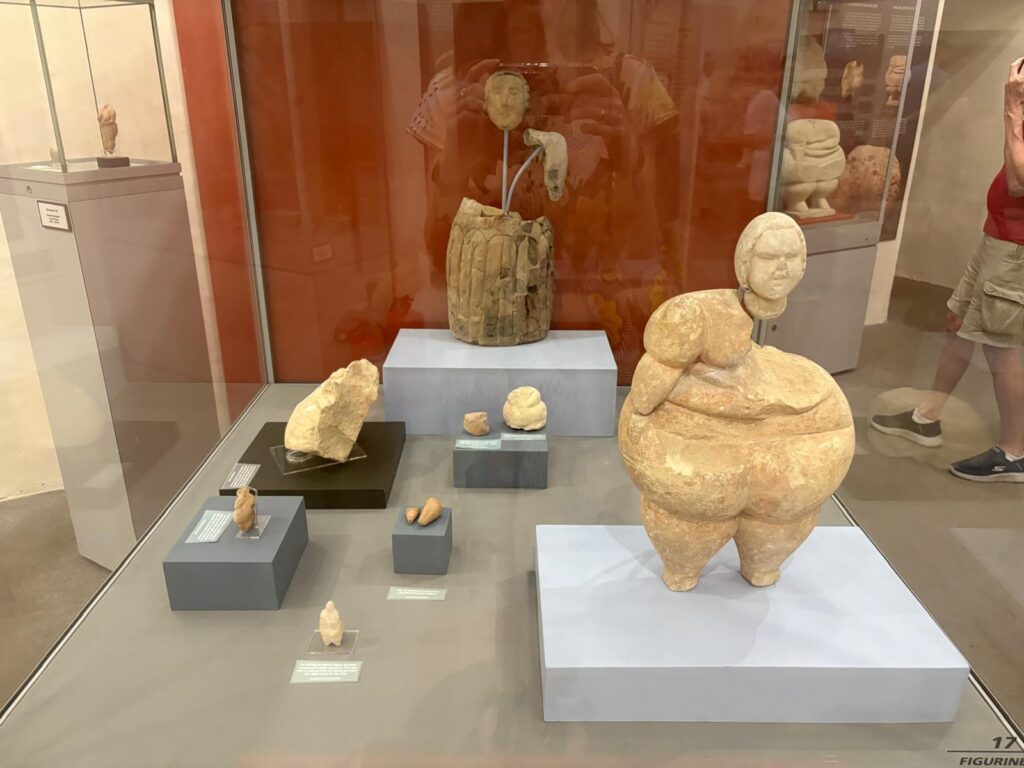
There are several other Megalithic sites to see in Malta, one more underground site, and then a handful of other archaeological sites open by appointment with Heritage Malta. I’ll describe them below. But my next recommendation for lovers of the Neolithic in Malta is the National Museum of Archaeology. It has information about all the sites, photos of many key artefacts in situ, and lots of great objects. The ‘Sleeping Lady’ from Ħal Saflieni gets her own room, with dramatic lighting. She is remarkable for her size, and for being so intact. Her rounded bottom reminded me of sculptures by Fernand Botero. There are plenty of other rounded figures on display, which points to the Temple Builders following a fertility cult.
Other Neolithic sites in Malta:
- Ta’ Ħaġrat Megalithic Site: part of the UNESCO listing for Megalithic temples. Prior to discovery in 1917, Ta’ Ħaġrat was a circular mound covered by a very large carob tree. The site consists of two structures, and archaeological evidence shows Malta’s early inhabitants used this location even before they built temples here. Joint ticket with Skorba Prehistoric Site.
- Skorba Prehistoric Site: also part of the UNESCO World Heritage listing. Renowned archaeologist David Trump excavated Skorba in the 1960s. His scientific approach filled in gaps in knowledge about the Temple Builders. The site contained remains of several domestic huts as well as two Megalithic structures. It’s one of the oldest sites in Malta. Joint ticket with Ta’ Ħaġrat Megalithic Site.
- Borġ in-Nadur Prehistoric Complex: a late Neolithic temple and Bronze Age site (in domestic use in the latter period as a fortified settlement). Archaeologist Margaret Murray excavated here in the 1920s, helping to understand the distinction between Neolithic and Bronze Age sites in Malta. Purchase tickets at Għar Dalam.
- Ħaġar Qim and Mnajdra Archaeological Park: again part of the UNESCO listing. These temples are about 500M apart from one another, and so likely the same community used them. Mnajdra aligns with the winter and summer solstices.
- Għar Dalam: this is one site I would prioritise on a return visit. Malta’s oldest prehistoric site, and an underground rather than Megalithic one. It also has a Victorian-style display of ancient animal bones in Joseph Baldacchino’s Hall, part of the on-site museum.
- Ta’ Għejżu Cave: on Gozo, not too far from Ġgantija. Possible to view the site from the perimeter.
- Open by appointment: Xagħra Circle (Gozo); Kordin III Megalithic Site; Tas-Silġ Archaeological Complex.
- Plus a load more not under the care of Heritage Malta, as per the Wikipedia page on Megalithic Temples in Malta, here.
Trending
If you see this after your page is loaded completely, leafletJS files are missing.