
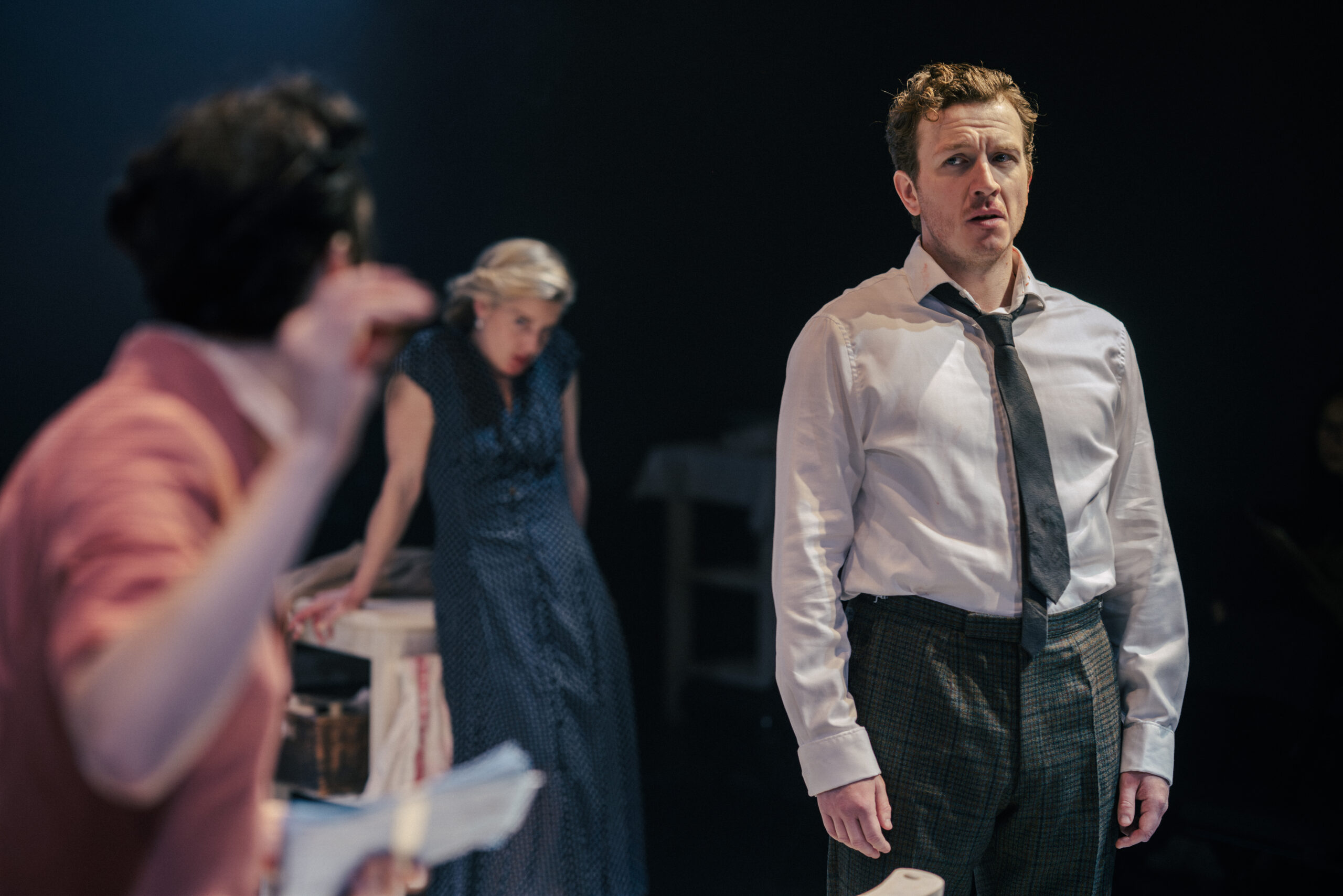
After Miss Julie – Park Theatre, London
At North London’s Park Theatre, Patrick Marber’s After Miss Julie revisits August Strindberg’s classic drama through the lens of post-war Britain.
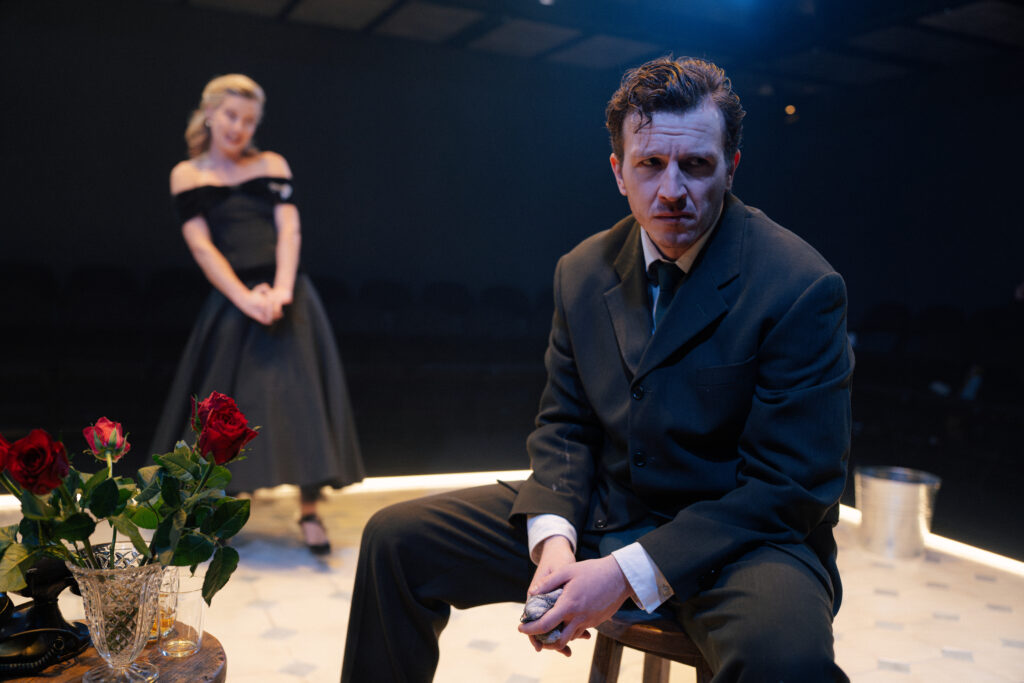
After Miss Julie
August Strindberg’s Miss Julie still seems to intrigue audiences more than a century after its debut. At North London’s Park Theatre we see it through the lens of After Miss Julie by Patrick Marber, written in 1995 and first staged in 2003 (following an earlier BBC version). Marber transplants the action from a Scandinavian Midsummer party to the night the first Labour government was elected in 1945. Otherwise it sticks so closely to Strindberg’s original that we could get into semantics about when a change of setting becomes a different play. But this is not an English lit essay, so I digress.
Like the original, After Miss Julie is a three-hander. There’s Miss Julie (here the daughter of a Labour peer), chauffeur John, and his almost-fiancée, fellow servant Christine. The action takes place in the kitchen, with Julie’s father looming as an unseen presence. Over the course of this heady night, Julie and John must decide whether to let their passions prevail, buck the deeply entrenched class system, or submit to their place within it. Long-suffering Christine puts the cost of their battle for dominance and self-determination into perspective.
What does reviving After Miss Julie bring in terms of insights into the play itself or our contemporary moment? After seeing it, I’m not quite sure. If anything, I thought Amy Ng’s 1940s Hong Kong-set version of Strindberg (rather than Marber), which I saw a few years back at the Southwark Playhouse, was a more insightful take for our times. But perhaps, even if class politics look a little different today, the desire to break free from one’s assigned position in life and grasp an imagined future instead is just as relevant.
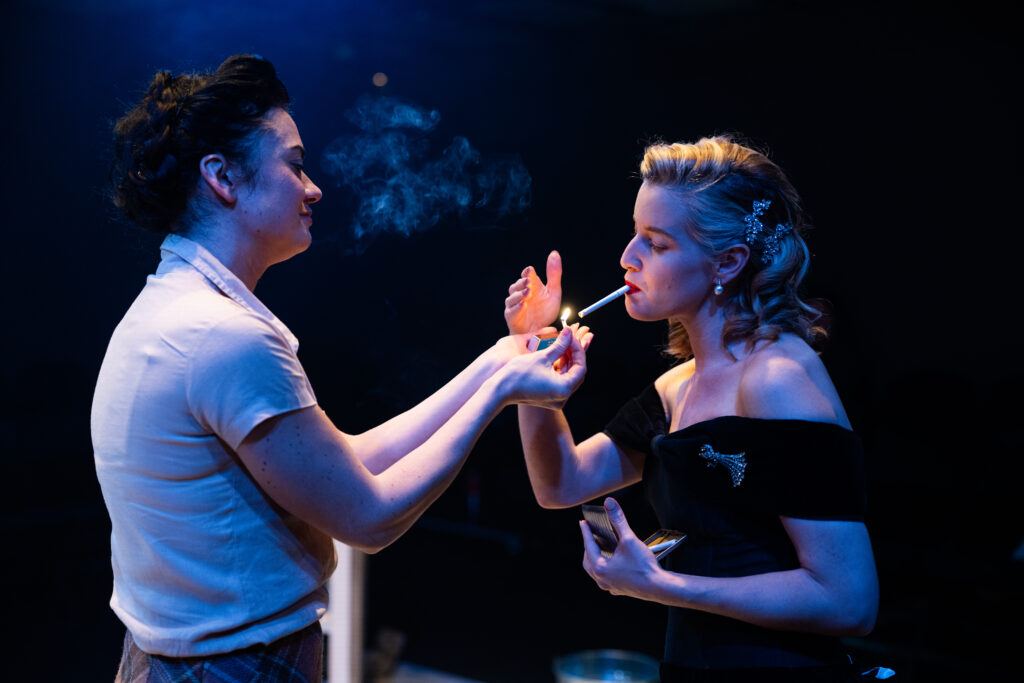
A Solid Revival
This Park Theatre production, directed by Dadiow Lin, is staged in the round. This creates a slight push and pull, where some scenes feel very intimate, while others are slightly obscured. Still others involve the actors moving to the corners of the space where props and set furniture are stored. Still, Ellie Wintour’s set design is clean and effective and, together with her costume design, full of nicely judged historical details that help bring the period to life.
Whether this was press-night nerves, I felt the play took a little while to settle, with the opening and closing scenes slightly weaker than the core, where the characterisation really comes into focus. Once it does, the standard of acting is high. Liz Francis walks a fine line between privilege, cruelty and desperation as Julie. Tom Varey’s John balances charm with ambition. And Charlene Boyd gives Christine a grounded steadiness that throws the others’ emotional chaos into relief.
Overall, this is a solid revival with plenty to admire, particularly in the performances, even if I left feeling that Marber’s adaptation doesn’t quite sharpen Strindberg’s ideas for the present day as much as it might. Still, the central struggle, between desire, class, and the hope of a different future, retains its uncomfortable bite.
Salterton Arts Review’s rating: 3.5/5
After Miss Julie on until 28 February 2026. More info and tickets here.
Trending
If you see this after your page is loaded completely, leafletJS files are missing.