
Chislehurst Caves
I finally make it to Chislehurst Caves, and find an intriguing mix of pseudo-archaeology, WWII forebearance, and music history.
Introducing Chislehurst Caves
Let’s start by getting one thing straight. Despite the name, Chislehurst Caves aren’t caves. They area instead man-made tunnels and caverns, excavated as chalk and flint mines. The first mention of the mines, and lime burning pits in the vicinity, goes back to the Saxon period (although the earliest properly documented evidence dates to 1737). Presuming the Saxons are the ones who started it all, they had various uses for the materials they extracted at Chislehurst (or whatever it was called at the time). Flint is obvious: a building material and for lighting fires. Chalk, and lime (created by burning chalk), were also primarily building materials, used in mortar, whitewash, and as a whitener in paint and plaster. Chalk could also help improve soil quality. A very useful mine indeed.
It wasn’t just a Saxon affair, though: the mines were probably in operation until the 1840s. Then there was a period where they were presumably not in use, before they became ammunition storage during WWI: an extension of the Royal Arsenal at Woolwich. Then in the 1930s they became a mushroom farm.
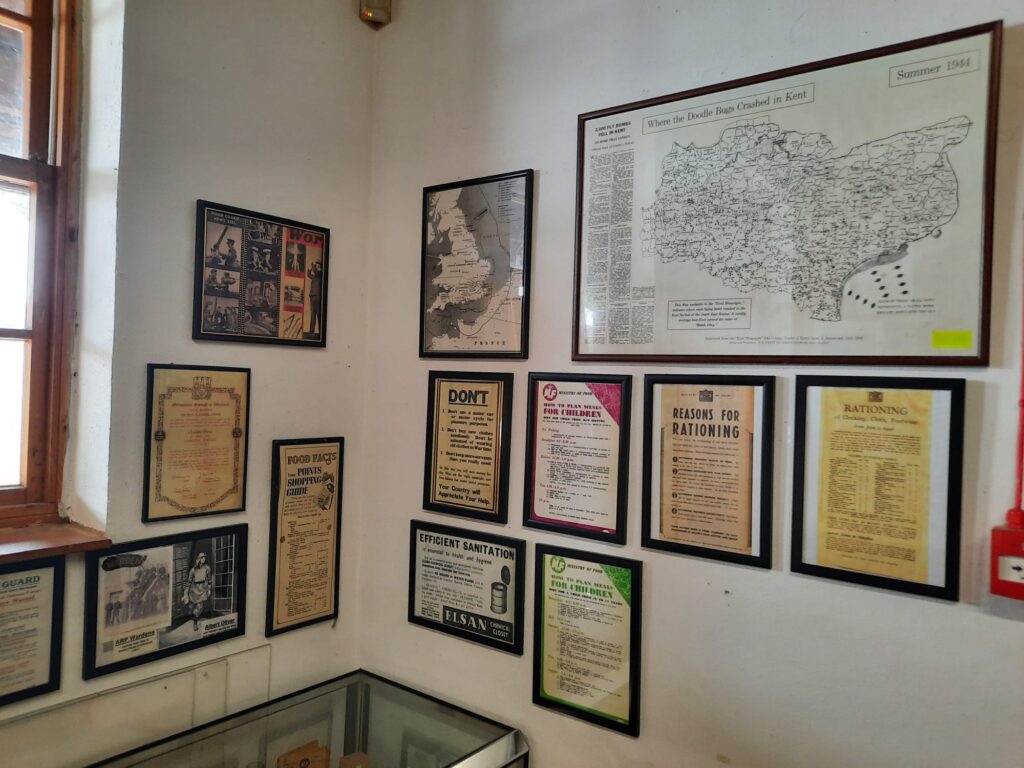
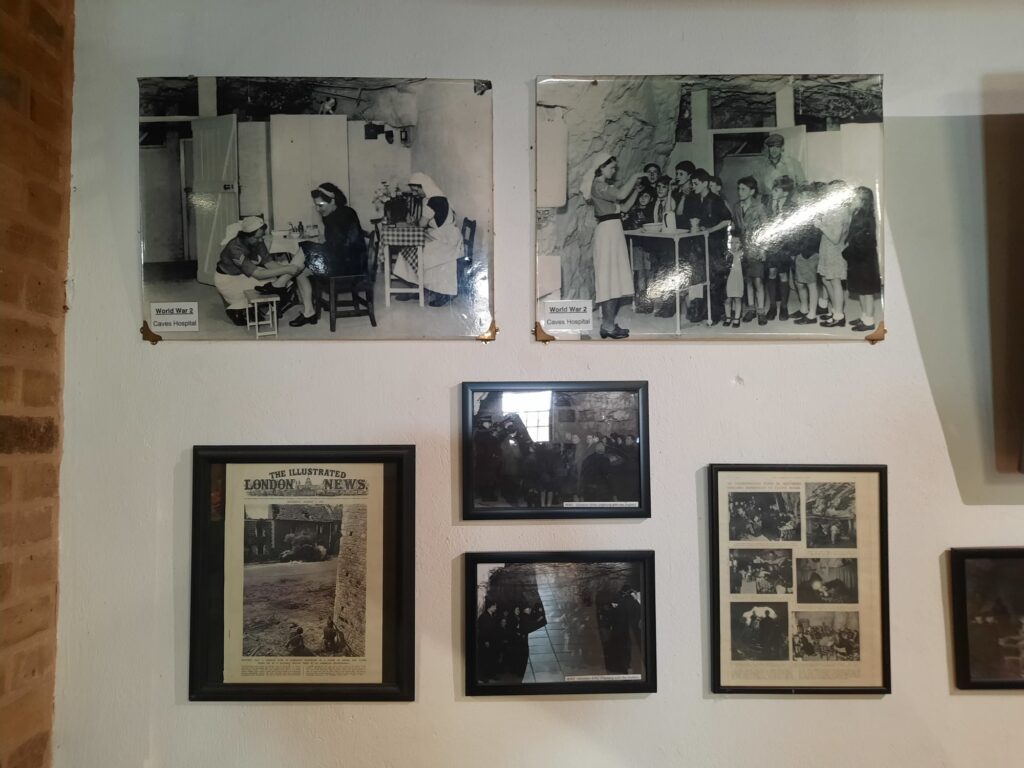
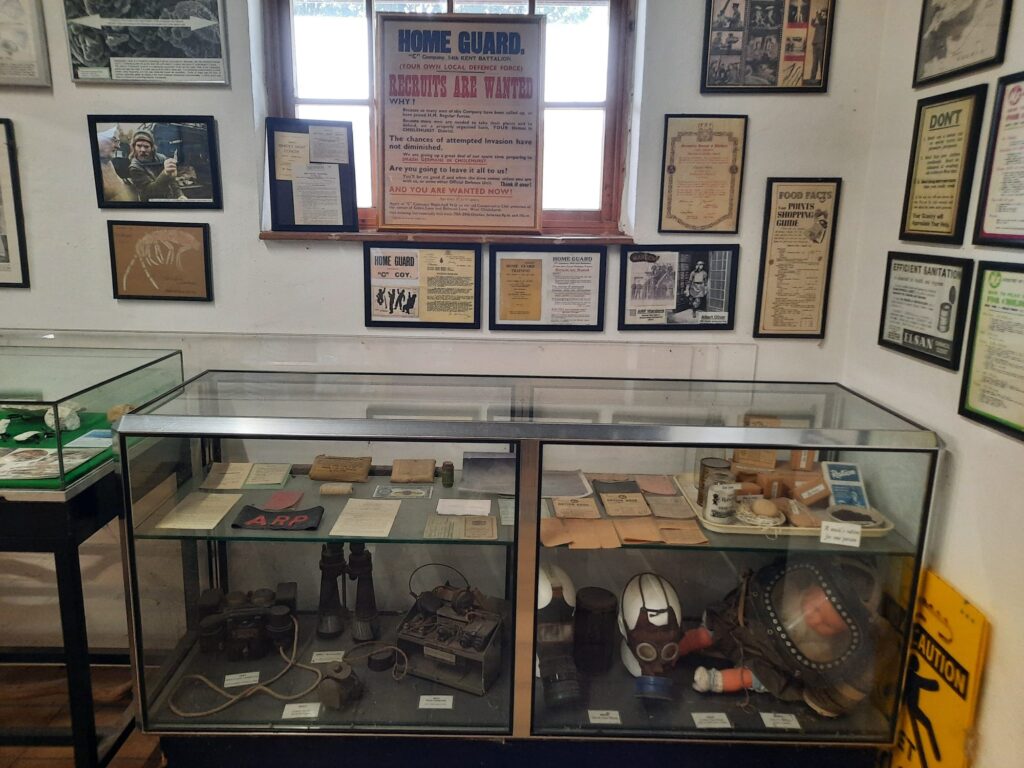
It’s during the Second World War that Chislehurst Caves took on another major new identity: as air raid shelters. For this purpose they were kitted out with electricity, rudimentary plumbing, a chapel, and a hospital. The sole child to be born in the caves was christened Cavena. I wasn’t surprised to learn she changed her name at 18. The caves could accommodate up to 15,000 people: their location right next to a railway station was practical, and people came from central London out to the caves on special trains. Less practical to live in though – illness travelled quickly through the confined living conditions. The caves officially closed as a bomb shelter shortly after VE Day, although some residents apparently stayed on longer while housing was rebuilt.
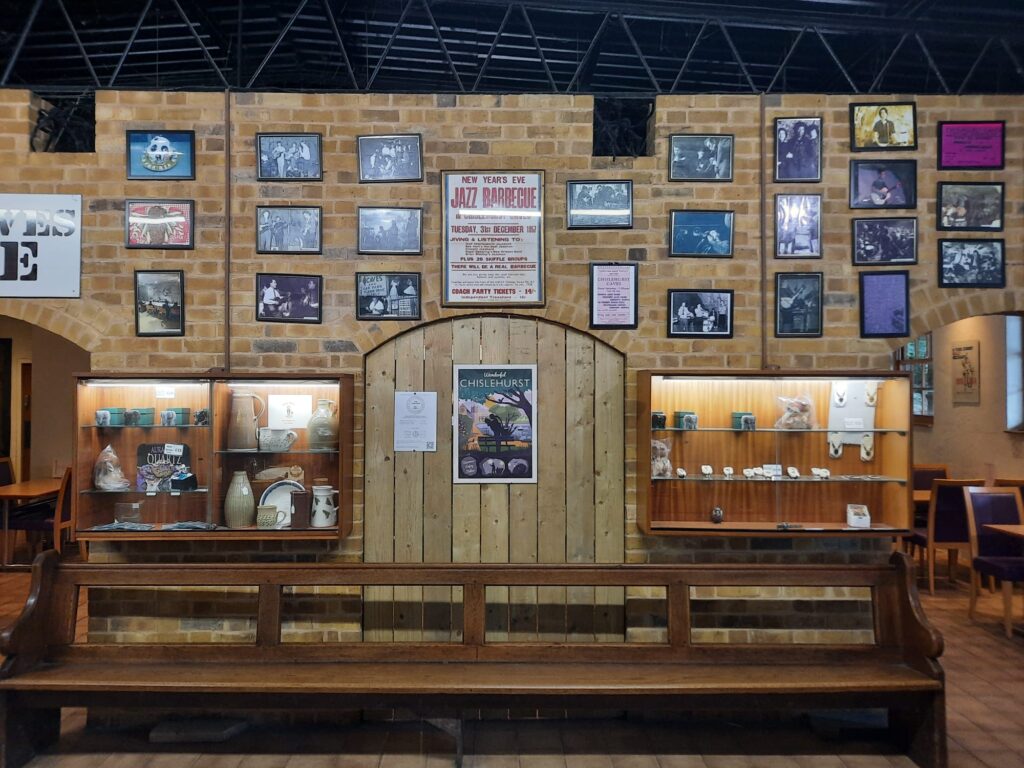
In the post-war period, Chislehurst Caves became a tourist attraction, and in the 1960s a music venue. David Bowie, the Rolling Stones, Pink Floyd and Jimi Hendrix all performed here. It wasn’t exactly legal though, and was eventually shut down. Today Chislehurst Caves remain a tourist attraction, with guided tours available.
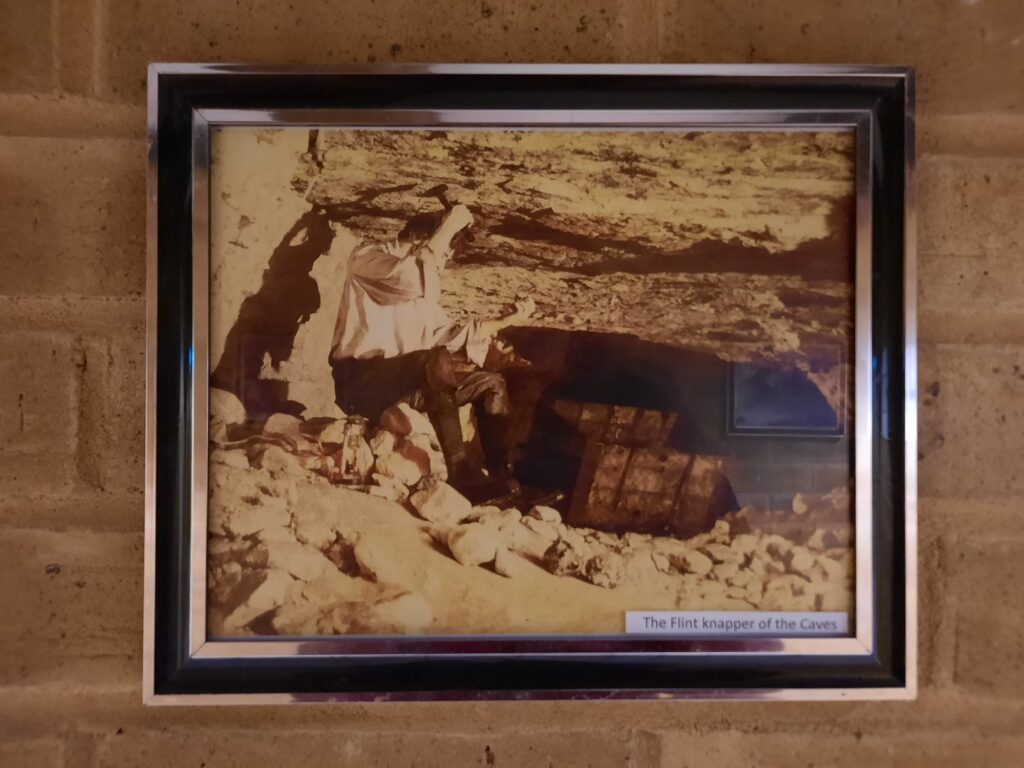
Some Spurious Archaeology and a Tour
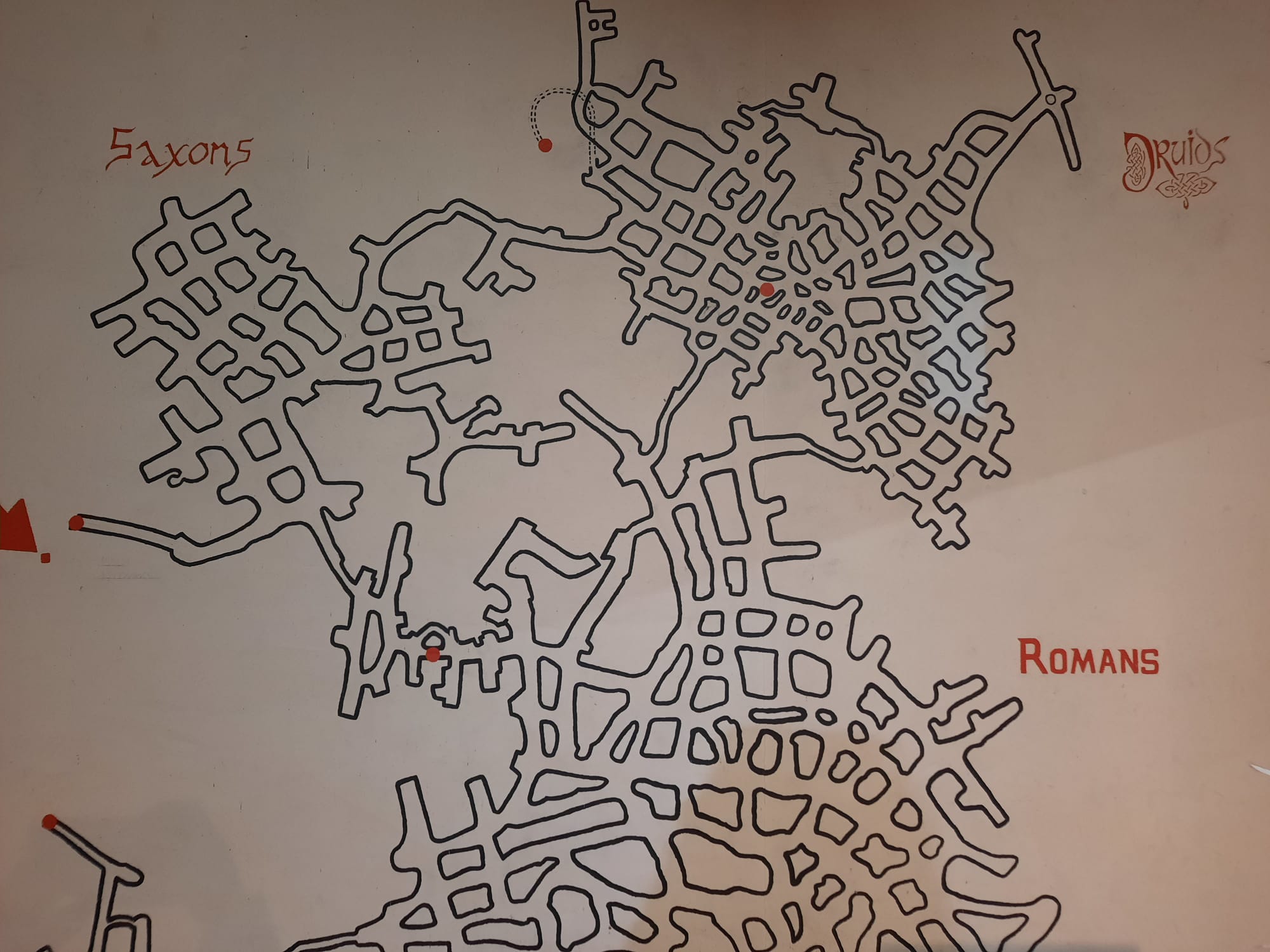
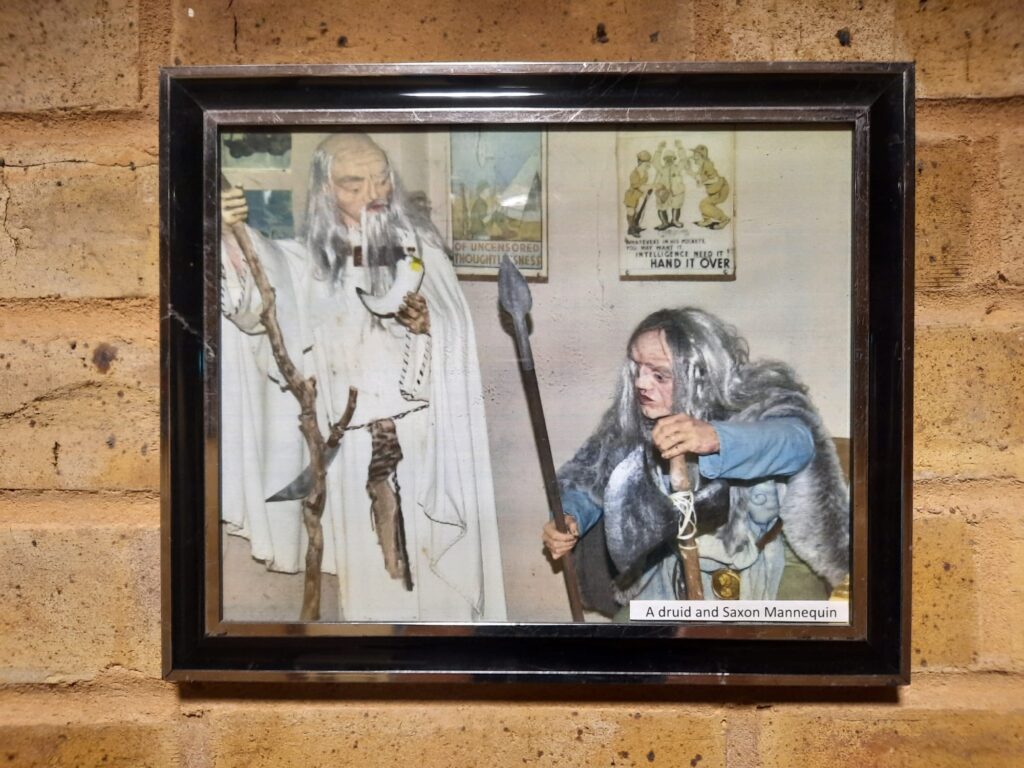
As we learned above, Chislehurst Caves aren’t the type of place that required rediscovery in the modern era. In use for hundreds of centuries, the existence of the ‘caves’ was never a surprise. That didn’t stop one archaeologist from coming up with some strange theories about them, though. In 1903 William Nichols, who at the time was Vice President of the British Archaeological Association, published a paper in the journal of that venerable institution. In it, he posited the theory that the caves divided naturally into three sections, dug out respectively by Druids, Romans, and Saxons. There seems to be no evidence whatsoever to support this, and a fellow archaeologist refuted Nichols’ claims in the next edition of the journal. The idea has stuck, though, and maps of the caves still show those three areas today.
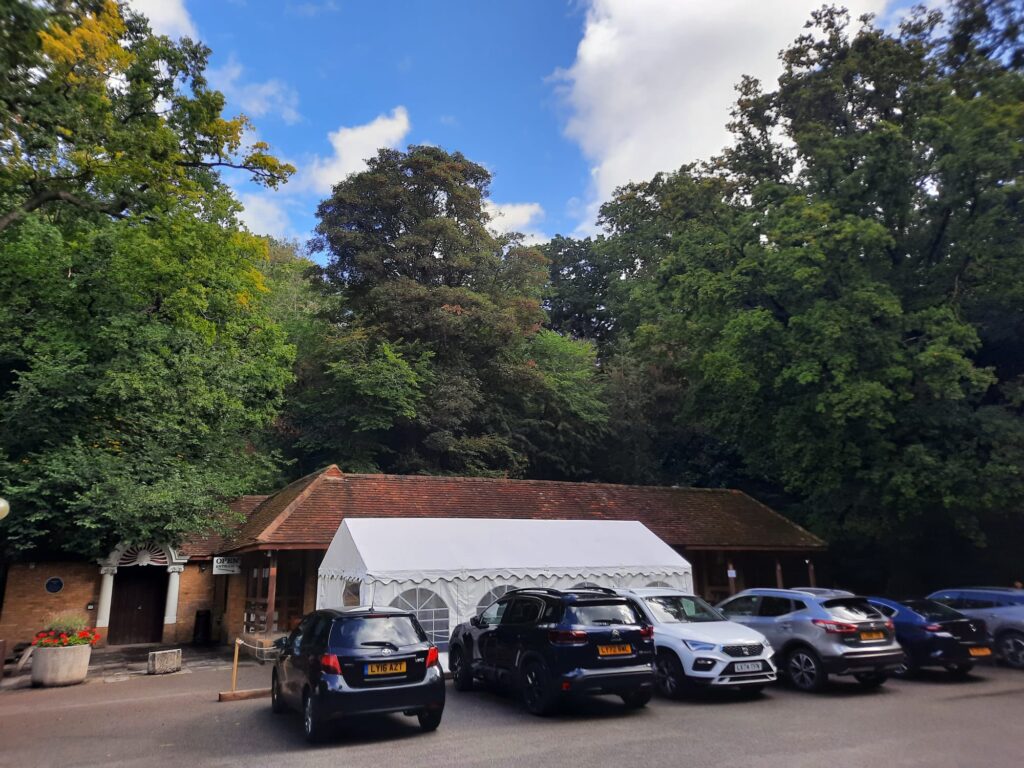
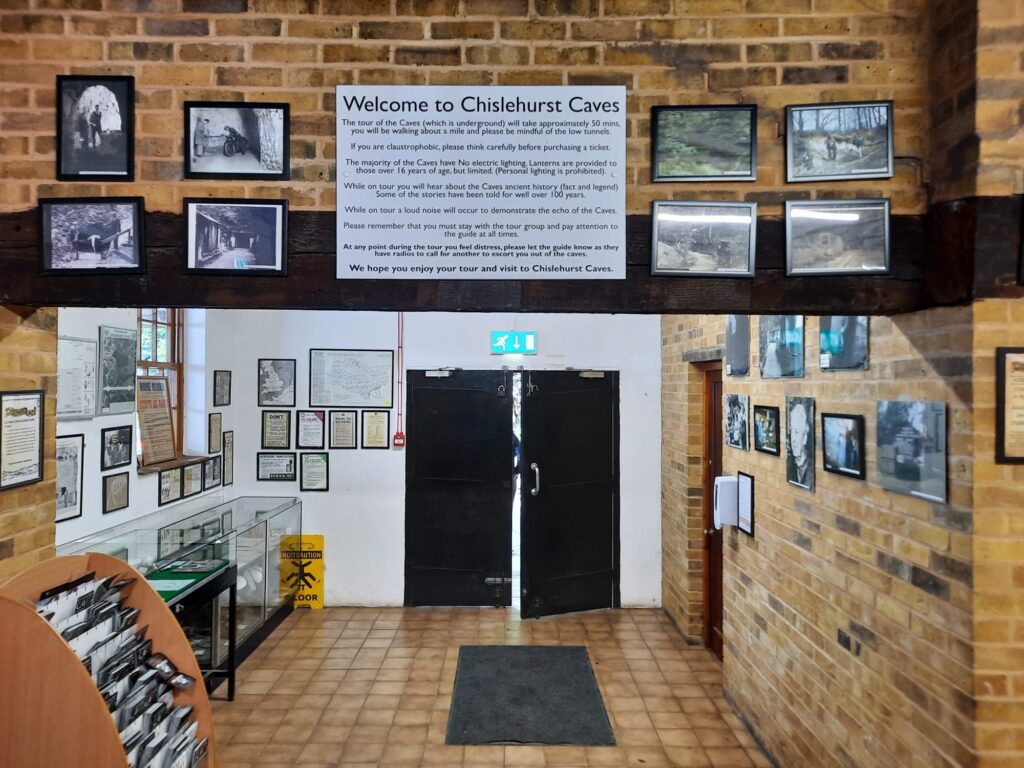
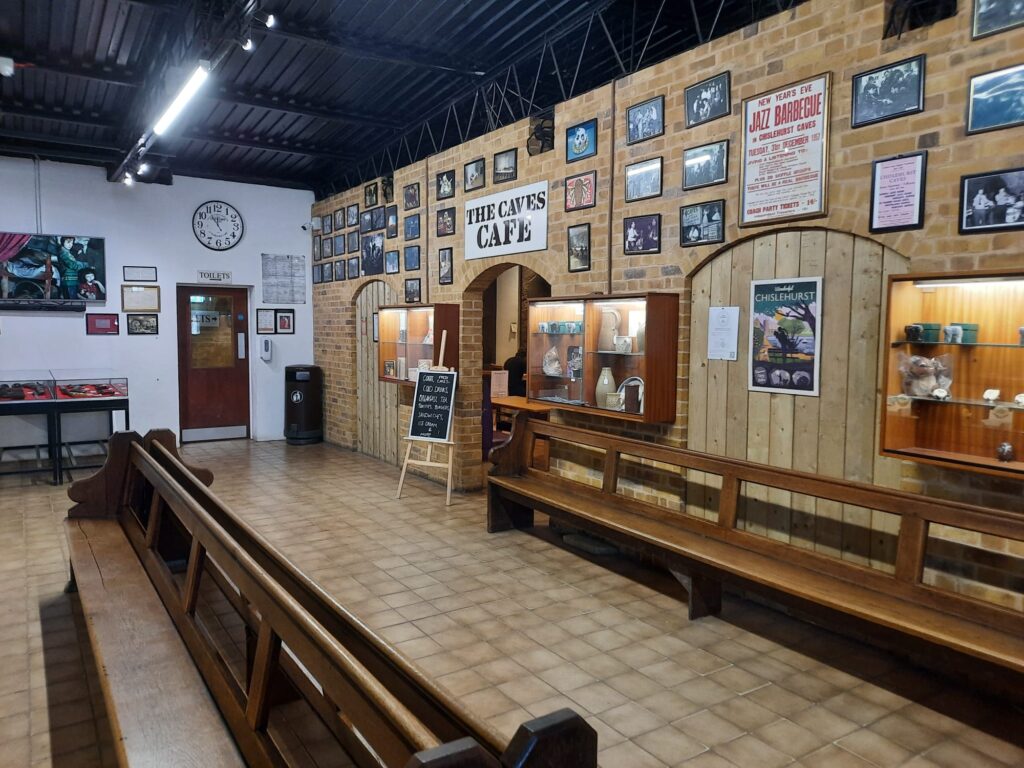
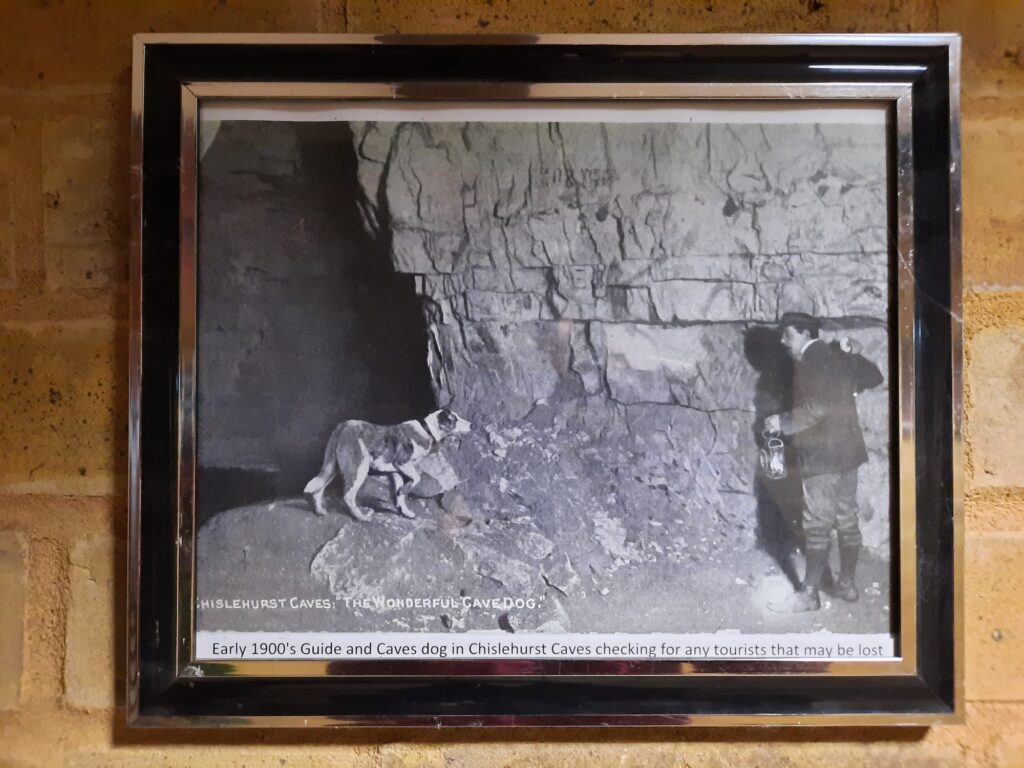
What about the visitor experience? Well, as I noted, the entrance is very close to Chislehurst Station, which is a good start. The Urban Geographer and I walked over from Bickley, which was more convenient for us. It was part of a day out in South East London where we visited some Open House London sights as well. Once we arrived at the visitor centre, we bought our tickets and started looking at the information and pictures crowding the walls. You may have noticed that all the images so far are from the visitor centre. There is a no photo policy inside the caves themselves. You can see some pictures old and new here.
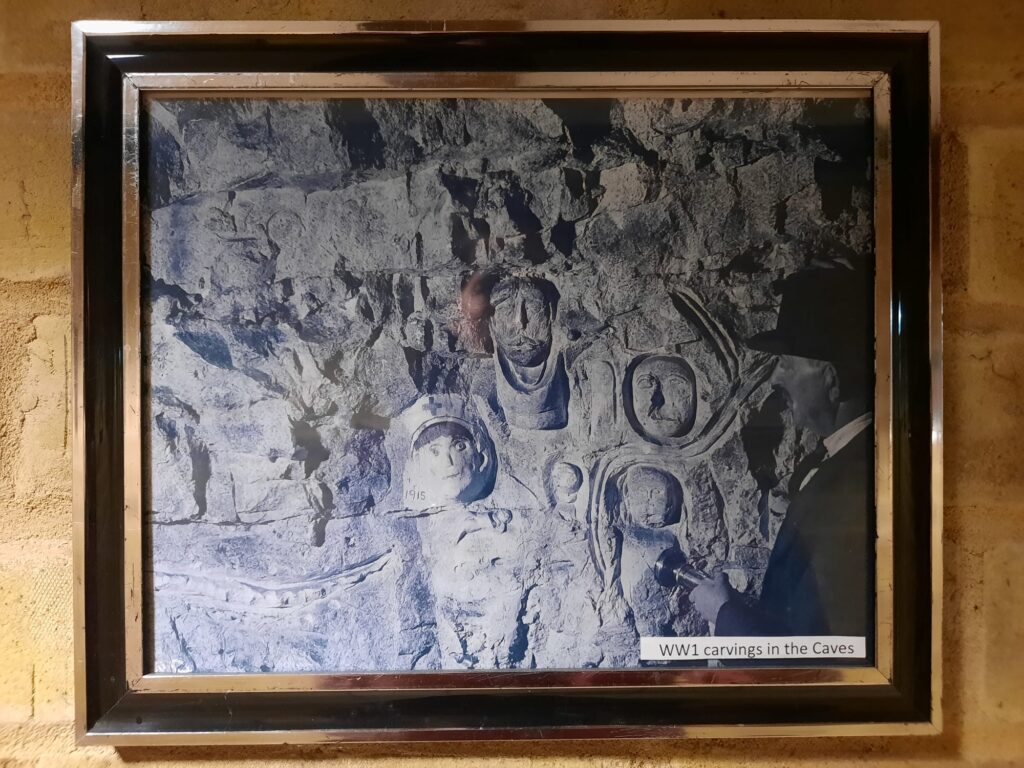
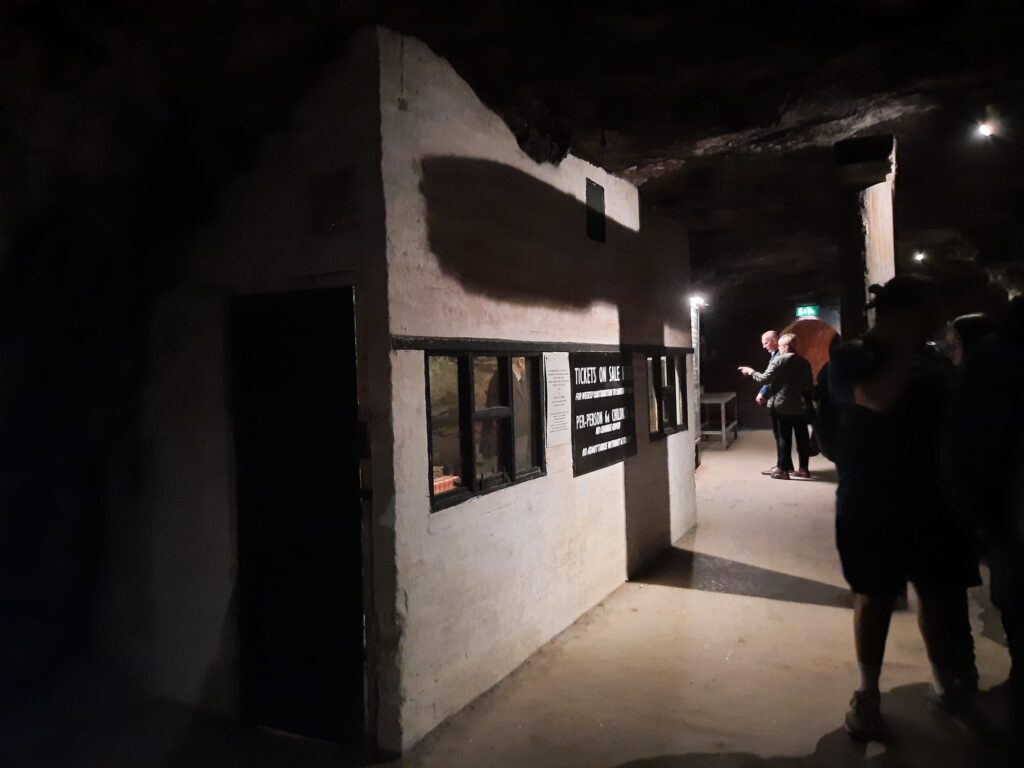
At the appointed time, our group set off underground. We saw the chapel and hospital, living quarters, and more. There was even a zombie for some reason. We saw artworks carved into the stone, and the ticket office where wartime residents could pay their weekly fee. Although the story told throughout the caves is mostly that of the air raid shelter, we also saw the stage from its life as a concert venue. It’s a very storied place and an interesting visit.
Like an Onion
Other than the facts I’ve already relayed, what did I learn at Chislehurst Caves? Firstly that it’s one of those places where the history can be peeled back in layers, like an onion. The origins of the mines (which let’s remember, they are) are just a dim memory. There’s a very slim historic record, but otherwise not much to go on. And despite some debate, we don’t really know what date most of the workings are attributable to. “Between the 13th and 19th centuries” is quite a range, after all.
So a big thick layer to begin with when the ‘caves’ were mines. Then more layers in quick succession. Ammunitions store, mushroom farm (a very thin layer, that one), shelter (thicker, this time), a glamorous rock and roll layer, and then our current layer. They all coexist here, even if the current fit out has privileged some of the narratives over others.
It also reminded me just how much there is to see in Greater London. I’ve been meaning to come here for years, but hadn’t previously found an excuse. Plenty of fellow visitors, mostly fairly local at a guess, had had the same idea. It was a repeat visit for several of them. Which tells us that people enjoy those layered sorts of histories, and visiting places where they feel tangible. And, like other underground attractions I’ve visited, there’s something a little thrilling about exploring subterranean spaces.
A small practical note to finish on. Adults on the tour may have the opportunity to bring oil lamps along with them. I had one, but found it wasn’t necessary for visibility, and was a bit heavy and smelly by the end. Perhaps give that a miss. There’s enough fun without it.
Trending
If you see this after your page is loaded completely, leafletJS files are missing.