
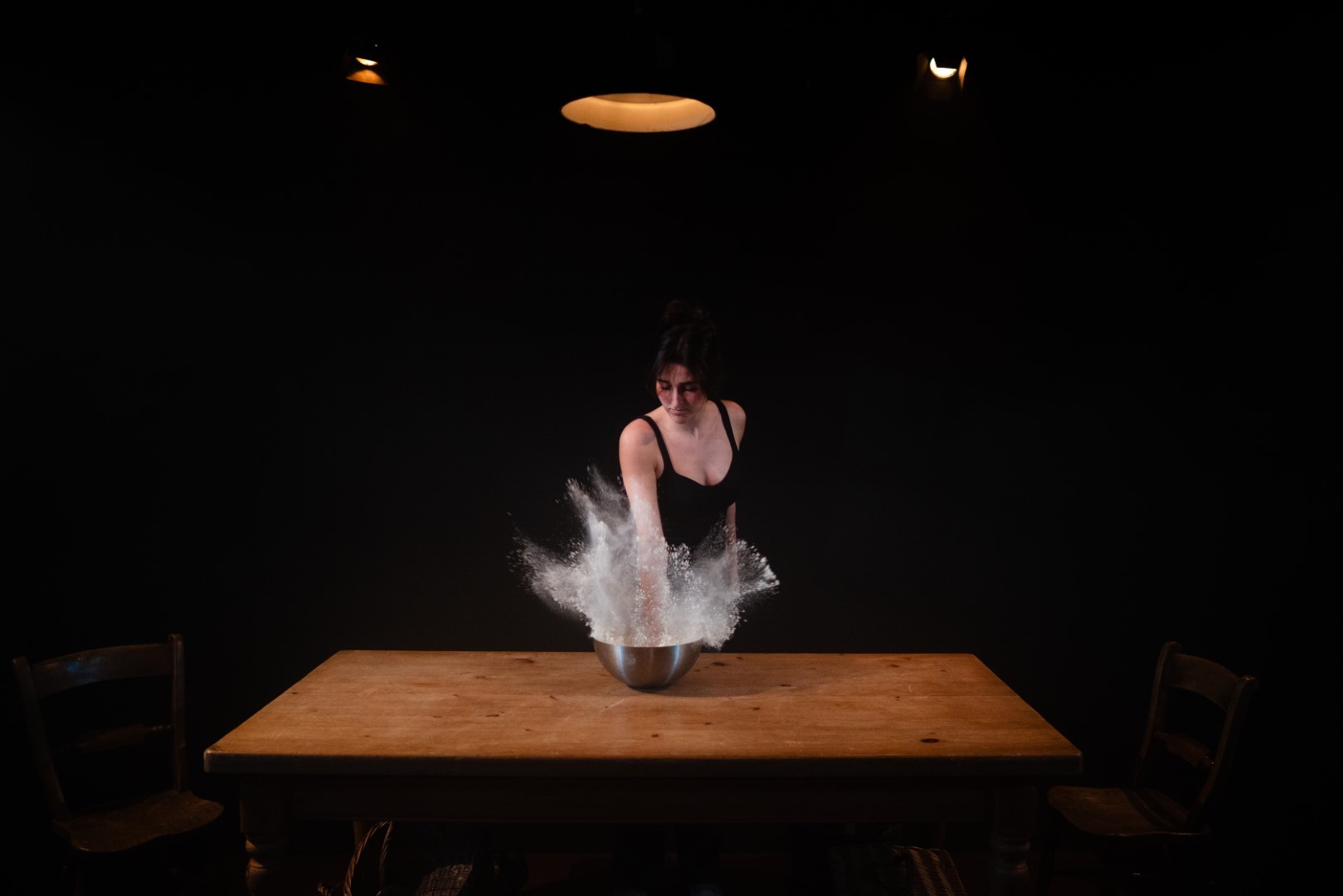
The Village Where No One Suffers – The Jack Studio Theatre, London
Four years on from the start of the war in Ukraine, The Village Where No One Suffers at the Jack Studio Theatre offers a look at what it means to leave – and what it means to return.
The Village Where No One Suffers
It’s strange to think the war in Ukraine began four years ago. Stranger still how quickly that fact can become abstract when you’re watching from afar. The Village Where No One Suffers, on now at the Jack Studio Theatre, reminds us it’s really not abstract. Through a small-scale, self-contained story, it reminds us of the many different human costs of war.
Written by Polina Polozhentseva and directed by Valery Reva, the play centres on Lukyana (Sofia Natoli), who returns to her late grandmother’s house in an isolated Ukrainian village. The grandmother, we’re told, had unusual powers. Under her watch, the village has been spared the worst of the war: no bombs, no conscription. But that safety comes with limits: no shops, no café, no sense of ordinary bustle. Protection, but also withdrawal.
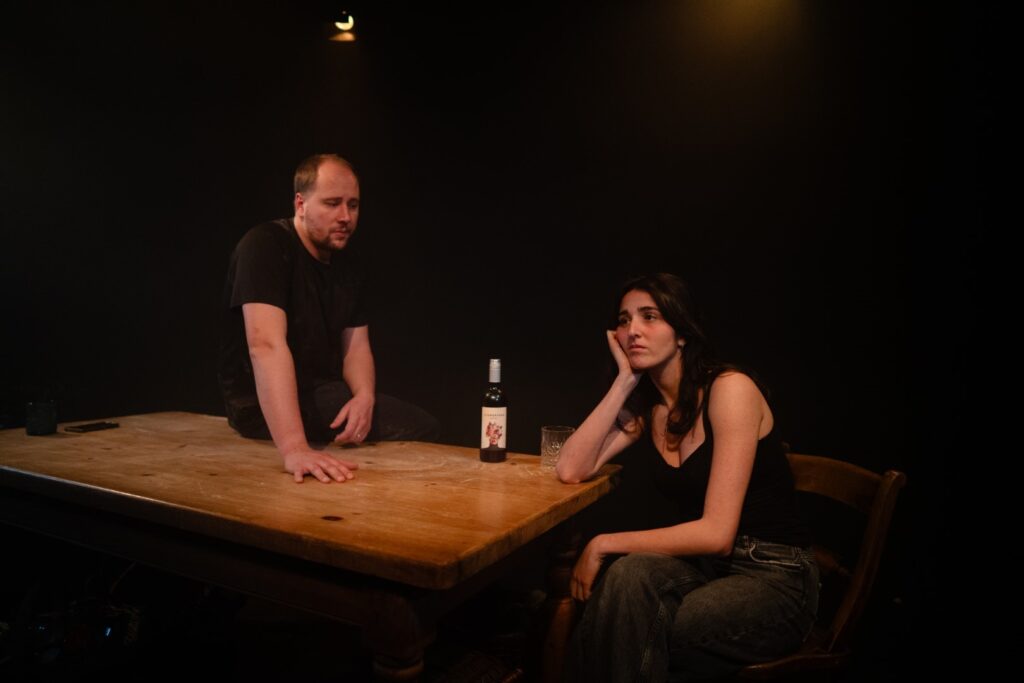
Lukyana left for Poland at the start of the invasion. She has built something resembling stability there: a job, a fiancé. But it feels provisional. Back in the village, she reconnects with her first love, Pasha (Christopher Watson). Their scenes together are understated and believable: familiar more than affectionate, and edged with the knowledge that time has moved on. They sleep together, but neither seems naïve about what that means.
There is a deliberate lack of exposition here. The play doesn’t spell everything out. But Natoli holds the centre well, giving us a woman pulled in two directions without turning her into a symbol.
What Do We Owe To Where We Come From?
The script, translated by John Farndon and Kseniia Koziievska, keeps the tone conversational even when the ideas are bigger. The grandmother’s powers are never fully explained, and the village sits somewhere between realism and folklore. I found that liminal aspect effective. The uncertainty mirrors Lukyana’s own.
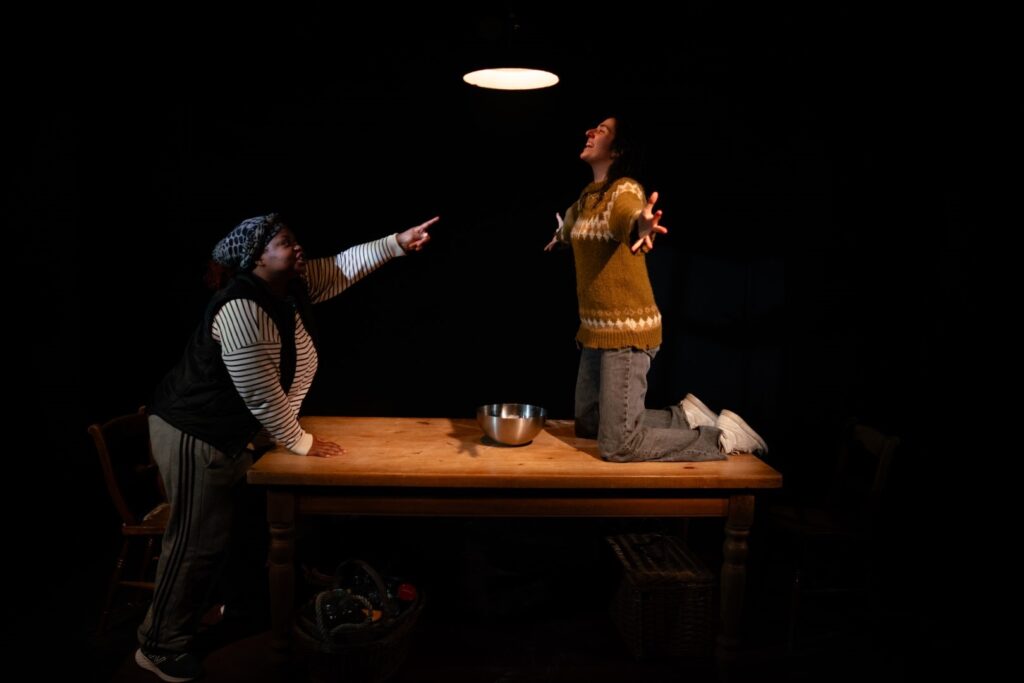
Nailah S Cumberbatch, as Aunt Valya, brings warmth and a welcome practicality to the stage. She grounds the piece whenever it risks floating off. Watson’s Pasha is similarly restrained: less romantic hero than reminder of who Lukyana used to be. The three performances work well together, with an ease that suits the intimacy of the space.
The design (set by Kateryna Iarova, from a concept by Gabe Gilmoure) is simple and cosy, softly lit and uncluttered. It feels like a place where time has stopped – whether by magic or just the nature of aging grandparents is ultimately unimportant. At around an hour, the play is compact and mostly disciplined. There are elements that could be trimmed (the unseen Polish fiancé, for instance, feels dramatically thin) but the core idea remains strong.
What lingers is the central question: in difficult times, what do we owe to where we come from? And how much are we allowed to choose ourselves? What decisions do we make in the heat of the moment, and do those change upon further reflection? The play doesn’t answer. It simply leaves the choice sitting there.
Salterton Arts Review’s rating: 4/5
The Village Where No One Suffers on until 28 February 2026 only. More info and tickets here.
Trending
If you see this after your page is loaded completely, leafletJS files are missing.