
Caravaggio’s Cupid – The Wallace Collection, London
A lovely little (free) exhibition at the Wallace Collection shines a spotlight on Caravaggio’s cheeky cupid.
More London Galleries With Free, Small Exhibitions? Don’t Mind if I Do!
More like this please, London! I love a small exhibition. And a free one. Frequently, I go to the National Gallery for this purpose. They have a couple of spaces where they do small temporary displays, often centred around and contextualising one specific work. I actually went recently and saw their exhibition on Edwin Austin Abbey. But by the time I got around to writing about it, it had finished. So no post on the blog I’m afraid…
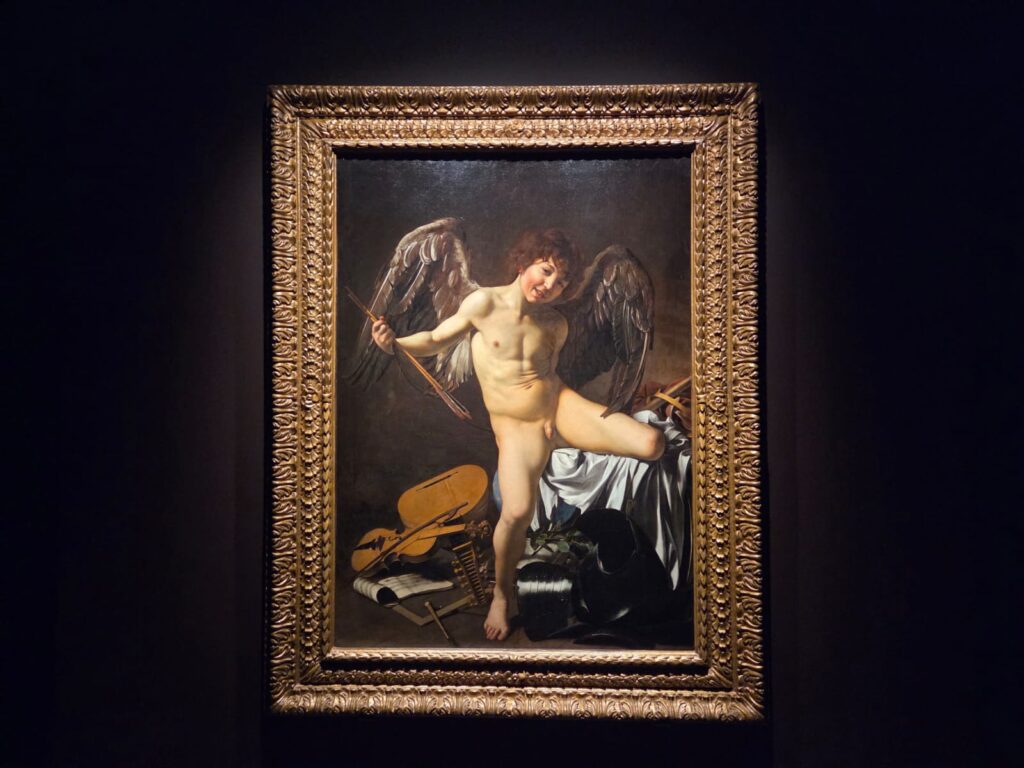
But anyway, that’s a roundabout way of saying that I recently went to the Wallace Collection to see a free exhibition centred on and contextualising one specific work. In this case, Caravaggio’s cupid, known by various names including Amor Victorious. The painting normally hangs in the Gemäldegalerie in Berlin. This is its first time on public display in the UK.
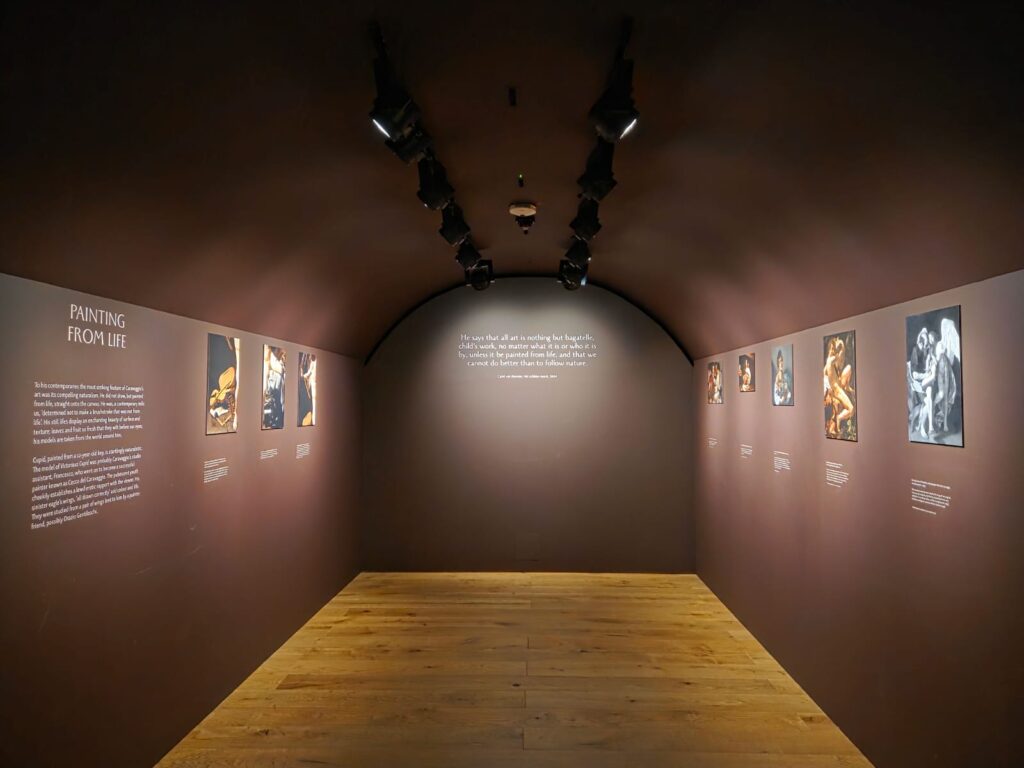
The exhibition is in the normal, downstairs temporary exhibition space at the Wallace Collection. This means that it is nicely spread out. Really there are just four objects to see, plus some images of other works. Text panels place the painting in the context of Caravaggio’s life in Rome, the collection of the patron who initially purchased it, and what was going on in art history at the time.
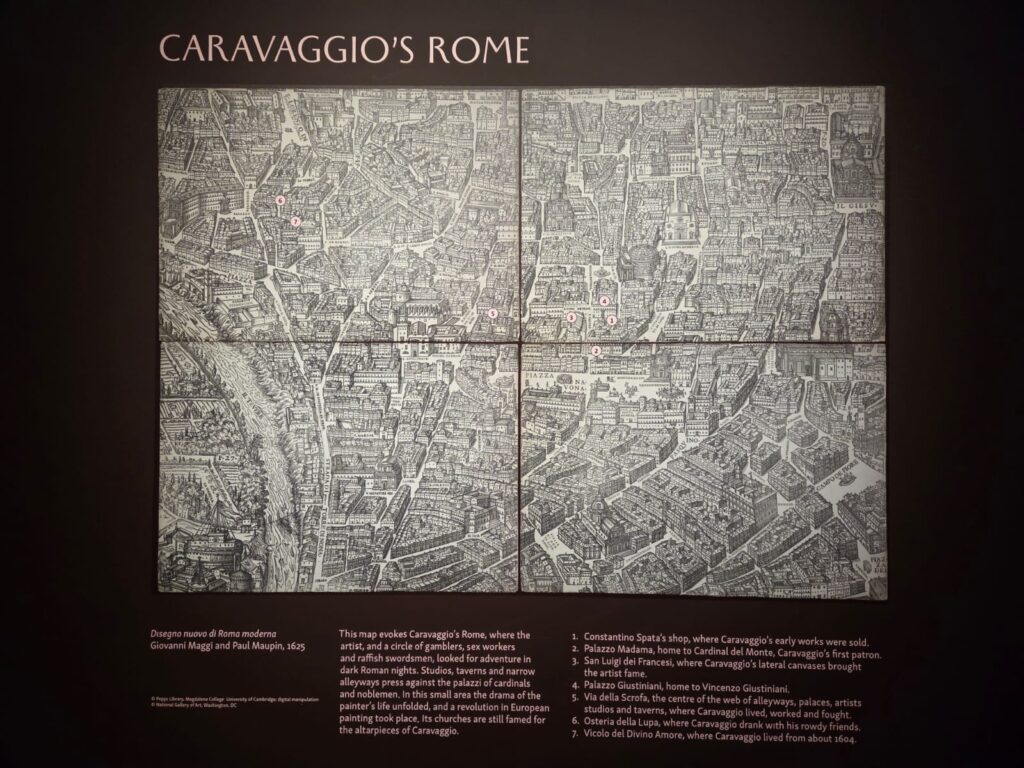
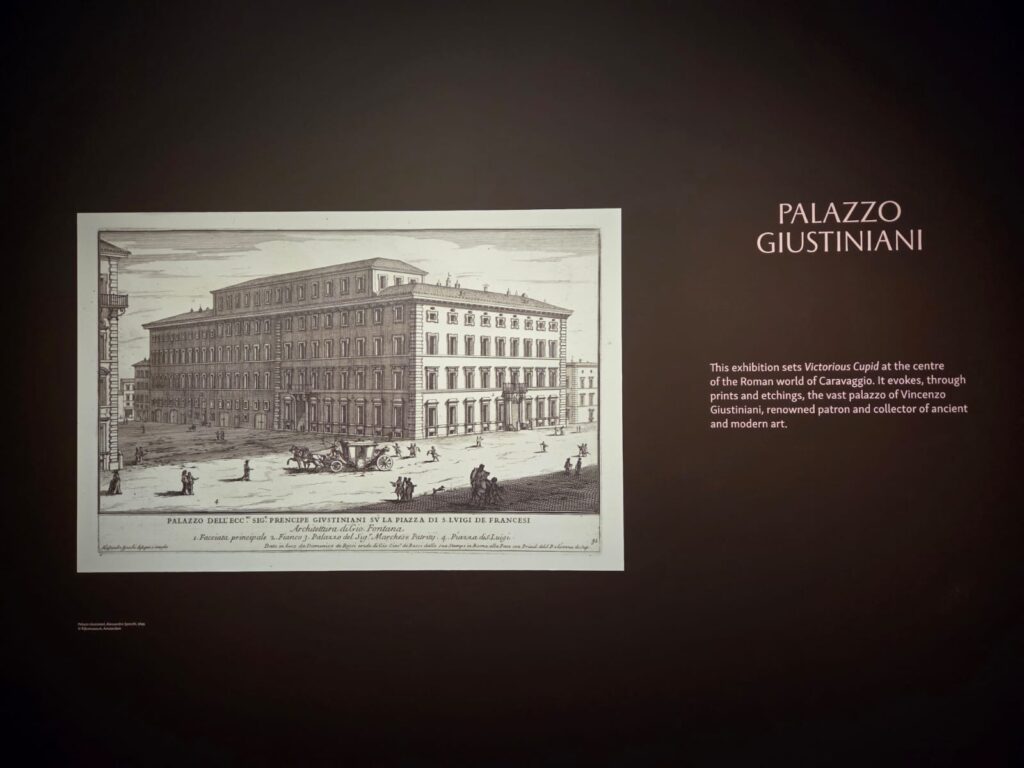
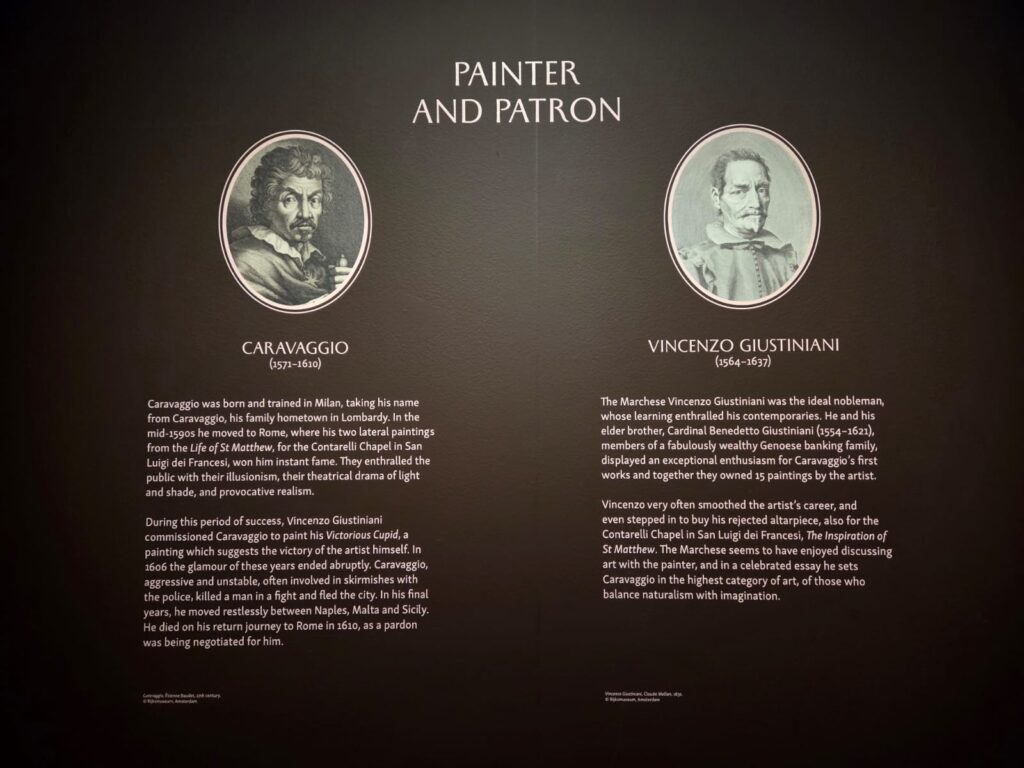
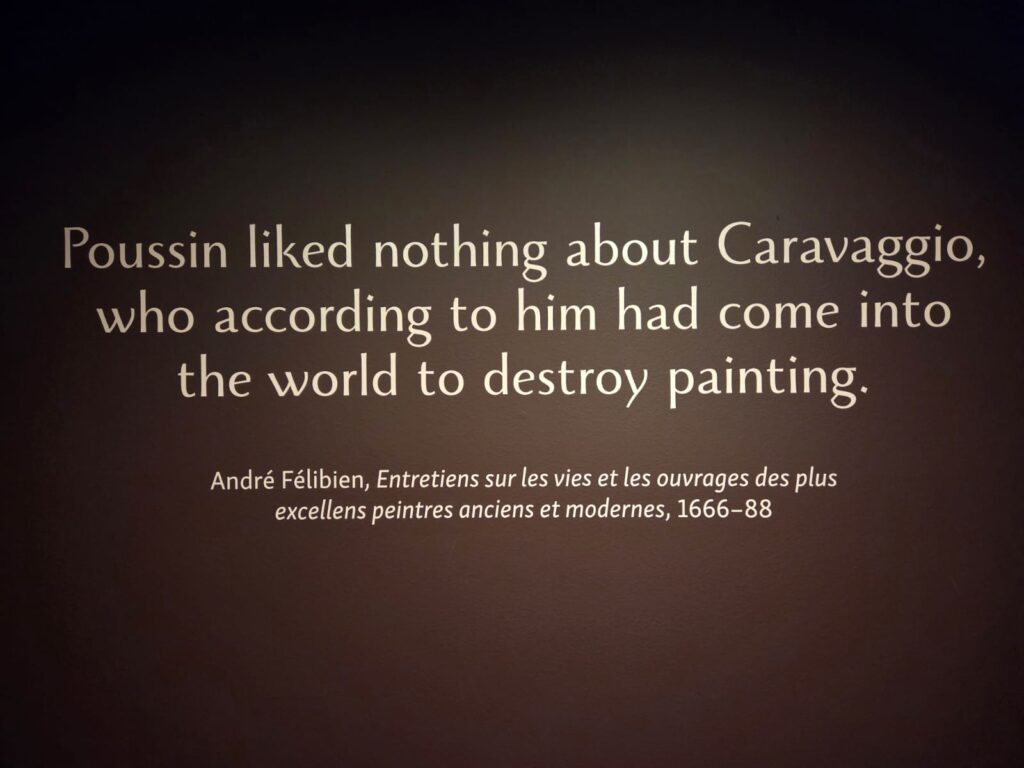
Entering the exhibition, you start by understanding some of this context. If you didn’t already know Caravaggio was a bit of a bad boy (understatement: he’s a classic case study in whether to overlook an artist’s deeds if their work is good enough). The period map of Rome includes some of his favourite drinking and fighting haunts. We also learn a bit about collector Marchese Vincenzo Giustiniani (1564–1637), who is probably less familiar. A banker, art collector and intellectual, he had a nice palazzo near the Pantheon in Rome, where this painting was a highlight in a busy collection of ancient sculpture and modern (ie. Renaissance) art.
Caravaggio’s Cupid
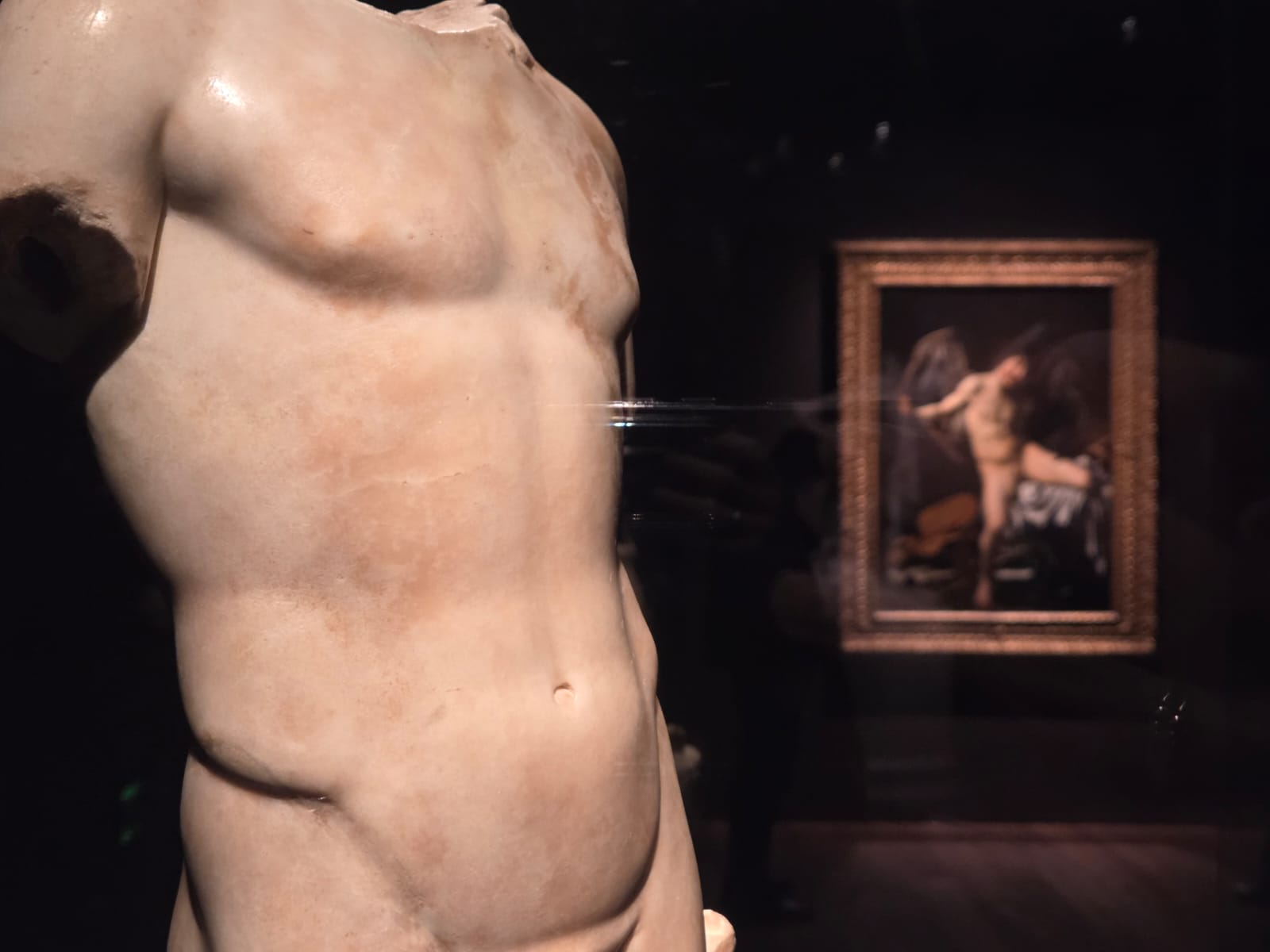
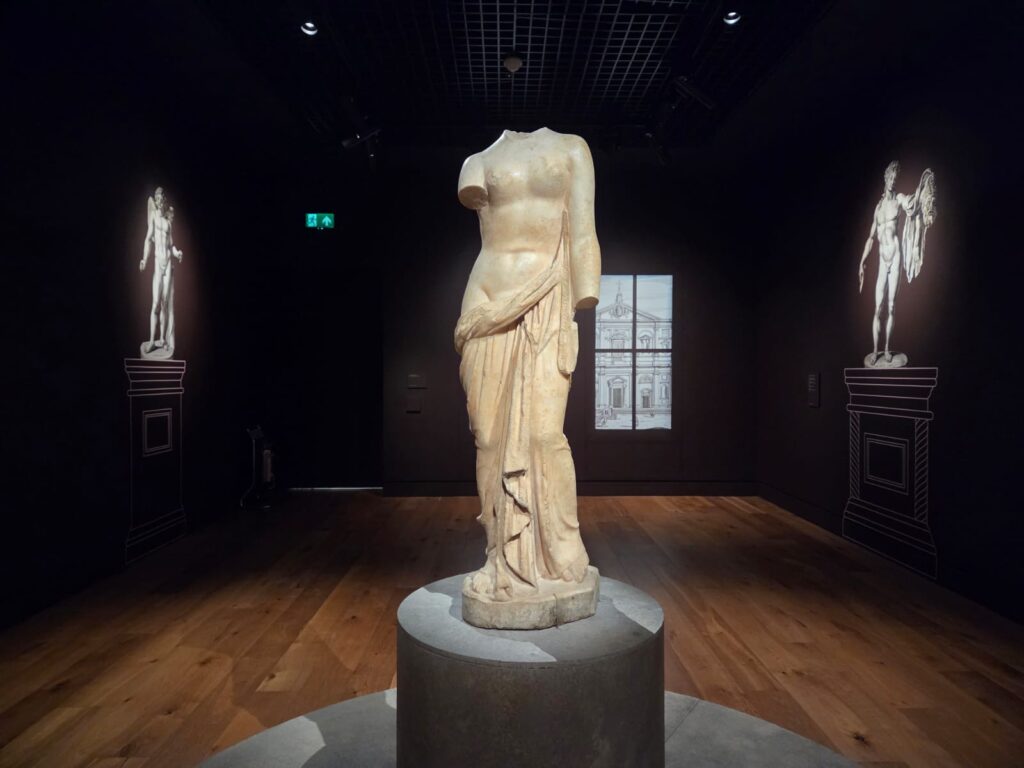
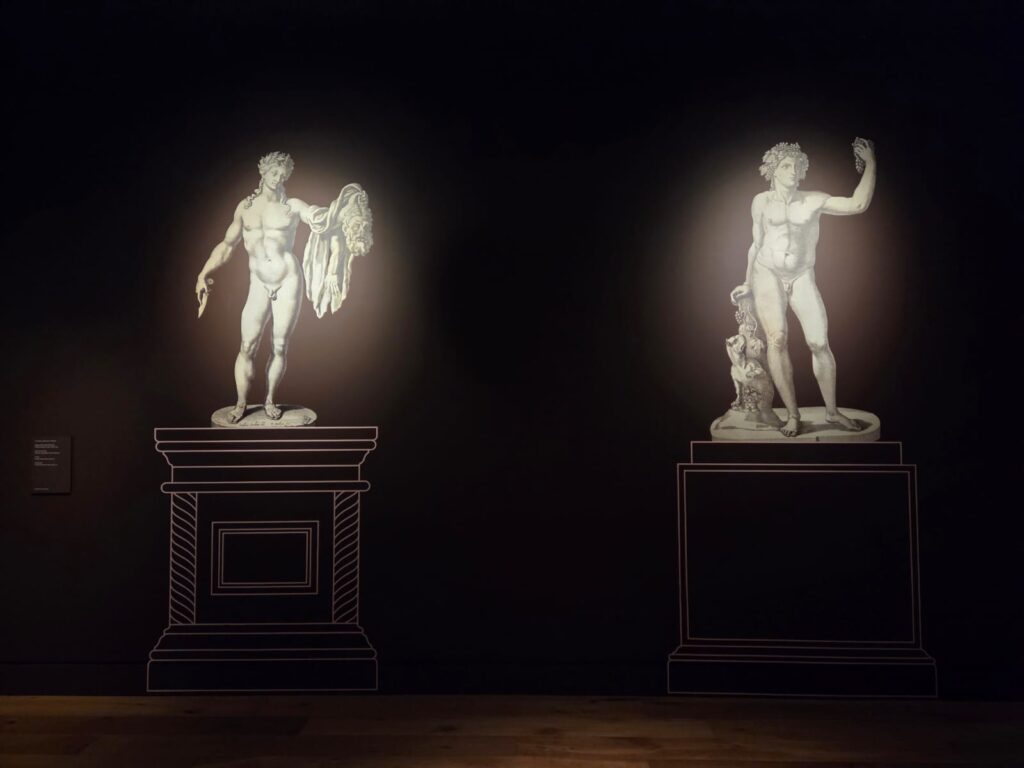
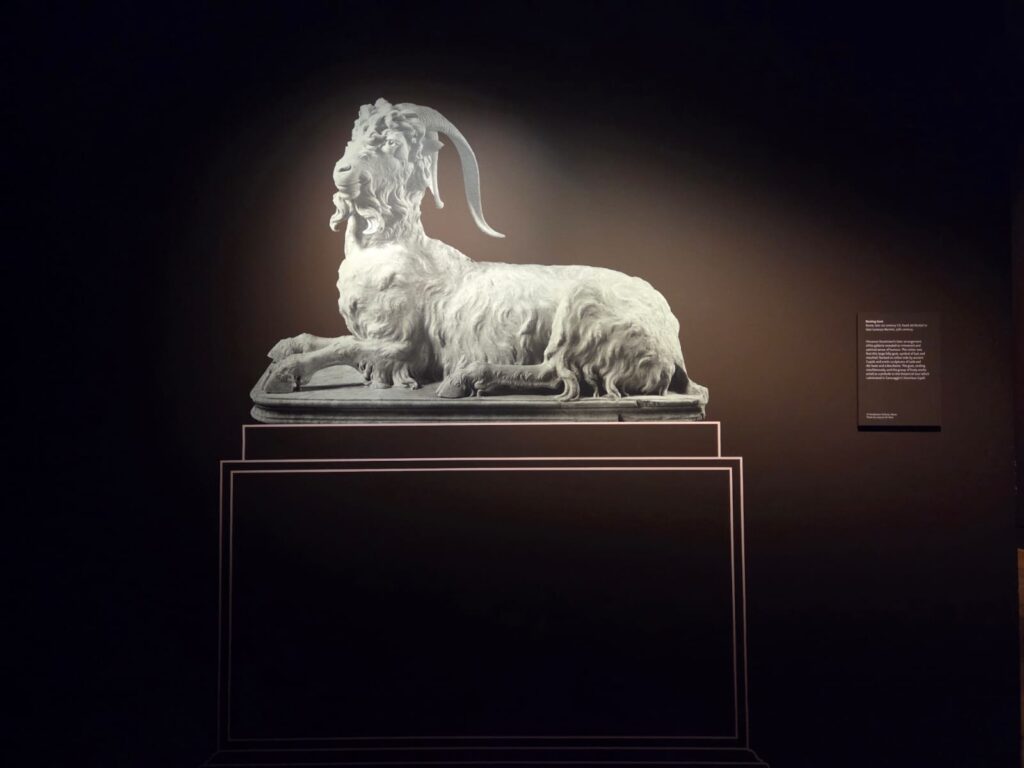
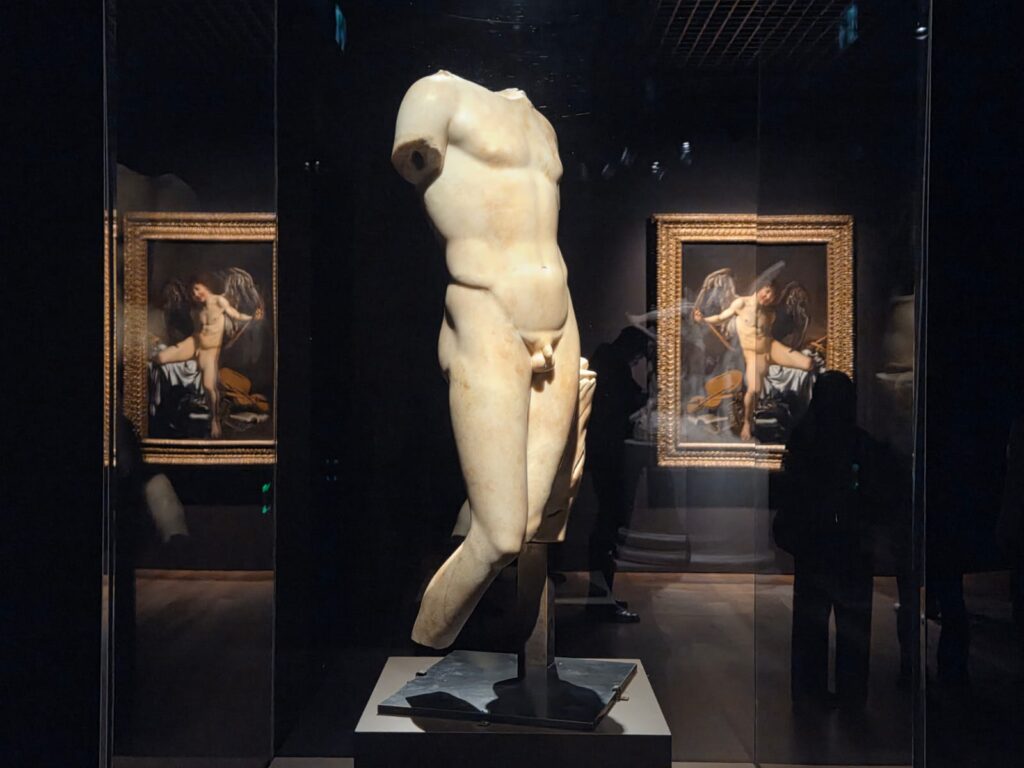
Turning to the right from the exhibition entrance, visitors first encounter a reconstruction of sorts of the Palazzo Giustiniani’s sculpture gallery. One of the other original objects making up the exhibition takes centre stage – a Roman torso of Venus once part of the Giustiniani collection. Around it are images of other classical sculptures: a low-tech way of recreating a quick impression of the palazzo, and Giustiniani’s sense of humour as well as his love of art. The torso, which would be easy to overlook in a museum of antiquities, looks good with low lighting and a lot of space.
Heading through to the next room, we pass under a green curtain. This is a nod to the original presentation of Caravaggio’s painting in Giustiniani’s time. The alcoves in this room go into detail about Caravaggio’s work and how it fitted into the art scene of his time. There’s information about how painting from life, with no preparatory sketching, was then radical (although the exhibition also makes the point that Caravaggio seemingly took inspiration from classical and contemporary sculpture); examples of other works by the artist, some using the same model; and a bit about the paragone, the Renaissance debate about the relative merits of painting and sculpture, and ancient and modern art.
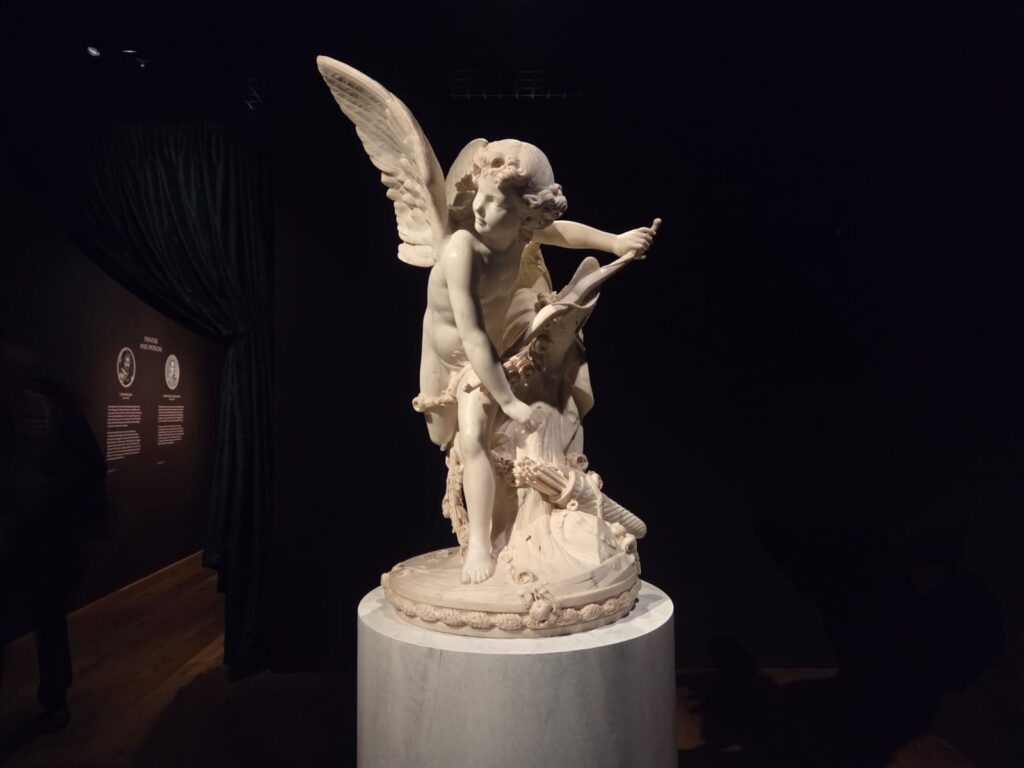
Coming back to the main space, there are two further objects on display before we reach the main event. A comparative depiction of Cupid from the Wallace Collection serves mainly to show how bold Caravaggio’s depiction was, the young god’s eagle wings and striking pose a far cry from the usual saccharine fare. Then there is another antique torso formerly in the Giustiniani collection, this one recently rediscovered and here courtesy of Colnaghi.
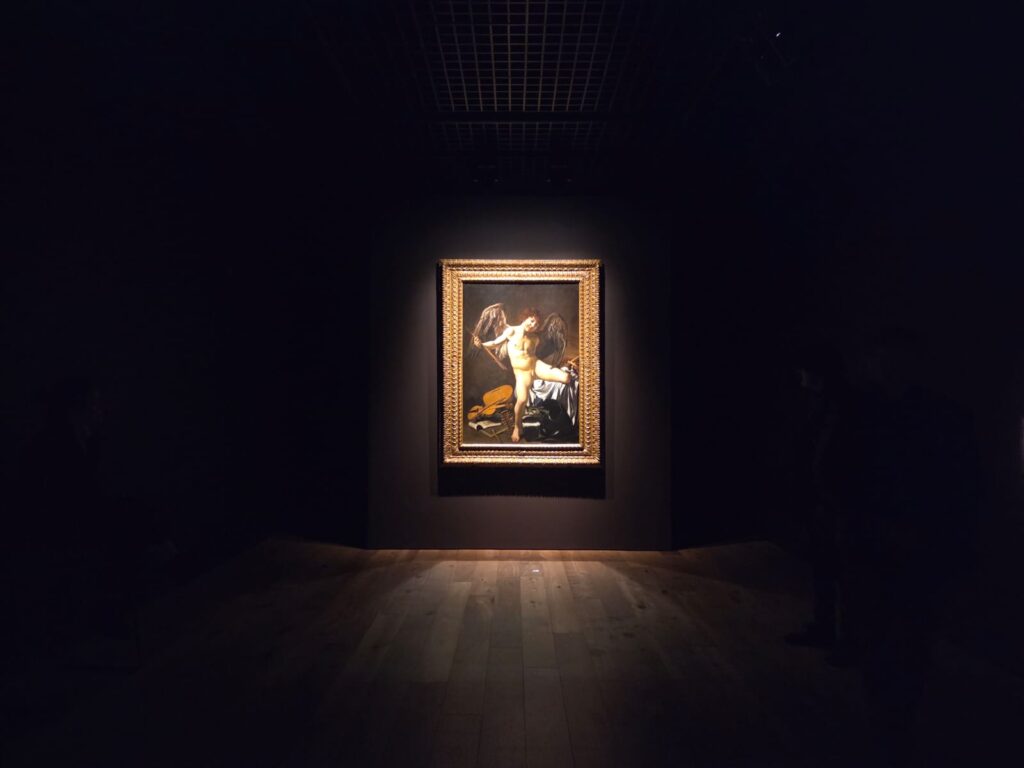
And then it’s time for Cupid himself. Dramatically spot-lit, he probably looks much more special here than he does usually, hanging alongside other paintings. Most visitors take their time, as they should. As with any allegory, there’s a lot of detail to take in, as well as appreciating the artist’s technique. A once-in-a-lifetime opportunity to see this work in London, but also to see it celebrated in this way. Definitely worth making time to see this exhibition before it finishes!
Salterton Arts Review’s rating: 4/5
Caravaggio’s Cupid on until 12 April 2026
Trending
If you see this after your page is loaded completely, leafletJS files are missing.