
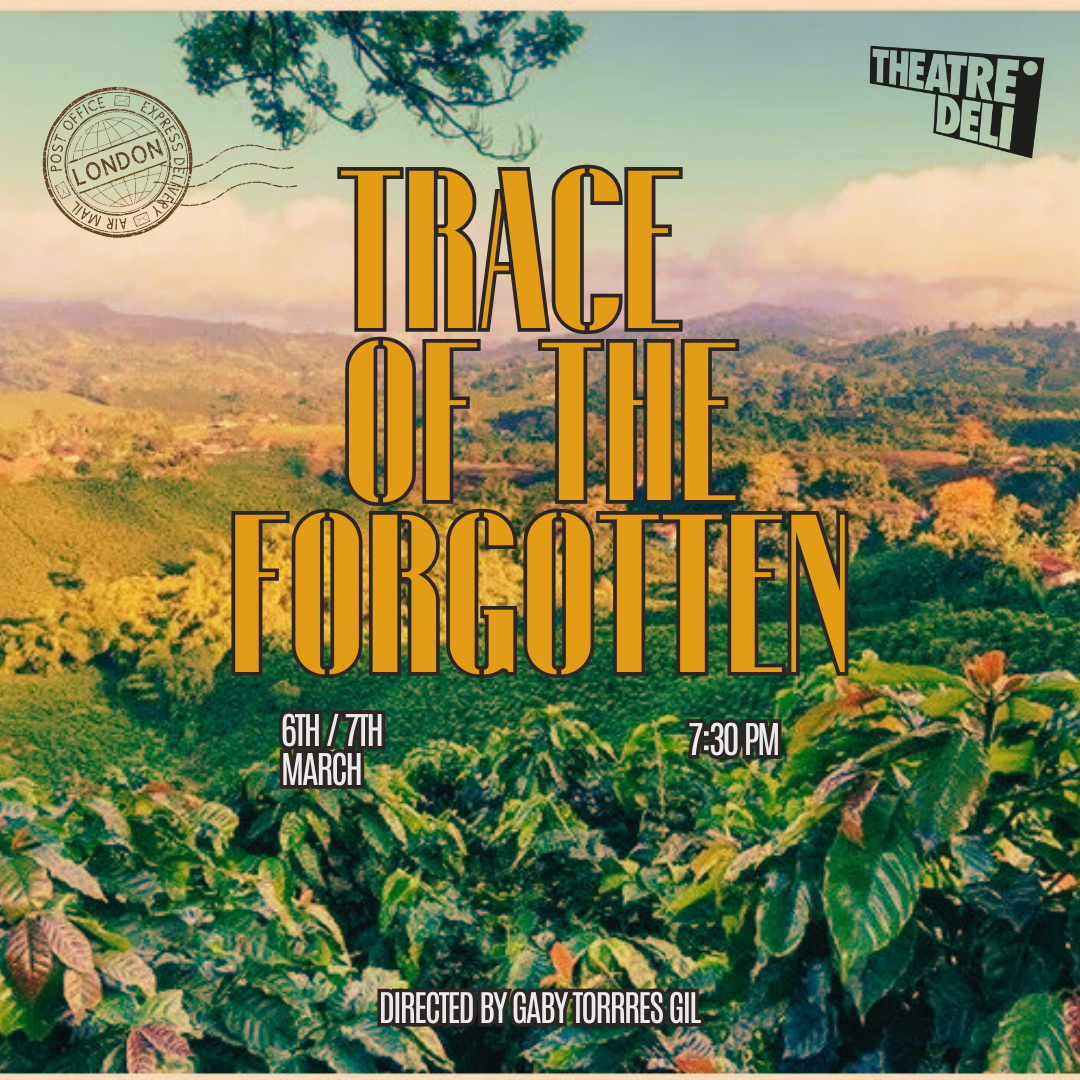
Trace of the Forgotten – Theatre Deli, London
In Trace of the Forgotten, writer-director Gabriela Torres Gil brings together live performance and digital media to explore what happens when memory, migration, and identity begin to blur.
Trace of the Forgotten
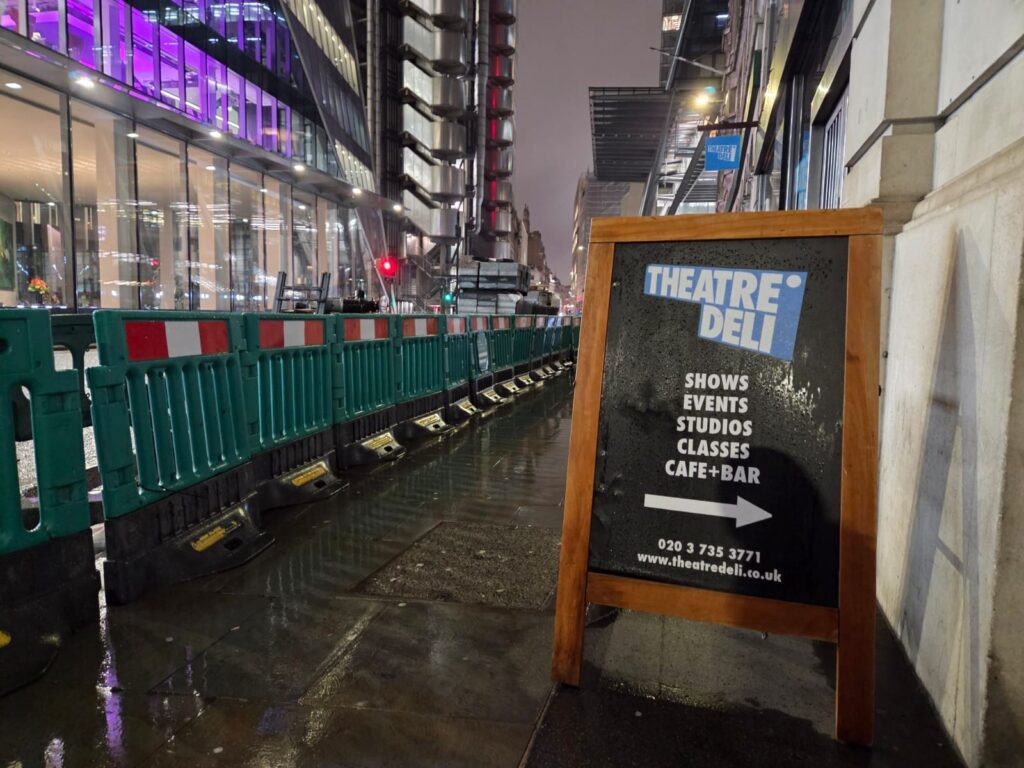
This week marked my second visit to Theatre Deli, which remains one of the more imaginative uses I’ve seen for an empty office building in the City. If more organisations showed this kind of vision for redundant commercial space, our city centres would be far livelier places. My previous visit here was for an interactive experience, Jury Duty, but this time the occasion was something closer to a traditional piece of theatre – albeit one still in development, presented through Theatre Deli’s SHIFT+SPACE programme.
Trace of the Forgotten, written and directed by Gabriela Torres Gil, blends live performance with projected video to tell a story about home, memory, and the fragility of both. The narrative centres on José, played in younger and older incarnations by Nico Acosta Casas and Miguel Pérez Machado. Once a journalist in Colombia whose reporting during the civil war made it unsafe to remain, José has spent decades living in London. Now an old man experiencing dementia, he finds his memories fragmenting just as his granddaughter Emilia (Valeria Suaste) attempts to record the story of his life.
At around an hour, the piece covers a great deal of ground. The structure alternates between past and present, allowing us to gradually piece together José’s history while watching his grasp on it begin to slip. It’s an approach that works well, leaning into the uncertainty and imperfection of memory rather than trying to impose a neat narrative order.
The production also demonstrates how much atmosphere can be created with limited resources. Archival footage evokes cities and landscapes from José’s past, while the lighting captures something recognisable about how cherished memories are preserved. A scene recalling a first love on a Colombian coffee plantation, bathed in warm light, is particularly effective.
Home is a Memory
The multimedia elements are clearly central to Torres Gil’s vision, and for the most part they integrate effectively with the live performance. Archival images and projections give shape to memories that might otherwise remain abstract, allowing the audience to move with José between different times and places.
If there is an area that might benefit from further development, it lies in the use of the camera within the narrative itself. Characters occasionally film themselves onstage, but the motivation for doing so isn’t always clear beyond the visual effect it creates for the audience. Because the piece is already so attentive to the logic of memory and perspective, finding a slightly more organic justification for these moments could help the multimedia elements feel fully embedded in the story.
What I appreciated most about Trace of the Forgotten is the way it sits with the complexities of identity, place and belonging. At one point José reflects that home becomes a memory. As someone who has also lived away from the place I grew up, that line resonated strongly. The town we remember rarely survives unchanged. Every return requires adjusting to a slightly different version of it.
For Emilia, the stakes are different. As her grandfather’s dementia progresses, so too does the risk of losing a tangible connection to her family history. Her search for identity unfolds between two places (Colombia and London), neither of which offers an entirely uncomplicated sense of belonging.
As a work in progress, Trace of the Forgotten already feels thoughtful and emotionally sincere. The bilingual dialogue adds texture (a knowledge of Spanish deepens the experience, though it isn’t essential), and the audience response around me, including the odd tear, suggested the piece is already connecting with people. It will be interesting to see how it continues to develop.
Trending
If you see this after your page is loaded completely, leafletJS files are missing.