

Yin Xuizhen: Heart to Heart // Chiharu Shiota: Threads of Life – Hayward Gallery, London
Two artists, two very different approaches to memory, and an unexpectedly clear favourite. It’s Yin Xuizhen: Heart to Heart and Chiharu Shiota: Threads of Life, dual exhibitions on now at the Hayward Gallery.
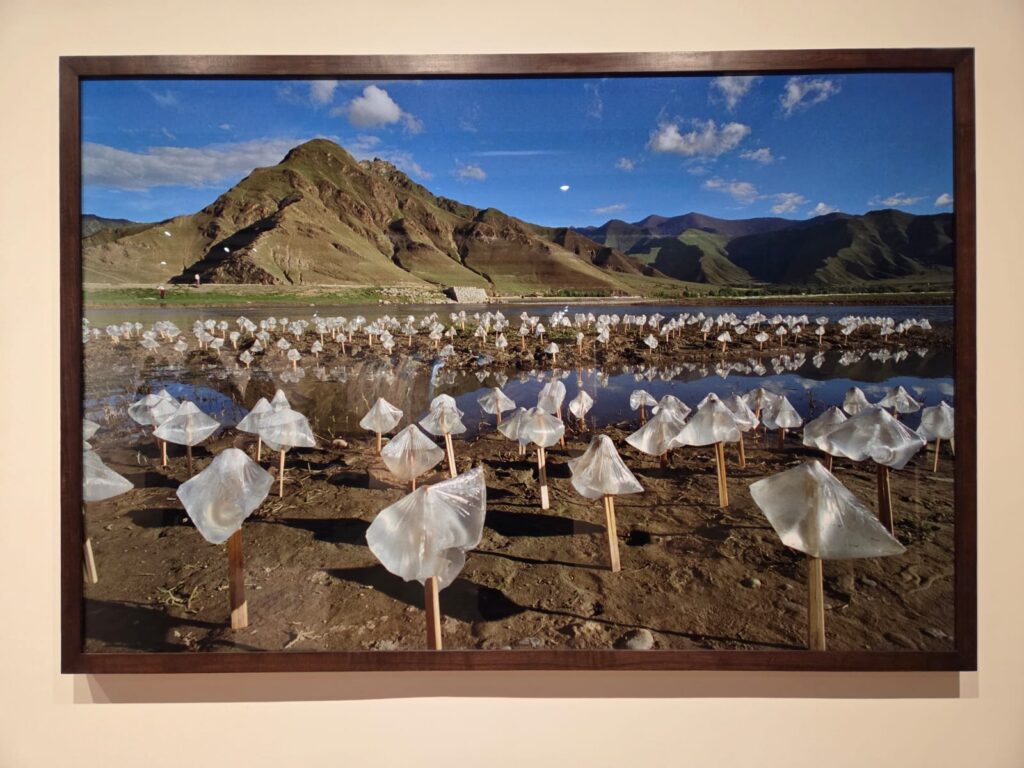
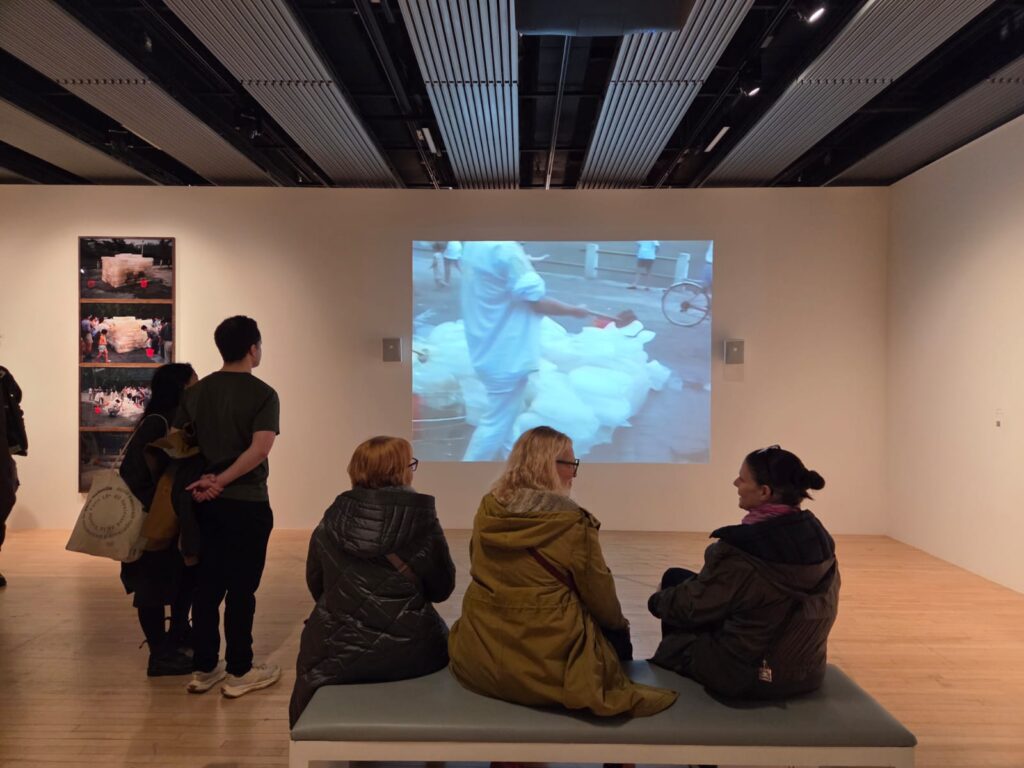
Yin Xuizhen: Heart to Heart
Most people, I suspect, are here for Chiharu Shiota. Her looping webs of thread dominate the marketing I’ve seen around London and on social media, and the queue that snakes through her half of the show suggests the marketing has worked. That’s what I had in mind for my visit, to be honest. But it was Yin Xiuzhen who stayed with me, in the end.
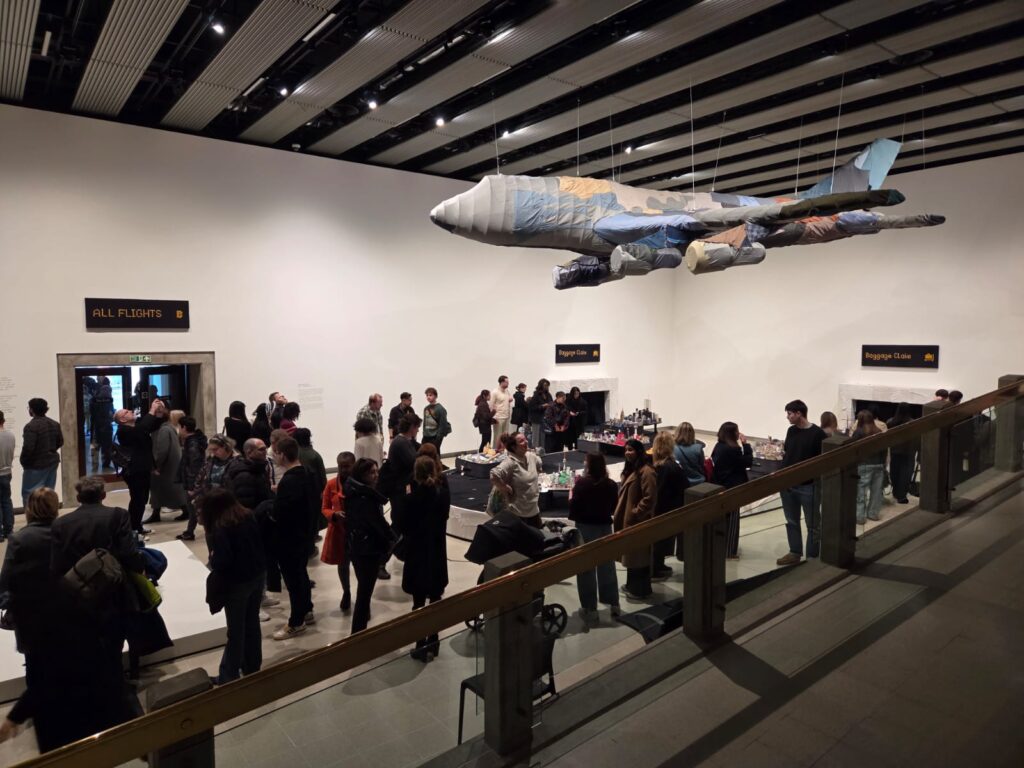
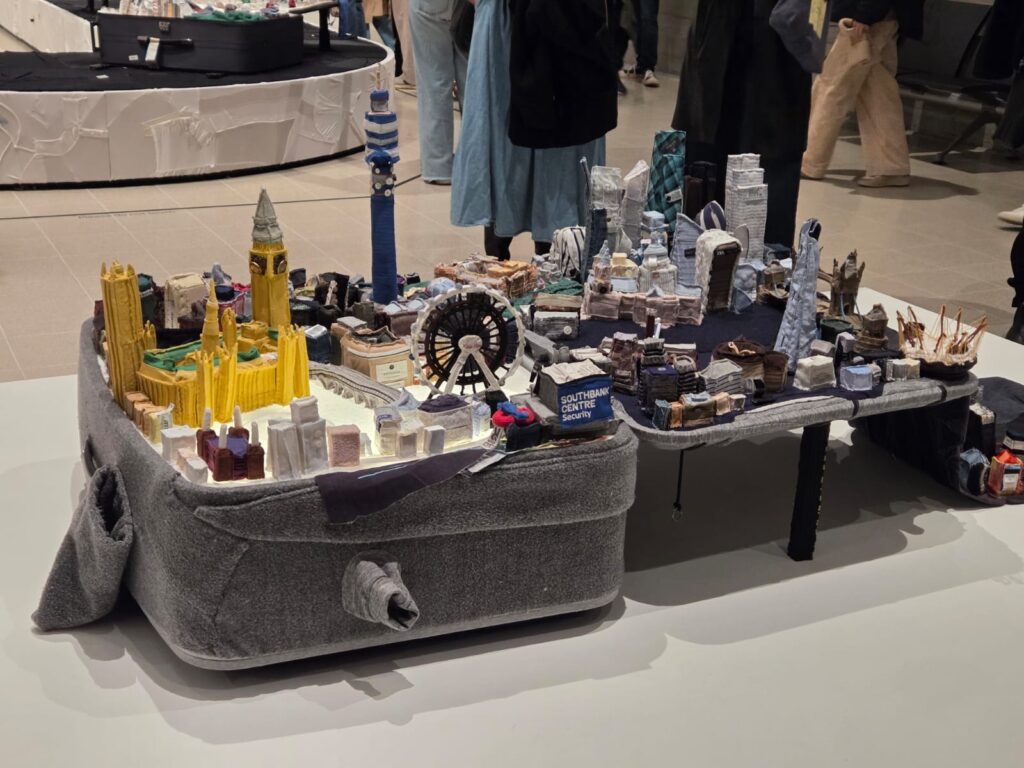
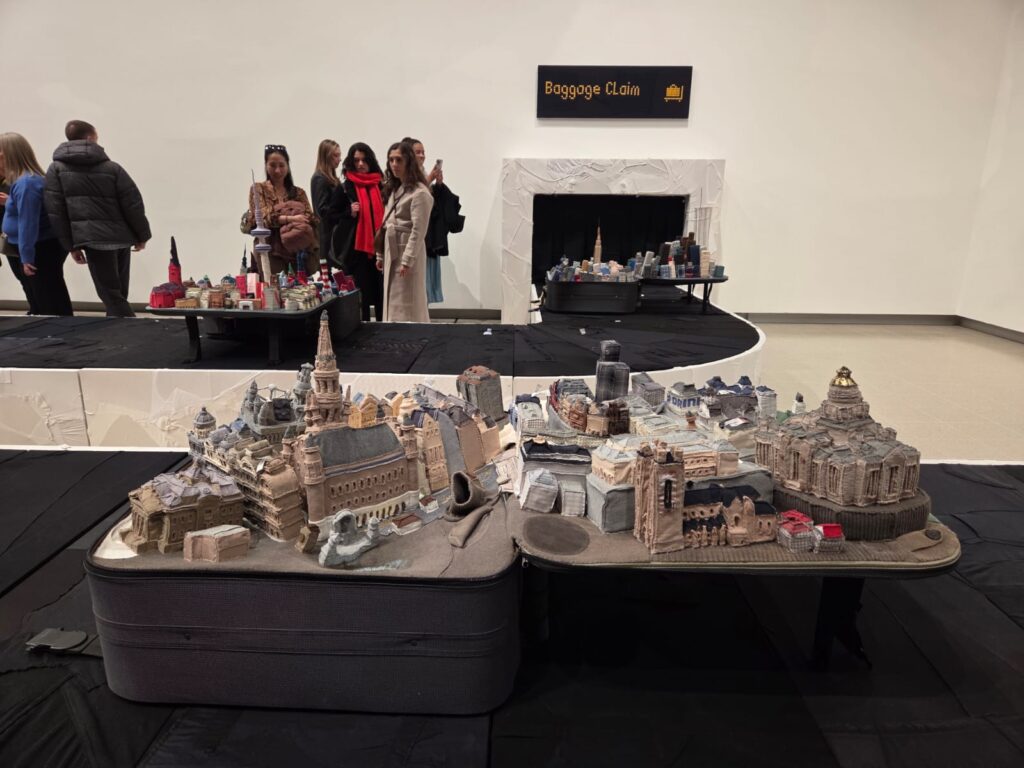
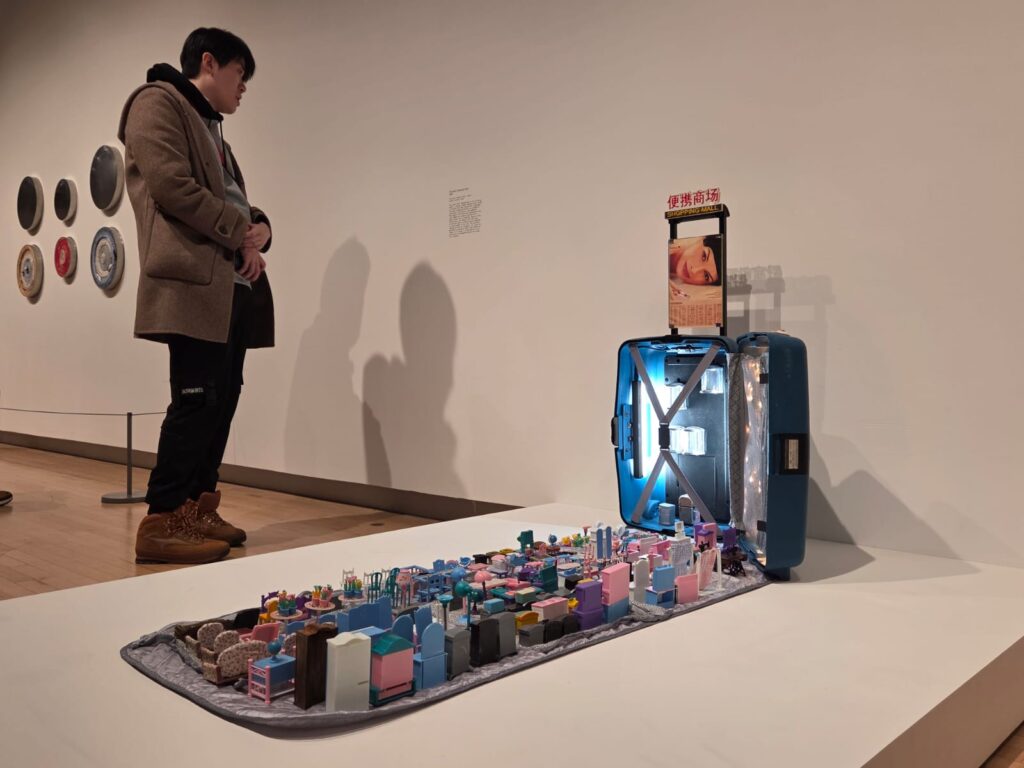
Yin, born in Beijing in 1963, has witnessed the acceleration of China’s urban redevelopment since the 1990s. Her opening works here, Portable Cities (2001-present) are miniature skylines stitched and constructed inside battered second-hand suitcases. The gallery becomes an airport arrivals hall: viewers circling, peering down, recognising cities represented in soft sculpture. It’s a clever idea, and an elegant metaphor. The suitcase is both protector and constraint. Global mobility promises freedom, while also creating a conveyor belt of sameness.
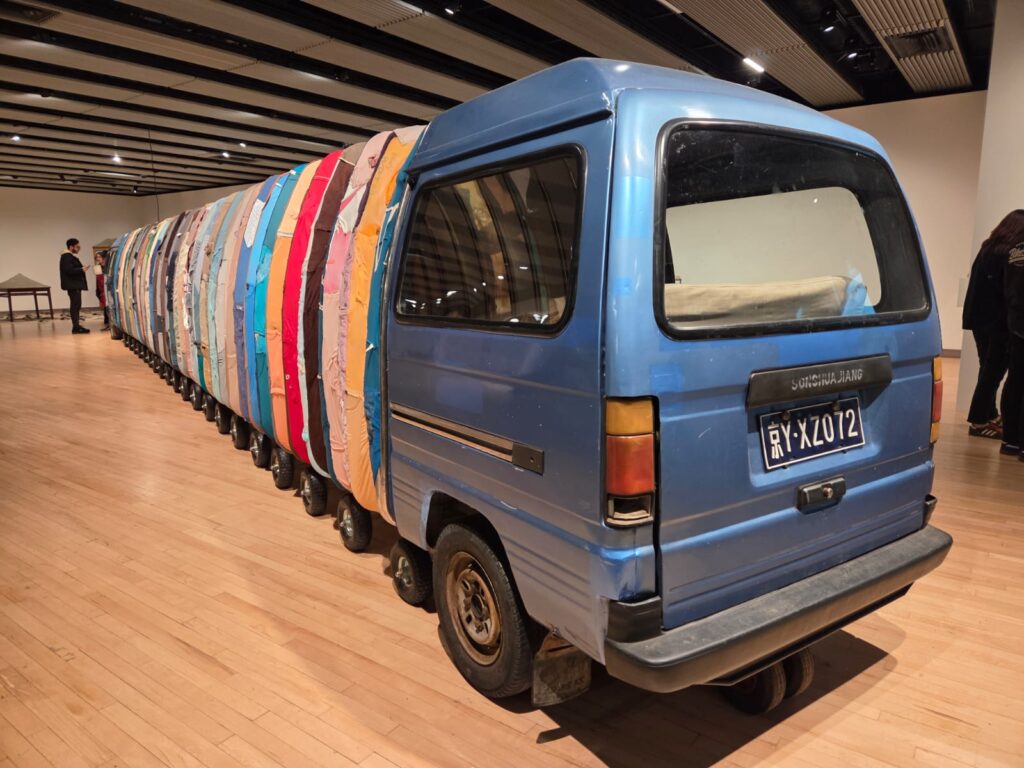
Thinking through art history, Yin’s use of reclaimed textiles places her somewhere between Arte Povera’s pragmatic reuse of materials, and a more specifically Chinese response to state-led modernisation. Fabric carries the memory of the body. Unlike bronze or marble, it absorbs. The cities she constructs aren’t monuments: they’re fragile, portable, provisional. In a way, the show brought to mind Ai Weiwei’s survey at the Design Museum – that same preoccupation with what vanishes under redevelopment – though Yin’s tone is less confrontational and requires less smashing of ancient pottery. This is an artist concerned with memory not as nostalgia, but as material fact.
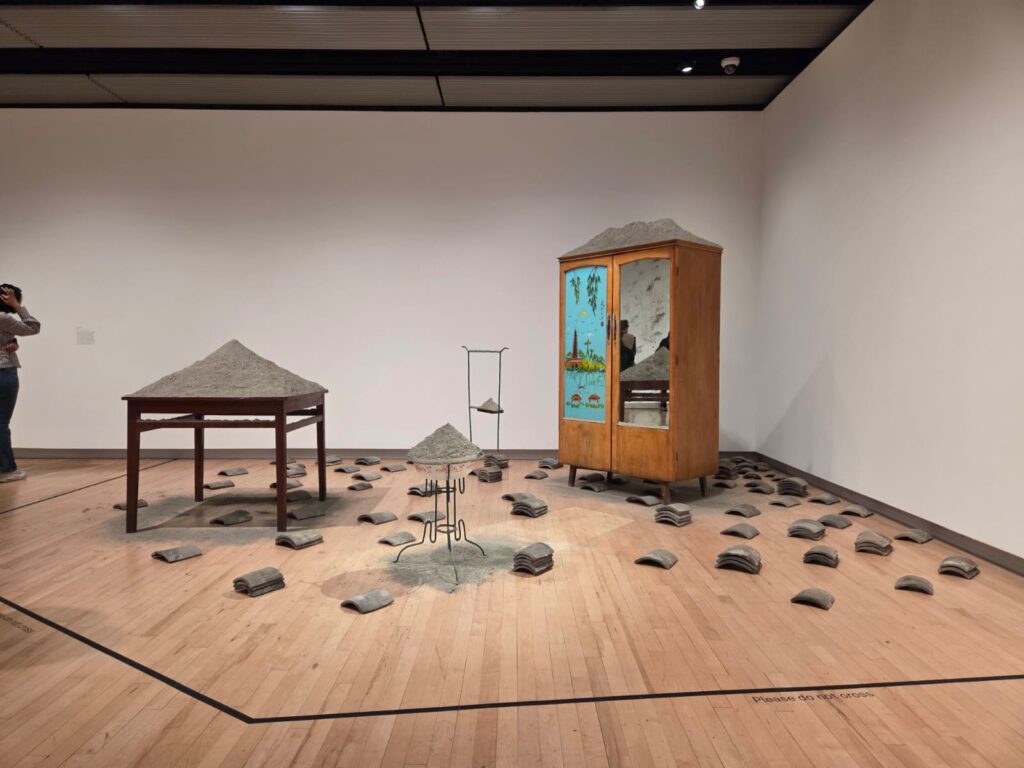
Interior Worlds and a Time of Rapid Change
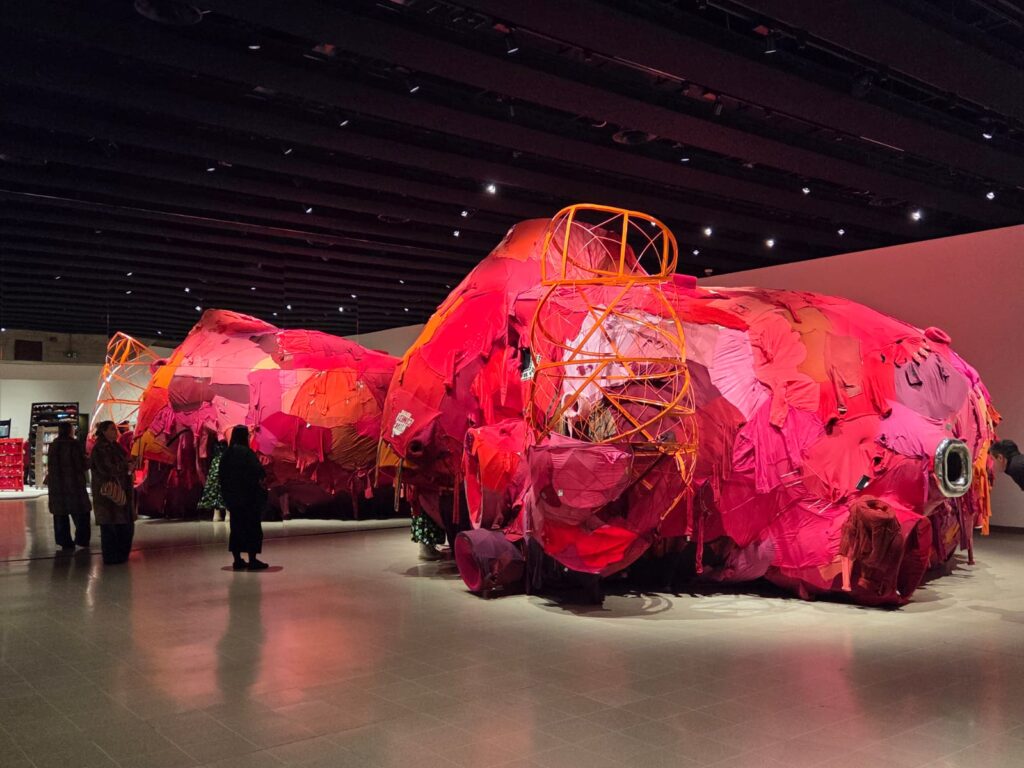
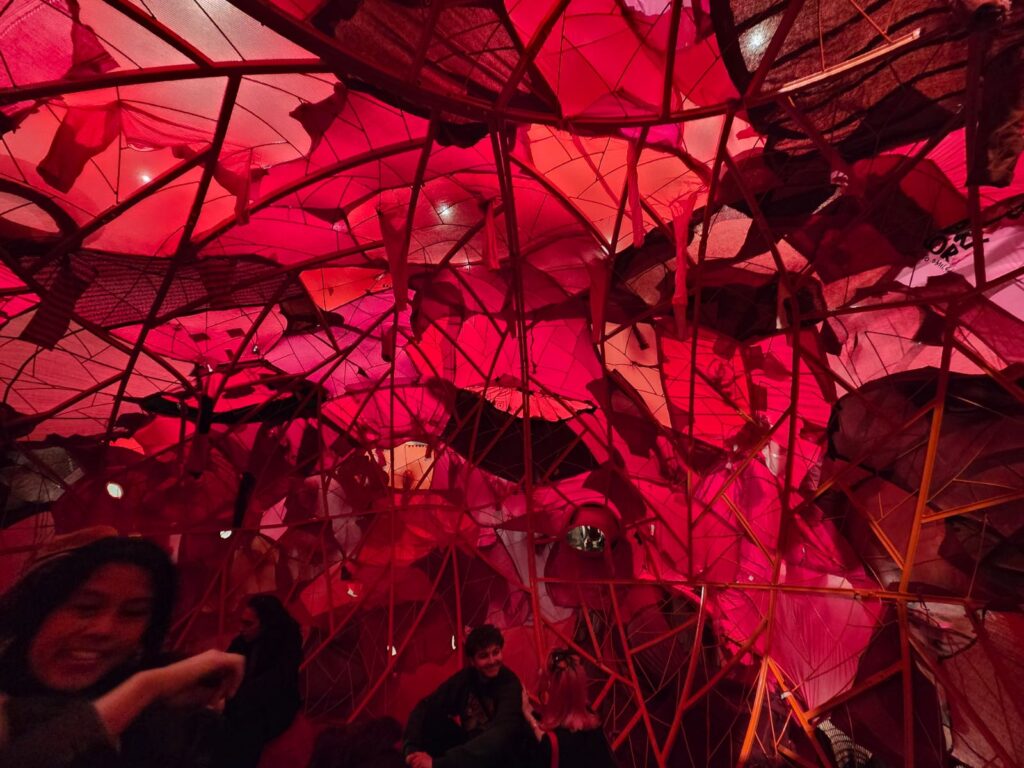
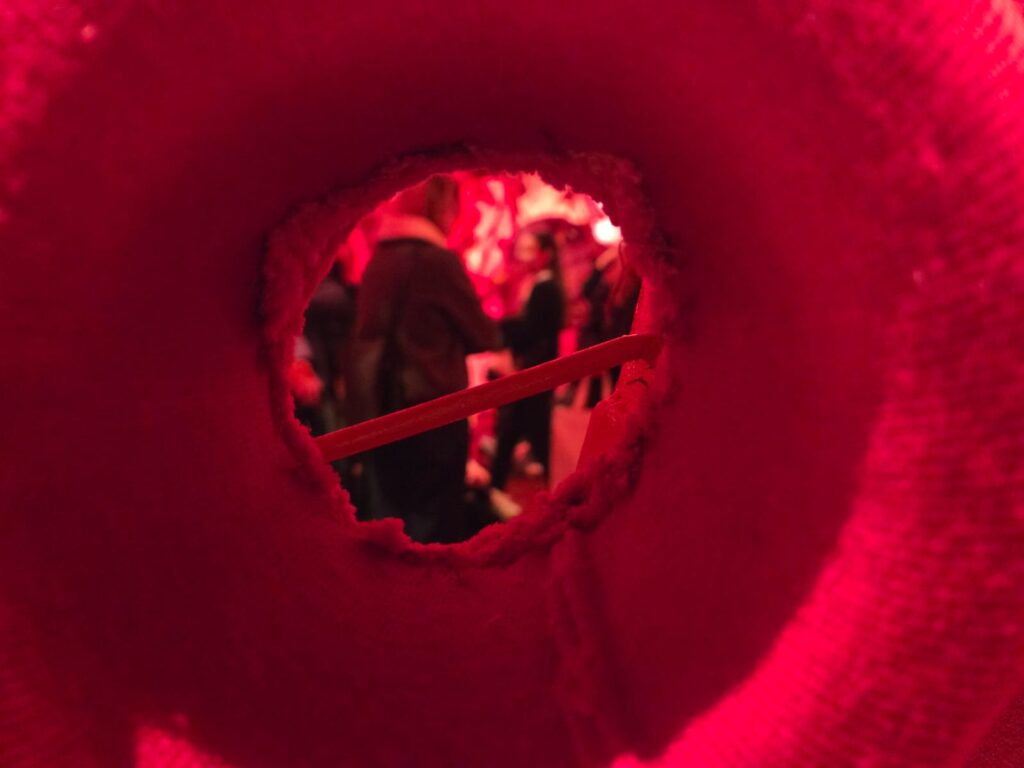
Upstairs, the scale continues to shift between monumental and miniaturised. One installation invites you to climb inside: padded, enveloping, almost womb-like. It would feel cosy if the exhibition weren’t so busy. The Hayward’s Brutalist design, often associated with monumental modernism, is now home to something softer and more vulnerable.
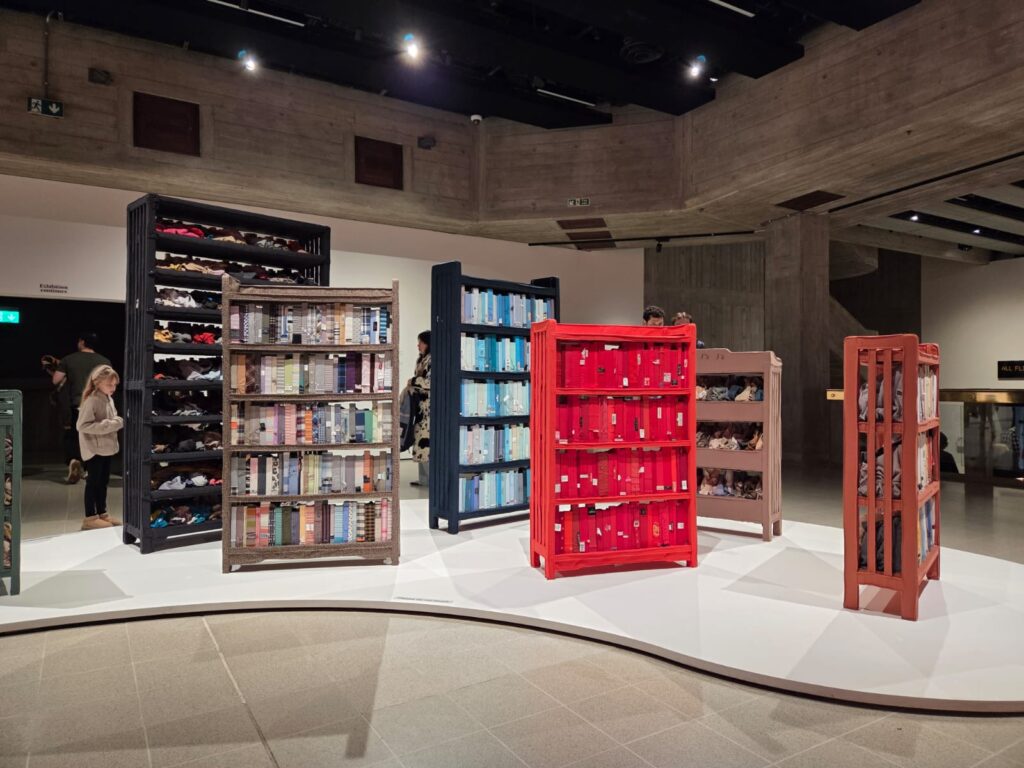
There’s something quietly anti-monumental about Yin’s artistic practice. No grand gestures, no polished surfaces. Instead there are reused textiles, softened forms, and temporary-feeling structures. It sits somewhere between sculpture and architecture, but always at a human scale. Where so much public art insists on permanence, these works accept impermanence as the point.
What I appreciated most is that Yin’s work doesn’t feel nostalgic. It isn’t pining for a pre-development Beijing, exactly. It simply acknowledges how disorientating it is when the anchors of cultural memory disappear so quickly. The materials do a lot of the thinking for you. Clothing has already lived a life; it carries traces. Sitting on a little stool, you can almost imagine you’re in a Chinese park with aunties and uncles carrying out their daily routines. In that sense, the sculptures are less about preservation than about translation, How memory changes shape as time passes.
Chiharu Shiota: Threads of Life
There was a queue all the way through Shiota’s half of the exhibition. I genuinely can’t remember the last time I saw that outside of Covid-era timed entries. The couple behind me were so irritated they kept saying they’d never come back to London. That, in turn, irritated me enough that I let them go ahead just to stop the commentary. I didn’t mind the slow pace. I actually thought it was a better way to experience the works than quickly rushing through.
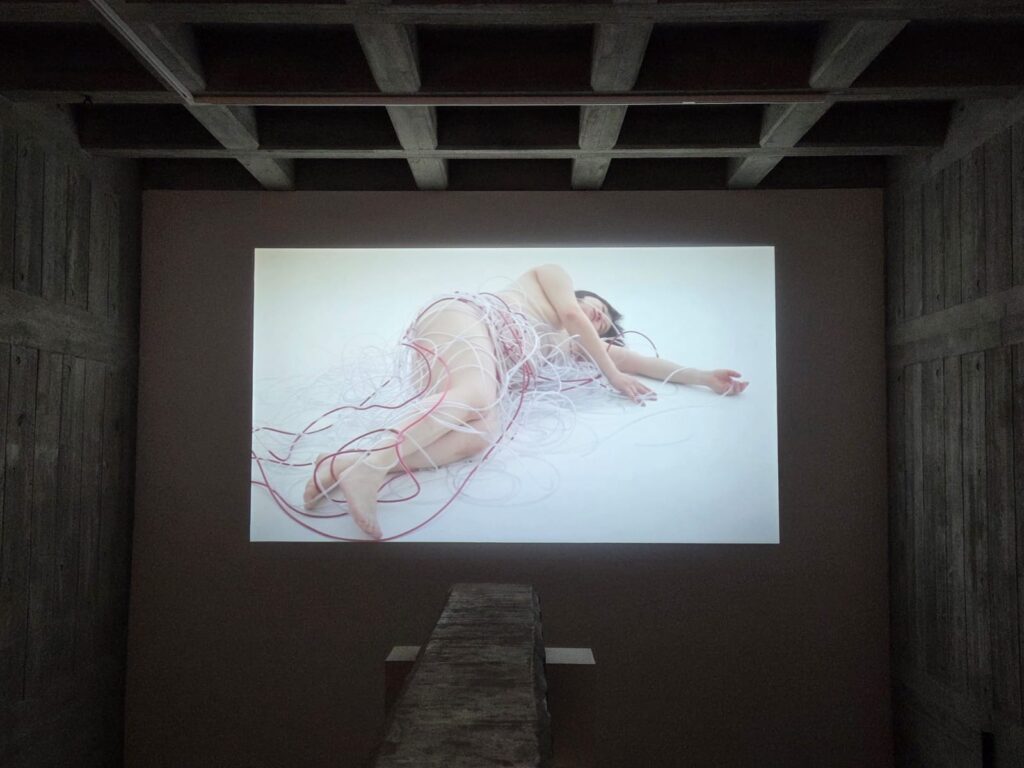
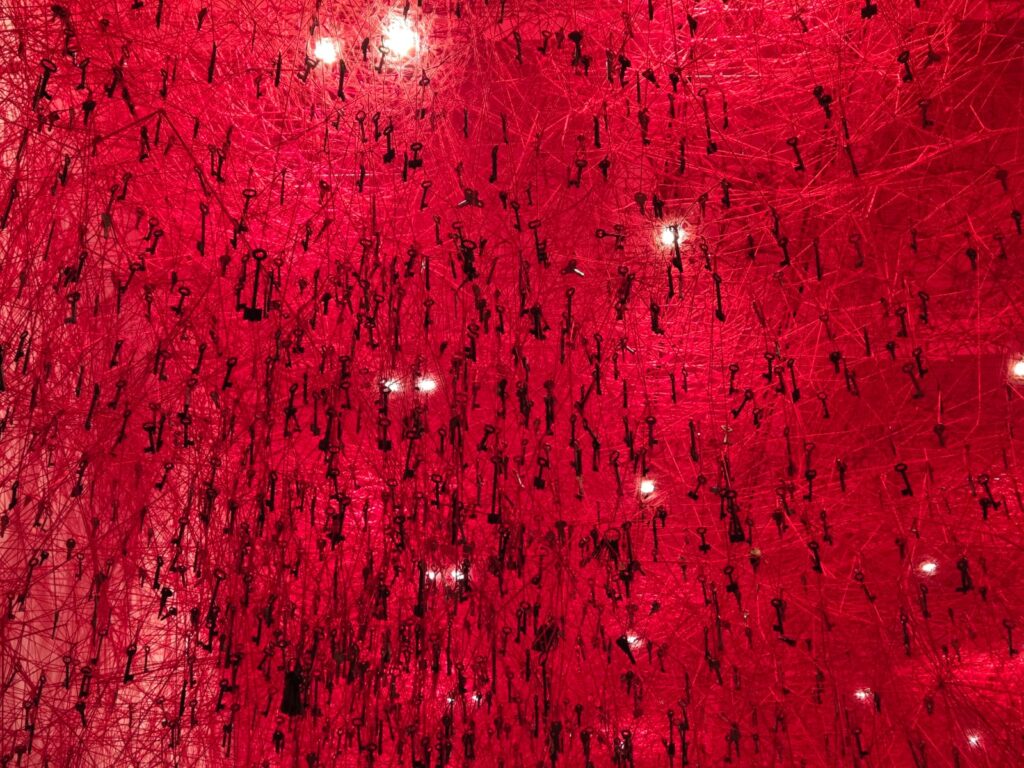
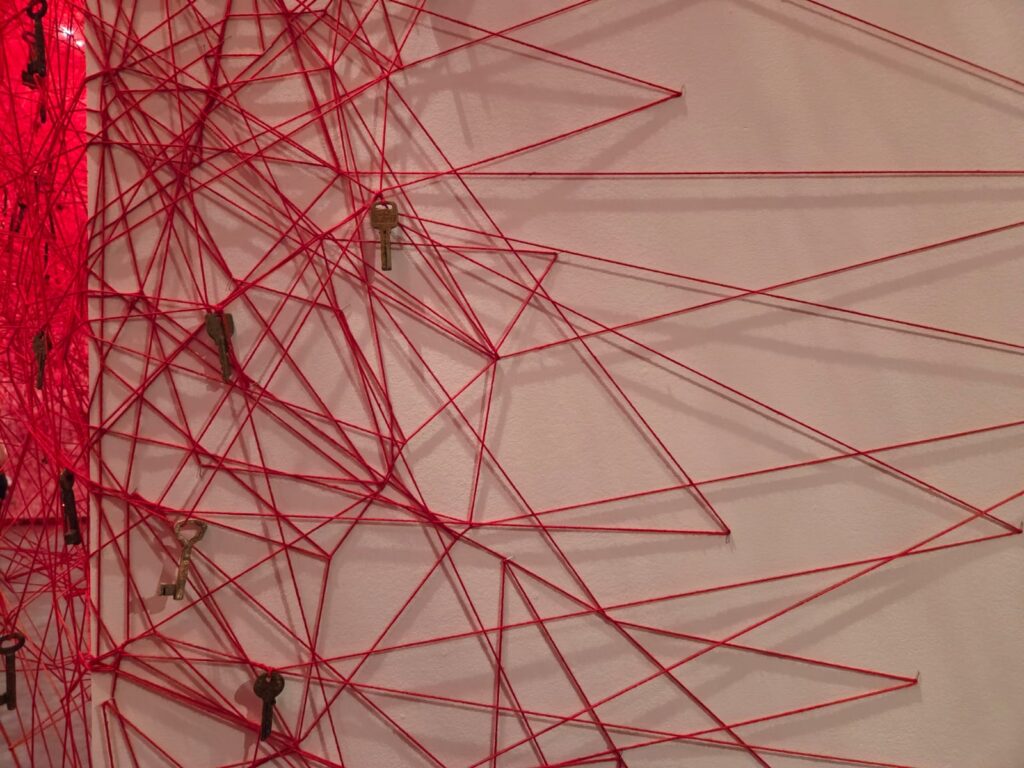
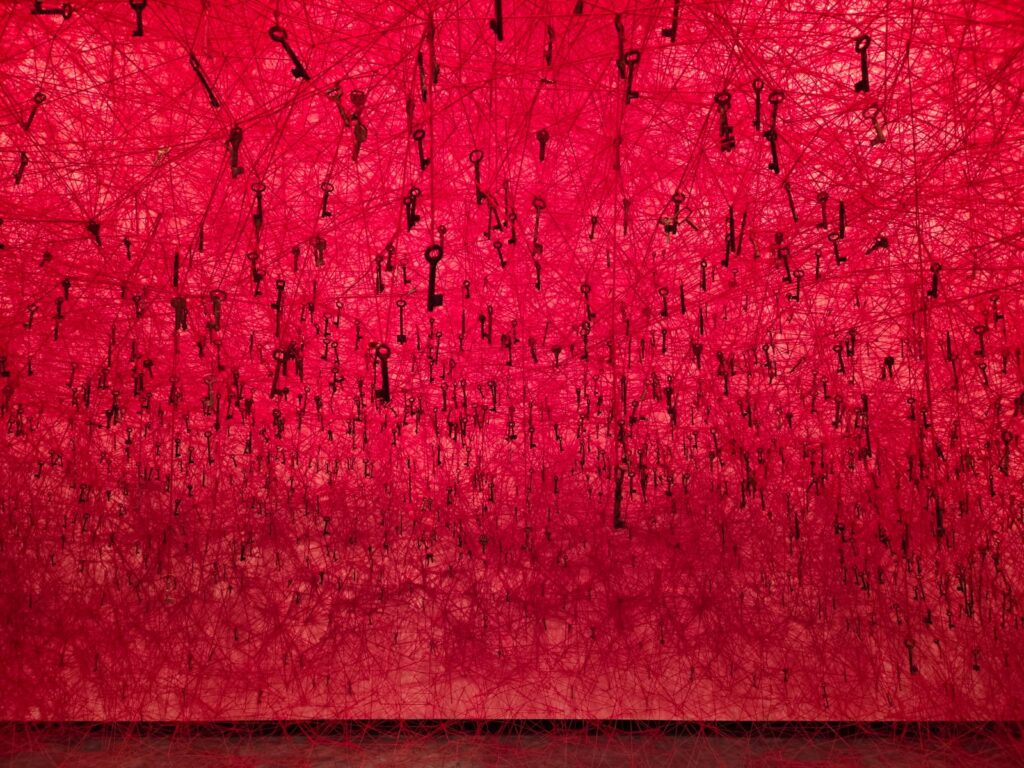
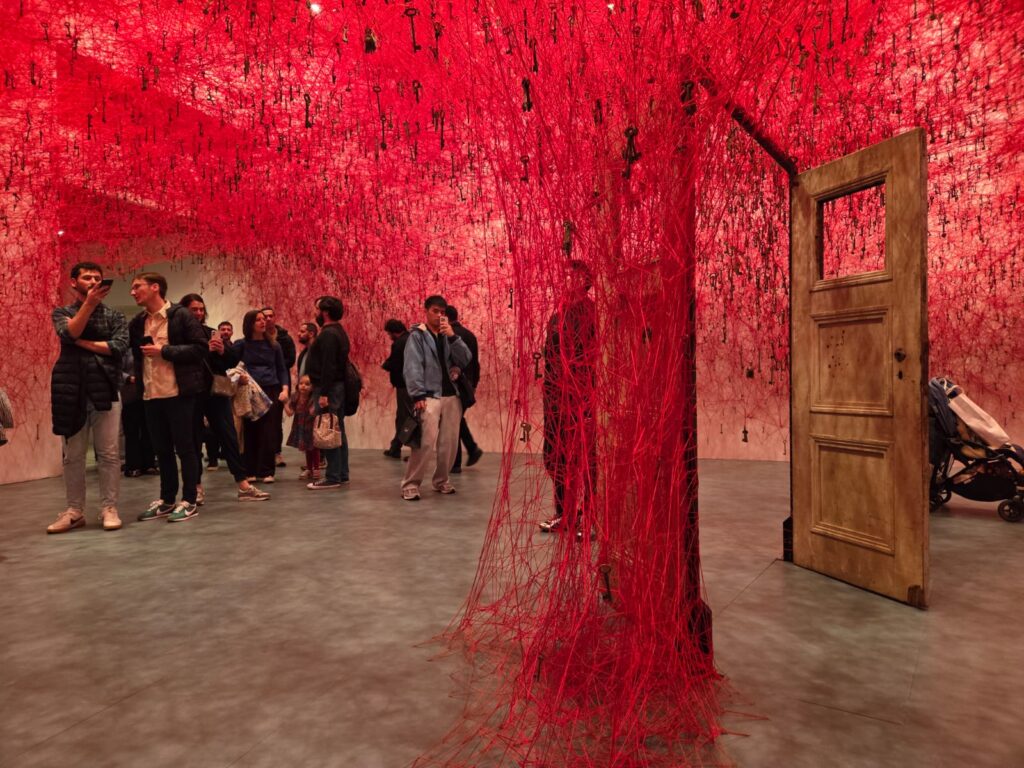
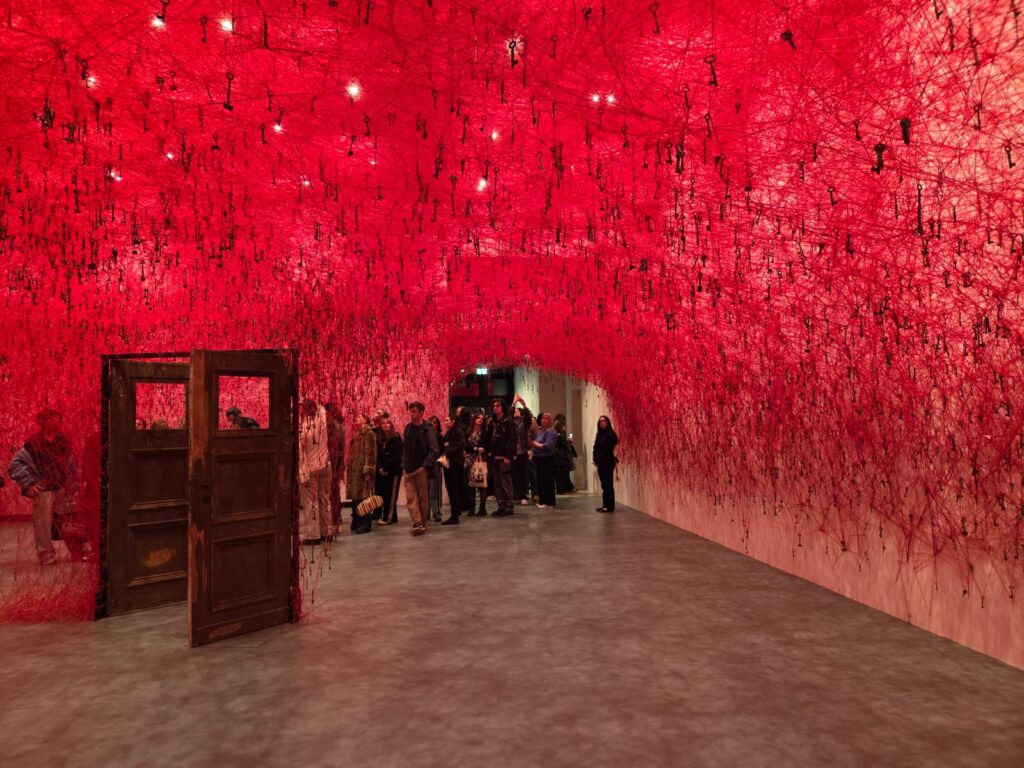
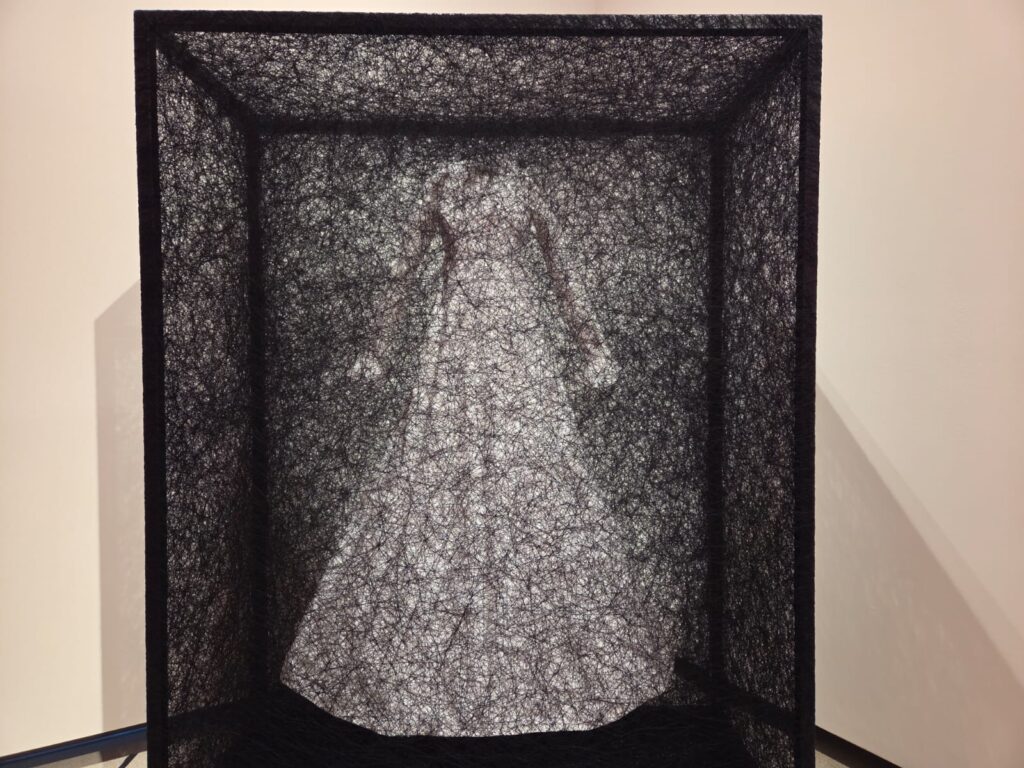
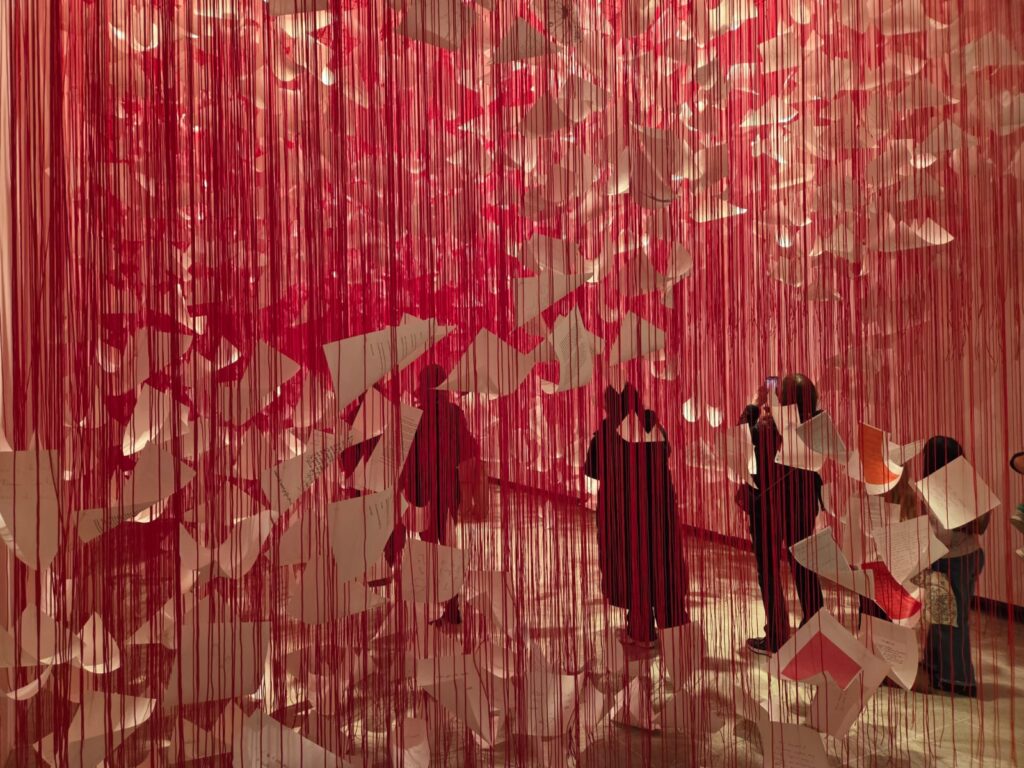
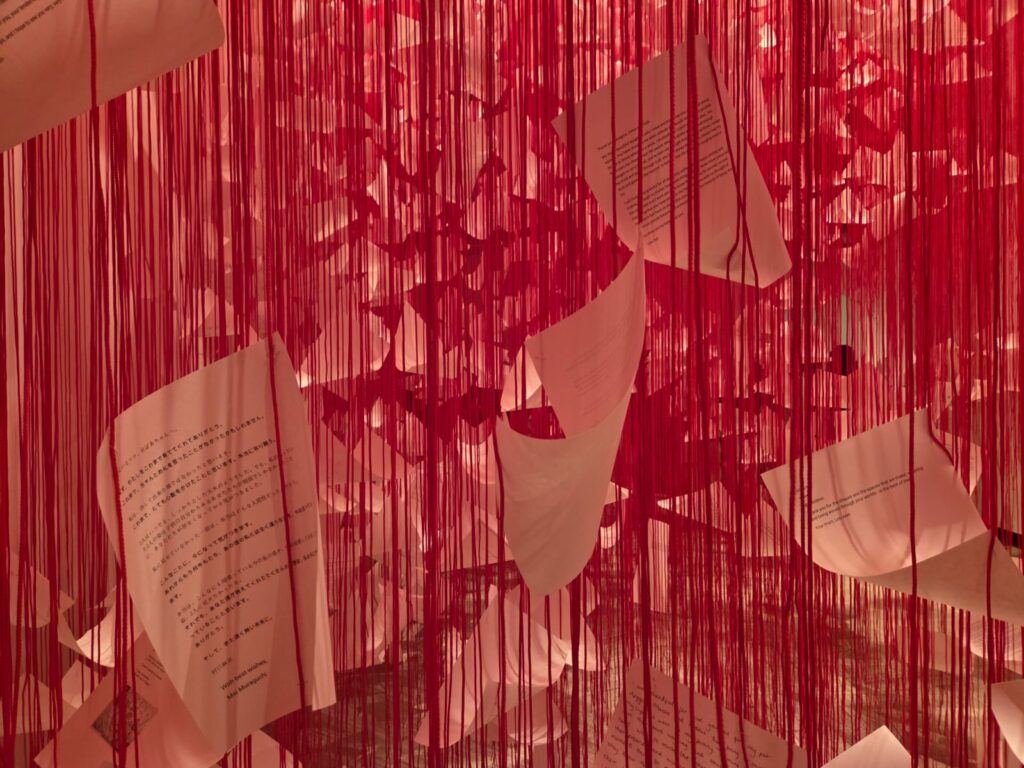
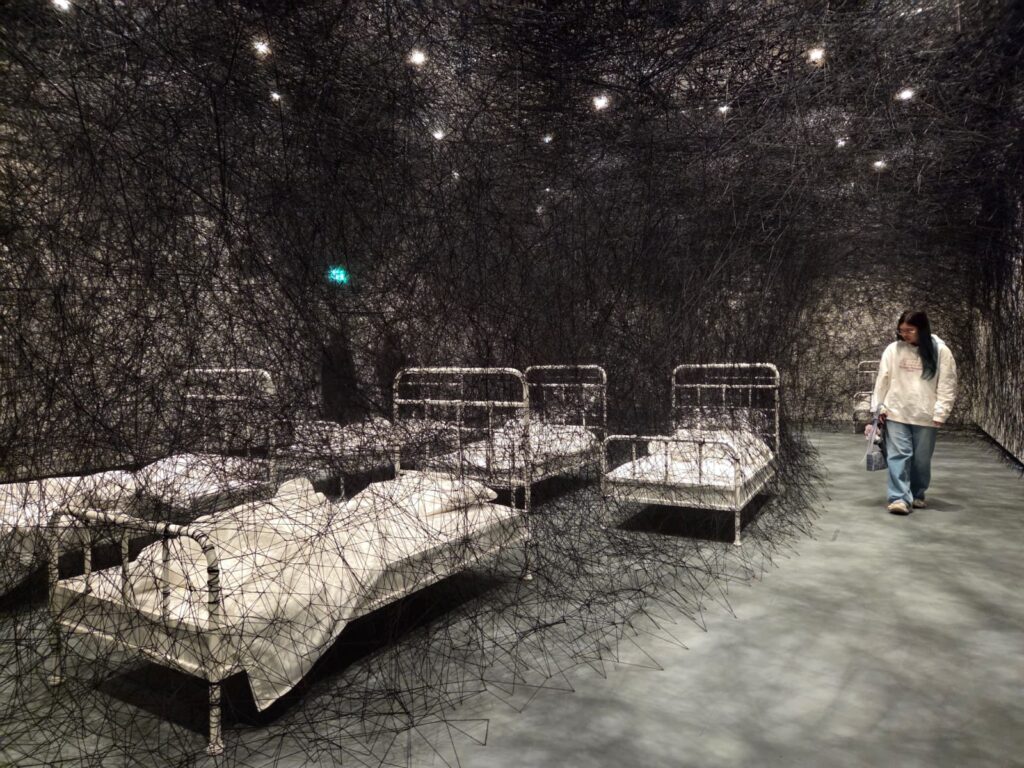
Shiota, born in Osaka in 1972 and long based in Berlin, is best known for her immersive installations of red or black thread: dense webs enveloping boats, keys, beds, and so on. They are immediately striking. Visually, they’re the showstoppers. Here are the Instagram money shots. You step into a room and feel suspended inside someone else’s body. Is it deliberate that it brought to mind a dissected nervous system I saw once at the Hunterian Museum?
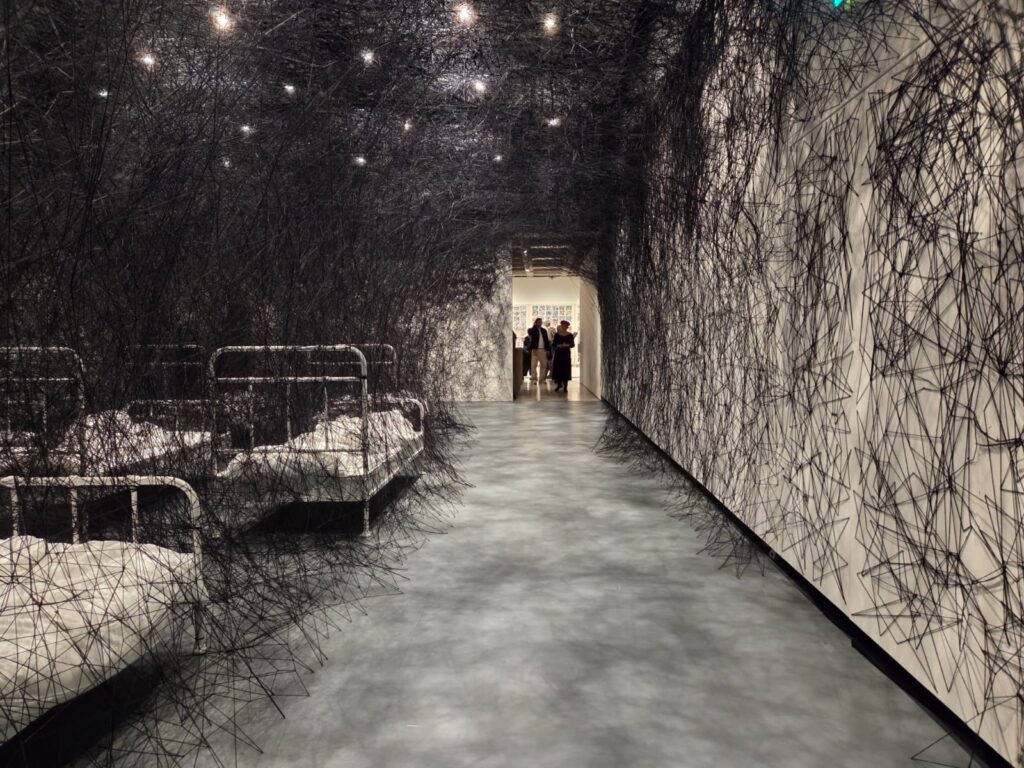
The themes are clear: presence and absence. The traces we leave behind. One installation here is structured as an occasional performance work, with people sleeping in a row of beds (not when I visited). Rumpled sheets become evidence of bodies passing through. It’s a simple but effective gesture. Shiota’s background in performance is visible in these pieces. The installations aren’t static, even when the audience are the only ones present.
Beyond the Web
Nonetheless, I found myself admiring Shiota’s work more than feeling it. The scale is impressive. The repetition of thread creates a kind of drawing in space, somewhere between sculpture and line. It has an intensity which is somehow calm and furious at the same time. You can see why these works travel so well: they photograph beautifully and fill a room with minimal physical mass.
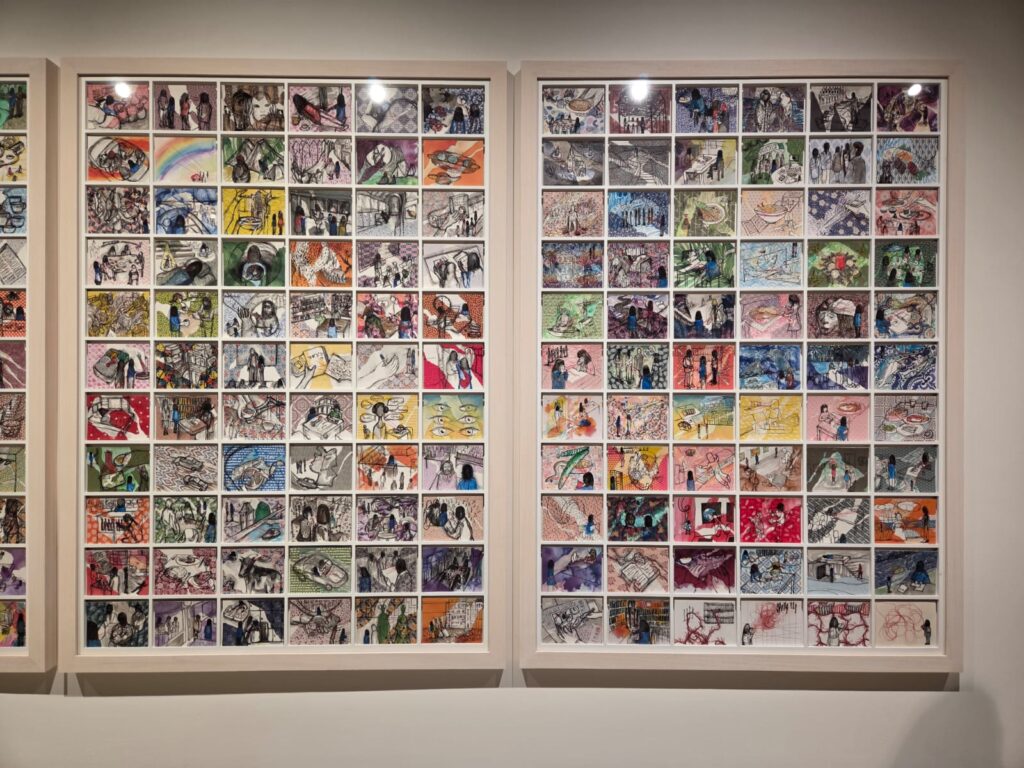
There are glimpses here of a broader practice – photographic documentation, earlier performance pieces – suggesting that the webs are part of a larger investigation into memory and connection. But in this exhibition, the emphasis is firmly on the immersive spectacle.
Placed alongside Yin Xiuzhen’s quieter, more grounded sculptures, the contrast is telling. Both artists deal in memory. Both use installation to create environments rather than objects. But where Shiota externalises memory into dramatic, visible networks, Yin internalises it, stitching it into fabric, folding it into something you could carry.
I arrived expecting to be impressed by Shiota. I left thinking about Yin. That, in itself, feels like a success for pairing these two artists. And once again the Hayward Gallery shows why it is one of the best spaces in London for this sort of large-scale sculpture.
Salterton Arts Review’s rating: 4/5
Yin Xuizhen: Heart to Heart & Chiharu Shiota: Threads of Life on until 3 May 2026
Trending
If you see this after your page is loaded completely, leafletJS files are missing.