
Park Güell, Barcelona
On my second visit to Barcelona I finally made it to Park Güell – a long-postponed Gaudí landmark well worth the wait.
Park Güell: First Impressions and a Return to Gaudí
This visit to Park Güell continues my reflection on Gaudí’s work, following my time at the Sagrada Família museum. But while that church is a place of spiritual focus, Park Güell is firmly secular: a showcase of Gaudí’s naturalism, vision, and architectural eccentricity turned outwards toward the city.
Park Güell was one of two sites I’d hoped to visit on my first trip to Barcelona, but didn’t quite make it to. So I made sure to carve out time this time, even if it meant rearranging other plans. It was worth the effort. My first instinct had been to go early in the morning. I’m an early bird, and I knew the park had generous opening hours. But I learned that the first and last few hours of the day are reserved for Barcelona residents. I actually admire this approach. In a city grappling with the challenges of mass tourism, it’s a thoughtful way to preserve access for locals.
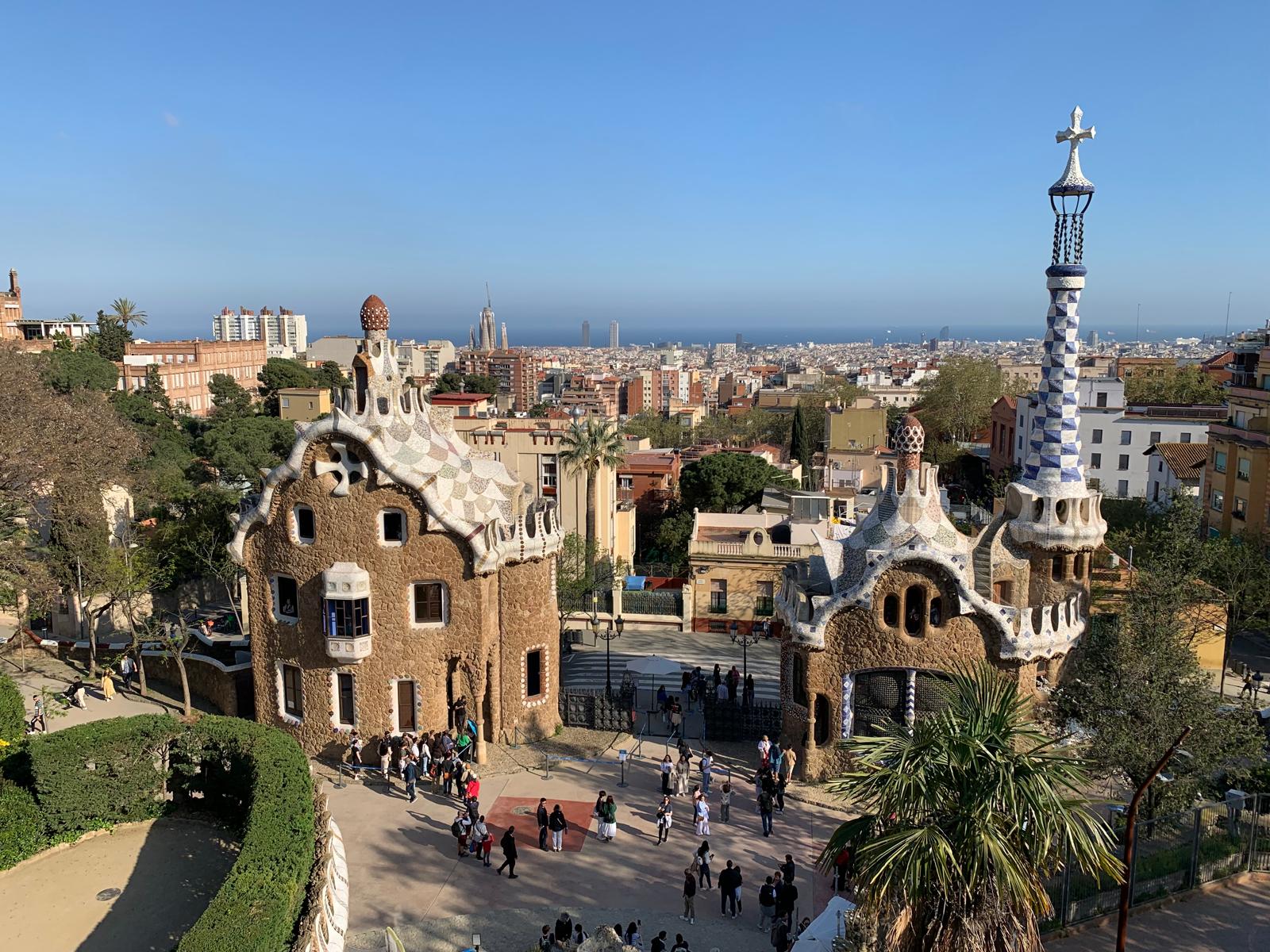
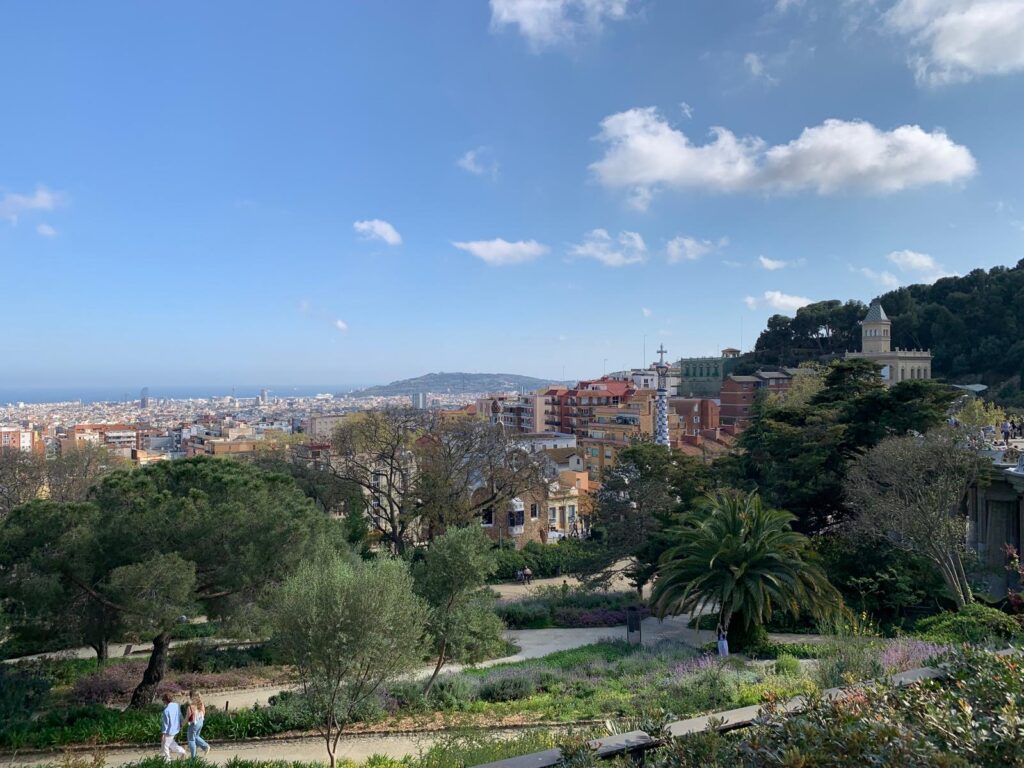
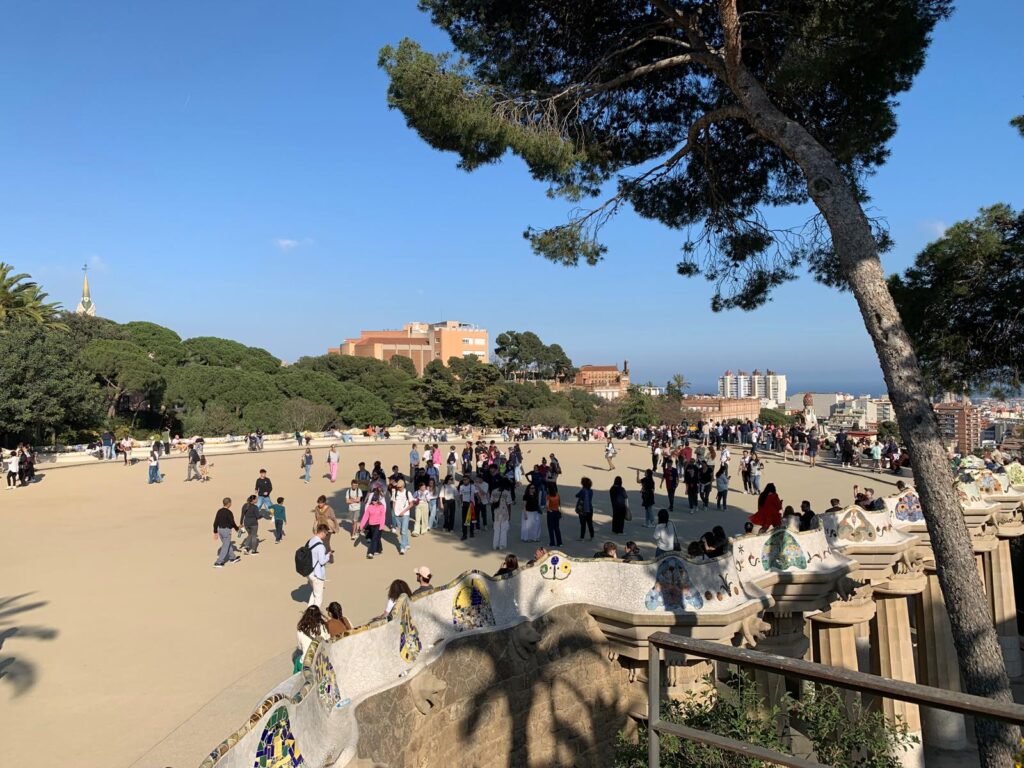
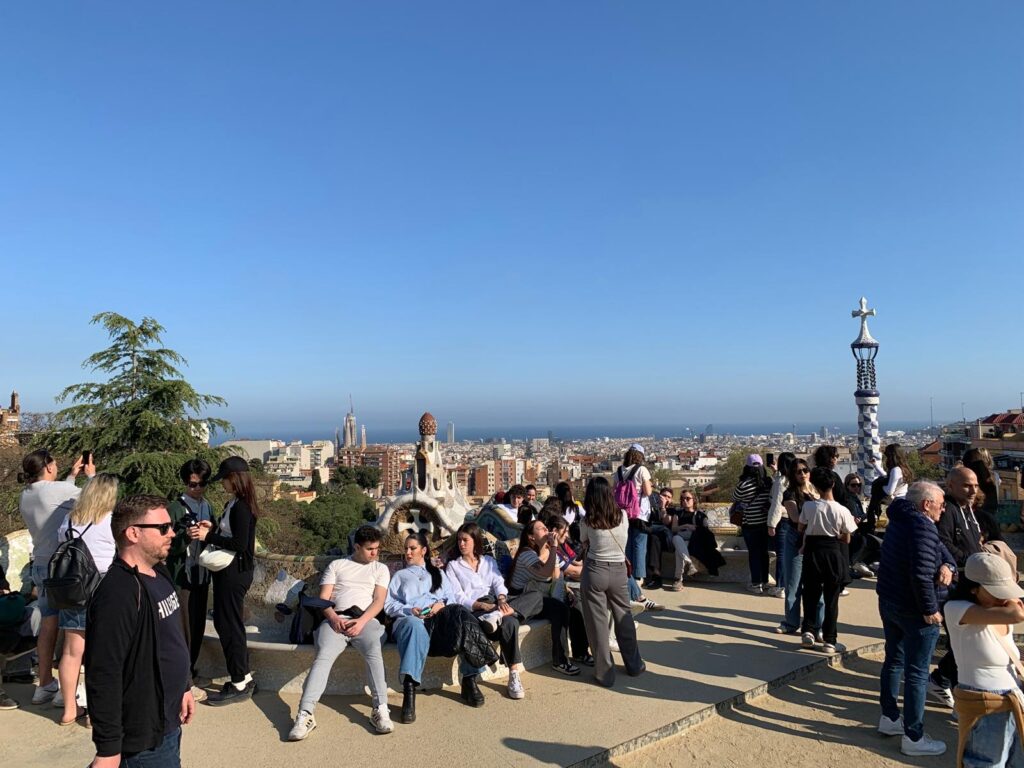
In the end, I arrived in the late afternoon. The sun was warm but mellow, and the light cast a beautiful glow over the stone and tilework. The crowds were still there, of course, but the atmosphere was relaxed. With views stretching out over the city and the sea, it felt like a perfect time to visit.
A Garden City That Never Was
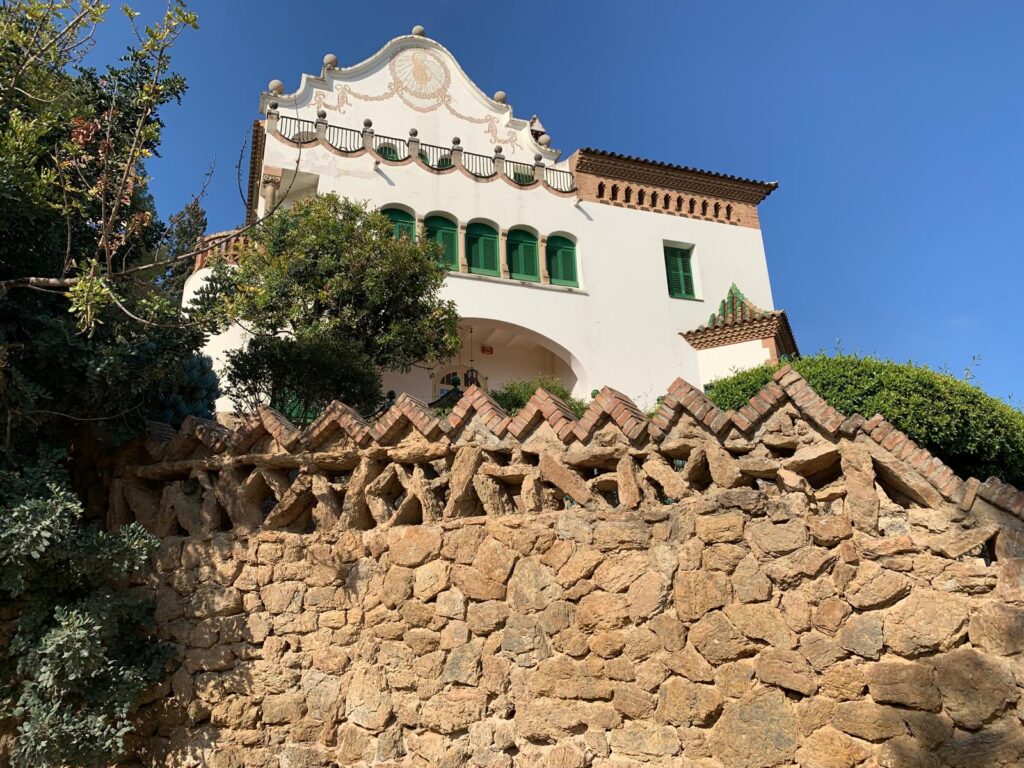
Park Güell began with a very different vision. In 1900, industrialist Eusebi Güell hired Antoni Gaudí to design a garden city. Inspired by British urban planning, the idea was to build a self-contained community in nature. Sixty plots, communal amenities, and artistic flair.
Gaudí embraced the concept with his signature style. He created roadways that curved with the landscape, viaducts that looked grown rather than built, and a dramatic entrance plaza. But the vision never caught on. Only two houses were ever constructed. And Gaudí himself lived in one of them… By the 1920s, the project was deemed a failure. But the city saw value in the site. Park Güell opened to the public in 1926, the same year Gaudí died.
If you’ve read my earlier post on Modernista architecture, you’ll remember how Gaudí designed for private clients but often expressed larger social ideals. That’s true here too. The park may be playful and imaginative, but it also reflects early 20th-century utopianism. Just as Gaudí saw harmony between nature and religion, here he explored how nature and community might be harmonised.
Today, Park Güell is one of the most-visited attractions in Barcelona. That success is ironic, given that its original concept was a quiet, residential retreat. But it’s also a credit to Gaudí’s imagination. What failed as a development thrives as a civic space. The bones of the original plan remain, repurposed as public art and architecture in the open air.
Making a Path Through Park Güell
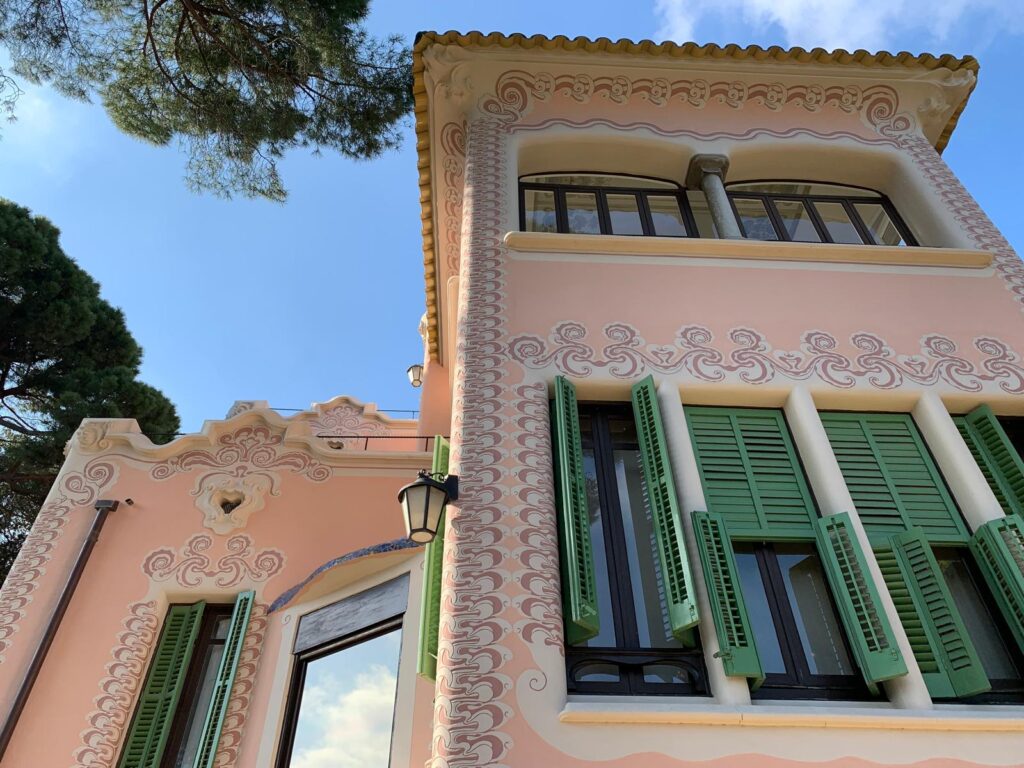
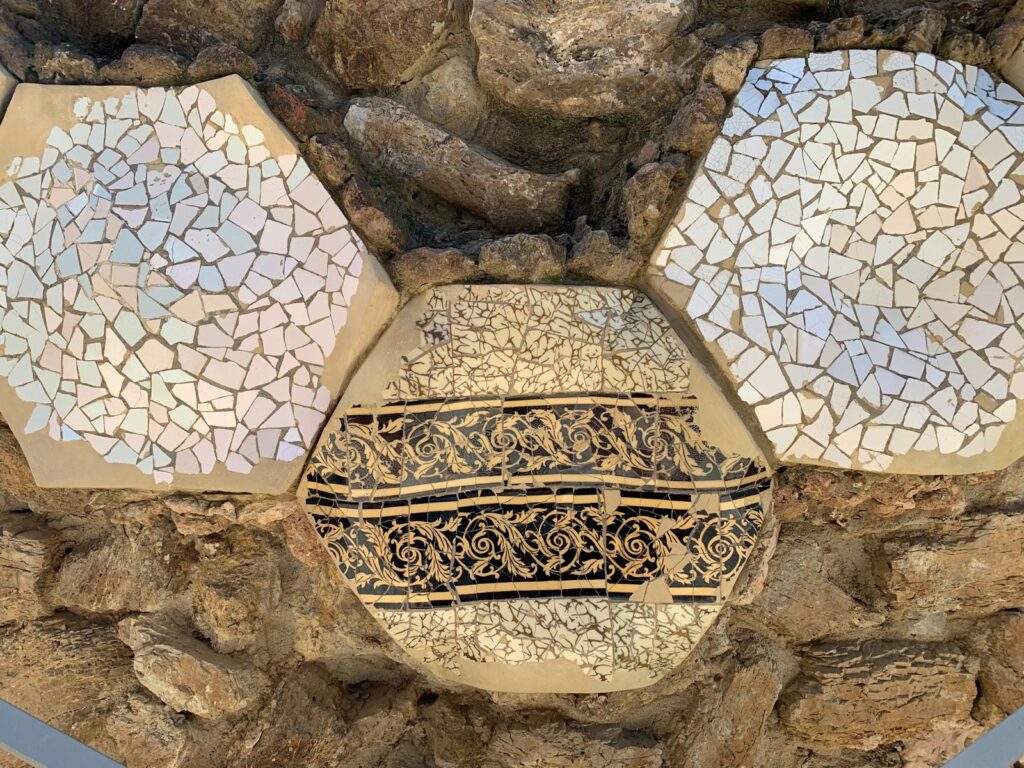
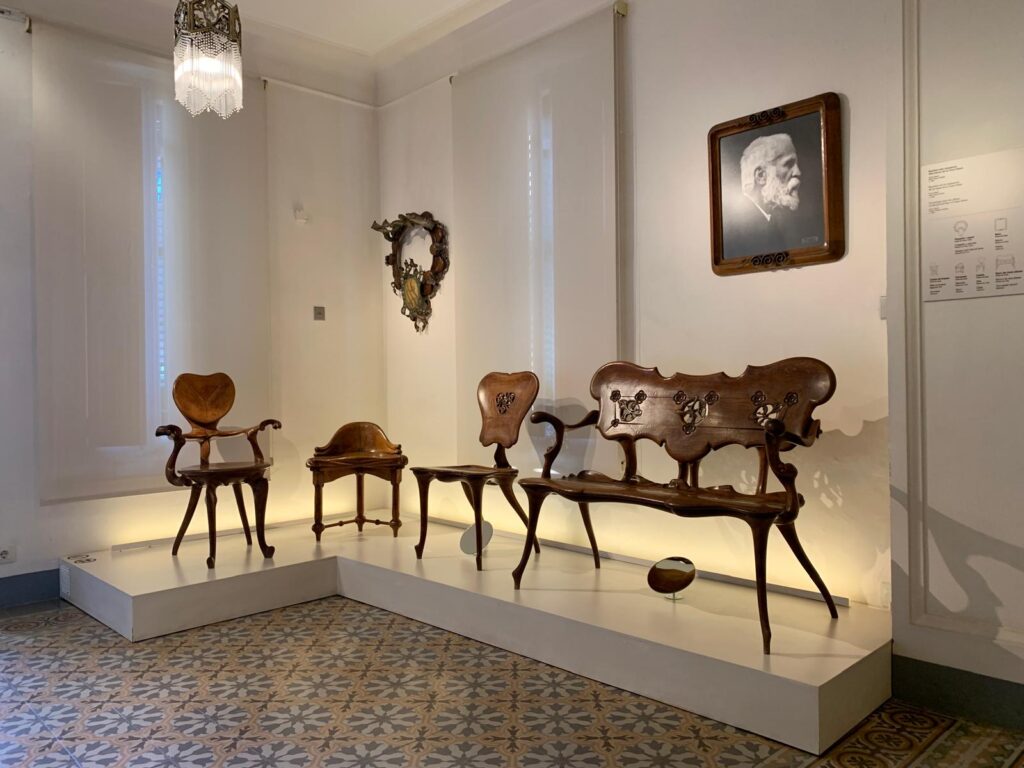
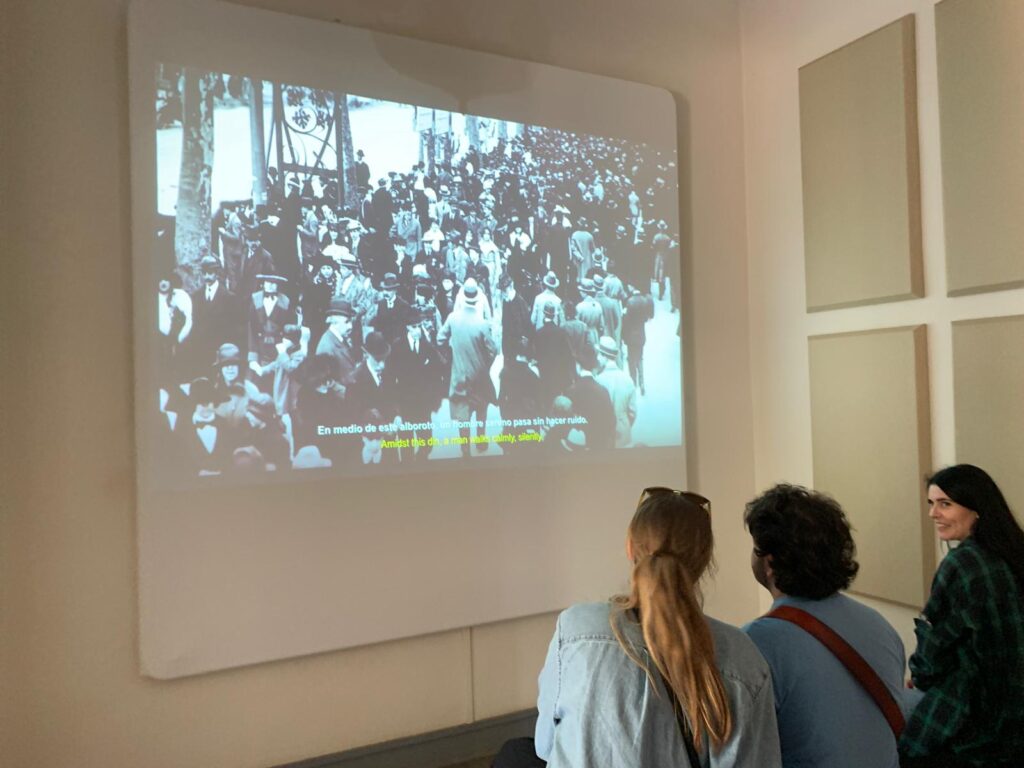
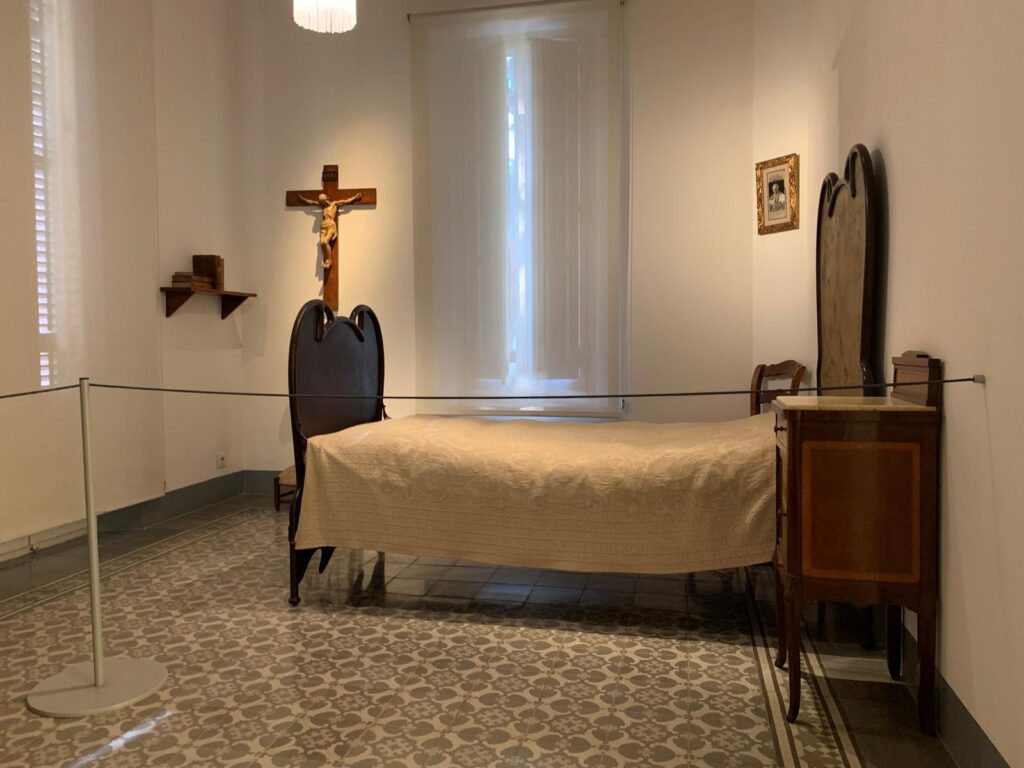
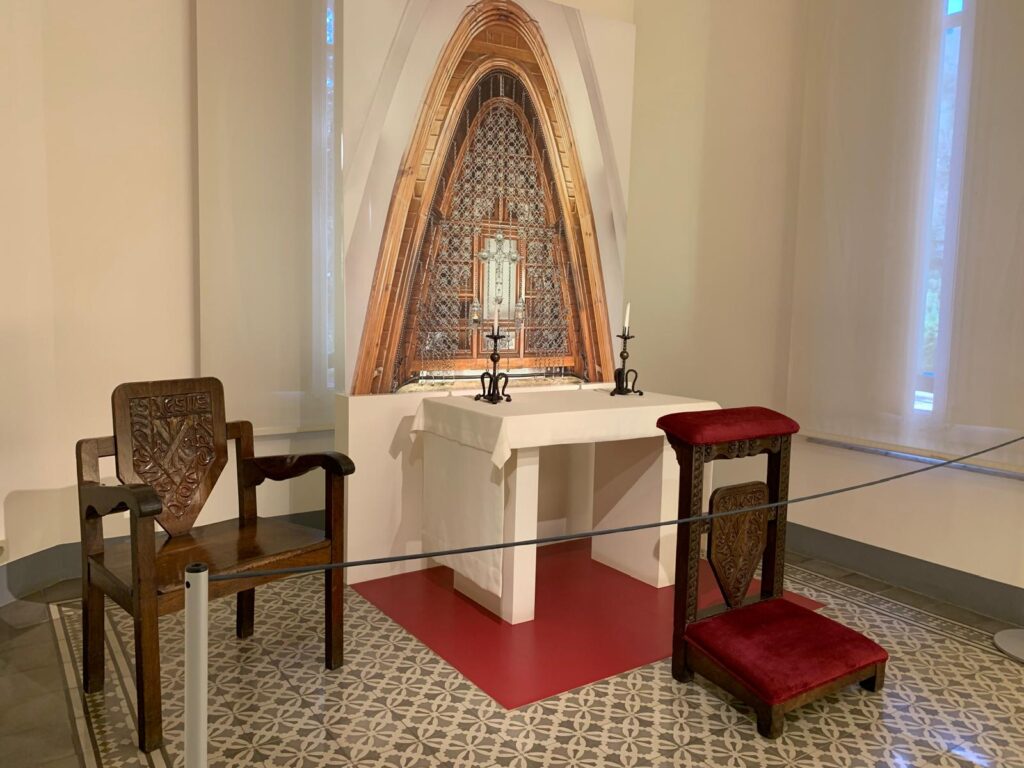
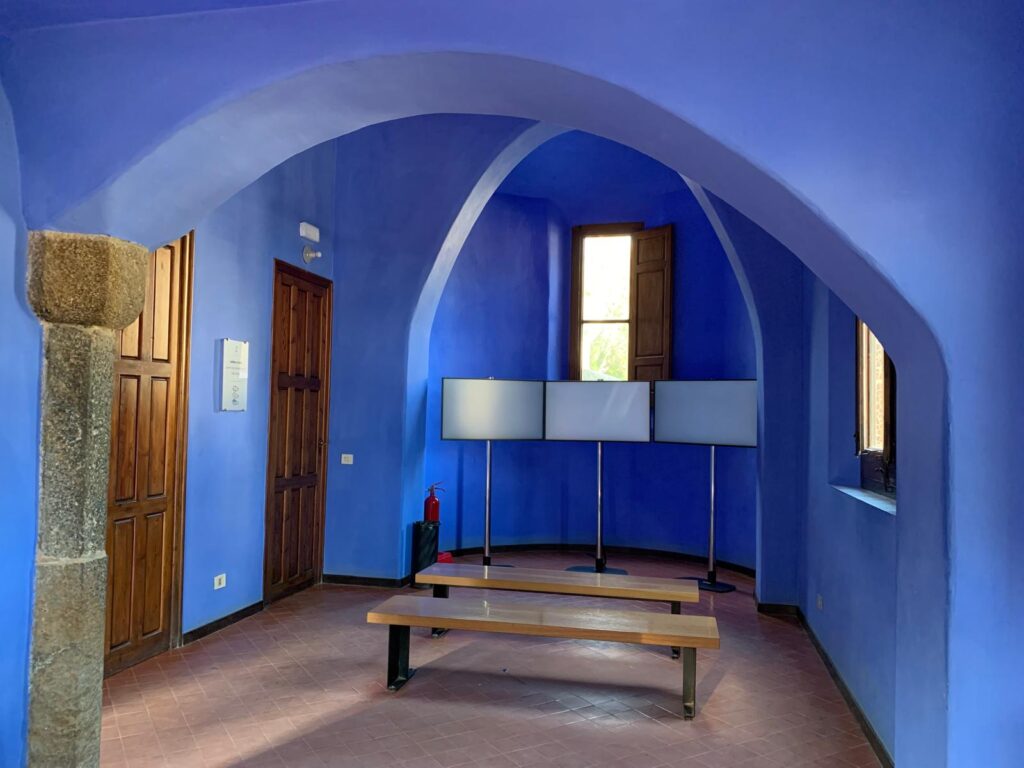
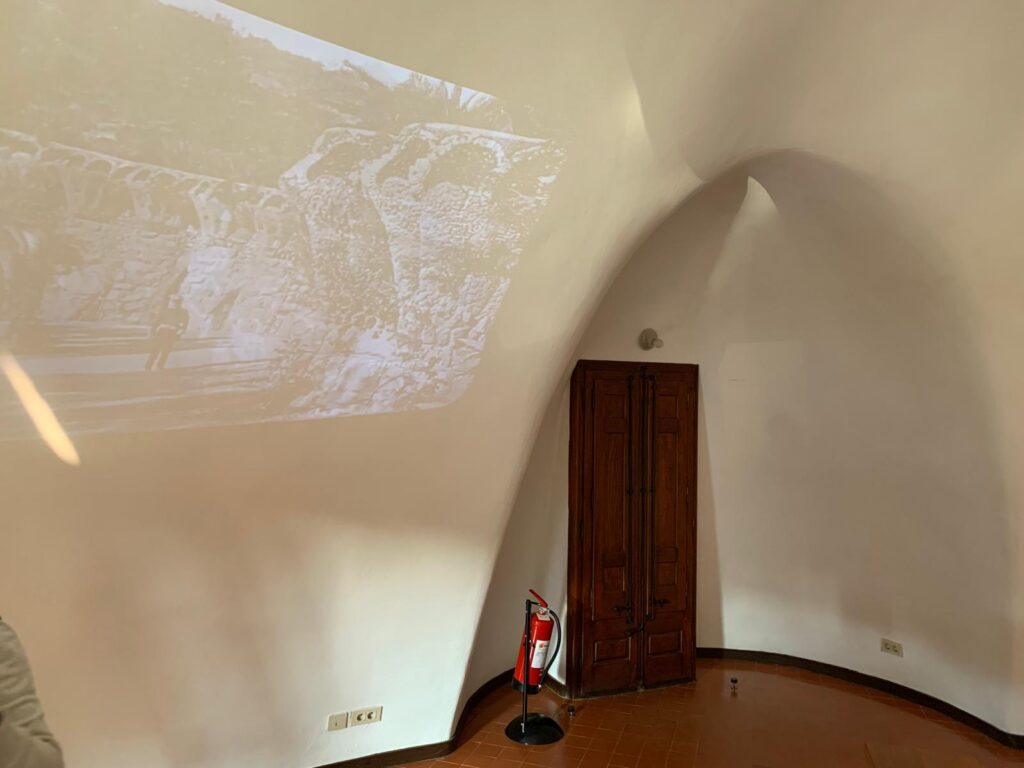
All visits to Park Güell require timed tickets, and most time slots sell out, especially in peak seasons. It’s wise to book ahead and plan your day around the arrival time (the park is to the north of the central city). I opted for a ticket that included the Casa Museu Gaudí (Gaudí House Museum). This building isn’t by Gaudí himself, but he lived here for nearly 20 years. The displays include furniture he designed, personal artefacts, and drawings. It offers a quieter, more domestic view of his life, but to be honest didn’t add much to my knowledge of Gaudí vs. displays I’d already seen at other sites. You can see images of the museum in the first section above.
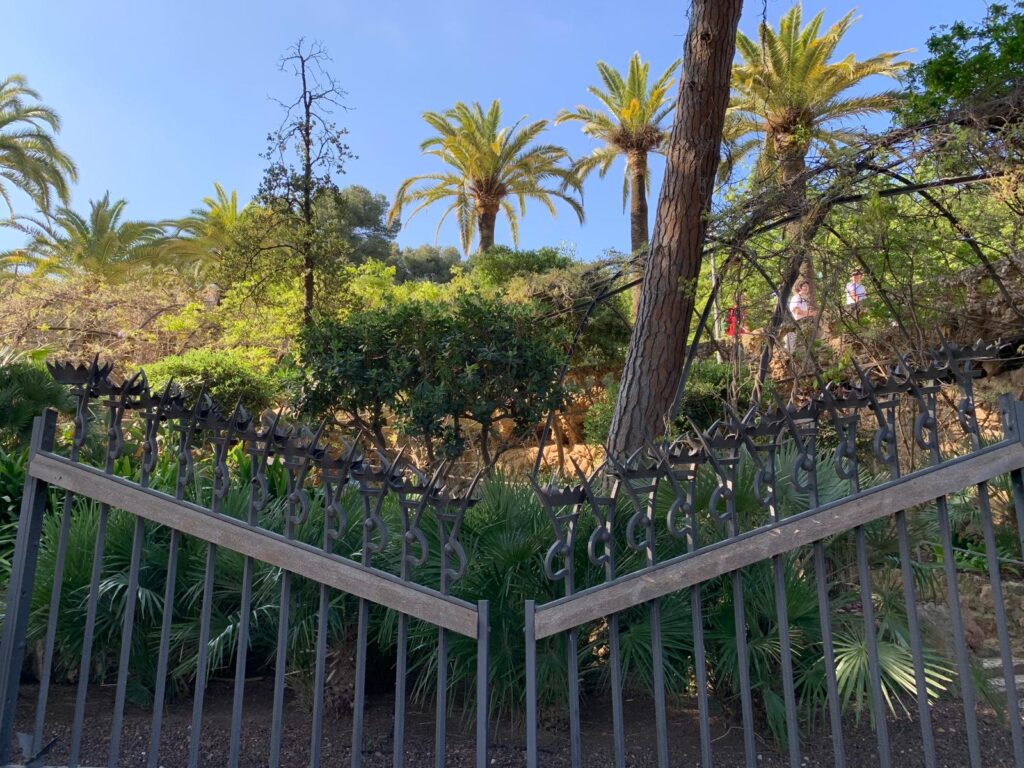
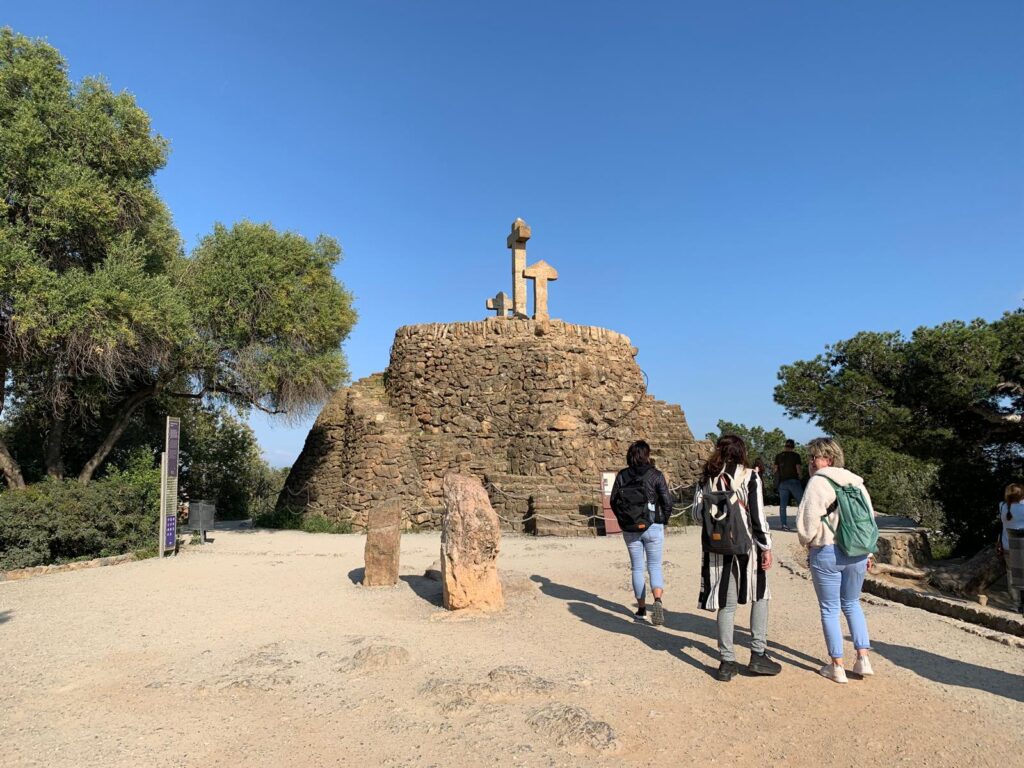
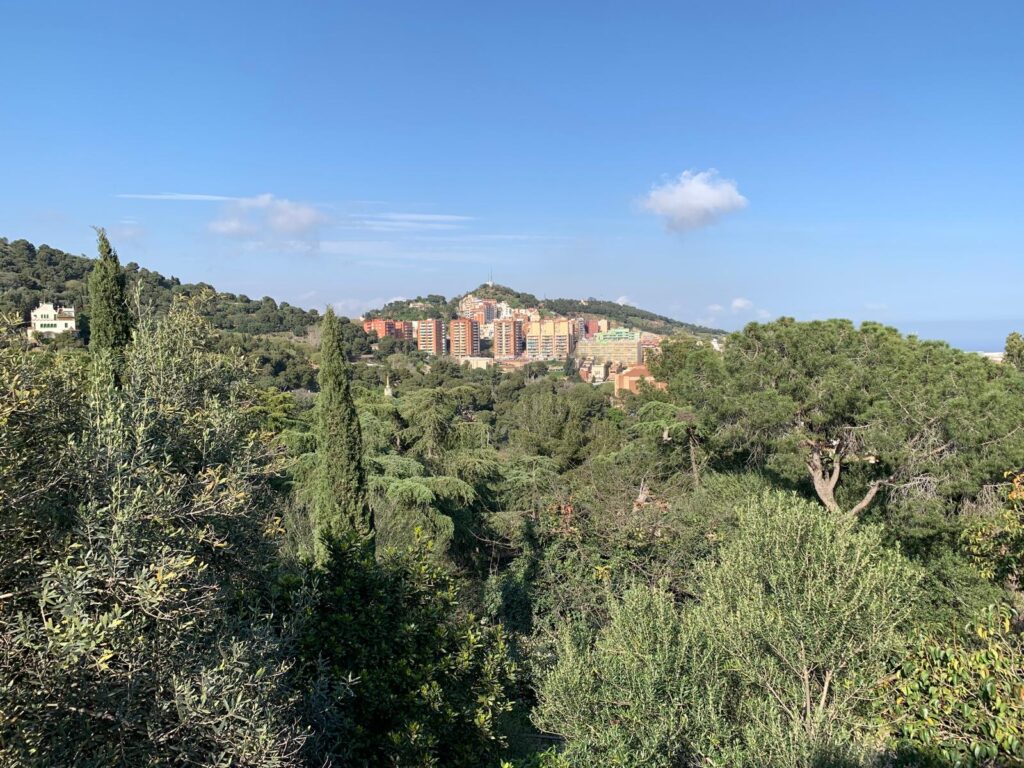
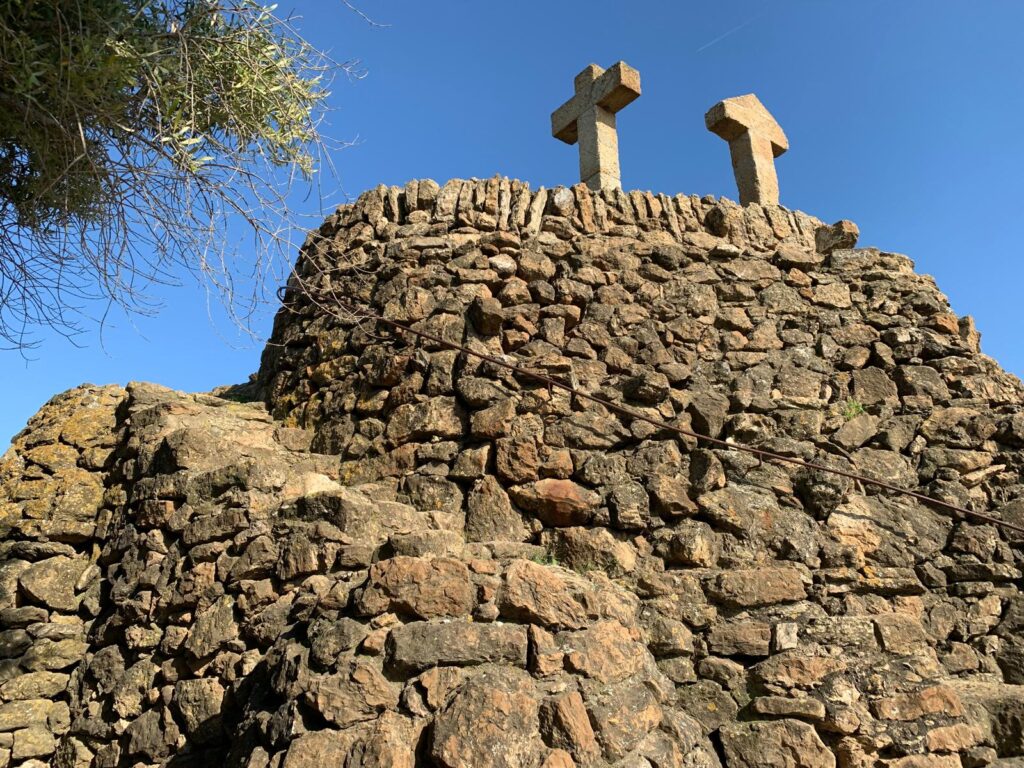
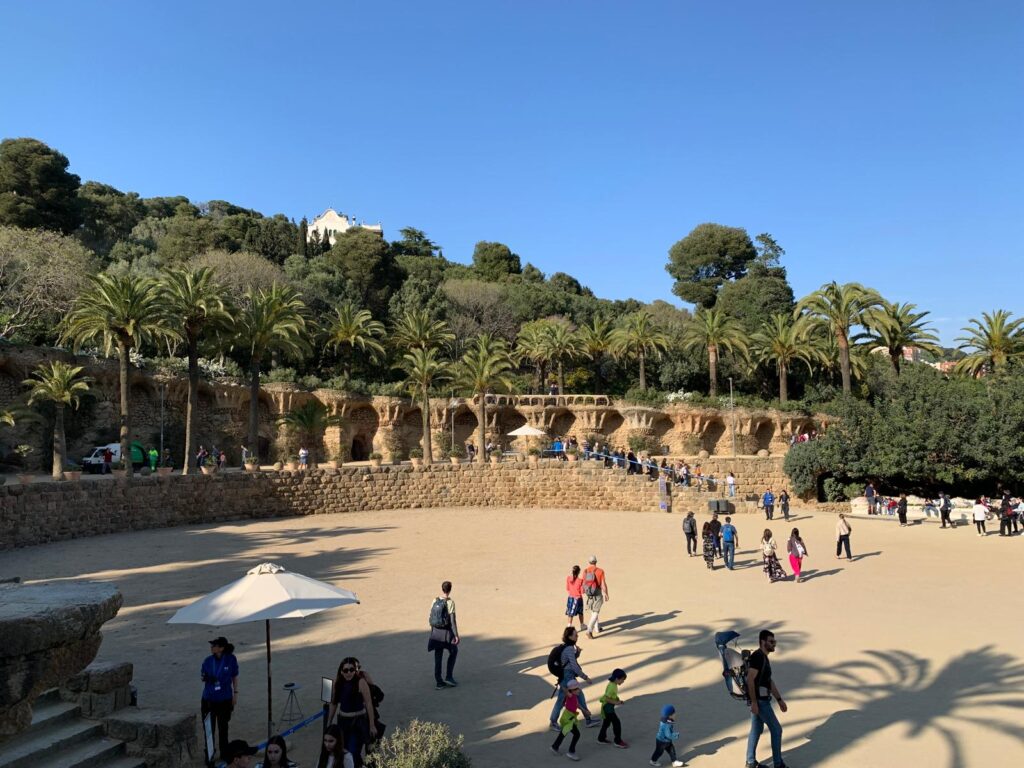
From there, I headed up through the park, past the Casa Trias, which sits on the only plots of land sold as part of the development (to the Güell family’s lawyer) and designed by Juli Batllevell i Arúsuphill. It’s still a private residence – imagine that! I then wended my way up to the Turó de les Tres Creus. A simple calvary, this rocky viewpoint offers sweeping views across Barcelona. The three stone crosses at the top were part of Gaudí’s original design, meant to contrast with the bustling city below.
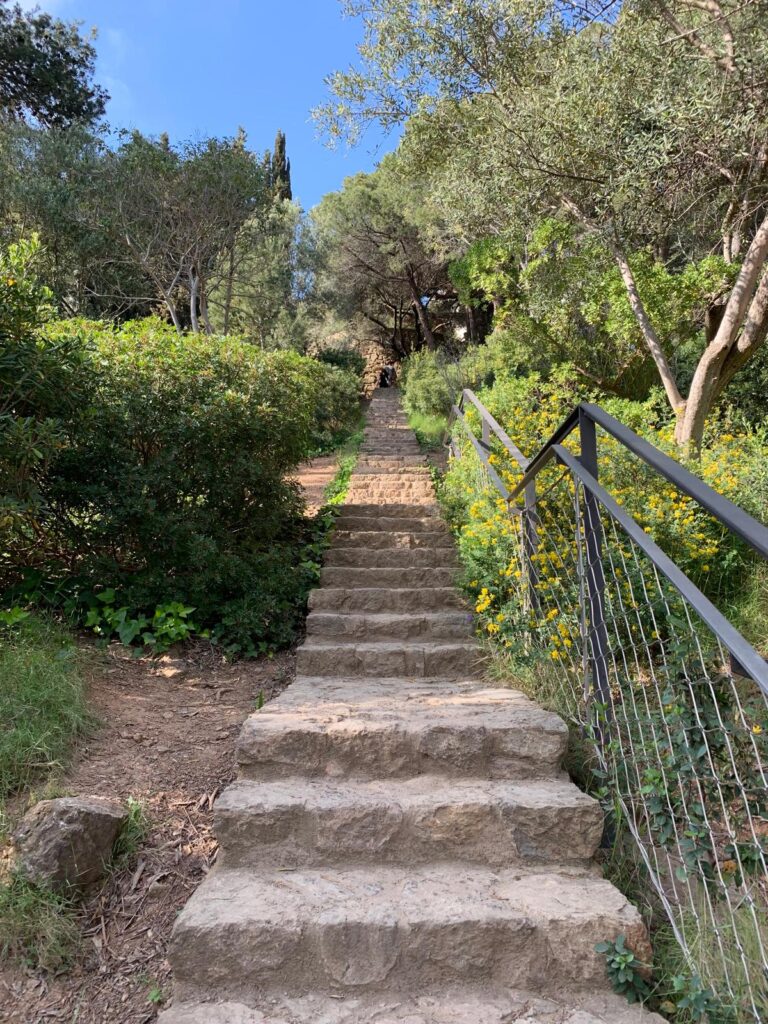
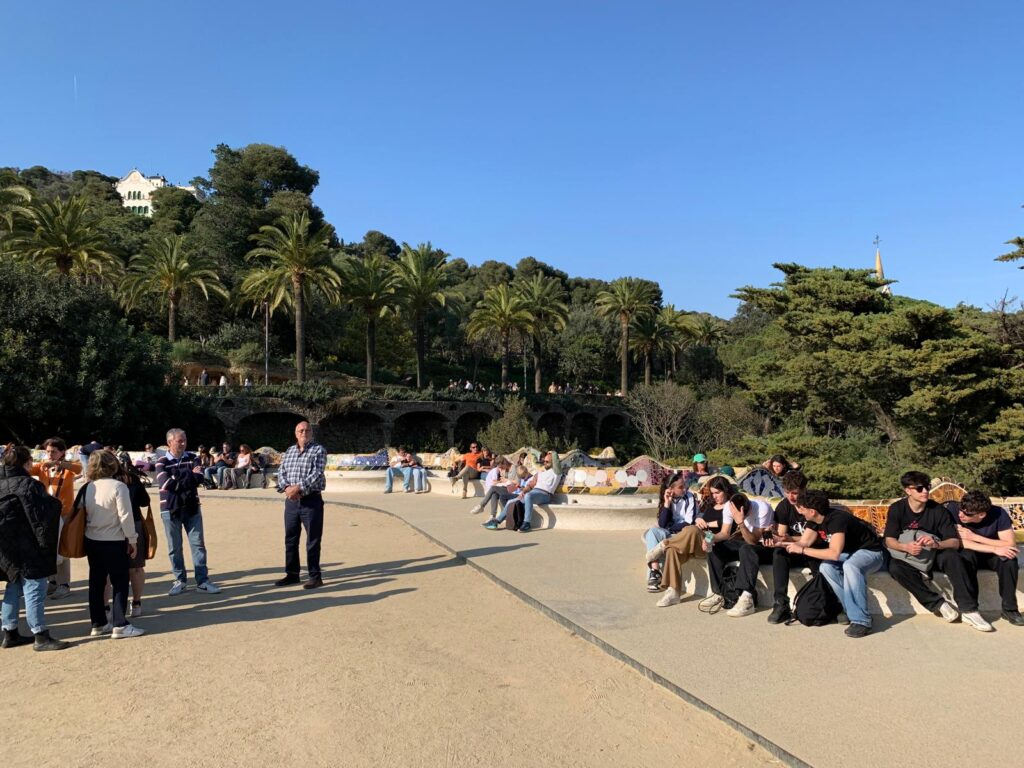
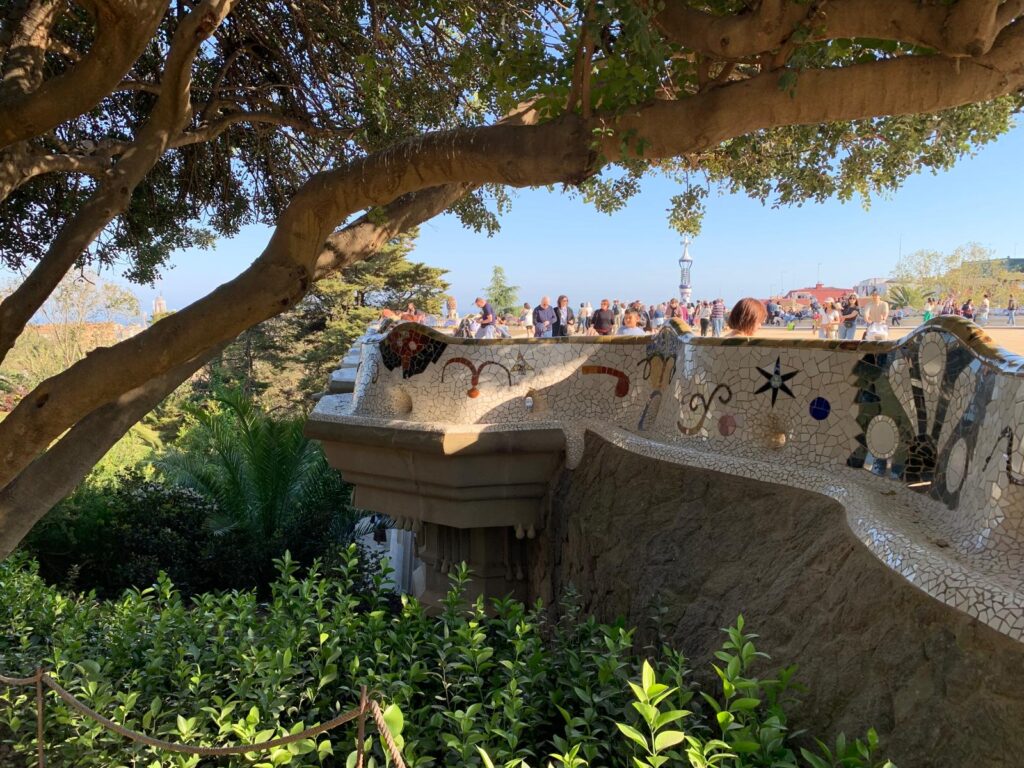
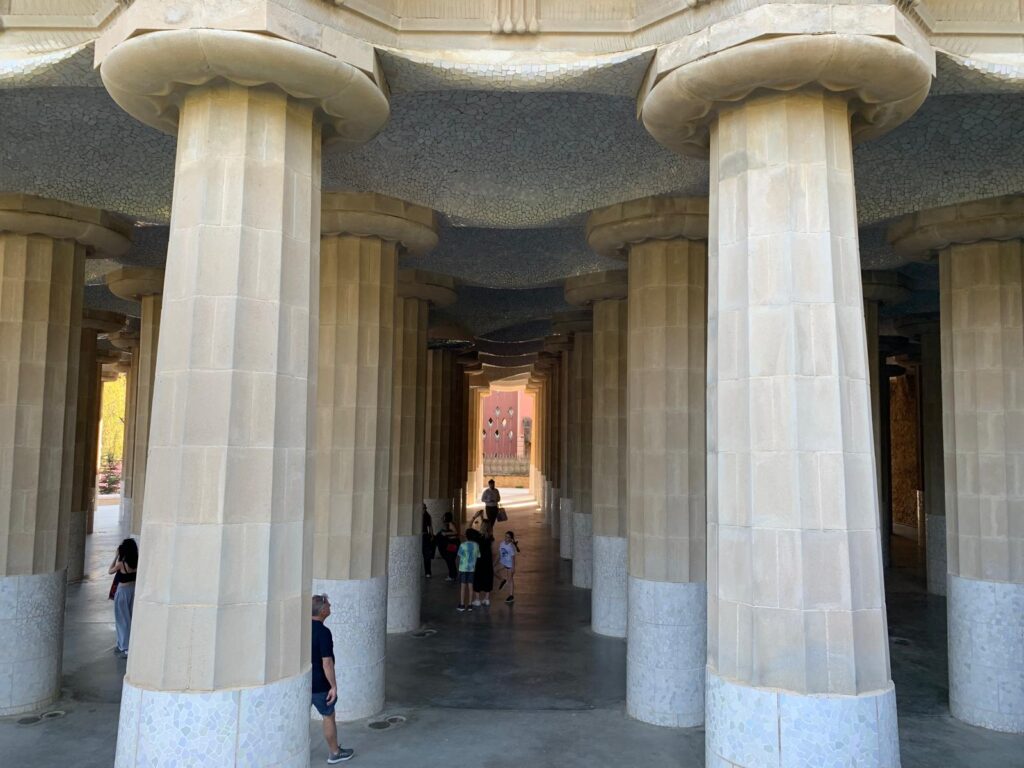
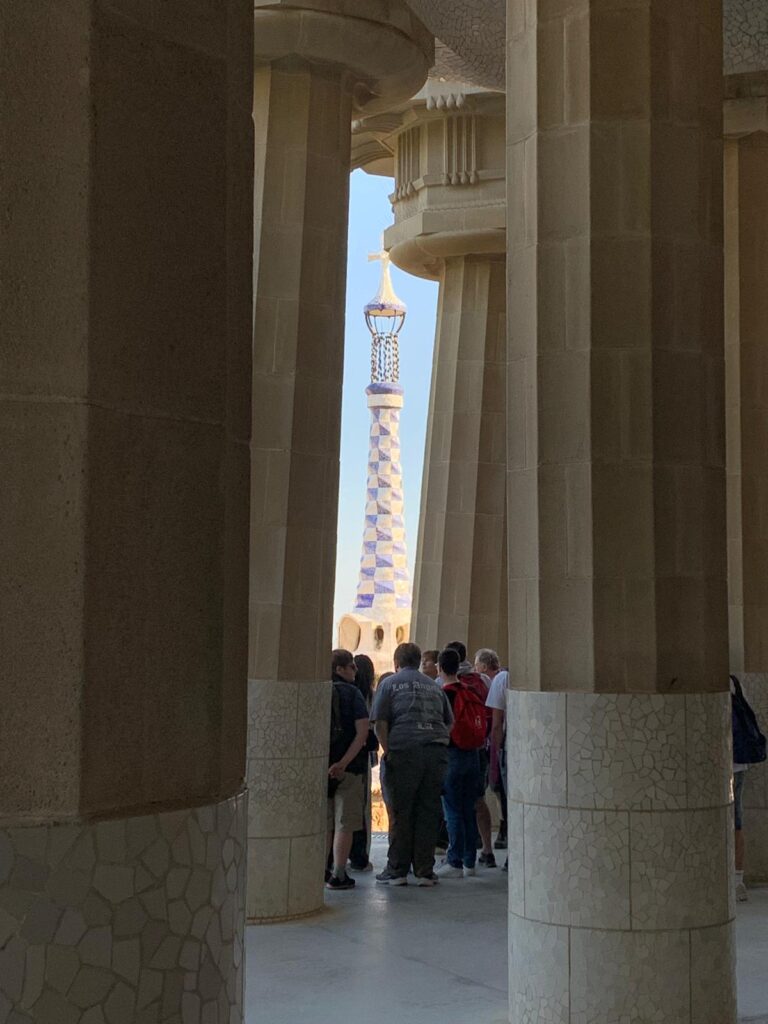
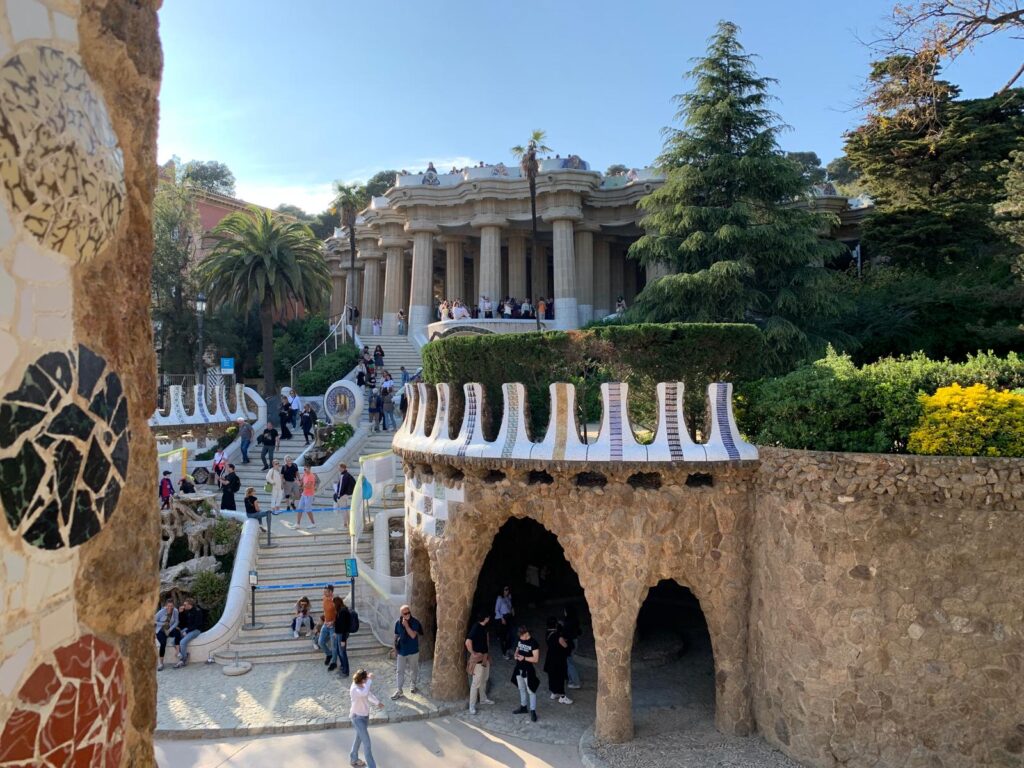
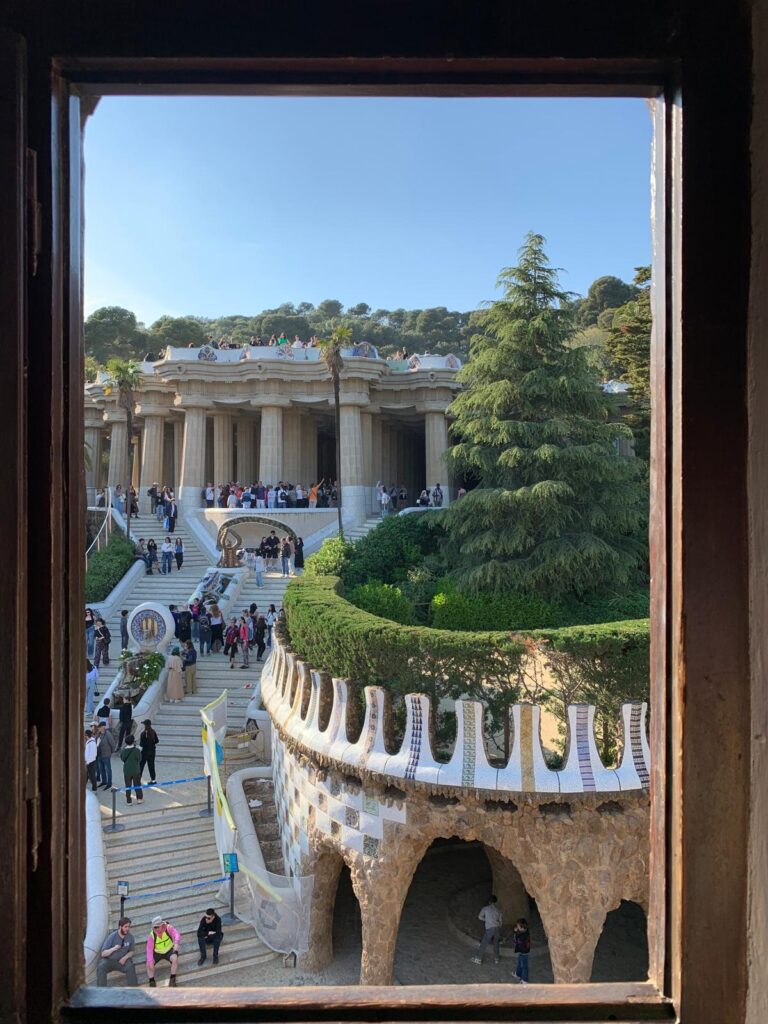
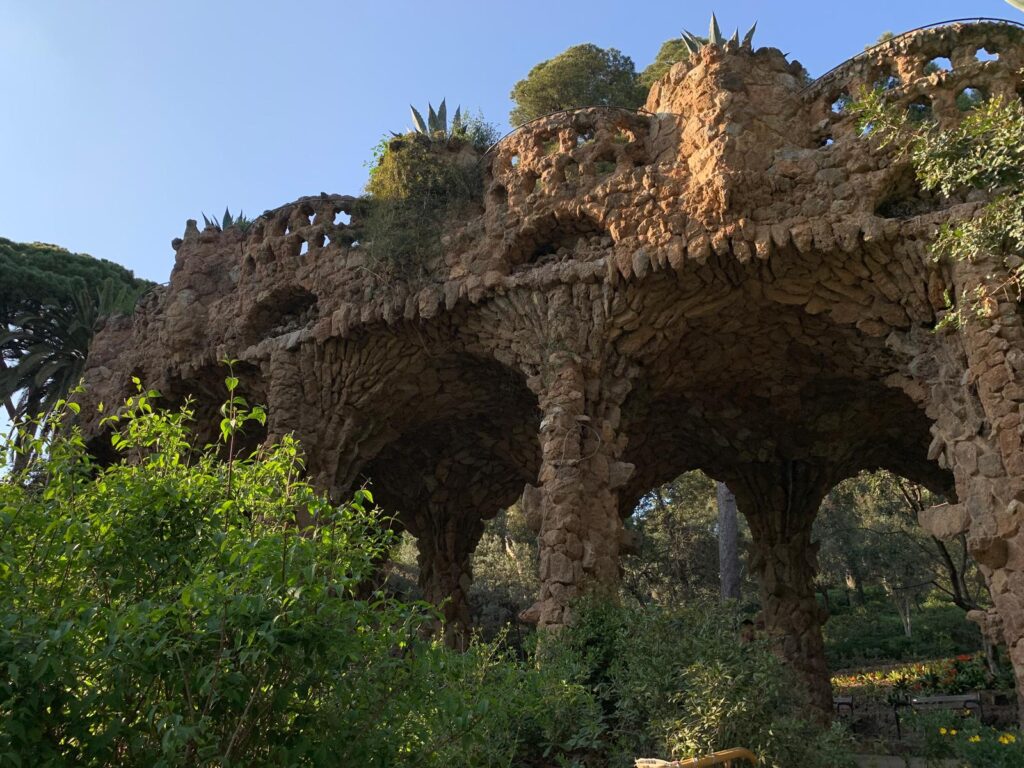
After that, I circled down into the heart of the Monumental Zone, the area you’ll have seen in photos. This is where Gaudí’s imagination runs wild: the serpentine bench, the hypostyle hall of leaning Doric columns. This was also the only uncomfortably busy place I encountered during my visit. It has a one-way system to access it, and sadly the benches are both where people want to take photos and where they want to sit and rest, so it’s a bit of a scrum. The rest of the park can comfortably accommodate visitor numbers on winding forest paths, viaducts, and elevated walks.
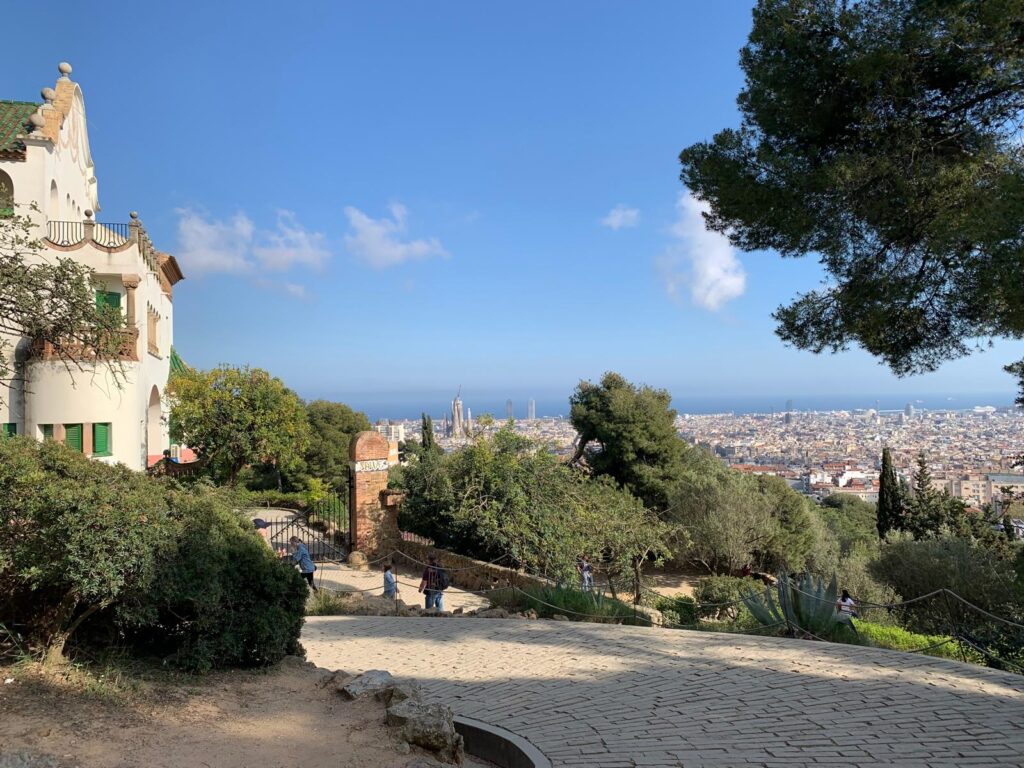
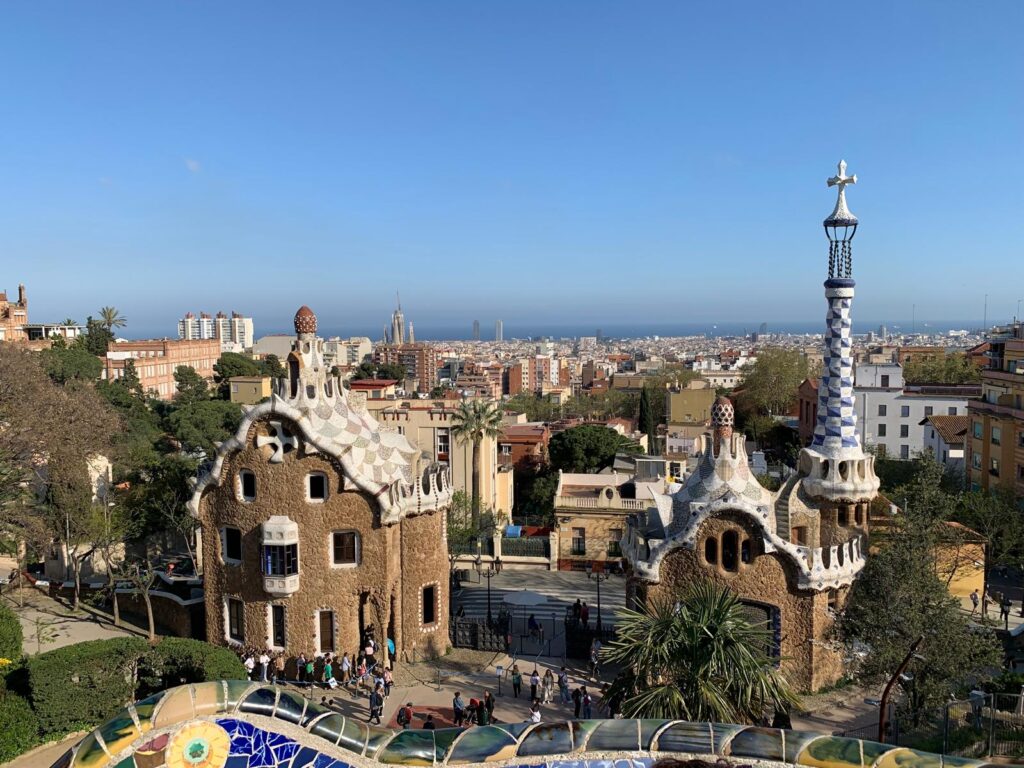
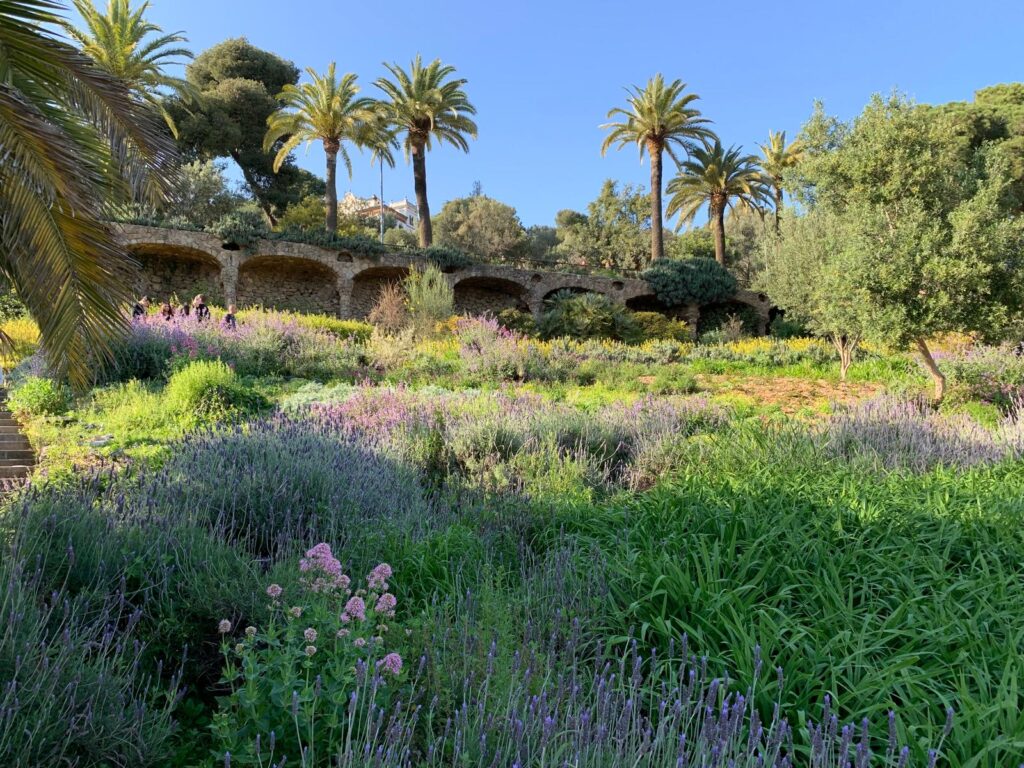
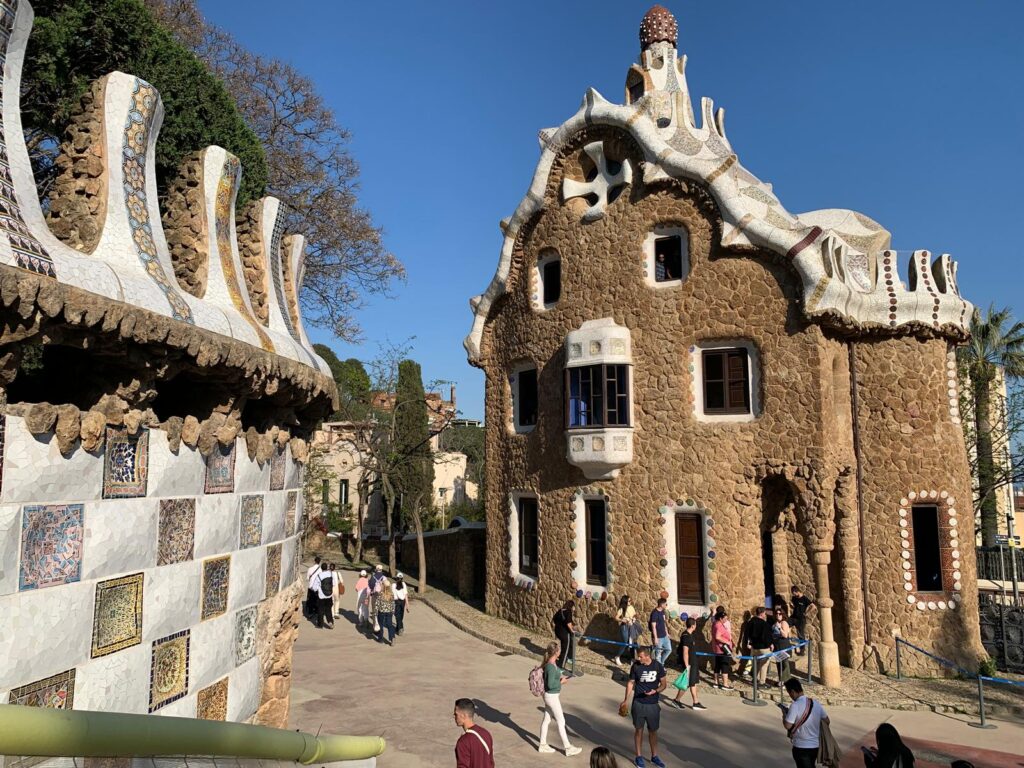
I finished at the two pavilion houses by the main entrance. These whimsical, gingerbread structures once served as the porter’s lodge and administrative office. Today they’re a shop and another little museum (not ticketed but queue to enter). They look straight from a fairy tale, with undulating roofs and polychrome tiles that dazzle in the sunlight. A final stroll past the viaducts, with their stone columns shaped like trees, ended my visit.
The Ambivalence of Beauty
Park Güell is one of the most beautiful places I’ve visited in Barcelona. Nonetheless, I found myself reflecting on its contradictions. There’s a similar tension here to what I feel with William Morris and the Arts and Crafts movement. The desire to create something beautiful to the highest standard, which in practice is only ever within reach of a wealthy few. Morris hoped his designs would one day be for everyone: Park Güell was always a more knowingly elite proposition.
The garden city movement (also Morris-inspired) was a major influence here, imagining green, healthy neighbourhoods for modern living. But that idea, too, is slippery, generally not for the average person. And proper model villages only worked where they had backing from paternalistic industrialists who could populate them with workers. Park Güell was never that kind of project. The buyers never came. But failure has its own strange alchemy. Because the private development didn’t succeed, the site was eventually turned into a public park, albeit one that charges for entry. From a utopian residential experiment to a pay-to-enter park: not the trajectory its creators expected, but perhaps a better fate.
Still, the place holds echoes of its aspirational origins. A dream of living art that never quite became a lived reality. Full of spaces where the rest of the community should have been, but forested walks and open spaces survive. And that tension, oddly enough, only adds to its appeal.
A Fitting Finale
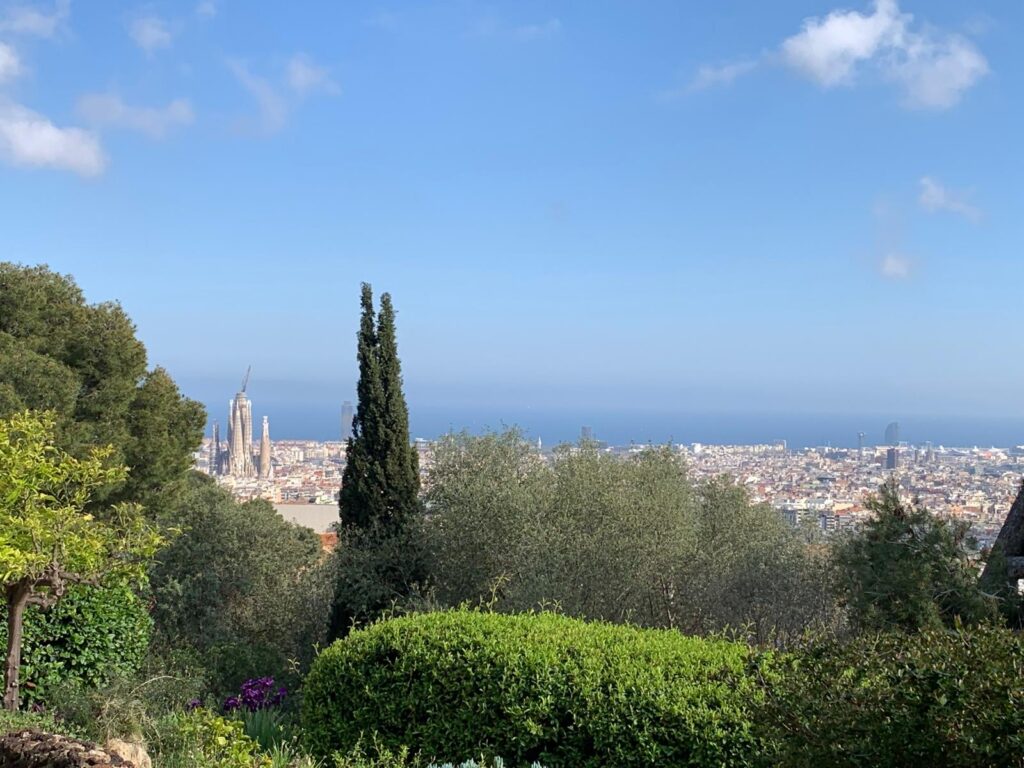
I was so glad I managed to fit in a visit to Park Güell. I was a bit disappointed when I couldn’t make it work on my first Barcelona trip. And in hindsight, I’d suggest making it more of a priority. It’s perhaps best visited towards the end of a visit to the city. There’s something quietly satisfying about looking out over Barcelona, and tracing places you’ve been. The towering outline of the Sagrada Família. The rise of Montjuïc. The stretch of beaches beyond.
Park Güell, in its current state, is a strange hybrid: a public park, a Gaudí showcase, a remnant of an unrealised dream. But it’s a glorious one. Sinous forms echo nature. Architecture coils and curves. A few complete buildings remain, but the overall vision is larger than the sum of its parts. In that sense, it’s the perfect complement to the Sagrada Família. One secular, one sacred. Both demonstrating how Gaudí’s ideas often outpaced practical execution. But they also speak to the unwavering belief of his patrons and backers. These were not modest commissions. They were commitments to imagination and to vision. And the fact Park Güell survives – as a park, as a place of calm, as a piece of architectural theatre – feels like something to celebrate.
Salterton Arts Review’s rating: 4/5
Trending
If you see this after your page is loaded completely, leafletJS files are missing.