
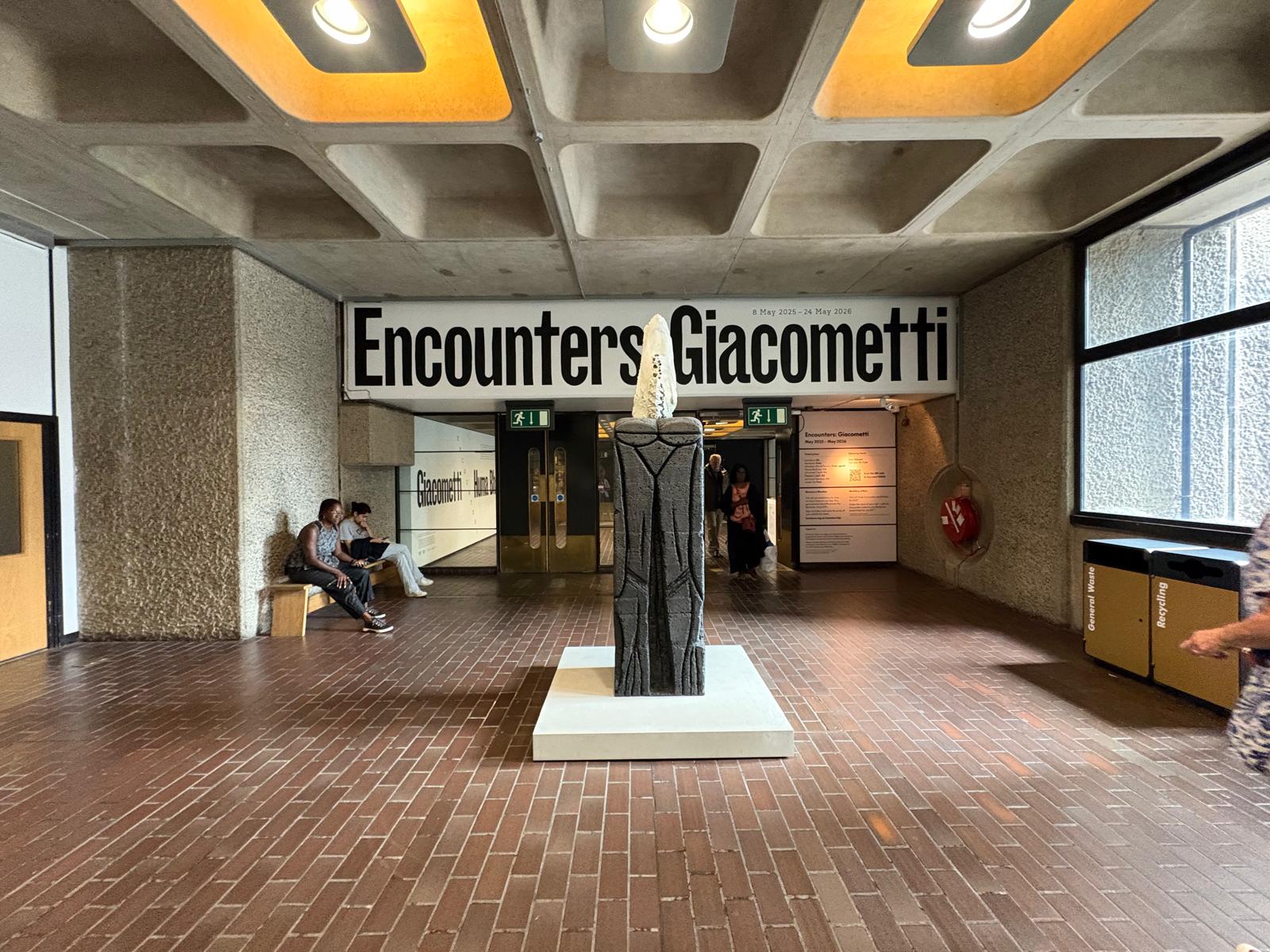
Encounters: Giacometti x Huma Bhabha – Barbican, London (LAST CHANCE TO SEE)
A new exhibition space at the Barbican opens up fresh possibilities, starting with Encounters: Giacometti x Huma Bhabha.
This Place Looks Familiar
If you’re interested in seeing this exhibition, I haven’t left you very long to get to the Barbican to see it. Yes, it’s that time in the exhibition cycle again where I’m rushing to get to everything before it closes. How does this happen so often? But the good news on this occasion is that the Barbican are trying out a new exhibition concept, and will be iterating on it into 2026. So if you don’t catch Encounters: Giacometti x Huma Bhabha, you will definitely have time to see one of its sister exhibitions.
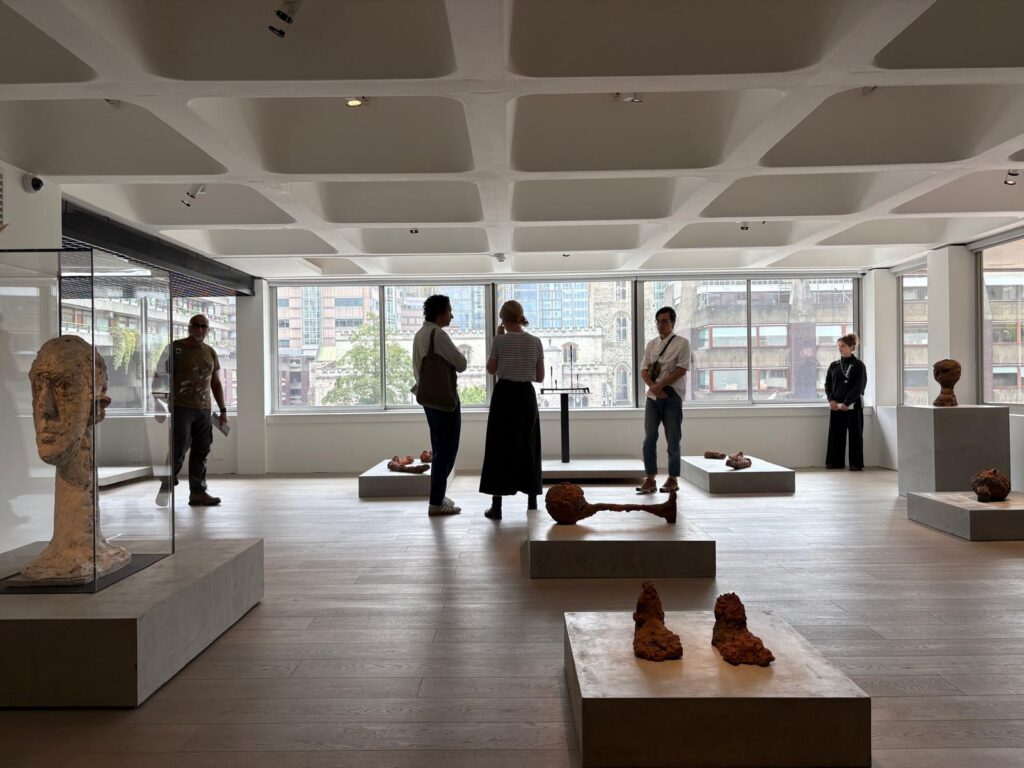
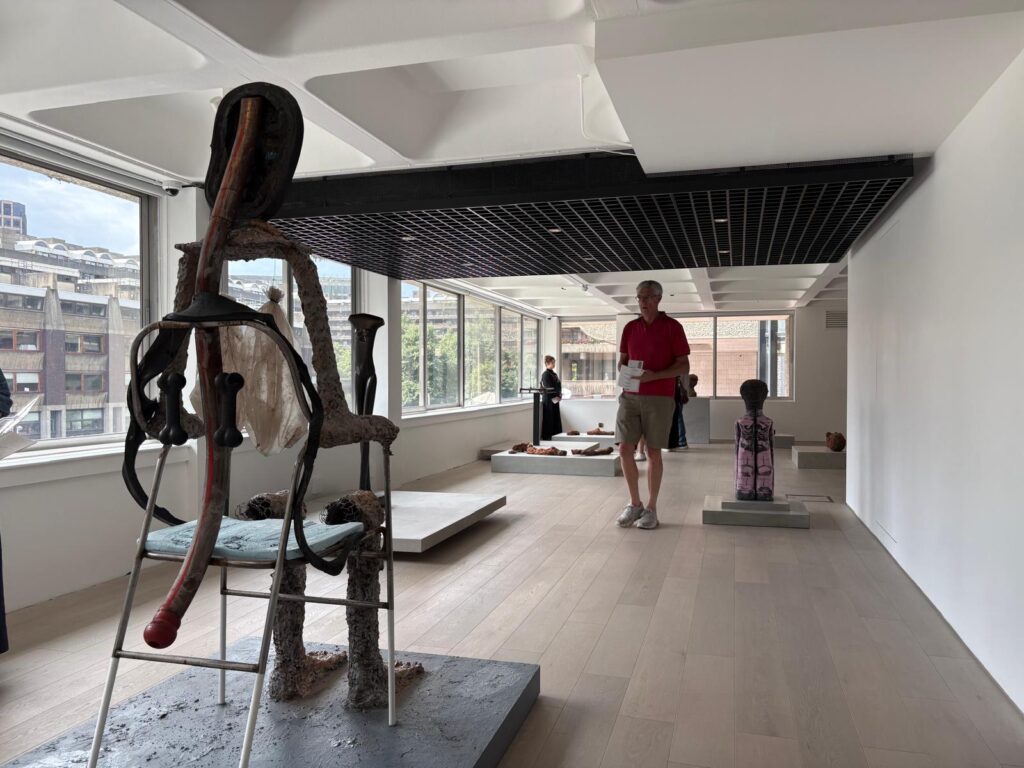
What do I mean? Well, the Barbican team have opened up a new space for exhibitions, one floor down from their main Art Gallery. I think this is a smart move. They do already have a smaller space, the Curve, where they hold exhibitions. But, as the name suggests, it’s a slightly odd shape and doesn’t suit everything. This space is light and airy, and has the added bonus of showing off the Barbican’s Brutalist bones. It took me a while to recognise it as what used to be a burger restaurant, and even then it was mainly the L-shaped space that was familiar: it looks completely different.
It’s still a little clunky for now, starting with a ticket desk-cum-cloakroam which isn’t intuitive to find. Once you’re inside, there are no seats so everyone’s leaning on the windowsills. But anyway, it’s interesting. The concept for the series is that the Barbican have collaborated with the Fondation Giacometti in Paris. Each exhibition in the Encounters: Giacometti series places works by Giacometti in dialogue with another artist. The first is Huma Bhabha, followed by Mona Hatoum, then Lynda Benglis. None of these artists have been shown together with Giacometti before. The idea is that common themes in the artists’ work will open up an intergenerational dialogue. Let’s delve into the first iteration now to learn more.
Giacometti x Huma Bhabha
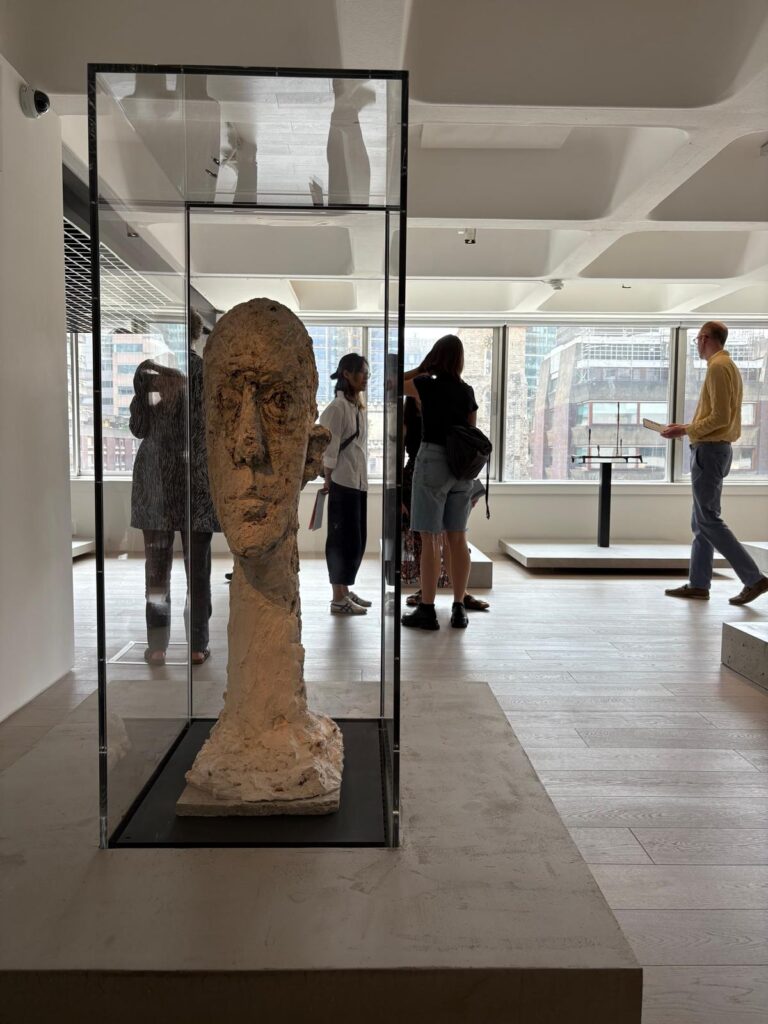
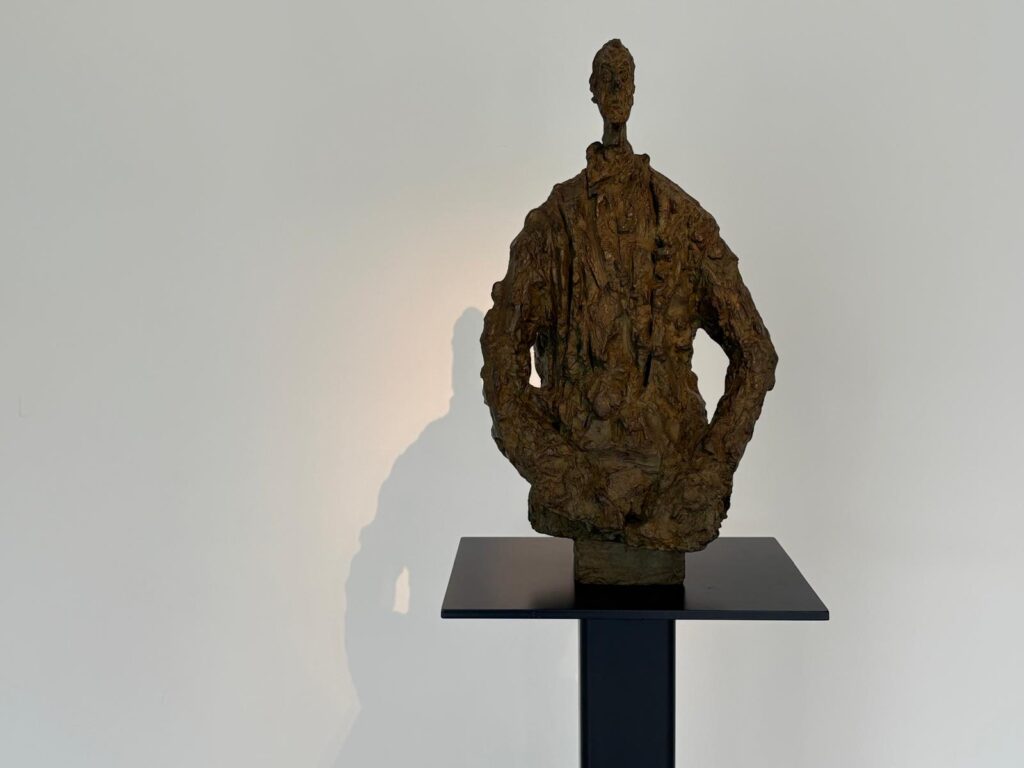
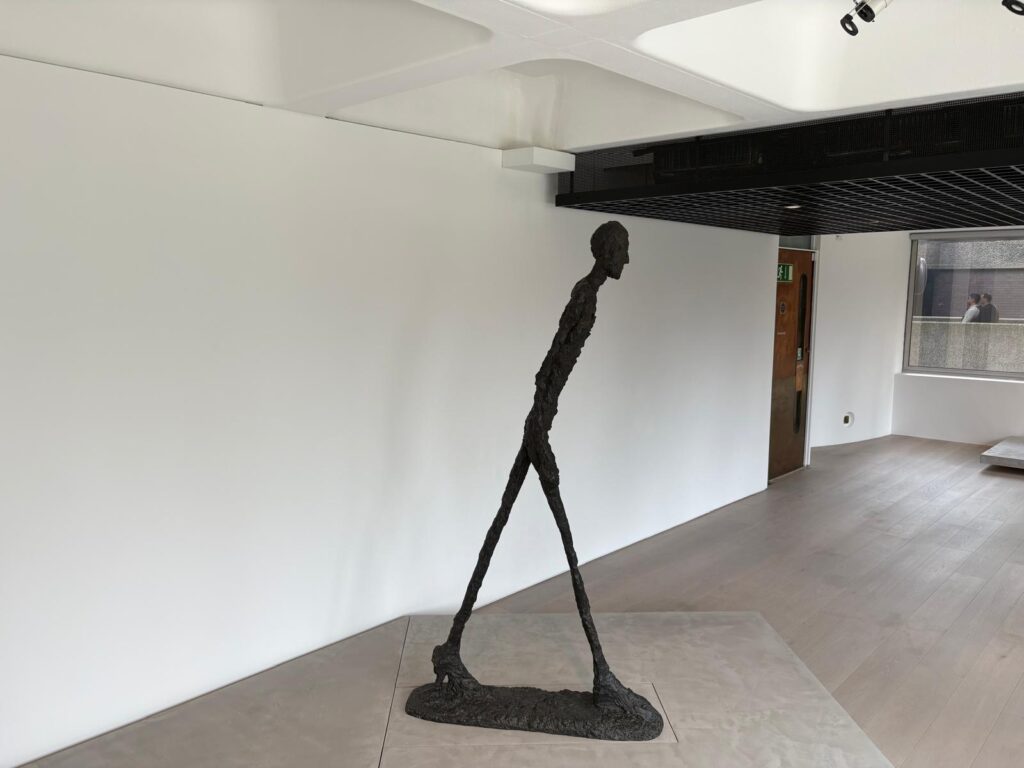
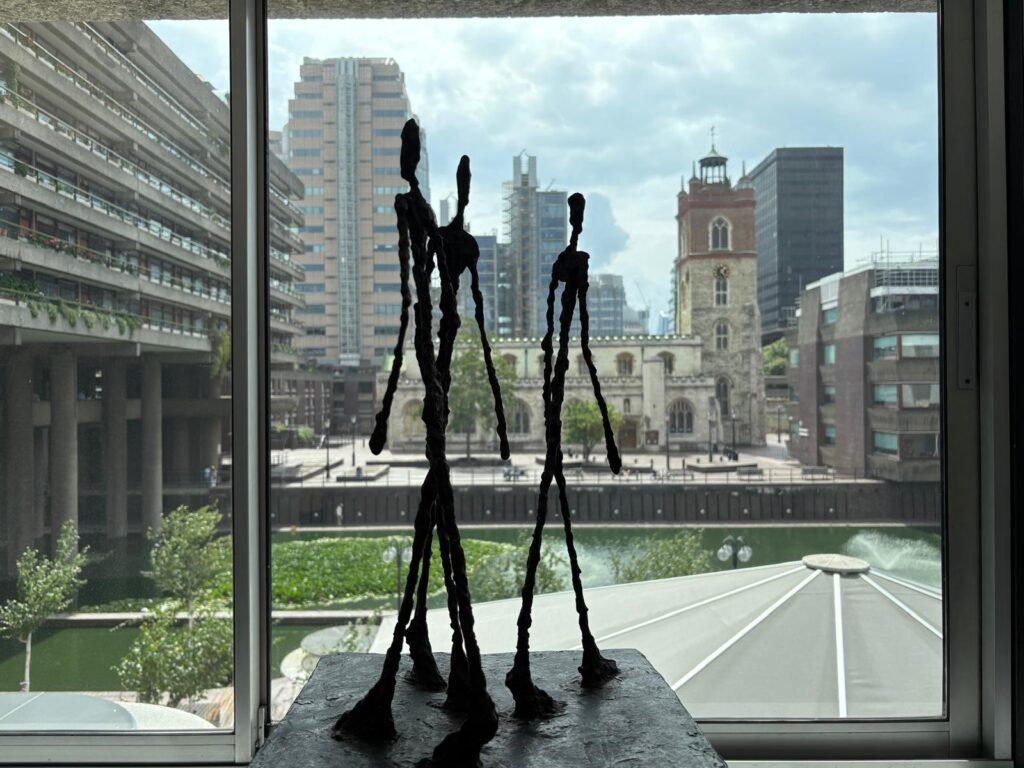
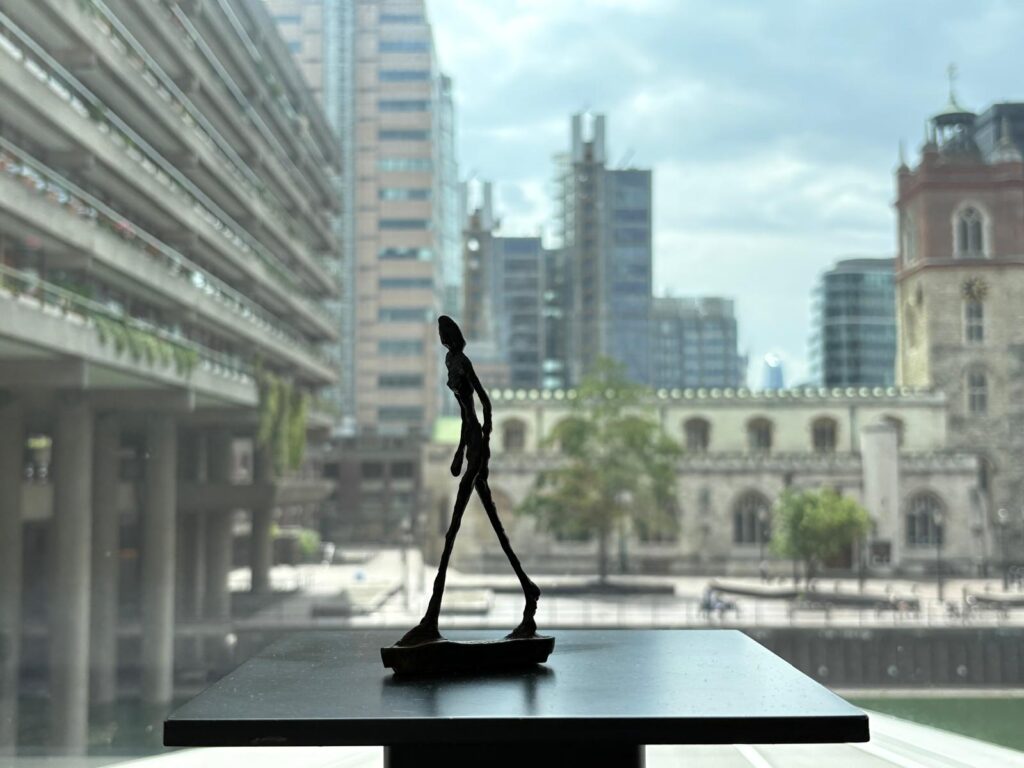
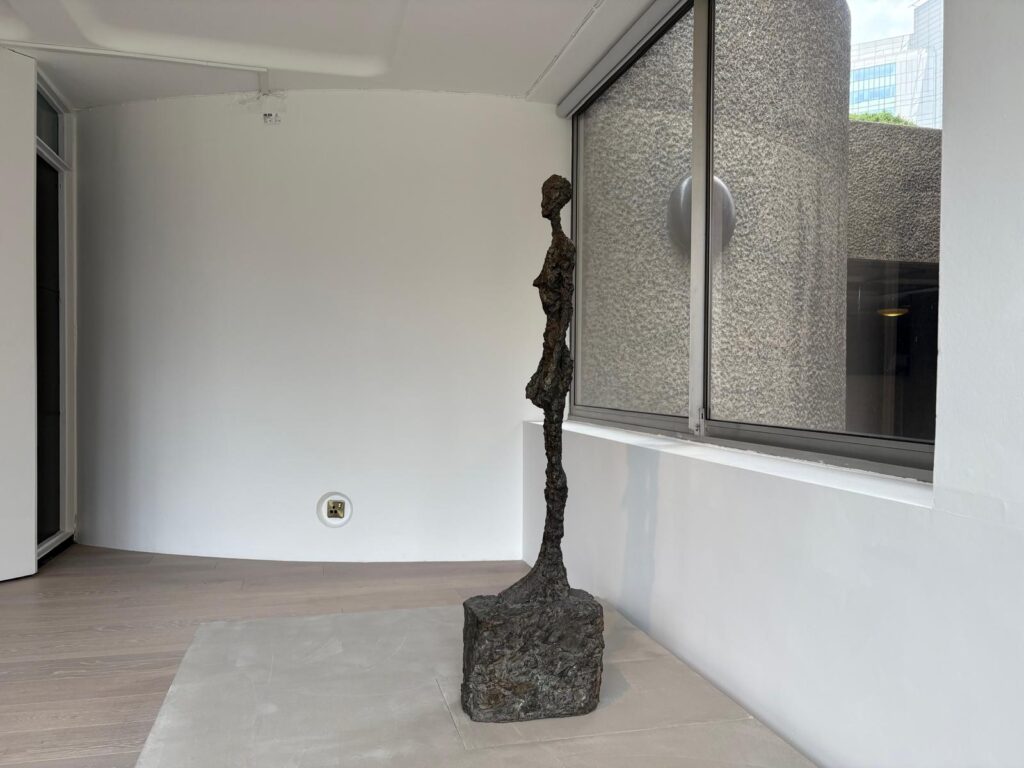
Alberto Giacometti, if you’re not familiar with him, was a Swiss artist born in 1901. He worked across different media including painting, printmaking and design, but is most known as a sculptor. Living and working mostly in Paris, Giacometti moved from Surrealist influences to mostly figurative work, his elongated, emaciated forms perhaps reflecting the collective trauma of WWII. He died in 1966.
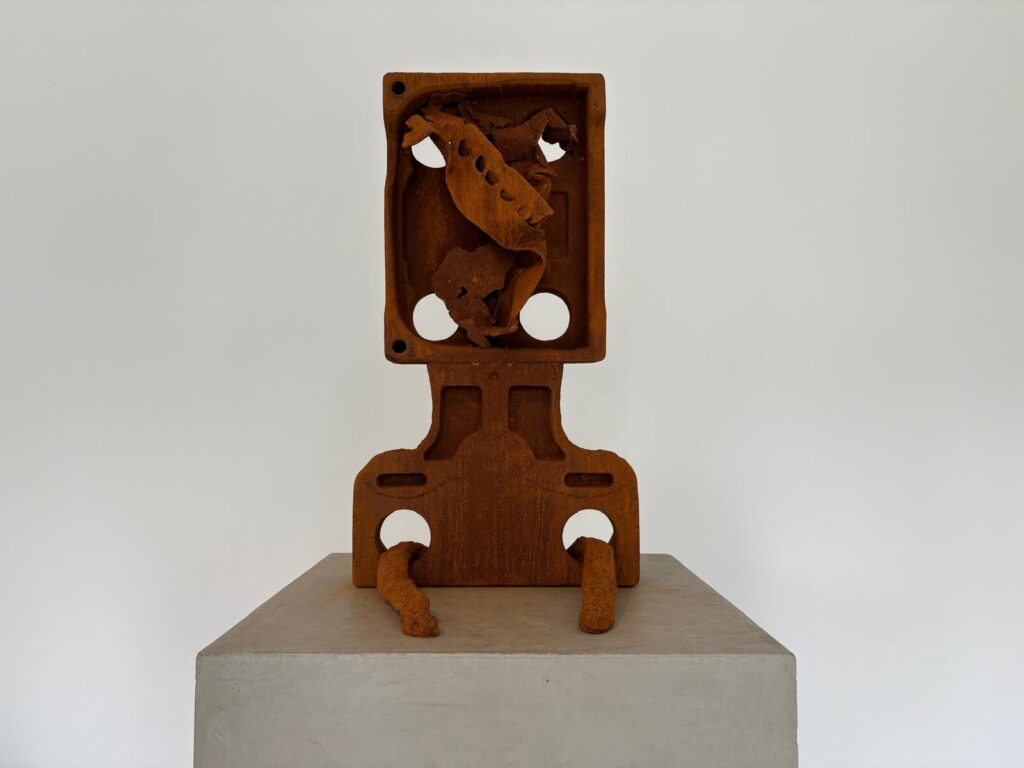
Huma Bhabha, on the other hand, is a Pakistani-American artist living in Poughkeepsie, New York. She was born in 1962. Her works, often incorporating found objects, draw on different sources and influences to reimagine the human figure. She also works in other media, including drawing and collage. Her work is held in a number of public collections globally, including the Tate and the Centre Pompidou.
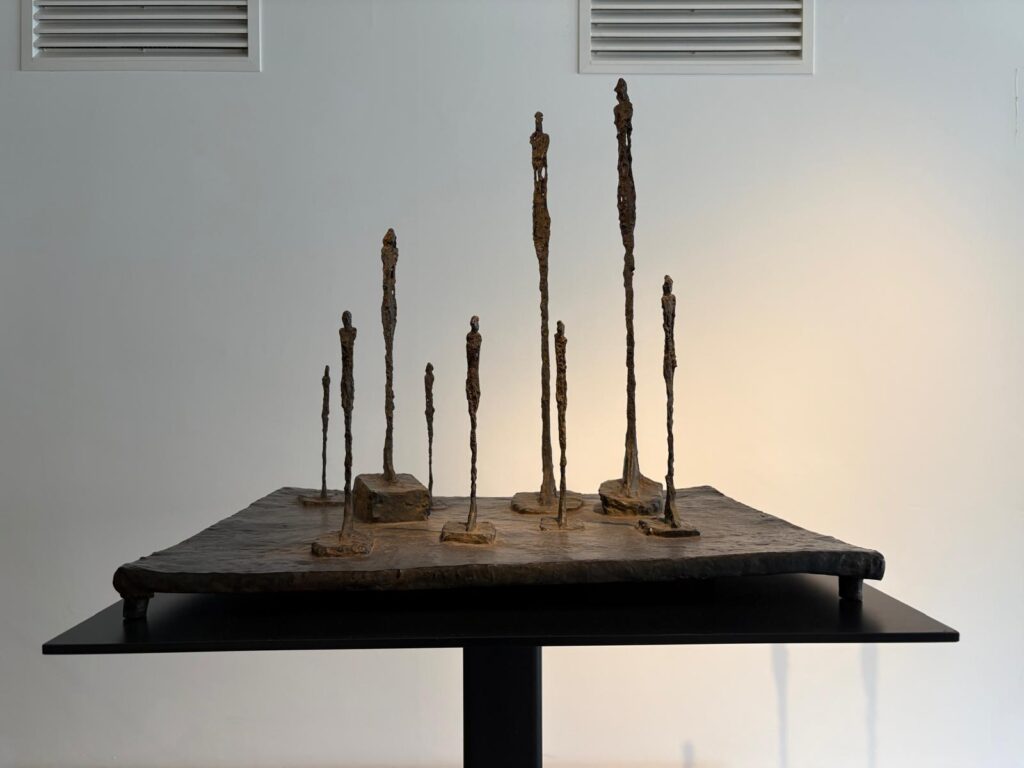
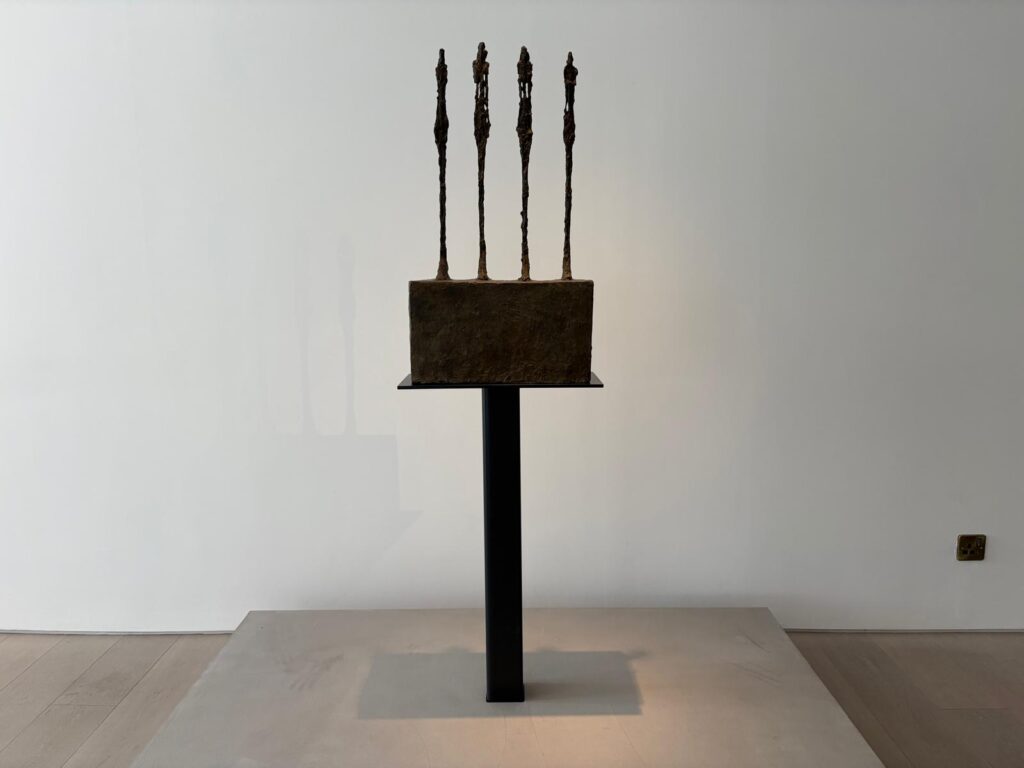
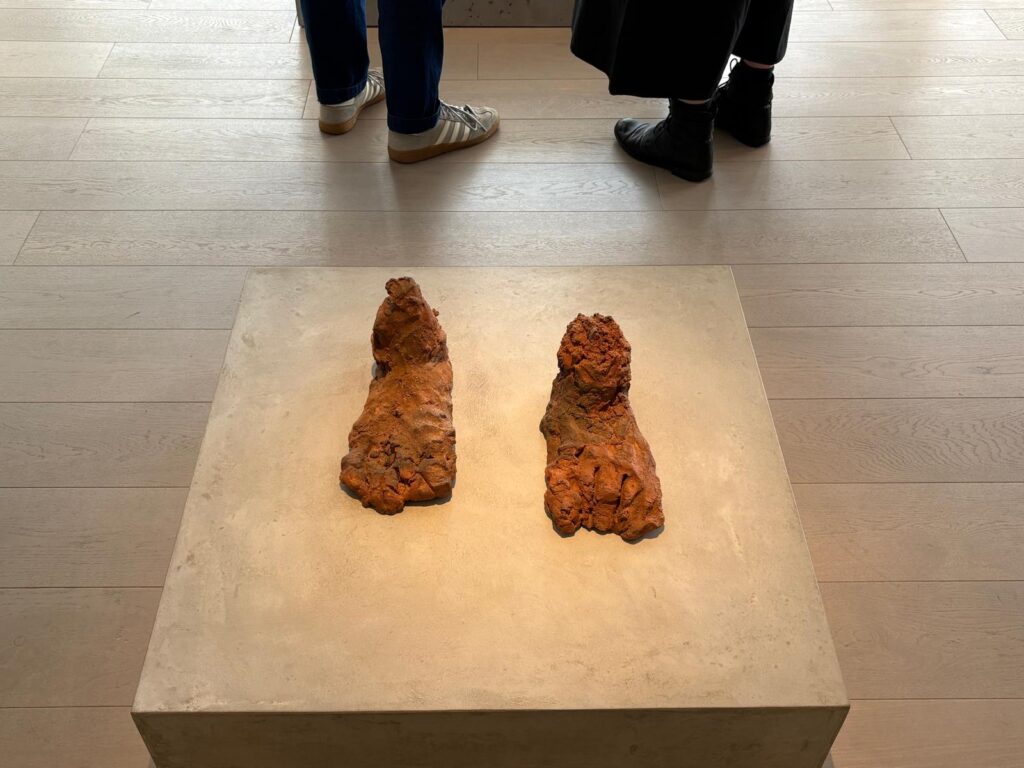
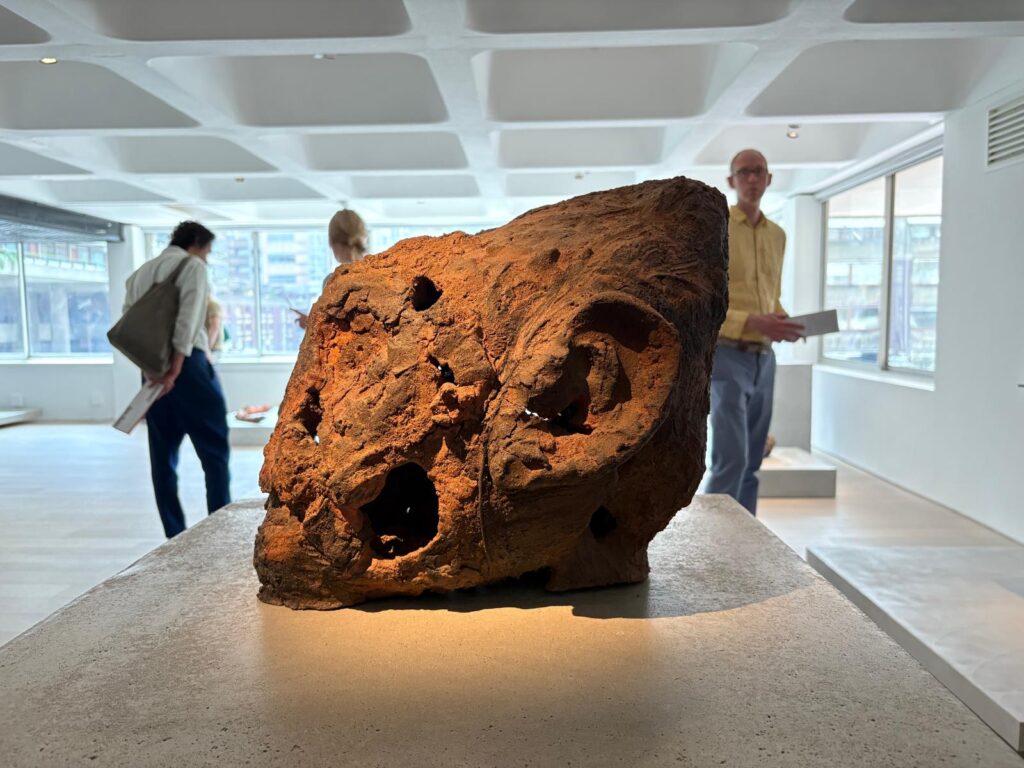
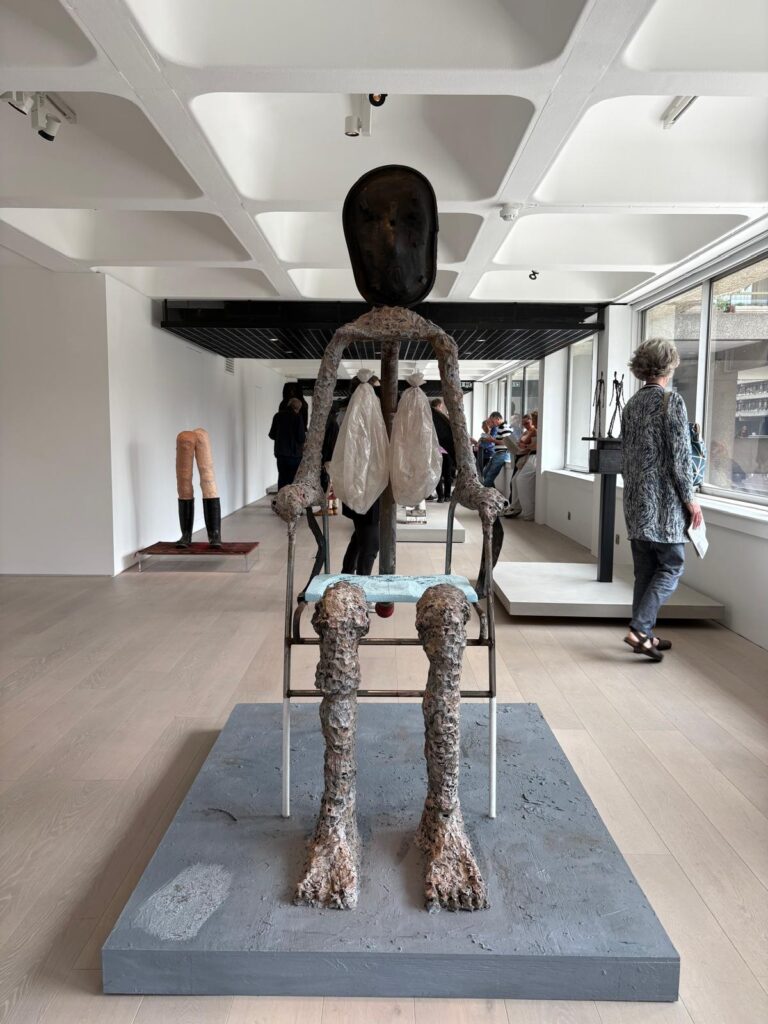
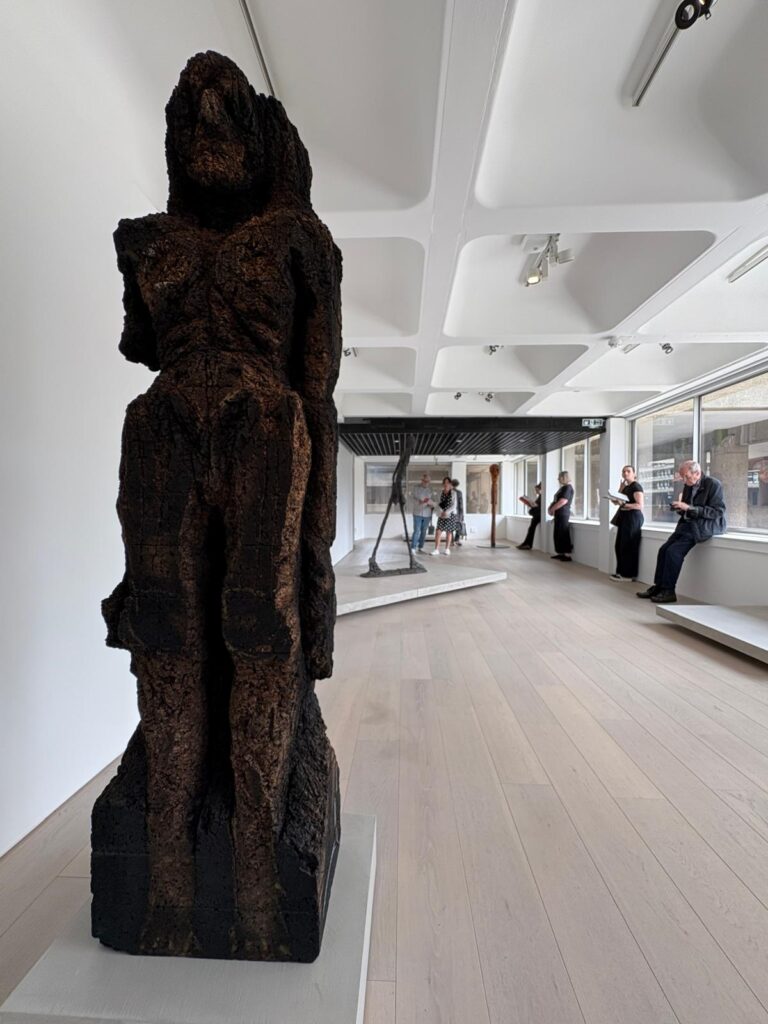
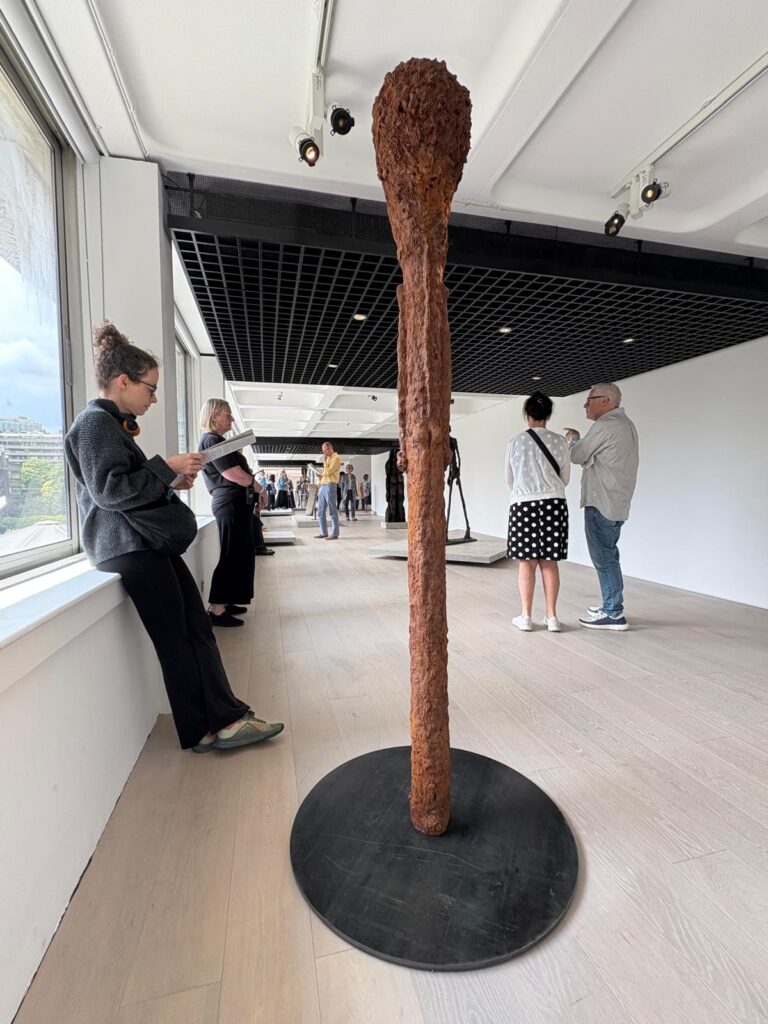
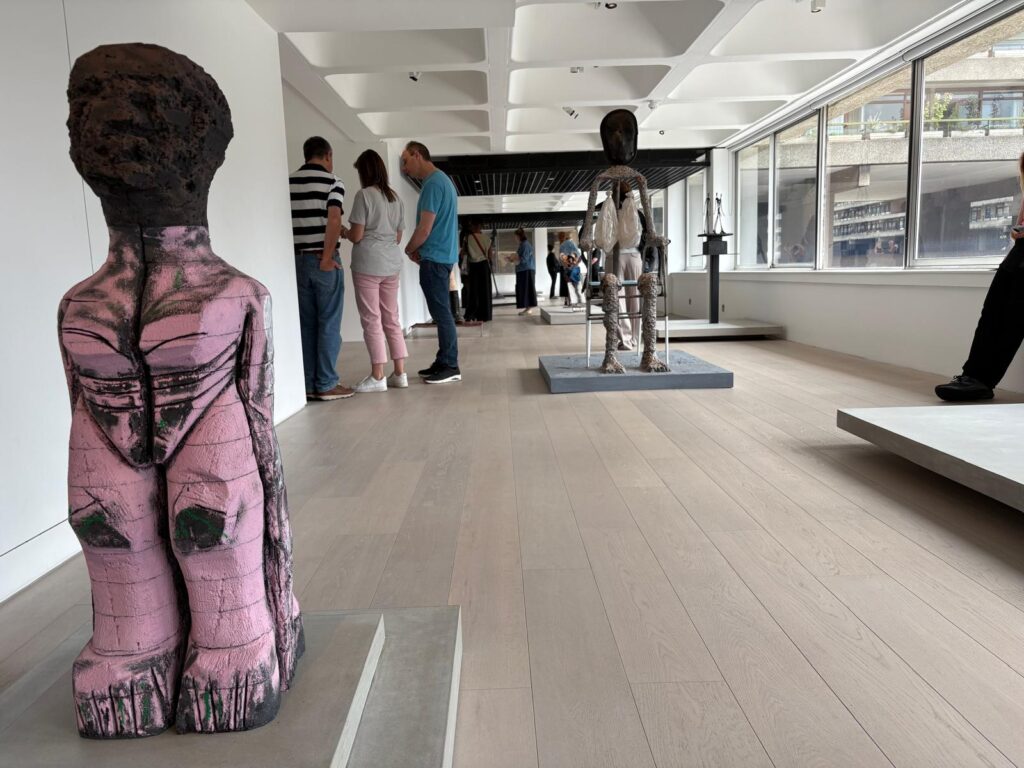
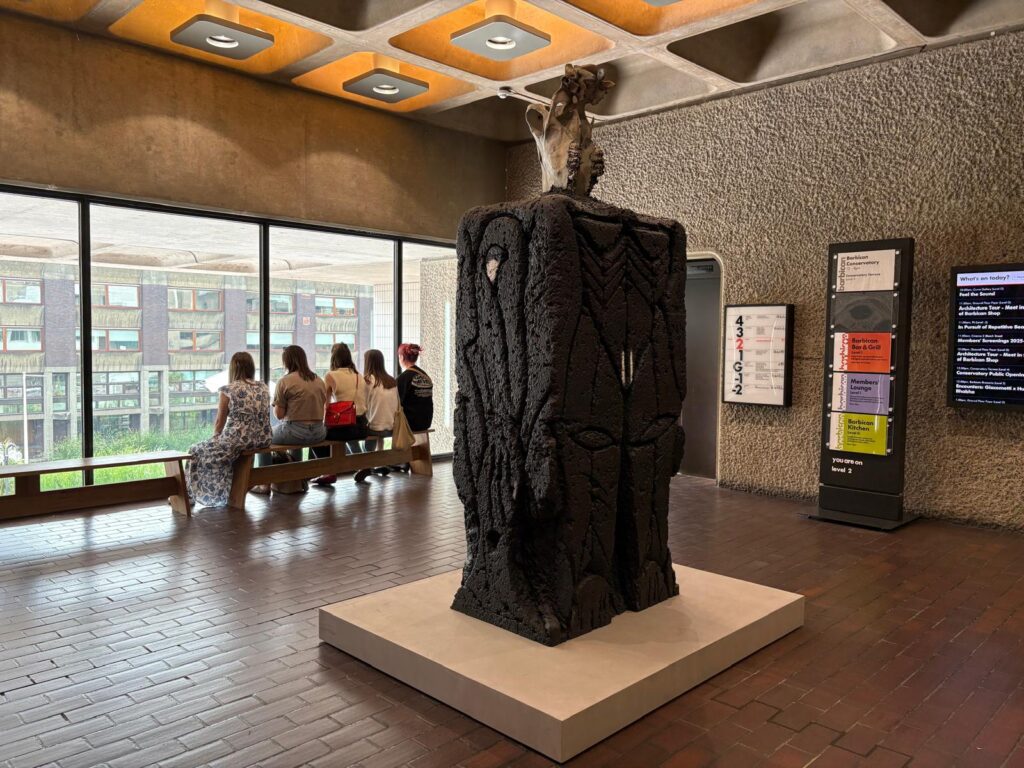
The exhibition begins (or ends, depending on how you look at it) with four monumental sculptures in the foyer outside. All by Bhabha, they are made by casting cork and fragments of bone into bronze. Already, we can see how Bhabha interacts with the human form; draws on myth and horror; doesn’t compromise to make things pleasant for the viewer. Inside the exhibition, works by Bhabha and Giacometti mingle. All sculptures, in different media. Giacometti’s bronze and plaster. Bhabha’s terracotta, mixed media, and cast iron. There are no labels inside so we must carry our fold-out guides, matching sculptures to descriptions by their outlines (not always easy).
Encounters: Artists in Dialogue
The exhibition curators do a good job of showcasing parallels in the two artists’ work. Namely experimentation around the human figure. Giacometti worked at his sculptures until the figures were distilled to their simplest forms. Bhabha’s scattered body parts are like an exploded human. Both artists are very hands-on, working materials directly to execute their vision. There are also interesting echoes of archaic sculptural forms in both. The curators reference a “mutual interest in representing the experience of violence through the corporeal form” which I think is probably true.
What I think is interesting here is the artistic dialogue as one-way conversation. Bhabha has taken prompts from Giacometti’s work and the exhibition space. She’s created at least one work for the exhibition reflecting Giacometti’s visual language. She is active in the exhibition, imagining visions for the space and bringing them to life. Giacometti, obviously, can’t talk back. His works are selected for him, and incorporated into the vision of an artist and an exhibition team of another generation. This is by no means rare: the Royal Academy currently have an exhibition on Van Gogh’s influence on Anselm Kiefer. But there’s something about this format that really brings it to the surface for me.
Having said that, I like the concept. I will be very interested to see how the series changes with each new contemporary artist. And to see what the Barbican do with this space after May next year. As good as I remember the burgers being, this is a much more exciting use for it.
Salterton Arts Review’s rating: 3.5/5
Encounters: Giacometti x Huma Bhabha on until 10 August 2025
Trending
If you see this after your page is loaded completely, leafletJS files are missing.