
Inertia – SEEN Lewisham / Broadway Theatre, Catford
Inertia, part of SEEN Lewisham at the Broadway Theatre Catford, uses near-future technology and virtual entrapment to explore racism in AI, addiction, faith, and the politics of identity from a distinctly Black British perspective.
This image my own.
Virtual Futures, Real Inequalities
Inertia sits neatly within SEEN Lewisham’s remit to platform underrepresented voices, and it does so by tackling one of the most urgent intersections of our time: technology and inequality. Tobi King Bakare’s play uses the familiar grammar of near-future fiction (the virtual reality trap, the seductive gleam of an alternate world) to hold a mirror up to the present. Like Black Mirror*, it uses speculative tools to interrogate existing systems.
But here the speculative is political and embodied. The two central characters, Sami (Malachi Pullar-Latchman) and Ivy (Saffron Dey), become trapped inside a digital environment, their conversations ranging from racism in AI to addiction, faith, and colourism. That range could have felt diffuse, yet it coheres because the setting allows those conversations to unfold freely, outside the constraints of real-world hierarchies. It is a smart choice that exposes how structures of power, including algorithmic ones, continue to replicate the same injustices.
There is also a kind of historical continuity here. The digital enslavement of artificial intelligence resonates with older, physical forms of exploitation. The seduction of immersive technology mirrors the numbing effects of drugs on marginalised communities. These are deliberate provocations within the text, encouraging the audience to consider what kinds of oppression we are willing to overlook when they come dressed as innovation. From my own position (a white viewer, a beneficiary of the systems being critiqued) the play’s most uncomfortable questions are the most necessary. They resist the distancing comfort of metaphor, insisting that the speculative is already real for those most surveilled and least served by our technologies.
*Parallels too with The End of Mr. Y, by Scarlett Thomas, if anyone’s read that.
Performance and Potential
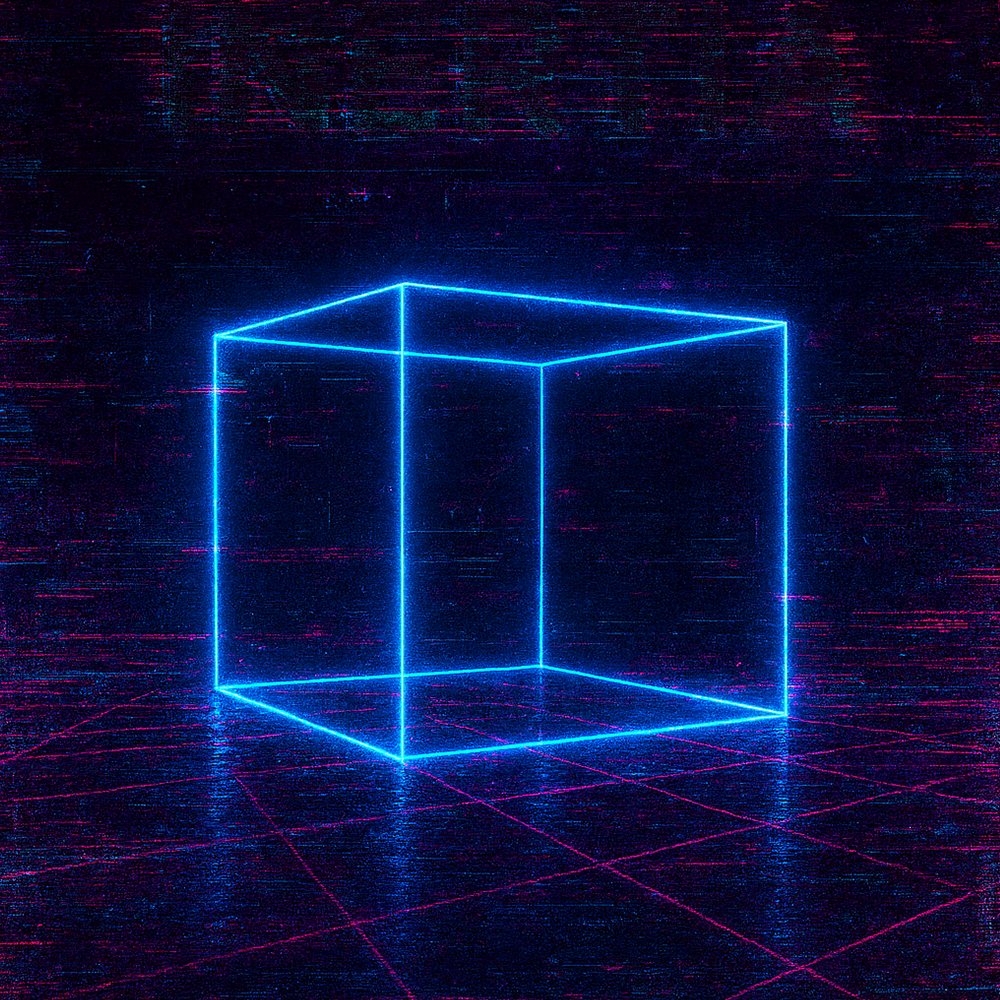
Formally, Inertia is as stripped back as its ideas are expansive. The set, a glowing cube and a projection screen (lighting design by Ezra Mortimer, Tamaris Ellins as 3D visual artist), is minimal, functioning almost as an interface. The actors do the heavy lifting, conjuring worlds through strong performances in voice, gesture, and pacing. Bakare’s choices as director keep the production in motion, but the premise itself is intentionally static: two people caught in a loop, unable to log out, compelled to keep talking. At 80 minutes straight through, the intensity does start to drag slightly near the end, though maybe this also also underlines the suffocating relentlessness of digital entrapment.
As a work in progress, Inertia already feels urgent. It is intellectually ambitious, grounded in speculative imagination yet rooted in lived experience. Its interrogation of artificial intelligence from a Black perspective feels current and essential, especially as such curtailment of AI as exists continues to centre whiteness and Western anxieties. The play joins a growing conversation, echoed in recent pieces like It’s Not About Coffee, about how technology, capitalism, and inequality intertwine to shape the near future.
Whether or not we can steer away from the cyberpunk dystopia Inertia envisions remains uncertain. But the work’s existence within SEEN Lewisham suggests an alternative path: one where the artists most affected by these futures are the ones critiquing them. Inertia may not offer an exit route from its virtual trap, but it gestures toward something more vital. A demand to imagine technology otherwise, beyond the limits of who usually gets to do the imagining.
Salterton Arts Review’s rating: 4/5
Inertia on until 8 October 2025. SEEN Lewisham runs until 12 October with theatre, music, exhibitions and more. More info and tickets here.
Trending
If you see this after your page is loaded completely, leafletJS files are missing.