
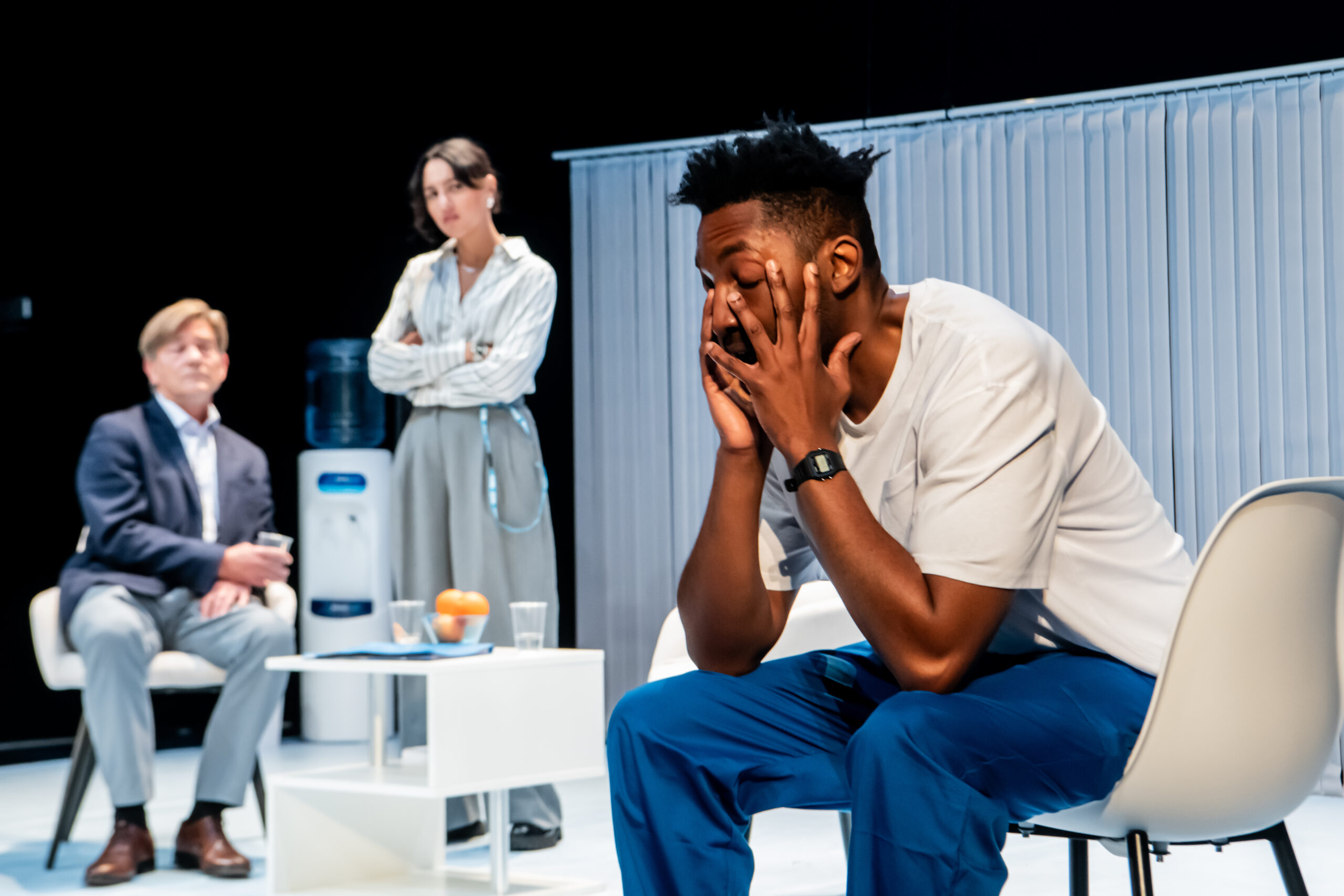
Blue/Orange – Greenwich Theatre, London
Twenty-five years after its premiere, Blue/Orange still feels disturbingly relevant. A timely reminder that the NHS’s struggles with race, class, and mental health are far from resolved.
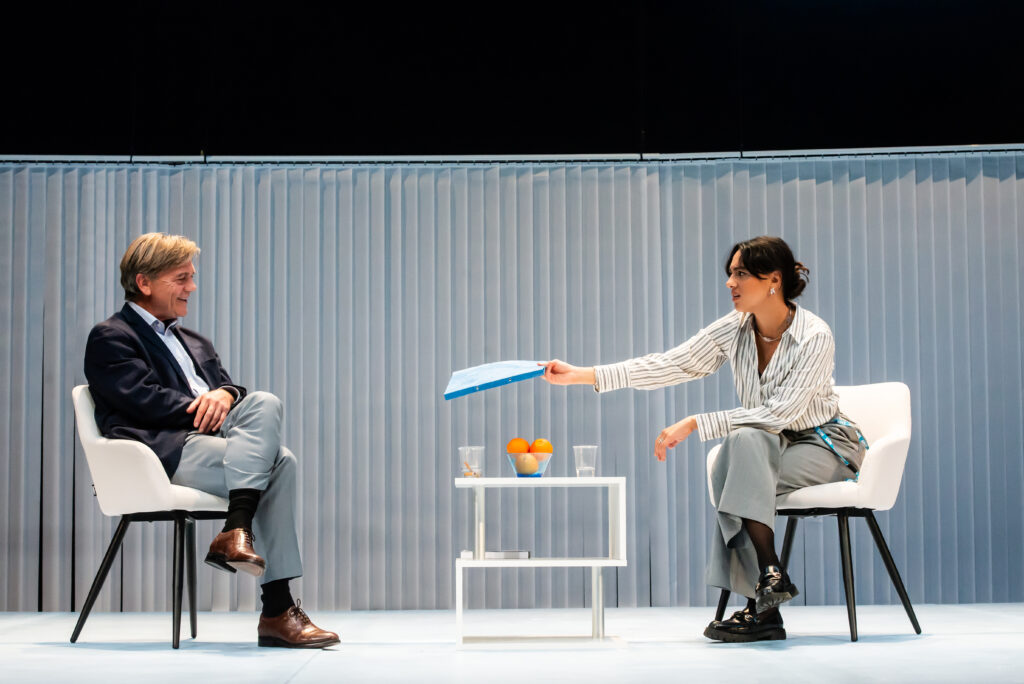
Blue/Orange, 25 Years On
Twenty-five years after its first outing, Blue/Orange still says something uncomfortable and true about race and mental health, as well as the limits of liberalism in British institutions. The premise is simple. Two doctors argue over the diagnosis and discharge of a young Black man, Christopher (Matthew Morrison). Christopher, at the end of an 28 day section, believes he’s the son of an African dictator. He also thinks oranges are blue.
The debate over his symptoms and imminent release is a clash between professional ambition, varying intentions, and unspoken power structures. Watching it now, it’s hard not to notice how little has changed. The play still captures the way patients from minority backgrounds are often “understood” only in theory, framed through ideas of community and culture that are perhaps more convenient for the institution than for the person in front of them. There’s an uncomfortable truth to the notion of returning Christopher to “his community,” as if that were a single, coherent place waiting to welcome him back. It’s a kind of othering dressed up as compassion.
In this revival, Joe Penhall has reworked the script so that Bruce, originally a young white male doctor, is now a South Asian woman, Rubina. On paper, it’s a smart change, creating potential for a richer power struggle between the two psychiatrists. But in practice I didn’t find the text had been restructured quite enough to support the shift. There are remnants of male-coded dialogue and rugby camaraderie that don’t land the same way, and the chemistry between Rubina (Rhianne Barreto) and Robert (John Michie) sometimes feels forced as a result. That’s a shame, because the idea of exploring hierarchy, gender, and race all at once could have brought a new charge to the script.
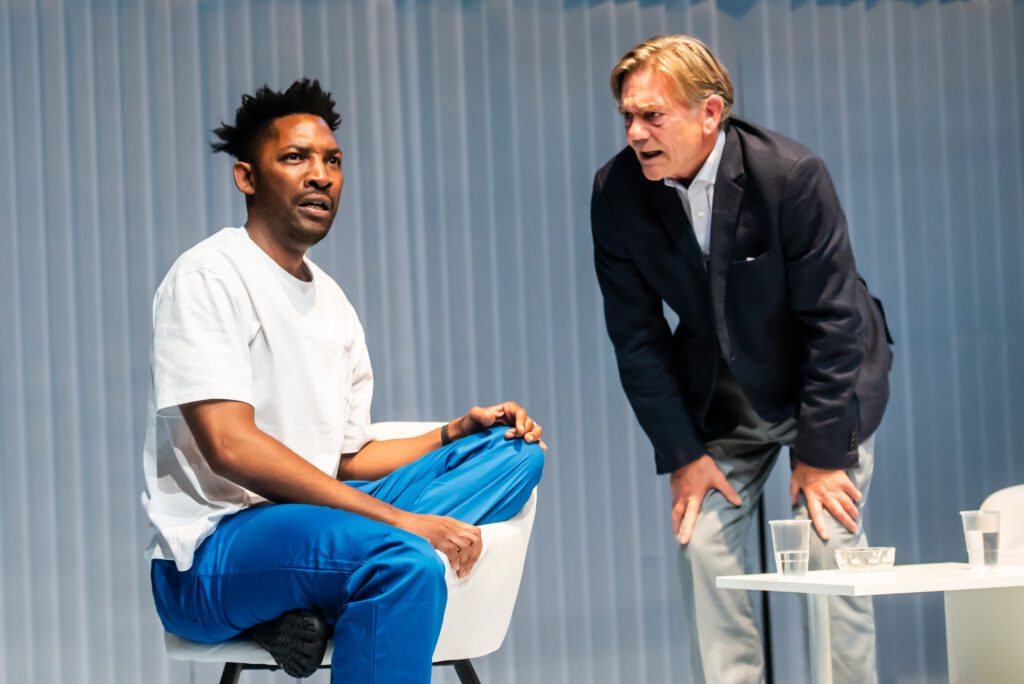
The Illusion of Progress
The production itself is tight and visually spare. The consulting-room set (Jana Lakatos) feels credible, with just enough detail to ground the drama in reality while giving the actors room to pace, circle and confront. Henry Slater’s lighting keeps the atmosphere taut: institutional one minute, disorienting the next. Matthew Morrison’s Christopher feels fragile and frightened, more a man trapped by the system than an unreliable narrator of his own story. That choice gives the play more moral clarity, if a little less ambiguity. The performances are strong throughout, but the script’s rhythm of long exchanges and circular arguments does start to feel heavy toward the end.
Still, the ideas carry it through: professional rivalry, racial bias, and the illusion of progress. If Blue/Orange feels current, it’s partly because the world around it has failed to change as much as it should have. Inequalities in mental health outcomes for Black and minority patients remain stark, and the NHS still struggles to confront the deeper cultural assumptions behind them. The new casting idea is a step toward acknowledging that, even if the text hasn’t fully caught up. It’s not a radical reinvention, but it’s still an important reminder of what happens when systems convince themselves they’ve already done the work.
Salterton Arts Review’s rating: 3.5/5
Blue/Orange on until 25 October 2025. More info and tickets here.
Trending
If you see this after your page is loaded completely, leafletJS files are missing.