
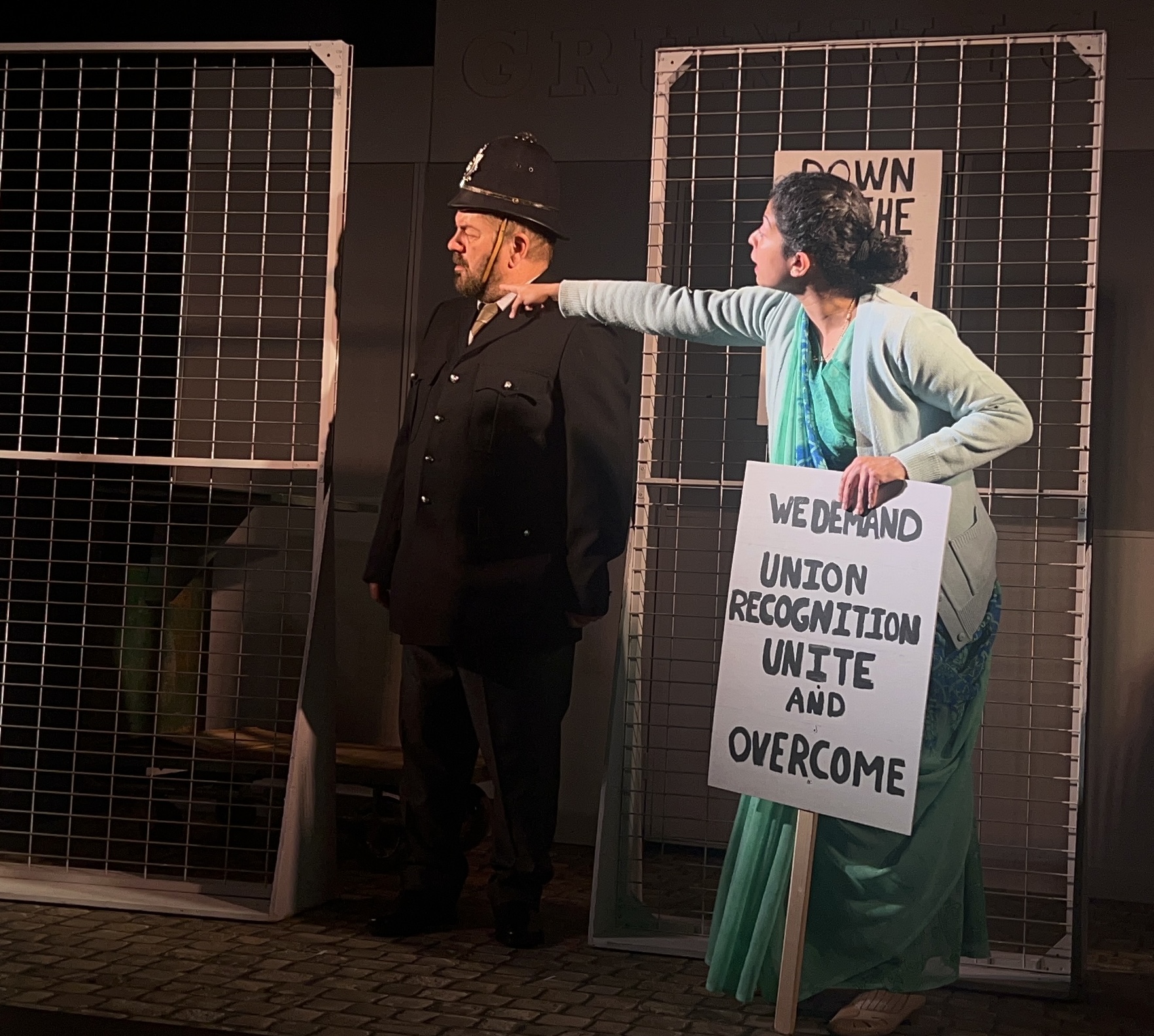
We Are The Lions, Mr Manager! – Townsend Theatre Productions / Sands Films Studio, London
Townsend Theatre Productions revive We Are The Lions, Mr Manager! ahead of the 50th anniversary of the Grunwick dispute in Willesden, North London.
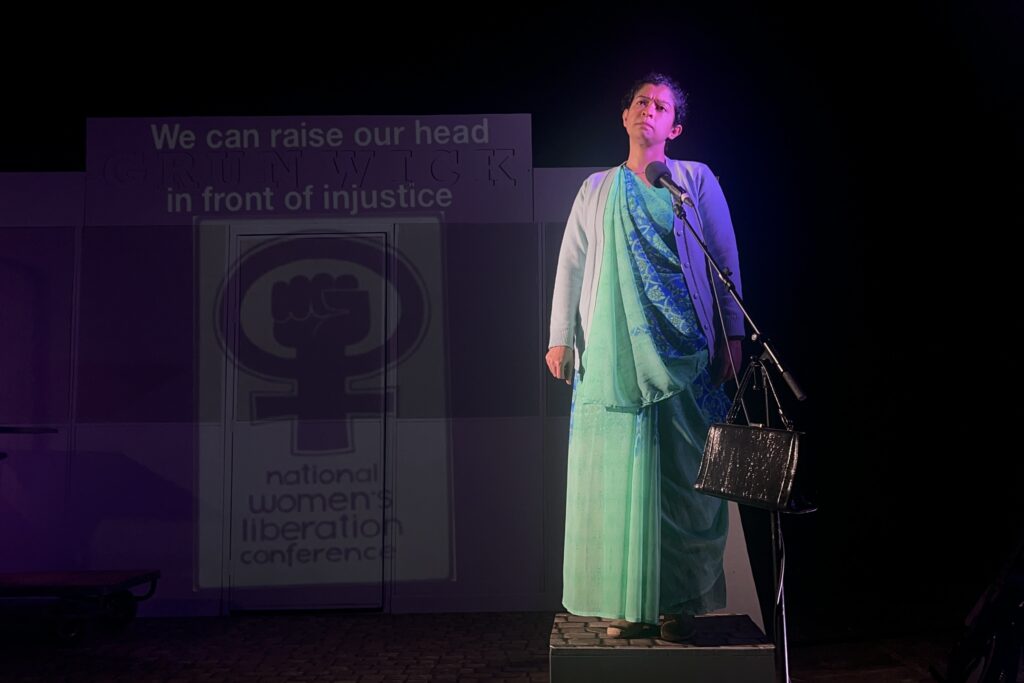
The Story of the Grunwick Strike
Last night’s theatre outing was a double discovery – of Sands Films Studio as a venue, and of the story of Jayaben Desai and the Grunwick Strike. I’ll maybe squeeze in a bit about the venue later. For now, let’s talk about the subject of We Are The Lions, Mr Manager!
The year is 1976. As a selection of video clips played as we entered and seated ourselves last night demonstrated, there are a lot of parallels to the current moment: particularly the vilification of immigrants as an easy target for political point scoring when times are tough. People of South Asian origin forced to leave East Africa after the independence of Kenya, Tanzania and Uganda are a particularly visible minority, and also make up the majority of the workforce at Grunwick, a photo processing business in Willesden, North London, who traded under names like Bonusprint and Doubleprint. Co-founder George Ward, as this play demonstrates, leveraged his Anglo-Indian heritage and knowledge of Indian society to manipulate his workers. He kept costs down and built up the company’s reputation for speed and quality, while workers endured compulsory overtime and the constant threat of termination.
Unluckily for Ward and Grunwick, one worker fought back. Jayaben Desai had arrived in the UK in 1967. In 1976 she instigated a walk out that eventually grew into a two-year campaign of industrial action, with picketing, hundreds of arrests, hospitalisations, a hunger strike, and the interference of NAFF. I’d never heard of this latter organisation, but frankly the name seems well-chosen.
He’s Behind You!
We Are The Lions, Mr Manager!, written by Neil Gore (who also acts in it, sings, and is the set builder), recounts these extraordinary events. What starts as a personal insistence on dignity in the workplace sets Desai off on a journey to becoming a trade unionist, all the way through disillusionment and the ultimate failure of the strike. Rukmini Sircar plays Desai with great skill, bringing to life an inspiring speaker, and a leader who navigated the first strike by mostly female, immigrant workers to enjoy widespread union support. We can feel her weariness as the scenes progress, and hundreds of days on the picket line mean little in the way of tangible results. She nonetheless remains eloquent and inspiring throughout.
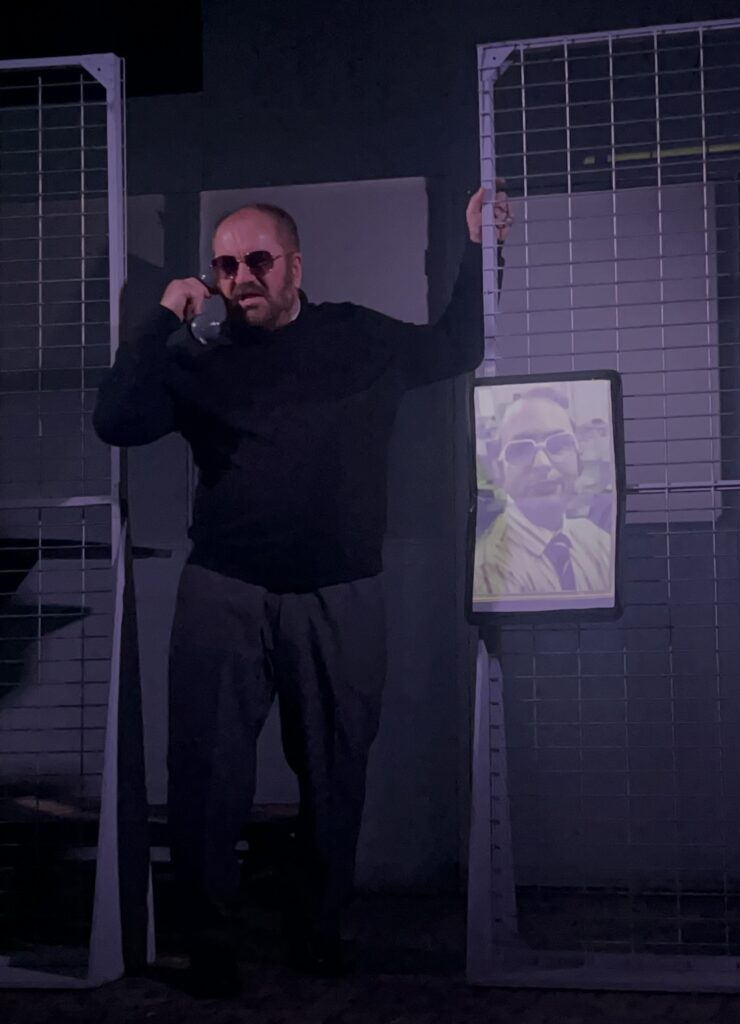
Now, don’t take this next comment the wrong way. I’m not sure if it was the time of year, but Gore’s various roles, which provide a lot of the exposition (sexist/racist 70s ‘management’ style, how to join a union, when a strike becomes official, arbitration process via ACAS), reminded me almost of pantomime villains. The audience certainly reacted as such, with boos and hisses. Gore, a naturally charismatic entertainer, had great fun playing to the crowd. It felt like the two actors were in different plays, but ultimately the effect was entertaining and also educational.
Also entertaining and educational were the protest songs scattered throughout the piece. Gore, ever-multitasking, has arranged and recorded works by Jack Warshaw, Leon Rosselson, Richard Thompson and Don Perrygrove. Warshaw’s Hold the Line Again is the refrain that ties the scenes together. Rosselson’s The World’s Police is so bleak (ending in nuclear holocaust) it elicits a few giggles from the audience. But as well as providing a bit more exposition, the songs are evocative of the mass protests of the 1970s. They’re a great addition.
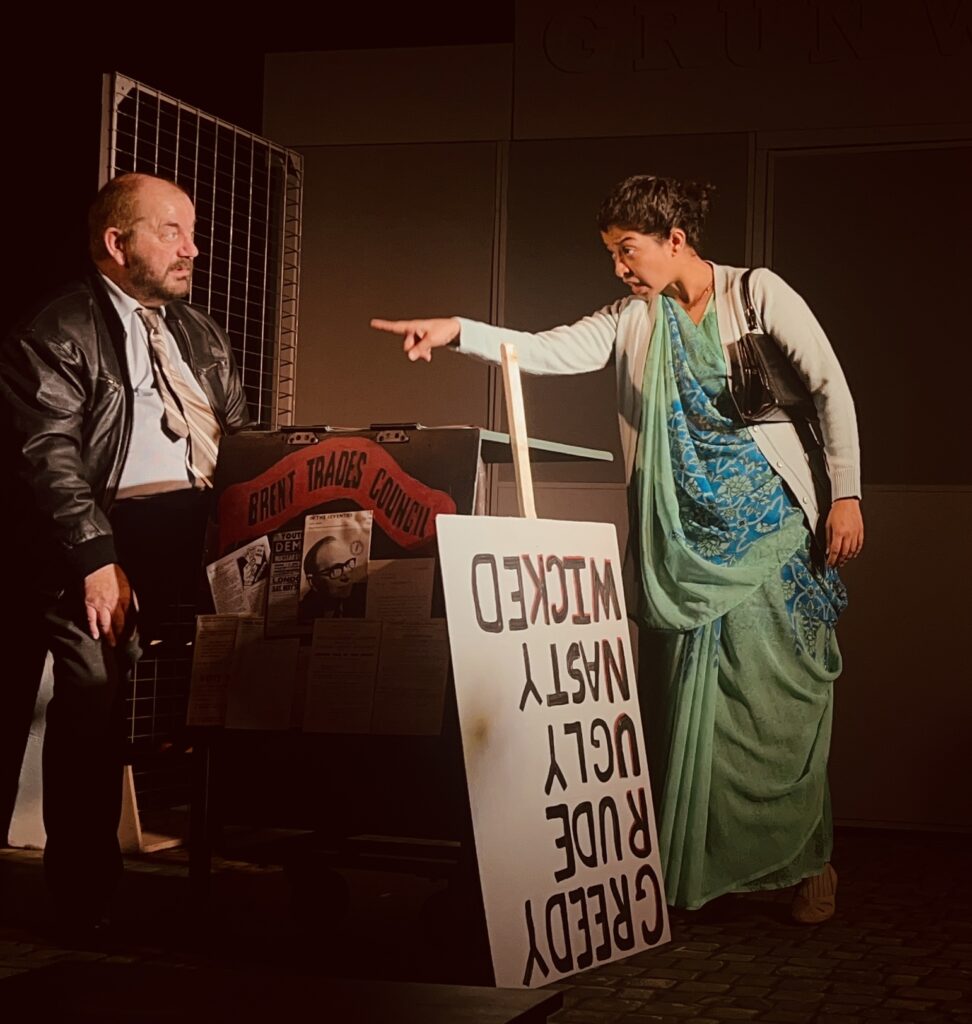
A Timely Revival
I must also mention the videography, by Louise Townsend, who also directs (lighting design and projection by Daniella Beattie). I’ve spoken already about the clips playing before the piece starts, which remind us that progress is fragile and racism and xenophobia sadly pervasive. During the production, period footage helps to create a world around the two performers, and to ground the story. Karen Tennent’s set design works well with the projections, and is generally clean and simple. Amelie Gore’s props also transport us back to the 1970s.
With the 50th anniversary of the Grunwick dispute approaching, We Are The Lions, Mr Manager! is a timely revival. And touring it extensively to small, not-always-theatrical venues is a great way to introduce new audiences to the story of Jayaben Desai and what she achieved, despite the strike eventually being called off. Speaking of venues, please allow me just a moment on Sands Films Studio. I showed it to you from the outside back in 2021. But this is my first time getting inside. It’s a wonderfully eccentric place, with a warm welcome, a cinema and a theatre, as well as costumes and archives. I immediately joined the mailing list, so hopefully I will be back soon. But the audience for We Are The Lions, Mr Manager! did seem to be a self-selecting bunch, familiar with strikes, unions and systemic struggles. I wonder if that’s the case everywhere?
There are a couple more nights of this play at Sands Films, before it continues on tour. Next stop is Willesden Library, then a few more destinations before the tour finishes in early December. Do go and see it if you can. It’s a great example of how a simple production, clearly a passion project, can bring stories and characters to new audiences. I’ll remember Jayaben Desai and her way with words.
Salterton Arts Review’s rating: 3.5/5
We Are The Lions, Mr Manager! on at Sands Films in Rotherhithe until 28 November 2025, and on tour until 6 December 2025. More info here.