
On The Art of Teeth – Barts Pathology Museum, London
A meditative exhibition in a storied museum space, Janetka Platun’s On the Art of Teeth is a thought-provoking intersection between medicine, art and technology.
On the Art of Teeth
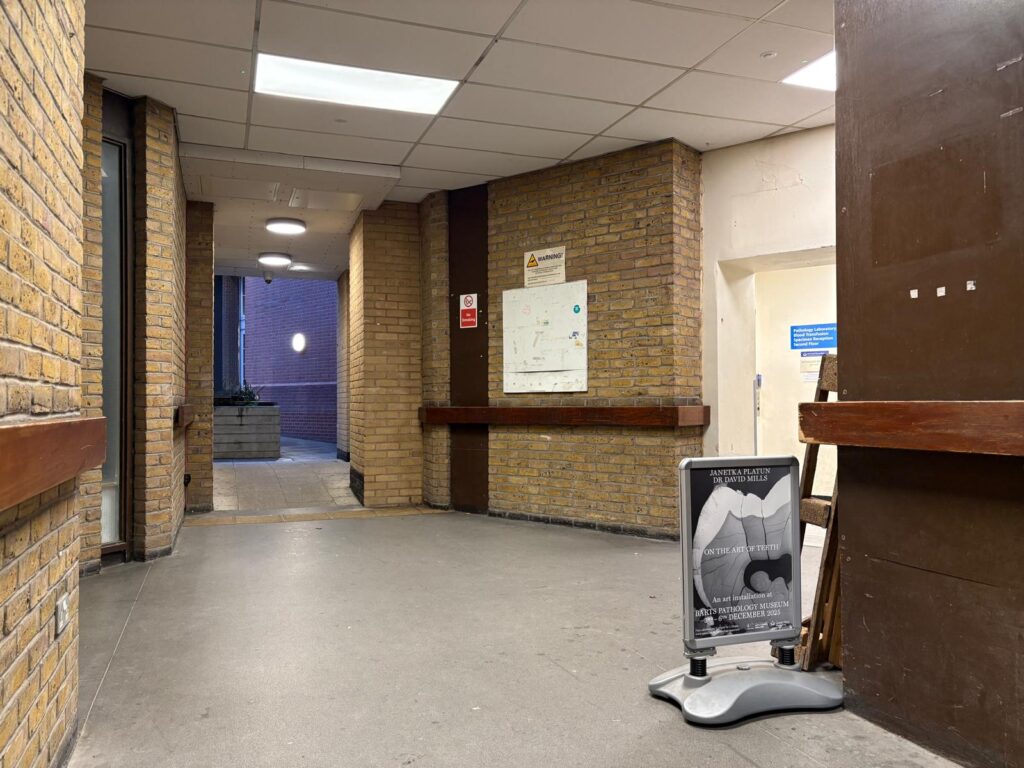
Unfortunately for me, every time I think I should stop scrolling so much on social media, I come across something I wouldn’t otherwise have known about and am very much interested in. Recently, thanks to ianVisits and his ticket alerts, I found out that Barts Pathology Museum were opening for a few days while they hosted an exhibition.
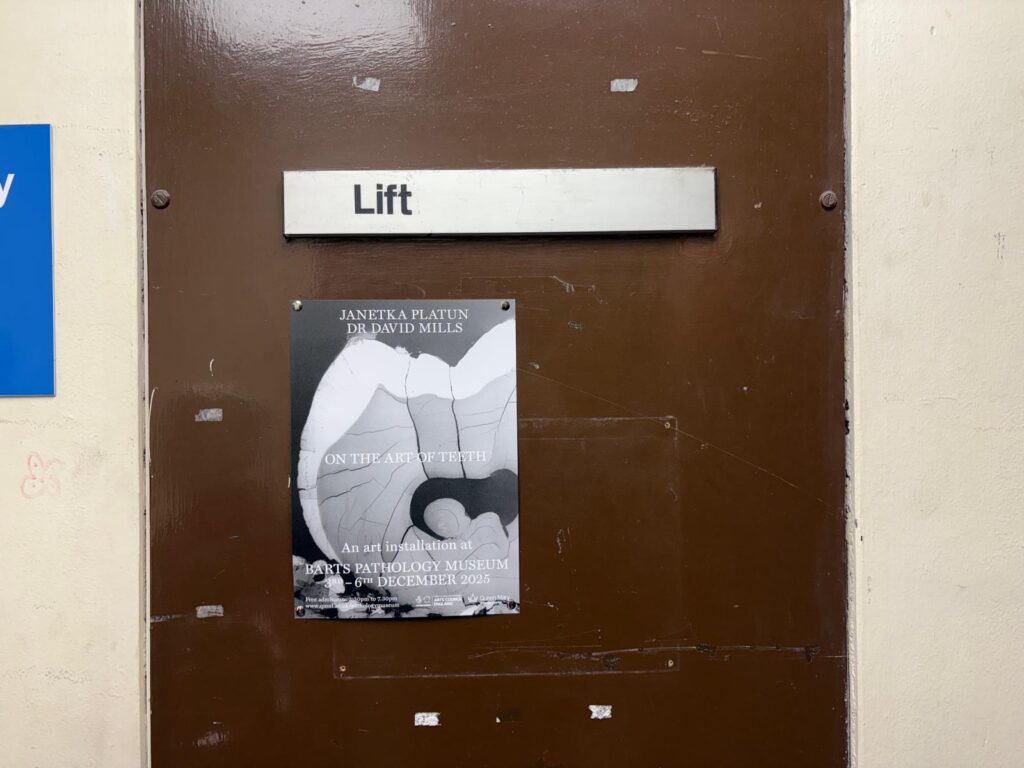
I would be lying if I said I wasn’t interested in seeing the museum itself. We’ll come onto that in a bit. But the exhibition also sounded intriguing. It came from a ‘Conversation Project’ at Queen Mary University of London’s Centre for Creative Collaboration, in which artists and academics were paired up. Janetka Platun worked with Dr David Mills, a senior lecturer in imaging of calcified tissues at Queen Mary. Their many shared interests led them to focus in on teeth as a topic for further consideration.
By a strange coincidence, dentistry became a profession requiring qualification in the same year that Barts Pathology Museum opened: 1879. Training for dentists had only been available for 20 years before that. Any earlier and you’re looking at barber surgeons. There are only 24 dental specimens (34 teeth) in the Barts Pathology Museum collection. But this small number of small objects sparked a rich collaboration both inside and outside the museum space.
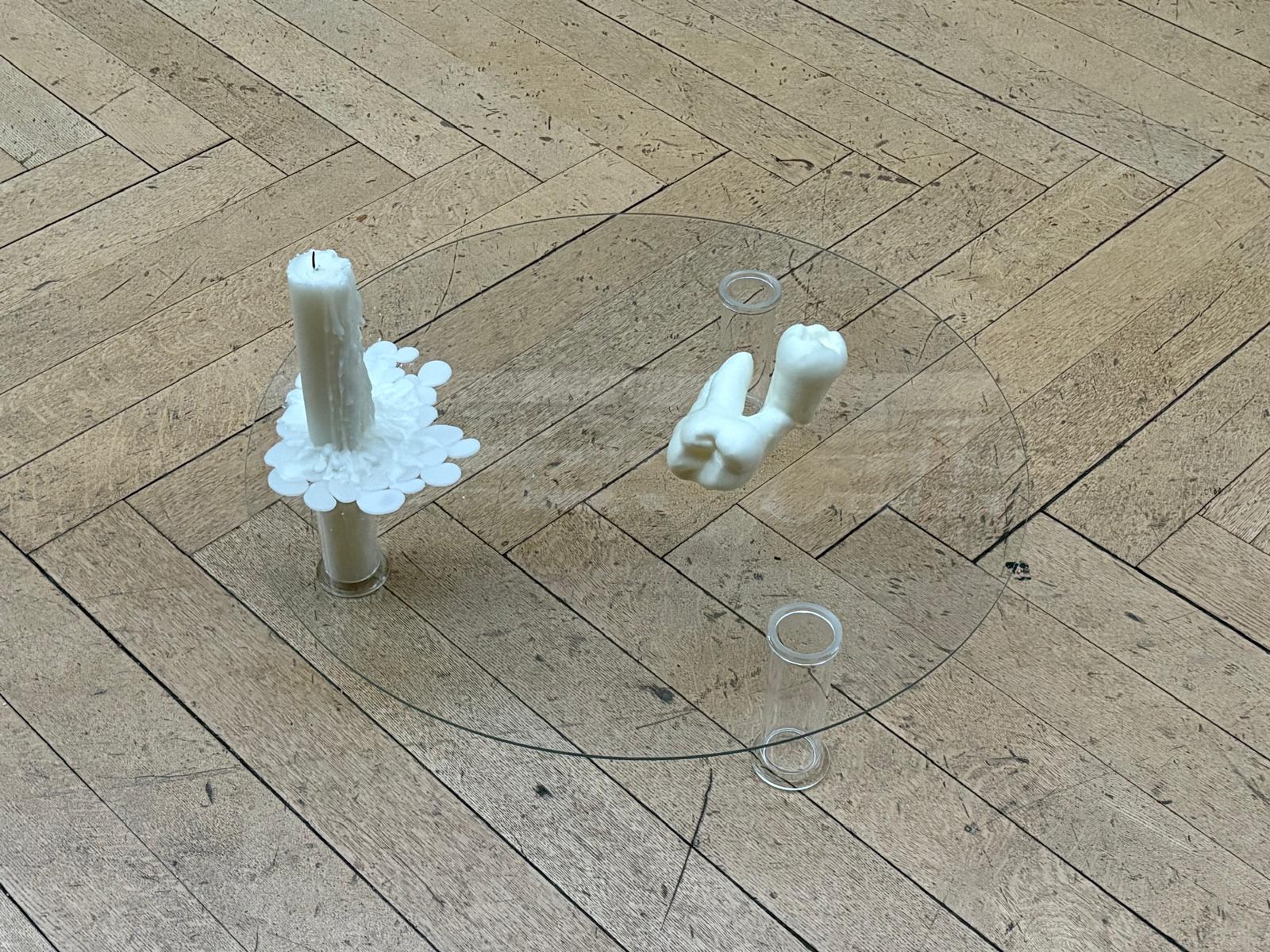
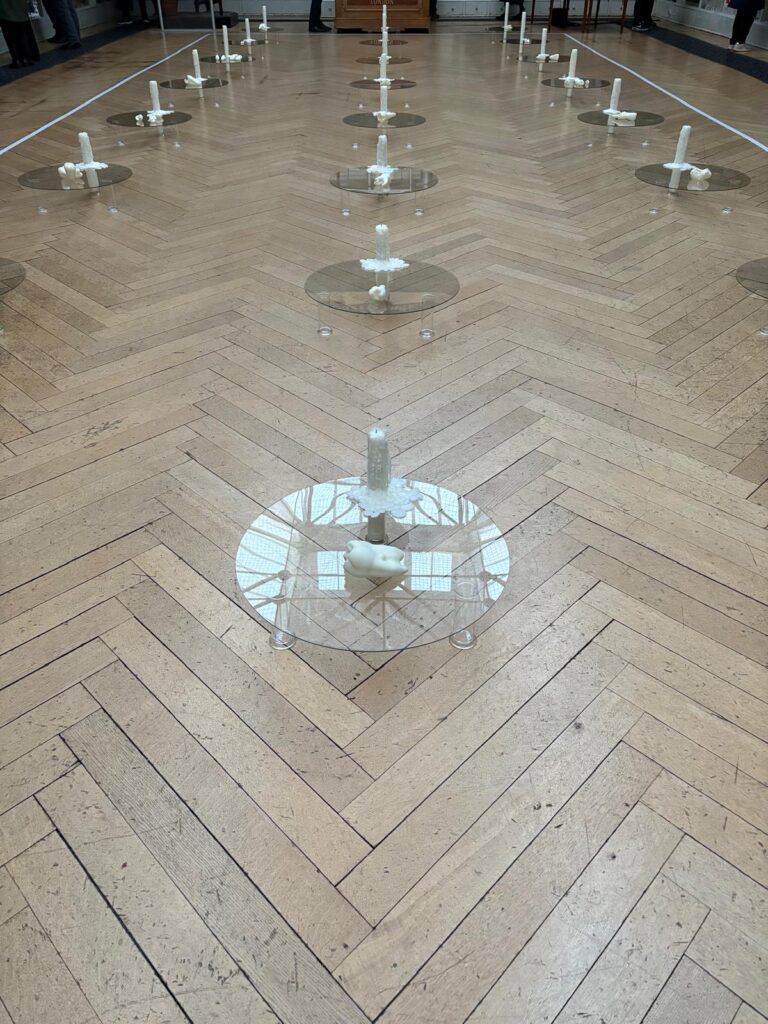
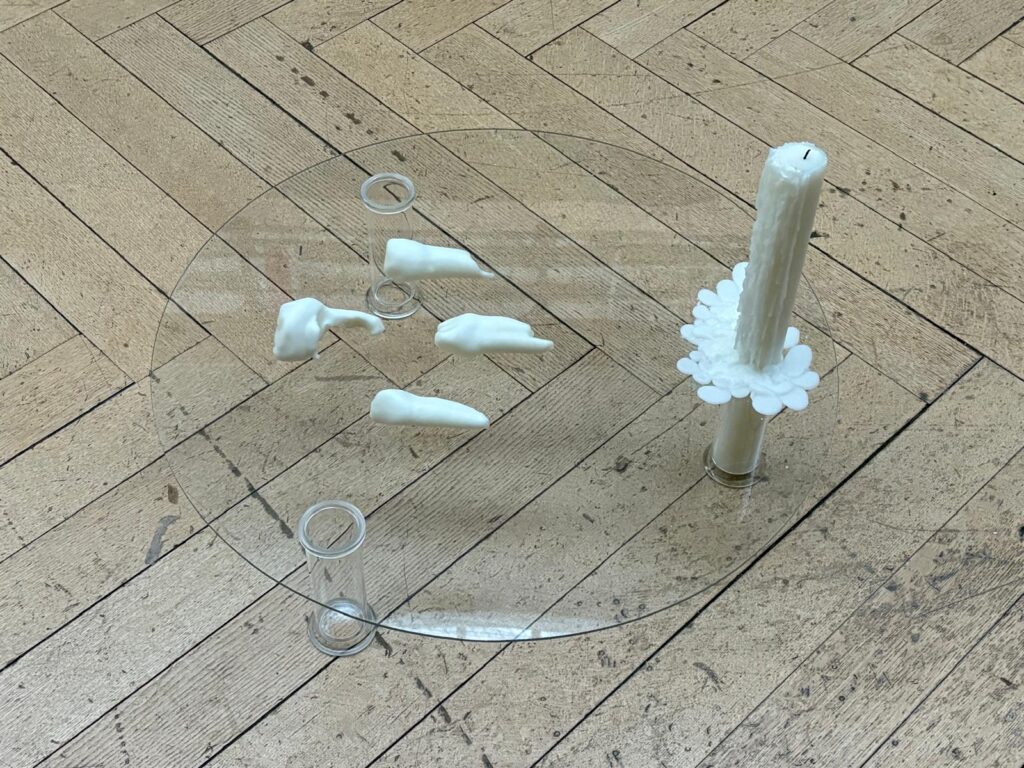
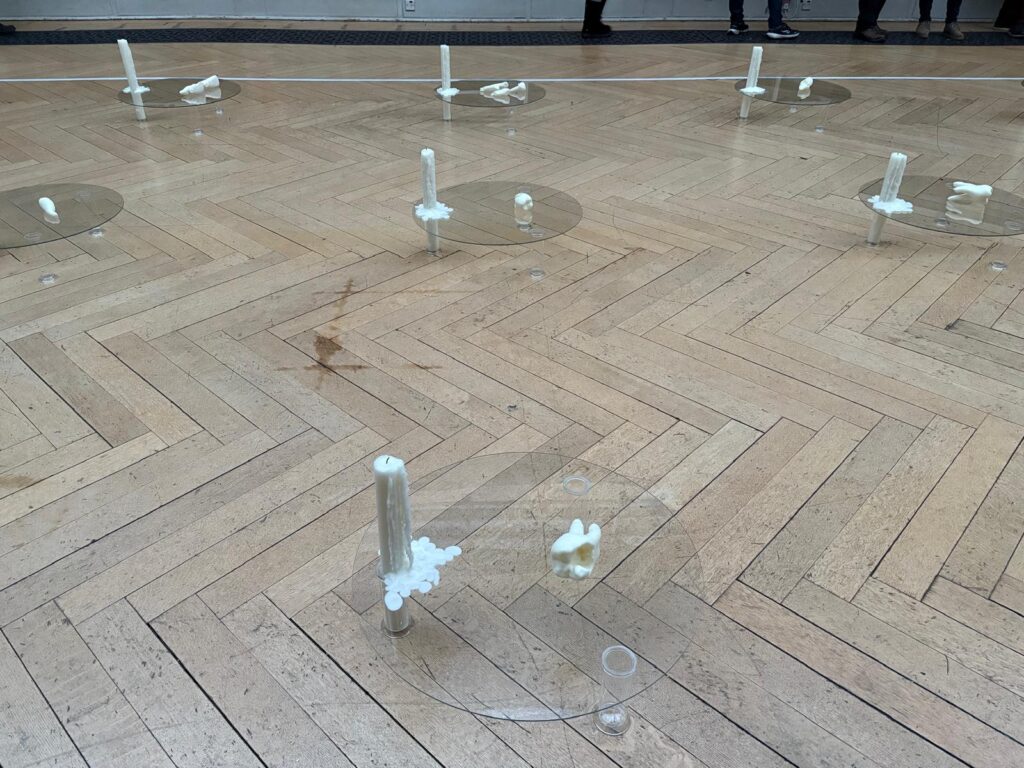
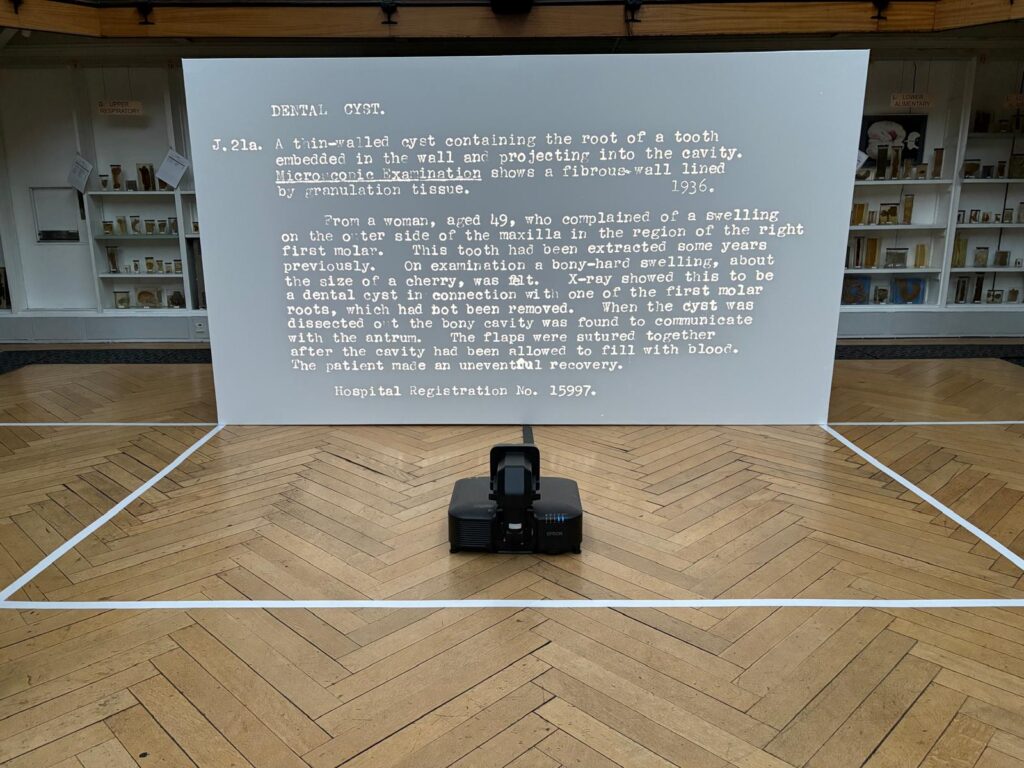
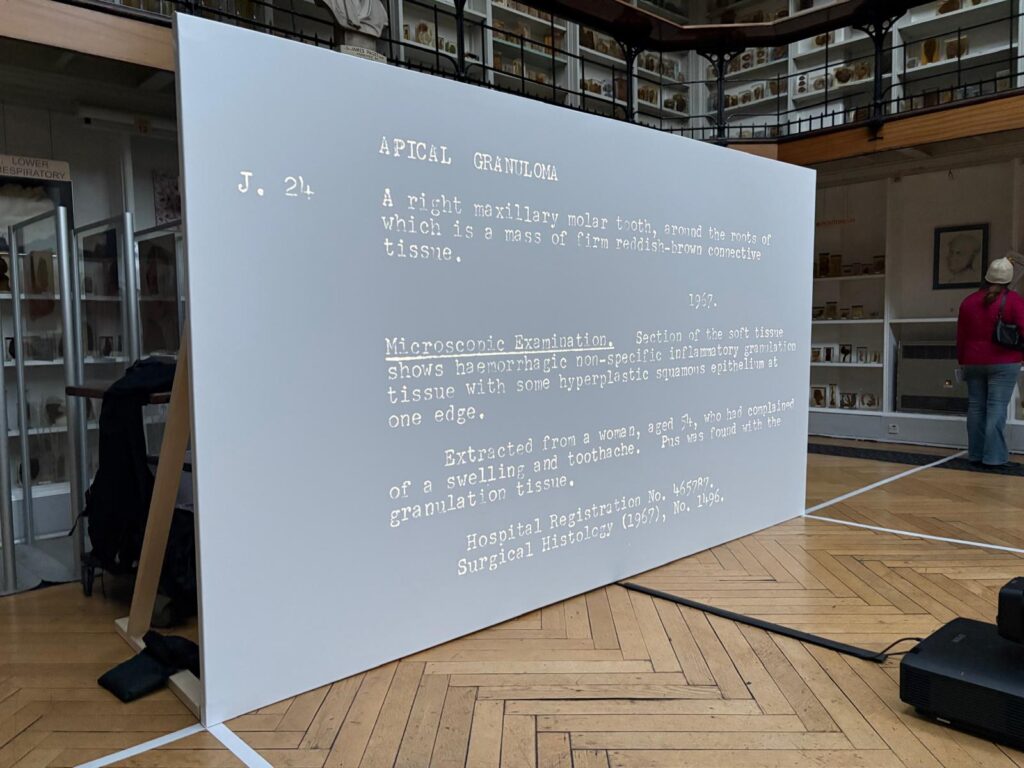
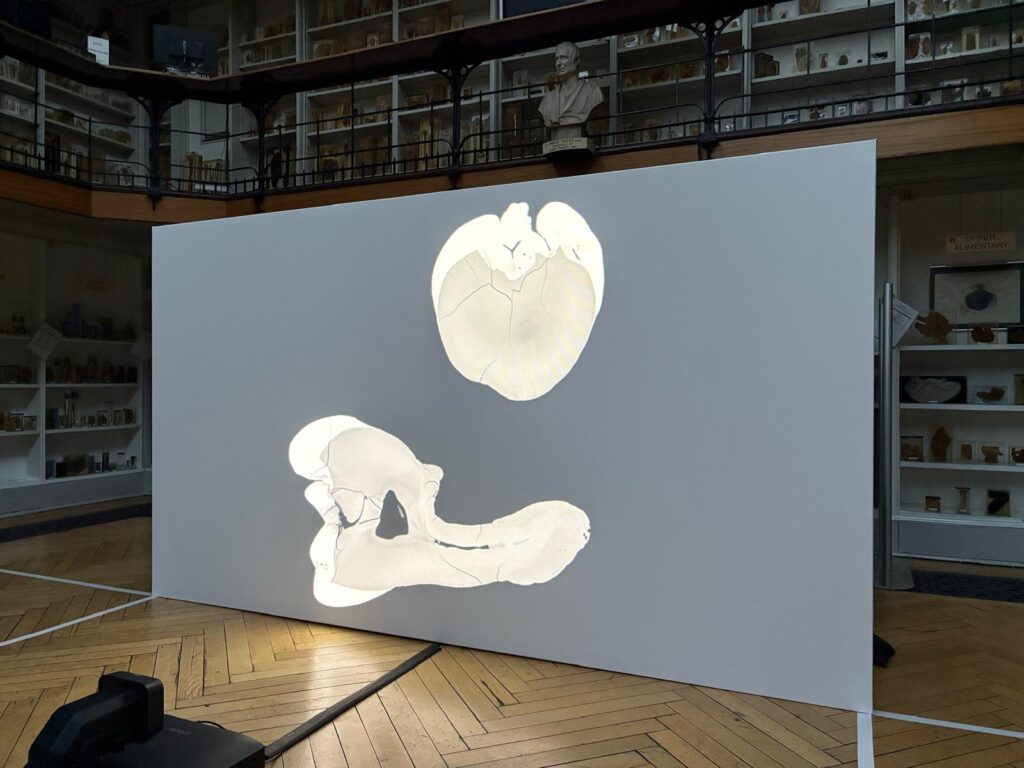
Inside, the exhibition consisted of beeswax-coated resin casts (described as ‘hand-sized’), on small glass tables with a candle next to each specimen group. I think probably all 34 teeth were represented. On a screen at one end of the room a sequence of around 30 minutes played. The black and white display alternated microtomography of the specimens (a sort of X-ray building up a picture inside and through the tooth), with index cards describing them and the circumstances of their collection.
Teeth as Sites of Memory, a Connection Between Past and Present
I didn’t think I could be so interested in teeth, to be honest. Are they just one of those things we don’t think about enough? In terms of our bodies, they’re at the intersection of ‘inside’ and ‘outside’. They can cause us great pain. We can survive without them. They can also survive, almost indefinitely, without us. The information gathered with them, the ‘object as data carrier‘ model, tells us about the people they came from, and the society they lived in. Women ‘complain’ of pain. Men ‘suffer’ from it. Likewise today, access to and treatment within the dental care system is not without inequality.
An interesting extension of the exhibition beyond the museum space were the community workshops run with participants in East London and South Tyneside. These areas have some of the highest levels of tooth decay in the country. Interacting with the models elicited memories of dental care practices of the past, of loved ones, of good times and bad. And somehow the models themselves seemed like survivors. Teeth doing their best, growing into crevices, even joining forces when cramped jaws required it. There’s a lot of pain in the collection. But also a sort of reverence in the reworking of the specimens, and an expert’s eye for the unusual and teachable.
A lot of fellow visitors seemed to be a bit less interested in the teeth, and a bit more interested in the rest of the museum and collection. I don’t entirely blame them. It’s a curious and confronting place: a cavernous hall that’s identifiably Victorian, with specimens on three levels including two mezzanines. Accessing it from the lift and stairwell of a more modern building doesn’t seem to make sense. It’s like you’ve stepped into the past accidentally. And, once inside, the many specimens represent generations of medical knowledge, but also human suffering, and frequently collection practices we wouldn’t consider to be ethical today.*
I’m glad to have had this glimpse inside the museum. And even more glad that my focus was an unexpectedly fascinating exhibition. What a great initiative this ‘Conversation Project’ is. And what a wonderful collaboration between Platun and Mills.
*I wrote at length about the Human Tissue Act and pathology museums here.
Salterton Arts Review’s rating: 3.5/5
On the Art of Teeth was on at Barts Pathology Museum between 3 and 6 December 2025 only. More information on the project here, and the museum here.
Trending
If you see this after your page is loaded completely, leafletJS files are missing.