
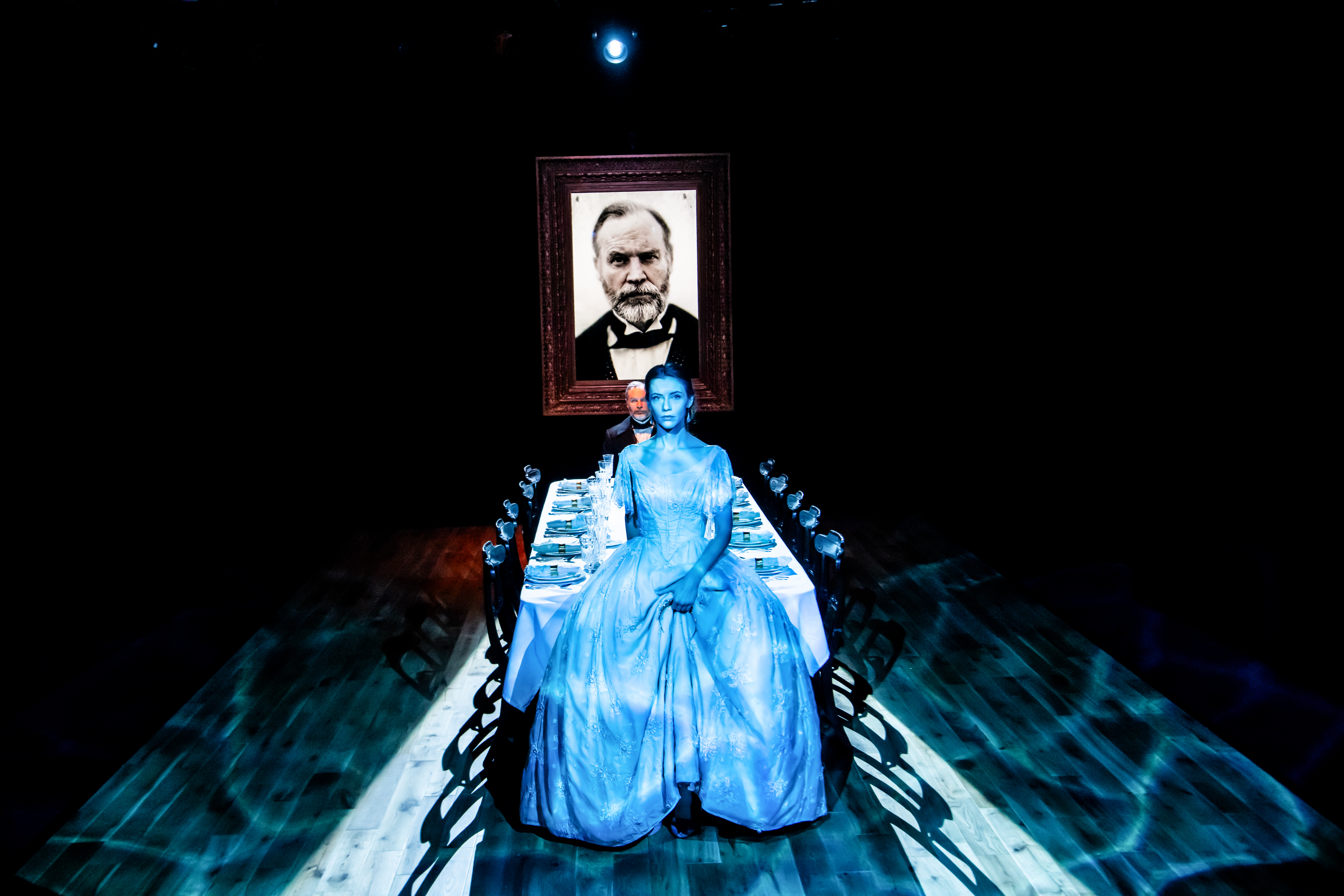
Our American Queen – Bridewell Theatre, London
There’s a noticeable appetite in London theatre right now for American history, particularly where private lives and public power collide. Our American Queen fits squarely into that trend.
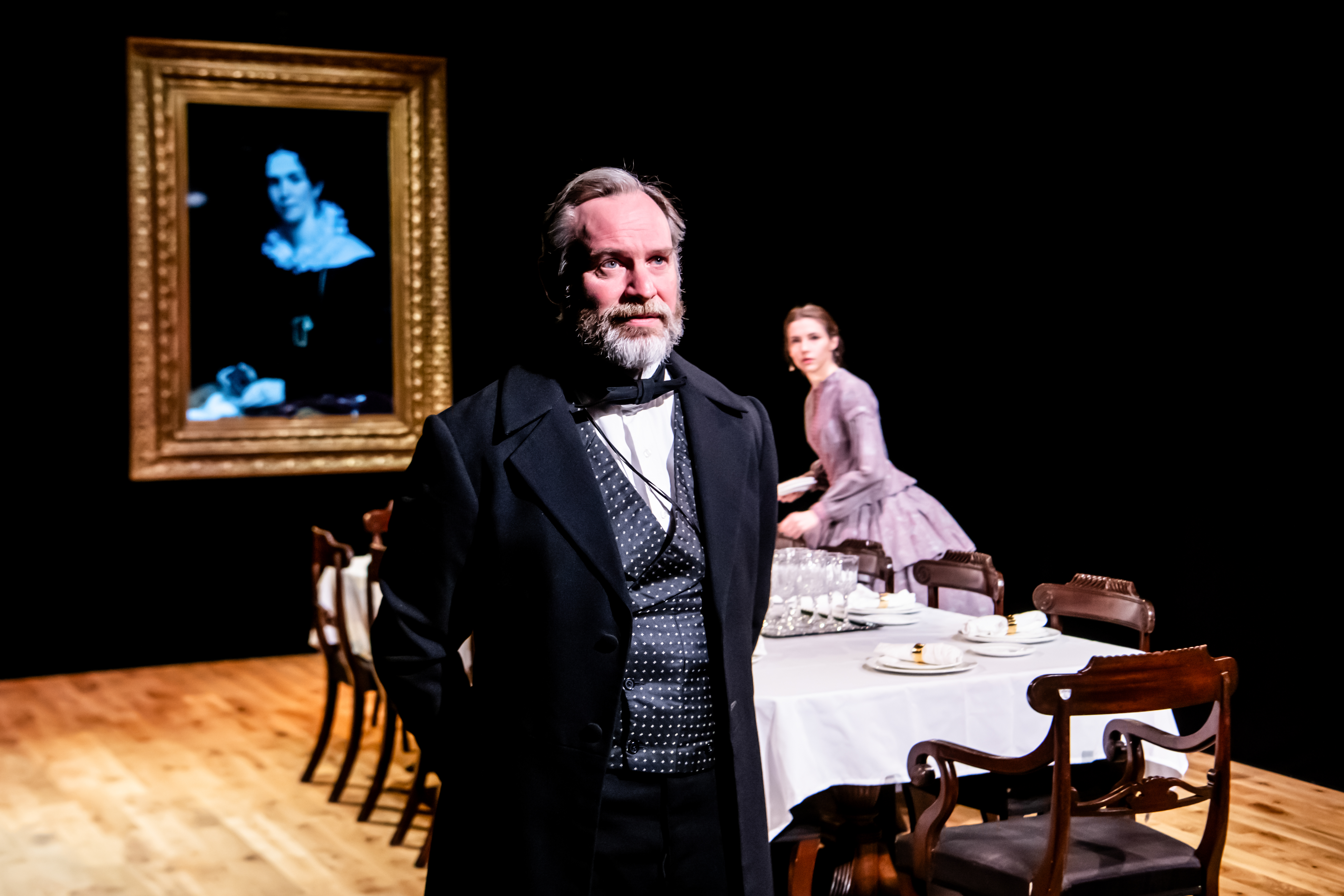
Our American Queen
What is it about the American Civil War? That period is certainly having a moment on the London stage. Abraham and Mary Todd Lincoln loom large as off-stage presences in Our American Queen, while Mary Todd Lincoln herself is the central figure in not one but two plays I’ll be seeing in the coming weeks. A good education on a historical period that remains a bit of a gap in my knowledge? And, to return to my opening question, perhaps it’s not such a surprise that, in divided times, theatre looks back to moments of national fracture in the past.
In any case, Our American Queen is perhaps a good way into this era. Thomas Klingenstein focuses on a relatively little-known figure from Civil War politics: Kate Chase, played here by Wallis Currie-Wood. She has political intelligence and ambition in abundance, but unfortunately not the right gender to wield power directly. Instead, she operates as hostess, strategist and informal adviser to her father, Lincoln’s Secretary of the Treasury Salmon Chase (a wonderfully named figure, played by Darrell Brockis). Together, they plot and manoeuvre as Chase prepares for a run at the Republican nomination in the 1864 election. Big issues (enslavement, equality, national direction) hang over the play. But it’s often the personal calculations that drive the action. The production is strongest when it shows how political life is inseparable from domestic dynamics, ambition and personal loyalty.
In theory, this play ticks a lot of boxes for me. I enjoy learning about overlooked corners of history, and Kate Chase is a fascinating figure. Dubbed “Our American Queen” in her lifetime, she ended her days in poverty and largely forgotten. In practice, though, I didn’t find all of the play’s structural choices equally compelling. In a story rich with possibilities (women’s soft power, the constraints of 19th-century politics, or even the ideological fault lines of the period) returning repeatedly to an ill-fated love story felt like a slight narrowing of focus. Why add further ways in which Kate is defined through her relationships with men, unless it meaningfully deepens our understanding? Much of the broader political context is instead relegated to images within Neal Wilkinson’s otherwise clever set design.
Staging, Design and Performance
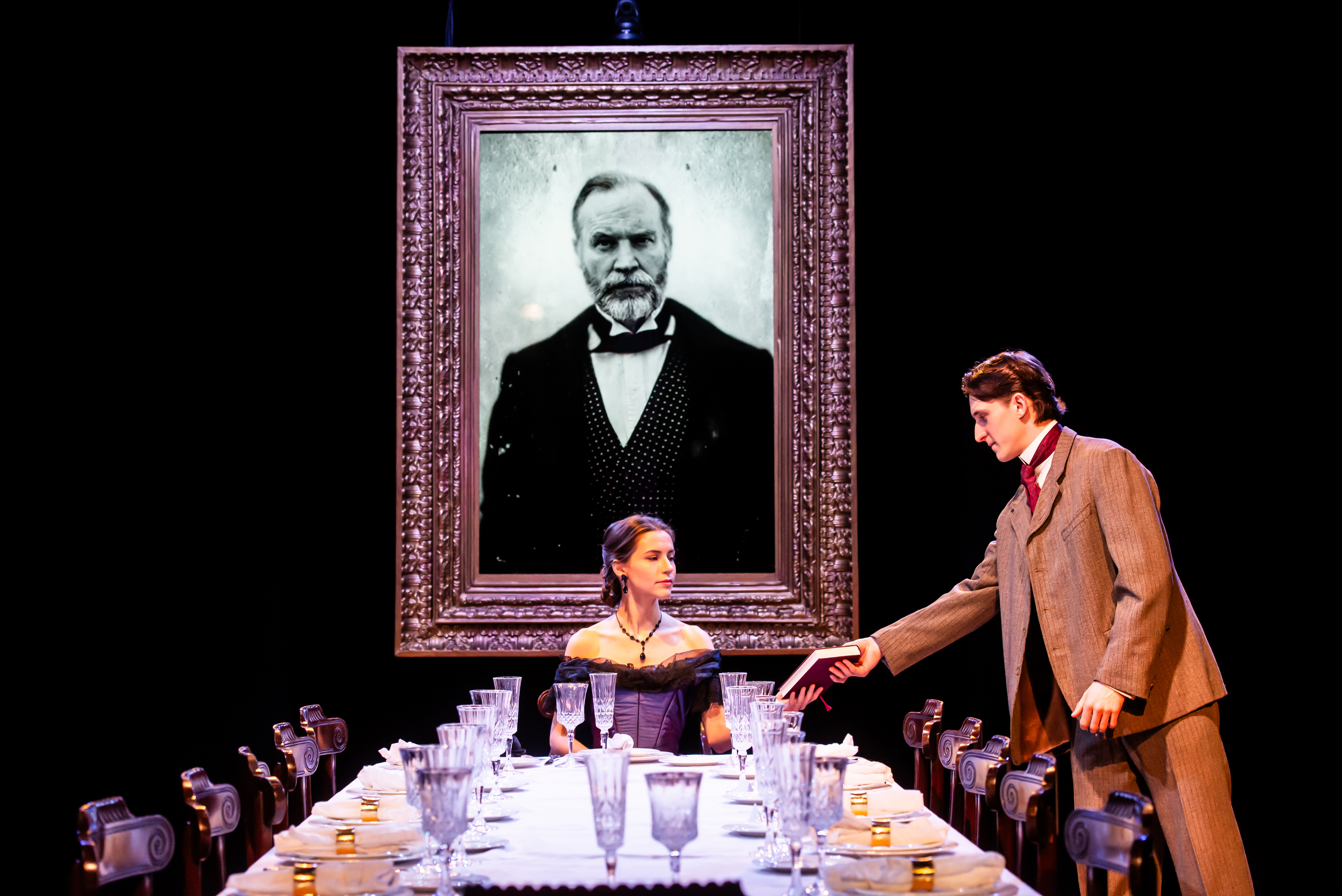
That set, and the wider design, deserve closer attention. Our American Queen is a relatively static play, but between the design and Christopher McElroen’s direction, it rarely feels inert. The large period dining table immediately establishes a dual function. A space for domestic intimacy and a battleground for opposing views. It’s used inventively throughout, as is Beril Yavuz’s video design, which creates shifting perspectives and helps vary the blocking. The screen perhaps looms a little too large when it’s meant to fade into the furniture of the room, but the idea behind it is strong. Costumes by Elivia Bovenzi Blitz are neatly period and do solid work in situating us within the world of the play.
The performances are consistently strong. Even where I didn’t entirely connect with the romantic subplot, Currie-Wood and Tom Victor (as John Hay) share a sharp chemistry that helps flesh out Kate’s character. Over the course of the play, we come to understand her resolve: her loyalty to her father, her political intelligence, and perhaps her desire for his affection even more than his success. Darrell Brockis is very convincing as Salmon Chase: a career politician, a demanding father, and a serial husband. Christy Meyer, as his love interest Mrs. Eastman, is a particular pleasure. She is a charismatic presence and a sharply drawn character. The addition of General McClellan (Haydn Hoskins) as yet another love interest felt unnecessary to me, but Hoskins makes the most of the role.
As the play drew to a close, I found myself thinking of an old favourite metric: the Bechdel Test. If a play intent on restoring a forgotten woman in 19th-century politics barely scrapes past it, is there a missed opportunity to explore her inner life more fully, rather than reproducing the very limitations it depicts? I think that’s a possibility. Still, Our American Queen remains interesting for its staging, performances and direction, and as part of a wider preoccupation in London theatre with moments of political fracture, uncertainty and fragile consensus as we move into 2026.
Salterton Arts Review’s rating: 3/5
Our American Queen on until 7 February 2026. More info and tickets here.
Trending
If you see this after your page is loaded completely, leafletJS files are missing.