
Wright of Derby: From the Shadows – National Gallery, London
A small exhibition at the National Gallery, From the Shadows makes the case for Joseph Wright of Derby as an important artist with a strong local identity.
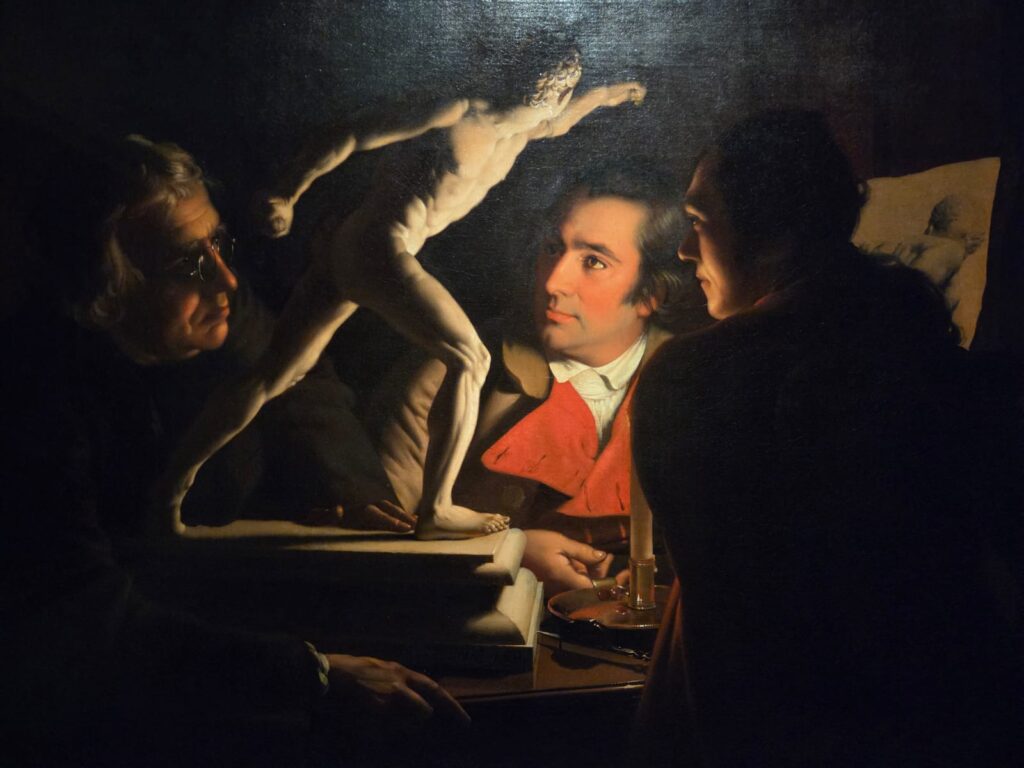
Wright of Derby: From the Shadows
I’ve written many times before about exhibitions at the National Gallery – most recently about Radical Harmony: Helene Kröller-Müller’s Neo-Impressionists, and prior to that José María Velasco: A View of Mexico, which was in the same small exhibition space we will visit today. I’ve come to appreciate how well the Gallery uses these focused rooms. It’s a great spot for making a contained argument without it becoming overwhelming. Wright of Derby: From the Shadows is a good example. It reintroduces Joseph Wright of Derby not as a footnote to 18th-century art, but as a painter worthy of sustained attention.
Wright (1734–1797) was born in Derby, trained in London under Thomas Hudson (who also taught Joshua Reynolds), and returned to the Midlands rather than building a full-time career in the capital. That decision shapes how he’s often been framed: as provincial, regional, slightly outside the London art world. That is clearly untrue in terms of talent, though. Wright exhibited at the Royal Academy and had committed patrons. And Derby in the 18th century was hardly a backwater. It sat close to the industrial and intellectual networks of the Midlands, including figures associated with the Lunar Society. Wright’s patrons included industrialists and men of science, and he reflected this world in his paintings.
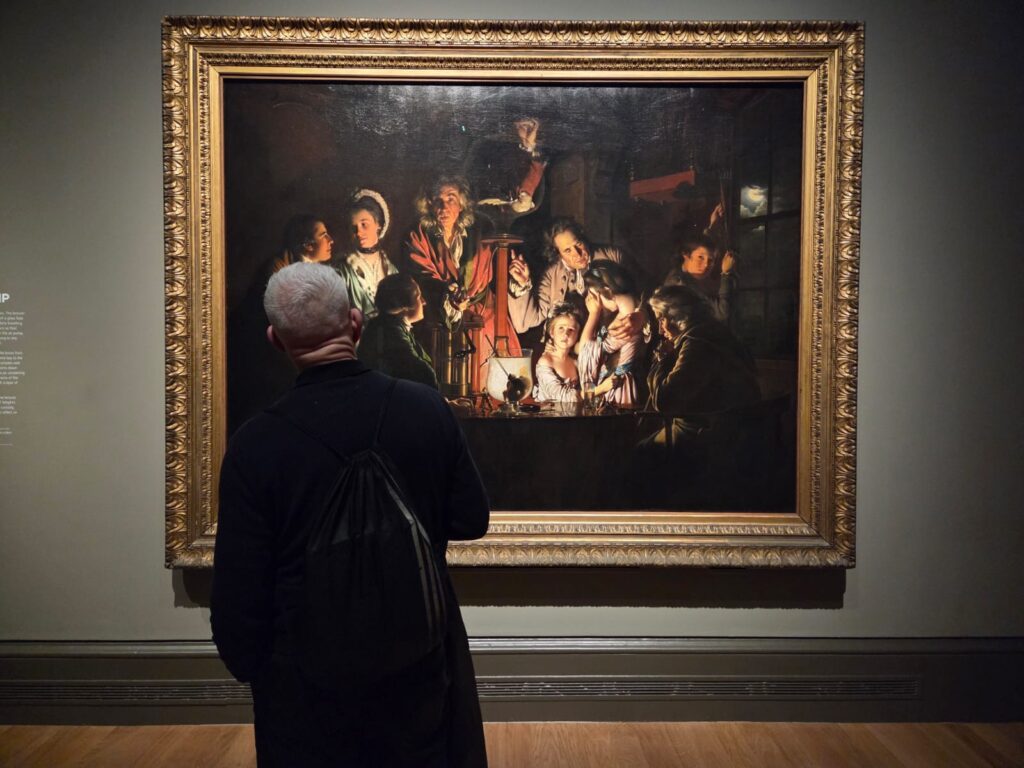
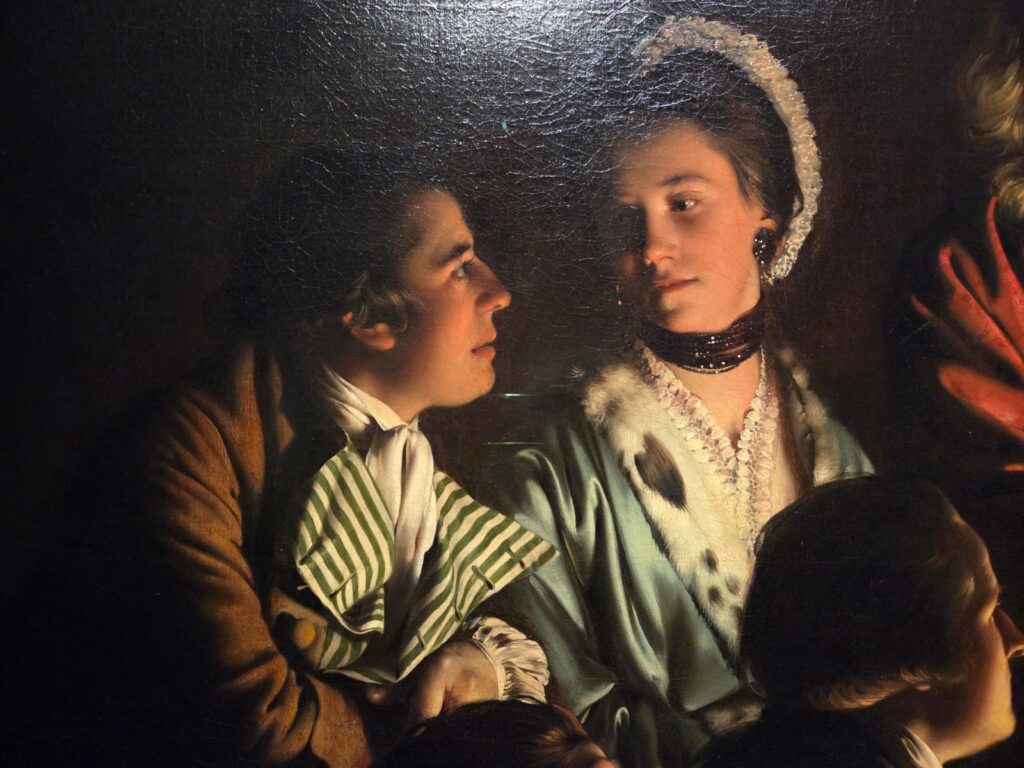
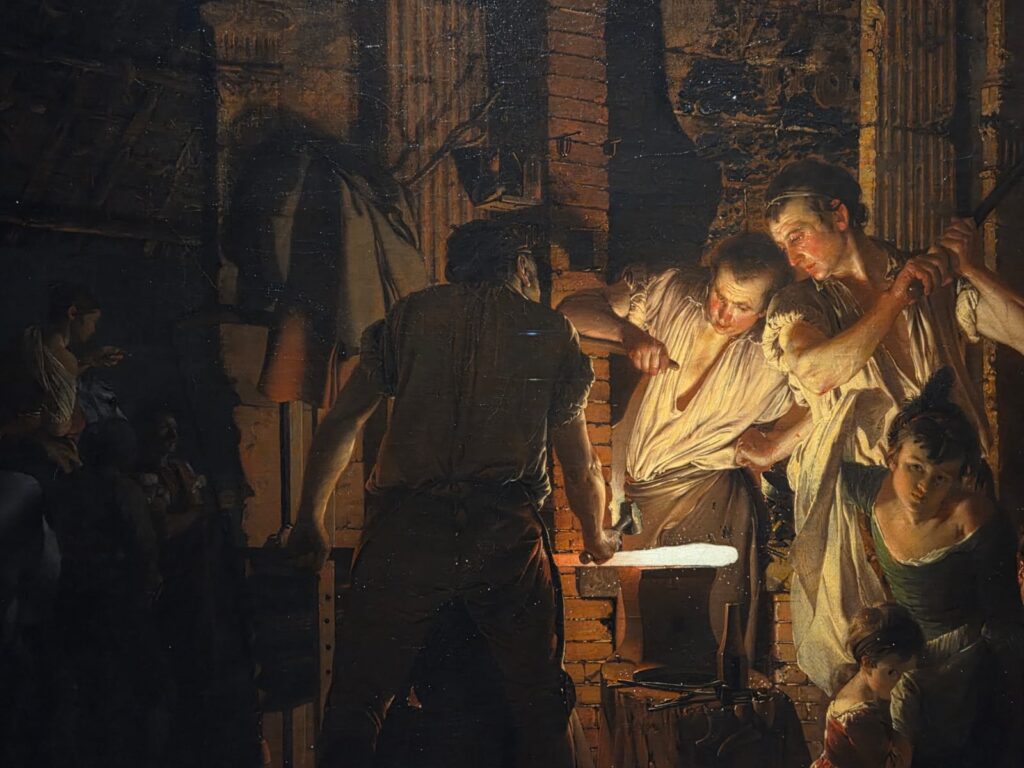
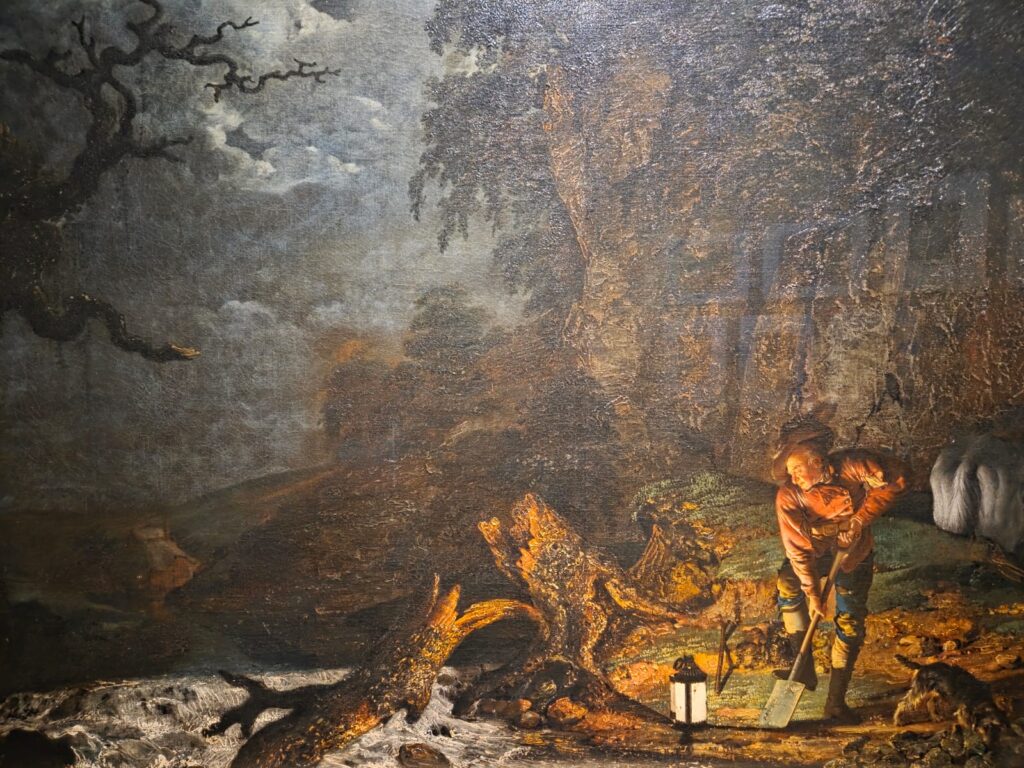
He is often remembered for candlelit scenes: dramatic, concentrated pools of light illuminating curious or awe-struck faces. But he also painted portraits, landscapes, industrial subjects (these too dramatically lit) and classical scenes. The exhibition gently reminds us that he was both technically adept and intellectually engaged. Not just a painter of striking effects, but of ideas.
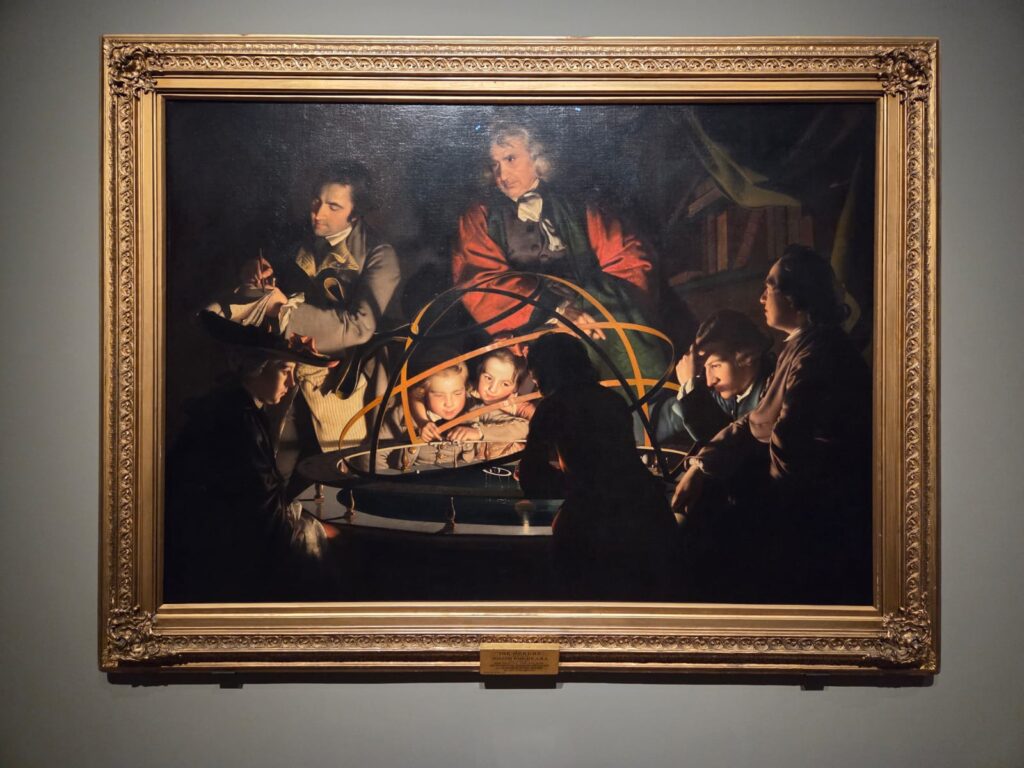
A Painter of the Enlightenment
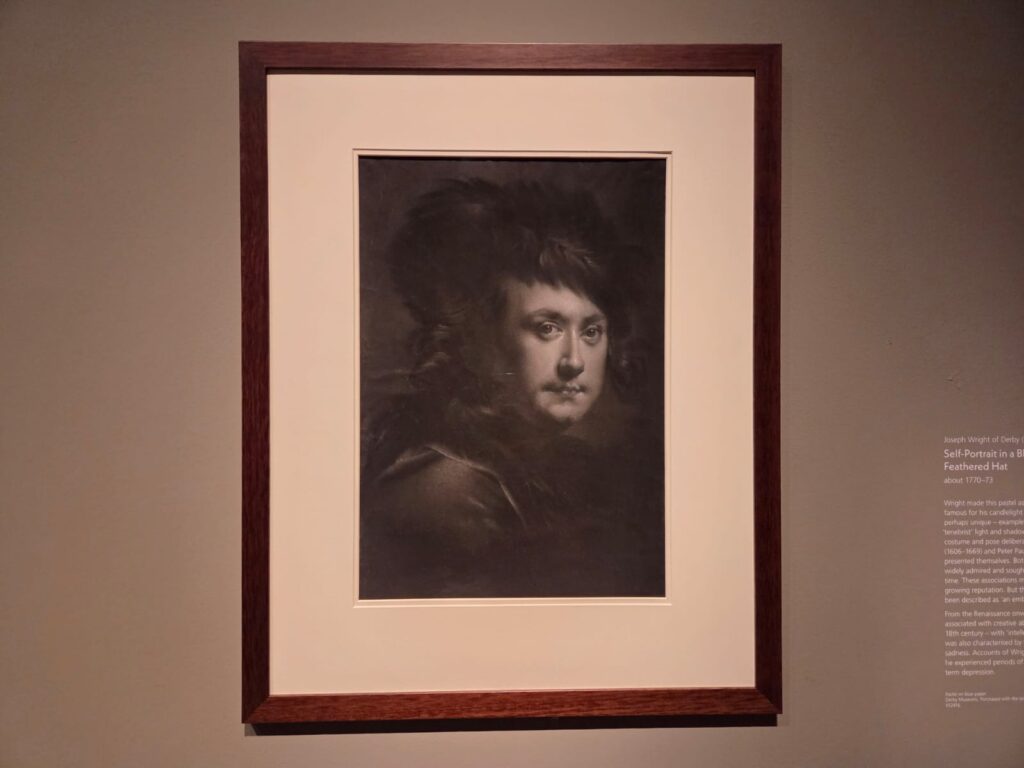
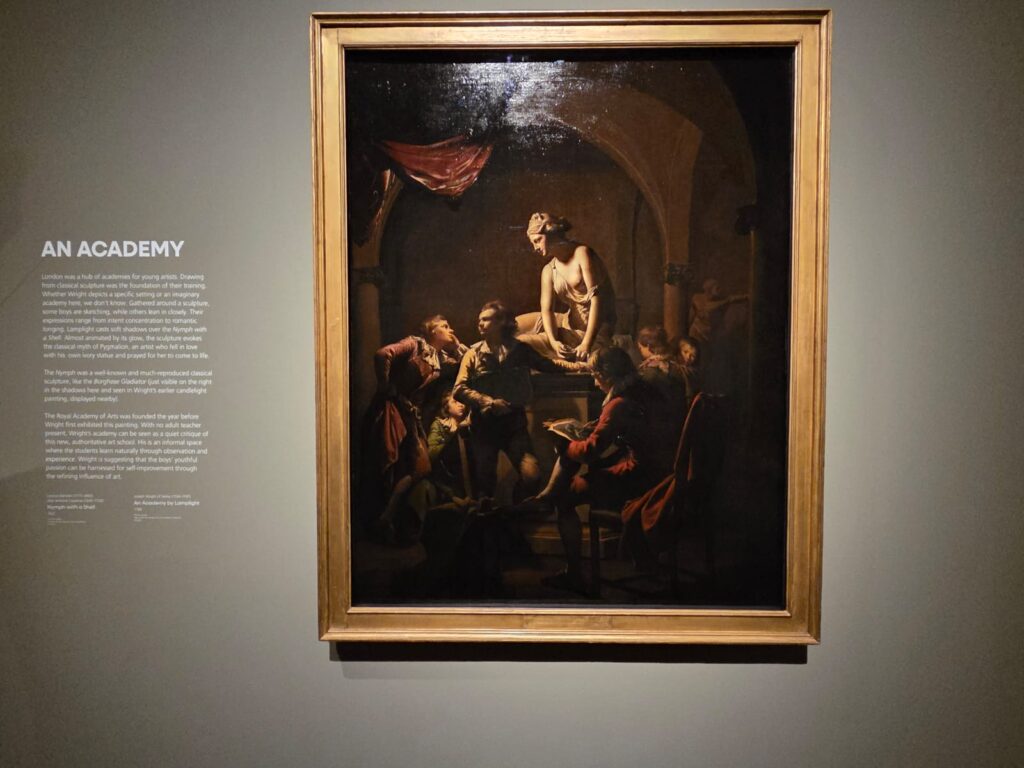
Wright’s use of light brings to mind Caravaggio and the tradition of tenebrism: deep shadows cut through by sudden illumination. A tradition that also includes artists like Gentileschi and Rembrandt.* The exhibition makes clear that Wright was drawing on that lineage. Like those predecessors, his candlelit compositions feel theatrical in the best sense: carefully staged and emotionally charged.
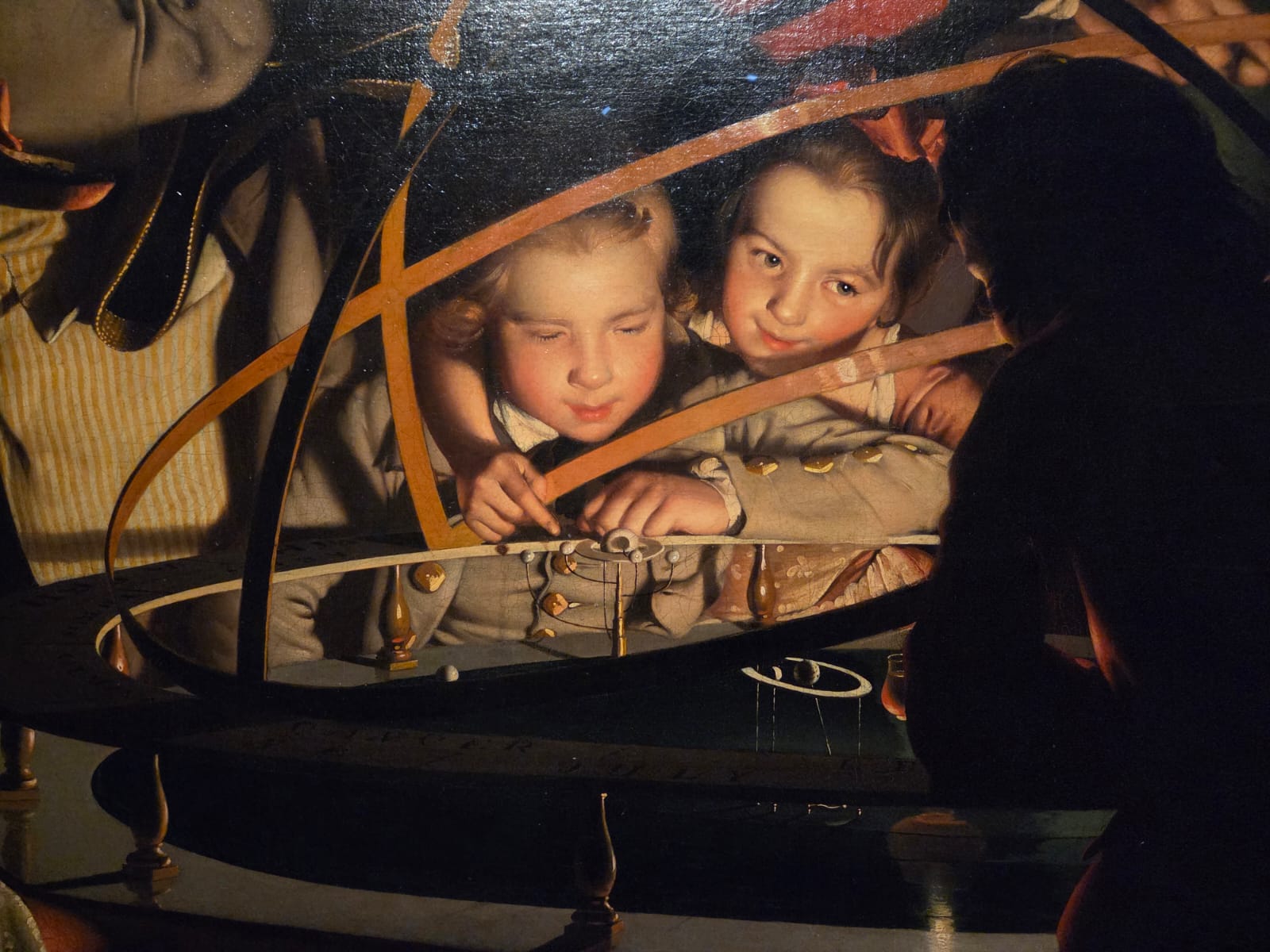
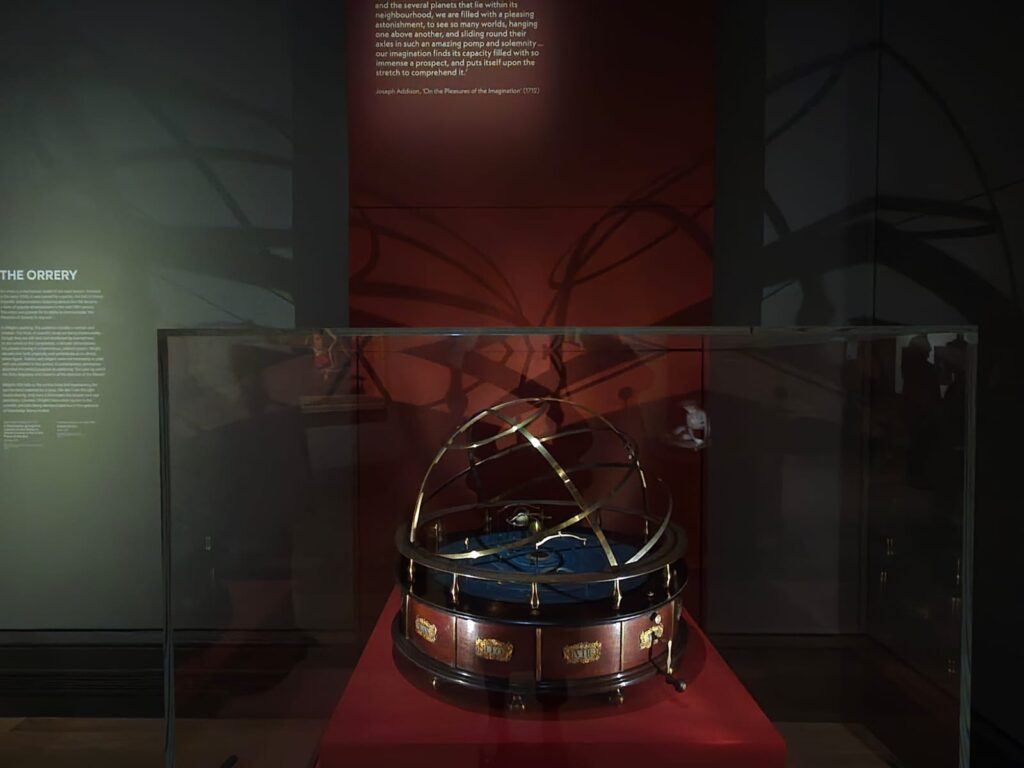
And yet the exhibition makes it very clear that he wasn’t only drawing on the past. Wright was very much a painter of the Enlightenment. His best-known works depict scientific demonstrations (like vacuum pumps and orreries, or mechanical models of the solar system) in which knowledge is literally brought to light. Importantly, he didn’t present them as coldly rational or opposed to faith. Instead, there’s often a sense of wonder, even reverence, in the faces of his subjects. Wright seems interested not just in the experiment, but in the human reaction to knowledge: wonder, doubt, empathy. Curiosity and belief sit side by side in a way that feels less synergistic to us, perhaps, than it did to the artist and his audience.
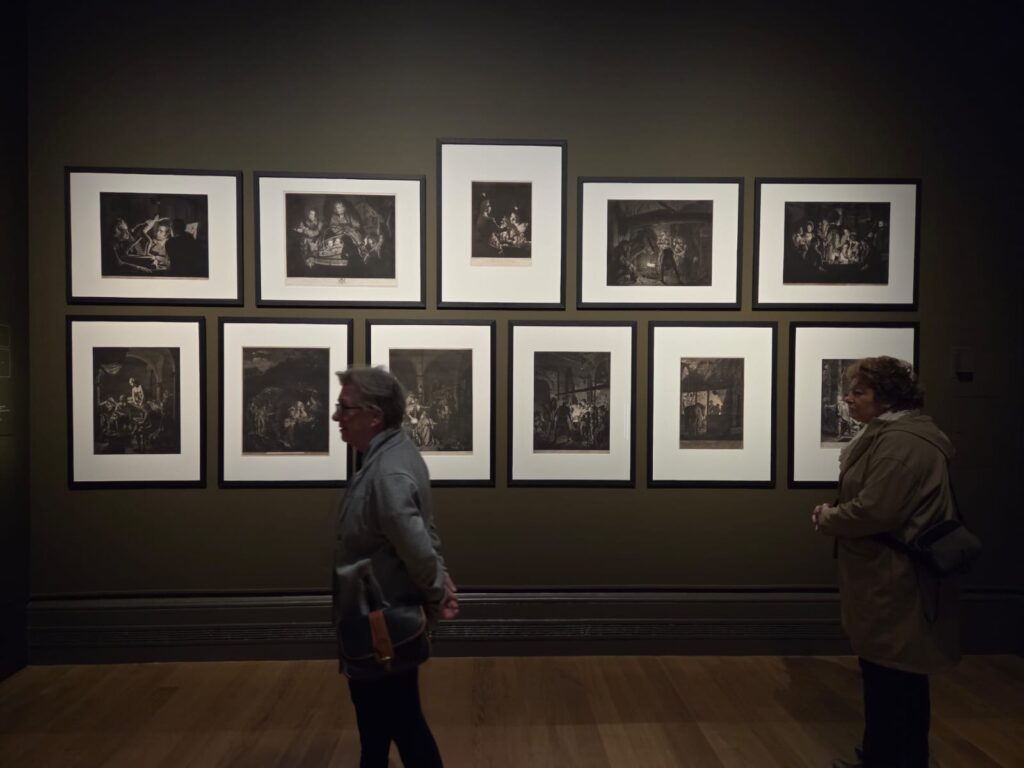
That tension (or maybe harmony) is key. Wright’s paintings demonstrate that scientific inquiry and religious feeling were not irreconcilable in the 18th century. He captures a world in transition, where reason, experiment and industrial progress are reshaping society, but older frameworks of meaning haven’t yet vanished. In that sense, he feels unexpectedly modern: attentive to technological change, interested in public spectacle, and aware of how images circulate. He composed scenes with reproduction in mind, aware that engravings would circulate the image beyond a painting’s original patron. He understood audience well before the advent of modern marketing.
*There’s a lovely little visual at the start of the exhibition noting other tenebrist works you can go and see in the National Gallery’s permanent collection.
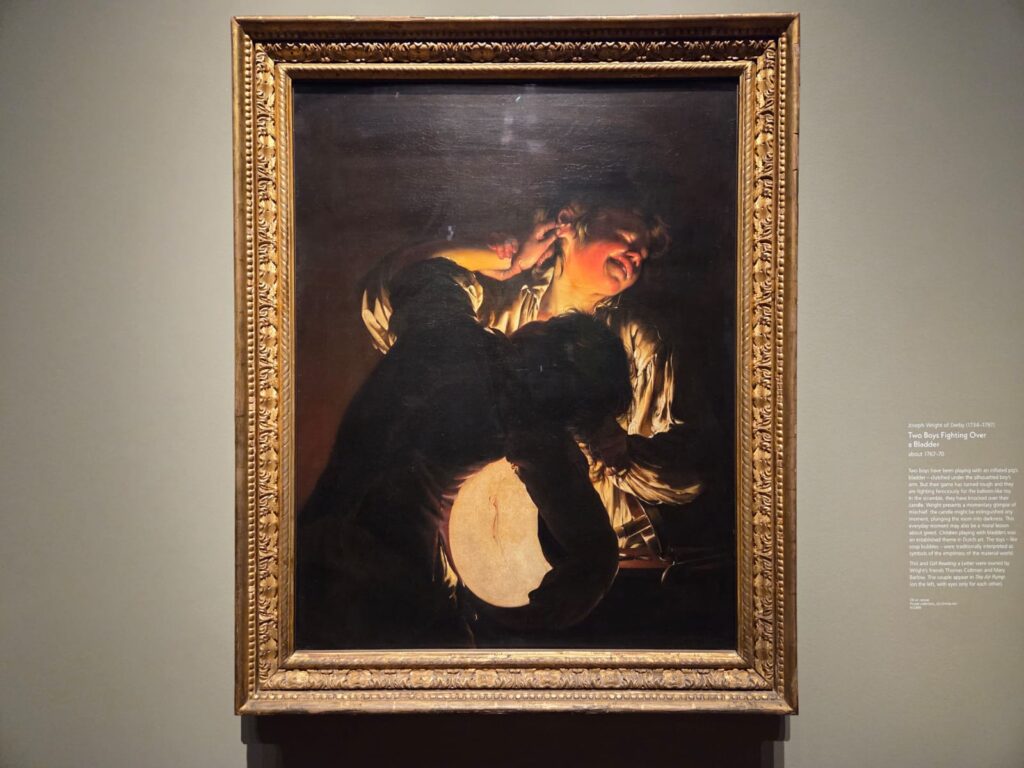
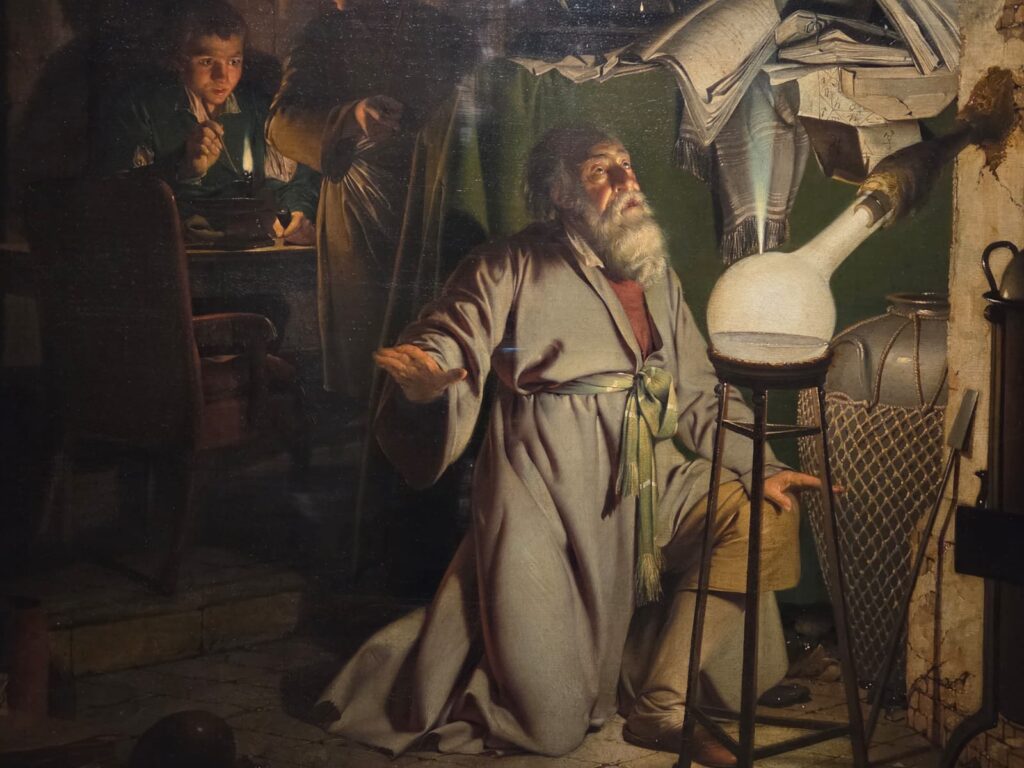
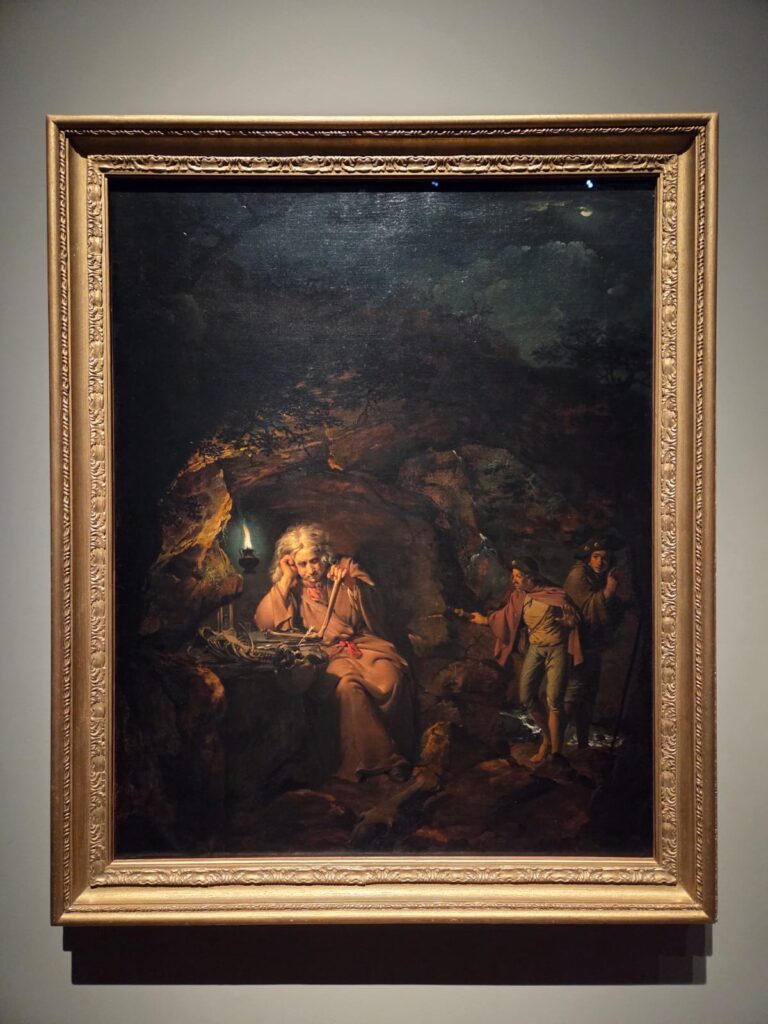
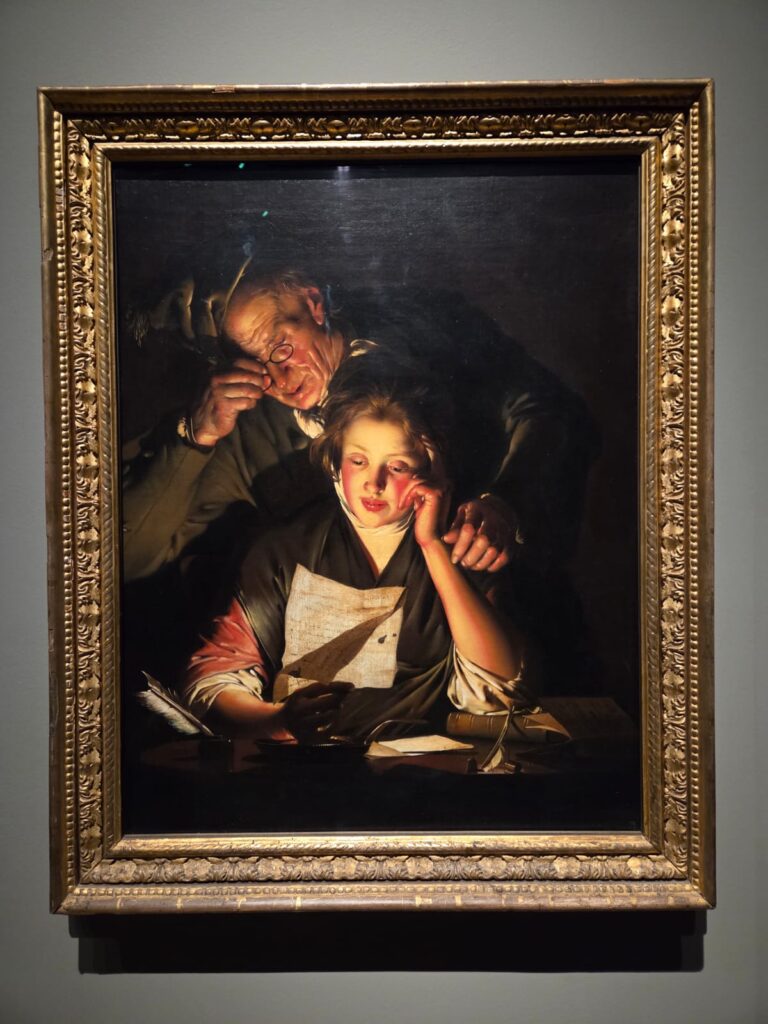
A Well-Evidenced Exhibition
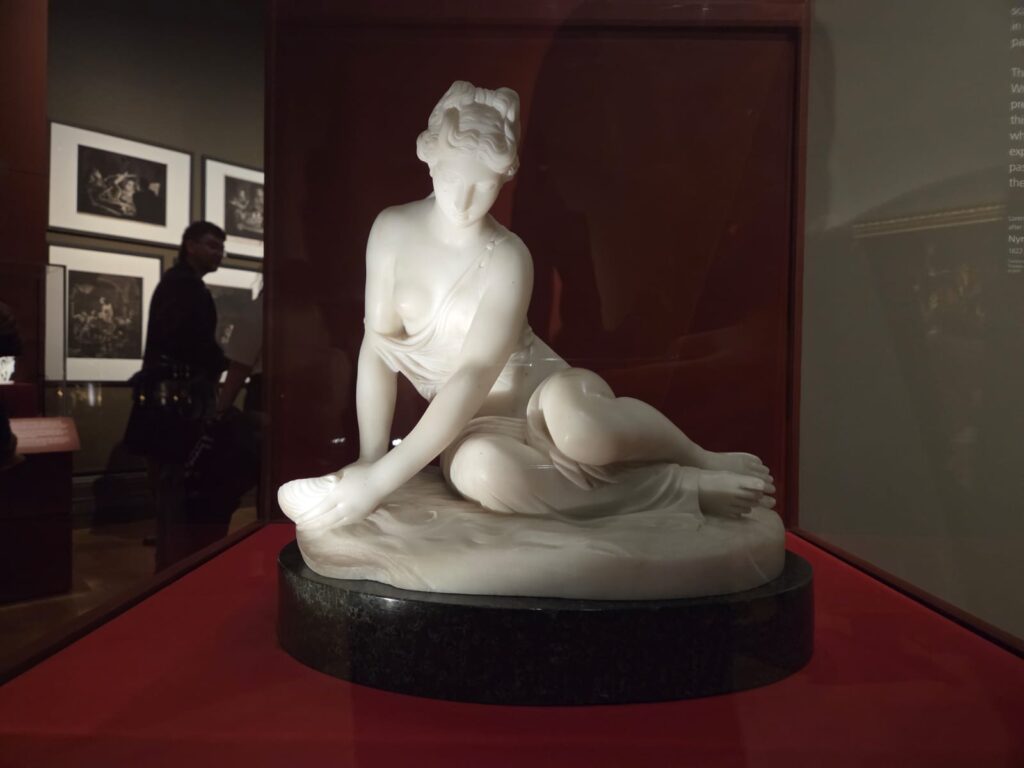
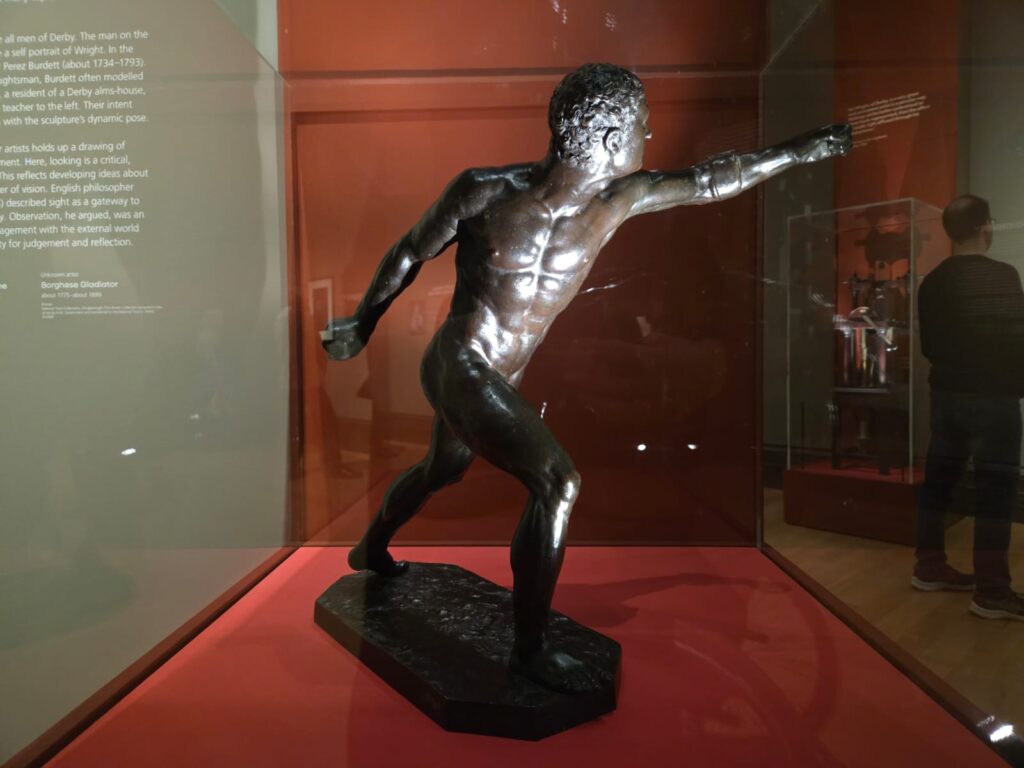
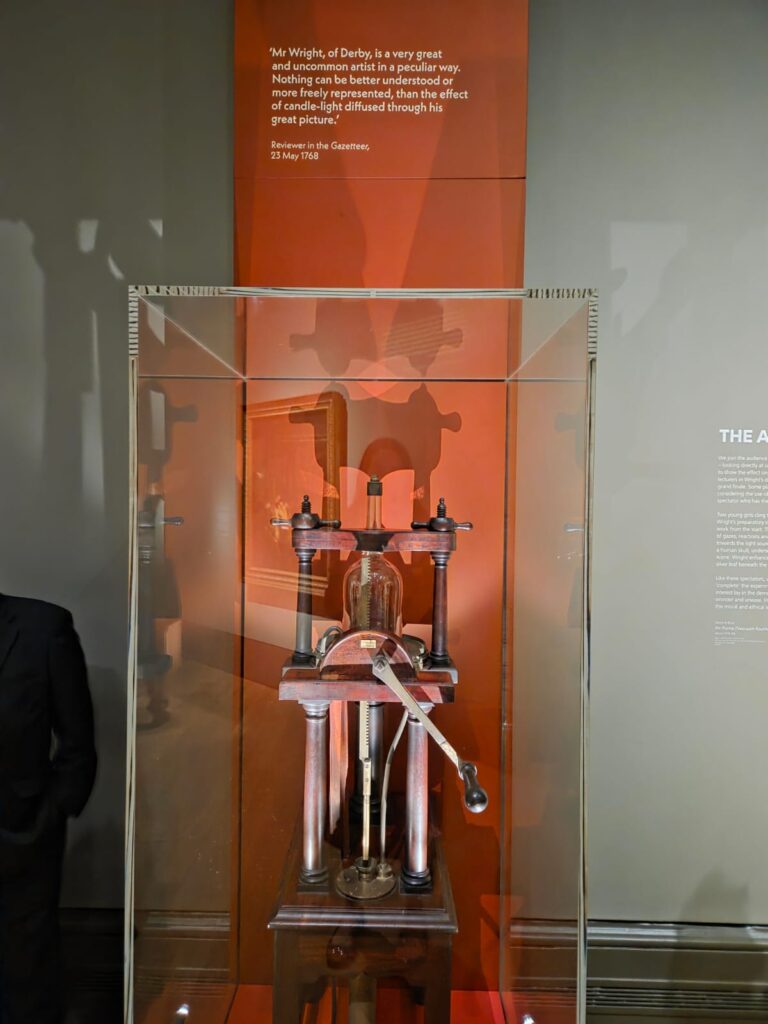
The exhibition is small, but thoughtfully assembled. This smaller space is a good fit for the selection of works. Keeping the exhibition contained definitely helps to keep the argument clear. I liked the way several paintings were paired with objects. There are copies of classical statues Wright depicted, like the Borghese Gladiator, and historic scientific instruments. As an aside, I now want to check out the Whipple Museum of the History of Science in Cambridge. The objects deepen our understanding of the paintings, by placing them within a broader cultural and intellectual context. You see not just the painted illusion of knowledge, but its tangible instruments.
There’s also a persuasive case being made here for Wright as a serious, strategic artist. He cultivated patrons. He thought about how his compositions would translate into engravings, extending their reach. And he chose to remain in Derby, close to the Lunar Society circle and the Midlands’ industrial energy, rather than permanently relocating to London.
What I came away with most strongly, though, was the sense of Wright as an Enlightenment painter in the fullest sense: engaged with science, industry and philosophy, but still attentive to emotion and belief. As with other focused National Gallery exhibitions I’ve seen recently, this one doesn’t try to do everything. It simply asks you to look more closely. Take a leaf from those Enlightenment audiences, in this case, and see what you learn through observation.
Salterton Arts Review’s rating: 3.5/5
Wright of Derby: From the Shadows on until 10 May 2026.
Trending
If you see this after your page is loaded completely, leafletJS files are missing.