
Turner & Constable: Rivals & Originals – Tate Britain, London
Tate Britain’s exhibition Turner & Constable: Rivals & Originals brings two important English artists back into focus as contemporaries, each developing their own response to a changing world.
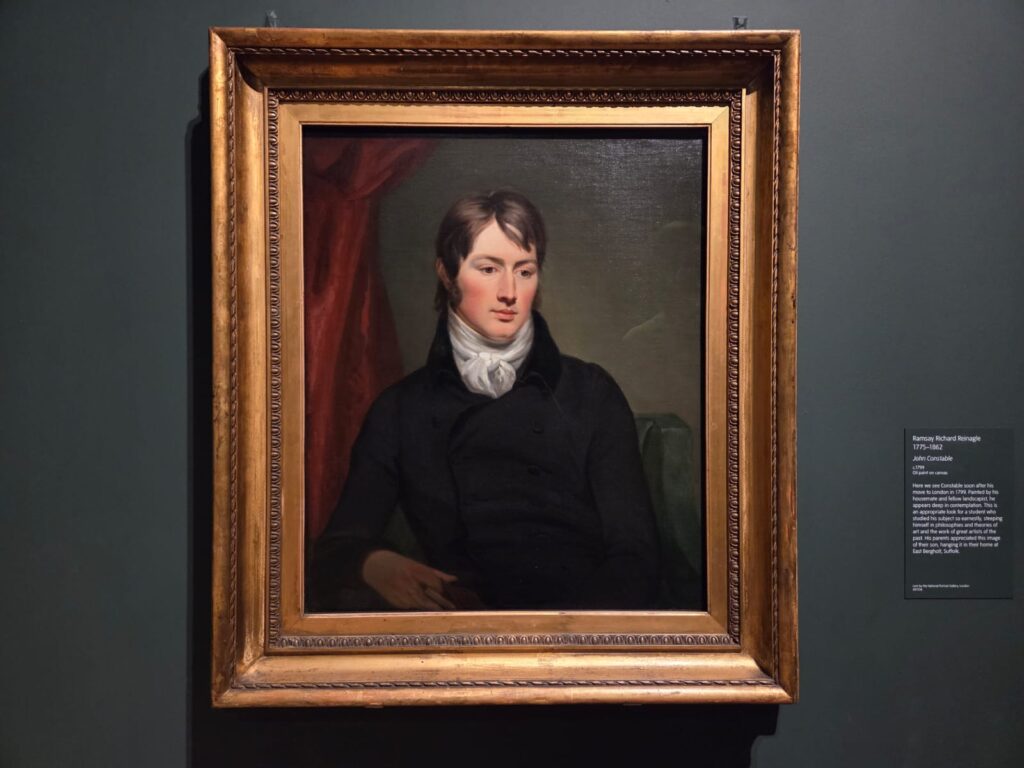
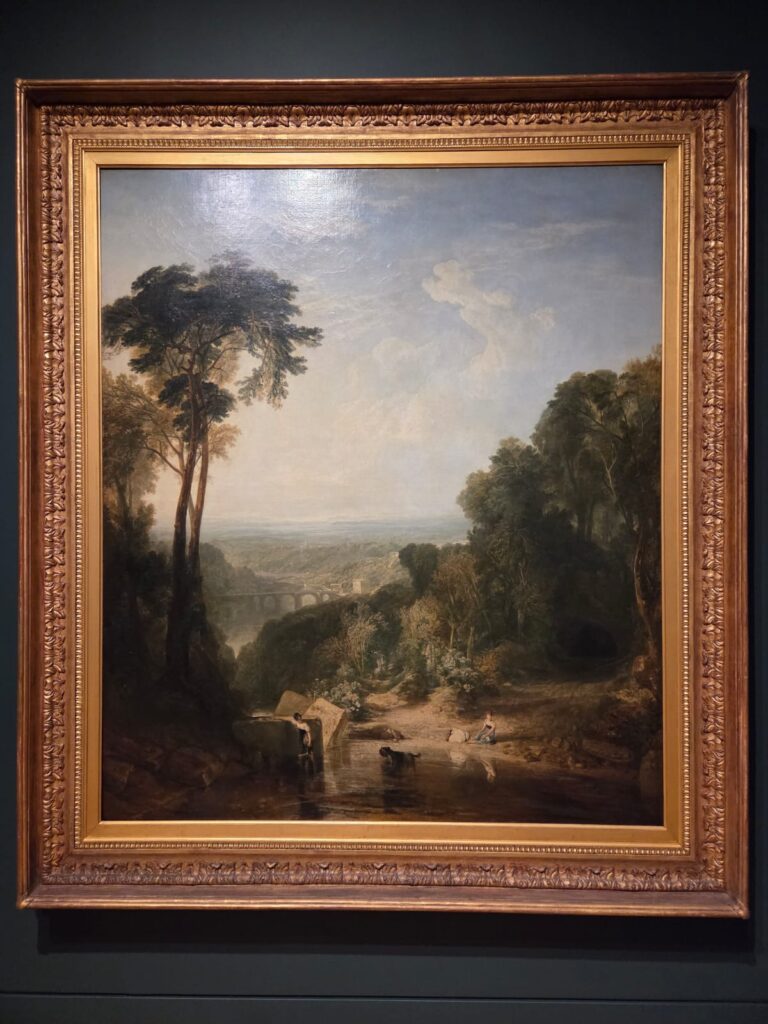
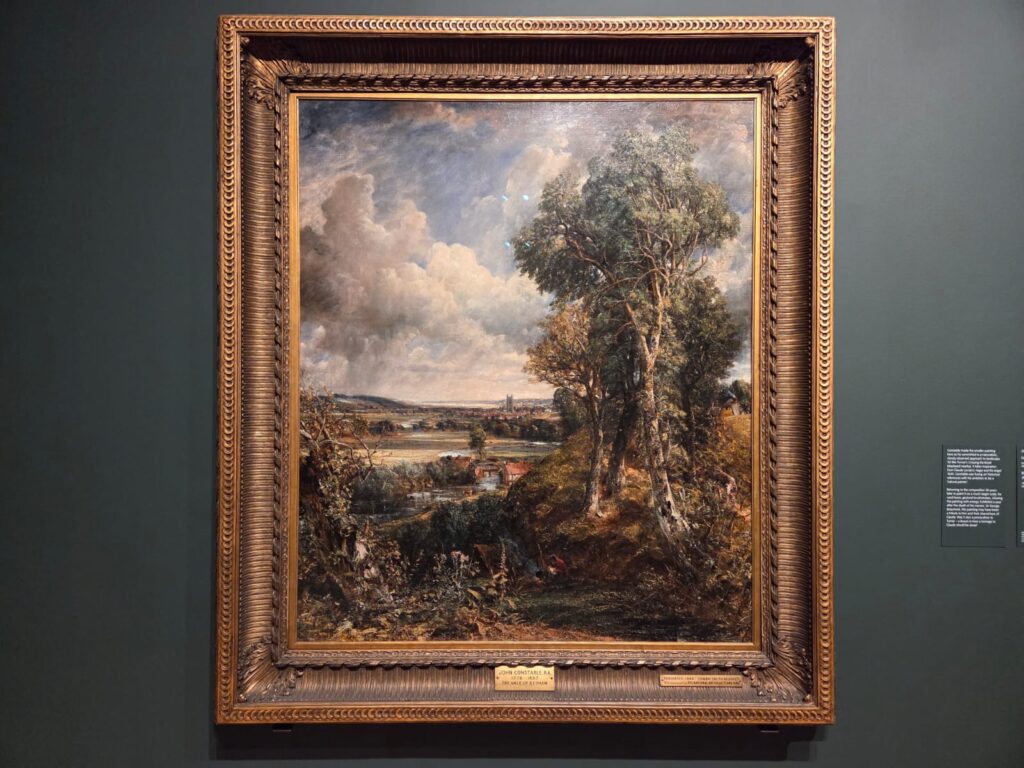
Tate Britain After Hours
Those who have visited my blog in the past may recall that I frequently find the scale of exhibitions at Tate Britain a little tiring. Their exhibition spaces are large, and filling them means there’s a lot to look at. Add in trying to take in information from all the texts, and you’ve got a momentous task on your hands. Normally I cope with this by speeding up more and more as I go along. And complaining about it when I write my review, of course. I do appreciate when the Tate team use the space a little differently, for example when they split the exhibition space we’re visiting today between Edward Burra and Ithell Colquhoun. That was actually the last time I was here.
But, just as I recently discovered at the National Gallery, there seems to be a right time to visit exhibitions to stop me complaining about them. The end of the day, as it turns out. Which surprises me a little, because I’m otherwise an early bird. I guess too many other museum lovers are, too.
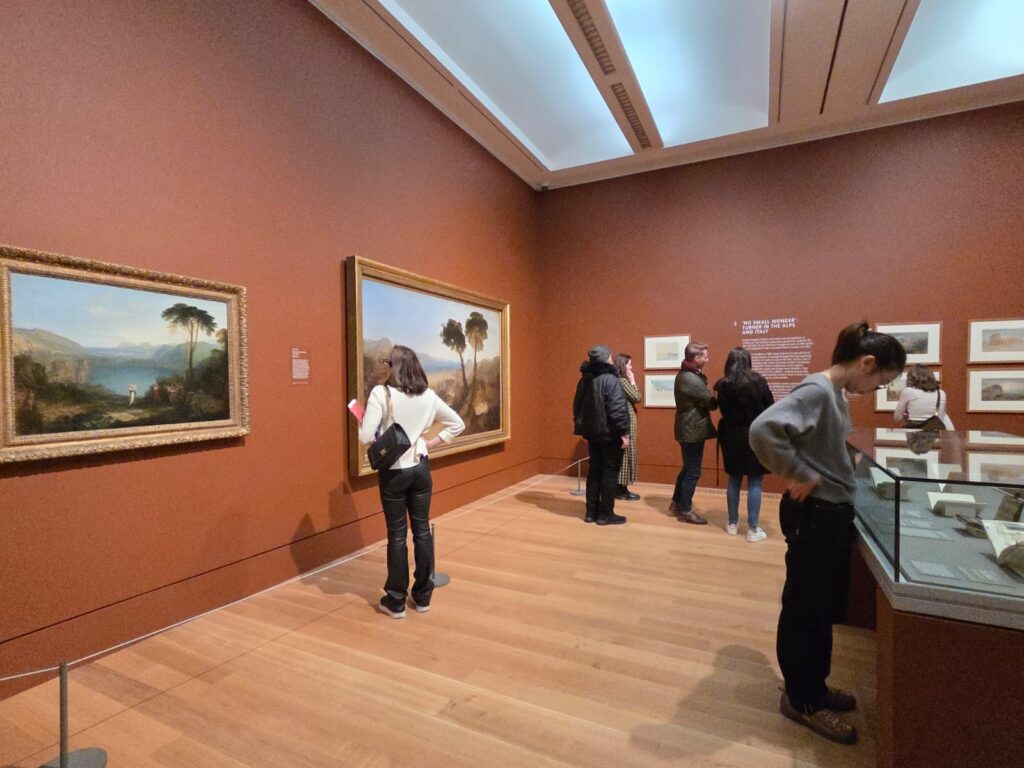
Turner & Constable: Rivals & Originals is a popular exhibition that is soon coming to an end. Tate Britain have thus extended their opening hours. This allowed us to visit over the weekend just as the gallery proper was closing. The vibe was a bit more relaxed, and adult (not that this is an exhibition that would attract many families, anyway). They’re also doing a new thing where there’s a panel before you enter the exhibition that tells you some key facts about it. So I knew going in to expect seven rooms and 198 artworks. Forewarned is forearmed.
Now you’re up to speed on all of my background thoughts about visiting this exhibition. Let’s get stuck into a quick history of the artists, shall we?
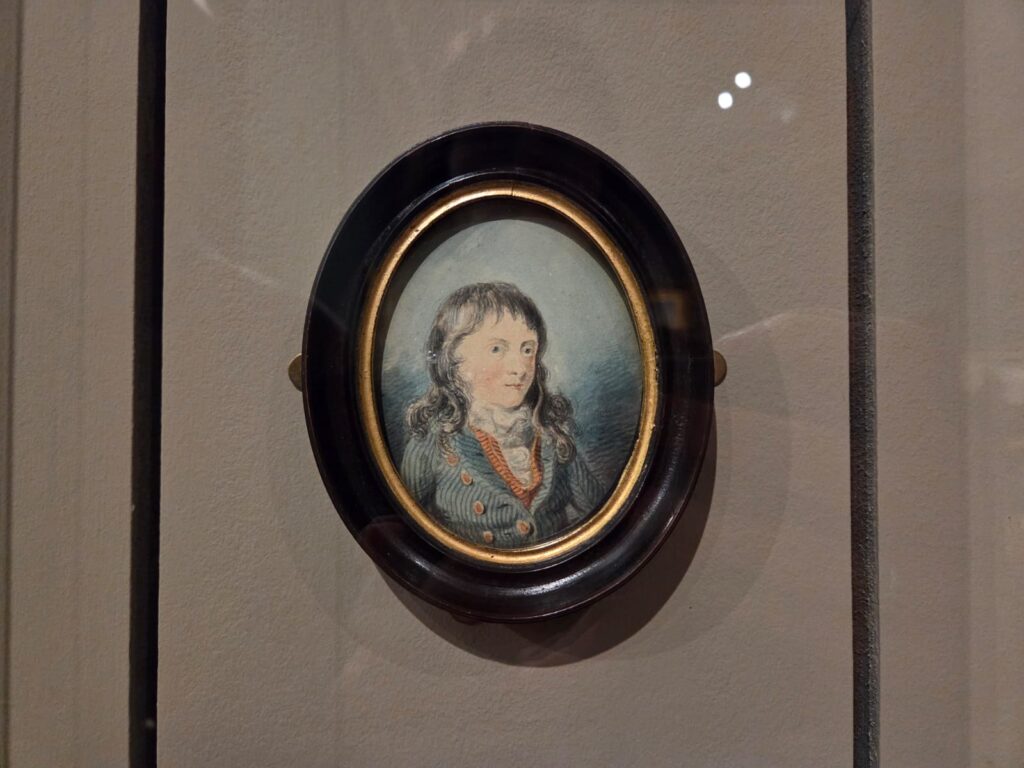
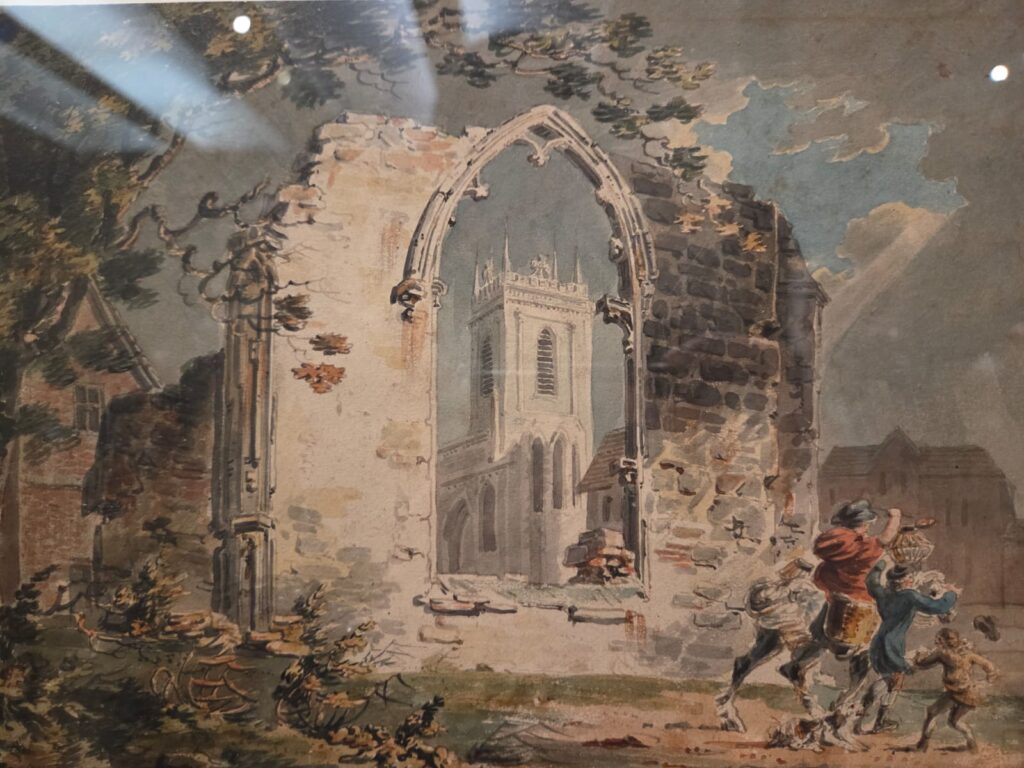
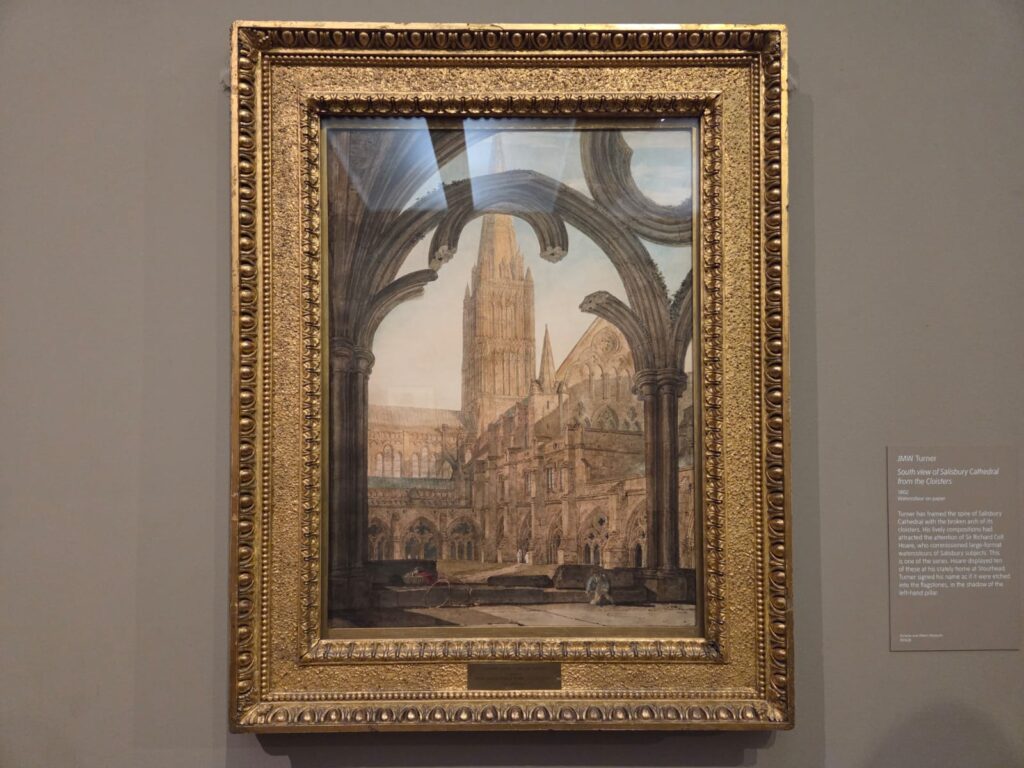
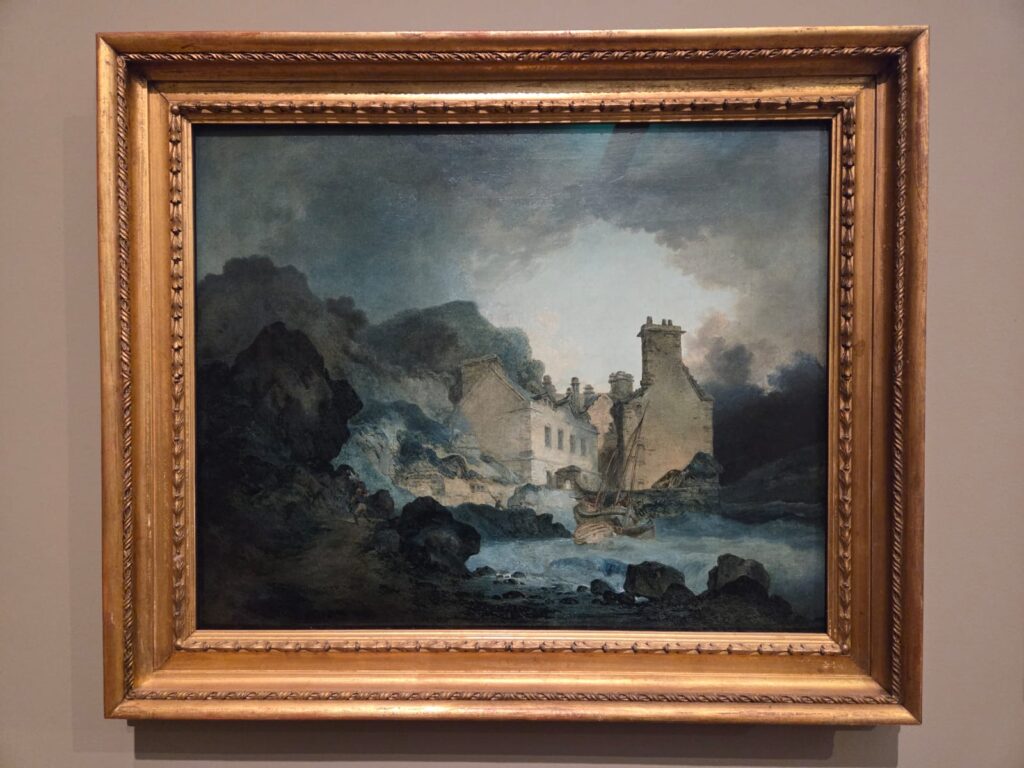
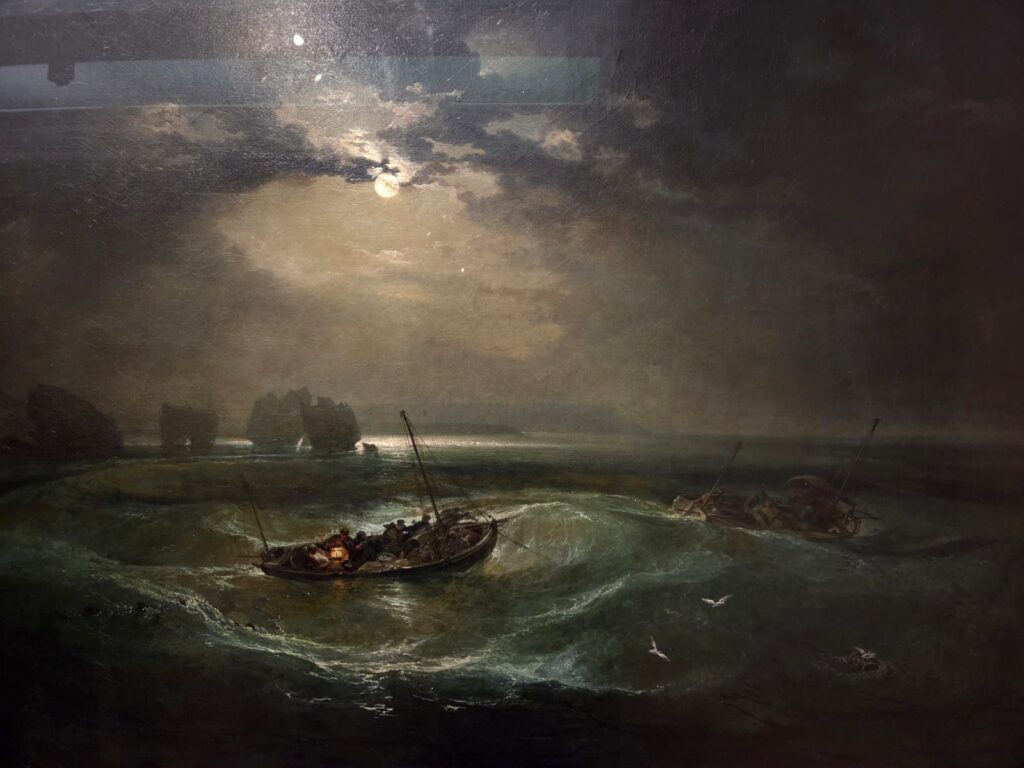
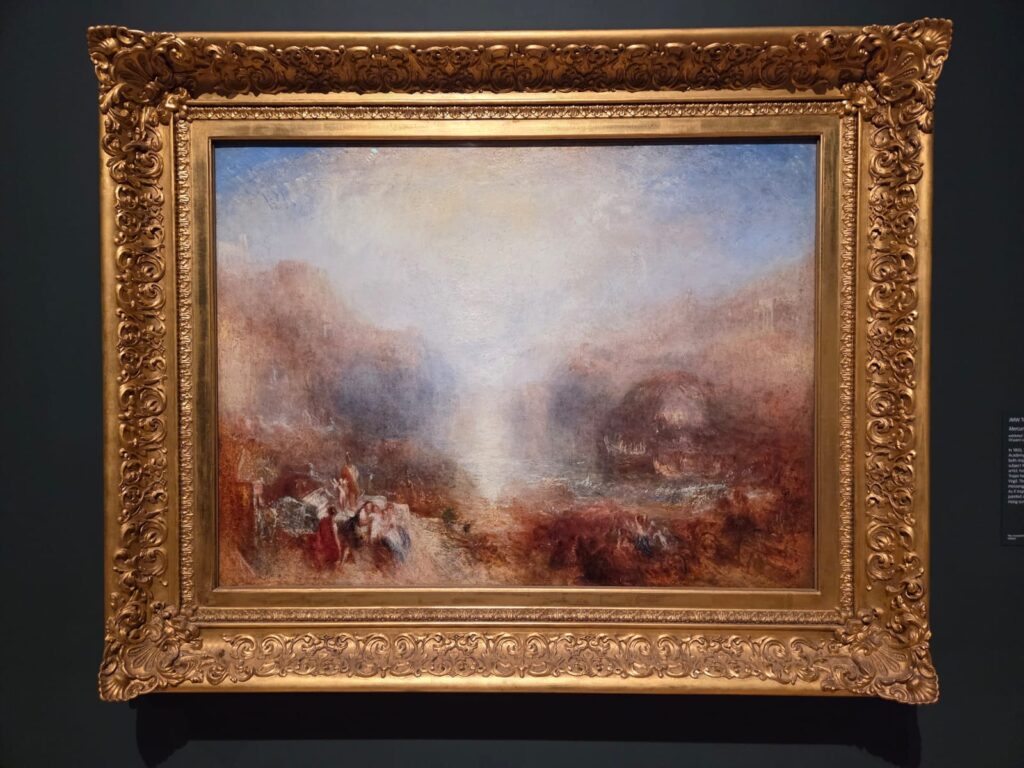
Giants of British Art: Turner
Even as someone who spends a lot of time at exhibitions and thinking about art and art history, I find it’s easy to fall into a habit of thinking of historic artists in isolation. OK some of them fall into movements or schools, like Impressionists, but otherwise I tend to think of artists in a vacuum. An exhibition like this, which showcases two artists who were contemporaries, aware of each other’s work, and part of an art scene (or the historic equivalent – that term sounds very modern), is a welcome change. I was trying to think which exhibition it reminded me of, in terms of breathing life back into an artist as a person rather than an idea, and remembered it was this one on Albrecht Dürer at the National Gallery. It’s nice, somehow, to know that even the greats had their rivalries and blind spots.
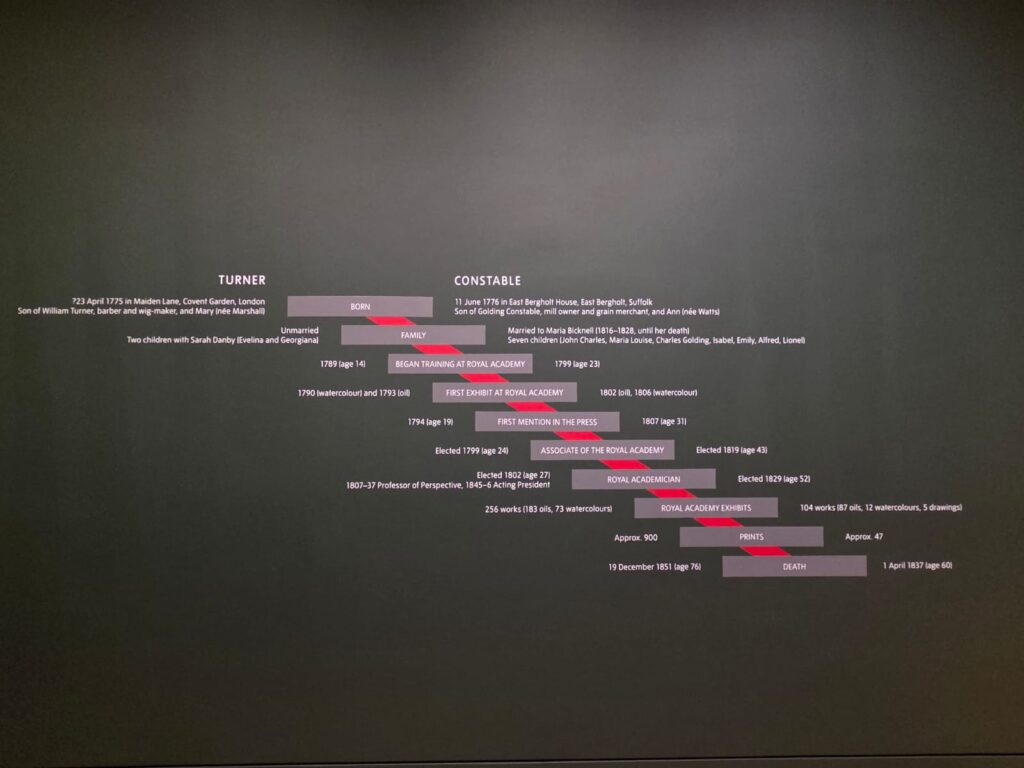
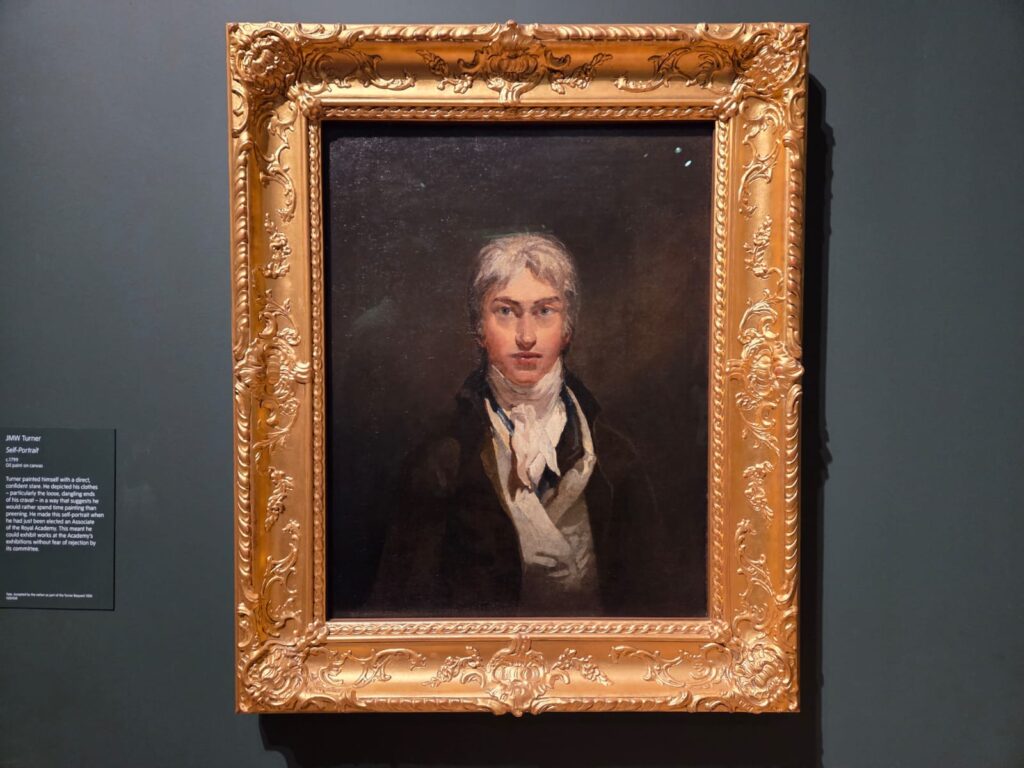
Anyway, on to today’s rivals. J.M.W. Turner was the elder of the two, by a year. Born in 1775 in Covent Garden, his father was a barber. His lower middle class origins remained an important part of his identity, as was the commercial acumen that financial necessity forced him to build. Turner showed talent from a young age (his father was an early and devoted supporter), and studied at the Royal Academy of Arts from the age of 14. He worked in related fields to earn money, including as a draughtsman and applying colour washes to engravings. He opened his own gallery in 1804.
Turner didn’t marry, but had several children by different mistresses, including one who he installed as landlady of a pub in Wapping. Turner travelled extensively in Europe, had a house down the Thames which we visited once on the blog, and died at the age of 76 in 1851. His fairly chaotic studio (one canvas cut into a cat flap, another patching a hole in the roof) contained many important works which were bequeathed to the nation, a good portion now residing in the Tate collection.
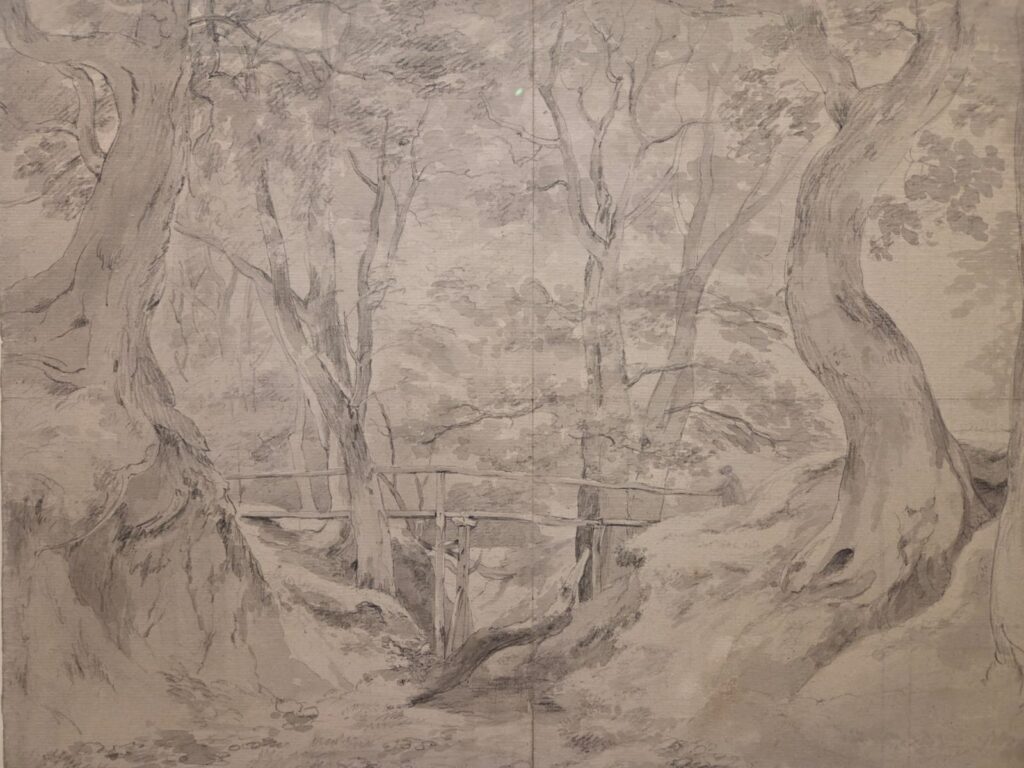
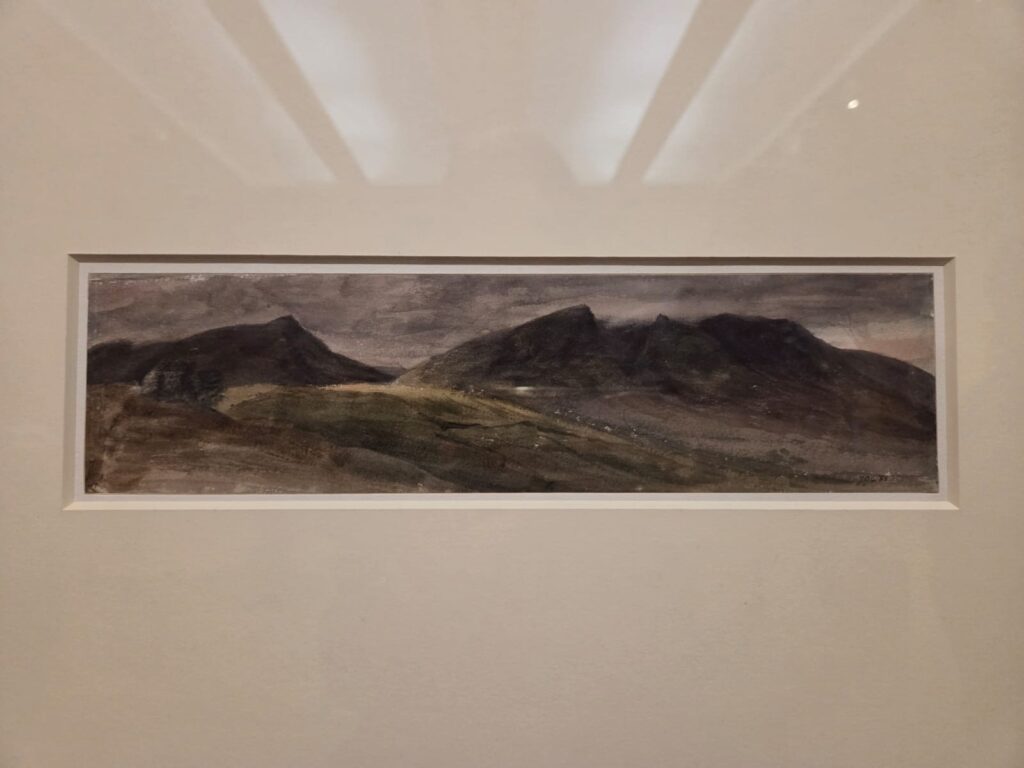
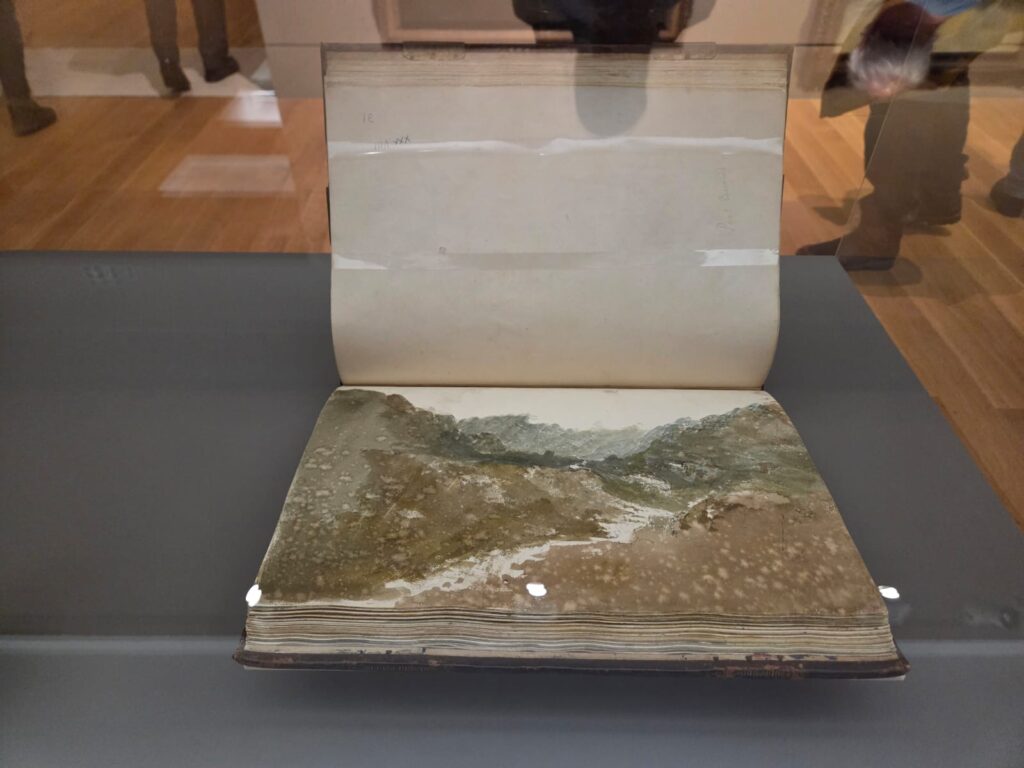
Giants of British Art: Constable
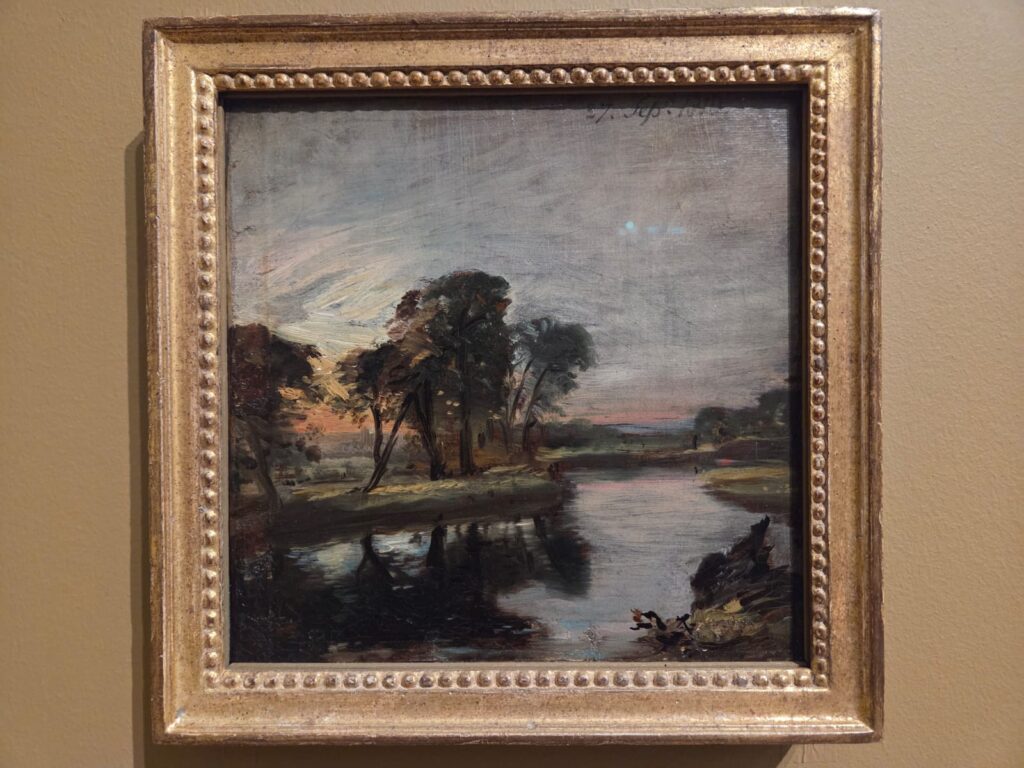
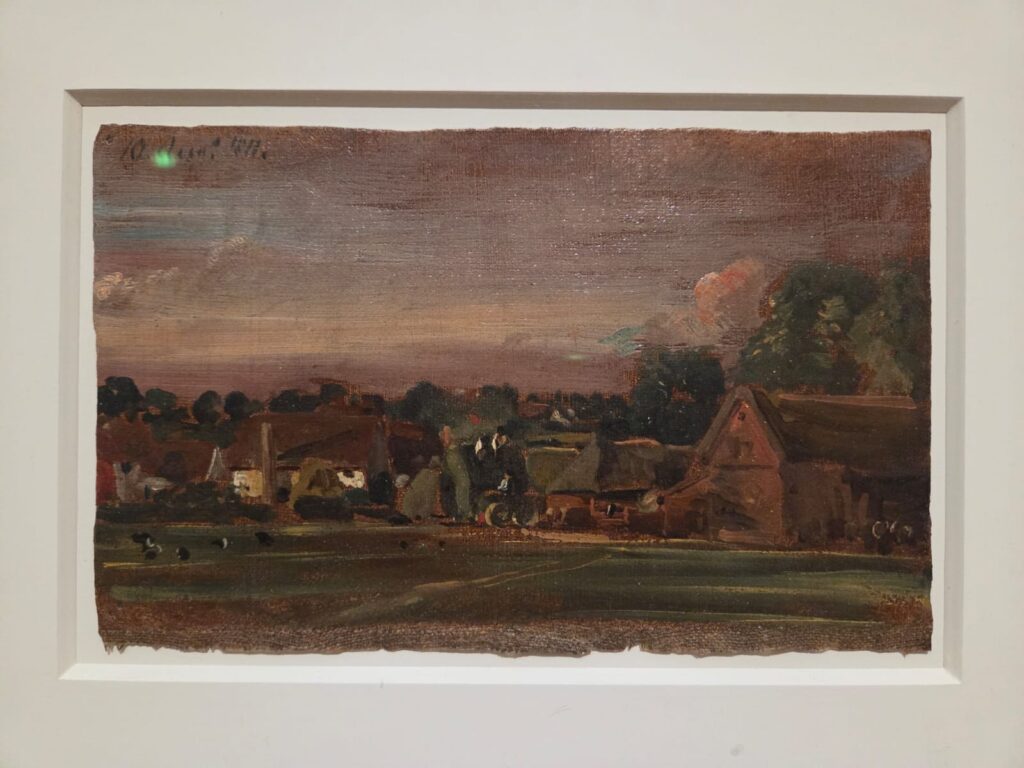
John Constable’s life was a little different. Born in 1776 in Suffolk, his father was a wealthy corn merchant. The Constables were less enthusiastic about John’s choice of career than Turner’s father, as they had expected him to take over the family business. But Constable also showed a love of art from his youth, embarking on sketching trips around the Essex and Suffolk countryside. He became particularly associated with the landscapes of Dedham Vale. Constable entered the Royal Academy Schools in 1799, with the aim of becoming a professional landscape painter. Professional success was slow, and he was elected a Royal Academician in 1829 (Turner reached this milestone in 1799).
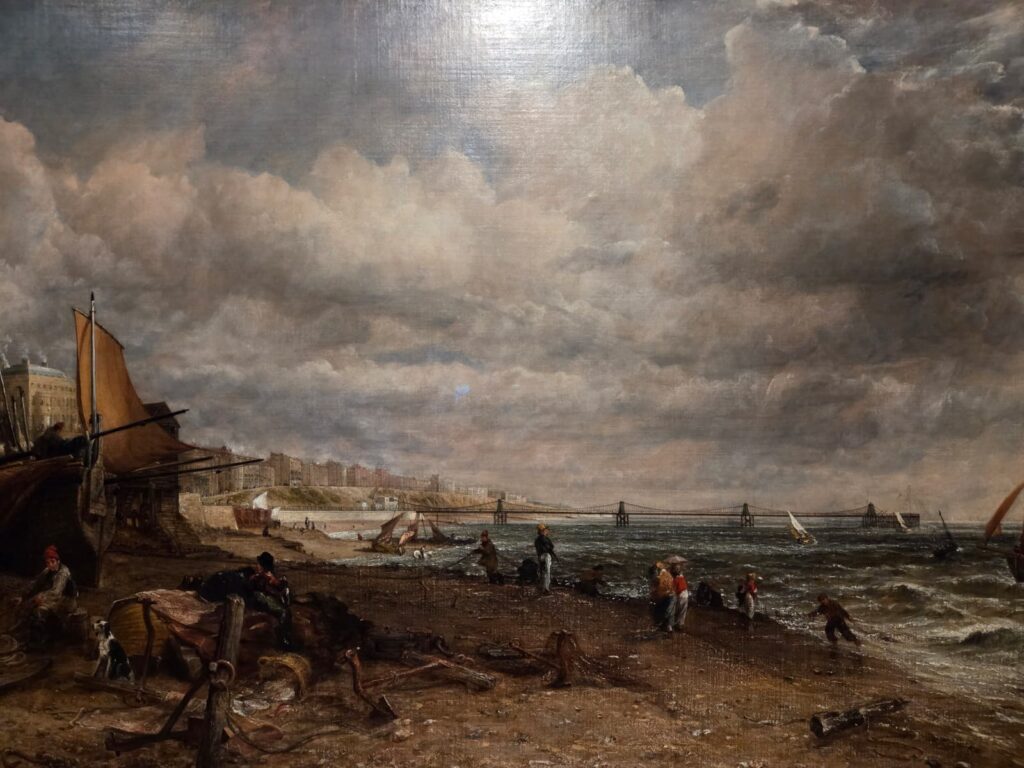
Constable’s personal life was also more settled than Turner’s. He married childhood friend Maria Bicknell in 1816, the marriage resulting in seven children before Maria died of tuberculosis in 1828. During her illness the couple stayed in Brighton for its sea air: this had the secondary benefit of allowing Constable to paint scenes of the fashionable resort. Despite some commercial success in France Constable had no desire to travel outside of England, either for sketching trips like Turner’s or to promote his work. He was not above altering his methods to court greater success, however. Wanting to stand out at the crowded Royal Academy annual exhibitions, Constable started painting larger-format canvases around 1819. These ‘six-footers’, as he called them, did the trick. They were seen as more important works, brought in new buyers, and finally led to that all important election to the RA.
John Constable died in 1837, and was buried next to his wife at St John-at-Hampstead Church in London.
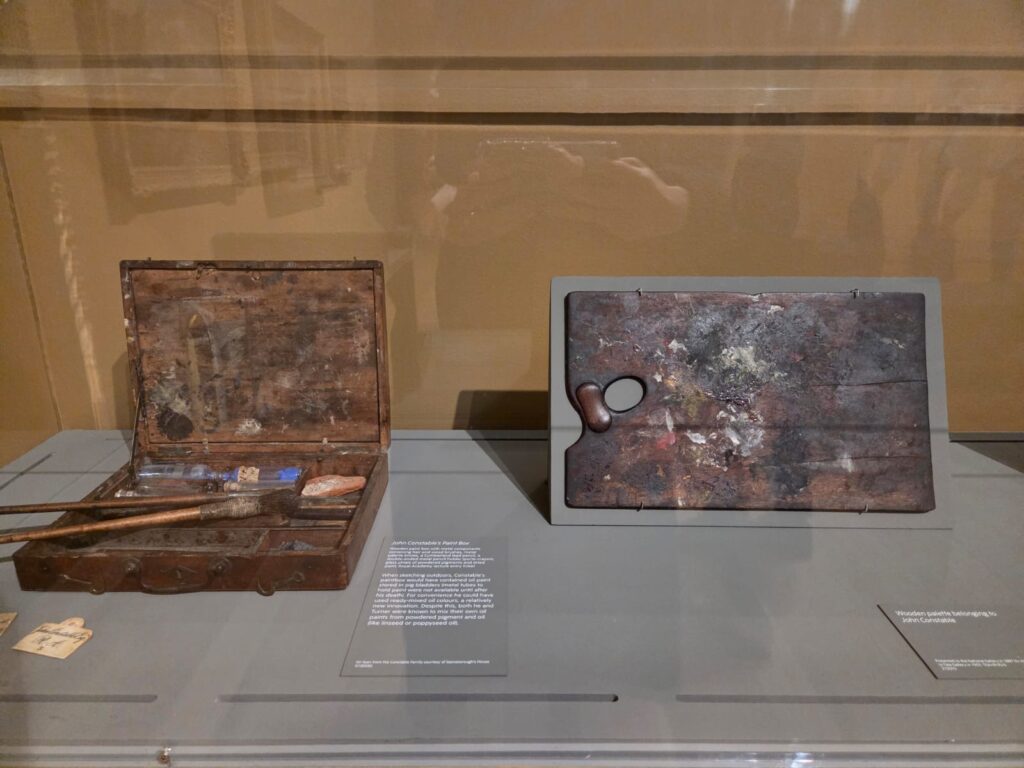
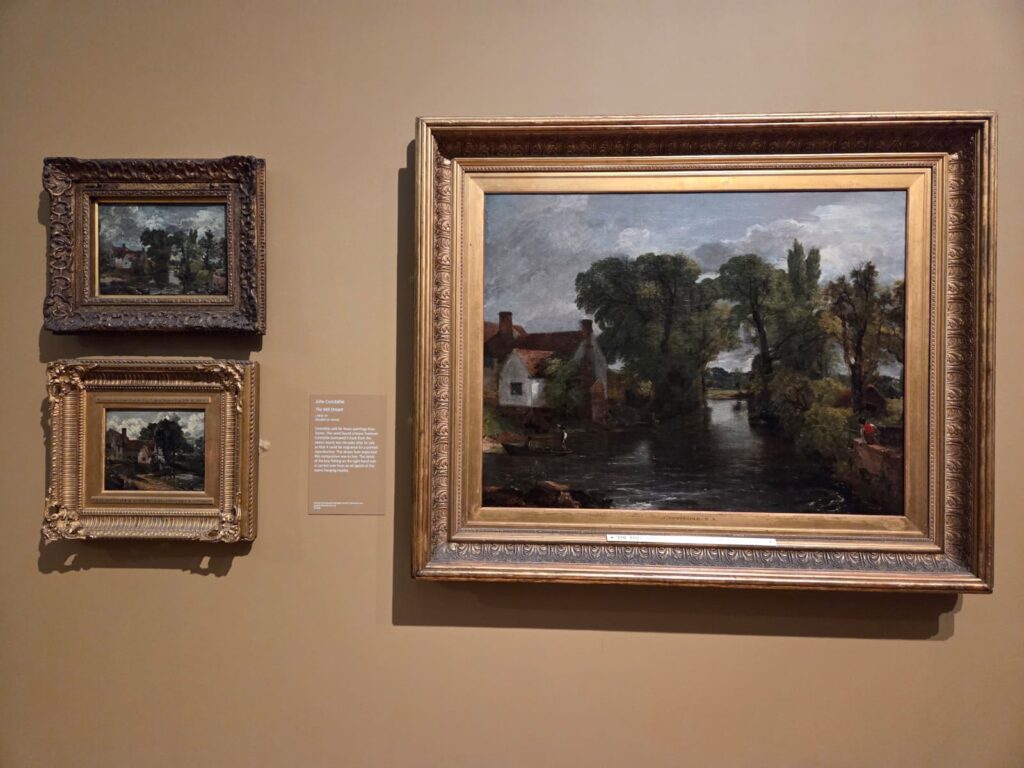
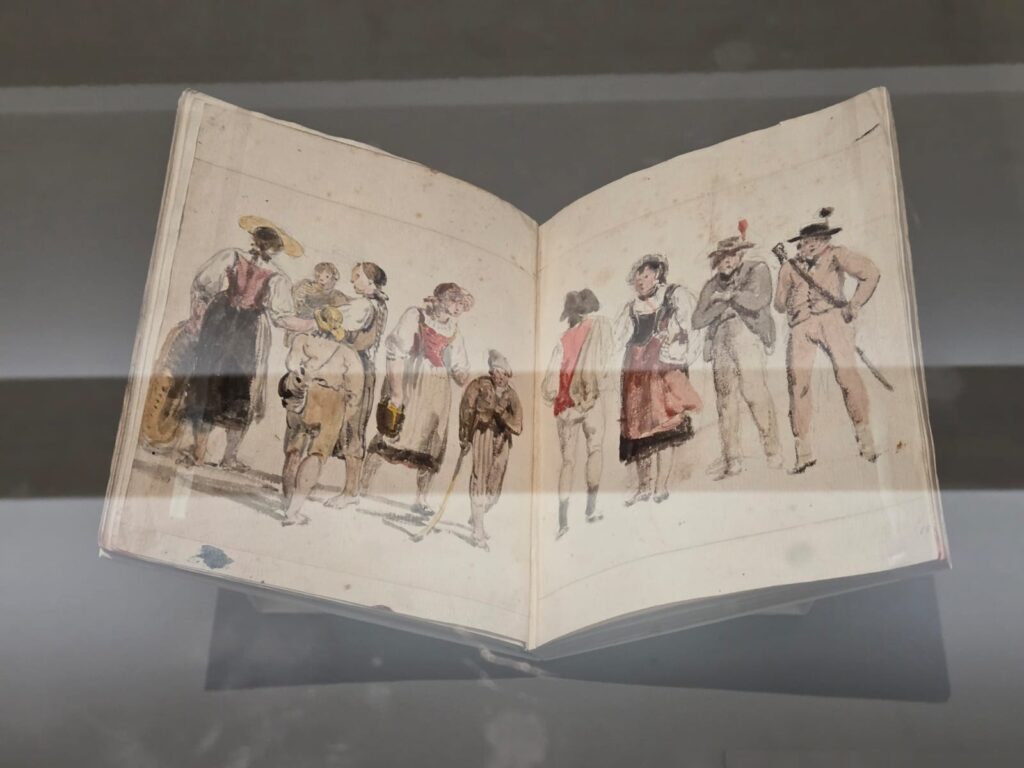
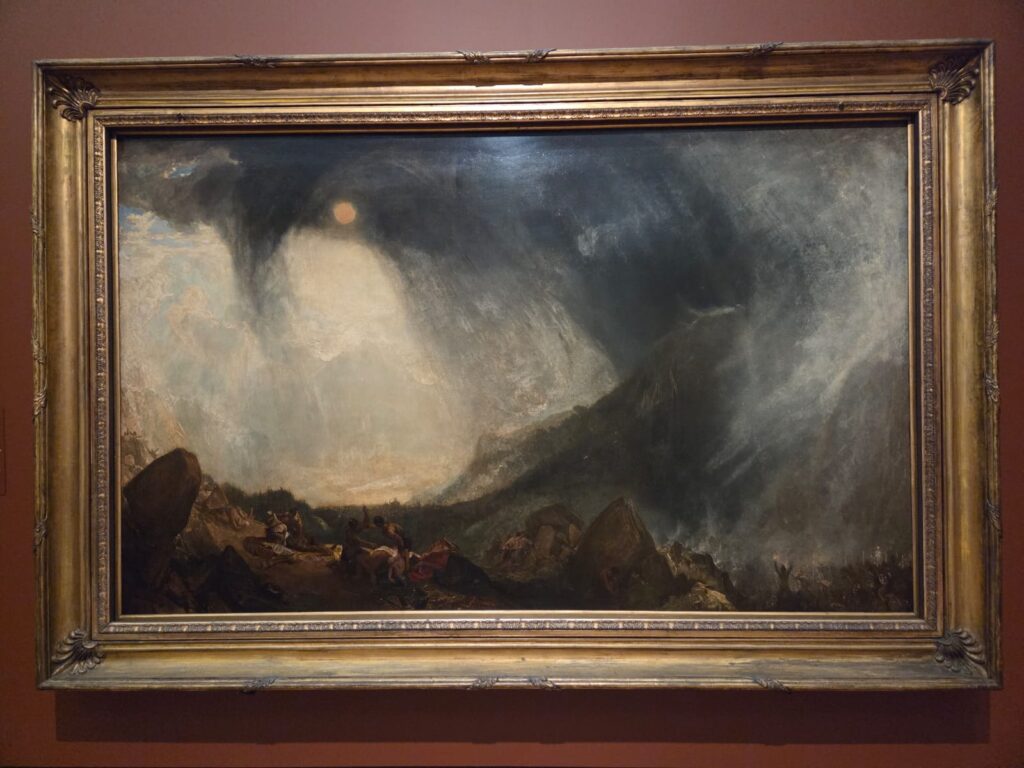
Rivals
Tate Britain’s exhibition puts forward the thesis that Turner and Constable were rivals, and originals. Let’s start with looking at them as rivals.
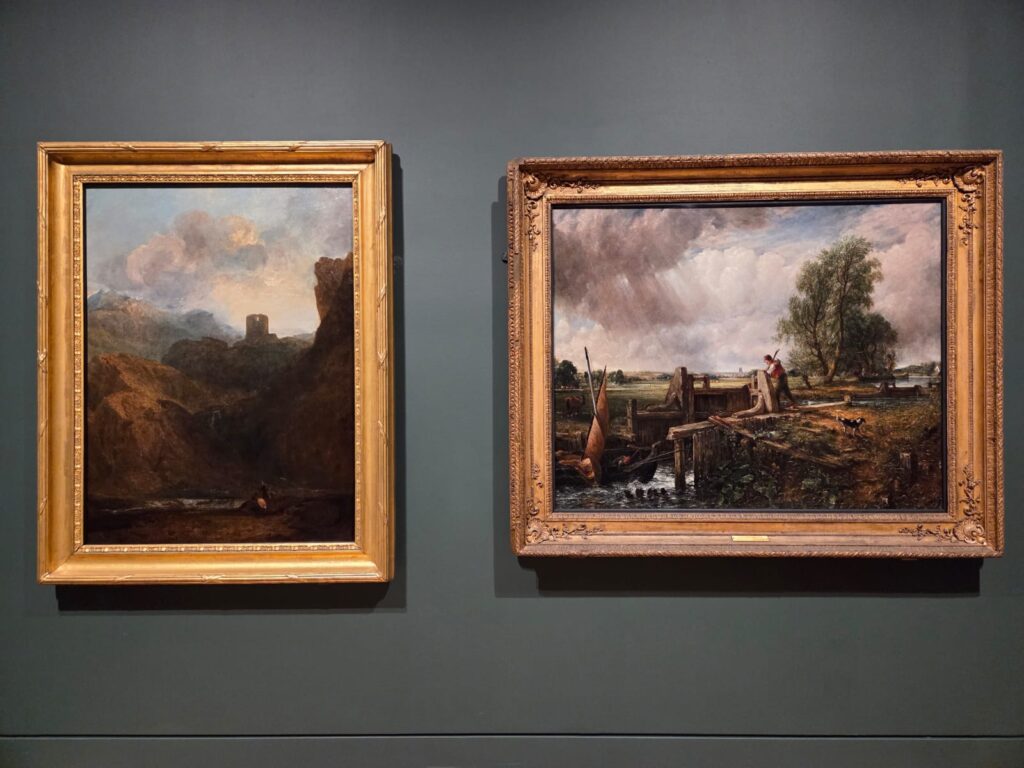
As we learned above in those brief artist biographies, Turner and Constable were exact contemporaries. The exhibition has a rhythm where it alternates showing their work together, with showing an aspect of each of their work in turn. The texts and labels draw out the artists’ thoughts on each other, particularly Constable’s on Turner. This, I think, can be at least partly attributed to professional jealousy. I don’t think anyone finds it particularly fun going up against a prodigy!
The main complaint Constable seems to have had with Turner’s work comes back to Romanticism. Turner and Constable were painters of the Romantic era. As opposed to Neoclassical art, Romantic art centred on emotion, subjectivity, and personal expression. For Constable, this meant painting an agricultural world that was quickly modernising and changing. Turner leaned into the Romantic period’s interest in the ‘sublime’. At the time, this term meant an intense experience, for instance in response to a landscape or weather event, that provoked awe and terror. For Constable, this was a little too bombastic.
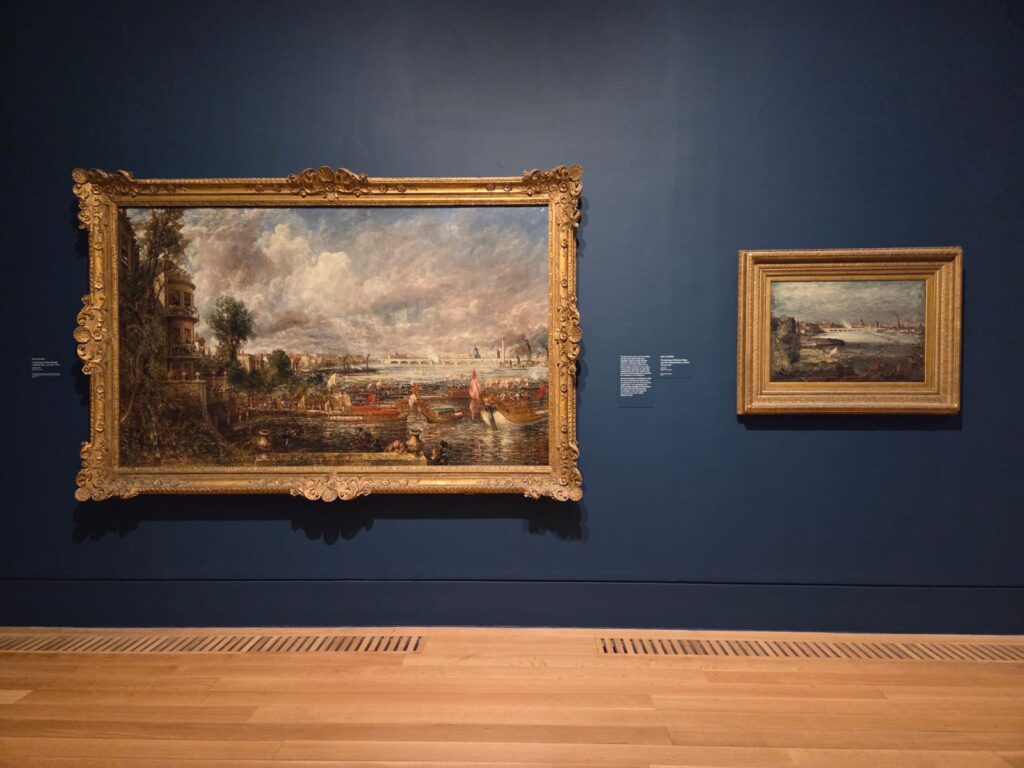
Although fewer of Turner’s thoughts on Constable have survived for posterity, we can judge him by his actions. One of these was immortalised in the 2014 film Mr. Turner. The scene (played on a loop in the gallery) is the 1831 exhibition at the Royal Academy. Varnishing Day, upon which artists met, and applied the finishing touches to their works. Turner, perhaps a little concerned that Constable’s view of Waterloo Bridge might outdo his contribution, arrives and places a single dot of red paint, supposedly a buoy, to pull focus back to his painting. “He has been here, and fired a gun”, were Constable’s words.
A nicer example of Turner’s interactions with Constable came in 1829. When Constable was finally elected to the Academy, Turner paid him a visit in person to congratulate him. Friendly rivals, then, we might conclude.
Originals
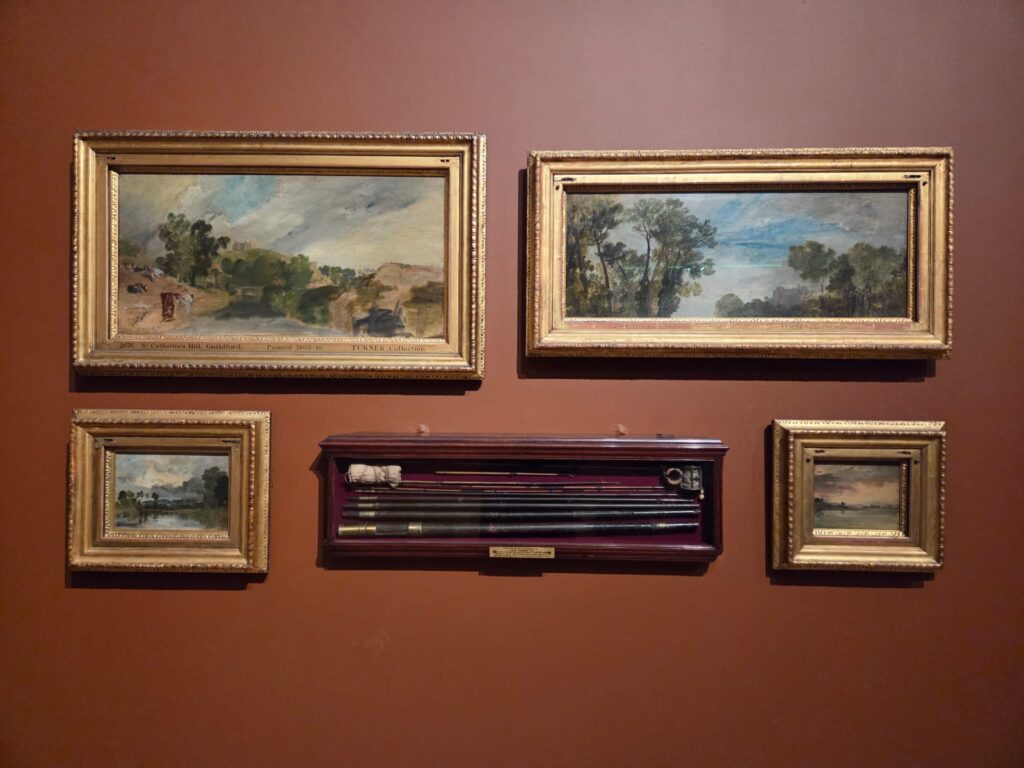
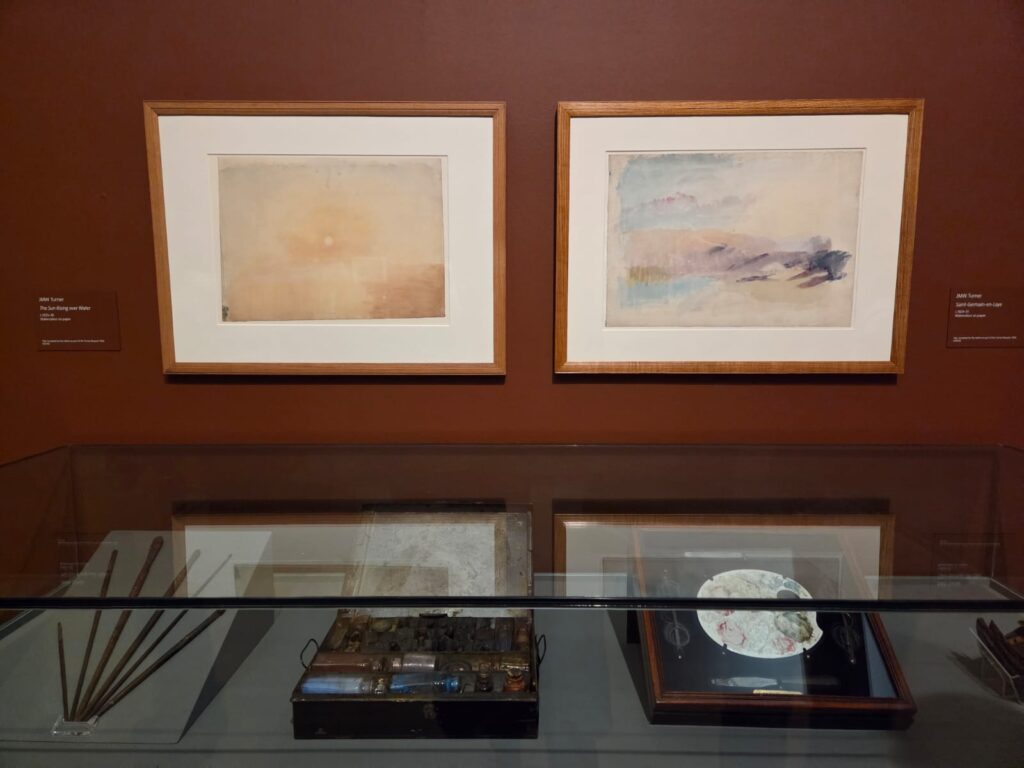
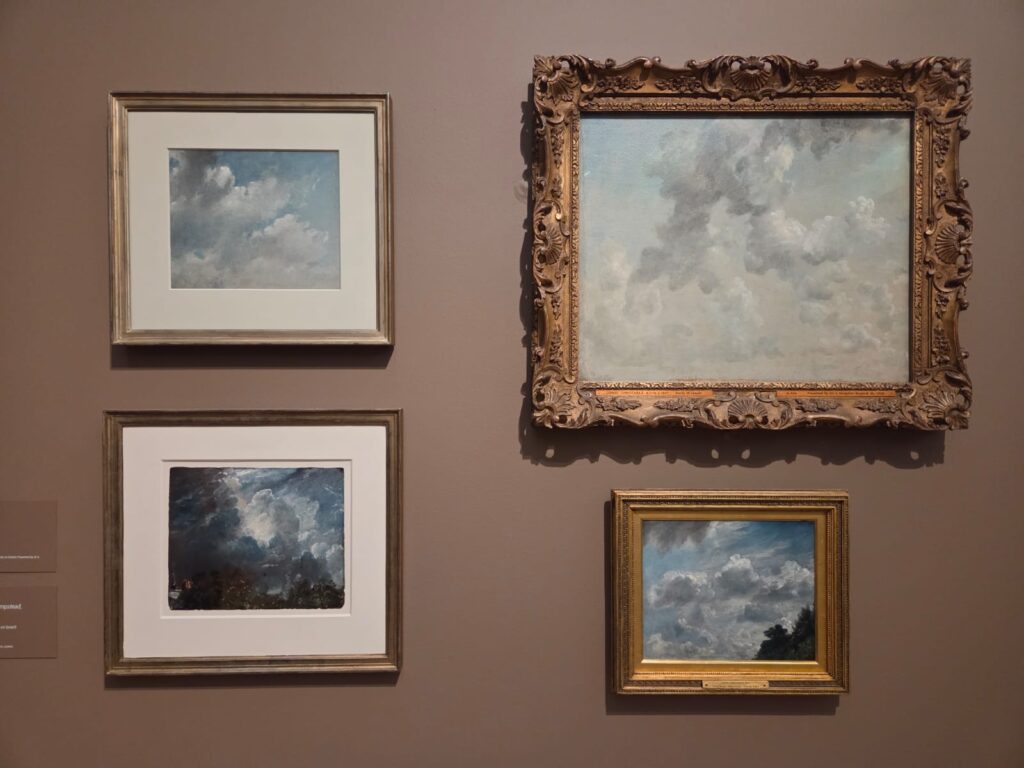
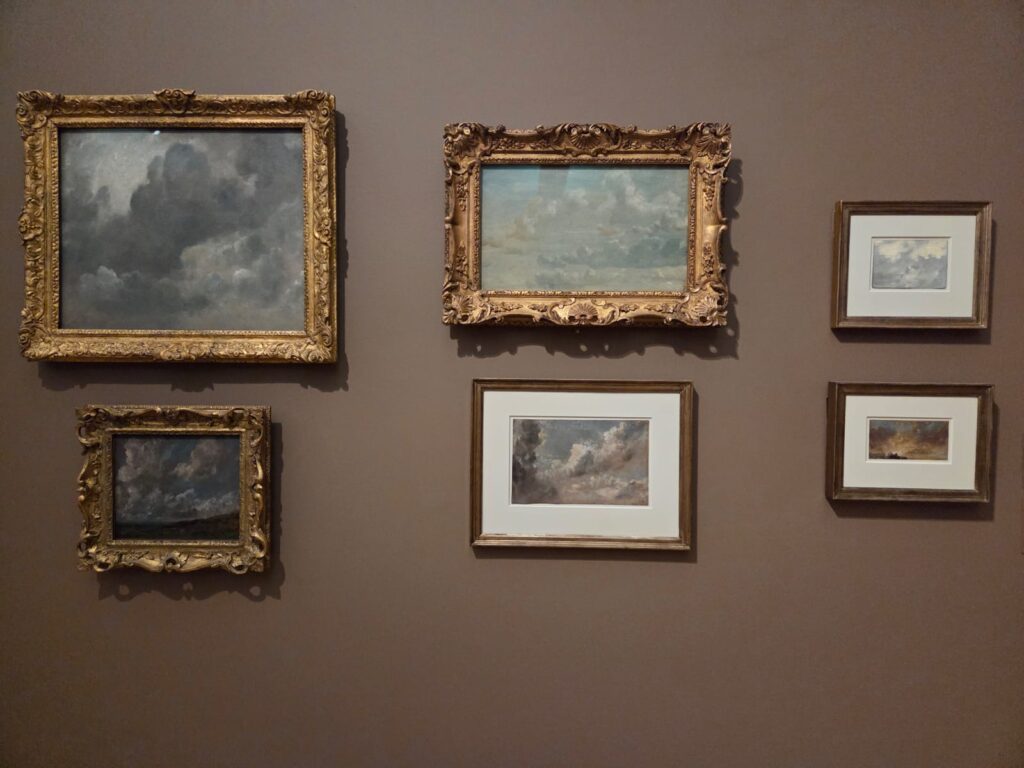
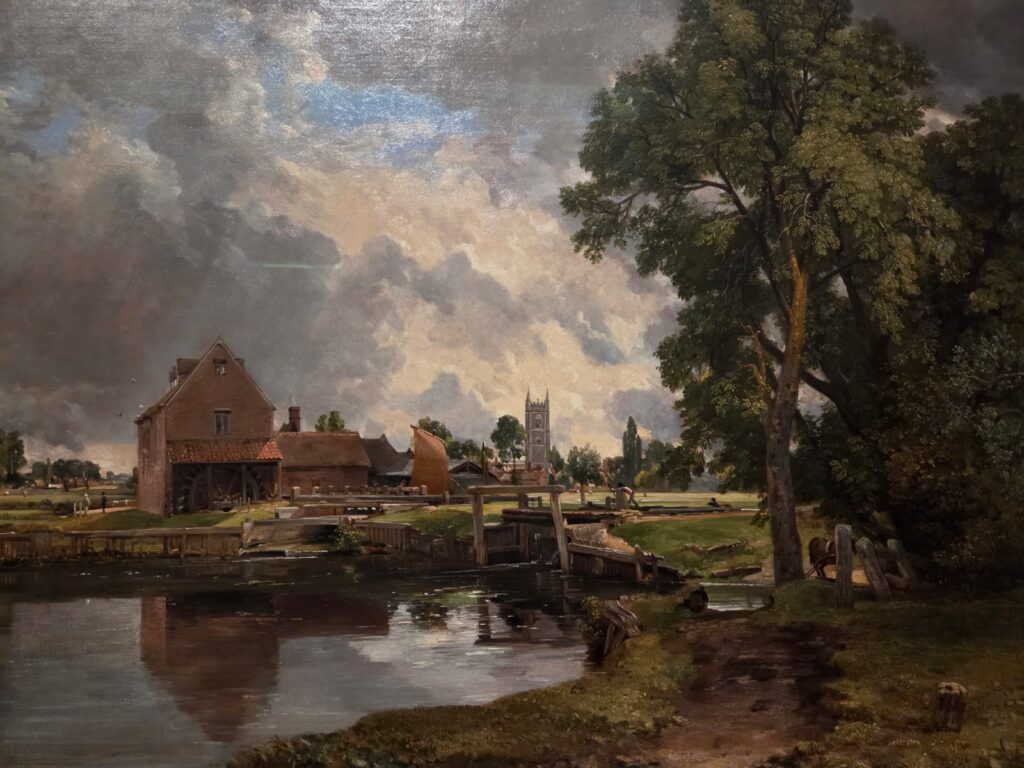
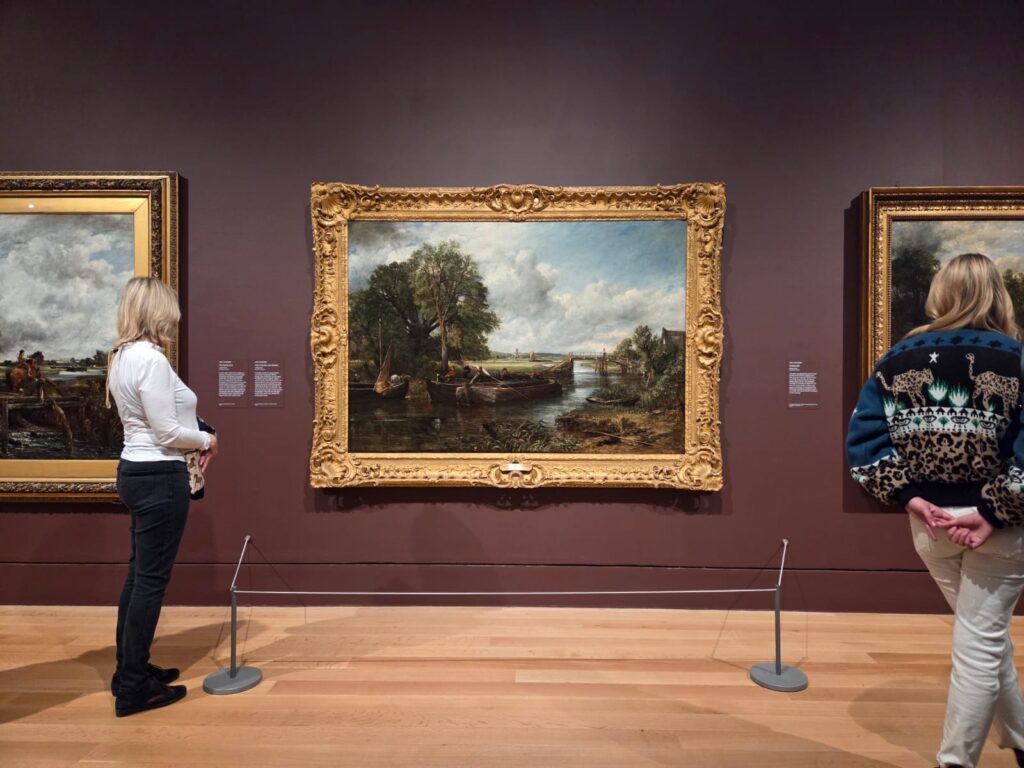
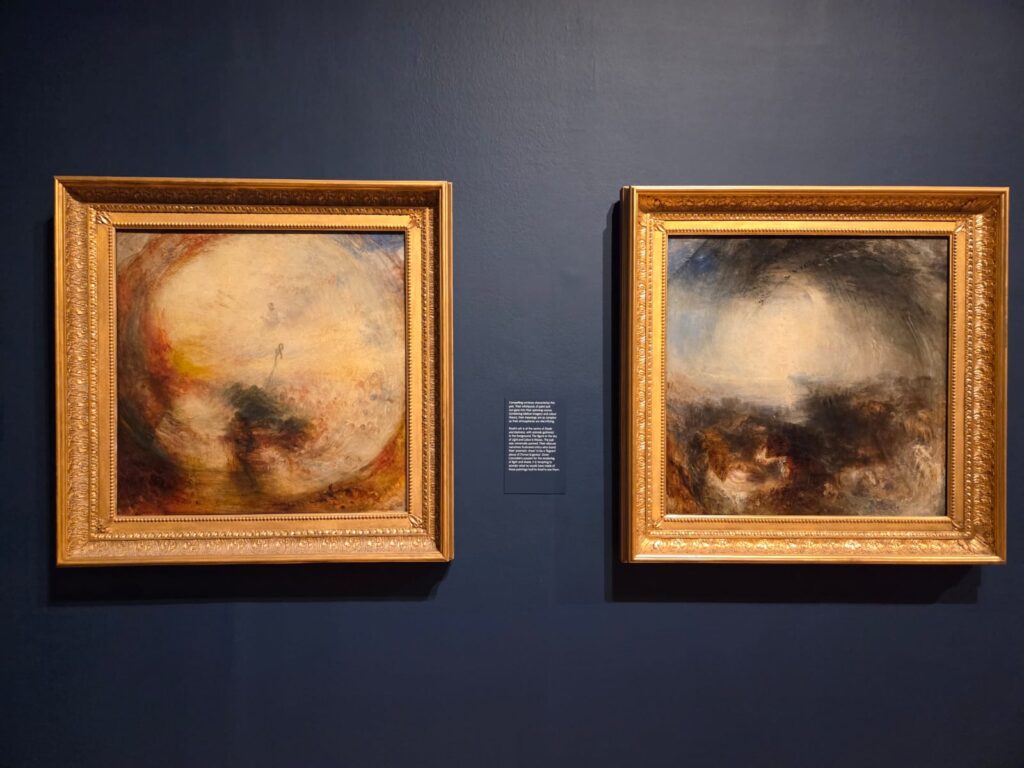
The other thesis of the exhibition is that these artists, who were very different in many respects, were both ‘originals’. This, I think, is easy to demonstrate. Starting with Turner, there’s no denying it. His technique, particularly later in life, was so unlike his peers it has led some to view him as a kind of proto-Impressionist. Whether painting English or European scenes, modern life or the ancient world, his paintings are striking and distinctive. Constable too, though, was an innovator. His take on Romanticism saw him paint the ‘truth’ of nature, particularly the places closest to home. He created effects through different brushstrokes, white highlights, and other techniques that set him apart from his peers. Both artists were at the forefront of elevating landscape from the background to the main stage.
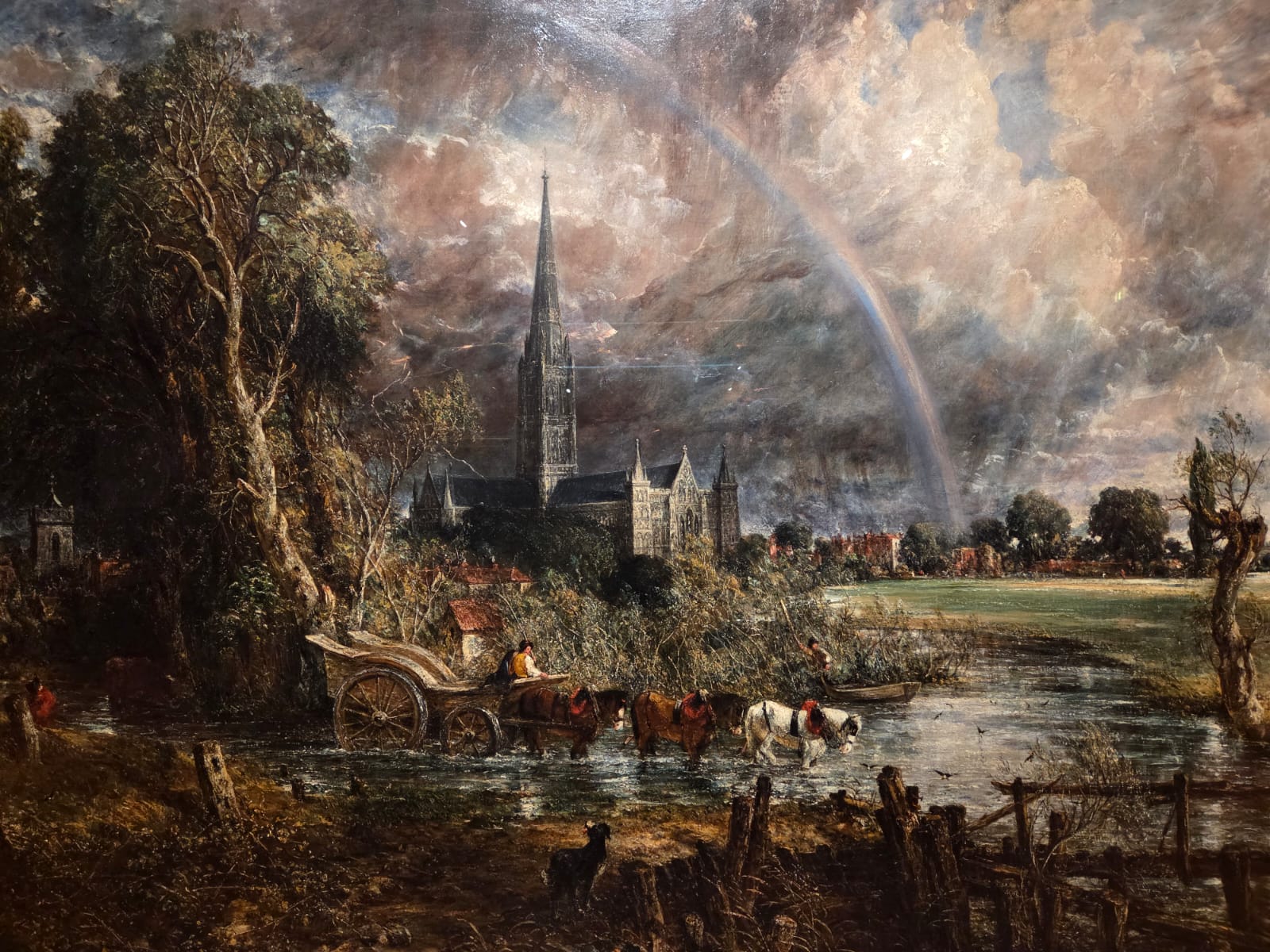
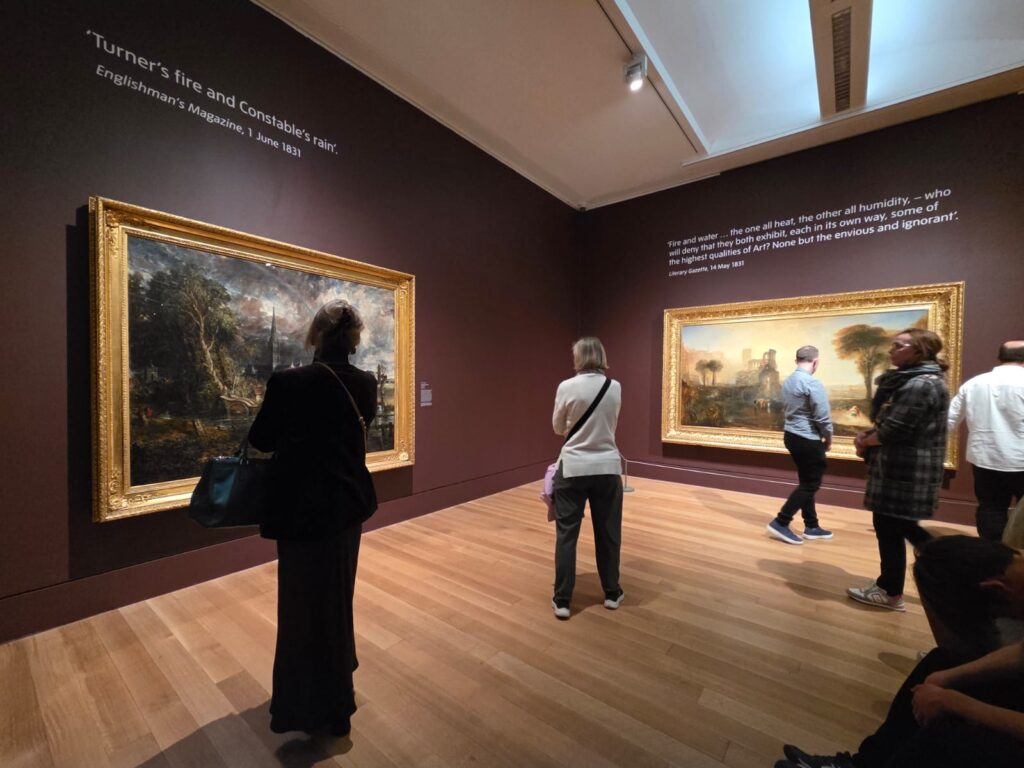
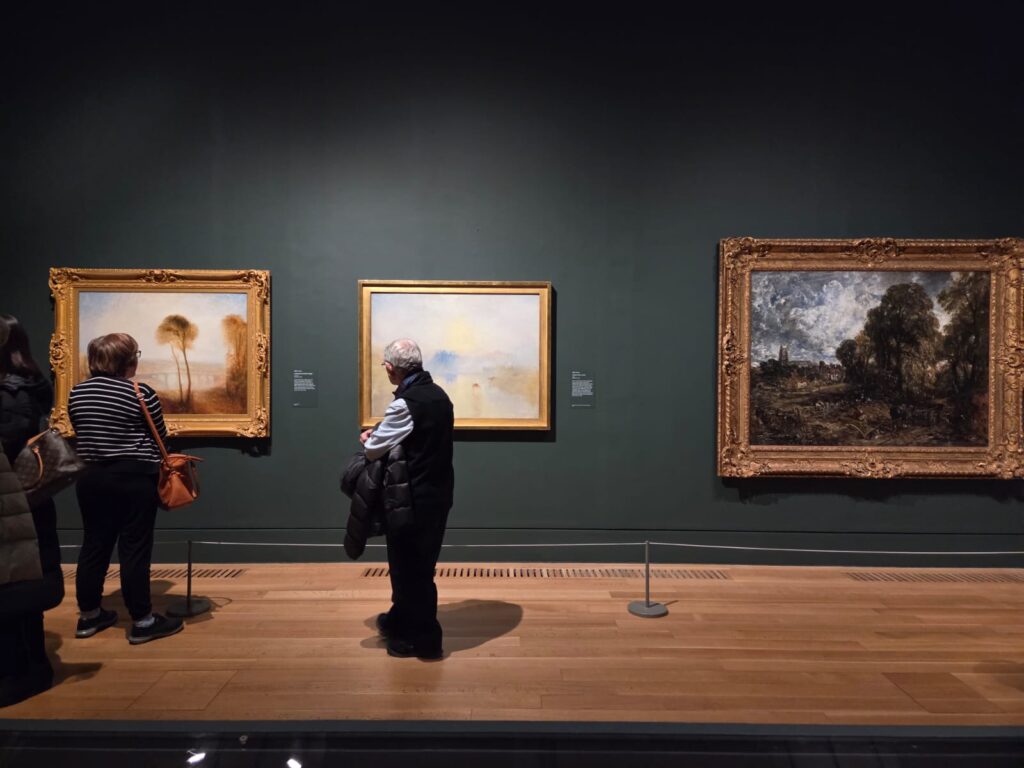
This is really well embodied within the exhibition by two paintings. Constable and Turner exhibited them in the same year at the Royal Academy – 1831. Salisbury Cathedral from the Meadows is an exemplary work by Constable. The cathedral is beautifully and dramatically framed within the composition. The sky broods overhead, pierced by a rainbow. It’s a work that is full of symbolism of life, death, grief and hope – undoubtedly connected to the loss of his wife just a few years earlier.
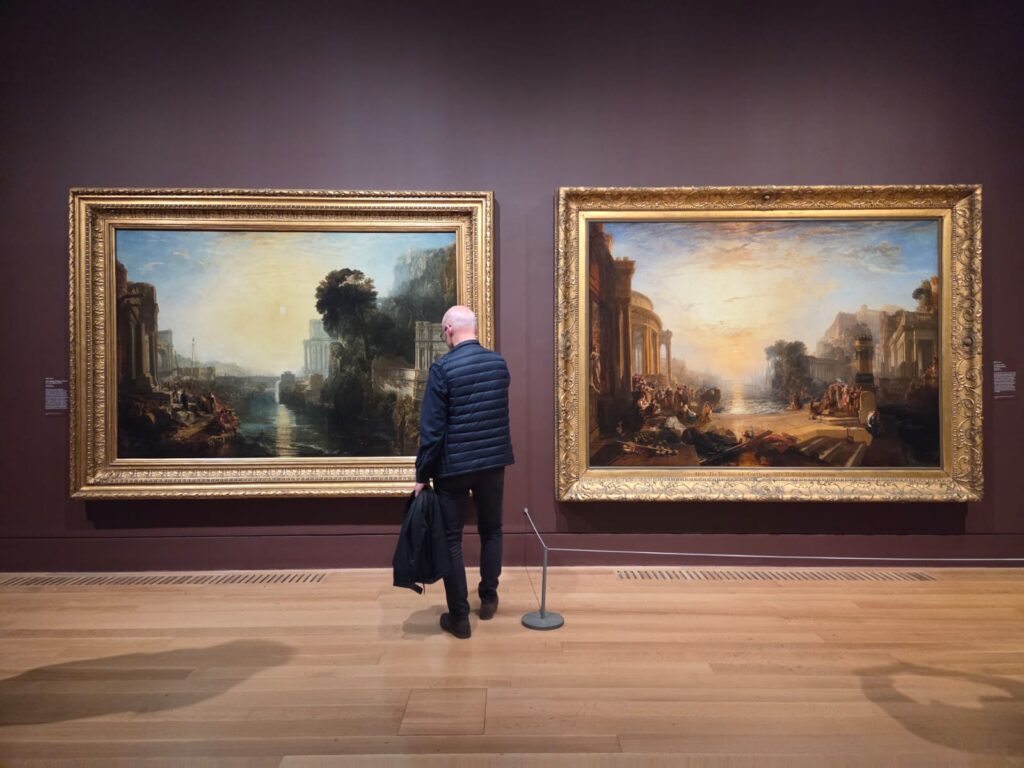
Turner’s contribution is all light and air where Constable’s is drama. In a hazy landscape, Caligula’s Palace and Bridge shows both in ruins. It’s hard not to see a connection to the recent Napoleonic Wars in Europe, and a warning to arrogant rulers.
Constable was part of the hanging committee of the Royal Academy at the time, and deliberately placed his canvas next to Turner’s. Critics called them ‘Fire and Water’, describing both as excessively bold. And I think that adjective really underscores their identity as ‘originals’. Nobody was ever called bold for being middle of the road.
Final Thoughts
I found Turner & Constable: Rivals & Originals to be a very well-constructed exhibition. The flow of considering both together before each in turn allows viewers to make connections, as well as understanding each artist in their own right. Placing artworks back together that were originally seen together is also a nice touch. I came away with a much better sense of the art scene of the early 1800s.
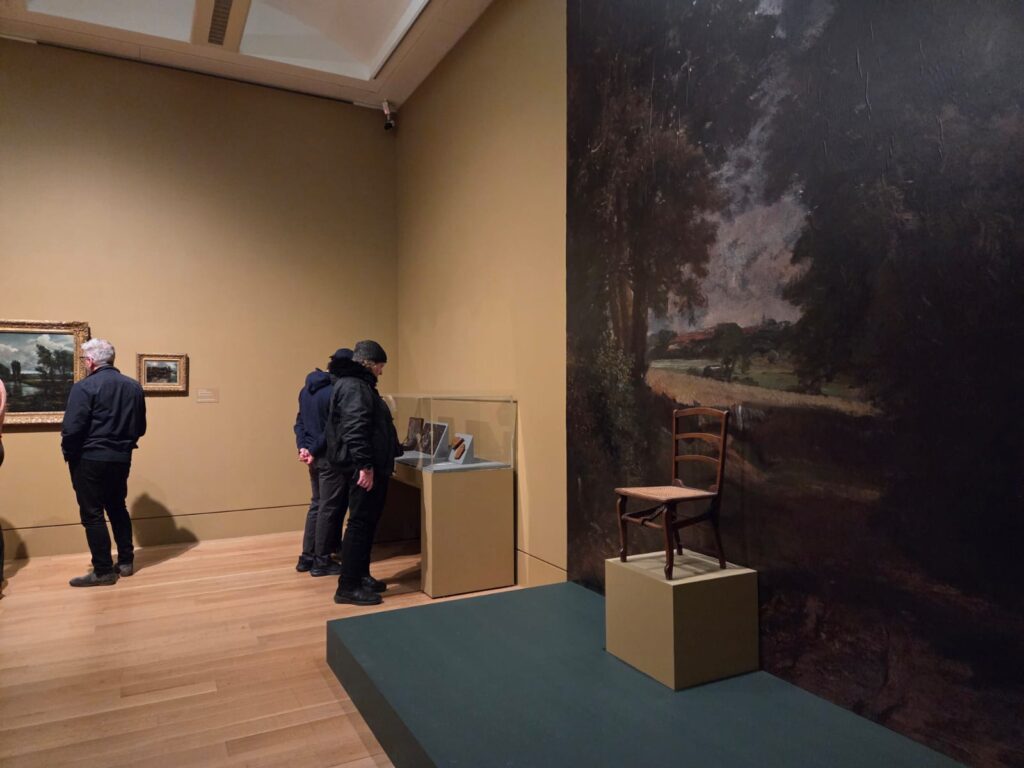
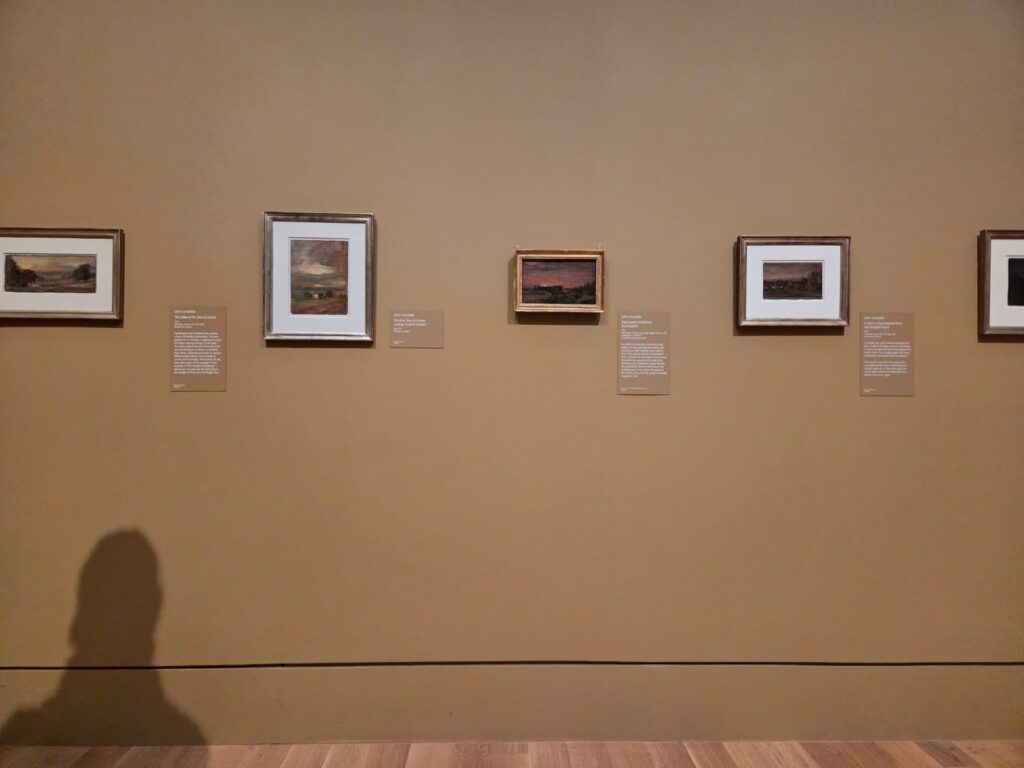
It’s also a very handsome exhibition. I’ve gone all Regency myself now with my choice of vocabulary. But I stand by it. The Tate exhibition team are very good at picking complementary wall colours, and have done a great job once more. The browns and purples are recognisably old-fashioned, and add a nice period feel. The works are well-spaced, and there is a good variety of oil paintings, watercolours, sketches, and the odd object. Whether it was the information panel at the start or the exhibition design itself, I successfully avoided museum fatigue this time around.
The exhibition is on for a few more weeks. I recommend heading to Tate Britain to see it. It’s not earth-shattering, but builds up a nice picture of two important artists. I came away understanding more about each, and also the world they lived in. There are worse ways to spend an hour or so than looking at nice pictures and learning a thing or two!
Salterton Arts Review’s rating: 3.5/5
Turner & Constable: Rivals & Originals on until 12 April 2026.
Trending
If you see this after your page is loaded completely, leafletJS files are missing.