
The Painted Tower: Conservation in Context at Longthorpe – The Courtauld Gallery, London
A nice little exhibition at the Courtauld, The Painted Tower: Conservation in Context at Longthorpe focuses on their educational work and efforts to record, preserve and restore medieval wall paintings.
The Painted Tower
Oh I do love a little academic exhibition. I was at the Courtauld Gallery to see Seurat and the Sea. I didn’t even know this one was on. But, on my way down the stairs, the title tempted me into one of the gallery’s smaller exhibition spaces. We’ve seen and reported on other ones here, like this one for instance. They quite often have more of a focus on the Courtauld collection and/or the work of the broader Courtauld Institute of Art, a renowned training ground for art historians, curators and conservators.
It is on the latter that we will focus today. The Courtauld Institute offer a specialised MA in the Conservation of Wall Paintings. They have also had a pioneering role in the surveying and conservation of these precious survivors. In the 1930s, Courtauld slide librarian (and later lecturer) Margaret Whinney assisted E.W. Tristram with important research into English medieval wall paintings. The Institute is also home to the National Wall Paintings Survey, a vast archive initiated in the 1980s and recently digitised (more info here).
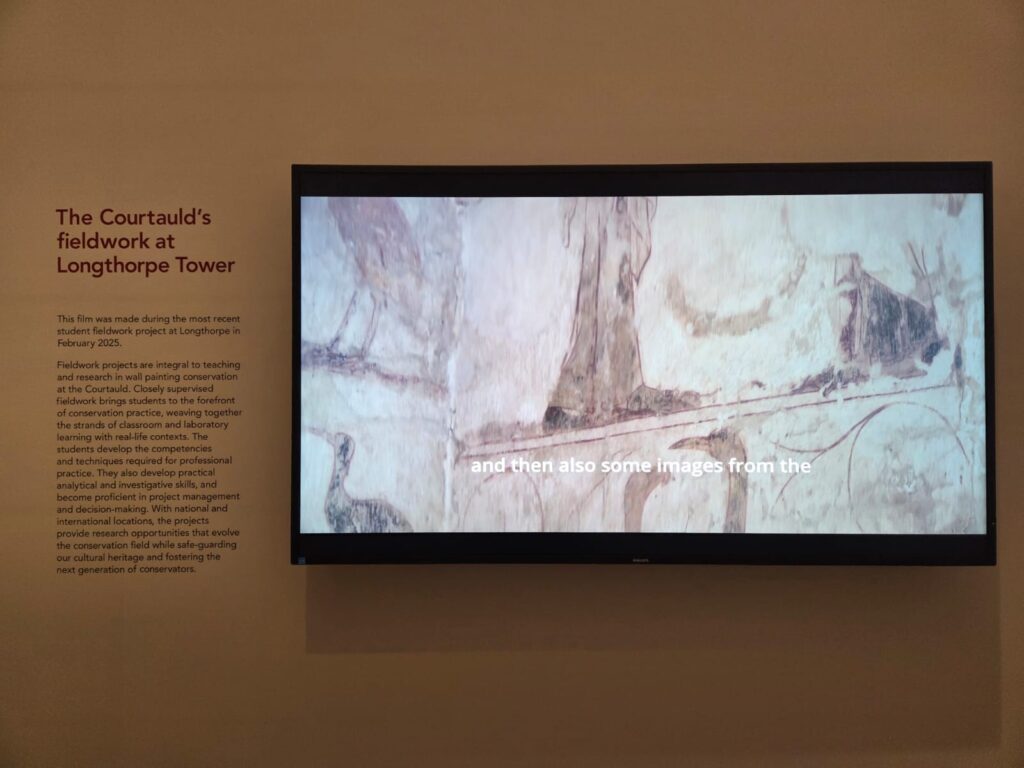
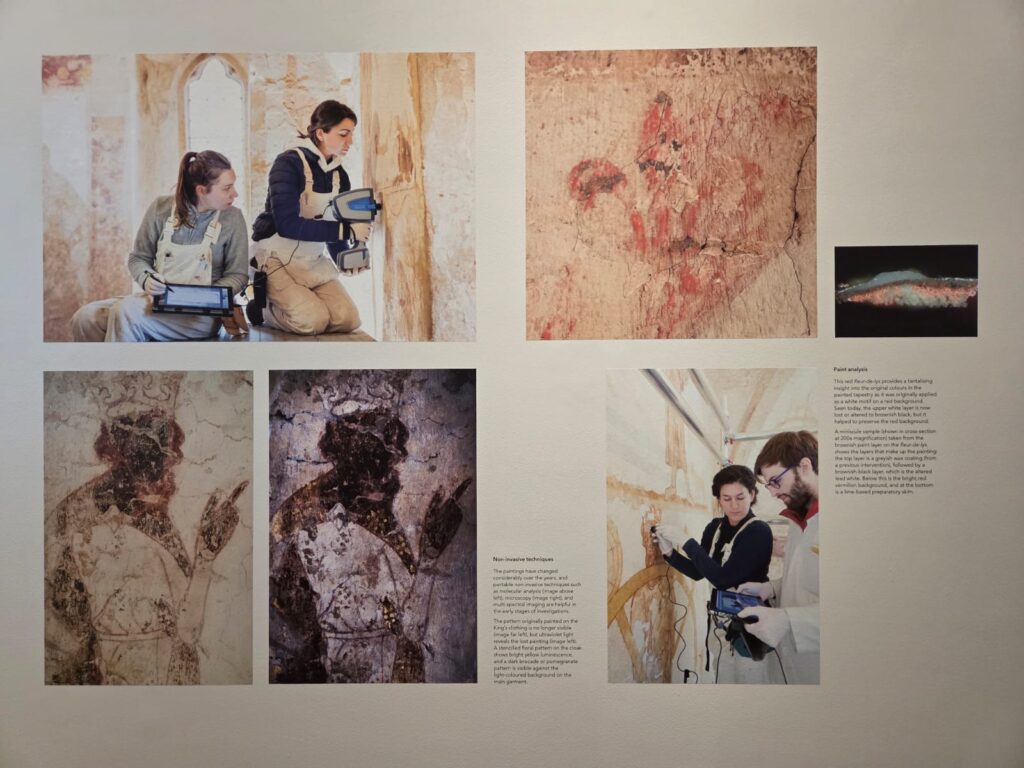
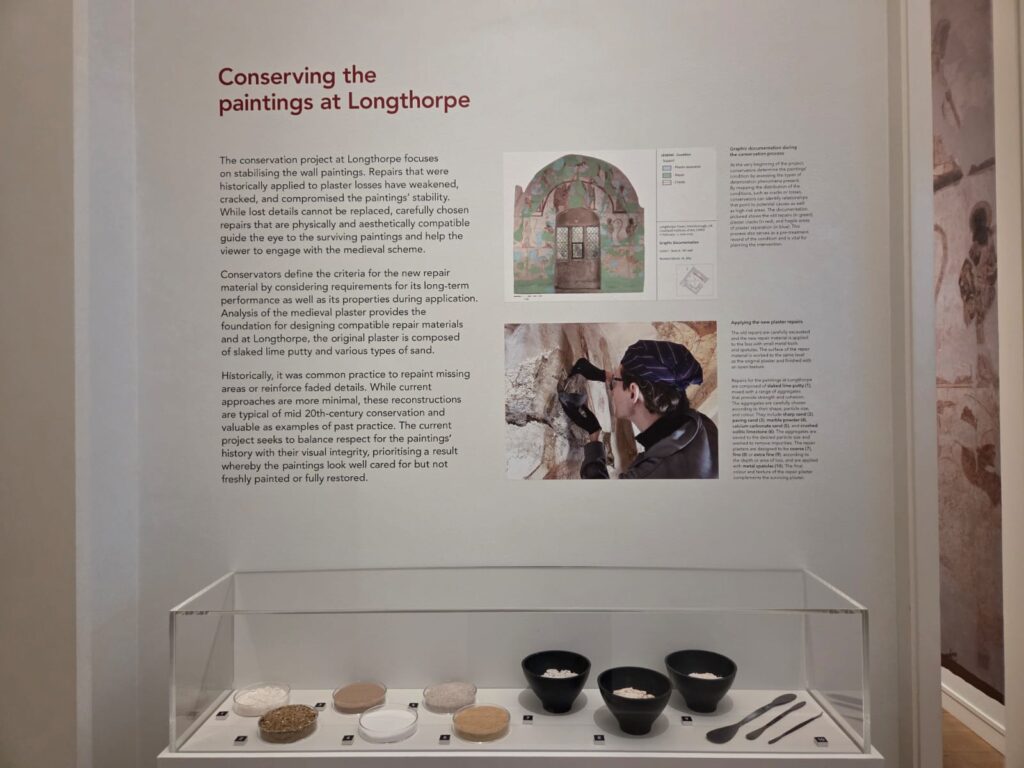
That’s already almost a century, so part of what this exhibition covers is how things have changed during that period. The paintings at Longthorpe (more on them in a moment) were discovered in the 1940s. Some of the techniques used at the time have contributed to the paintings’ subsequent deterioration. Materials used in repairs weakened the stability of the remaining plaster, while repainting and restoration blurred the lines between historic appearance and contemporary visual integrity. For the students working on this major project, in collaboration with English Heritage, there is a lot to learn from the work of their predecessors, as well as from the wall paintings themselves.
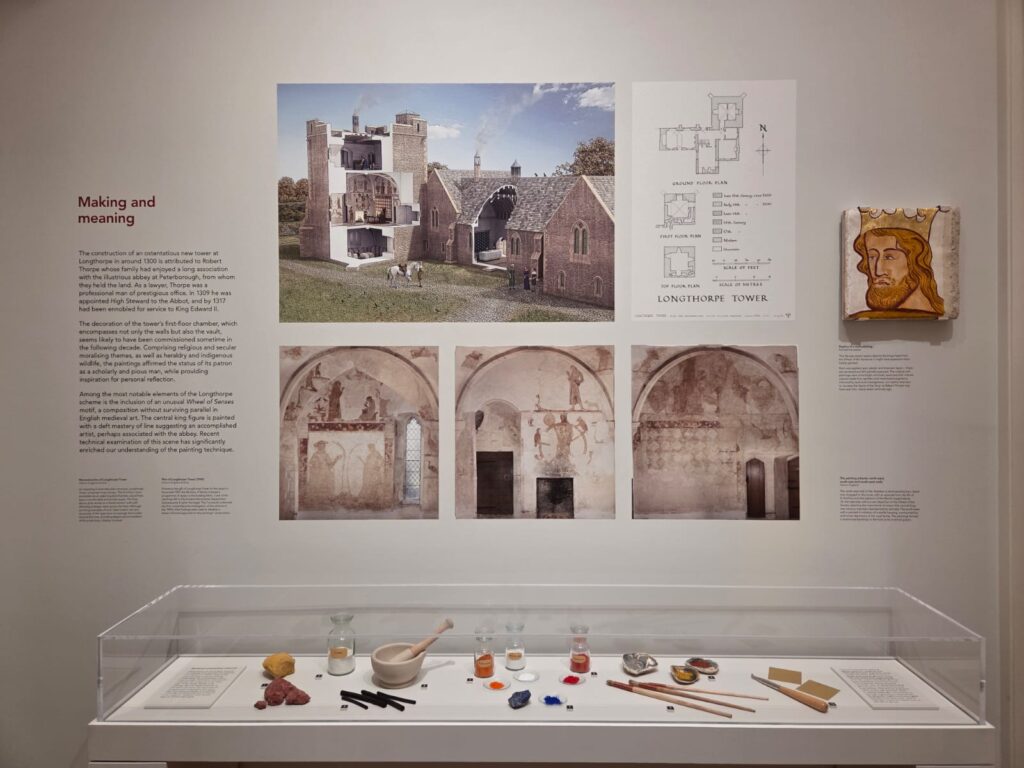
Conservation in Context at Longthorpe
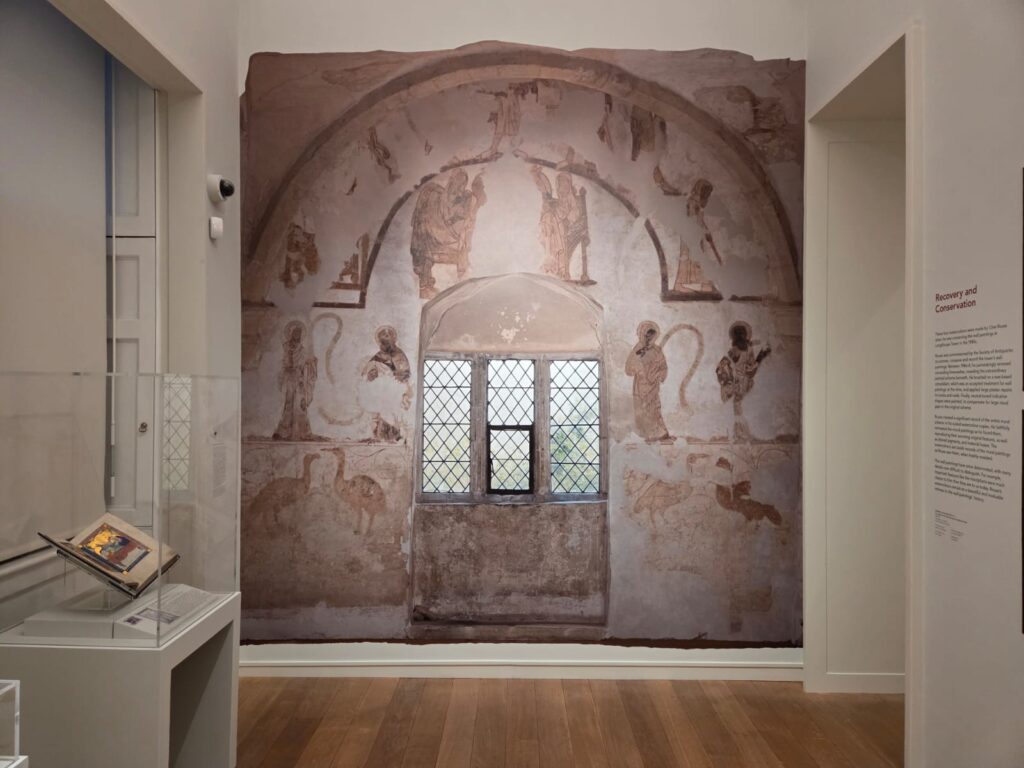
As I mentioned, the paintings at Longthorpe, in Peterborough, were discovered in the 1940s. 1945, to be precise, when a member of the National Guard accidentally damaged a lime wash wall with a rifle butt. But to go back a bit, the tower itself dates to about 1300, attributed to local lawyer Robert Thorpe. He likely commissioned the decoration around the 1320s, by which time he had been appointed High Steward to the Abbot of Peterborough Abbey, and ennobled by Edward II.
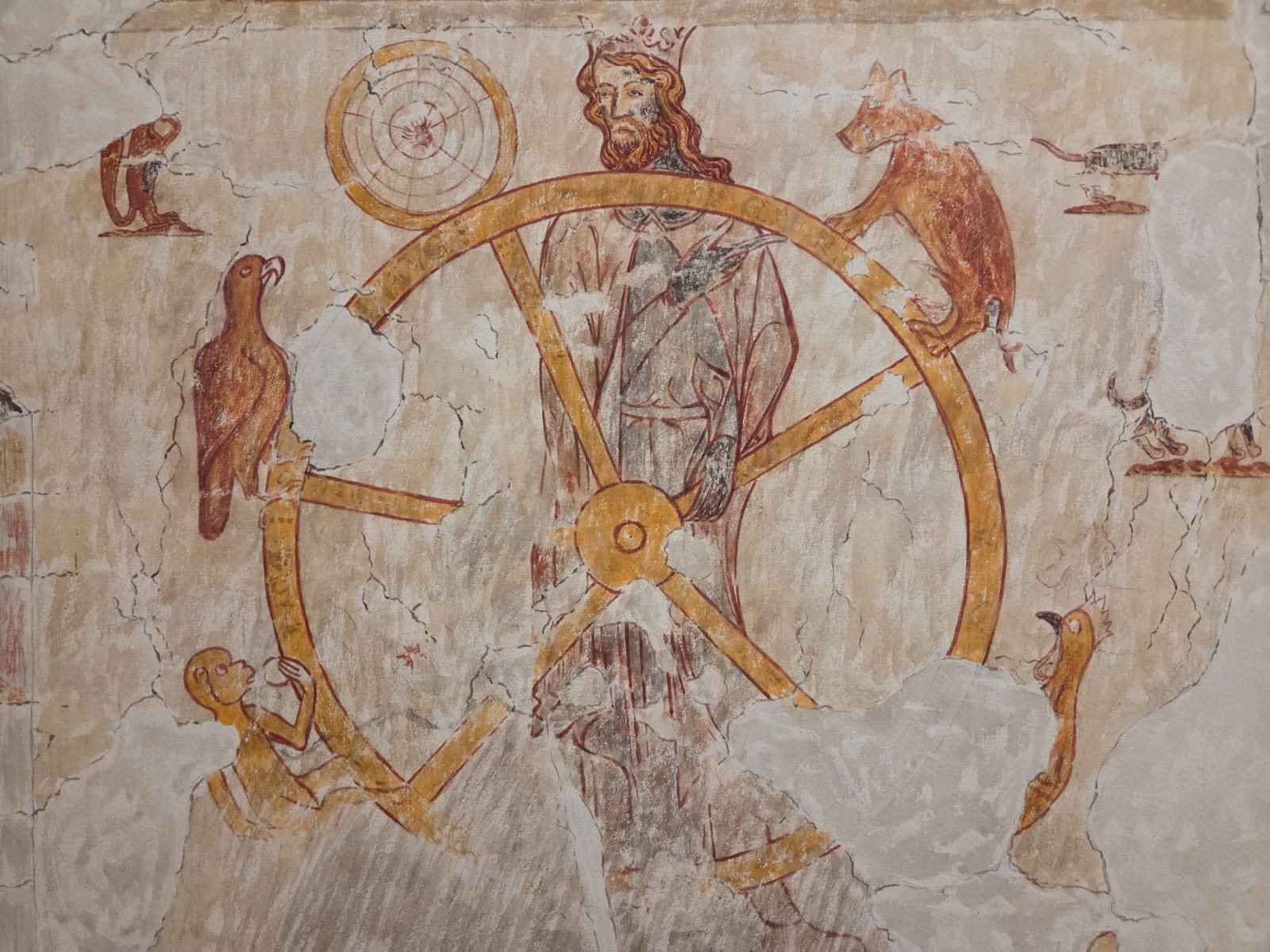
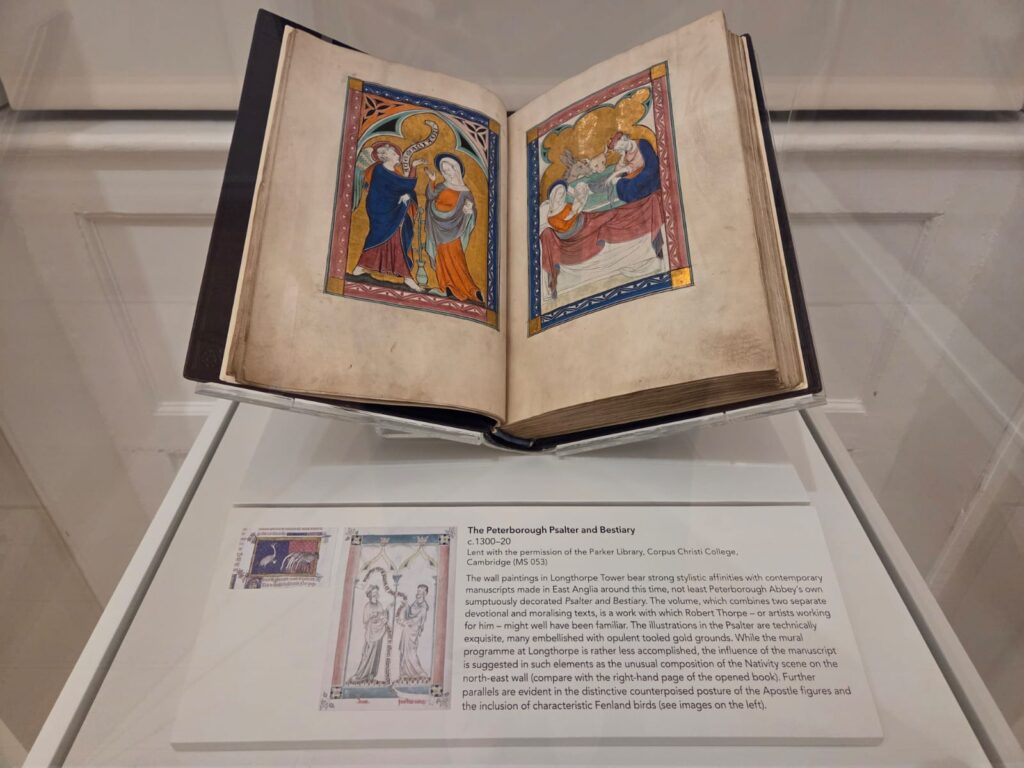
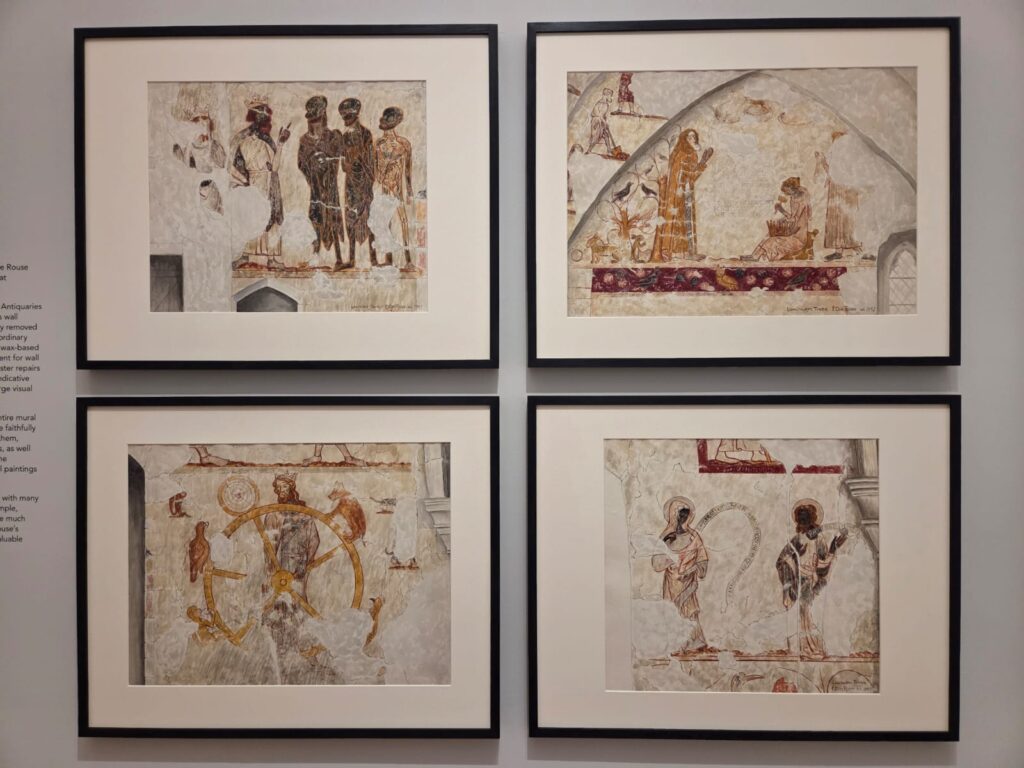
The wall paintings would have helped to cement his power and prestige. They combined religious and secular themes, including a Wheel of Senses which is unparalleled anywhere else in medieval English art. The artist or artists working on the paintings seem to have been familiar with religious artworks from the Abbey, including the Peterborough Psalter and Bestiary (on loan from Corpus Christi College, Cambridge, as part of the exhibition).
Between 1946 and 1948, Clive Rouse worked for the Society of Antiquaries, uncovering, conserving and restoring the paintings. He was responsible for some of the techniques which, though acceptable at the time, have damaged the paintings, including applying a wax consolidating layer. His beautiful watercolours of what he uncovered give us a glimpse of the paintings before later deterioration. Much more detail and colour is visible. This technique of capturing discoveries in watercolour is a bit of a lost art: see also Howard Carter’s skill in painting, which is what took him to Egypt in the first place.
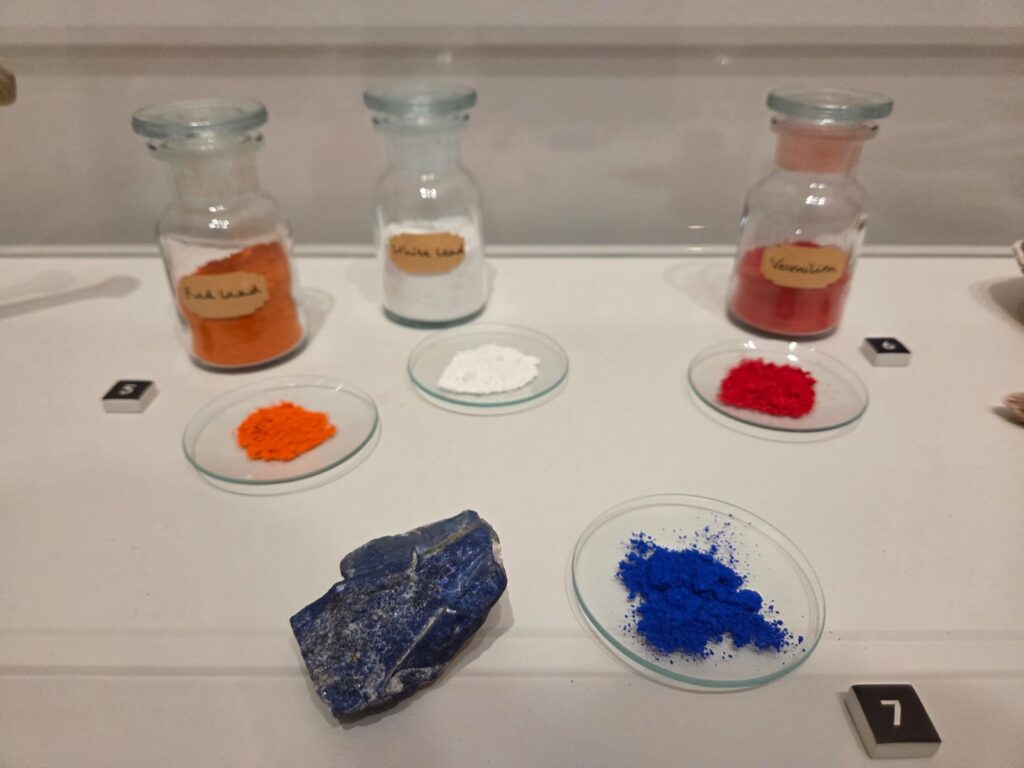
Despite not having many original objects (in situ wall paintings not being something you can transport), this is a very nice little exhibition. The subject is interesting, the explanations clear, and the overview comprehensive between history, techniques, materials, and art historical value. Definitely worth a look if you’re at the Courtauld or in the area.
Salterton Arts Review’s rating: 3.5/5
The Painted Tower: Conservation in Action at Longthorpe on until 27 May 2026
Trending
If you see this after your page is loaded completely, leafletJS files are missing.