Long-time London resident and avid museum and theatre-goer. I started this blog in 2014, and got serious about it in 2020 when I realised how much I missed arts and culture during lockdowns. I go to a lot more events than anyone would think is sensible, and love sharing my thoughts in the forms of reviews, the occasional thought piece, and travel recommendations when I leave my London HQ.
During my recent stay in Malta I decided to step outside Valletta’s city walls and explore Floriana beyond. Join me as we look at historic sites, take in the views, and generally get to grips with this interesting settlement.
An(other) Introduction to Floriana
If you’ve been following the last few posts on my blog, you’ll know that I recently took a trip to Malta. We bookended our stay with stops in and around Valletta, and went to Gozo in the middle. On our return from Gozo, we were technically staying just outside Valletta in the city of Floriana. There are fewer tourist attractions here than there are in Malta’s capital, and many visitors may not make it much further than the plaza outside Valletta’s city walls, complete with fountain, horse-drawn carriages, and bus station.
My first experience of Floriana was as a handy place to go running in the mornings. I’d learned my lesson doing a loop around Valletta, which is fine until you come to a big incline to get back to the city from the ferry port. If you’re going to go to the effort of exercising on holiday, the least you can do is find an easy route for yourself. And Floriana looked a great deal flatter! The upshot of running around Floriana was that I started to notice interesting historic spots. Many had plaques in front of them, part of a walking tour, but there’s only so much you can read as you jog past. So with a morning spare, I decided to go and have a proper look.
I’ll repeat a bit of background before we get started. Repeat, because I’ve covered some of this already in my guides to Malta and Valletta and its surrounds. If you’ve read those, you’ll remember that Valletta is a planned city, designed to shore up the Knights Hospitaller’s defense of the Grand Harbour. Prior to that, the Sciberras Peninsula was a weak spot, allowing enemies to bombard Fort St Elmo from higher ground. So that’s Valletta. Floriana, in turn, was designed to protect Valletta from the landward side.
Floriana is named for Pietro Paolo Floriani, a military engineer who designed the fortifications (the Floriana Lines) around the town. Construction on those started in 1636. It was only from 1724 that a town really began to grow, after Grand Master António Manoel de Vilhena founded the suburb Borgo Vilhena (still an alternate name for Floriana today). Floriana continued to expand over the 18th century, gaining a summer house for the Grand Master, the Ozpizio poorhouse (now part of the MICAS complex) gardens and religious buildings. Under British rule, Floriana was a garrison town with several large barracks, and the development of port and wharf facilities. Currently, facing a declining population, Floriana is the subject of local government regeneration plans.
We Start Our Exploration of Floriana
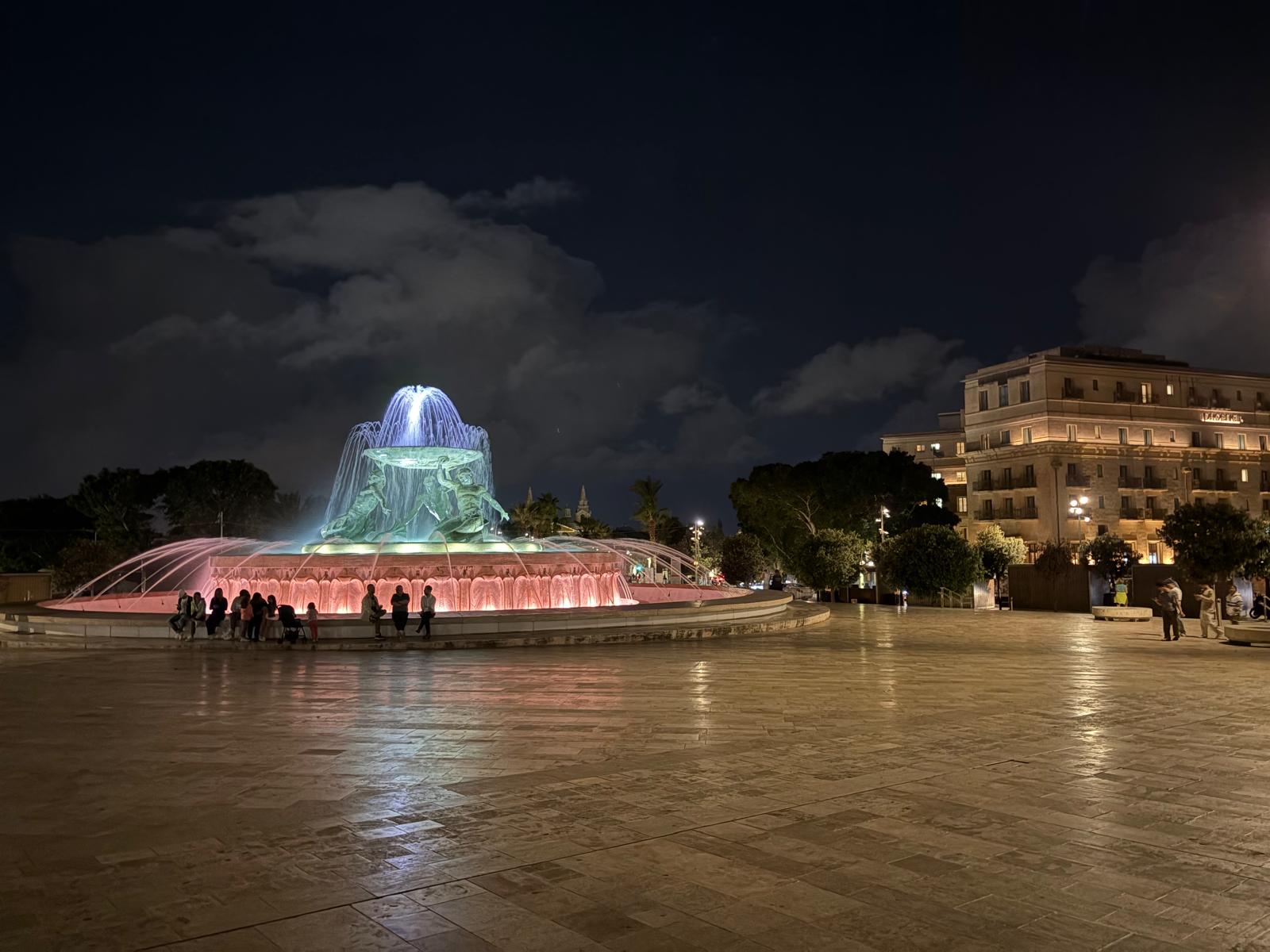
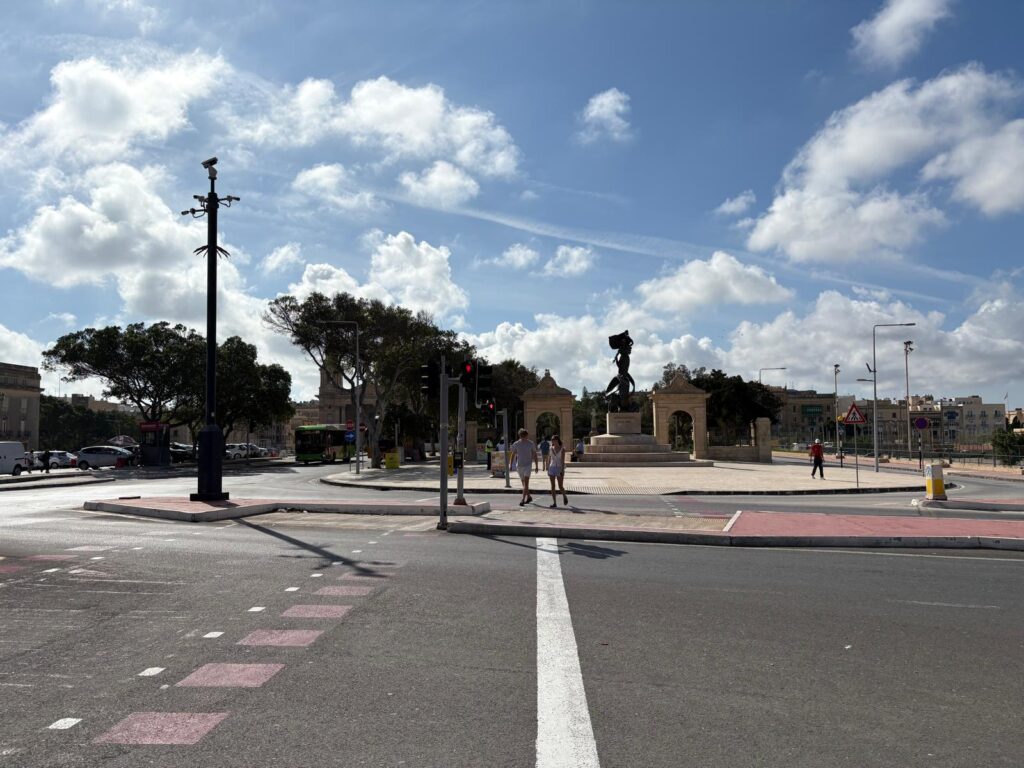
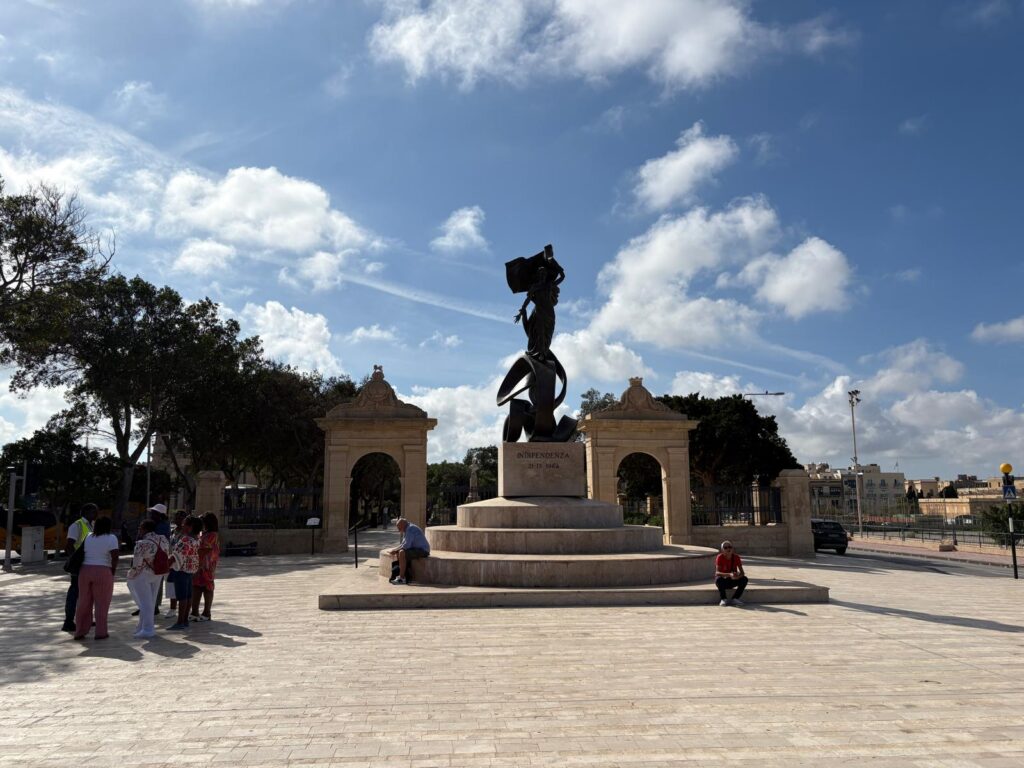
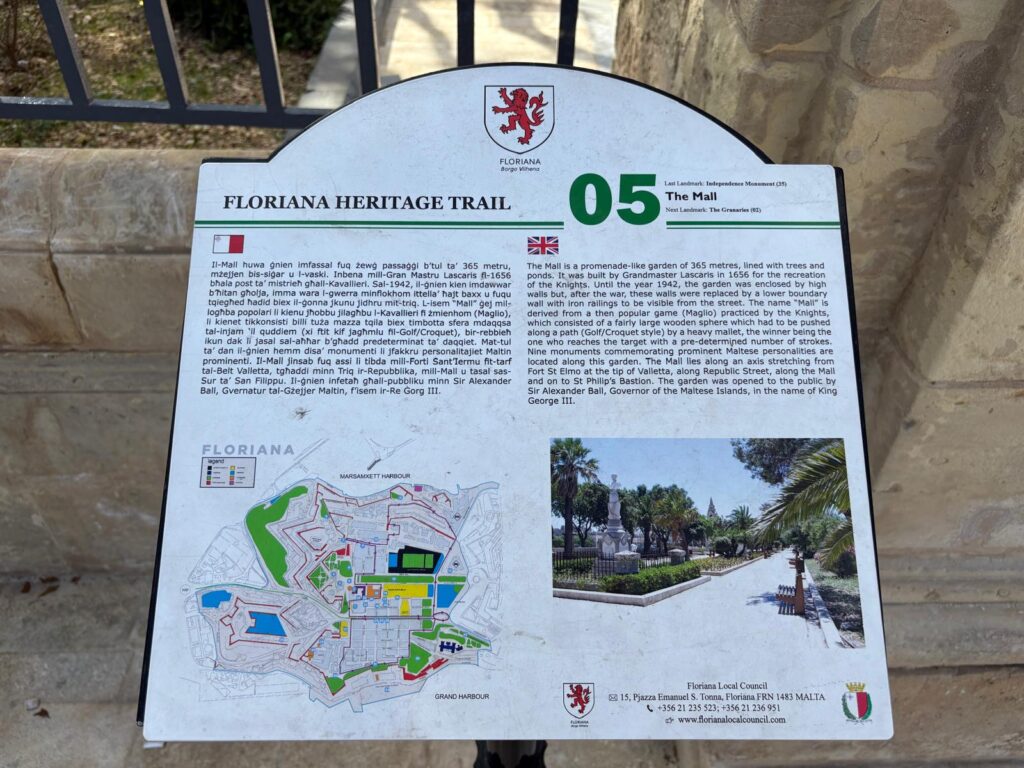
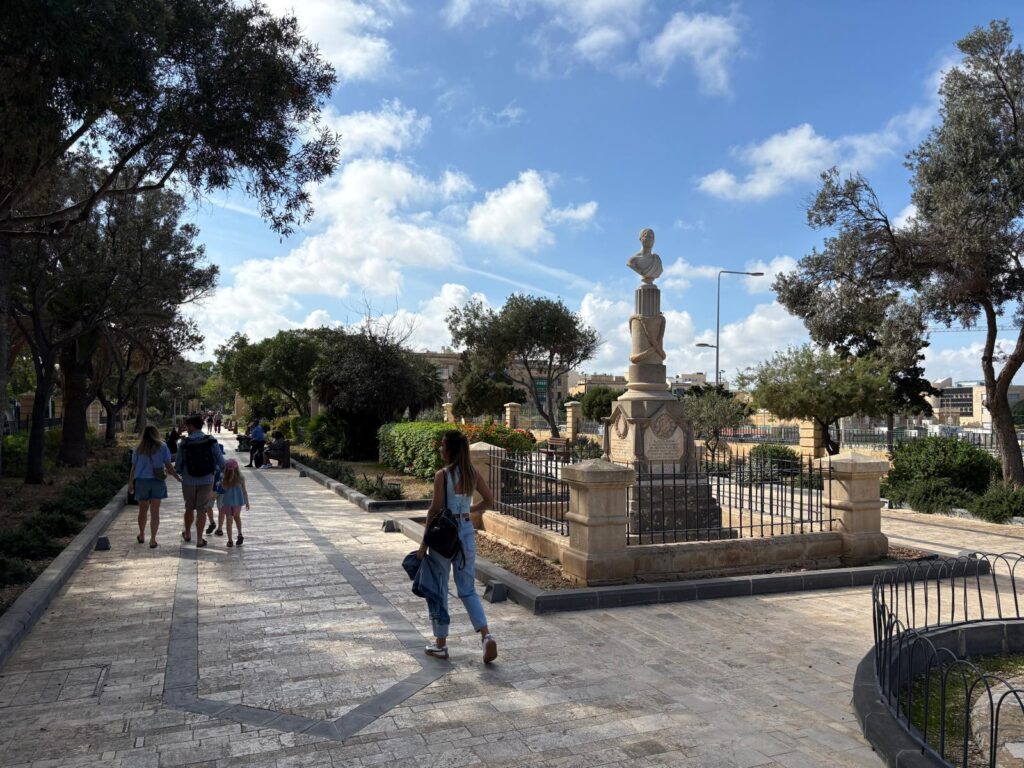
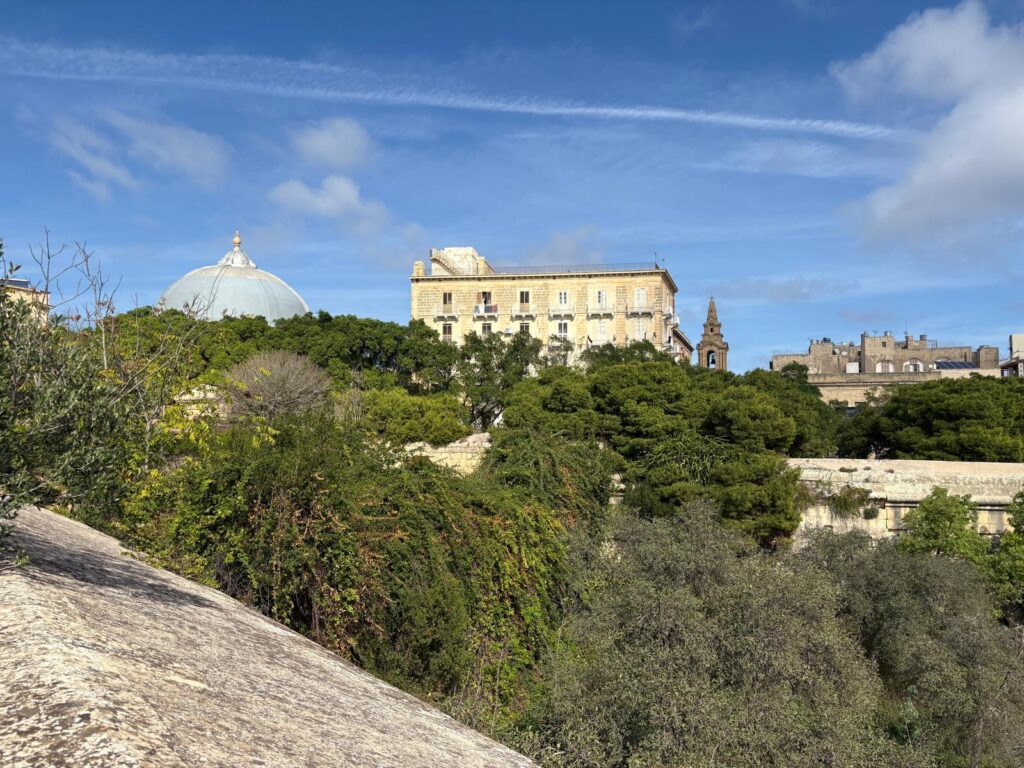
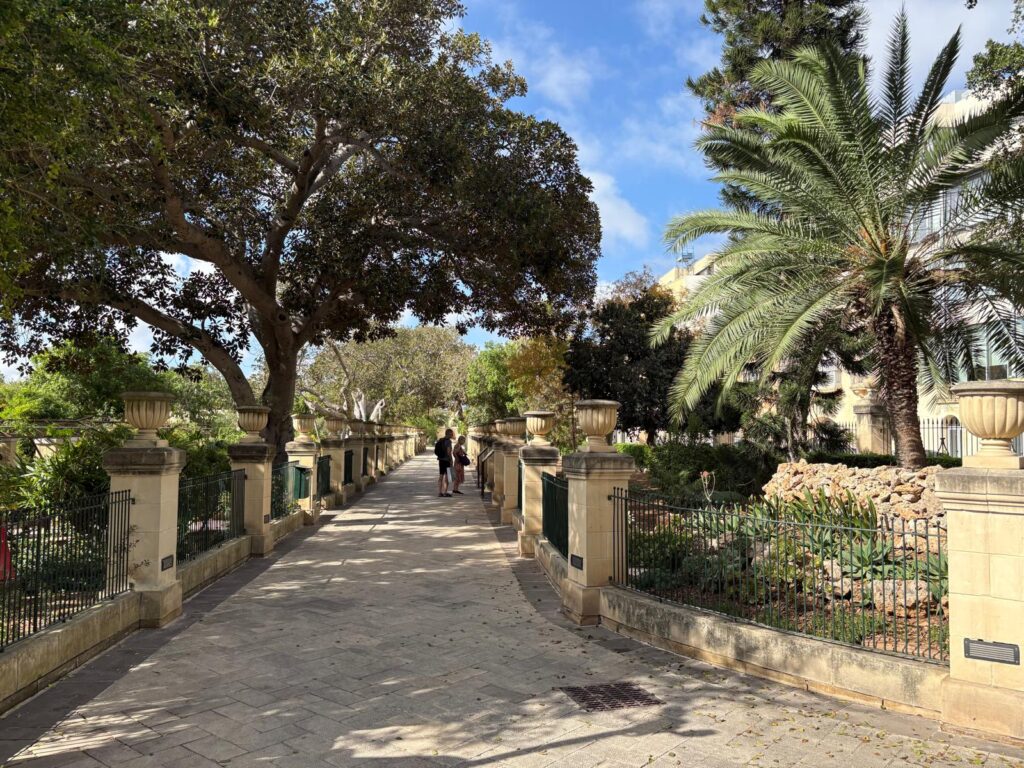
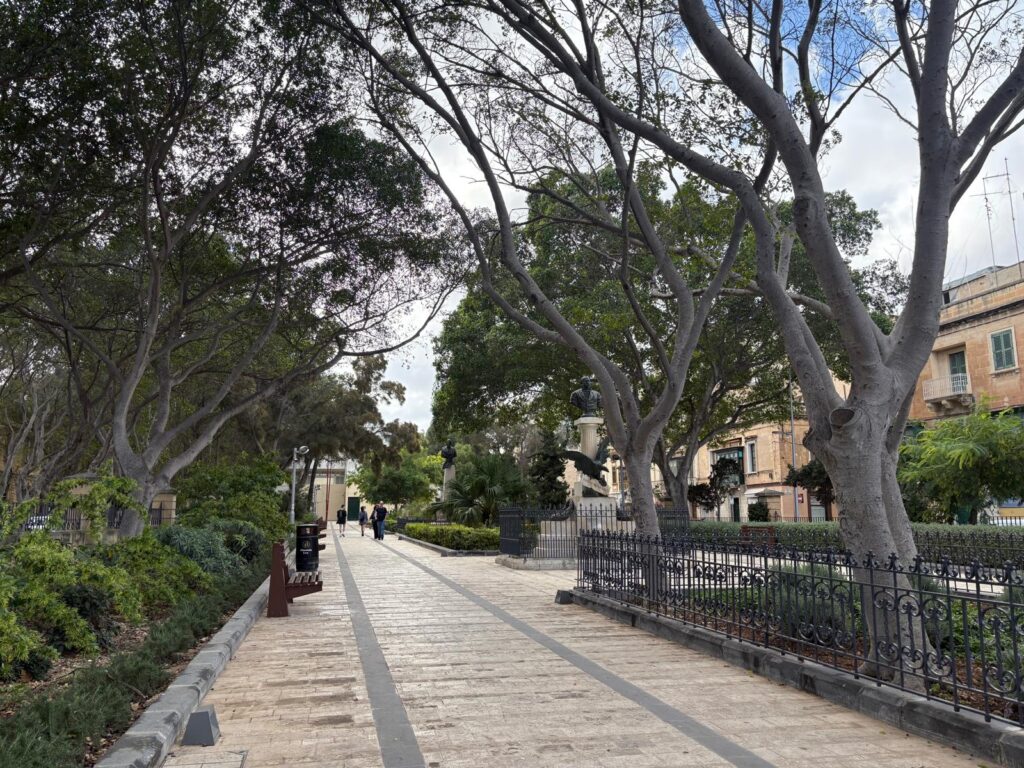
The image at the top of the post shows the most likely approach to Floriana, from Valletta’s city gate. But, as I was staying in Floriana, I’m sneaking up on it a different way. The first sight we come to is the Mall. As you can see, it’s number 5 on the Floriana Heritage Trail. This is where I gleaned a lot of information for this walk. But unfortunately I struggled to find an online version, and couldn’t work out the map in real time, so didn’t see everything.The Mall is a long strip of garden, with many monuments. Until WWII, it sheltered behind high walls. I had assumed it was called the Mall because it’s long and thin, like Pall Mall. I was right that the origin is the same, but wrong about everything else. The ‘mall’, in both cases, comes from a croquet-style game called maglio. It was popular with the Knights Hospitaller.We cross over now to take a look (from the outside) at St Publius Parish Church. Publius was the first saint of Maltese origin: originally the head man or chief of the island, he was converted to Christianity by none other than St Paul himself, following the latter’s shipwreck in Malta. We’ll see the cave he reputedly hung out in in a few posts’ time. But anyway St Publius is one of three patron saints of Malta, and the patron saint of Floriana. The construction of the church took place between 1733 and 1768, with various rebuildings over the years. It also needed restoration after damage from WWII bombing.
Floriana from St Publius Square to the Congreve-Bernard Memorial Hall
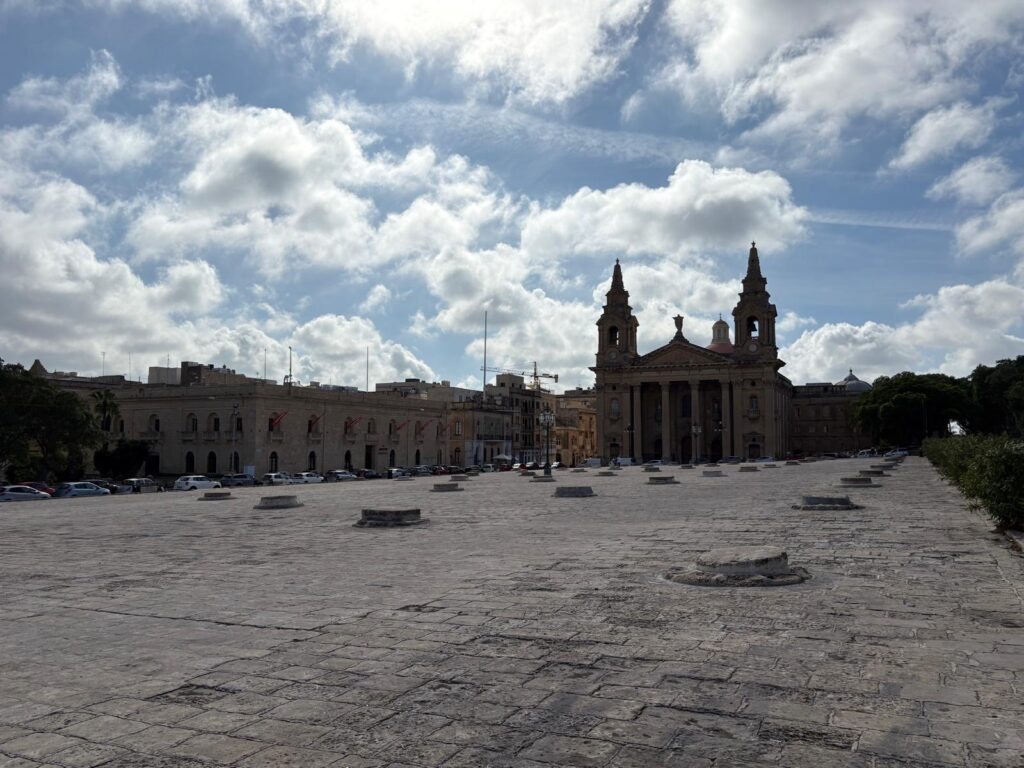
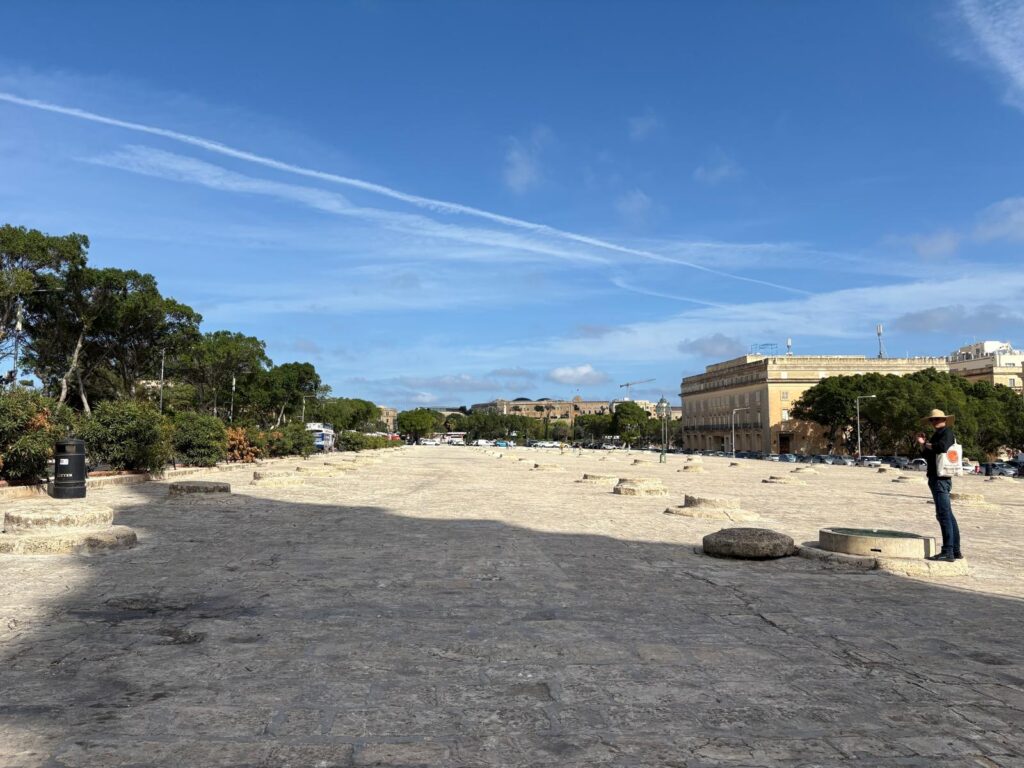
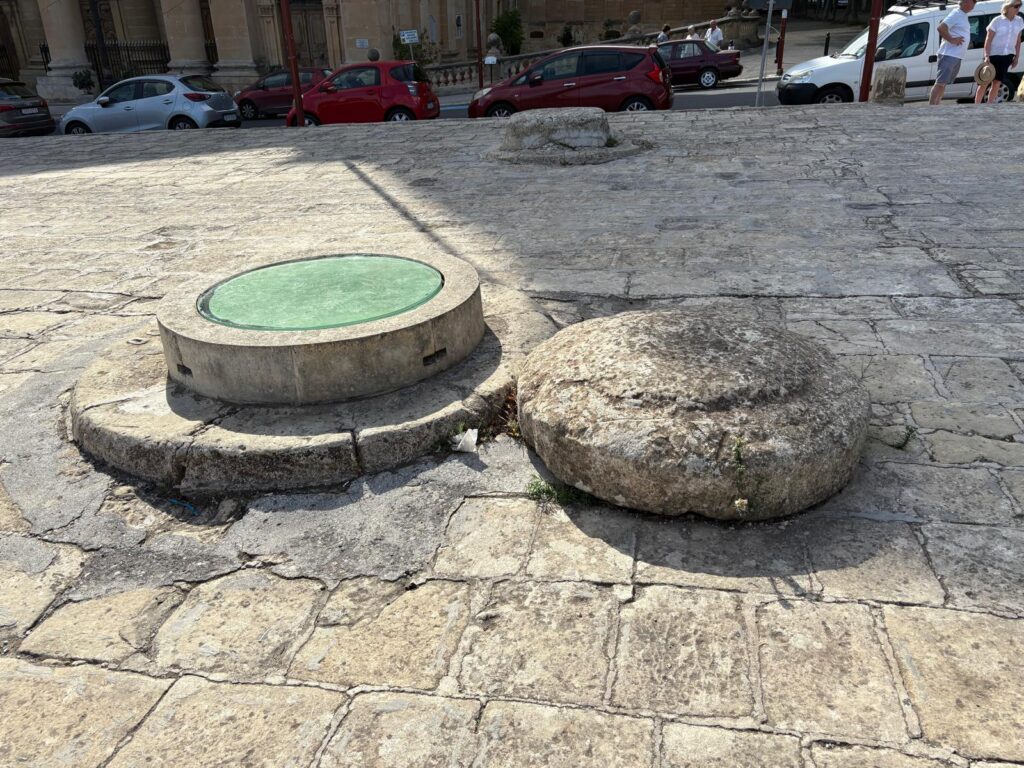
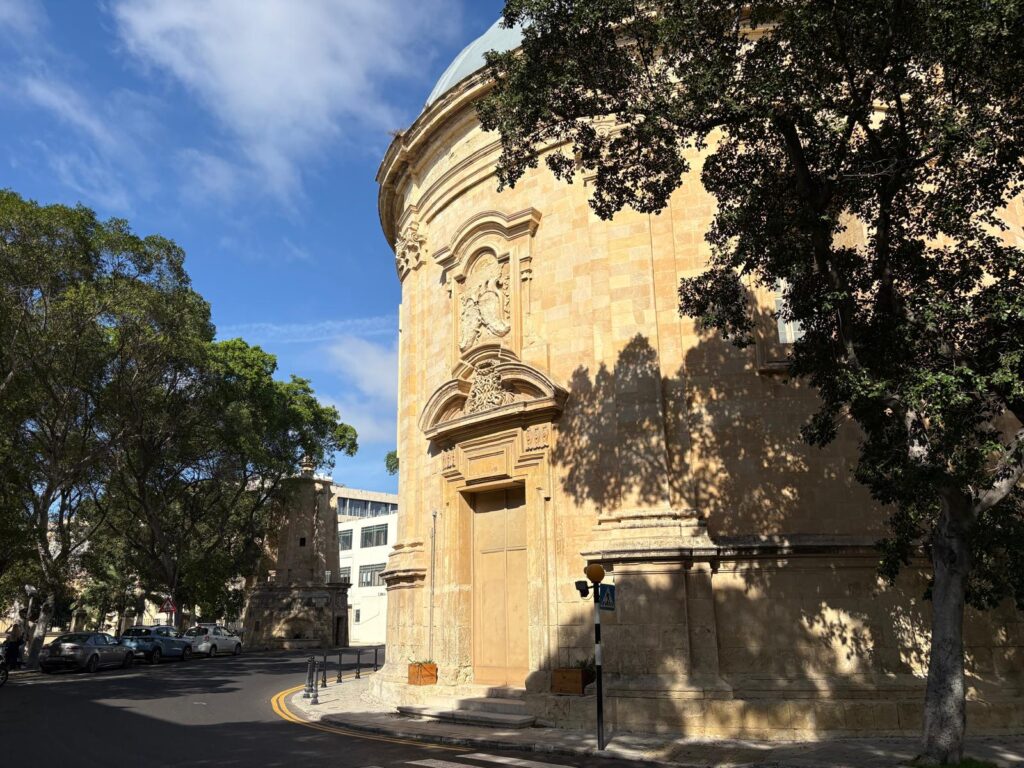
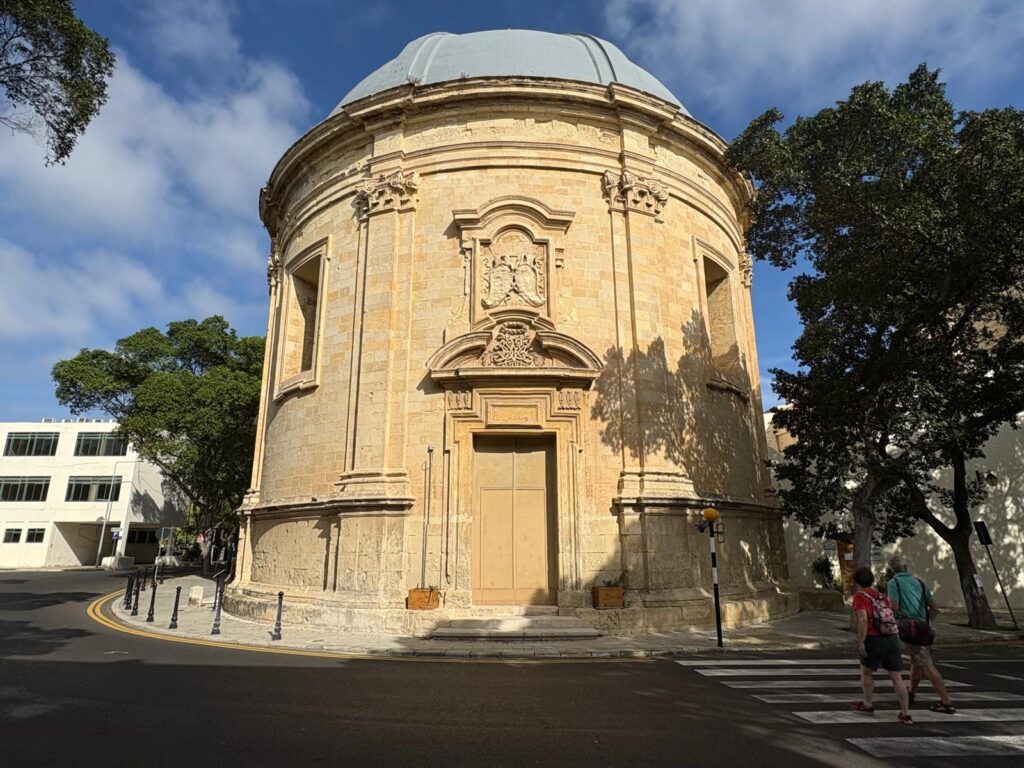
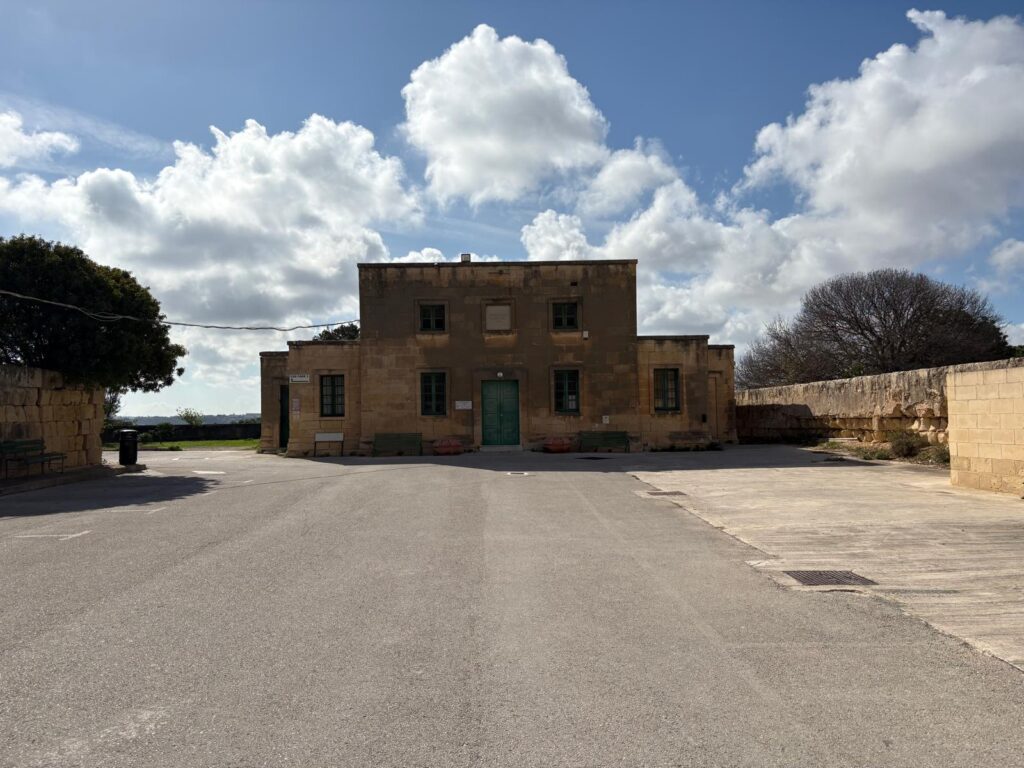
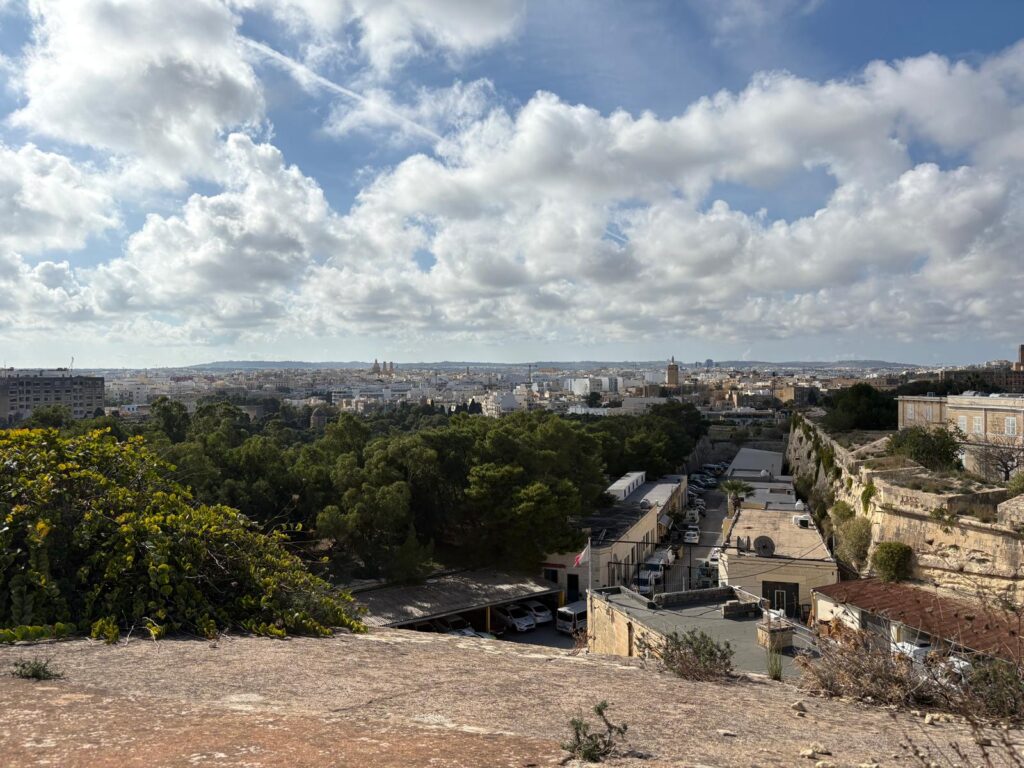
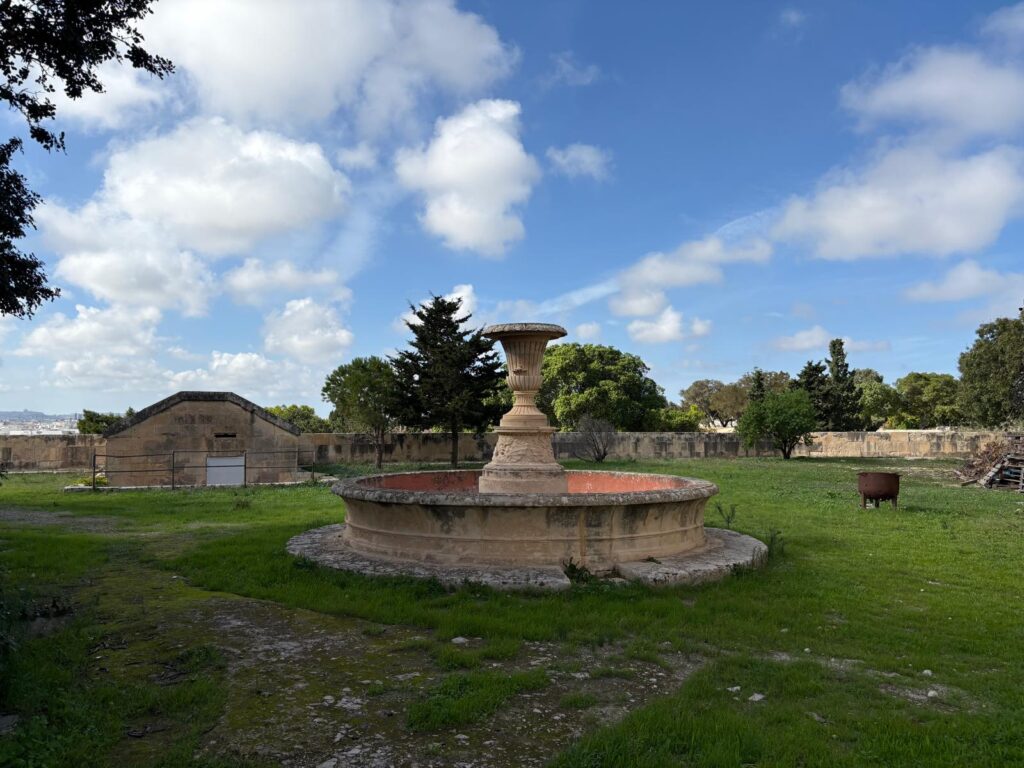
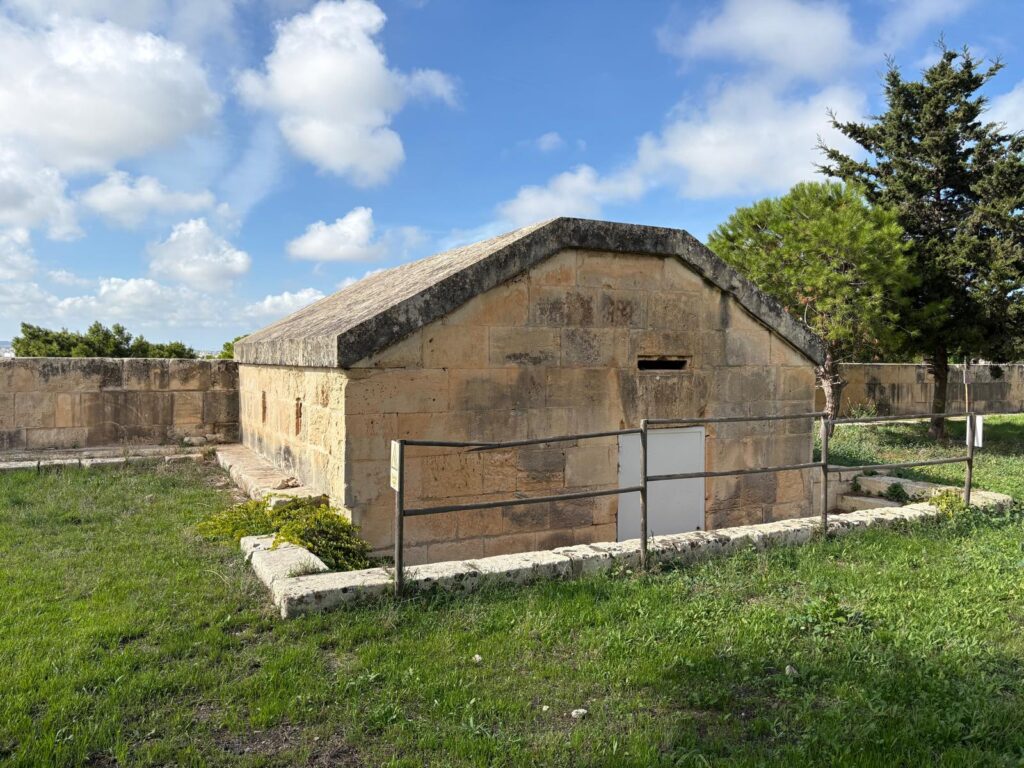
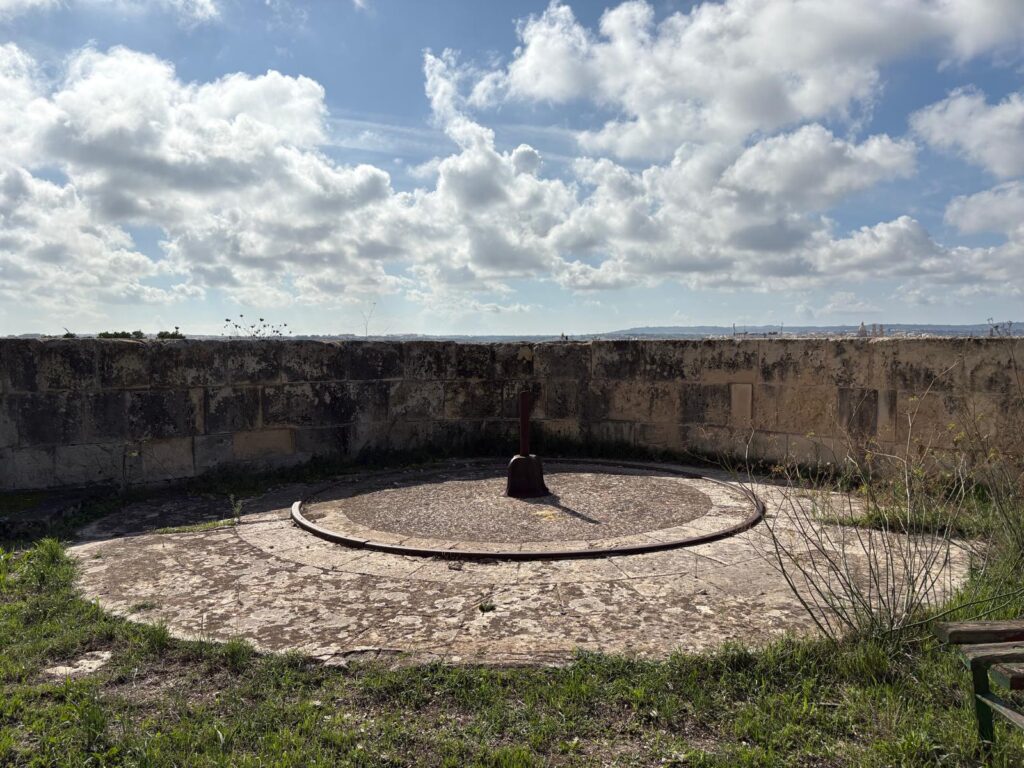
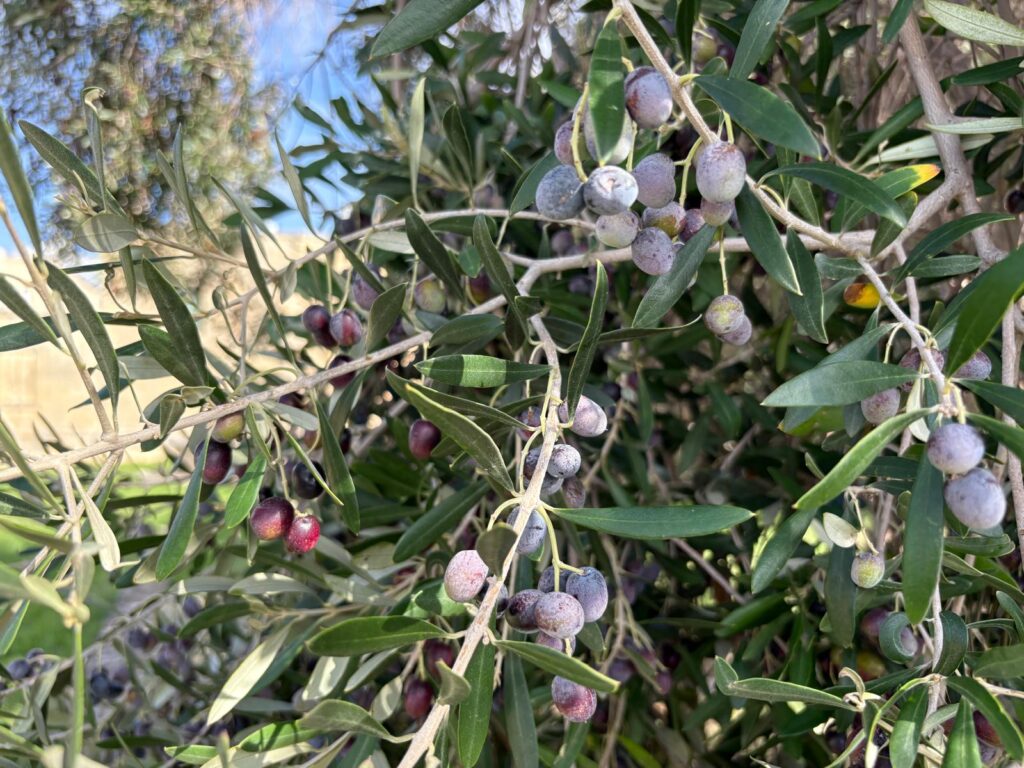
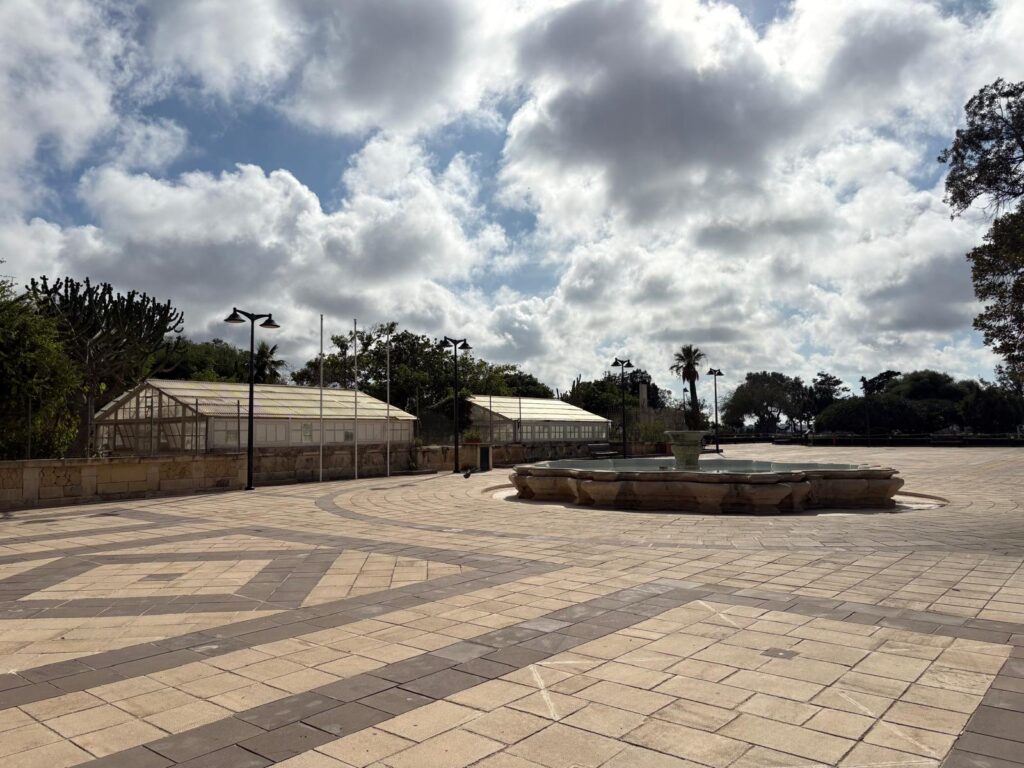
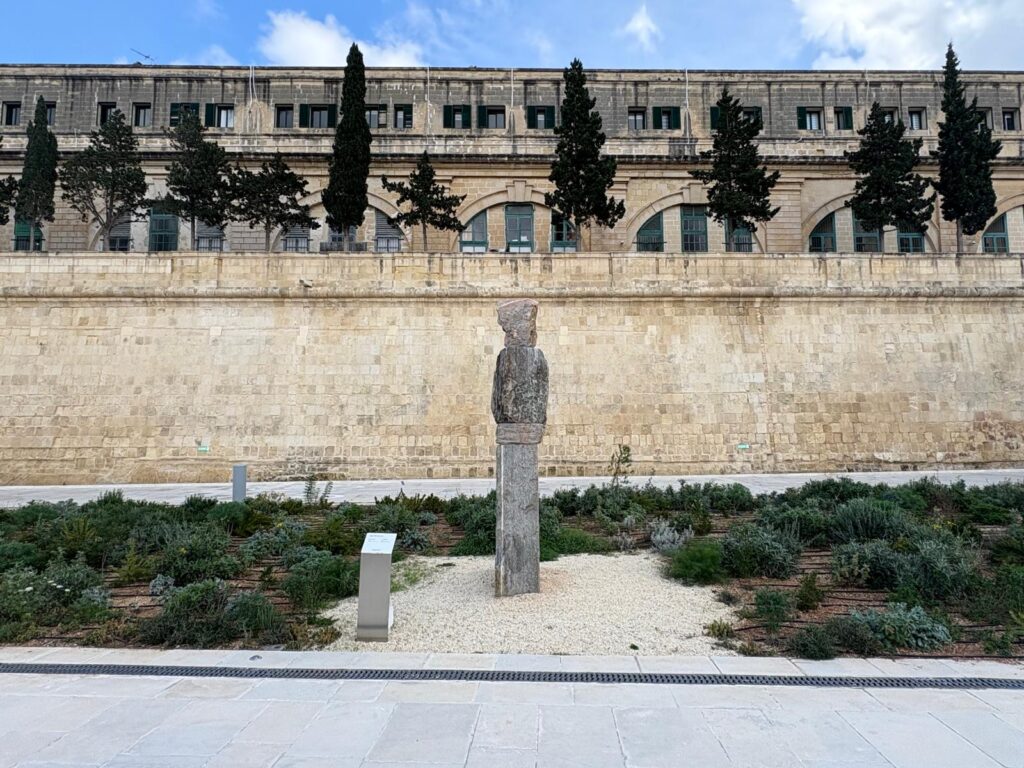
Looking back from the church, we see the vast expanse of St Publius Square. There are two things of note to relay to you here. The first is that this very large public square was the site of a mass by Pope John Paul II in 1990. It’s also been the site of festivals and other large gatherings. The second thing of note is the peculiar object in the second image. This is one of a number of granaries (Il-Fosos in Maltese) throughout the square. A difficult climate in Malta meant food scarcity and storage were important considerations. Underground grain stores were one way to mitigate against hunger. The stone lids were sealed into place to ensure the grain stayed dry. I also discussed these granaries briefly in my post on Fort St Elmo. Without knowing what they are, they look at first glance like shorn-off columns.Our next stop is the Sarria Church. It actually pre-dates Floriana, dating to 1585. Or the first version did, at least. It started out as a simple chapel funded by Knight Fra Martin de Sarria. This version dates to 1676, now a church dedicated to the Immaculate Conception and commemorating the end of an outbreak of plague in 1675. Mattia Preti, a name you hear fairly often in Malta (for his paintings in St John’s Co-Cathedral amongst other works), designed the rotunda. He also completed several paintings for the interior. Architecturally, the church is a mix of Baroque and Classical styles.And now a slightly more modest architectural example. This is the Congreve-Bernard Memorial Hall, home to the Scout Association of Malta. The current building is a 1948 replacement for a 1932 version destroyed in 1942. Congreve refers to General Sir Walter Norris Congreve, Governor and Chief Scout of Malta, and Bernard to Colonel Sir Edgar Bernard, Commissioner of Boy Scouts Malta. Scouting began here in 1908, only one year after Sir Robert Baden Powell founded the movement.I took the liberty of a little wander around the Congreve-Bernard Memorial Hall. It sits within St Luke’s Bastion, with good views over the walls and a mix of decorative and bunker-y looking objects in the garden.A pure guess tells me this might have been some sort of gun emplacement? Not sure. But the olive tree I definitely recognised.
From Robert Samut Hall to the Argotti Botanic Gardens
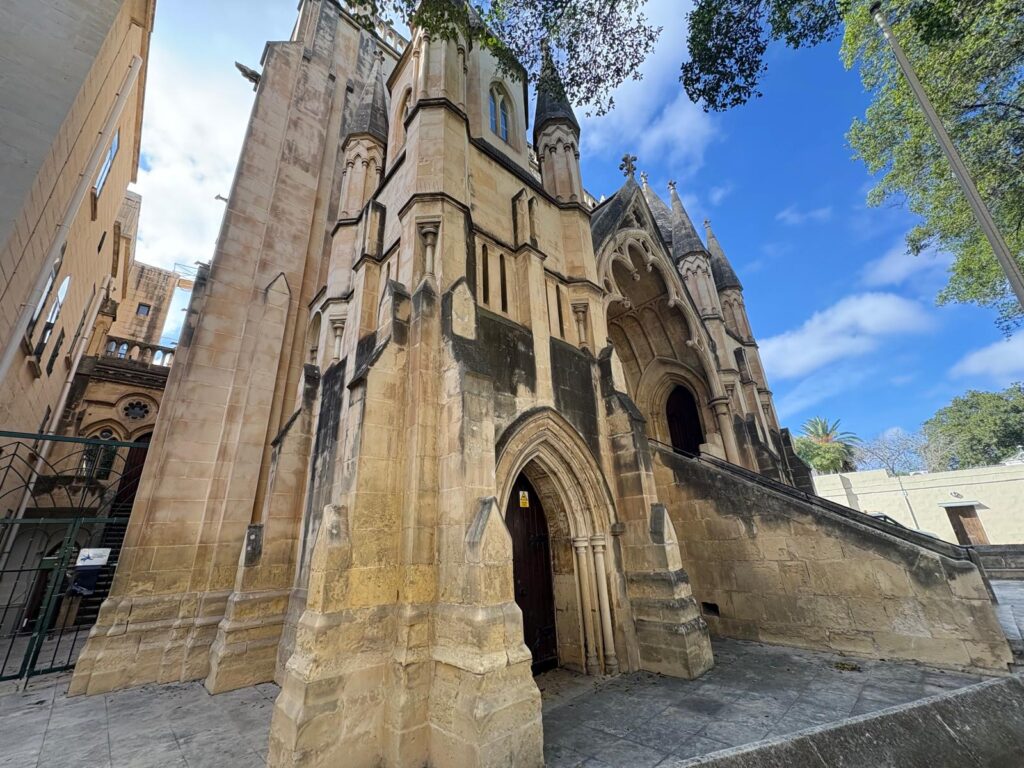
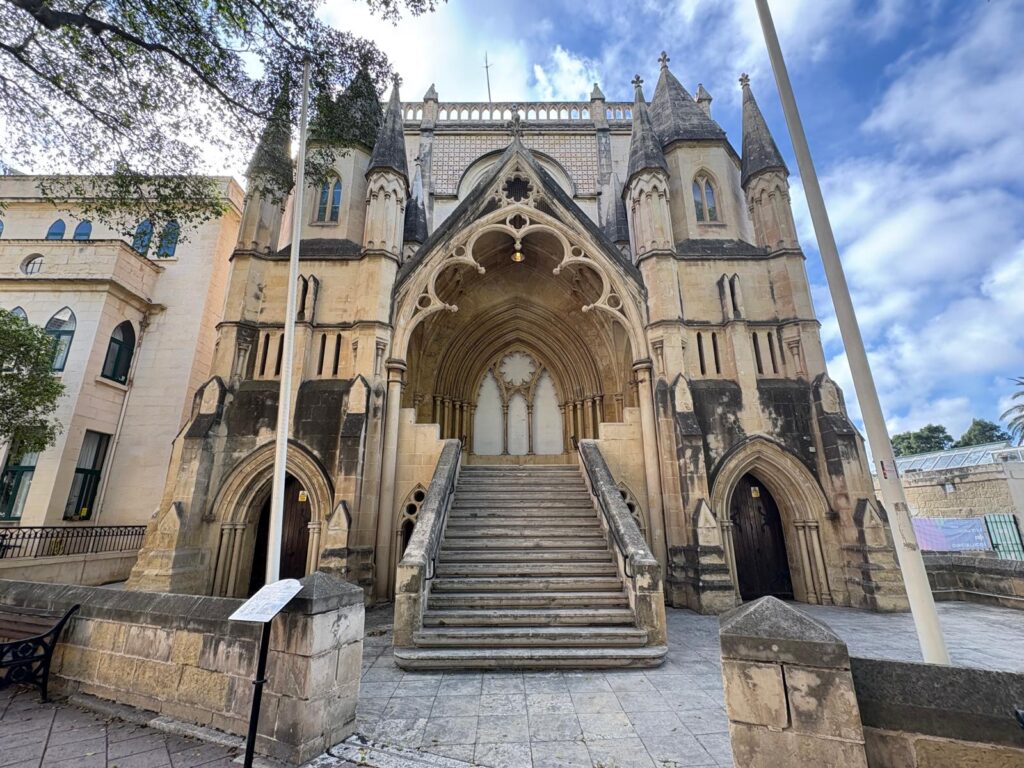
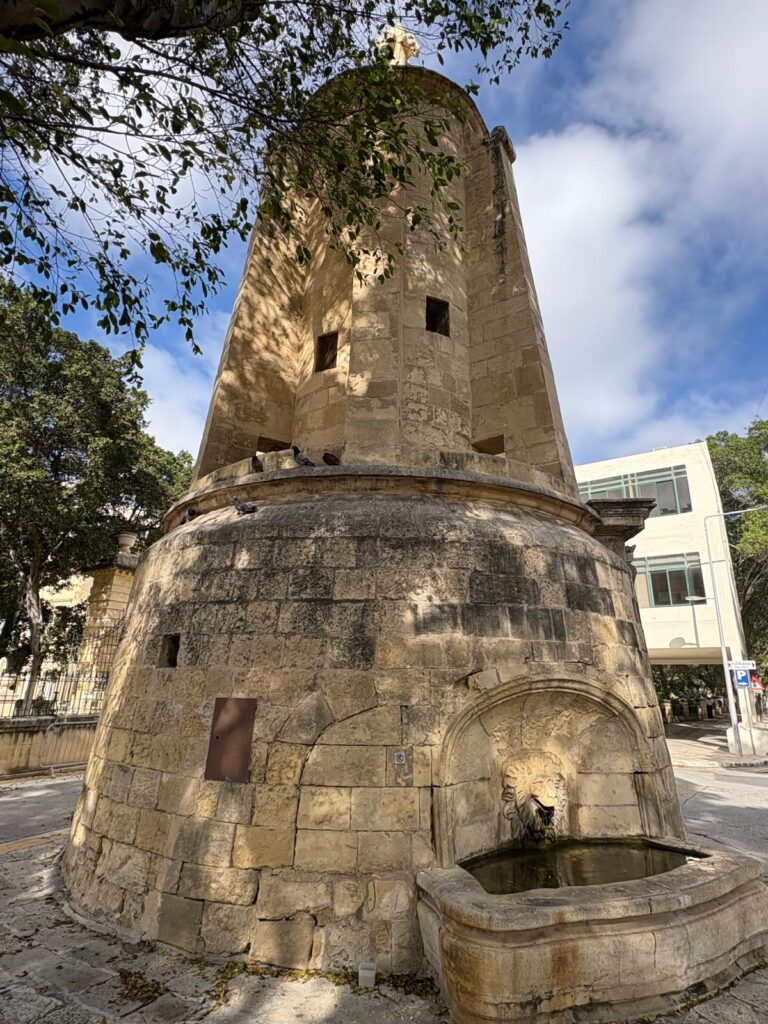
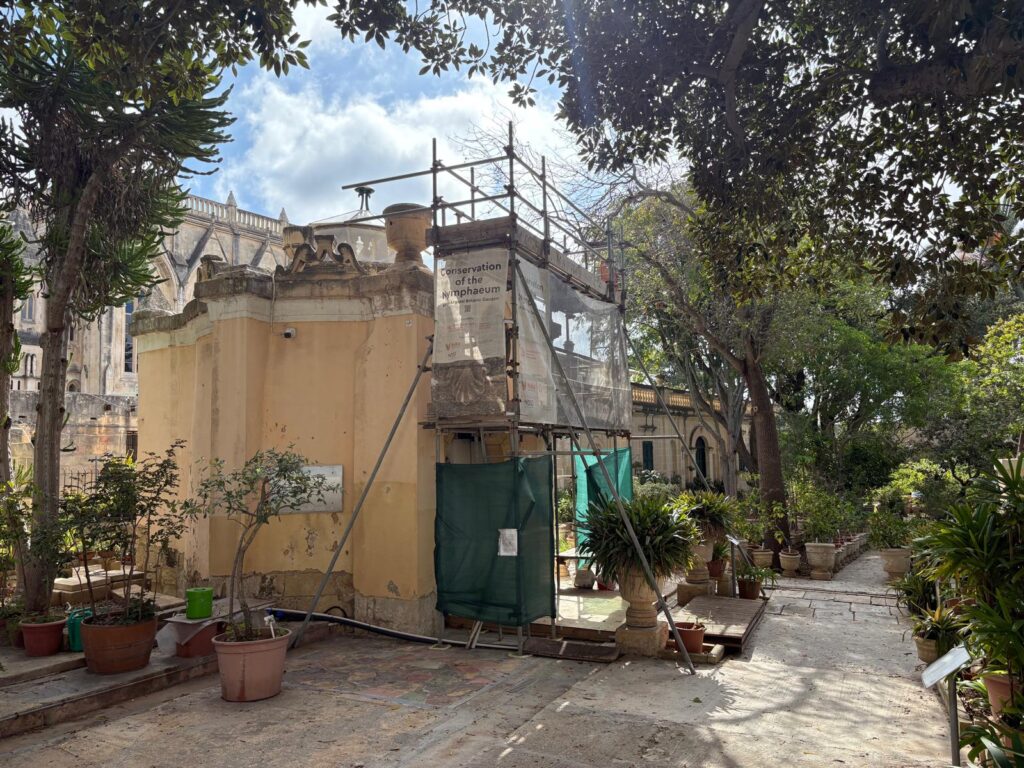
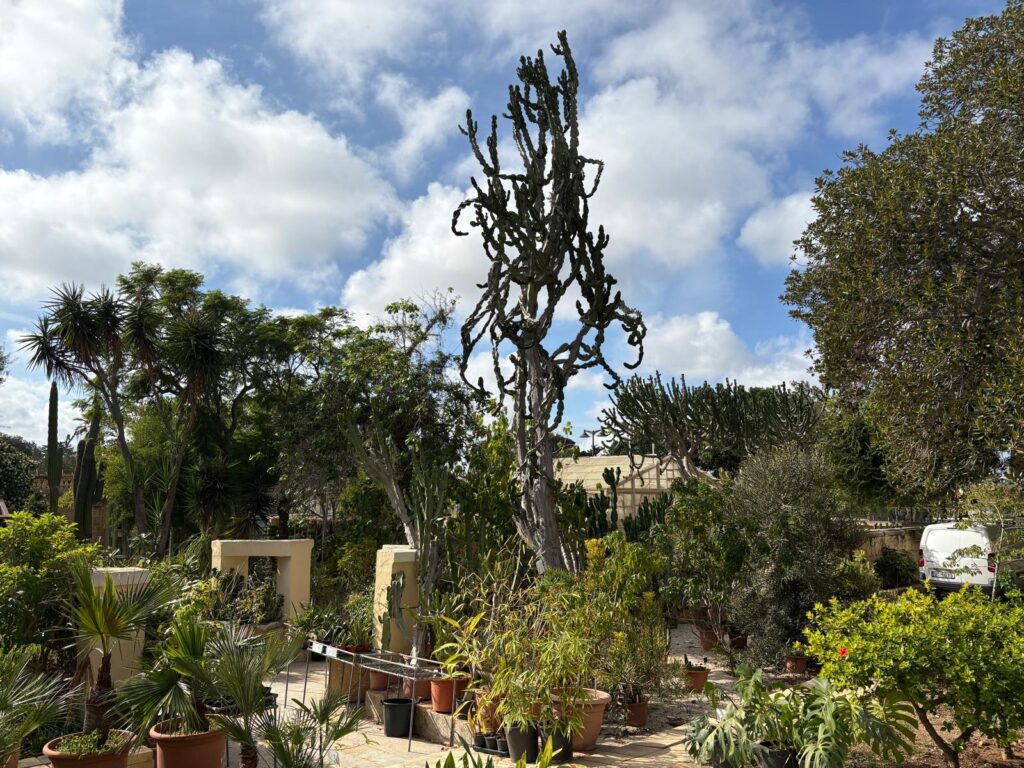
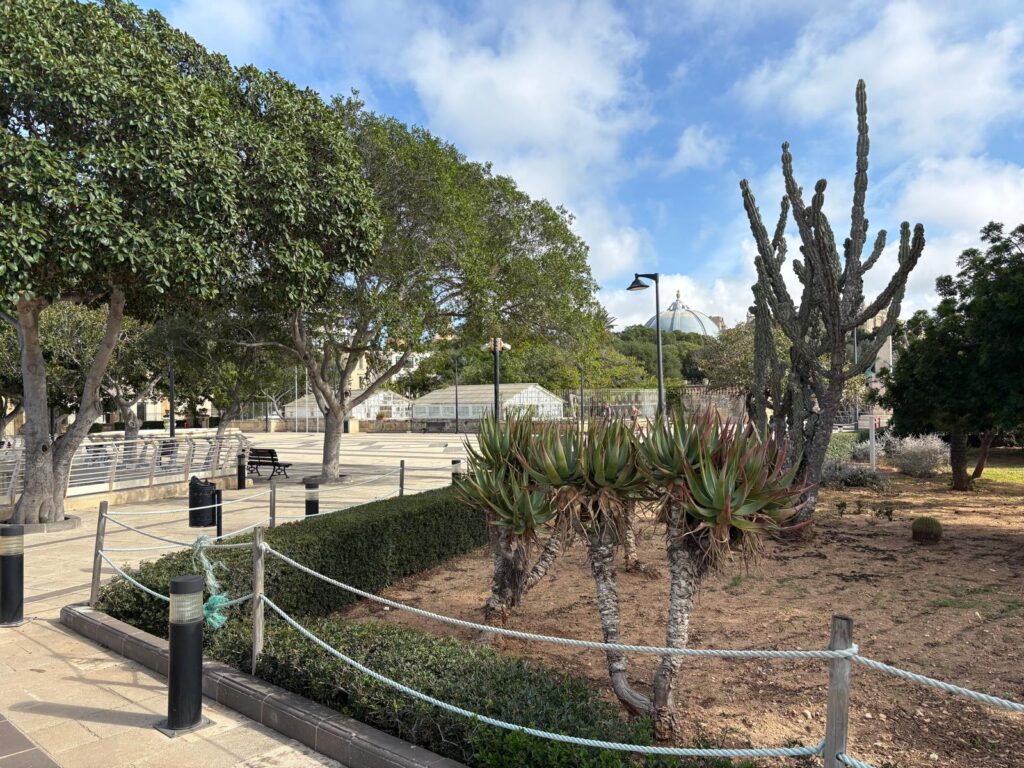
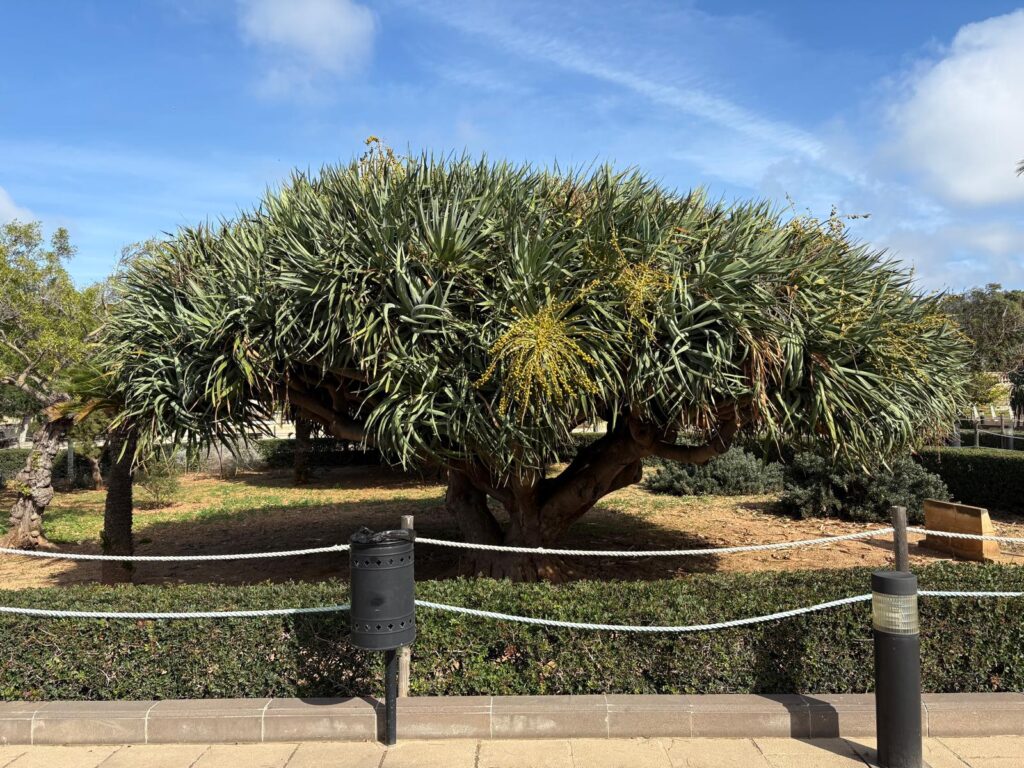
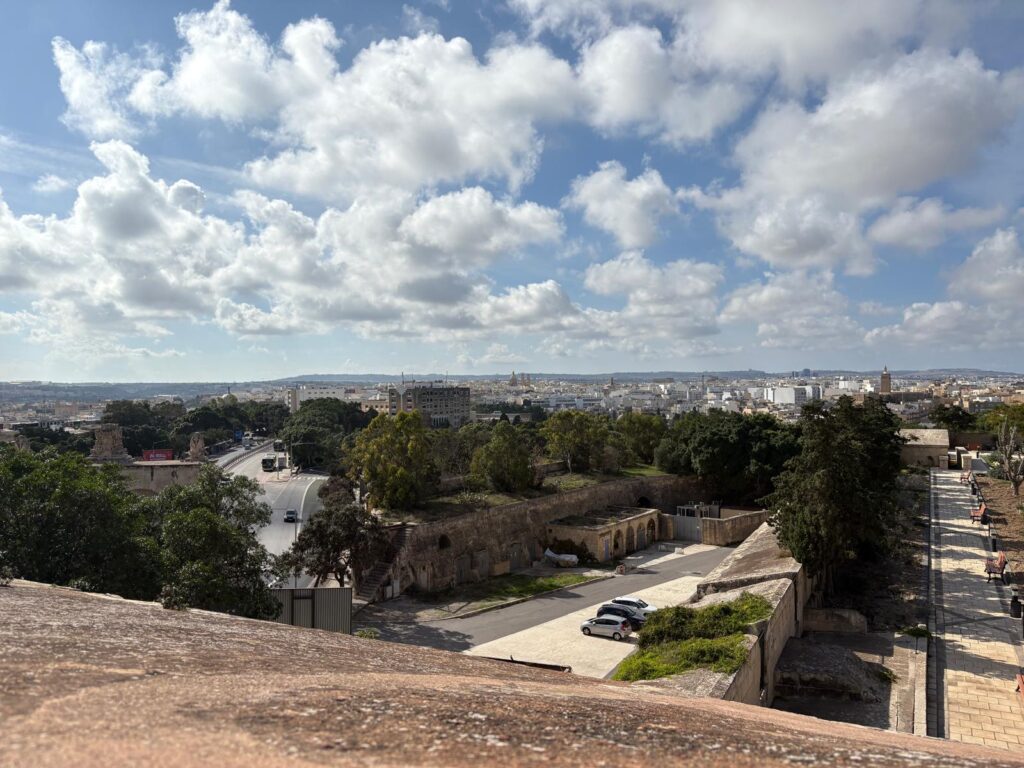
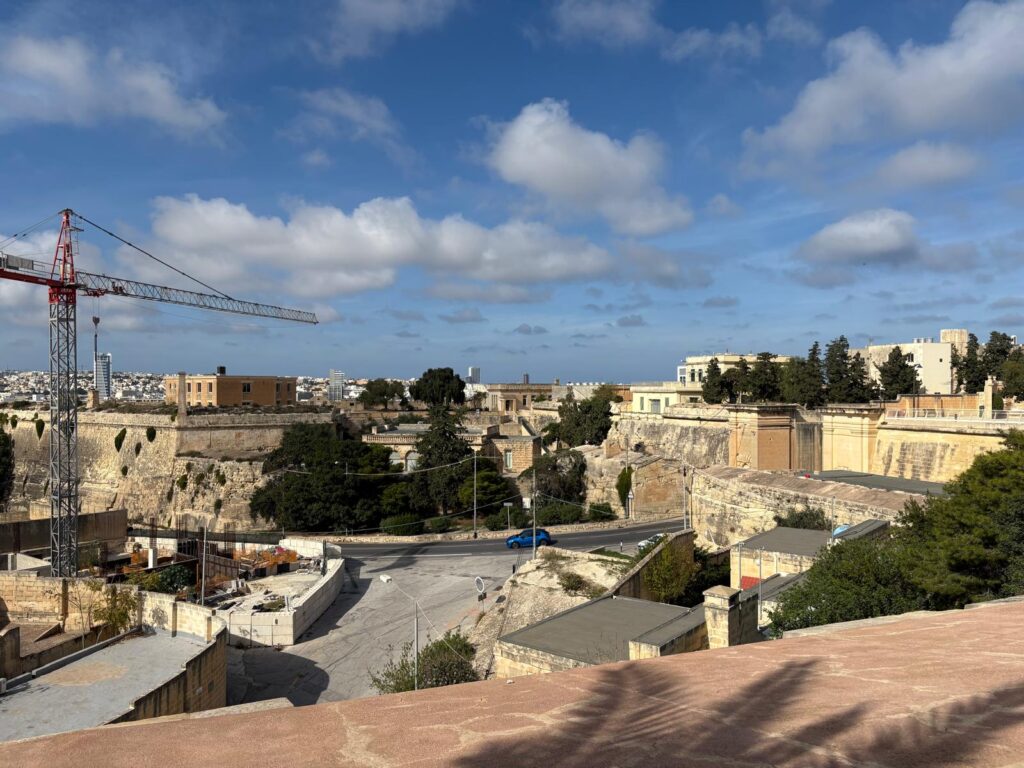
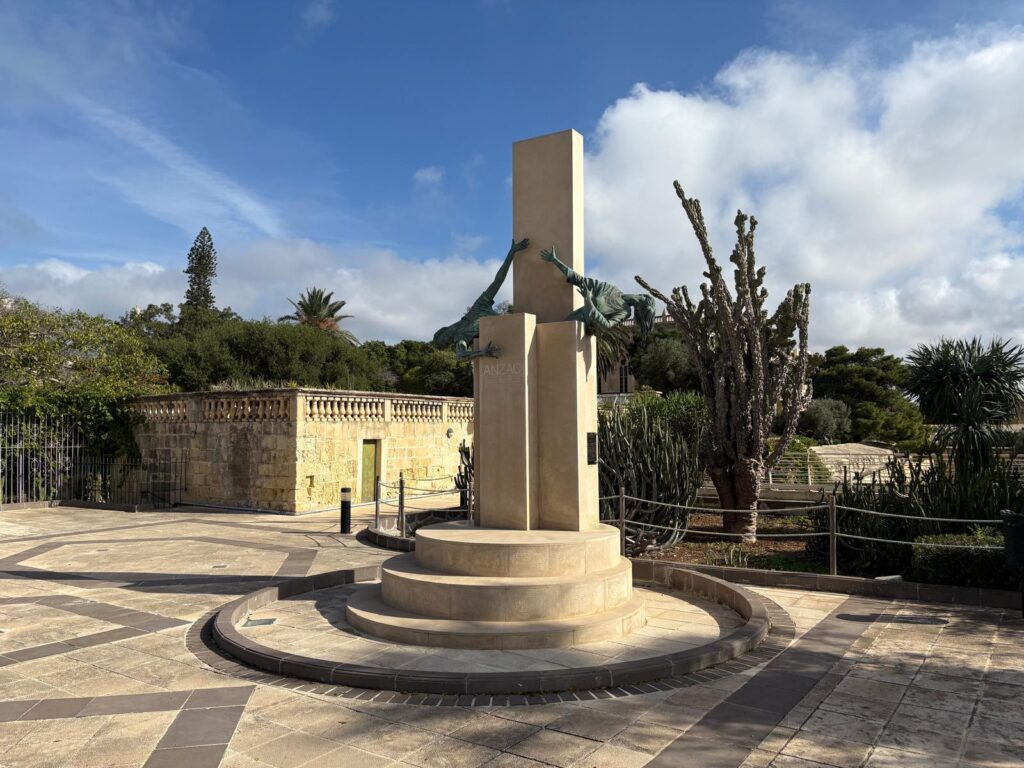
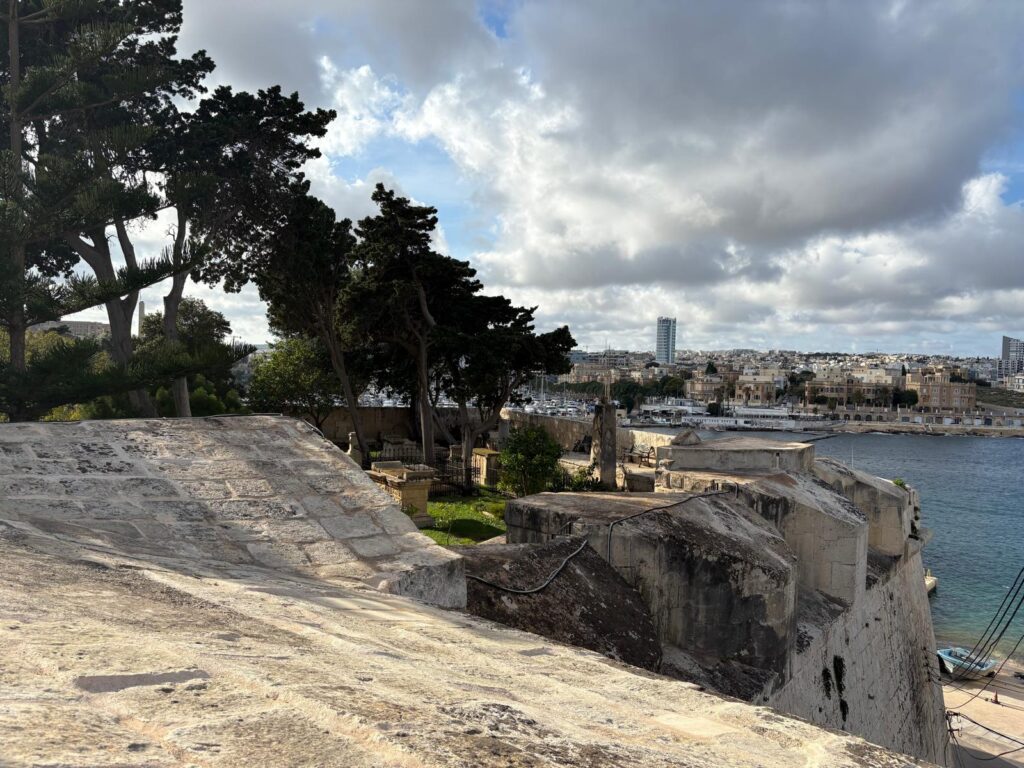
Just near the entrance to the Congreve-Bernard Memorial Hall (also next to Sarria Church – it’s a busy spot) is Robert Samut Hall. As you might have wondered from the very Victorian Gothic architecture, it was originally an 1883 Wesleyan Methodist Church. Its claim to fame was that it was the first building in Malta to use an electric lightbulb. It became a cultural centre in 1975, renamed for Robert Samut, a Floriana native who composed the Maltese national anthem.Next up is the Wignacourt Water Tower. Wignacourt is one of those names you hear frequently in Malta: Alof de Wignacourt was Grand Master of the Order of St John from 1601-1622, and a future post will cover the Wignacourt Museum. This structure is part of a remarkable aqueduct system which brought water from the area of Mdina/Rabat to Floriana and Valletta. It was inaugurated in 1615. Taking the bus from Floriana to Mdina, we travelled alongside long stretches of it.Not part of the Floriana Heritage Trail (that I could see) but an interesting spot I’d passed through on my morning runs was the Argotti Botanic Gardens. The Gardens, now part of the University of Malta, have a long and interesting history. The Knights Hospitaller started a physic garden (of herbs and medicinal plants) at Fort St Elmo around 1674. In the early 19th century, the plants were moved to the Mall in Floriana, which we saw earlier. They came to the Argotti Gardens, which started as two separate private gardens, later that century. In 1890 the collection was officially recognised as a botanical garden, making it the third oldest in the Commonwealth behind Oxford (1632) and Edinburgh (1670)The gardens today contain historic buildings from those early private gardens, as well as a herbarium and a lot of Mediterranean and other plant specimens.It also sits within St James’ Bastion. Looking over the walls, you get a sense of the defensive origins of Floriana, with its steep, thick walls.And finally, as we leave the Gardens, we’ll make a quick stop at the ANZAC War Memorial. Relatively recent (2013), it’s the work of local sculptor Ġanni Bonnici.
From the Archbishop’s Curia to Influences Old and New
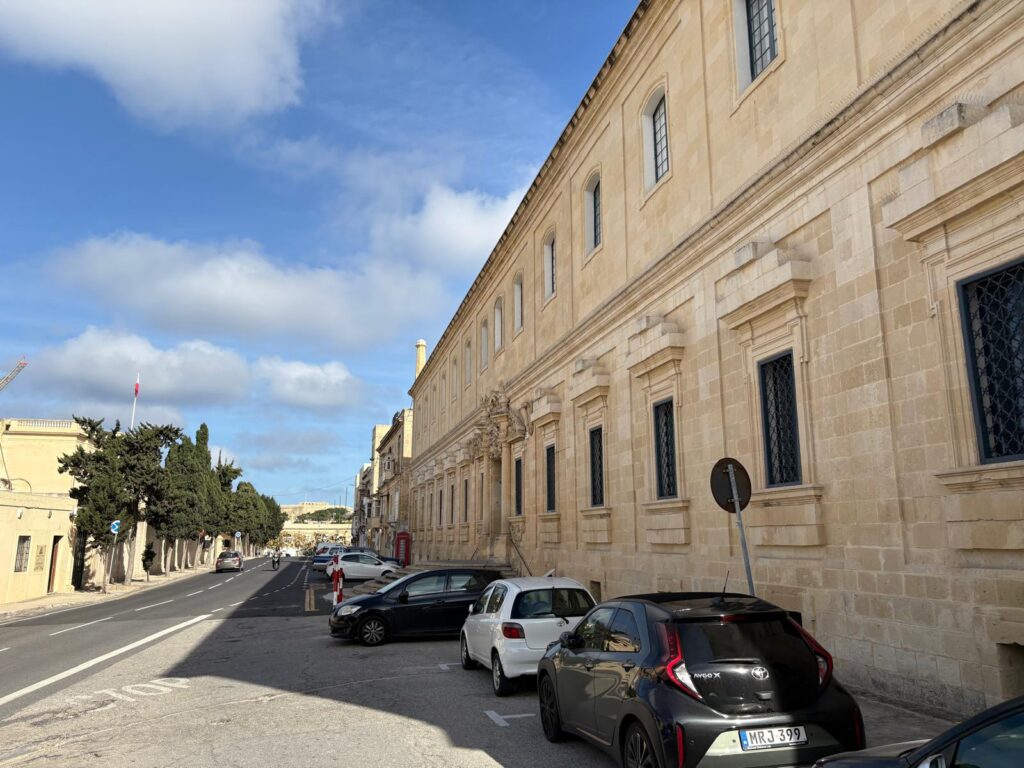
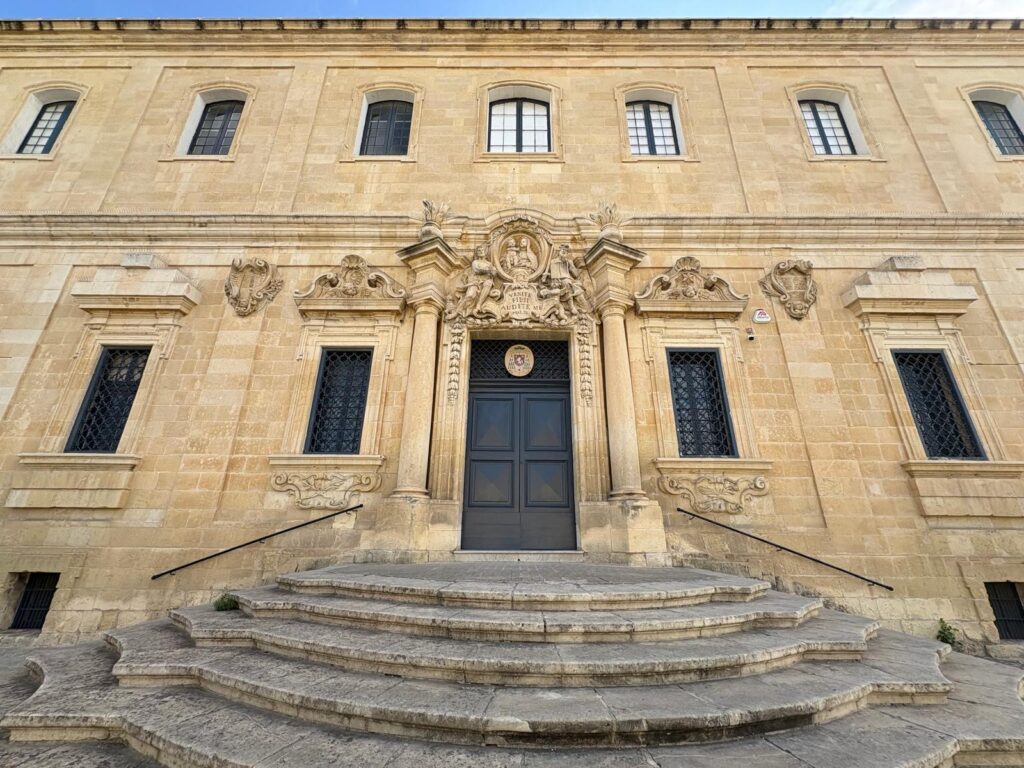
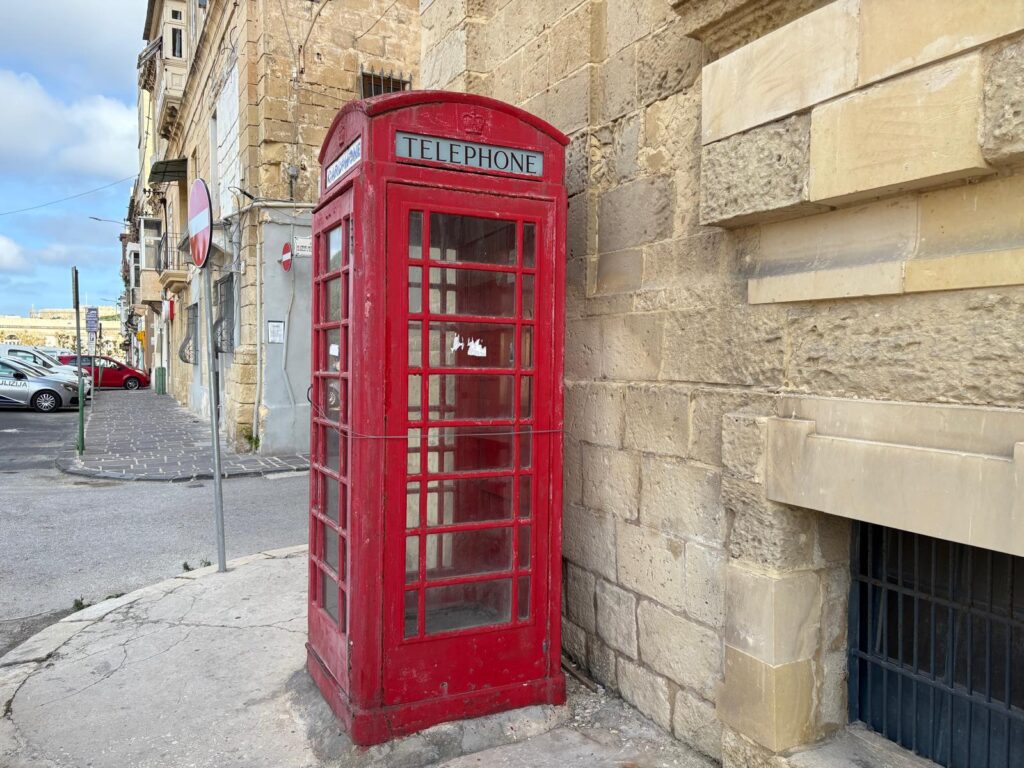
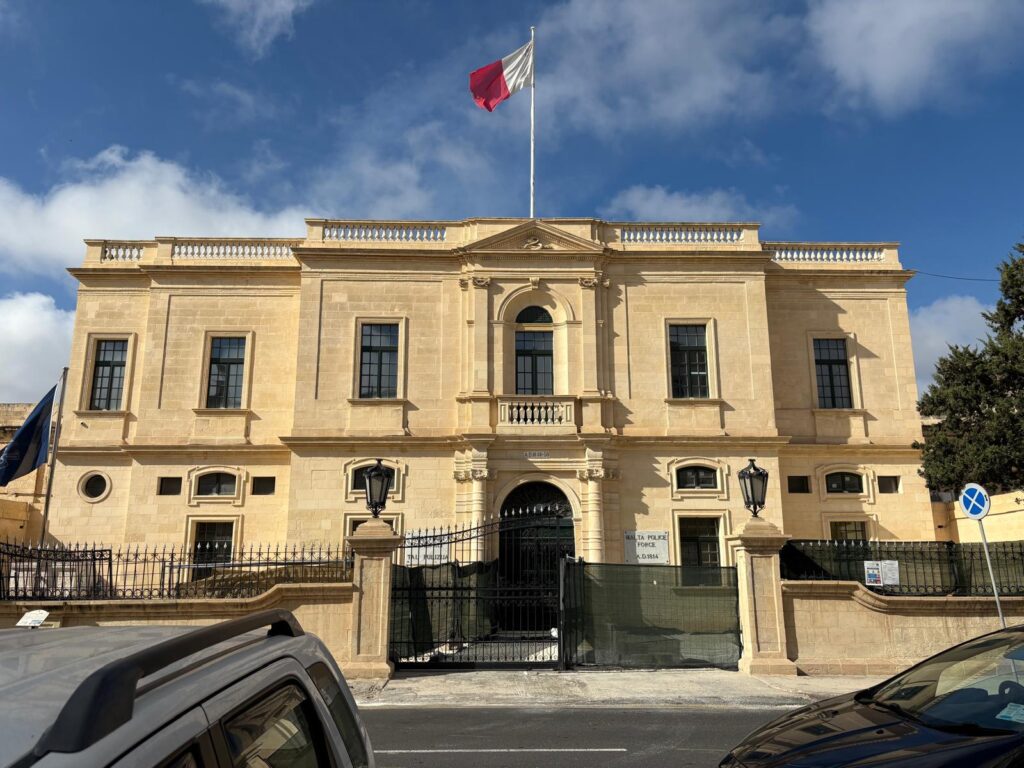
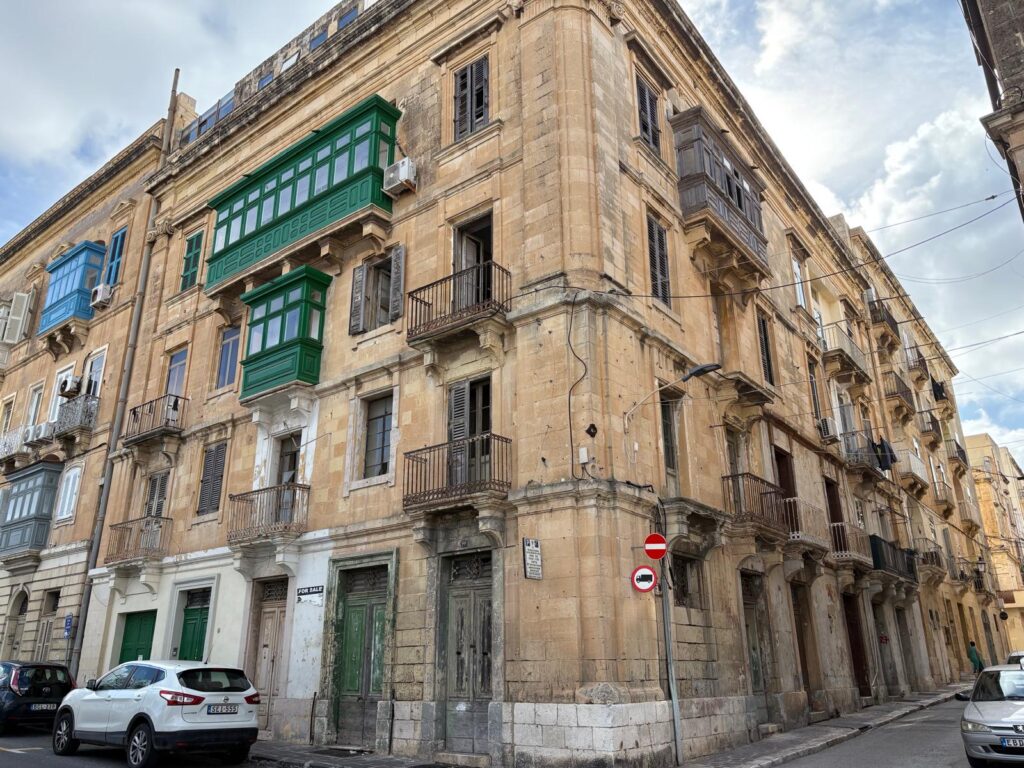
I didn’t actually know what this building was as I passed it. But it seemed notable so I took some pictures and did my research later. Originally a Jesuit building known as Casa della Madonna di Manresa, this was a retreat house. It was also formerly the curia for the Province of Sicily. Today, it is the headquarters for the Archbishop’s Curia. But what is a curia? It is an official body that governs an entity within the Catholic Church, from a diocese right up to the Roman Curia governing the whole church.These reminders of British rule in Malta are so familiar to me as a Londoner, yet so incongruous against the warm sandstone buildings.Another building I didn’t realise at the time was part of the Floriana Heritage Trail is the Malta Police Force General Headquarters. And it’s another building with an interesting series of former lives. It was built by Grand Master António Manoel de Vilhena, he who started developing Floriana as a suburb, in 1734. At that time it was the charitable Casa d’Industria, where homeless women could find shelter and learn a trade (I’m sure it wasn’t as benevolent an experience as that description makes it sound). It was later a General Hospital during the British period, complete with an underground shelter for vulnerable patients that couldn’t be moved. The shelter even had two operating theatres: there are no other known examples of this type of solution in Europe. The building became the Police Headquarters in 1954.A very typical residential building style. The enclosed balconies show the enduring Arab influence in Malta – they are descendants of Islamic mashrabiya.
Final Stops: the Mall to Msida Bastion Historic Garden
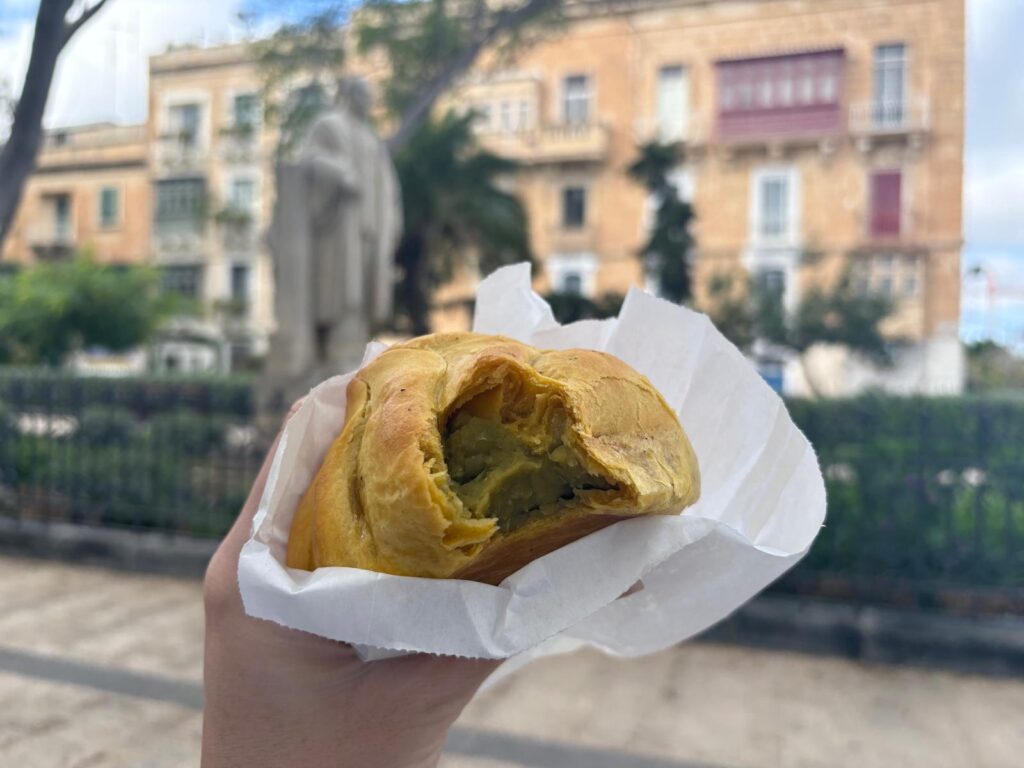
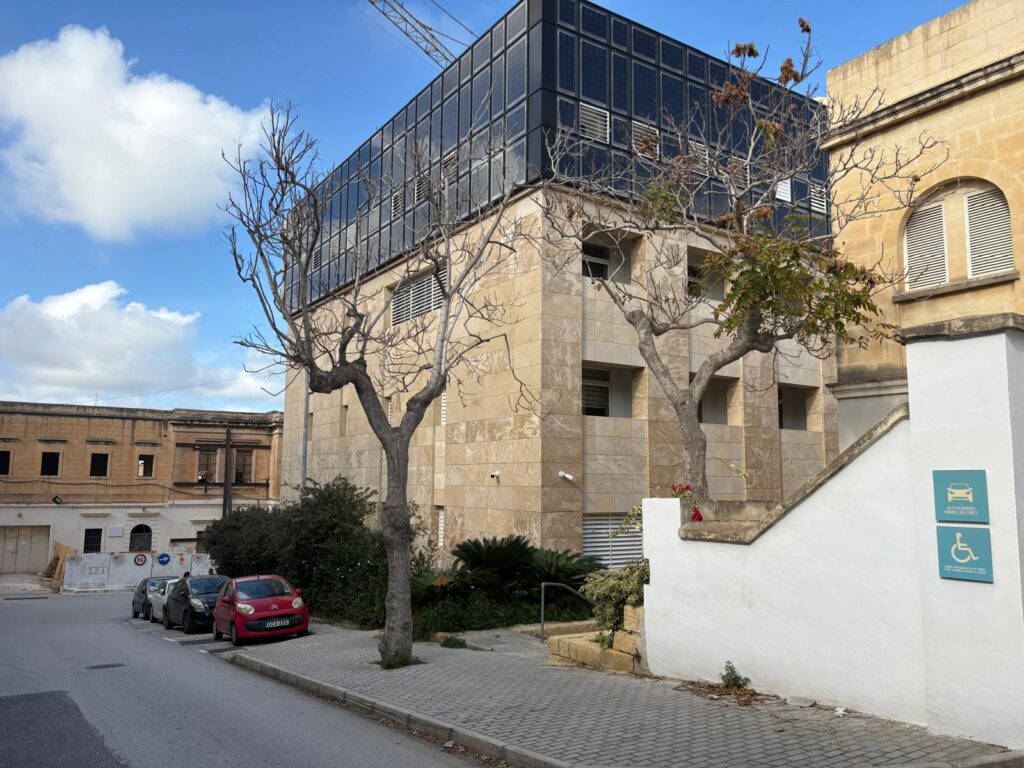
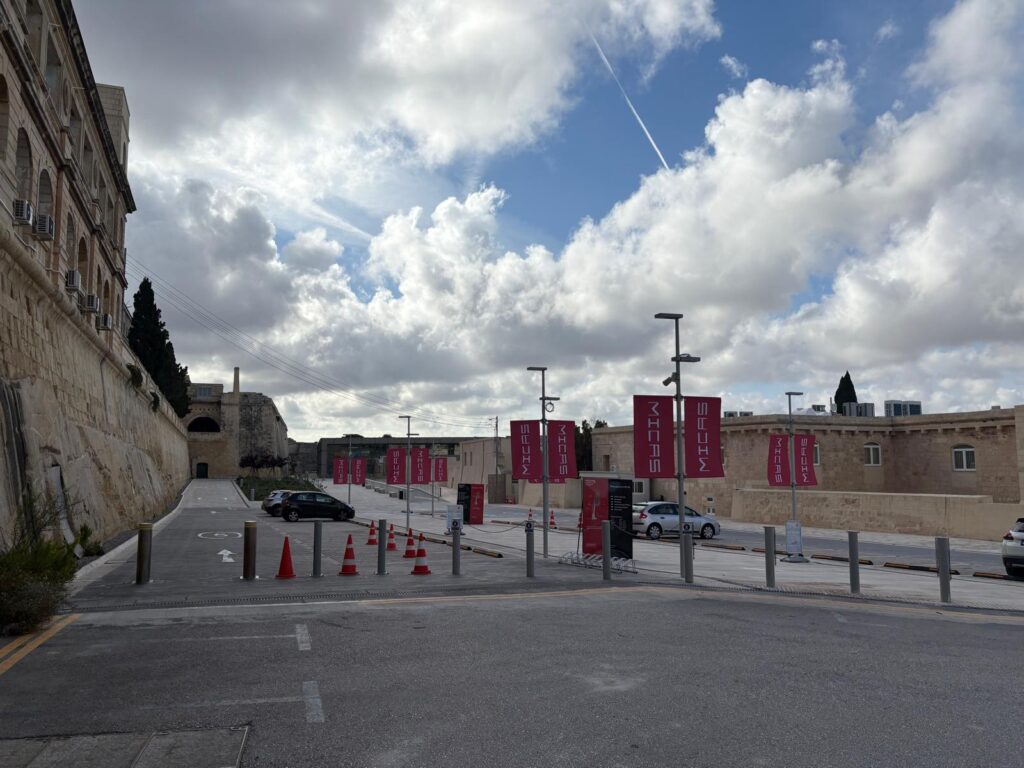
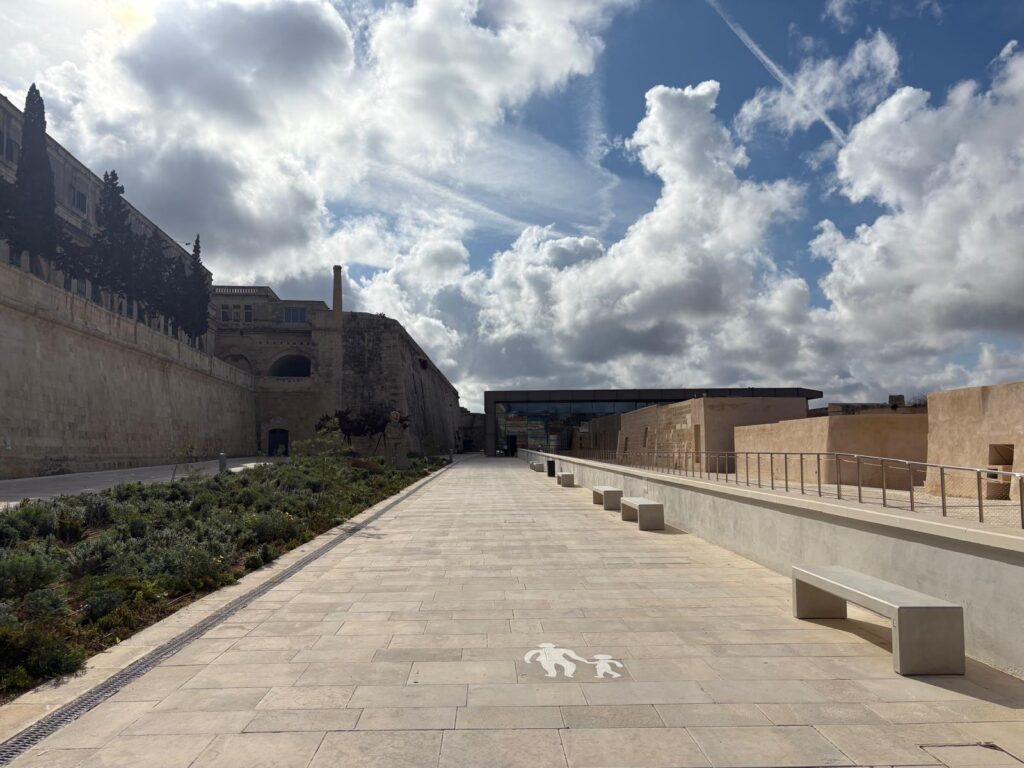
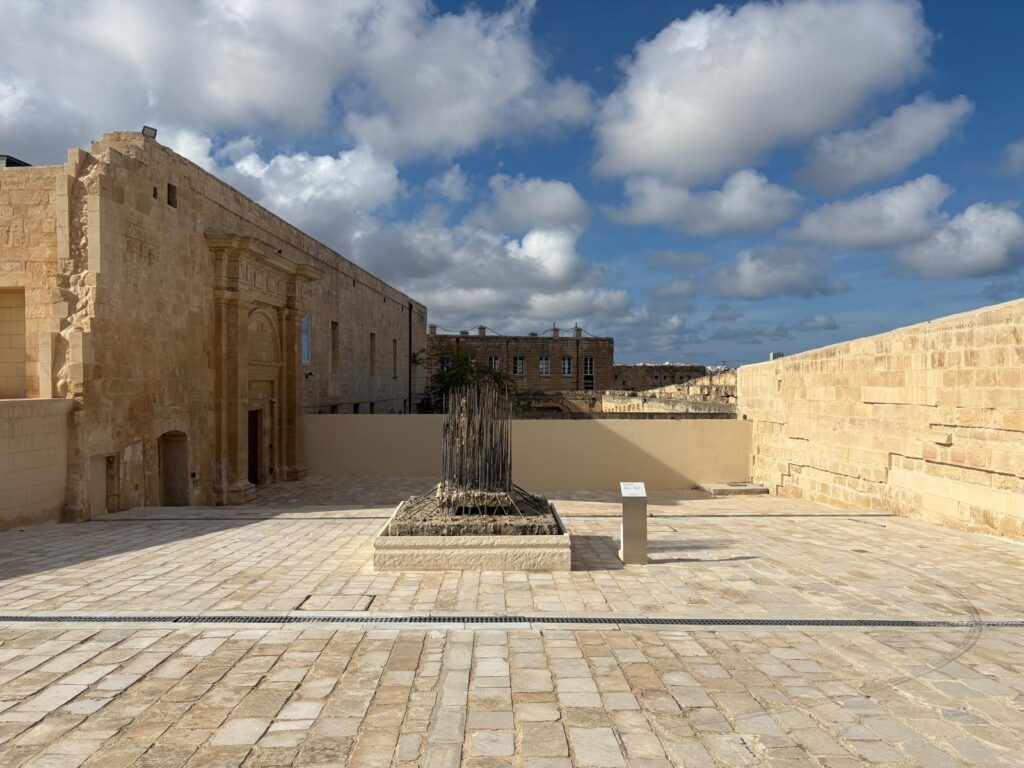
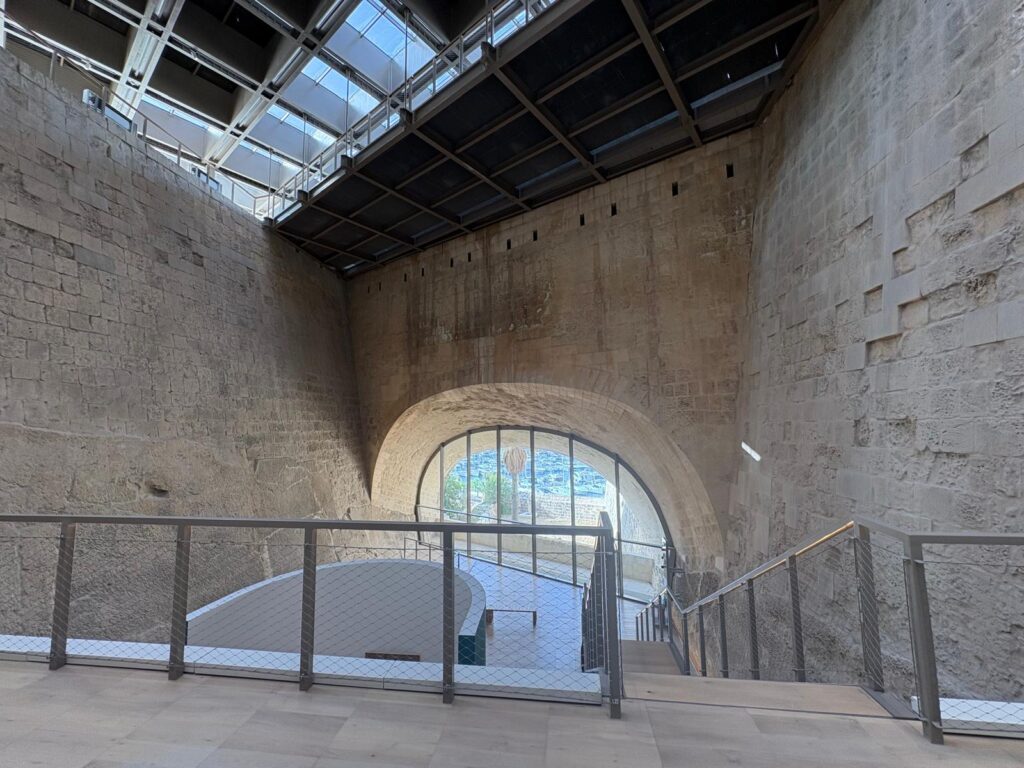
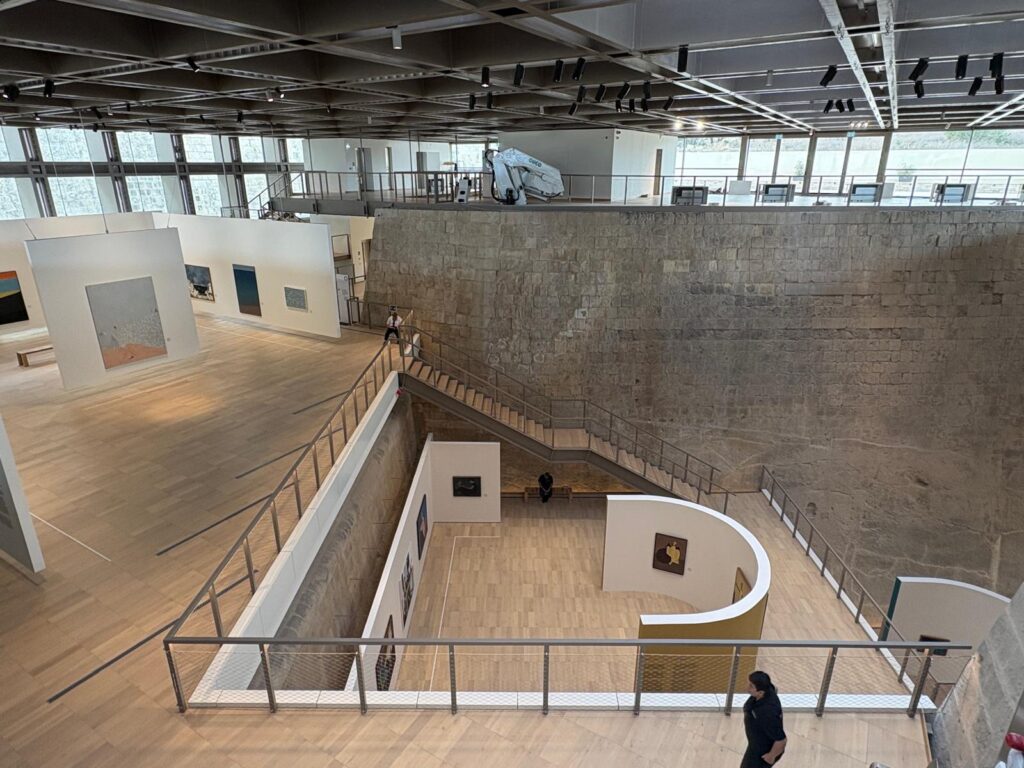
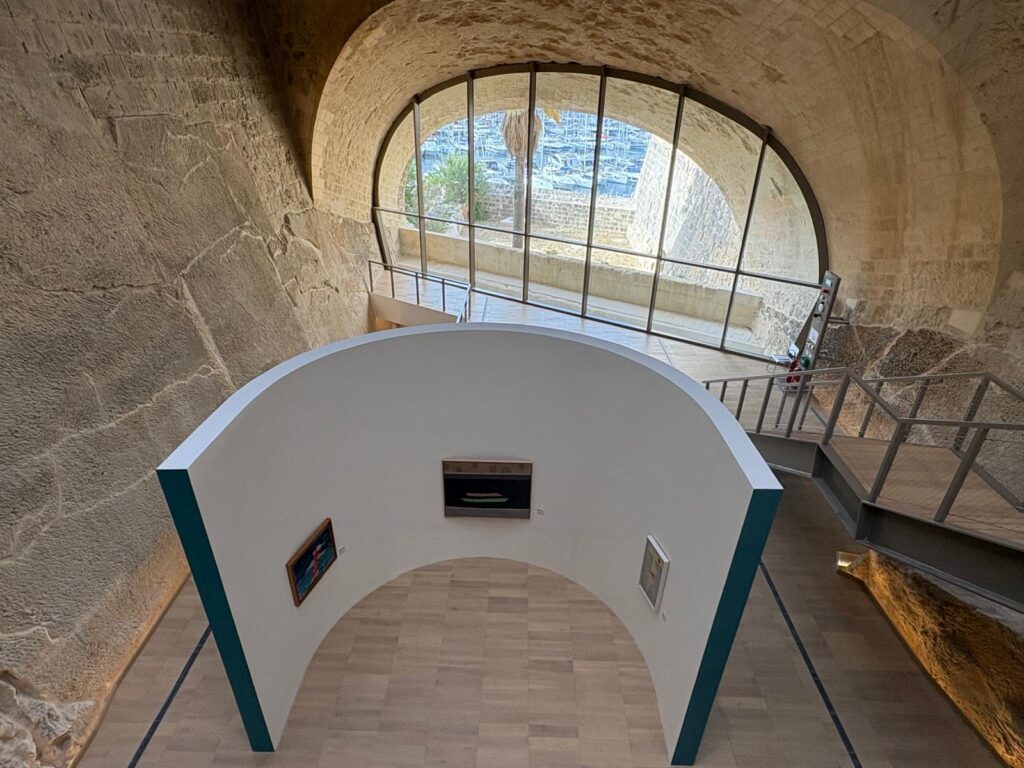
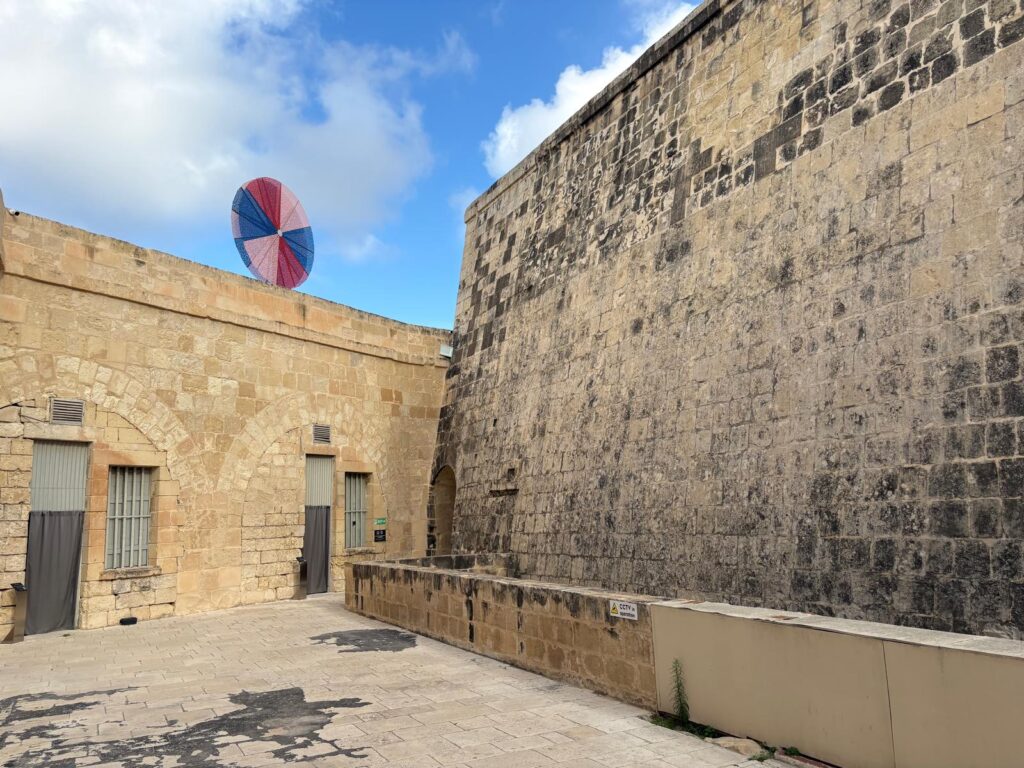
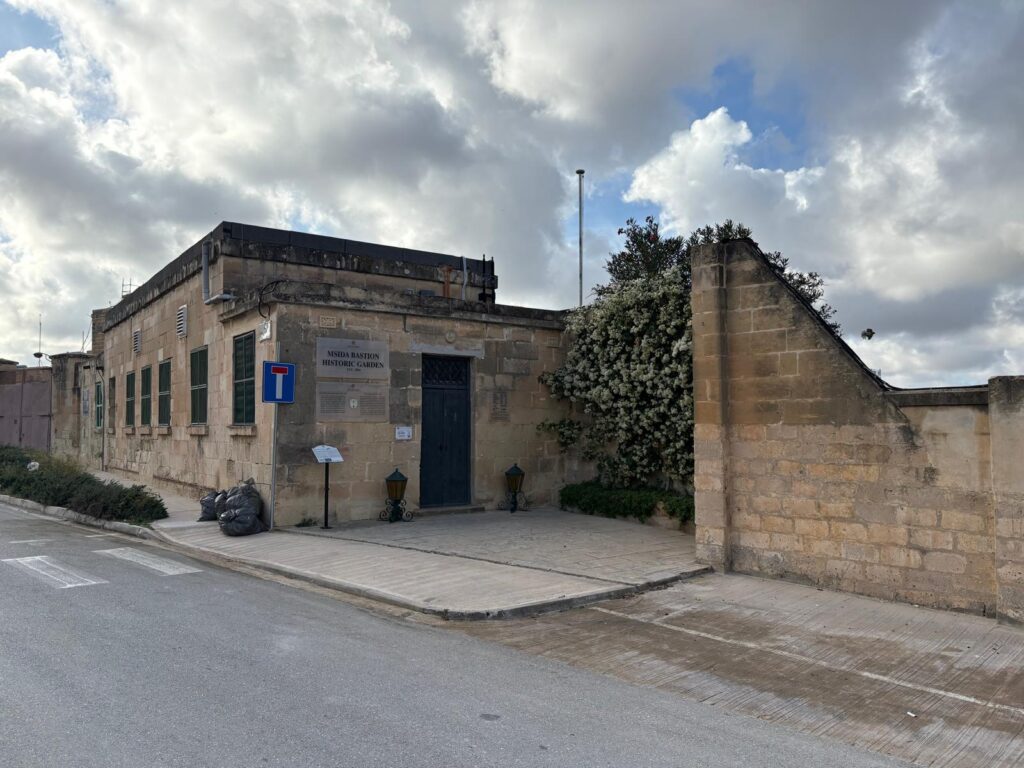
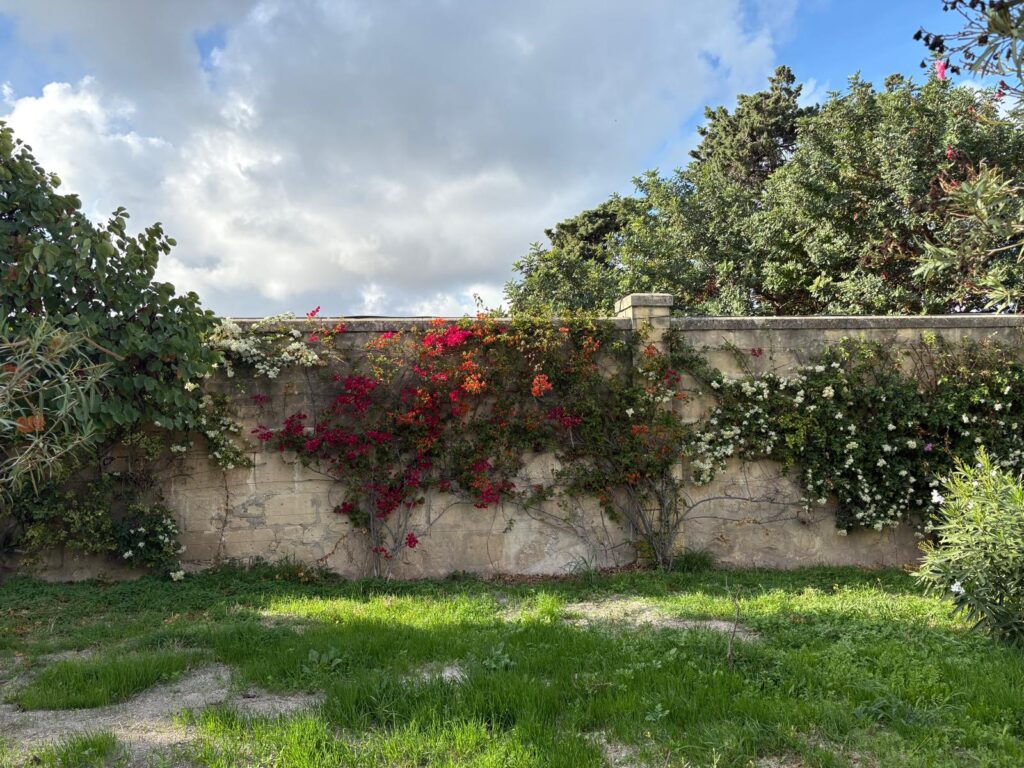
And now we are back at the Mall. Before we continue, we will fortify ourselves with a quick snack. These doughy pastries with a pea puree filling, qassatat, were one of my favourite discoveries in Malta.This building is not anything too special: it’s Project House, belonging to the Public Works Department. But I thought it was a nice example of architectural continuity even in a more modern style.Continuing on, we come to MICAS, which I wrote about in my last post on Malta. MICAS (Malta International Contemporary Art Space) is a new gallery, built right into parts of the Floriana Lines. It’s really unique architecturally, and hosts interesting exhibitions. Well worth a look for art lovers in Malta.A few pictures from the inside……and from the outside.And then one final stop, which I couldn’t get inside because it keeps very limited opening hours. This is the Msida Bastion Historic Garden. As you can tell from the name, it’s another repurposing of an original defensive bastion. This one was a Protestant cemetery from 1806 to 1856. It seems a nice, peaceful place, with views out over Marsamxett Harbour. And, with that, our exploration of Floriana is complete! We are almost back at my hotel, now, so it’s time to bid you farewell. Although we didn’t manage all the stops on the Floriana Heritage Trail, I hope you found the sights we did come across as interesting as I did.