Long-time London resident and avid museum and theatre-goer. I started this blog in 2014, and got serious about it in 2020 when I realised how much I missed arts and culture during lockdowns. I go to a lot more events than anyone would think is sensible, and love sharing my thoughts in the forms of reviews, the occasional thought piece, and travel recommendations when I leave my London HQ.
With an afternoon to spare, how much of Montpellier can we see, and is it enough to get a feel for the city? Join us as we answer these questions, perhaps picking up inspiration for your own trip in the process.
A Quick Stop in Montpellier
Readers of the Salterton Arts Review have recently followed my exploration and excursions as I spent a week in France. First I spent a couple of days in Chantilly, with this exhibition as the main draw. Next up was a few days in the Hérault, where I dragged the Urban Geographer around the delightful village of Olargues in the less than delightful afternoon heat. But all vacations come to an end, and the end of our vacation involved flying from Montpellier back to London. Our itinerary left us with an afternoon to spare in the city, which of course meant we were going to see what we could of the sights. It was a first trip for both the Urban Geographer and myself.
As with other flying visits (see this one or this one, for instance), it’s surprising just how much you can see in a short period. Sure, it would be nice to have longer to spend in these places. But we can’t all live in E.M. Forster novels and spend months at a time touristing around. I’d rather see somewhere briefly than not at all. Perhaps you feel the same, in which case this guide may provide inspiration for your own short visit to Montpellier!
A few facts to begin with. Montpellier is the largest city in the Hérault, with around 300,000 inhabitants, making it France’s 8th largest city. It’s also in the Languedoc region, and in Occitania. The origins of the modern city of Montpellier date back to 985, but the region had been inhabited since prehistoric times (which we know thanks to evidence found during excavations for a tram line). Its historic importance came from its position on the route between Spain to the West and Italy to the East, and it became a centre for trade. As well as overland travel, its two river ports contributed to trade and meant the inhabitants of Montpellier were rather worldly as well as affluent. It’s also on the pilgrimage route to Santiago de Compostela, adding religious heft to its economic pedigree. A third important thread was the study of medicine.
Let’s take a wander through the city now and see what we can find in terms of continuity and change.
First Steps into Montpellier
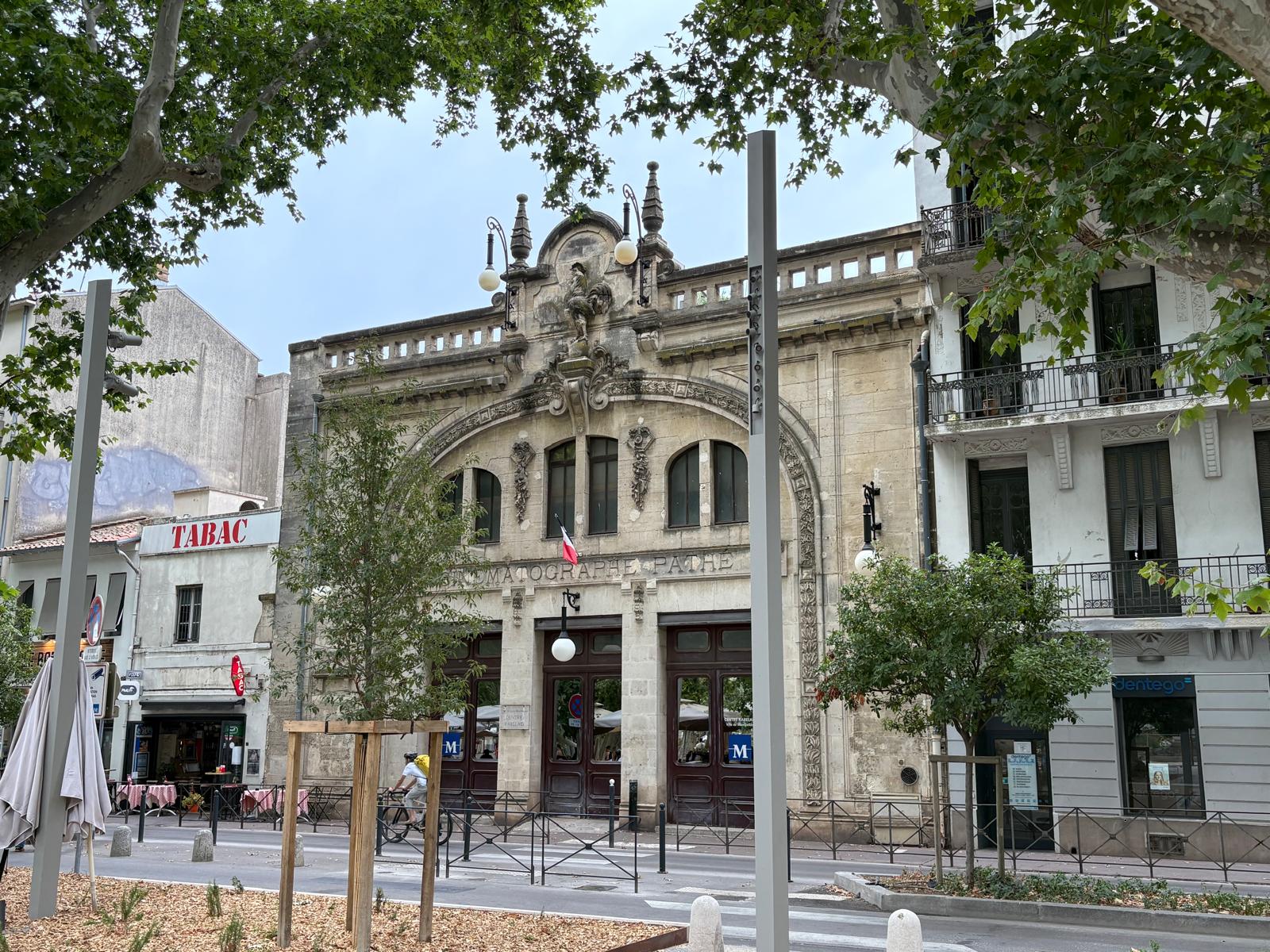
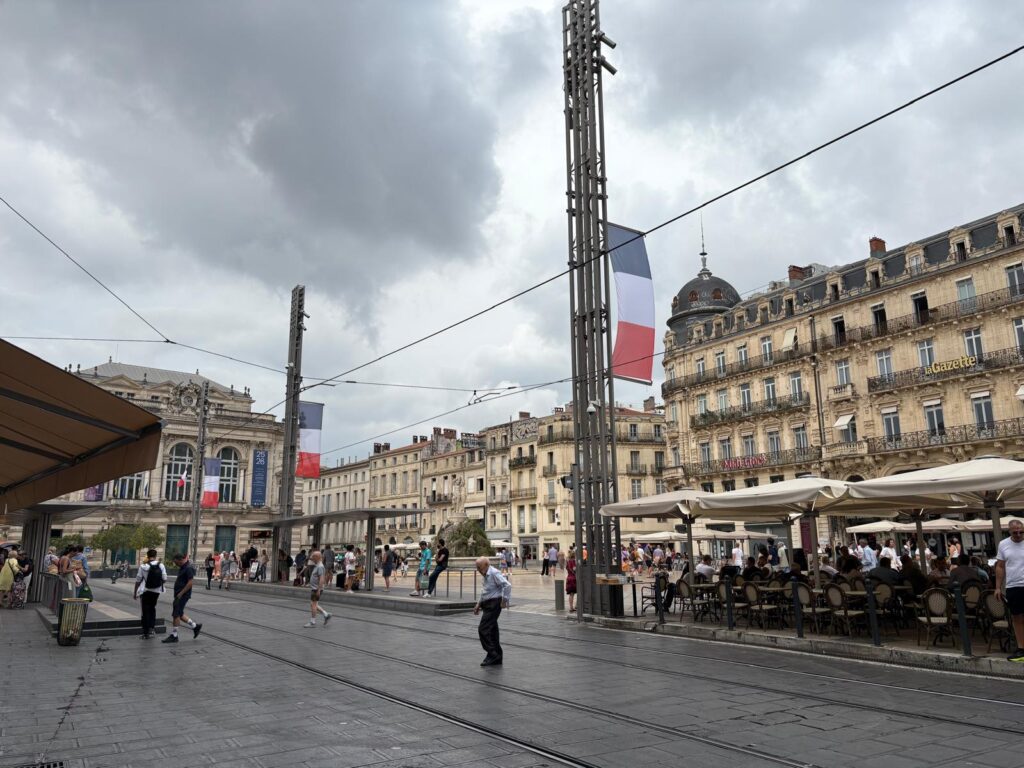
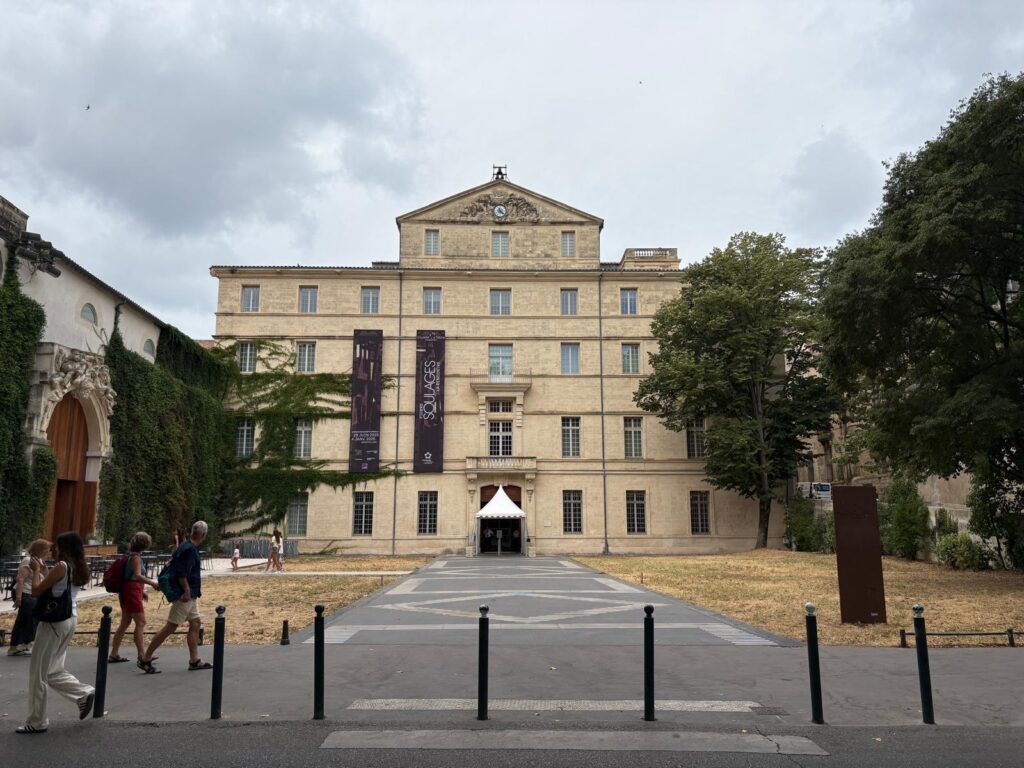
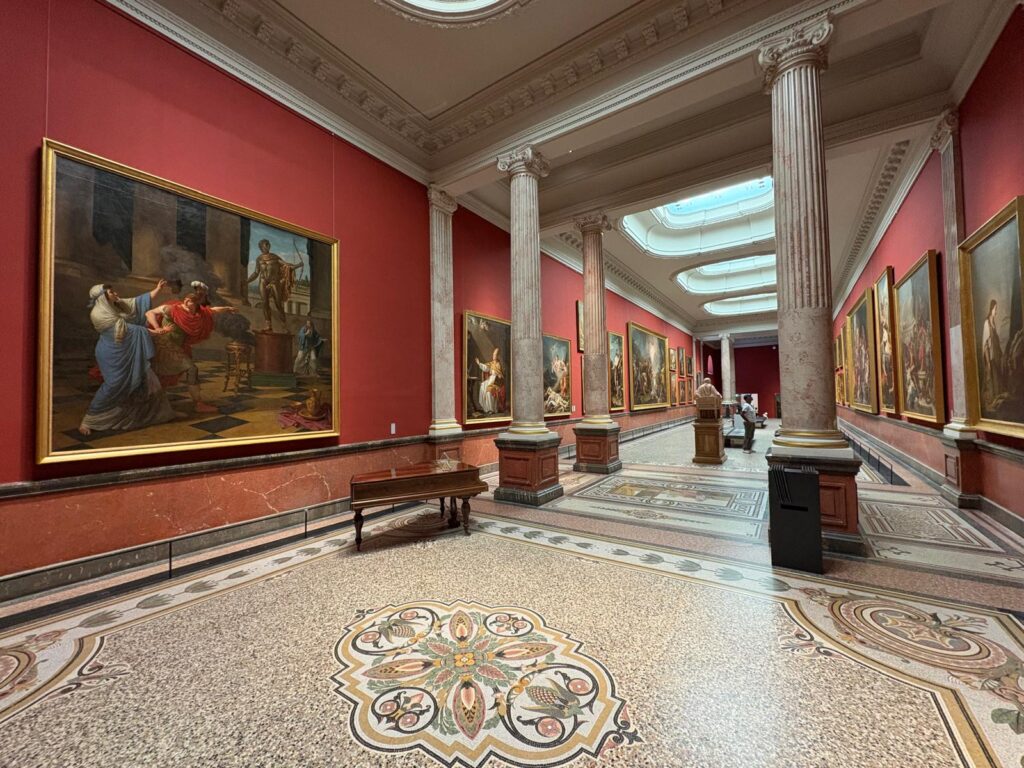
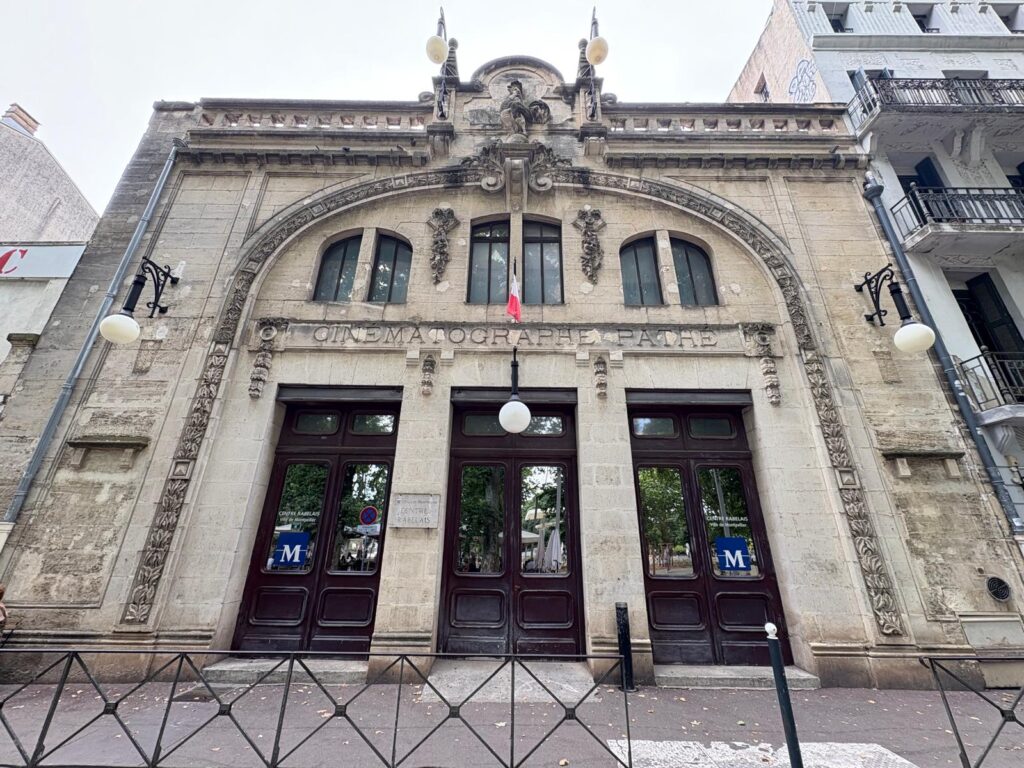
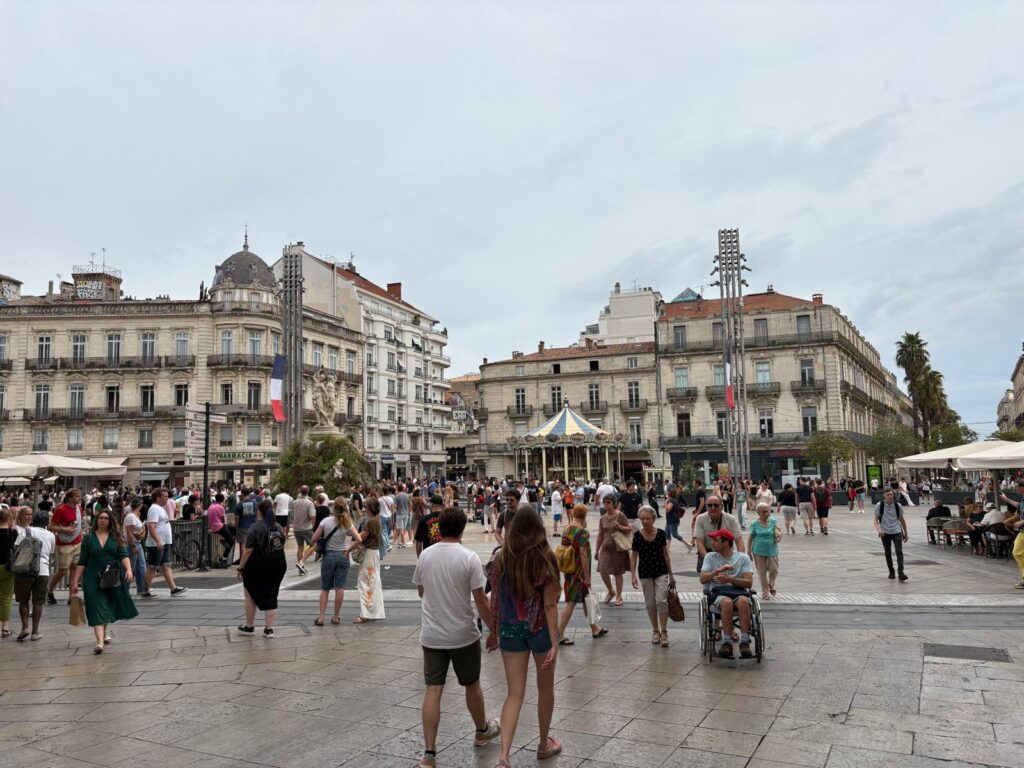
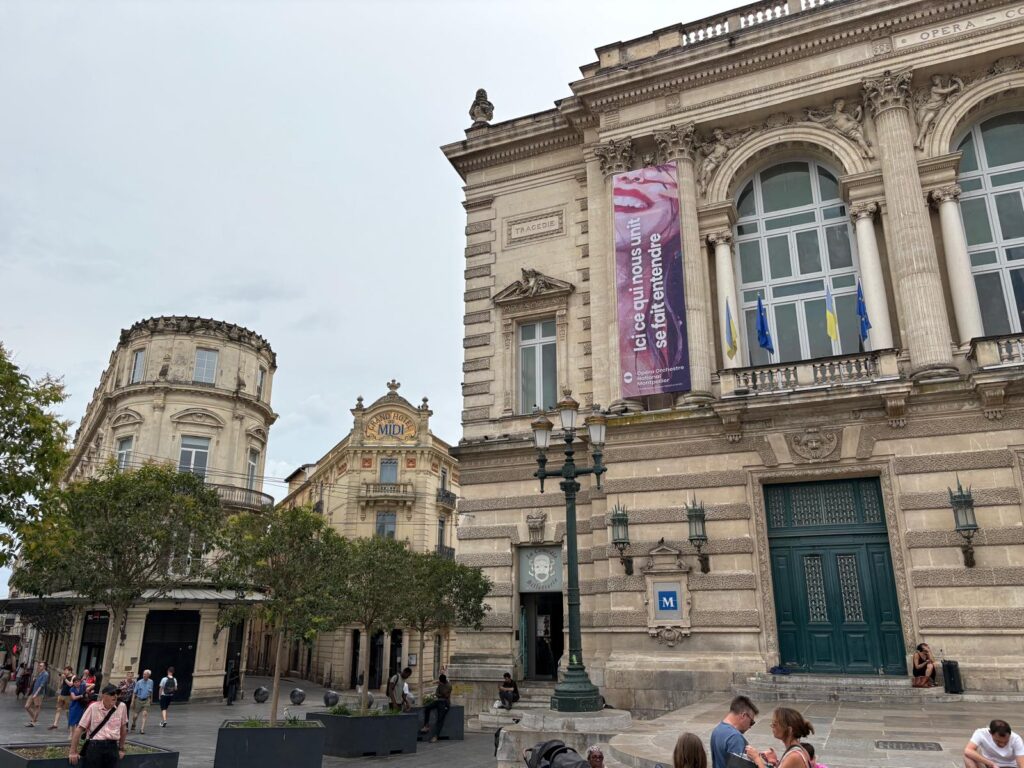
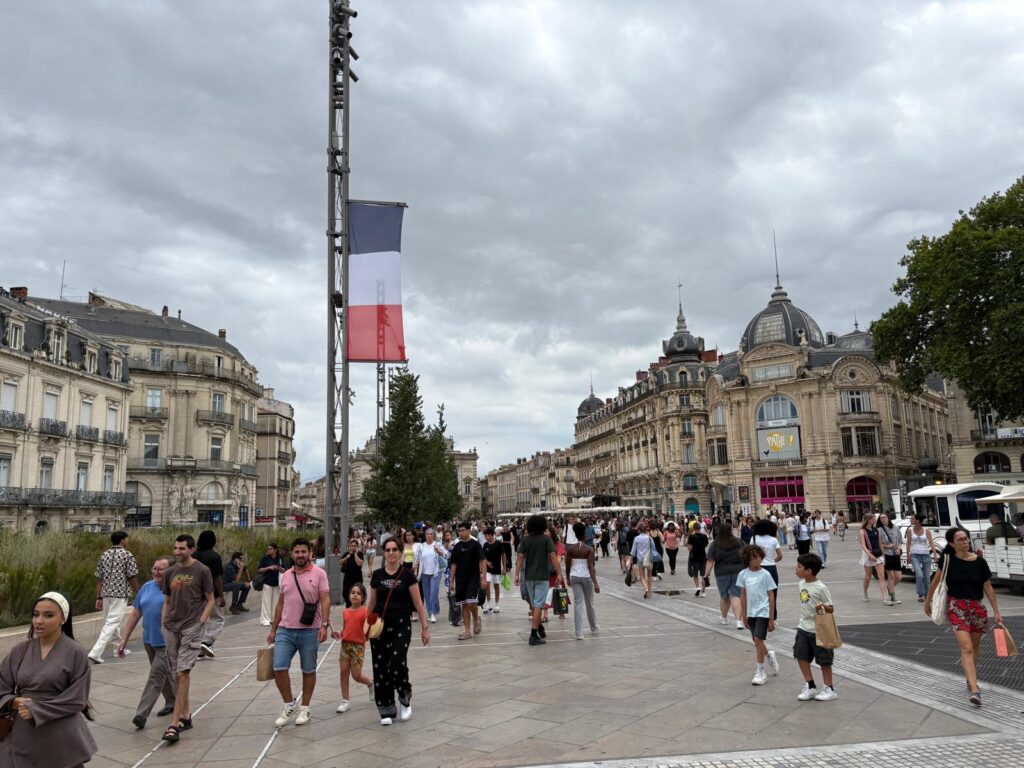
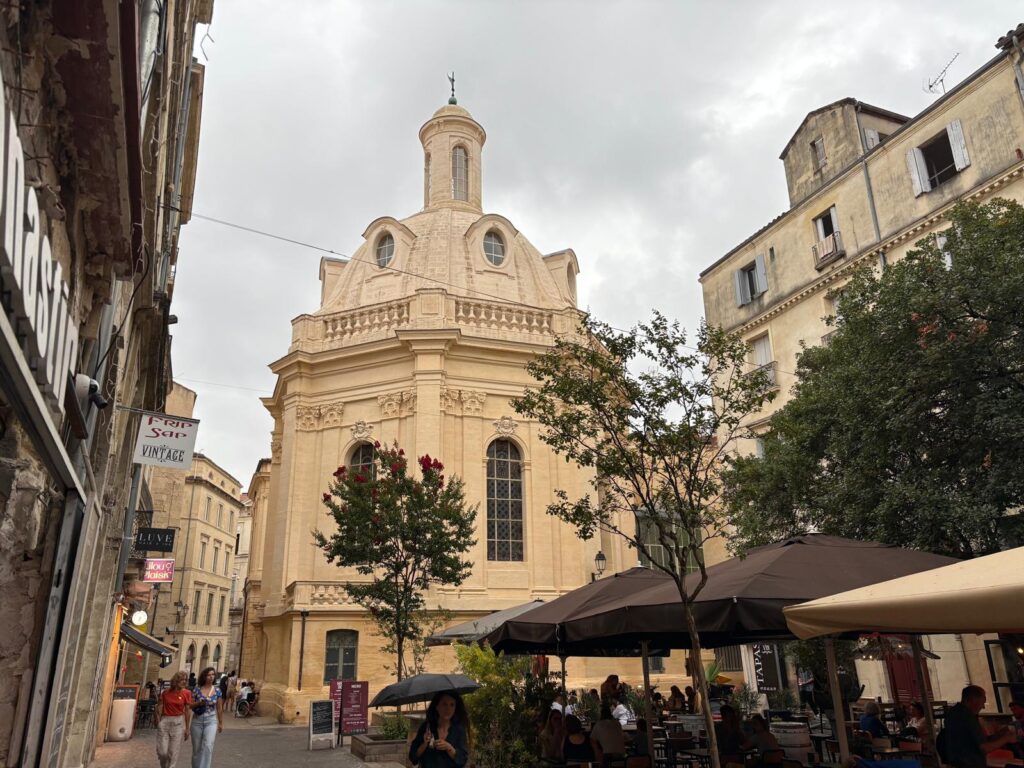
We explored Montpellier on a summer’s day, but as you can see it was a little bit of a rainy one. Our hotel was near the Place de la Comédie, which itself is a short walk from Montpellier Saint-Roch station, so we started our journey here. This large, pedestrianised square is named for the theatre that stands on it. It became a focal point of the city when the train station opened in the mid-19th century.There was one cultural institution I definitely wanted to see, and as it was nearby, we made a beeline for it. You can find a full write-up on the Musée Fabre here, so for now a brief outline will suffice. The museum was founded by François-Xavier Fabre, himself a painter, in 1825. This enabled a formerly modest municipal museum collection to move into the Hôtel de Massillian, where it remains today (hôtel in the sense of a private mansion, not a hotel). Other artists and collectors have made major donations over the years, growing the collection in several important directions. Tickets also include access to l’Hôtel Sabatier, which houses displays of decorative arts.There are some very impressive spaces in the museum!In need of a rest and some lunch by the time we finished in the museum, we stopped at one of many restaurant terraces along the Esplanade Charles de Gaulle. This is a lovely public green space with monuments, playgrounds and so on. While dining we had a view of this handsome building, a 1907 Pathé cinema which is now a municipal space. Both the Esplanade Charles de Gaulle and Place de la Comédie occupy space once taken up by the city’s defences, destroyed by Louis XIII during the Siege of Montpellier/Protestant Rebellion.
A Wander Through Montpellier’s Old Town
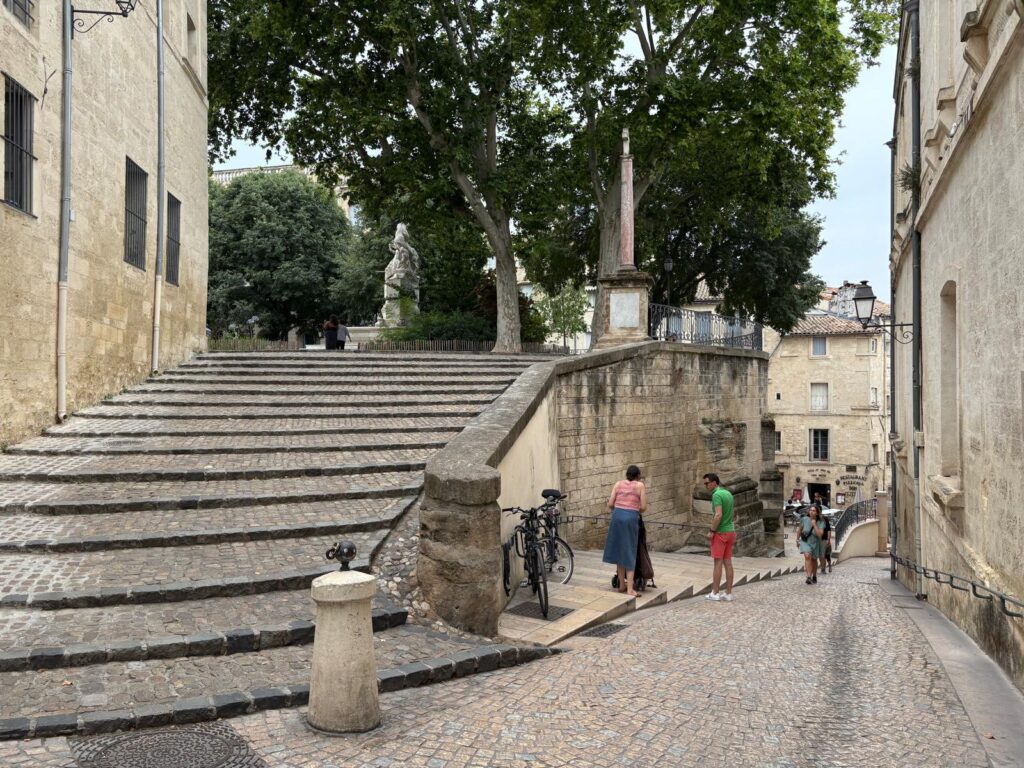
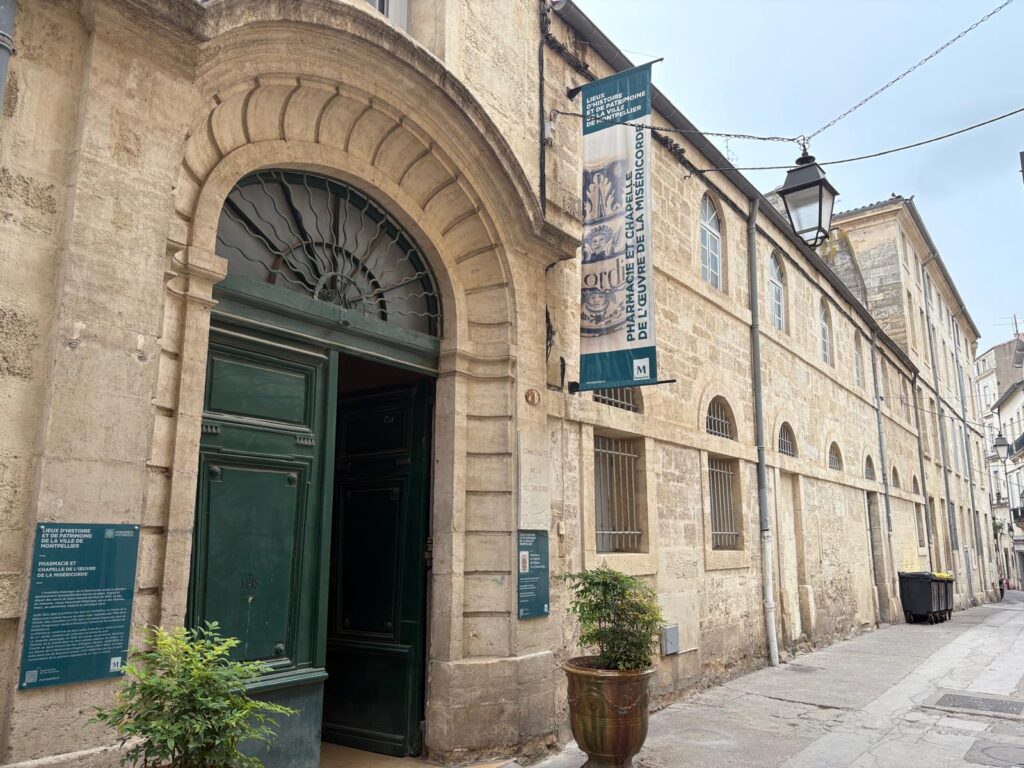
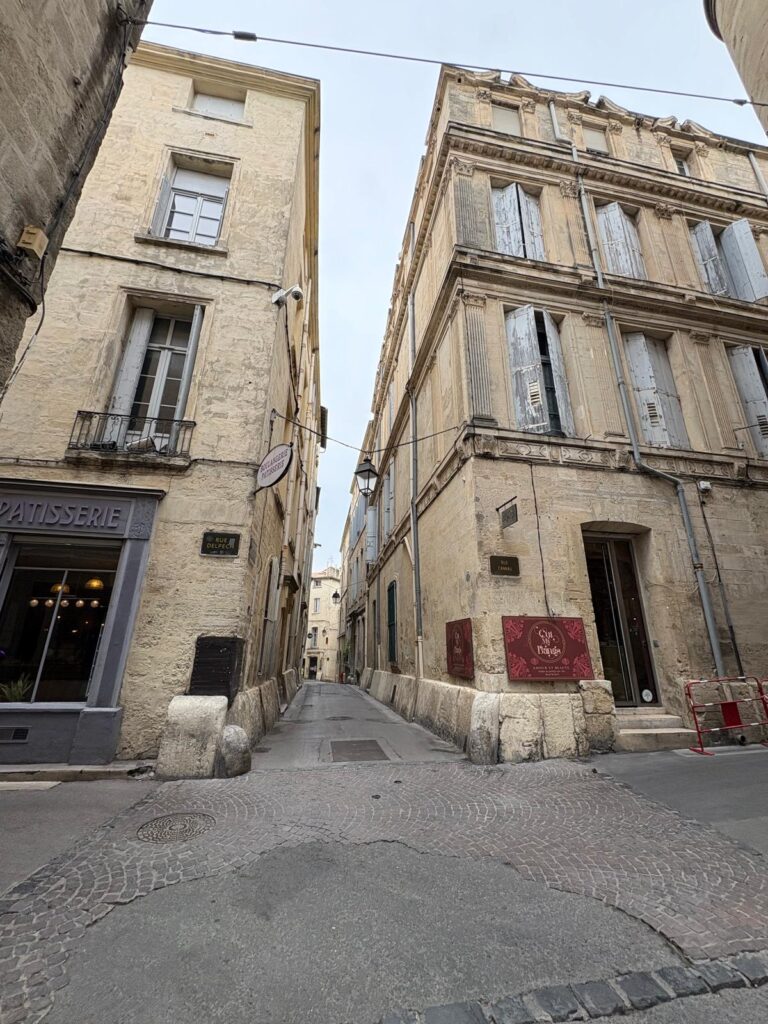
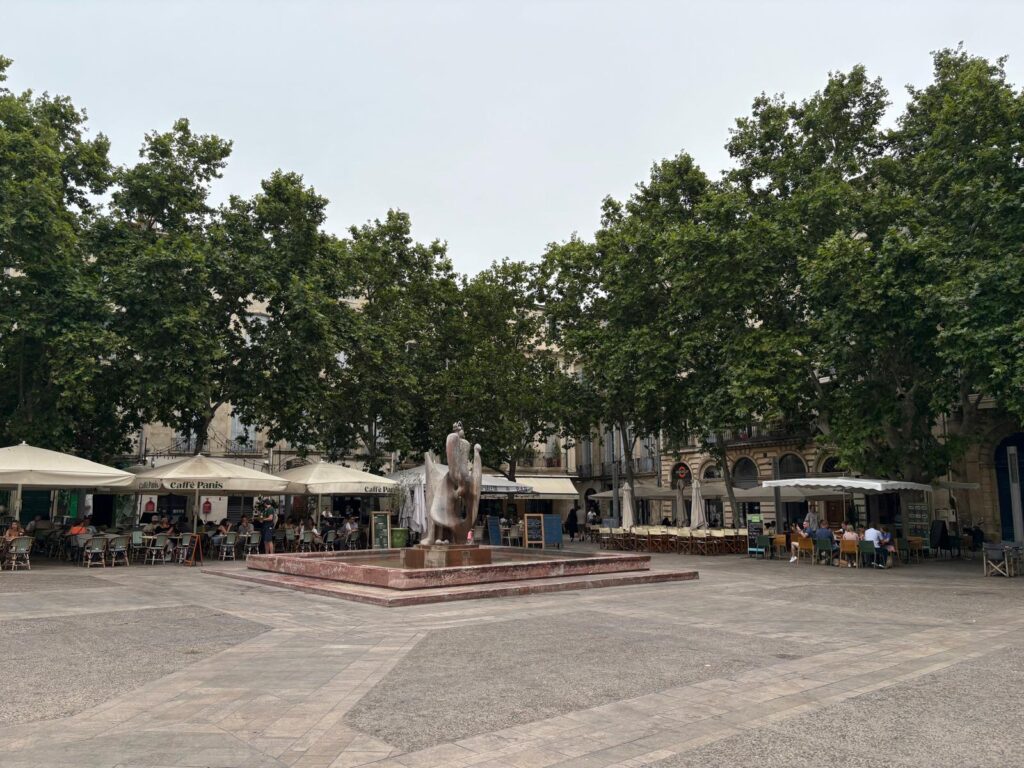
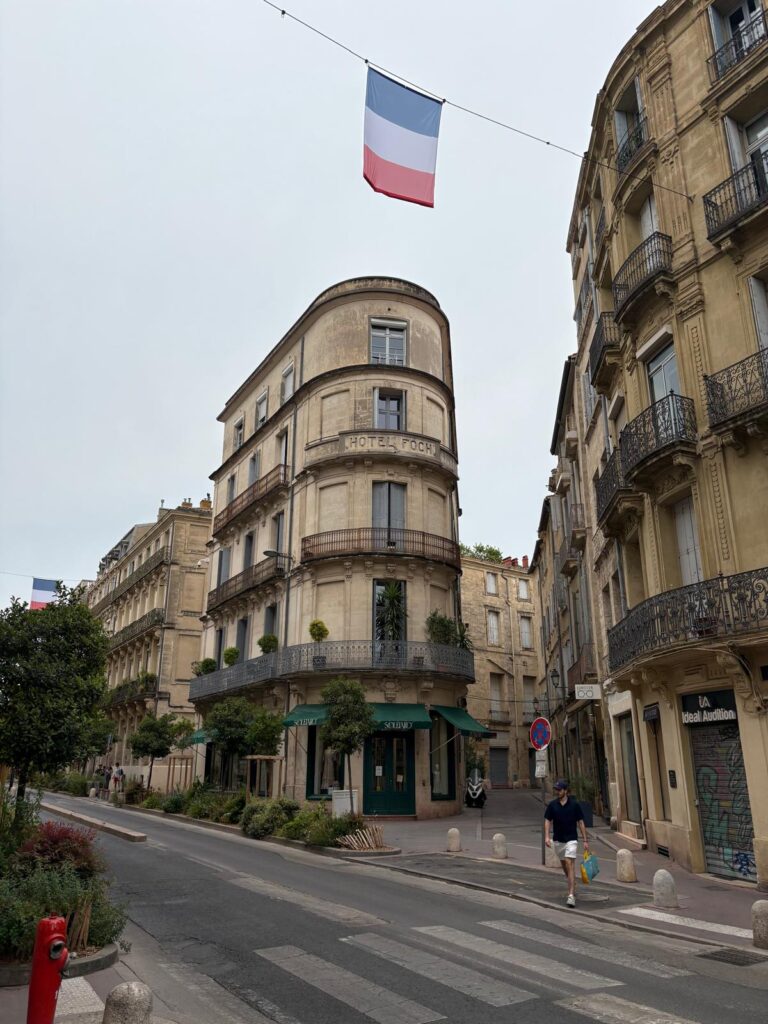
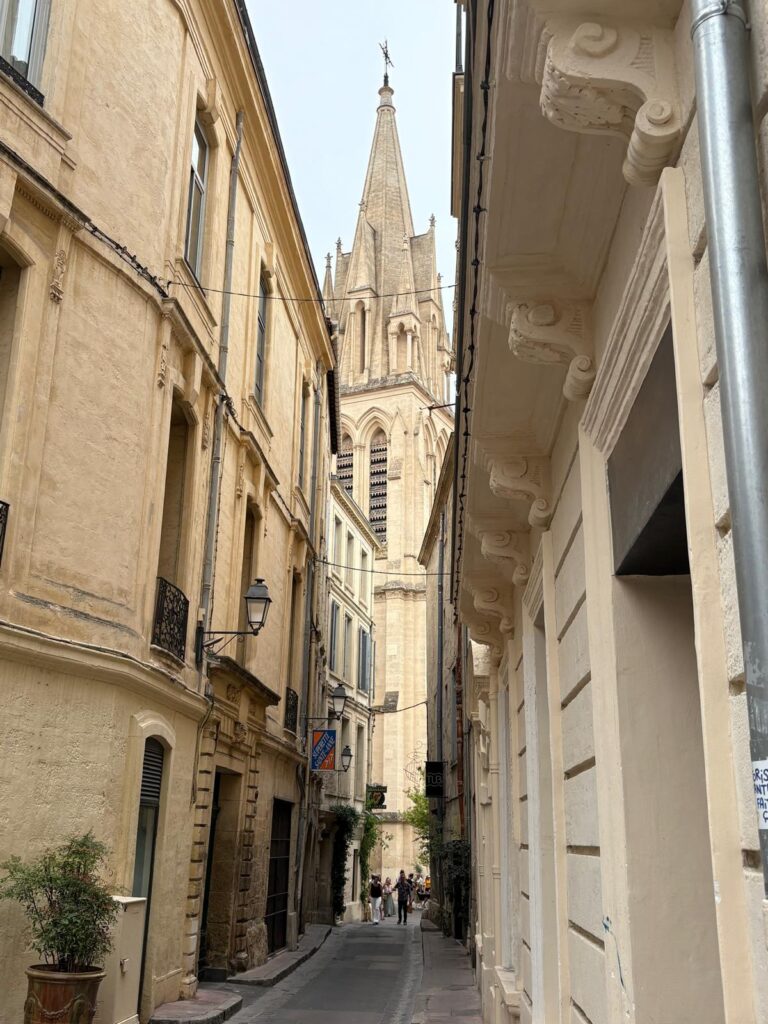
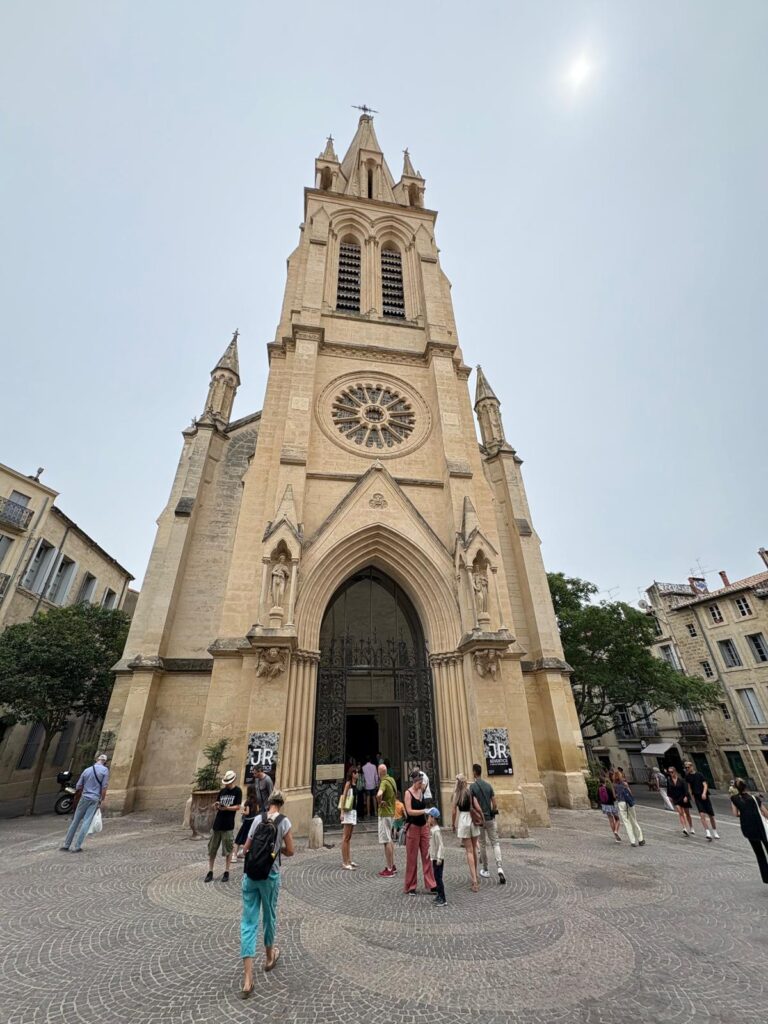
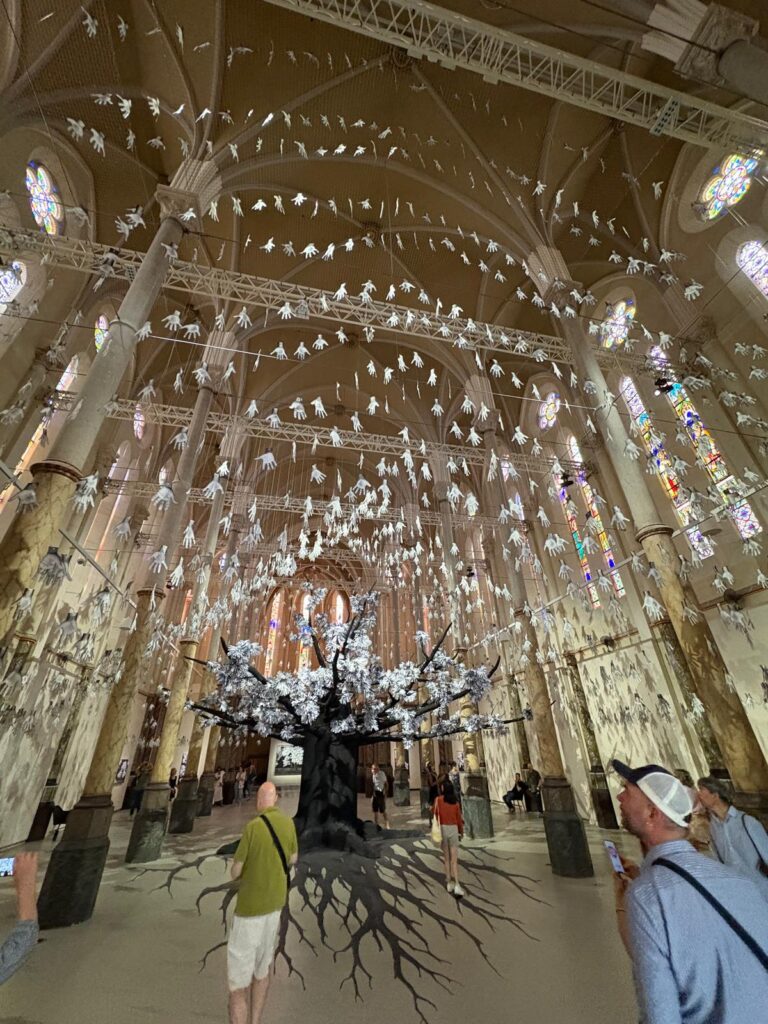
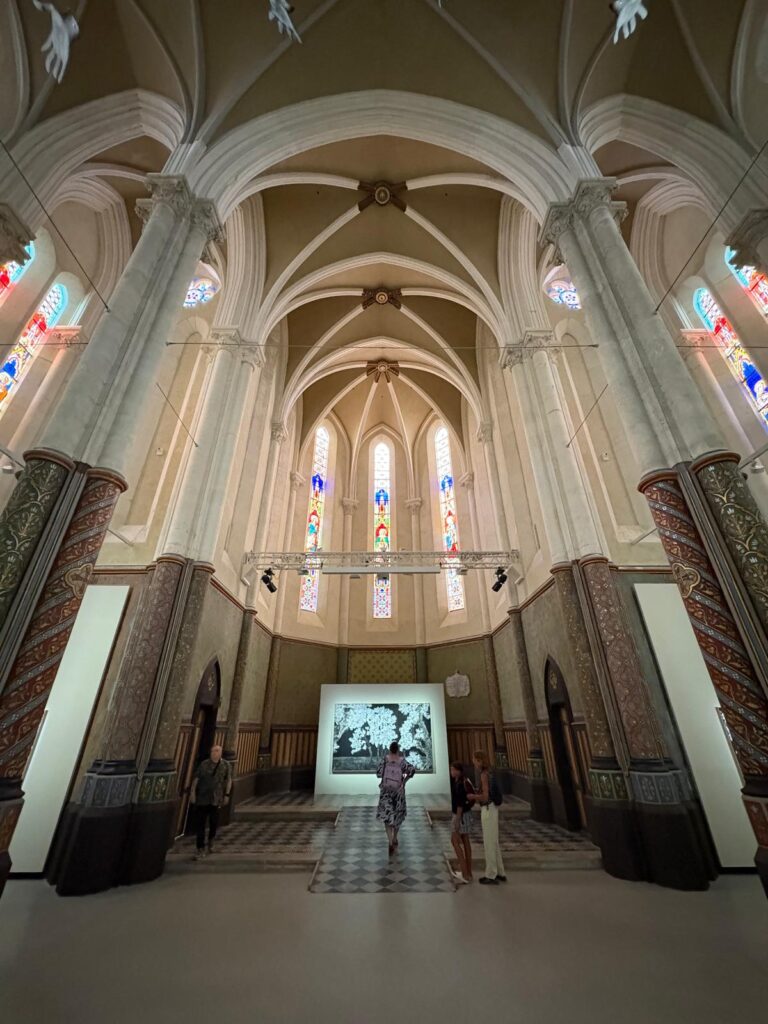
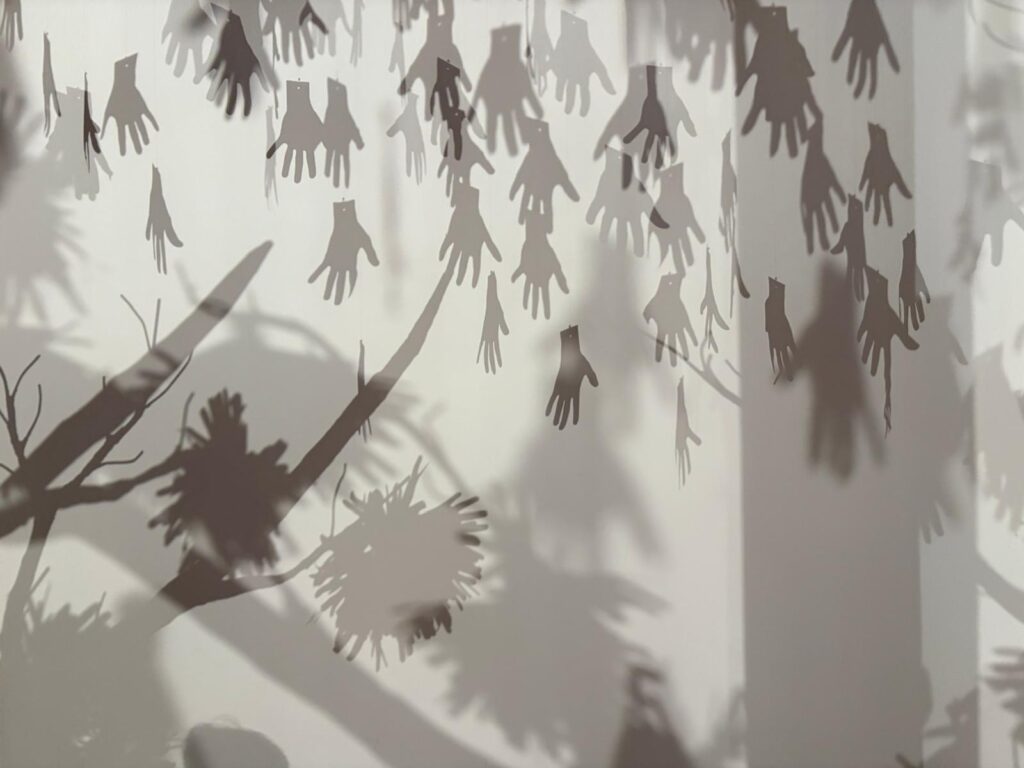
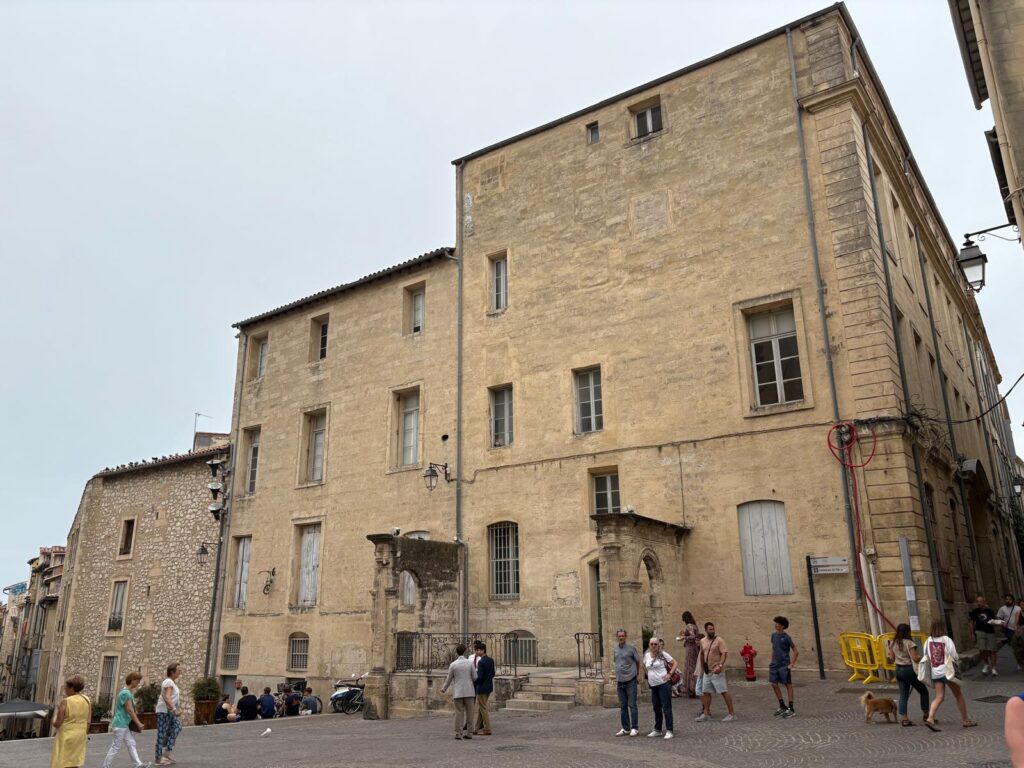
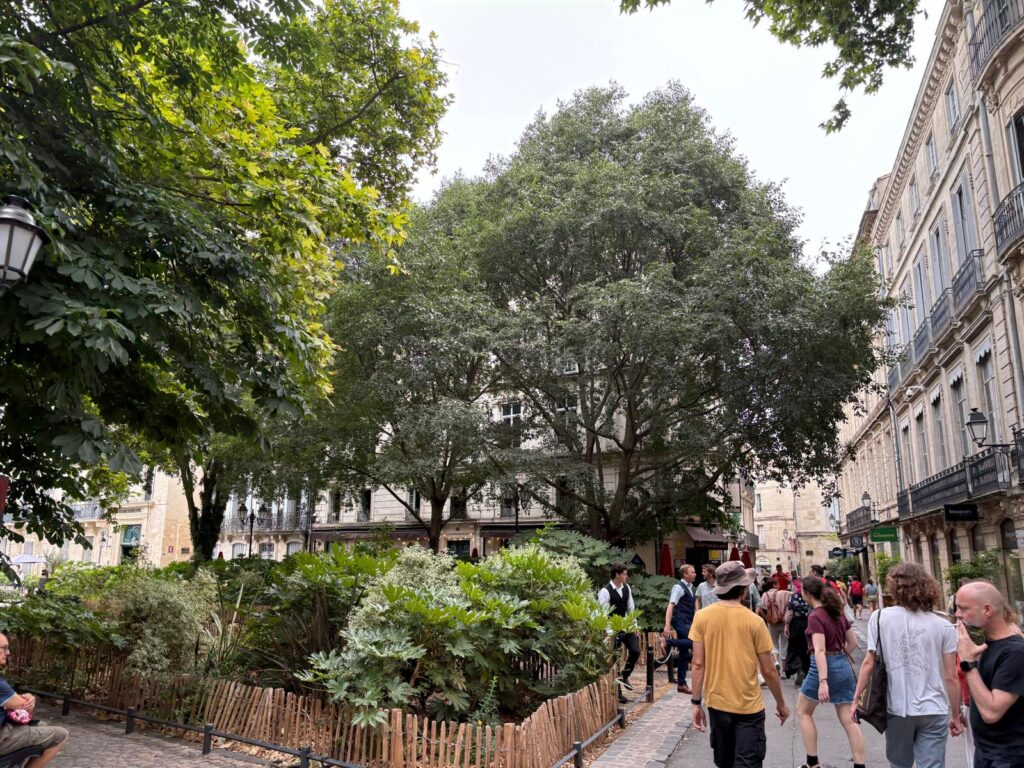
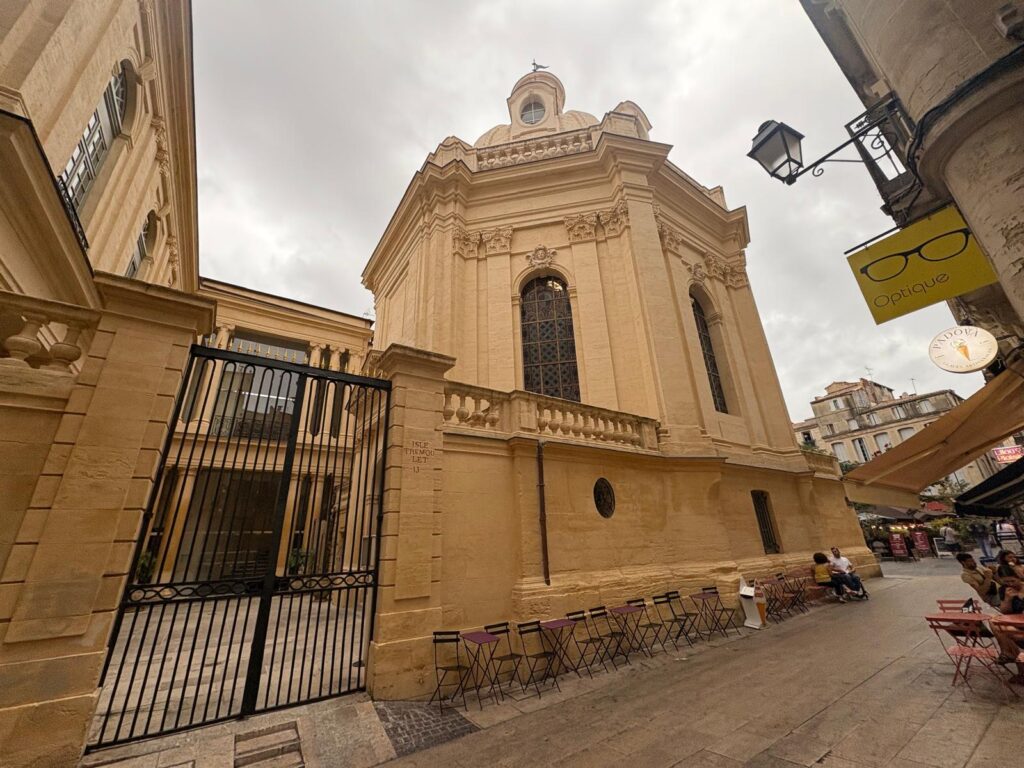
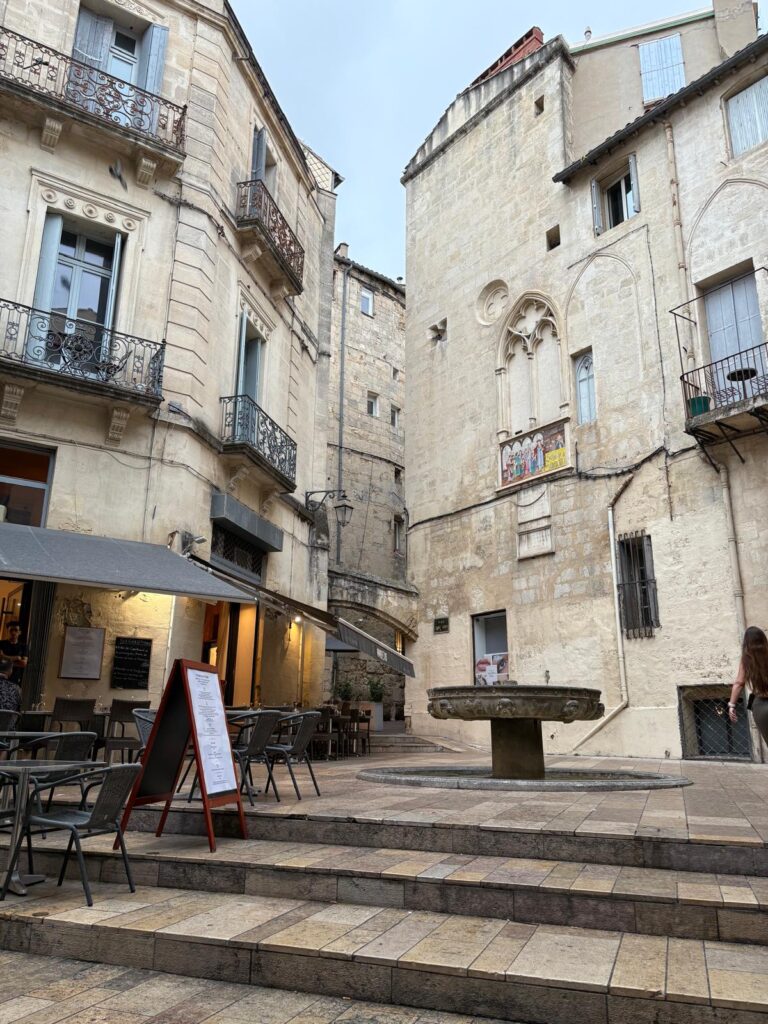
Immediately adjacent to the Esplanade Charles de Gaulle is Montpellier’s Old Town, which we now turn our attention to. There are several points of cultural interest here. In front of us is the Pharmacie et Chapelle de la Miséricorde (Pharmacy and Chapel of Mercy). Inside are displays reconstituting an 18th and 19th century pharmacy. The chapel, formerly workshops of the mint, was consecrated in 1830. I didn’t visit on this quick visit, but would on a return to Montpellier.Even without stopping in at museums and other sights, a walk around the Old Town is very rewarding. There are a lot of nice old buildings……and lovely open squares.The fact that we visited just before Bastille Day meant everything was looking extra festive, with la tricolore flying proudly.Spying a church, we decide to go and take a closer look.And what we find is rather surprising. The former église Sainte-Anne, a neo-Gothic church dating to 1866-72, is now the Carré Sainte-Anne, a cultural centre. The deconsecration and transformation happened in 1991, but the space has just reopened after an extensive renovation. We caught the inaugural exhibition, Adventice, by artist JR. It’s an intriguing exploration of the memory of places, and is also participatory: visitors can add photocopies of their hands to the growing forest.Exiting the Carré Sainte-Anne we find more historic architecture to admire. The Place Sainte-Anne is one of the city’s oldest, and many of the buildings medieval.
Monumental Architecture, Louis XIV Style
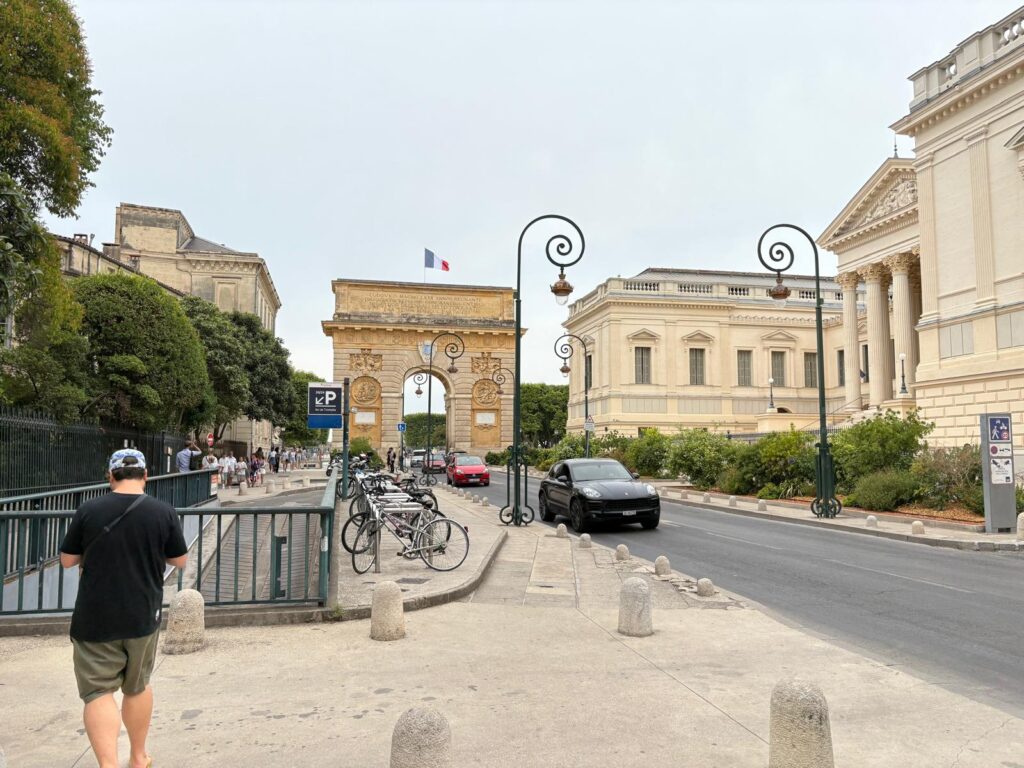
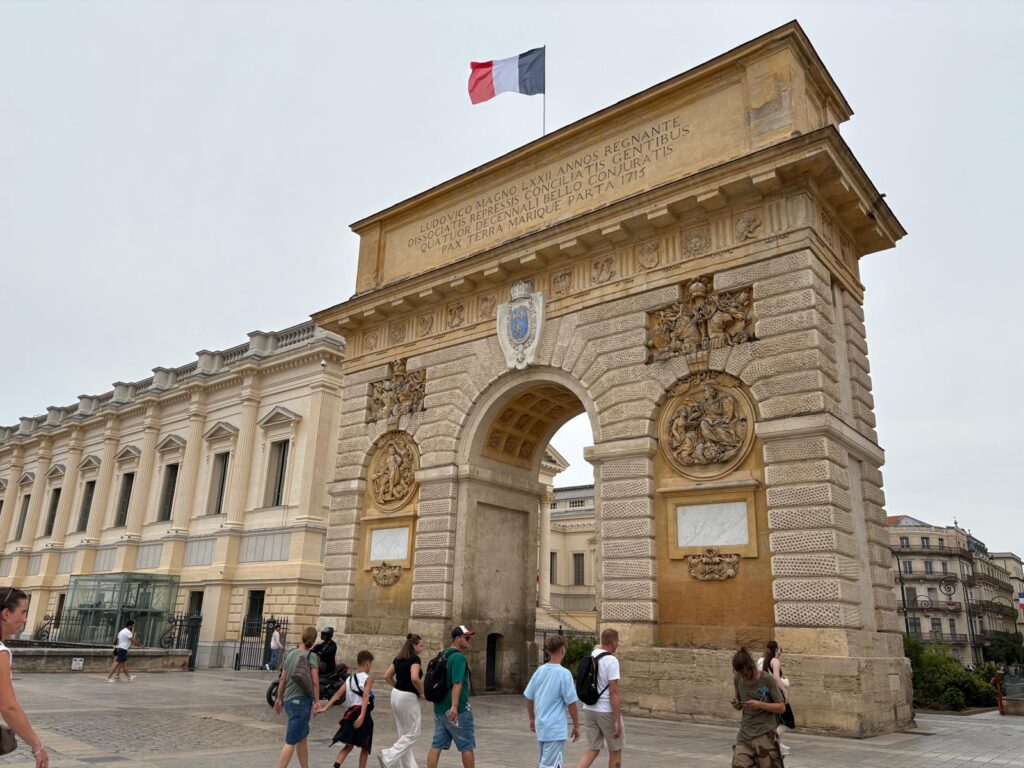
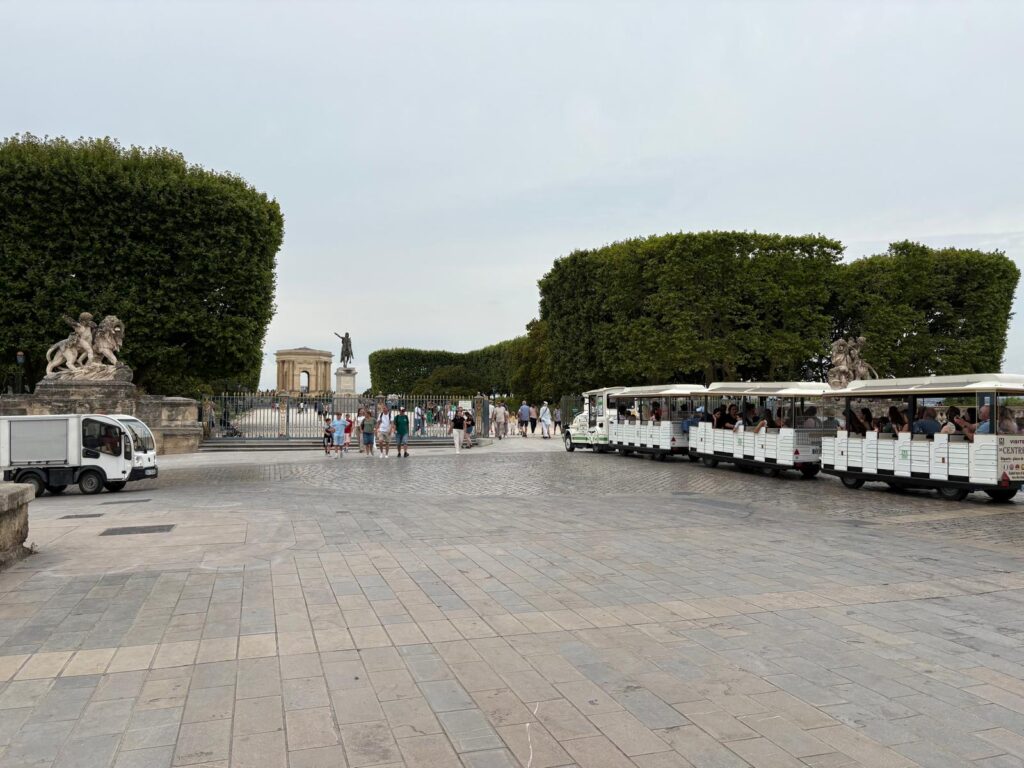
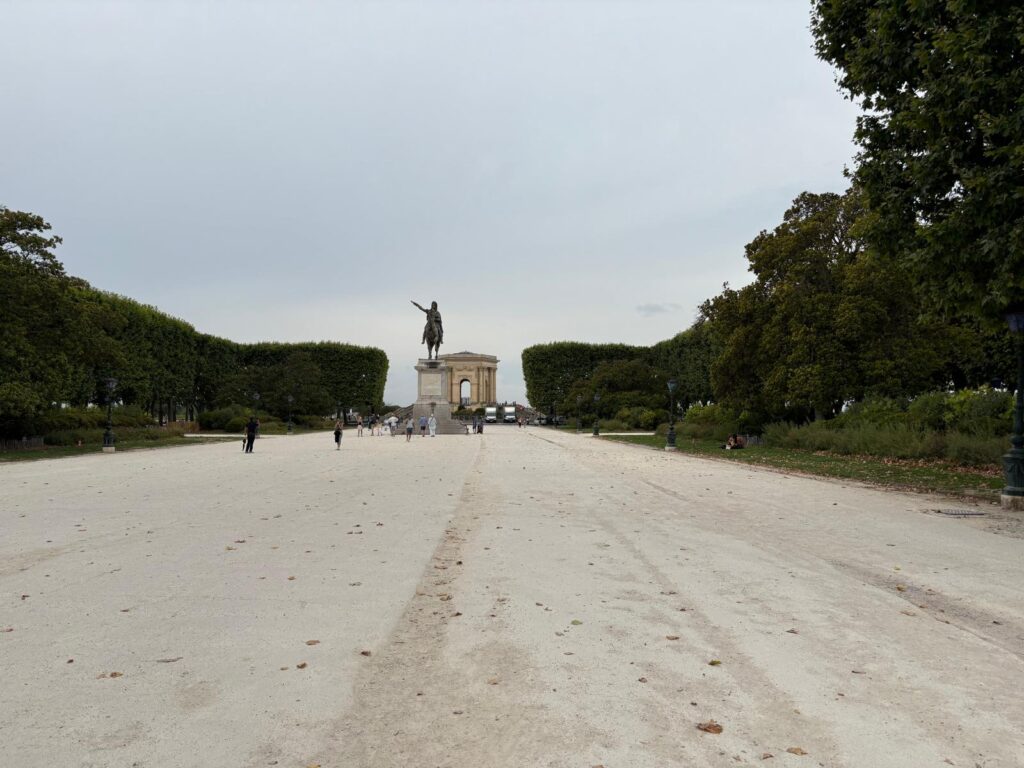
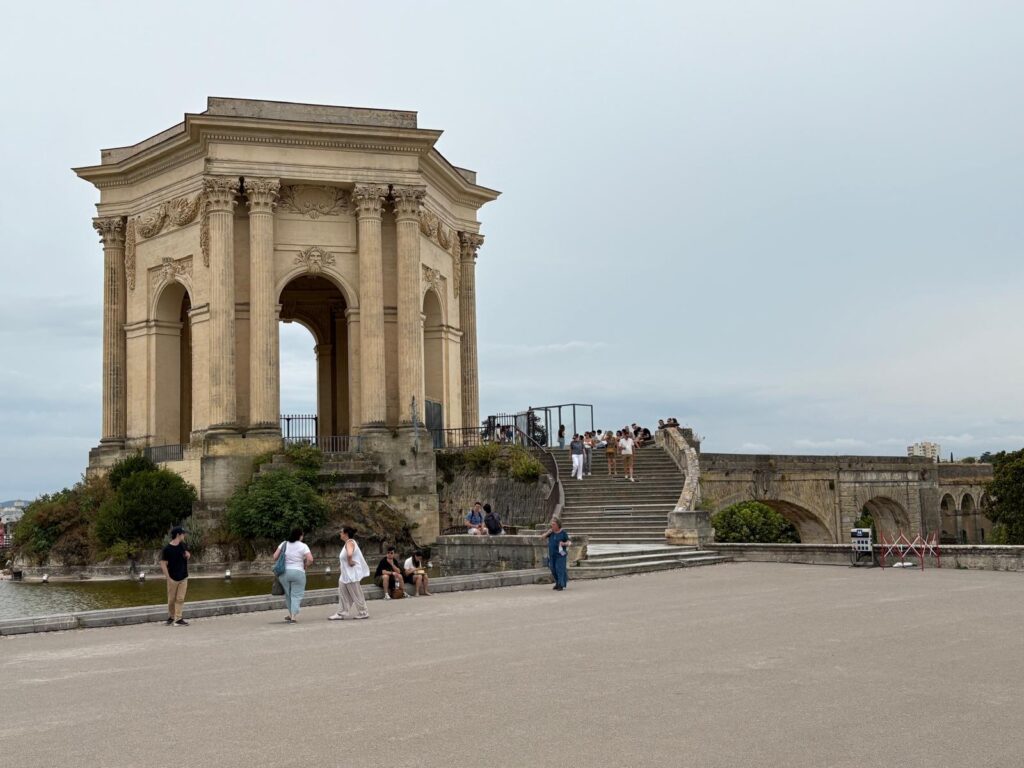
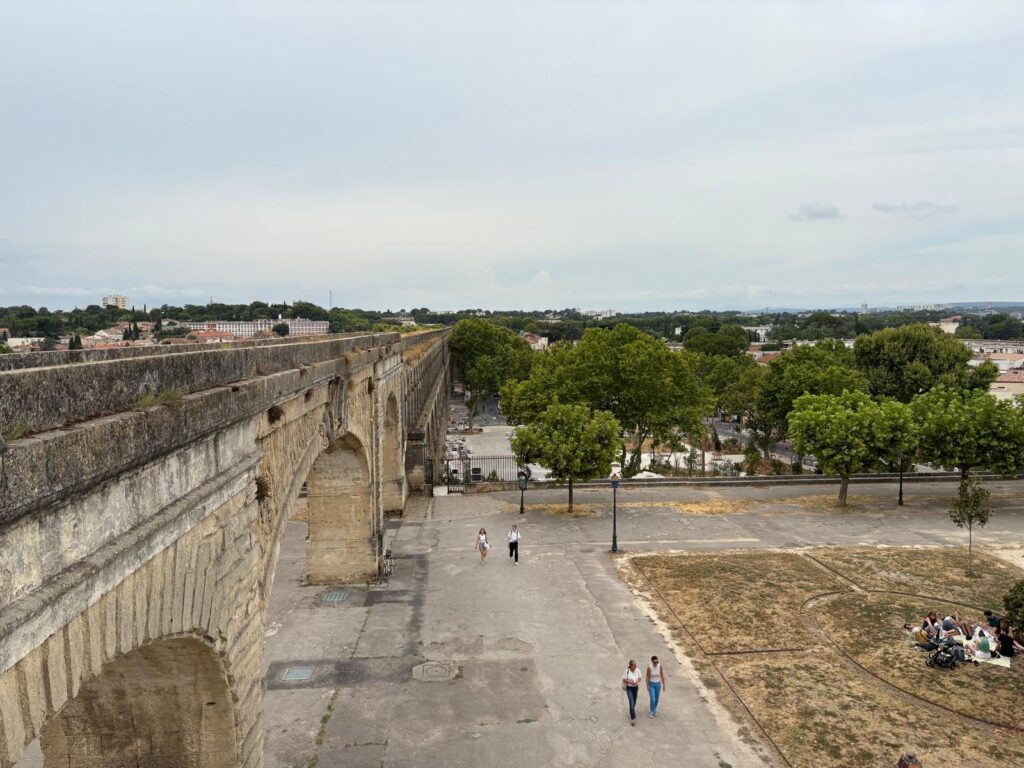
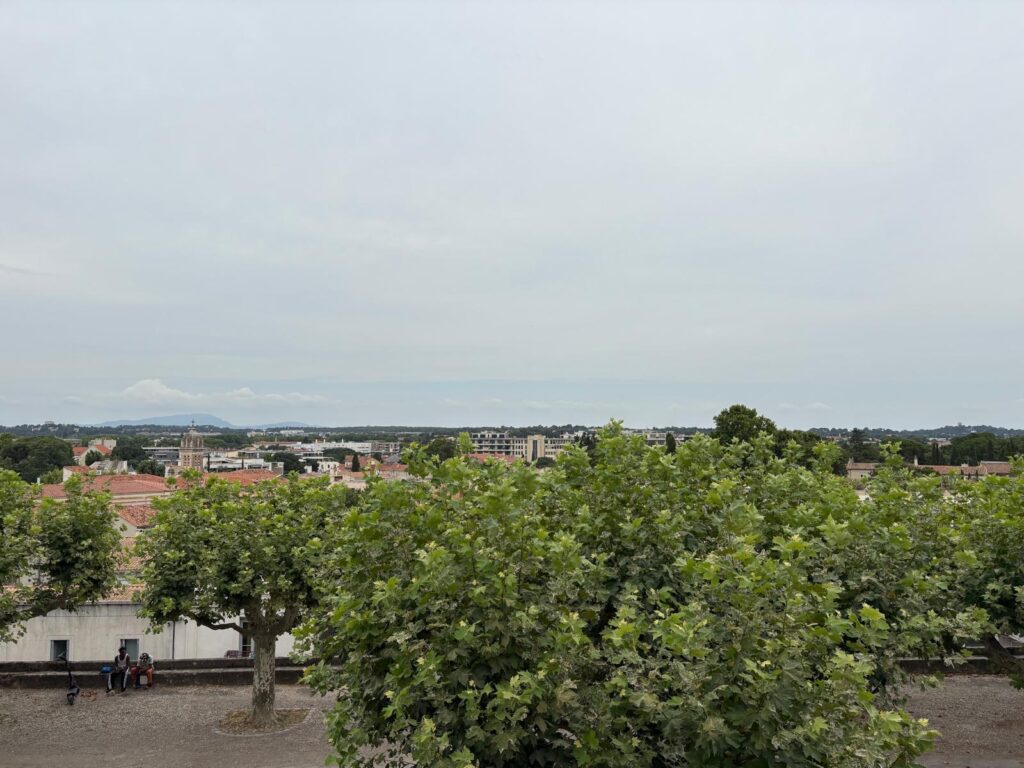
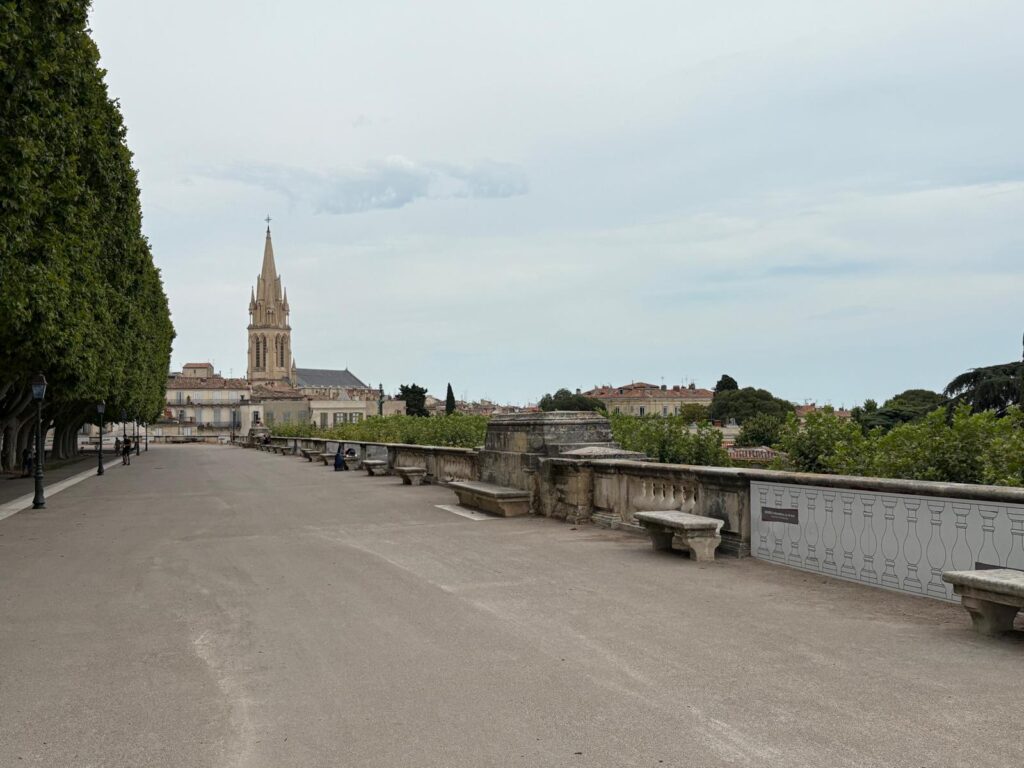
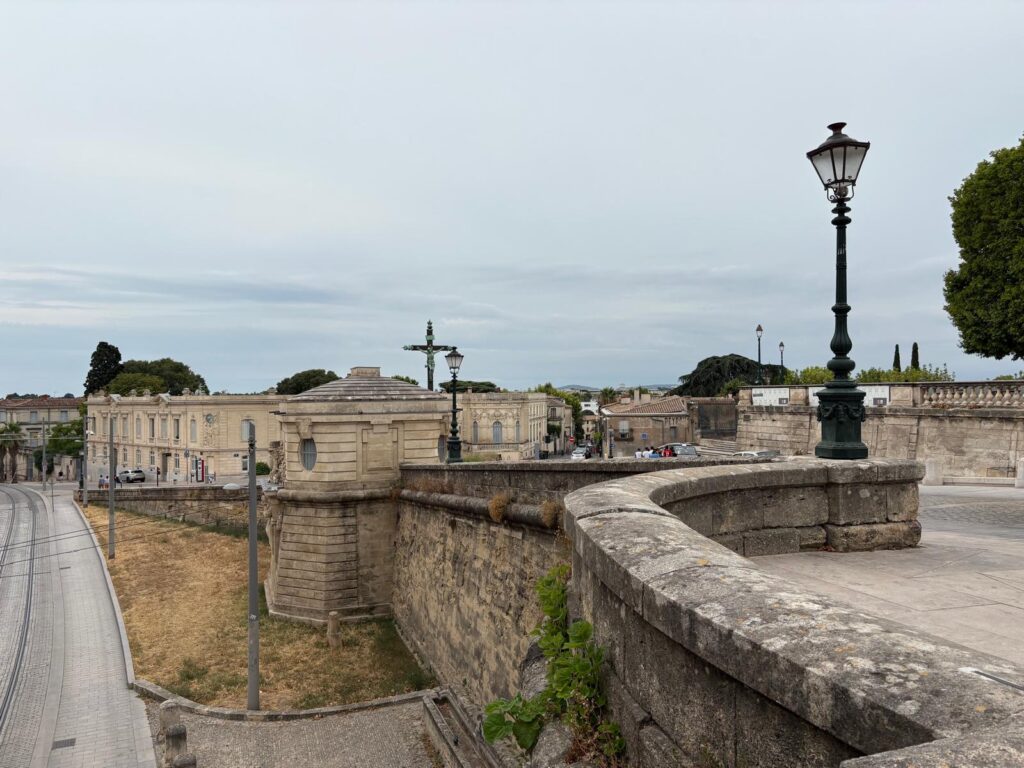
We now join the rue Foch, which leads us down to the Promenade du Peyrou and a definite reminder of Montpellier’s past. There are several important historic edifices here. Firstly the Arc de Triomphe, which we see in this image. What was the triumph the arch commemorates? Well, we need to go back to the religious struggles I mentioned earlier. In the 16th century, Montpellier became a Protestant (Huguenot) stronghold. Louis XIII laid siege to the city in 1622. Louis XIV further revoked religious freedoms. This monumental entrance to Montpellier, replacing an earlier drawbridge, symbolises royal power over the city.The Arc de Triomphe from the other side.Passing through the arch the vista opens up on the Promenade du Peyrou (peyrou meaning ‘stony’ in Occitan). Note the tourist train, which is an option if you’re pressed for time or have mobility issues, but seems to be very popular and perhaps oversubscribed.The next point of interest lies ahead: an equestrian statue of Louis XIV, dating to 1718.Continuing on to the end of the Promenade du Peyrou, we reach this aqueduct and reservoir from the mid-18th century. Now that we’re close to the walls, we can see the elevation. This public space affords great views to the wider city beyond, including Montpellier’s Jardin des Plantes (Botanic Gardens) which dates all the way back to 1593, as well as the Cévennes and Pyrénées mountains.Like London’s protected views of St Paul’s Cathedral, Montpellier’s planning regulations ensure buildings don’t block views of the Mont Royal (another name for this collection of monumental architecture). This makes for nice vistas as we head back towards the city end of the Promenade du Peyrou.
The Cathedral, Then Time for a Rest
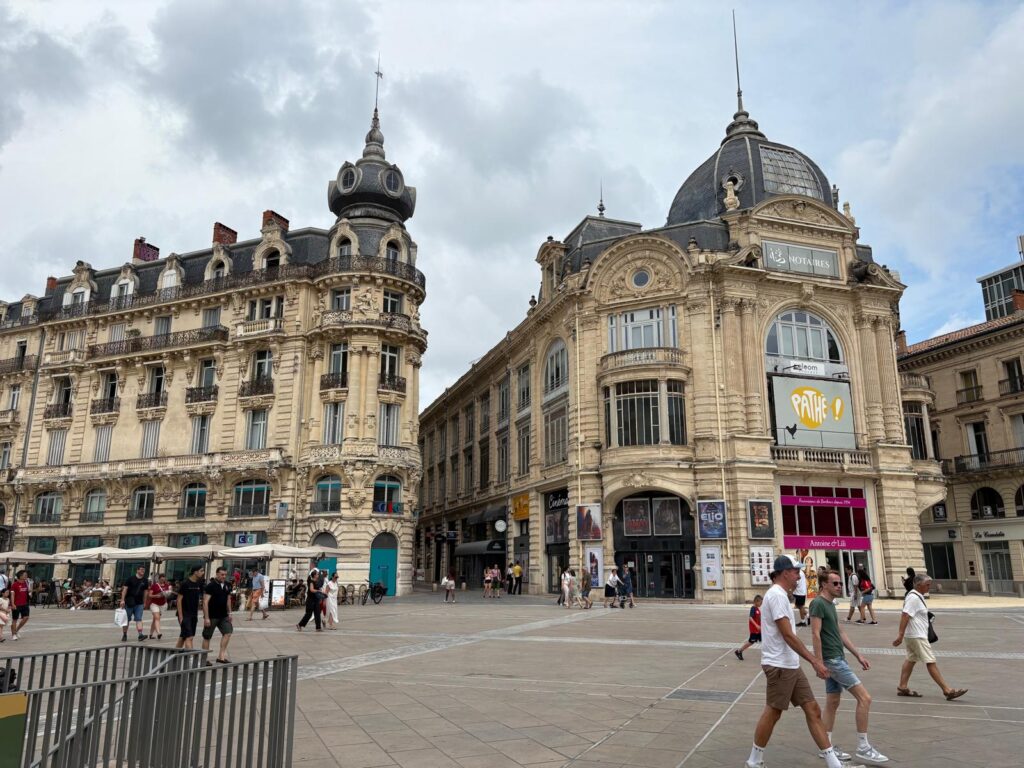
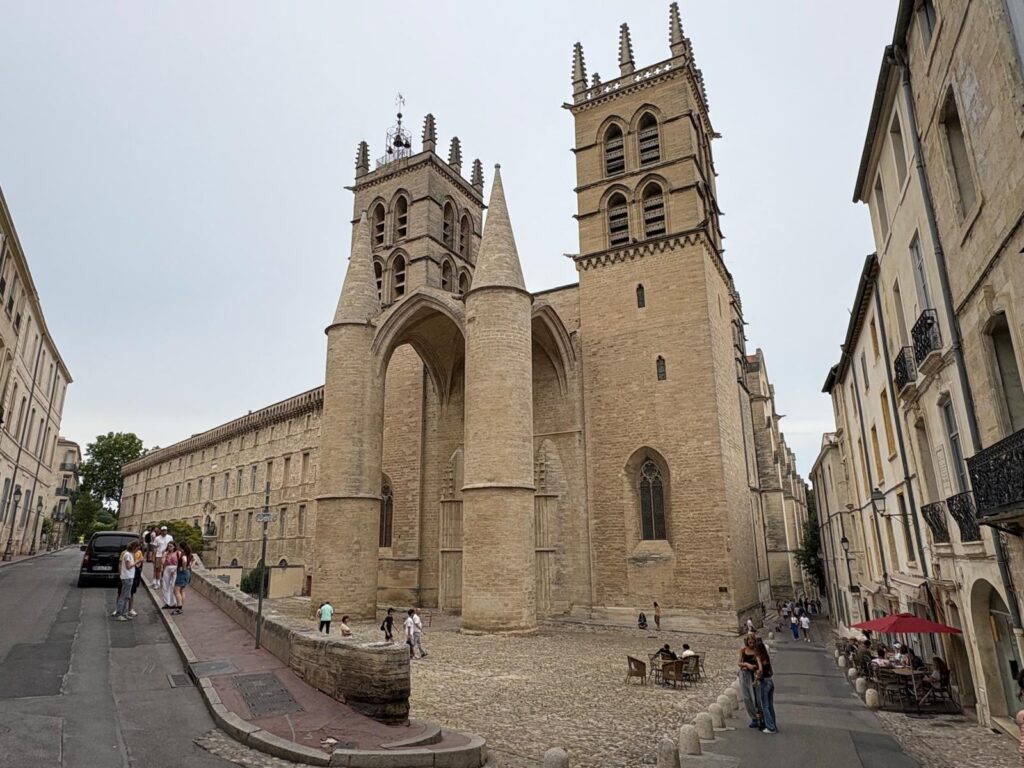
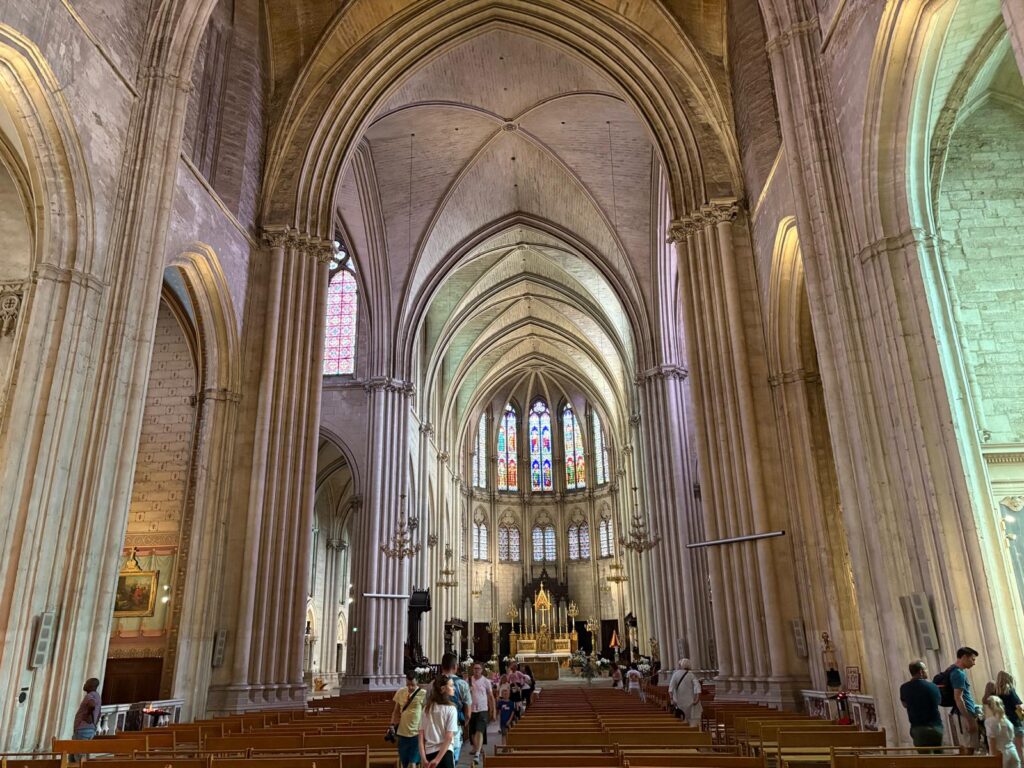
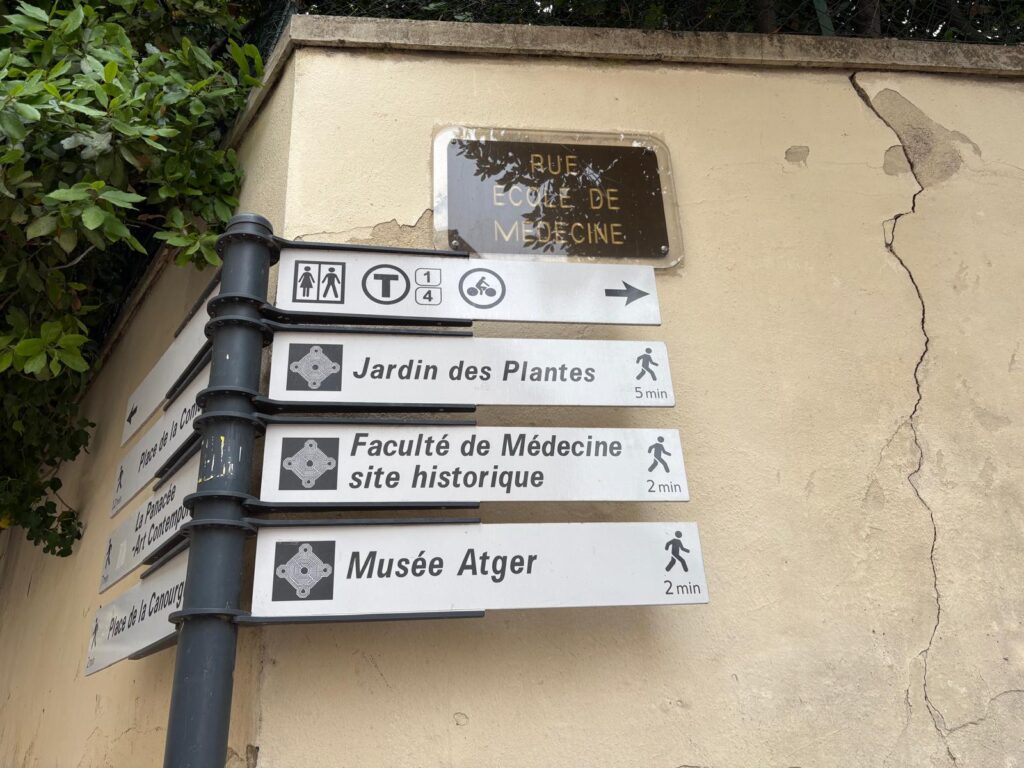
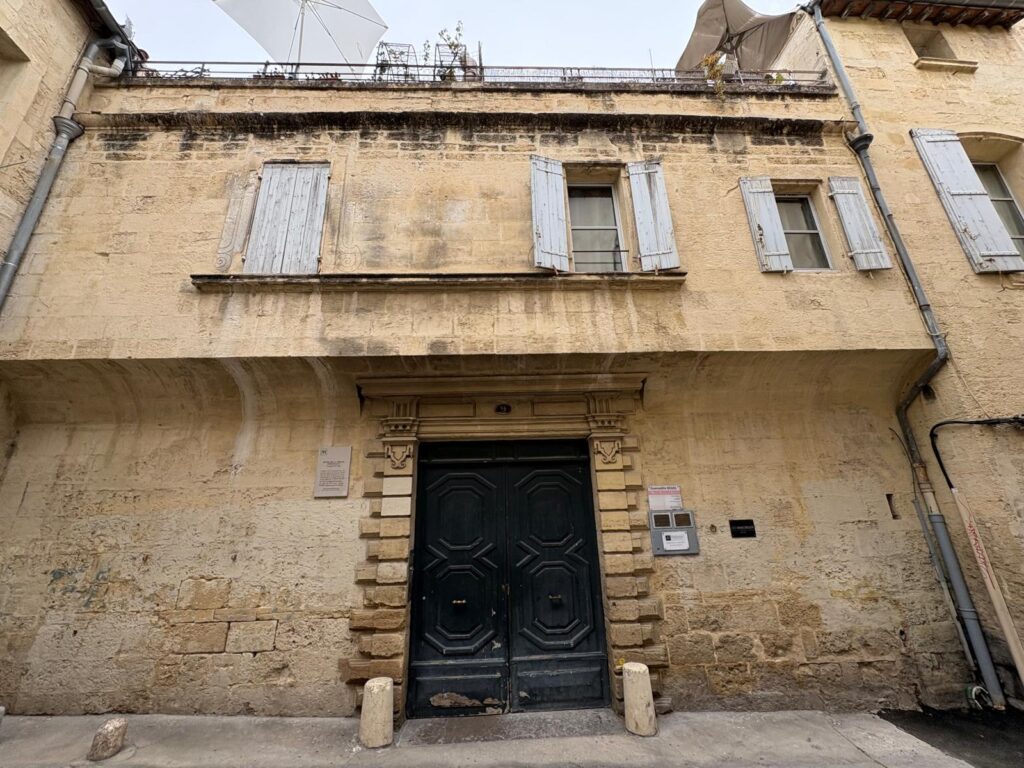
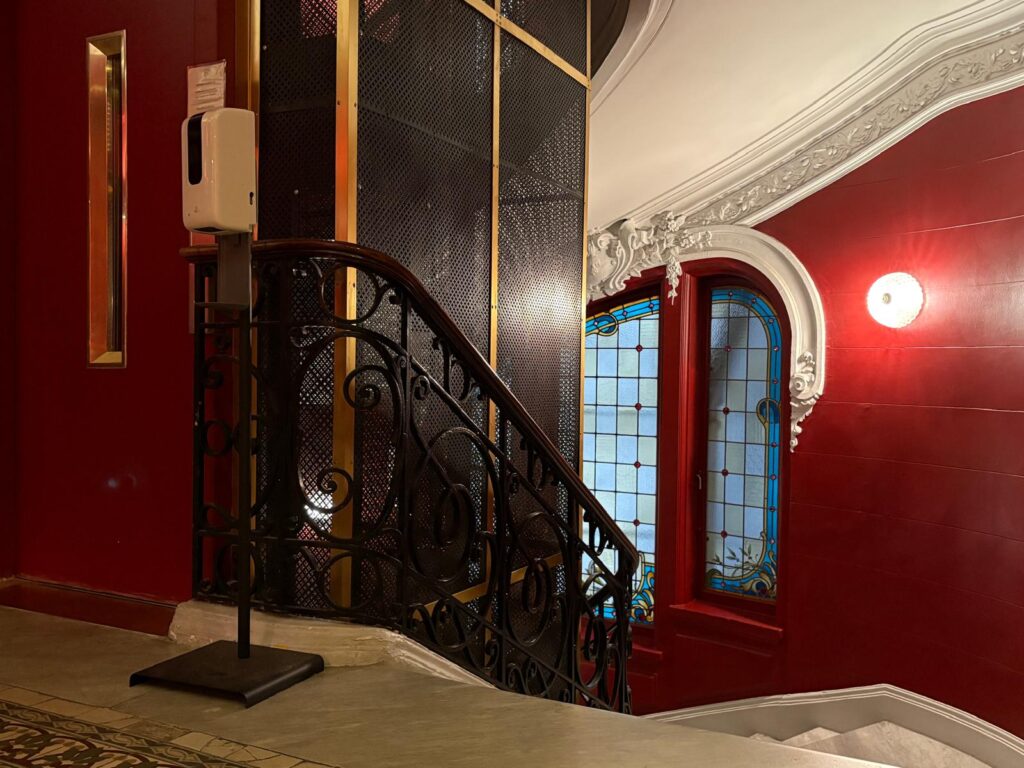
Next up we are heading towards the cathedral, through more shaded squares.And here we are. The Cathédrale Saint-Pierre de Montpellier. In Gothic style, it was originally the church of the monastery of Saint-Benoît, founded in 1364. The church became a cathedral in 1536. There was a lot of damage during those religious wars, though, necessitating a rebuild in the 17th century.There are many more cultural points of interest you could choose to visit on your trip to Montpellier. Check ahead though: I noticed a few of them seemed to be closed, hopefully temporarily. The Musée Atger, part of the University of Montpellier with collections of prints and drawings, is one such. The Musée de la Pharmacie Albert Ciurana is another. Perhaps because we visited during summer holidays?I loved all of these very old houses in Montpellier, with plaques explaining their history and key features.And now it’s time to head back to our hotel for a little afternoon rest. Here we are back at the Place de la Comédie, with the Comédie theatre itself to the right of the second image. Just beside it is our hotel, the Grand Hôtel du Midi. The third image shows some of the historic detailing.
No Rest for the Wicked: A Walk Around Antigone
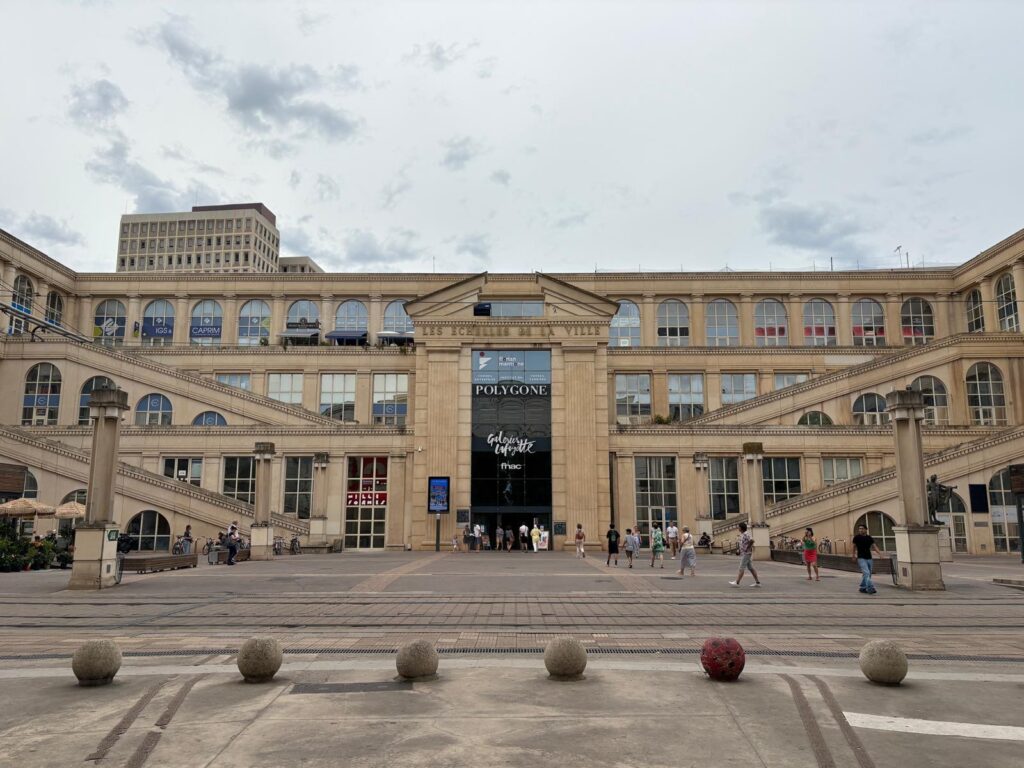
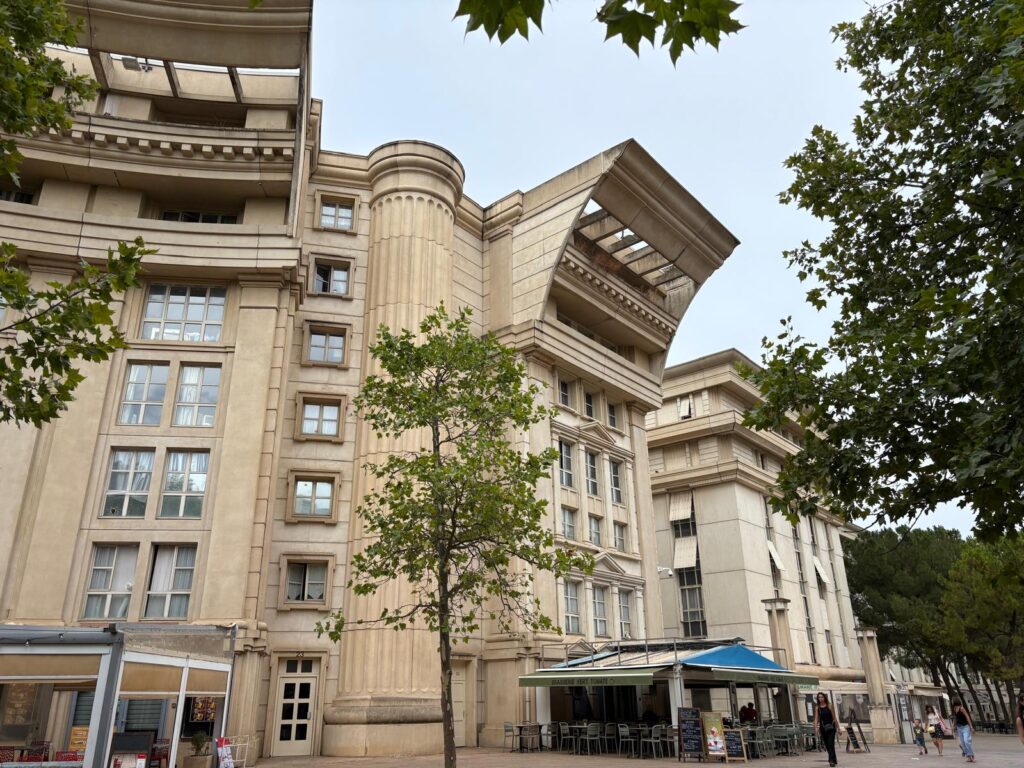
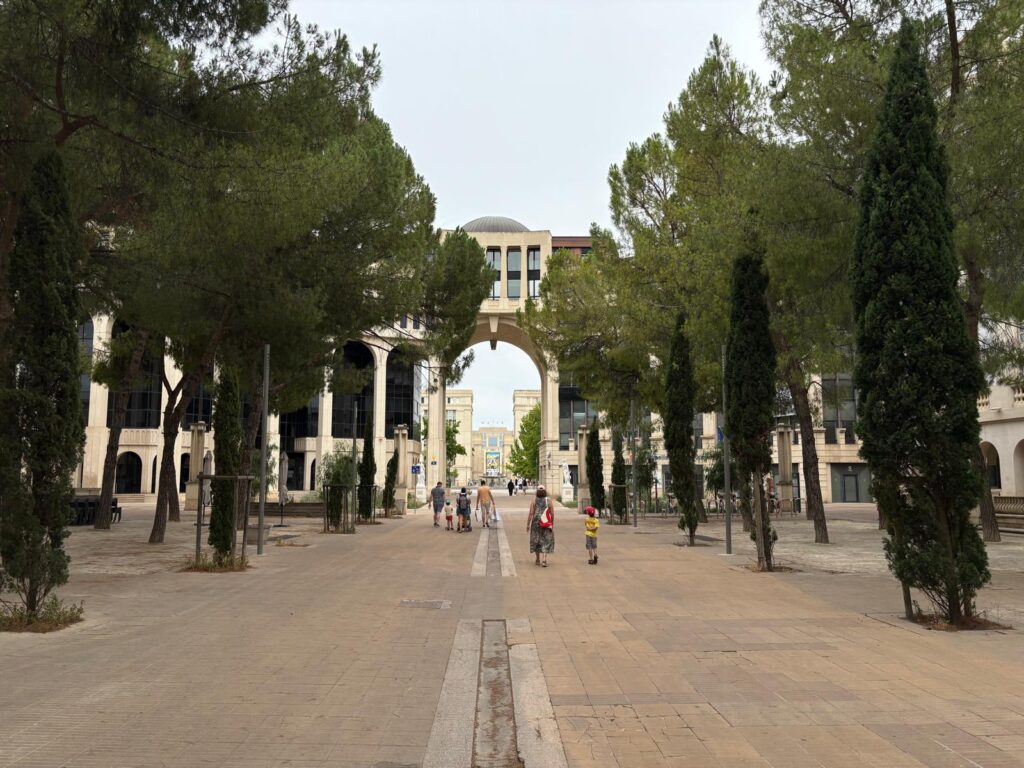
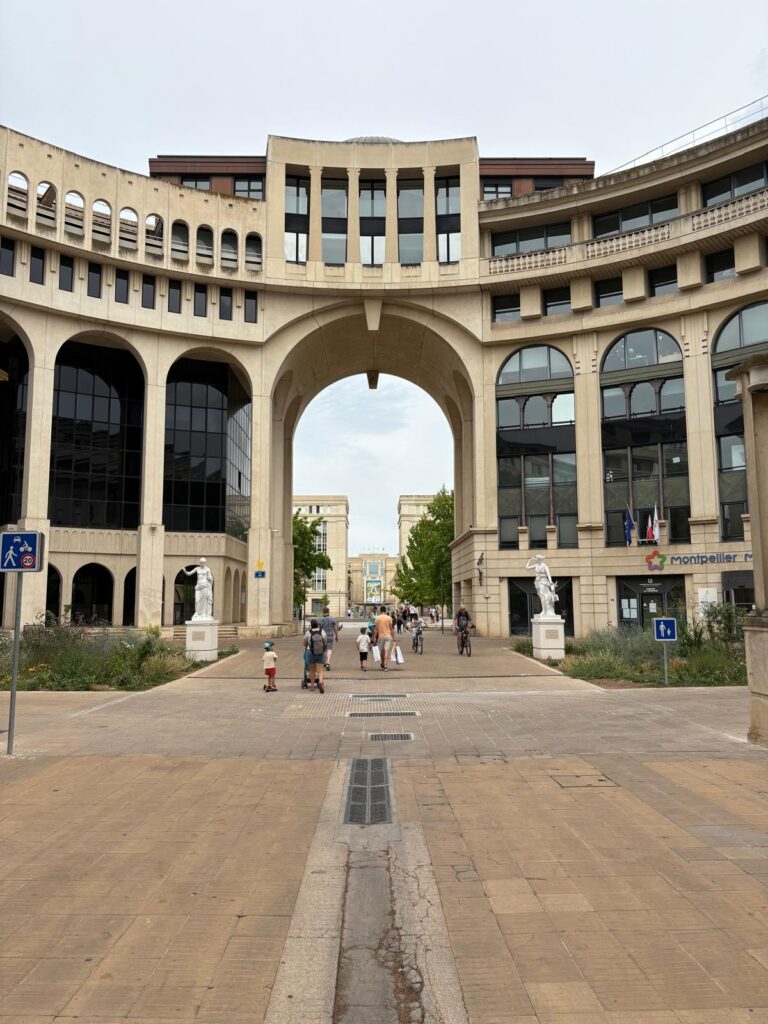
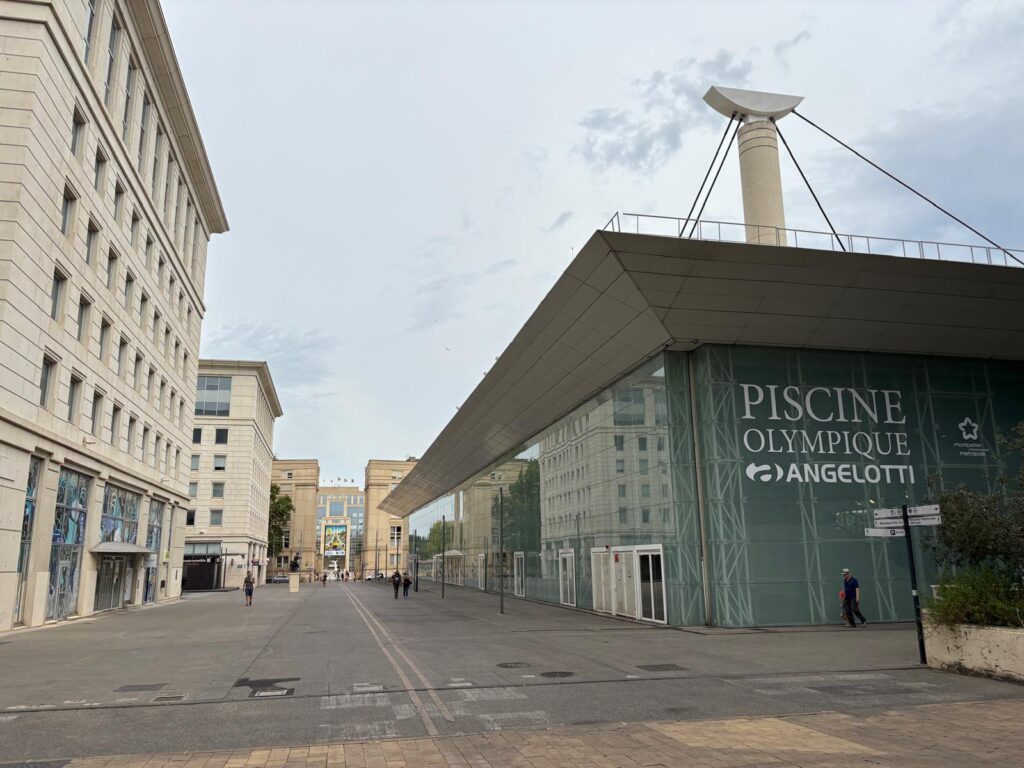
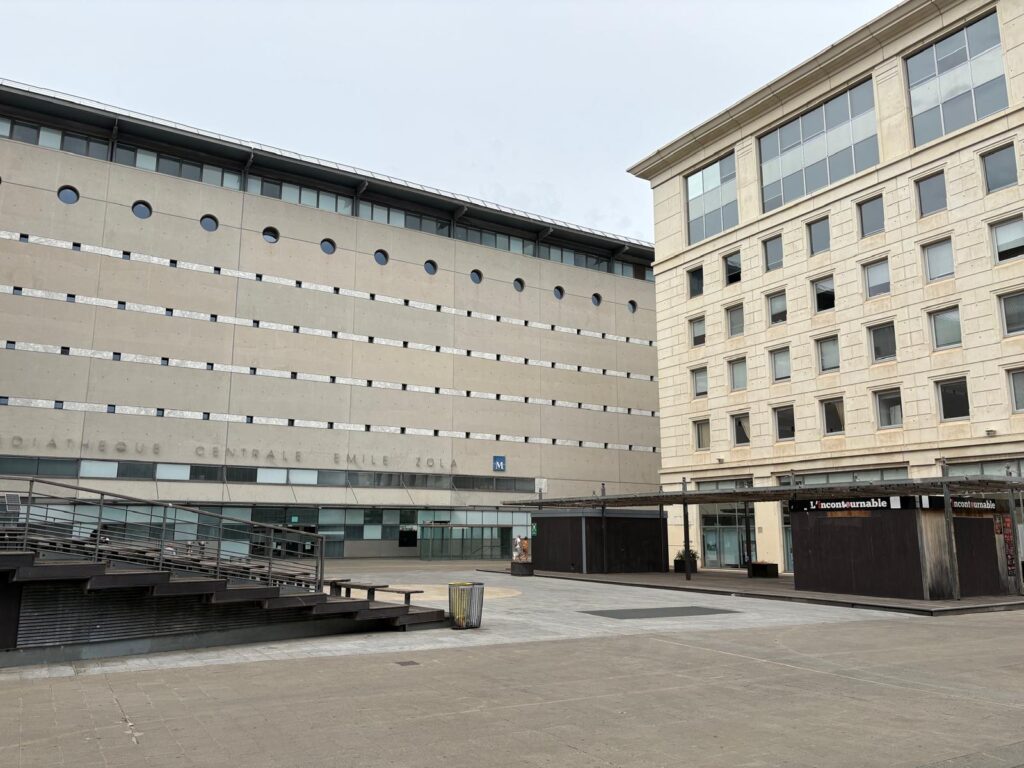
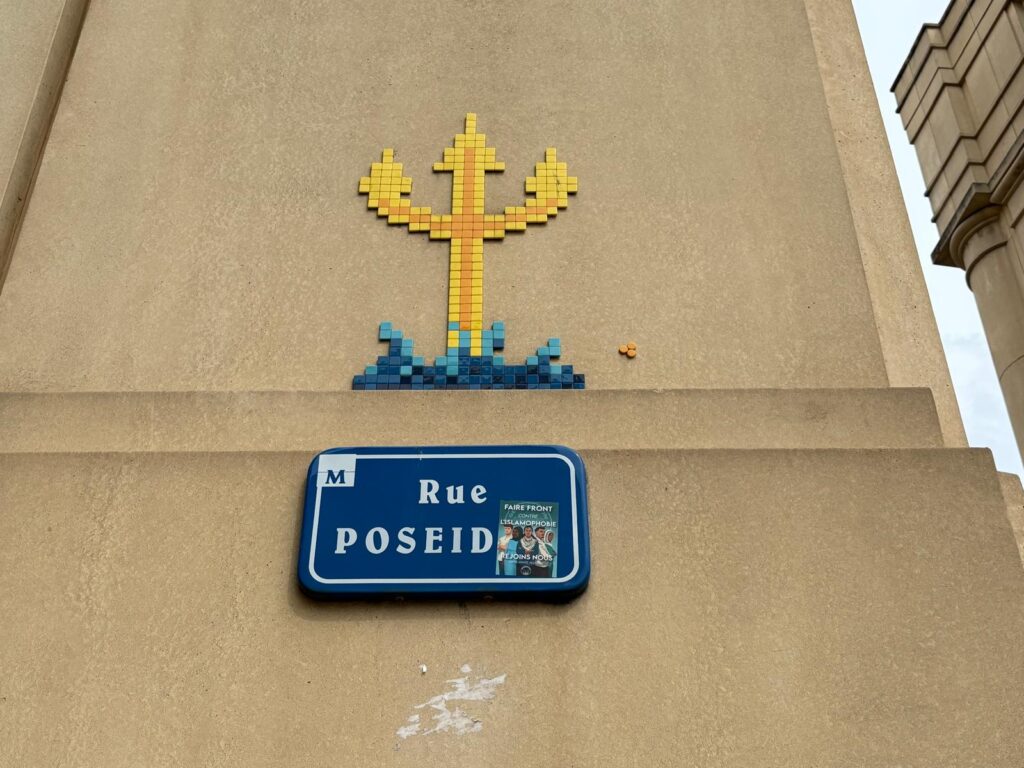
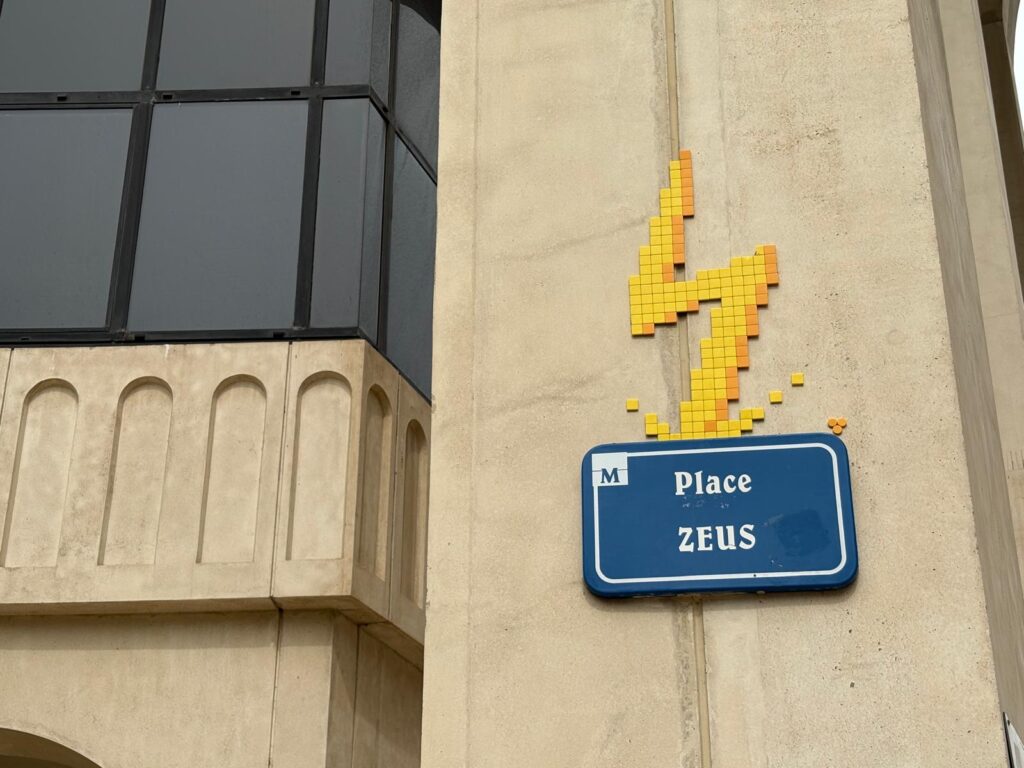
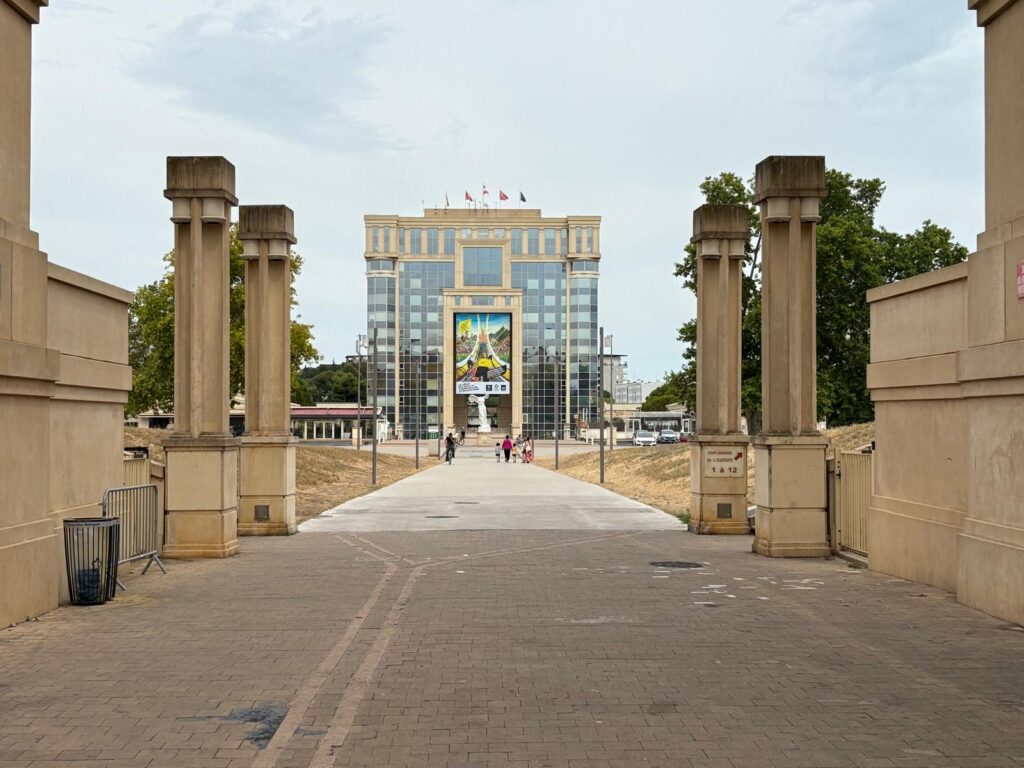
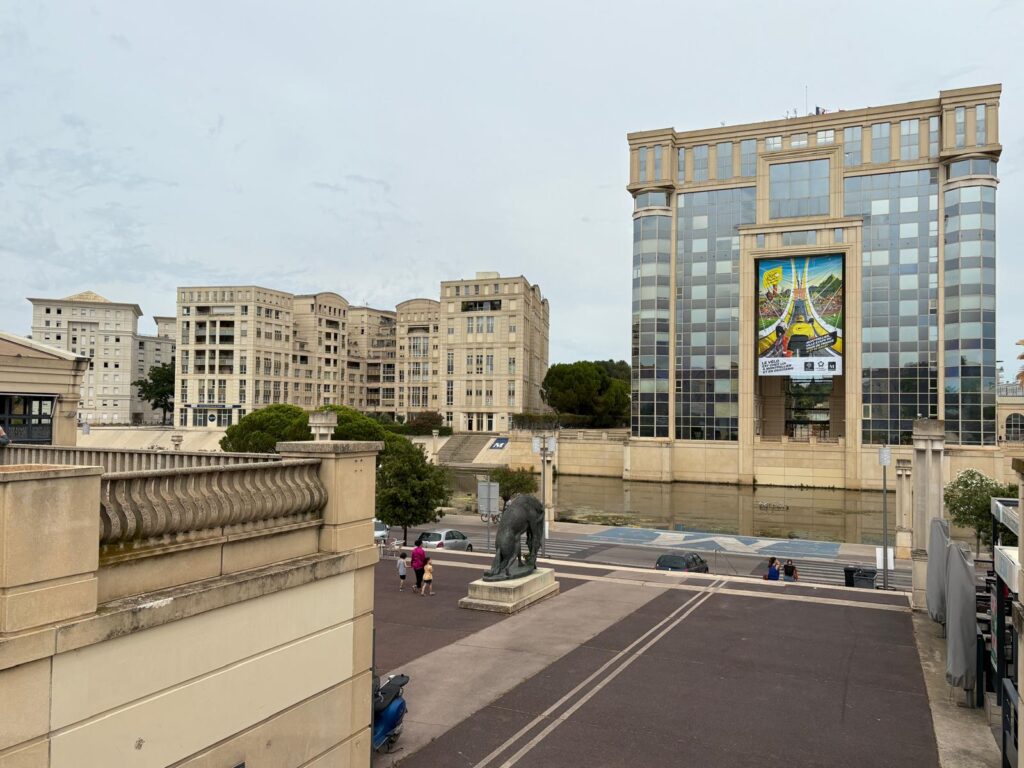
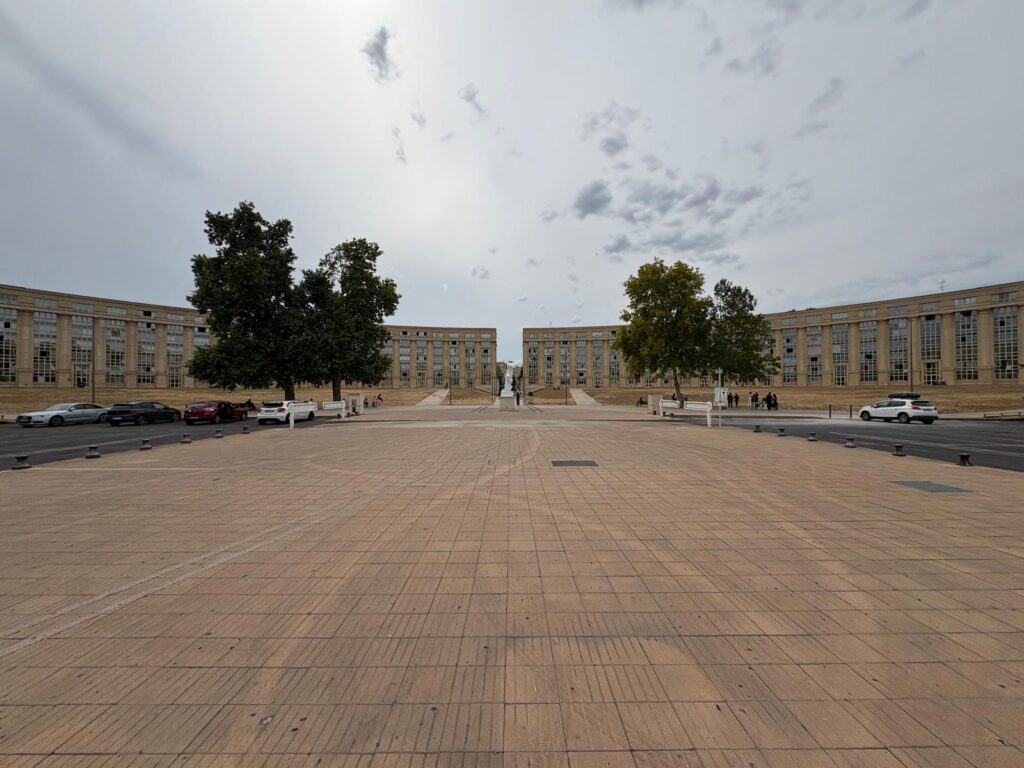
OK, you caught me. My rest only lasted about ten minutes until FOMO got the better of me and I headed out again. The Urban Geographer, despite being more of a Post-Modern architecture enthusiast than I am, has much less of a sense of FOMO and had a nap instead. Probably the sensible choice.I was heading to Antigone, a district of Montpellier stretching between the Place de la Comédie(ish) and the River Lez. The first challenge was to get to Antigone. I passed through the mall you see in the shot above, but I always get lost in malls and took a strange side route out and around. But I found it, which is the main thing.Antigone is on the site of the former Joffre Barracks. A citadel still remains somewhere, but I didn’t find it on this outing. Montpellier’s mayor started the redevelopment process in 1977.The neighbourhood was designed by Spanish firm Ricardo Bofill Taller de Arquitectura. Most of the buildings consist of low income housing, with restaurants and shops at the ground level. Bofill’s architecture (and the district’s names) draw on the classical. There are enlarged pediments, columns and other classical or neo-classical motifs, along Thebes Street, Sparta Street, Marathon Square and so on.The Olympic-sized swimming pool is also by Bofill.But not everything is. Here is the turn of the century Mediatheque Émile Zola, by Paul Chemetov.I liked that even the street art stuck to the neighbourhood’s theme.Here is the administrative centre of the Languedoc-Roussillon region. The Antigone project is one of the largest such developments in France, and received attention globally. Commentators seem to have appreciated Bofill’s attempts to create a palace for the people by repurposing the language of classical buildings. It also helped to rebalance the city’s development by creating a focal point to the East.Right, we’ve reached the Lez, so it’s about time to turn around. This is the city’s main river, and flows into the Mediterranean.And it’s farewell now to Antigone as I head back the way I came, through the mall, and to the hotel. I enjoyed seeing something completely different, and understanding Bofill’s vision for the neighbourhood. Antigone does look a little run down, so I hope the city continues to invest in it.
An Evening Stroll, Dinner, and Goodbye to Montpellier
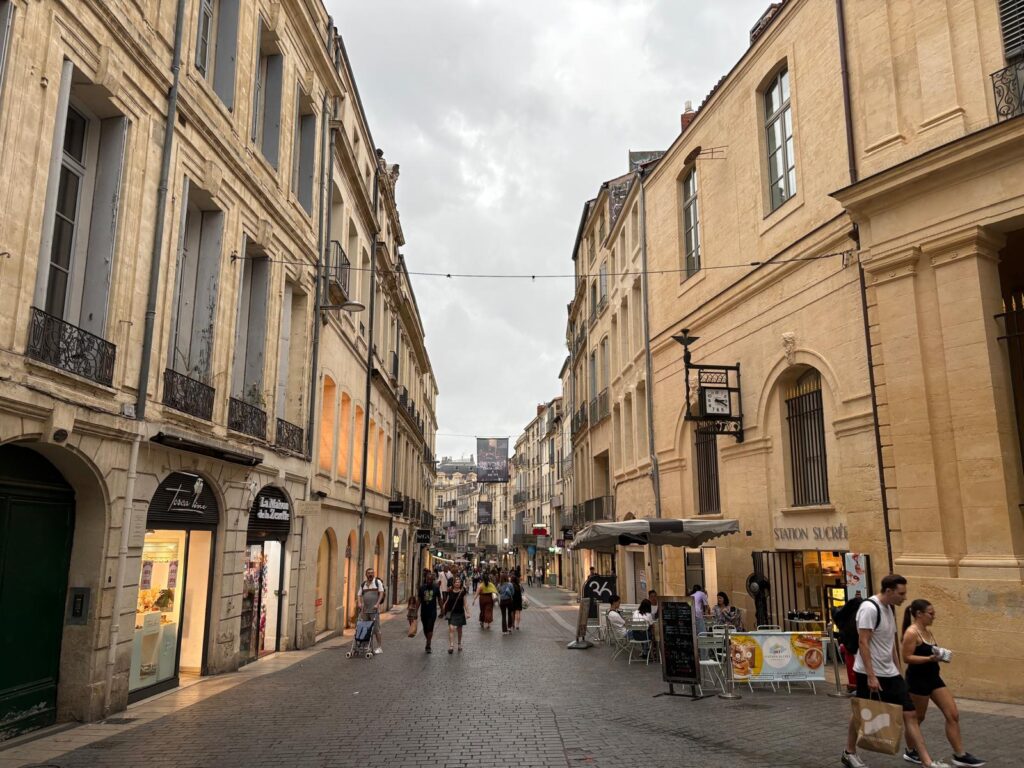
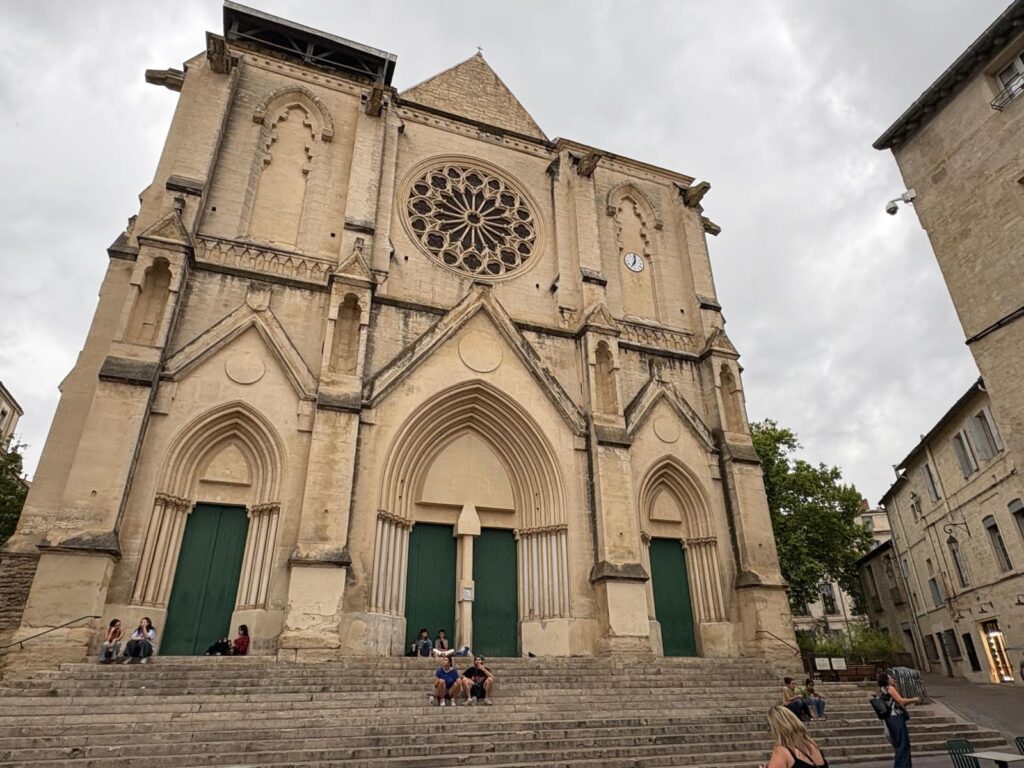
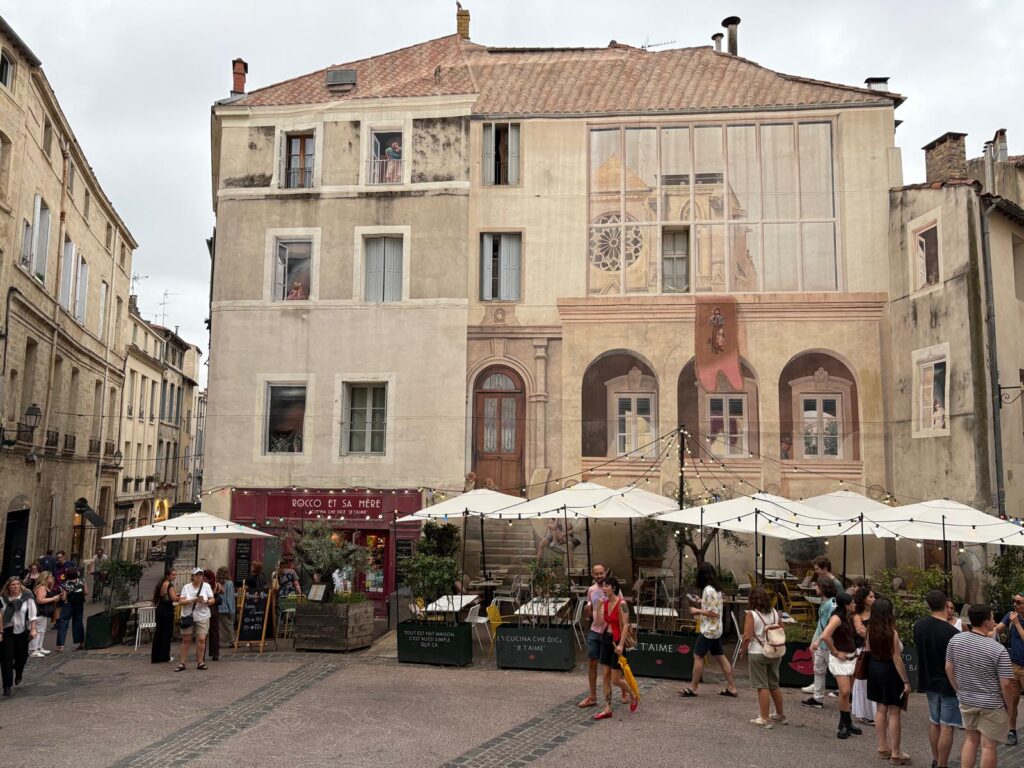
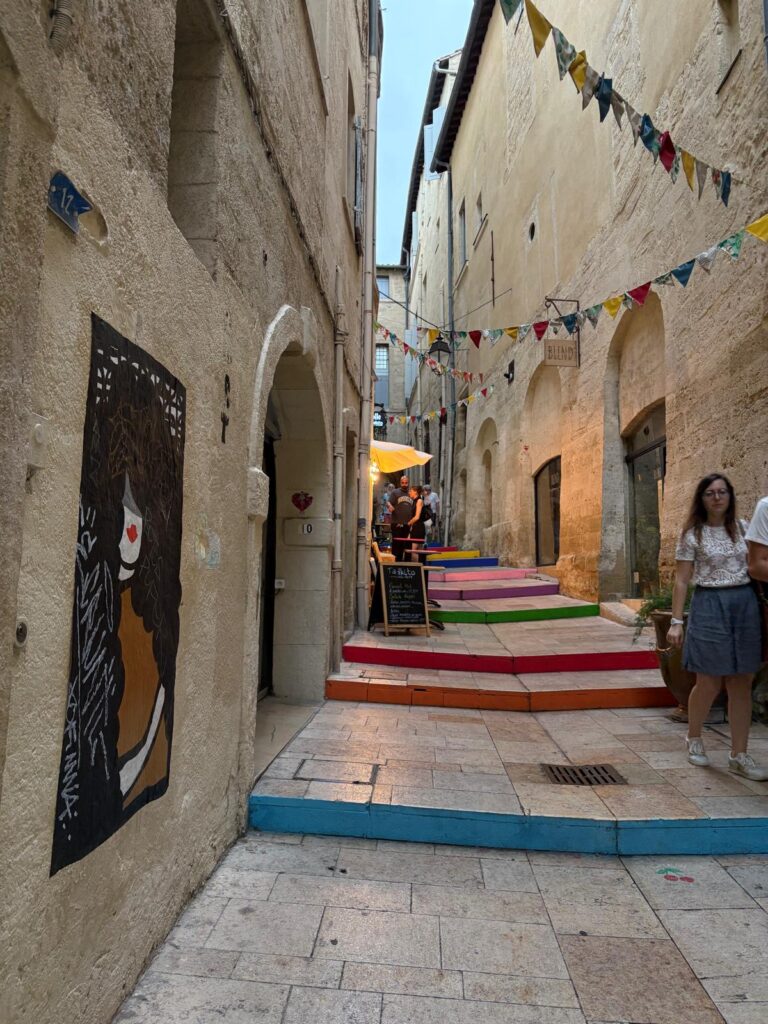
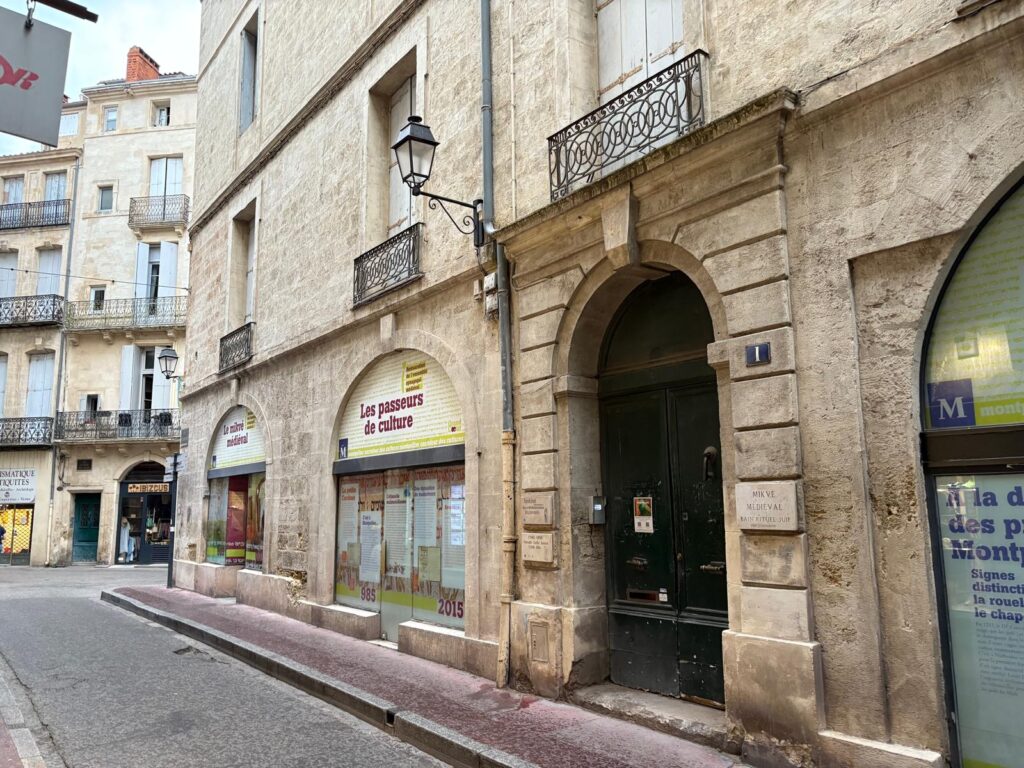
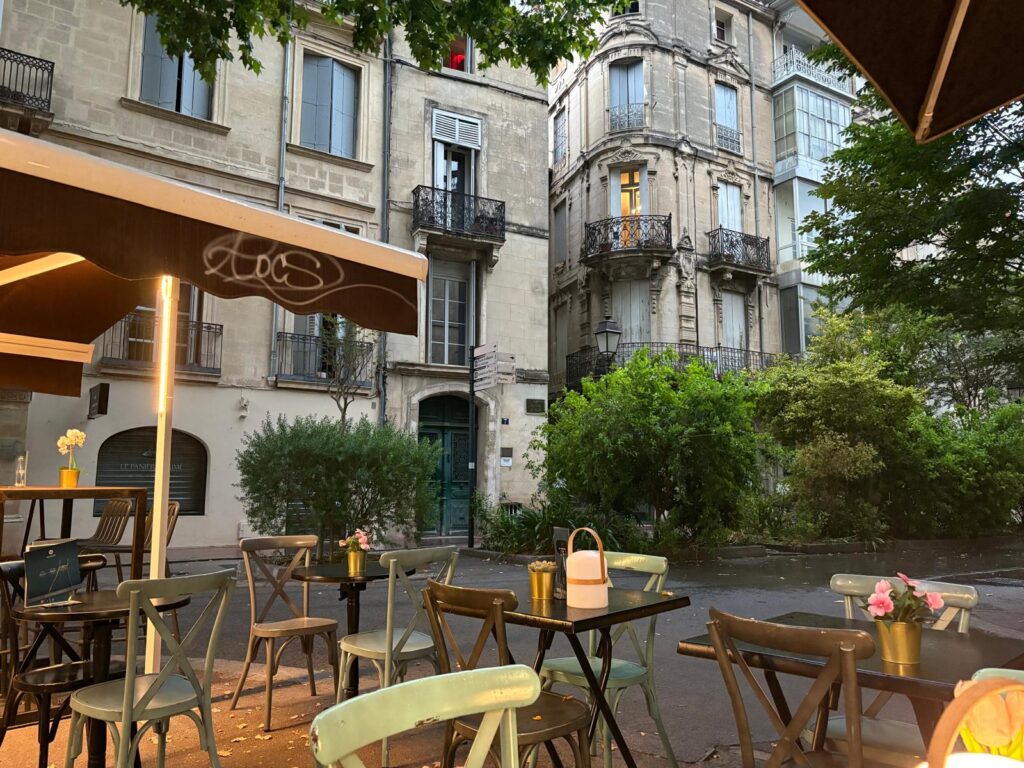
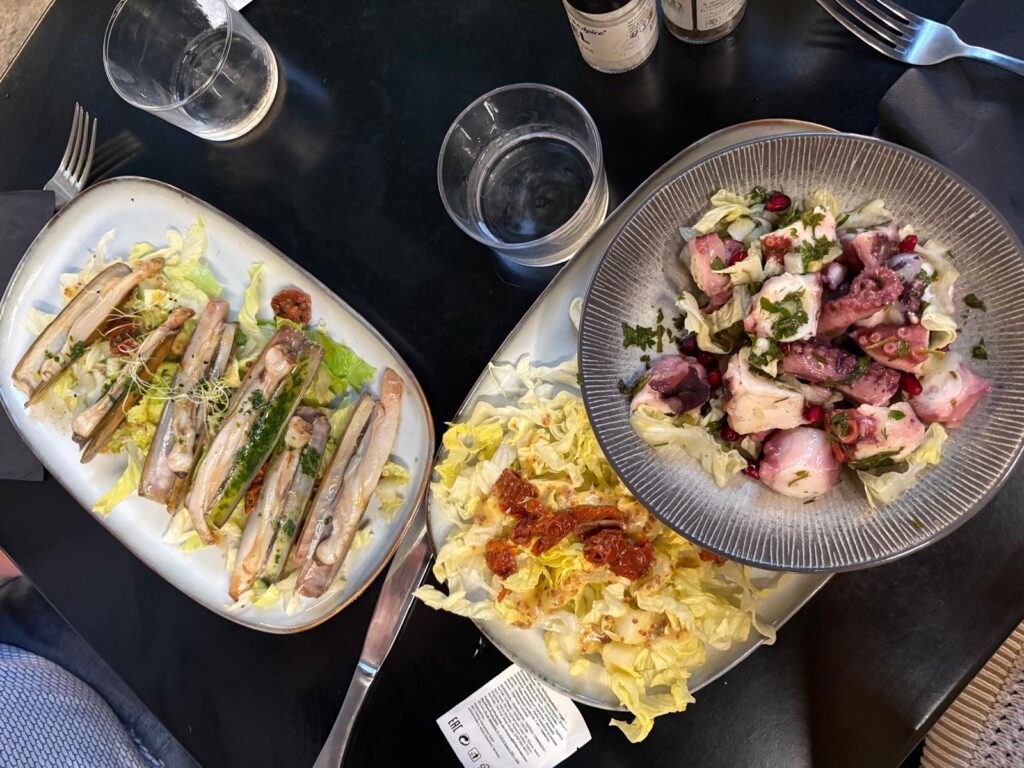
Sufficiently rested (one of us at least), we head out again for a final stroll before dinner. I’m sure by now you recognise the Place de la Comédie.There are some very lively shopping streets around the Old Town and, having just spent a few days in the countryside, I appreciated the businesses’ generous opening hours.The next thing I wanted to see was the Amphithéâtre Saint-Côme. Montpellier has the oldest medical school in the world still in operation, dating to the 13th century. This is its 17th century anatomical amphitheatre, where students could observe dissections. I’m imagining something like this one in Padua which I saw a few years ago. I don’t think you can visit, and an anatomical museum belonging to the university is another one that’s closed currently from what I can see. But even from the outside it is an interesting building.Our next stop was l’Église Saint-Roch. Another 19th century neo-Gothic design, it’s by the same architect as what is now the Carré Sainte-Anne. This one looks a bit less like something you’d find in London, though, and is on the site of older churches and sanctuaries. Saint-Roch is the patron saint of the sick, falsely accused, and dogs (thanks to a story where a dog licked his wounds when he was suffering from the Plague). He’s often depicted pointing to an open wound in his thigh.A building with a rather nice trompe-l’oeil mural stands across from the church.More charming medieval streets, now in the gathering dusk.And visitors are also spoiled for choice when it comes to restaurants. We didn’t dine here, though, as we had one eye on the thunderclouds overhead.One final point of historic interest before we stop for dinner. This was once a mikvah (or mikveh), a Jewish ritual bath. It’s one of the oldest and best-preserved in Europe, and can be visited as part of a guided tour from the Tourism Office. Montpellier’s Jewish population made a large contribution to the city’s commercial life, and as students at the medical school. On the whole, conditions here were freer and fairer than in many other European cities at the time.For dinner we chose family-run La Coquille. A lovely spot with friendly service, and great food (we particularly liked the seafood, as you can see). It was a nice way to round off a busy afternoon in Montpellier, in which we had visited museums, cultural spaces and churches, seen the city’s medieval roots, and its modern architecture as well. We were only here a few hours, but our Montpellier taster already has us thinking about a return trip.
Trending
Travelers' Map is loading... If you see this after your page is loaded completely, leafletJS files are missing.