
When We Were Us – Wicked Winters / The Jack Studio Theatre, London
In When We Were Us, new writing from Jade Winters at the Jack Studio Theatre, four friends meet for the first time in a long while, each bringing their own assumptions about what has changed, and what might still be left unsaid.
Please Note: spoilers below.
Content Warning: discussion of domestic abuse and coercive control.
When We Were Us
Another trip to the Jack Studio Theatre, and another piece of new writing that finds itself brushing up against the news cycle. When We Were Us, written and directed by Jade Winters, deals with domestic abuse and coercive control, subjects that feel particularly relevant given the continued attention around a certain celebrity court case in which, once again, a woman discovered just how difficult it can be to prove abuse rather than libel.
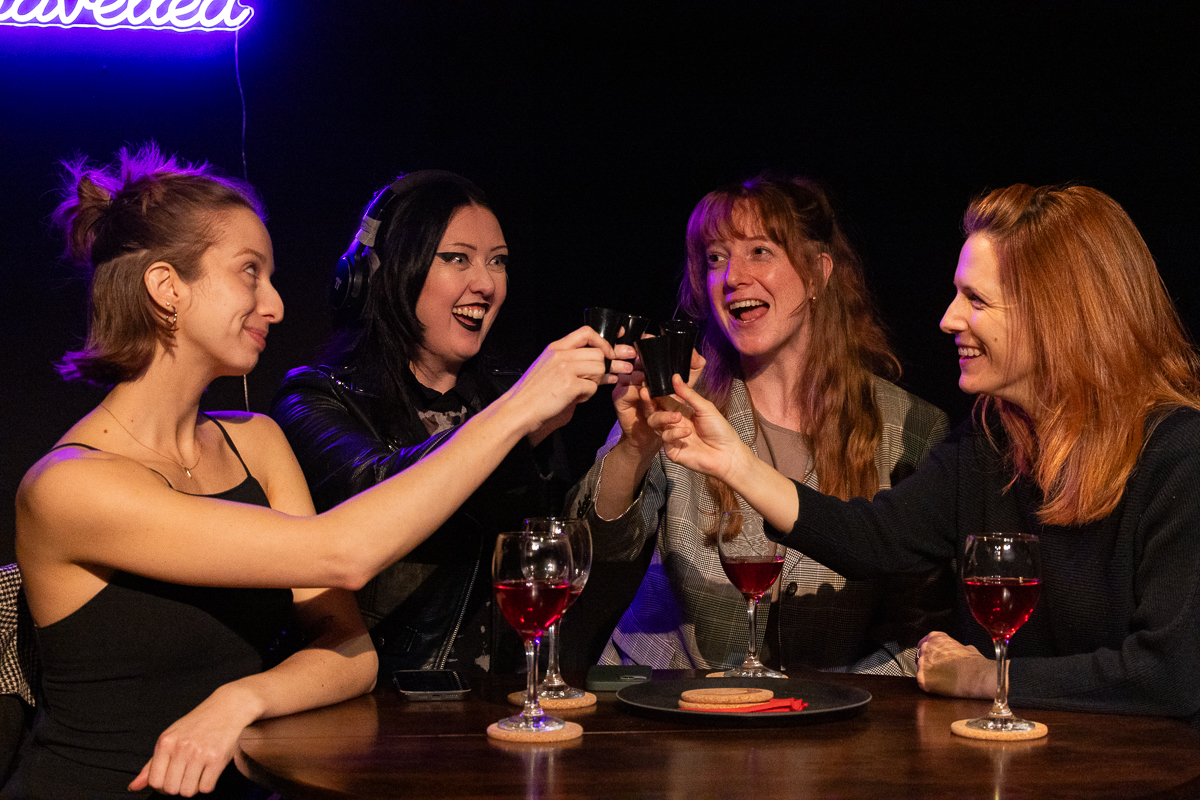
The play unfolds over a single evening, as four friends gather for a long-overdue catch-up. At least, that’s what Brooke (Victoria Broom) believes she’s coming to. The others – DJ (Emily Cordell), Blake (Violet Grace Fink) and Kelli (Soni Bhalla) – have sensed for some time that something isn’t right. The evening gradually reveals itself as a more deliberate attempt to reach her.
Running alongside the reunion is the anxious wait for the verdict in the aforementioned celebrity case. It becomes a kind of running commentary on how each character understands abuse. Everyone arrives with their own baggage, and the script is at its most interesting when it explores how those experiences shape the conclusions they draw. Even people with first-hand knowledge of unhealthy relationships, the play suggests, don’t always recognise similar dynamics when they appear right under their noses.
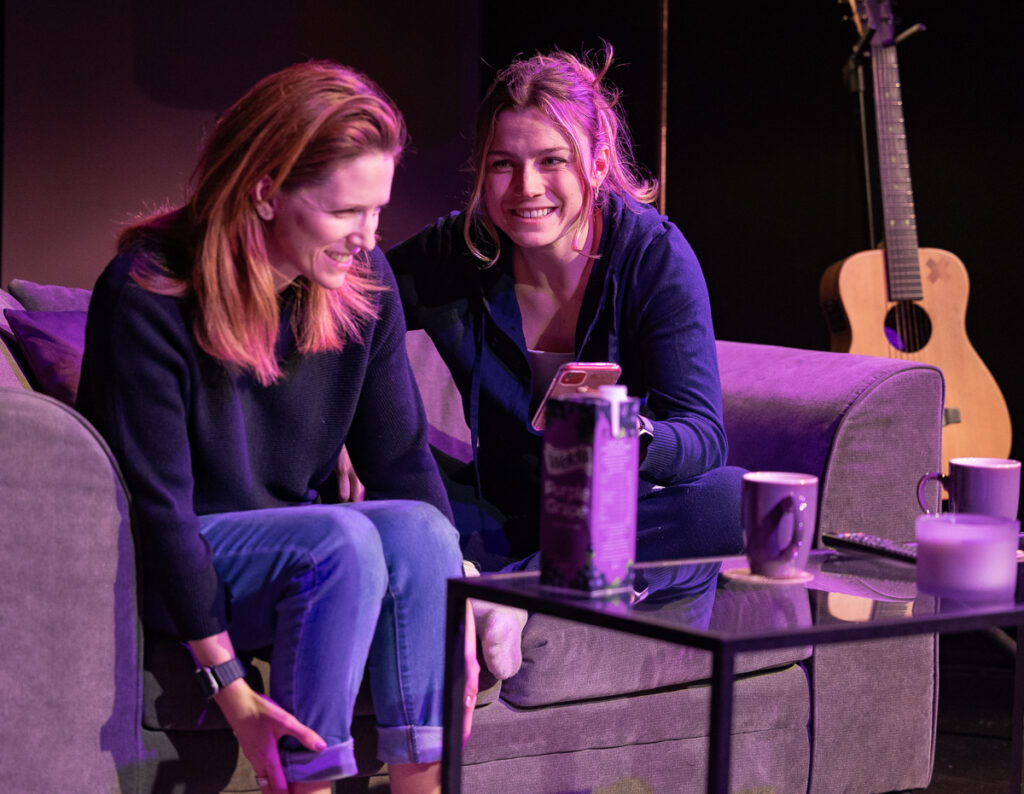
The structure alternates between the present-day pub scene and flashbacks to Brooke’s relationship with Moira (Lottie Bell). The split staging (one half for the present, the other for the past) is a neat device. It allows us to watch the friends trying to piece together what they think is happening while the audience sees the relationship itself unfold.
An Important Subject, Approached From a Sincere Place
Those earlier scenes chart Brooke’s relationship with Moira. It begins, as these things often do, with a whirlwind of affection. The early stages feel intense and romantic, but as the memories progress the ground begins to shift in subtler ways. Brooke finds herself questioning things she once took for granted, and the certainty she once had about the relationship becomes harder to hold on to.
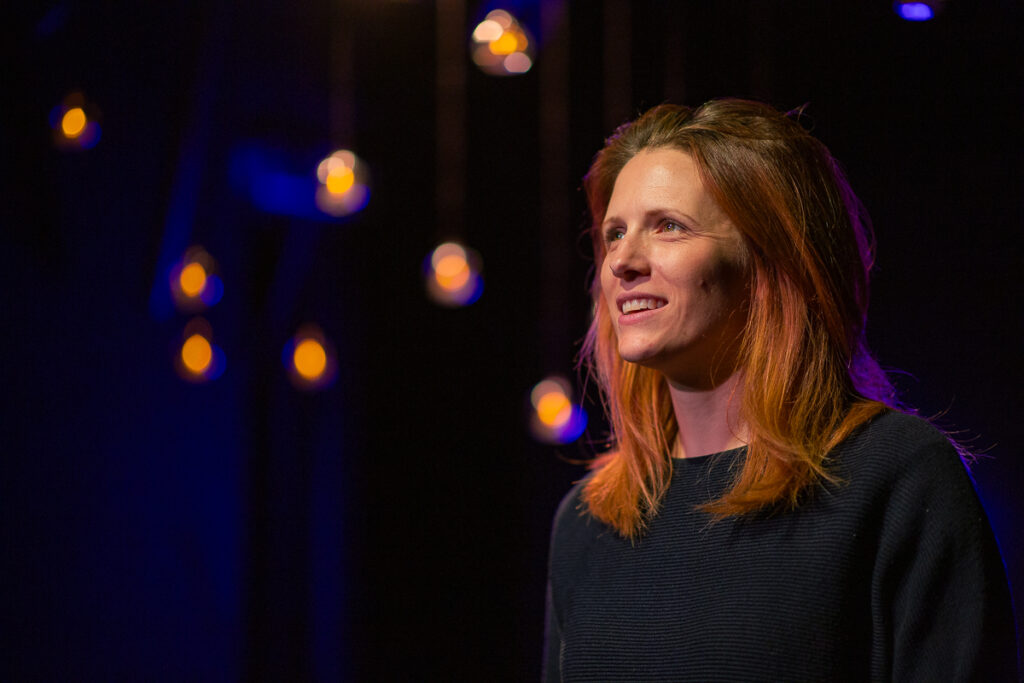
Victoria Broom’s performance as Brooke is the standout of the evening. The role requires her to move quickly between time periods and emotional registers, and she handles those transitions with real assurance. She also captures well the slow creeping doubt that emerges when the story you’ve been telling yourself about your own life starts to look a little less stable.
The play makes several worthwhile points. About how difficult it can be to extricate yourself once you are inside such a dynamic, and about how even close friends can misread what is going on when they lack the full picture. The early awkwardness of the reunion, the sense that everyone is circling around something, feels particularly well observed.
Where When We Were Us struggles a little is in the writing. Much of the exposition arrives through characters explaining their personal histories quite directly, which can make some scenes feel a little stilted. At times the script seems anxious that the audience might miss its message. The final scene in particular spells things out rather more firmly than necessary. A little more restraint (and a little more trust in the audience) would likely strengthen the piece.
That said, the play clearly comes from a sincere place. It tackles an important subject and attempts to unpack some of the misunderstandings that still surround abusive relationships. With a lighter touch, there’s the basis here for something more nuanced.
Salterton Arts Review’s rating: 3/5
When We Were Us on until 14 March 2026. More info and tickets here.
Trending
If you see this after your page is loaded completely, leafletJS files are missing.