
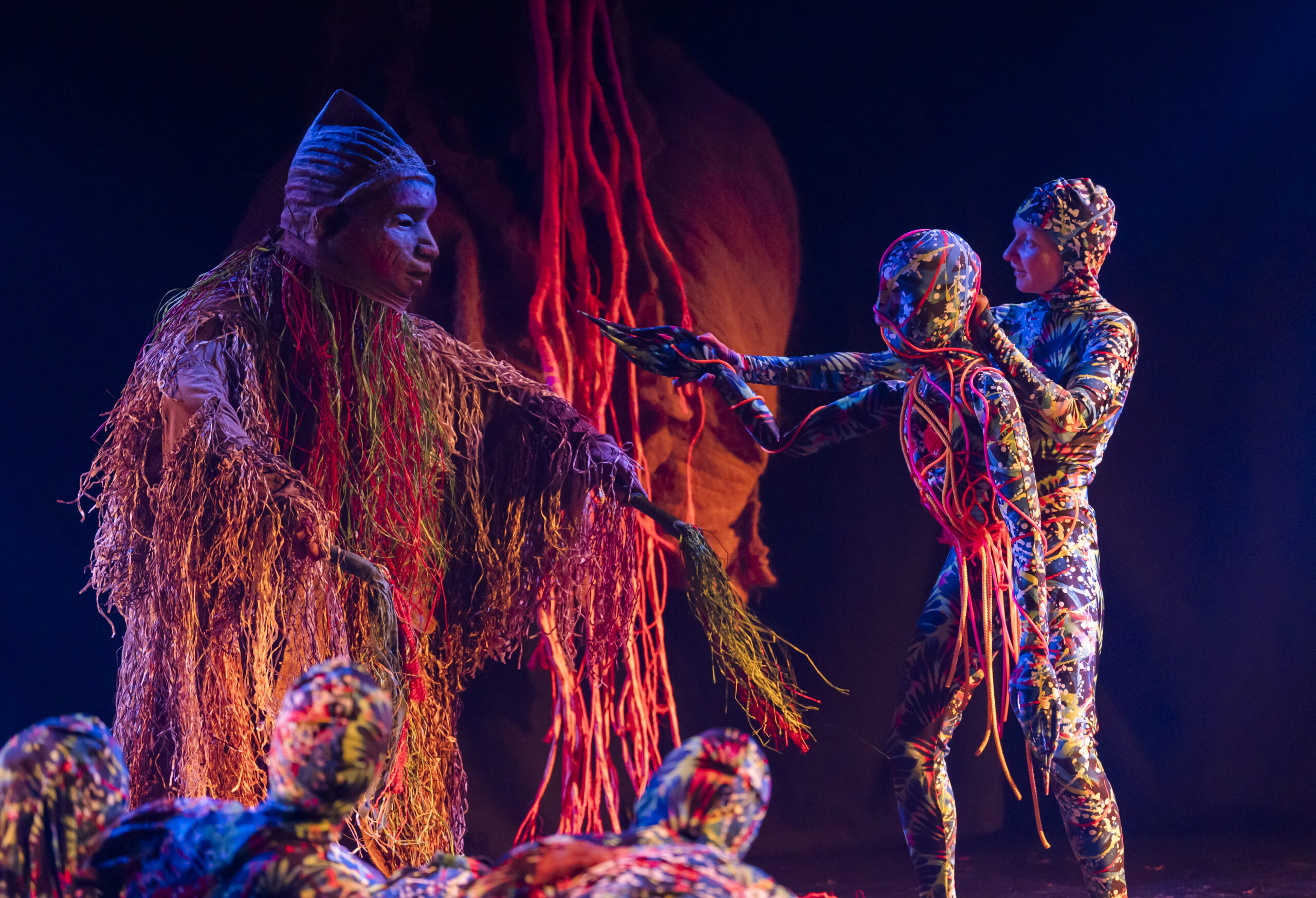
Return to the Forest – Sadler’s Wells East, London
A really wonderful performance that works for adults and kids alike, Return to the Forest leads with curiosity, asking us to consider what we value and who our heritage belongs to.
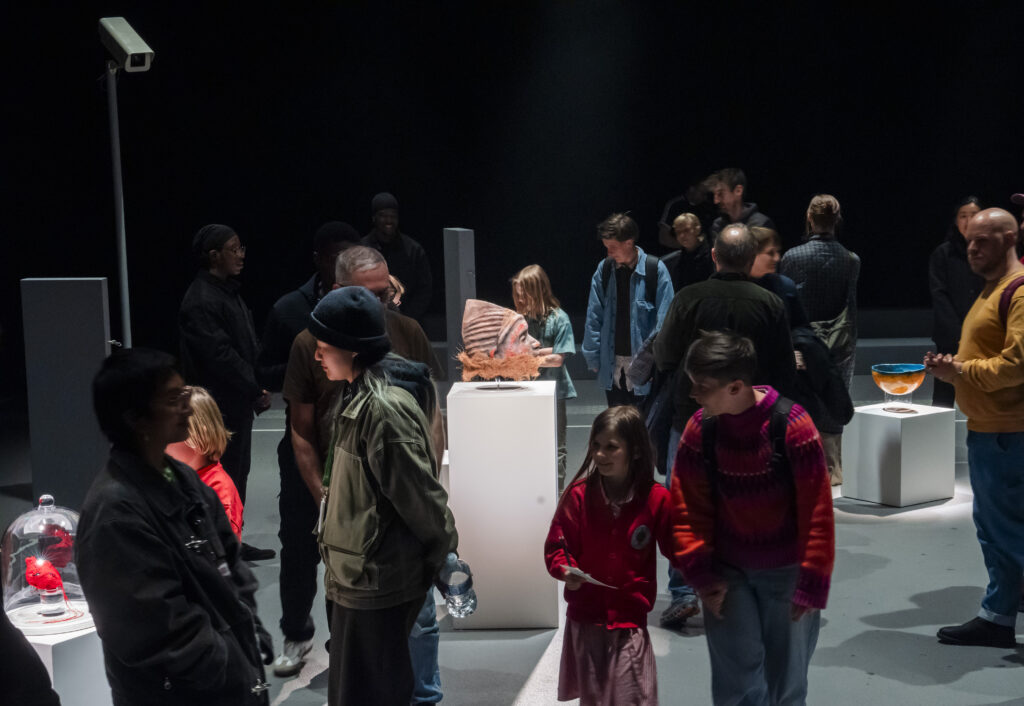
Return to the Forest
A museum-themed dance performance, which interrogates the ownership and meaning of cultural property? Yes please! And it’s for ages 8 and above? That includes me! There’s puppetry? Amazing!
As you can tell, I was excited about Return to the Forest, commissioned by Sadler’s Wells East from Theatre-Rites and choreographer Gregory Maqoma, before I even arrived. Once I got into the space, even more so. The first thing I noticed was unrelated, but got me into the right mindset. That was the usual theatre seating, which it turns out pulls up vertically when not required. Very Inception. But it encouraged me to leave my expectations and usual ways of thinking at the door. The additional space this flexible seating created takes the form of a museum. We know it’s a museum because there are objects on plinths and behind glass. And also because we are encouraged to look around before taking a seat.
It’s after the museum closes that the story comes to life. A group of people arrive to break in and steal the objects. This stage of the performance represents the museum very much as a place of surveillance and control. Not just of people, but of objects too. The museum’s built environment includes a prominent security camera as well as those plinths and cases, and red threads represent laser beams. After navigating the surveillance system our group makes off with the museum objects, and takes us with them (physically and conceptually – this is a promenade performance). We enter a magical space in which the objects take back their power and take on a life of their own.
Museology for Kids and Adults Alike
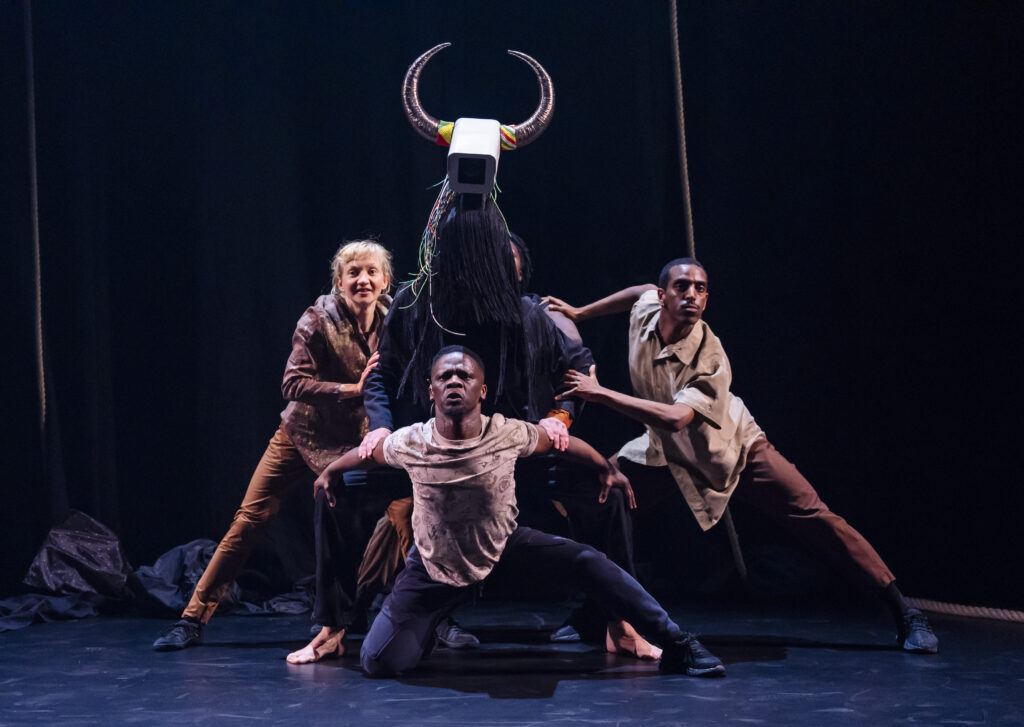
I’m going to go off on a bit of a tangent here. It’s the creators’ fault, really, for covering so many of my interests in one production. Watching Return to the Forest, I was impressed by how complex the thinking while remaining accessible to children. Should you be interested in any further reading, a couple of things came to mind. The first was my own post on the British Museum’s Hawai’i exhibition. I was struck by the way the Hawaiian people had been separated from their cultural heritage, in parts by acts that were legitimised by later museum acquisitions, and now have to piece their history back together. There is a scene in Return to the Forest where the performers interact with an object I would have said is a fly whisk. But is it? Could it be that it’s for tickling? Or is it a bull’s tail?
In my mind, this really boils down to a critique of Western knowledge systems, and colonialism. Big topics for little people. But, as I said, accessible. The other thing I have to mention before I get back on track is my old favourite, the academic model of ‘the object as data carrier’ – the work of Peter van Mensch. This model was fundamental to my Master of Museology course many years ago, so comes up a fair bit on the blog. The idea, in a nutshell, is that objects are associated with different kinds of data. There are its physical qualities for a start – what it’s made from and so on. Then its function. But there are also the intangible stories it gathers. We all own objects that are special not because of anything intrinsic but because of the memories they bring back, or the person who owned them.
Museum objects, if the acquisition process was robust, might come with all three kinds of data. Or they might have lost their histories. We might know the physical qualities, but not know the function, or the stories. The objects in Return to the Forest seem to be in that latter category. Through a combination of imaginative dance, puppetry, and live singing and music, these lucky few objects seem to regain a spirit or a soul that a museum label cannot put into words. By the end, the motif of red threads has become about connection, not control.
Pushing the Boundaries of Children’s Theatre
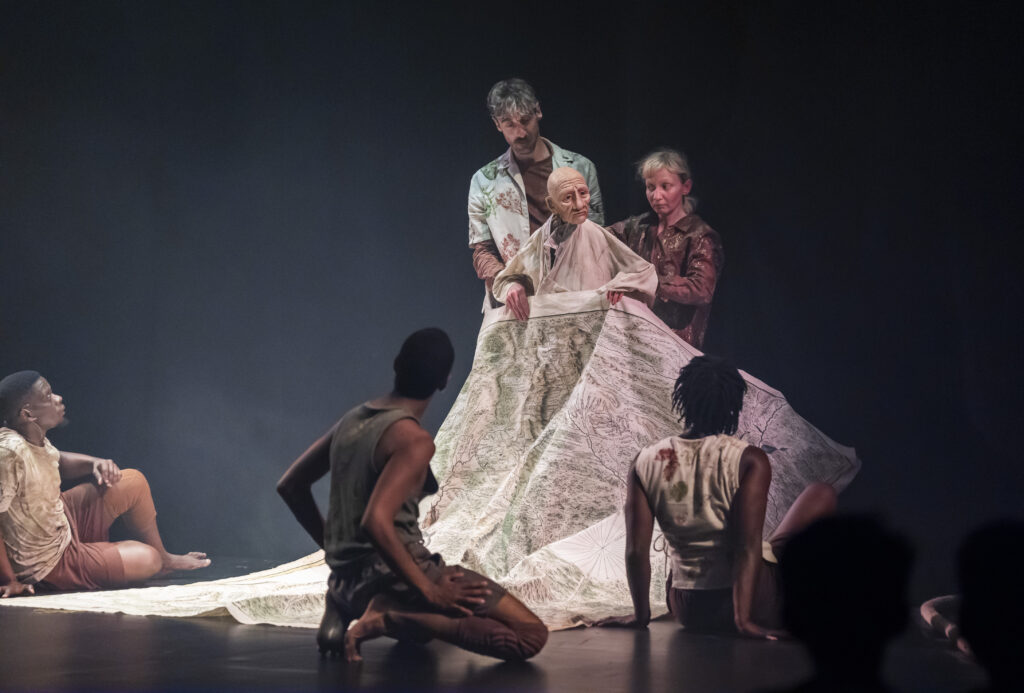
OK, back to the matter at hand, which is reviewing last night’s performance. It certainly got me thinking. I also enjoyed it immensely. From the use of the physical space and promenade-style performance, to the vibrancy of the performances, this for me was an example of all parts of a creative team coming together. Jean Chan‘s playful set combines with Kinnetia Isidore’s incredible costumes, Guy Hoare’s beautiful lighting, and Frank Moon and Domenico Angarano’s atmospheric sound design. As well as directing, Sue Buckmaster had a hand in the puppet designs, along with Alison Duddle and Naomi Oppenheim. Performers Mayowa Ogunnaike, Natnael Dawit, Simon Palmer, Teele Uustani and Xolisile Bongwana all bring something slightly different, making this a real ensemble performance.
I’m going to list out the entire credits if I keep going, but that would be very much deserved. It’s the sort of unexpected and exciting theatre that makes me glad that I maintain this blog and have these opportunities. Are there any opportunities for improvement? I could opine on the length, at 90 minutes, and wonder if it’s a bit on the long side for little ones. But from what I saw, and the Mission Impossible antics at the end, the children who attended last night were all very engaged to the end. I also wondered a little about the overall message. The ending turns into a celebratory and interactive dance – great fun, but not quite a clear conclusion on the questions of ownership of heritage and what to do about museums. But if I, as a museum professional, still feel conflicted about museums, maybe that’s OK.
Return to the Forest is great for kids, but also adults. If there are tickets remaining, I suggest you snap them up. I’ll certainly be hoping to see more work from Theatre-Rites in future!
Salterton Arts Review’s rating: 5/5
Return to the Forest on until 30 May at Sadler’s Wells East. More info and tickets here.
Trending
If you see this after your page is loaded completely, leafletJS files are missing.