
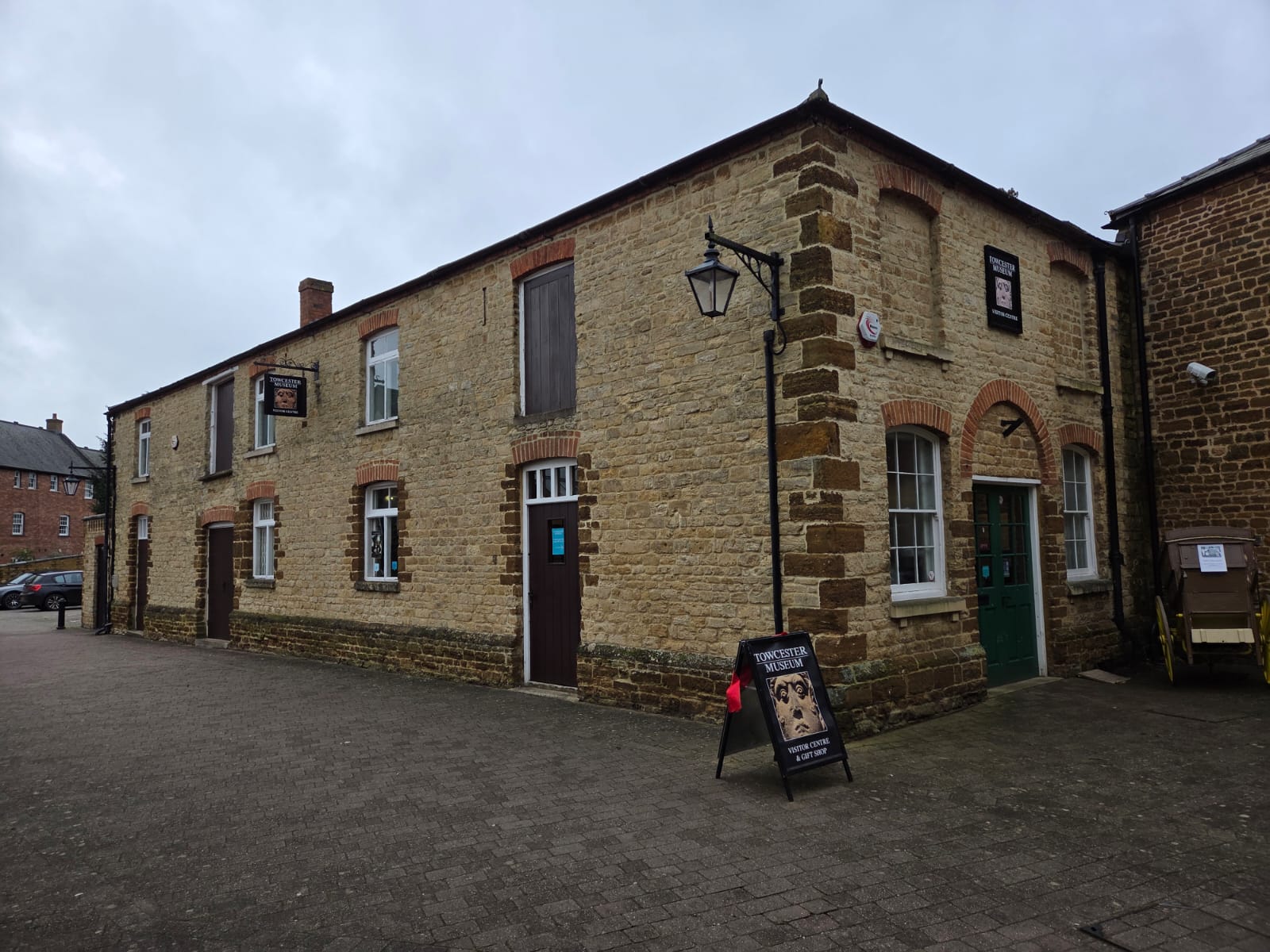
Towcester Museum
A nice little local history museum, Towcester Museum is a great resource for learning about key moments in the town’s long history.
A Trip to Towcester
The Salterton Arts Review doesn’t get out to see as much of the UK as it should. I had a flurry of local outings in the staycation days of the pandemic, but went back to my usual busy travel schedule as quickly as I could. I do love getting out and seeing the world, but it is a shame not to see more of the wonderful and interesting places closer to home.
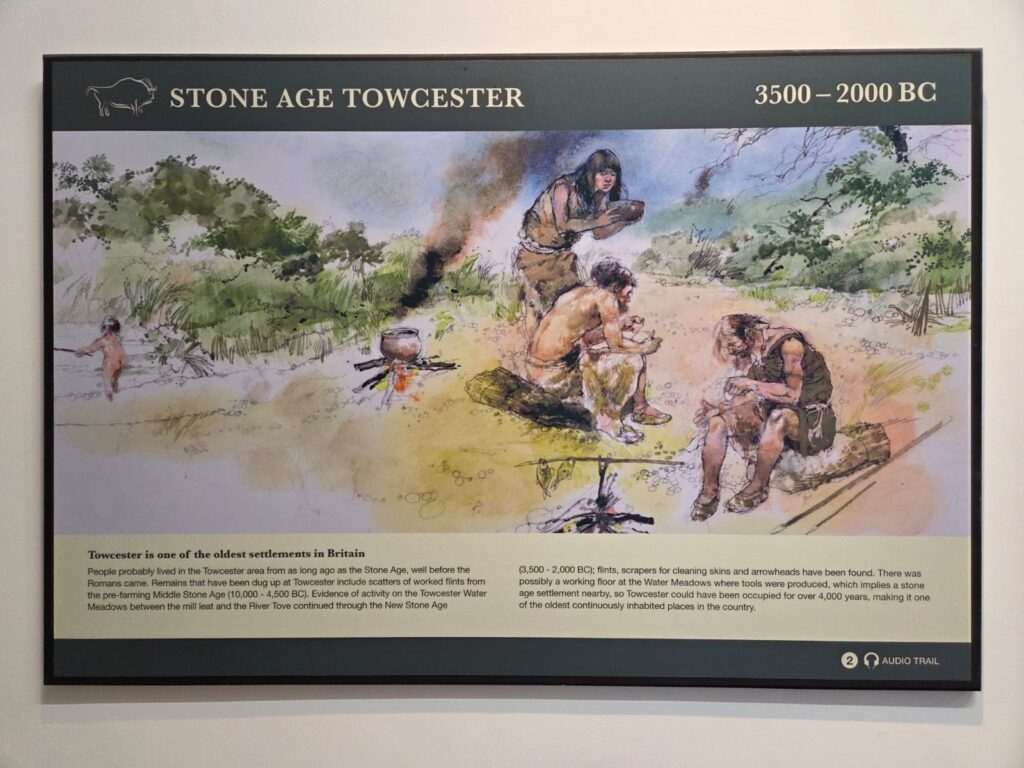
Take Towcester, for example. First of all, it’s pronounced like ‘toaster’, which in and of itself is wonderful. It’s only a short distance from London (hard to get to by public transport, though). It has a long history, going all the way back to the Stone Age. The suffix ‘-cester’ also gives away a Roman connection: Towcester was an important Roman settlement (albeit with a different name), sitting right on Watling Street.
Towcester may no longer be in its heyday. But it is a nice market town which is well worth exploring. On a recent repeat visit, I took some time out to visit the local museum and get my historic bearings.
Important Moments in Towcester’s History
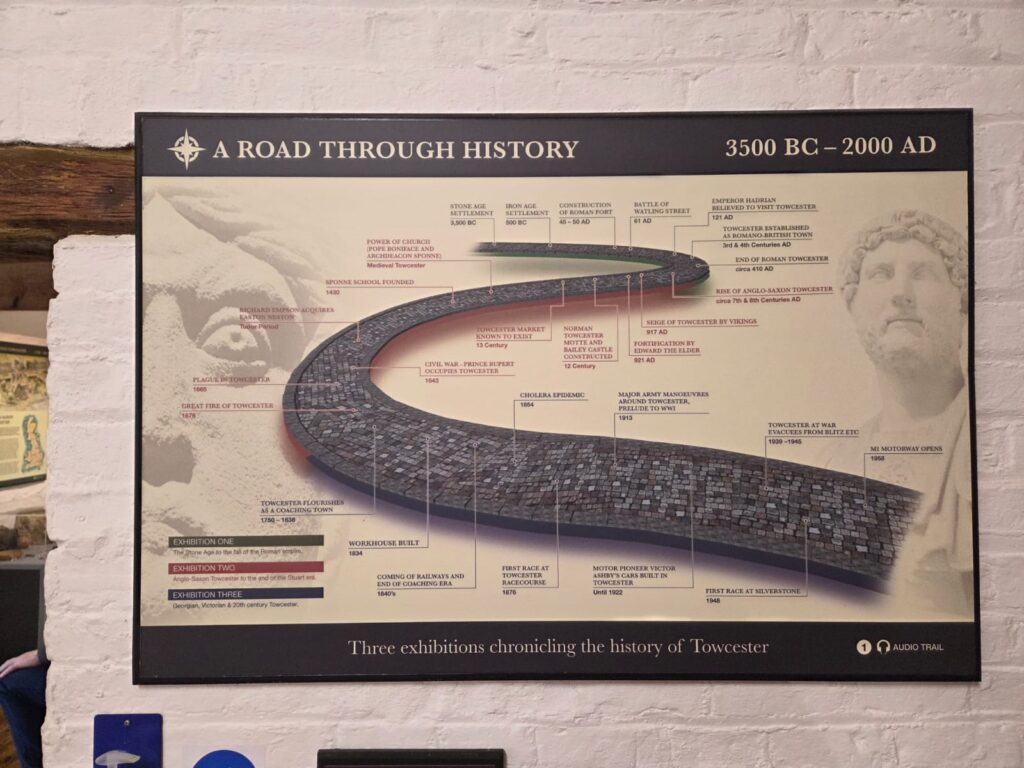
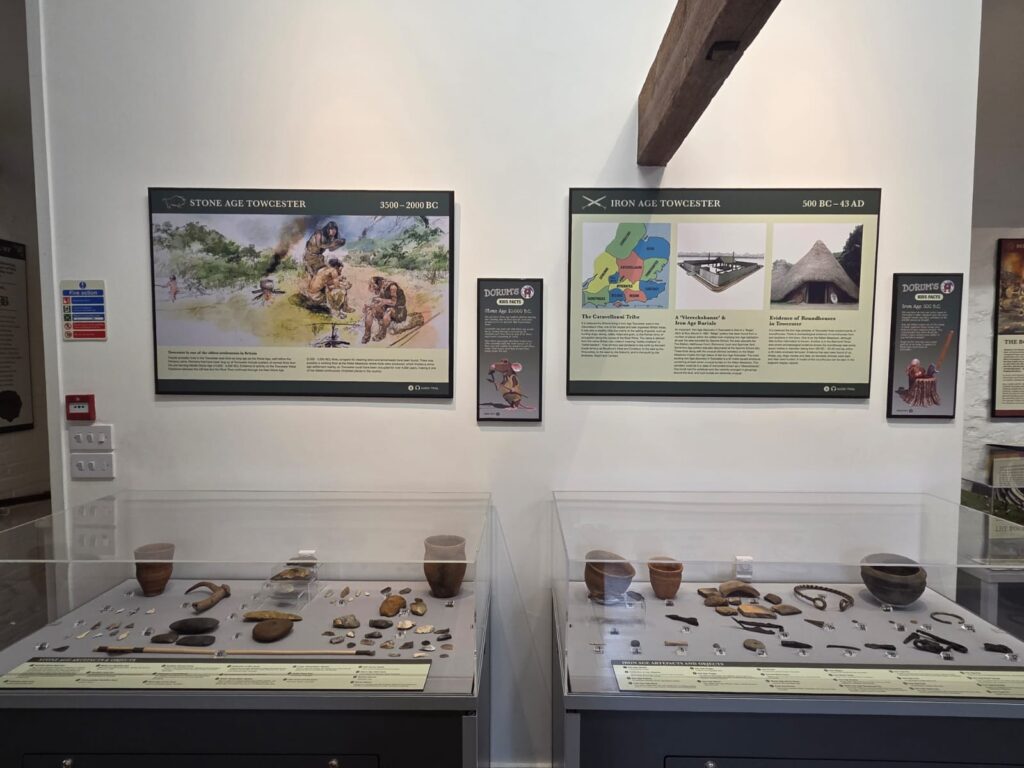
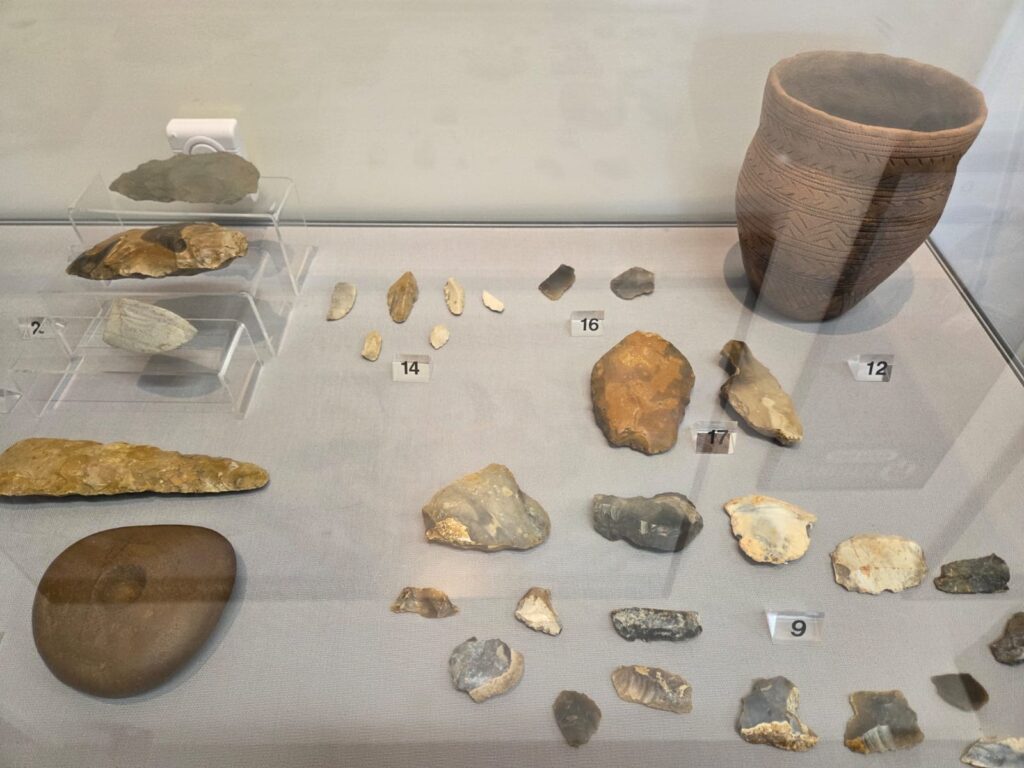
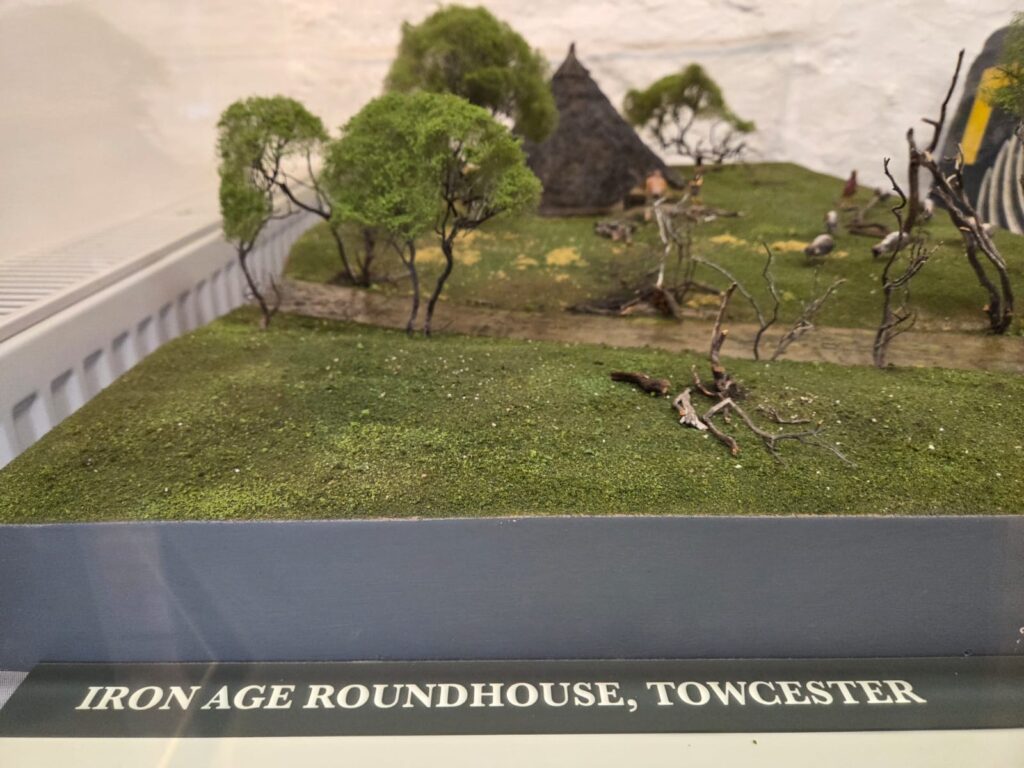
I imagine it must make the jobs of Towcester Museum’s staff that bit easier that the town’s history is marked by a few important periods, allowing for a nice curatorial flow. Firstly, as I mentioned above, there is prehistory. No written records, obviously, but archaeological finds tell us there was a settlement here, making it one of the oldest continuously inhabited places in Britain. A model of an Iron Age roundhouse brings this first phase of history to life.
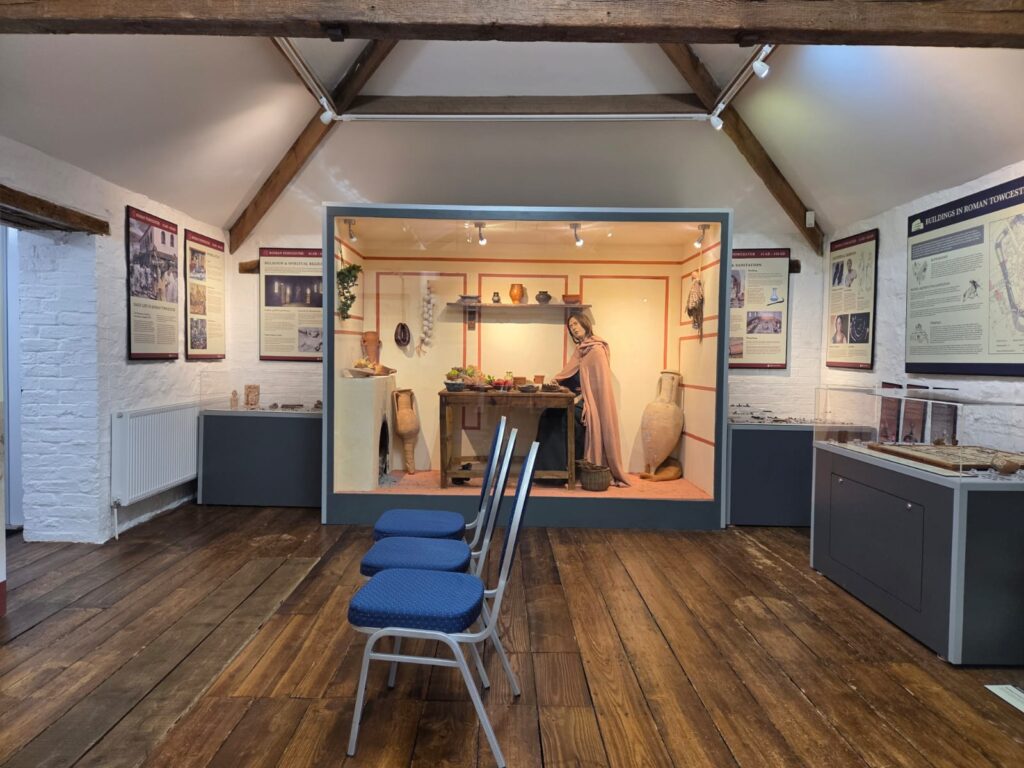
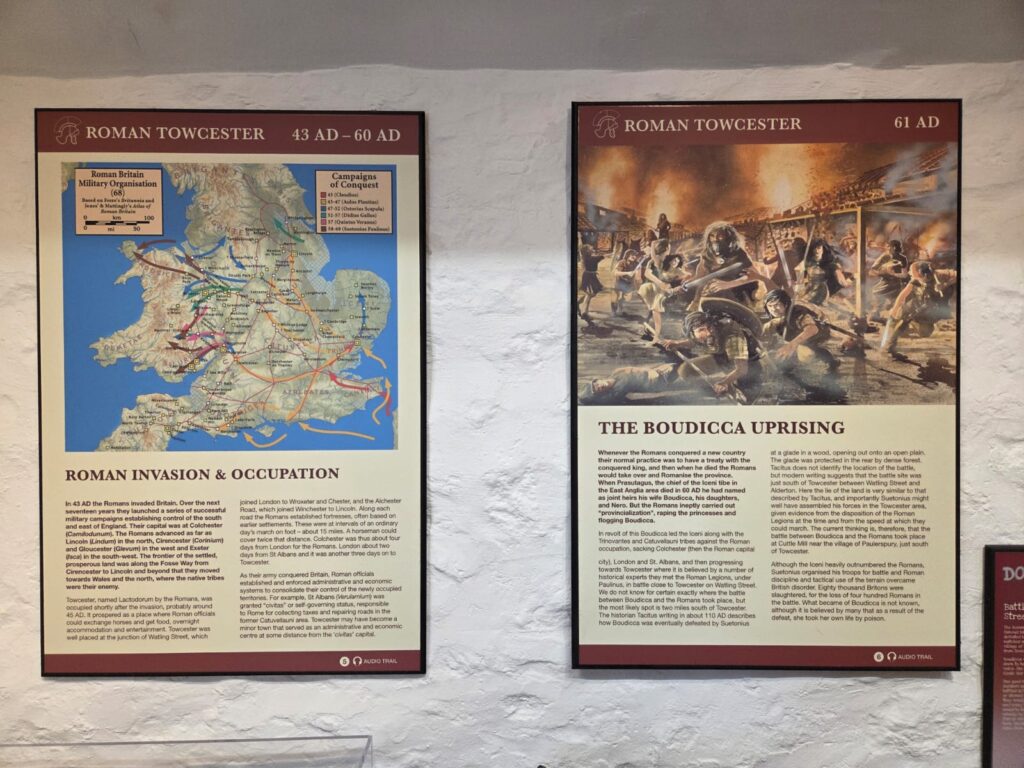
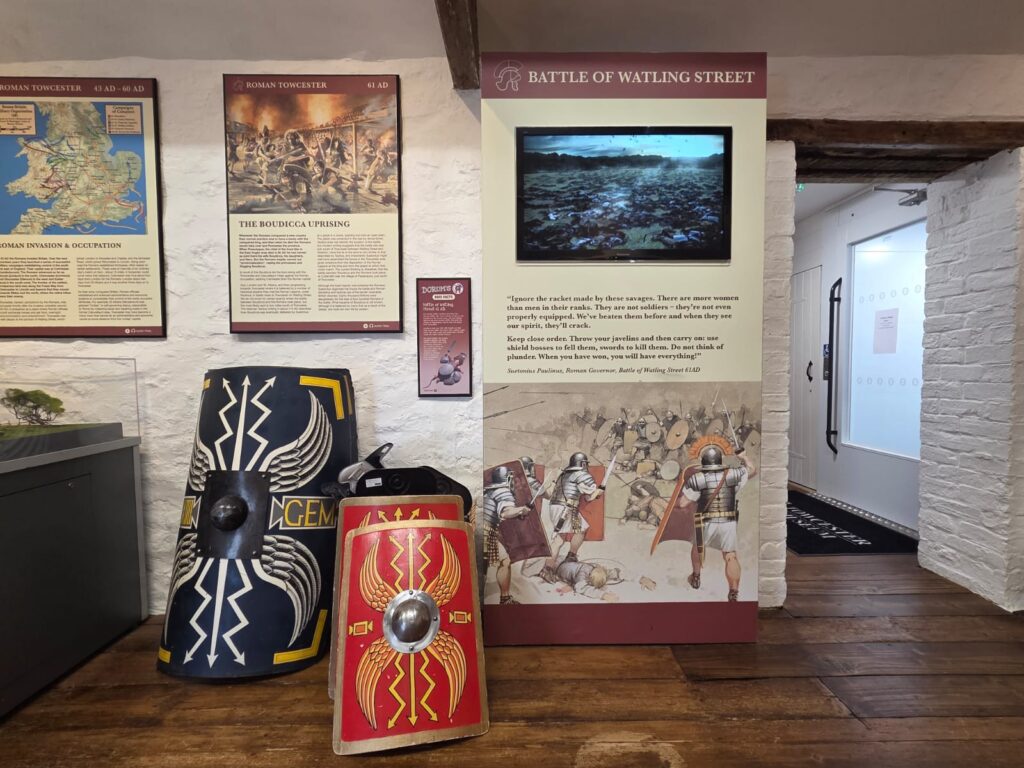
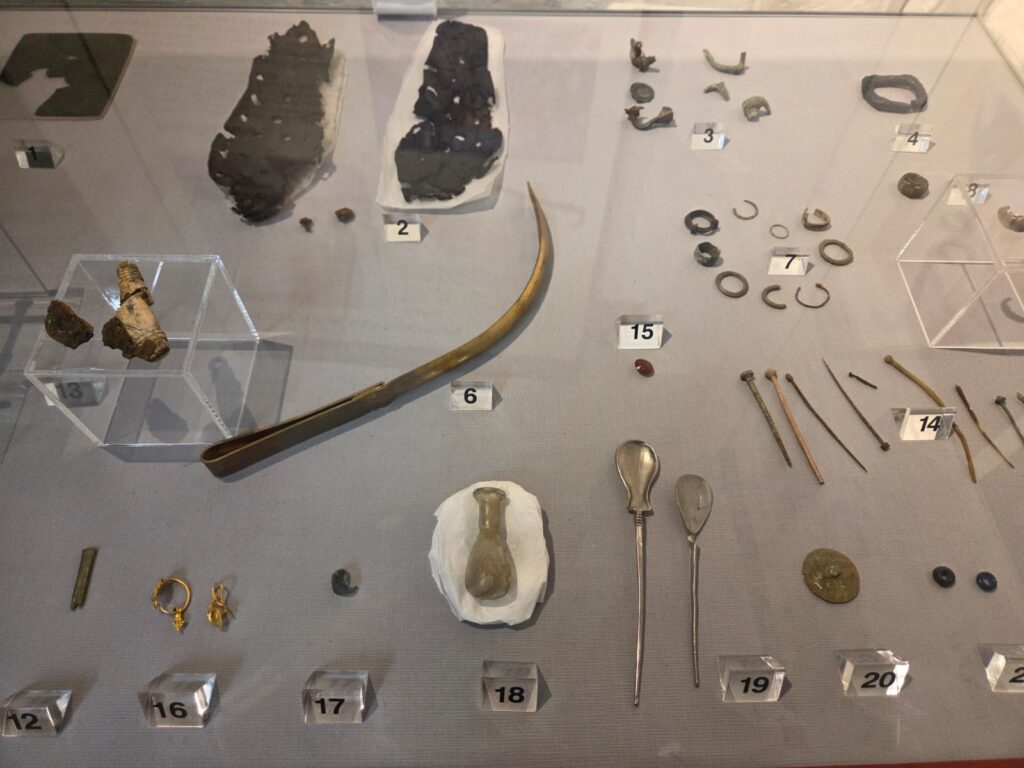
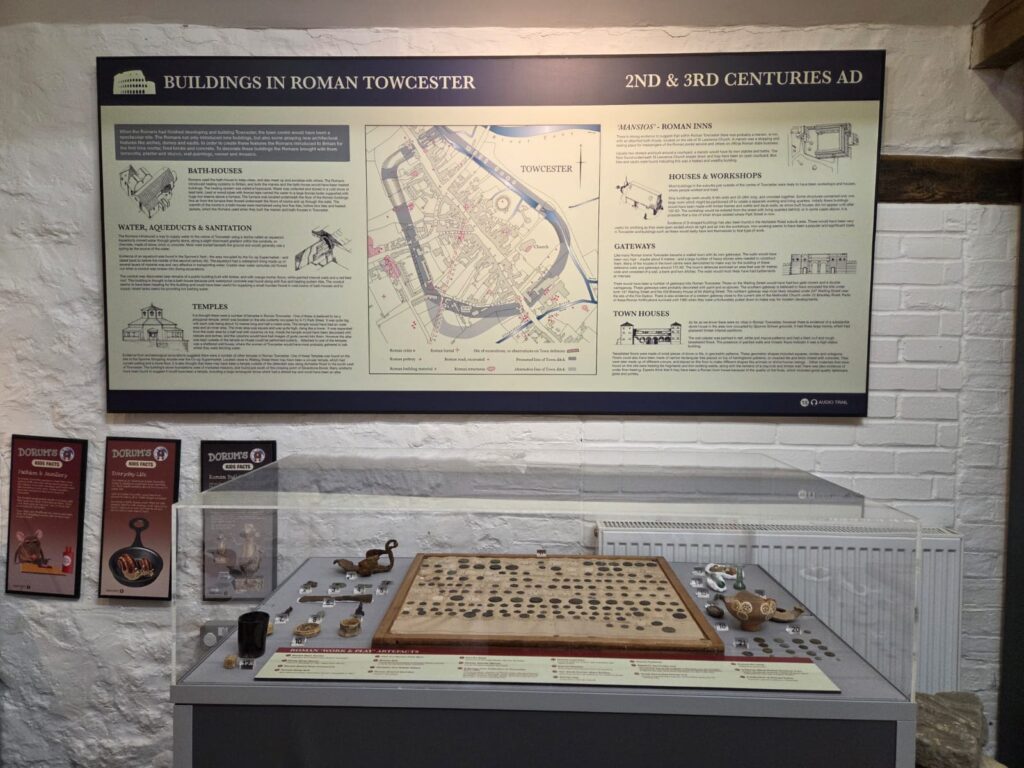
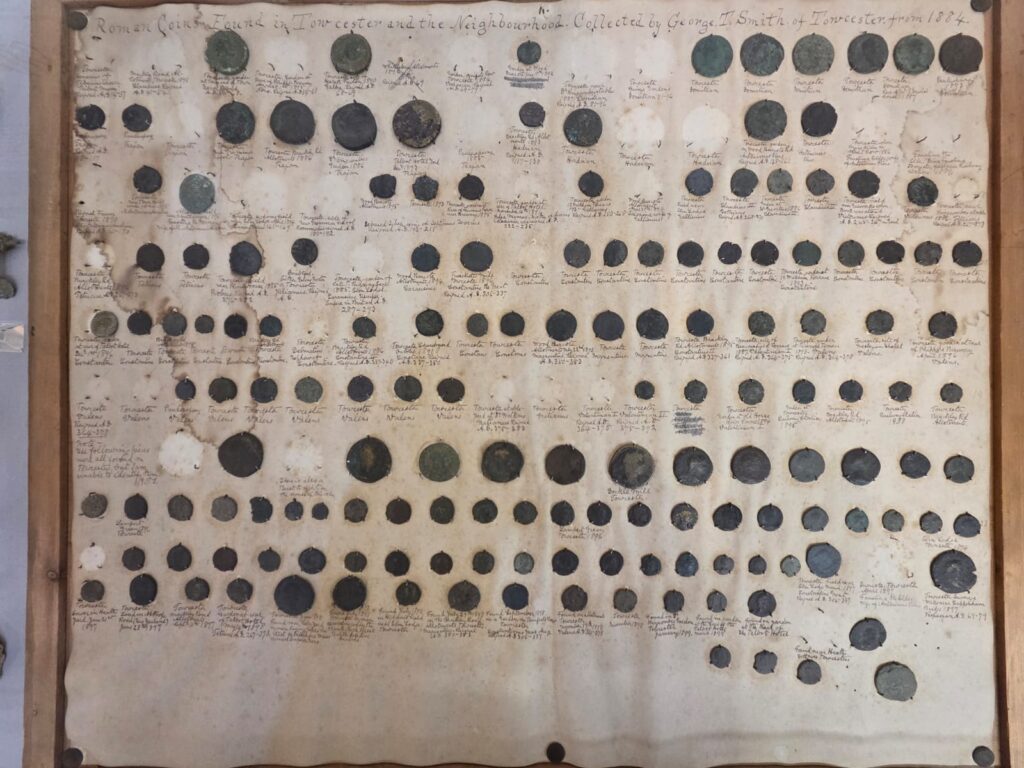
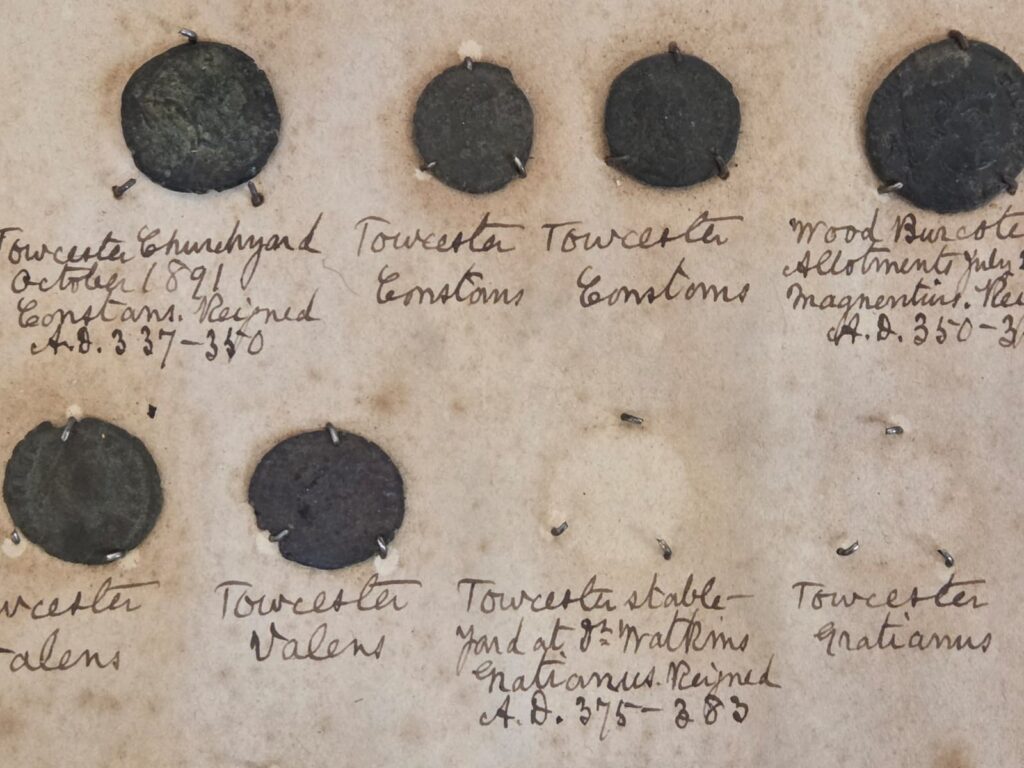
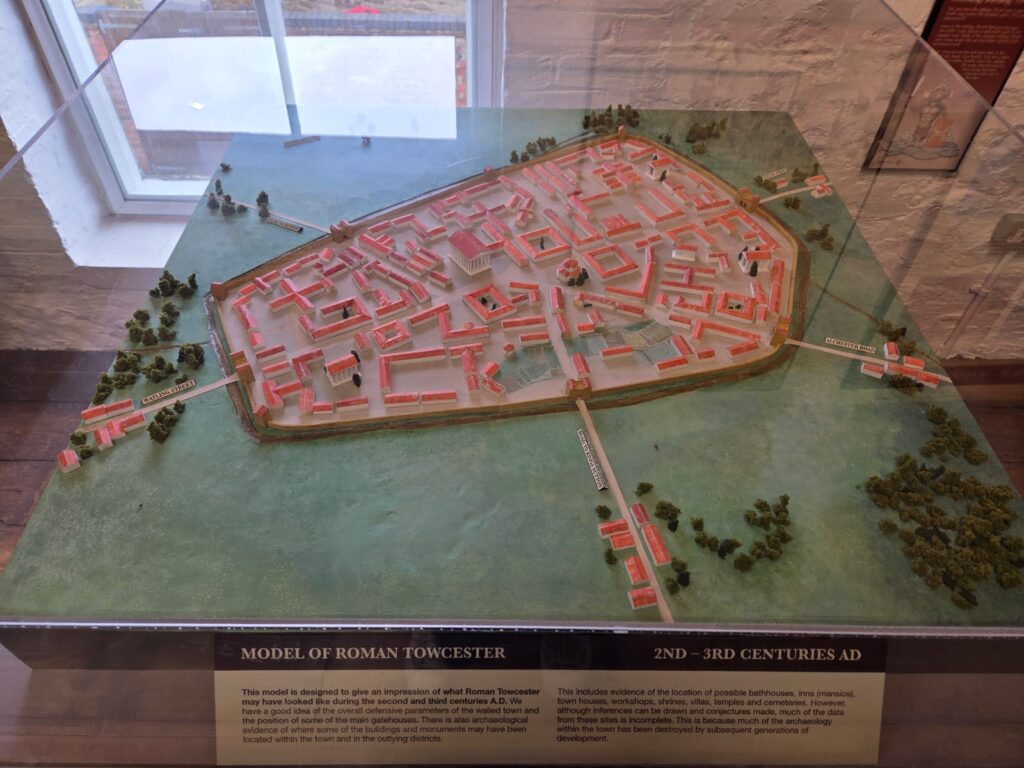
Next up are the Romans. Towcester in Roman times was Lactodurum, a place of dairy farmers (hence the ‘lacto’). I’ve told you already that it was on Watling Street (now, less glamorously, the A5) which ran more or less from Dover to Wroxeter. Just outside Towcester is a place that’s a good match for the description of the Romans’ battle with Boudicca, so it may have been a very important place in Romano-British history indeed.
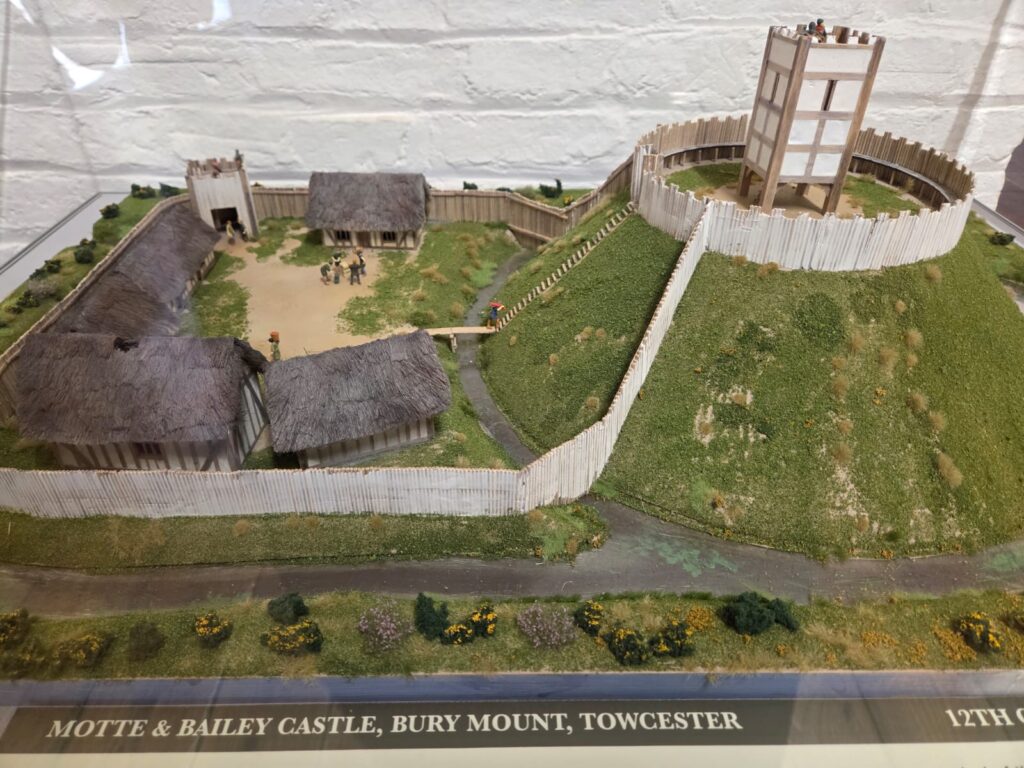
After the Romans, Towcester became a frontier town between the Kingdom of Wessex and the Danelaw. This must have been when it got its current name, as Towcester is made up of ‘Tow’ for the River Tove (which has some sort of Scandinavian origin) and ‘castra’, applied to a lot of former Roman encampments. The Normans built a motte-and-bailey castle here in the 11th century, but don’t be fooled by Bury Mount in modern-day Towcester, which is the earth from the former castle but relocated to a new spot, which seems to be to be cheating somewhat.
A Few More Historic Moments to Bring Us to the Present Day
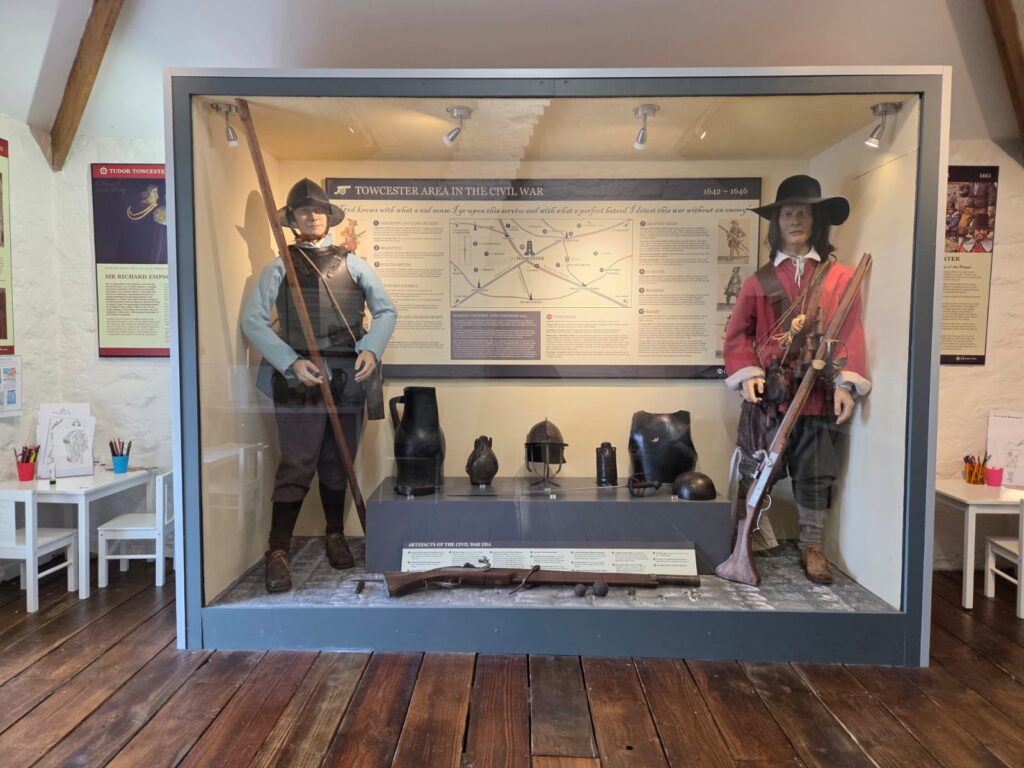
Anyway, the next relevant moment in Towcester’s history was the English Civil War. Towcester was once more a frontier town, this time a heavily contested Royalist garrison post close to Parliamentarian Northampton. Royalist forces fortified Bury Mount to attempt to control Watling Street, which has remained an important thoroughfare since the Romans first built it.
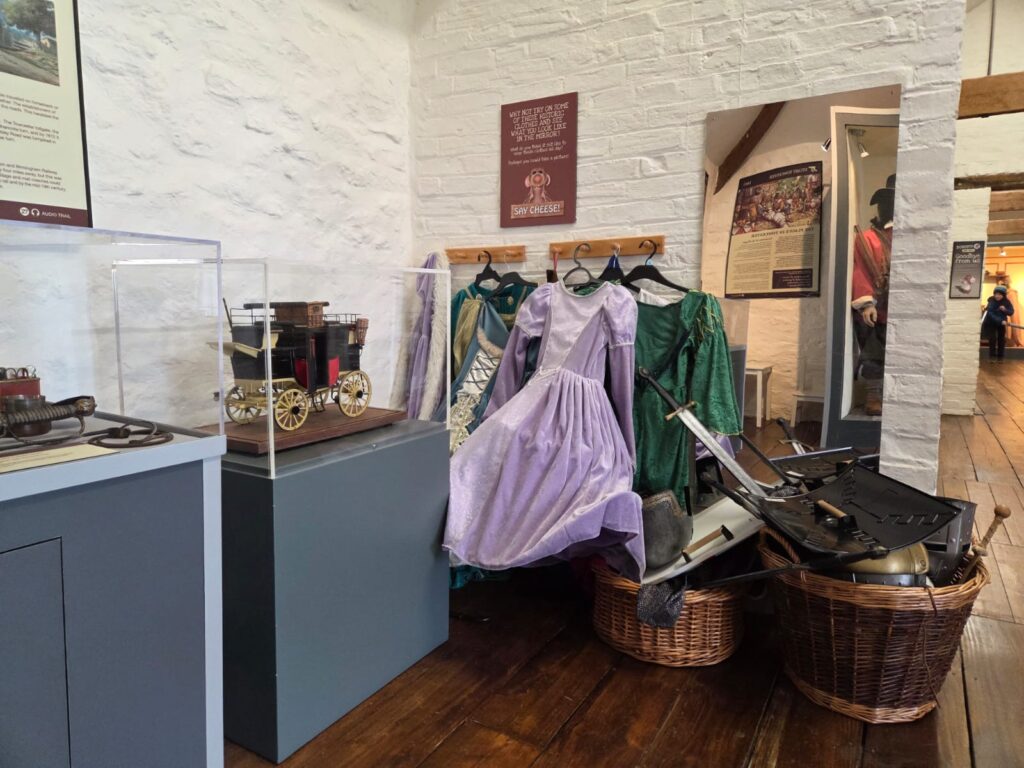
Finally, there was Towcester as a coaching town. The Georgian and Victorian periods were the heyday of coaching, and Towcester was a well-placed stop between London and Holyhead (from whence boats to Dublin). At this point in its history, pretty much every building along Watling Street in Towcester was either an inn or a pub. Dickens, who frequented pretty much any pub you care to name in London, came to Towcester in this period. He immortalised the Saracen’s Head in The Pickwick Papers in the 1830s. But when rail travel took the place of coaches, Towcester found itself on a minor line rather than a major one from London, and things grew a bit quieter. Since 1964, there’s been no train station here at all.
So you see, with a bit of space for temporary exhibitions, that gives quite a meaty series of subjects for a museum display. The origins of the museum itself are a little murky as far as online information goes. But we do know it’s in a building which was once stables for one of that plethora of inns I mentioned. The exhibition is mostly on the first floor of the building, with visitor facilities, shop, and temporary exhibition space downstairs.
The Visitor Experience at Towcester Museum
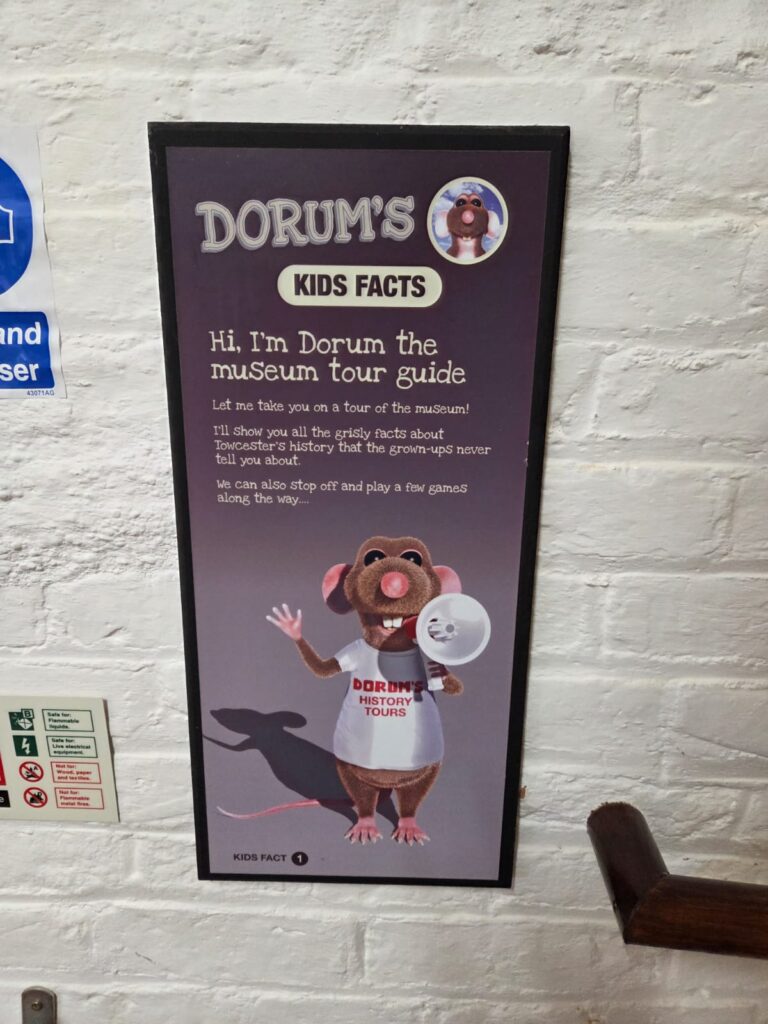
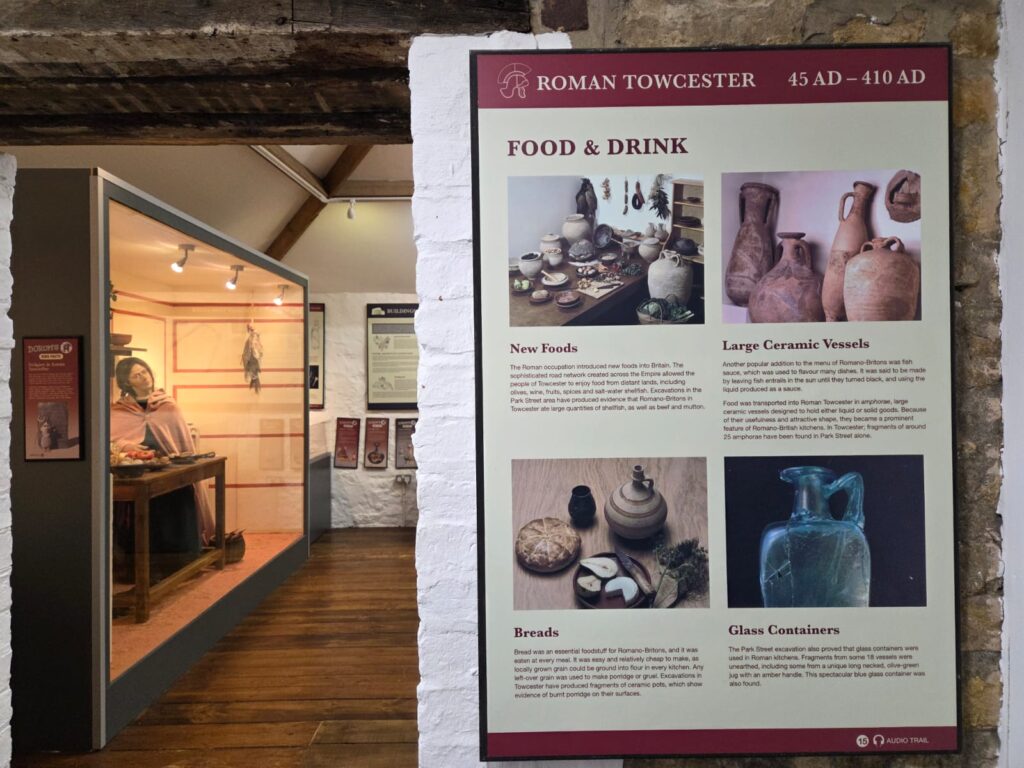
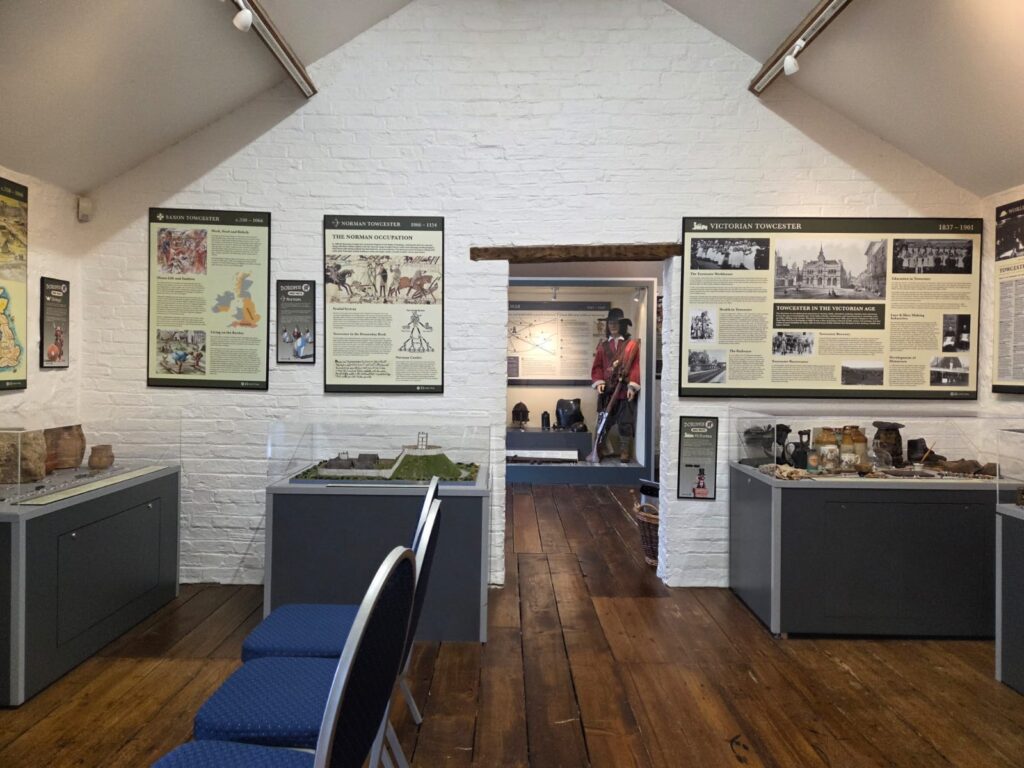
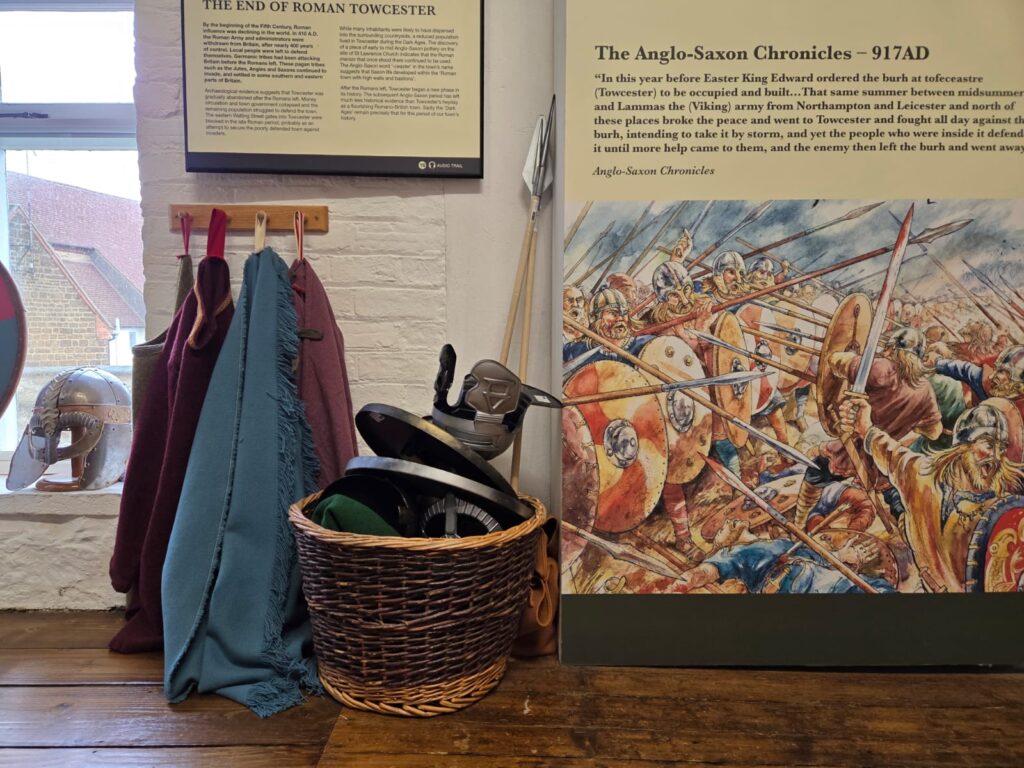
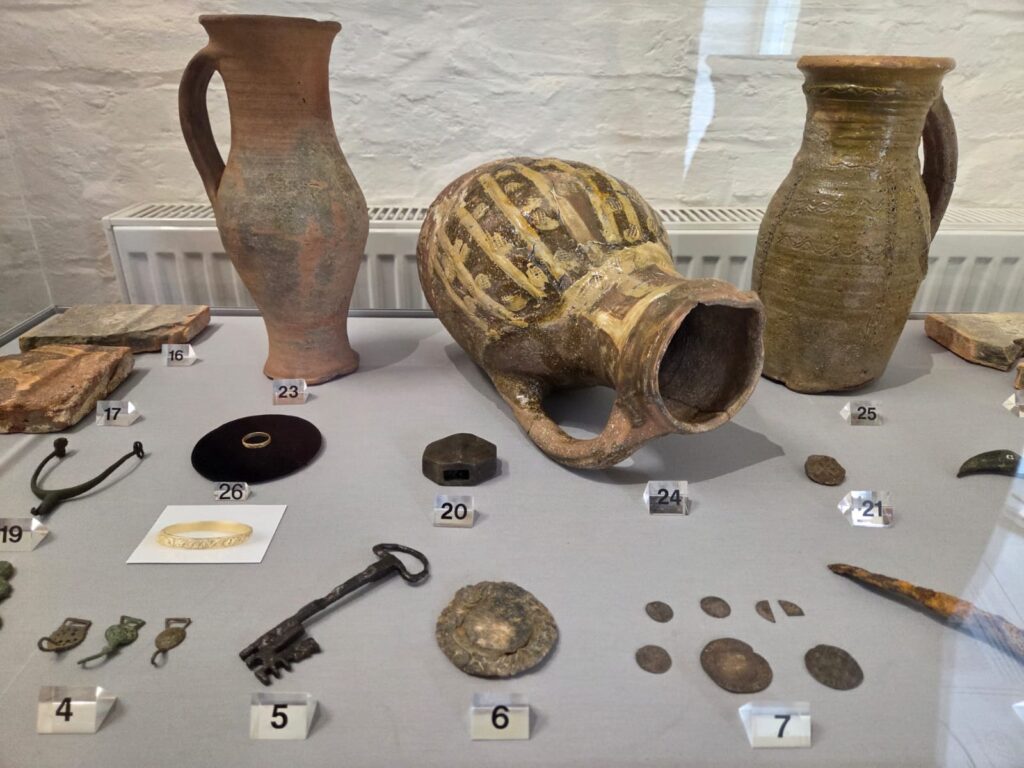
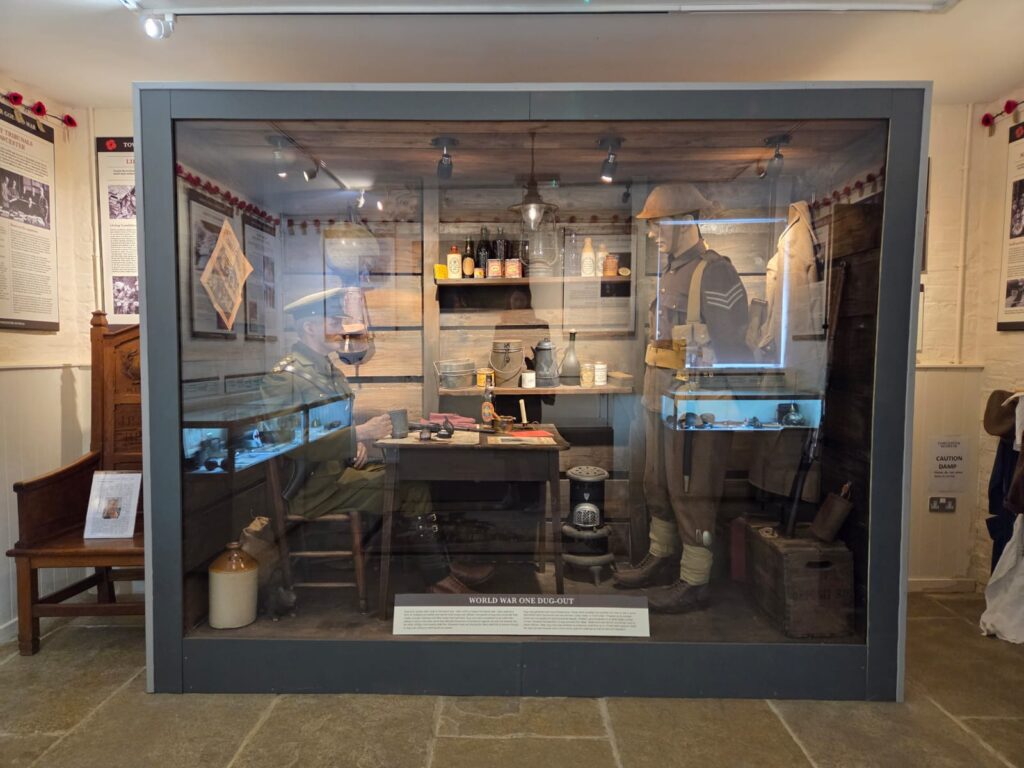
Overall, I like what the team at Towcester Museum have done with what I’m sure are modest means. The displays are a mix of artefacts and dioramas big and small, which illustrate each period well. There’s a video you can watch about the Battle of Watling Street (the one with Boudicca), and lots of information panels. Some are specifically for children, with a mouse character breaking information down into digestible chunks.
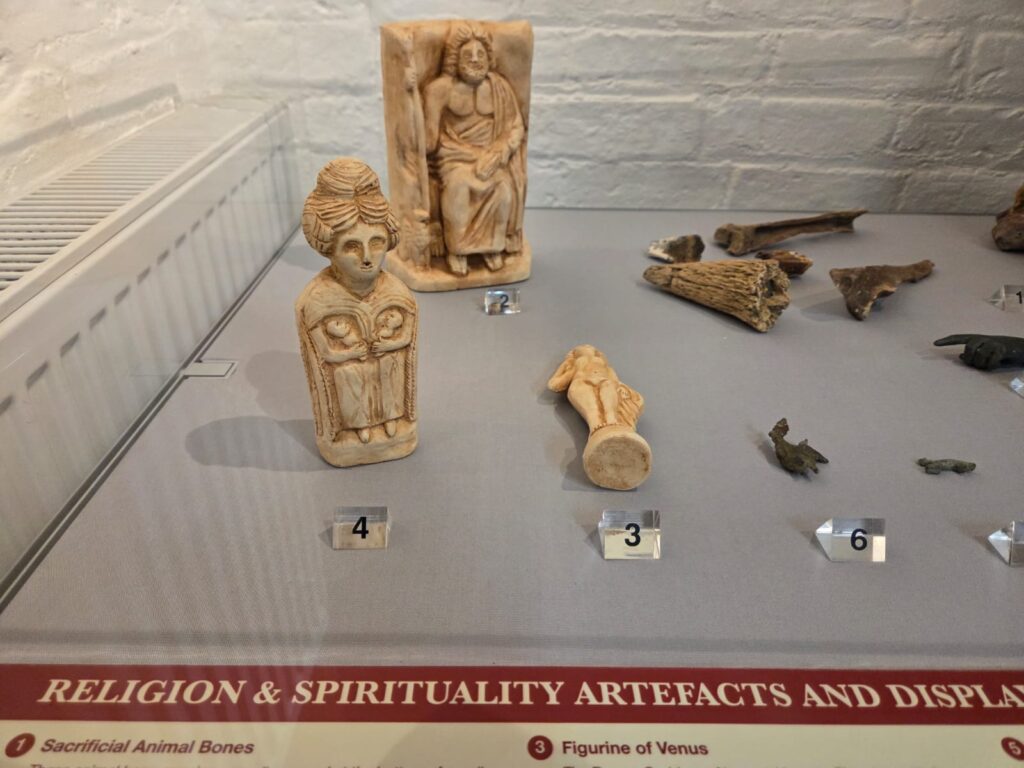
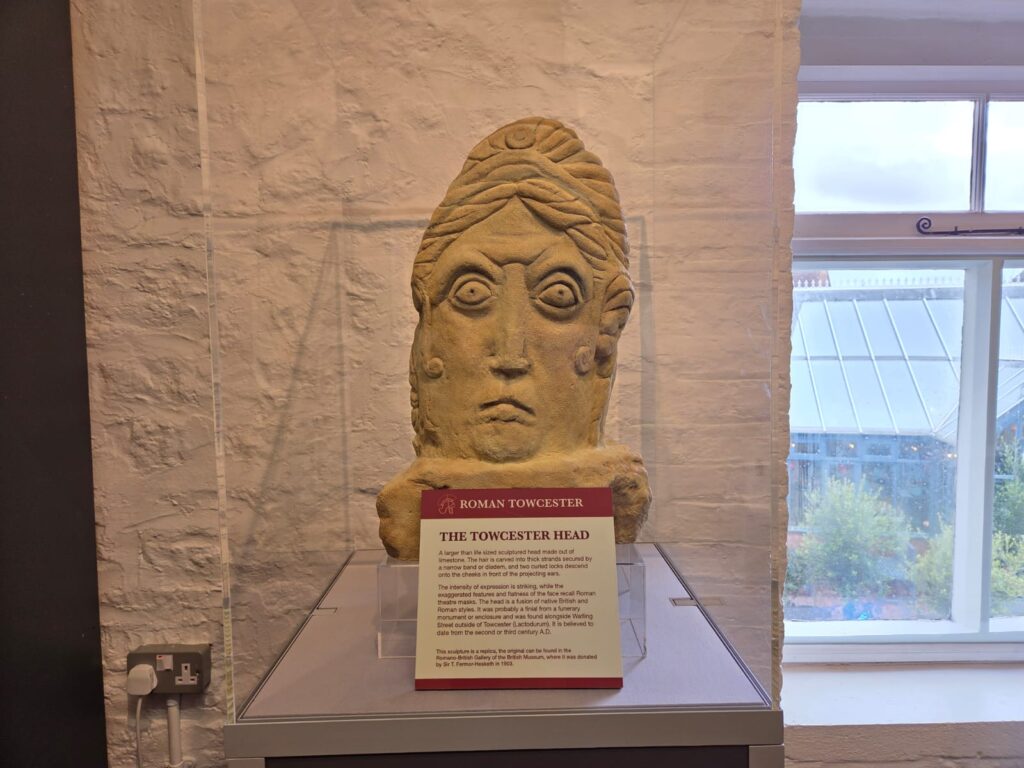
One thing I did think was a shame is that Towcester Museum is not the caretaker of the most important artefacts from Towcester. On a number of occasions I spotted that items were replicas, and not necessarily the sort of top-notch ones where you can hardly tell the difference. The quality of the carving of this famous Romano-British sculpture, for instance, is not that of the original in the British Museum. It’s not something Towcester Museum can necessarily help, but I did think of the Hawai’i exhibition I saw recently at the British Museum, and how valuable source communities there found it to work with objects on loan. Could source communities closer to home also benefit from this type of programme?
Don’t let me put you off, though. For those visiting Towcester, or local residents, this is a nice little museum. If you’re with kids, there are plenty of activities for them, including dressing up as figures from different periods. If you’re not with kids, perhaps this is a good breather between stops at inns and pubs, which are still of a frequency I feel Dickens would approve of.
Trending
If you see this after your page is loaded completely, leafletJS files are missing.