
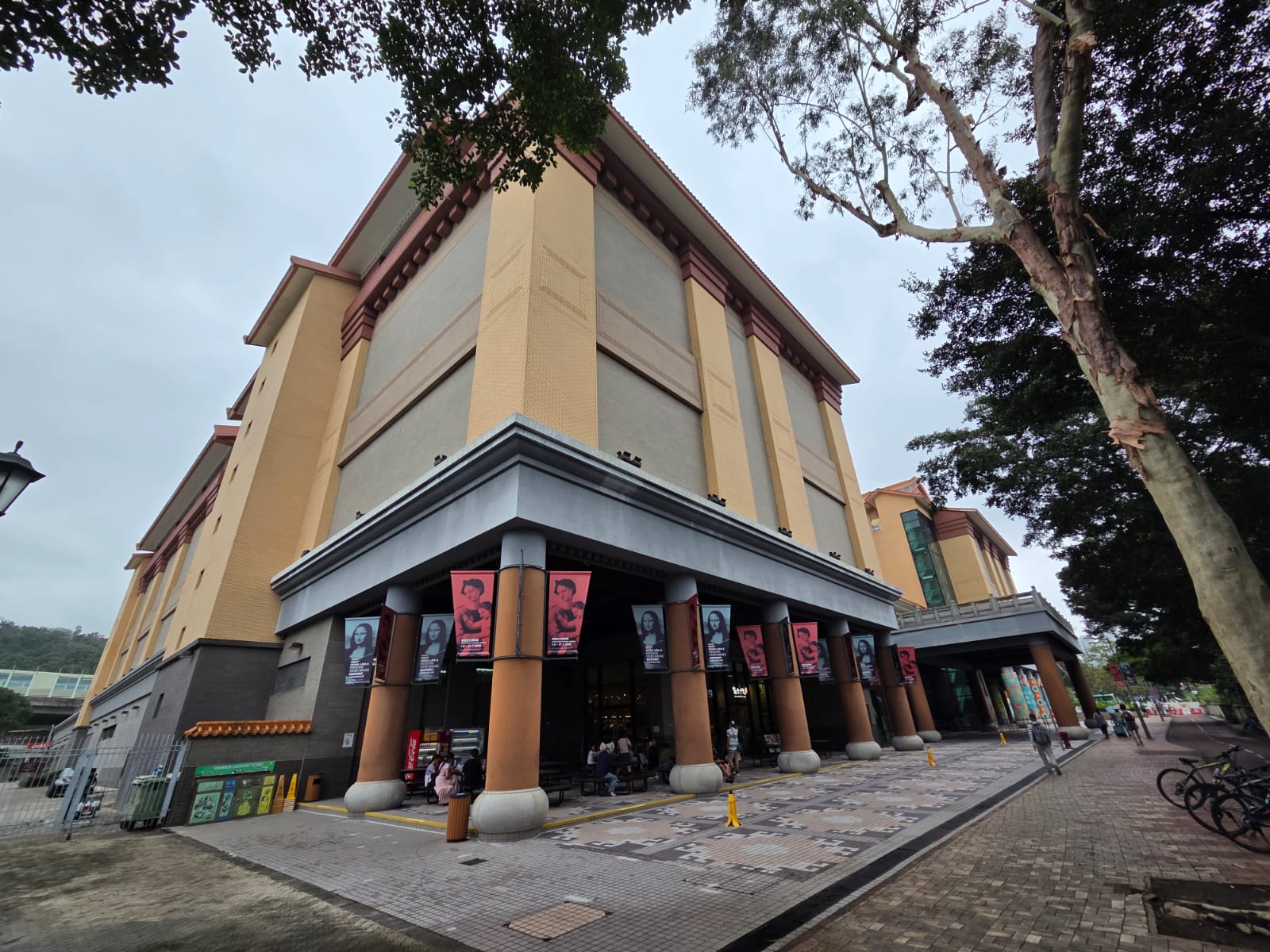
Hong Kong Heritage Museum
The Hong Kong Heritage Museum covers a broad range of topics that make this place so special.
A Final Day in Hong Kong – What to Pick?
I’ve already given you a teaser for this museum: we walked past it as I visited Sha Tin and went on to Ten Thousand Buddhas Monastery. It was a nice base for getting to know more of Hong Kong’s New Territories – I also recommend coming for an early lunch in the café. It is quite a departure from our last post, though, which was about M+. From one of Hong Kong’s newest museums, part of West Kowloon Cultural District, to a more established institution. And from contemporary art to heritage. I like all of these things (new and less new museums, contemporary art and heritage), hence fitting them all into my spare time during a week in Hong Kong.
I don’t really remember what it was that drew me here. I’d spent most of the week on Hong Kong Island, and fancied getting out for the day. And I had time – the definite benefit to a lot of European flights leaving Hong Kong late at night is that you don’t feel in a rush to get to the airport. I’d noticed at some point that the monastery (not actually a monastery, read more about it here) was within walking distance. And it wasn’t raining – a rare occurrence that week. So a plan started to form, in which I would head over to Hong Kong Heritage Museum and then stretch my legs a bit around Sha Tin.
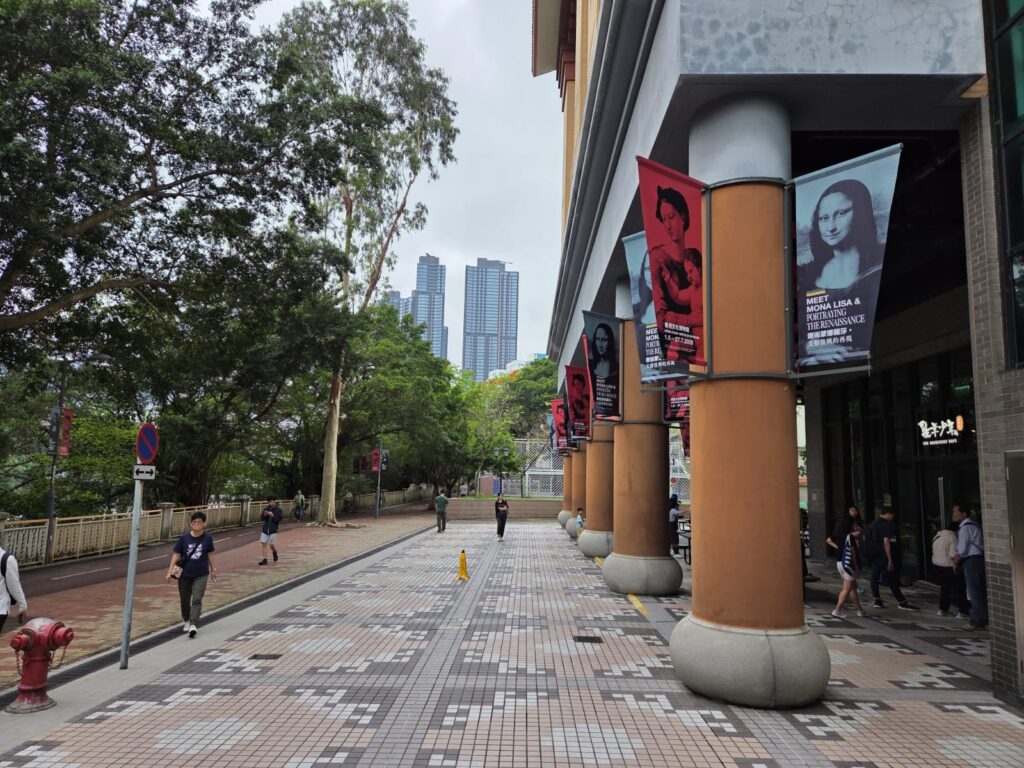
My visit to the museum itself wasn’t quite what I had expected when looking at it online. Well the first part was – a nice lunch in that café. I’d seen there was a temporary exhibition about the Mona Lisa, which I thought I would probably skip. What does it have to do with Hong Kong? But what I hadn’t counted on was that the Hong Kong Heritage Museum is free to visit. Including temporary exhibitions (or at least the Mona Lisa one). That does change things, actually. From “hmmm, not what I’m in Hong Kong for, I think I’ll pass” to “why not just pop my head in and see how they’ve put together an exhibition whose star is in the Louvre?”.
The Hong Kong Heritage Museum is, like M+, organised into exhibitions of different sorts. So, after a quick bit of background, we will look at the ones I visited. Which wasn’t all the ones on offer – I can appreciate exhibitions on visual artists and pop culture figures, but an exhibition on famous local journalist and novelist Dr Louis Cha was a bit too niche for me to appreciate.
Hong Kong Heritage Museum: A Brief History
The history of the Hong Kong Heritage Museum doesn’t go so far back in time. It opened in December 2000. It is not to be confused with the Hong Kong Museum of History (opened 1975), or the Hong Kong Heritage Discovery Centre (opened 2005). These other institutions also have various branch museums, of which I have only visited the Lei Cheng Uk Han Tomb Museum. The Hong Kong Heritage Museum’s branch museums are the Sheung Yiu Folk Museum (which I did consider going to on this trip, but decided against because it’s quite a long trip by public transport), and the Hong Kong Railway Museum. Sounds like I need a couple more trips to Hong Kong to get a full picture!
Anyway, back to the Hong Kong Heritage Museum. It is a public museum of history, art and culture, managed by the Hong Kong Government. A lot of the collection came through public donations, including a New Territories Relics Collection Campaign in 1993 which eventually grew to 20,000+ items. The museum also houses the collection of the Tsui Art Foundation, which had its own museum before closing in the 1990s.
It’s natural, then, for the museum to have different focuses within its galleries. Design firm Reich&Petch designed the original six permanent and six temporary exhibitions, of which a couple still remain. The museum has huge holdings of objects related to Cantonese opera, for instance, and this is a real highlight. Smaller donations and bequests have led to the creation of specialised exhibitions, for instance the one I mentioned on Dr. Louis Cha, also known as Jin Yong.
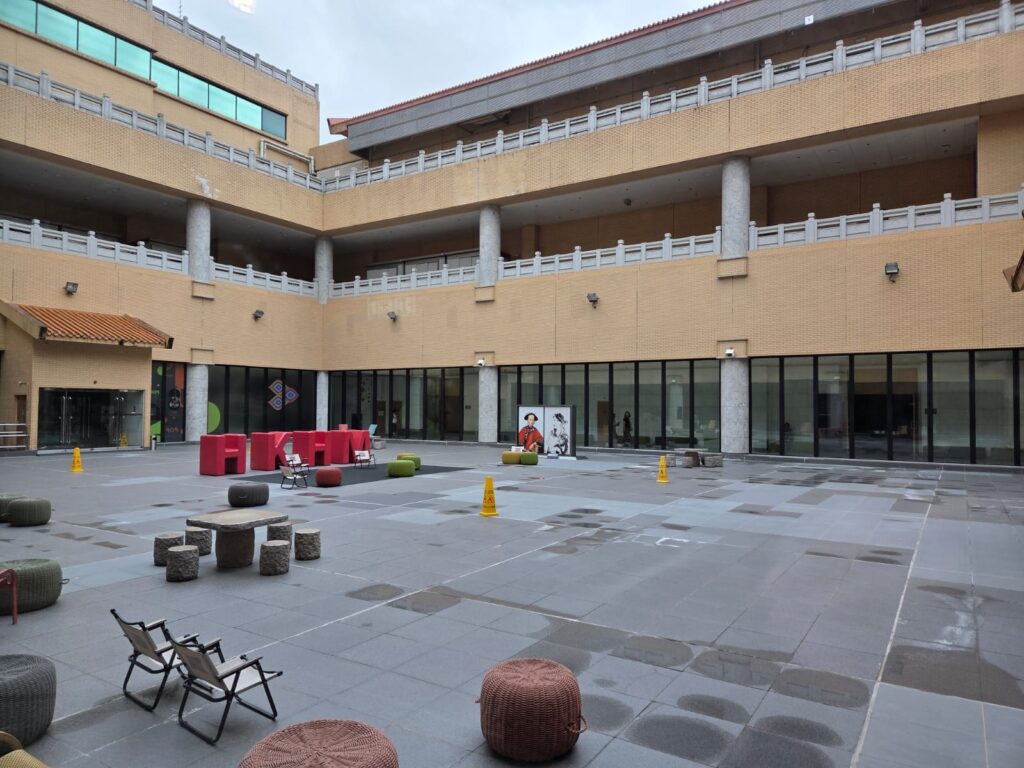
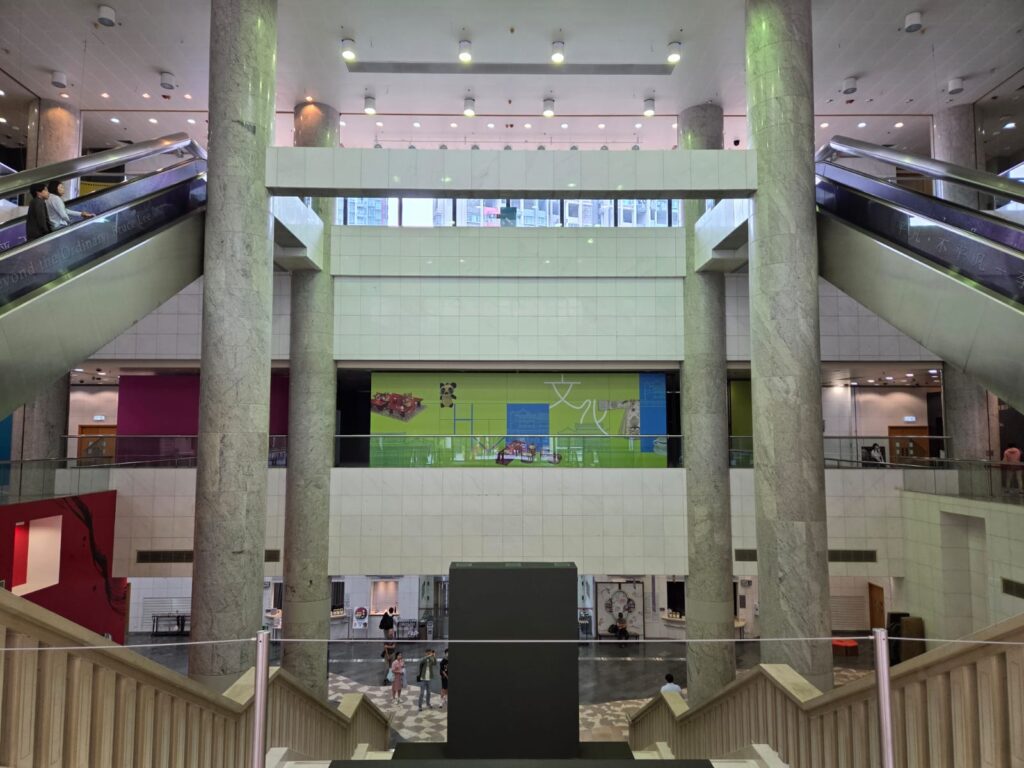
The Hong Kong Heritage Museum was for a long time the territory’s largest museum. I believe M+ has now surpassed it both in terms of overall floor space and exhibition space. But it is still a generous-sized museum, and includes a 350-seat theatre for talks and events. Really quite a considerable public resource for the people of Hong Kong!
Meet Mona Lisa & Portraying the Renaissance
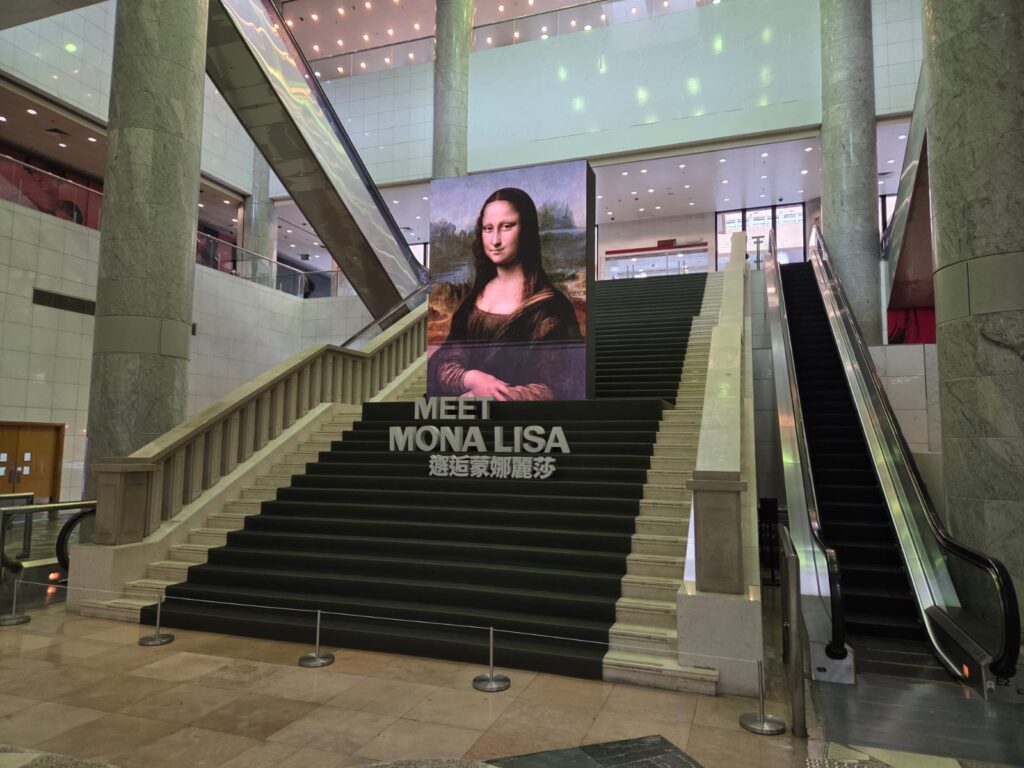
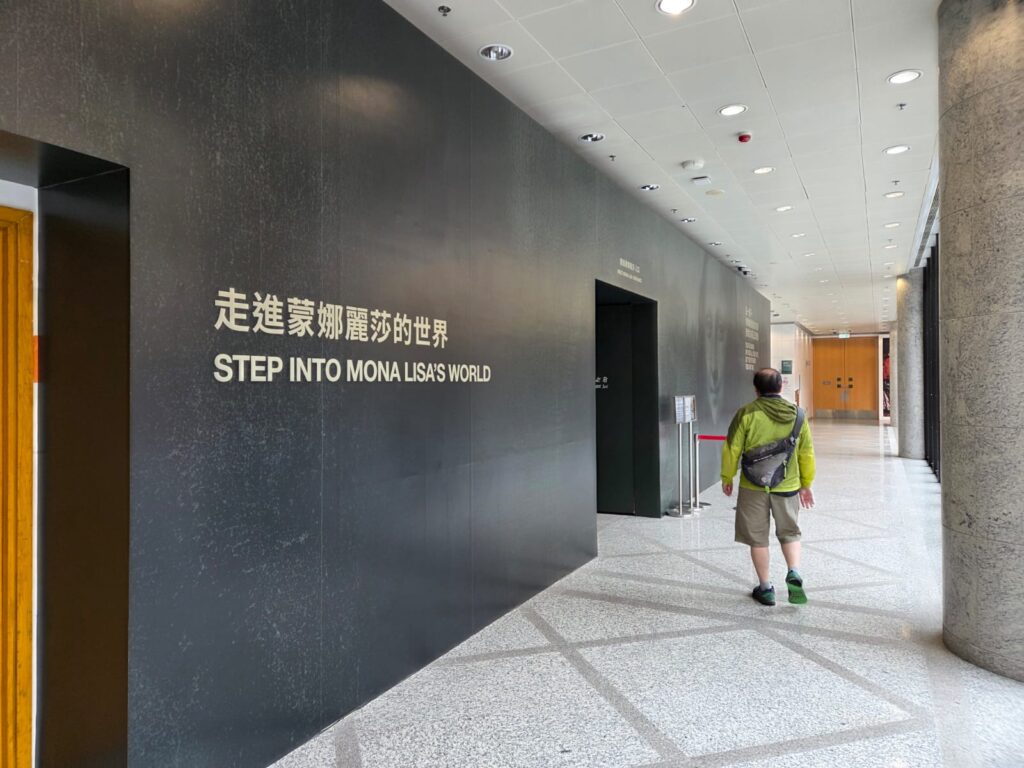
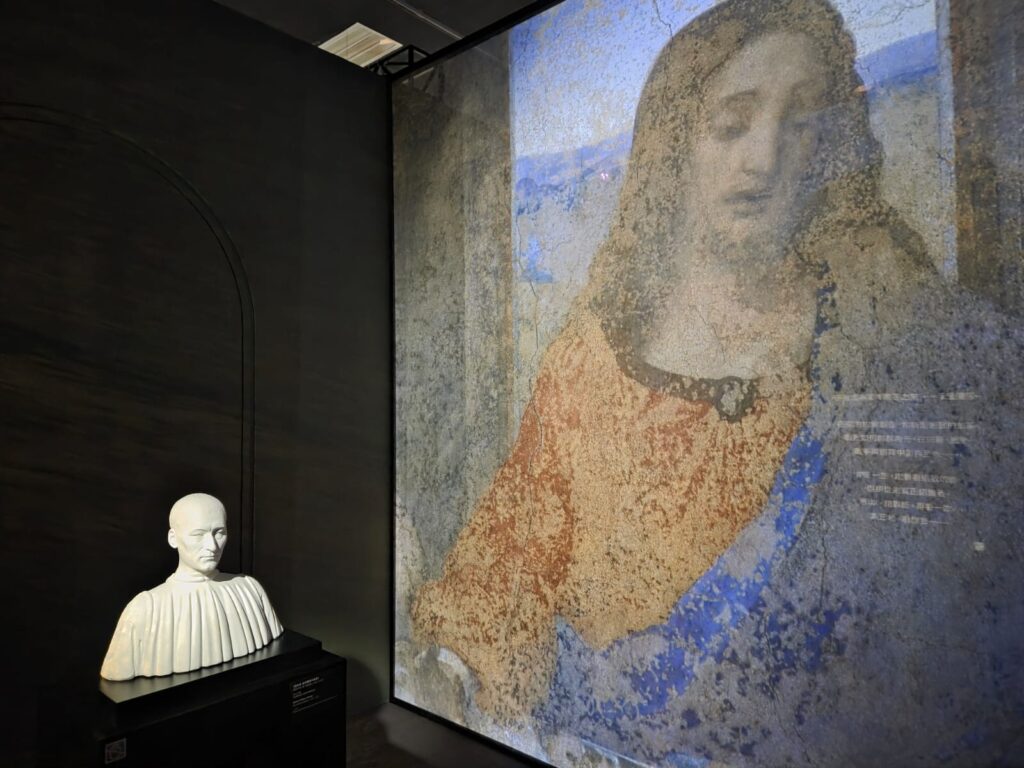
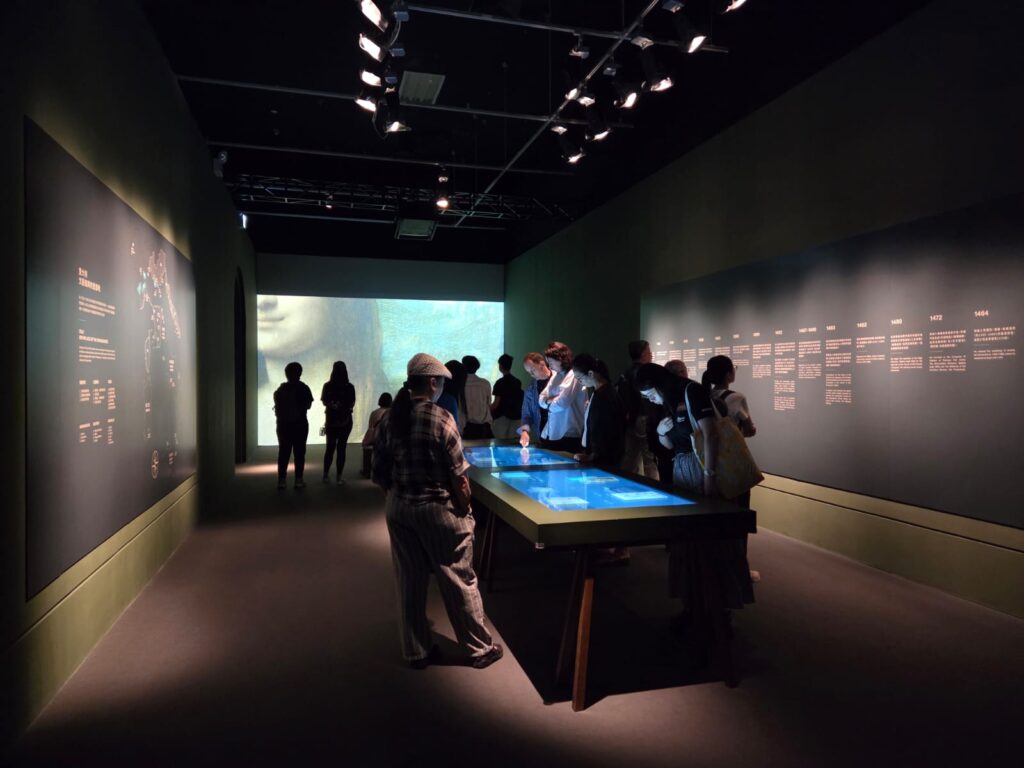
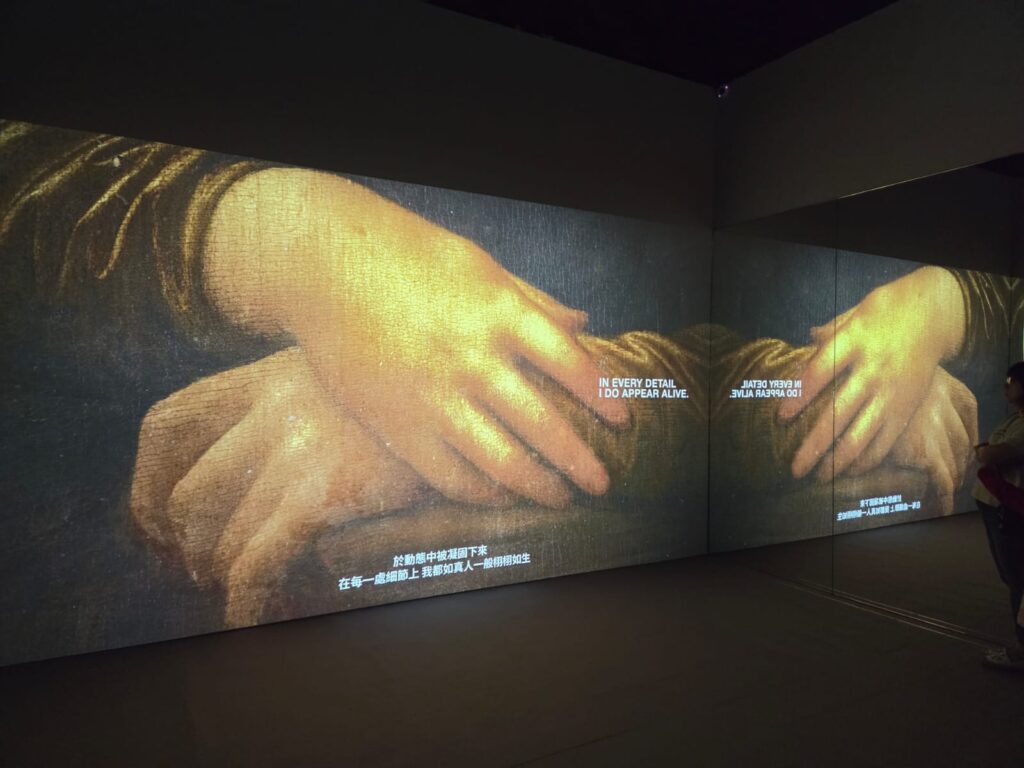
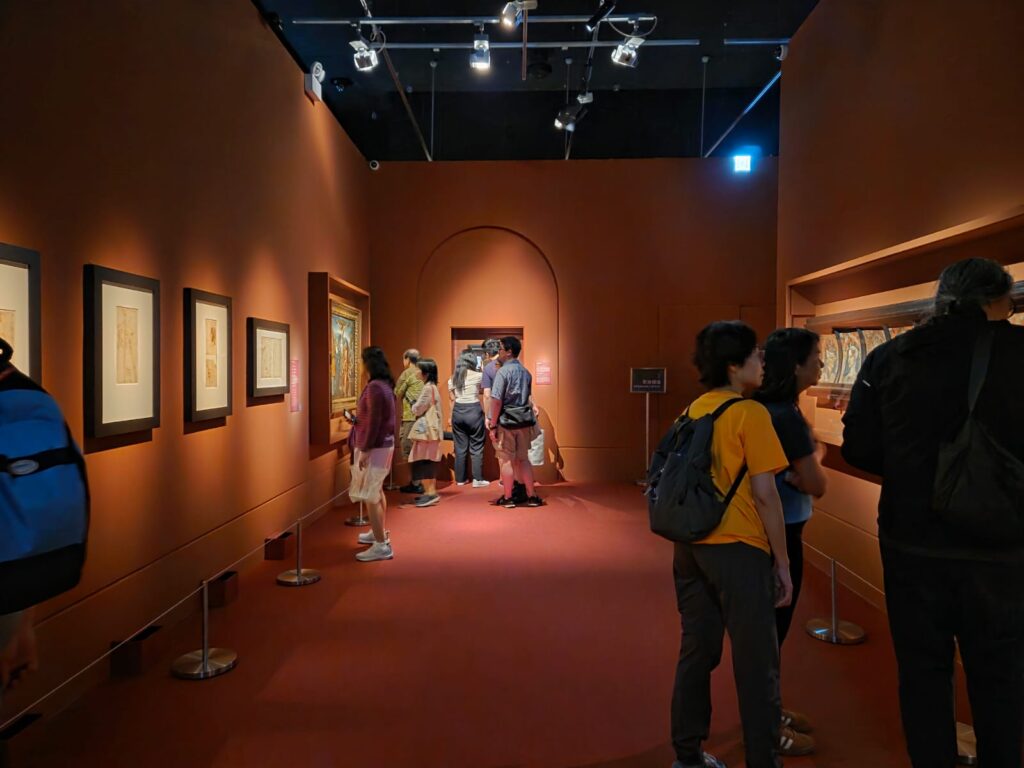
The main temporary exhibition when I visited the Hong Kong Heritage Museum was kind of a two-for-one. Or even a three-for-one – three gallery spaces are dedicated to Meet Mona Lisa, Portraying the Renaissance, and Step Into Mona Lisa’s World. The first of these is the main event. The exhibition uses digital media and interactivity to explore different themes relating to Leonardo da Vinci’s famous painting. We learn about the sitter, Lisa Gherardini, the evolution of the artwork, look in depth at what we can learn from the physical painting itself, and, ultimately, seek to understand why this painting has become so much more famous than its contemporaries.
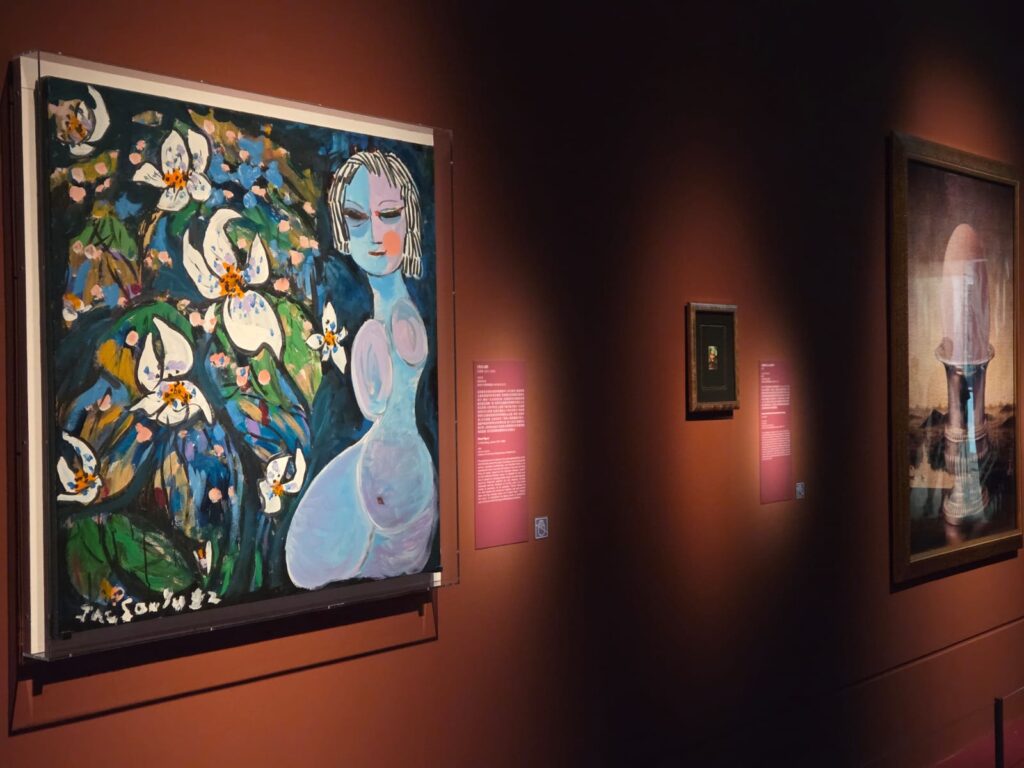
Some of those contemporaries form part of Portraying the Renaissance. Several artworks, most coming from the Musée National de la Renaissance in Écouen, France, provide additional context. We see examples of decorative arts, paintings, sculpture, manuscripts, and prints. The final section of this display brings modern and contemporary art into the mix with a selection of works from the Hong Kong Heritage Museum collection which in some way echo the techniques, subjects or compositions we have just learned about.
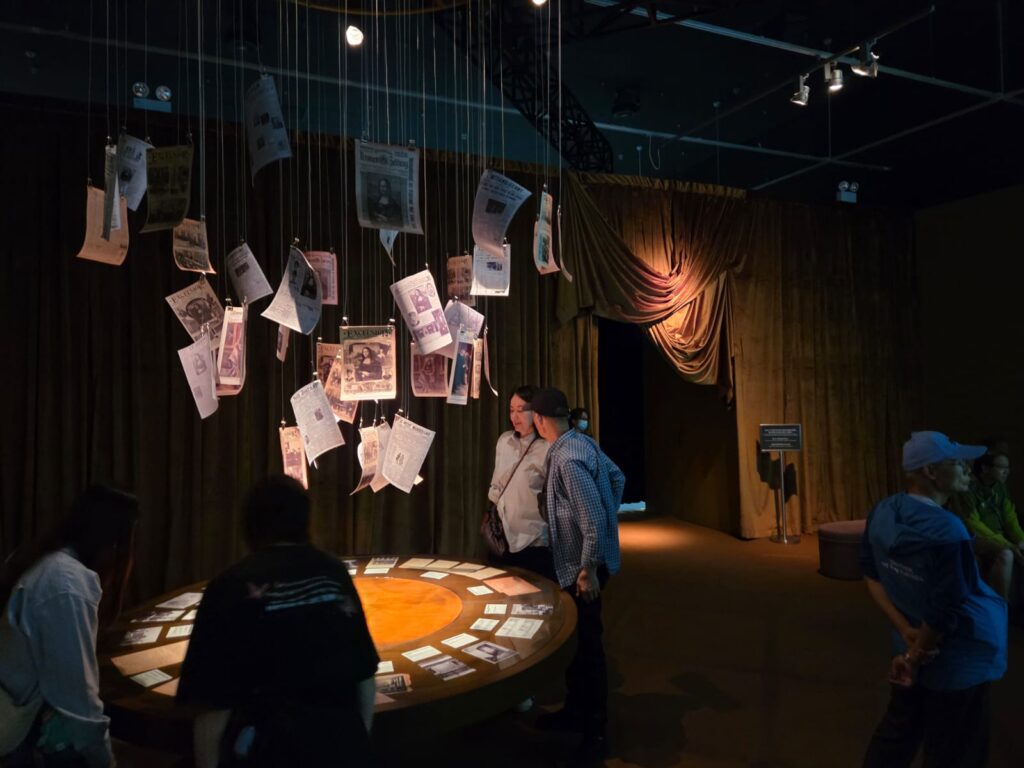
Step Into Mona Lisa’s World seems to be secondary to the other two elements. It is nonetheless the most playful section of the exhibition. We learn about the famous theft of the Mona Lisa in 1911, as well as having an opportunity to create our own version of the work, or take a commemorative photo. A final immersive room contains projects of different artistic homages to da Vinci’s enigmatic work.
After initially being a bit dismissive, I ended up rather liking this exhibition. It was part of French May Arts Festival 2026, and certainly brought a little French flavour to Hong Kong. My favourite element was an interactive table-style display. By placing a loupe on certain spots you could highlight different details of the painting. It took a staff member to help people successfully use the technology so could perhaps have been more intuitive, but it was definitely fun.
Meet Mona Lisa and Portraying the Renaissance ended on 27 July 2026.
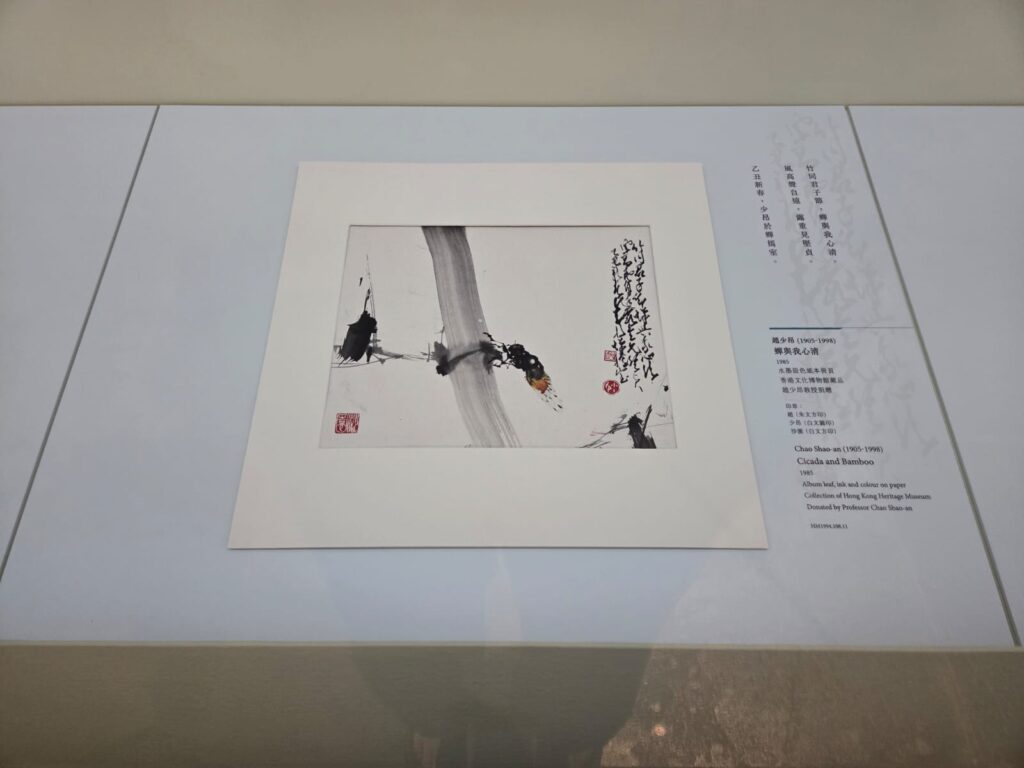
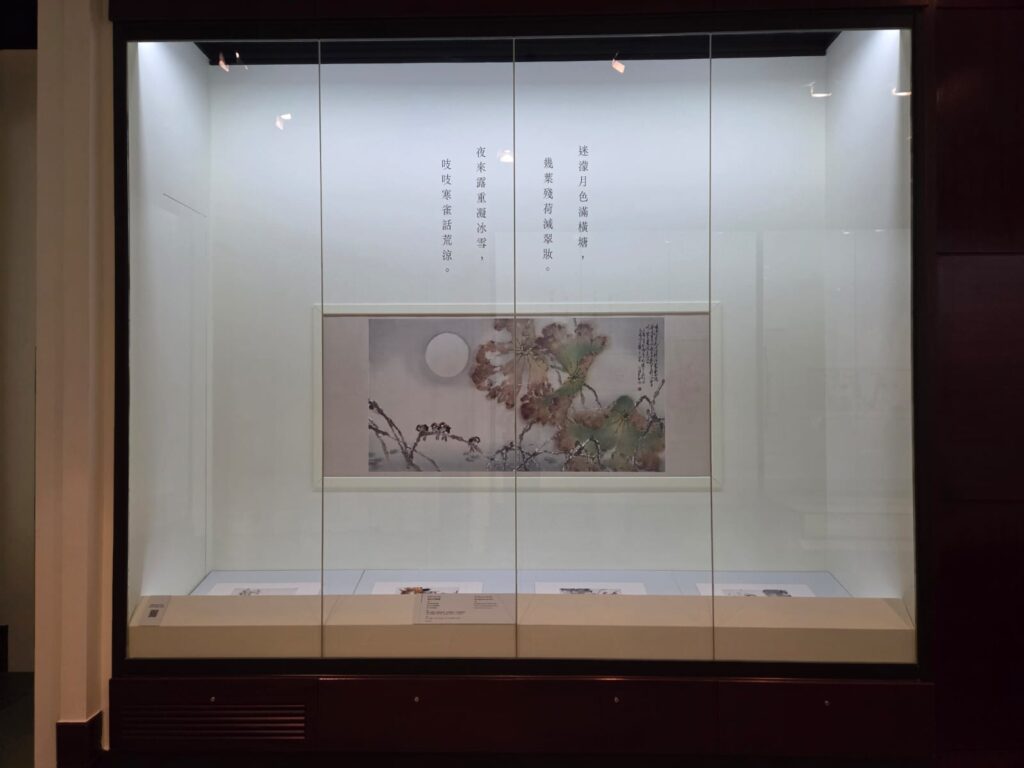
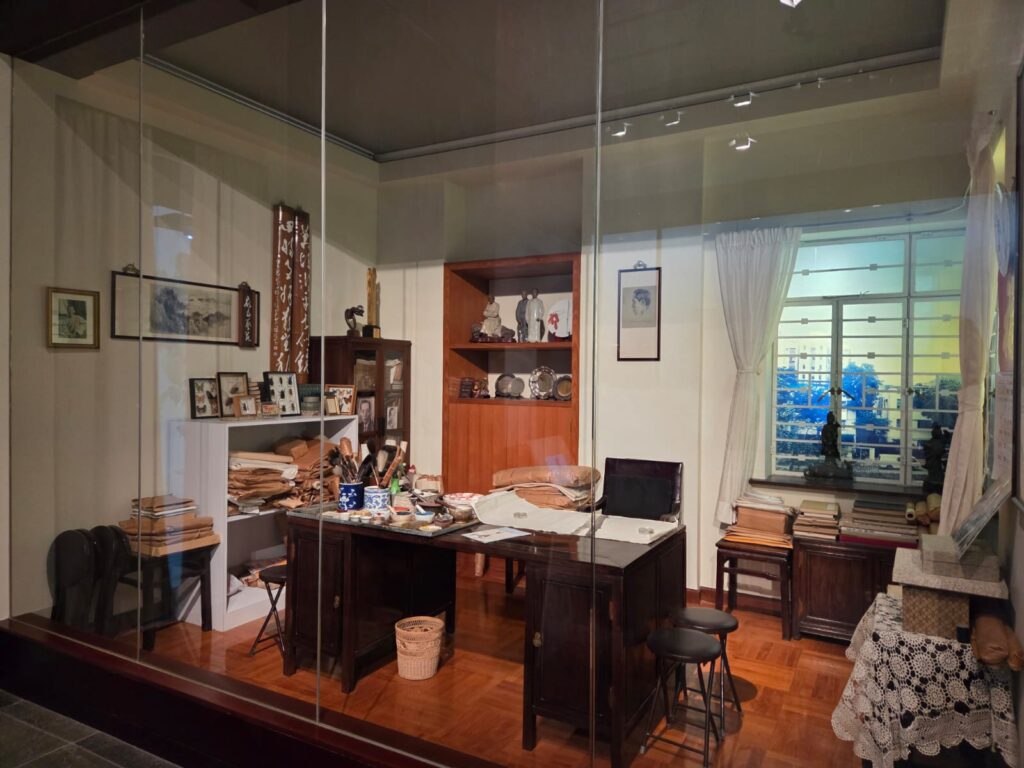
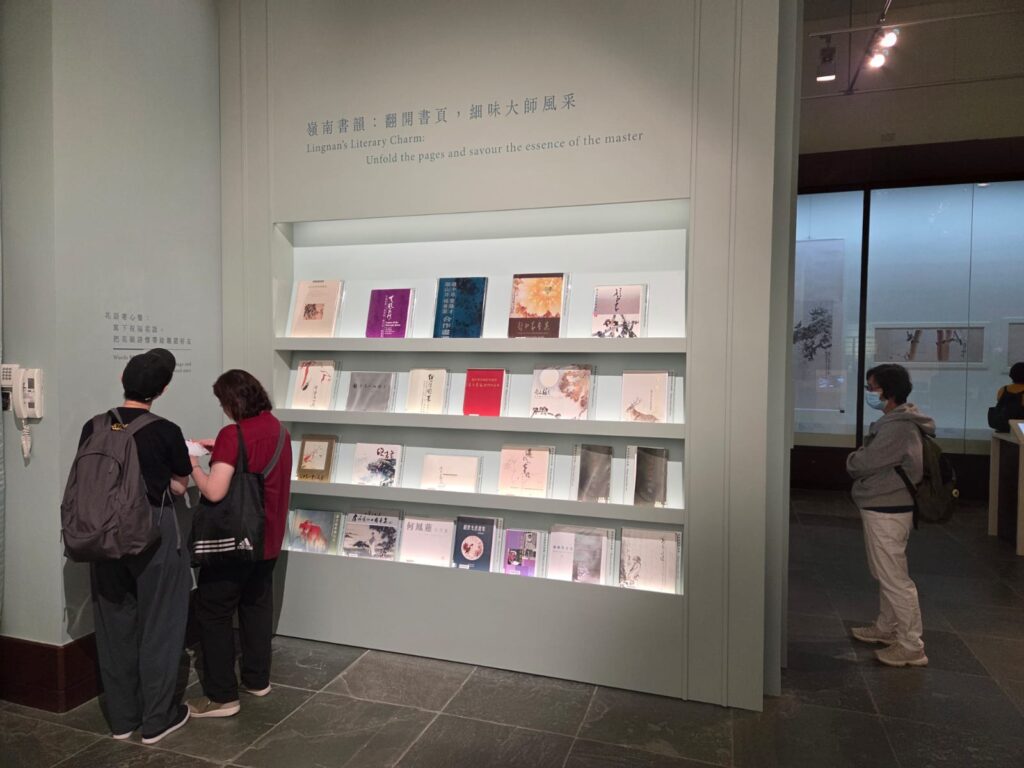
On Flowers: Selected Paintings and Poems by Chao Shao-an
This next exhibition was a real change of pace from all the Mona Lisa and Renaissance focus of the first. Its subject is Chao Shao-an, a master of the Lingnan School of Painting. What is that, you ask? The Lingnan School of Painting was founded around the turn of the 20th century by brothers Gao Jianfu and Qifeng, and Chen Shuren. The movement aimed to modernise Chinese painting by learning from other traditions. The three artists thus travelled to Japan, and also studied Western perspective and use of colour. Their “New National Painting” gained popularity, and they exhibited work internationally as well as teaching students.
One of their students was Chao Shao-an. A disciple of the Gao brothers, Chao gave himself ample opportunity to study different art styles by living in Hong Kong, Macau, New Zealand and Portugal as well as his native China. He set up the Lingnan Art Academy in Guangzhou and later Hong Kong, and participated in international exhibitions, winning a gold medal in the World’s Fair in Belgium in 1930. He was a Professor of Fine Arts at Guangzhou University, and lectured at Harvard and the University of California.
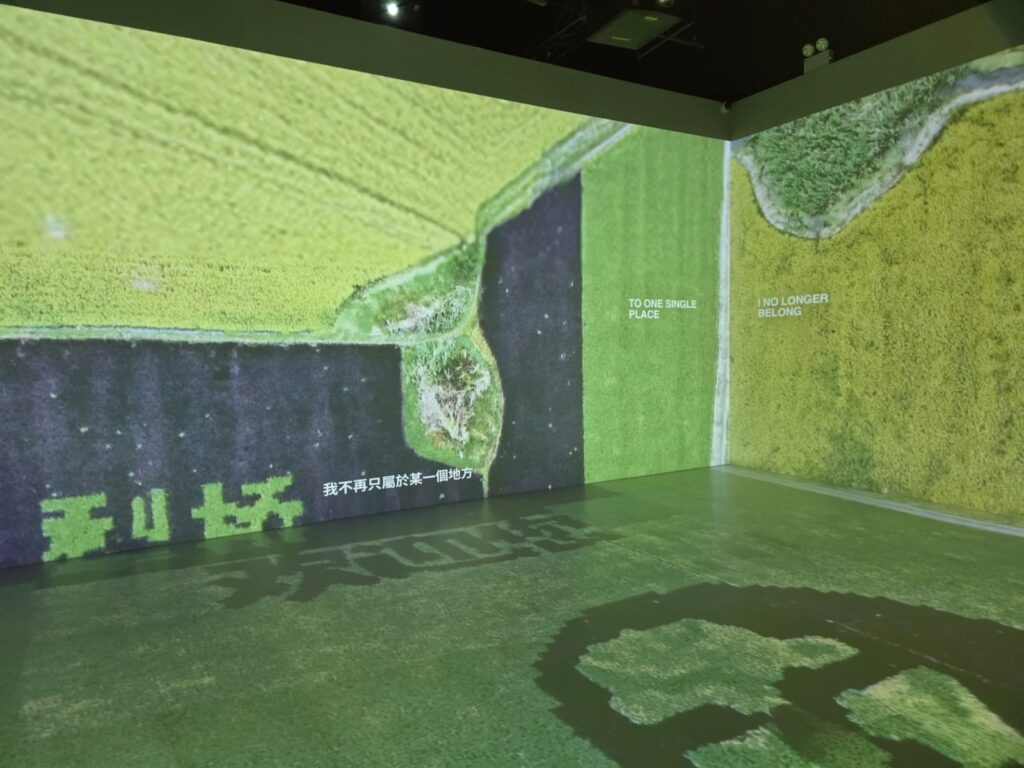
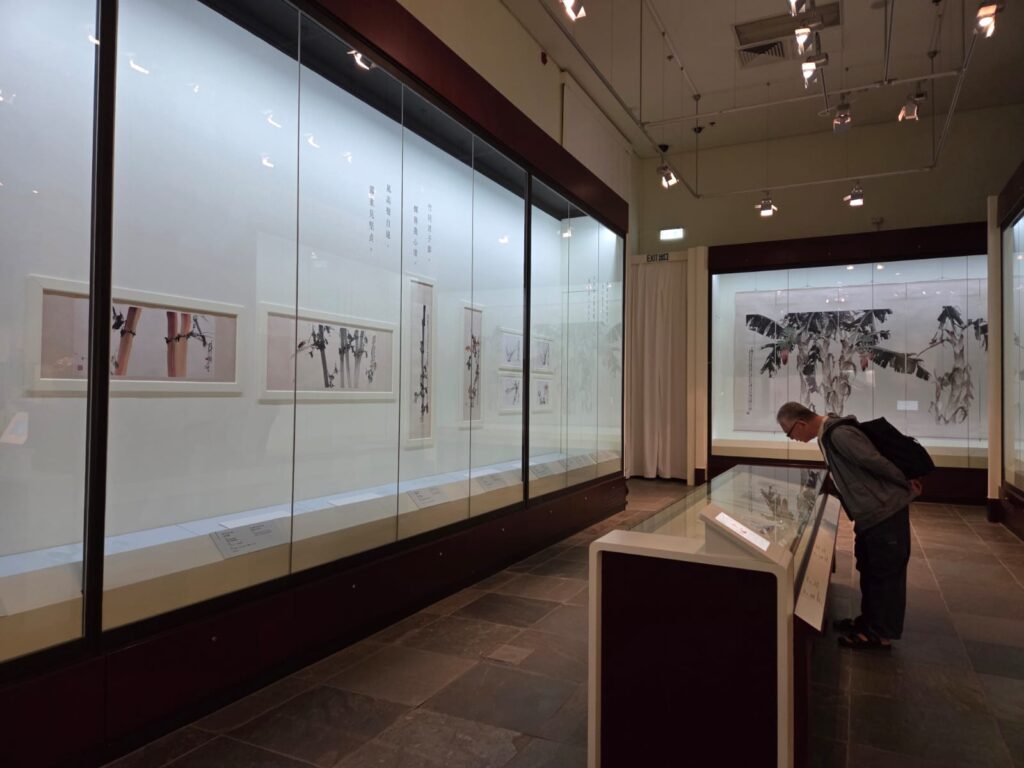
Chao Shao-an was a keen observer of nature, and famous for his paintings of flowers and plants. He imbued his representations of flora with emotion rather than prioritising authenticity. He often inscribed his own poetry onto the paintings. The Hong Kong Heritage Museum exhibition brings together more than thirty of his paintings. They are displayed very simply, which allows visitors to appreciate the beauty of the works. In addition, there is a multimedia work by Hong Kong artist Thomas Siu which brings the paintings to life, a recreation of the artist’s studio, and a small library. A great place to learn about this artistic school, and the key proponent who was also an important figure in Hong Kong’s artistic scene.
On Flowers: Selected Paintings and Poems by Chao Shao-an is an ongoing exhibition.
Hong Kong Pop 60+
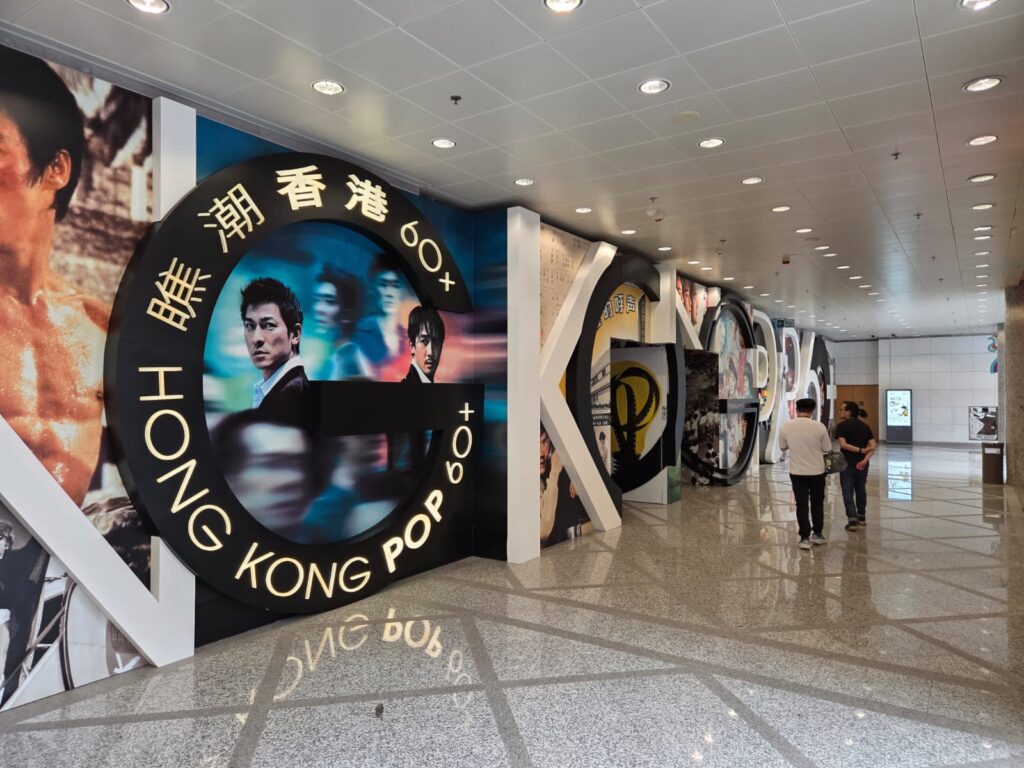
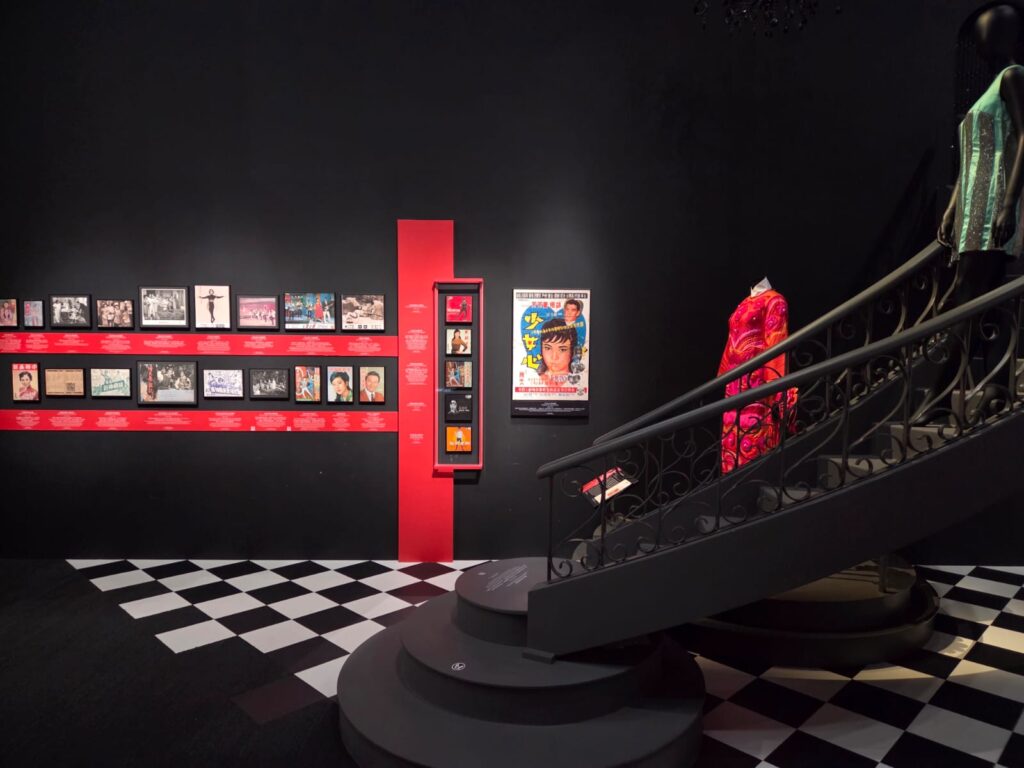
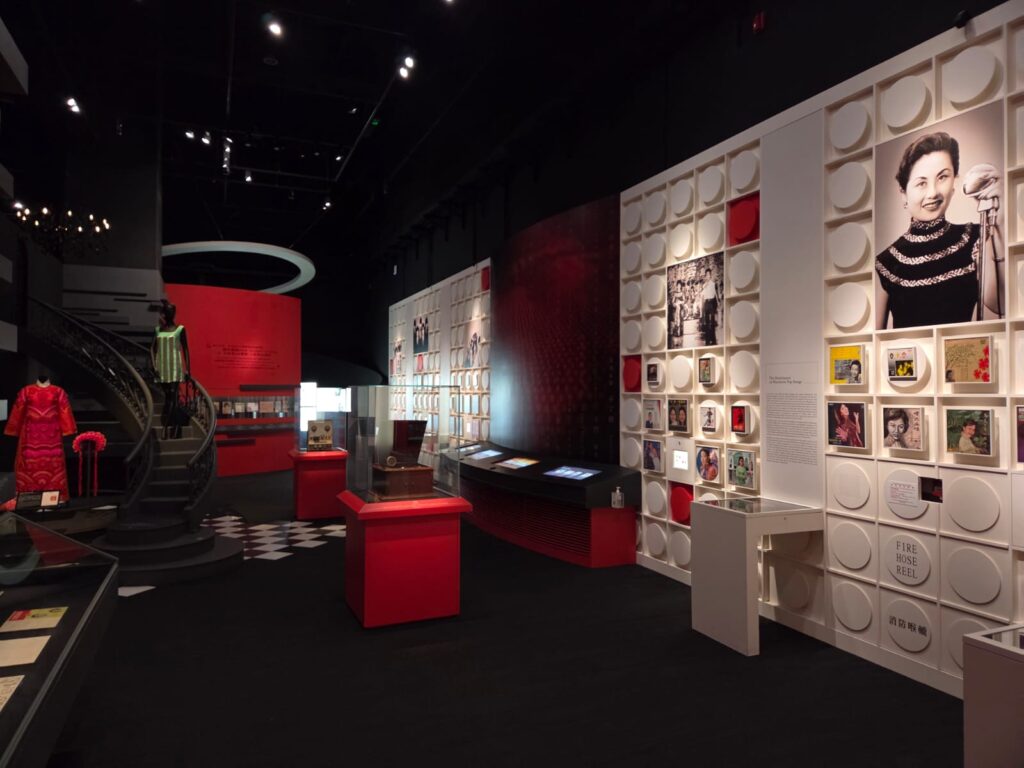
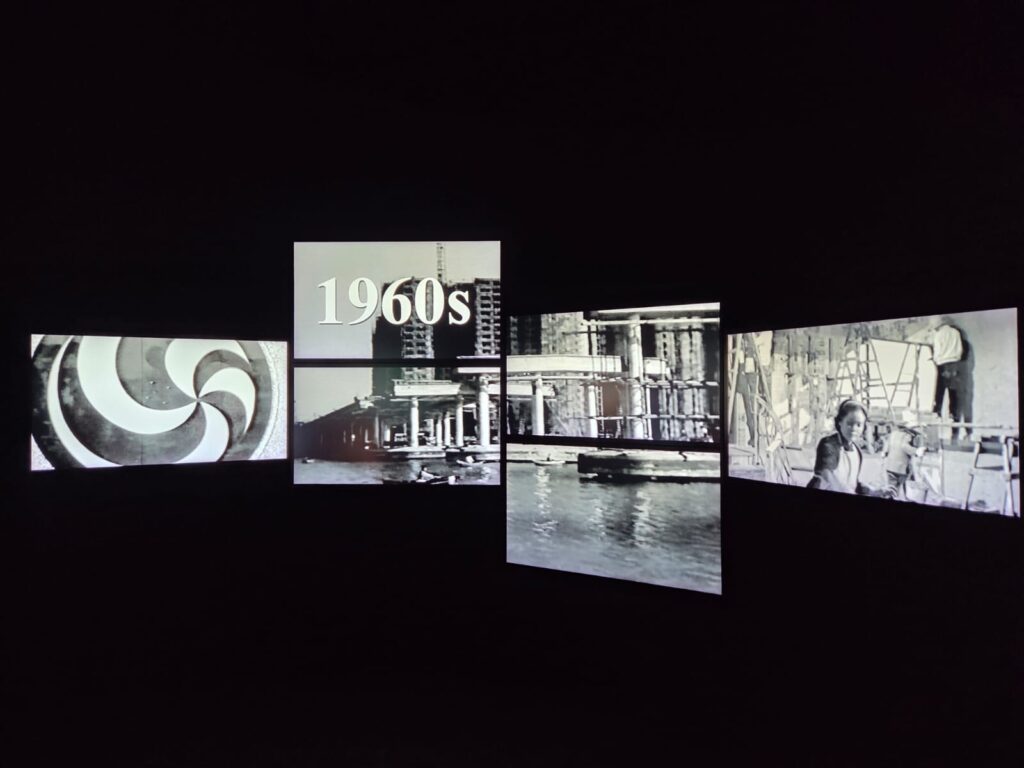
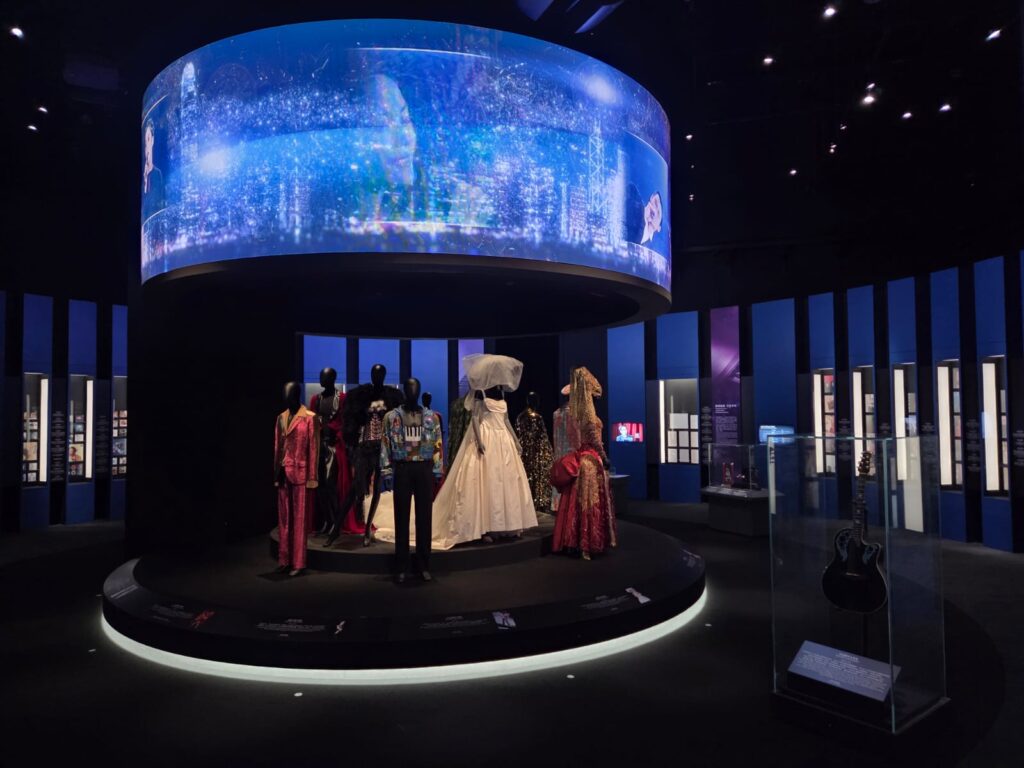
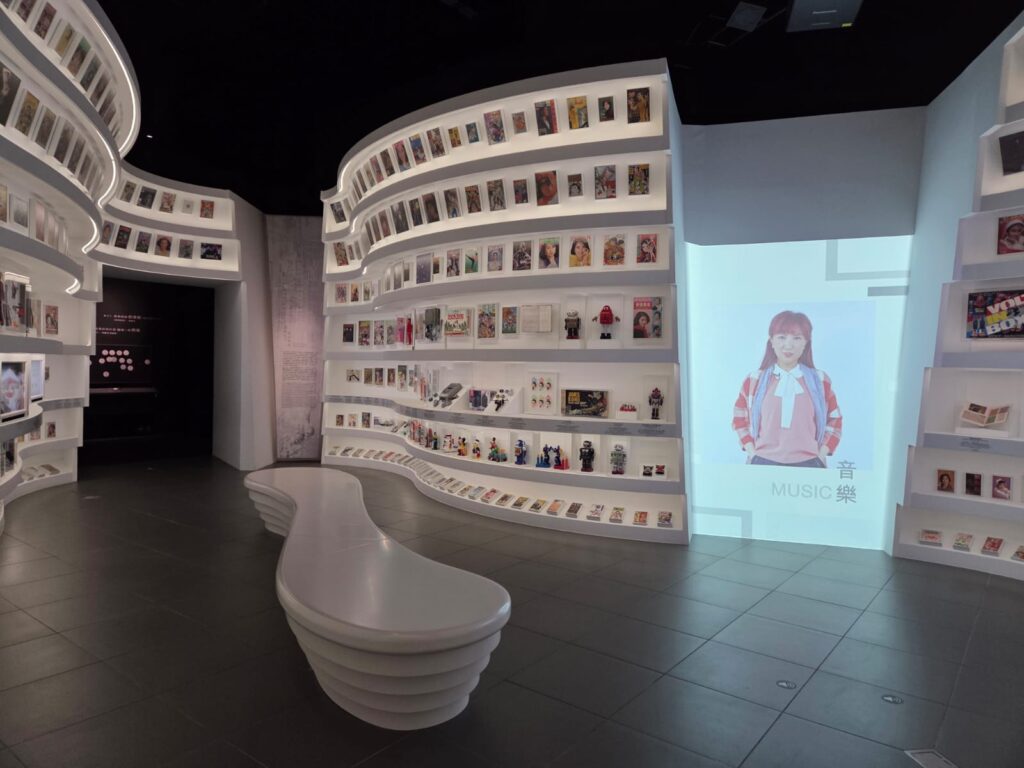
Another change of pace now, as we enter Hong Kong Pop 60+. From what I’ve read, this exhibition replaced an earlier one which focused on the New Territories. I would have been interested to see that too, but Hong Kong Pop 60+ is a well-designed and engaging exhibition. It explains how Hong Kong’s geographical position and political situation led it to become an international, East-meets-West city, where pop culture thrived.
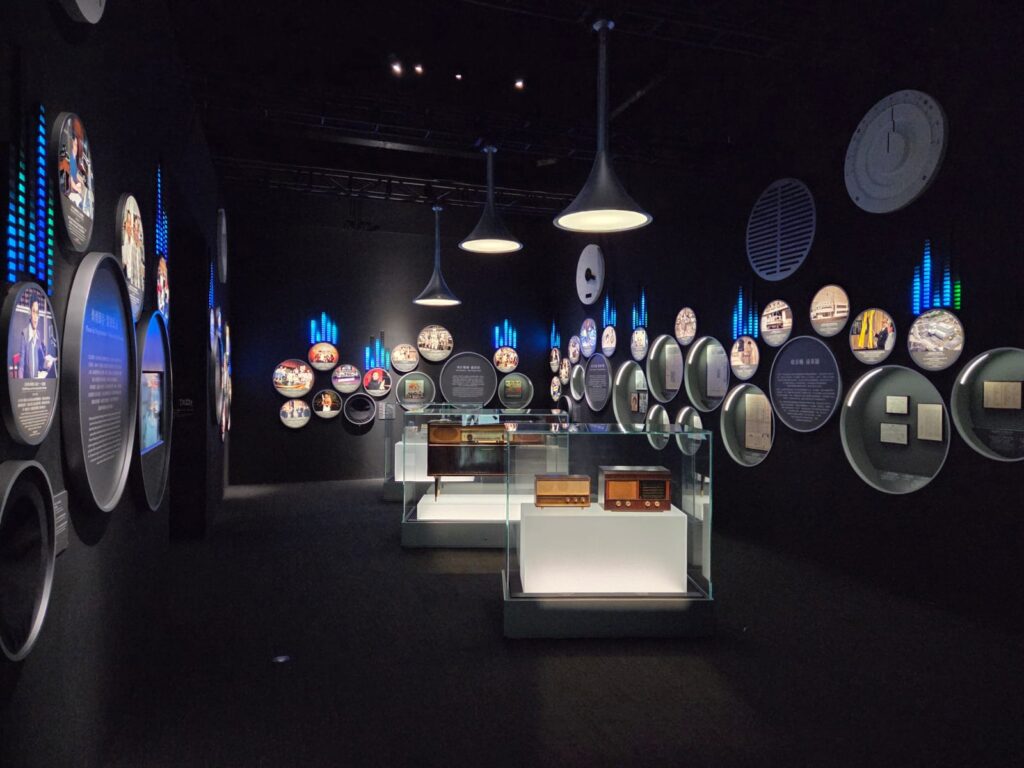
The exhibition spans music, film, television, and also radio, toys, and comics, from the end of WWII to the early 2000s. More than 1,000 objects are grouped thematically and chronologically, with really striking exhibition design. There are multi-media elements, which really helps to bring the topic to life. Hearing the operatic influence in early pop music, for instance, creates a real contrast with stars like Roman Tam or Frances Yip in later years.
A lot of the specifics of this exhibition were new to me. What I did appreciate was the sense of love and nostalgia for Hong Kong’s pop culture. I can only imagine the memories it must bring back for those who grew up here. As an outsider, the bold displays and simple texts taught me a lot, from a myriad of names and faces, to the way that many herbal tea shops subscribed to the first commercial radio stations as a way to attract customers.
Hong Kong Pop 60+ is an ongoing exhibition.
Cantonese Opera Heritage Hall
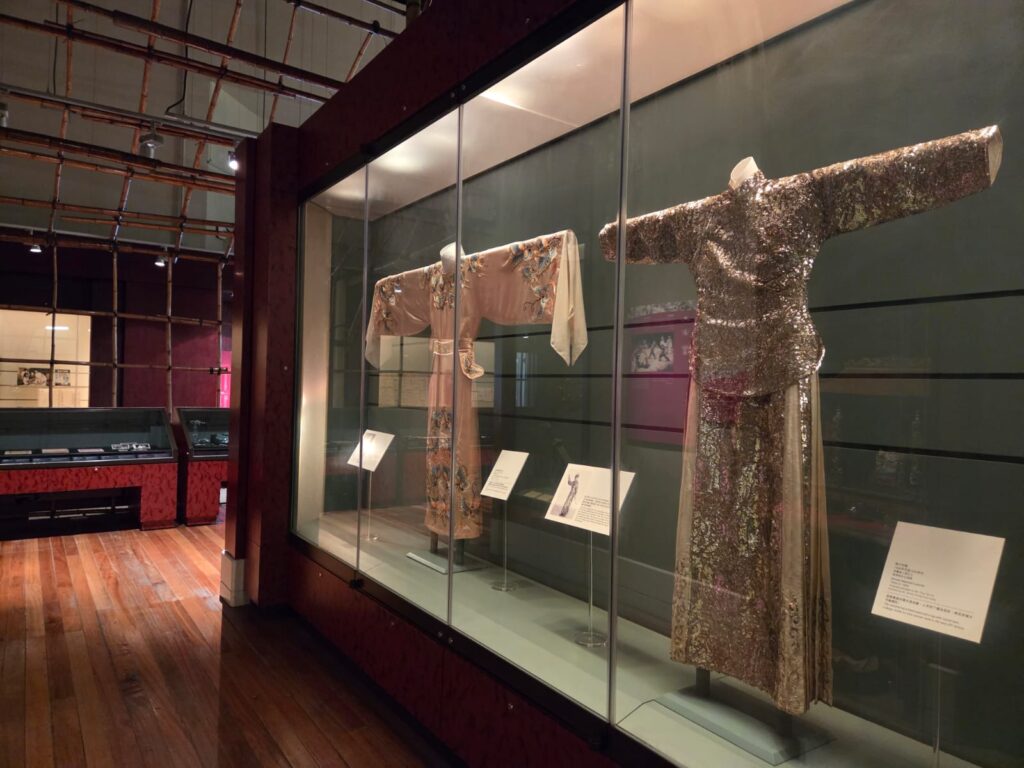
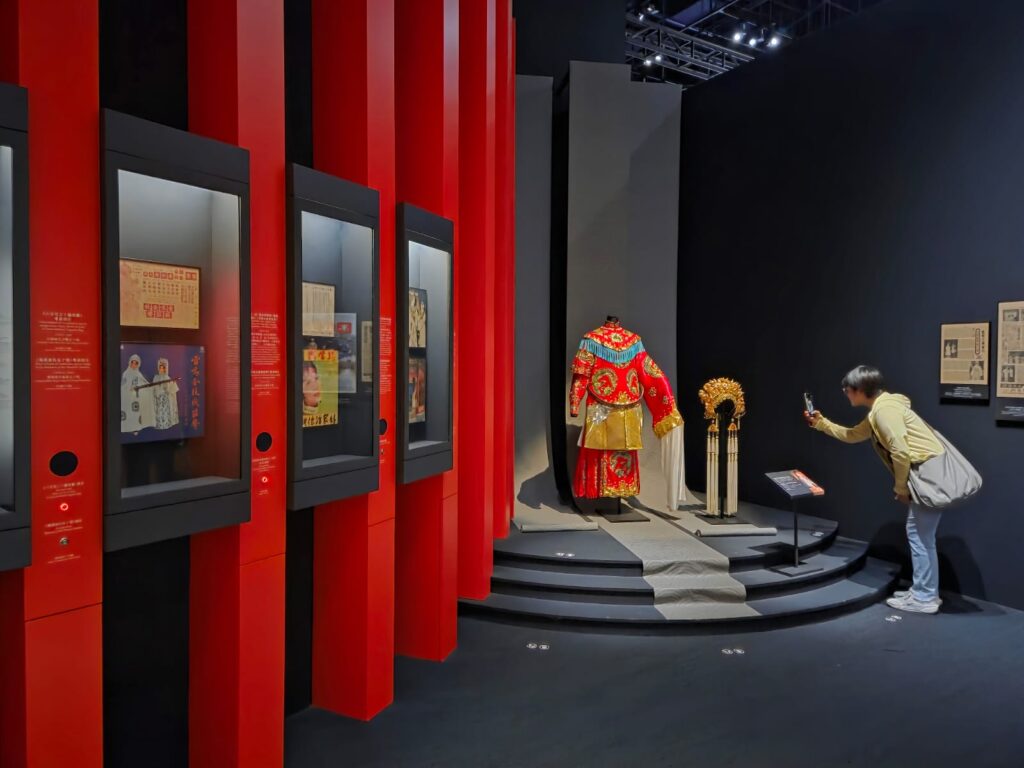
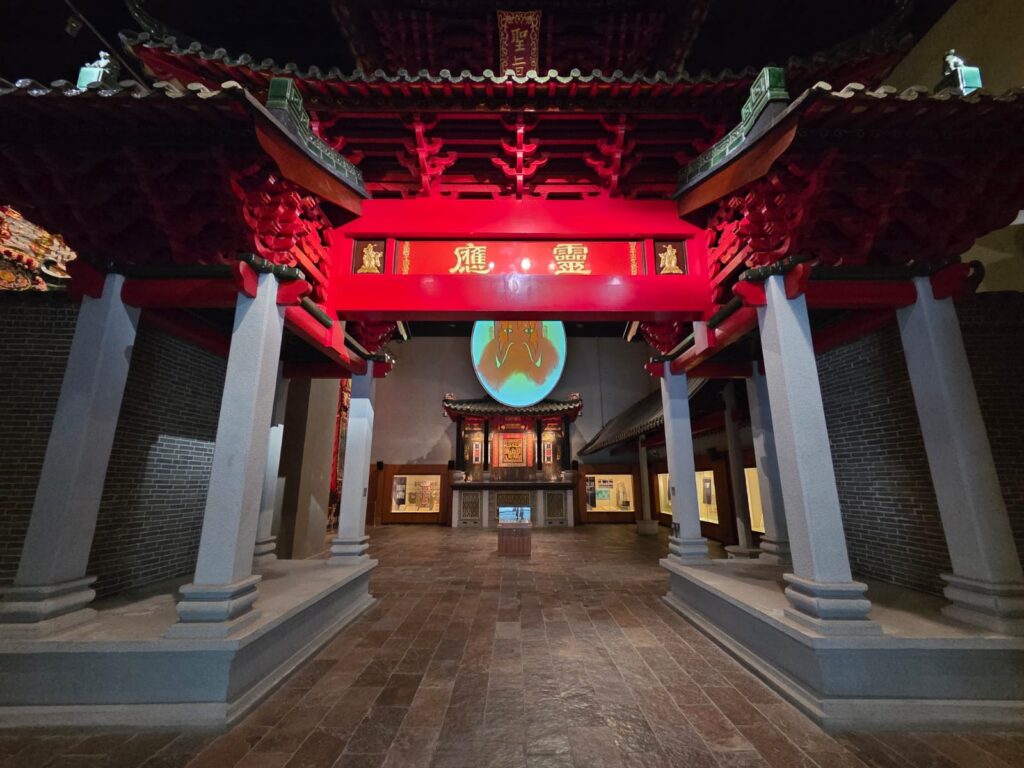
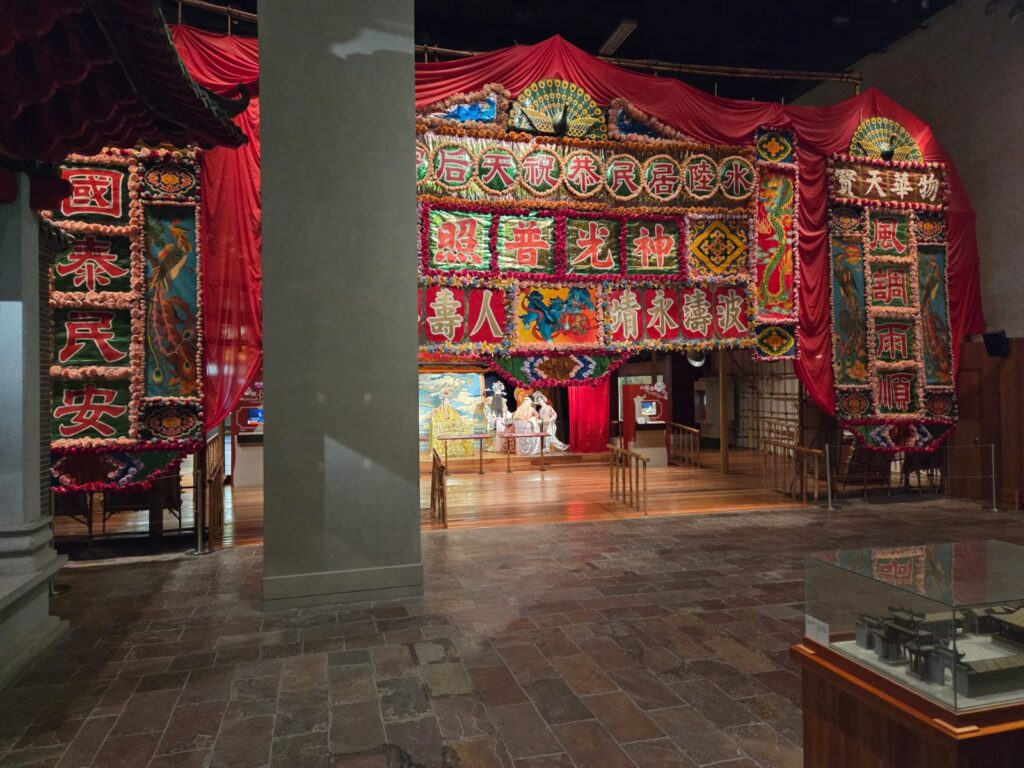
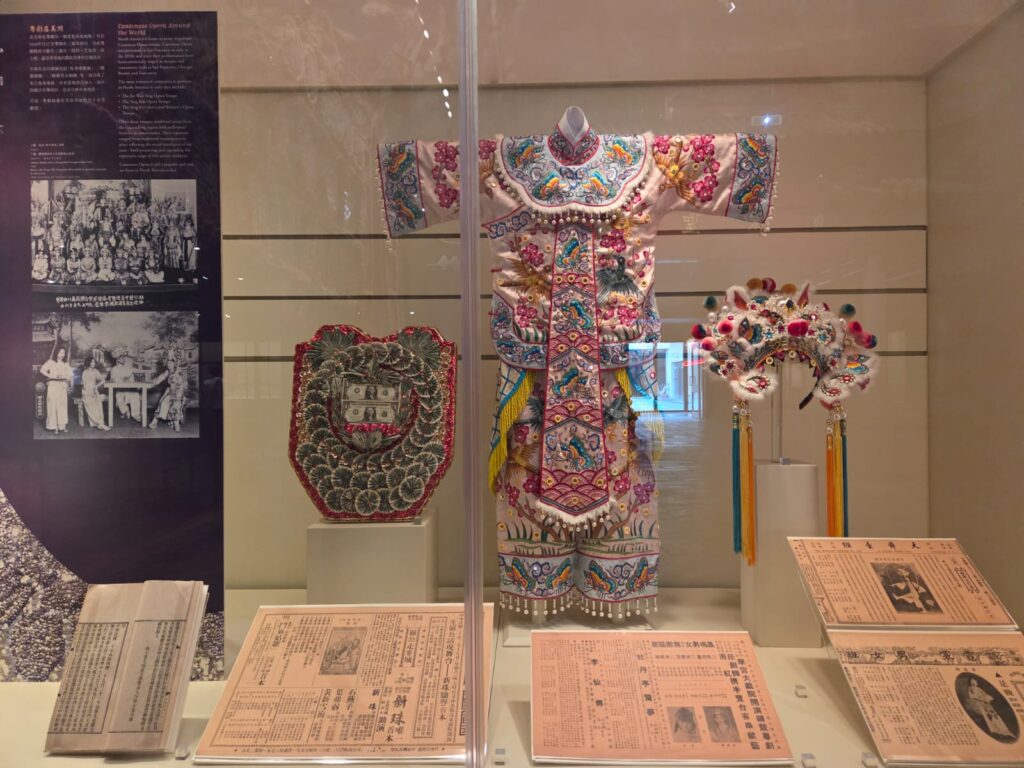
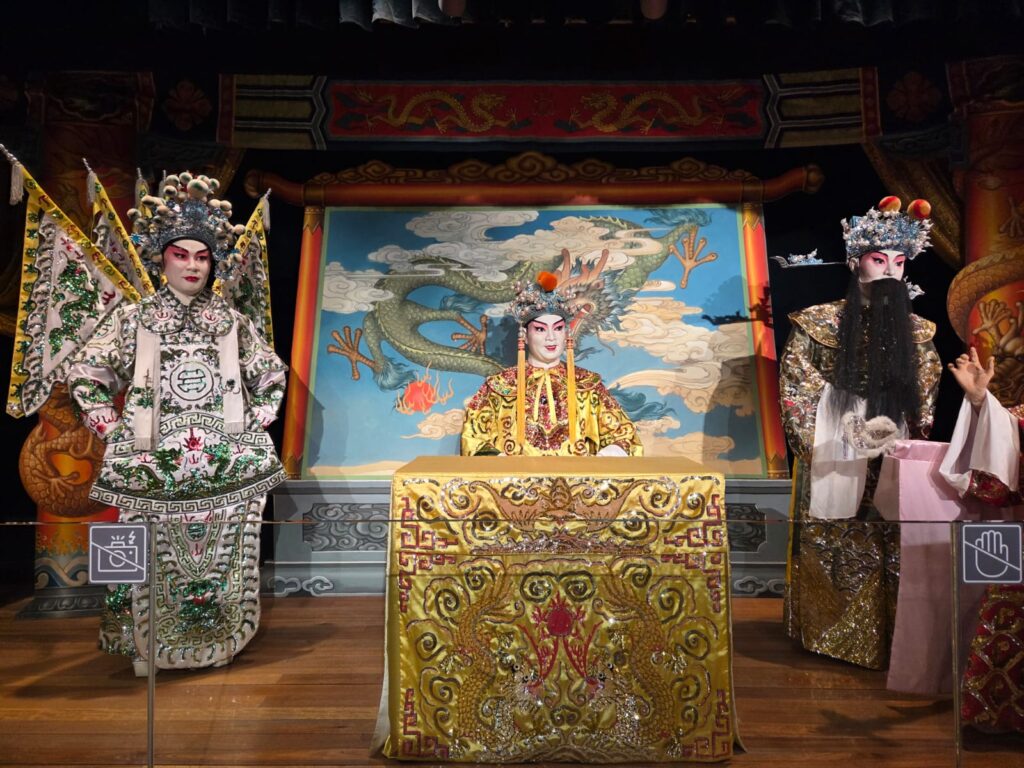
Now this exhibition is a real highlight of the Hong Kong Heritage Museum, for local and international visitors alike. Cantonese opera originated in Guangdong Province in China. It combines music, singing and acting with acrobatics and martial arts. Until the 20th century, female roles were performed by men – much like theatre in Shakespearean times. A centuries-old art form, Cantonese opera is part of traditional celebrations in Hong Kong, for example the temporary bamboo opera sheds we saw on Lamma Island ahead of the Tin Hau festival. It received a further boost in popularity in the 20th century as Mainland Chinese opera fans moved to Hong Kong. Opera later lost ground, however, to film and television.
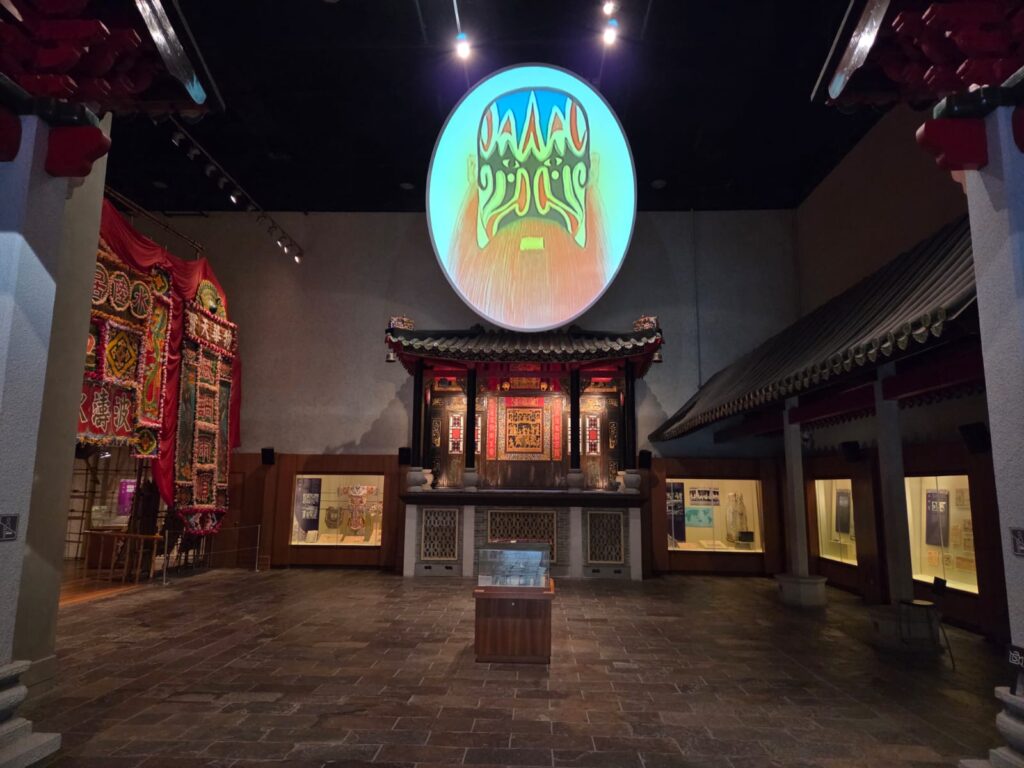
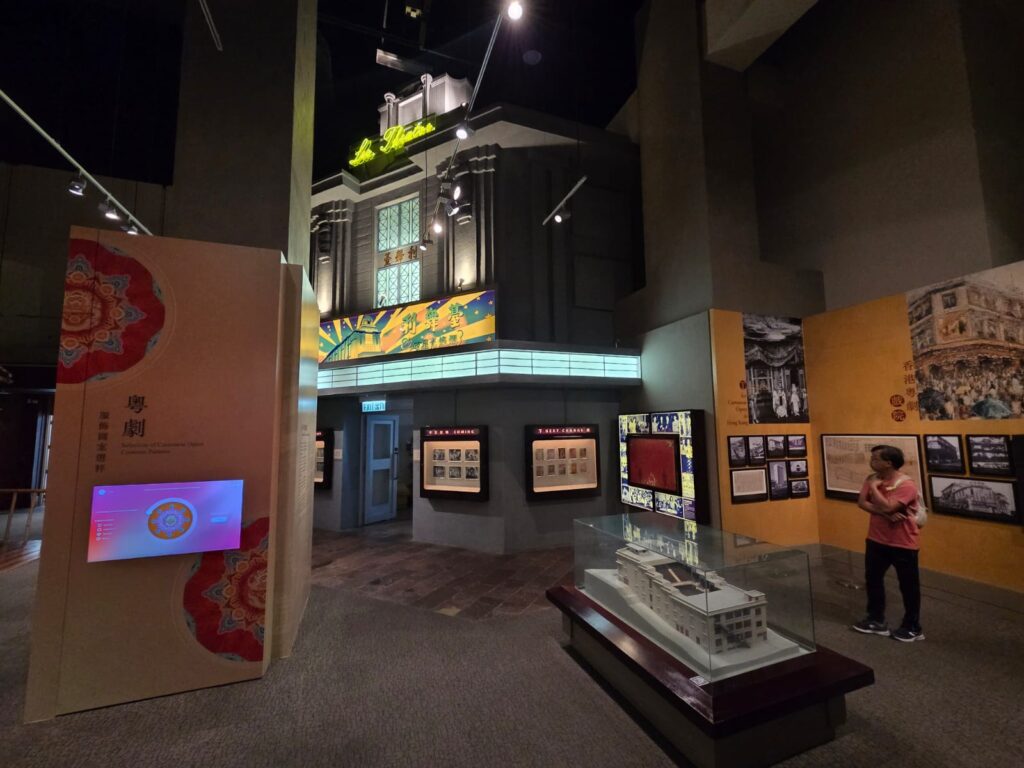
I mentioned earlier that the museum holds tens of thousands of items relating to Cantonese opera in its collection. Their display in the Cantonese Opera Heritage Hall is one of the original Reich&Petch exhibitions. It is visually impressive, recreating the feel of an opera theatre through architecture, props and dioramas. Visitors can learn about different operas, famous opera stars, sit in a recreated opera theatre, or see themselves transformed in an interactive which applies opera makeup.
The mix of objects and multimedia resources helps to bring the history and continuity of Cantonese opera to life. I left thinking I should attend a Cantonese opera experience if I return to Hong Kong. Do pop into the recreated Lee Theatre and spend a little time there. It shows an interesting series of clips documenting how Cantonese opera responded to the challenge from film and television.
Cantonese Opera Heritage Hall is an ongoing exhibition.
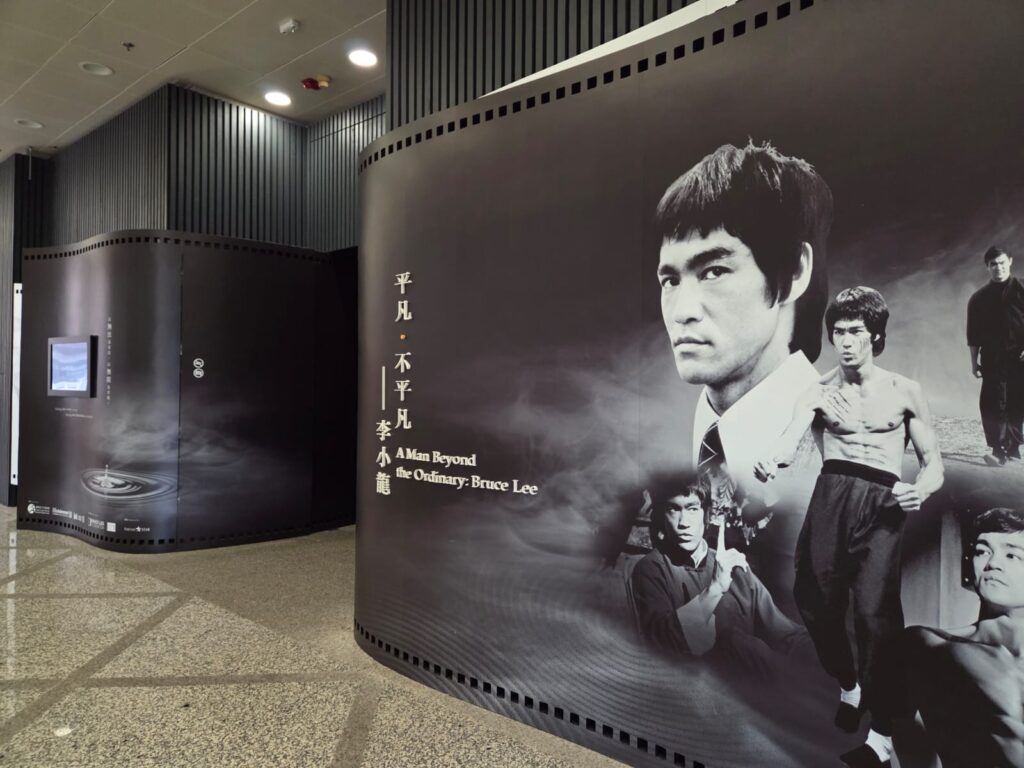
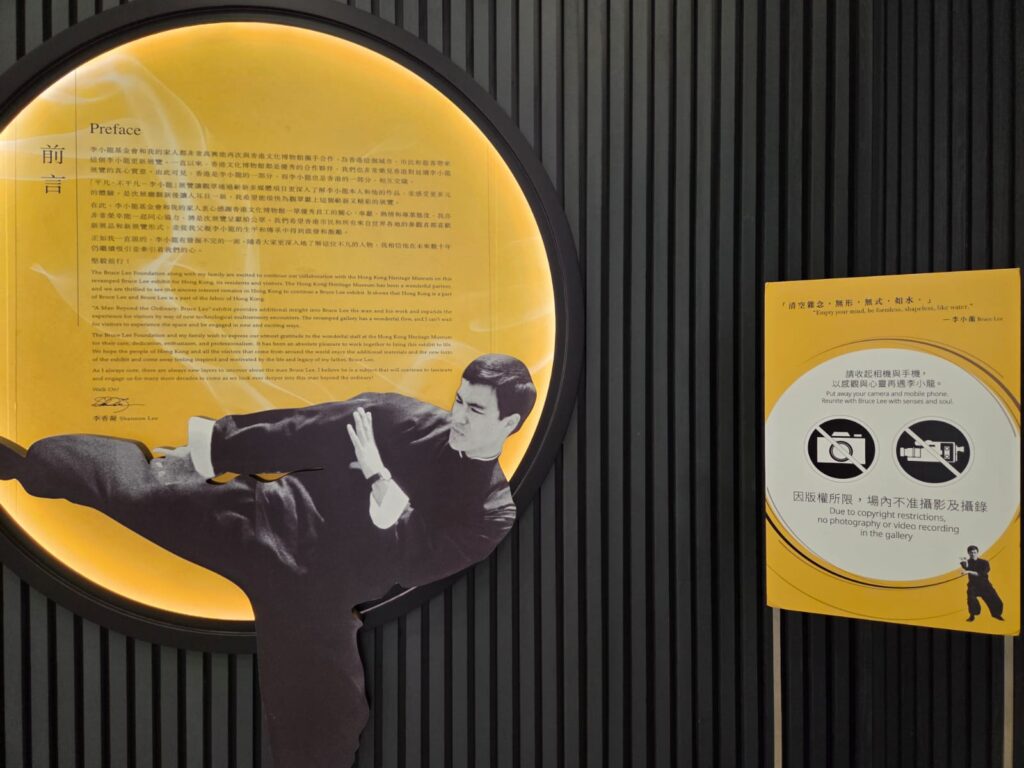
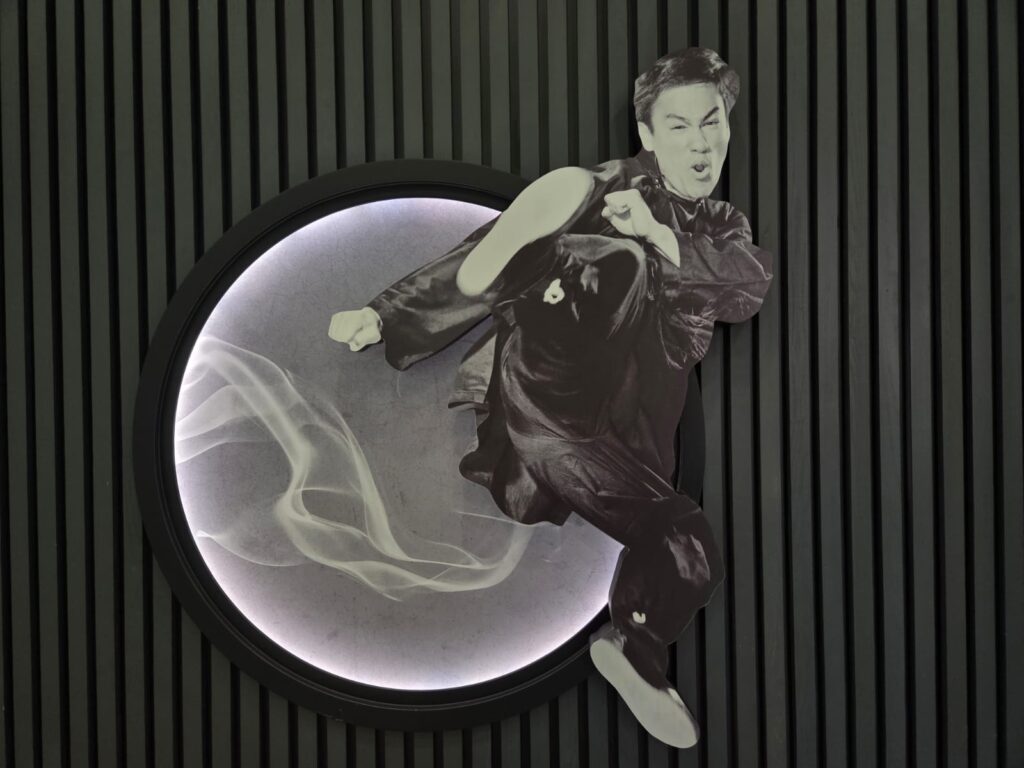
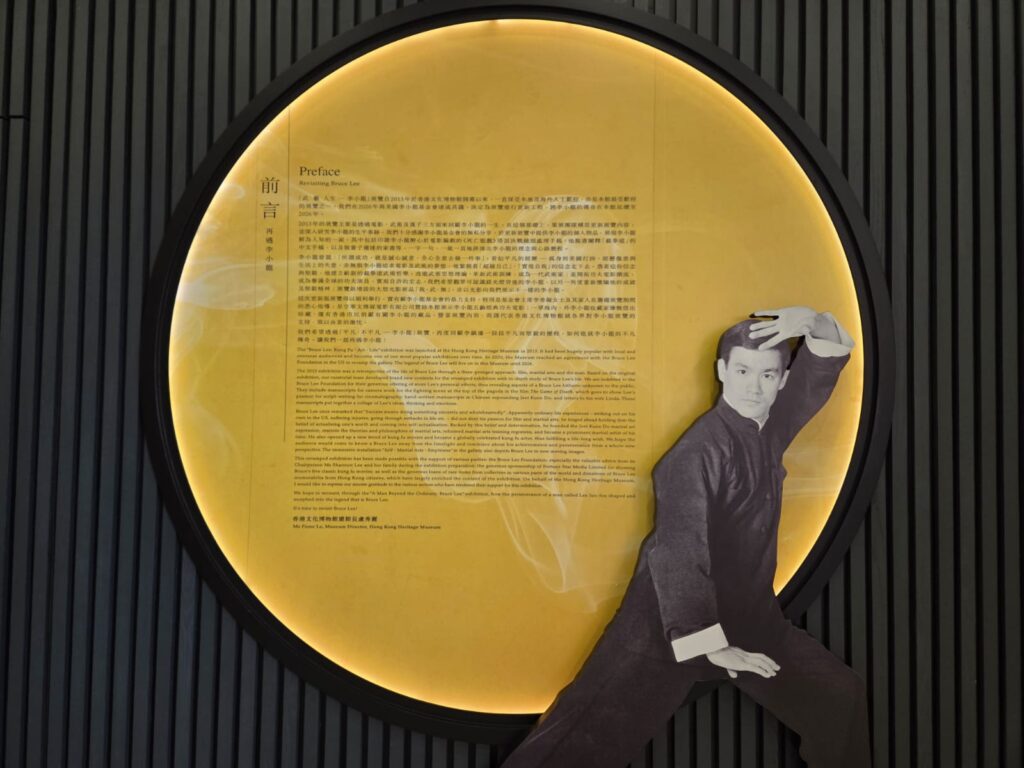
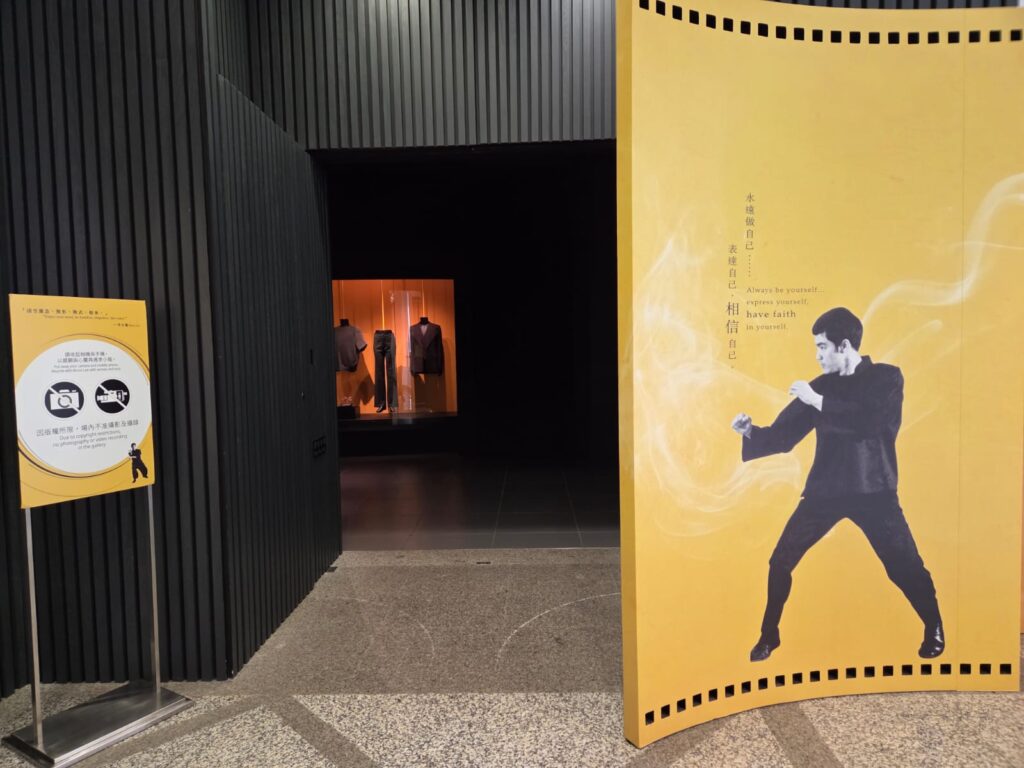
A Man Beyond the Ordinary: Bruce Lee
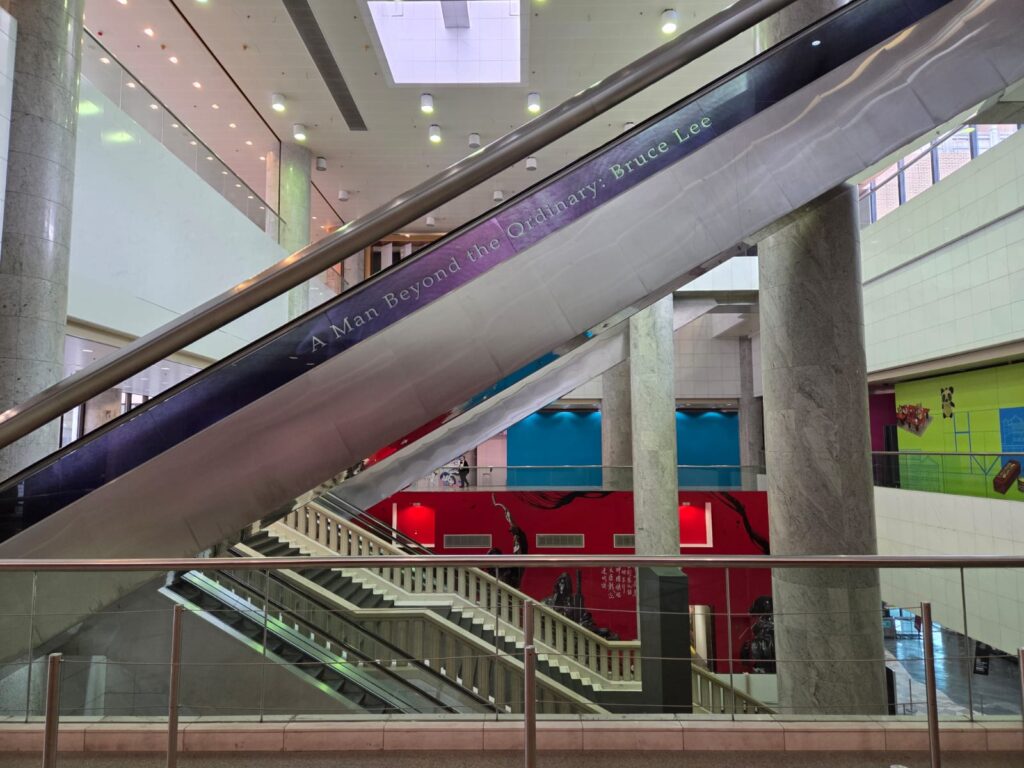
It’s inevitable, perhaps, that a museum about Hong Kong’s heritage should have something about Bruce Lee. And so we reach an entire gallery dedicated to him – A Man Beyond the Ordinary: Bruce Lee. Lee Jun-fon was born in 1940 in the US, and educated between there and Hong Kong. He founded his own hybrid martial arts philosophy, Jeet Kune Do, and is credited with popularising martial arts films amongst American audiences. Some consider him the first global Chinese film star. He died suddenly of cerebral oedema at the age of 32.
You will notice, perhaps, that all the images above are from outside the exhibition. That is because photography is not permitted inside. Lee’s legacy is very tightly entwined in the copyrighted films he starred in, which feature heavily in the exhibition. It’s a shame I can’t show it to you, as it’s another impressive exhibition design. There’s an immersive space for cinematic projections, lots of dramatic lighting, and iconic objects like the iconic yellow jumpsuit from his final film Game of Death.
The exhibition replaces an earlier one, and is a collaboration between the museum and the Bruce Lee Foundation. It’s a nice exploration and testament to his life and legacy, and well worth a look as part of a museum visit.
A Man Beyond the Ordinary: Bruce Lee on until 20 July 2029.
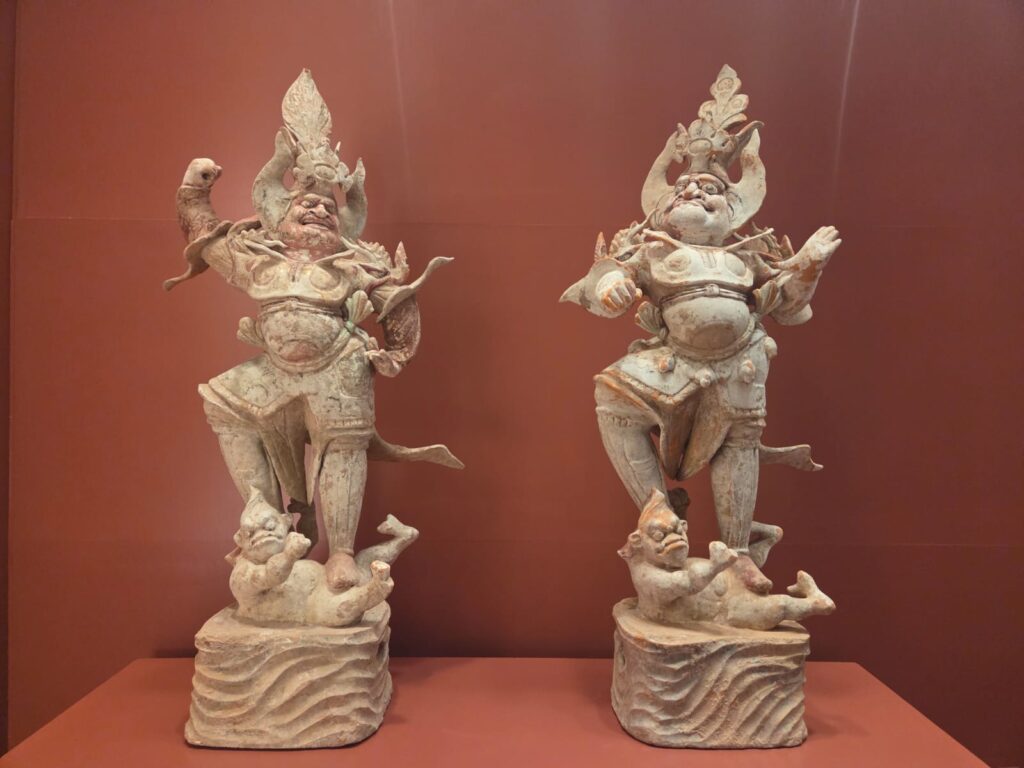
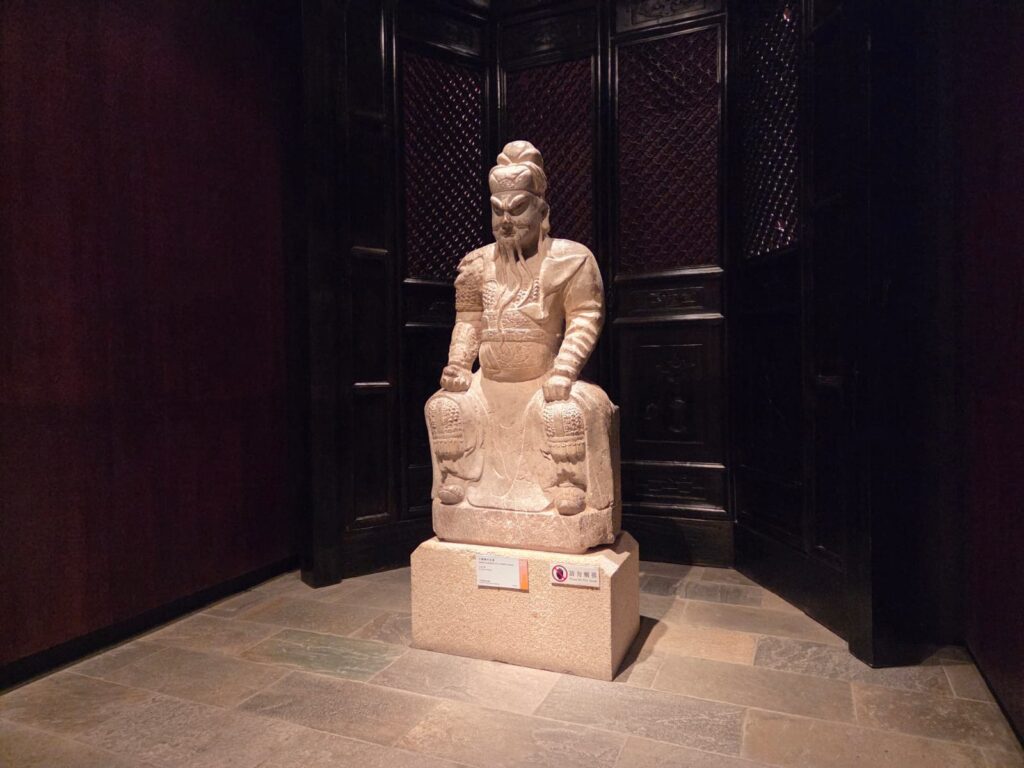
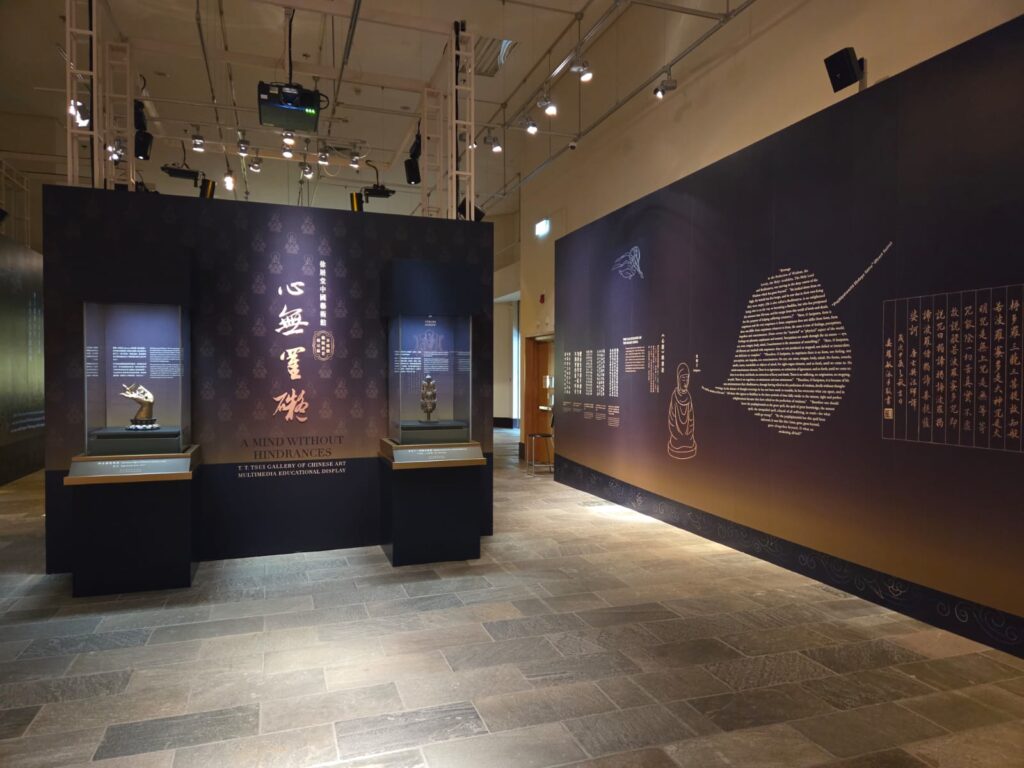
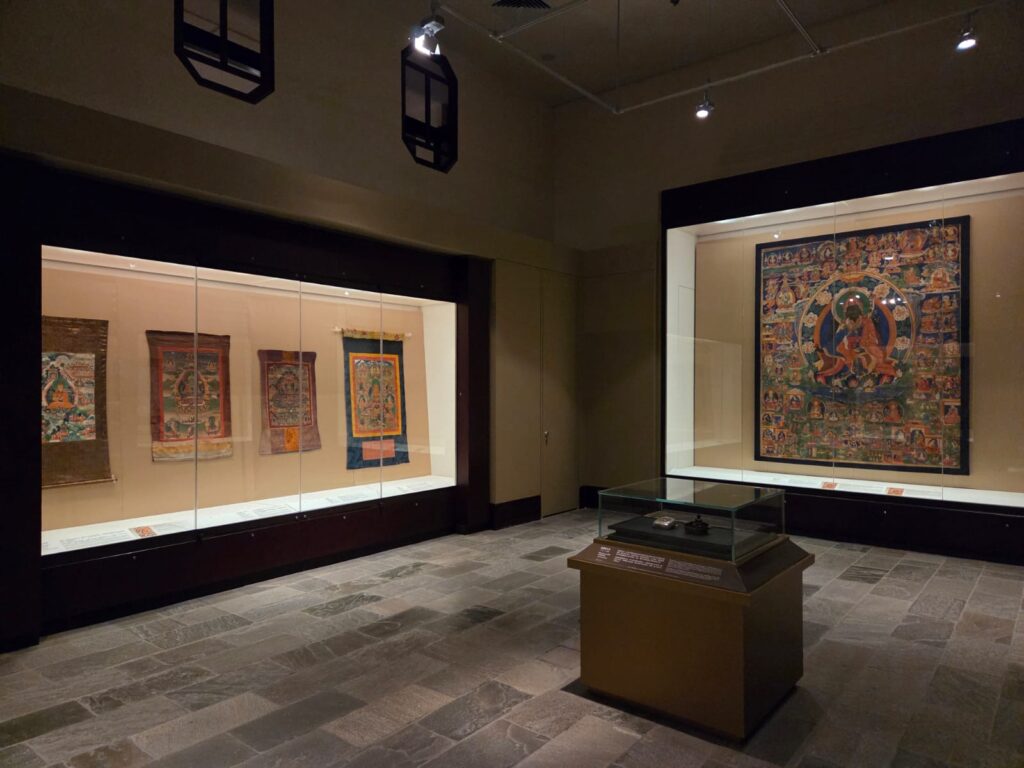
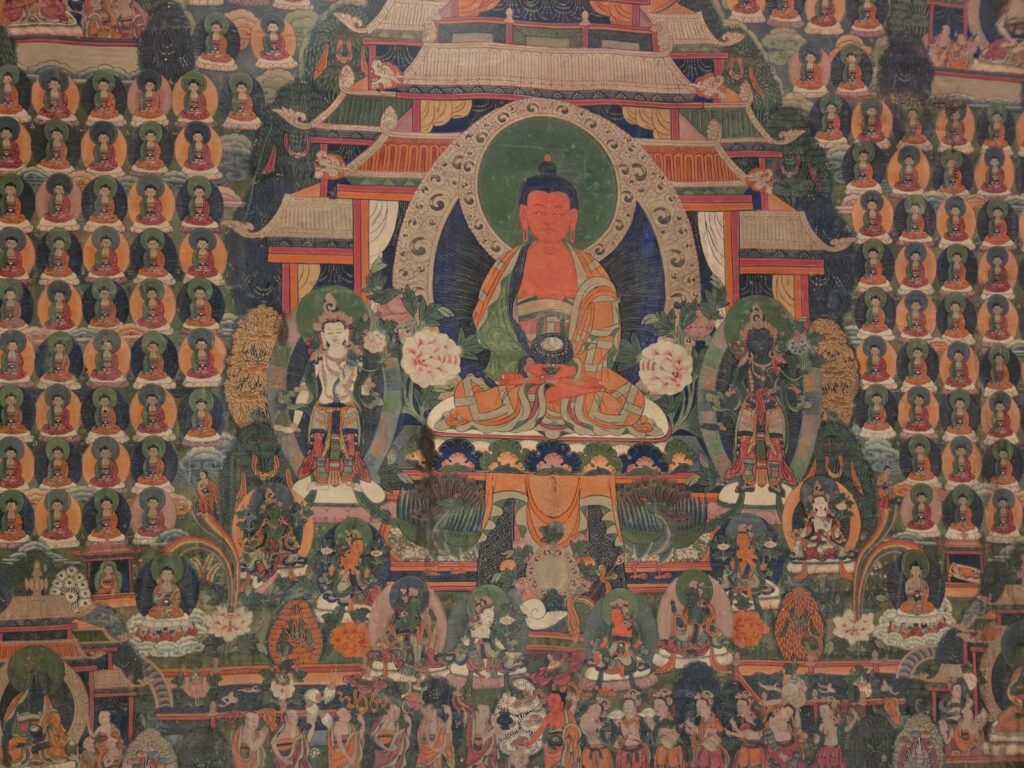
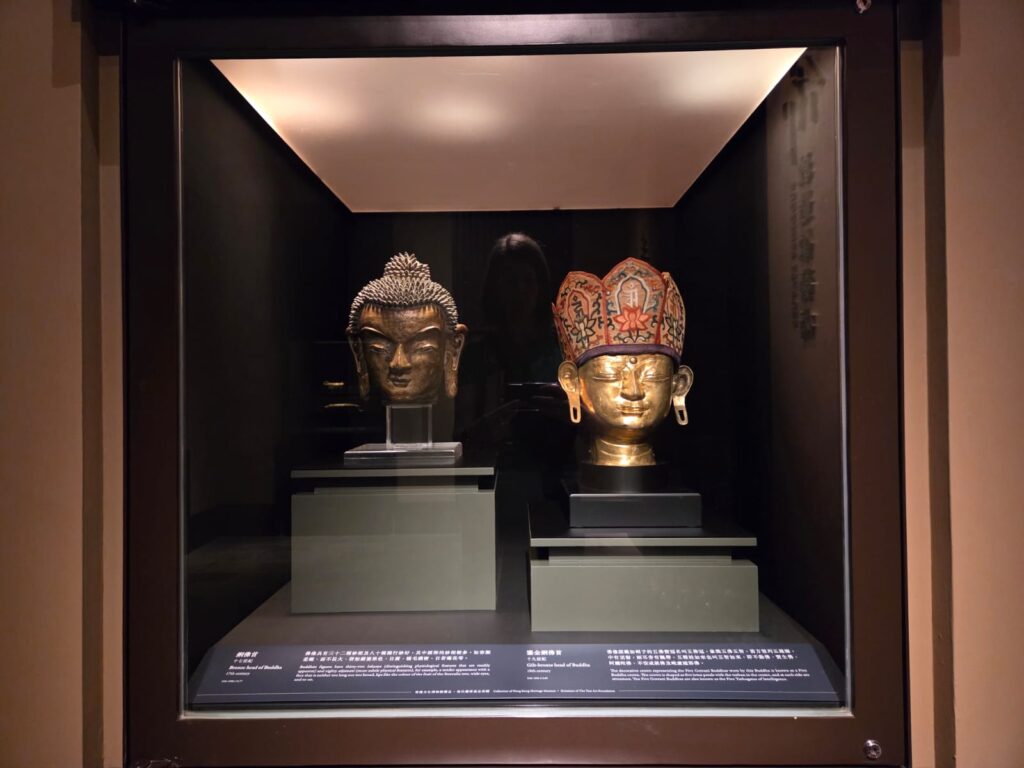
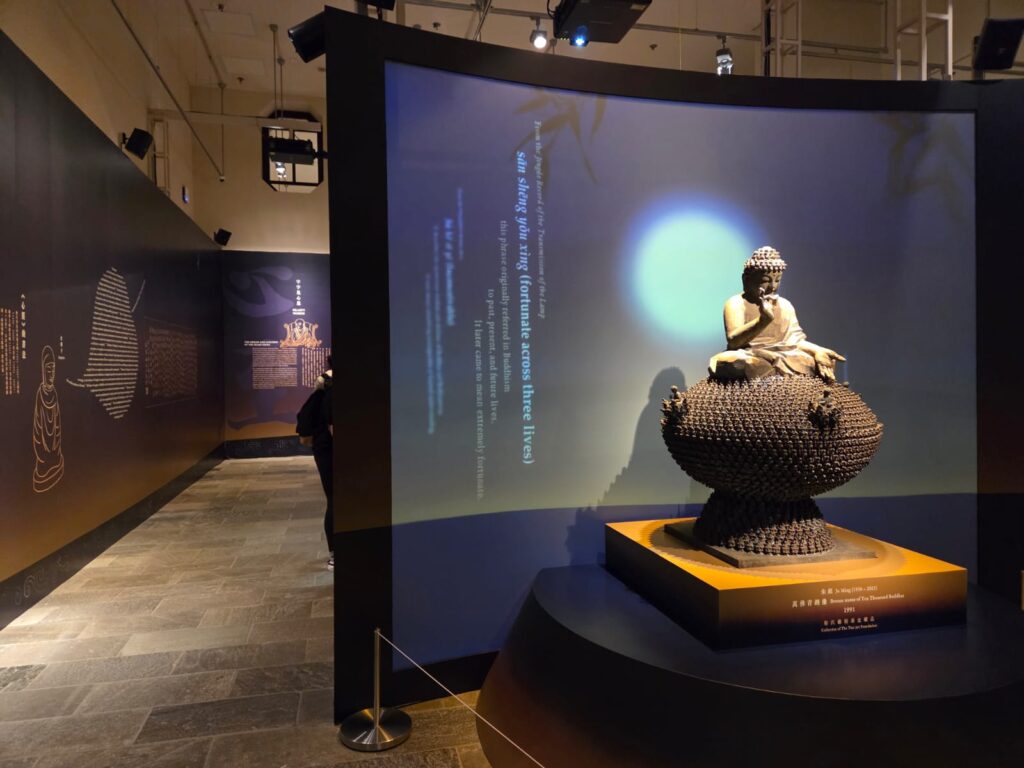
Buddhist Pilgrimage: Treasures from the Donation of The Tsui Art Foundation
And now I have one final exhibition to share with you. I’ve written about the exhibitions in the order I visited them in. So by this point I had a head full of the Mona Lisa and Renaissance art, the Lingnan School, pop culture, Cantonese opera, and Bruce Lee. Thankfully this final exhibition was an engaging one but also a peaceful one. An opportunity to relax and appreciate beautiful objects before I embarked on the remainder of my Sha Tin walk.
We talked about the Tsui Art Foundation above. It used to have its own museum, which at one point was in the Bank of China Building – once one of Hong Kong’s tallest buildings. That museum closed in the 1990s, and its collection ended up in the care of the Hong Kong Heritage Museum. This latter has a T. T. Tsui Gallery of Chinese Art, which I guess has probably had rotating exhibitions of objects from the collection since its opening.
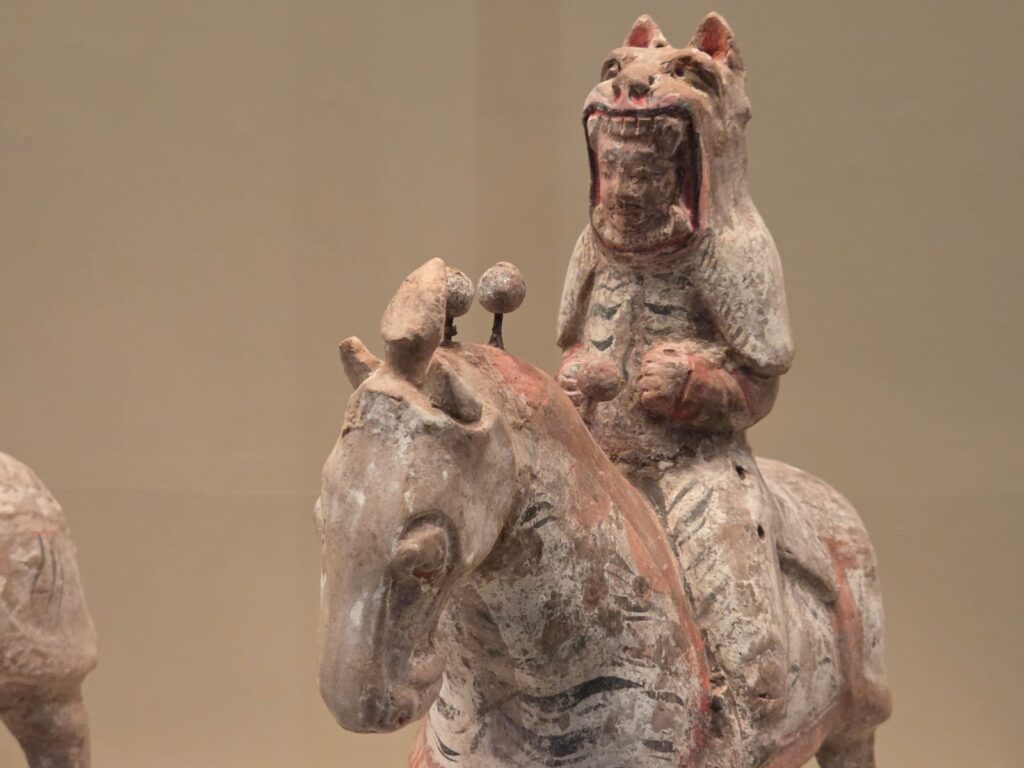
The current exhibition focuses on Buddhist art, and Tibetan Buddhist art in particular. It includes around 70 objects, from thangka paintings to ritual objects and sculptures. There is also a multimedia display on the pilgrimage and contribution to cultural exchange of Tang Buddhist master Xuanzang.
The objects are beautiful, as is their display. The design is itself meditative, with explanatory texts presented in unusual shapes. Although there is less of a connection to Hong Kong than in most other exhibitions (apart from collector T. T. Tsui being a Hong Kong businessman), it was a nice way to finish. I was reminded that no man, and no territory, is an island*, and that Hong Kong has been shaped by cultures and cultural exchange, religion, geography, technology, trade, colonialism – many forces which have made it what it is.
*OK some territories are islands, but I was being poetic.
Buddhist Pilgrimage: Treasures from the Donation of the Tsui Art Foundation on until 26 October 2026.
Trending
If you see this after your page is loaded completely, leafletJS files are missing.