
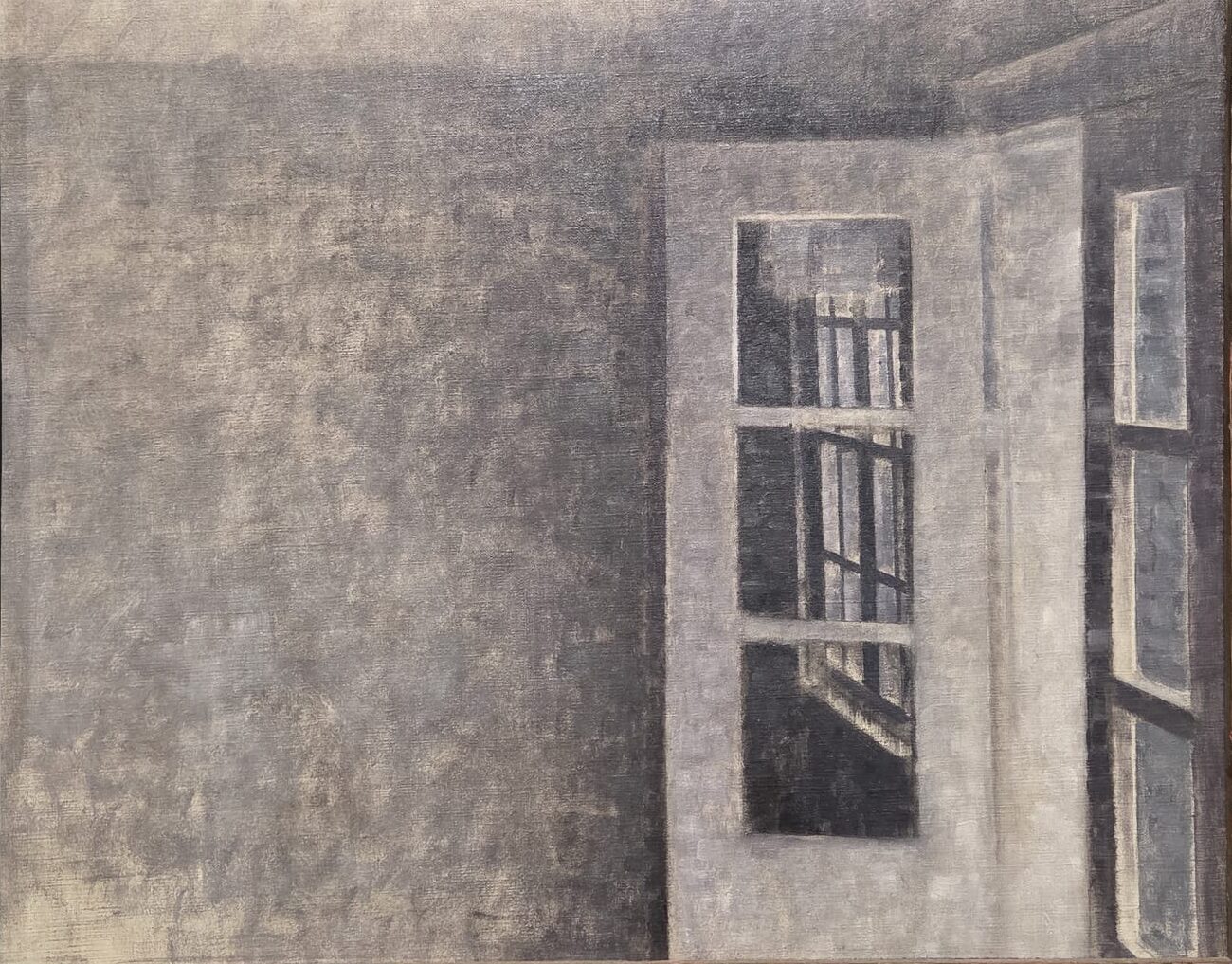
Vilhelm Hammershøi. Maler des stillen Klangs (Vilhelm Hammershøi. The Eye That Listens) – Kunsthaus Zürich
And now we come on to the exhibition that was my reason for visiting Zurich in the first place: Vilhelm Hammershøi. Maler des stillen Klangs.
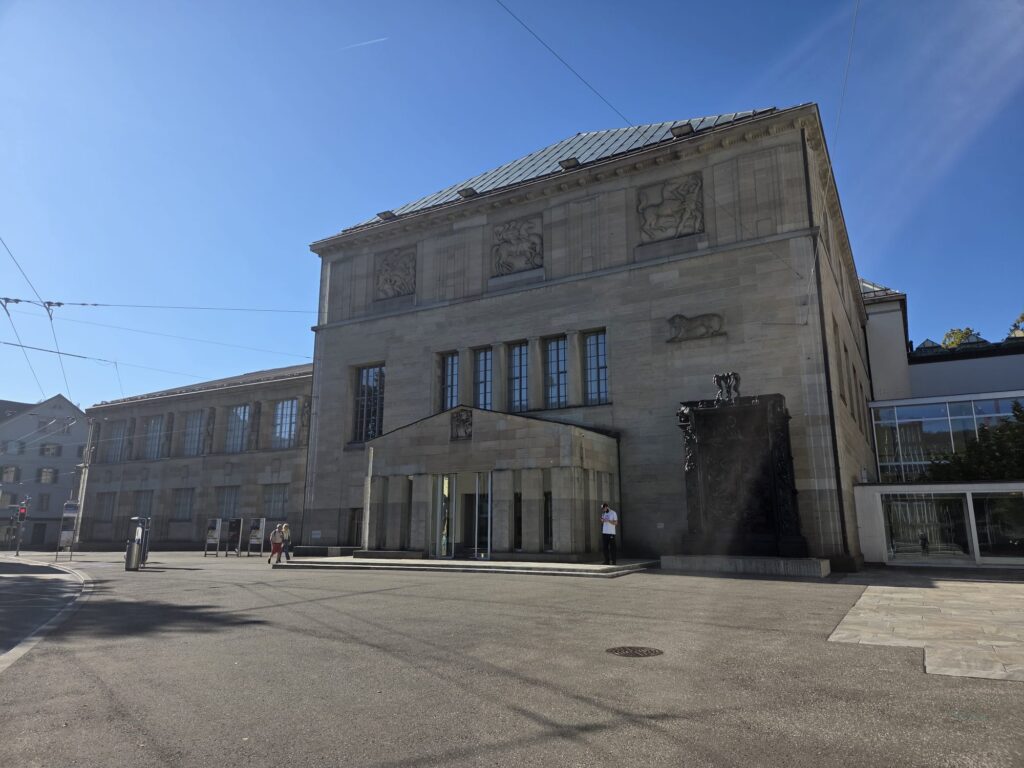
In Zurich to See Vilhelm Hammershøi
As I confessed in my last post, I came to Zurich specifically to this exhibition. I have a very niche hobby that involves seeing certain paintings. Sometimes I have to do quite a lot of investigation to try to work out if a painting I want to see is in an exhibition or not. Other times it’s easier. This was one of the latter. In fact, the Kunsthaus Zürich put the one I was after right on the poster! No ambiguity there, then.
And so I decided to spend a weekend in Zurich on a rather madcap, art historical trip. Other than this exhibition I hadn’t intended to spend a lot of time in museums. It was one of the last warm weekends of the autumn, and I fancied spending a bit of time outdoors. I found something of a balance in the end. I had a look around the rest of the Kunsthaus Zürich, and went to one or two other museums, which I will tell you about in due course. But I also had a very pleasant boat trip on Lake Zurich, towards the Lindt chocolate factory and back. And I did a bit of a walking tour, which I will also tell you about later.
But for now we’re going to take a closer look at this exhibition. The German title is Vilhelm Hammershøi. Maler des stillen Klangs. The English title is Vilhelm Hammershøi. The Eye That Listens. Interestingly, these are not the same: the German one means ‘Painter of Silent Sound’. I frankly prefer that. What is the eye that listens? I’m not sure. Painter of silent sound describes Hammershøi’s work a bit better, in my opinion. But you can make your own mind up. Let’s now find out a bit more about the artist.
A Brief Biography of Vilhelm Hammershøi
So who was this Danish painter I was in Switzerland to see? Vilhelm Hammershøi was born in 1864 in Copenhagen, the son of a merchant. He studied drawing from a young age, then painting, and then began studies at the Royal Danish Academy of Fine Arts. From 1883 to 1885 he studied with Peder Severin Krøyer at the Independent Study Schools. His formal debut as an artist was at the Charlottenborg Spring Exhibition in 1885, where he exhibited Portrait of a Young Girl. Renoir reportedly admired his painting.
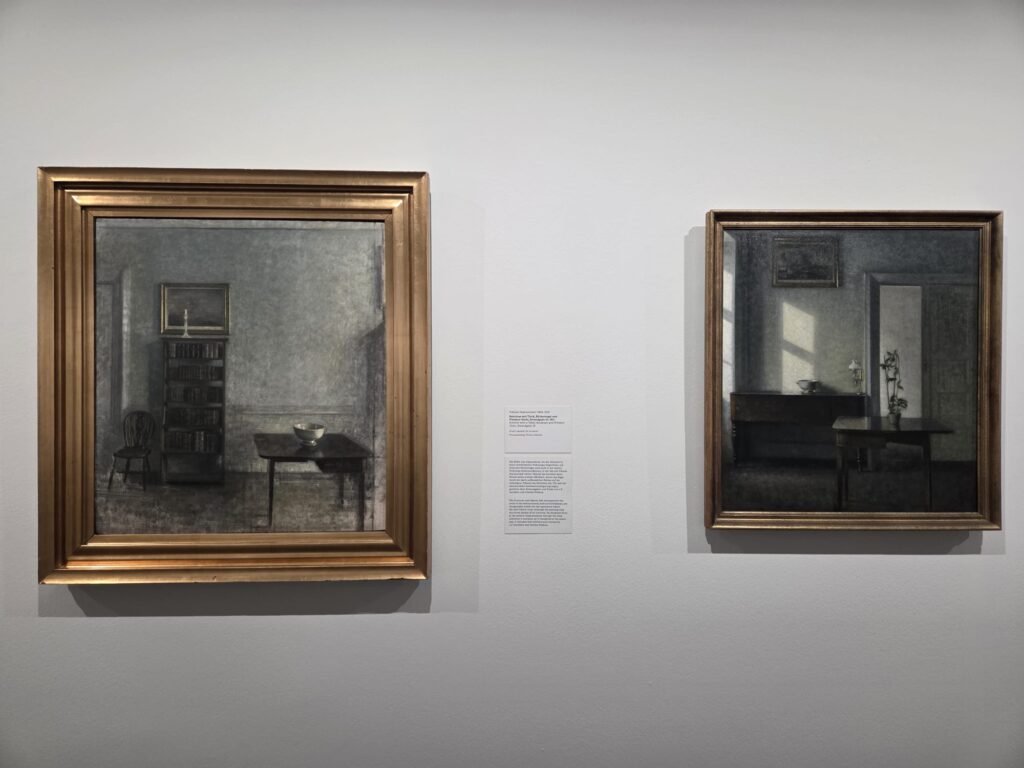
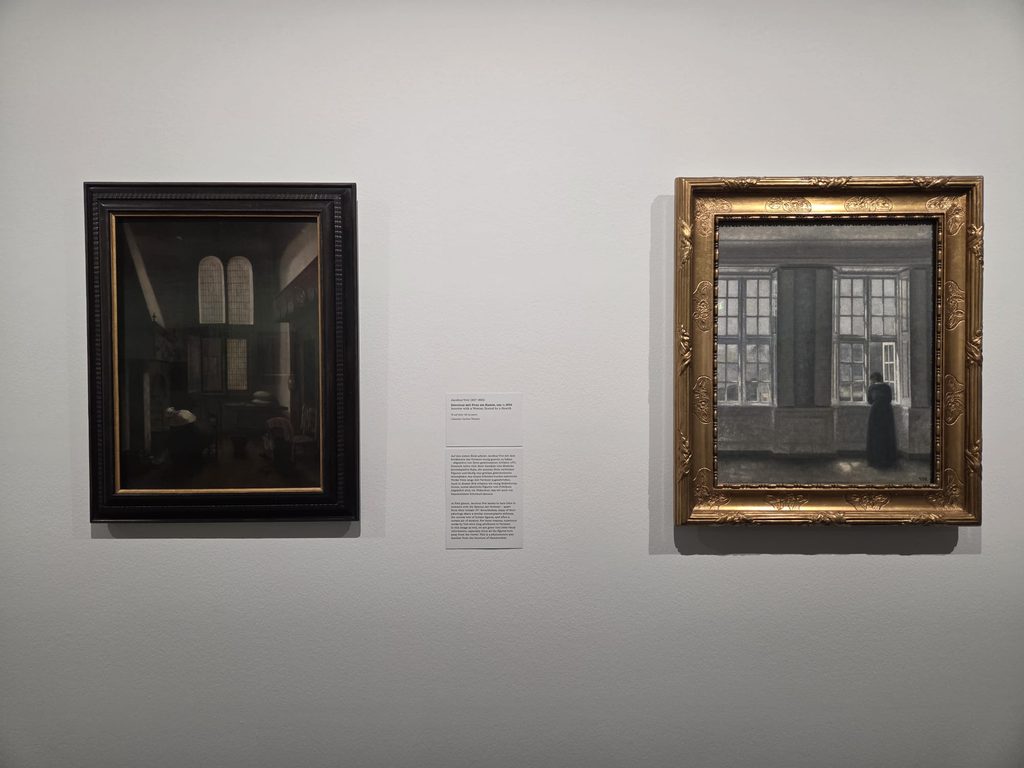
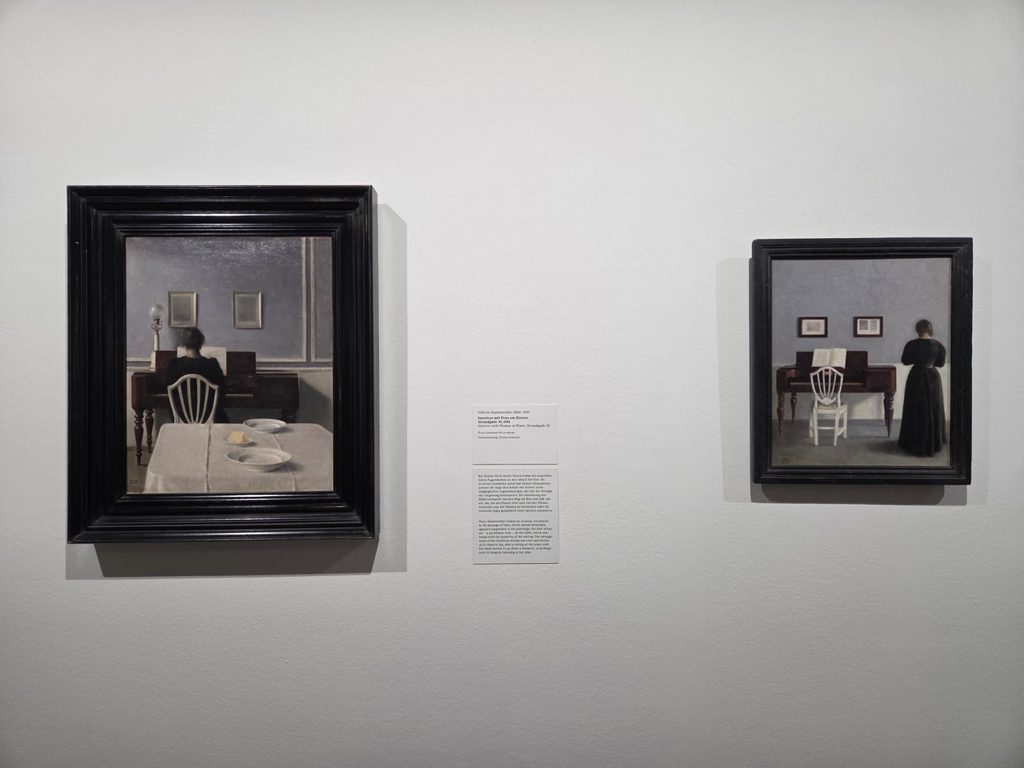
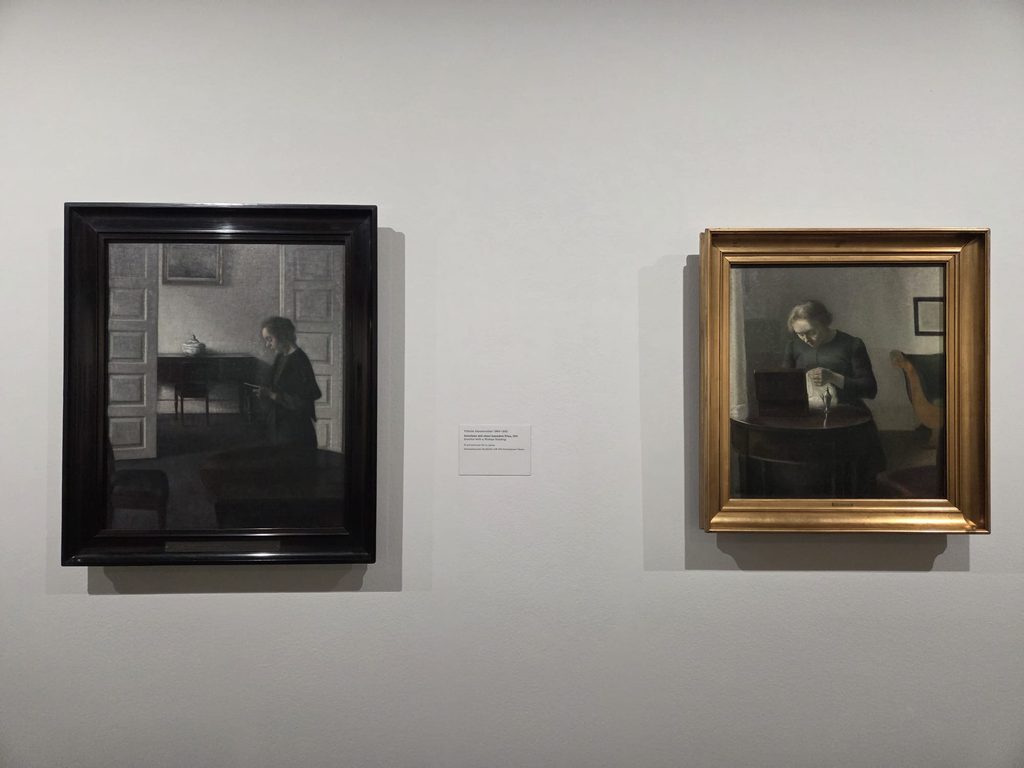
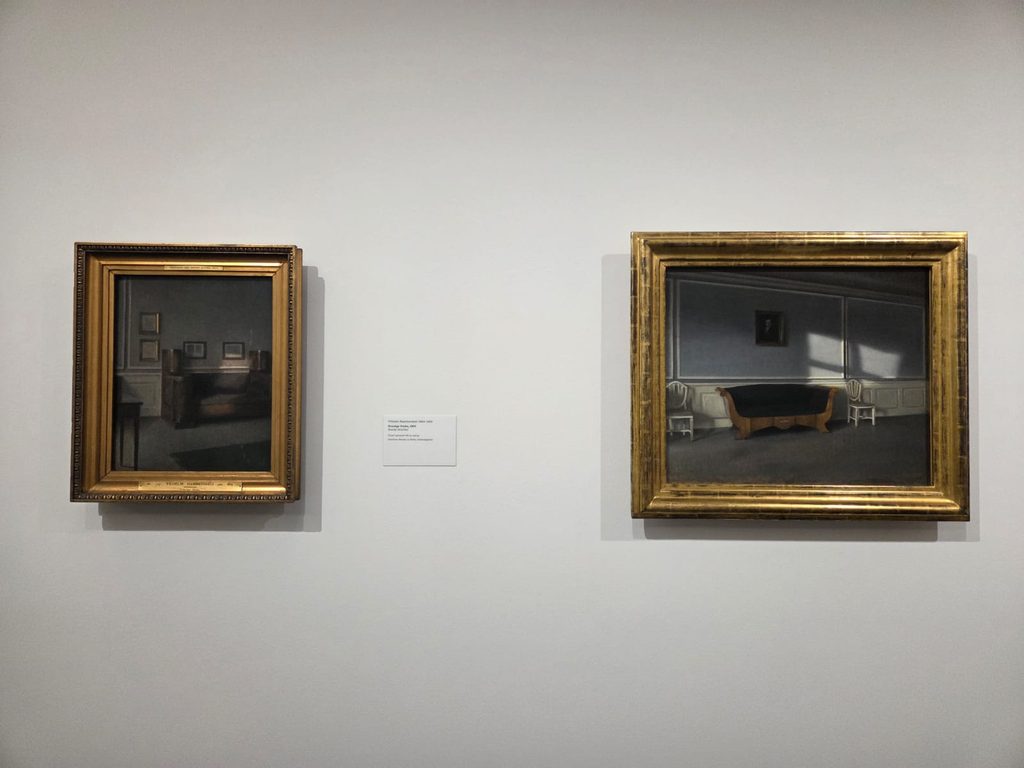
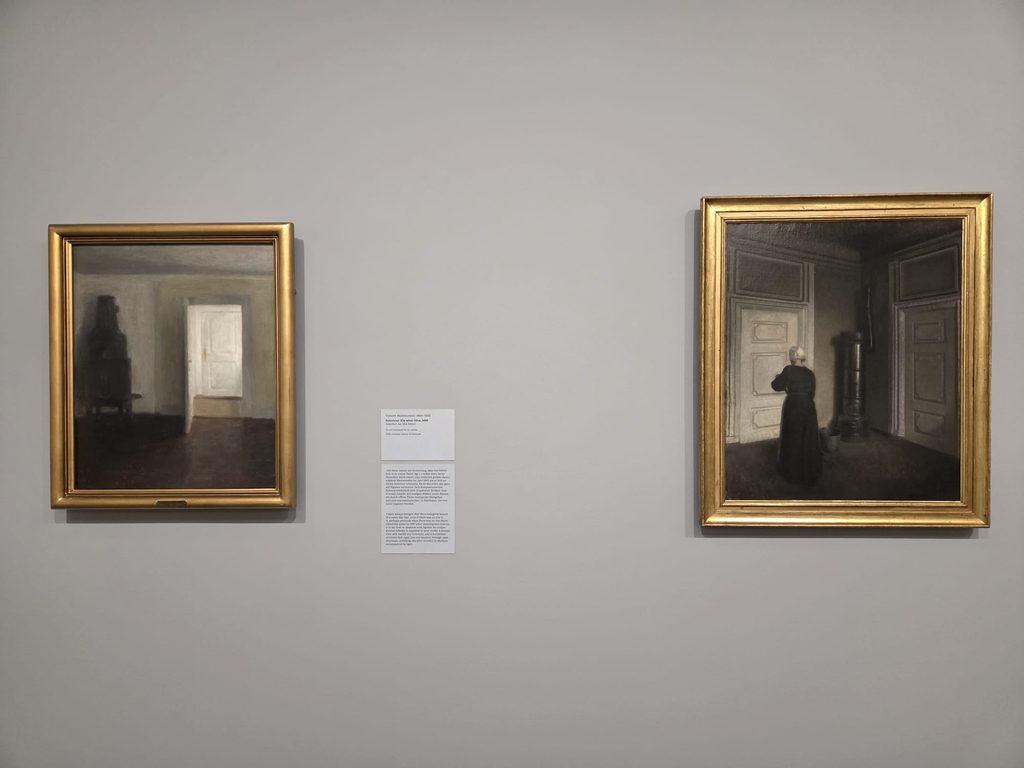
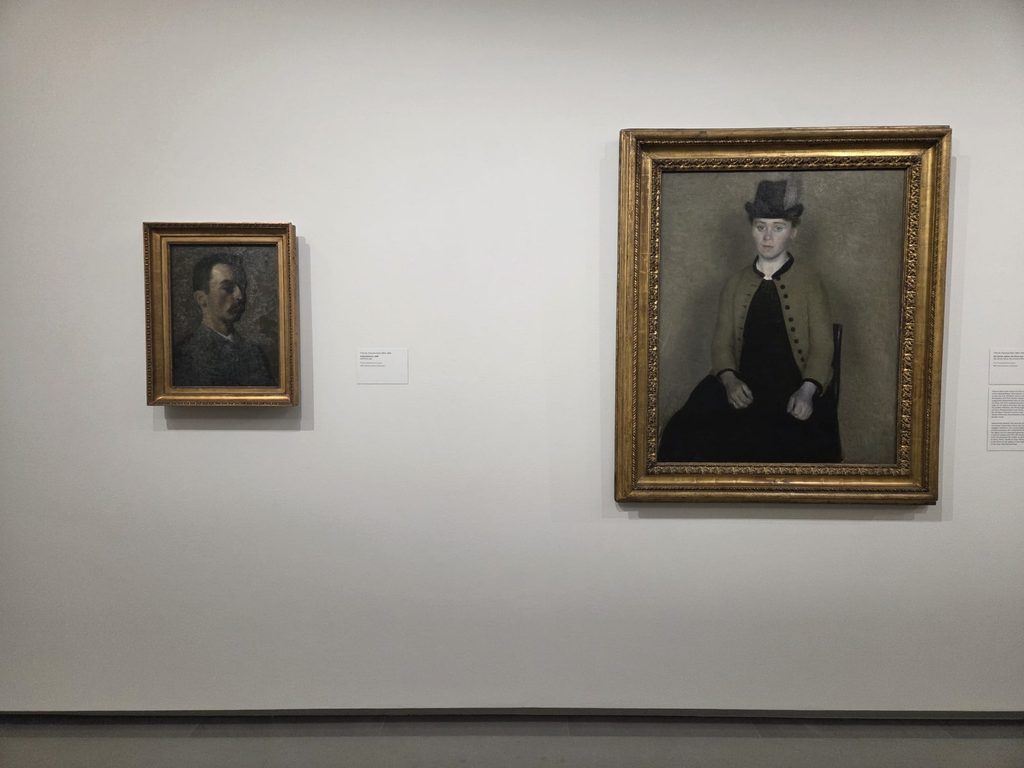
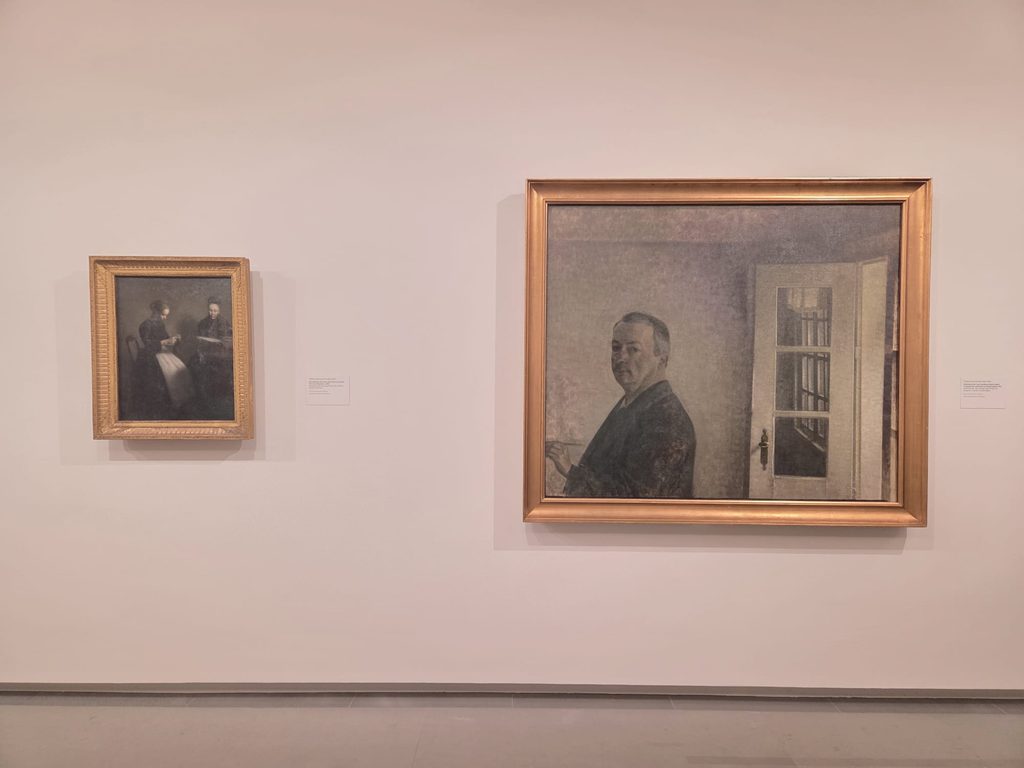
Hammershøi worked mostly in his native Copenhagen throughout his career, although he did travel abroad (the exhibition contains some paintings of London, for instance). His mature style was muted and atmospheric. He used a limited palette, and painted a lot of interiors, some including figures, such as his wife Ida (sister of Hammershøi’s friend and fellow artist Peter Ilsted), but often shown from behind. This creates a certain tension, despite or perhaps because of the apparent calm of the works.
Hammershøi’s life was not without its challenges. He reportedly married Ida partly to help her escape a difficult home life. She continued to experience poor mental health throughout their marriage. The couple did not have children. Hammershøi himself had a difficult personality – more on this soon, but it certainly had some impact on his career. And, shortly after his beloved mother Frederikke’s death in 1914, Hammershøi was diagnosed with the throat cancer that would kill him in 1916. Ida lived significantly longer, until 1949. Hammershøi’s work fell out of fashion and then memory after his death, until a handful of exhibitions reestablished him in the public consciousness.
Art Imitates Life?
Something that came through even in the short exhibition texts was a certain similarity between Hammershøi’s art, and his personality. At the very least, the man was a serious introvert. And, while diagnosing people from the past is not possible, when you look at the evidence you have to wonder about some sort of neurodiversity. Hammershøi was described by those who met him as ‘reserved’, ‘taciturn’, or ‘awkward’. Rainer Maria Rilke met him in 1905 and found him difficult to speak to (albeit exacerbated by a language barrier and a slight hearing impairment). A meeting with the director of the National Gallery in 1910 went badly. He seemingly did not feel at ease in social or professional circles.
An interesting question is whether this introversion led him to develop his idiosyncratic style of painting, or whether that’s reading too much into it and the two are not connected. We do have a little bit of evidence in this regard, particularly this quote which formed part of an exhibition text:
“I do not care to paint portraits by having people unknown to me come and commission likenesses of themselves, I have no wish to do that; I would prefer to know them very well in order to paint them.”
Vilhelm Hammershøi, as quoted in Vilhelm Hammershøi. The Eye That Listens.
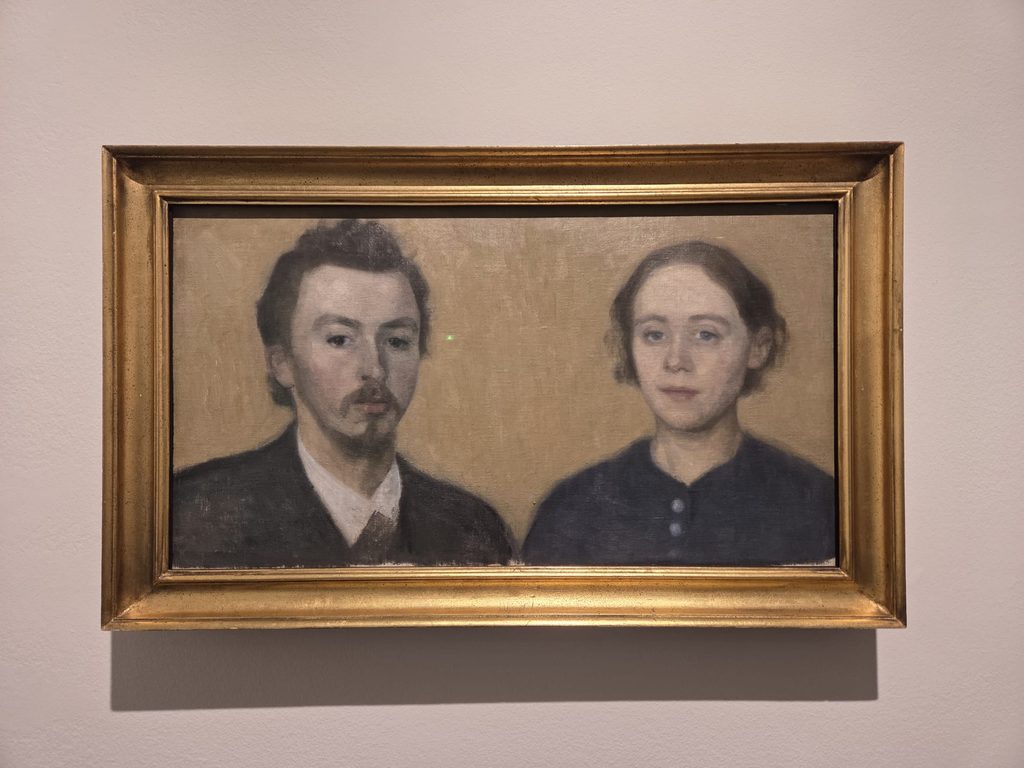
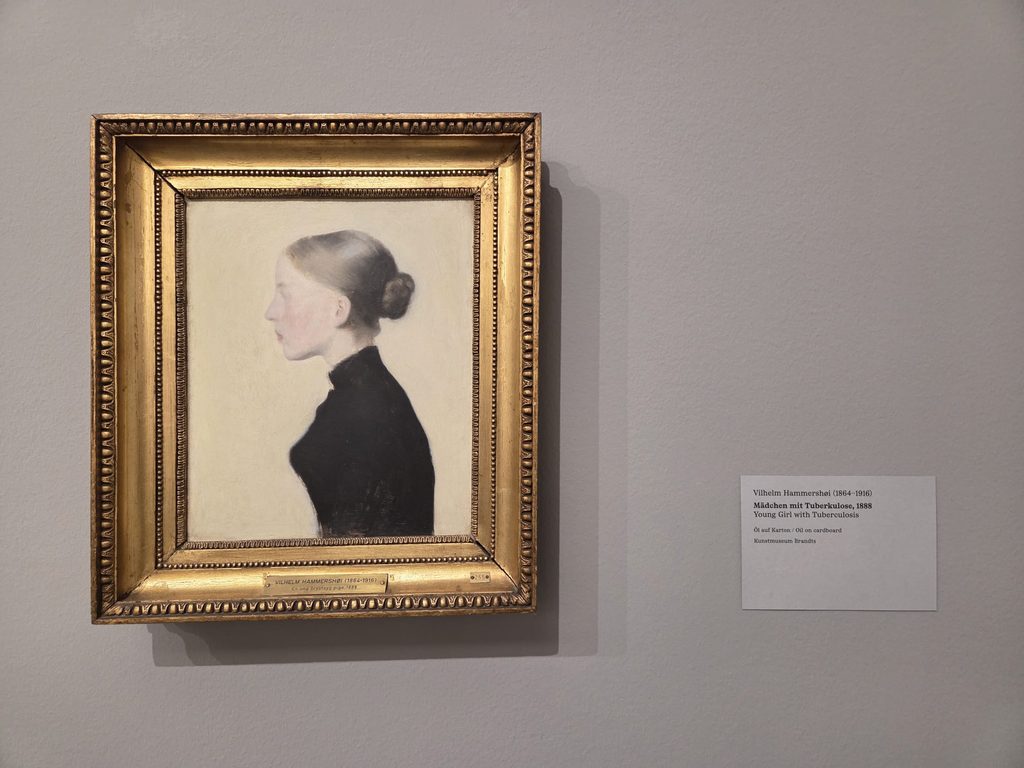
So we know at least that Hammershøi’s choice of subjects was influenced by his personal and social preferences. And if we look at the remainder of his work – interiors, landscapes and street scenes, often devoid of people or with single figures shown from the back, the argument that art is imitating life perhaps plays out. Even when Hammershøi did paint portraits, there is often a distance between subject and viewer.
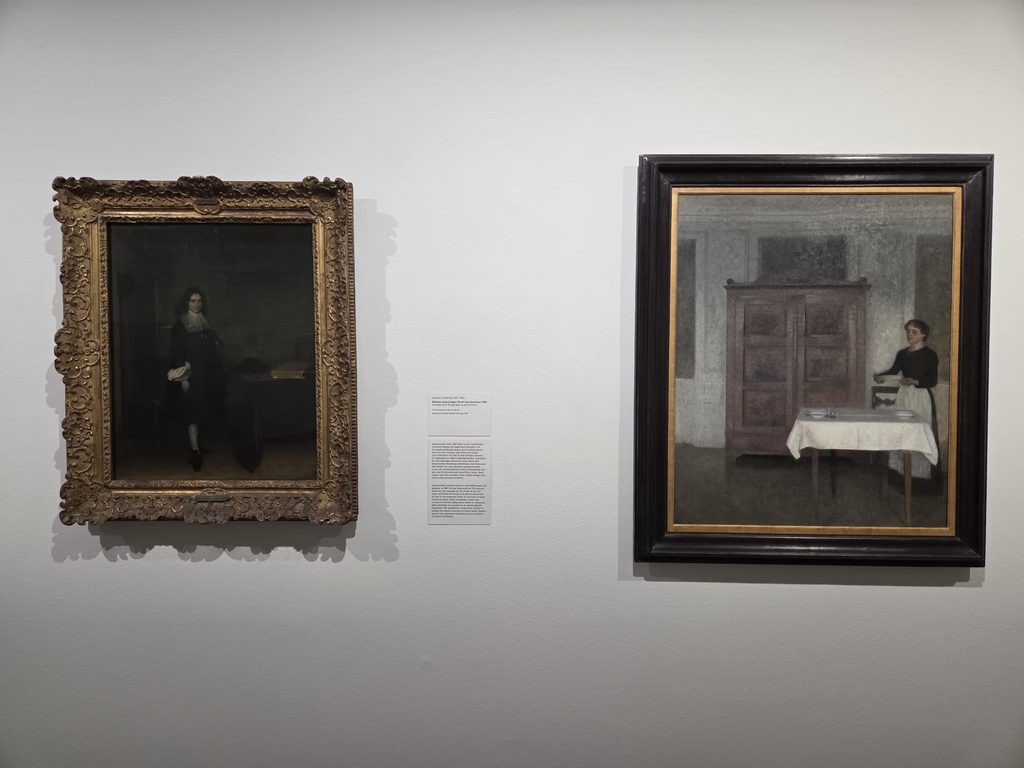
To say that Hammershøi didn’t like people and therefore didn’t paint them would be to miss the subtleties, though. Hammershøi very much admired the Dutch Old Masters, for instance, even travelling to the Netherlands to see works in person. And we cannot avoid the similarities between his works and the likes of Vermeer. Plenty of inspiration there for interior scenes with sparce or distant figures. Or there is the argument that the silence of his paintings is more psychological – a mystery or tension we cannot penetrate. For my part, I think Hammershøi’s personality played a part in what he painted and how he painted it. But it’s not the be all and end all.
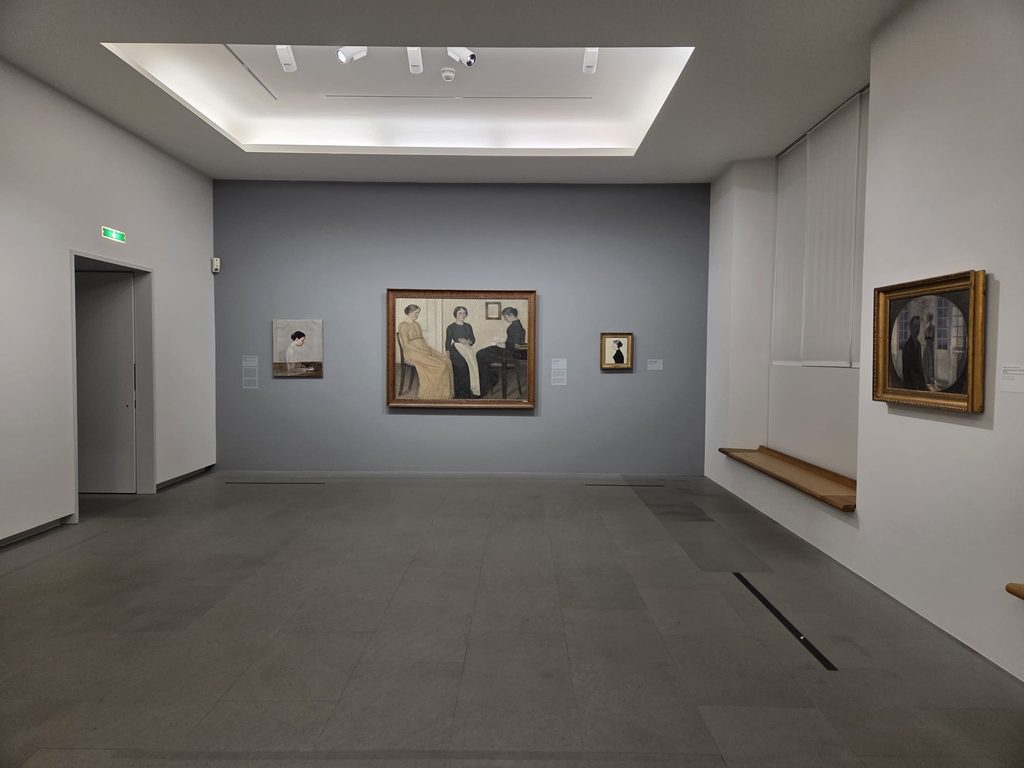
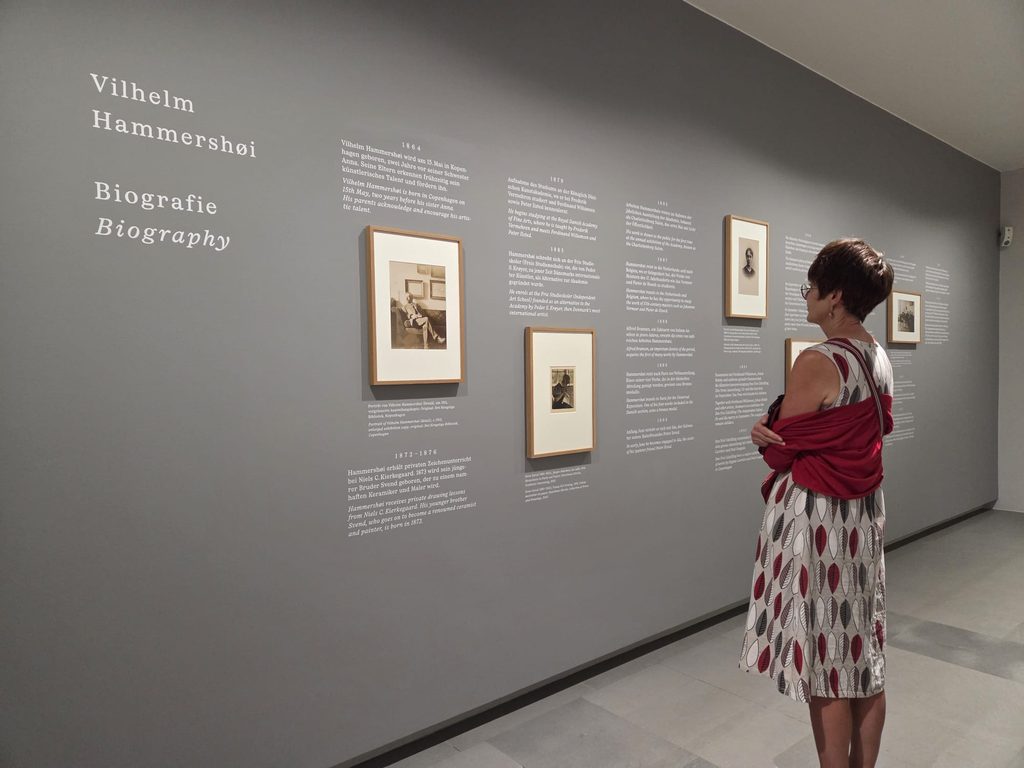
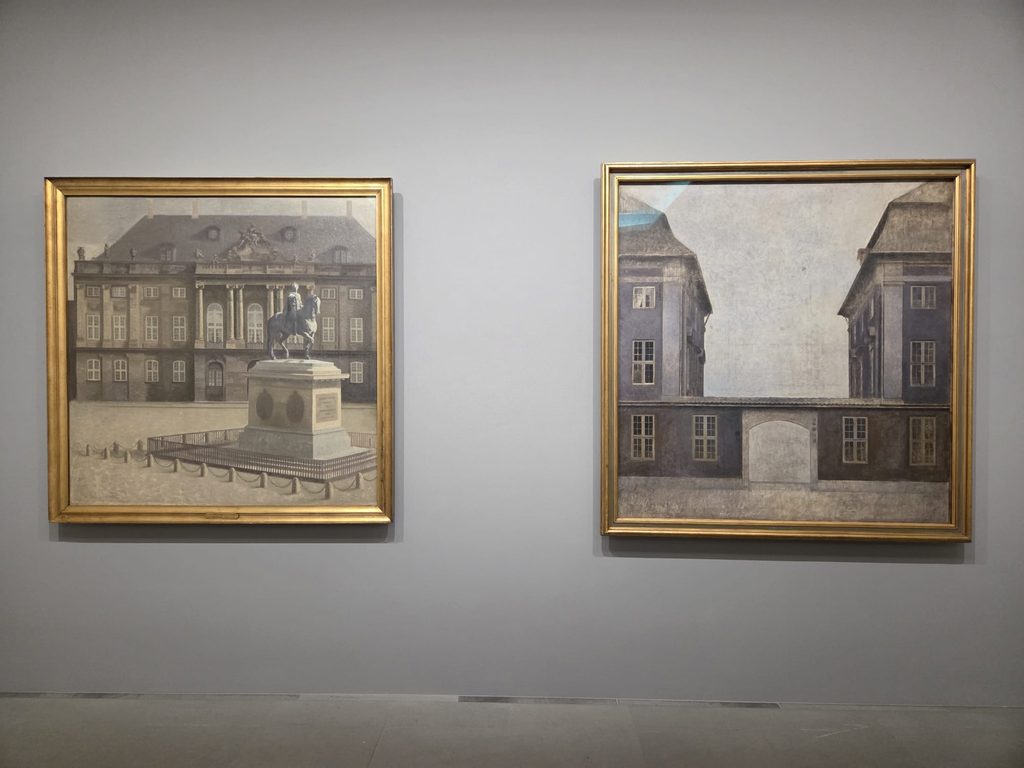
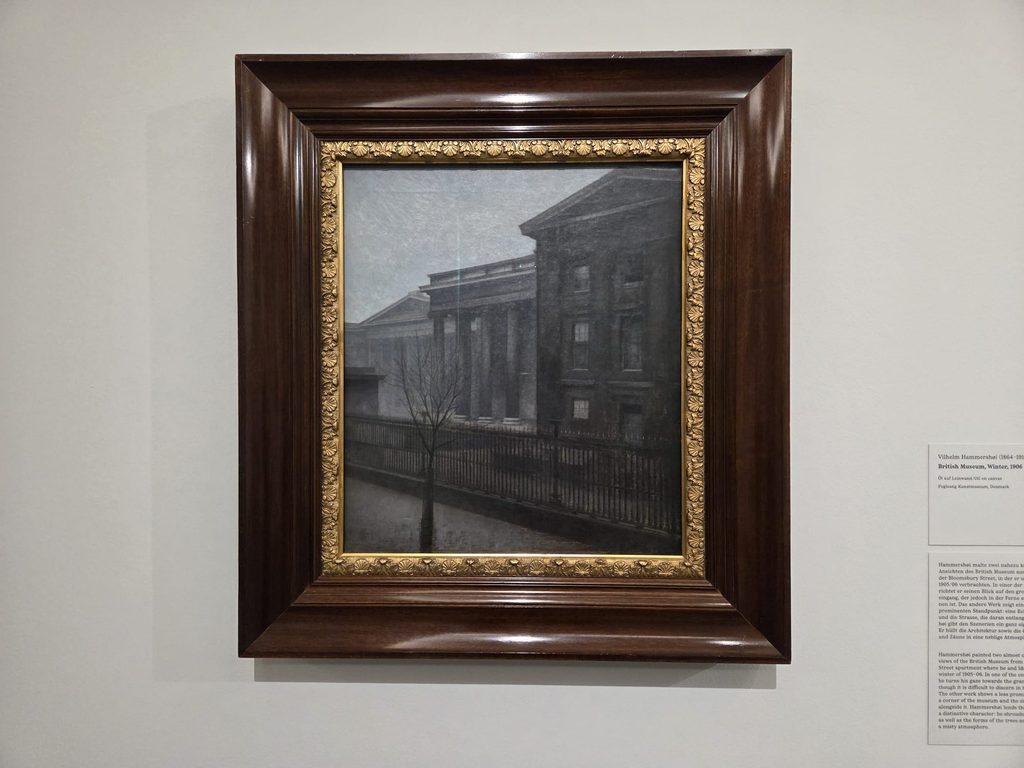
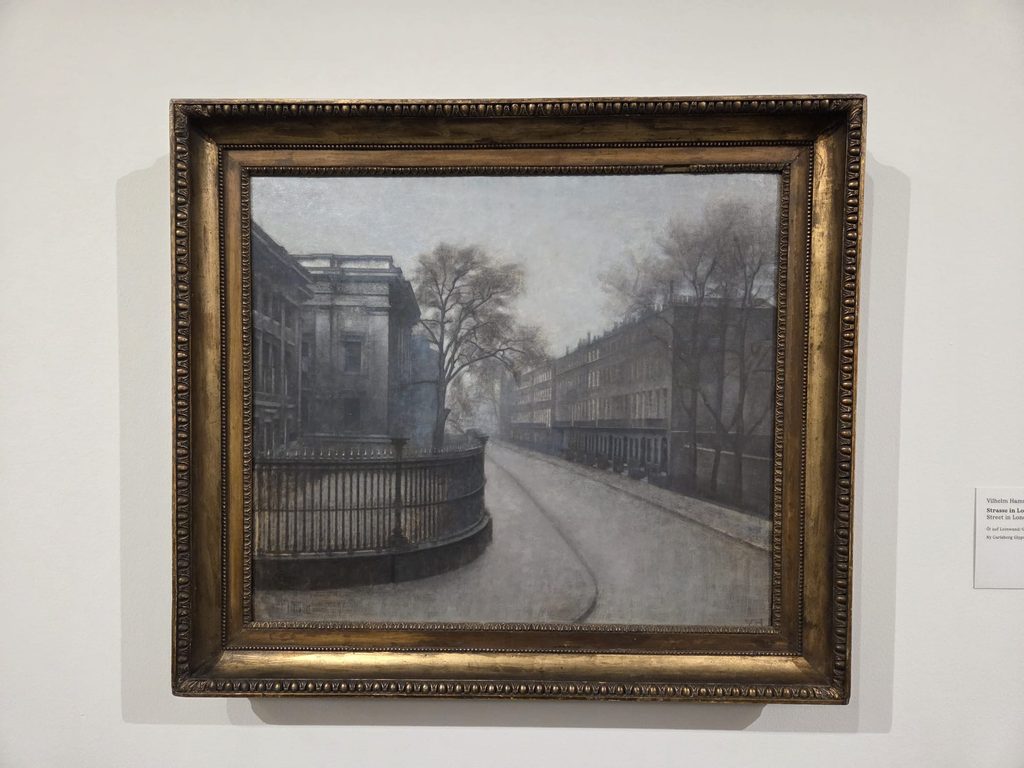
Vilhelm Hammershøi. The Eye That Listens
Vilhelm Hammershøi. The Eye That Listens (or Vilhelm Hammershøi. Maler des stillen Klangs, as it technically was in Zurich), is a touring exhibition. It started at the Thyssen-Bornemisza Museum in Madrid, then went to Zurich, and will go to the Art Institute of Chicago in 2027. As I often say about collaborative exhibitions, the pull of multiple institutions means that there is a good selection of works from public and private collections. Definitely the case here.
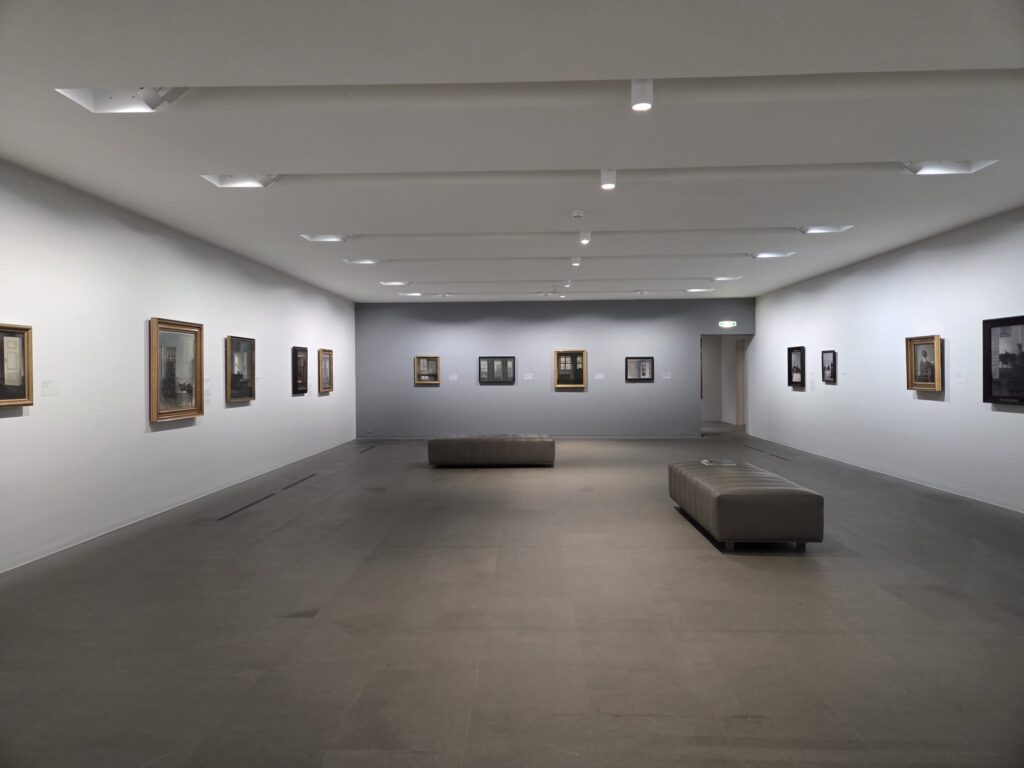
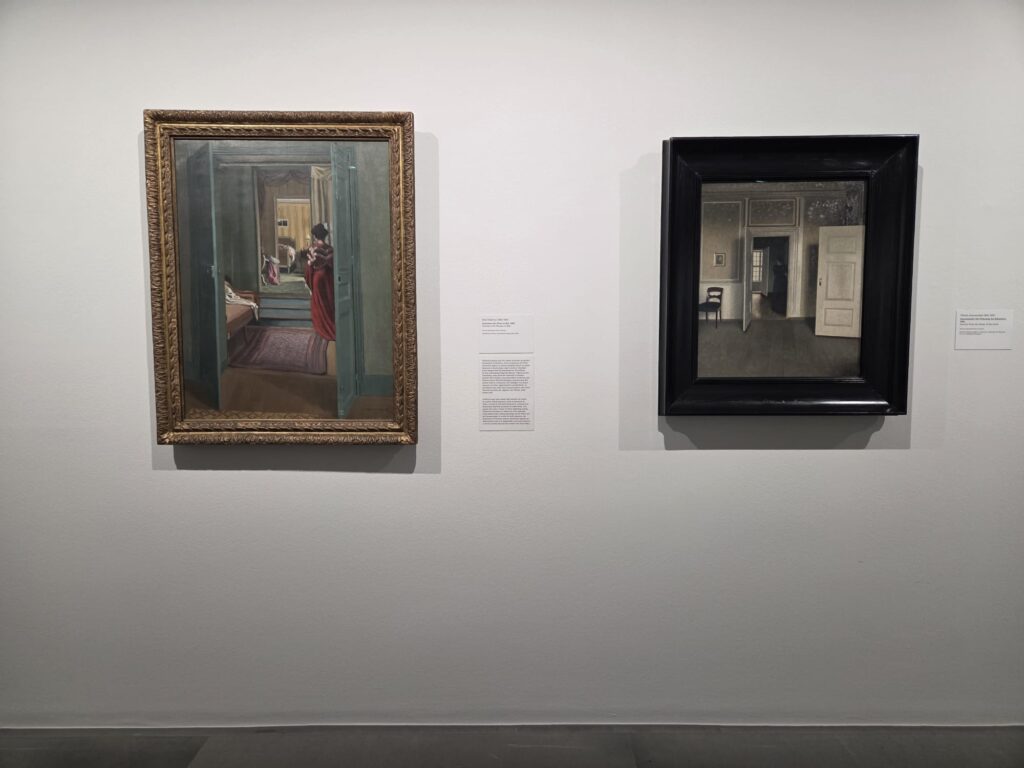
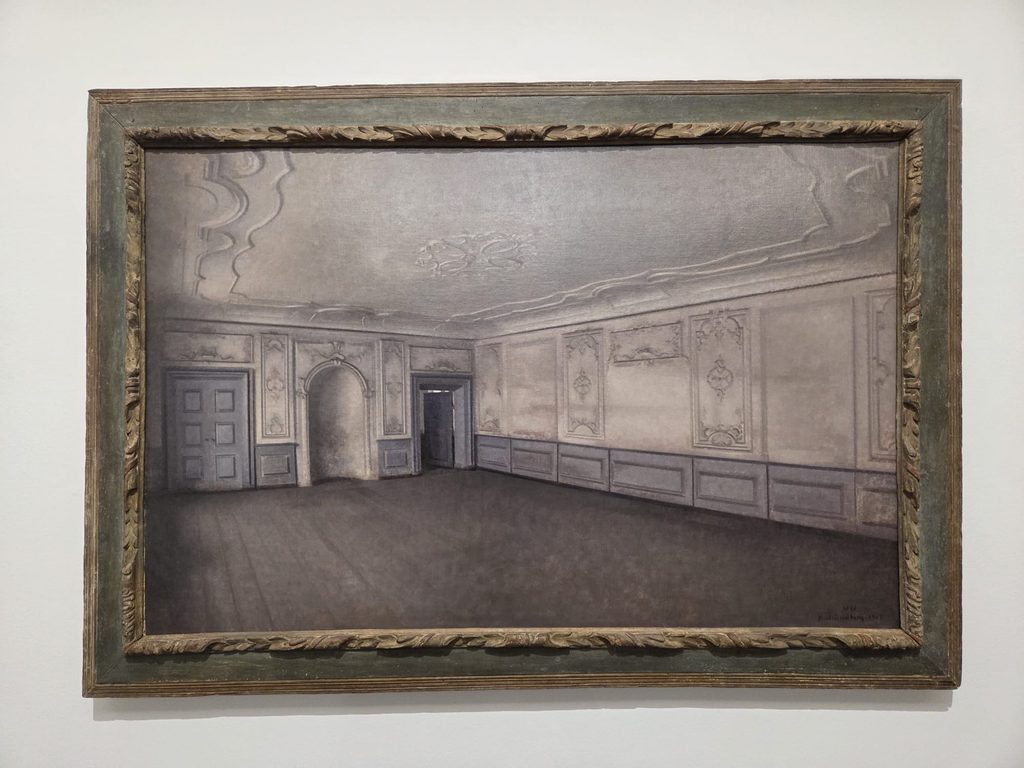
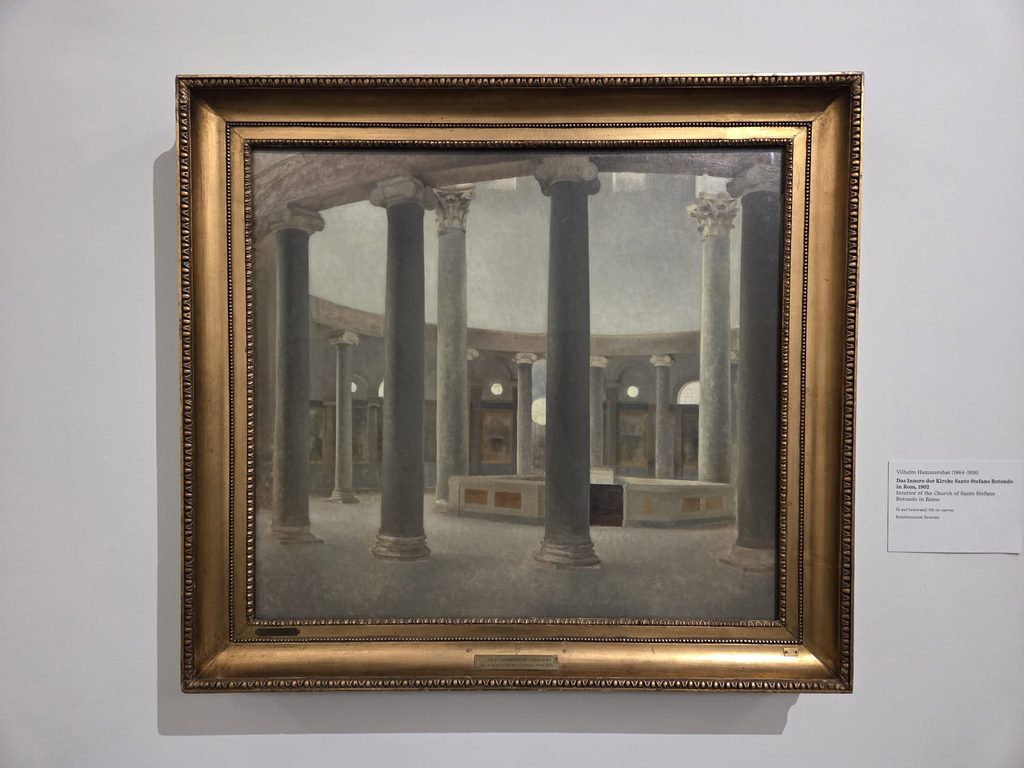
The exhibition itself is arranged thematically. The first room, which is also the biggest, ticks all the Hammershøi boxes straight off the bat. Lots of quiet domestic interiors, and lots of women (mostly Ida, presumably) painted from the back. The painting I had come all that way to see was in this first room, which was nice as I could then relax and enjoy the rest of the exhibition.
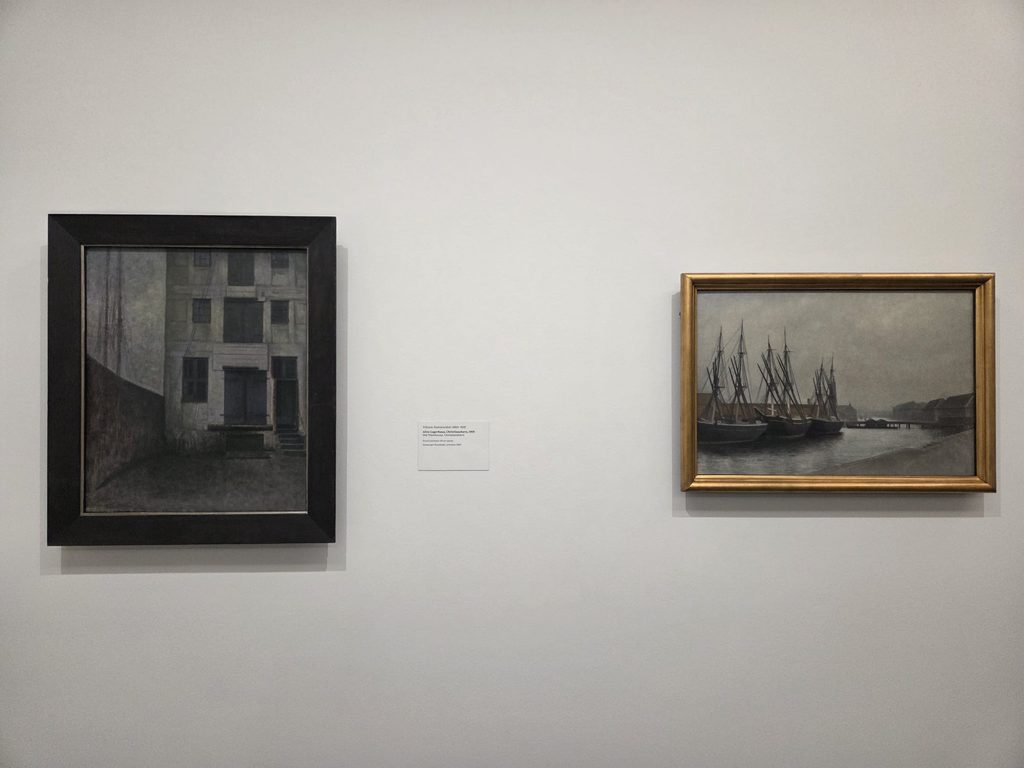
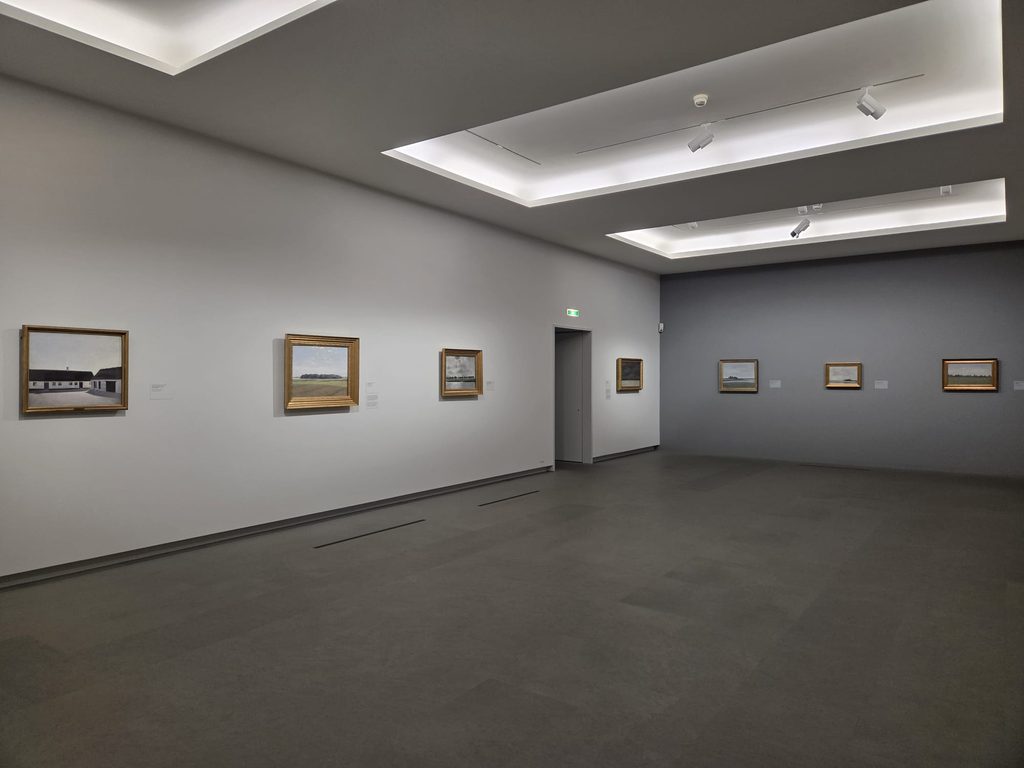
And enjoy it I did. Each theme deepened my understanding of the artist’s work. There were more paintings of interiors, some on a more impressive scale. Then portraits, which gave an insight into the artist’s circle, selective as it may have been. Then a biography in a transitional space, before looking at some exteriors. First cities, including London, and then landscapes to finish with. The similarities between them were their peacefulness, muted palette, and lack of people. Seeing the British Museum deserted felt like a dream (which I guess it would be – maybe Hammershøi and I have some things in common). The walls of the exhibition space are painted in soft greys, blues and pinks picked out from the canvasses, so the whole thing comes together very well.
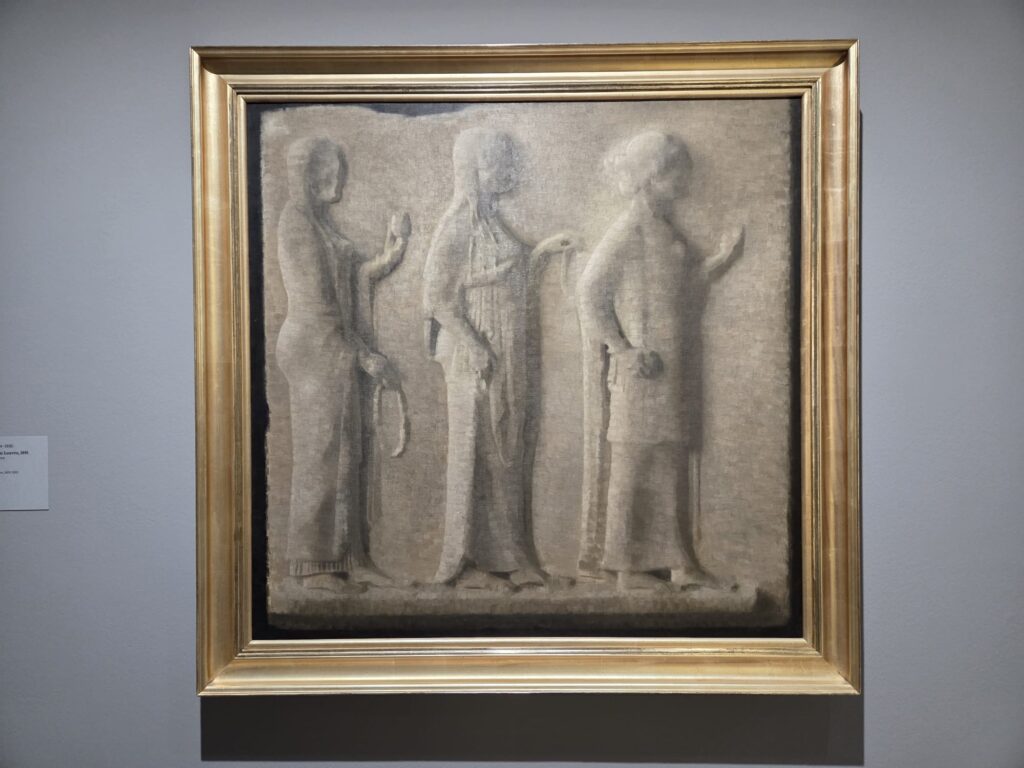
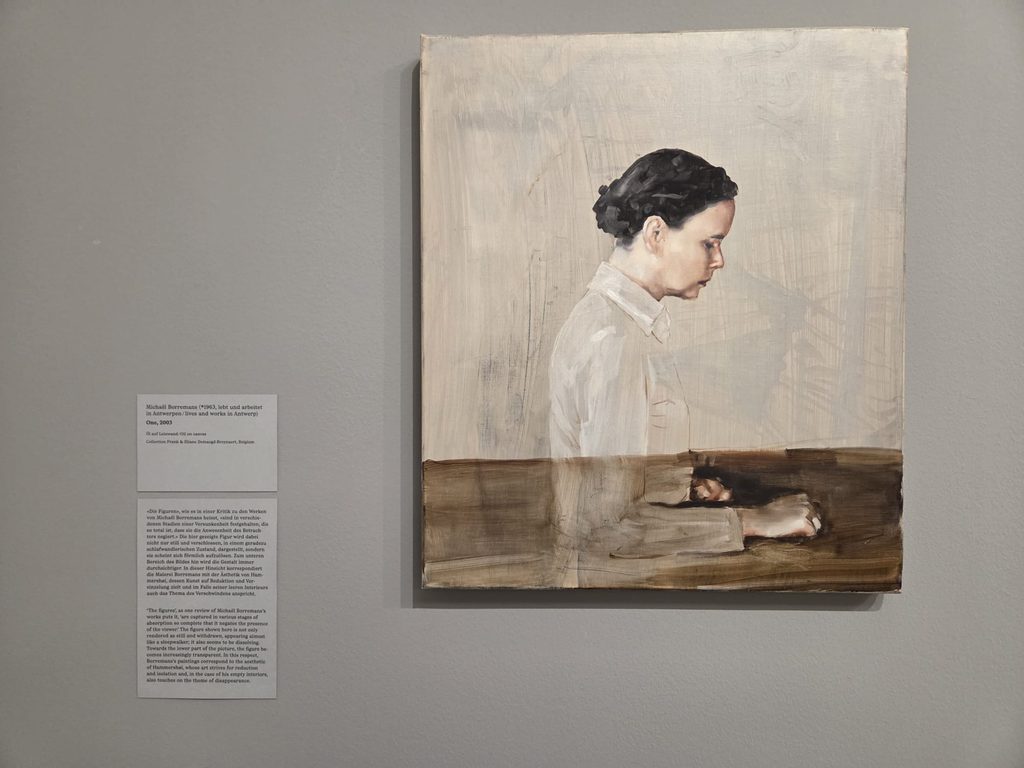
Importantly, the exhibition isn’t all Hammershøi. There are a couple of paintings by his contemporaries, including Félix Vallotton. These provide an interesting contrast. Even from across the room you can spot the hand of a different artist. And yet Vallotton was also known for painting tense interior scenes with a distance between viewer and subject. Over in the room of portraits, meanwhile, some contemporary works pop up. An interesting but ultimately underexplored look at the artist’s impact on later generations.
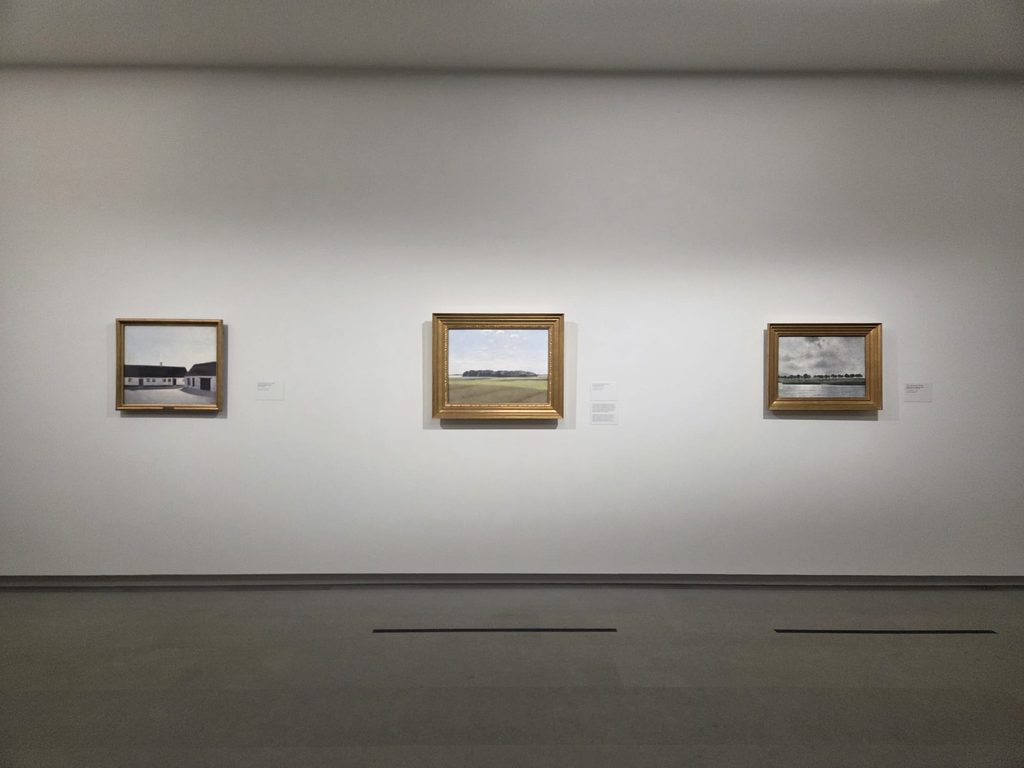
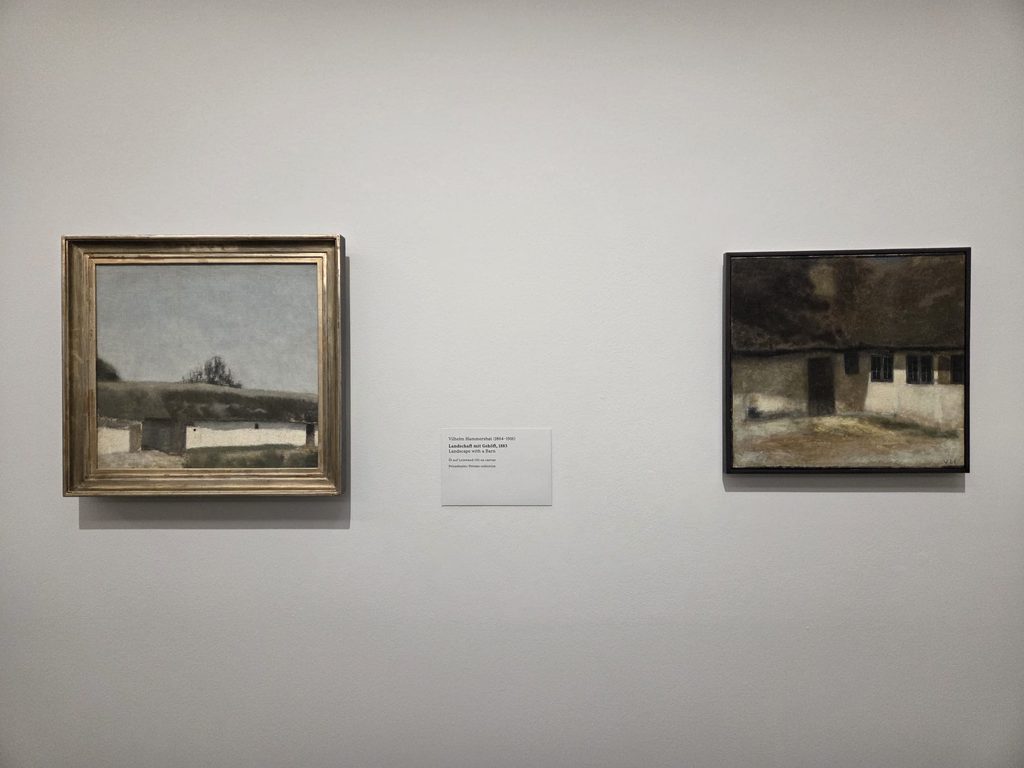
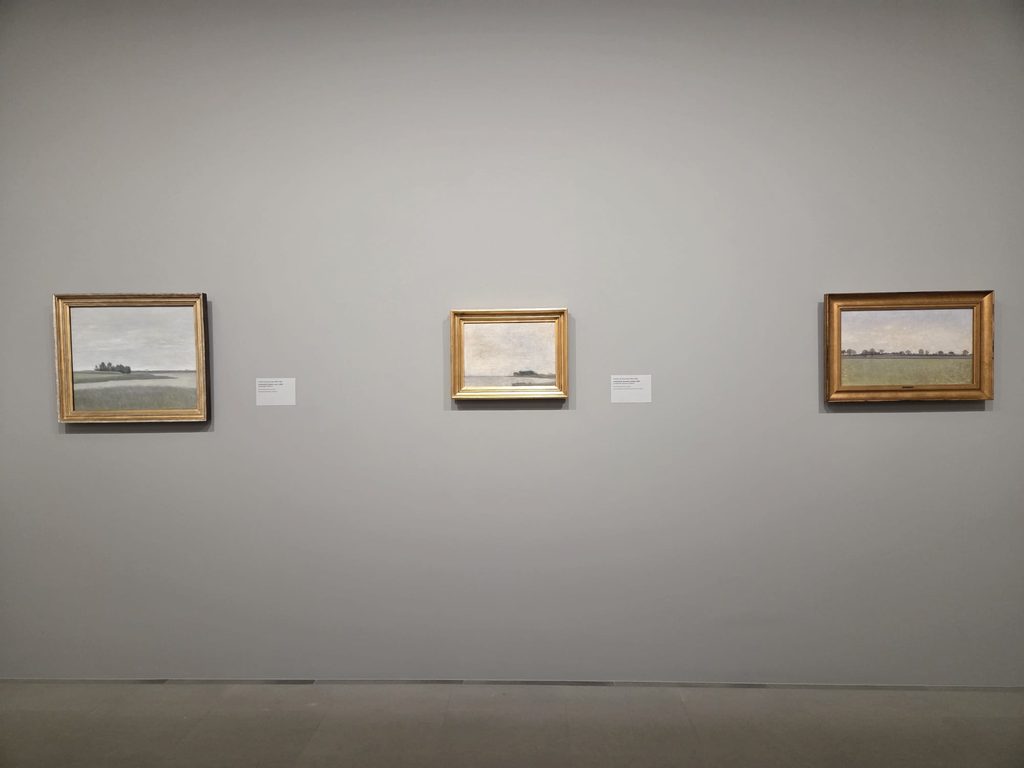
Final Thoughts on the Exhibition
I still don’t really know what an ‘eye that listens’ is. But I otherwise enjoyed this exhibition thoroughly. I was a bit late getting this post out to you so if you were planning to head to the Kunsthaus Zürich you have sadly missed it. Final opportunity will be at the Art Institute of Chicago in the new year.
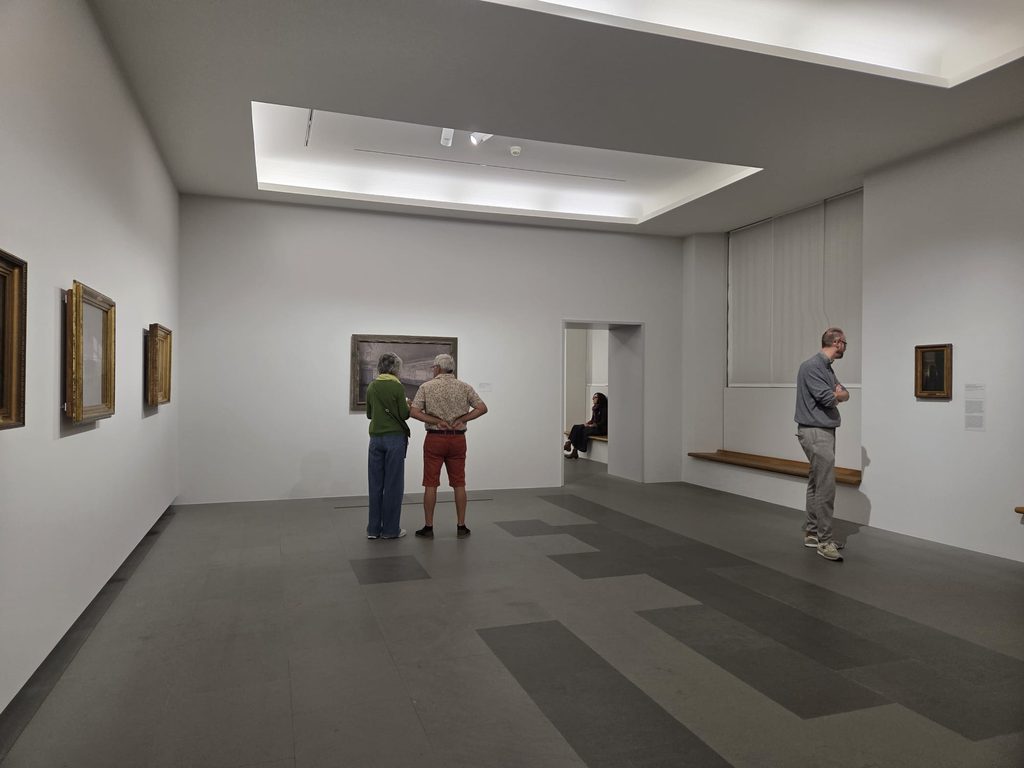
I wonder how much the host institution shapes this particular exhibition? I’ve had experience in the past of seeing an exhibition in more than one location, and noticing that different works have shifted in or out of the selection, or that there is a different scale or focus. Although I enjoyed this exhibition at the Kunsthaus Zürich, I did feel the exhibition space it was in made for a slightly difficult flow.
It was essentially one central room, with smaller rooms to the left and right and no directional signage. The biography came halfway through, and one of the most unusual works was in a sort of foyer space which didn’t help integrate it into the overall picture. Something more linear with biography first and then sequential rooms might be a little more natural as a visitor experience. But I have no idea what the space at ARTIC is like – perhaps it’s even more awkward, or perhaps the exhibition will be something else again!
With some artists, I feel that if I’ve seen a good monographic exhibition of their work, that’s probably enough and I wouldn’t go out of my way to see another. That’s not the case with Hammershøi. There’s something so wonderfully calming about his paintings, which also encourage slow looking. I’d happily spend another hour or two looking closely at his work.
Salterton Arts Review’s rating: 3.5/5
Vilhelm Hammershøi. The Eye That Listens finished at Kunsthaus Zürich on 25 October 2026. It’s currently scheduled (as Vilhelm Hammershøi: Pictures from Home) at the Art Institute of Chicago from 19 June to 3 October 2027.
Trending
If you see this after your page is loaded completely, leafletJS files are missing.