
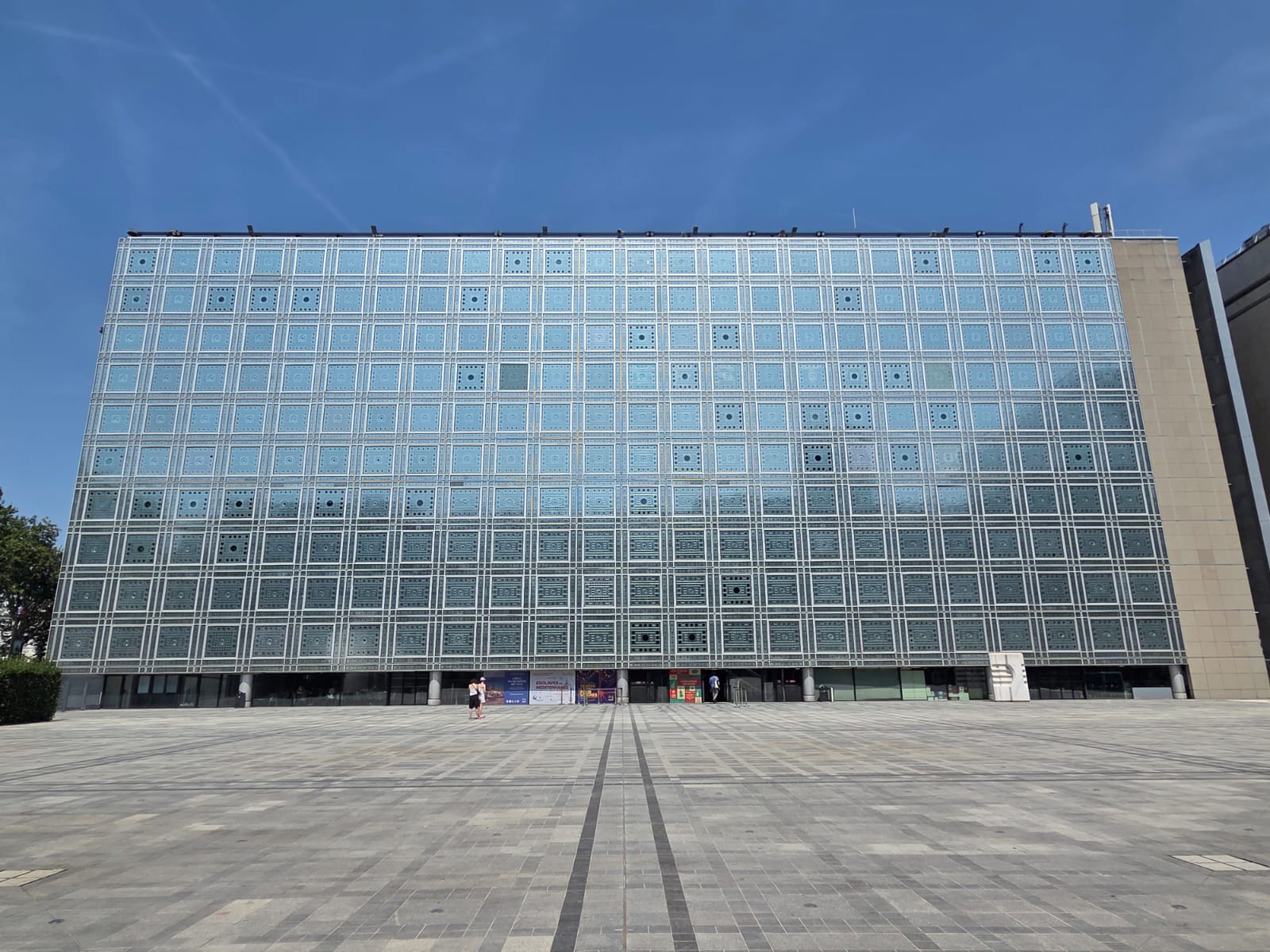
Arab World Institute (l’Institut du Monde Arabe), Paris
A visit many years in the making, I finally make it to l’Institut du Monde Arabe in Paris.
A Long Overdue Visit
When the Salterton Arts Review was but a youngster, and hadn’t yet seen much of the world, there were so many sights I wanted to see. And so, when our French curriculum at about age 16 included learning about Paris, I paid close attention. We learned about the main sights, but also some further off the beaten track that stuck with me. I learned, for instance, that the Opéra Bastille was a modern building, and resembled a wedding cake. I also learned that the Muséum National d’Histoire Naturelle had recently been renovated, and that its central display, in the form of a Noah’s Ark parade of animals, was impressive.
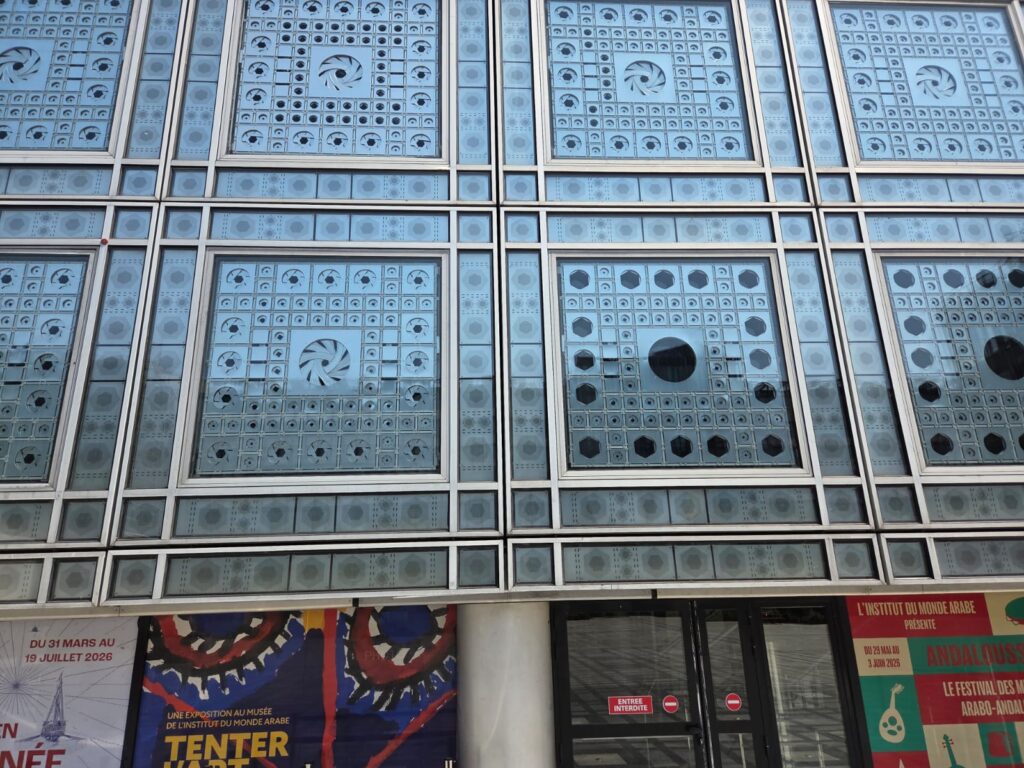
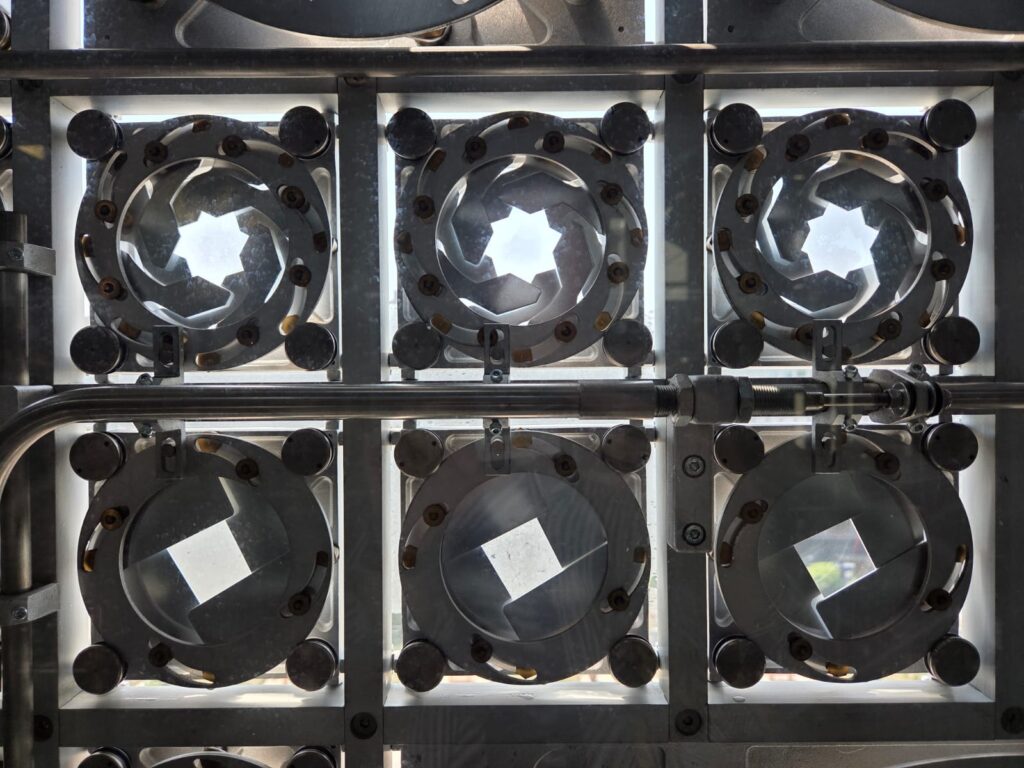
These two I was easily able to verify on various holidays and longer stints in Paris over the years. But there was a further sight I had always remembered, but never seemed to make it to. This was l’Institut du Monde Arabe. Like l’Opéra Bastille, it was quite a new addition to Paris when I was learning about it around the year 2000. Less so now. The thing that had stuck with me was its innovative window design – drawing on Islamic architecture but with a modern twist.
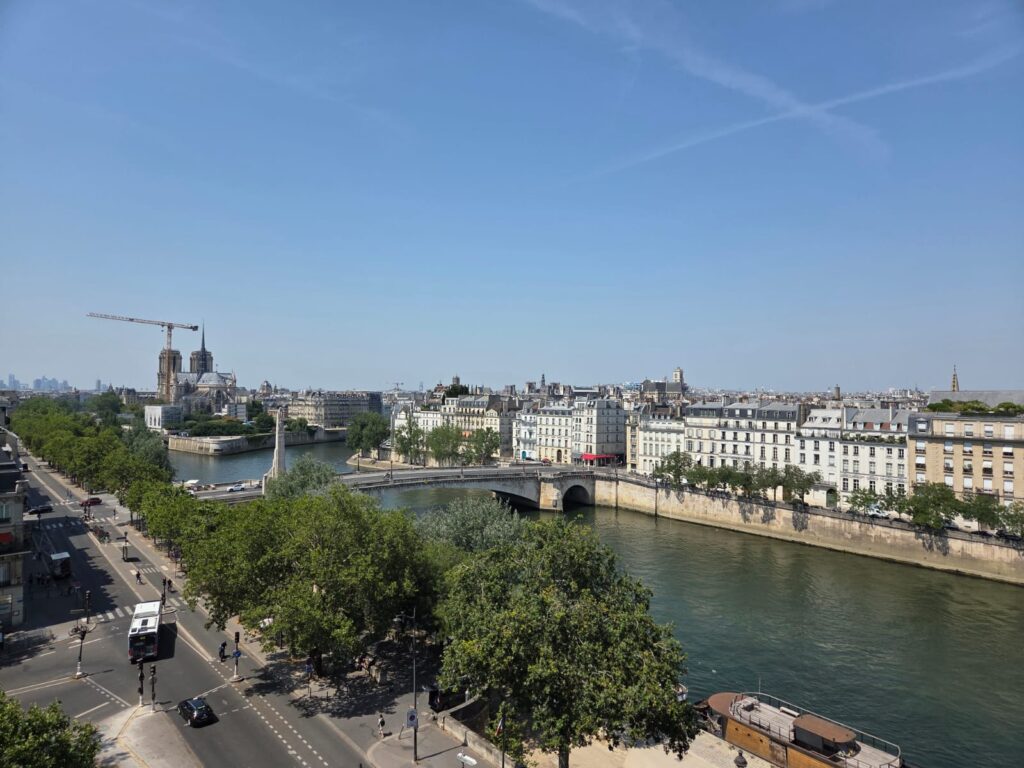
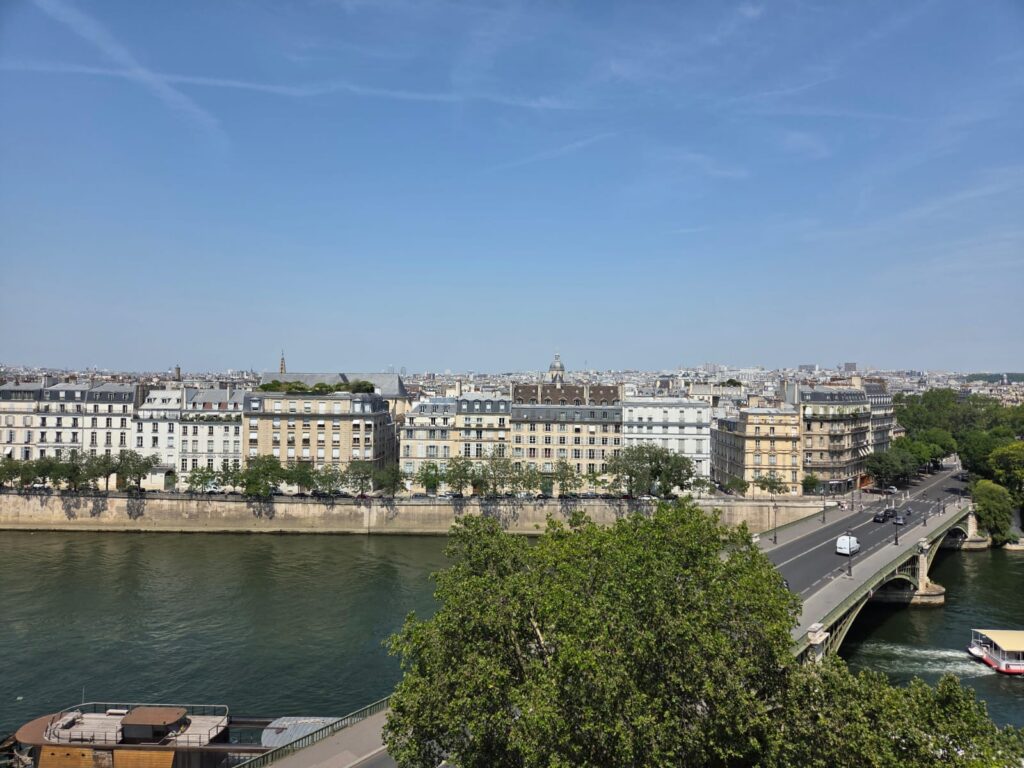
And then I found myself with a few aimless hours in Paris. The Salterton Arts Review being a bit over the top on occasion, I was doing an aller-retour (there and back trip) to Paris one Saturday, to see JR’s La Caverne du Pont Neuf. While I was happy to see this impressive installation, it took a matter of minutes to walk through. What to do with the rest of my day in Paris? Despite temperatures in excess of 40 degrees Celsius, I decided that l’Institut du Monde Arabe would be a nice destination to walk to. I could see some sights along the way, and finally tick it off my list. And it turned out to be a worthwhile trip. The walk was hot, but those windows (plus air conditioning) ensured the IMA was a nice, cool destination.
L’Institut du Monde Arabe: A Brief History
There are two Instituts du Monde Arabe – the organisation, and the building. Let’s start with the organisation. Founded in Paris in 1980 by 18 Arab countries, its aim is to address a lack of representation for the Arab world in France by researching and disseminating information about its art, history, traditions and values – cultural and spiritual. A further aim is to encourage cooperation and cultural exchange between the Arab nations themselves. The institution includes a library, museum, auditorium for special events, restaurant, offices, and meeting rooms.
The building was originally proposed in the 1970s by President Valéry Giscard d’Estaing (French presidents love a cultural project). It was constructed in the end during the presidency of François Mitterrand, part of his Grands Projets urban development programme. He inaugurated it in November 1987. The IMA gained a satellite location in Tourcoing (up by the Belgian border) in 2016. The current director is French-Iraqi poet Chawki Abdelamir, and the president is Anne-Claire Legendre (replacing Jack Lang in 2026 after a scandal).
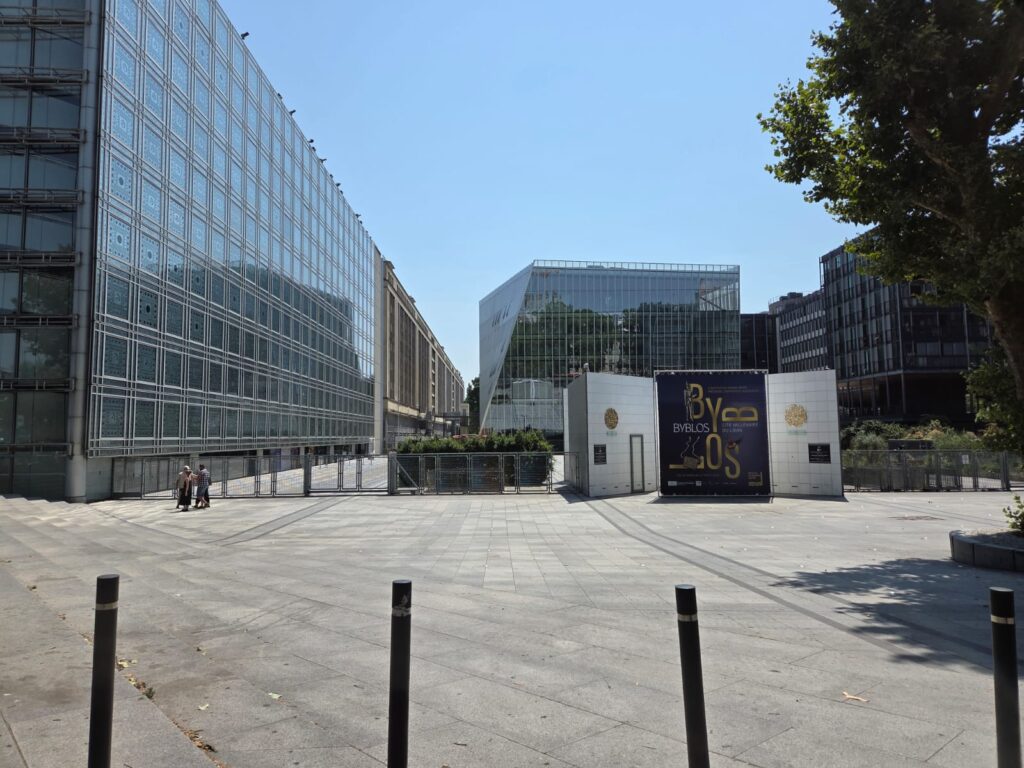
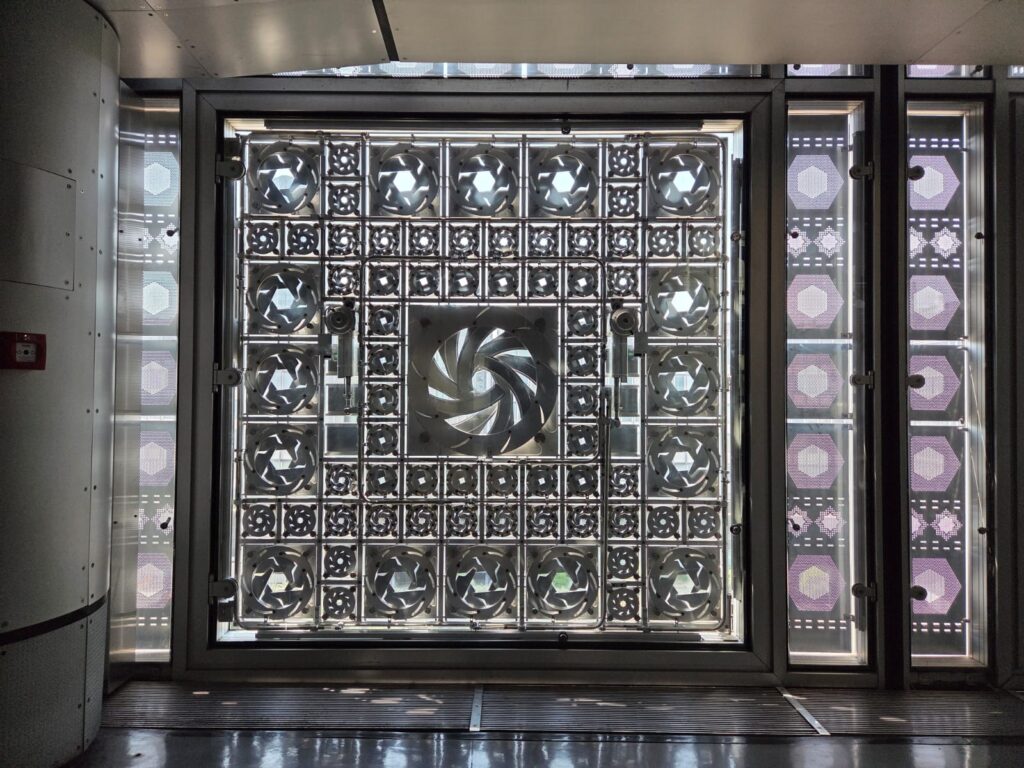
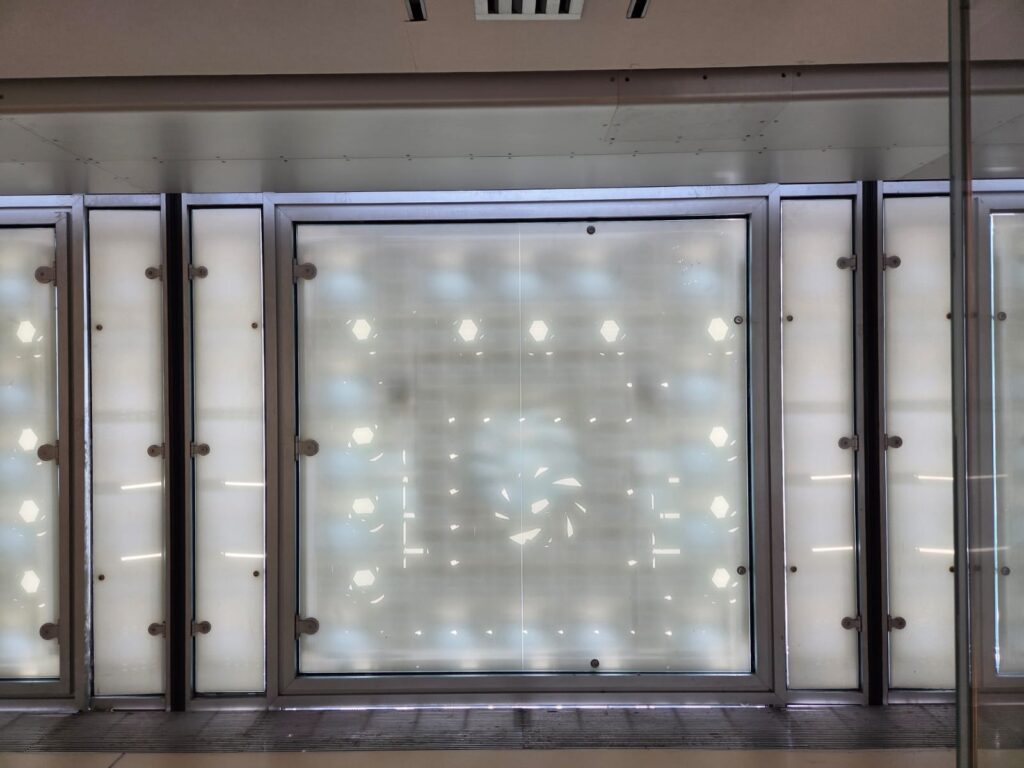
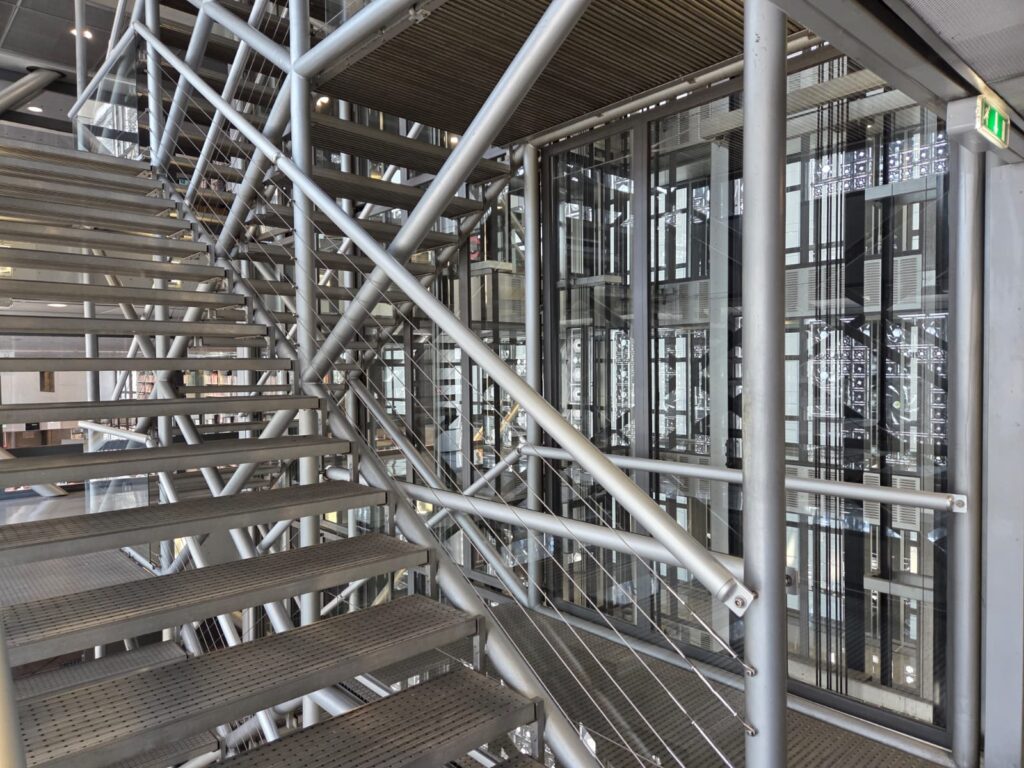
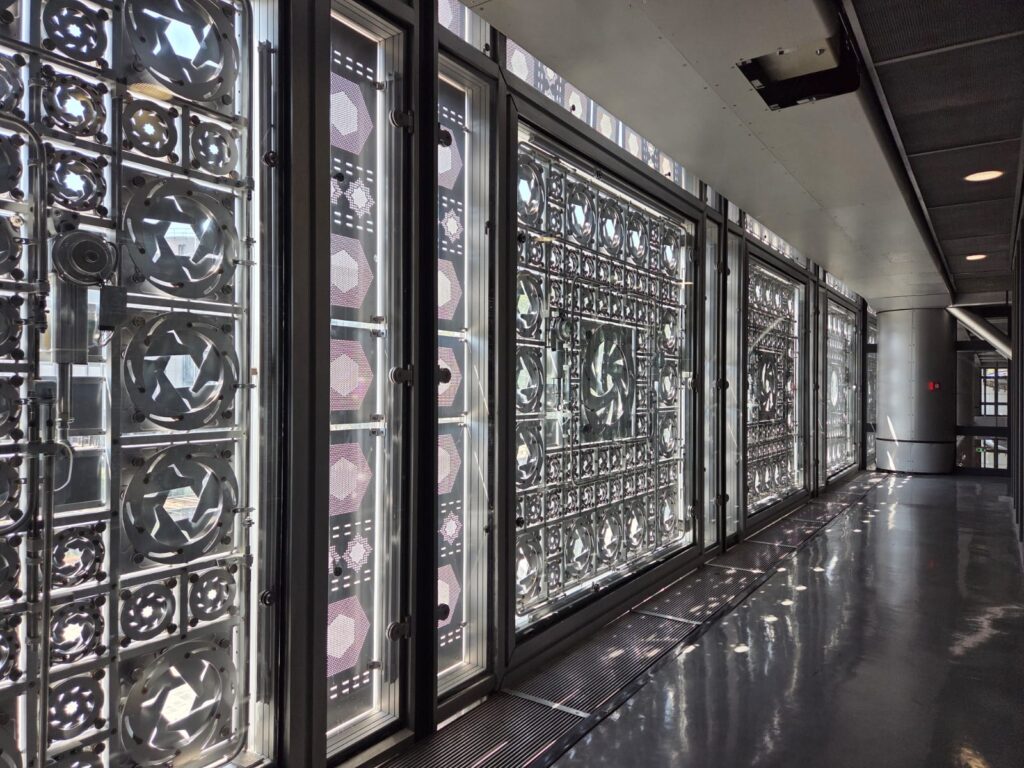
Now back to those windows. The Architecture-Studio, with Jean Nouvel, won the 1981 competition to design the IMA. Funding came from the French government and League of Arab States. The building lies between the Seine and the Jussieu Campus of Paris VI (Pierre and Marie Curie University). The side along the river follows its curves, while the opposite side is a rectangular curtain wall. Visible behind the glass is a brise soleil, an architectural feature which cools a building down by deflecting sunlight. The geometric motifs of the brise soleil are photo-sensitive, motor-controlled shutters which open and close automatically to control light and heat. The idea comes from traditional Islamic architecture, which also uses brises soleil as climate control. The building won the 1989 Aga Khan Award for Architectural Excellence.
Visiting L’Institut du Monde Arabe: The Museum Part I
Although I was just about melting by the time I reached the unsheltered plaza outside the museum, I stopped to admire the windows I’d been thinking about, on and off, for 25 years. One or two looked like they might have given up on life at this point and stopped their automatic climate control activities, but it is still a very impressive sight. And I was to get an even closer look at them from inside.
Heading in, I purchased my ticket and oriented myself. As well as a museum, there were a total of four temporary exhibitions to see. The basic ticket price included three of them (and I will describe these below), while a fourth carried an additional charge (and will be the subject of my next post). There is also a terrace which I found with some difficulty!
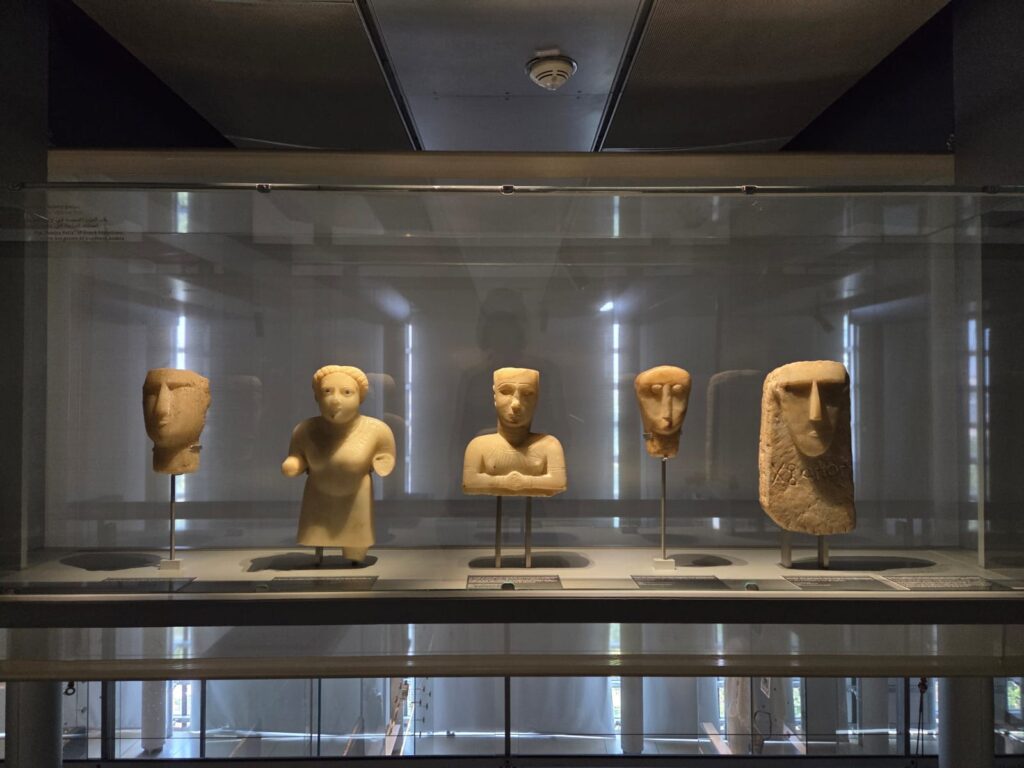
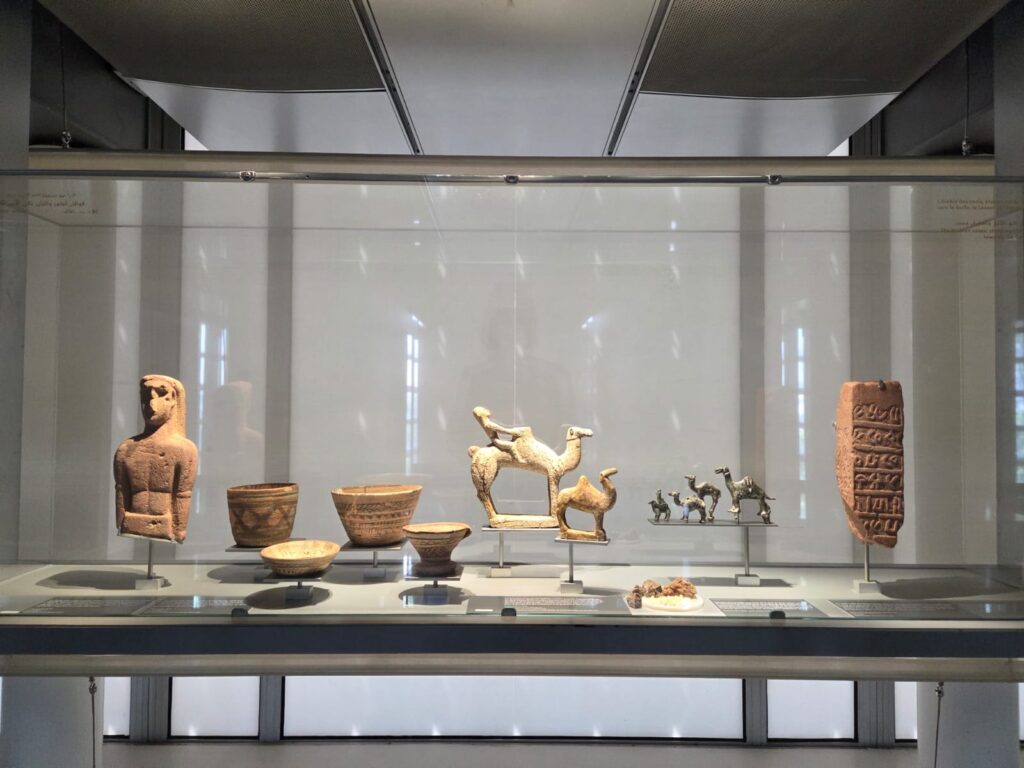
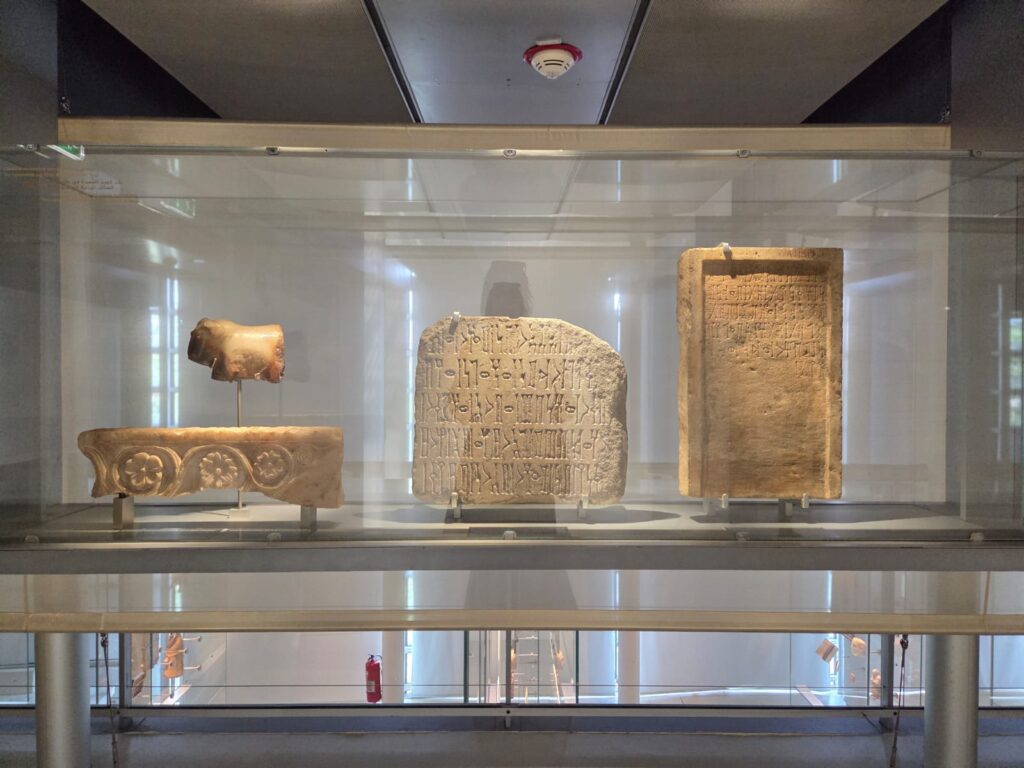
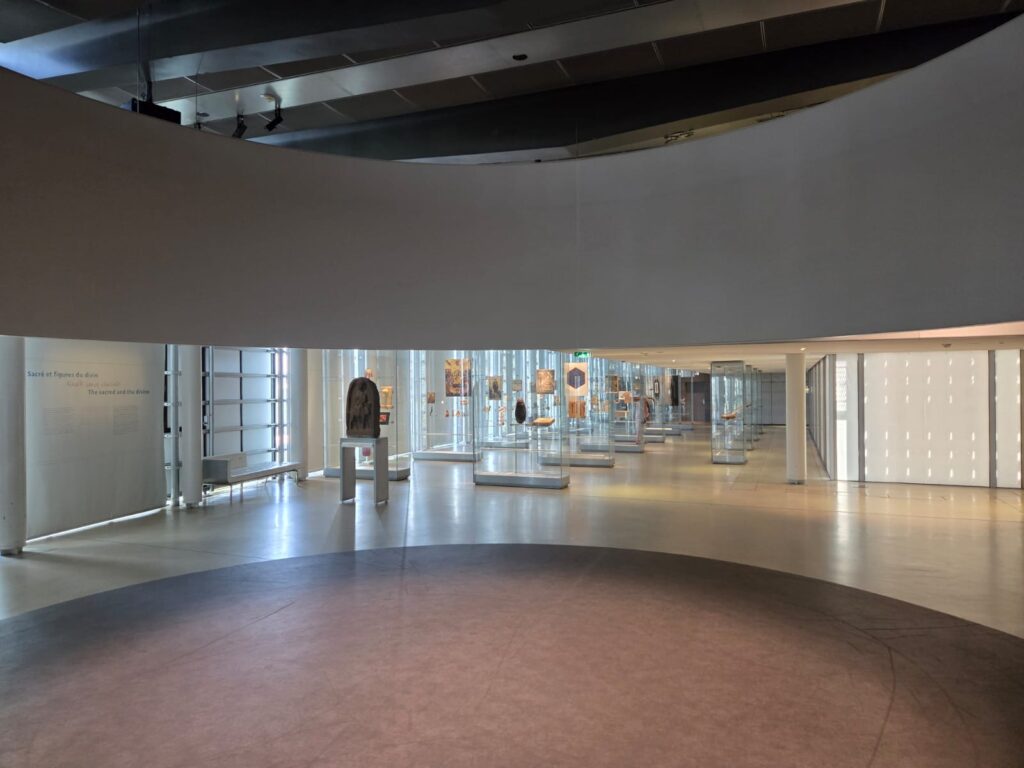
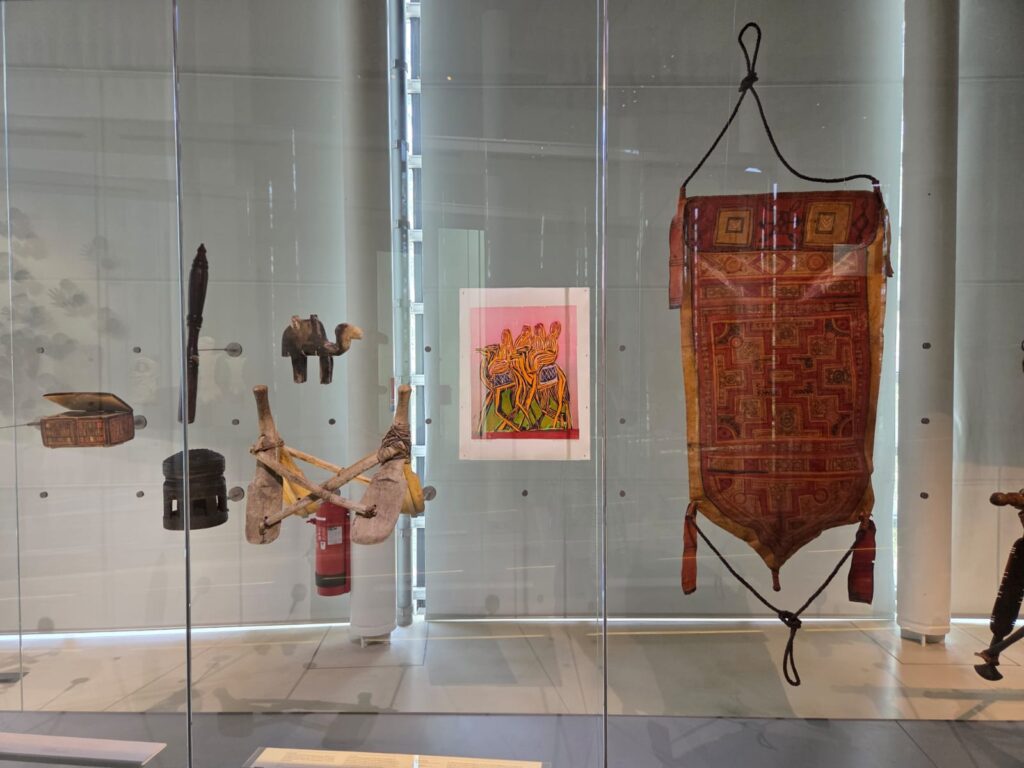
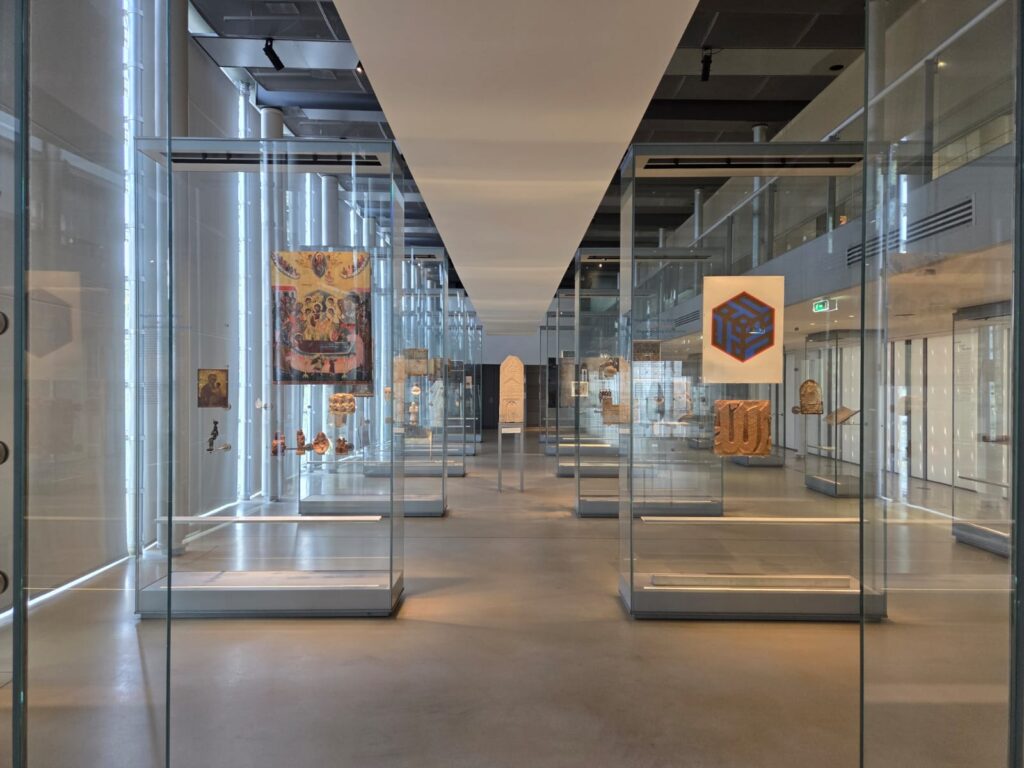
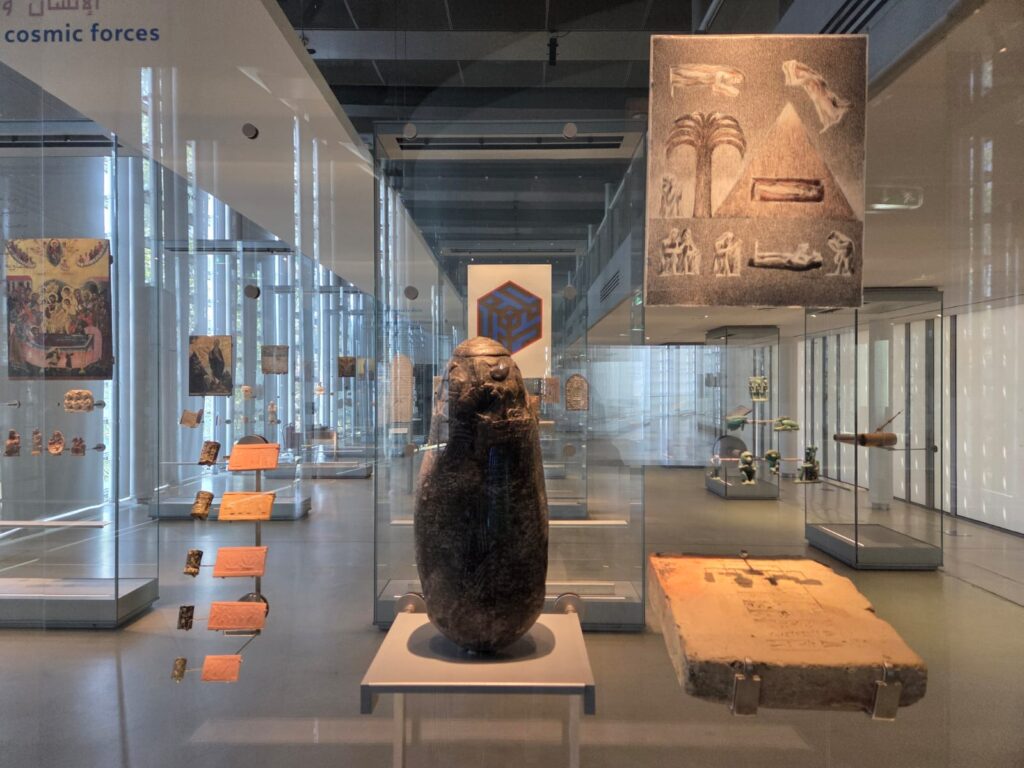
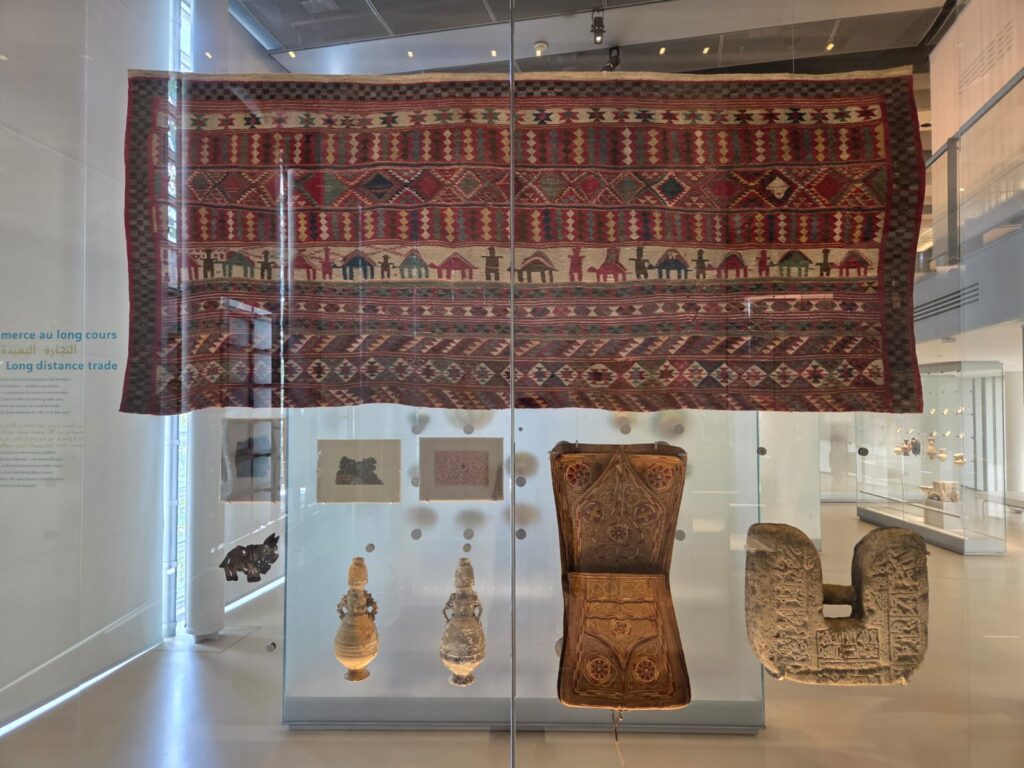
I started with a temporary exhibition, but it’s actually the main museum that I want to talk about first. Over three floors, the IMA’s museum seeks to cover the plurality of the Arab world in terms of ethnicities, beliefs, languages, and traditions. No small undertaking! It begins on the seventh floor. After a small temporary exhibition space (which I didn’t initially realise was a temporary exhibition), a few display cases guide the visitor to the main exhibition, establishing along the way the richness of artistic styles, traditions, and systems of knowledge within the Arab world. On the next level down we look at beliefs, with a careful emphasis on giving space to all three Abrahamic religions (plus some older traditions) – drawing out the similarity of monotheistic religions rather than their differences.
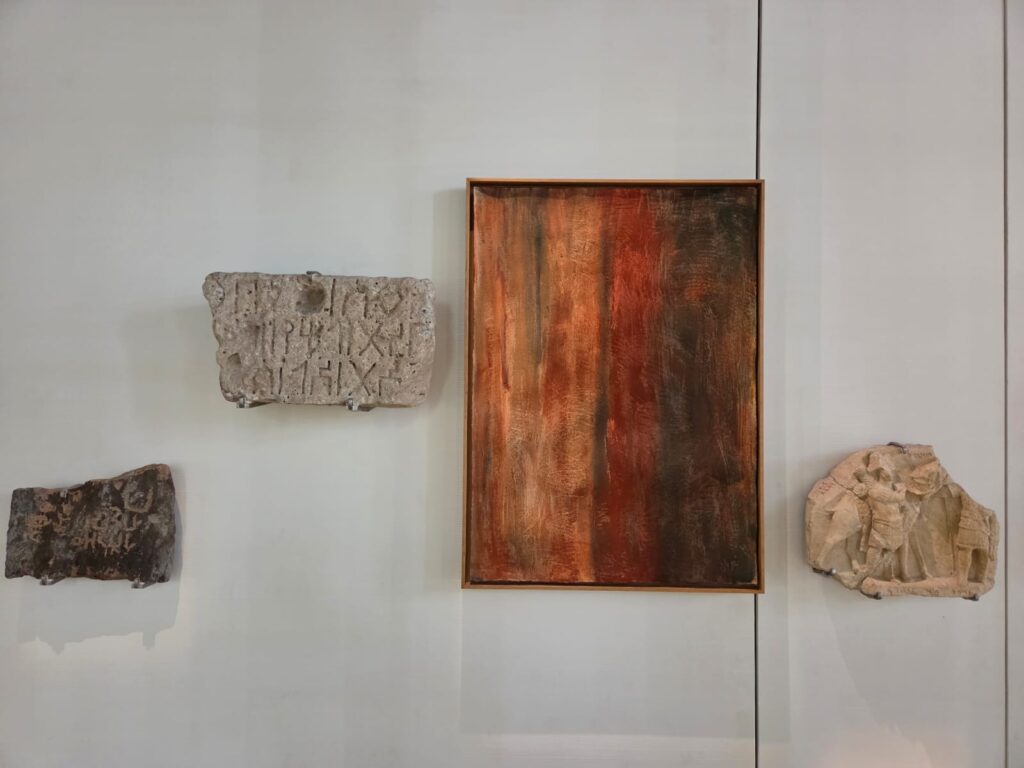
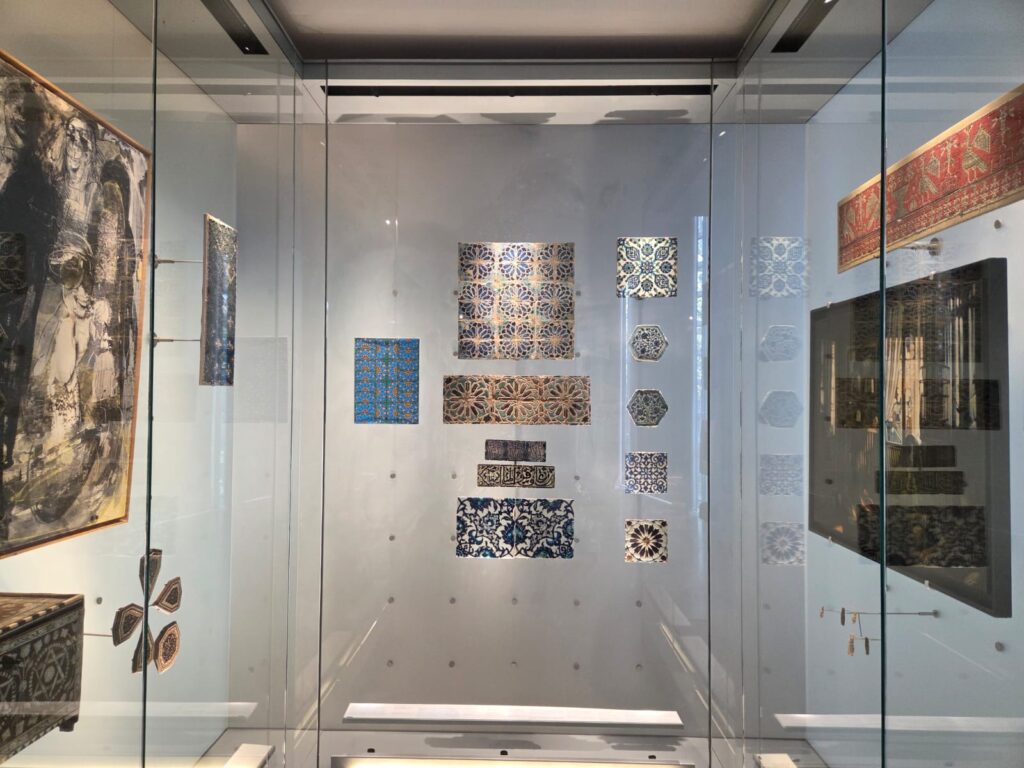
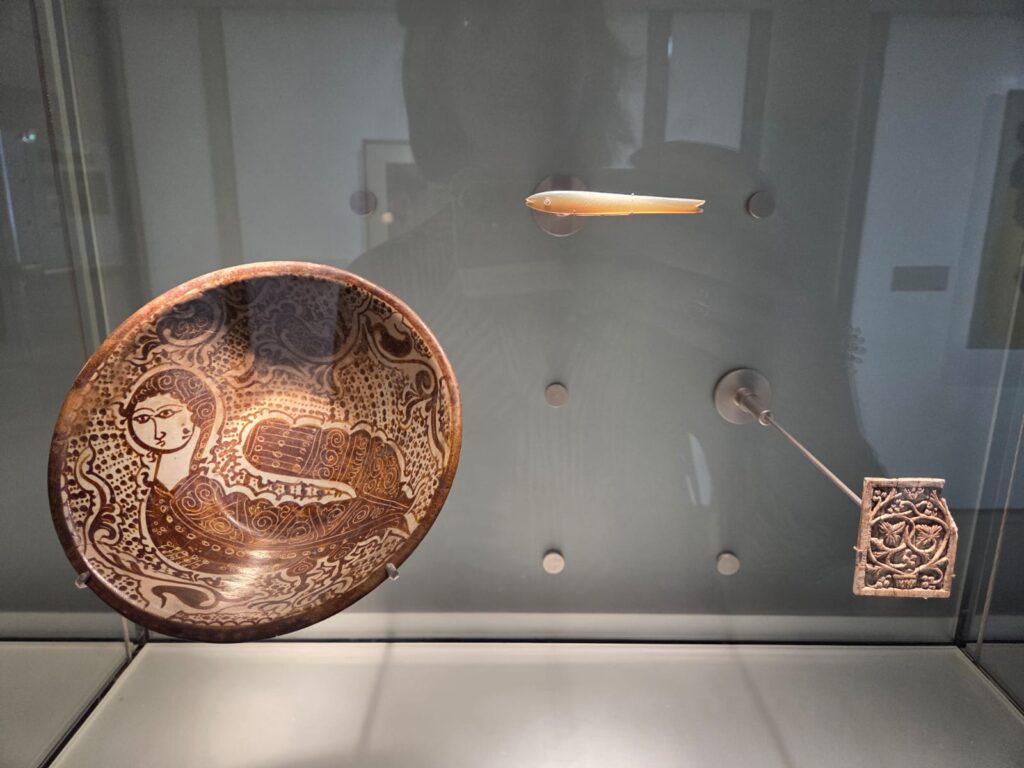
I noticed from the outset a couple of interesting things about the museum. Firstly, the objects on display come from the IMA’s collection but also frequently from other places – the Louvre, and the national museums in Riyadh and Damascus feature heavily. I wonder if the Syrian artefacts are here as a result of the war, or if it’s a fortunate coincidence they were far away from it. Either way, this seems to be a good example of the cross-cultural exchange and cooperation the IMA exists to facilitate. And also undoubtedly ensures a richer experience for visitors. The second thing I noticed was a blend of historic artefacts and contemporary art. This is a nice way to show continuity and evolution in the Arab world.
Visiting L’Institut du Monde Arabe: The Museum Part II
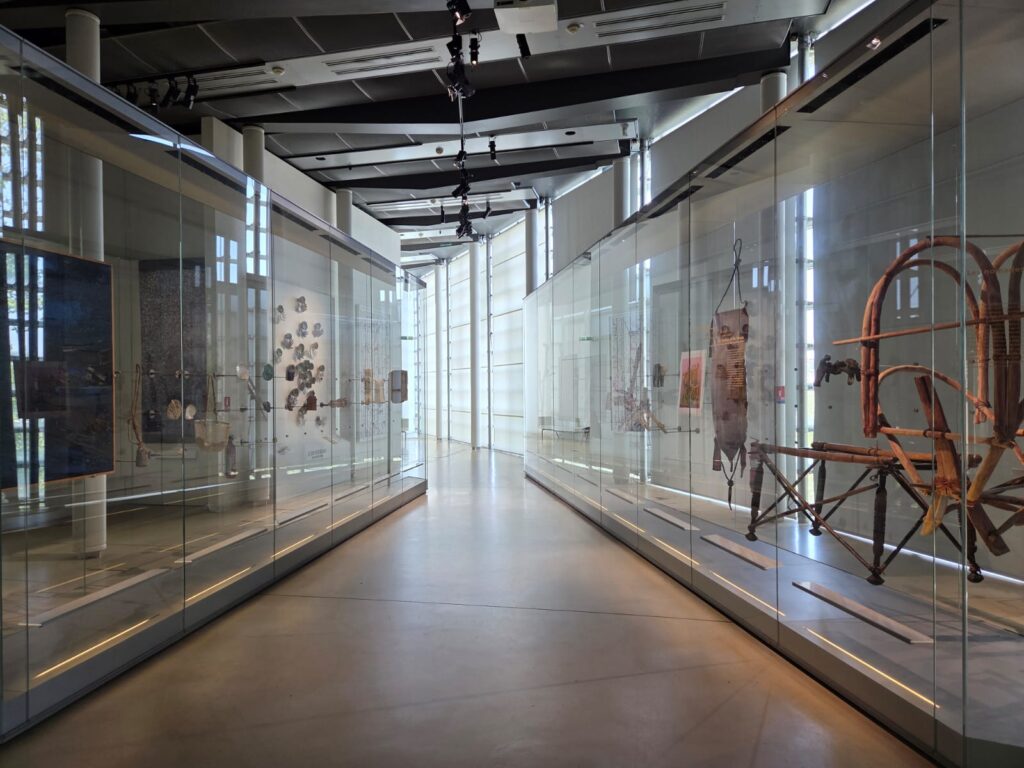
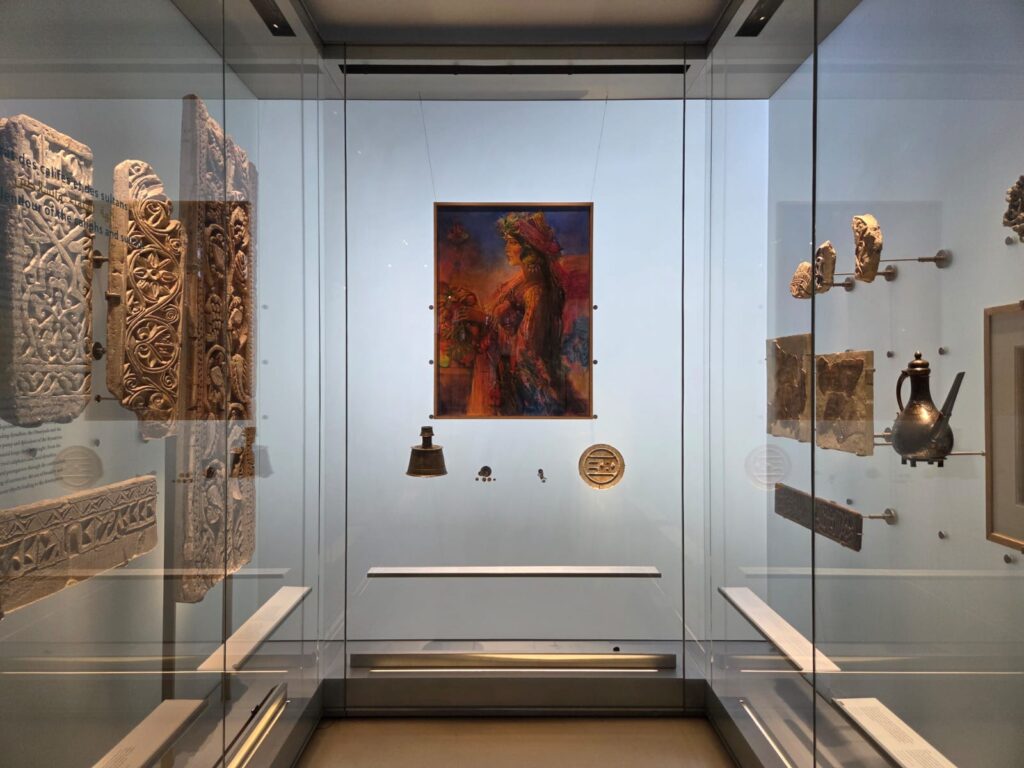
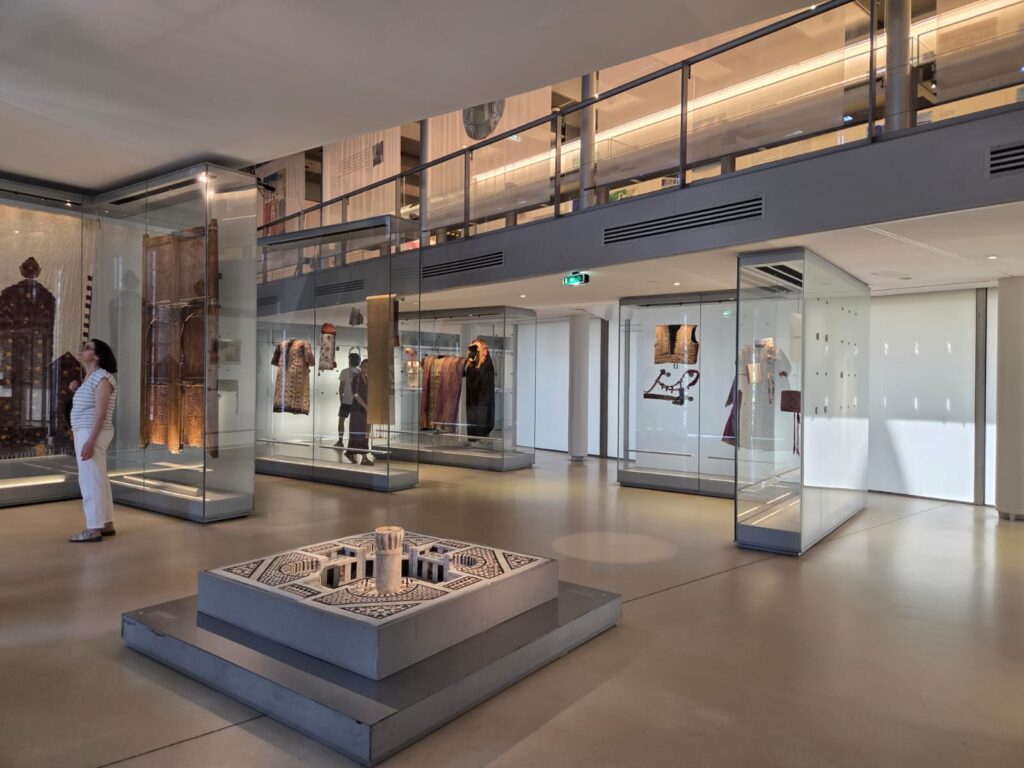
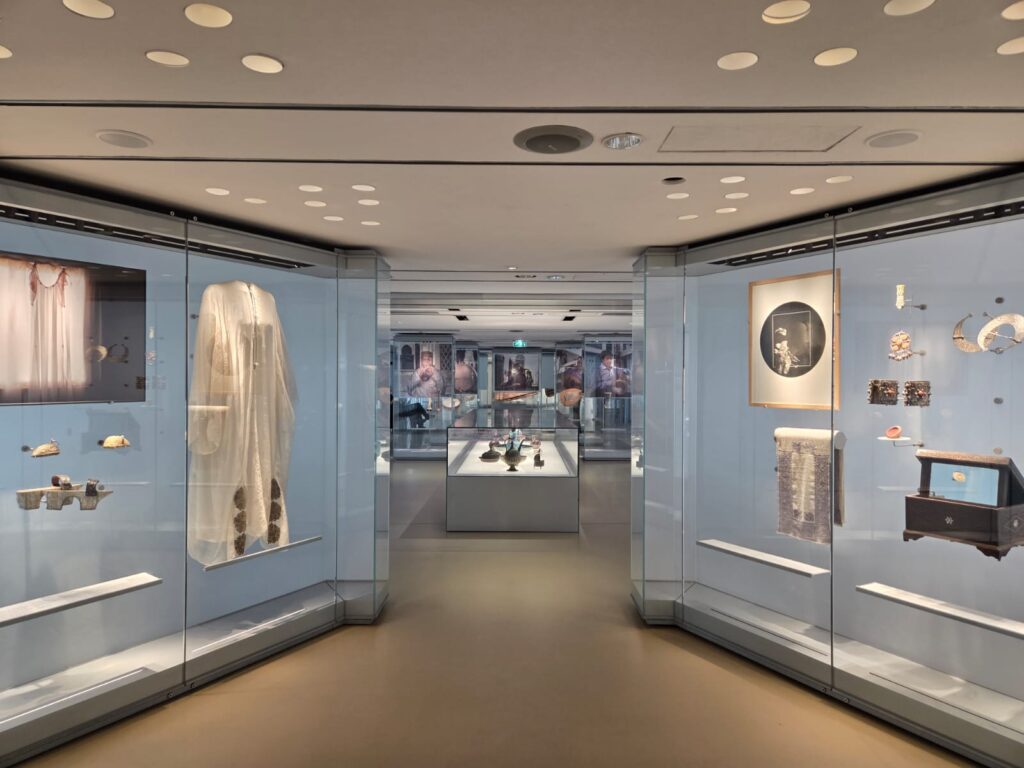
Carrying on to the fourth floor, the focus shifts to daily life. There are textiles, ceramics, glass, household objects, even a fountain. The narrative here is about the typical spaces of an Arab town or village. The mosque (or synagogue, or church), the souk, the madrassa. All with their typical products, and transfer of knowledge from one generation to the next. Further focuses within this space look at topics such as calligraphy (sacred and secular), and the hammam as a manifestation of the obligation for Muslims with regards to hygiene and purification.
Looking at the museum in its entirety, a few things stand out. Firstly, I think that the curators do a good job of presenting a large, varied and complex part of the world. And they do so while giving space to a plurality of experiences and points of view. Not an easy task, but fairly well achieved.
Secondly, though, and this is maybe a little controversial, I think that award-winning architecture somehow works against the museum exhibition, not with it. The display is over several floors, with temporary exhibitions puncturing it twice . This inevitably breaks the flow a bit. The predominance of glass also results in a lot of reflection, particularly when combined with light-coloured texts printed directly onto vitrines. I struggled to read some of these without moving back and forth to catch different angles. It’s alright as a visitor experience but definitely affects accessibility.
Overall, though, it’s an enjoyable and informative display. I learned a lot, and appreciated the museum’s vision of the Arab world. There are also some exquisite objects to appreciate. I particularly liked some of the textiles, and the patterned tiles.
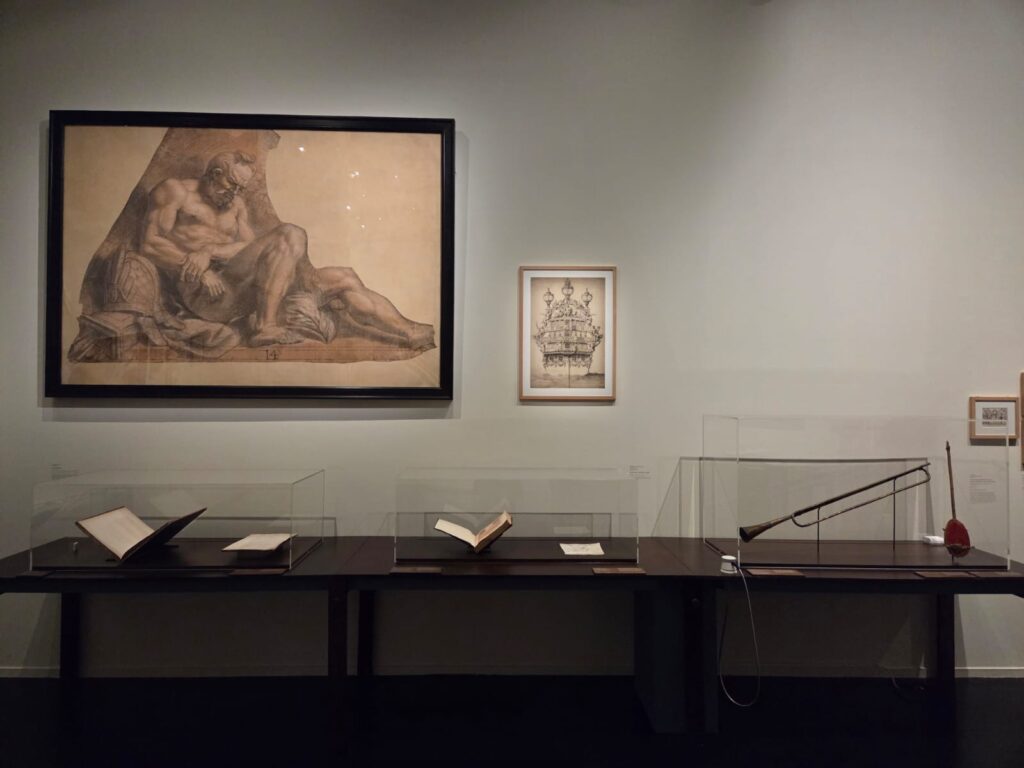
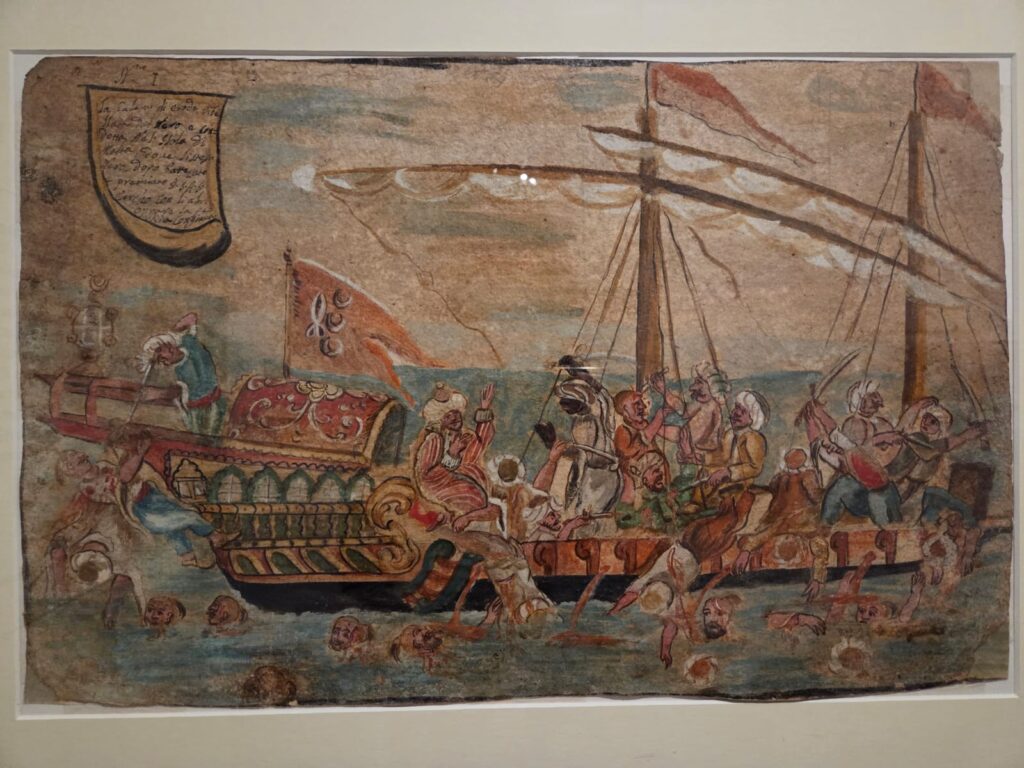
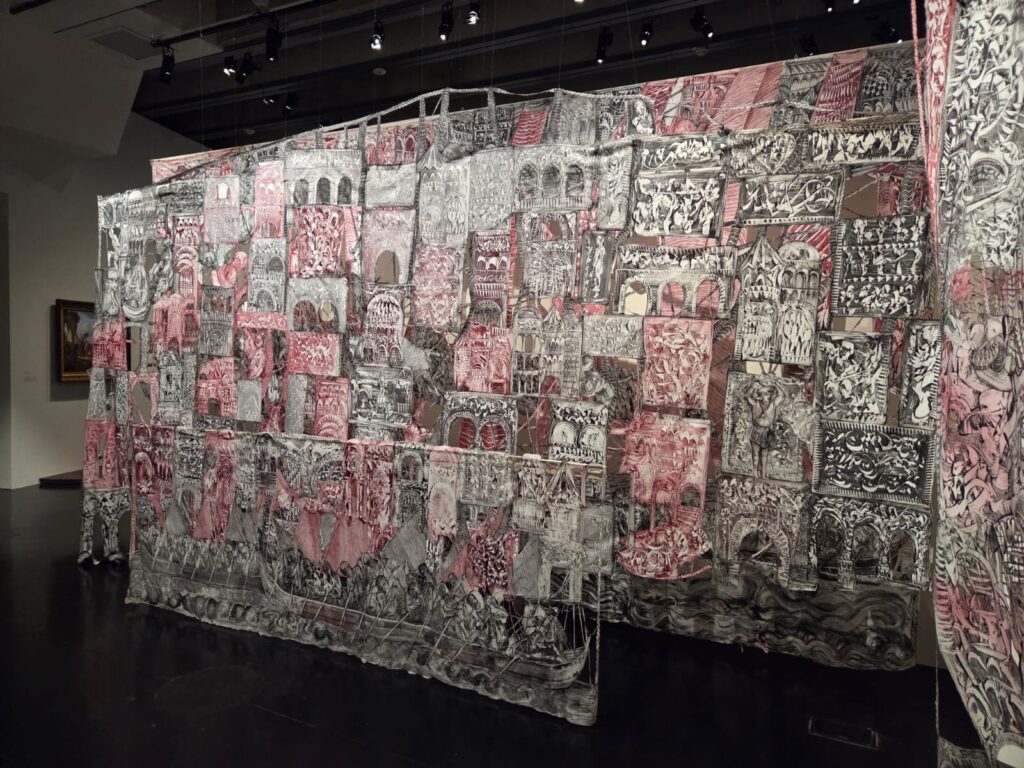
Esclaves en Méditerranée, XVIIe-XVIIIe siècle (Slavery in the Mediterranean World, 17th-18th Centuries)
On now to the temporary exhibitions. The first is the one I saw before the IMA museum – Slavery in the Mediterranean World, 17th-18th Centuries.
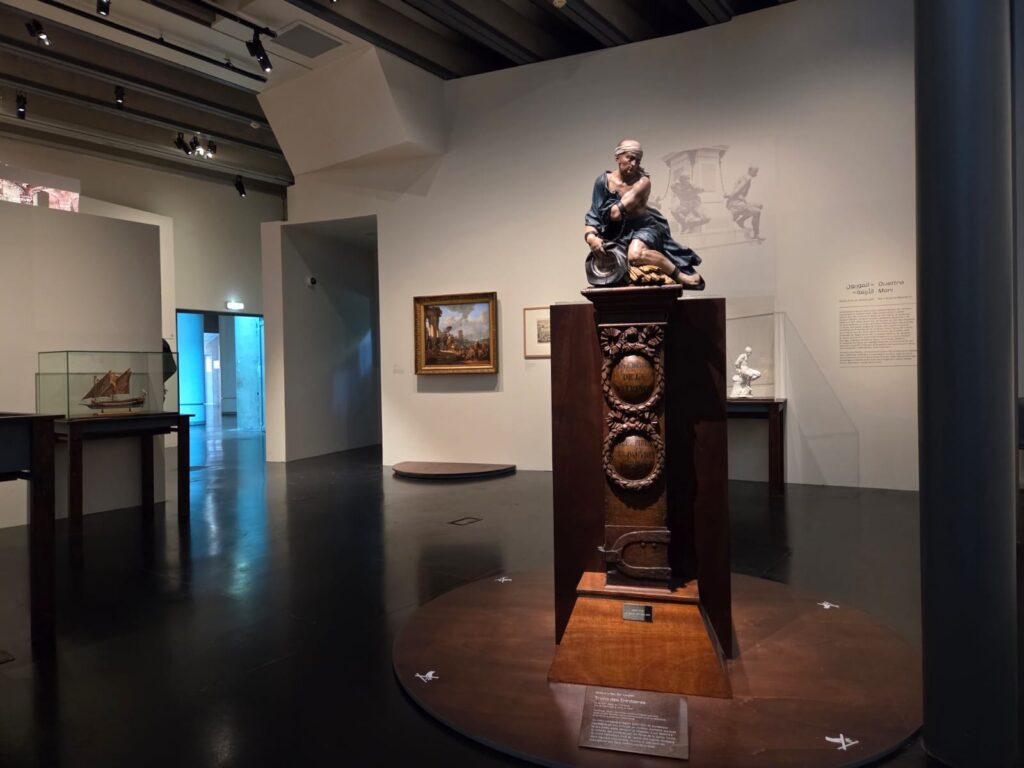
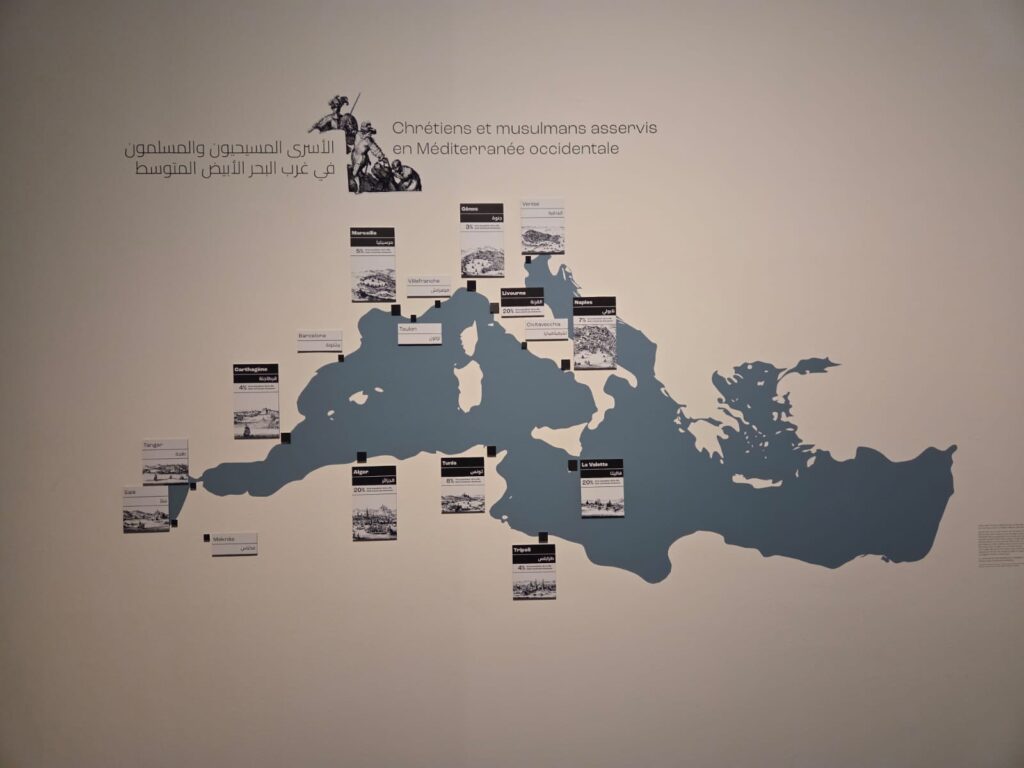
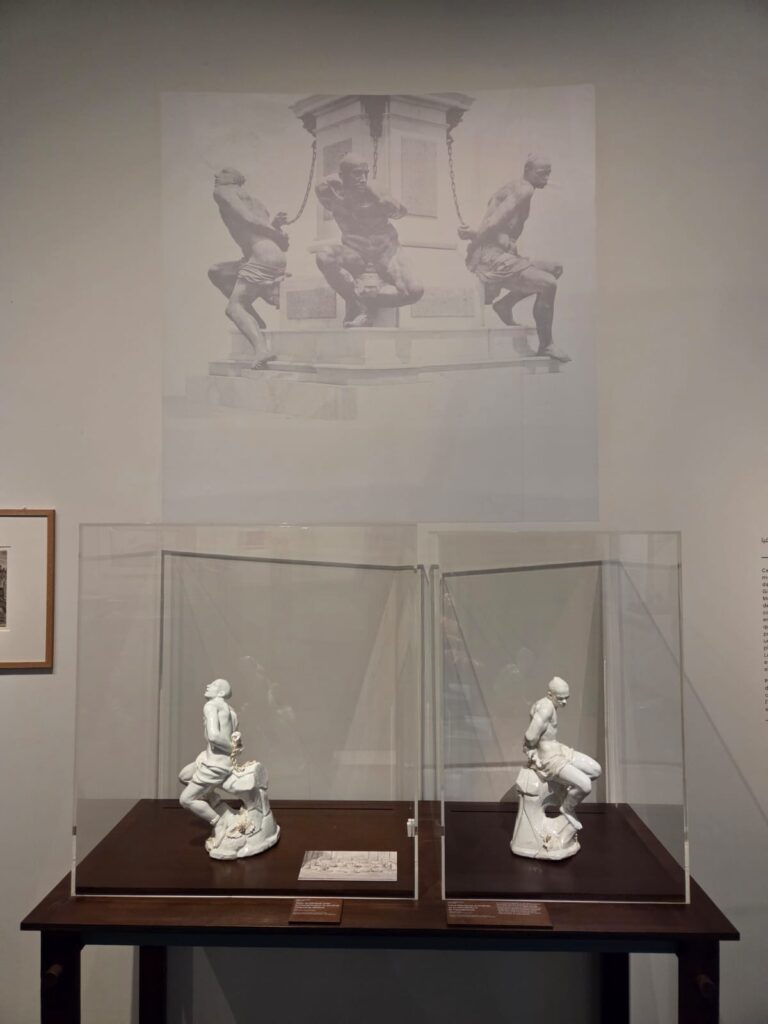
The exhibition aims to shine a light on the little known stories of Muslim and Christian enslaved people in the Mediterranean, through documents, art, and objects. Forced to work rowing galleys, as servants, translators, musicians, artists’ assistants, or in other roles, their experiences were not often documented first hand. Through some remarkable objects, though, like paintings depicting revolts by enslaved people, chains from galleys, or a life drawing by Louis XIV’s count painter Charles Le Brun, we get a glimpse of them. The exhibition also looks at how works of art like Pietro Tacca’s Quattro Mori influenced other art and artists. Finally, the exhibition includes a work of contemporary art: Suspended in Time by Kevork Mourad. Mourad created the work, a four-layered fabric installation, specifically for the exhibition.
There are certain points of continuity between the exhibition and the permanent collection. The inclusion of contemporary art amongst historic artefacts is certainly one of them. As is the careful balancing of multiple communities and faiths within the Arab world. Europe may have reduced these enslaved people to ‘Turks’ or ‘Moors’, but the reality was much more complex. It’s a valuable exhibition, with some really interesting primary sources. The exhibition texts are bilingual in French and Arabic, with a QR code to scan to access the English versions.
Esclaves en Méditerranée, XVIIe-XVIIIe siècle on until 19 July 2026 only.
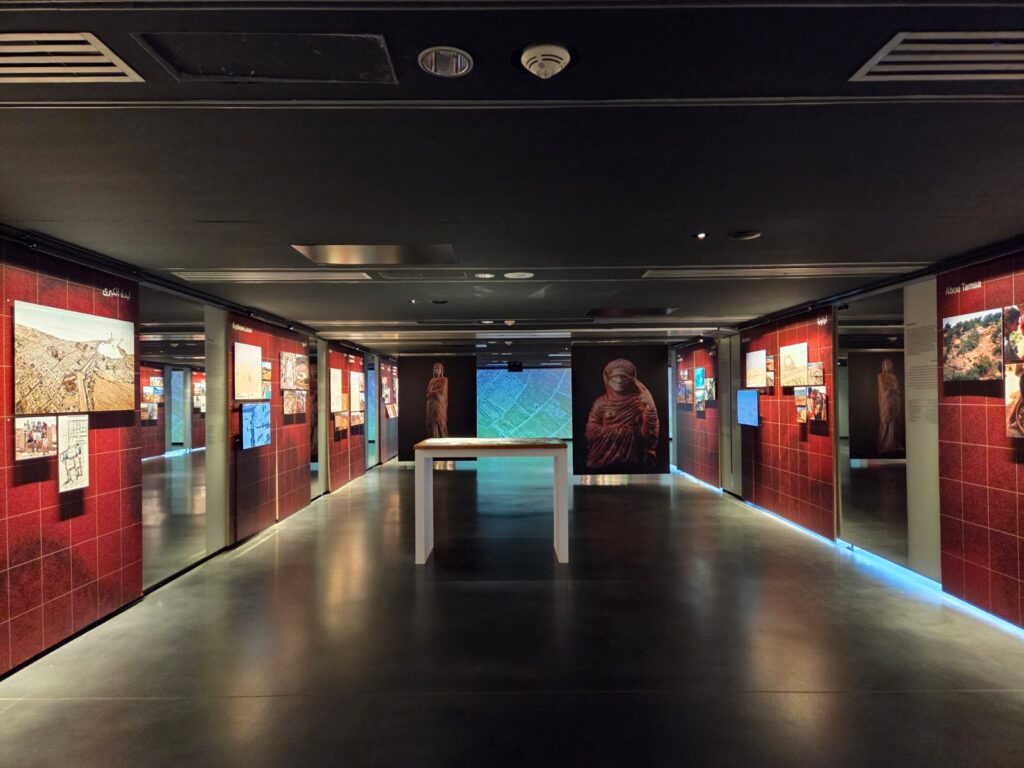
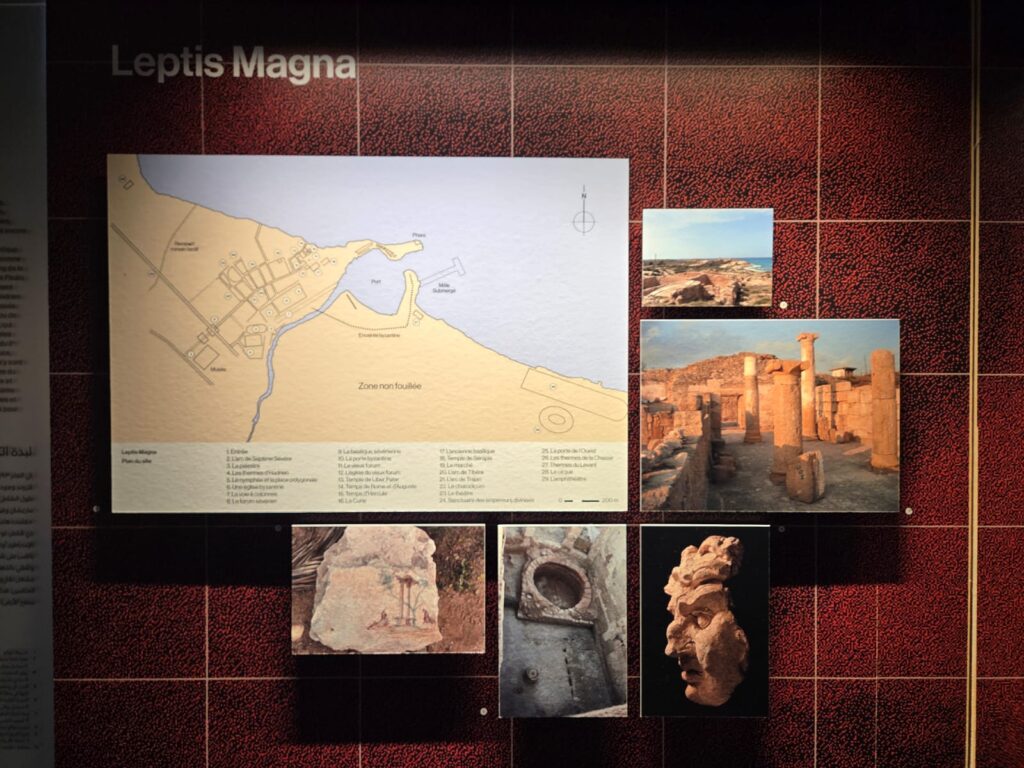
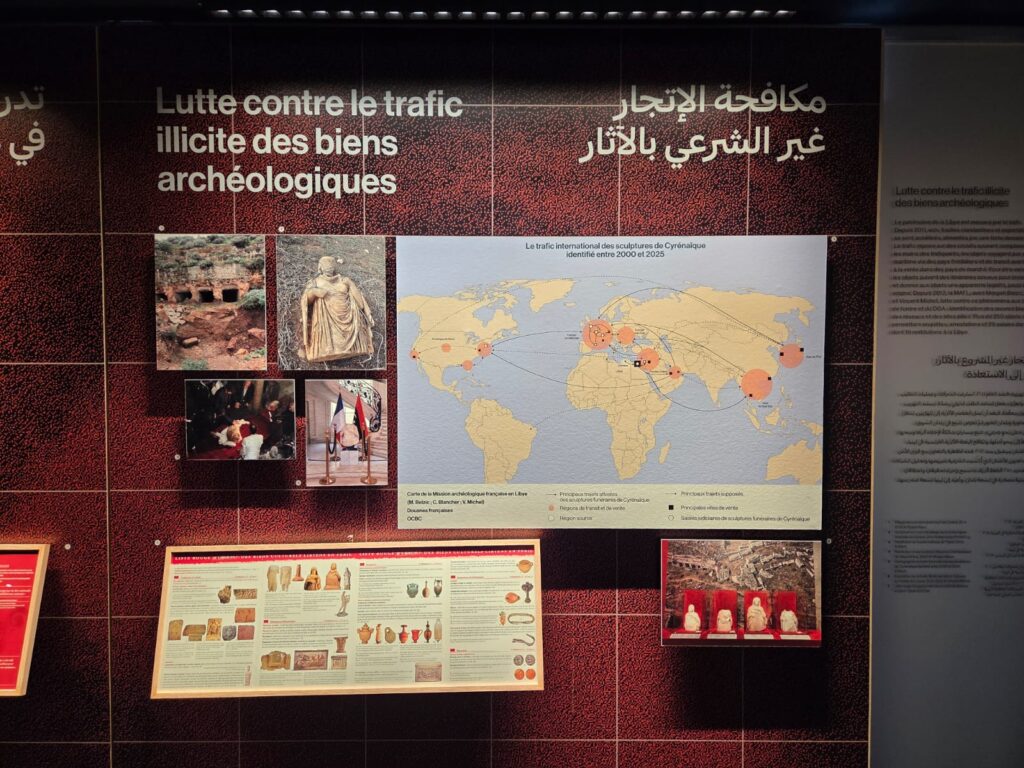
Libye, patrimoine révélé (Libya, Heritage Revealed)
The second of our temporary exhibitions was Libya, Heritage Revealed. It’s essentially a documentary exhibition, highlighting the work of the French Archaeological Mission in Libya (MAFL) in collaboration with the Libyan authorities. Because it occupies the first room of the IMA’s museum space, I didn’t realise it was an exhibition at first. I thought it was a strangely specific opening to the permanent collection.
The exhibition explains, in texts and with images, the diversity and importance of archaeological sites in Libya. There are prehistoric, Phoenician, Carthaginian, Roman, Hellenistic, and Islamic sites. Some I have heard of before, like Leptis Magna. Others were completely new to me. The archaeological excavations are a blend of planned and preventative (eg. Măsak, excavated before a planned oil concession). They also require, on occasion, underwater archaeological skills, for example at the port of Apollonia. The MAFL also fight the illicit trafficking of antiquities, and there is information on this as well.
I’ll be honest. I think this exhibition would be a little more lively with at least one or two objects. As documentary exhibitions go, it’s a subject that interests me, so I did take the time to read my way around the room. I hope one day to have the opportunity to visit one or two of these sites for myself!
Libye, patrimoine révélé on until 20 October 2026.
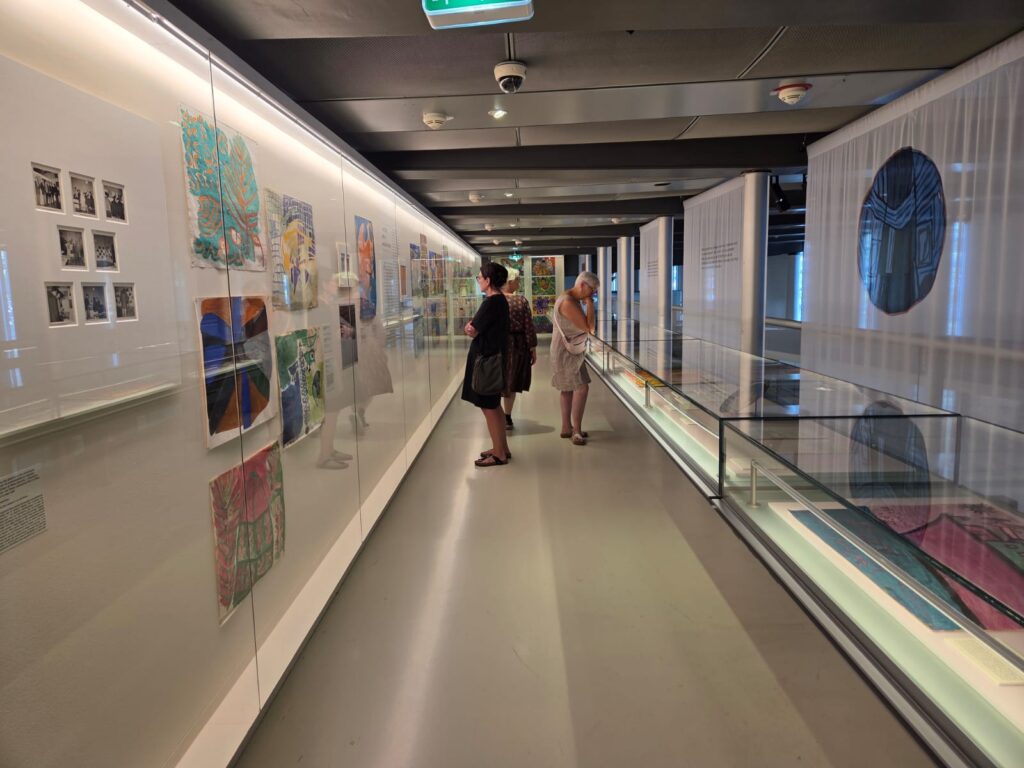
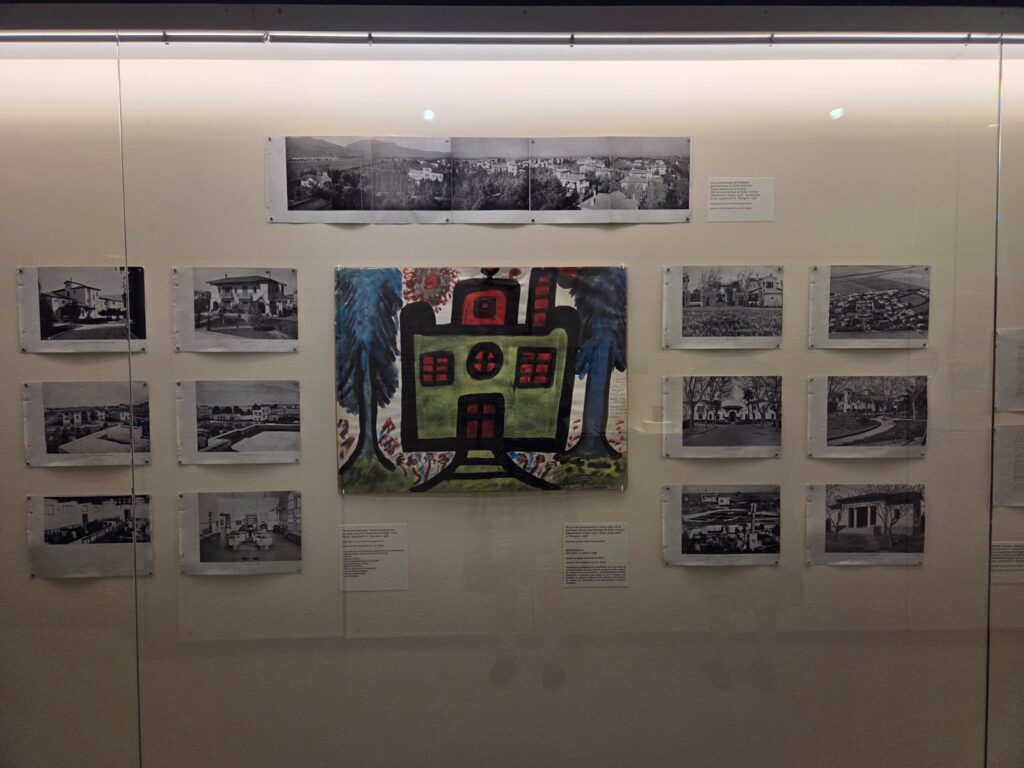
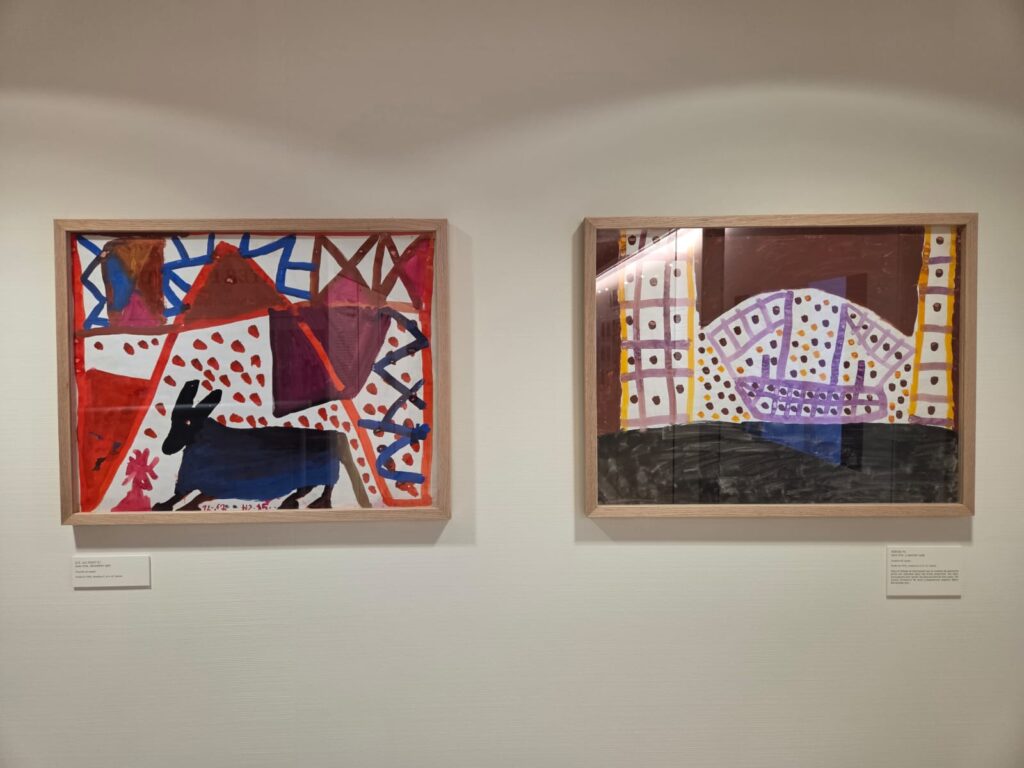
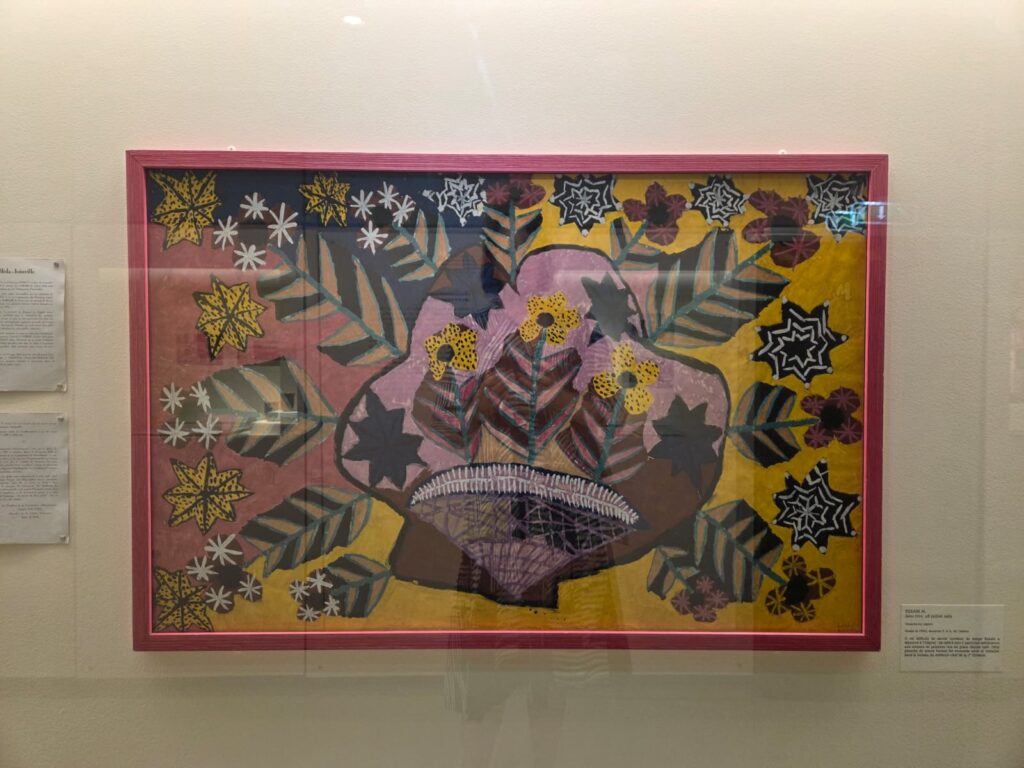
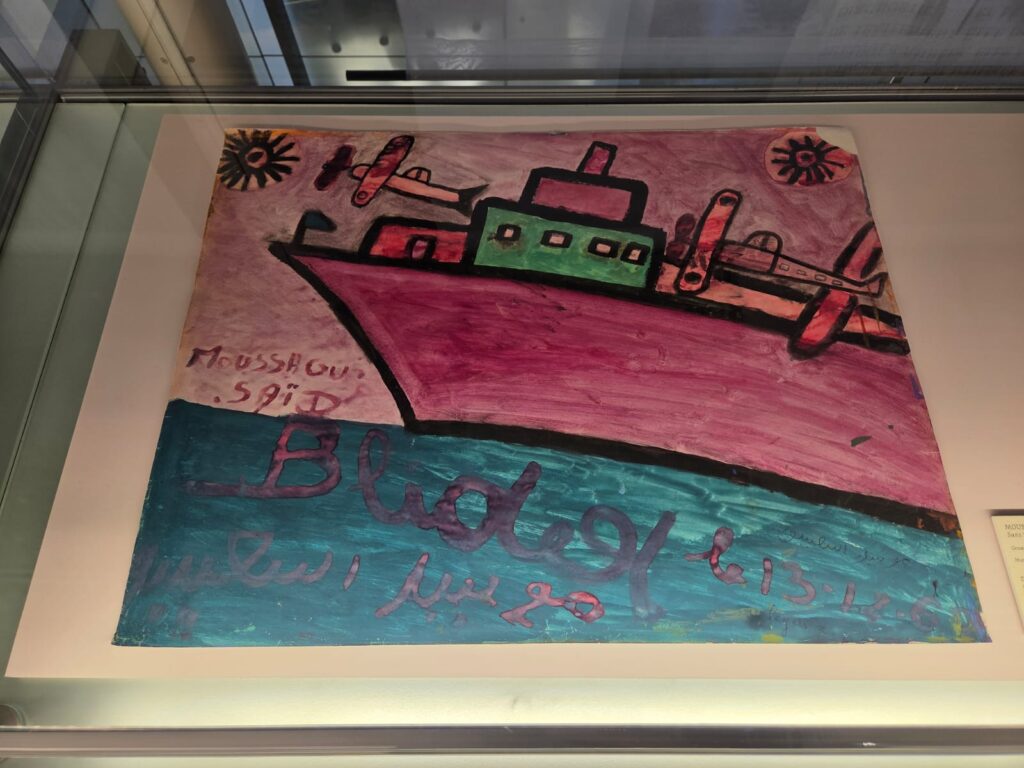
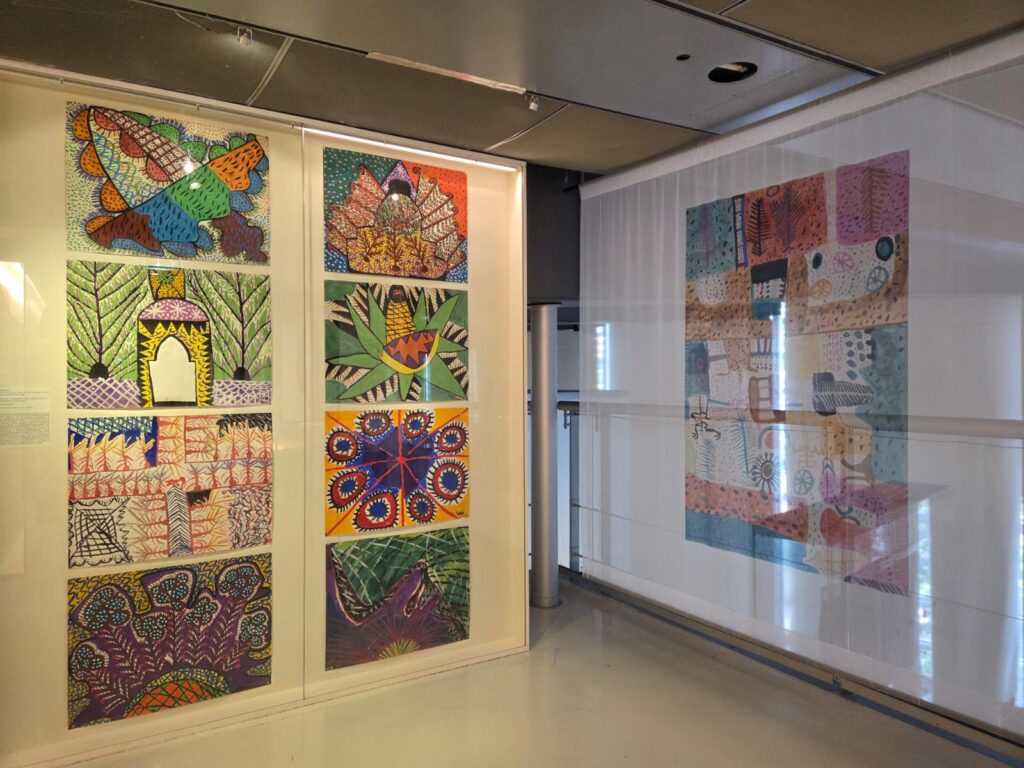
Tenter l’art pour soigner – À l’hôpital psychiatrique de Blida-Joinville dans les années 1960 (Using Art to Heal – At the Blida-Joinville Psychiatric Hospital in the 1960s)
The final exhibition for today is Using Art to Heal – At the Blida-Joinville Psychiatric Hospital in the 1960s. This is another exhibition which interrupts the flow of the permanent collection (it’s on a mezzanine between floors). But on this occasion the interruption was very welcome, as it’s on a topic that interests me greatly.
The Blida-Joinville Psychiatric Hospital, in Algeria, is forever connected to anti-colonial figure Franz Fanon. The hospital was certainly deeply entrenched in colonial and racist practices before his time, segregating, for instance, French (Christian) and Algerian (Muslim) patients. Fanon saw an undeniable link between imperialist violence, psychological trauma and mental illness, and adapted his approach to treatment to the local cultural and social context of the patients. This included physical activities, music therapy, and art therapy. This is a really fascinating subject which I could go on about for an entire post: instead I will recommend a gateway to further reading here.
In 2021, an archive of documents, paintings and ceramics from the hospital’s art therapy programme was donated to the IMA. This exhibition is the result, displaying patients’ work in its historic context. One aspect of the display that interested me was the way that the artworks are understood very much as therapeutic outputs. The elevation of such art as one strand of art brut is discussed within the exhibition, but is not the lens through which we view the bright gouaches and bold ceramics.
I visited on what I thought was the exhibition’s last weekend. The IMA’s website seems to indicate it’s now been extended. If you, like me, are interested in spontaneous artists and their creations, this is a fascinating case study.
Tenter l’art pour soigner – À l’hôpital psychiatrique de Blida-Joinville dans les années 1960 extended from 28 June 2026 to 3 January 2027 (?).
Trending
If you see this after your page is loaded completely, leafletJS files are missing.