
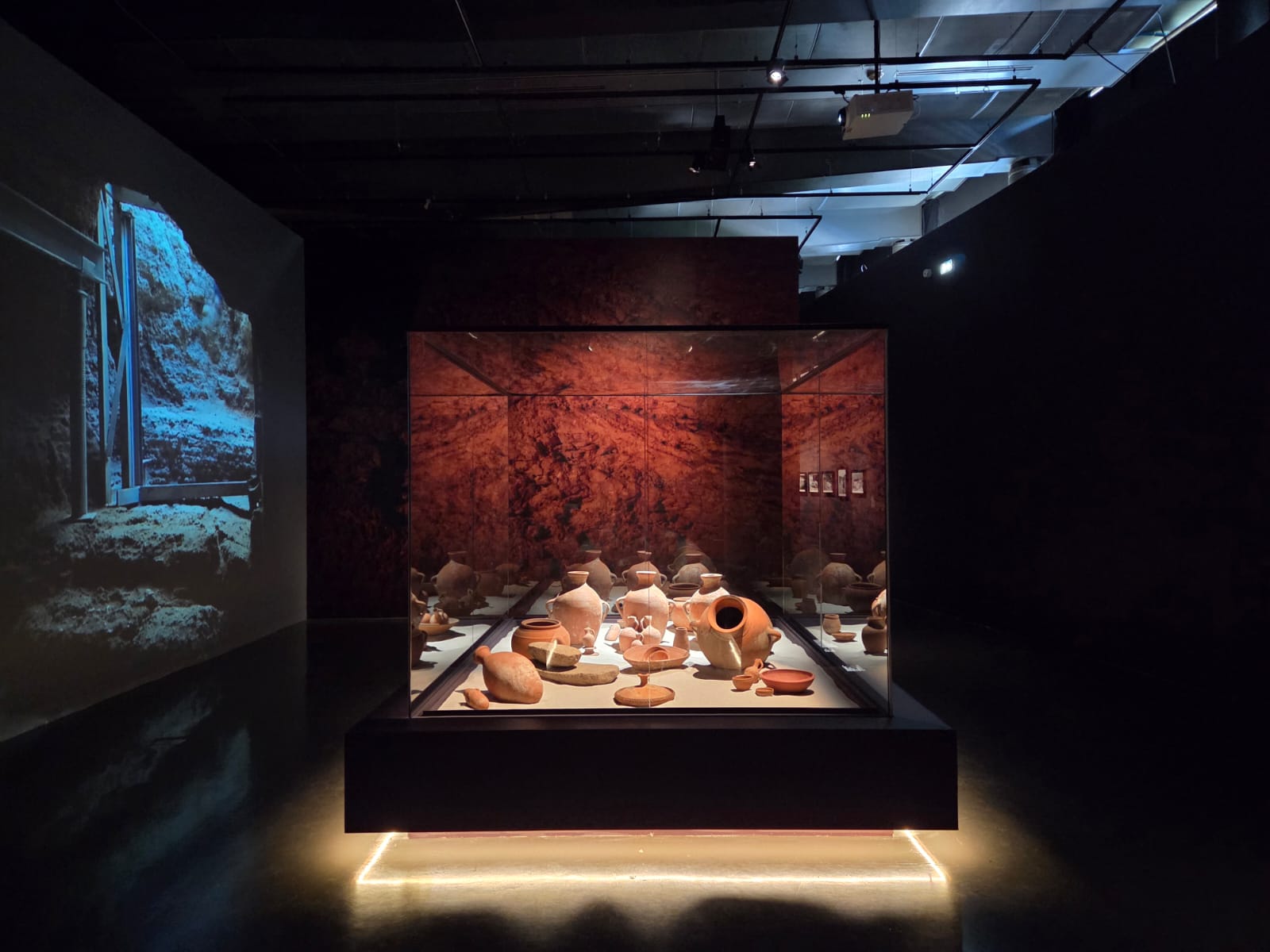
Byblos, the Millennial City of Lebanon (Byblos, Cité Millénaire du Liban) – l’Institut du Monde Arabe, Paris
Learn all about the world’s first international sea port in Byblos, Cité Millénaire du Liban at l’Institut du monde arabe in Paris.
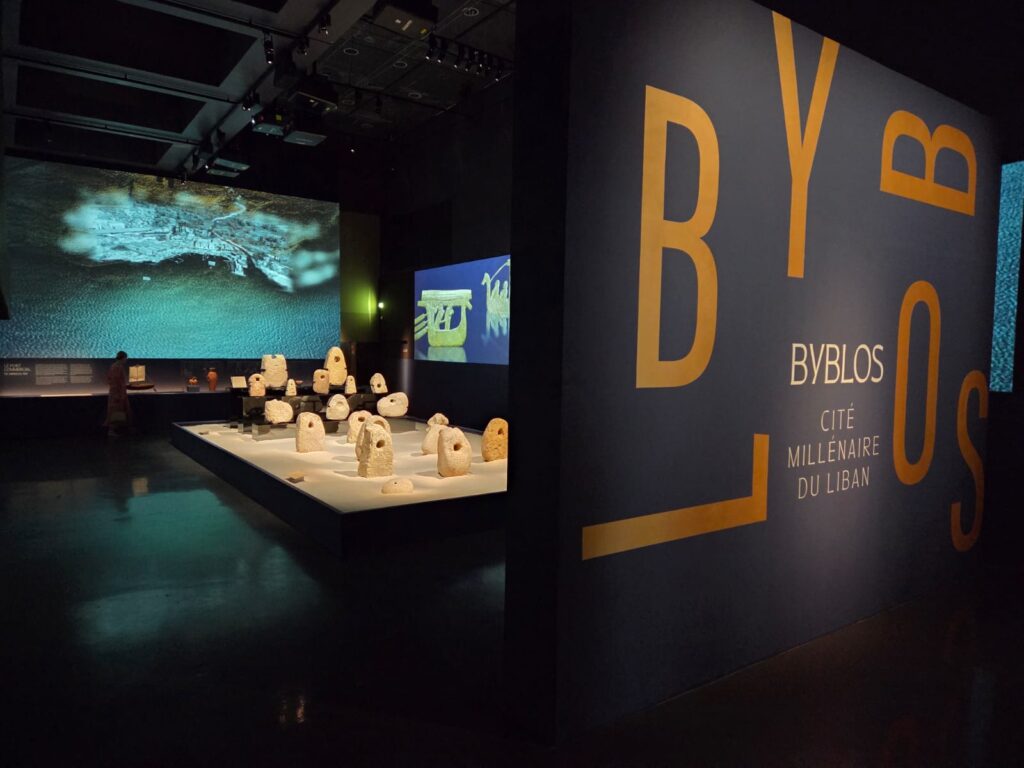
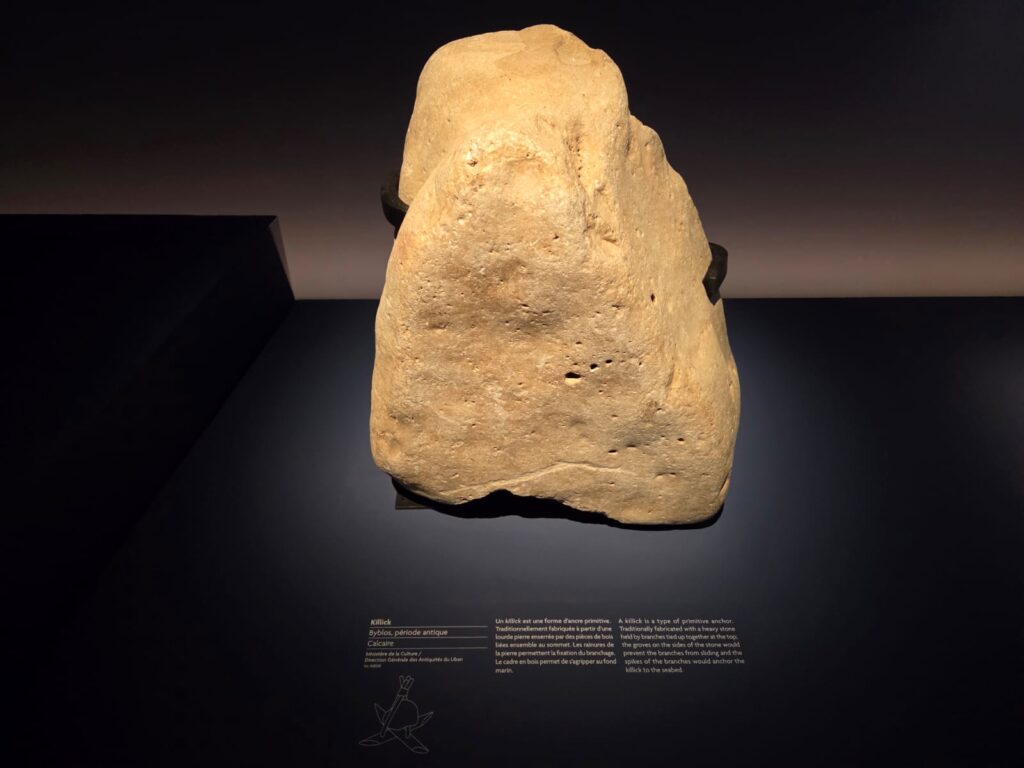
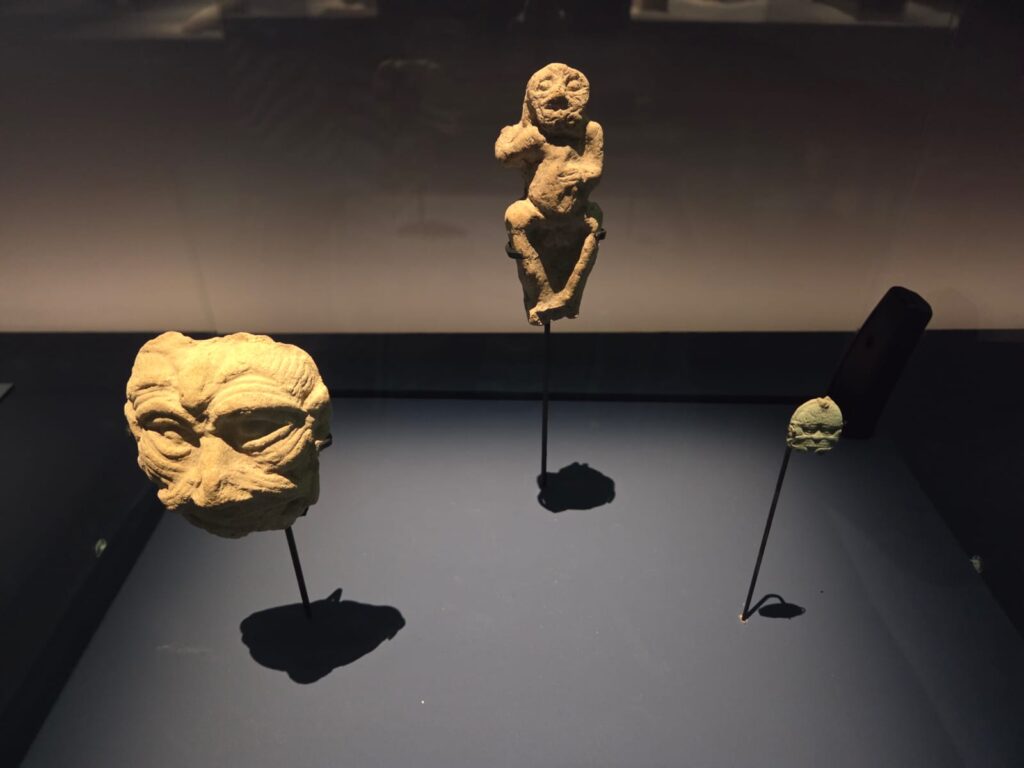
Byblos, Cité Millénaire du Liban
In my last post, I introduced you to l’Institut du monde arabe, or the Arab World Institute. This cooperative endeavour by a number of Arab countries aims to disseminate information about their cultures, languages, history, traditions, art, beliefs – their world, in essence. My last post covered a bit of background about the IMA, the IMA’s museum, and the three temporary exhibitions included as part of a basic ticket.
Today I describe a fourth temporary exhibition in more detail. Why? Because it’s the IMA’s main exhibition for the spring/summer season, and deserves a bit more space. I also found it very interesting, particularly as Lebanese history isn’t a subject one encounters often in museum programming. But when I have encountered it, I have enjoyed learning about it.
So, what is this exhibition all about, then? The short answer is: Byblos. Lying about 40 KM north of Beirut, Byblos has a history stretching back 9,000 years, growing from fishing settlement to busy port. During the Bronze Age it became one of the first city-states. It’s a great subject for an exhibition. And, as you will see, the IMA have put together rather a good one.
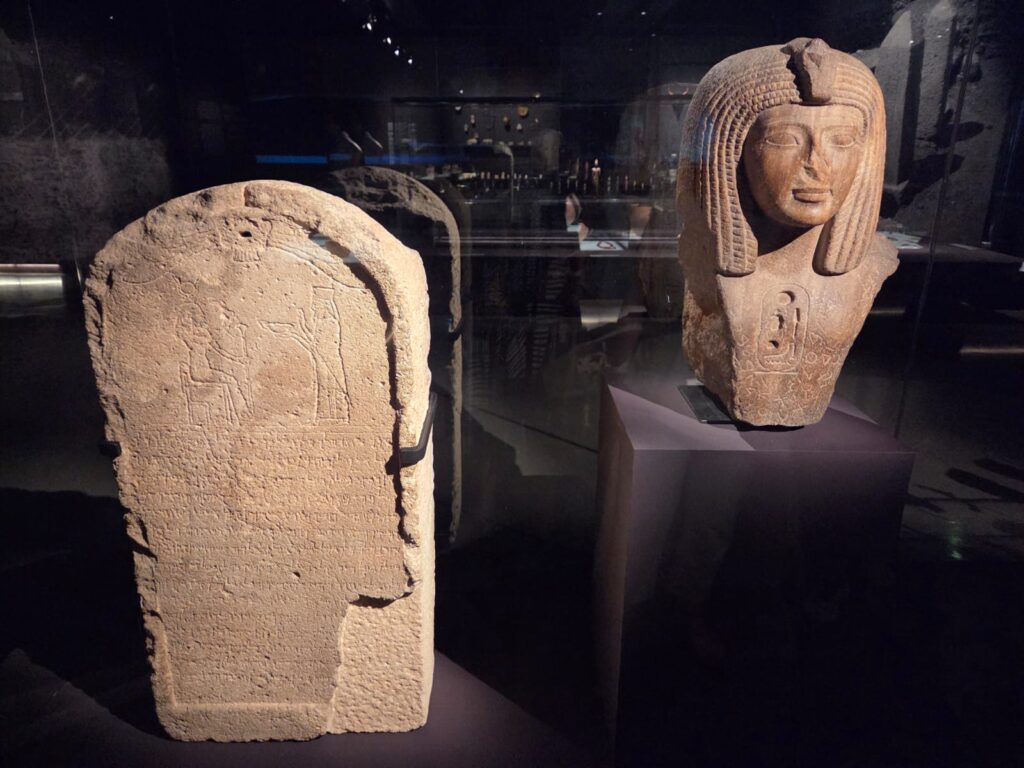
Getting to Know Byblos
First things first: Byblos is only one name for this settlement, and not its first name. Because, you see, this place has been Neolithic, Canaanite, Egyptian, Phoenician, Assyrian, Persian, Hellenistic, Roman, Genoese, Mamluk, Ottoman, and Lebanese. First settled around 8800 to 7000 BCE, it has been continuously inhabited since around 5000 BCE. The Ancient Egyptians knew is as kbnj. Then it was Gubla, which became Gebal, which is the root of the current Arabic name جُبَيْل (written in Latin characters as Jbail, Jebeil, Jubayl, or Jbeil). It was the Greeks who knew it as Byblos, during the Phoenician period. The port of Byblos was so heavily associated with the import of papyrus that its name became synonymous with that product, and it’s even the root of the word ‘bible’. We’re going to go back to calling it Byblos to avoid confusion.
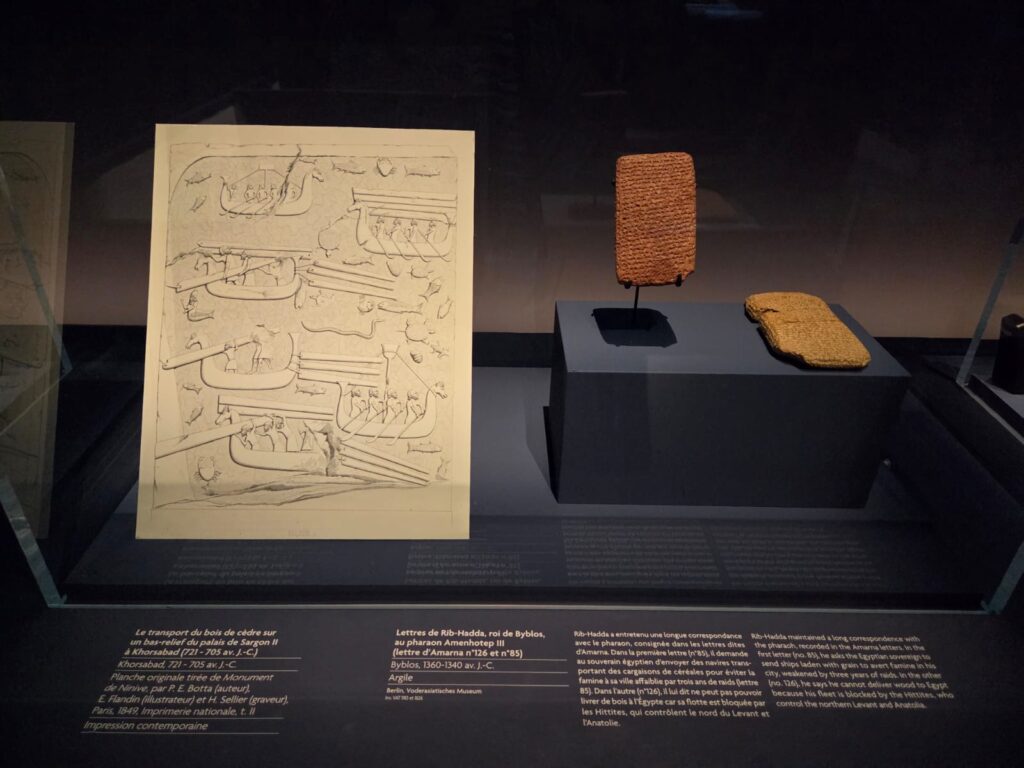
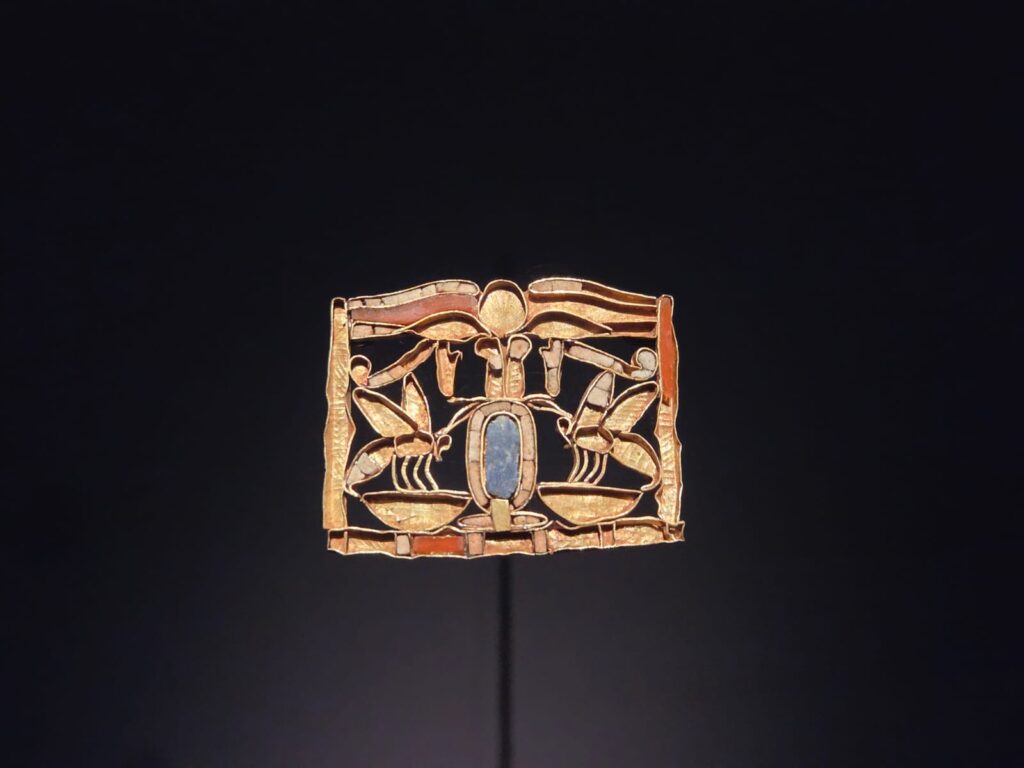
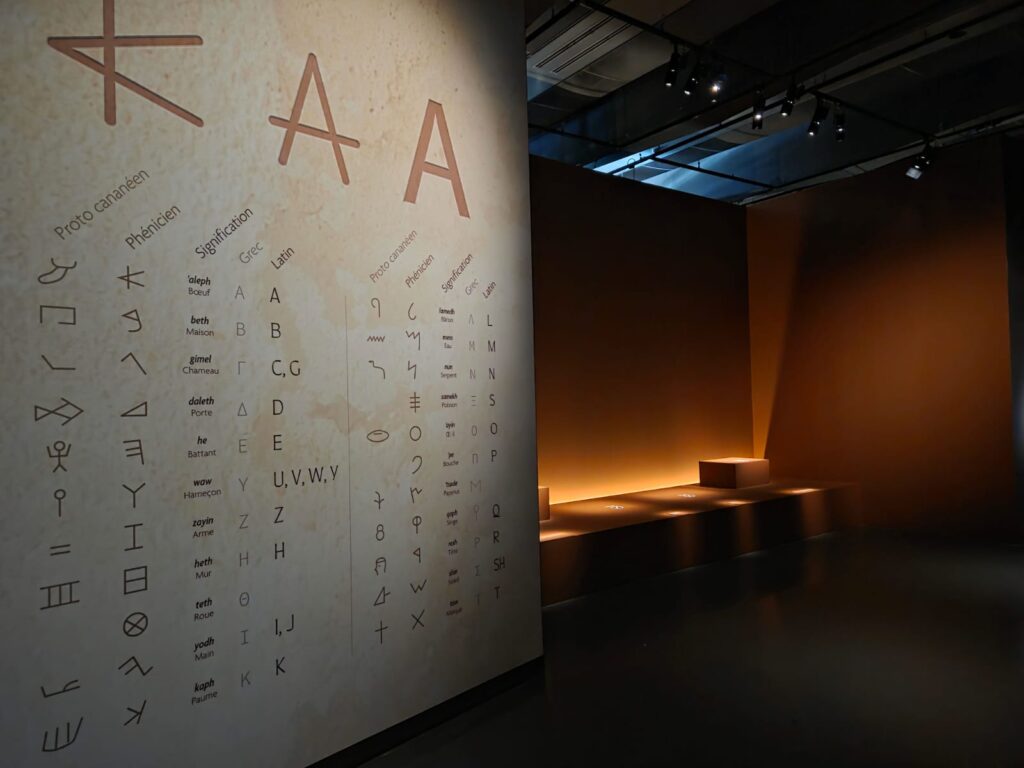
Byblos was well-located to develop trade links around the Mediterranean, and with Mesopotamia. One consequence of this discussed in the exhibition is Byblos’s role in spreading the Phoenician alphabet. The main focus of the exhibition is a little earlier, though – the Iron Age city. Byblos was then one of the first city-states. Its harbour teemed with ships, many transporting local cedar wood to trade for other goods. Some tombs of Egyptian pharaohs are still held aloft by cedar beams that would have passed through Byblos. Byblos was wealthy at this time, and had strong diplomatic relations with important allies.
The long settlement of Byblos means it has many strata for archaeologists to discover. This goes back to Ernest Renan in 1860, and continues to the present. In fact, one of the key purposes of the exhibition is to introduce finds from a recently-excavated hypogeum, or underground burial chamber. Let’s have a look now at what the exhibition presents, in a little more detail.
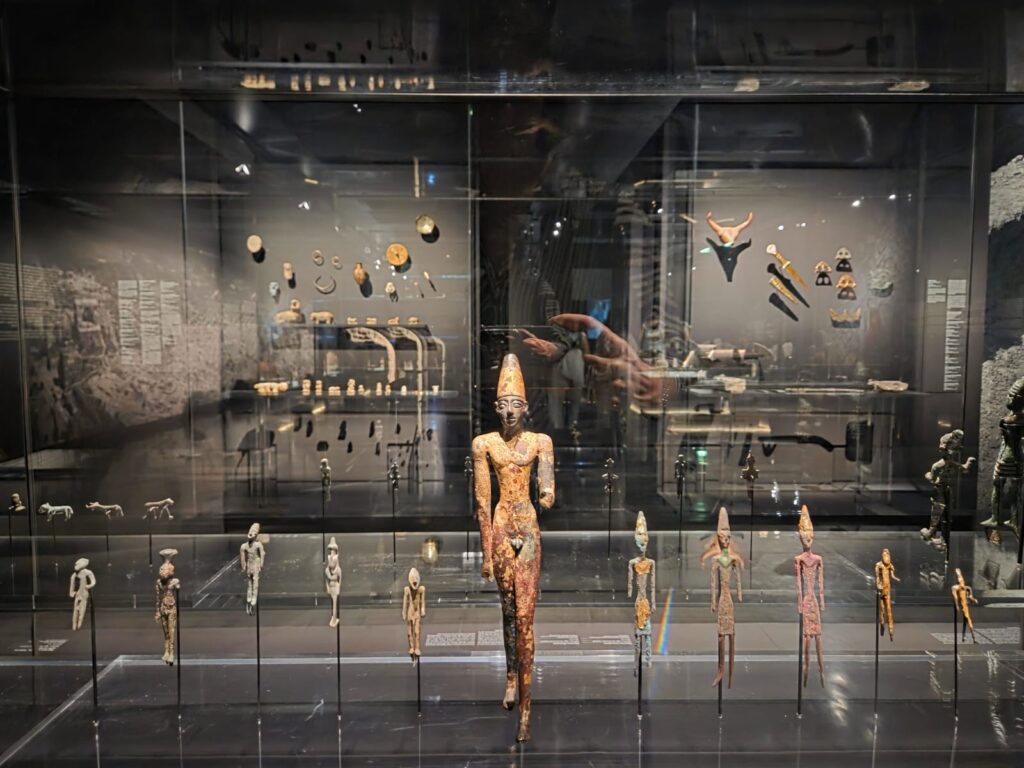
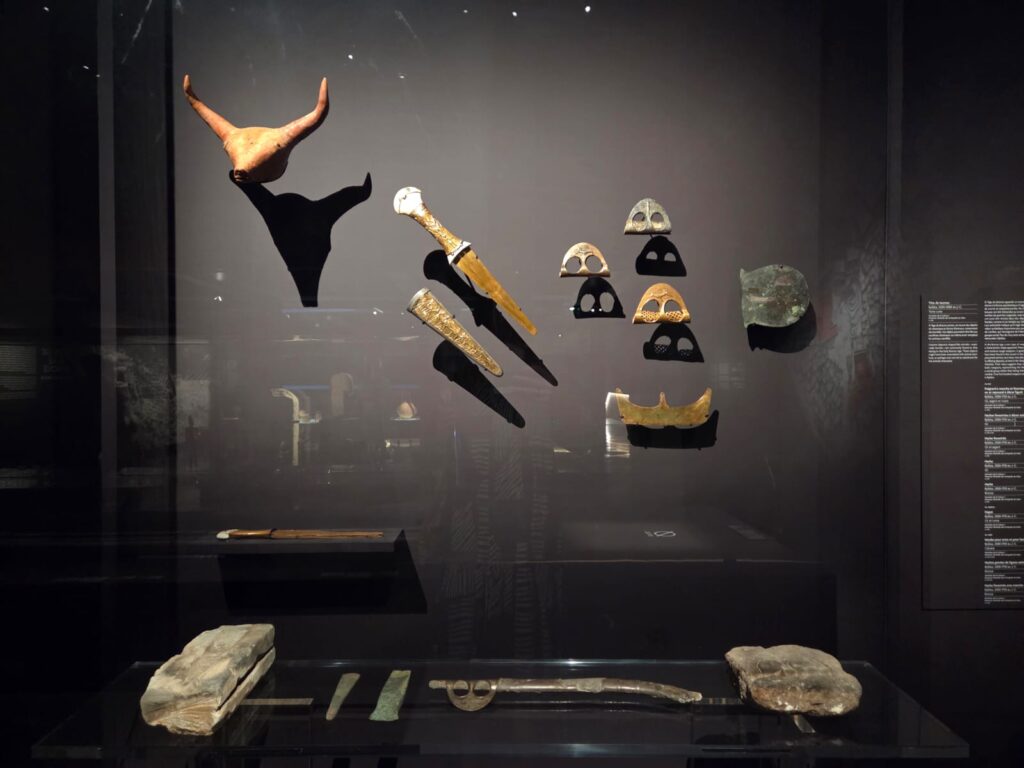
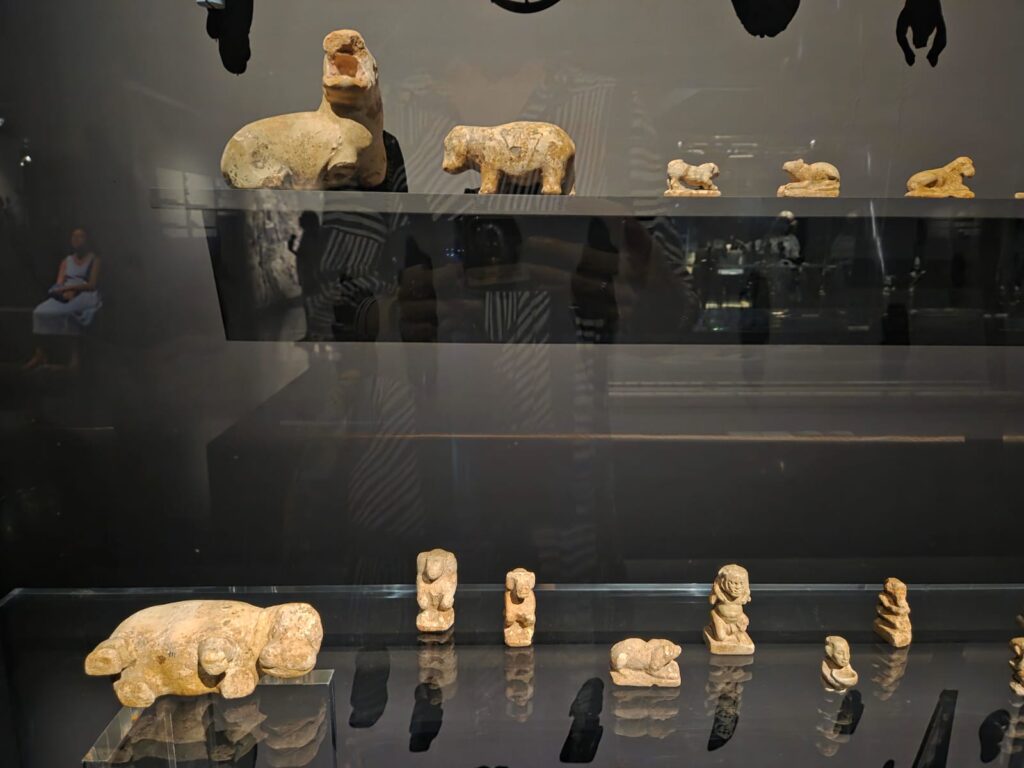
Byblos Through the Ages
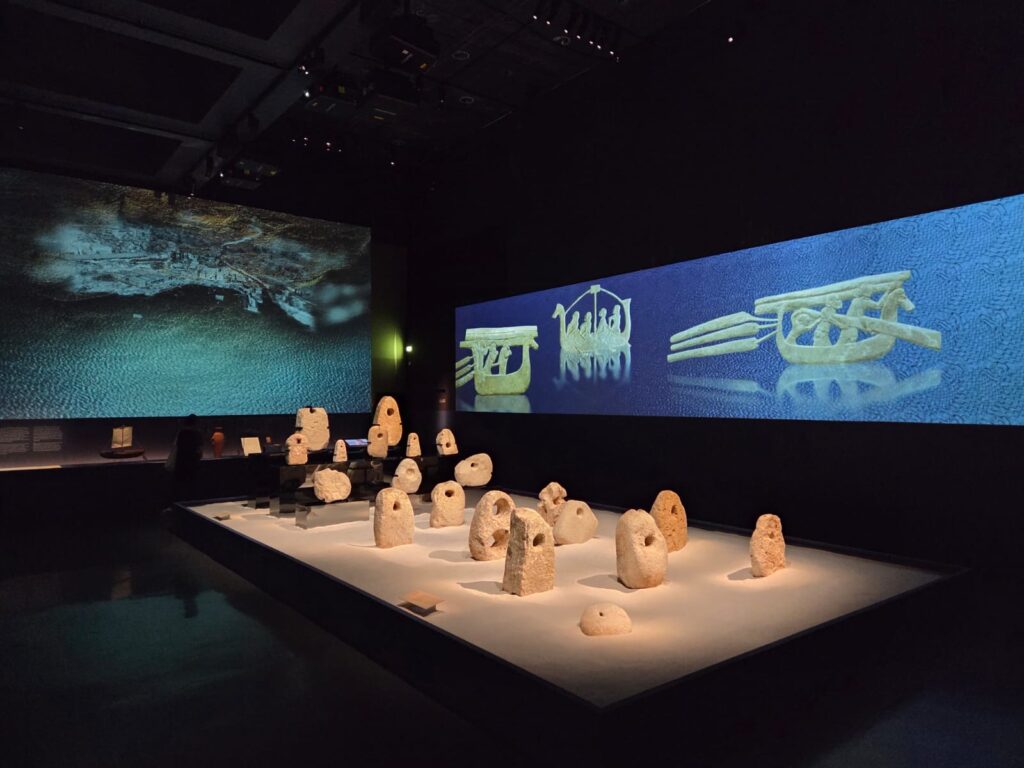
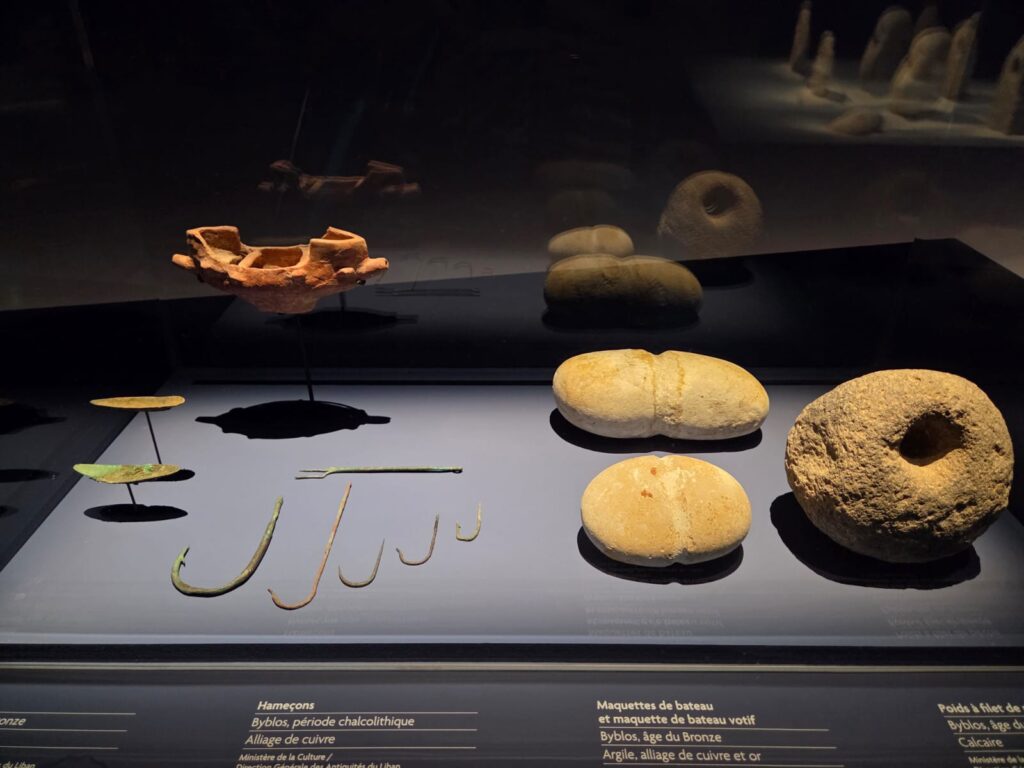
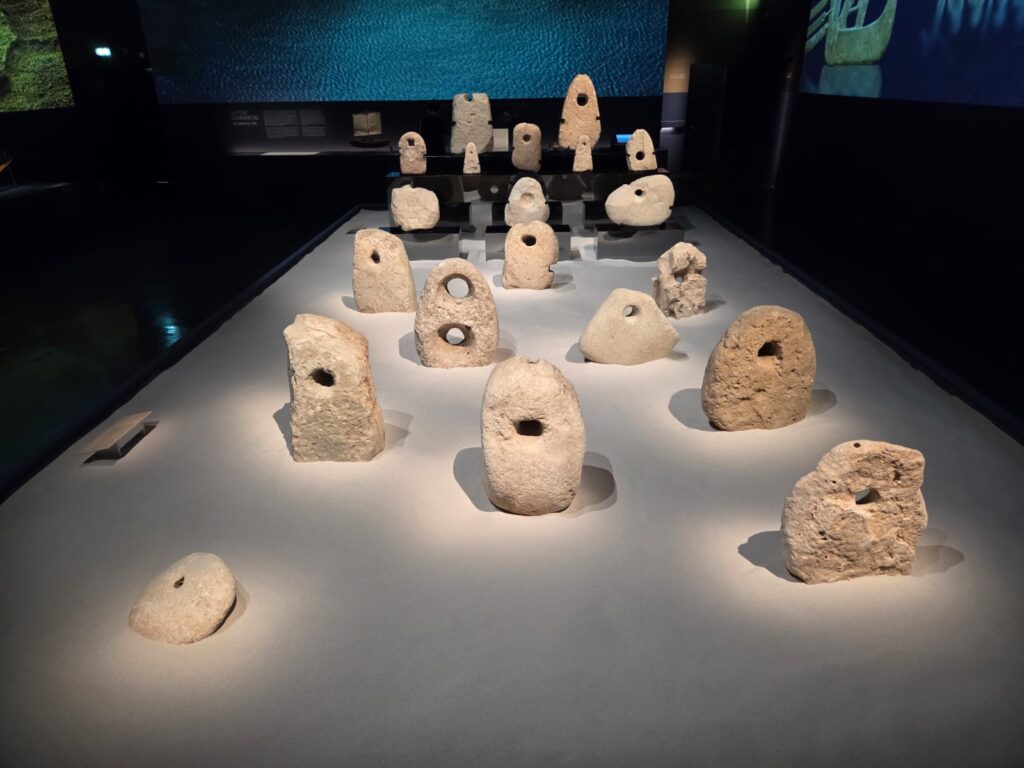
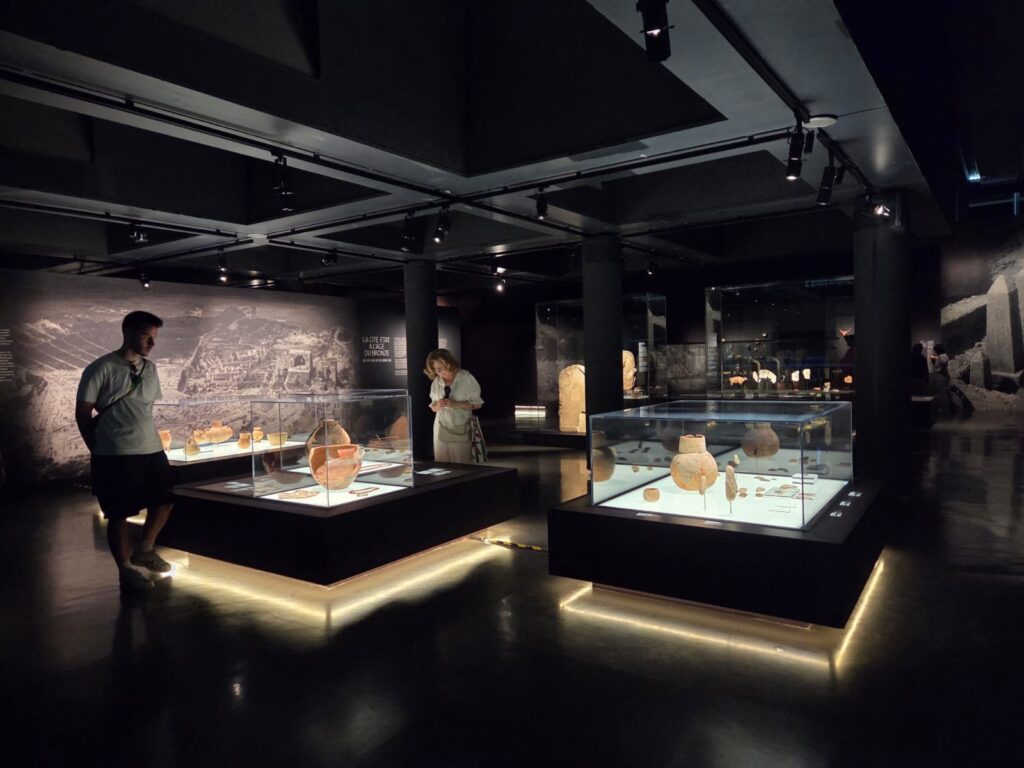
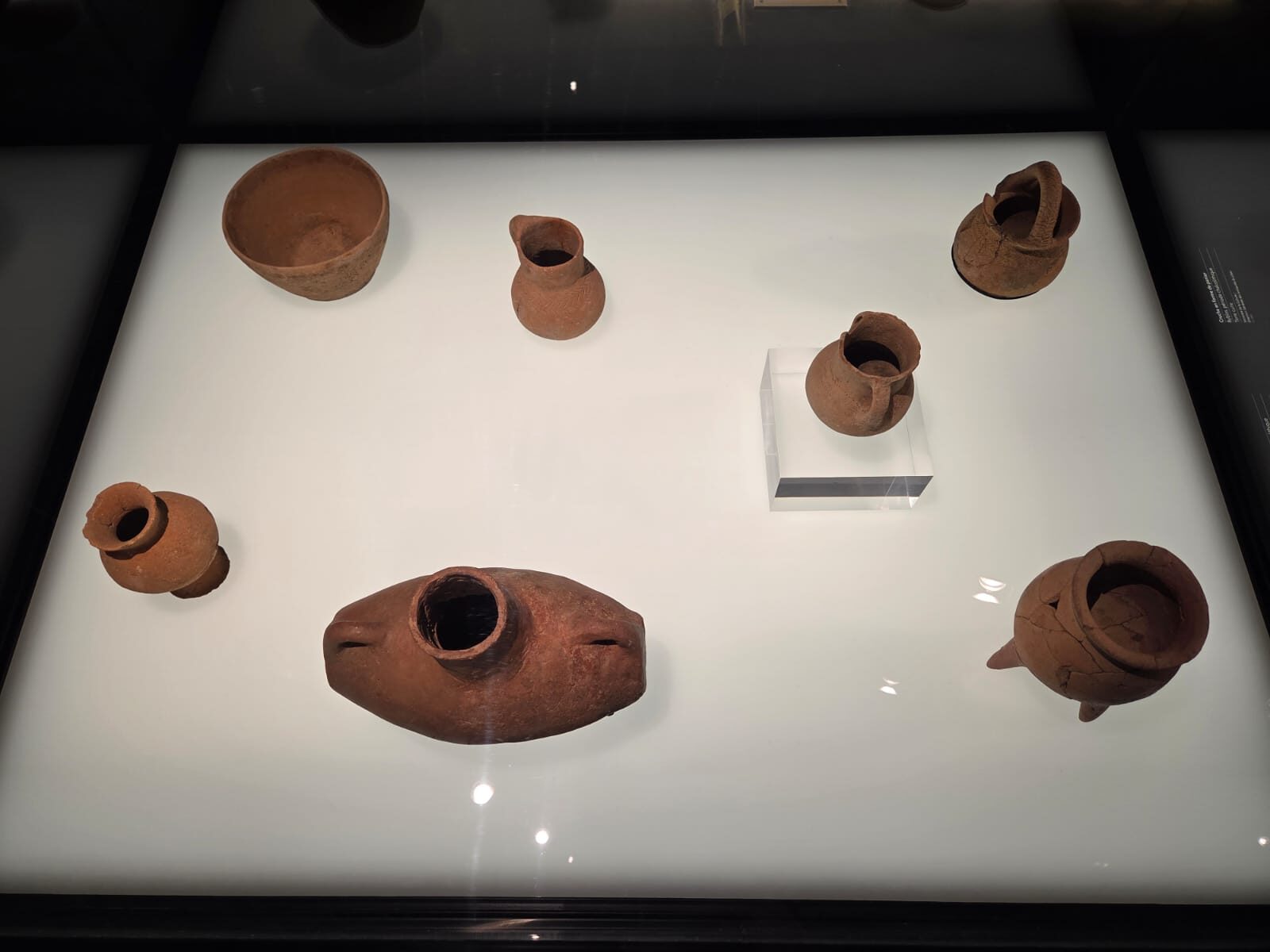
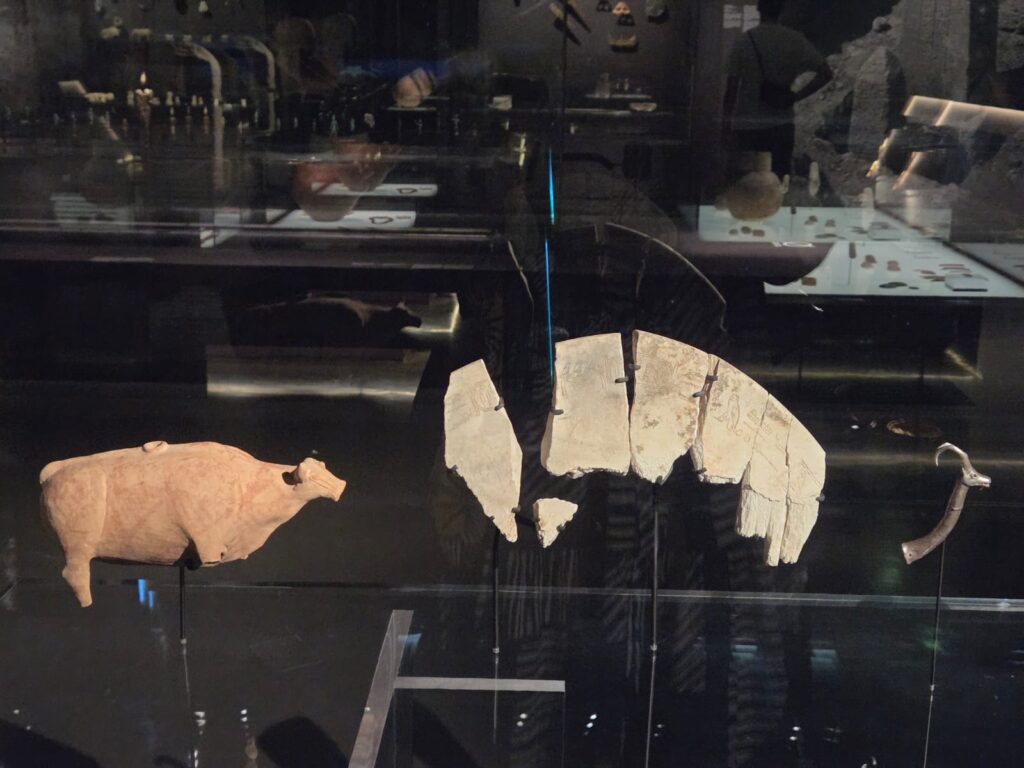
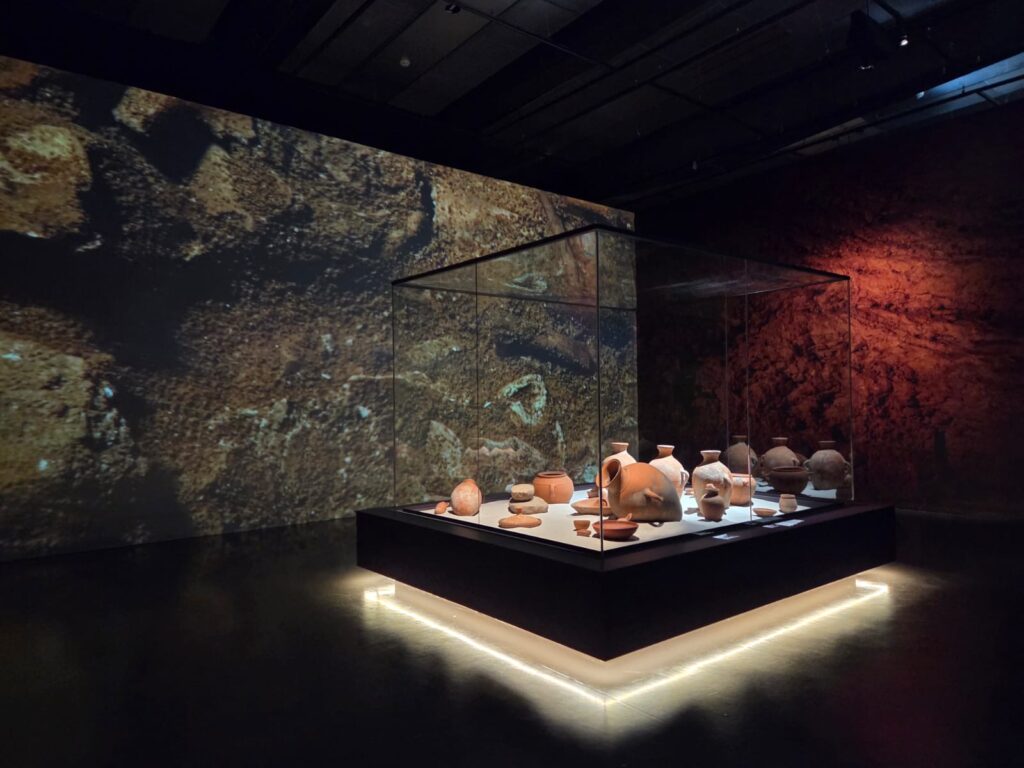
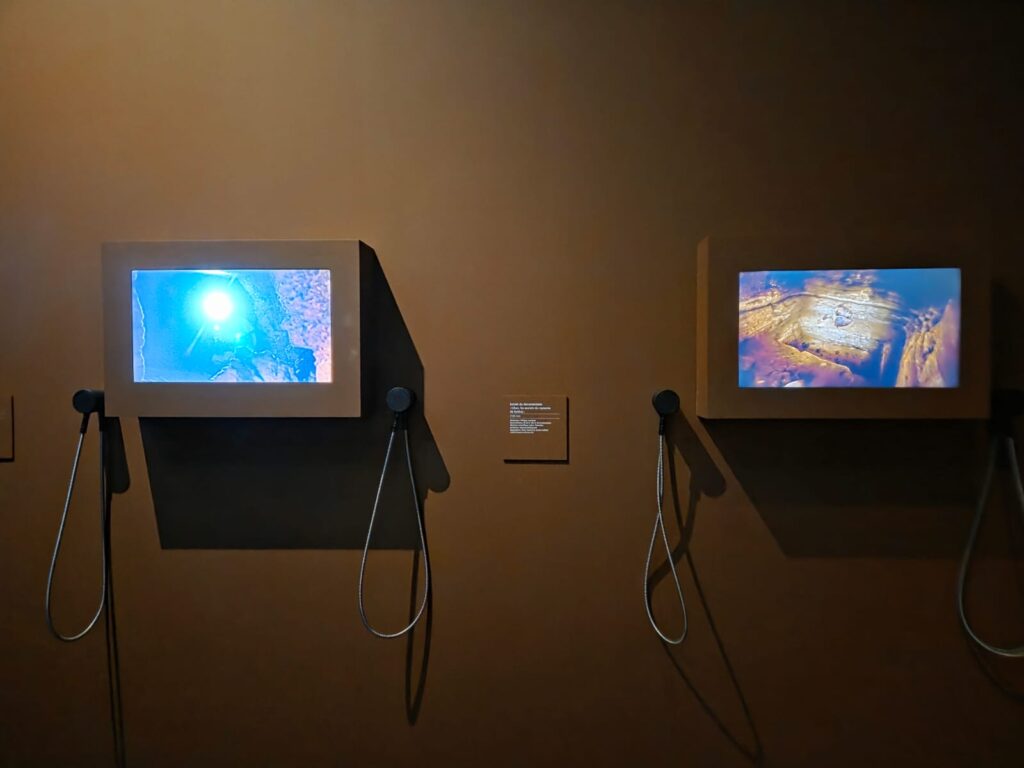
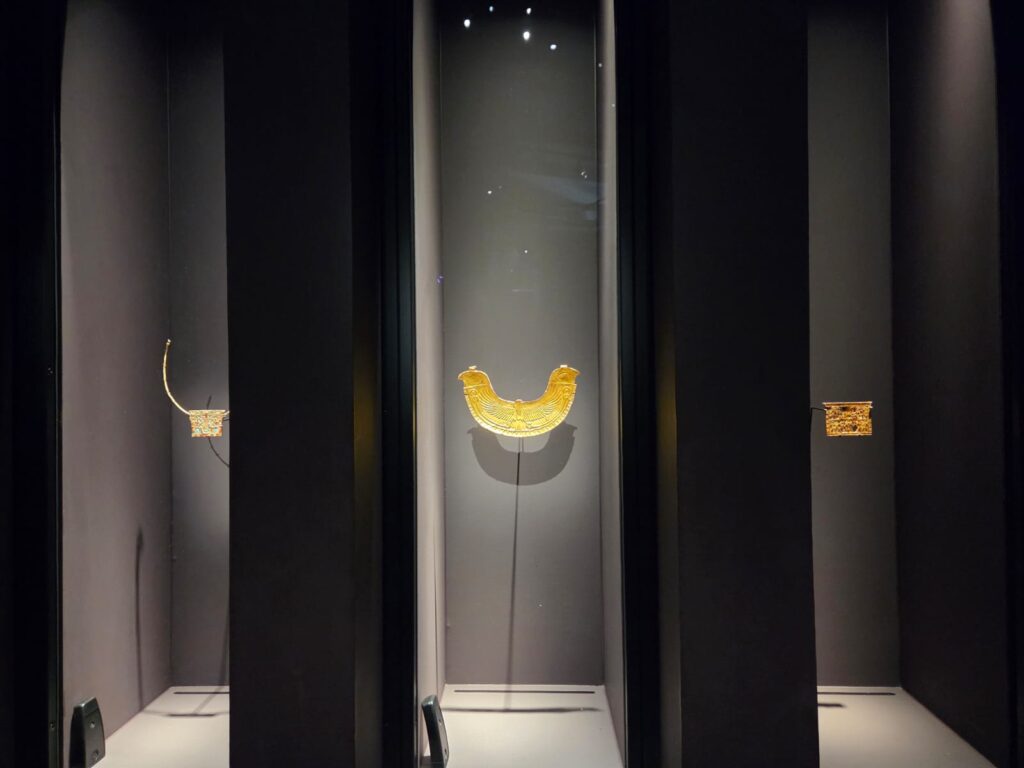
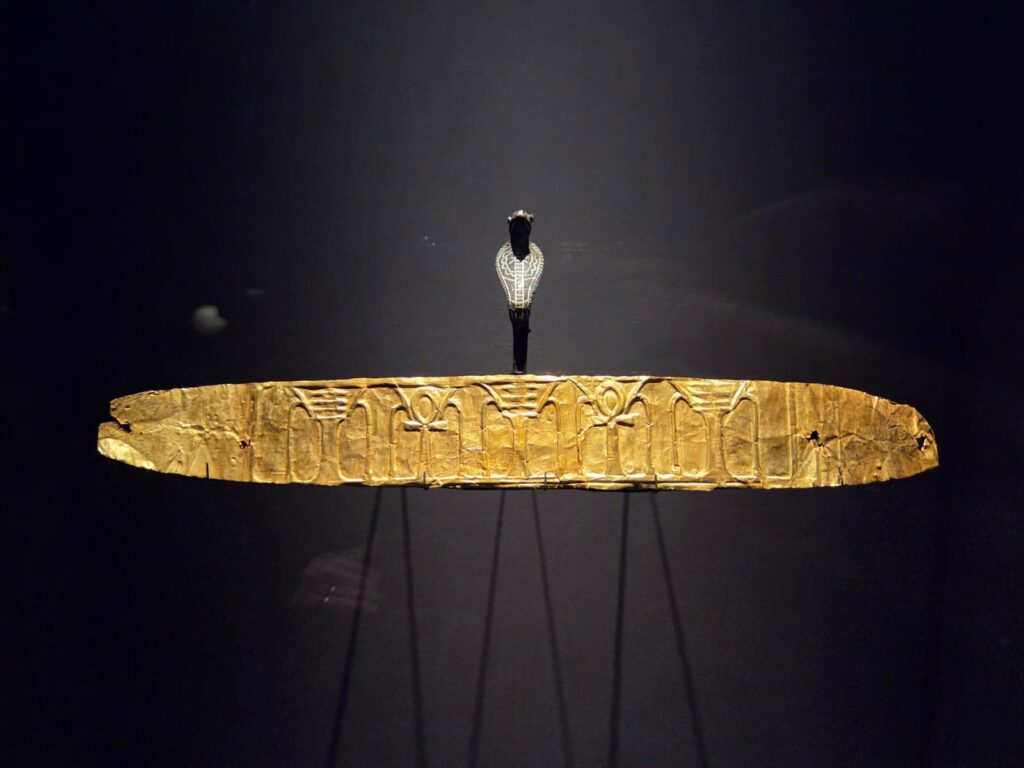
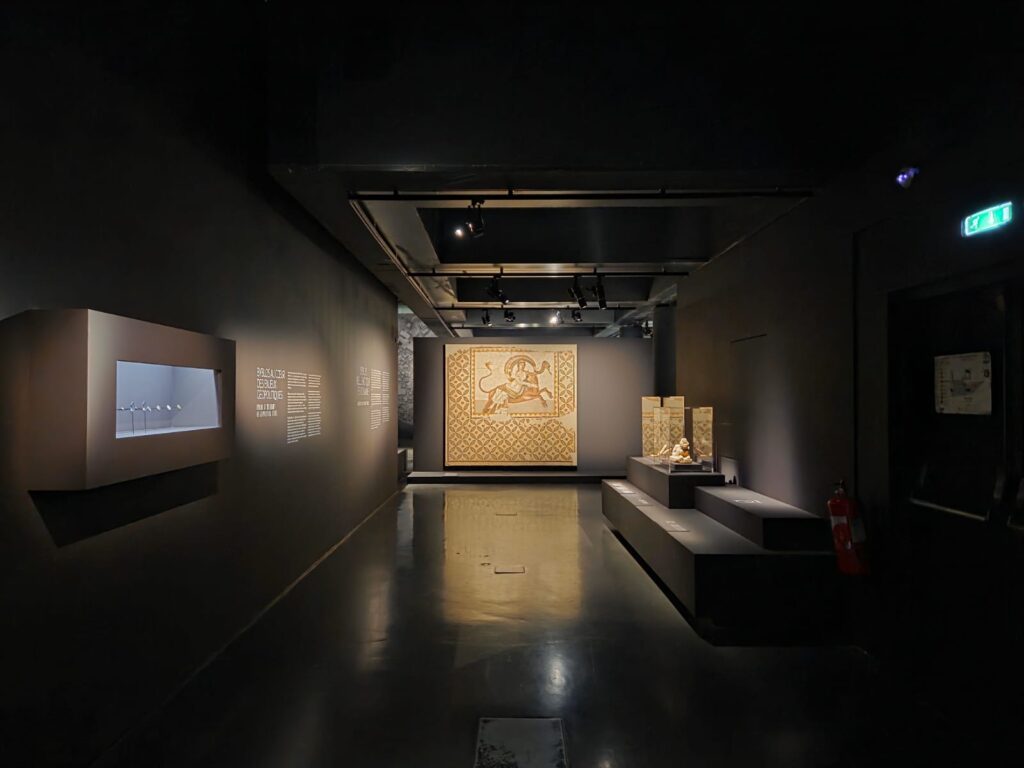
We start, then, in the Bronze Age. The exhibition design is pleasingly dramatic, with dark walls, spotlit artefacts, and animations on big screens in the background. The main feature of the Bronze Age section is a display of stone anchors. It’s a simple way of bringing the busy seaport to life. One of the animations shows Bronze Age ships on the sea, while elsewhere we see fishing hooks, models of boats, ancient cedar, letters to pharaohs… A bustling commercial world, separated from us by millennia.
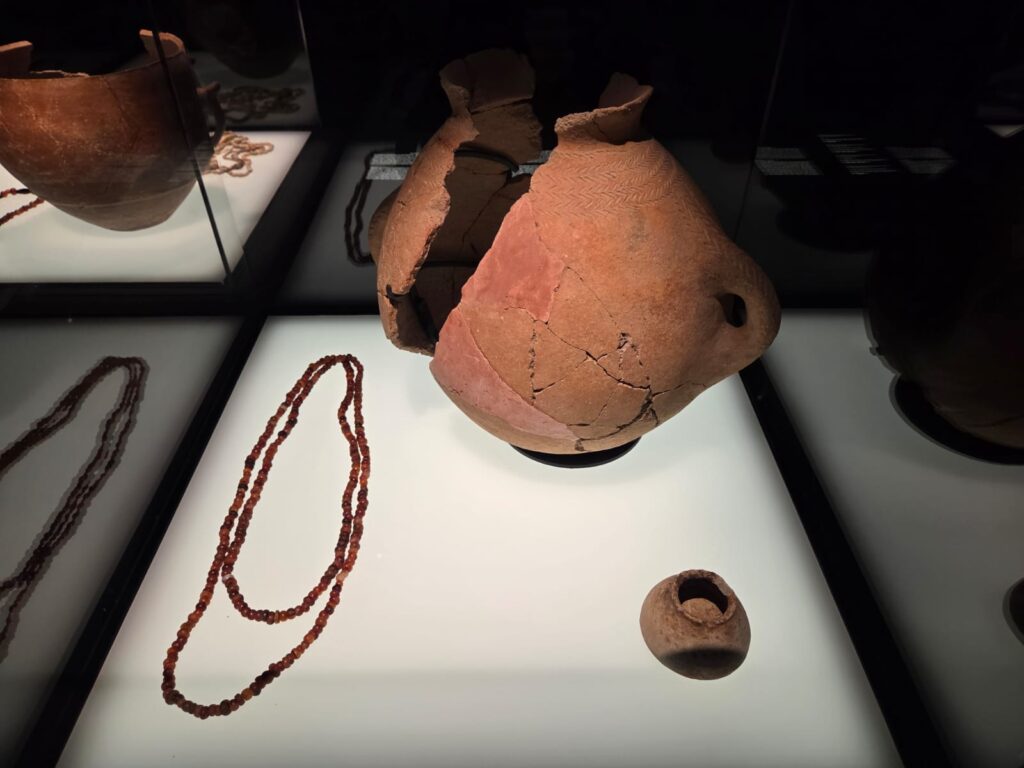
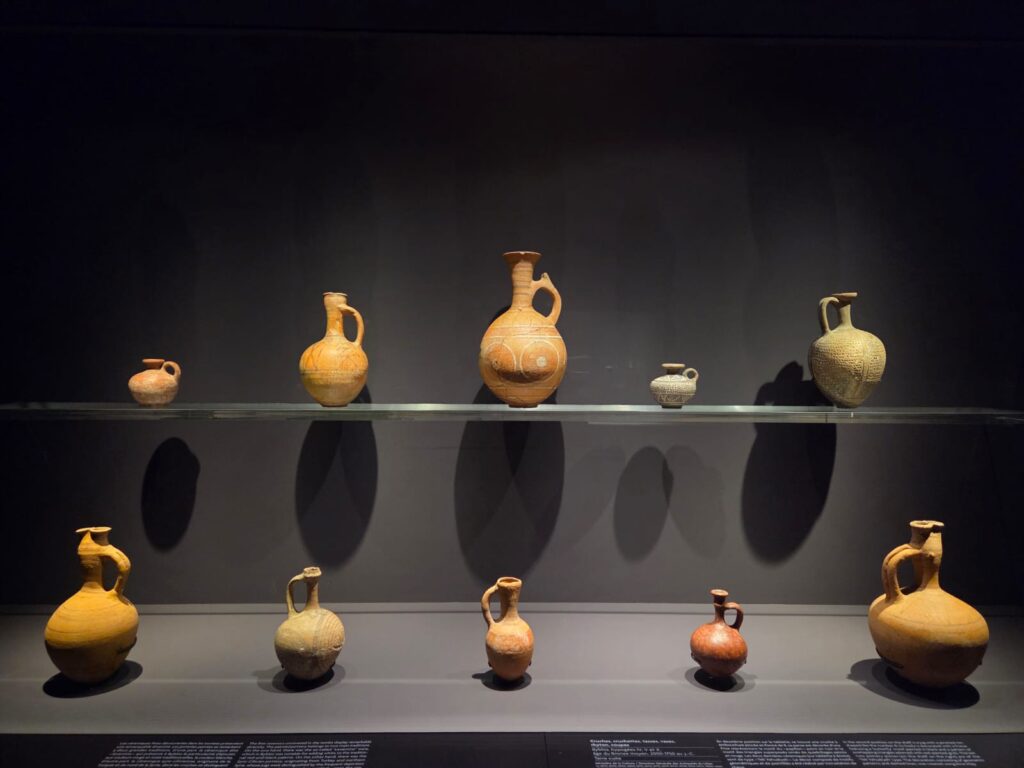
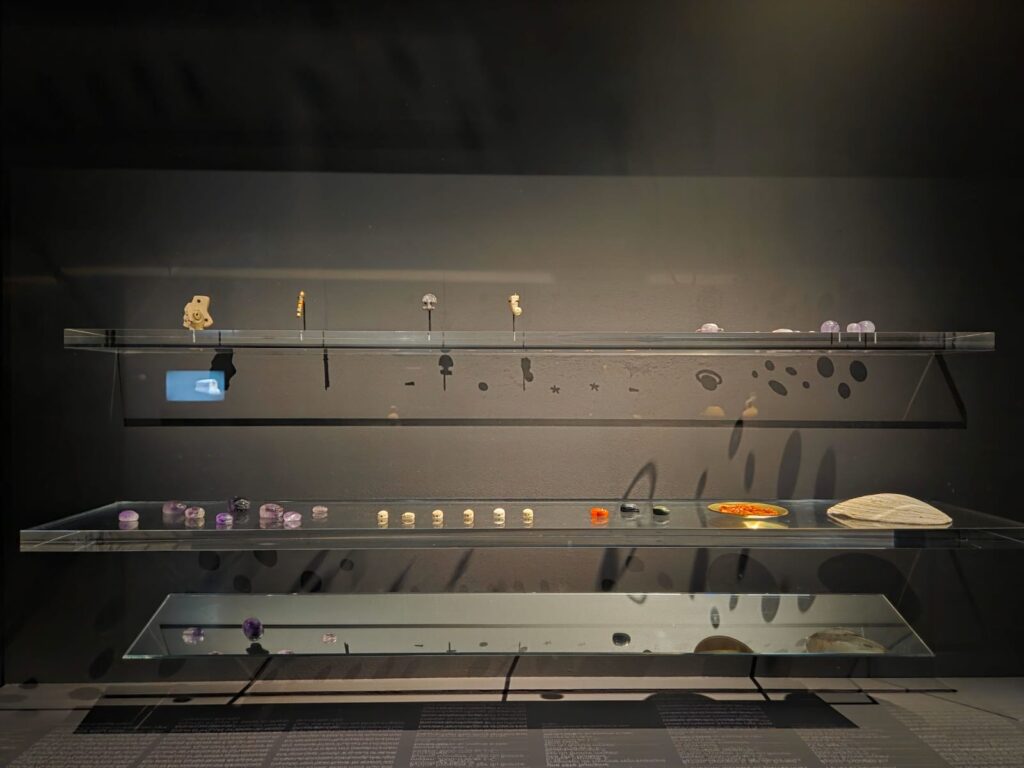
Heading up to the next section, we see evidence of cultural exchange and trade, and learn about burial and religious customs. This is crucial for the next section, which is all about the new archaeological discoveries: the city’s southern gate and an intact ancient necropolis. Another large projection held my attention for some time. It was merely footage of an archaeologist carefully digging out accumulated dirt and debris to reveal various finds. A sort of ASMR, meditative experience that I found very pleasing. We learned what a hypogeum is in earlier posts about Malta, and I enjoyed seeing what one looks like before it’s emptied of its contents.
Once I eventually moved past this point, the exhibition moves at pace, covering later Phoenician, Hellenistic and Roman phases of development. A mosaic of the abduction of Europa is a real highlight here. This is also where the exhibition talks about the Phoenician alphabet and how trade with Byblos helped to spread it. Finally, a video at the end of the exhibition helps connect Byblos to the present day.
Archaeology Doesn’t Exist in a Vacuum
One very clear choice within the exhibition is to tackle the external political situation head on. Of the approximately 400 artefacts that should have been part of the exhibition, not all of them have made it to Paris. Some empty spaces have a Ø symbol, accompanied by “œuvre bloquée par la guerre” (work blocked by the war). The museum also dedicates the exhibition to the Lebanese people in an explanatory text at the entrance. It’s an effective mechanism for demonstrating how archaeology, museums, history, don’t exist in a vacuum. I can come to a nice museum on a Saturday to learn about ancient history, but my experience is shaped by what’s going on in the world today.
And I think that probably echoes through the exhibition in other ways. Early archaeologists often had something to prove, and destroyed other strata looking for it, impacting what we know of a place today. Populations generally can’t focus on heritage and its preservation if their basic needs aren’t met. Illicit trafficiking of archaeological artefacts remains a problem in many parts of the world, again often fuelled by geopolitical forces and an uneven balance of power and wealth between different nations. In times of conflict, destroying cultural heritage is a form of psychological warfare.
All this to say, I understand how fortunate it is to be able to come and see a nice exhibition about ancient history on a Saturday afternoon. Byblos, Cité Millénaire du Liban tells a rich and rewarding story in a beautifully designed exhibition. We may not know everything about this millennia-old settlement, but what we do know teaches us about early forms of urbanism, Bronze and Iron Age trade, burial practices, craftsmanship, the spread of literacy, and more. A good reminder of the continuity rather than the difference in humanity.
Salterton Arts Review’s rating: 4/5
Byblos, Cité Millénaire du Liban on until 23 August 2026
Trending
If you see this after your page is loaded completely, leafletJS files are missing.