
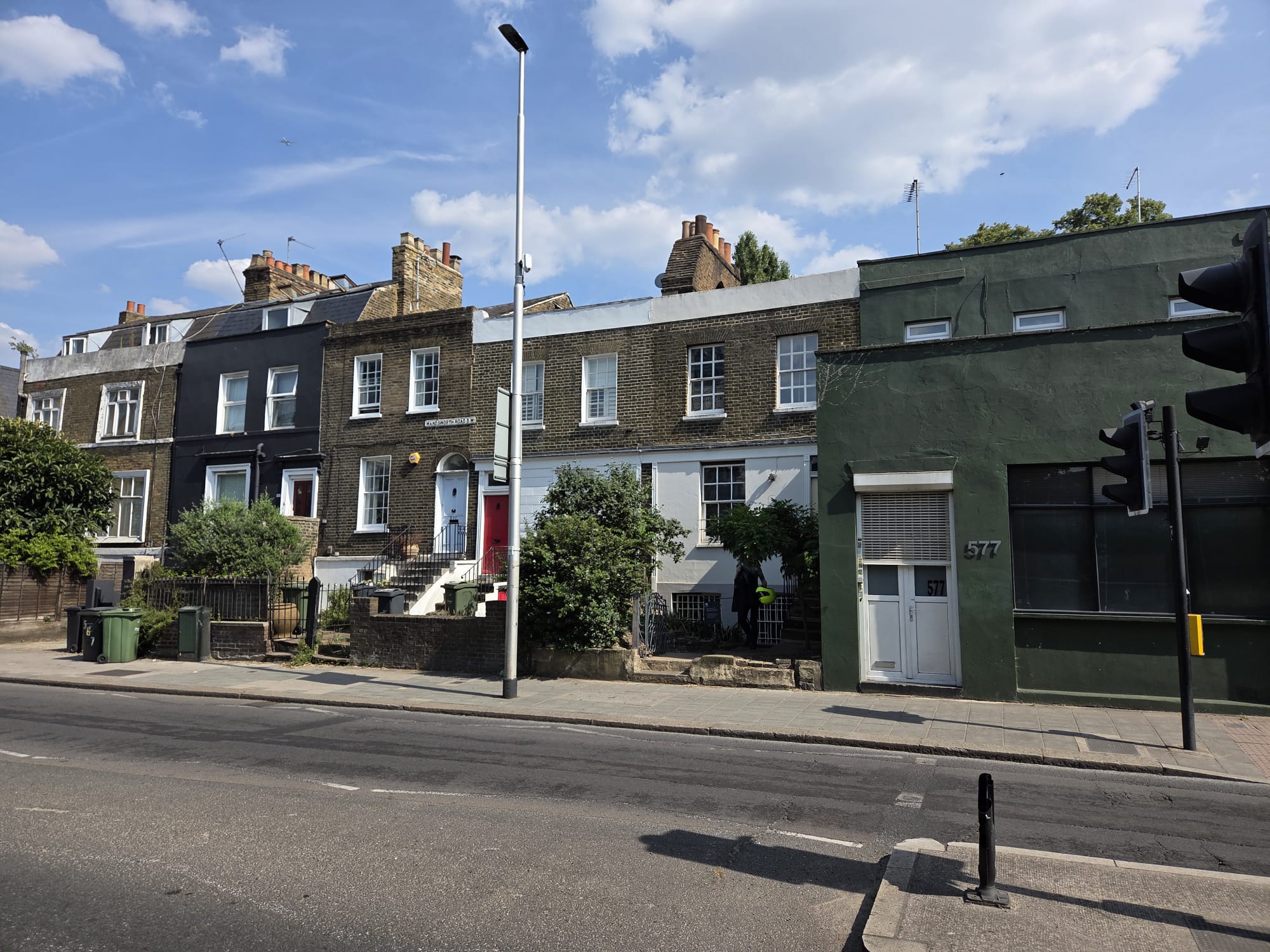
575 Wandsworth Road, London
I get my hands on one of the National Trust’s hottest tickets, for one of it’s most unusual properties: 575 Wandsworth Road.
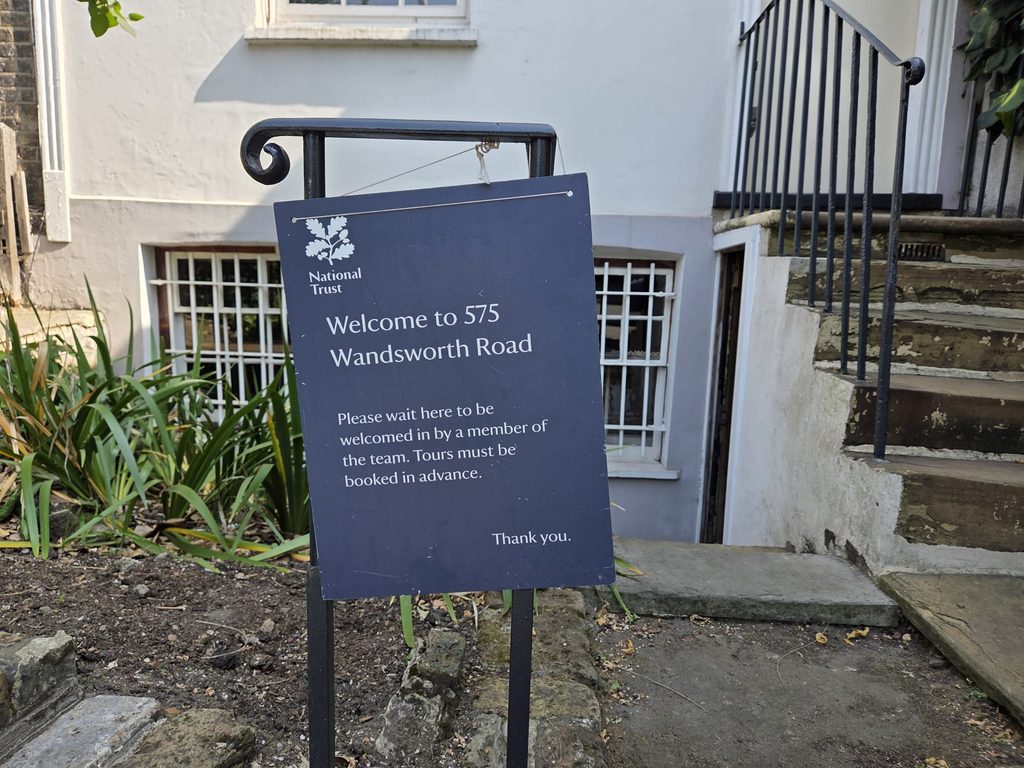
575 Wandsworth Road
Today’s post is but a little one. I would love to show you around 575 Wandsworth Road, but the National Trust (probably quite rightly) have a no photos policy inside, so my aim is to urge you to see it for yourself if you can.
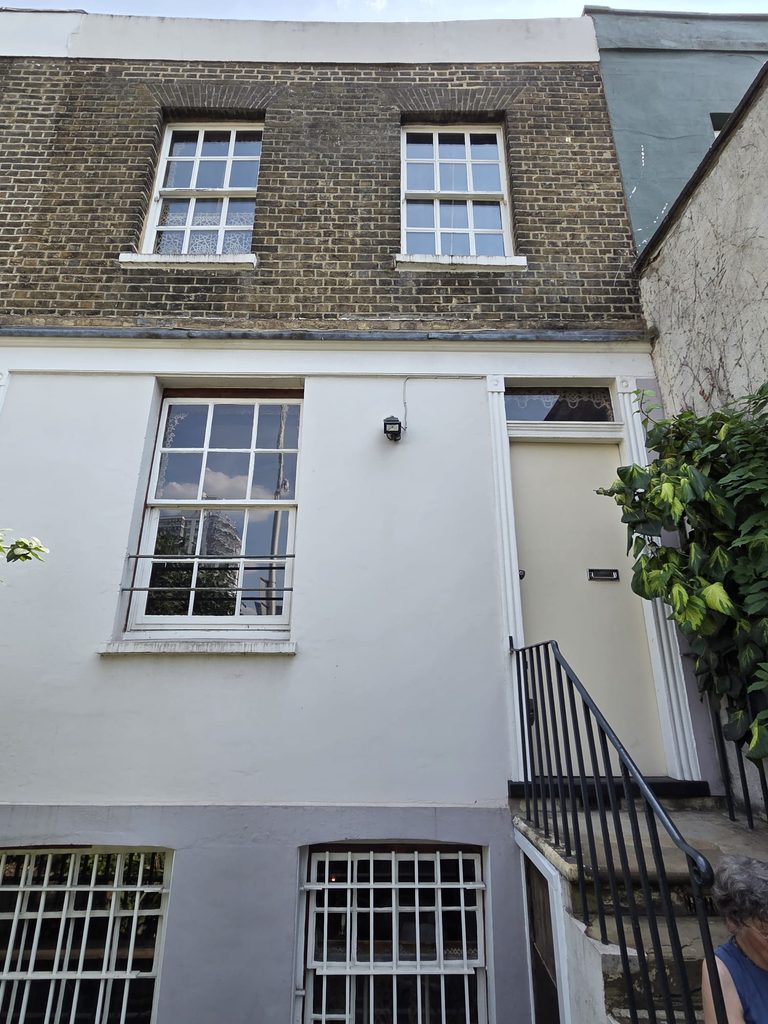
575 Wandsworth Road is, from the outside, an unassuming Georgian terraced house. It once belonged to Khadambi Asalache, a Kenyan poet and author. After studying architecture in Nairobi, Asalache pursued studies in fine art in Rome, Geneva and Vienna. The then settled in London in 1980, teaching Swahili, working for the BBC African Service, and then as a civil servant for HM Treasury. He also earned an MPhil in the philosophy of mathematics from Birkbeck College in the 1970s.
Alongside this series of day jobs, Asalache was a writer. His first novel, The Calabash of Life, is a classic of modern Kenyan literature, going into ten editions worldwide. He also wrote for the BBC, and for various literary journals, and published poetry.
What we want to talk about today, though, is his singular passion for decorating his home. Asalache bought 575 Wandsworth Road in 1981. It was a bit run down, but on his bus route into work at the Treasury. Previously inhabited by squatters, the house also suffered from damp. For whatever reason, rather than solving the damp, Asalache covered it up with some hand-made fretwork. By the time of his death in 2006, he had decorated almost his entire home.
Recycling wood from old doors and boxes, Asalache was inspired in his designs by Moorish masterpieces like the Alhambra and Great Mosque in Cordoba, doors from Zanzibar, and homes in Syria, Turkey and Kenya. He was not concerned with symmetry, and learned as he went along. The later designs show how far his technique had come. You can see some nice images here.
A Unique Challenge in Heritage Preservation and Access
After Asalache’s death, his home and its contents were left to the National Trust. It’s very unlike most properties they own, and presents some unique challenges. The first is that that initial problem of damp was not resolved in Asalache’s lifetime. That obviously needed attending to. Then there was preserving Asalache’s decorative scheme. One interesting choice the National Trust is to retain Asalache’s methods of affixing his fretwork. The house is closed over winter, and reaffixing any bits that have fallen off is one of the tasks for conservators. If a piece was originally stuck on with blu-tack, they stick it back with blu-tack. If it was glue, then glue. I like this approach – for a home like this it somehow seems more important to keep the spirit of the place than to be using the latest conservation materials.
Another challenge is whether and how to welcome guests into the property. They first did so in 2013 after a two-year restoration campaign. Today, there are a few slots per week (aside from in winter) where visitors can see inside 575 Wandsworth Road. It’s one group at a time, so ticket holders wait outside before a guide welcomes them into the kitchen. They swap shoes for socks or slippers (socks are provided if you forgot like I did), and get a briefing. Then you visit the house, breaking into smaller groups for the tightest spaces.
It’s really remarkable. An absolutely idiosyncratic Gesamtkunstwerk which speaks to Asalache’s experiences as an artist, architect and world traveller, and to his experience as a Black immigrant to the United Kingdom. I’m sure I wasn’t alone in wishing I could have come to one of the dinner parties Asalache frequently hosted here: his interesting collections of objects and wide-ranging library add to the impression of a sophisticated and erudite man. The National Trust work quite hard to make the focus the house rather than Asalache’s life, but the two inevitably intertwine. If you can get your hands on a ticket, it’s well worth the trip.
Trending
If you see this after your page is loaded completely, leafletJS files are missing.