
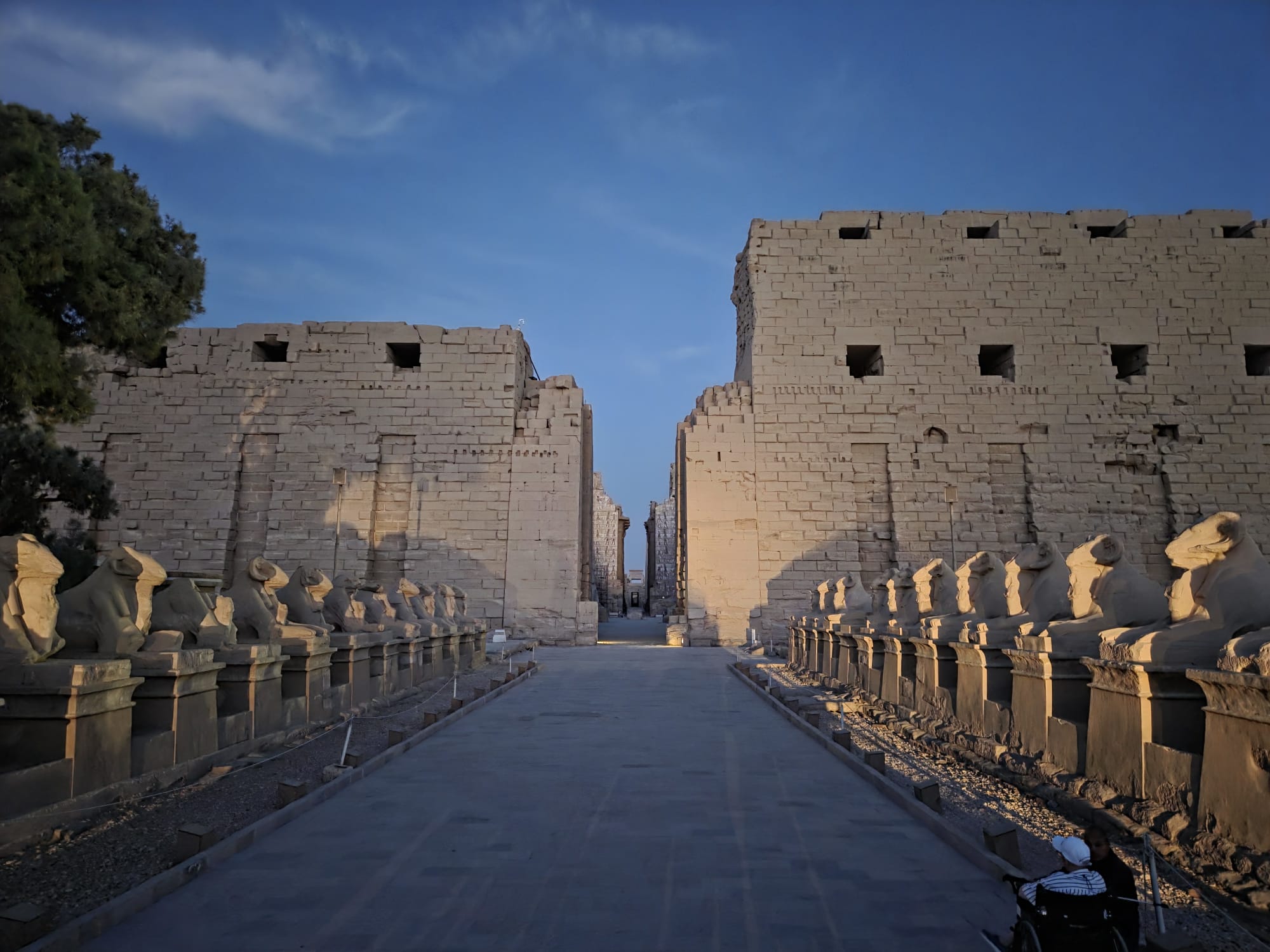
Karnak Temple, Luxor
One of the biggest religious complexes in the world, Karnak Temple is spectacular by day or night.
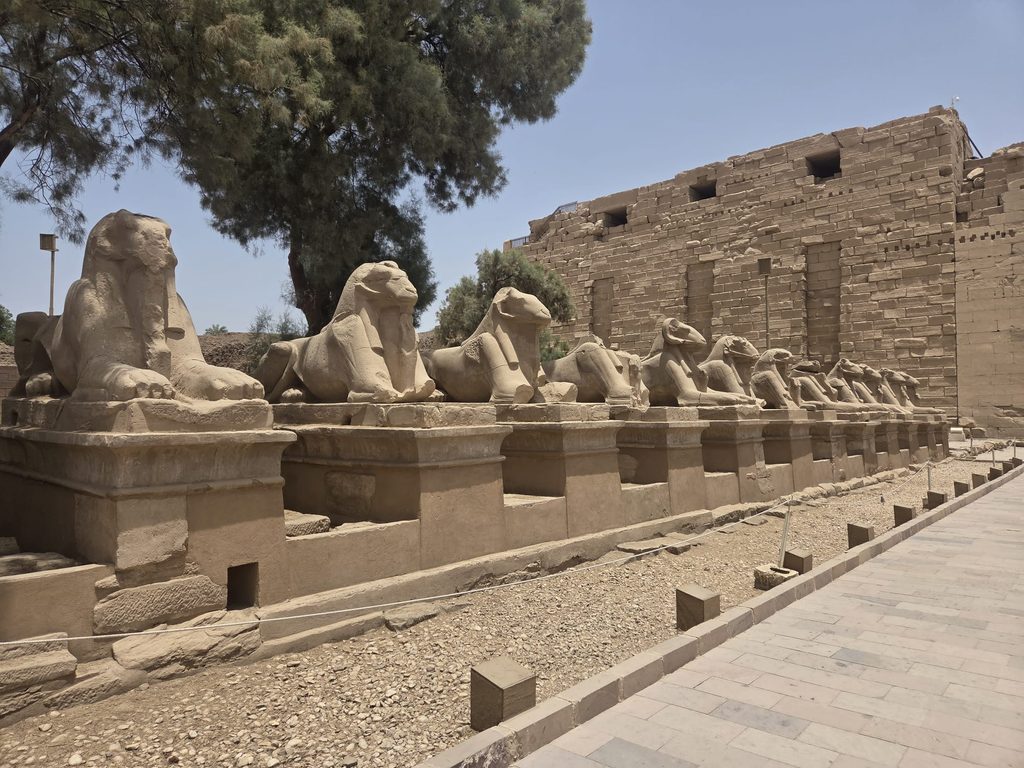
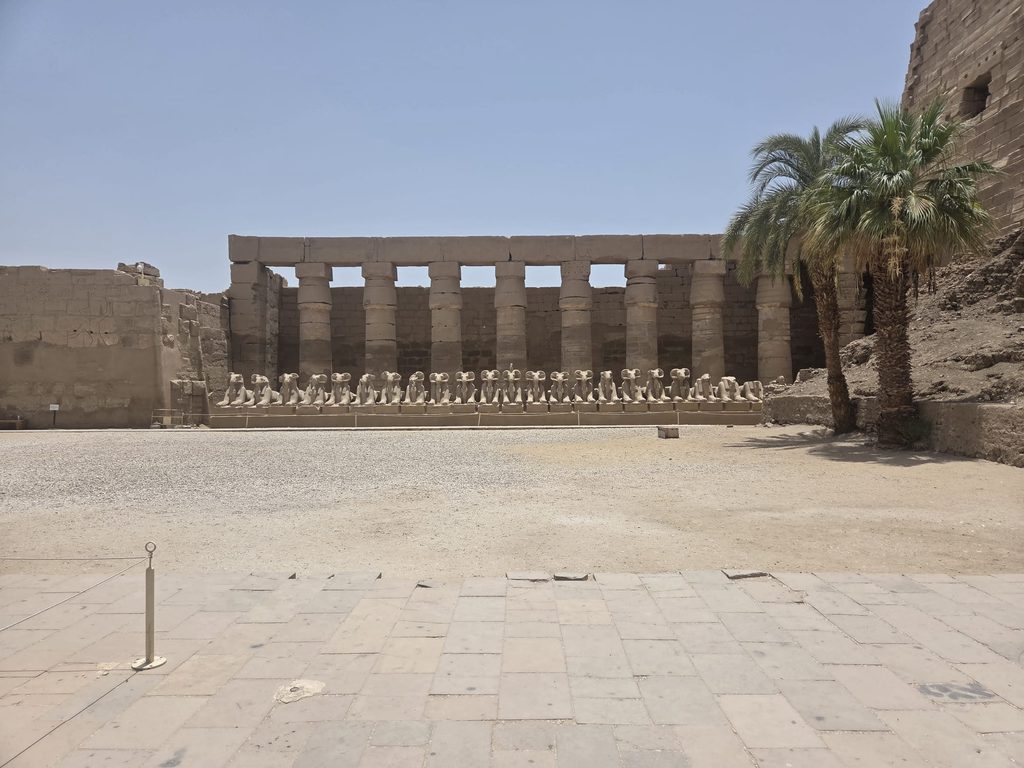
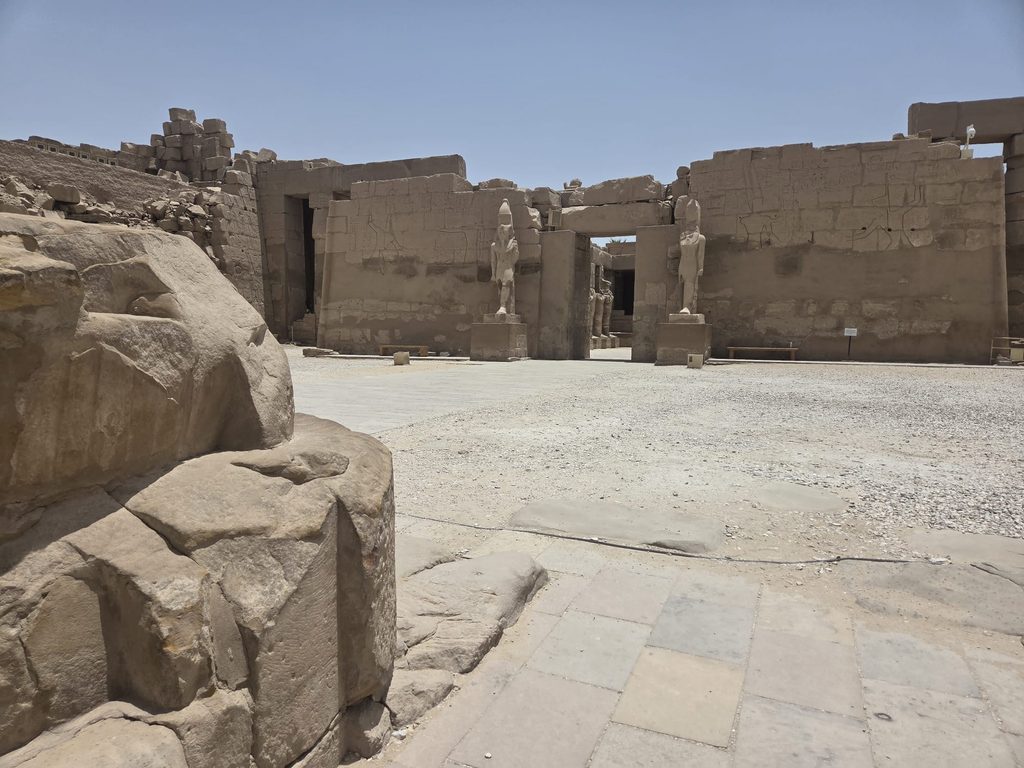
A Visit to Karnak
In my last post, I began to share with you the activities the Urban Geographer and I undertook on the last day of our tour in Egypt. I say last day of the tour, because we had a bonus day on our own still to come. We actually returned to Karnak on that final day – more on that later. But our initial visit to Karnak was part of a bumper day where we went to the Valley of the Kings and Mortuary Temple of Hatshepsut in the morning, Karnak Temple in the afternoon, and Luxor Temple in the evening.
Is it possible to fully take everything in when you’re seeing so much in a single day? Yes and no, I would say. There is such a lot to see, and to understand. We only saw a small selection of tombs in the Valley of the Kings. Around the other side of sacred mountain al-Qurn, the Temple of Hatshepsut is probably the most impressive mortuary temple, but there are others. Then you get to Karnak and realise that, even if not everything is open to the public, it’s one of the biggest religious sites in the world. And information panels are few and far between, so you will probably learn what you can from your guide (if you have one), and then wander around on your own for a bit.
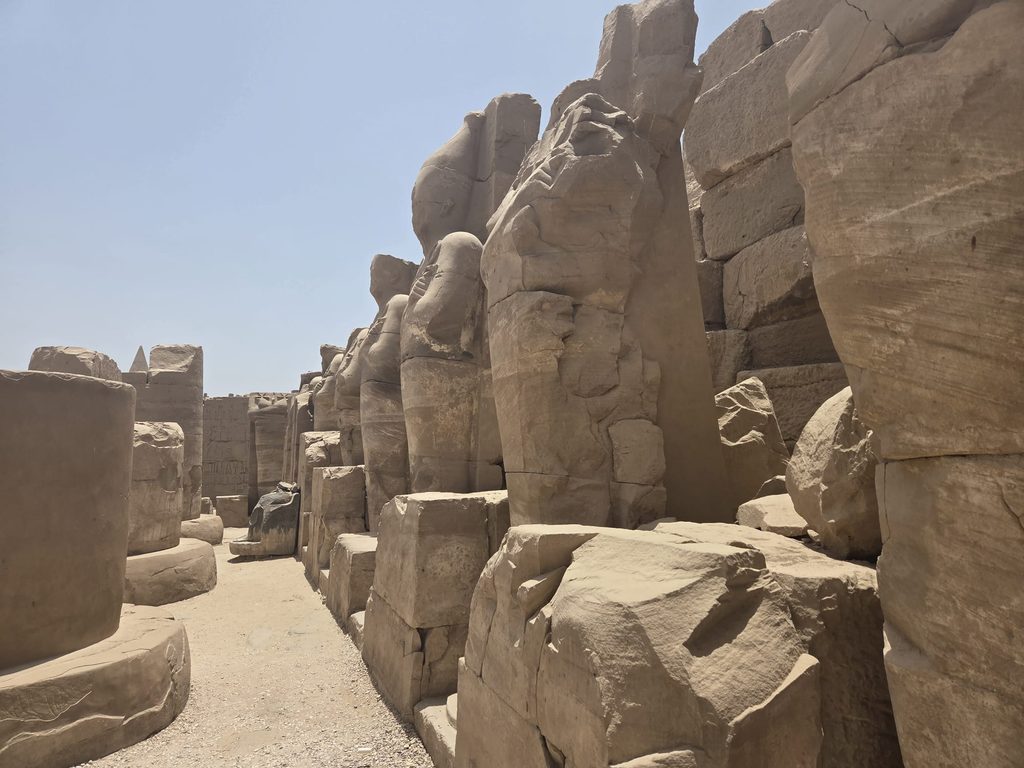
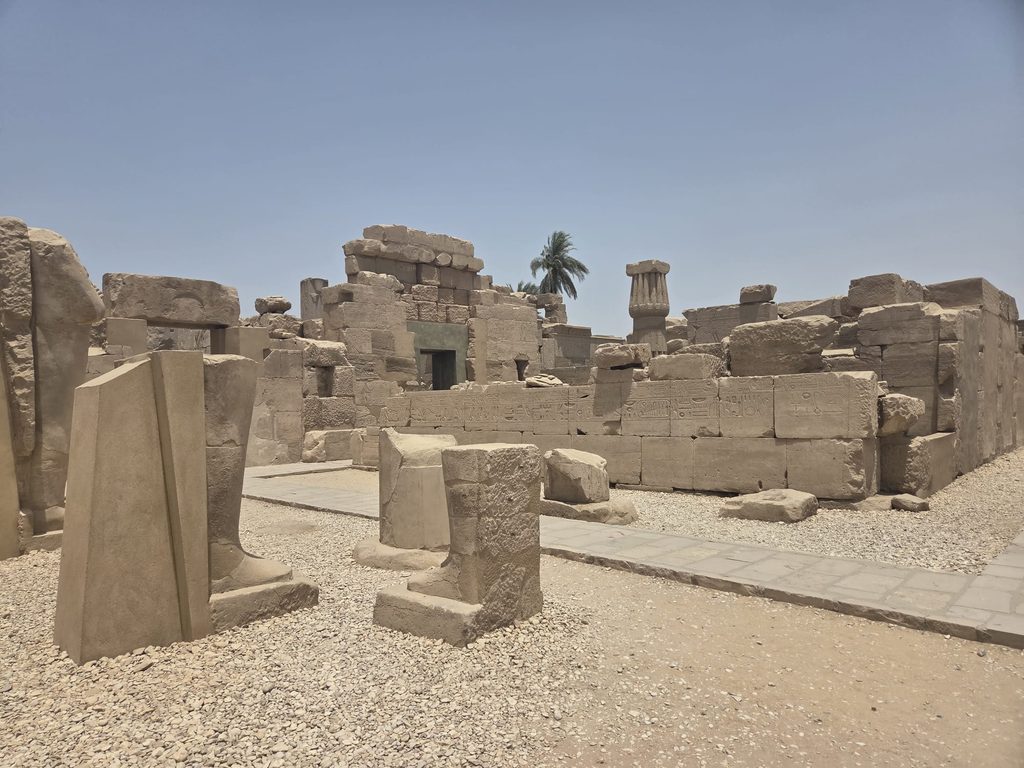
For me, this was more about immersing myself in the atmosphere of a place than specifically understanding who built which bit, and what the original significance was. Is this a criticism? Definitely not! What a wonderful bit of good fortune to be able to see all these places in a single day. I’m just saying that the images in this post are a fraction of the ones I took, because there is so much to see at Karnak. Particularly as we came back for a sound and light show the following evening, and so saw it in a whole new light (literally). The final section of this post covers the sound and light show specifically.
Karnak: A Brief History
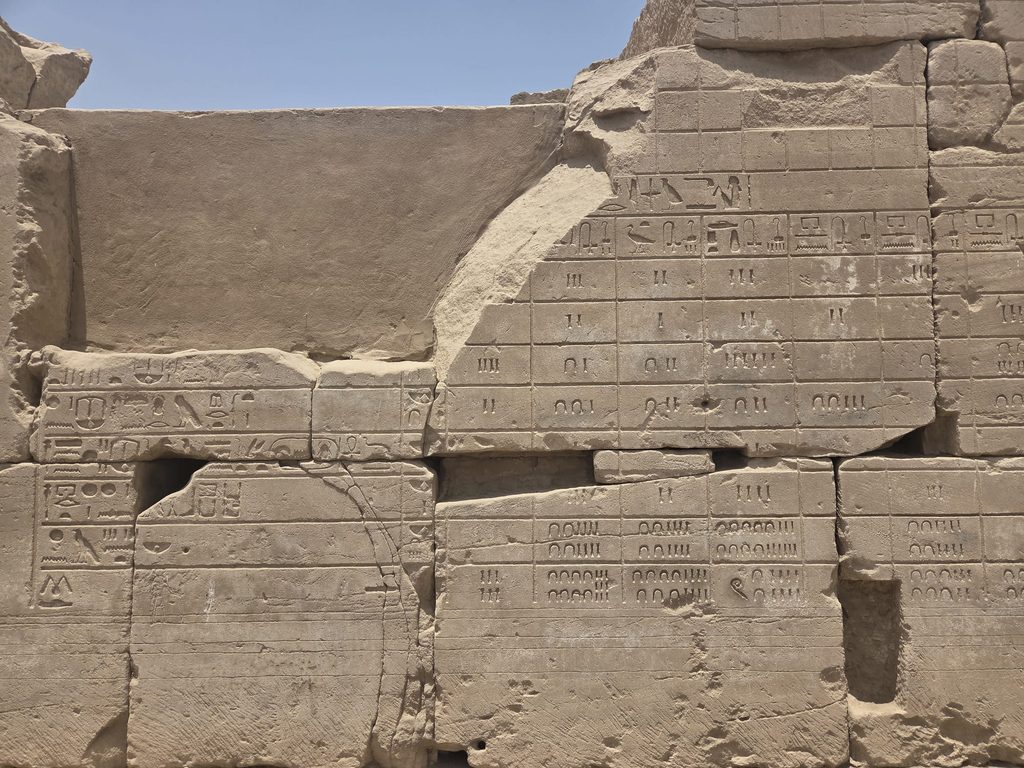
The Ancient Egyptians didn’t know today’s site as Karnak. For them, it was Ipet-isut, ‘The Most Selected of Places’. The modern name comes from a nearby settlement, and means ‘fortified village’. Construction at Ipet-isut (which we’re now going to revert to calling Karnak, so as to avoid confusion) began in the Middle Kingdom, during the reign of Senusret I from 1971-1926 BCE. It continued all the way to the Ptolemaic period. But, unlike other temples we’ve seen, it seems pharaohs simply added something to Karnak during their reign, rather than rebuilding. Today it’s part of the UNESCO World Heritage of Ancient Thebes and its Necropolis.
Karnak was the main place of worship of the 18th dynasty triad of Amun, Mut and Khonsu. But the worship here extended to more than those gods. The complex consists of the Precinct of Amun-Re, Precinct of Mut, Precint of Montu and Temple of Amenhotep IV. There are also a few smaller temples and sanctuaries. I’ve seen slightly conflicting information online, but I know for sure the Precinct of Amun-Re is open to the public. I believe the Temple of Amenhotep IV* (or its ruins) might be too. The Precincts of Mut and Montu I don’t think are open.
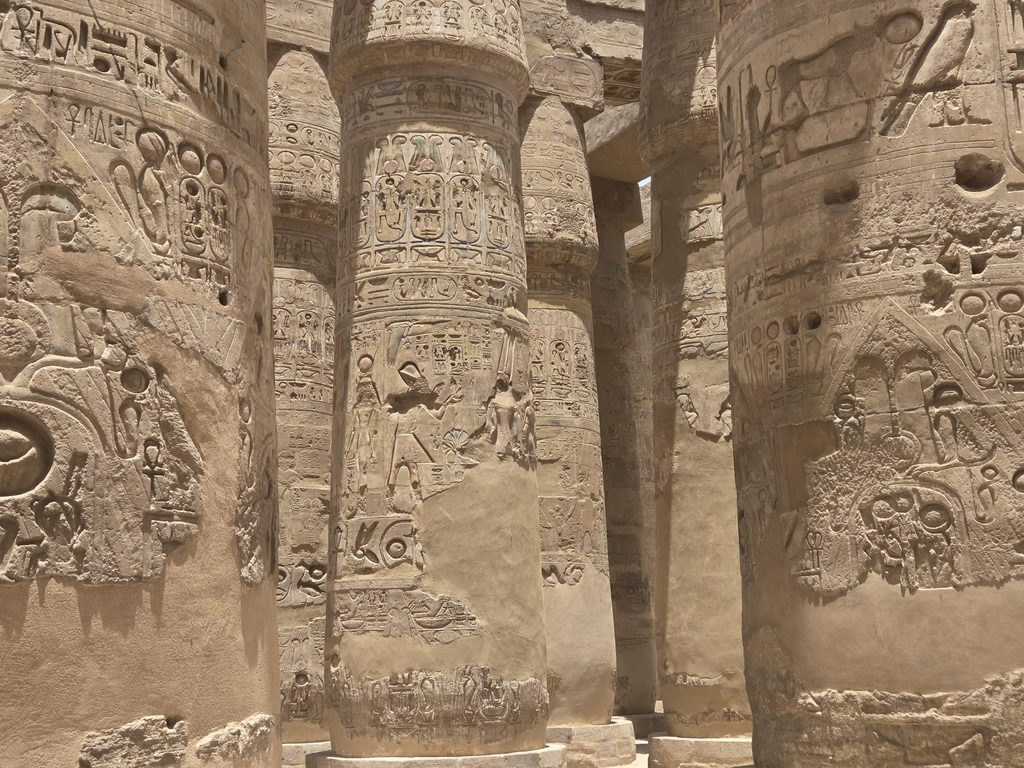
The capital of Ancient Egypt moved around a fair bit. And when I mean capital, I need to also point out that there could be a religious centre and administrative centre that weren’t necessarily the same. Originally, Karnak was a shrine or temple to local earth goddess Mut, and Montu. A first phase of development happened in the 11th dynasty, which is when worship of Amun-Re began here. The temple grew significantly in the 18th dynasty, when Thebes became the capital of unified Ancient Egypt. The Ptolemies later moved the capital to Alexandria, and with that Karnak lost importance. By the time Constantine ordered the closing of pagan temples in 323, it was largely abandoned. As in many other places, Christian churches sprung up among the ruins. Coptic decoration is still visible in the Festival Hall of Thutmose III.
*Also known as Akhenaten, founder of a monotheistic religion and probably Tutankhamun’s father.
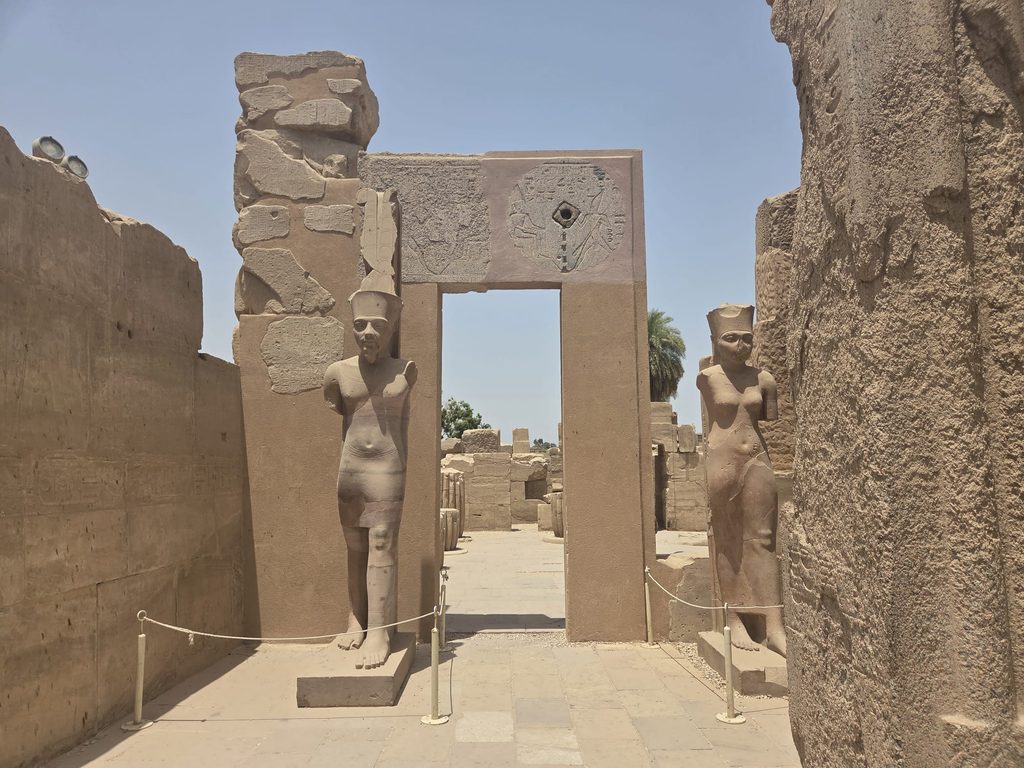
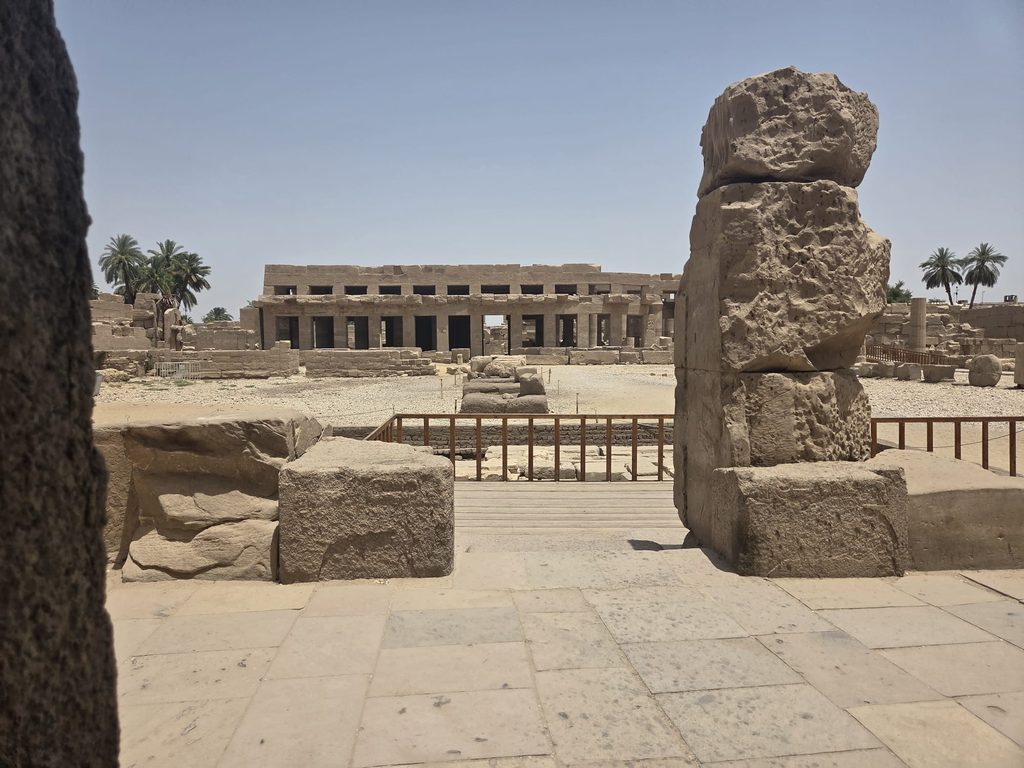
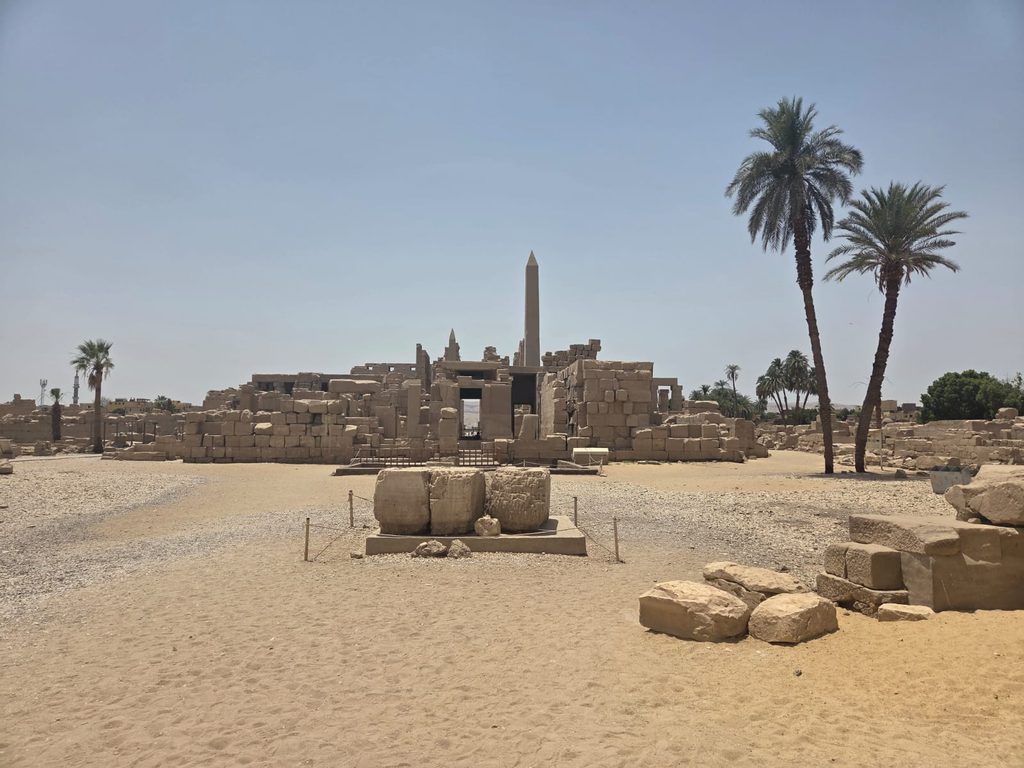
The Architecture and Layout of Karnak Temple
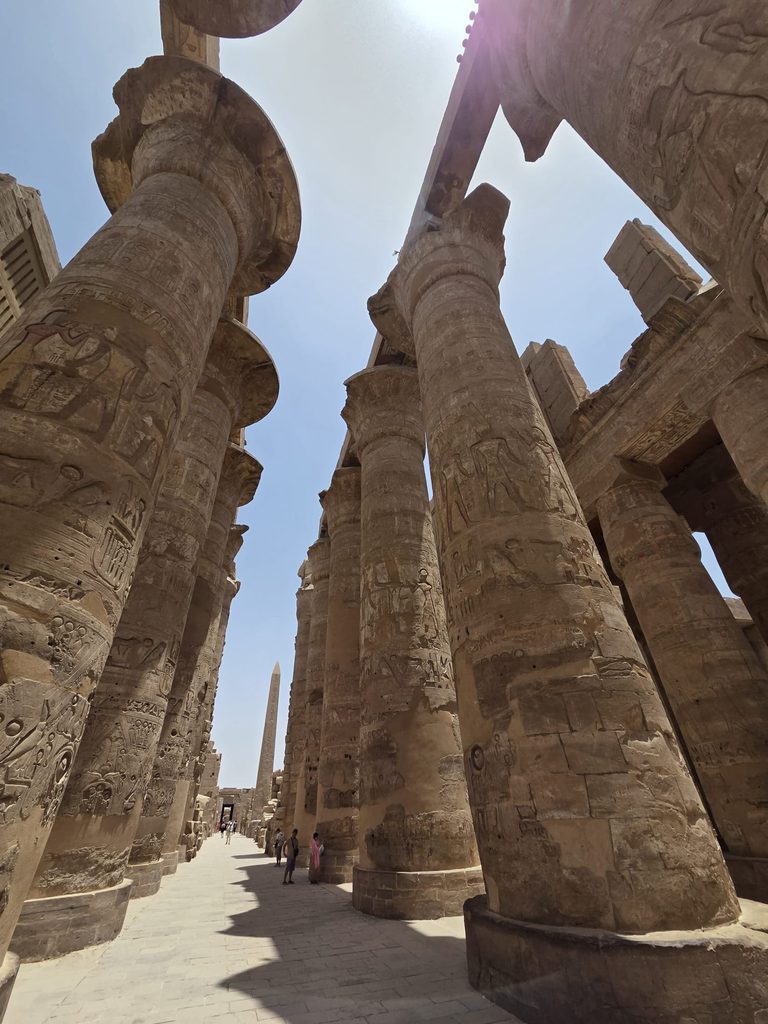
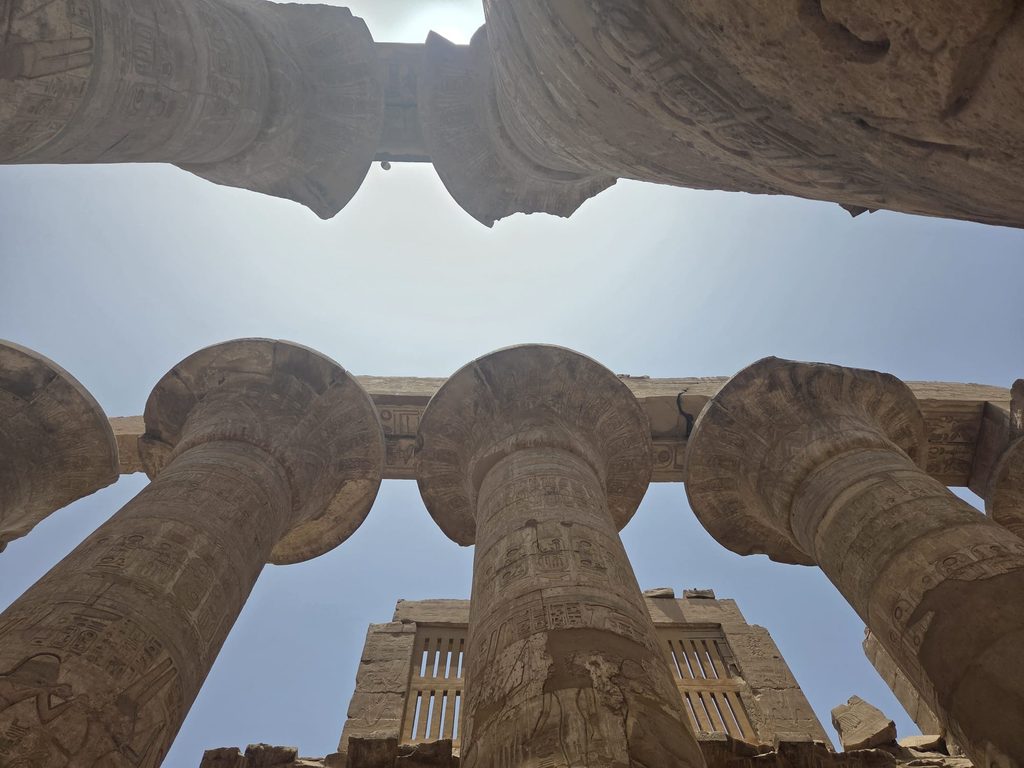
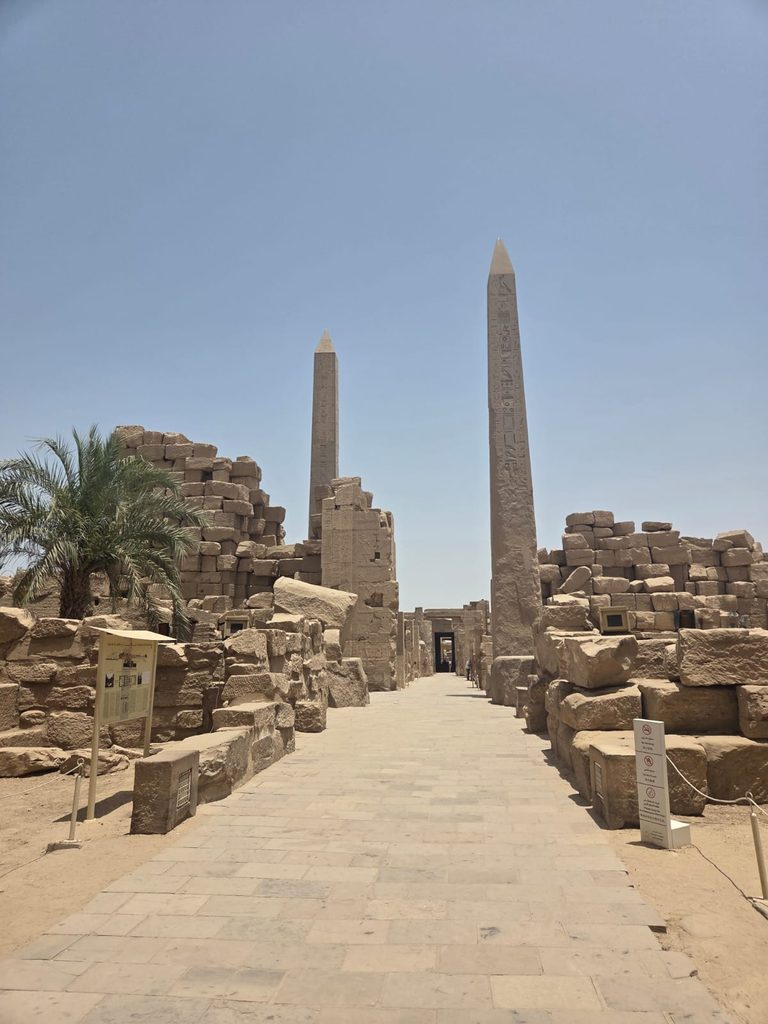
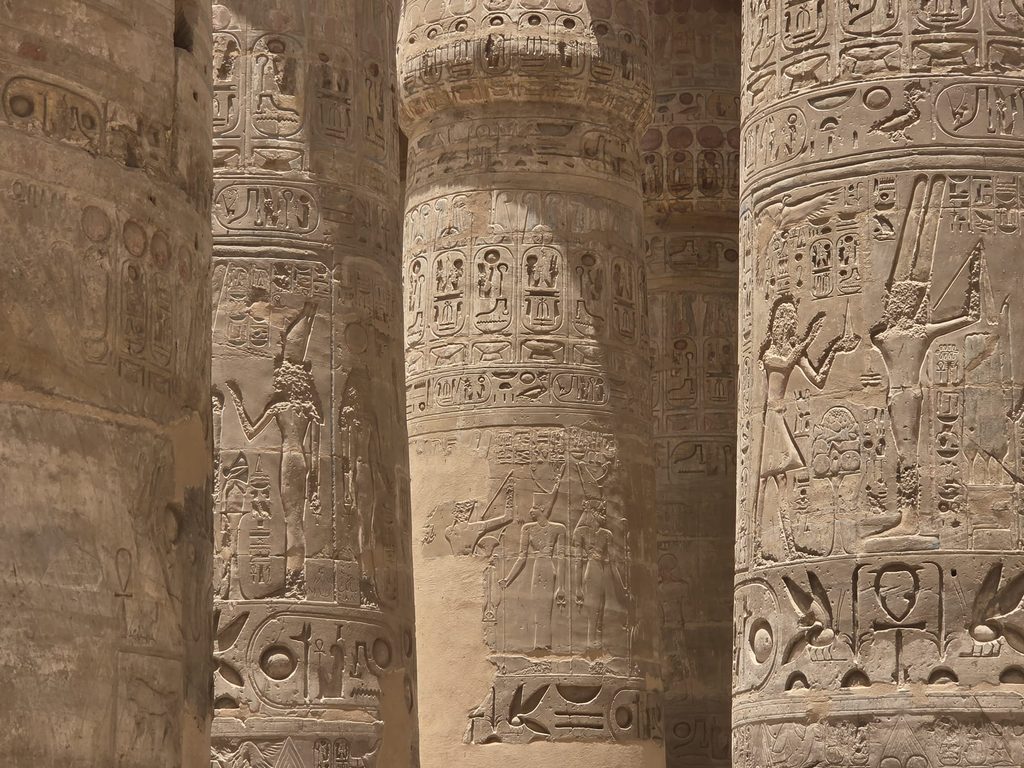
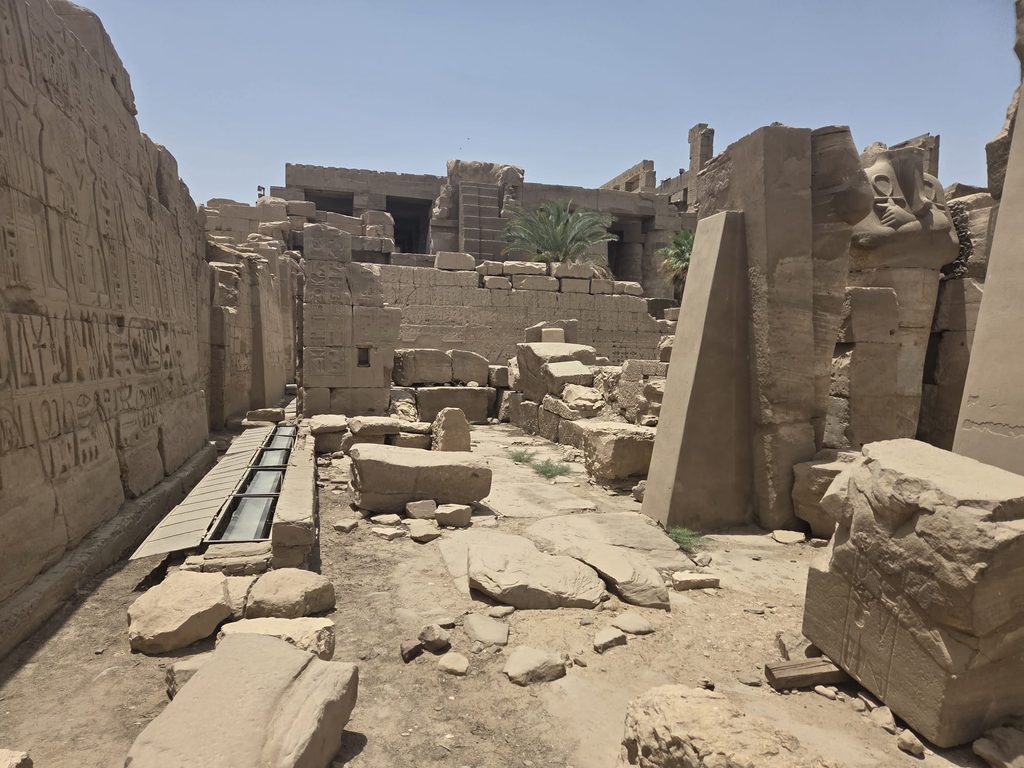
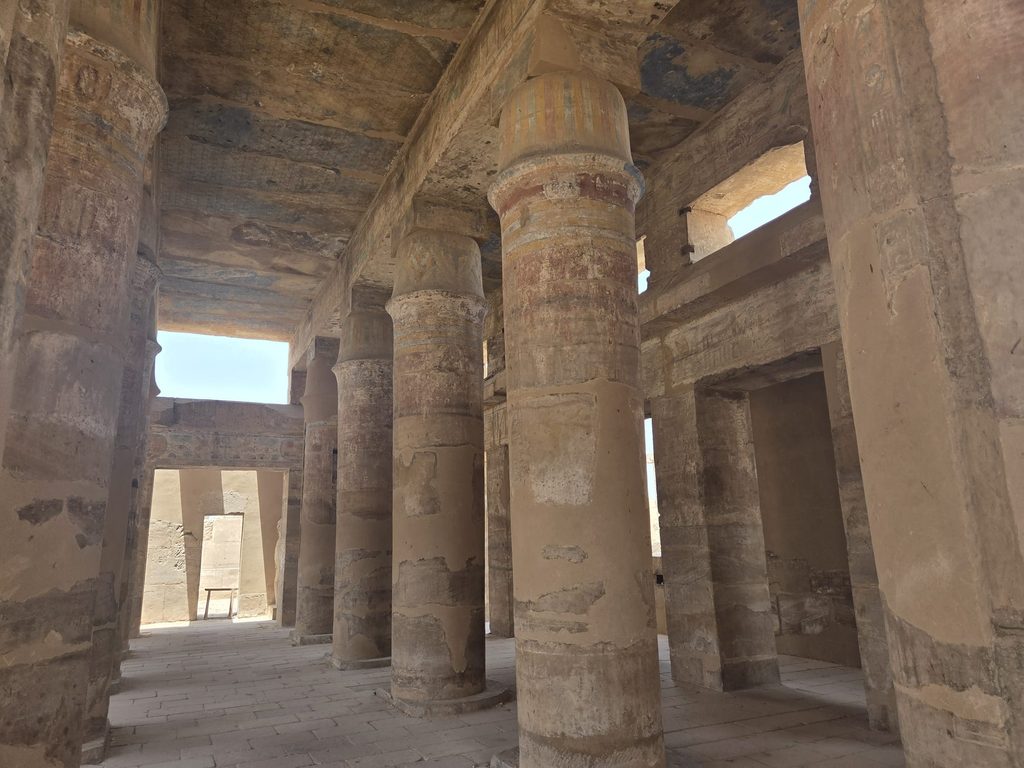
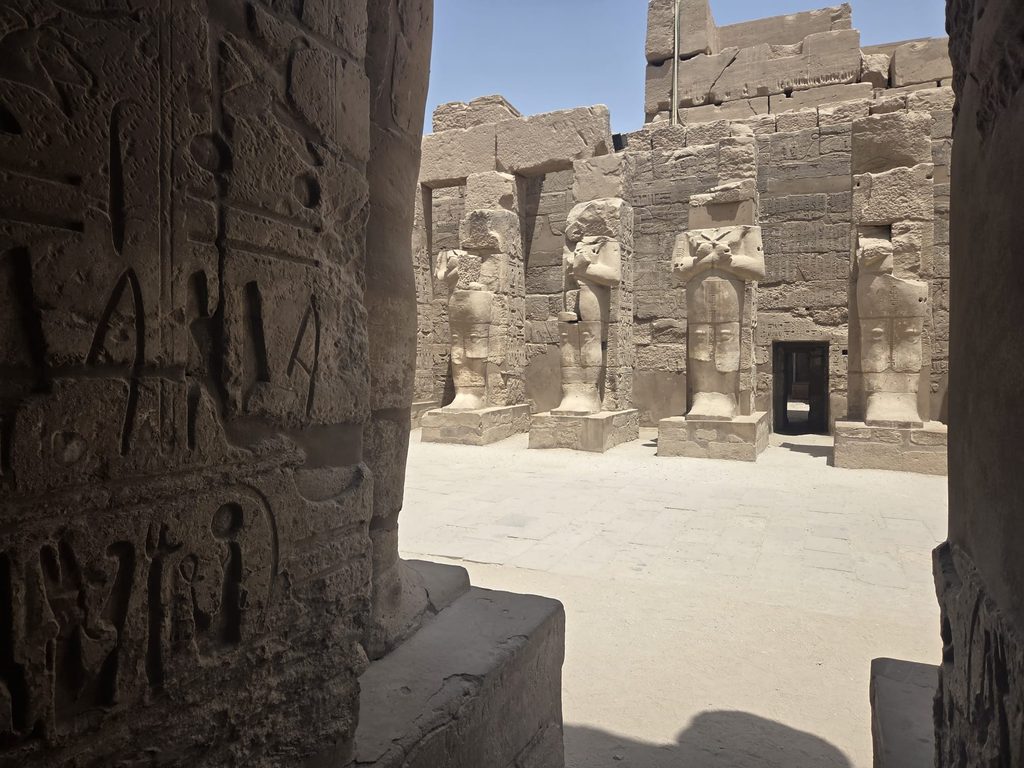
The Precinct of Amun-Re is, as we’ve established, the biggest of the precincts and also the one definitely open to the public. The sandstone for the sun god’s temple came from Gebel Silsila, a quarry 100 miles away on the Nile. It is built to align with the sun on the winter solstice. Probably the most impressive part of the Precinct of Amun-Re is its hypostyle hall. As we’ve learned elsewhere in Egypt, that means a hall with columns. The hall covers about 5 square kilometers, and contains 134 columns in 16 rows. Most are about 10 metres tall, while 12 are 21 metres tall. The architraves alone weigh about 70 tons in some cases and were probably lifted into place or brought up ramps before the carving was finished in situ.
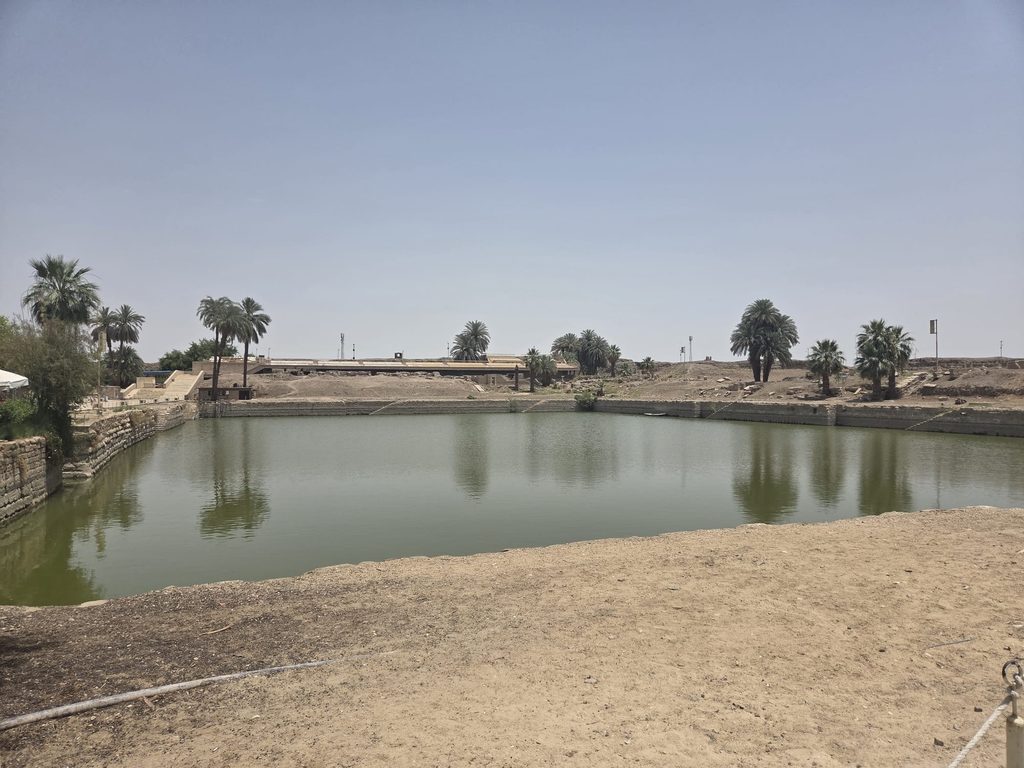
The Precinct of Mut is up next. Mut was the wife of Amun-Re in the Theban Triad, but before that she was an earth goddess. Over time, she absorbed the goddesses Sekhmet and Bast as some of her aspects, so she was associated also with the lioness. The worship of Mut is at the very heart of Karnak. Mut was associated with motherhood, protection and renewal, and the crescent-shaped lake at her temple was a key place of worship, used for purification and boat launches during festivals. Intentional drunkenness was another aspect of Mut worship – a bit like Dionysus/Bacchus I guess. Unfortunately this Precinct is not in very good condition today, in part because of its reuse for building materials. Johns Hopkins University lead its restoration, and it’s one where I’ve seen conflicting advice as to whether it’s open to visitors or not.
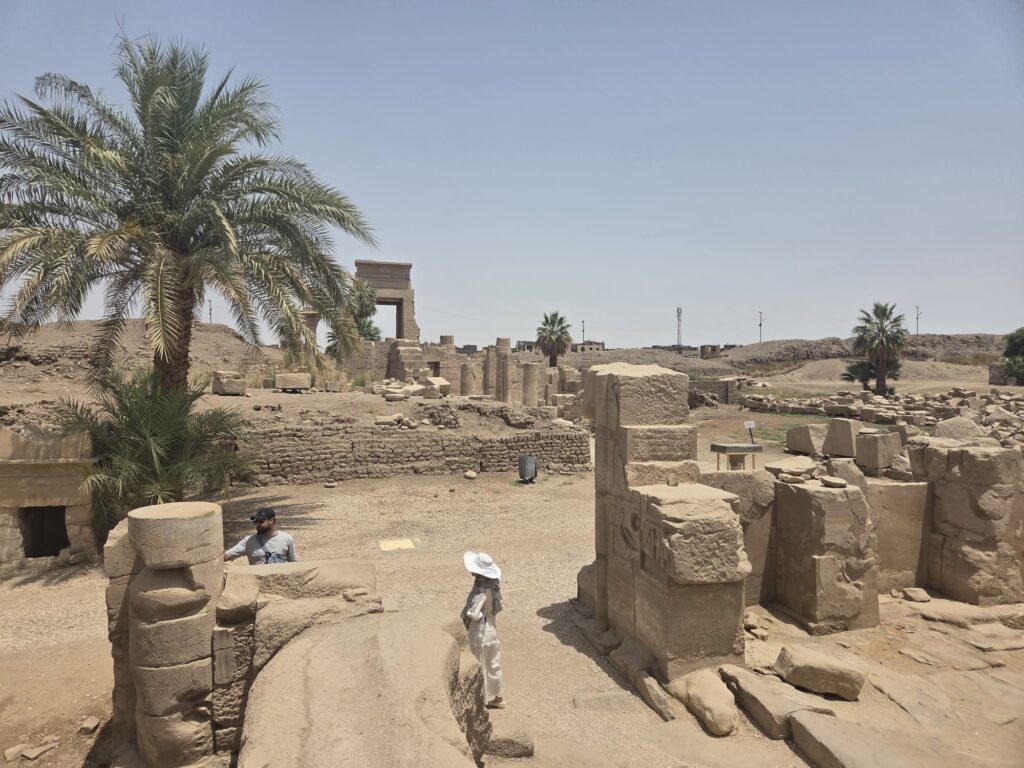
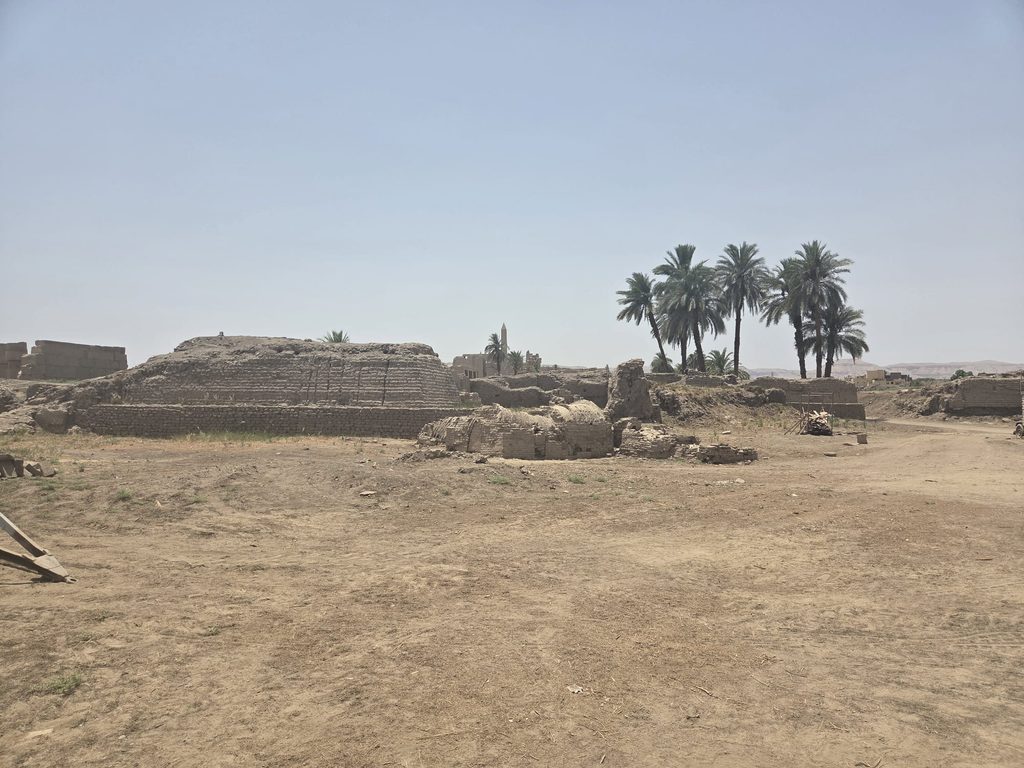
There is less to tell you about the Precinct of Montu and Temple of Amenhotep IV/Akhenaten. The former was dedicated to a war god, son of Amun-Re and Mut. It was smaller in size than the complexes we’ve spoken about so far. The latter was deliberately dismantled – Akhenaten had founded a new, monotheistic religion in part to try to break the control of the priesthood over Ancient Egypt, but the cult didn’t survive his death. I think this temple came from before the switch, but the destruction was so complete we don’t know what it was originally like.
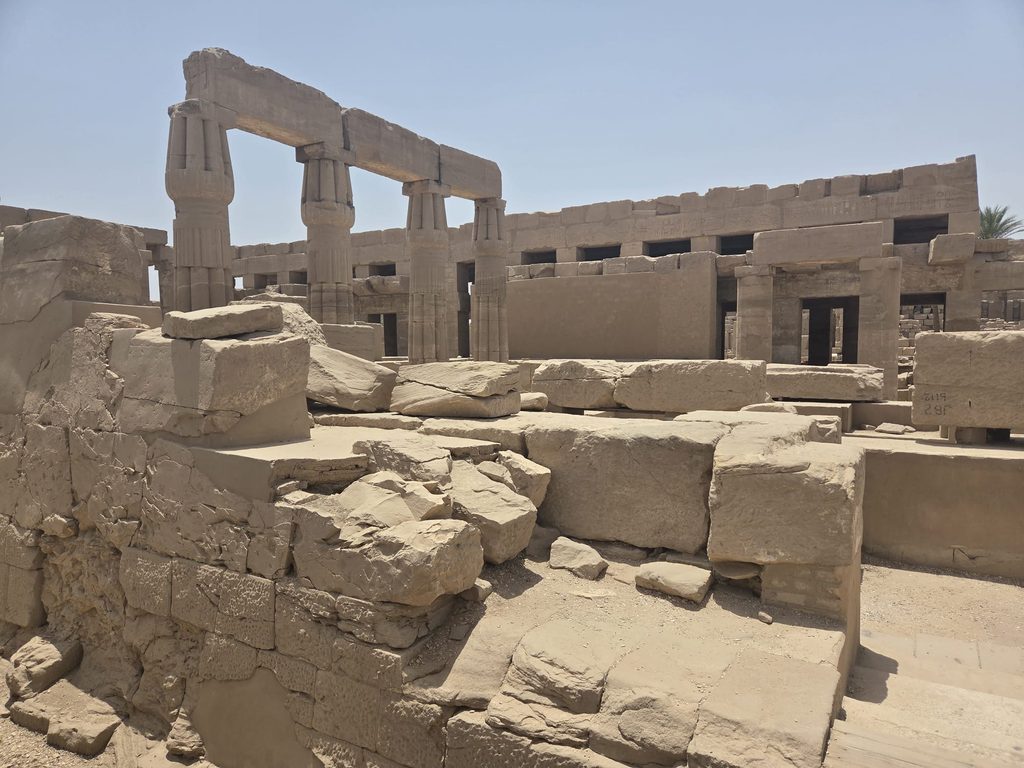
Layers of History
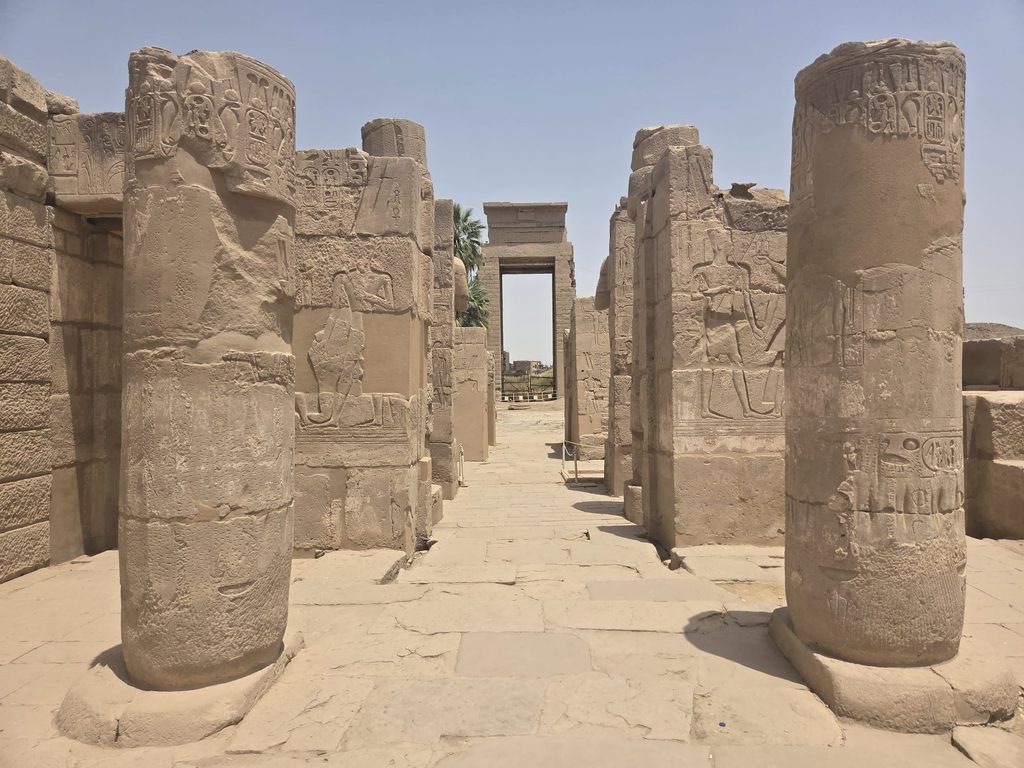
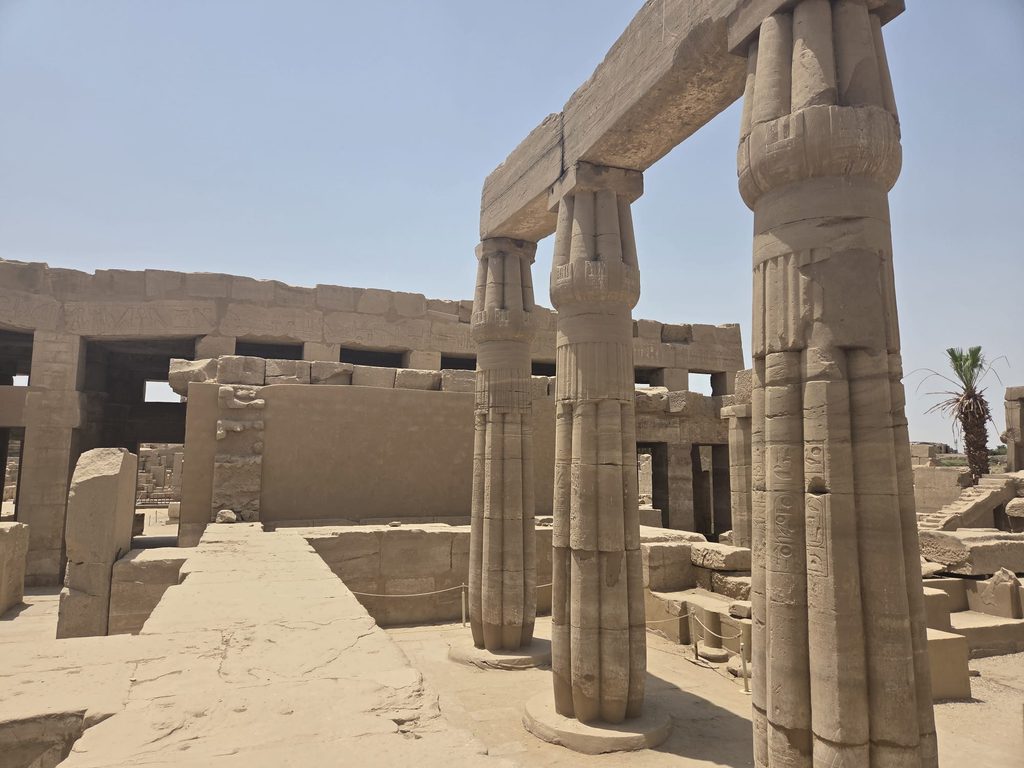
Most of the architectural and religious elements making up Karnak are not unique in Egypt. What is unique, or at least unusual, is the complex’s size. And the size meant enough space for dozens of pharaohs to each make their mark. As you read above, Karnak developed iteratively between about 1960 BCE and let’s say 200 CE or so. From the Middle Kingdom to Ptolemaic times. About 30 pharaohs contributed something, some of their contributions being more extensive than others.
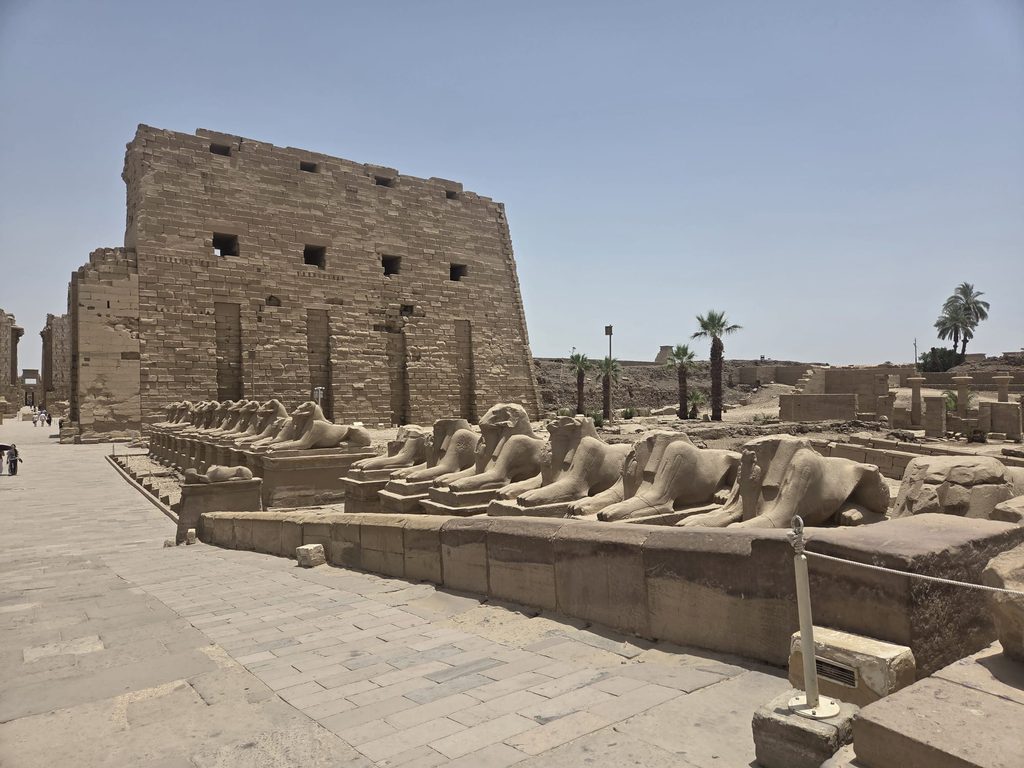
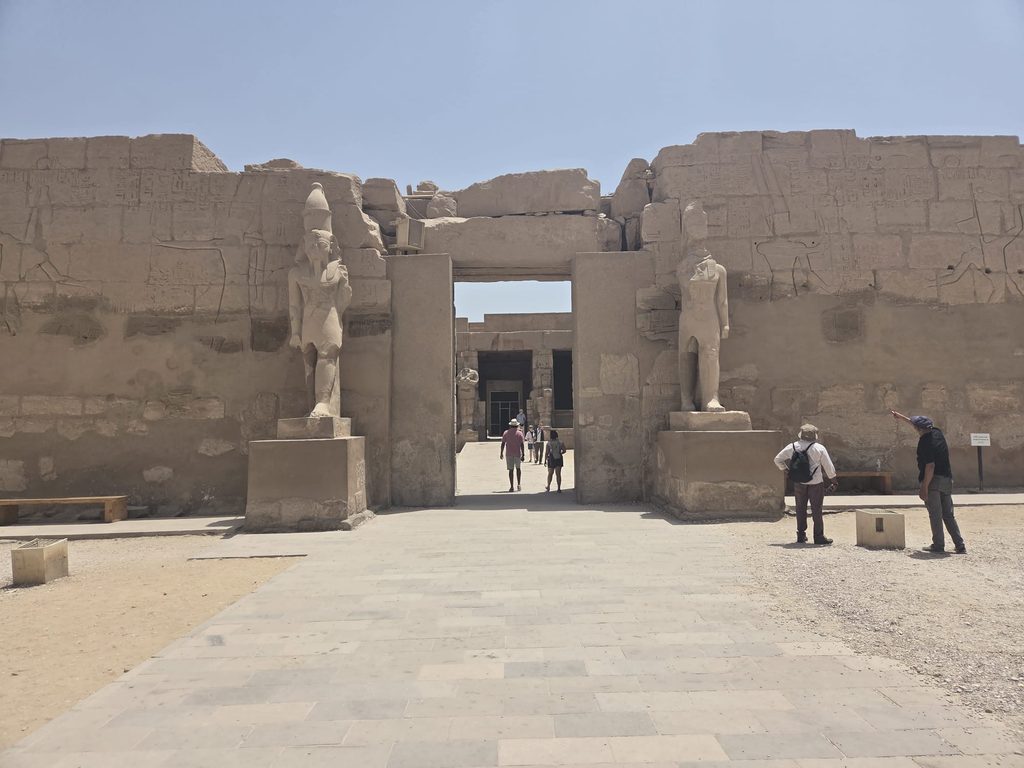
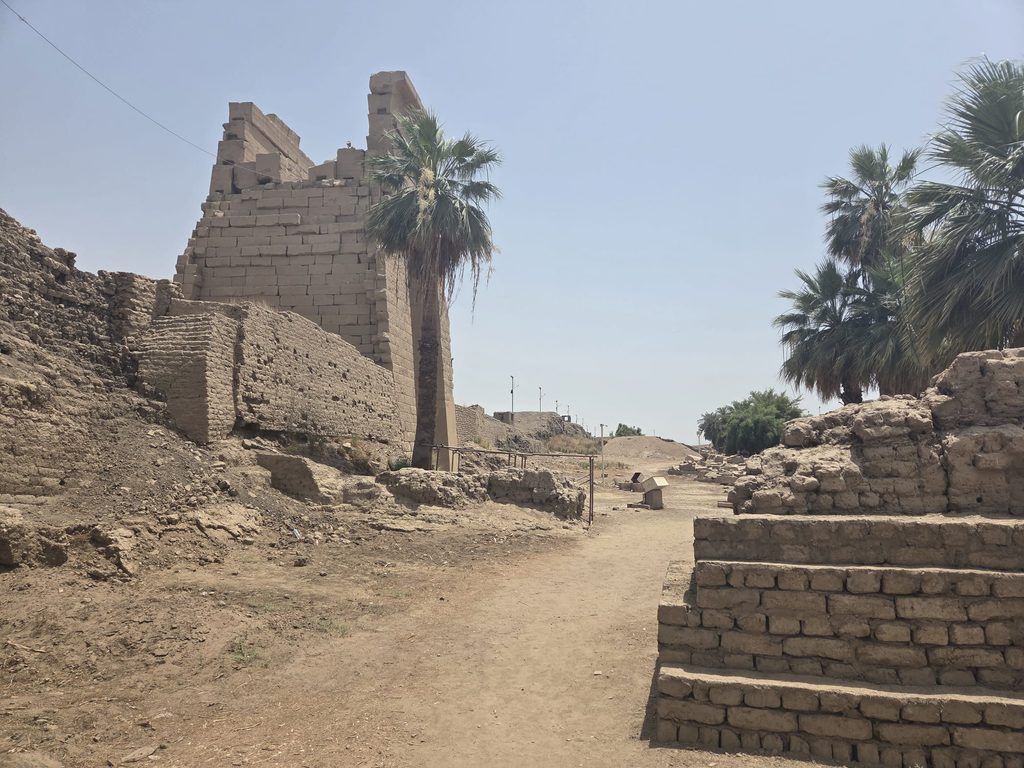
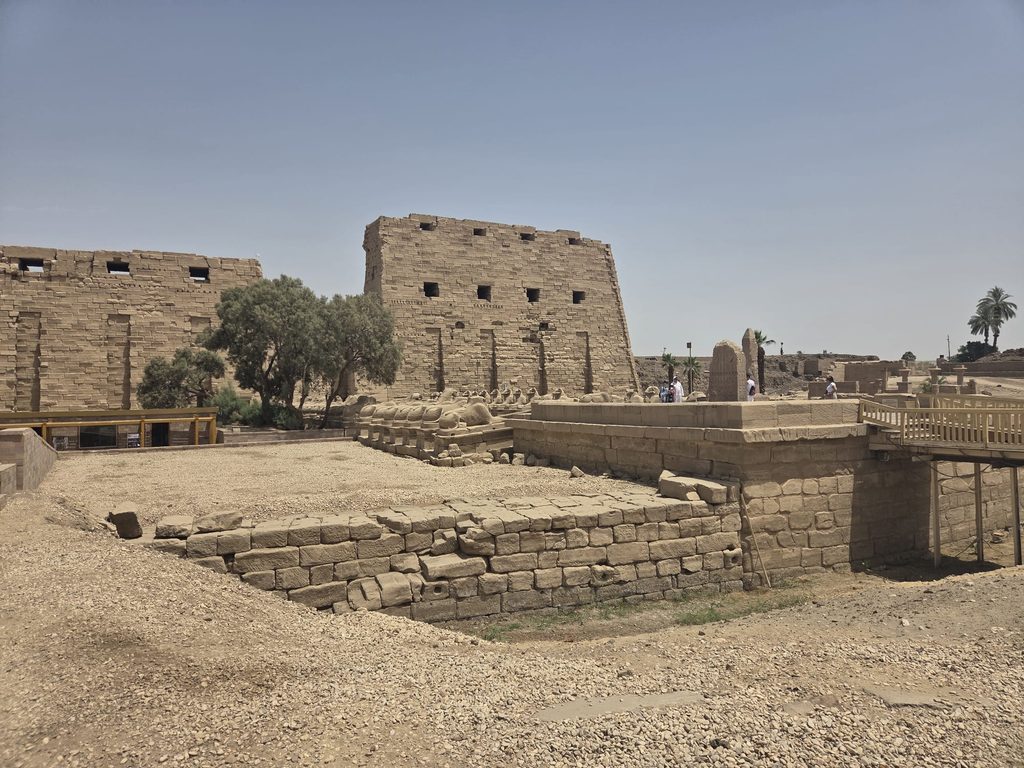
A lot of the construction work happened in the 18th dynasty, when Thebes became the capital, but there were changes over many centuries even within the same precinct. In the Precinct of Amun-Re, for instance, Thutmose I added an enclosure wall. Merenptah (whose tomb we saw in the Valley of the Kings) commemorated his victory over the Sea Peoples. Seti I and Ramses II did most of the work on the hypostyle hall. All the way in the 30th dynasty, Nectanebo I added more enclosure walls and the First Pylon (the main entrance today).
I want to spend a bit of time talking about Hatshepsut’s contributions. Again in the last post, we visited her mortuary temple and learned she concocted a divine back story in order to rule as pharaoh instead of remaining as regent for her stepson. This stepson, Thutmose III, spent about two years trying to erase her from history a couple of decades later. But he died before finishing the job. And he didn’t always destroy Hatshepsut’s contributions. He contented himself a lot of the time with removing her name or attributing her work to other pharaohs.
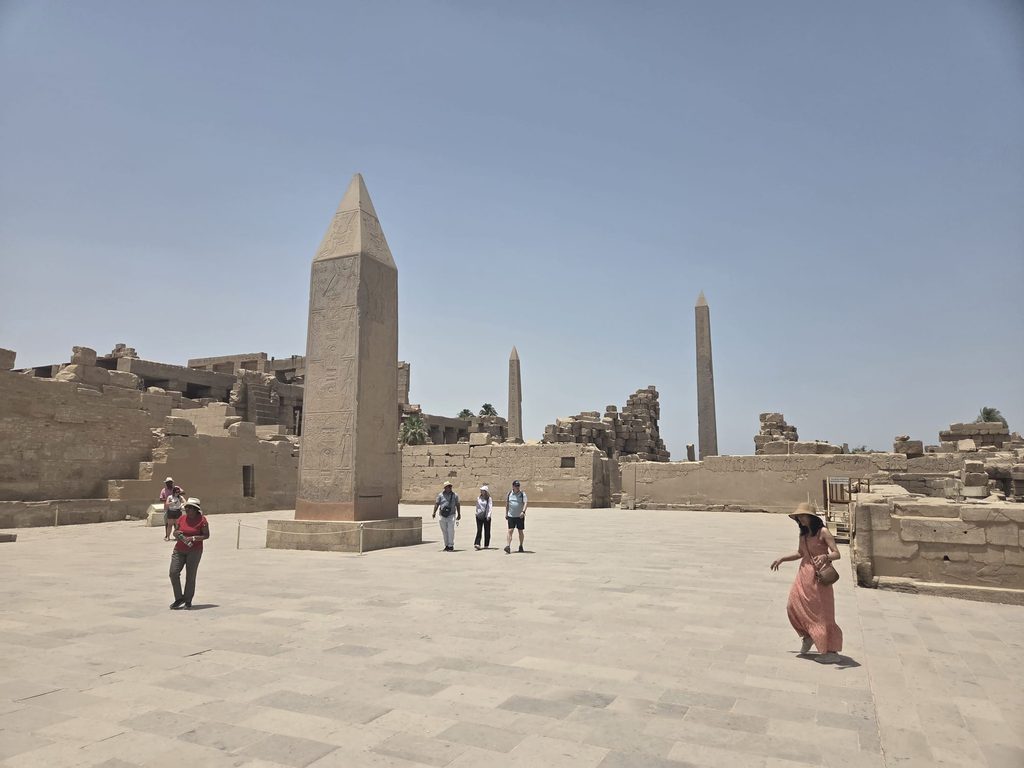
But anyway, it served Hatshepsut’s story that she was the daughter (and somehow the wife) of Amun-Re to be very visible in his precinct. Thus she built the Chapelle Rouge, a resting place for Amun’s solar boat during festivals. She also commissioned four obelisks in pink granite.* A couple of these had already fallen in antiquity, but one remains standing and is the second tallest ancient obelisk to do so. And, ironically, it might have helped its survival that Thutmose III didn’t topple it, but instead walled it in so nobody could see it. Hatshepsut partially restored the Precinct of Mut, and I found out in the course of research for this post that Hatshepsut added a ‘Porch of Drunkenness’ to it. Sounds like fun!
*If you’ve heard of the Unfinished Obelisk at Aswan, this is another one Hatshepsut commissioned. It cracked before it was completed, and was left in place. I’d like to visit it on a return
Visiting Karnak Temple
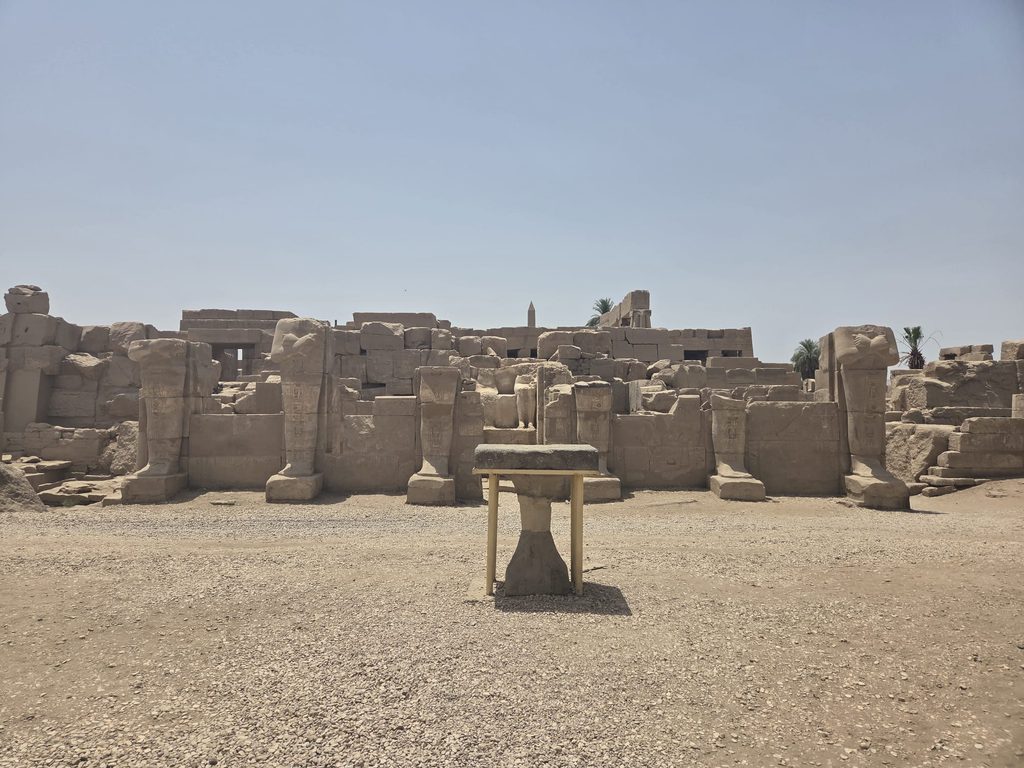
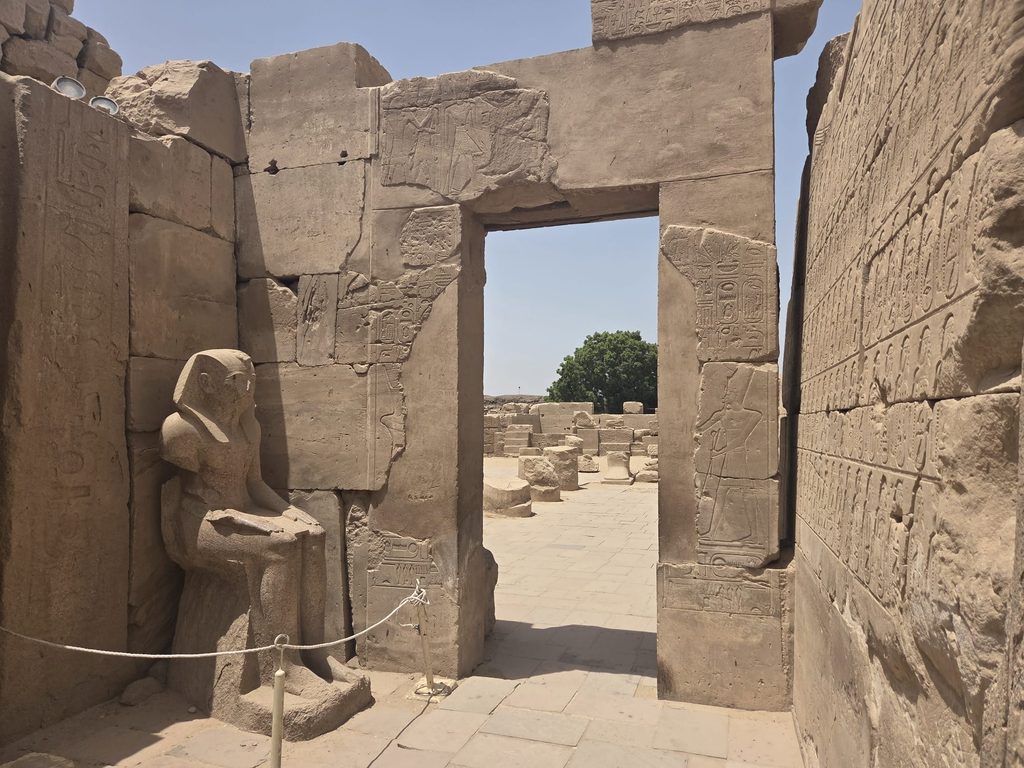
The experience of visiting Karnak Temple is like many places we have been in Egypt so far. It’s easiest to get to and navigate if you’re part of a tour group. This holds true particularly because, again common for Egyptian archaeological sites, there is little in the way of information panels. Without a guide telling you what you’re looking at, you’re sort of just wandering around appreciating it all.
On our visit we first spent a little time in the visitor centre getting our bearings and avoiding stray dogs. The visitor centre is a reasonable walk from the temple complex, and as we visited in the afternoon the walk was immediately oppressive. I’ve said it before, but I can’t recommend highly enough bringing an umbrella or parasol with you to Egypt, as that little bit of shade makes a difference.
Once inside the temple, our guide Hisham showed us around a few key spots, including the hypostyle hall. We then had free time. The Urban Geographer differed on our approach here. He was still recovering from a stomach bug earlier in the week, and was flagging in the heat, so took it easy. I was having FOMO in case the most wonderful part of the temple was around the next corner, so headed off to cover as much ground as possible before our meeting time. Neither approach is wrong, it just depends what you prefer.
One thing I haven’t spoken about yet, but will in my next post, is Luxor’s processional Avenue of Sphinxes. Measuring about 2.7 KM, it once linked Karnak and Luxor Temples. It’s only recently been possible to walk the full length of it again, but this requires a ticket for each site. Plus I didn’t see where you could actually join it at Karnak, hence why we will talk about it at Luxor Temple.
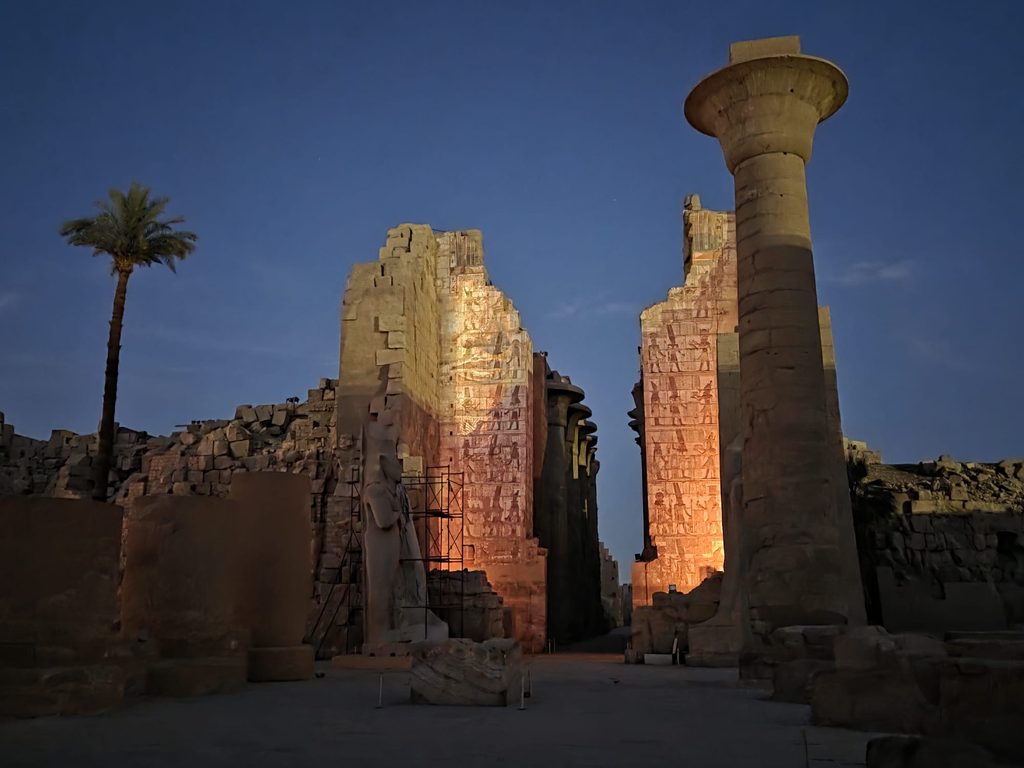
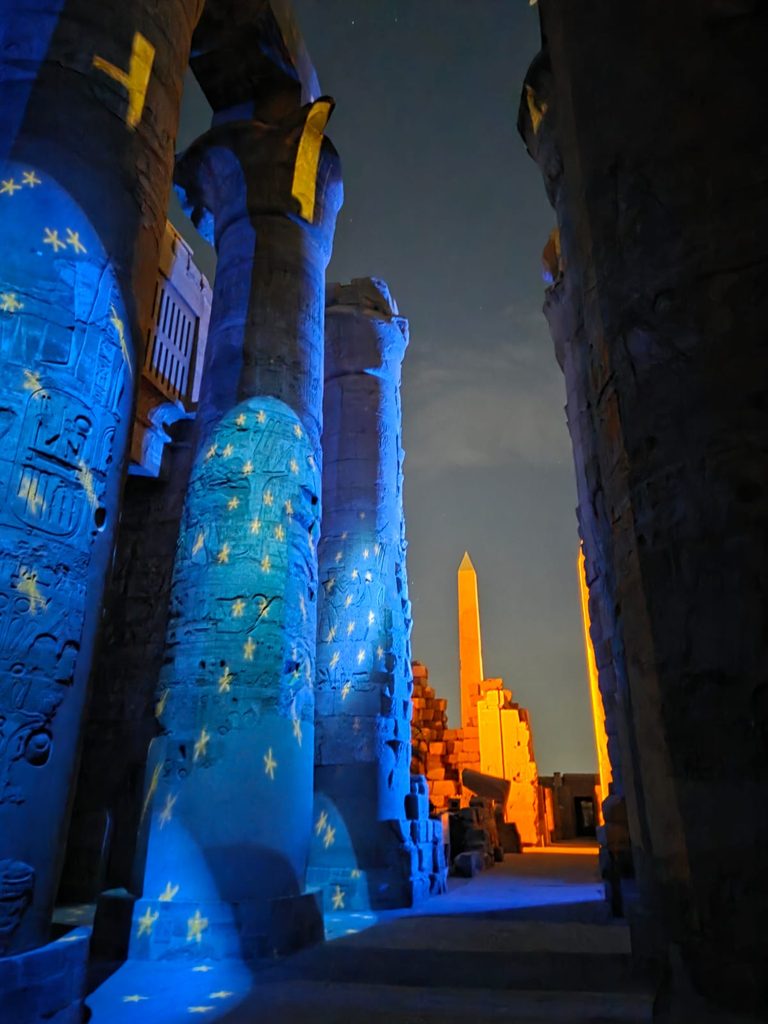
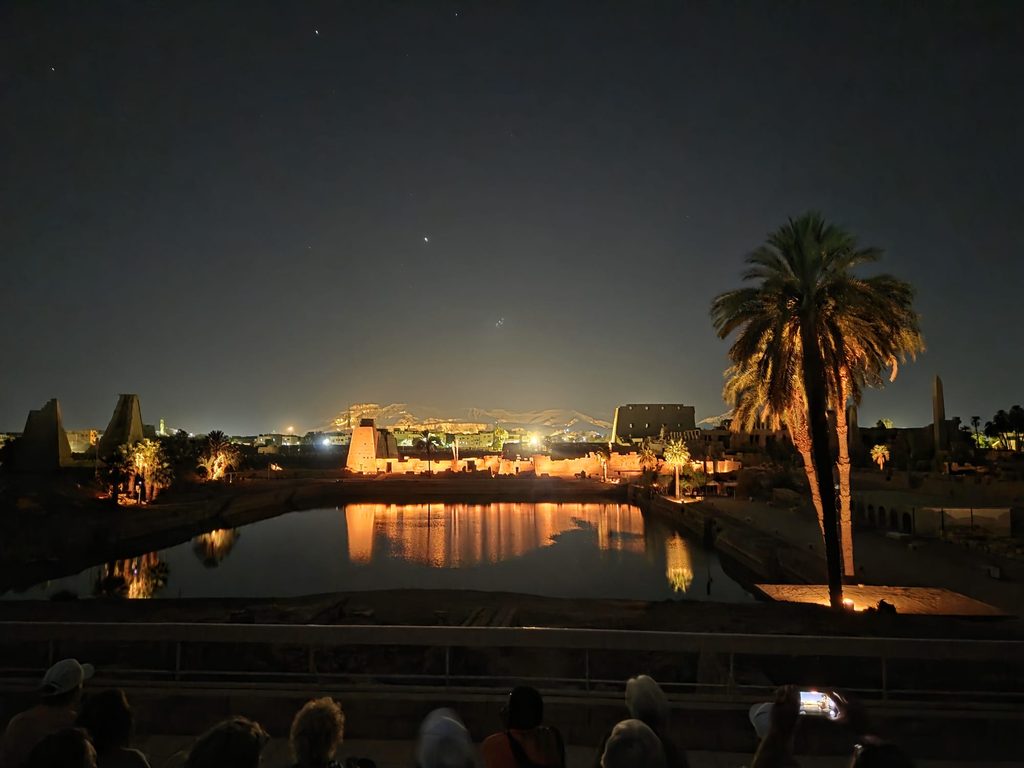
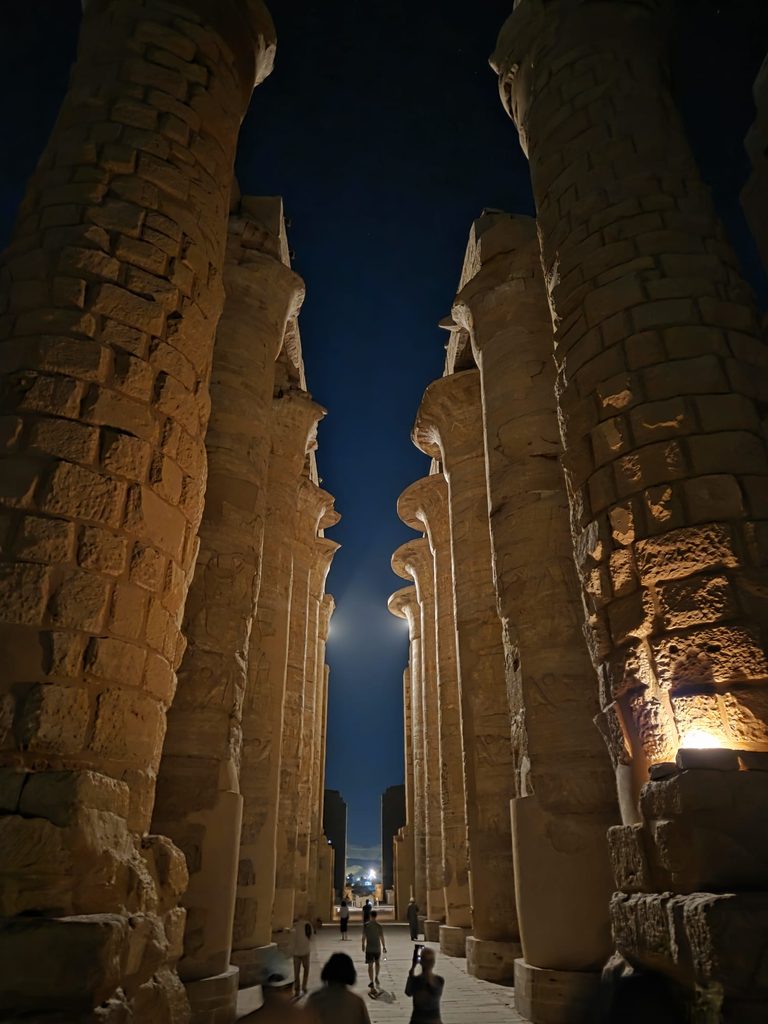
The Sound & Light Show, Karnak
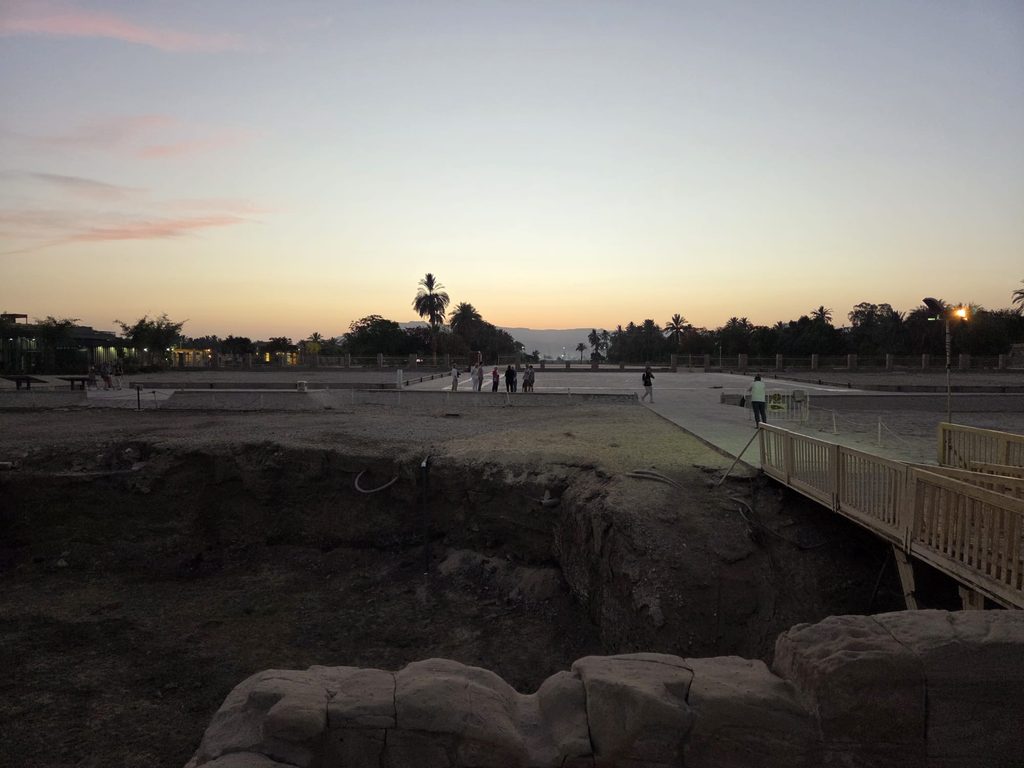
I mentioned above that the Urban Geographer and I returned to Karnak on our last night in Egypt. This was for a sound and light show, which you can read more about here. Now, before I go any further, I must admit that I have preconceived ideas about what makes a great sound and light show. Several years ago now I saw one at the Port Blair Cellular Jail in the Andaman Islands. It was in Hindi. There were lasers. We sang the national anthem (or pretended to because I don’t speak Hindi). It tickled me so much that it is now the standard against which every sound and light show will be measured.
I would say the Sound & Light Show at Karnak was equally over the top, but in a different way. It’s a different set up, to begin with. This one has a promenade element where you’re escorted to different parts of the complex while different parts of the show play out. I really liked that. The hypostyle hall looks amazing all lit up. Then there is stadium-type seating above the lake in the Precint of Amun-Re, for the finale. The light part of the show is top notch from start to finish, and it’s worth visiting for this alone.
The thing I was less sold on was the sound. Imagine writers and voiceover artists from the Golden Age of Hollywood have found their way to contemporary Egypt. The whole thing is effectively delivered in RP. And it’s very, very studious. There are voices for different characters from history as they attempt to explain the history of the site. Maybe it’s just that I was tired from an incredibly busy week of visiting place all over Egypt. But I couldn’t concentrate on it, and stopped trying to follow it after a while.
This is just my experience, and is very subjective. Please judge for yourself, and remember that I still think it was worth going even though I liked the light more than the sound. You might want to think about arranging return hotel transport in advance – we had a bit of trouble with that. But otherwise it was an enjoyable end to our trip.
However, I’ve skipped ahead slightly. The return visit to Karnak was the last activity of our holiday. But before we did that, we visited Luxor Temple and Luxor Museum. Look out for posts on those in the coming days.
Trending
If you see this after your page is loaded completely, leafletJS files are missing.