
Kom Ombo Temple & The Crocodile Museum
The first archaeological stop of our Nile cruise is at Kom Ombo, location of an unusual temple with a dual dedication, a crocodile museum, and a depiction of the mysterious Imhotep.
A Visit to Kom Ombo Temple
In my last post, I talked about the experience of a Nile cruise as part of a one week itinerary in Egypt. There are various options in terms of the duration of the cruise and the type of vessel, but we had a very nice time spending two days on a dahabiya, and would recommend that format. As well as watching the riverain landscapes pass by, we enjoyed the boat pulling up at one or two archaeological sites along the way – a real treat.
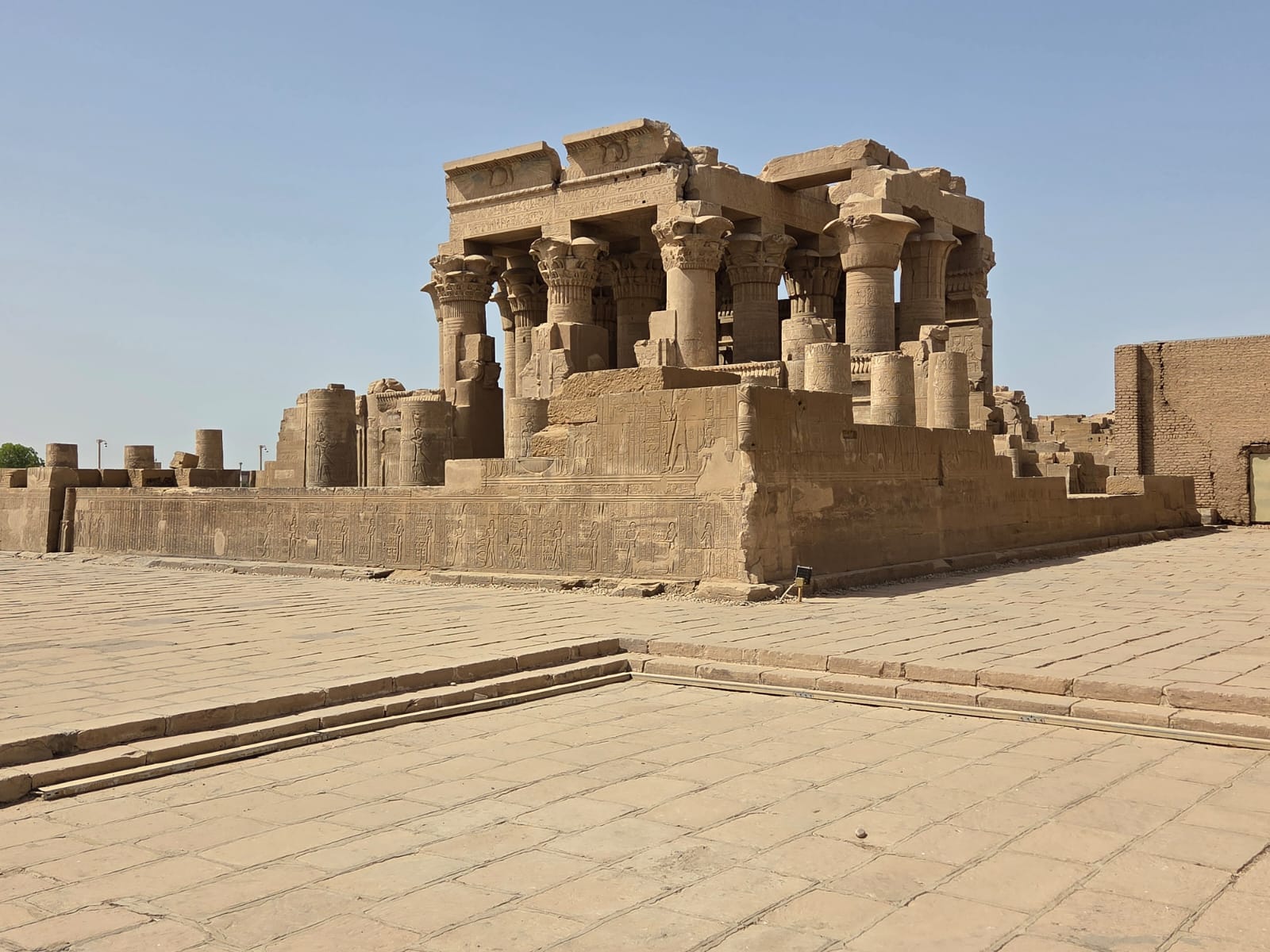
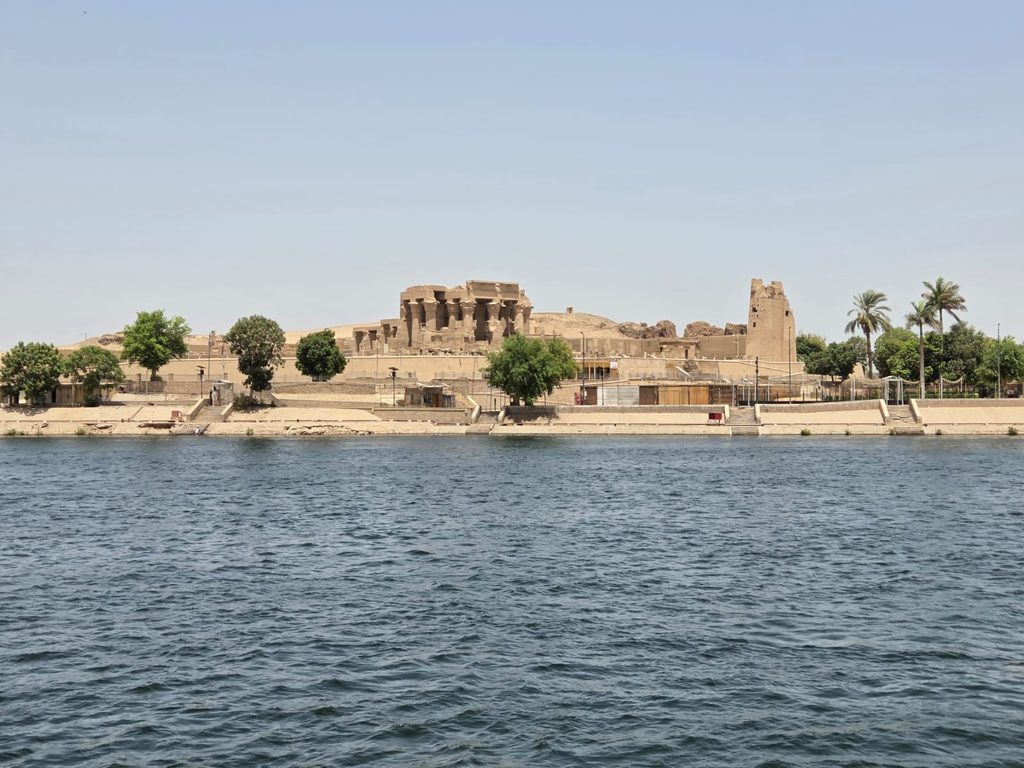
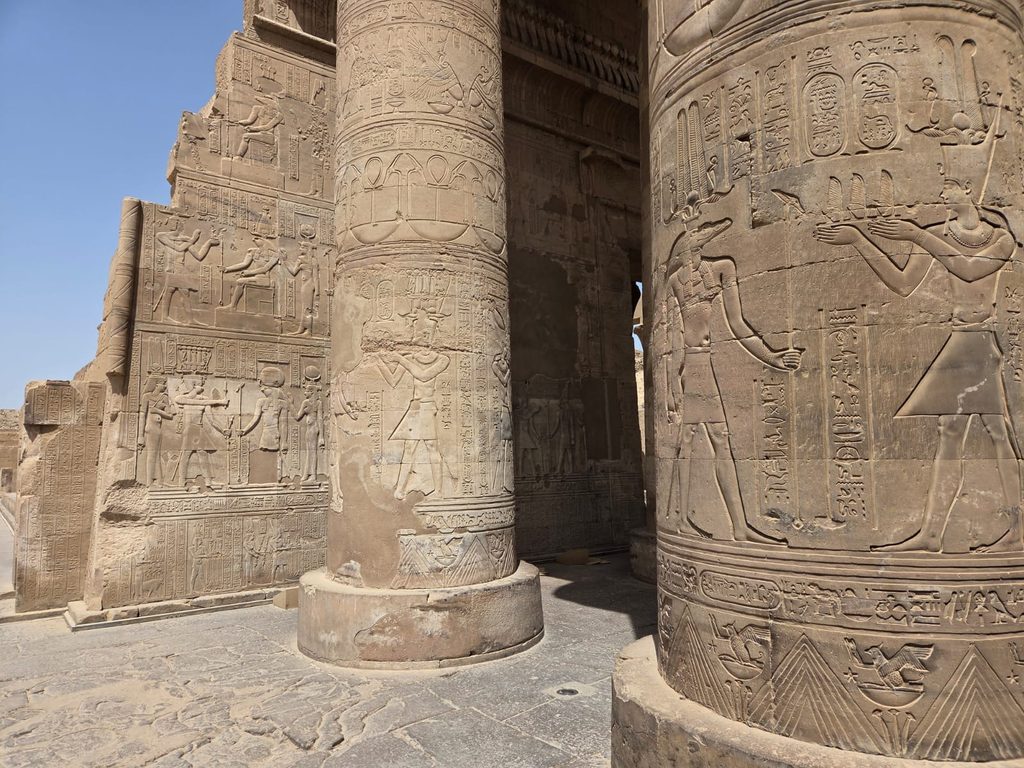
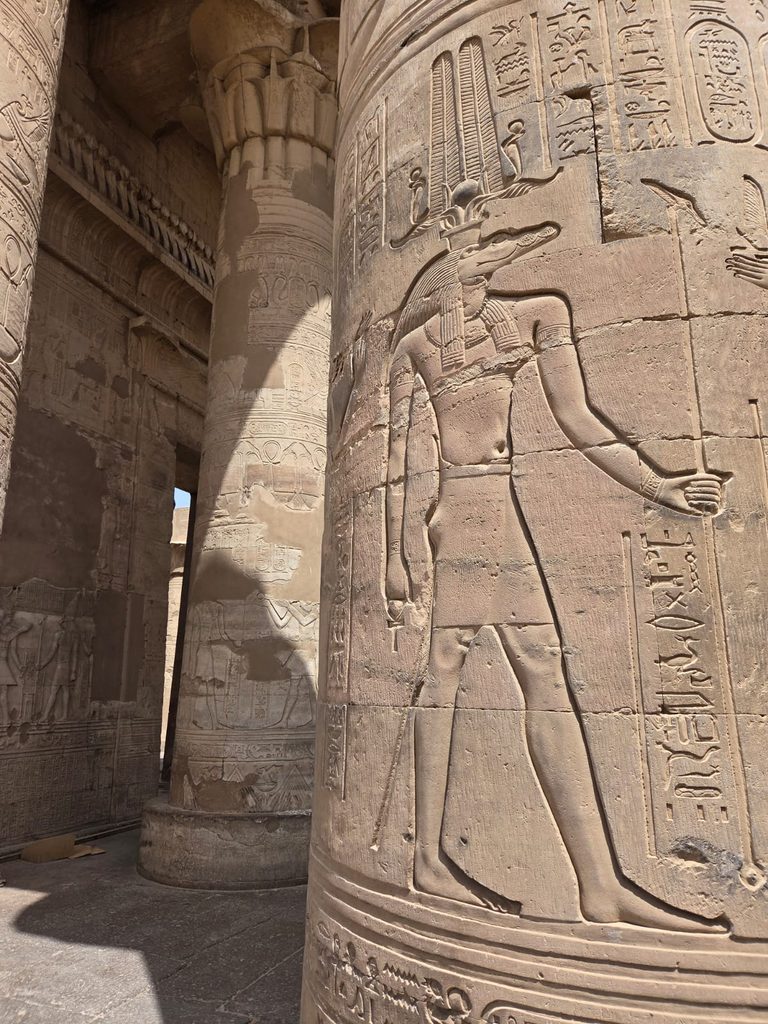
The first of the sites we visited was Kom Ombo temple. Unlike the Temple of Khnum at Esna, which sits below a modern city, Kom Ombo is very much visible as you approach from the river. If you know anything of Kom Ombo, you may know that it has a strong association with crocodiles. Sobek was the crocodile-headed god in Ancient Egyptian, associated with pharaonic and military power and fertility. According to legend Sobek, who resembled the Nile crocodile in his aggression and power, created the Nile from his own sweat. Pilgrims came to Kom Ombo to leave offerings in his honour, hoping for protection and favour in return.
Kom Ombo was not simply dedicated to a single god, however. Instead, it is an unusual double temple, the other half dedicated to Haroesis, a manifestation of Horus associated with healing. This leads us to believe that Kom Ombo was itself a place of healing, with priests offering medical services.
Today there is no more need to appease crocodiles along this part of the Nile. They all migrated south after the construction of the Aswan High Dam. But Kom Ombo temple remains, a fascinating example of Egyptian sacred art and architecture. And as an additional attraction, a new crocodile museum displays some of the mummified crocodiles and other offerings found here.
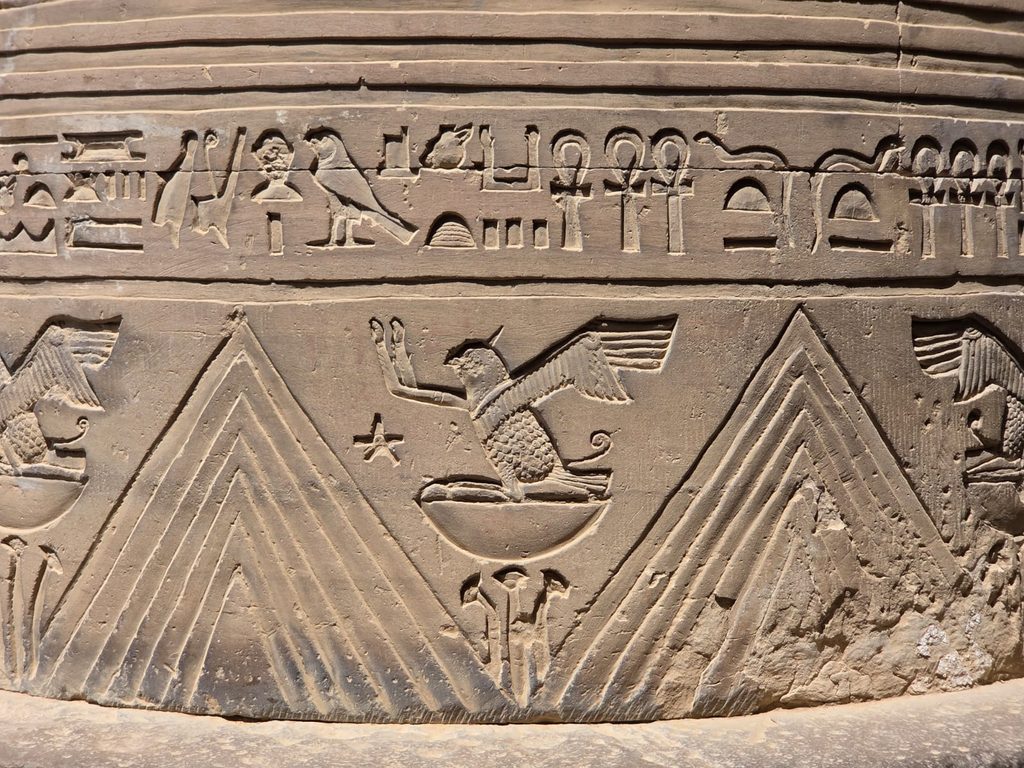
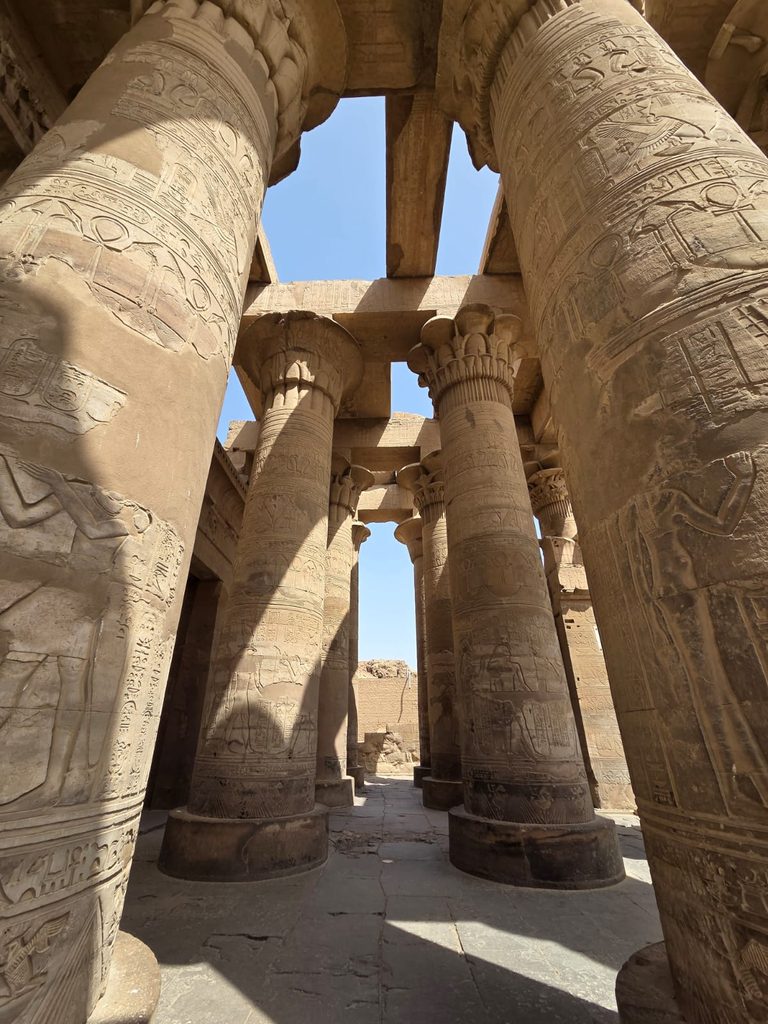
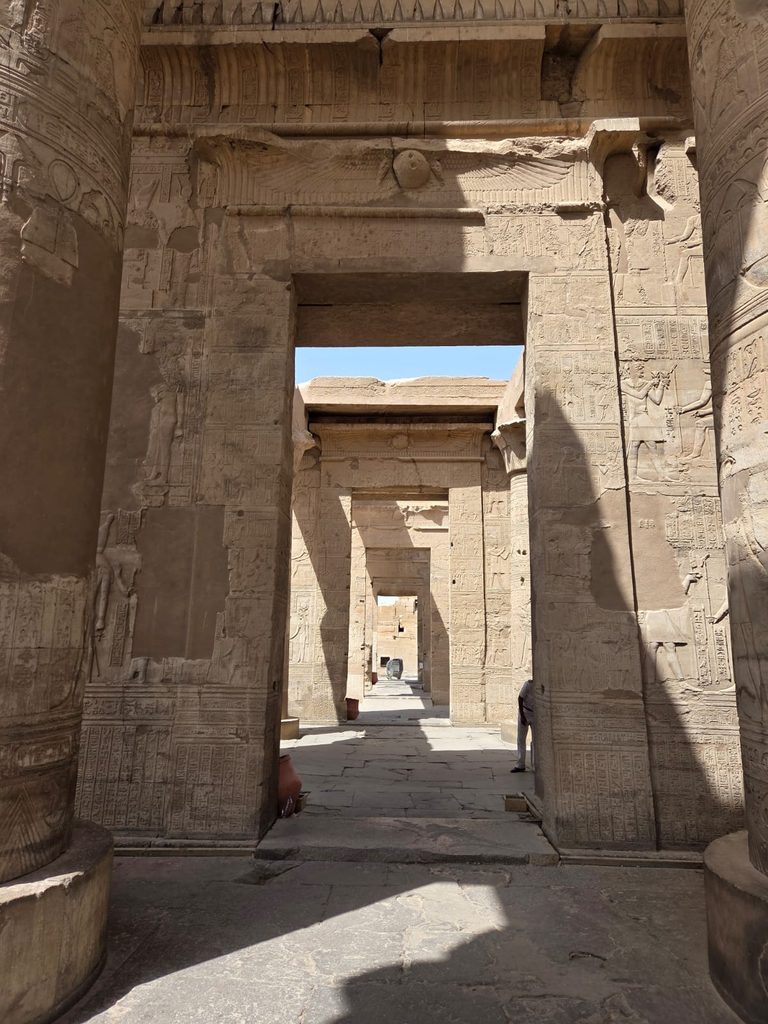
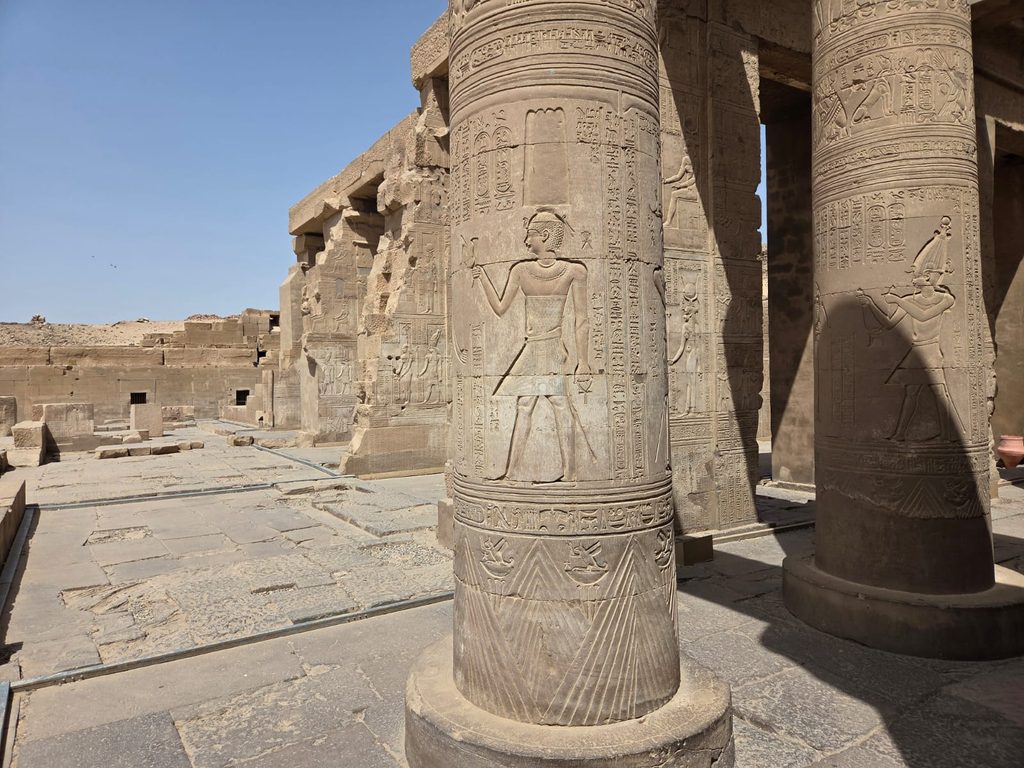
Kom Ombo Temple: A Brief History
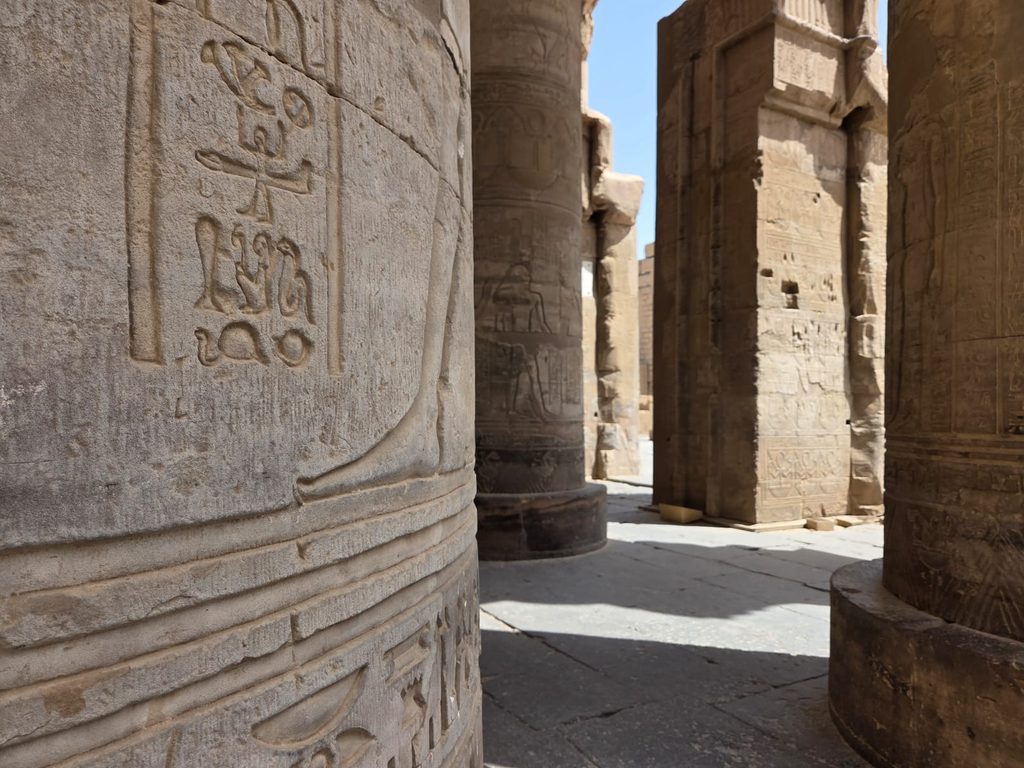
Ombos (originally Nbu, meaning ‘gold’) was a garrison town in Ancient Egypt, later the capital of the Nomos Ombites region (a nome was a Greek/Ptolemaic name for territorial divisions, but the concept went back to the early Dynastic period). Ombos was famous for having magnificent temples, and for an ongoing feud with the people of Dendera (site of another well-preserved temple, coincidentally). Juvenal put this down at least in part to the people of Ombos holding the crocodile as sacred, and the people of Dendera liking to hunt them. Roman coins from Nomos Ombites certainly had imagery of crocodiles and the god Sobek.
Conditions along this part of the Nile weren’t particularly favourable for settlements, with steep banks and little fertile land. There was a quarry nearby, however, which is handy for temple building. And, presumably, plenty of crocodiles. As well as the double temple we’re exploring today, Ombos had a notable temple of Isis. Like in many parts of Egypt, the temples we see today are Ptolemaic, built on the site of earlier iterations. A single doorway remains from an earlier version by Thutmose III (it shows him dedicating the temple, holding a measuring reed and chisel). It seems our friend Ptolemy VI Philometor either erected or restored the current sacred enclosure, or sekos. Ptolemy XII Dionysos completed a lot of the decoration in the 1st century BCE.
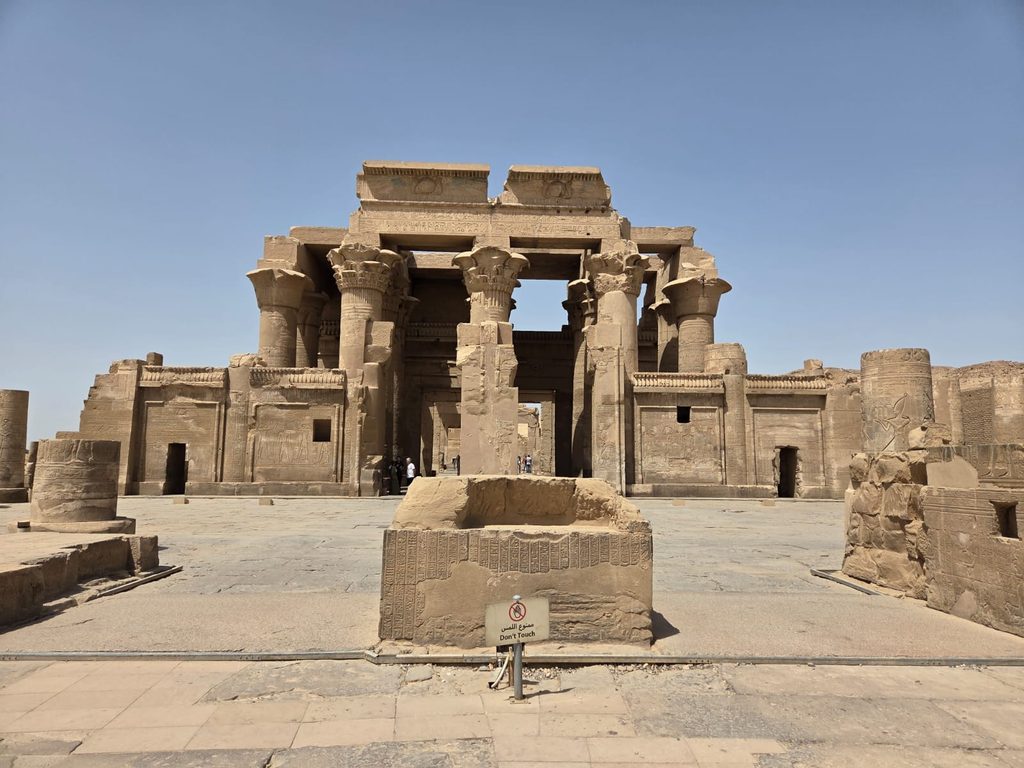
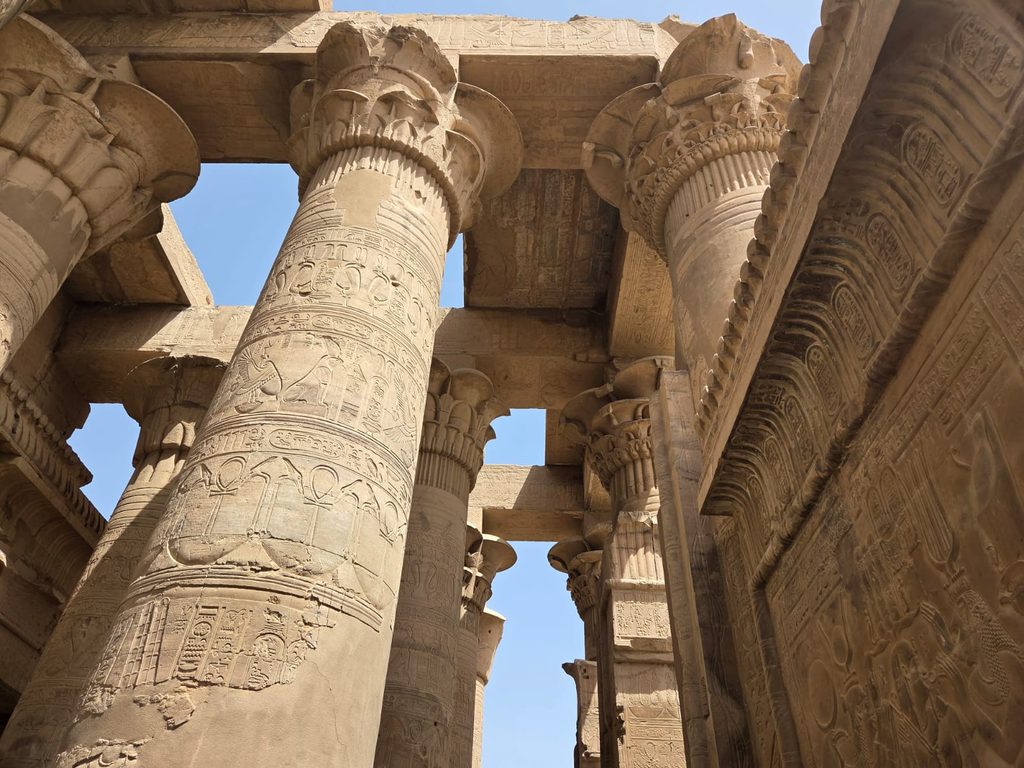
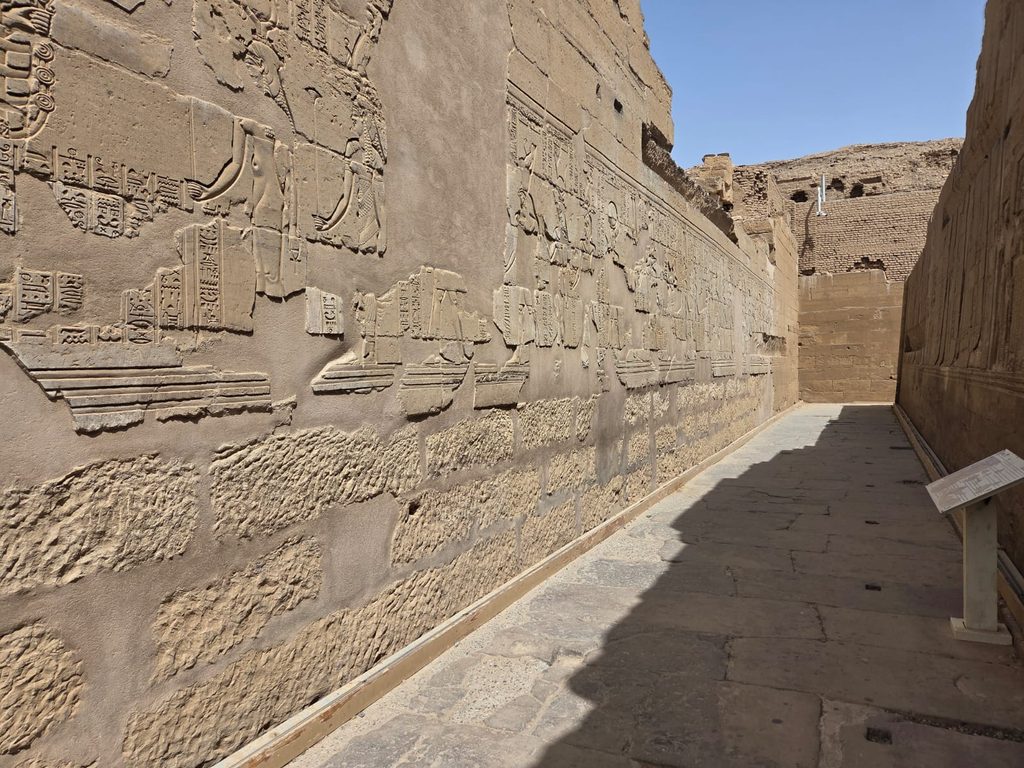
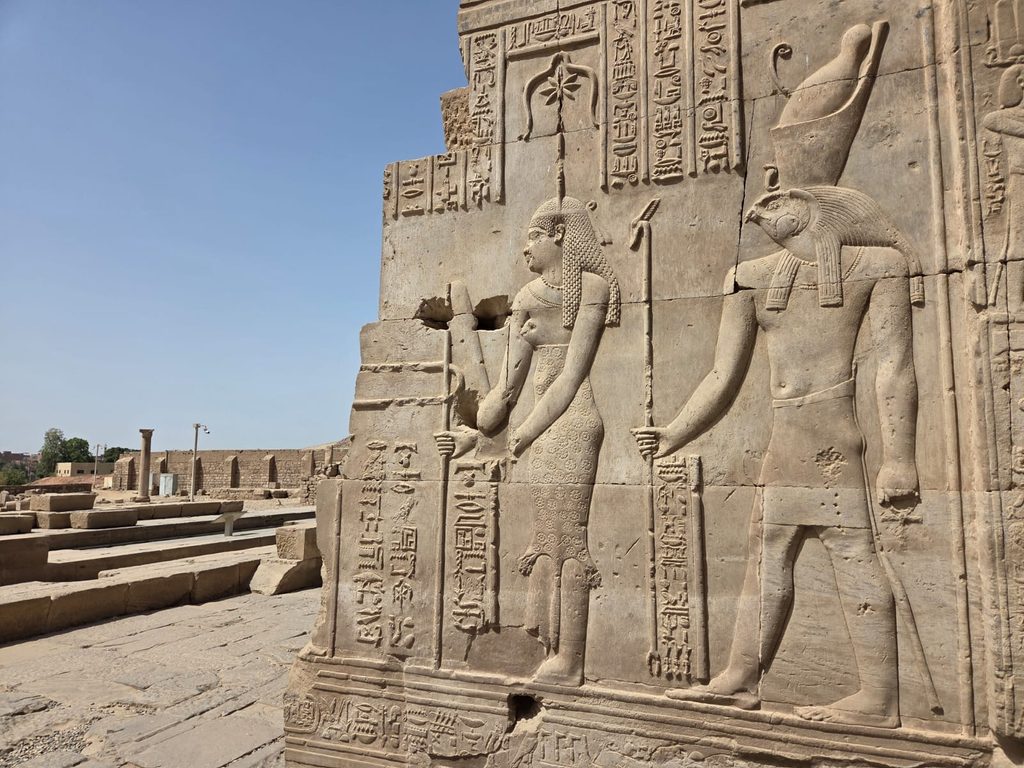
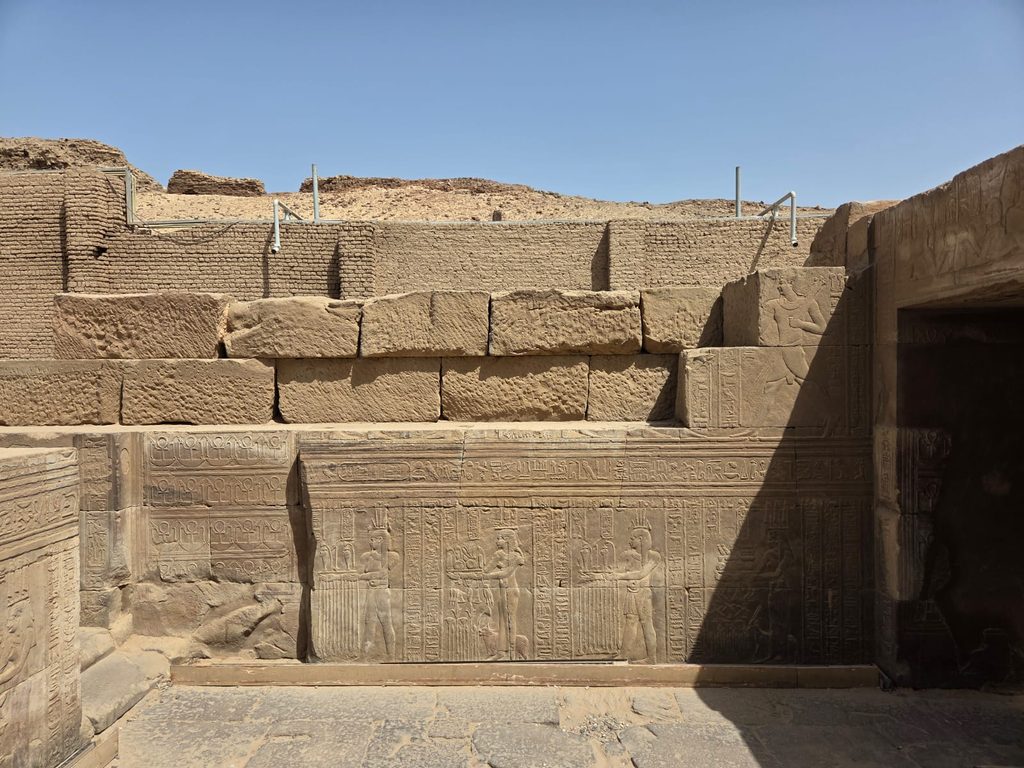
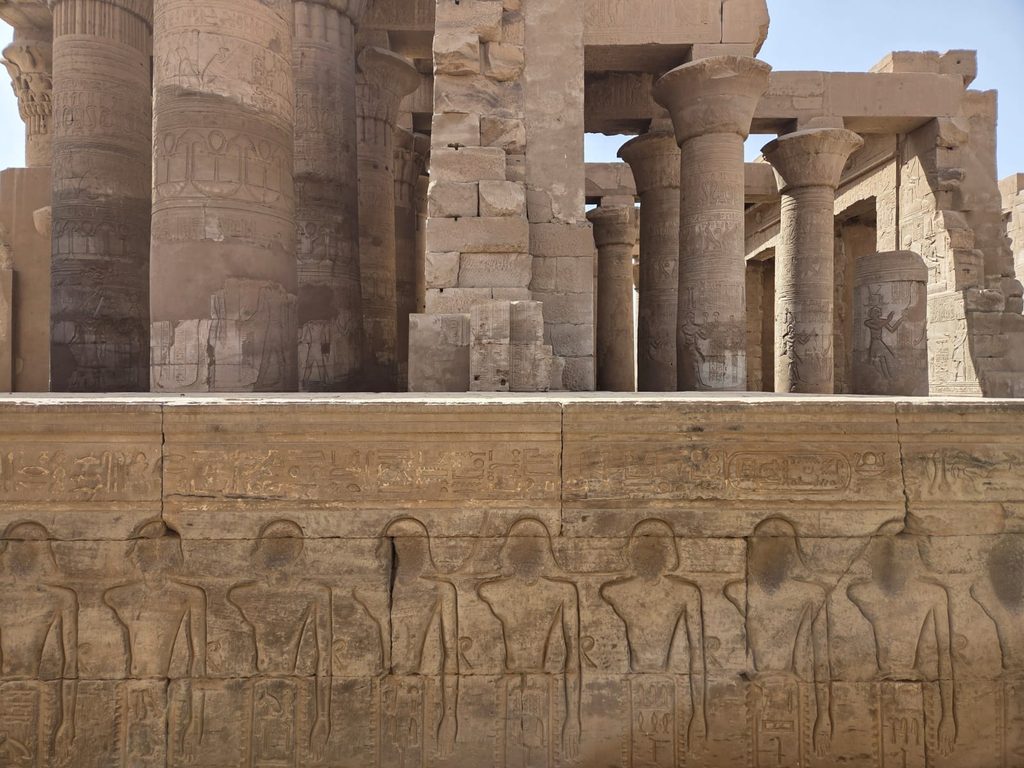
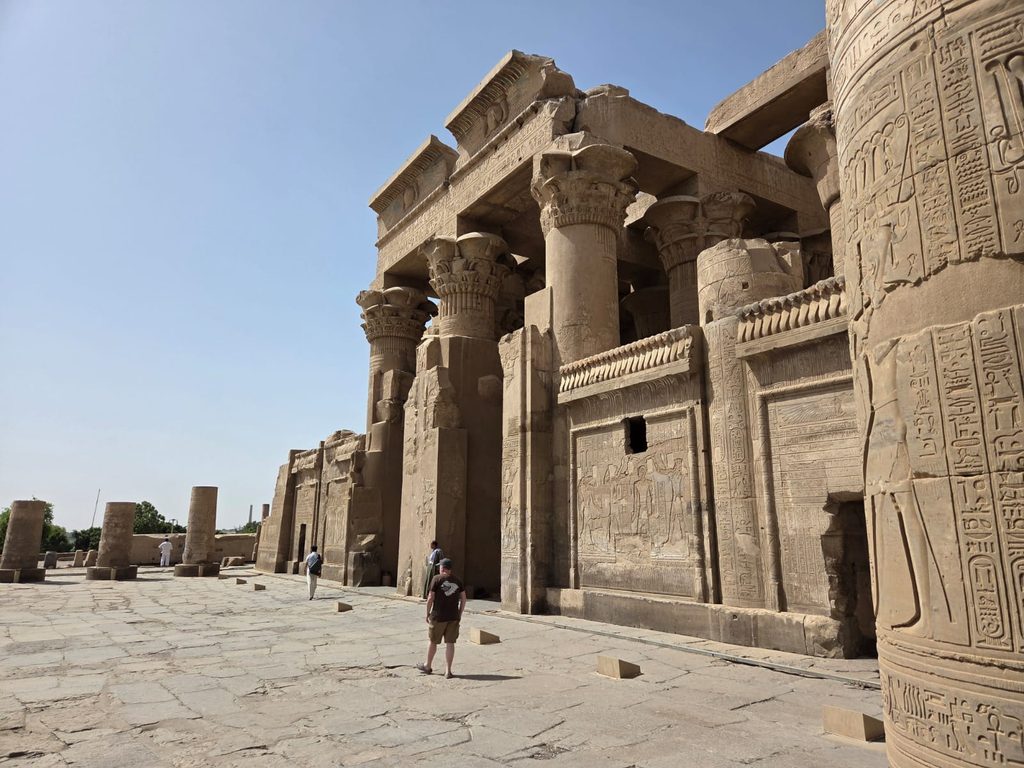
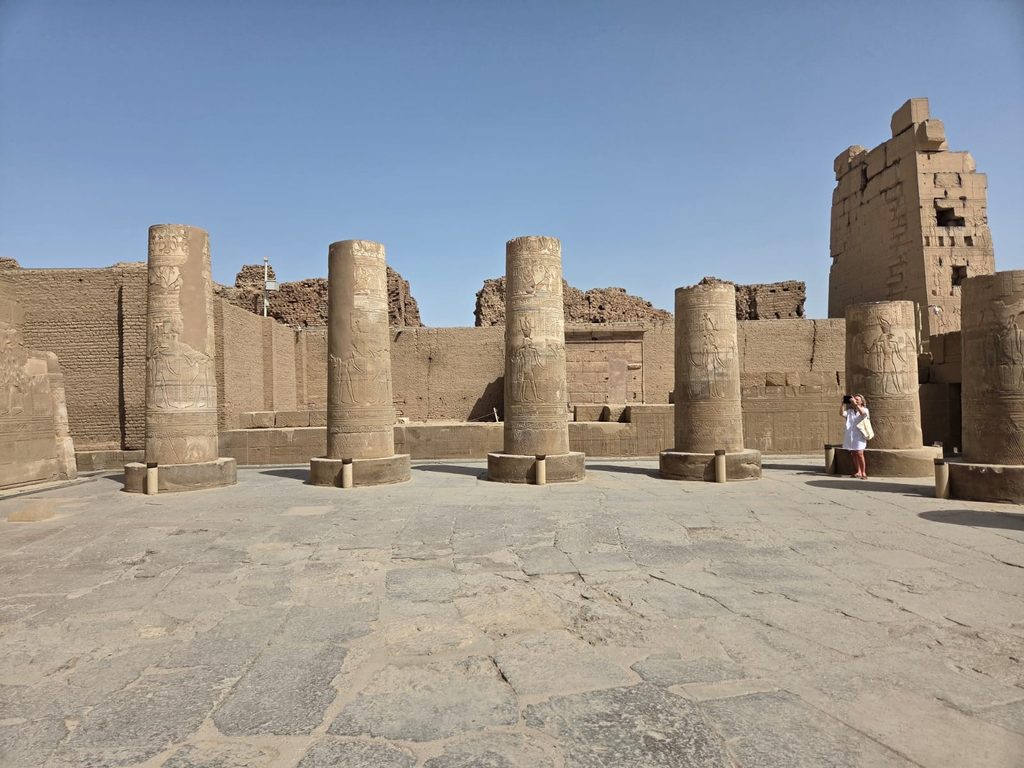
Kom Ombo Temple was unusual in more than one way. The dual dedication is the main differentiator. But, perhaps because of the need to create a unique mirror layout, the architecture is also unique. Almost all other Ptolemaic temples have a propylon and dromos – a monumental gateway and passage leading into the temple. This one does not. Its uneven number of columns (15, 13 of which still stand) is also unusual. The sanctuary for Sobek is on the right (south), and for Haroesis on the left (north). Sobek’s wife Hathor and son Khonsu (the moon god) were also worshipped here.
After the Ancient Egyptian period, Kom Ombo Temple suffered the usual fate of religious buildings. It was neglected, damaged by the Nile and earthquakes, used as a Coptic church, and had its stones repurposed for other building projects. What remains is nonetheless very impressive.
Lastly, as a more recent bit of historical trivia, the future Pope John Paul II was the bishop of Ombi, the modern see corresponding with Ombos, from 1958 to 1963. I wonder what he made of Kom Ombo Temple?
Imhotep: Architect, Doctor, Extraterrestrial?
I’ve mentioned before that our guide in Egypt, Hisham, was an Egyptologist and accomplished storyteller. At Kom Ombo, he combined these skills to tell us a tale of Imhotep. Whether this tale was more Egyptology or storytelling, you can decide for yourself.
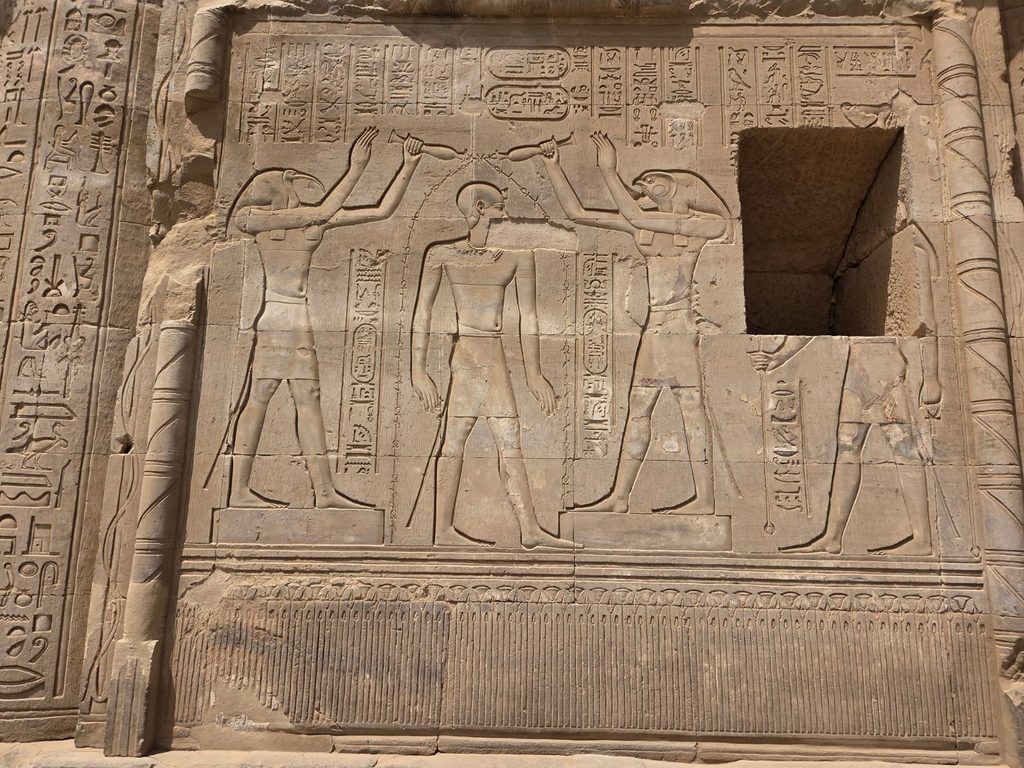
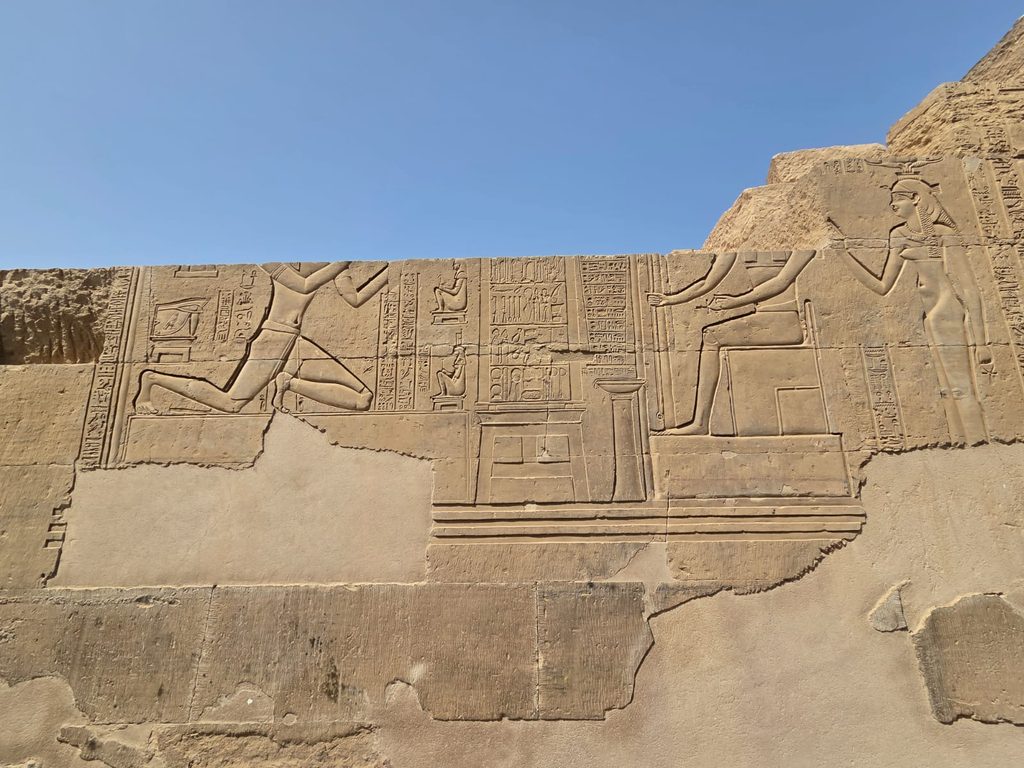
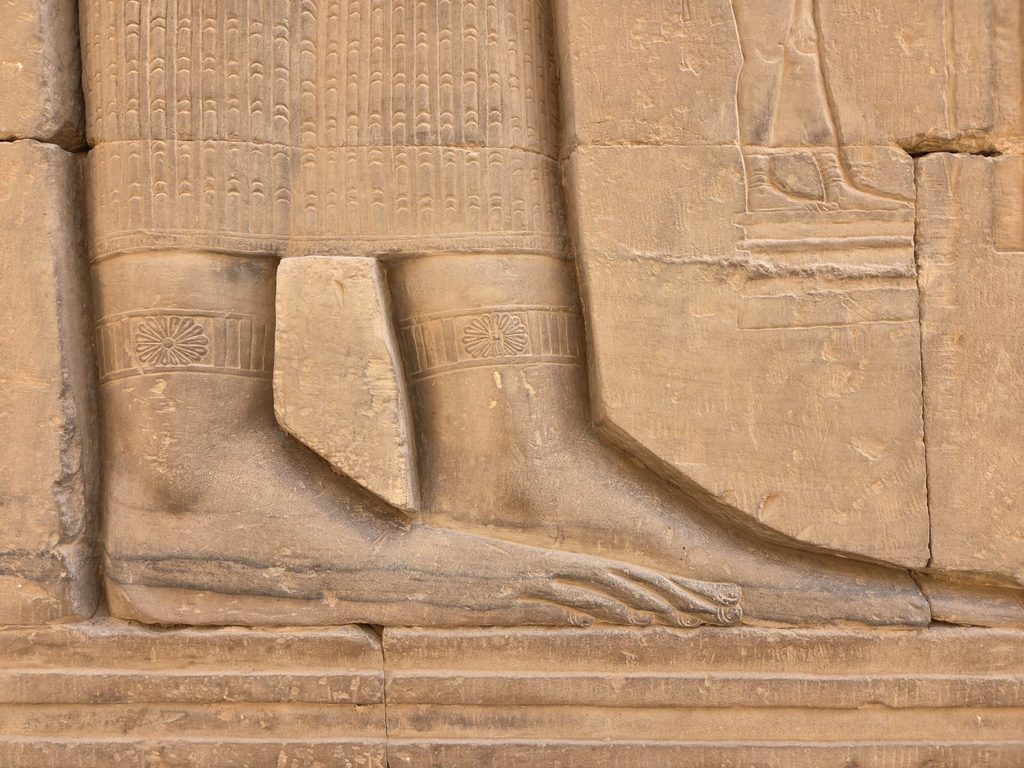
The more established fact here is that Kom Ombo appears to feature the oldest extant representation of surgical instruments (including scalpels, forceps, a dilator) and medicine bottles. Medicine in Ancient Egypt was fairly sophisticated for its time, but continued to include elements of religion and magic. Hence the fact that we are looking at these images at a temple, which doubled as a place of healing.
It also seems to be fairly uncontroversial to say that the scene represents the emperor Trajan before Imhotep. An emperor kneeling before a man? Or is Imhotep a god? Well, this is the point at which you can start to let your imagination run wild, if you so choose. Imhotep was originally a high-ranking official. He was, however, later deified. And it’s fairly easy to see why – Imhotep is credited with bringing both medicine and architecture to Ancient Egypt. He invented the step pyramid, forerunner to the Pyramids of Giza. The oldest-known document to explain a diagnostic process, the Edwin Smith Papyrus, is also attributed to him.
Imhotep was thought to be mythological until the 19th century, when heiroglyphic inscriptions revealed he had been a real person. But given he was an outsider, bringing knowledge that represented a step change in an already advanced society, and that his name means ‘He Comes in Peace’, this is as good a time as any to indulge in a little extraterrestrial conspiracy theory.*
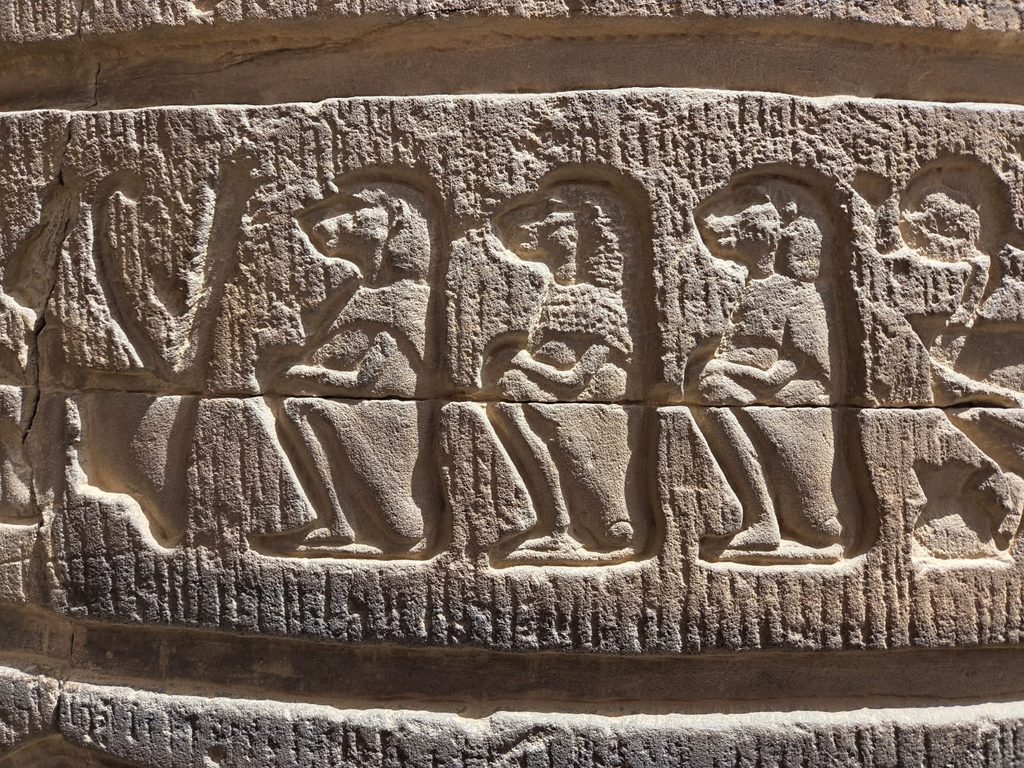
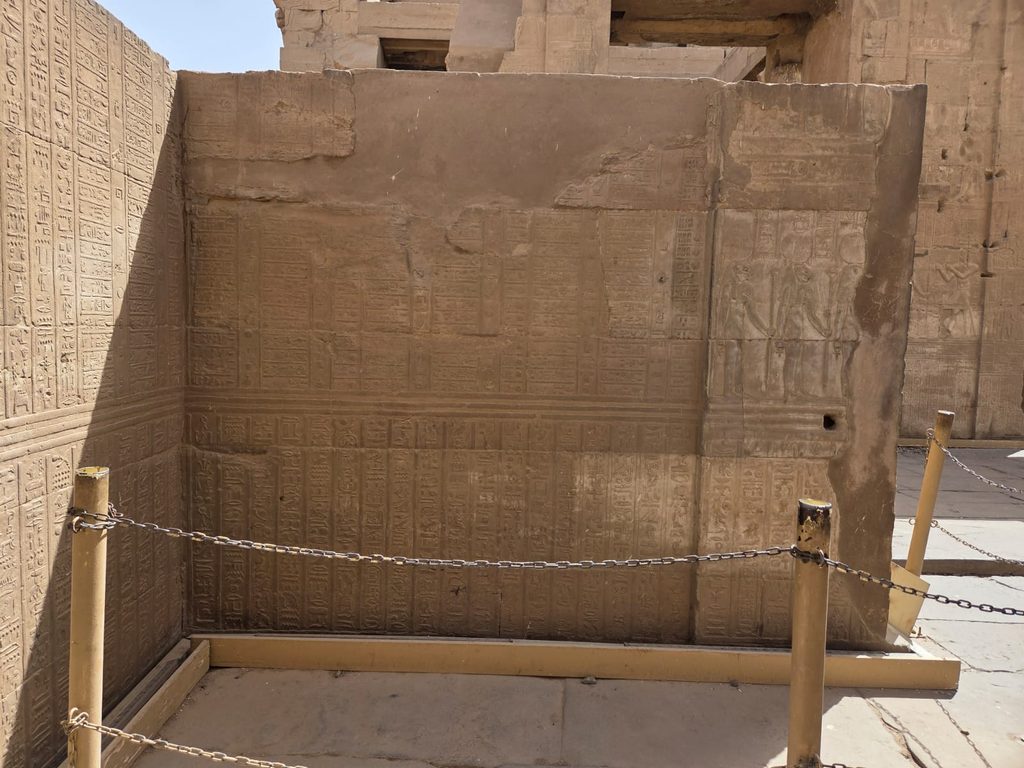
The scene depicting medical instruments is not the only carving worth taking time over at Kom Ombo. Nearby, there is a remarkable calendar. It shows the three seasons (flood, sowing, and harvest), each with four months, and each of those with three weeks of ten days. That makes 360 days – the remaining five were dedicated to the gods Isis, Osiris, Seth, Nephthys, and Horus.
*I do at the same time acknowledge that the refusal to believe that ancient civilisations were responsible for their own achievements is often rooted, consciously or subconsciously, in racism. Like the search for the Mound Builders in the Americas.
Visiting Kom Ombo Temple
I suspect that the visitor experience at Kom Ombo depends to a great extent on the time of year that you visit. We were just at the end of the season, when it was starting to get too hot to reasonably expect to stand outside for long. And so we spent our time at Kom Ombo seeking shade for story time with Hisham, before venturing out into the sun to look at some of the features and reliefs we’d been hearing about.
An aspect I did really enjoy here, as I’ve mentioned previously, was the approach to the site by boat. The temple feels more connected to the river than to any modern settlement, the only signs of which were a few businesses between the mooring spot and temple complex entrance, and some curious children. By comparison Abu Simbel now feels much less romantic approached from a coach stop than it would have done in the days of steamships from Aswan.
But perhaps my favourite part of Kom Ombo was all the crocodile imagery. Even on a relatively short itinerary in Egypt, you soon get the hang of the pharaohs glorifying themselves as gods, typically Osiris, Isis (for wives), Horus, Ra… So coming here and seeing a lot of images of Sobek was a refreshing change, and a nice connection to life along the Nile.
No matter the weather, it is worth taking your time over the calendar and relief of Imhotep. Our group had fun learning the Ancient Egyptian numbering system, and wondering about the origins of Imhotep. If you don’t linger over these things that set each temple apart, you risk them becoming something of a blur. And Kom Ombo is a particularly good place to learn about Ancient Egyptian society outside of its gods and religious practices.
The Crocodile Museum
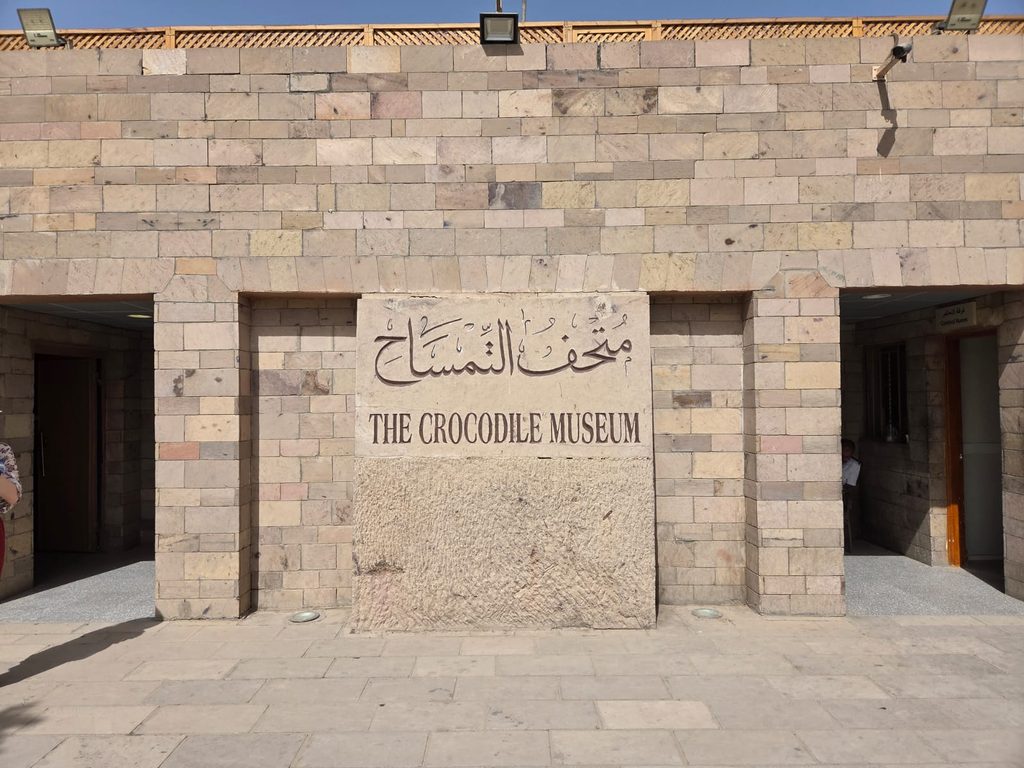
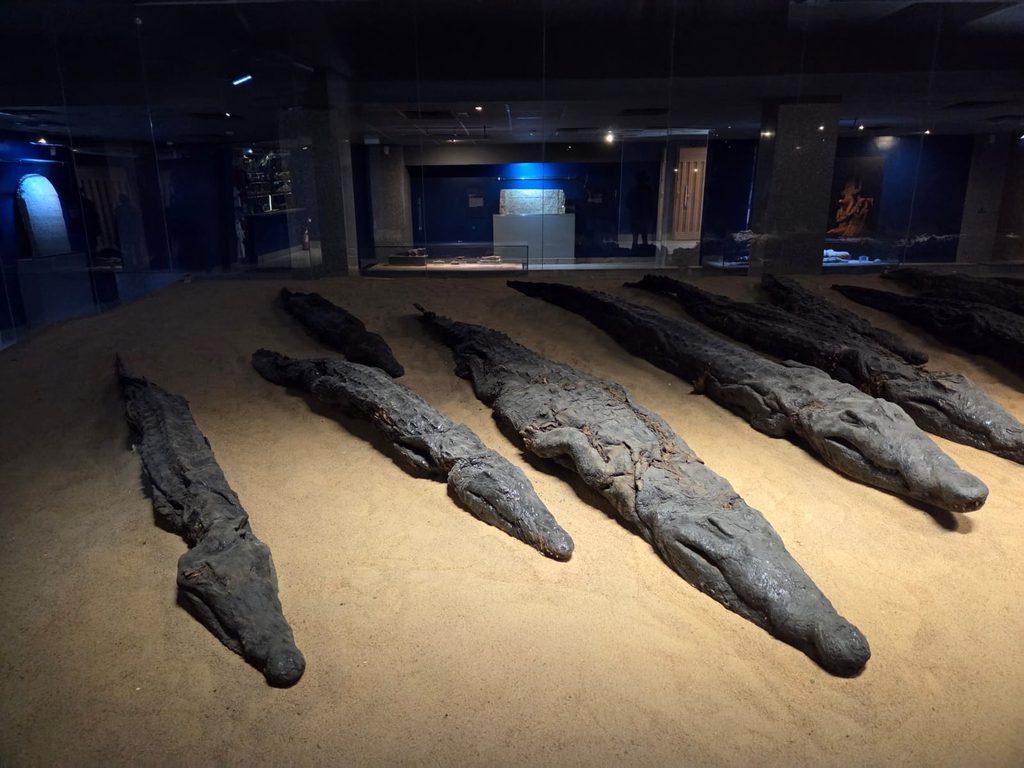
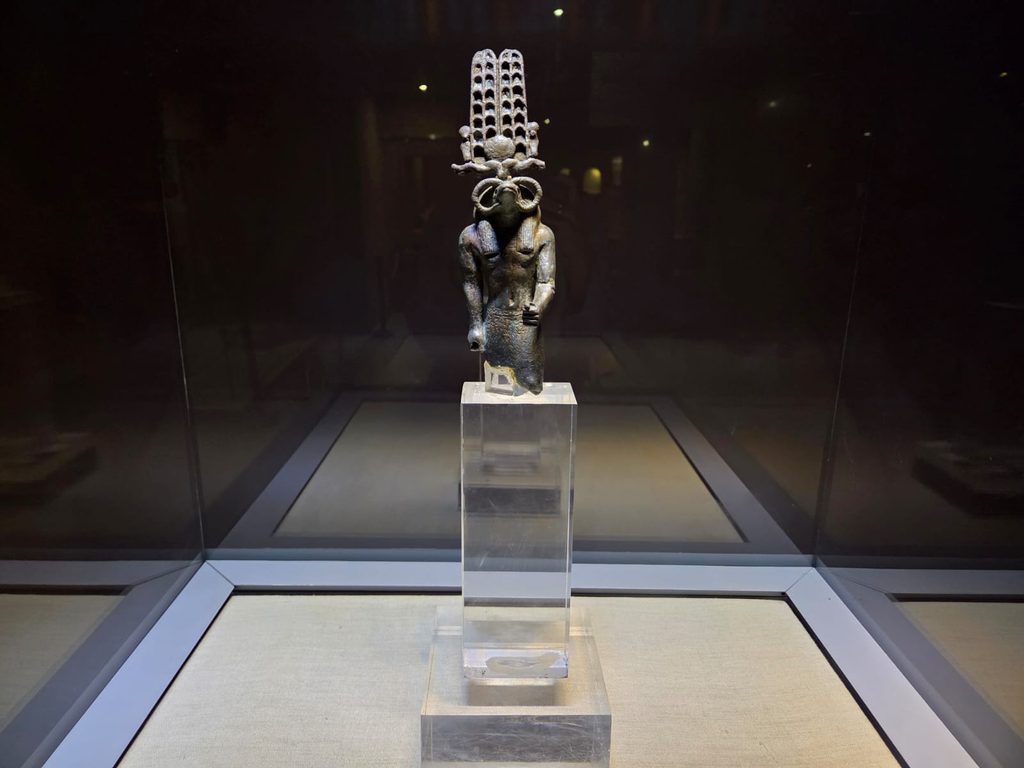
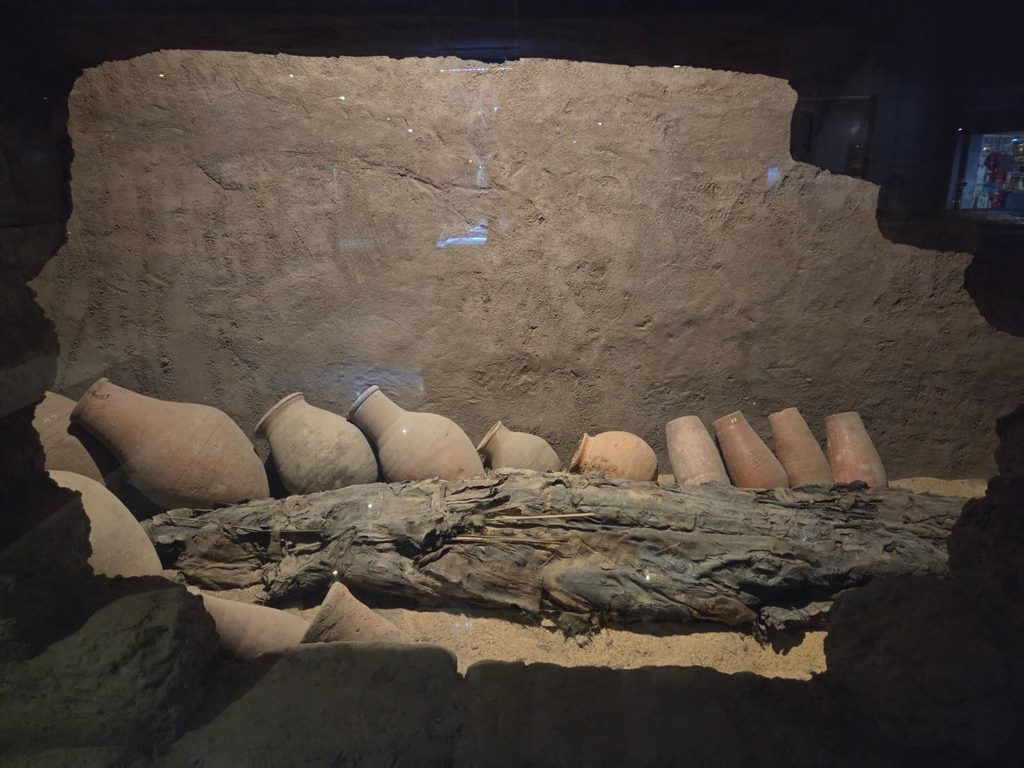
Before we finish though, there is one final stop. The Crocodile Museum, which is back towards the entrance of the temple complex. It’s a relatively new museum, having opened in 2012. It displays some of the hundreds of mummified crocodiles found in the vicinity, as well as other important local finds.
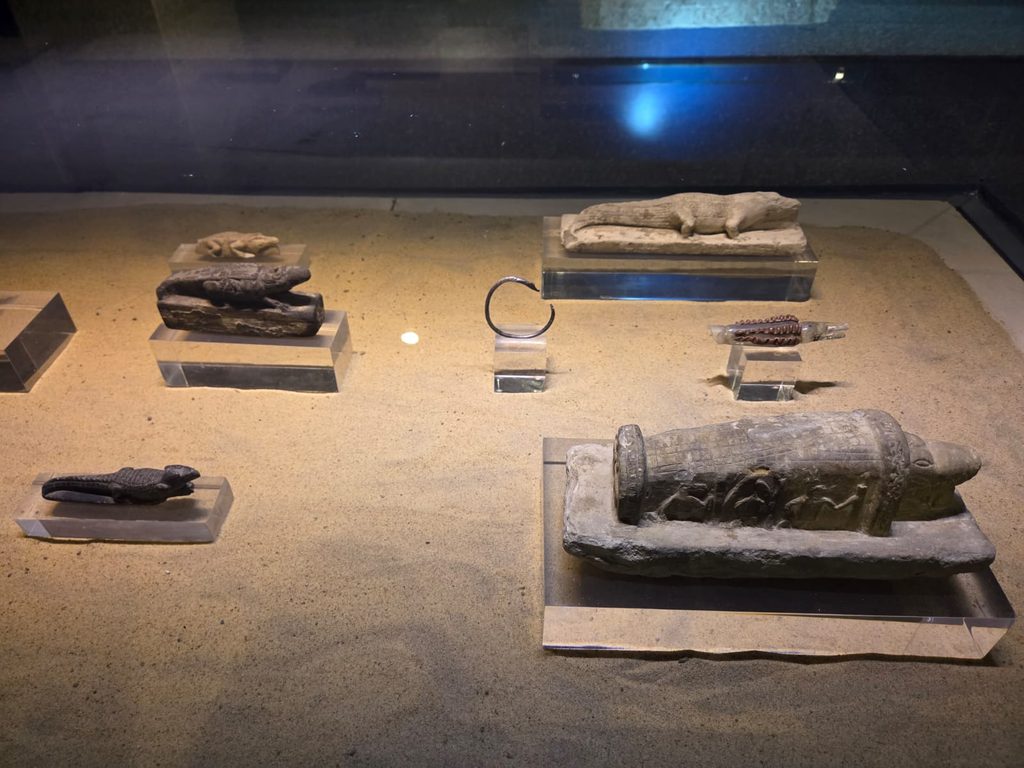
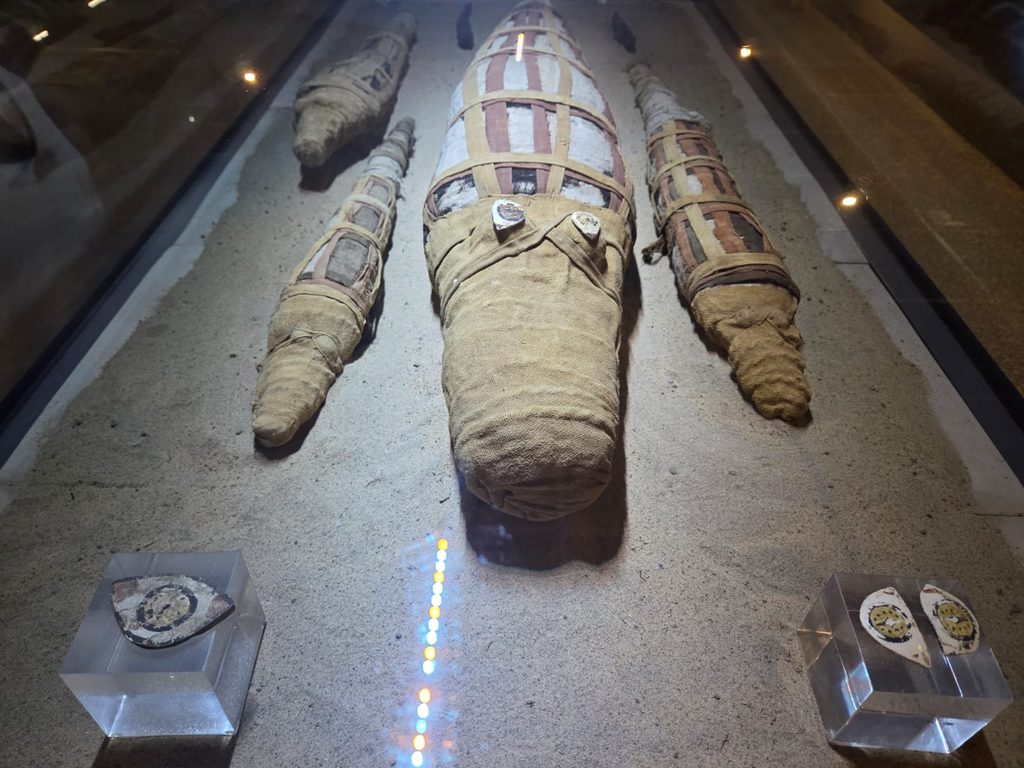
The longest of the mummified crocodiles is 4.3 metres, while the smallest is 2 metres. There are also crocodile foetuses, teeth, and statues of Sobek. Twenty-two of the mummies come from a necropolis in el Shatb, a village about 2KM from the temple. There’s a model of the tomb as part of the display. The mummification process for crocodiles and other animals was not unlike that for humans. The crocodiles first underwent dessication in a salt bath. They were then wrapped in linen bandages soaked in oil. Animals didn’t necessarily go through the same process of evisceration and the storage of organs in canopic jars, though.
The museum is a small affair, basically one room. However, it’s a nice opportunity to be out of the sun. It’s also a good compromise between keeping some of the sacrifices to Sobek more or less in situ, while also protecting them from the elements. Not all the crocodiles are local, however. Look out for the colourfully-wrapped examples which come from Fayoum, more famous for its Roman-era mummy portraits. The wooden and stone figures of crocodiles were the offerings of humble people.
And so it’s time now to head back to the dahabiya and continue our Nile cruise. I hope you’ve enjoyed visiting Kom Ombo with me, and learning about its origins, architecture, art, and offerings.
Trendin
If you see this after your page is loaded completely, leafletJS files are missing.