
The Pyramids and the Sphinx, Giza
A childhood dream fulfilled as I visit the Pyramids and the Sphinx. And thanks to extensive reimagining of the visitor experience, it’s a smooth and simple journey.
You Mean I Really Get To See the Pyramids of Giza?
Some of you know already (either because you know me in real life or because I often go on about it on the blog) how much I love archaeology. As a child, an archaeologist was what I wanted to be when I grew up. That lasted right up until I realised how much camping and physical labour in uncomfortable conditions might be involved. But the love for archaeology nevertheless persisted.
And I don’t think a first trip to Egypt would have felt complete without coming here. Sure, I loved our first day-and-a-bit in Cairo. We went to the Cairo Tower, visited the Egyptian Museum in Cairo, and walked around al-Mu’izz Street in Islamic Cairo. But once our tour proper* began, I was pleased that the very first activity on the list was a visit to Giza to see the Pyramids and the Sphinx.
The Great Pyramid of Giza is of course the only remaining Wonder of the Ancient World. Of the approximately 15 million tourists who visit Egypt each year, most come here. These visitor volumes, plus the encroachment of the modern city of Giza almost up to the Pyramids, are common sources of complaint. As we will see momentarily, measures have been taken to improve the visitor experience. I also have some tips on how to get the most from your visit and avoid the crowds. Whether or not the experience lives up to expectations is another question, which we will also come to. For now, let’s learn a bit more about the history of these incredible human achievements.
* This G Adventures one. I don’t get anything out of recommending it but do so nonetheless.
What’s This All About? Religion and Death in Ancient Egypt
I’m pretty sure most of us studied Ancient Egypt in primary school, right? So we know that it was a culture that was preoccupied with death and the afterlife. But in case your teachers were more creative, or in case primary school was a long time ago, let’s recap.
When we talk about death being important in Ancient Egypt, we’re talking about the dynastic period. Before then, burials were a lot simpler. The pyramids fall under the Old Kingdom part of the dynastic period. Their religion was polytheistic, with different gods and goddesses responsible for different parts of life or the world. There was also very little in the way of orthodoxy, dogma or doctrine, and it incorporated a lot of (sometimes conflicting) local traditions.
Ancient Egyptians believed very strongly in an afterlife, that they could not comprehend intellectually but could experience through rituals and cult practices. This was part of a cosmic order named Ma’at. Now, important to understand here is that Ma’at was also a goddess who embodied this order, and the pharaoh was its earthly embodiment during his (or her) lifetime. It was thus crucial that the pharaoh make it to the afterlife, in order to maintain Ma’at. Without it, would the sun even rise? Would the Nile even flood? Who knows! Not worth the risk.
The next important thing to cover is the Osiris myth. Pharaohs were also incarnations of Horus, heir to Osiris. Here is a link to the full story, but basically Osiris’s brother Seth chopped him into pieces, and his wife Isis recovered all but one (a manly one if you catch my drift) and wrapped him in linen, creating the first mummy. He couldn’t stay amongst the living but became the lord of the dead, sitting in judgement at the end of the path the sun follows daily. Humans also had to take this path, and prove they had lived a righteous life, in order to enter the afterlife. Famously, their heart had to be lighter than a feather.
The theory runs that the shape of a pyramid represents the sun’s rays, guiding the pharoah’s spirit (and others) on their journey. The physical body also had to be preserved to anchor the spirit, so each pyramid was the burial place of a pharaoh or other individual who had undergone elaborate mortuary rituals. Intricate passageways and false entrances were ways to try to prevent tomb robbers destroying the pharaoh’s mummy and jeopardising the order of the universe.
But that’s enough about religious beliefs, I think. Let’s now find out who actually built these pyramids and when.
A Brief History of the Pyramids
There are not just three pyramids at Giza, contrary to popular belief. But we’re going to learn about the others shortly, so the main three are what we’re talking about here.
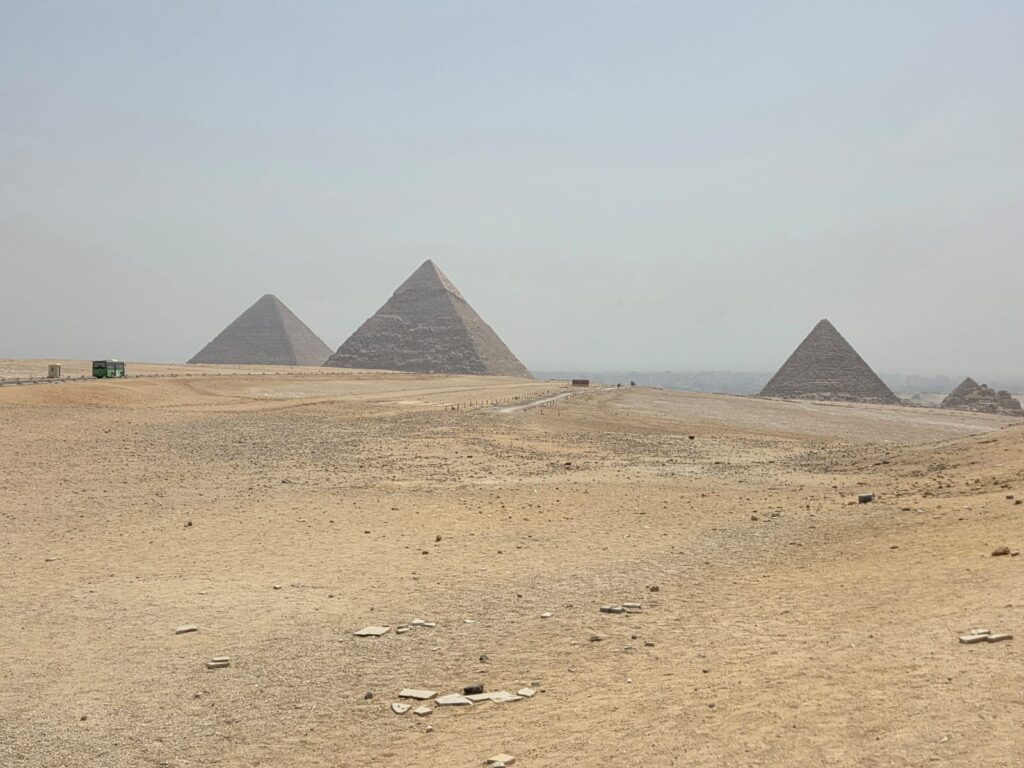
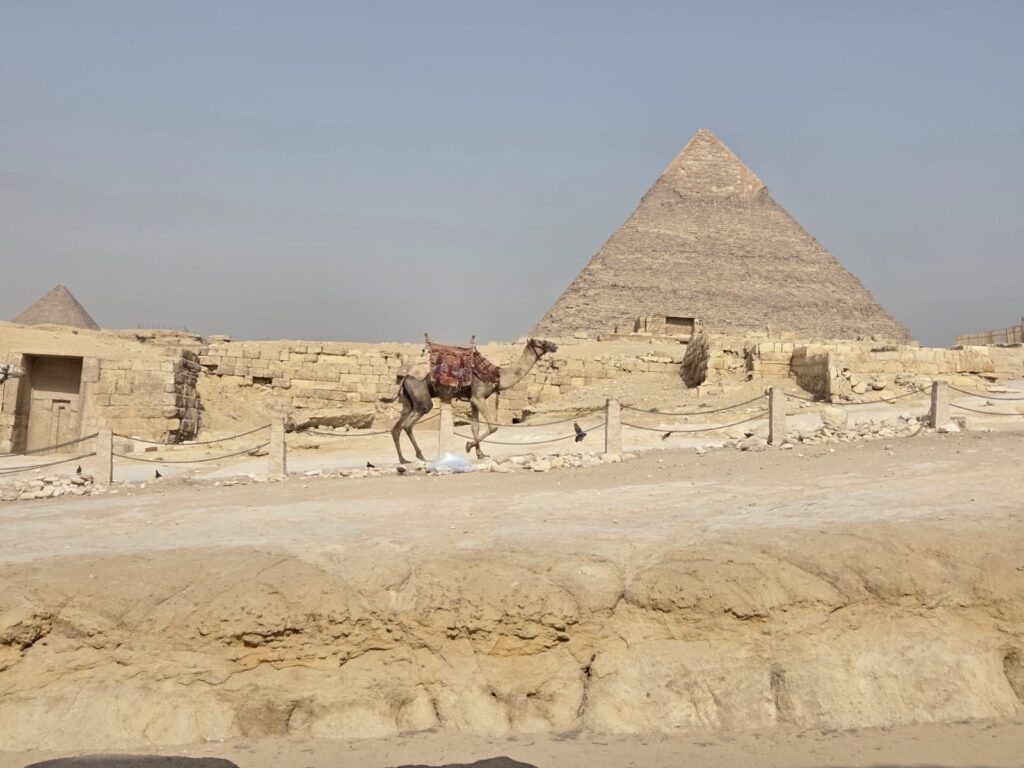
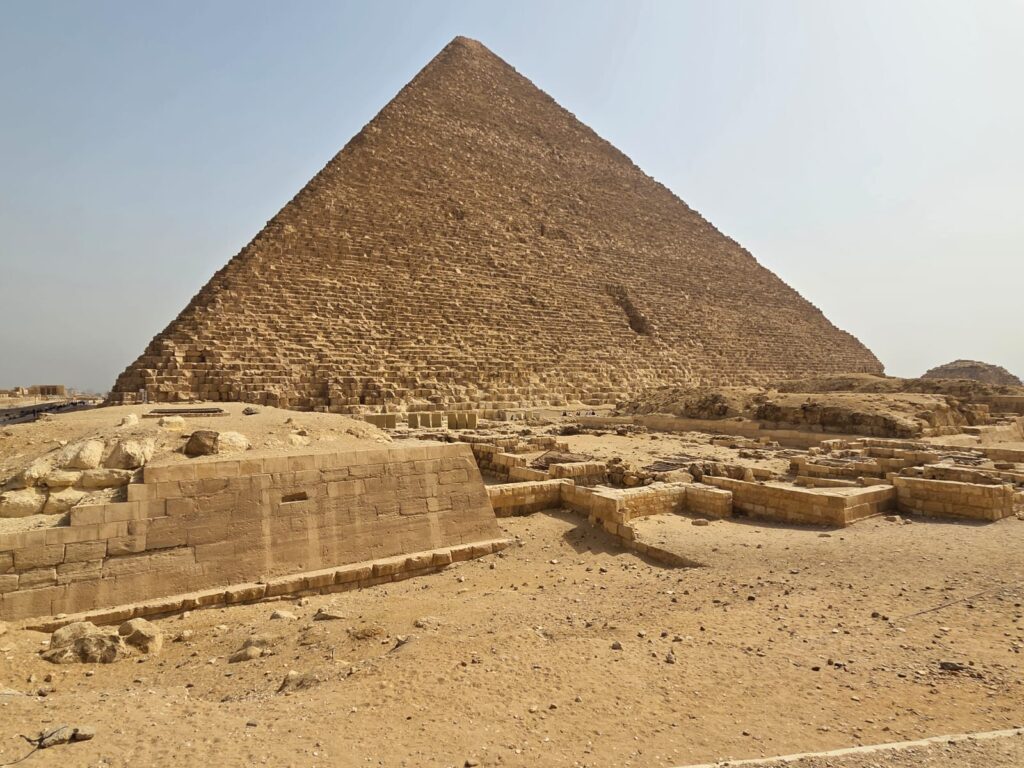
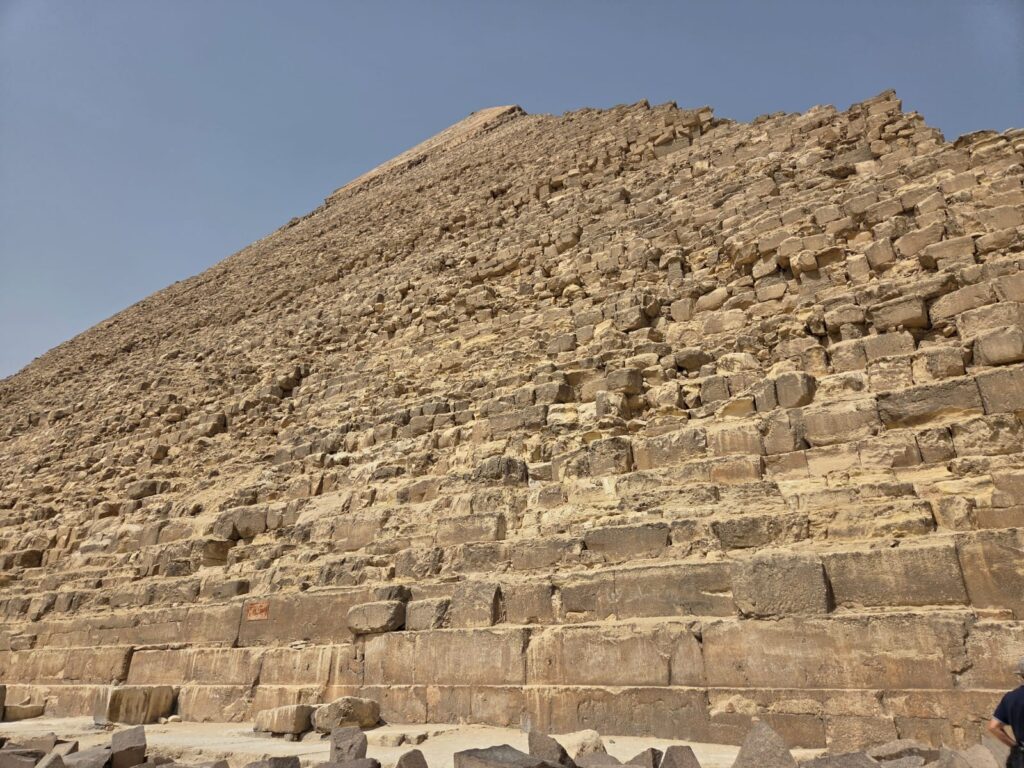
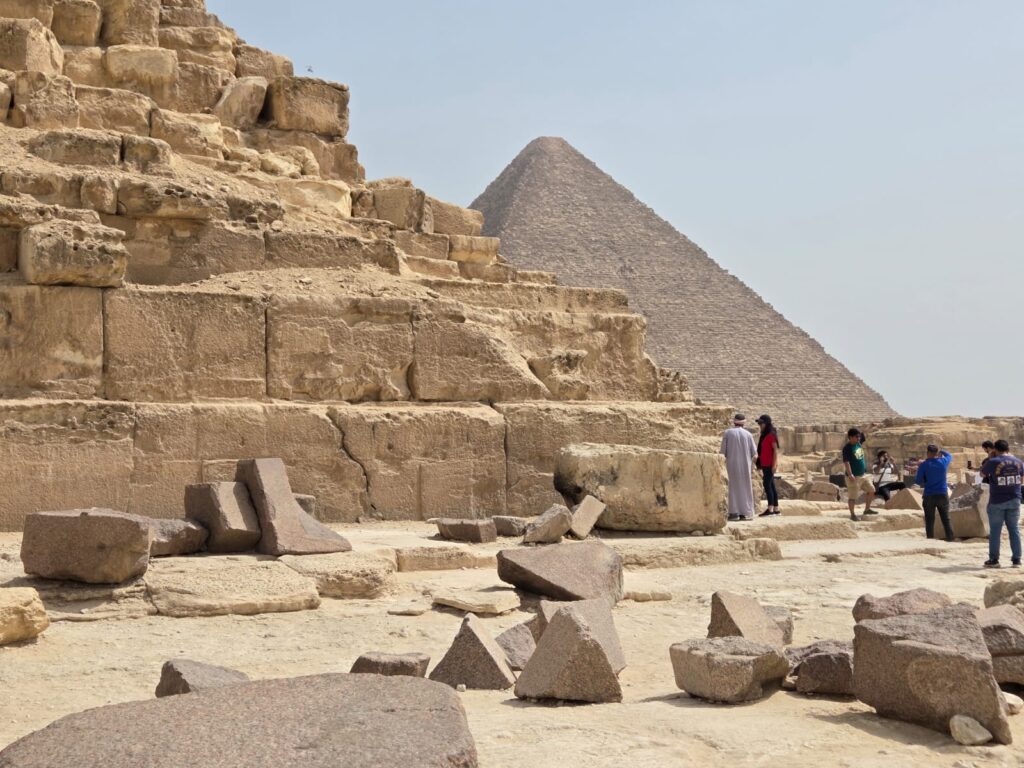
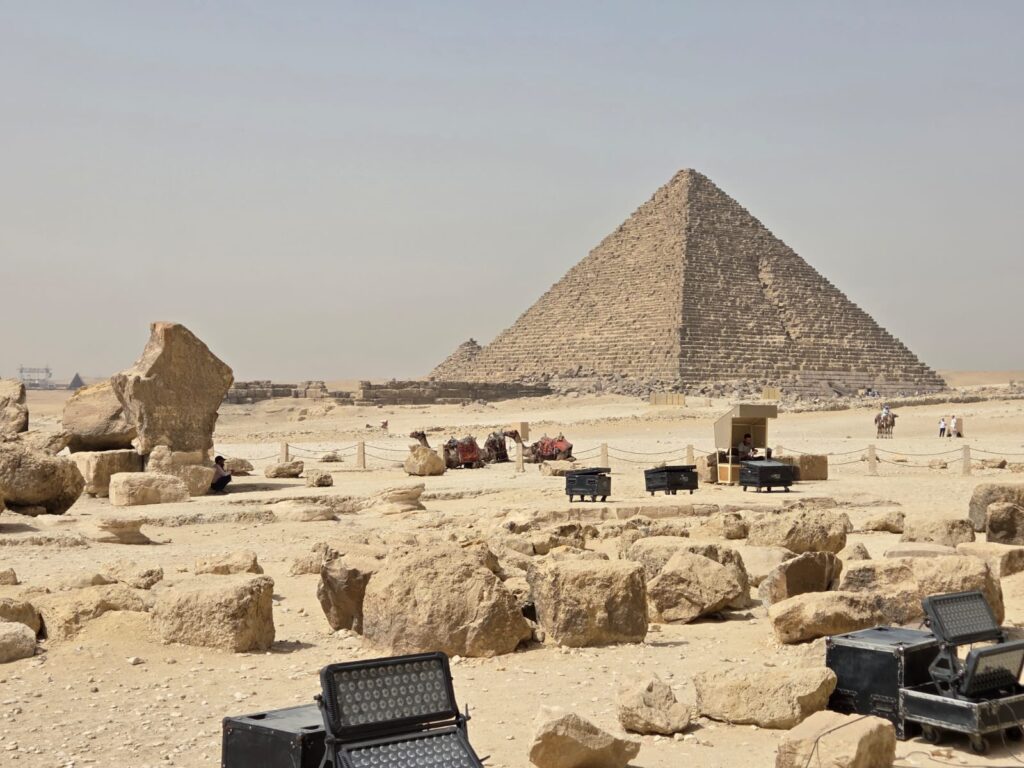
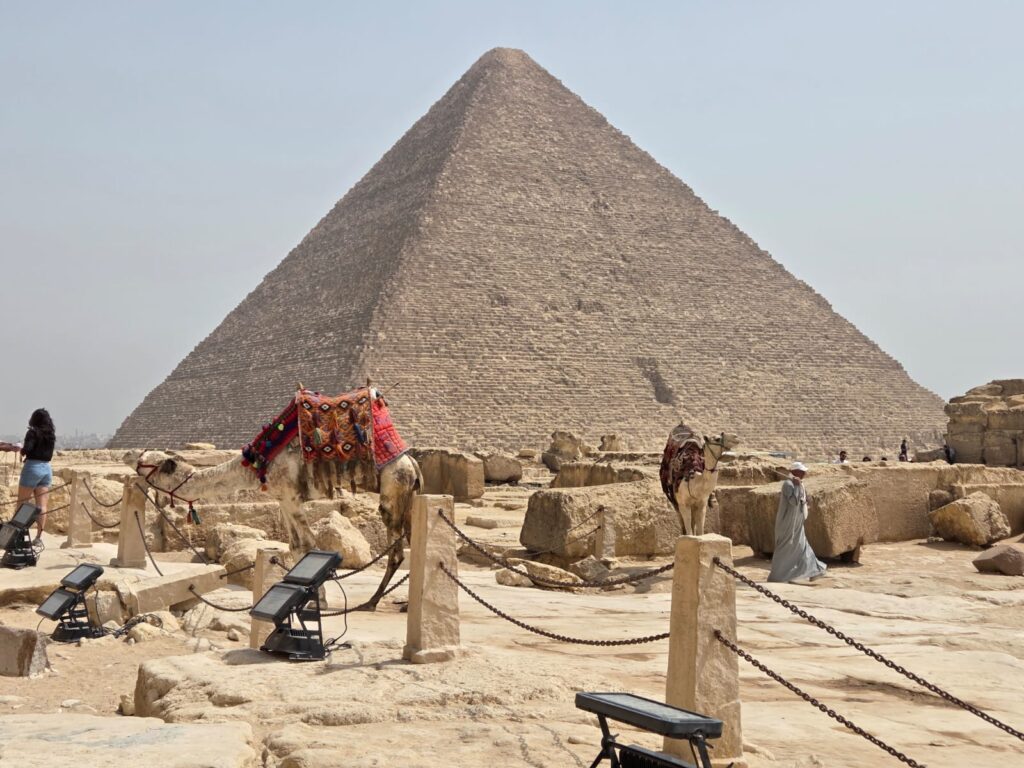
The pyramids belong to three pharaohs of the 4th Dynasty (c. 2575-2465 BCE): Khufu, Khafre and Menkaure. They lie on a rocky plateau on the West bank of the Nile (the West bank traditionally representing death, and the East life). The oldest of the pyramids is the Great Pyramid, that of Khufu. Khufu, for some reason, was also known as Cheops. The Ancient Greeks really seemed to struggle with Egyptian names. You might remember that we visited the Pyramid of Khufu virtually some time ago. Pharaohs didn’t build pyramids greater than those of their forebears, so Khufu’s is also the largest. The length of each side averages 230 metres, and the height was originally 147 metres. It might be the biggest single building ever built.
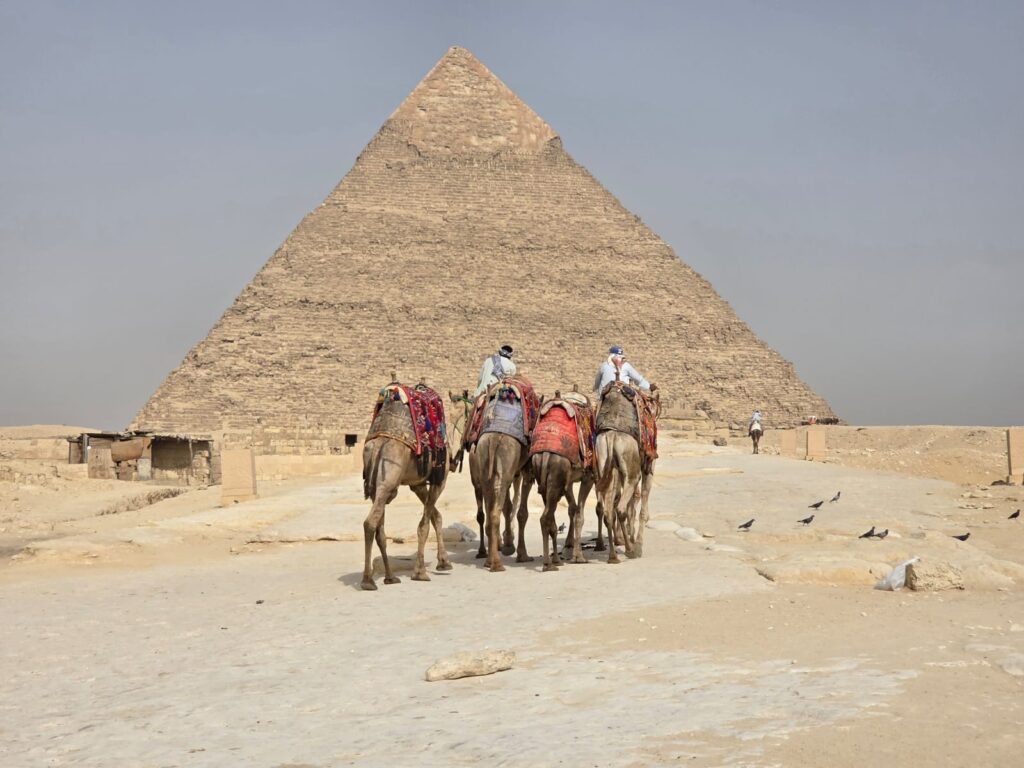
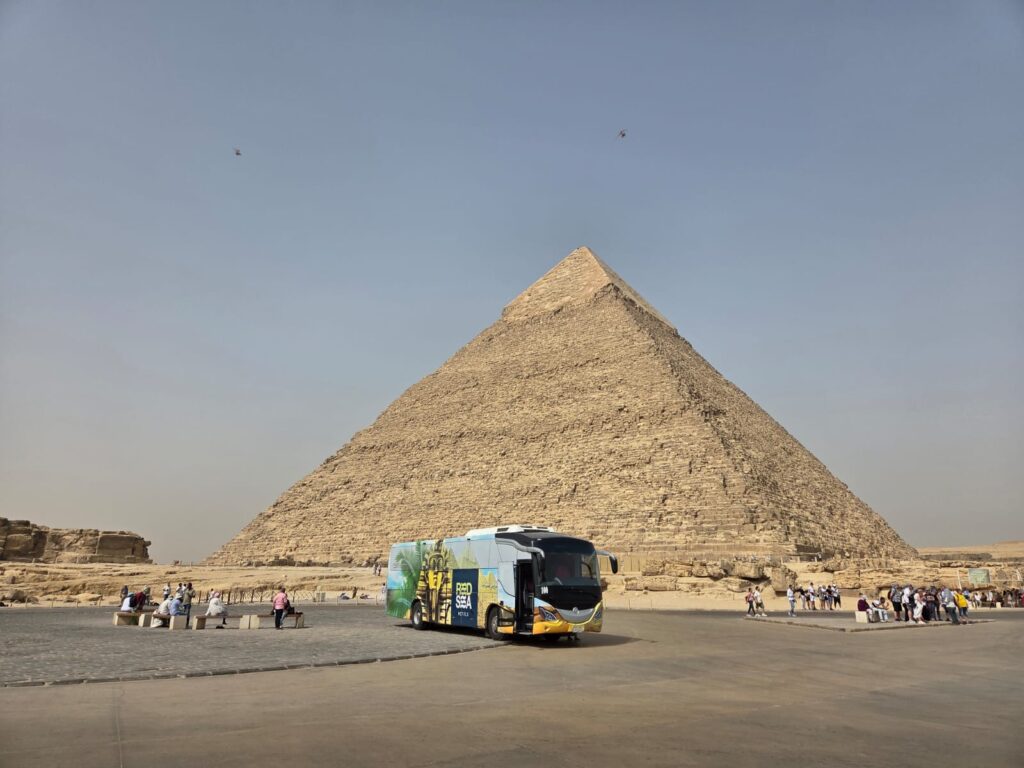
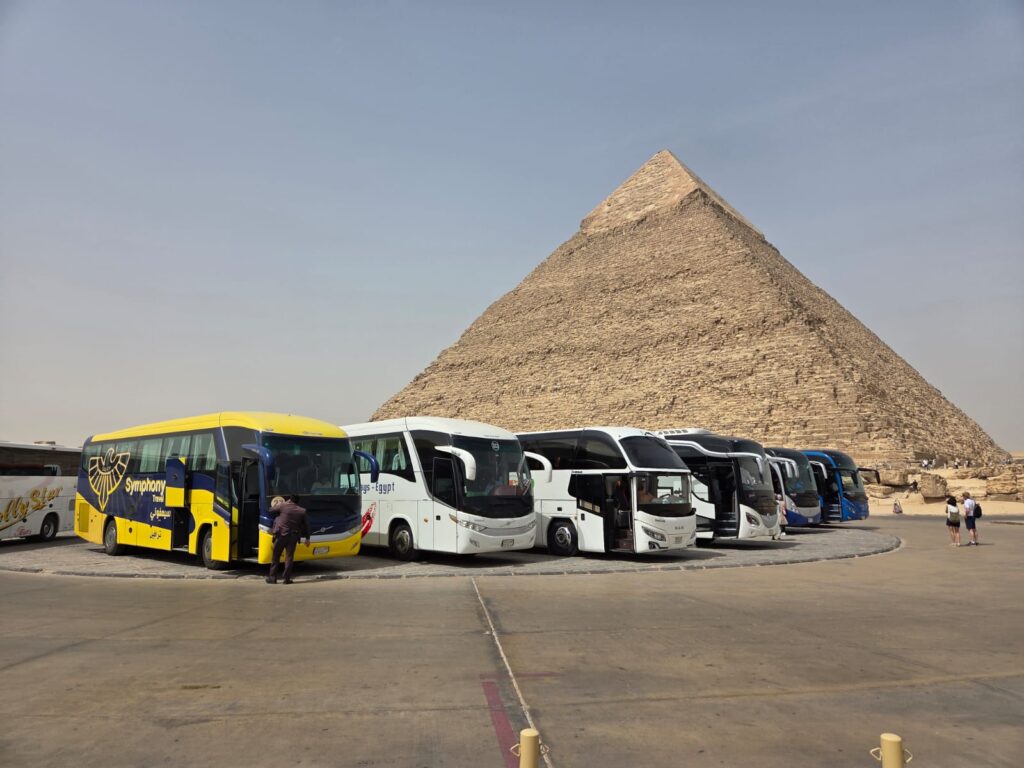
The next pyramid in terms of size and date is that of Khafre (Chephren to the Greeks, see what I mean?). It is about 216 metres on each side, and was originally 143 metres. Why do I keep saying that the pyramids were originally a certain height? Because they had limestone casing which is now almost all gone. The Great Pyramid has lost 9 metres in height by losing its casing. The exception is the Pyramid of Khafre, which retains its original casing just at the top. Finally, the third pyramid is that of Menkaure (Mykerinus) and the respective measurements are 109 and 66 metres.
Despite the measures taken to deter graverobbers (including the Sphinx – more on that shortly), they got to all three pyramids in ancient times. One of the reasons the pharaohs stopped building pyramids and moved to the Valley of the Kings instead is that building the biggest building ever makes it pretty obvious where to find the grave goods.
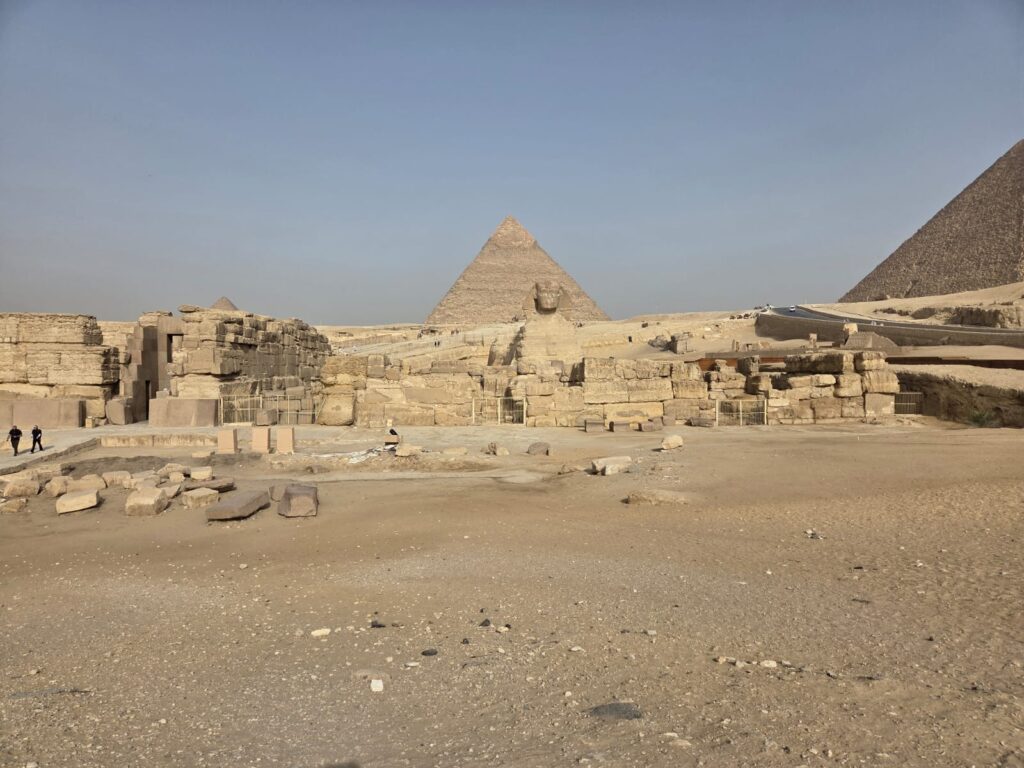
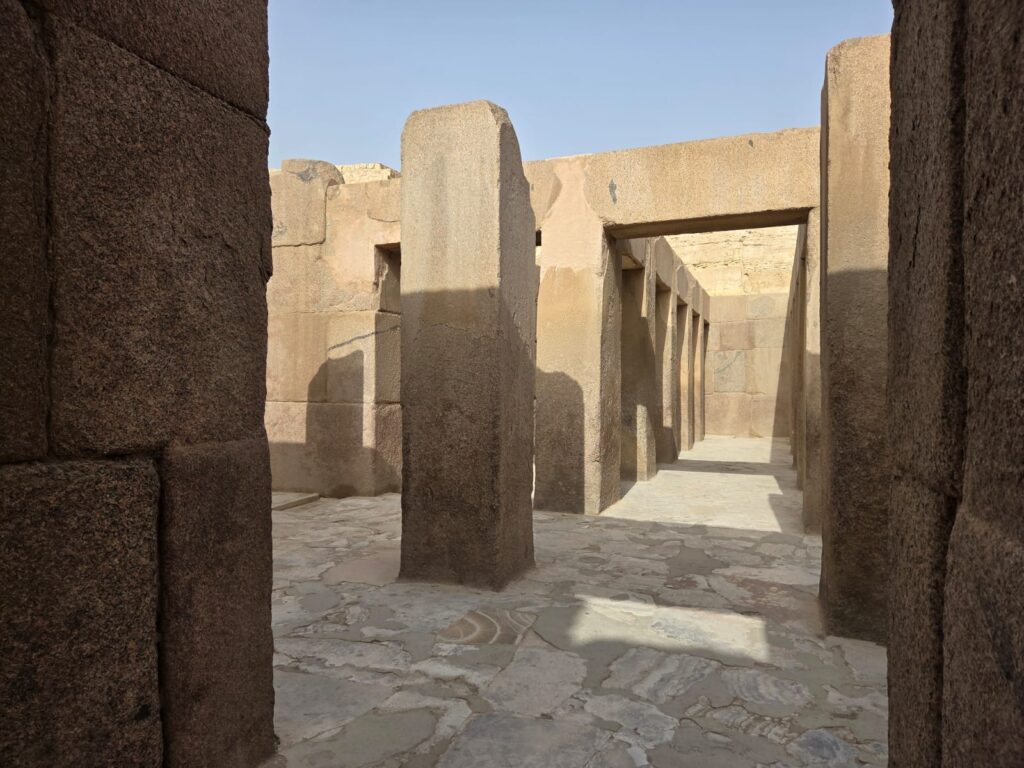
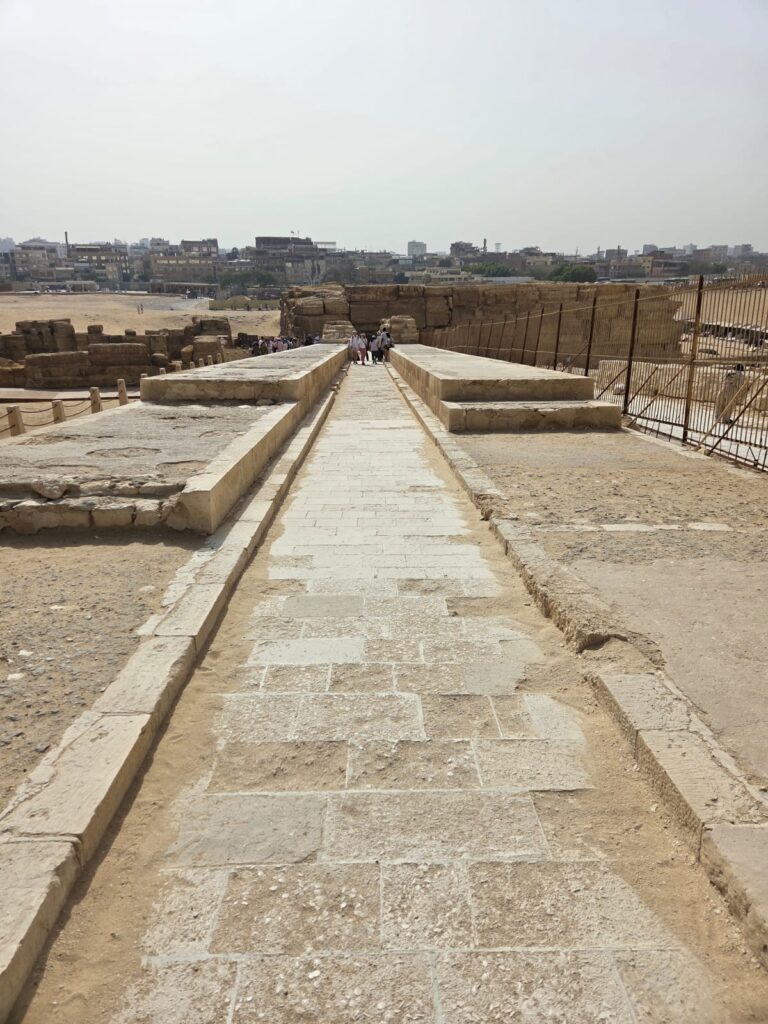
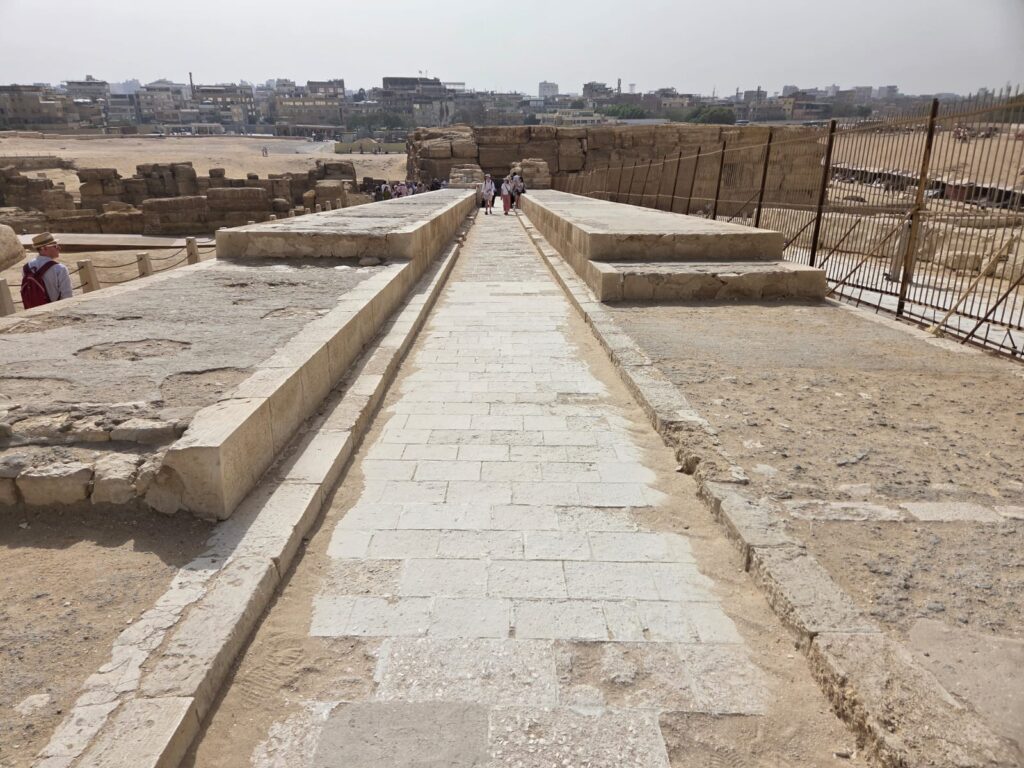
Each pyramid also had a mortuary temple. We’re going to see a very impressive example later on our journey around Egypt. At Giza, ruins of each temple remain, with Khafre’s being the most extensive. At the time, the Nile came up to the Giza plateau, and so the pharaoh’s body would arrive by boat. The funerary barge doubled as a solar boat to transport the pharaoh’s soul towards Osiris. Khufu’s solar boat survives, and was discovered by archaeologist Kamal el-Mallakh in 1954. We’ll see it in the next post. Around each pyramid were various other burials, which takes us nicely on to the next section.
The Minor Pyramids
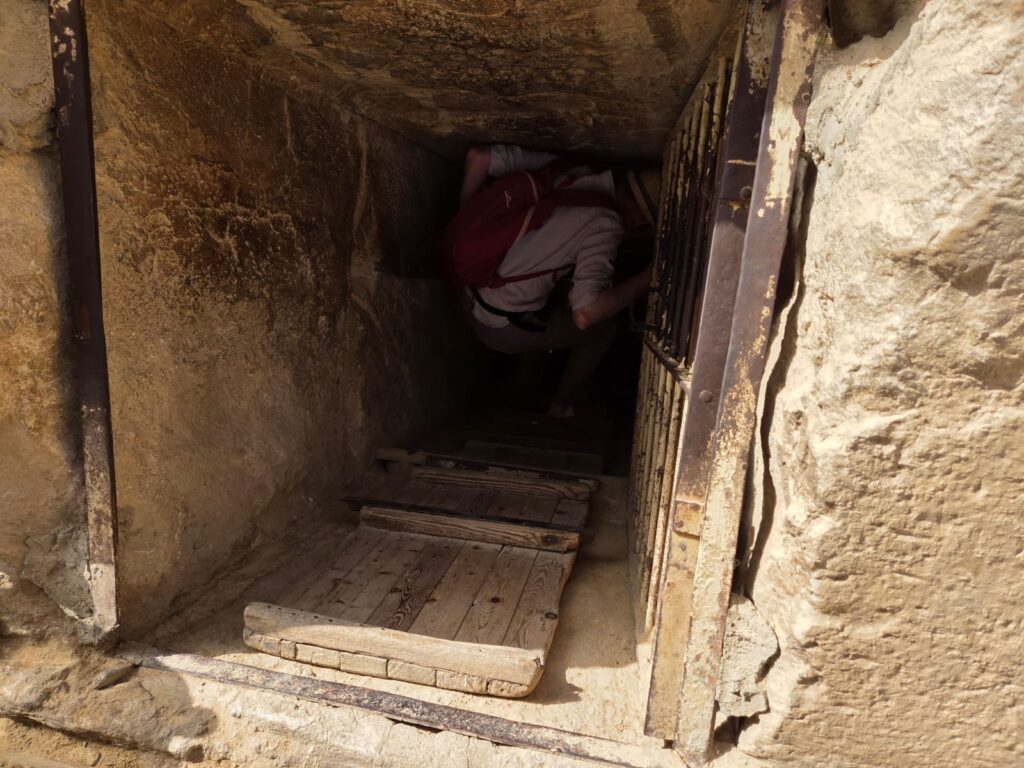
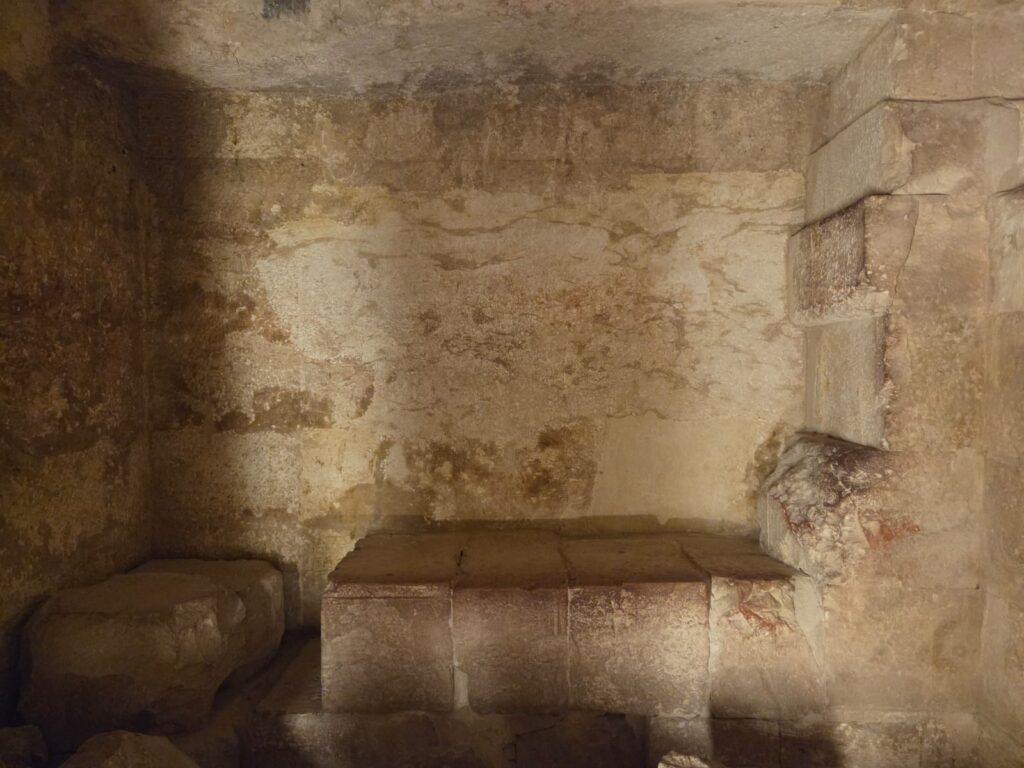
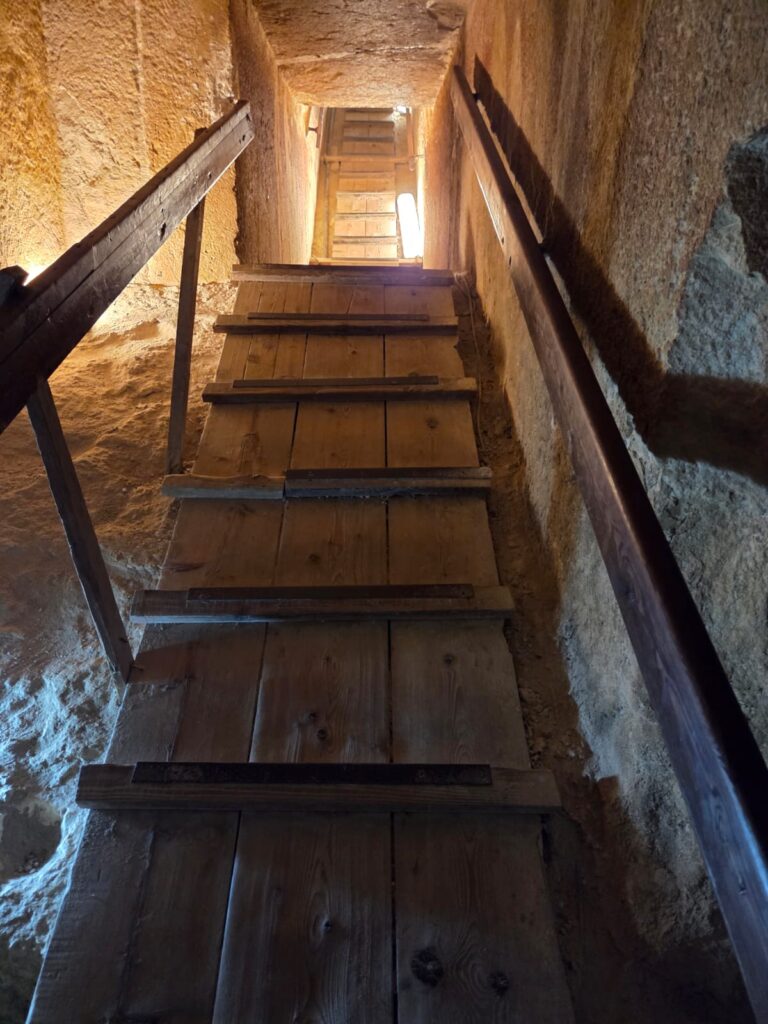
So as I was saying, the three Pyramids of Giza are not the only burials here. Or even the only pyramids. Burial near the pharaoh was of course a prestigious thing, and so each pyramid had many mastabas around it – flat-topped funerary structures. These continued to be erected long after the pharaohs’ deaths.
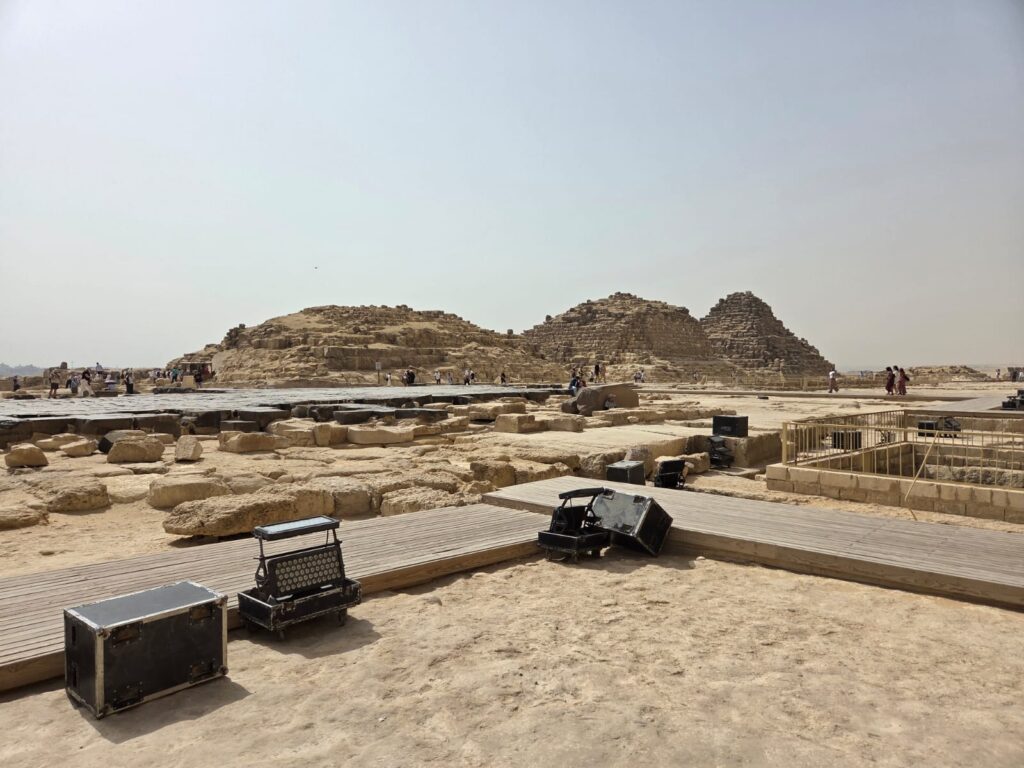
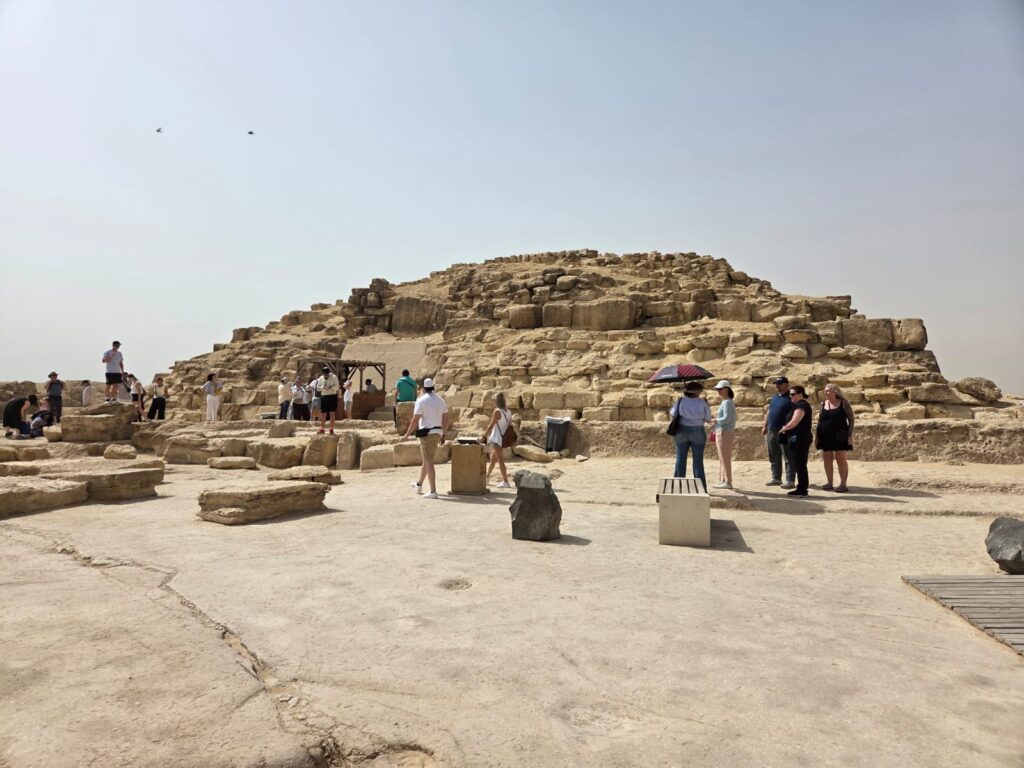
But there are also three other pyramids still easily visible, out of an original nine to ten total at Giza. These are sometimes called the Queens’ Pyramids. The northern-most has changed its ascription from Queen Meritetes to Queen Hetepheres I. It was originally 30 metres high. No evidence of a sarcophagus, but there was an alabaster canopic box and jars in a hidden chamber. Canopic jars held the deceased’s preserved liver, lungs, stomach and intestines. Brains were unimportant and not retained.
The second minor pyramid is the one that actually belonged to Queen Meritites. Supposedly, anyway – there’s no hard evidence for this, and it might have originally been someone else’s. But there is an inscription on the false door reading “King’s wife, his beloved to Horus, Mertitiotes: beloved of the Favourite of the Two Goddesses; she who says anything whatsoever and it is done for her. Great in the favour of Sneferu; Great in the favour of Khufu, devoted to Horus, honoured under Khafre, Mertitetes“. this pyramid would also have been about 30 metres high.
Thirdly, we have the Pyramid of Queen Henutsen. According to archaeologists it’s the most complete of the three, although the casing might have remained incomplete. The whole thing seems to have been a bit hasty, including the mud-brick mortuary temple which didn’t survive. If someone died unexpectedly in Ancient Egypt their burial place, if unfinished, had to be rushed so they could be buried on time. On time meant exactly 70 days.
We’ve now covered almost all the burials at Giza. The remaining ones were those of the workers. There’s still some debate as to whether seasonal or dedicated workers built the pyramids, but it was probably the latter. Excavations in the 1980s and 90s uncovered workers’ villages that included workshops, bakeries, homes, and small tombs, ranging from mud brick to stone. If you want to actually see a workers’ village, though, your best bet is Deir el-Medina at the Valley of the Kings.
A Brief History of the Sphinx
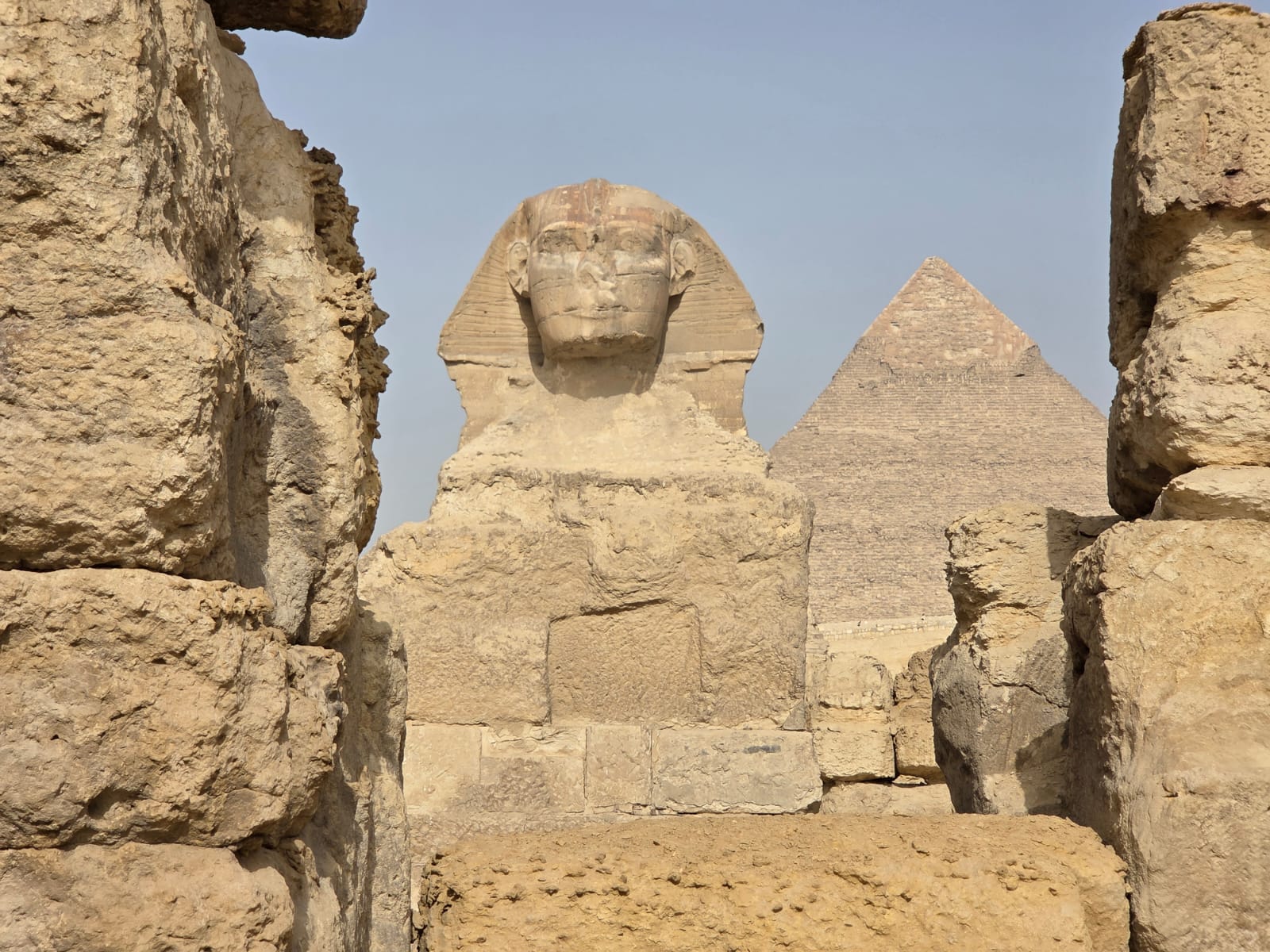
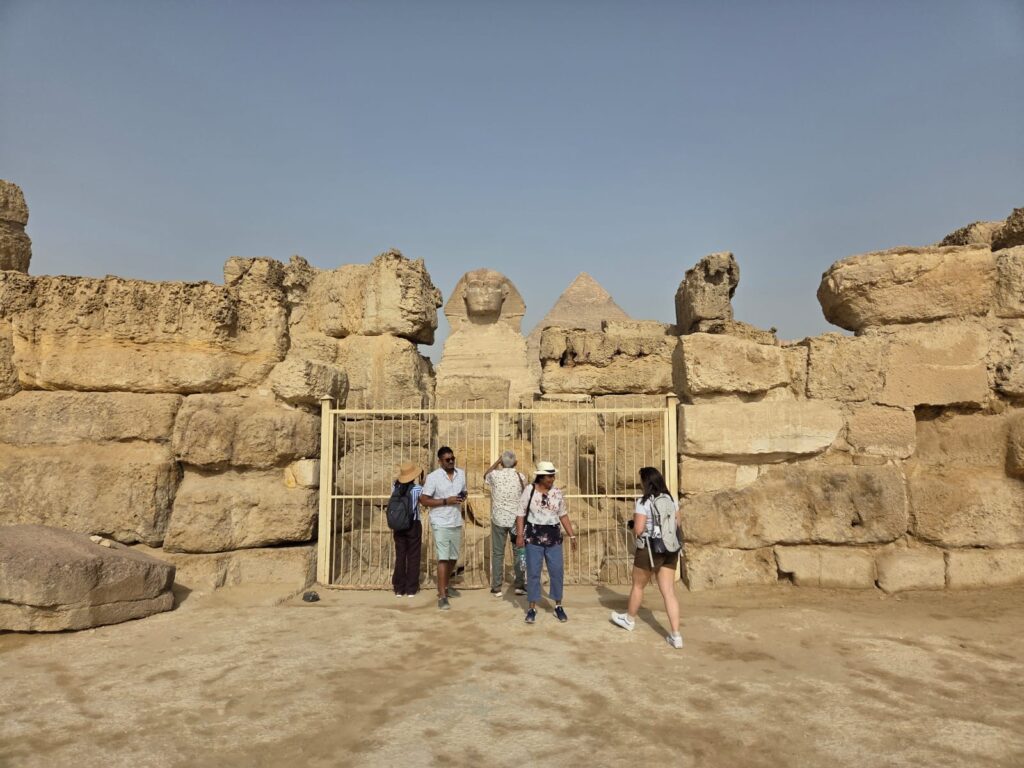
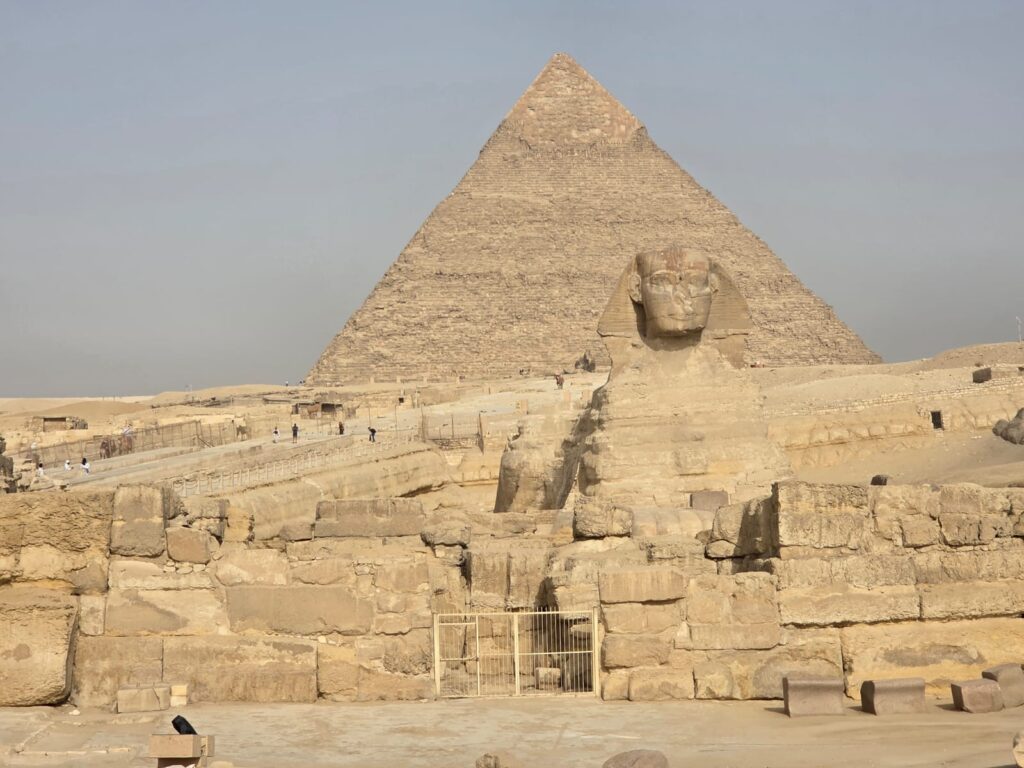
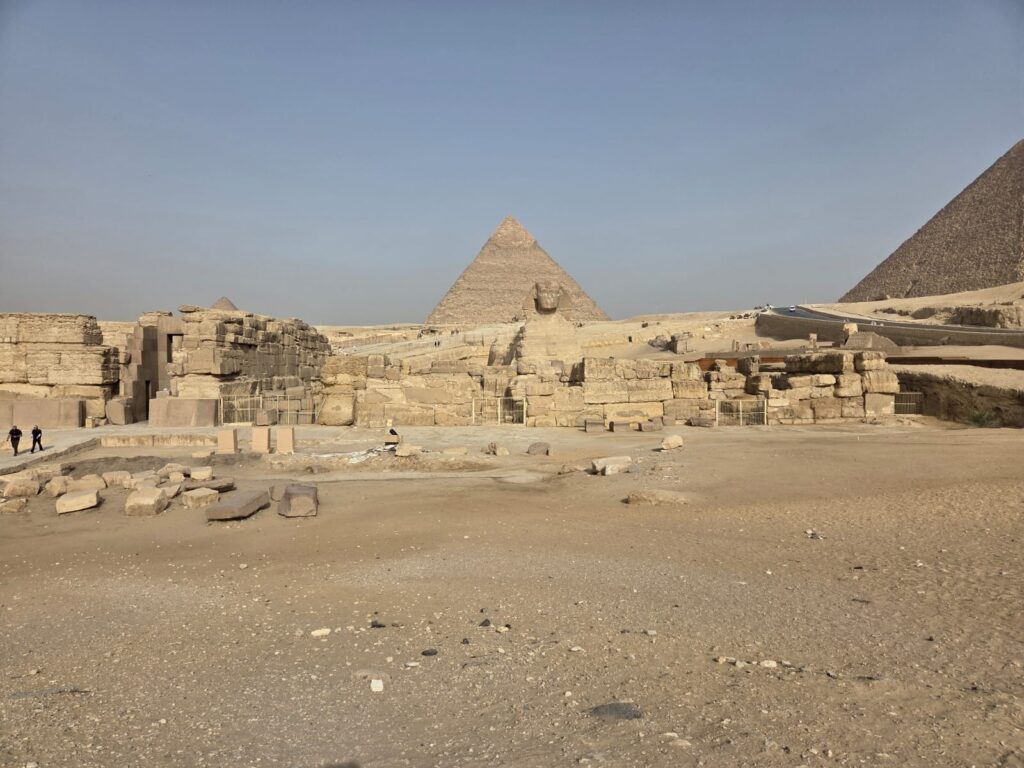
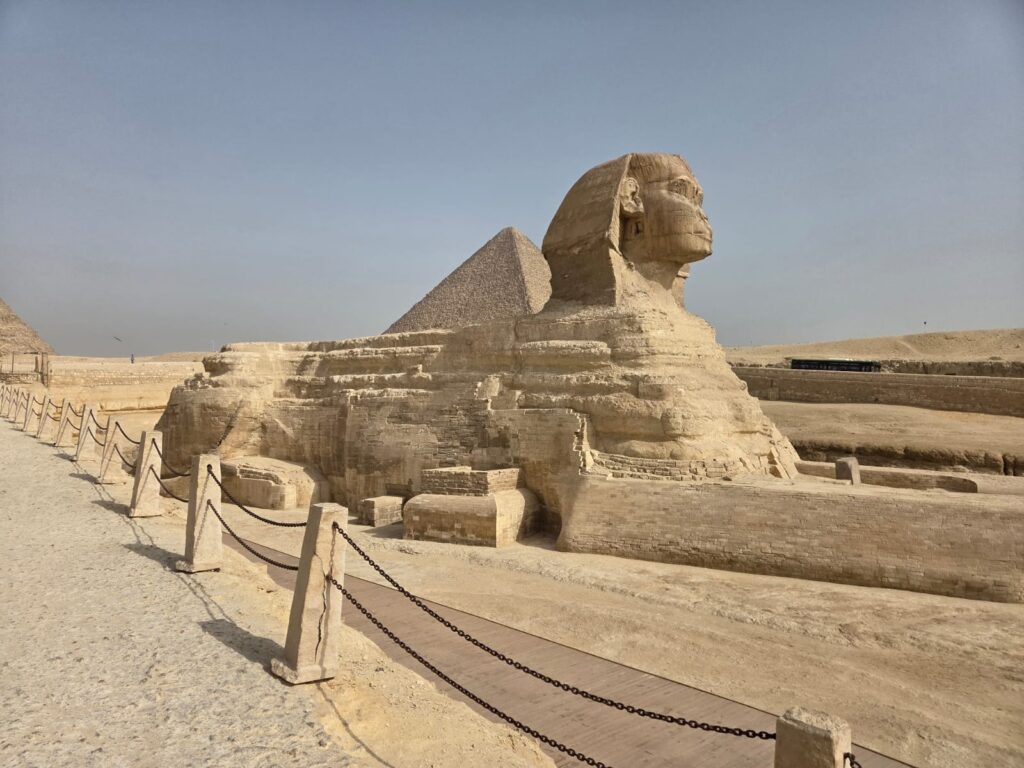
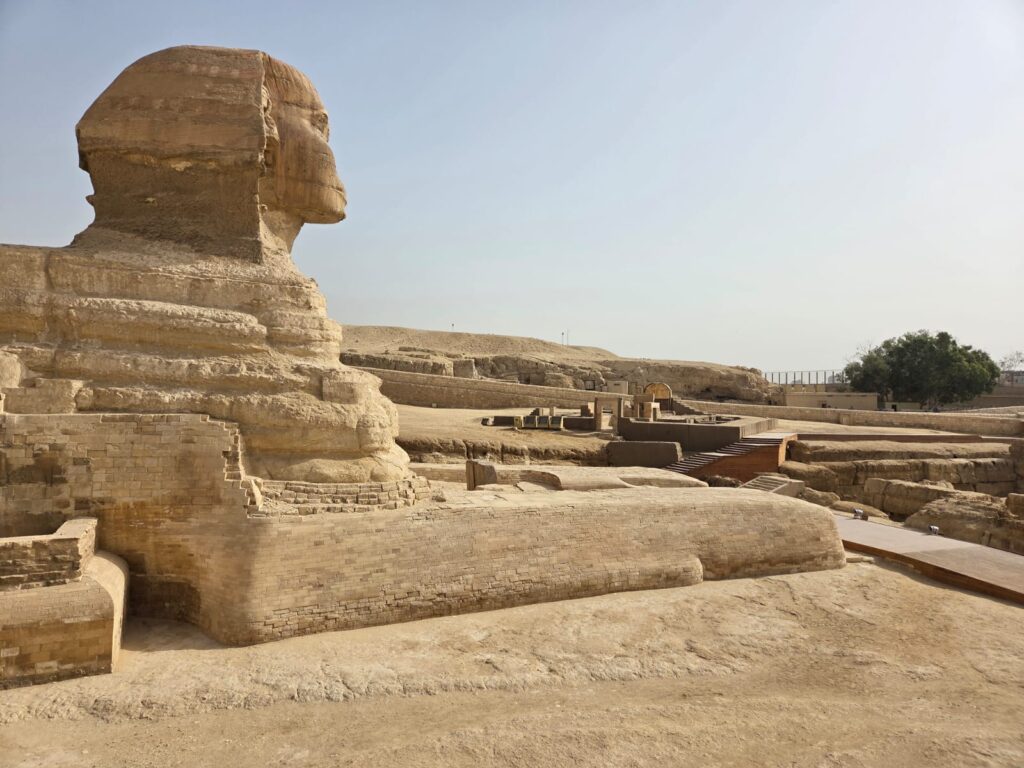
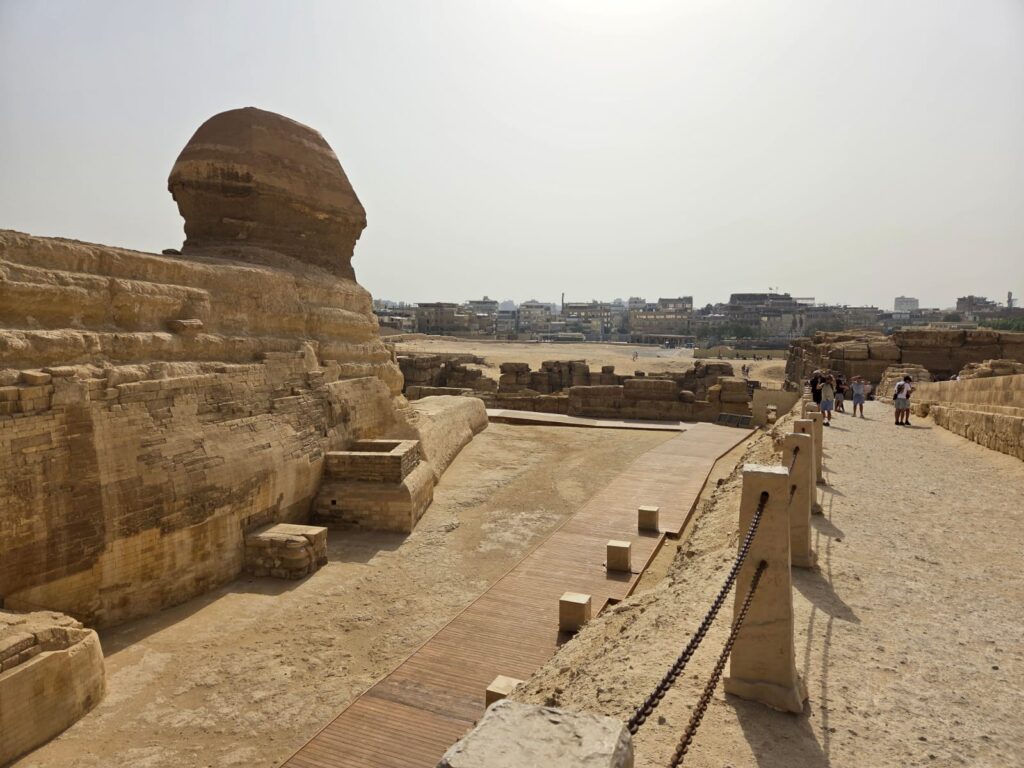
Right we have discussed the pyramids, and now it’s time for the other famous resident of Giza, the Sphinx. The Sphinx is a limestone statue with a human head and a lion’s body, which faces East. It’s the oldest-known monumental sculpture in Egypt, dating (according to archaeological evidence) to the reign of Khufu or Khafre. Egyptologists believe it represents Khufu or one of his sons. It is 73 metres long, 20 metres high, and 19 metres wide.
We don’t know the Sphinx’s original name. By the time of the New Kingdom it had become solar deity Hor-em-akhet. It gained the name Sphinx in classical antiquity because of its resemblance to the Greek mythological beast (which has a woman’s head, and wings, but no matter).
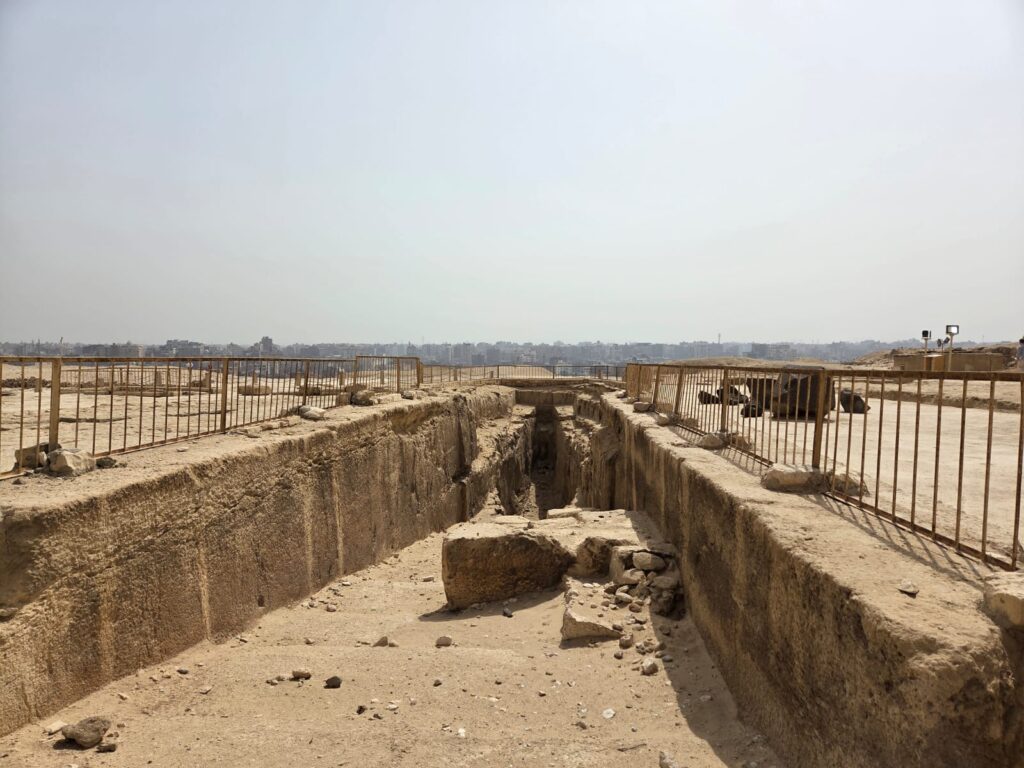
The Sphinx is a monolith carved directly from the Giza bedrock. The head may have been carved from a natural feature, and then the body quarried out of the rock. A temple in front of the Sphinx remained incomplete. The Sphinx shows a reasonable amount of wear and tear for its age. Parts that were covered by sand when the Giza Necropolis was abandoned fared better. This happened a couple of times. Thutmose IV had its paws dug out around 1400 BCE, and erected a stele between them. Ramses II The Great might have had a go too. The Romans restored it again in 166 CE. Italian archaeologist Giovanni Battista Caviglia fully uncovered it in 1817. The myth that Napoleon’s troops or WWI soldiers shot off its nose is just that – images show it missing in the 18th century at least.
Our guide (also an Egyptologist) suggested that the presence of the Sphinx, eternally watching, was another deterrent to tomb robbers. This may have lasted as long as beliefs held steady, but in the end it didn’t protect the Pyramids or the Sphinx itself. Treasure hunters and tomb robbers have dug various tunnels into the Sphinx, including the undignified-sounding ‘rump passage’. Not the best outcome for what is certainly a noble beast.
The Sphinx was already a tourist destination by the Graeco-Roman period, because it was already an antiquity. Pliny the Elder described it as having a red painted face. For Egyptians, it became a ‘talisman of the Nile’ and something to make offerings to in order to, for instance, secure a government job. European tourists, perhaps with pre-conceived notions of Greek sphinxes, described it as having the features and breast of a woman. Engravings were generally based on (lost) original drawings, but became a bit fanciful.
The Visitor Experience
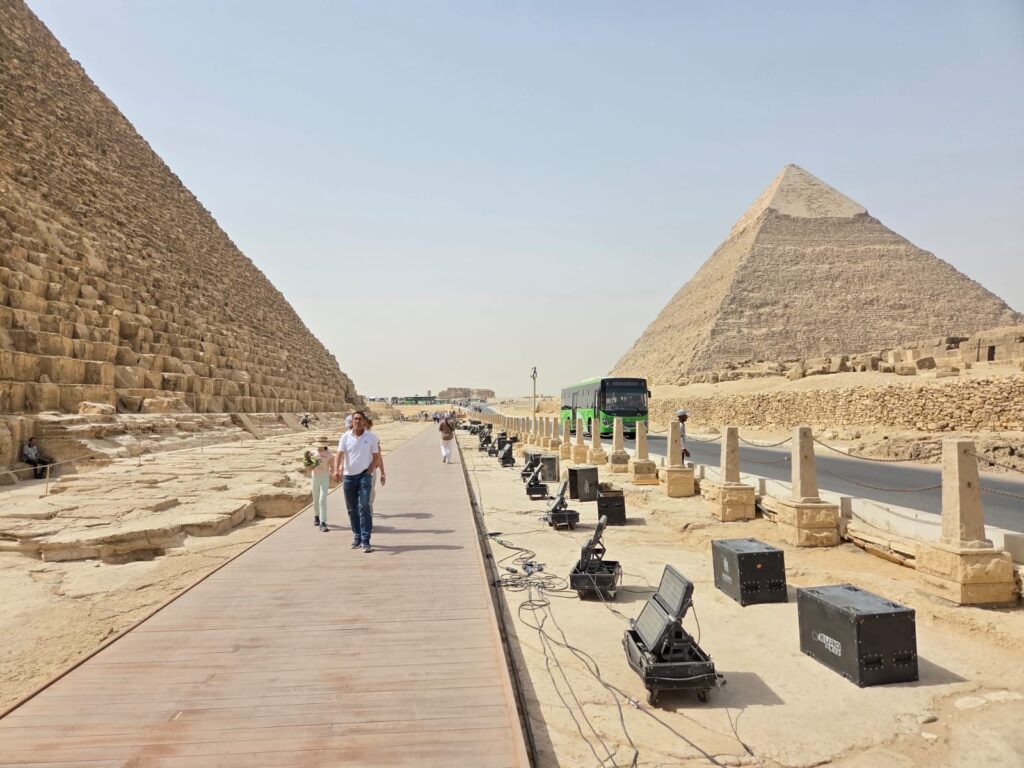
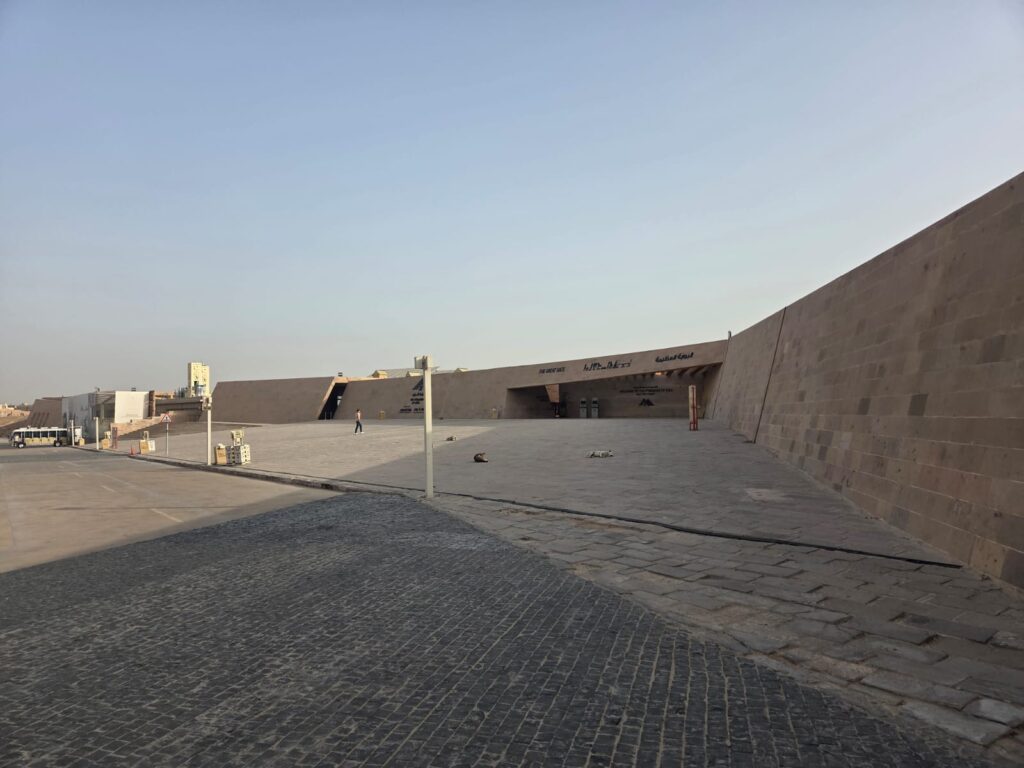
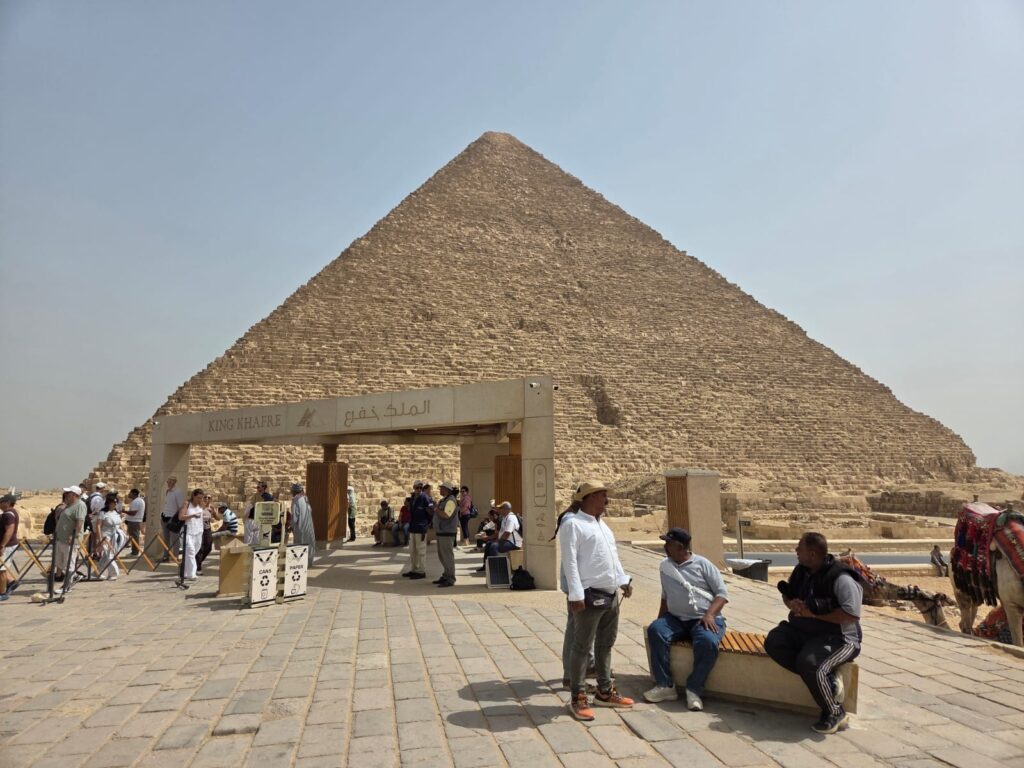
Armed with all this knowledge of the Pyramids and the Sphinx, it remains only for me to prepare you for the visitor experience on the day. From conversations over the years, I believe this experience has recently improved. Where you may have heard complaints that the modern city of Giza comes right up to the Pyramids (gasp – there’s even a KFC nearby), the main entrance moved to the new Great Gate in 2025. This means an approach through the desert, which sets the scene nicely.
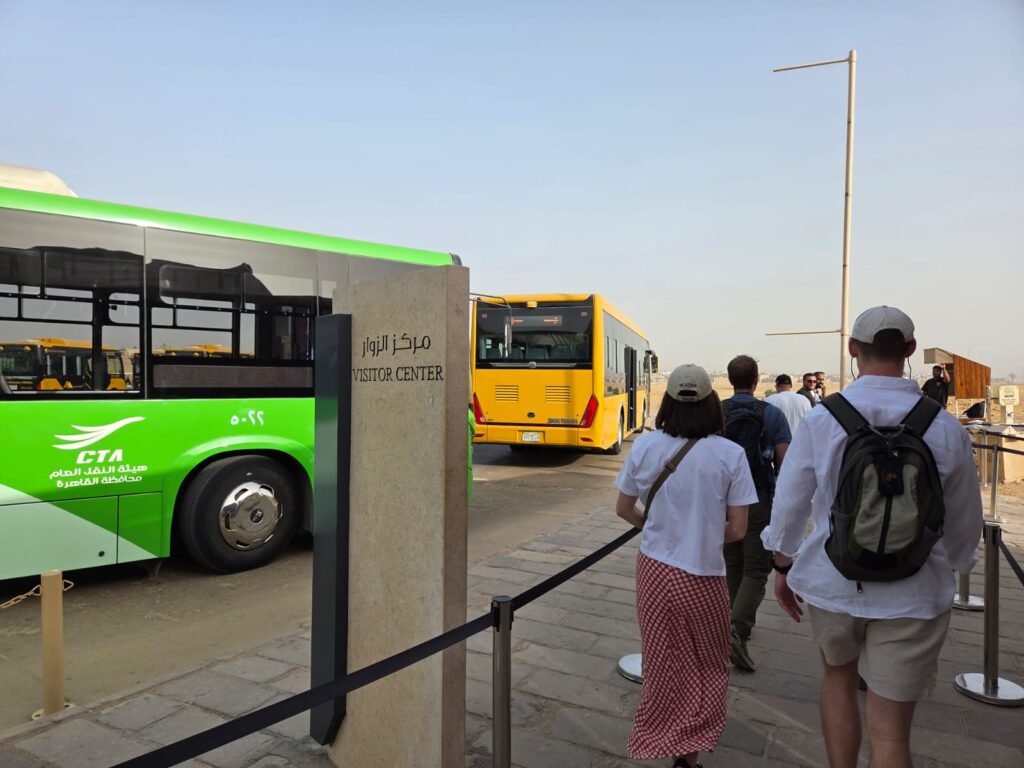
Once you arrive, you can purchase tickets if needed. Please note that entering into the Great Pyramid requires a separate ticket. I wouldn’t recommend it, more on this shortly. The visitor centre has toilets and a bit of information, then you exit to the first of several coach stops. I recommend doing what our group did – arriving early in the day, taking a coach to the final stop, and working your way back. This gives a nice illusion that you have the place more or less to yourself.
You could walk between stops, but it will likely be hot and you’ll want to save your energy for walking around. We first went down to the mortuary temple below the Sphinx, and learned about the site. Then we went up to the Sphinx, before heading to the Great Pyramid. We had some free time there, then got another coach up to a viewing point for photos. After that it was time to say goodbye to the last Wonder of the Ancient World.
Coming back to what to do there, there are a couple of options. There are camels and horses you can ride for a fee, but at best that is ethically dubious. Your ticket includes entry into one of the three Queen’s Pyramids. Which one you can enter rotates on a regular basis. The reason I don’t recommend a ticket to enter the Great Pyramid is that I found the much smaller pyramid I went into to be a hot and altogether unpleasant affair. You can walk around the Great Pyramid, and most of the Pyramid of Khafre. The Pyramid of Menkaure is a bit further off so if you’re on a tour you likely won’t go there.
All in all I found it really well organised and easy to get around. The thing that surprised me is that I wasn’t as enamoured of the Pyramids and Sphinx as many other sights I saw in Egypt. That could be to do with the ubiquity of images of Giza, but was perhaps also because they don’t seem to be on a human scale. They’re astonishing, but for my money I think I’d still rather see the evidence of human hands in the carvings of Egypt’s many temples.
Trending
If you see this after your page is loaded completely, leafletJS files are missing.