
Al-Mu’izz Street, Cairo
If you don’t have much time to spare in Cairo, a little excursion to al-Mu’izz Street gives an insight into one of the city’s many historic faces.
A Hare-Brained Scheme, But A Good One In The End
I explained in my last post that, on my very first trip to Egypt, the Urban Geographer and I arrived a little ahead of meeting our tour group so we could do some exploring on our own. We actually started the evening we arrived with a walk over to the Cairo Tower to get a view of… nothing! Well, we saw the city, but it’s often very hazy so seeing the Pyramids was out of the question. The following day, as our hotel was right next to the Egyptian Museum in Cairo that seemed a no-brainer for the morning. But we then had to decide what to do for the afternoon.
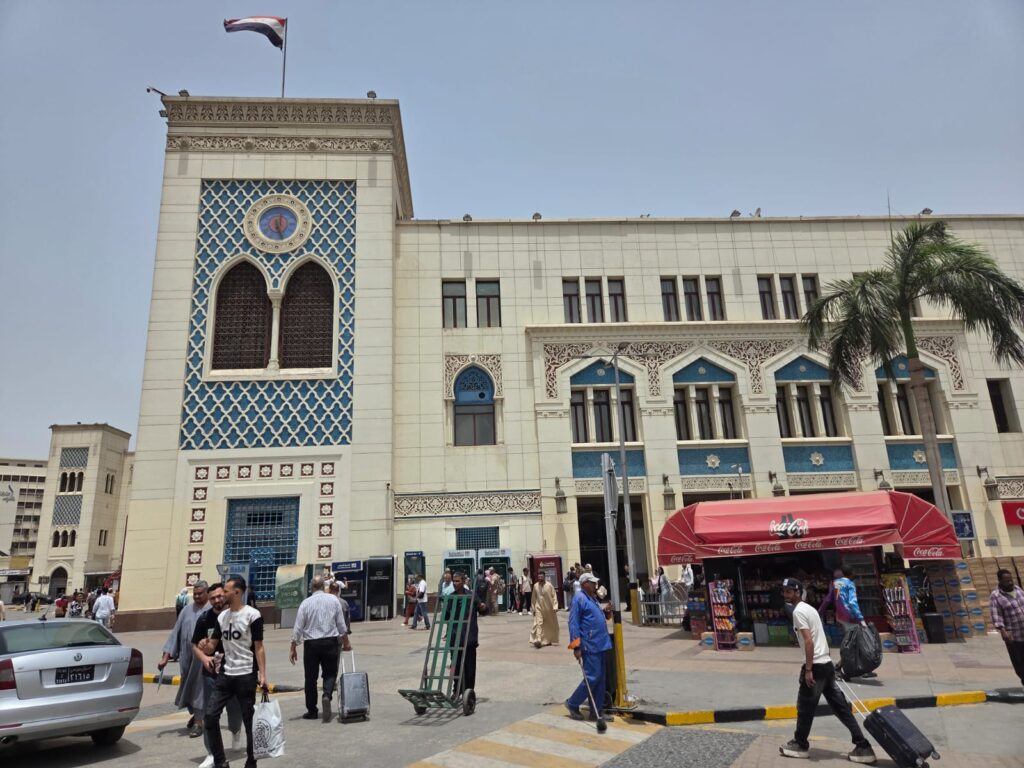
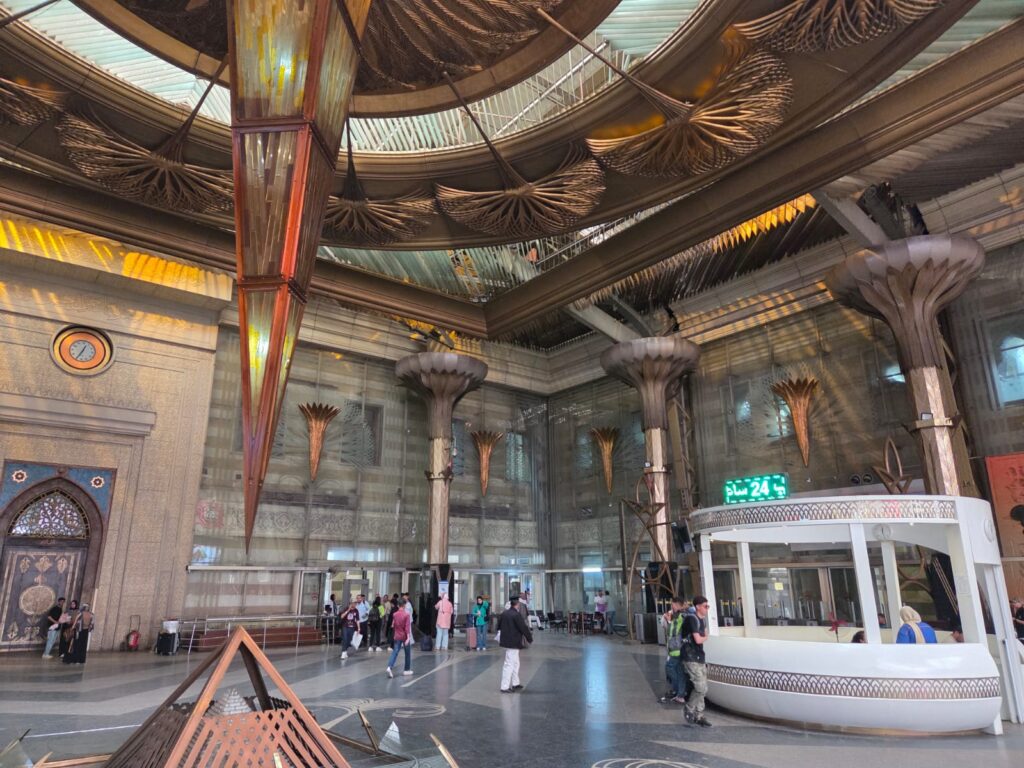
We sat in the courtyard behind the museum and had a snack and a cold drink while we perused our guidebook. In the end, we decided to combine a couple of activities. Firstly, get the metro to the main railway station, which the Urban Geographer wanted to see for architectural reasons. And then walk from there to so-called ‘Islamic Cairo’. I mean arguably most or all of Cairo is Islamic Cairo, but this moniker separates out the medieval district, with one of the world’s densest concentrations of historic Islamic architecture.
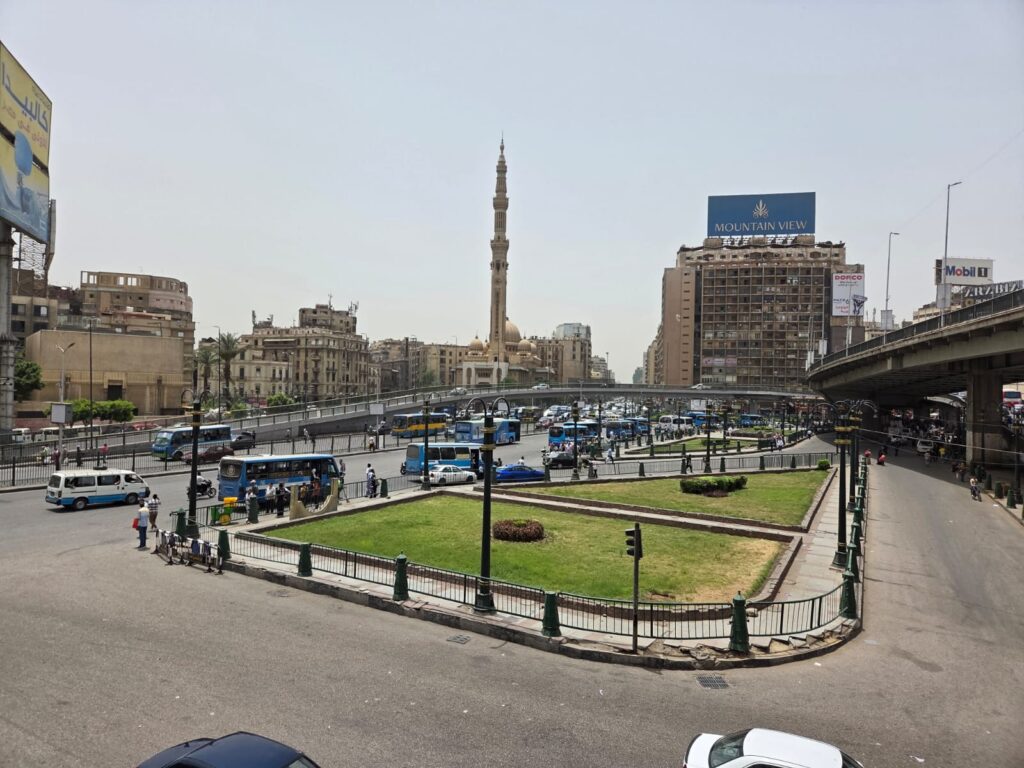
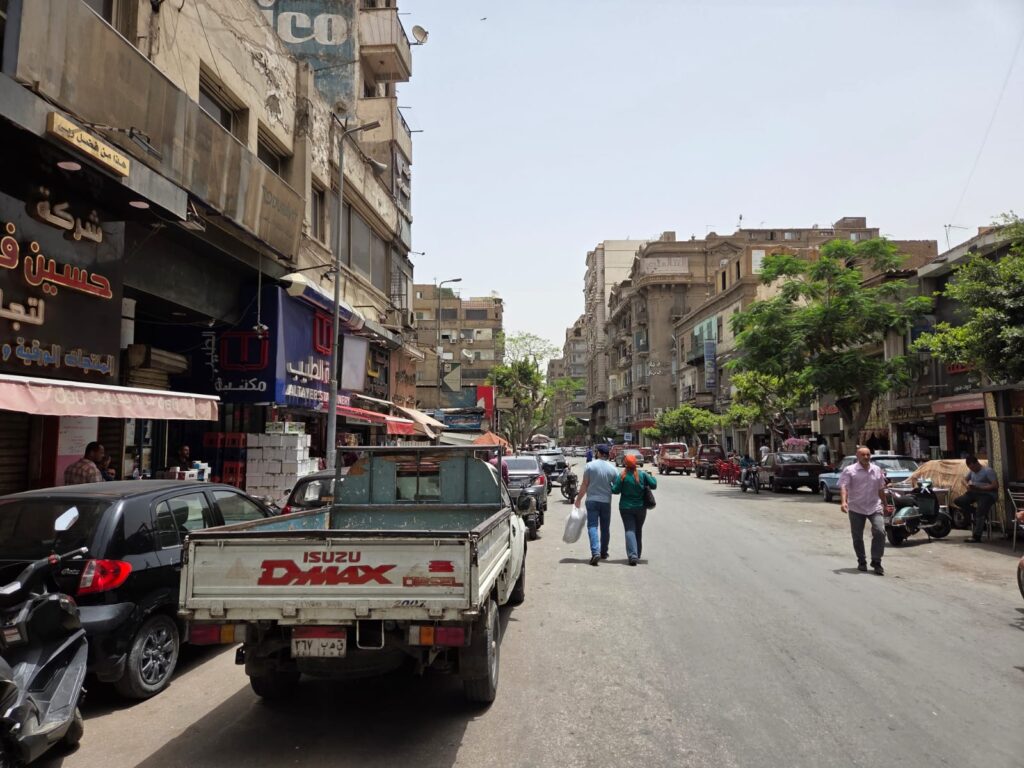
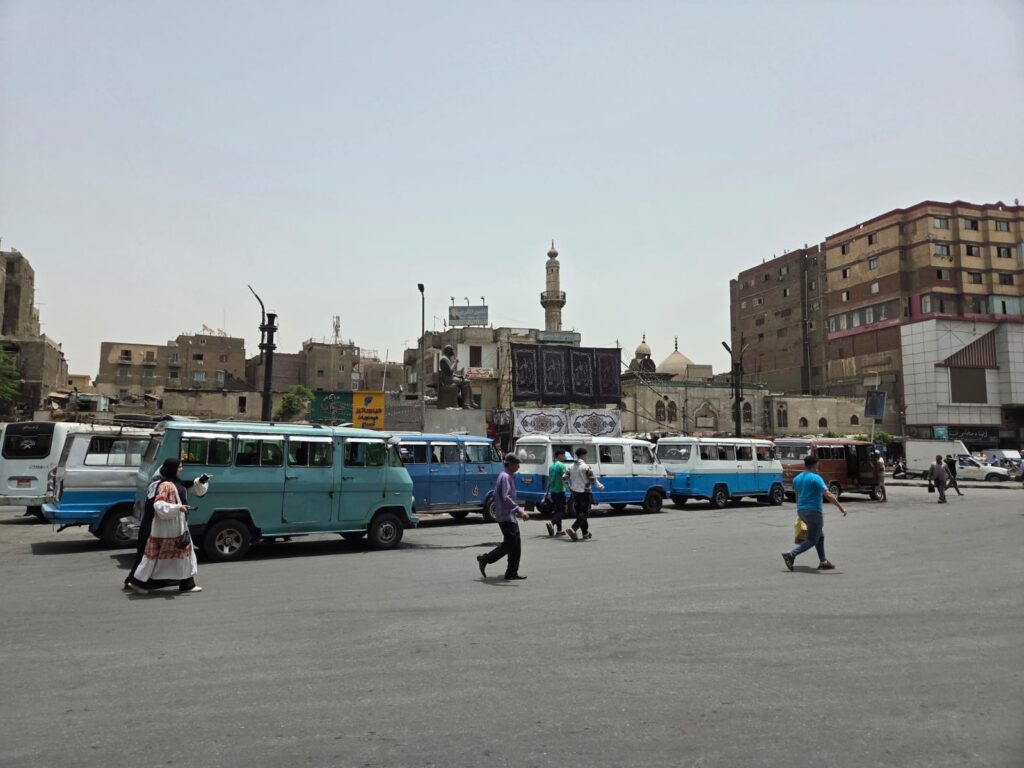
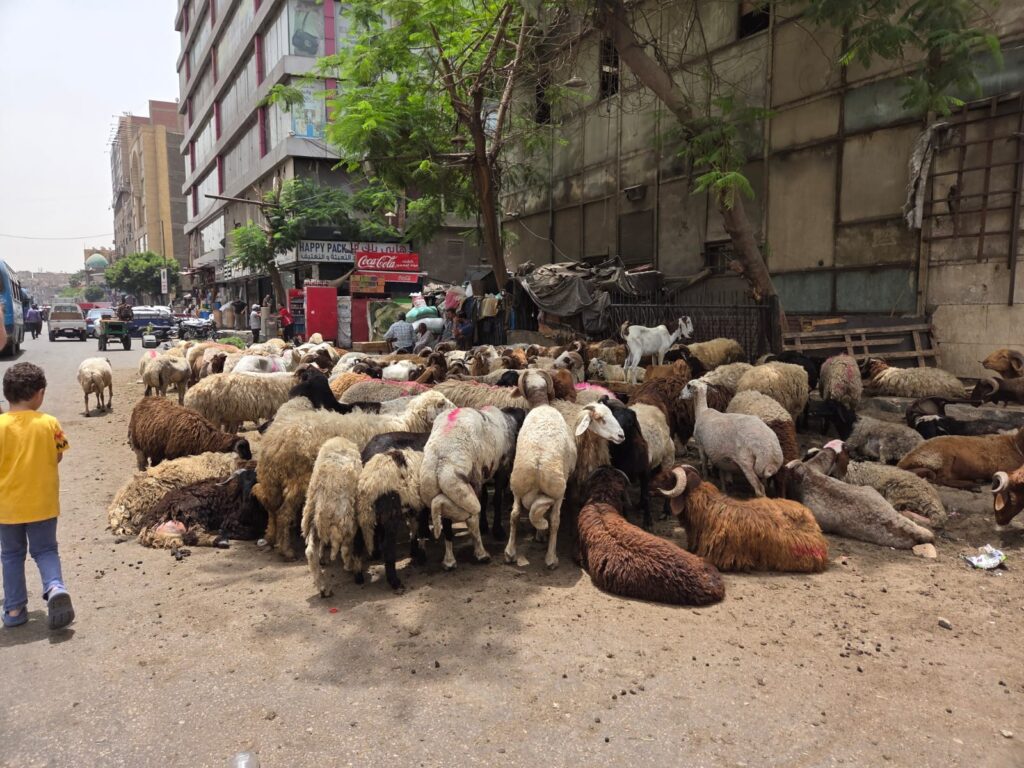
As schemes go, it was alright. Or it worked out, in any case. We went and looked at the railway station. We crossed a pedestrian overpass, and I picked a random sight in Islamic Cairo from my guidebook and plugged it into Google Maps so we knew we were heading vaguely the right way. It was an interesting walk. Through urban streets that I don’t think see many tourists. Past markets, bus stops, and animals which have been herded into the city for slaughter (just as used to be the case in London and everywhere else). A little insight into daily life in Cairo.
When we got to the hammam I’d had as a target on the map, I thoroughly confused everyone by trying to visit it. It turned out that al-Mu’izz Street is a grouping of sights visited on one ticket, and we had come in the back way and not past the ticket office. Easy to remedy, and with tickets in hand we started again from the beginning.
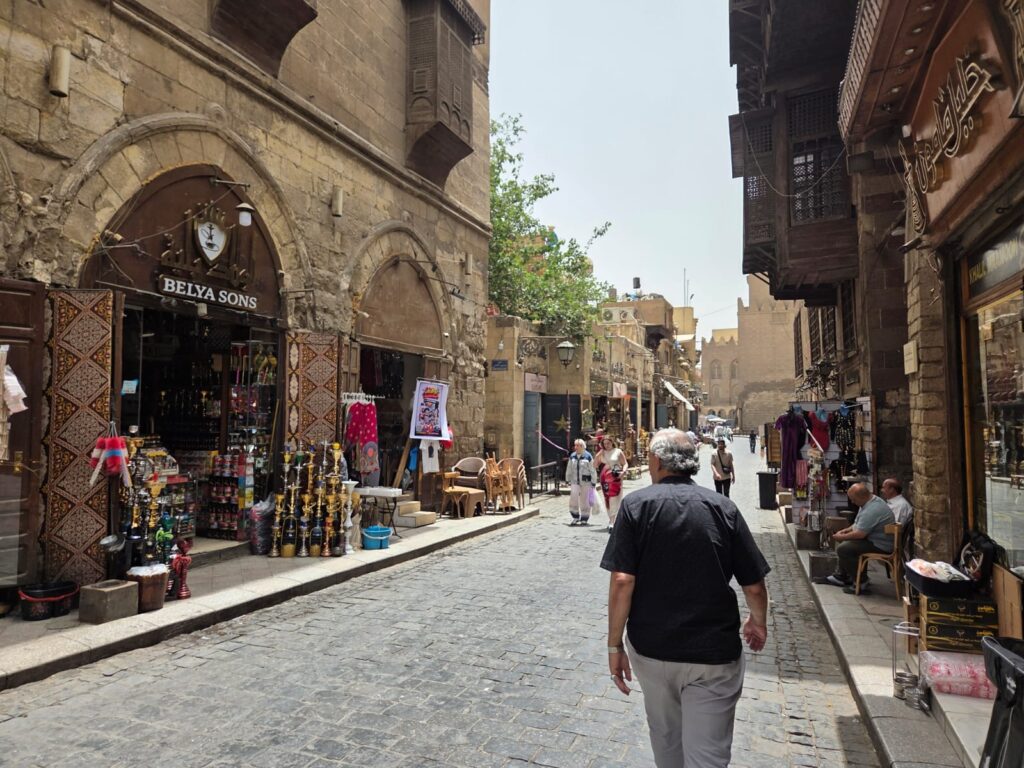
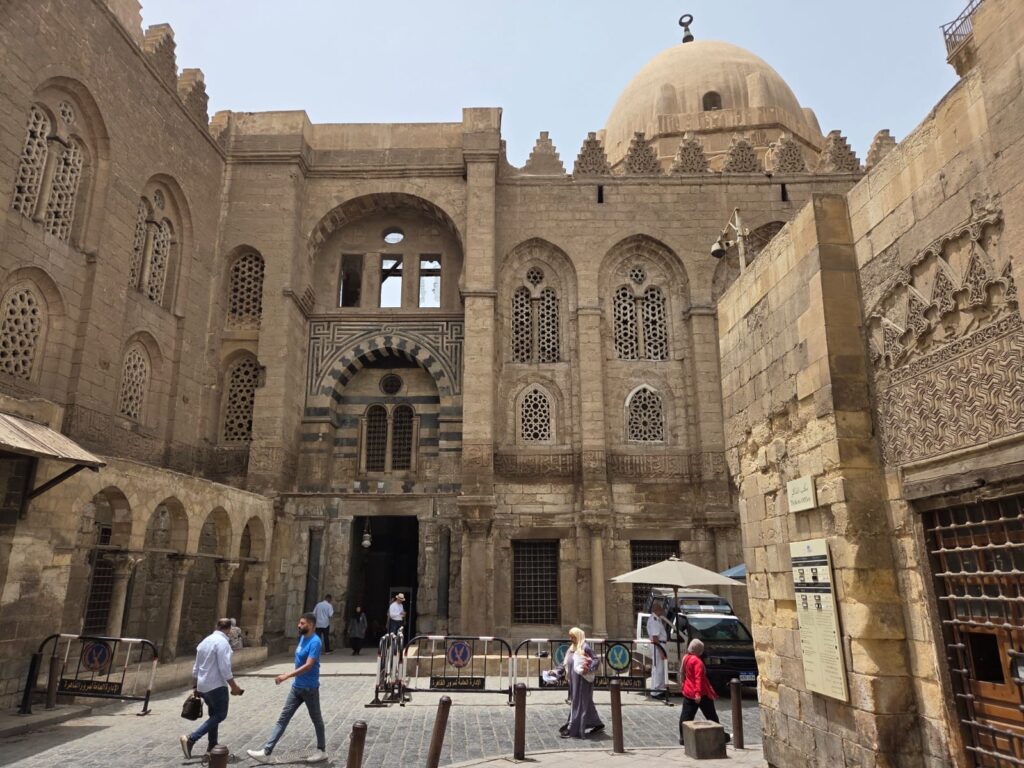
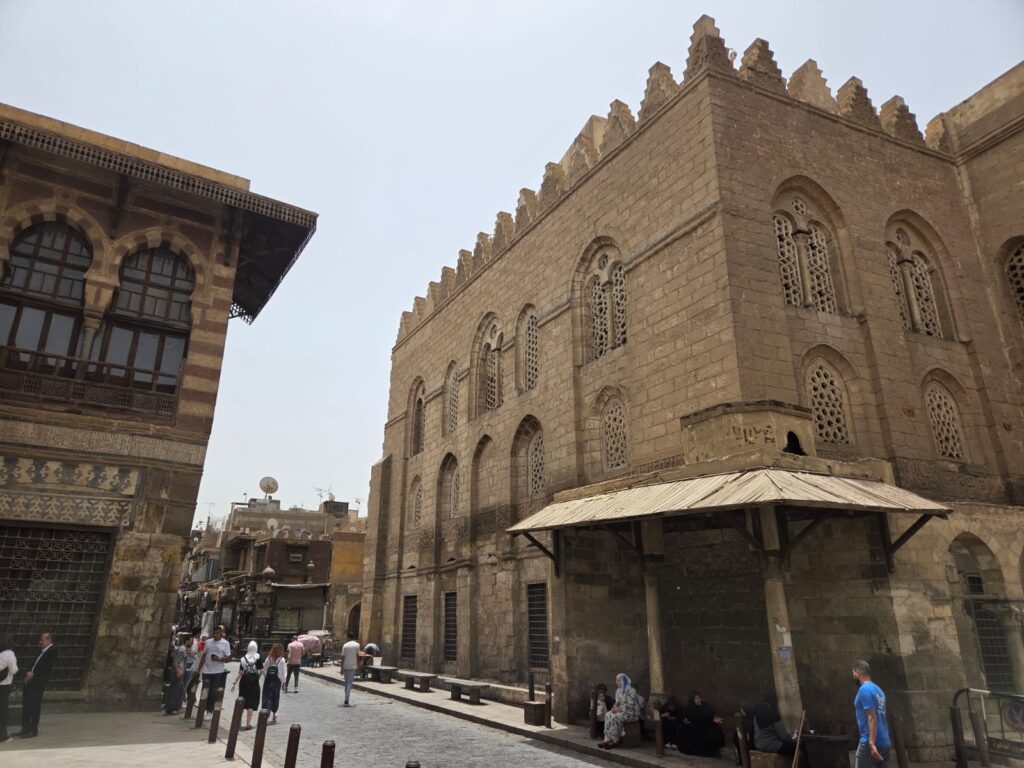
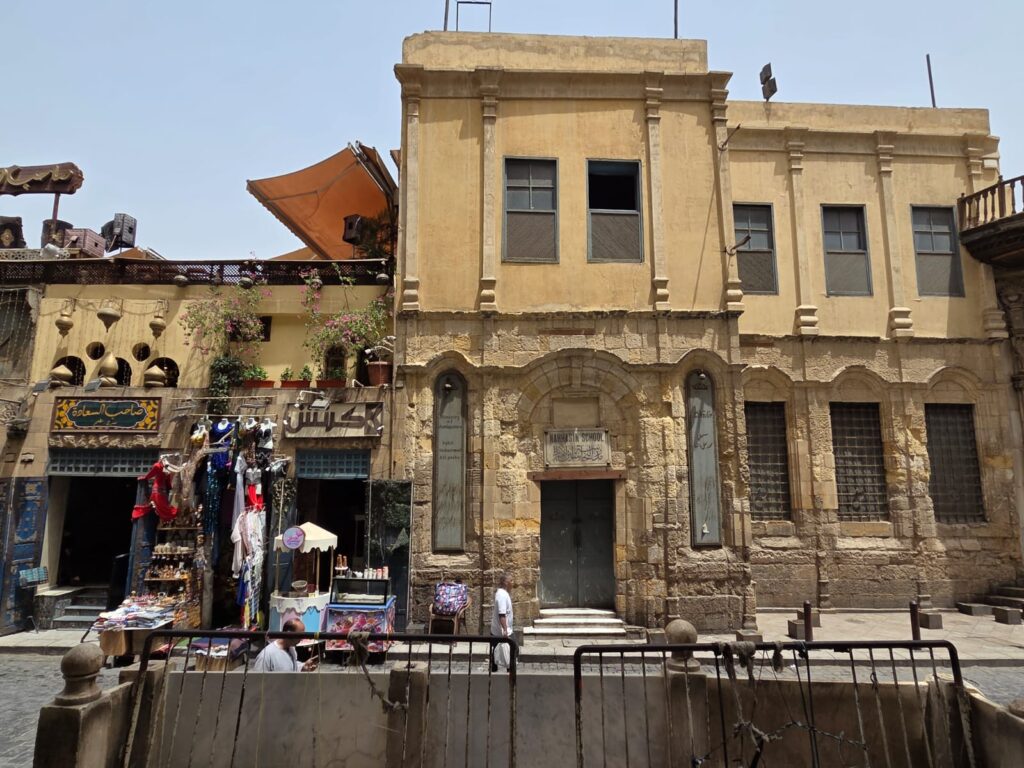
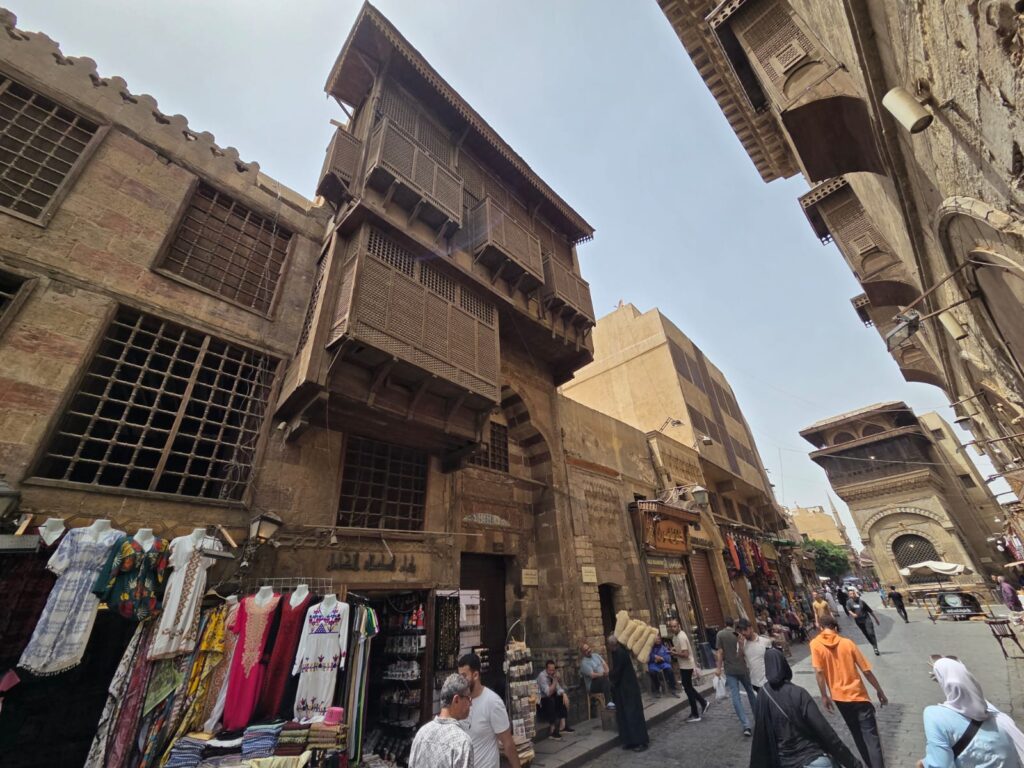
A Brief History of Al-Mu’izz Street
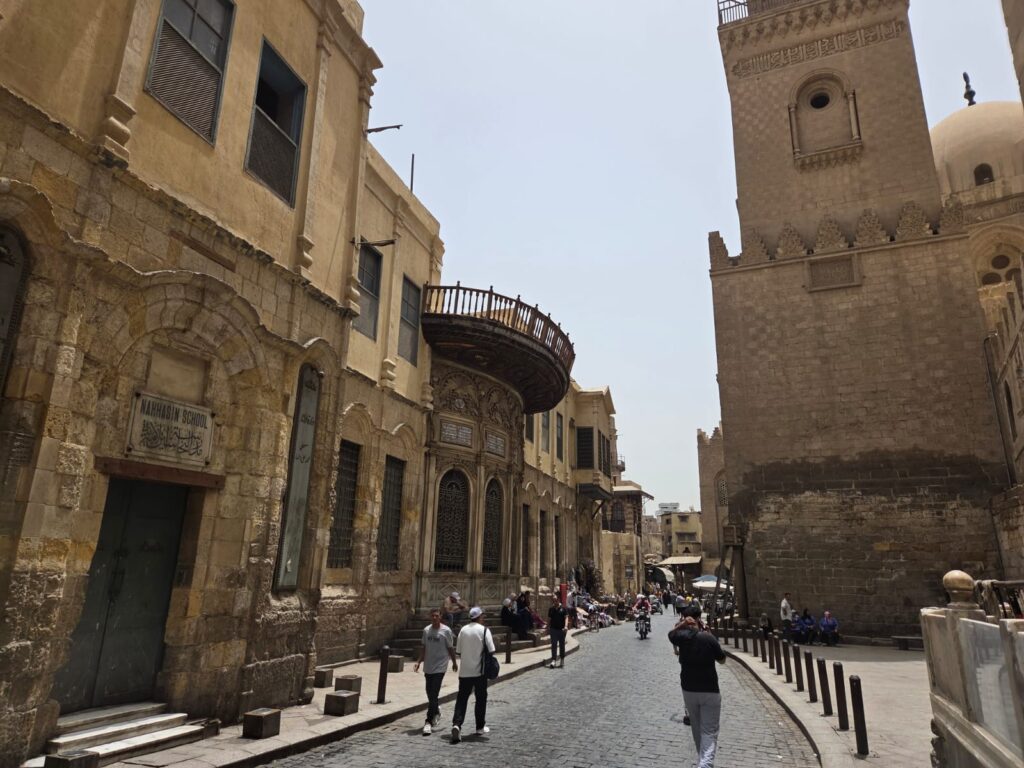
Al-Mu’izz Street (or Shāriʻ al-Muʻizz li-Dīn Allāh al-Fāṭimī, or شارع المعز لدين الله الفاطمي), is a stretch of about a kilometre within the historic walled city of Cairo. Historically it was referred to as the qasaba, a word with different meanings but here indicating the central city. The Fatimid Dynasty, who conquered Egypt in 969 CE, laid it out when they first founded Cairo. Both the street’s name and Cairo’s come from this period: al-Mu’izziyya al-Qaahirah, or the “Victorious City of al-Mu’izz”, later became “al-Qahira”. The street connects the 11th century city gates of Bab al-Futuh in the north and Bab Zuweila in the south.
Al-Mu’izz Street was the main artery of economic and religious life in Cairo. The city then had restricted access, open only to the caliph, the army, and people on state business. Post-Fatimid Dynasty, Cairo opened up to the common folk as well, and Al-Mu’izz Street transformed. Later rulers replaced Fatimid buildings, and the seat of power moved a short way away to the citadel. The street became more of a commercial one, with the Khan al-Khalili market off to one side. It was still quite a prestigious area, though, and attracted many mosques, madrassas, and mausoleums.
It is these sorts of buildings that we will visit today. Because we arrived from a strange starting point, we actually managed to miss the city gates and Khan al-Khalili entirely. Our experience of al-Mu’izz Street was almost entirely the ticketed sites open to the public. Given that this was our first taste of Cairo, we couldn’t wait to start exploring. Just a little note before we do, though. The attendants at each site (and everywhere else in Egypt) will happily give you a bit of extra attention. Explain important points to you. Give you a quick look behind the scenes. In exchange for a tip, of course. My advice is to go along with it. Resisting can create negative feeling where, if handled correctly, a quick personalised tour can be win-win. Keep some small bills handy, or otherwise be firm in wanting to look around independently.
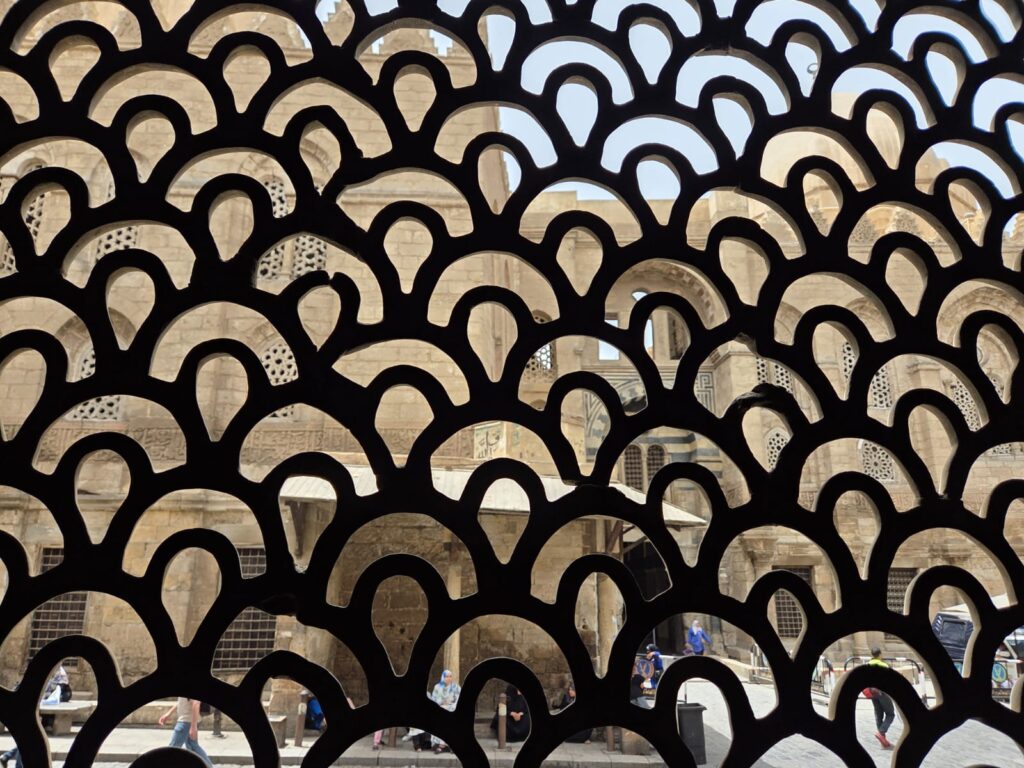
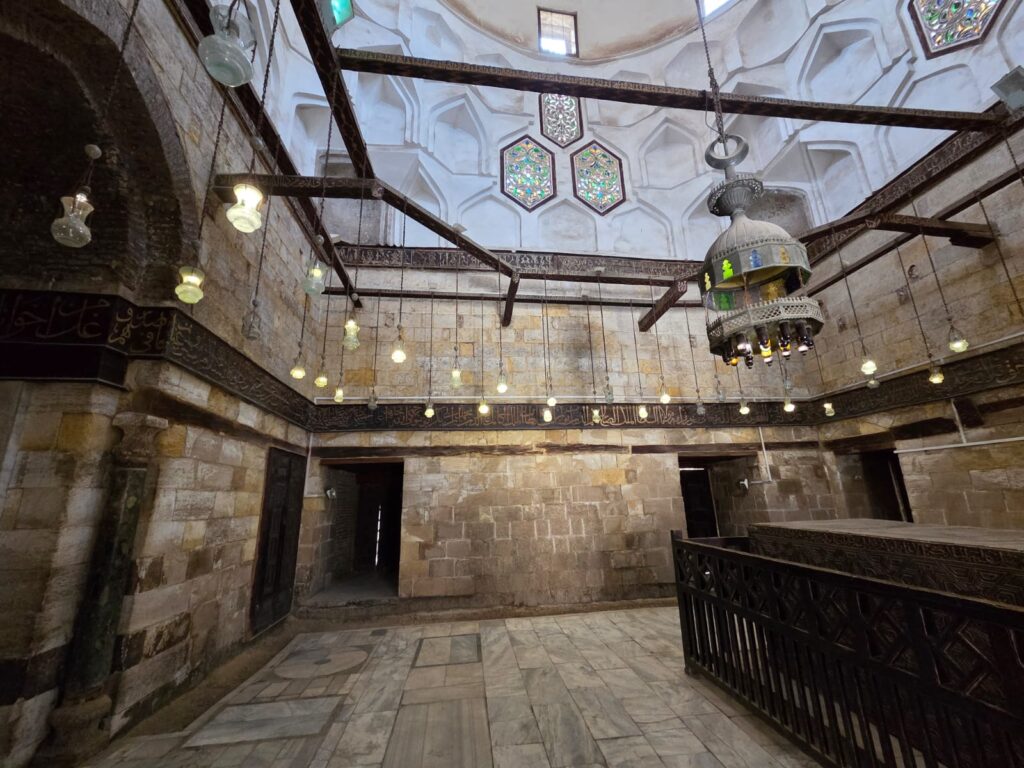
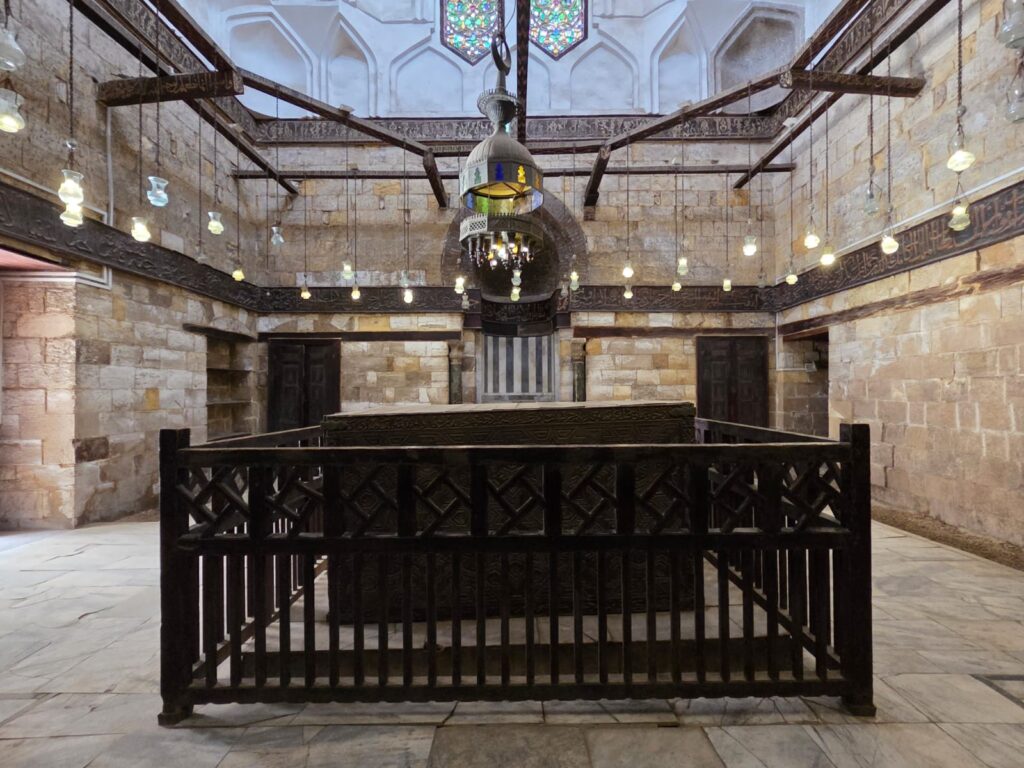
Madrasa and Mausoleum of Sultan as-Salih Nagm al-Din Ayyub
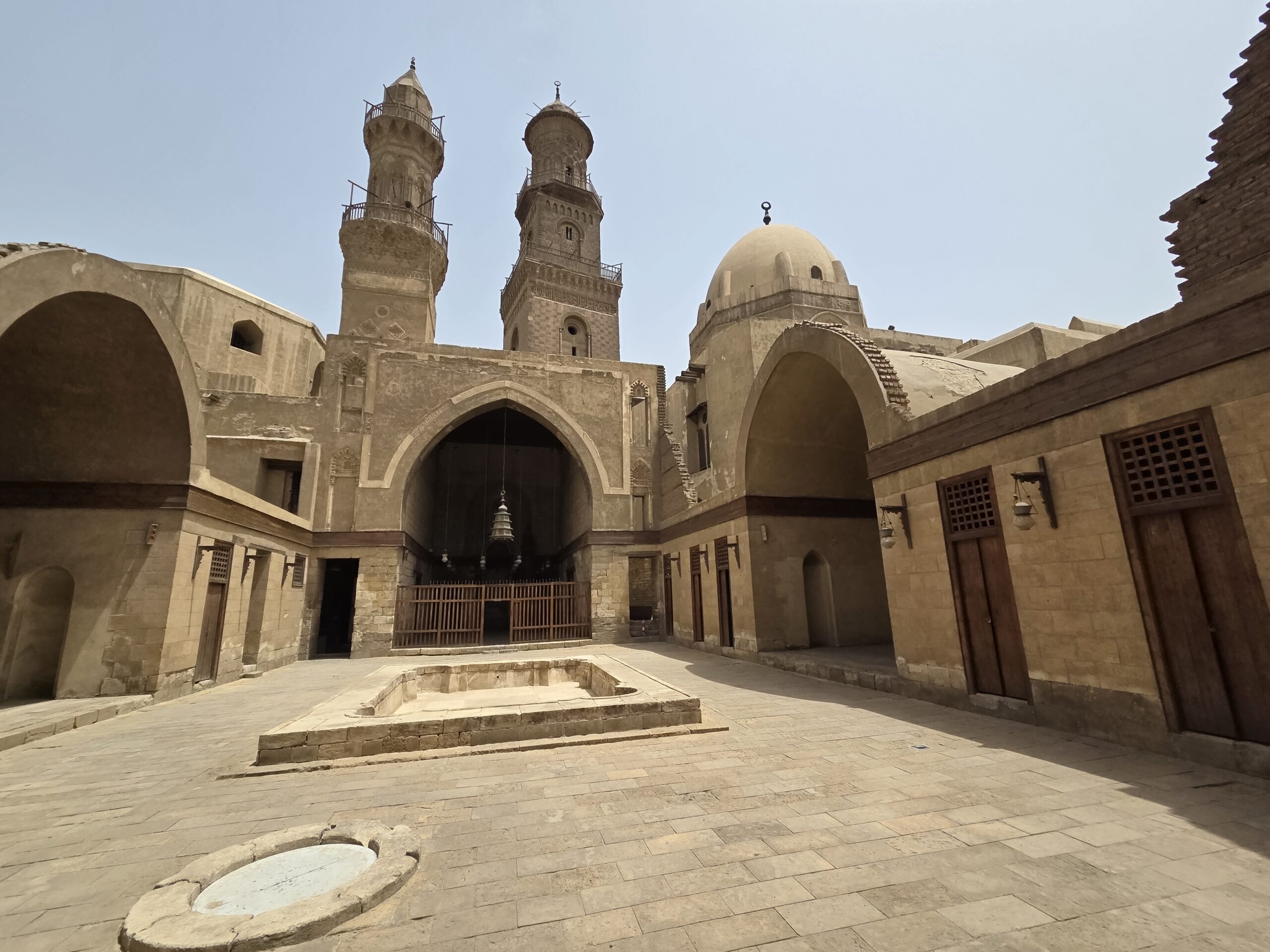
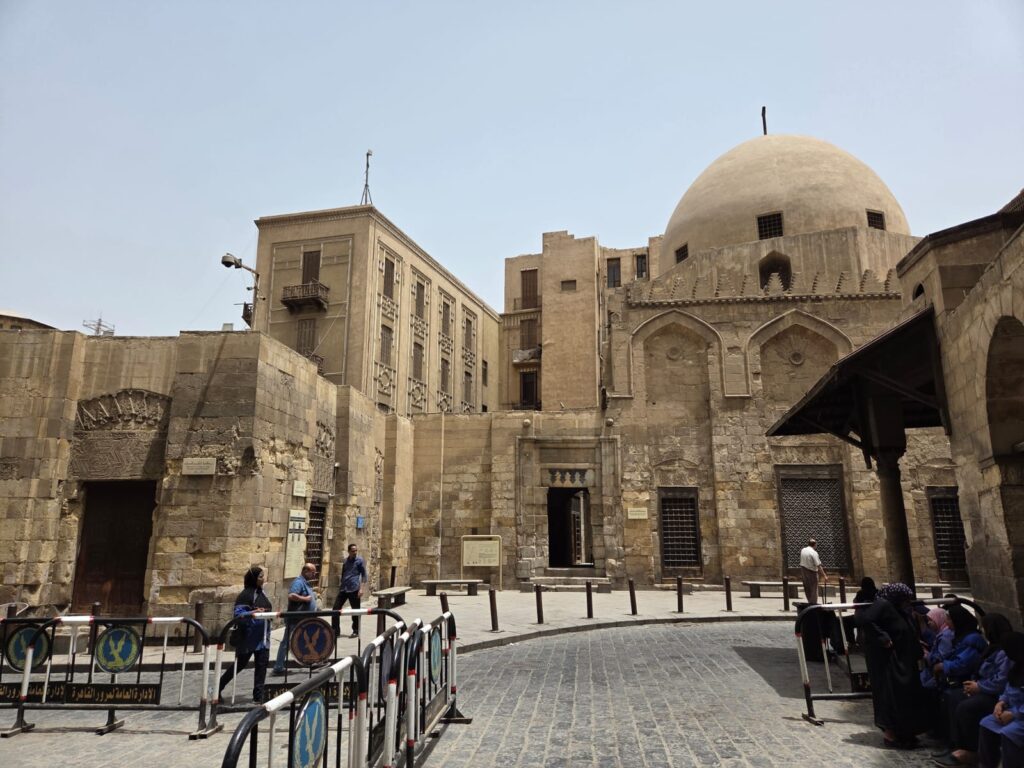
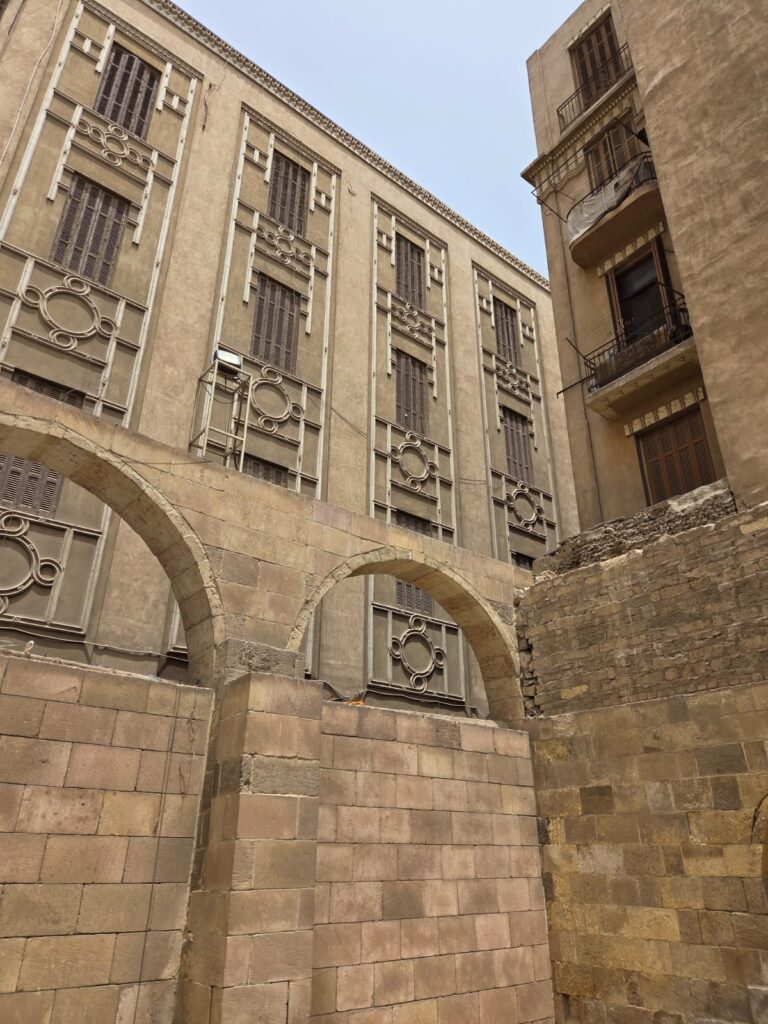
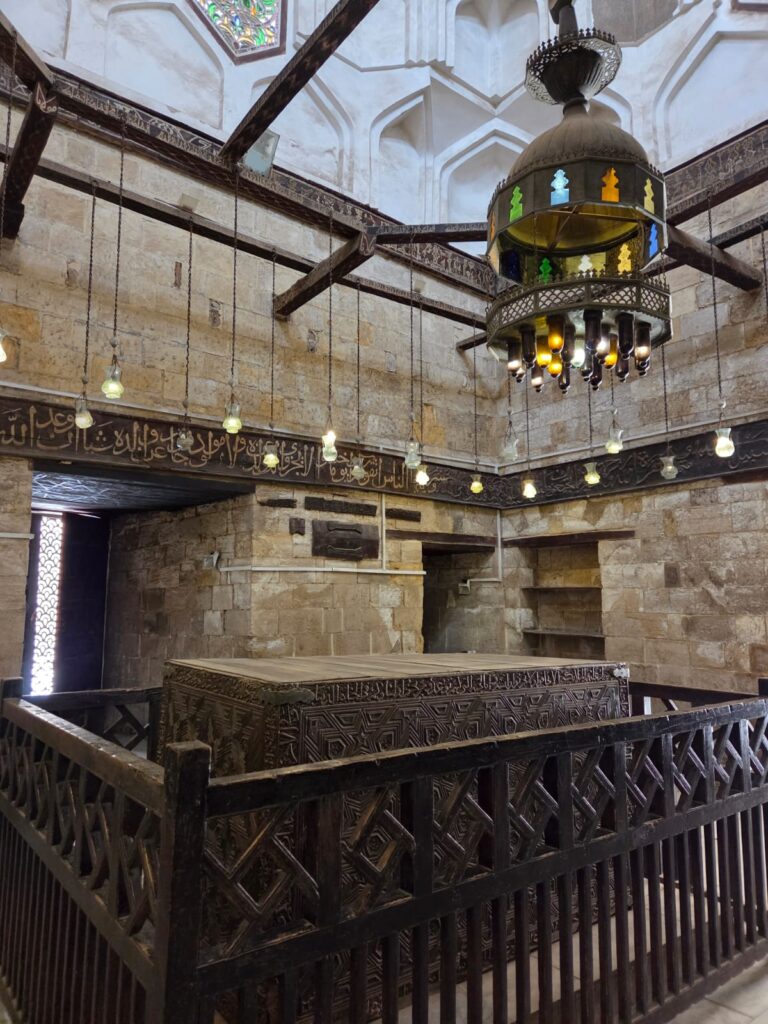
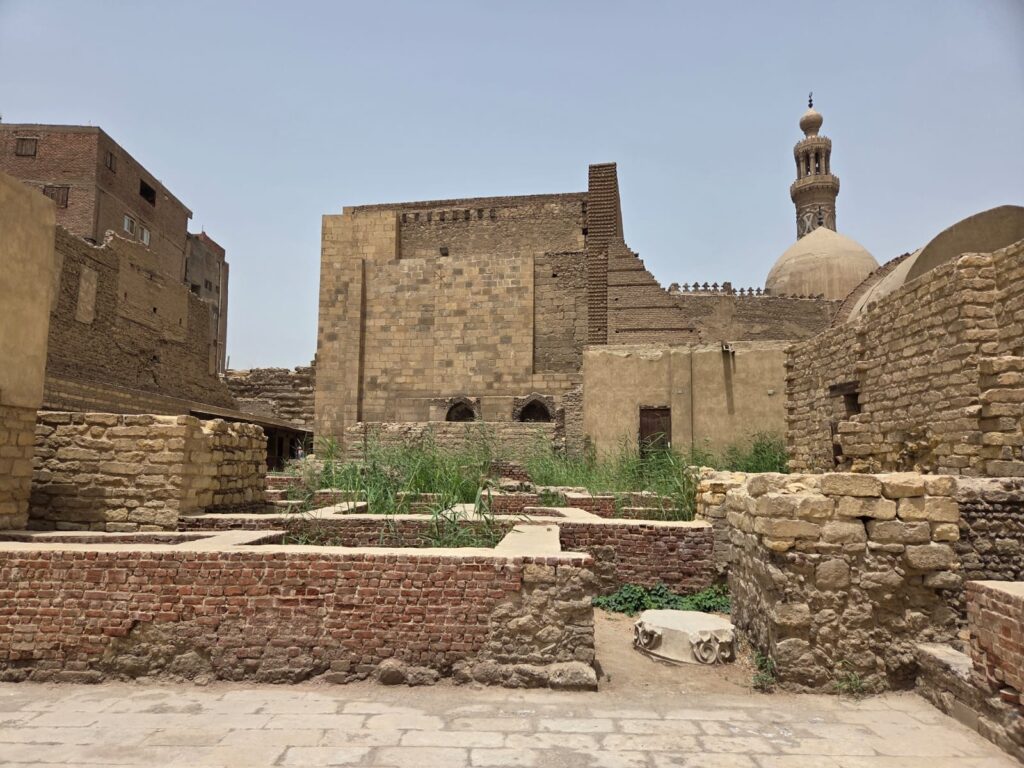
The first place we visited was the Salihiyya Madrasa, also called the Madrasa and Mausoleum of Sultan as-Salih Nagm al-Din Ayyub. Sultan as-Salih Ayyub was part of the Ayyubid Dynasty in Egypt (and surrounding areas), founded by Saladin in the 12th century. As-Salih Ayyub founded the madrasa in 1242, and his widow added the mausoleum to it on his death in 1249.
The madrasa was an important centre of Islamic learning in the 13th and 14th centuries. This was the first madrasa in Cairo to teach all four of Sunni Islam’s madhabs (schools of law). Two schools of law were taught in the north wing, and two in the south. The madrasa also trained Sunni judges or jurisprudence experts. The adding of the mausoleum to the madrasa established a tradition of burying patrons in the religious institutions they founded, as we will see as we continue along al-Mu’izz Street
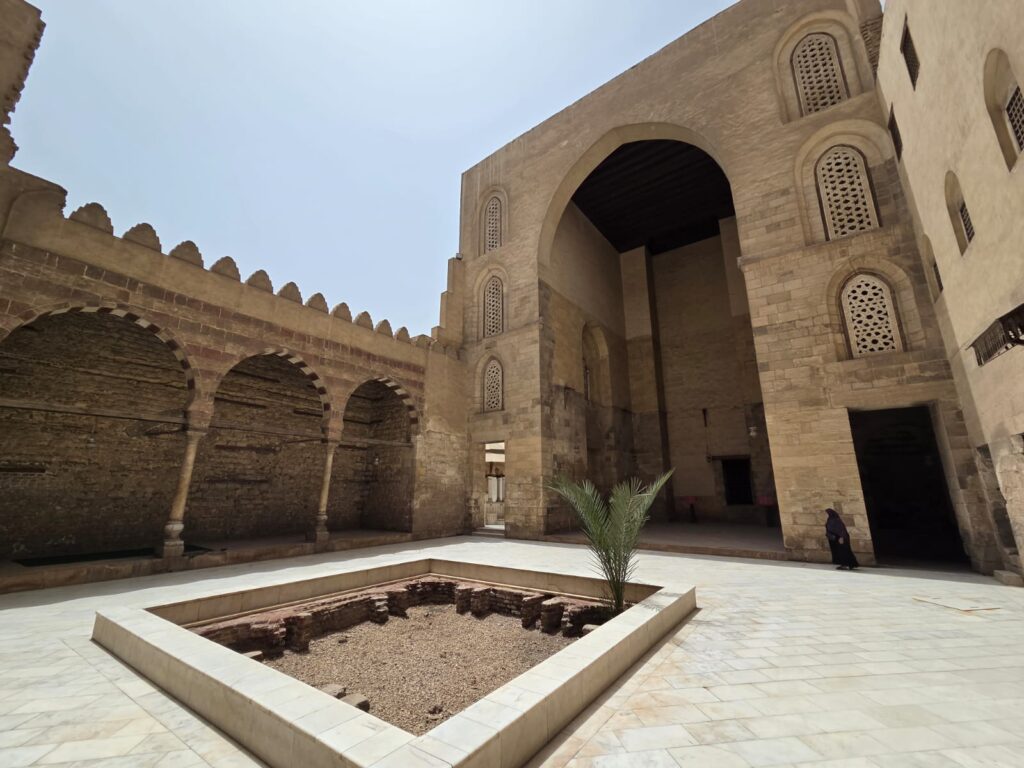
Not all of the madrasa survives today. It was abandoned following the Ottoman conquest of Egypt in the 16th century. But what we have is very interesting. Originally, the two wings, each consisting of two floors around open inner courts, had a public passageway between them. The wings were a combination of student housing and teaching spaces (iwans). Iwans have their architectural roots in pre-Islamic Persia, and this is the oldest example of the style in Egypt. The complex has lost its southern wing and most of the northern wing.
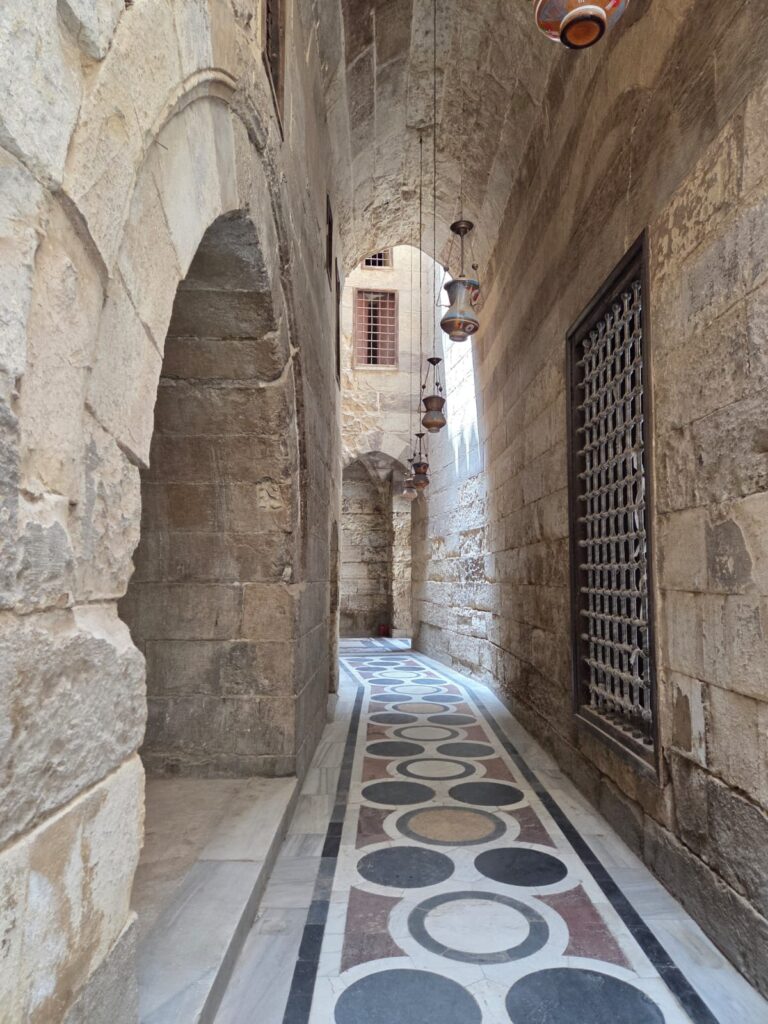
The madrasa today is fairly plain at eye level, with more architectural detailing overhead in the domed roof. The centrally-placed, rectangular mausoleum reminded me of Mughal examples I’ve seen in India, for example at the Taj Mahal and Tomb of I’timād-ud-Daulah. The attendants here didn’t have too many hidden corners to show us, apart from looking out a door to one side. Nonetheless, our exploration of Islamic architecture was off to a good start!
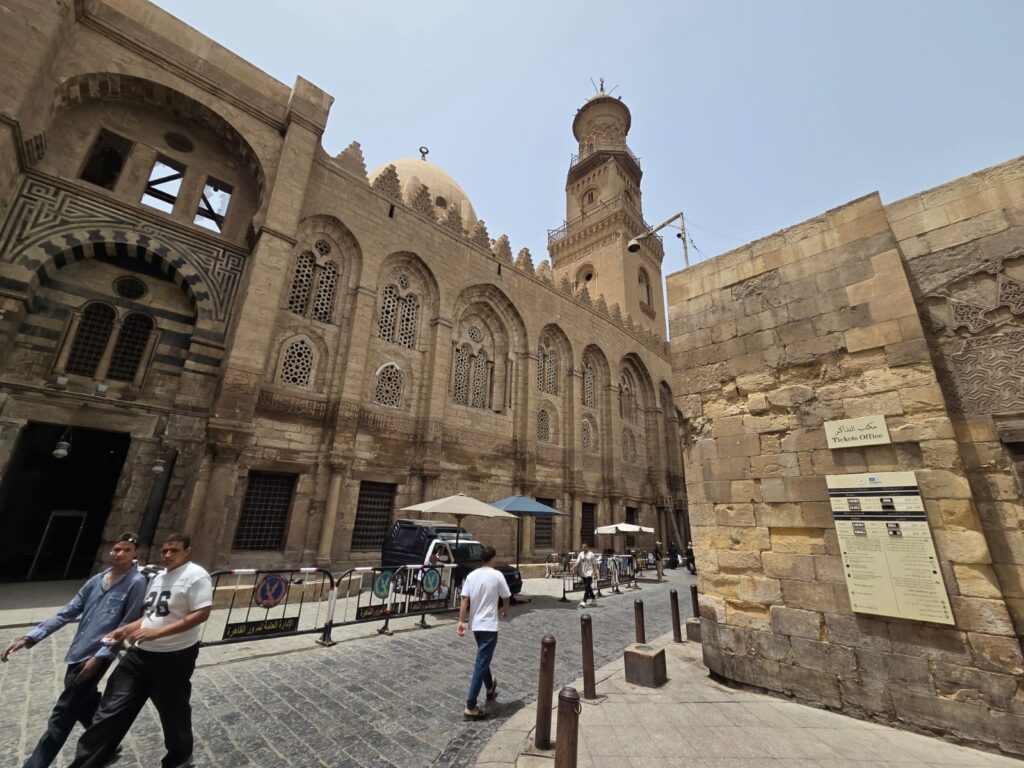
Qalawun Complex
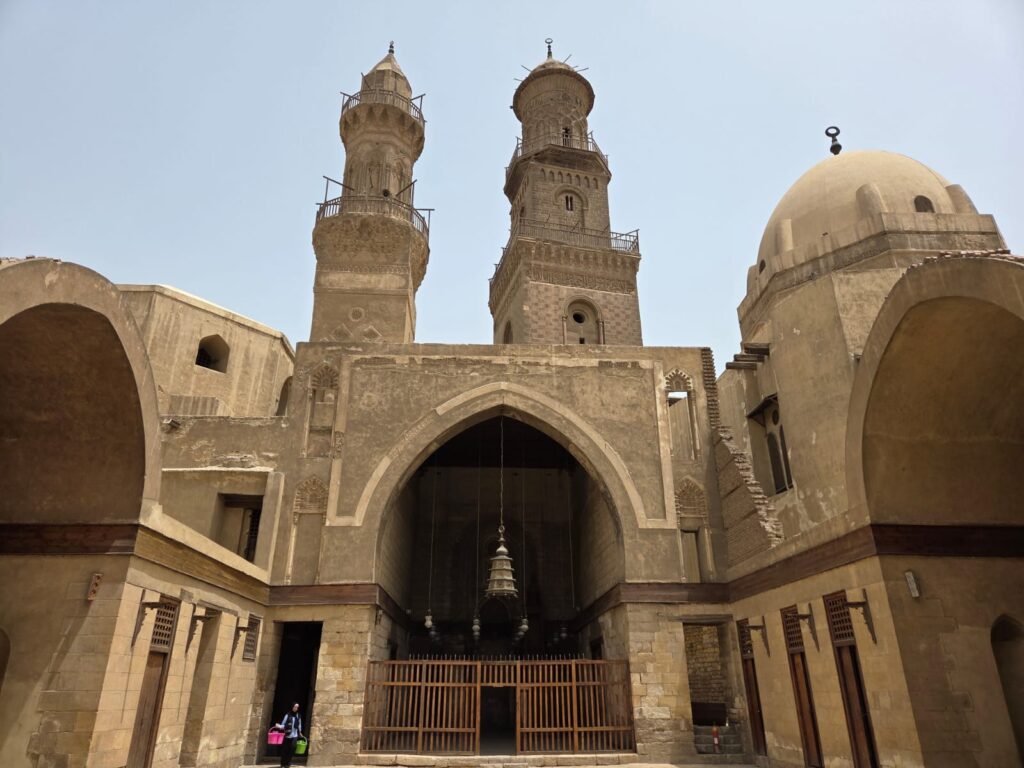
The Qalawun Complex is a much bigger affair than our first stop. In fact, it is one of the major monuments of Mamluk architecture and Islamic Cairo. The Mamluks were young Turkic, Circassian, or Caucasian boys who were enslaved, converted to Islam, and trained as elite soldiers. They overthrew the Ayyubids in 1250. Just goes to show that if you rely too heavily on an elite army of enslaved soldiers, the outcome may not be what you’d hoped for.
Anyway, Sultan al-Mansur Qalawun founded the Qalawun Complex around 1284/5. More of this complex remains than the Salihiyya Madrasa, and it includes a madrasa, mausoleum, mosque, and hospital. In fact its descendant, the modern Qalawoon Eye Hospital, is still right next door in a nice bit of historical continuity. A simple fence separates tourists popping out into one of the courtyards from working doctors and patients.
The Qalawun Complex was built over the ruins of the Fatimid Western Palace (the Fatimids being yet another dynasty to have ruled here). Like the madrasa we’ve seen already, it only fell out of use after the Ottomans arrived. The Mamluks rather liked these multi-functional pious complexes, which often centred on the tomb of a religious figure or patron. On this occasion, the construction of the whole thing took about 13 months. It was a controversial project, though, with reports of forced labour and illegal evictions.
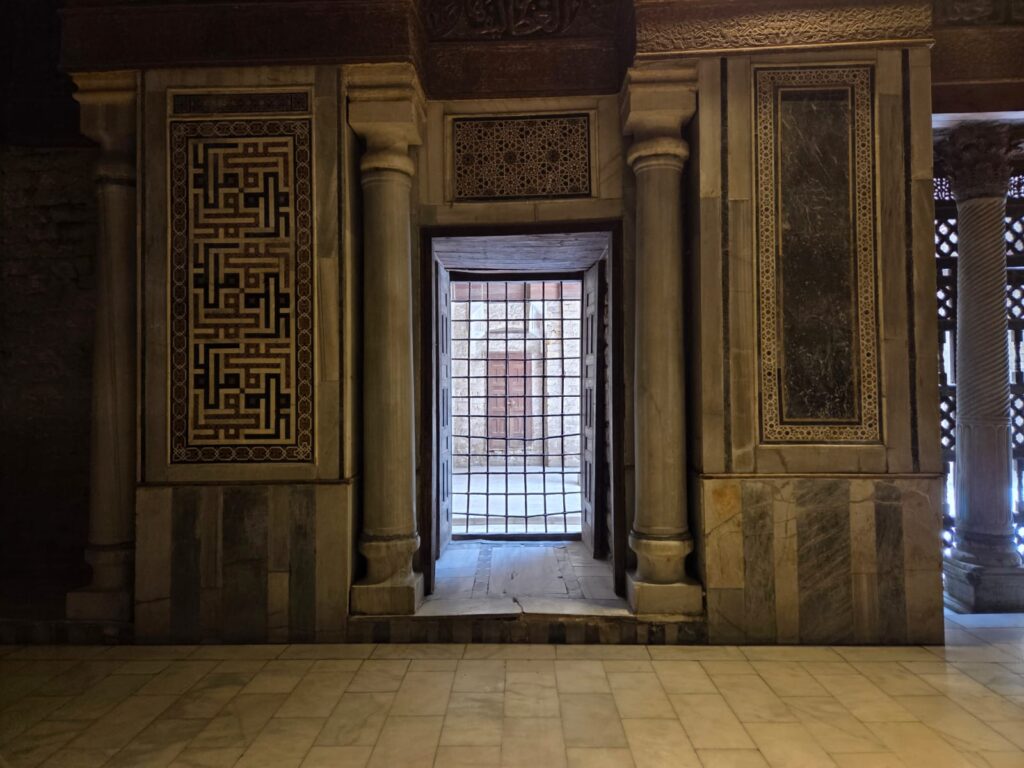
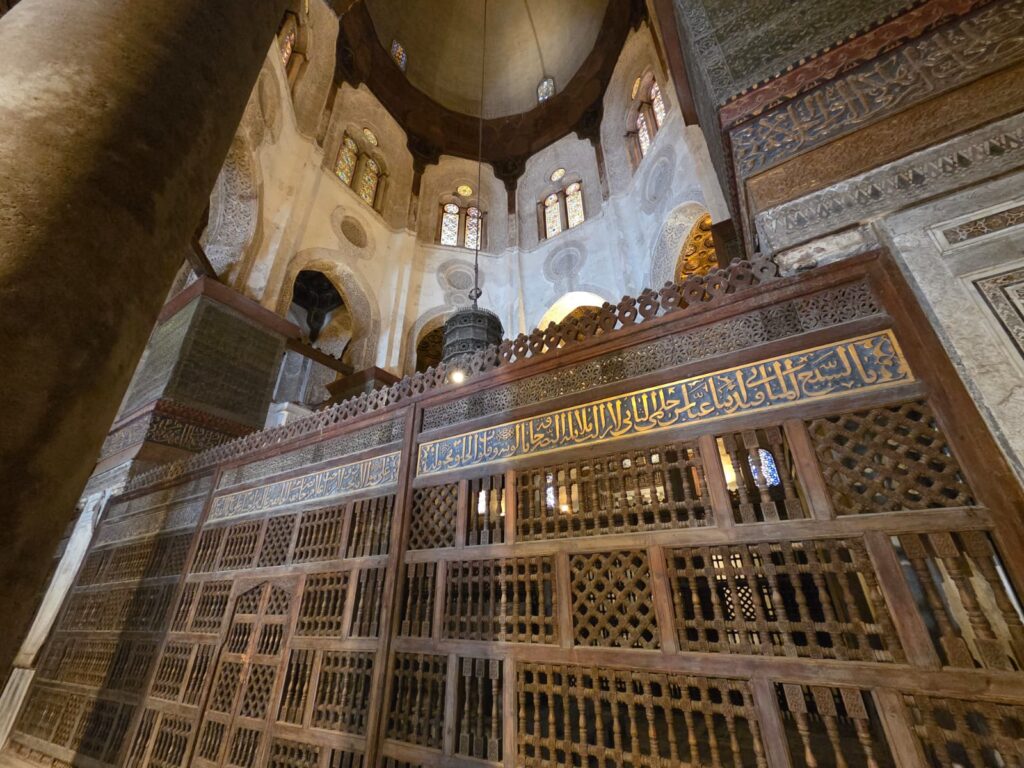
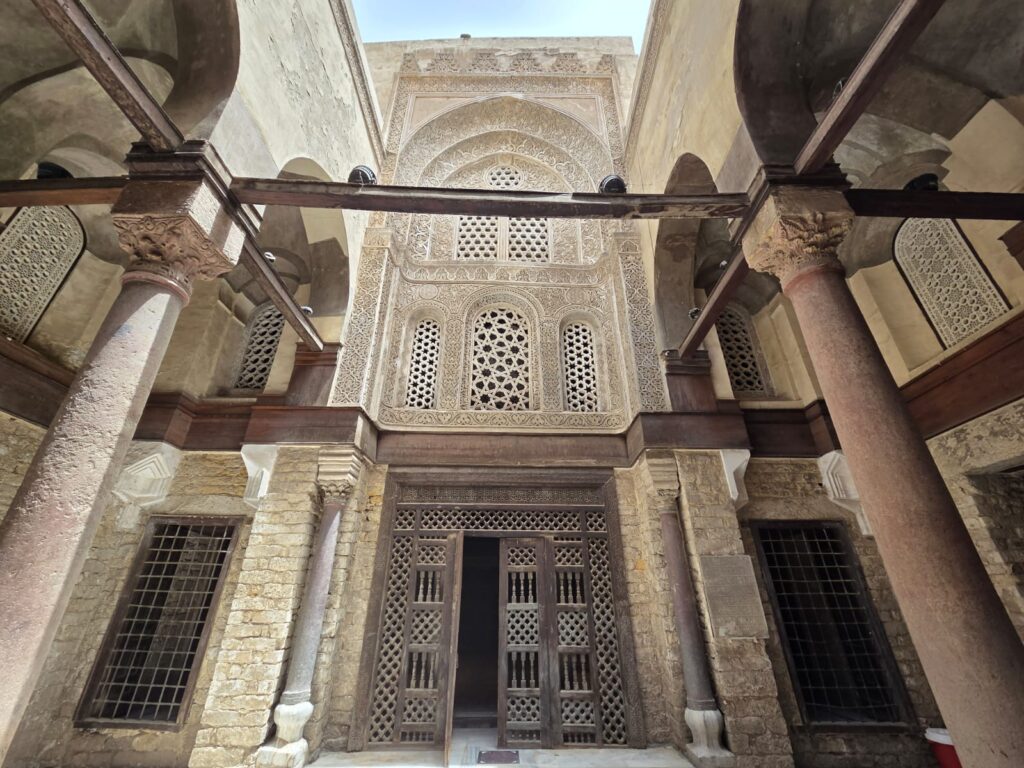
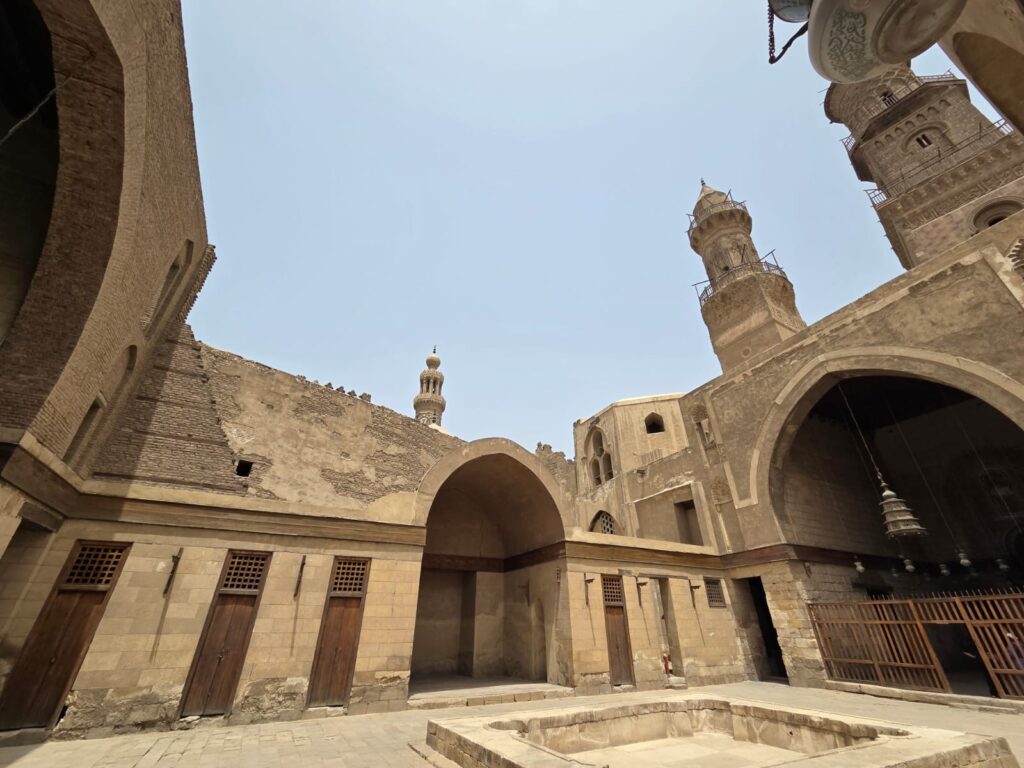
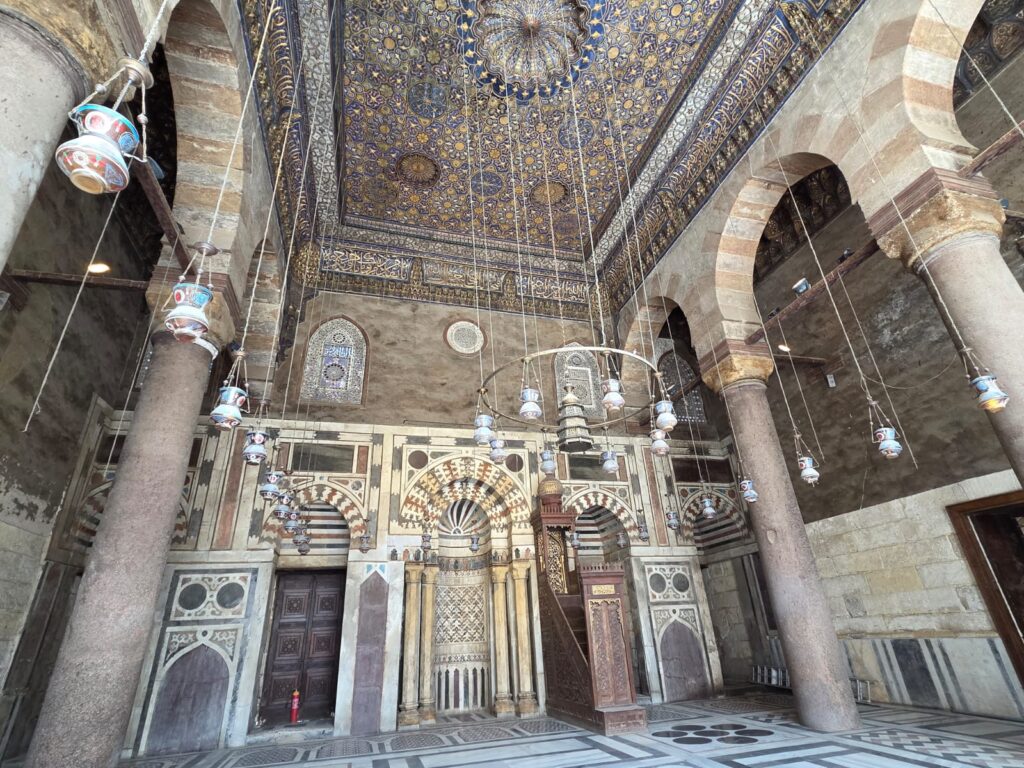
Despite this dubious start, the Qalawun Complex was one of the most beautiful buildings of its time. It’s arranged along a long corridor. The madrasa again has four iwans, and a central open court with a pool. The mausoleum is on the street side, and the hospital tucked away at the back. Unique features in Mamluk architecture include the madrasa’s prayer hall projecting into the street, and papyrus designs in the minaret (hearkening back to the Pharaohs and providing a bit of legitimacy). The façade has similarities to Gothic or Crusader designs. The interior has rich decoration of marble, stucco and gilding. The hospital was one of the most impressive of its time, and functioned all the way until 1910, providing shelter, food and clothing as well as medical care.
The Qalawun Complex is fascinating, and is definitely worth having someone show you around so you can understand the different constituent parts. Take your time enjoying the lavish internal decoration.
Madrasa of Sultan al-Nasir Muhammed ibn Qalawun
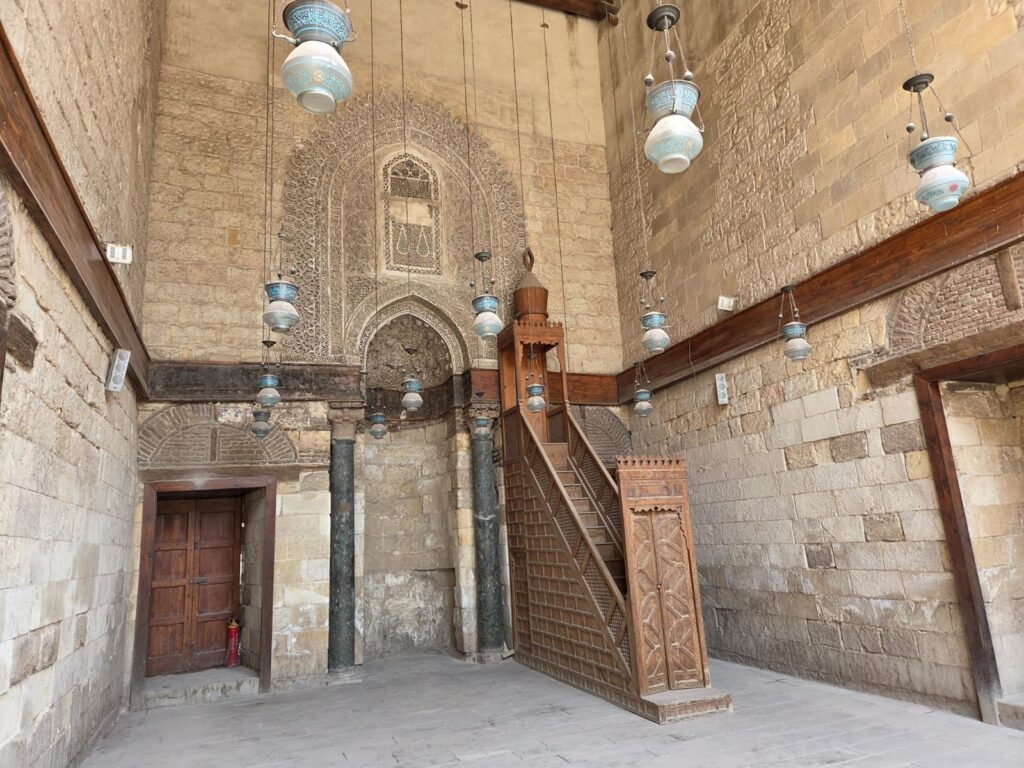
Another madrasa and mausoleum now, this time the Madrasa of Sultan al-Nasir Muhammed ibn Qalawun. This particular Sultan (the 9th Mamluk sultan) had three different reigns, and claims this complex despite the fact that it was Sultan al-Adil Kitbugha, in an interim period, who started construction. It was completed in 1303, and was one of many public works associated with al-Nasir Muhammed.
As the three reigns might indicate, this was a bit of a volatile period. As a result, al-Nasir Muhammed, concerned about conflict after his death, was not buried here and was instead buried in secret in his father’s mausoleum in the Qalawun Complex. It’s still a mausoleum, though, as it’s the burial site of his mother and his son.
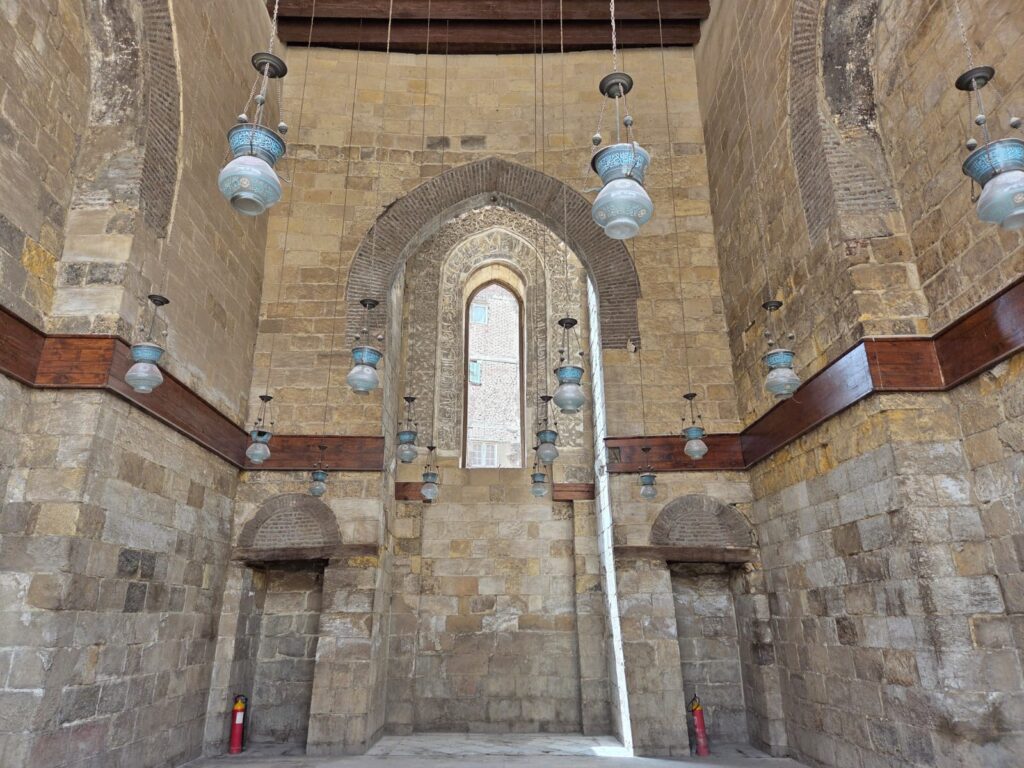
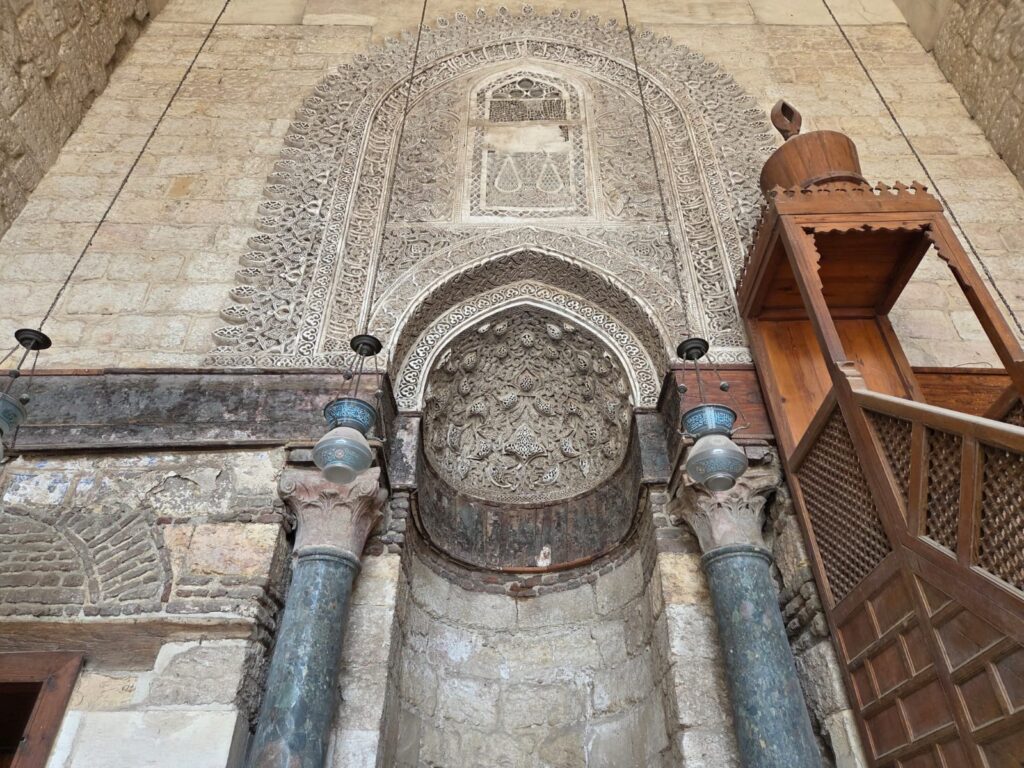
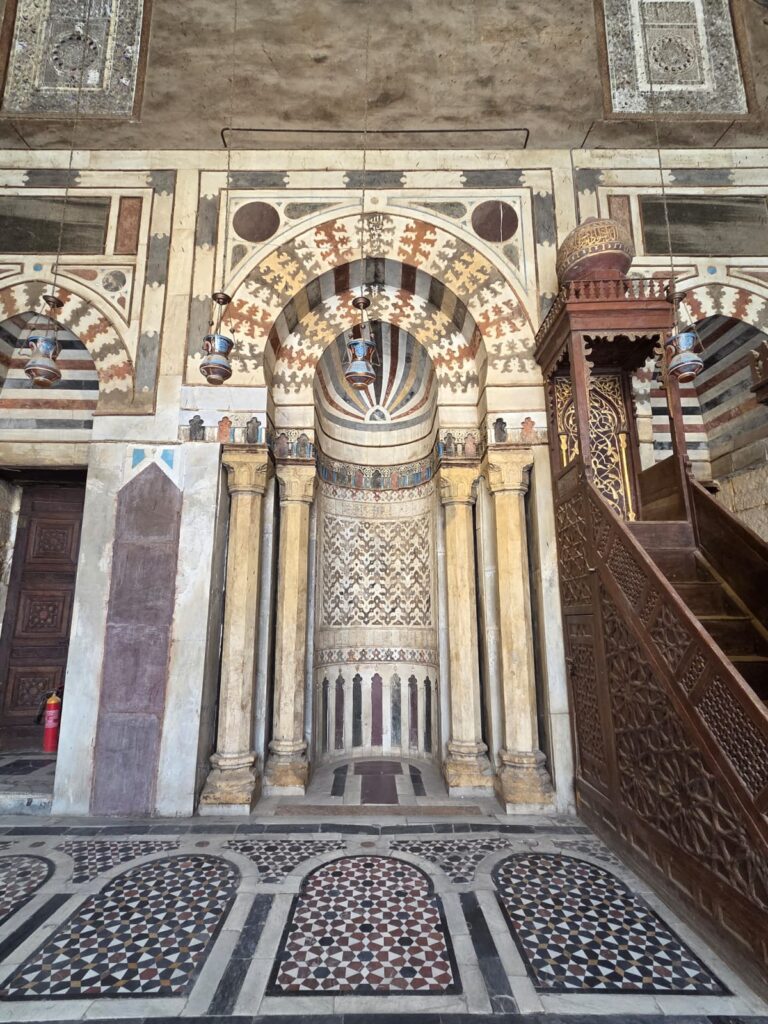
The madrasa has a rare stucco mihrab (prayer niche). If you choose to let someone show you around, they may well demonstrate its impressive acoustics. The design suggests it may have been the work of artisans from outside Egypt, for instance modern Iran. Unfortunately, not much original decoration other than the mihrab remains, and the roof of the dome also collapsed in the 19th century.
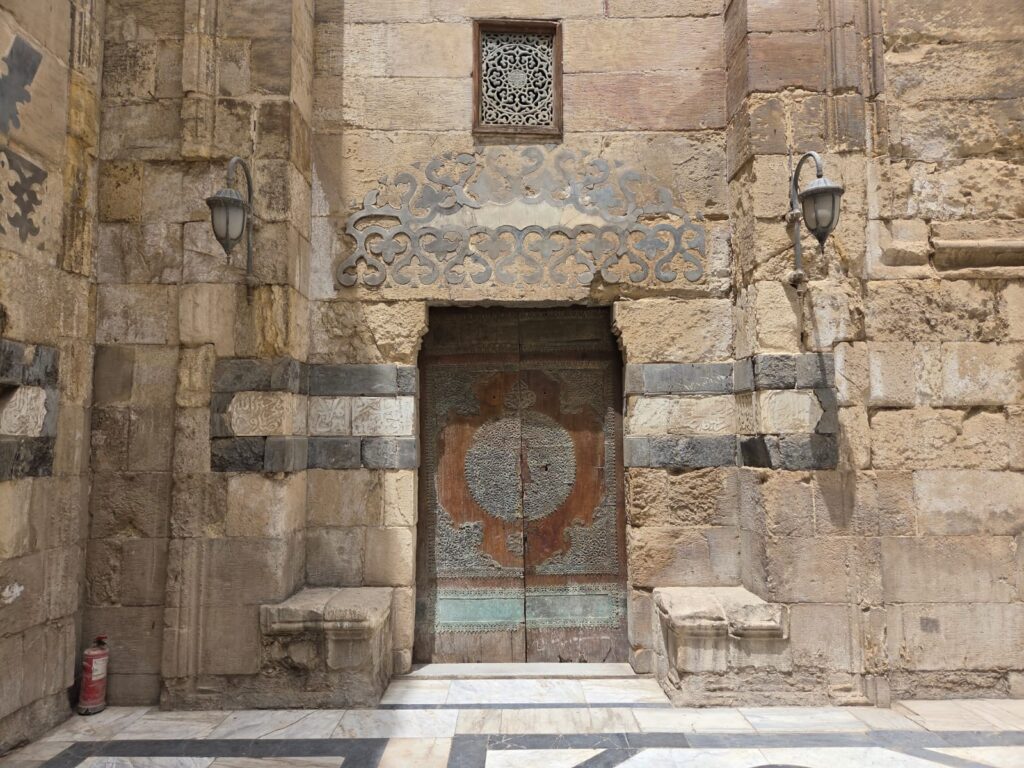
One thing to look out for is the complex’s gothic marble portal, reused from a church in Acre after a Mamluk victory against the Crusaders. Unfortunately I didn’t take a photo of it so you’ll have to go see it for yourself. It’s also unusual architecturally in that the minaret is directly above the portal. In Mamluk architecture it was more common to see minarets with their own buttresses to ensure stability.
Madrasa and Khanqa of Sultan Barquq
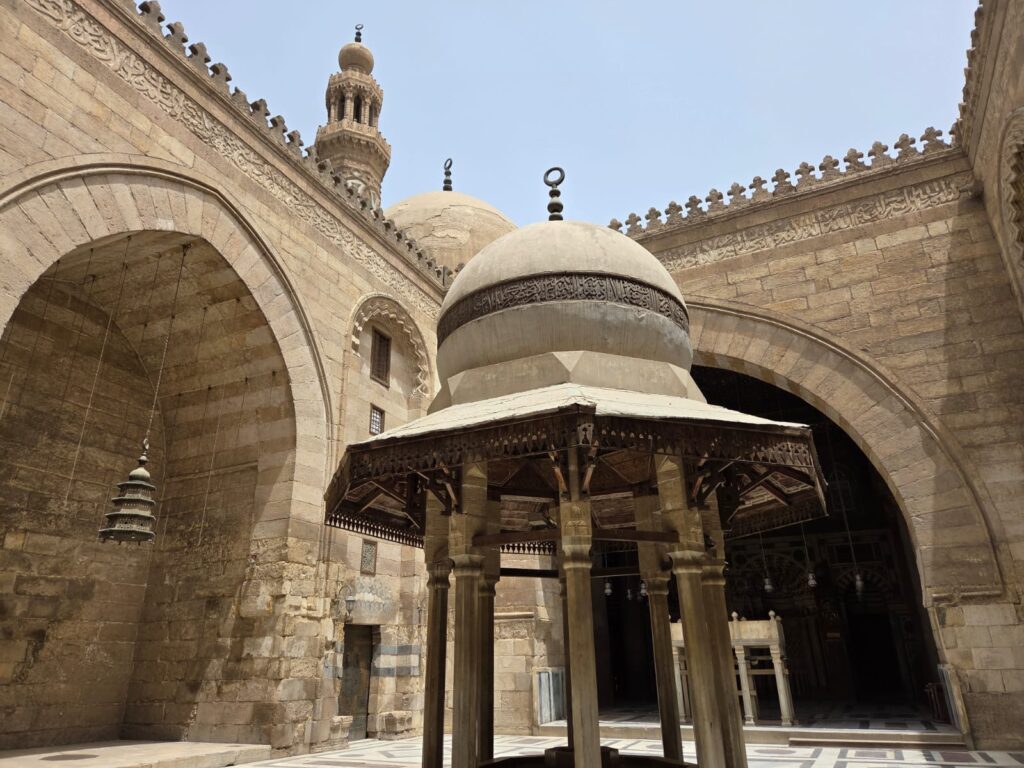
Right, this is our last madrasa for today’s post. It has a mausoleum (what else would we expect at this point?), but this time the complex also includes a mosque, and a khanqah (Sufi hospice). It dates to between 1384 and 1386. The mausoleum doesn’t actually contain Sultan Barquq’s remains, as he was buried elsewhere. He had his father’s remains moved here instead, and one of his daughters is buried here.
Barquq was an interesting chap, an enslaved Circassian (currently Russia – in the North Caucasus/on the Black Sea) purchased by an emir who ruled Cairo on behalf of Sultan Sha’ban. He became influential, and seized upon unrest following the sultan’s death to claim the throne. He then recruited other Circassians, who pretty much dominated the Sultanate until the arrival of the Ottomans.
Barquq built his complex in the most prestigious part of Cairo at the time, necessitating the destruction of earlier buildings like a khan (caravanserai). Unsurprisingly given his Circassian origins, it is architecturally consistent with other Mamluk buildings. Reportedly, he only used paid workers rather than press-ganging people into construction as many of his predecessors did.
The design of this complex was intended to maximise its prominence along this already prominent street – through a dominant minaret and dome, for instance, and a projecting façade. A lot more of the original decoration survives than in some other complexes. You’ll notice a lot of multi-coloured marble, coloured glass, and panelling. The fountain in the courtyard is later – a 19th century addition – but may be a replacement for something earlier. The section at the back which was student housing is in ruins. The same people rebuilt the wooden dome in brick.
Hammam Inal
After all those madrasa/mausoleum (and more) complexes, it was nice to go somewhere a bit different for my fifth stop! This is the hammam that I tried to get into in the first place, when we arrived from the wrong side and didn’t have tickets yet. They seemed pleased to see me back again.
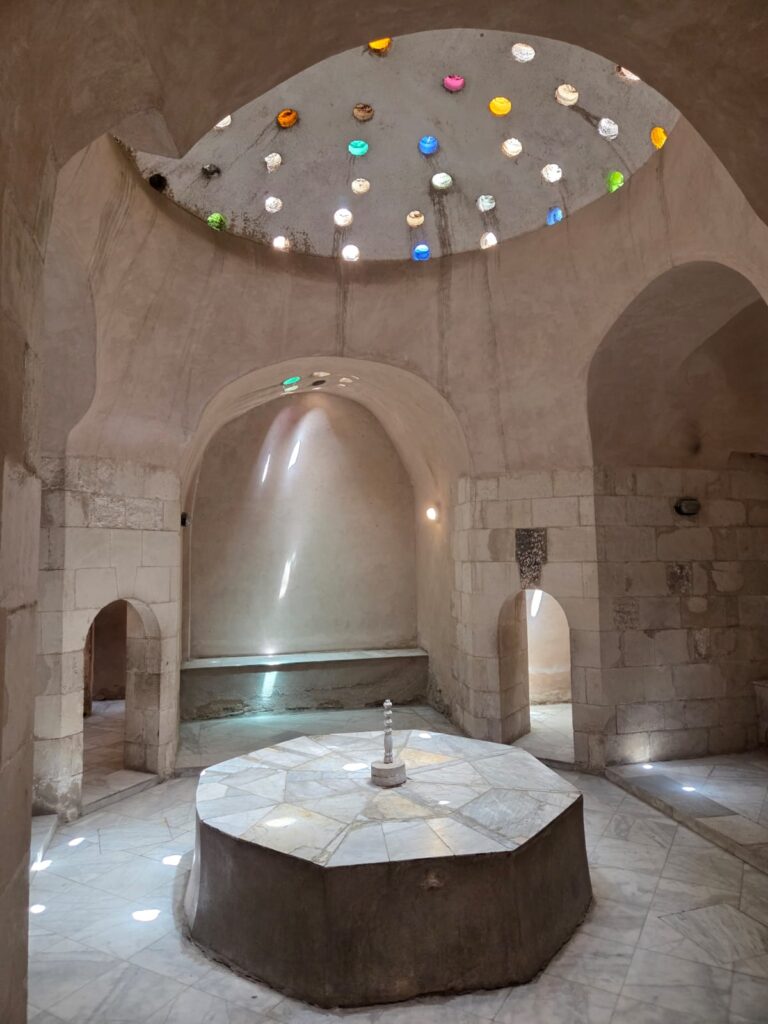
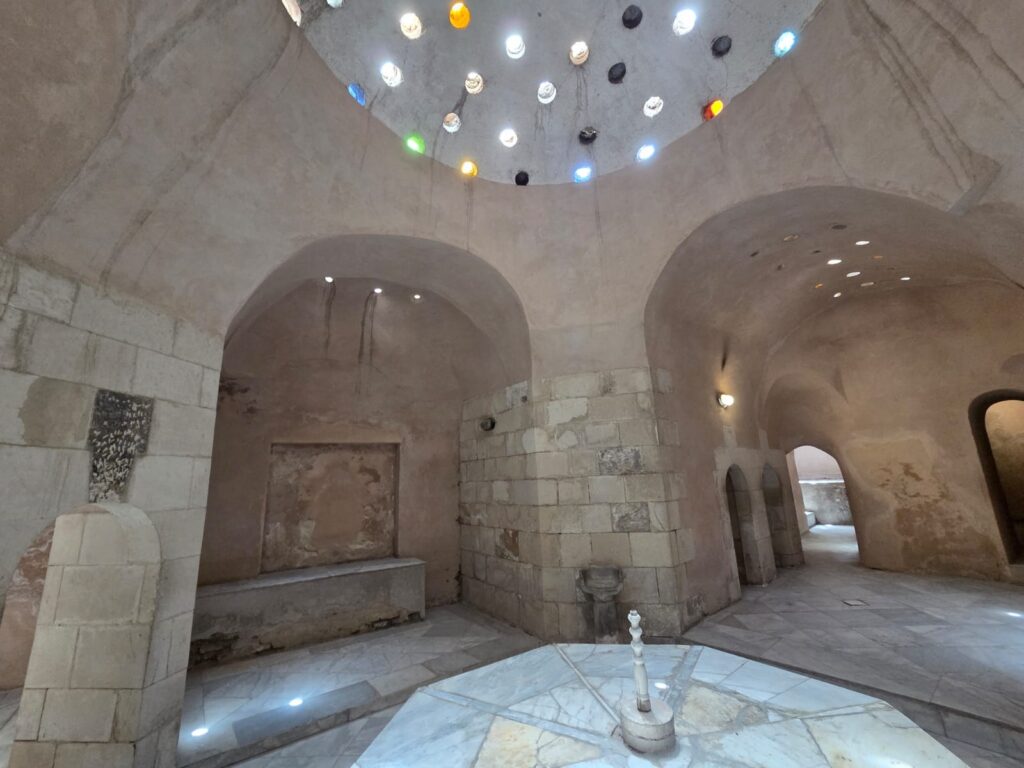
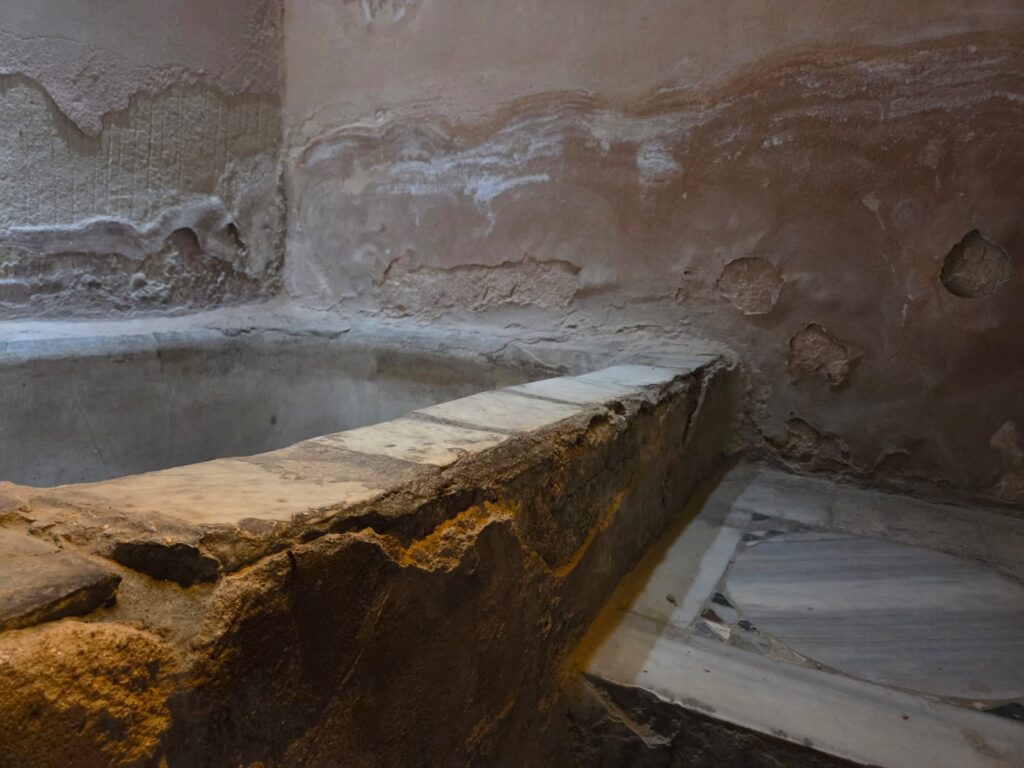
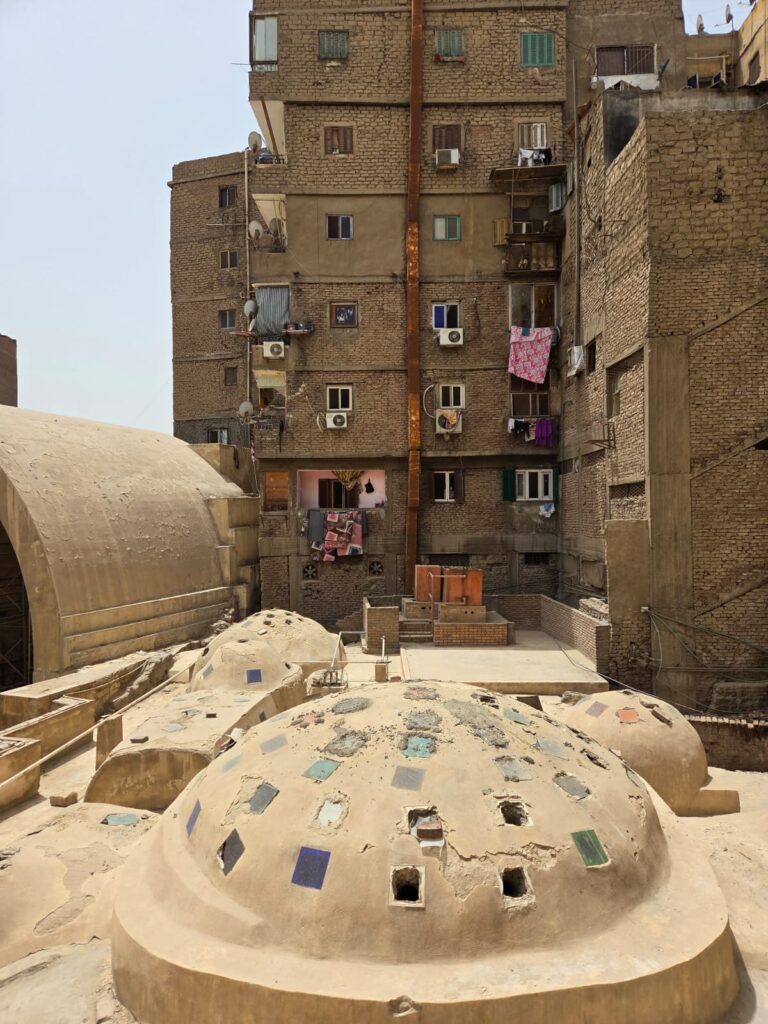
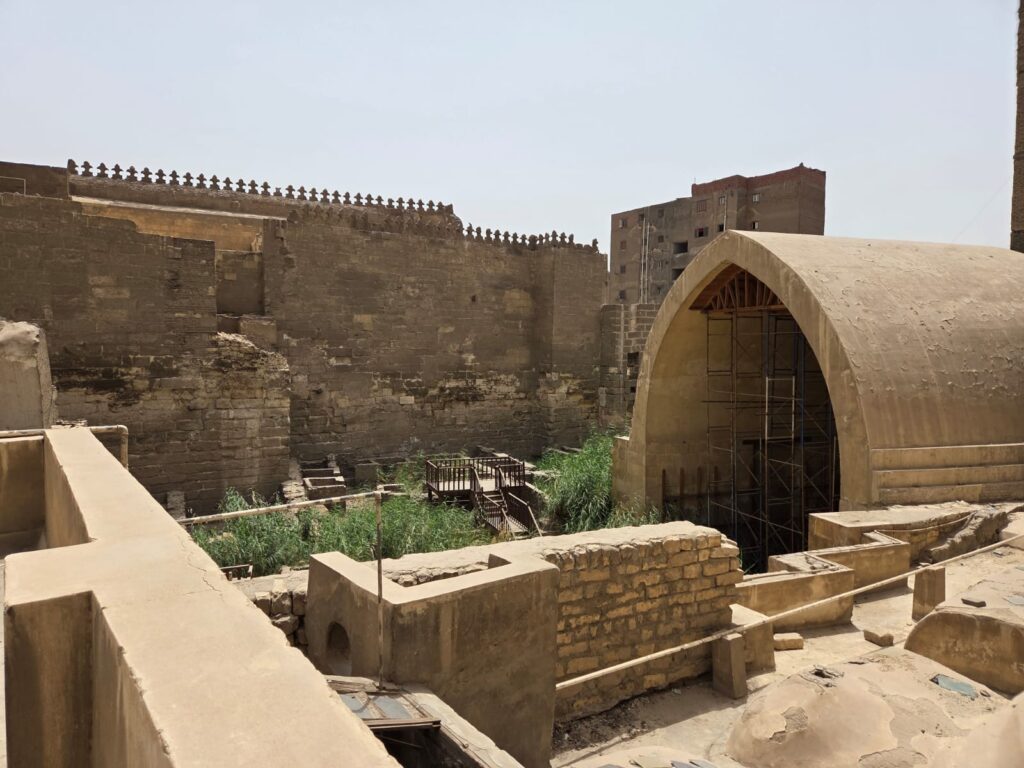
The Hammam of Sultan Inal is one of very few well-preserved historic hammams in Cairo. At the end of the 19th century, there were around 80. It’s recently undergone extensive renovations to open as a visitor attraction. The hammam itself is reasonably basic – a first galleried space (changing rooms etc.), lots of marble, baths still with water in. But as you know I was fully embracing the ‘added attractions for a modest fee’ model, which took me up to the roof. You get a good view of the surrounding buildings from up there, as well as the domes with their coloured glass.
Sultan Inal was another sultan of Circassian origins, during the Mamluk period. He ruled between 1453–1461, and built this hammam around 1456. His reign was marked by unrest, and the “severe absence of restraint among the roughly 1,000 mamluks under his direct authority”, according to Wikipedia.
Like most hammams, this one was an important social institution. Water came from a well, and passed by a furnace at the back of the building for heating. It then came back to different parts of the hammam through pottery pipes and metal spouts.
Palace of Beshtak
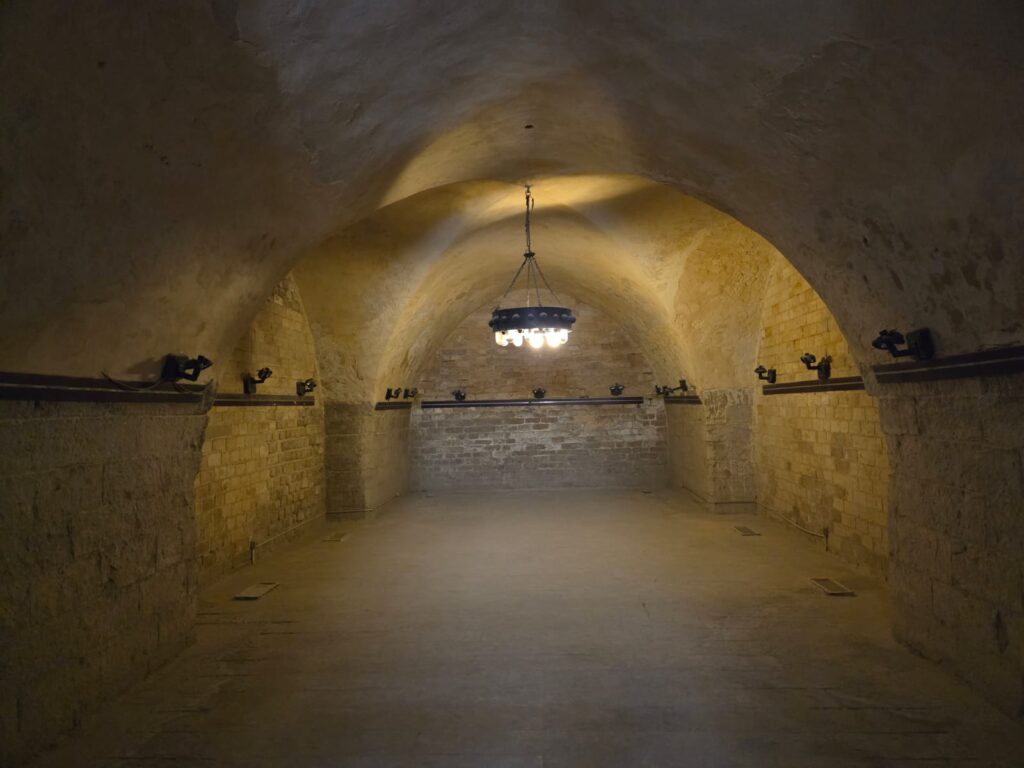
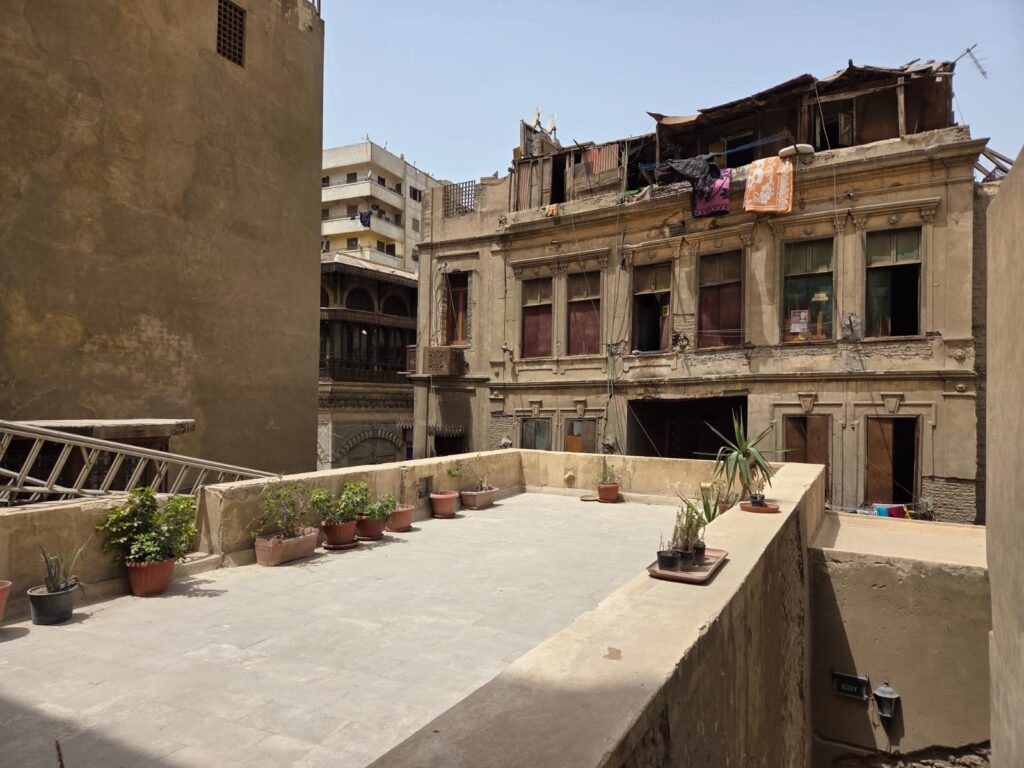
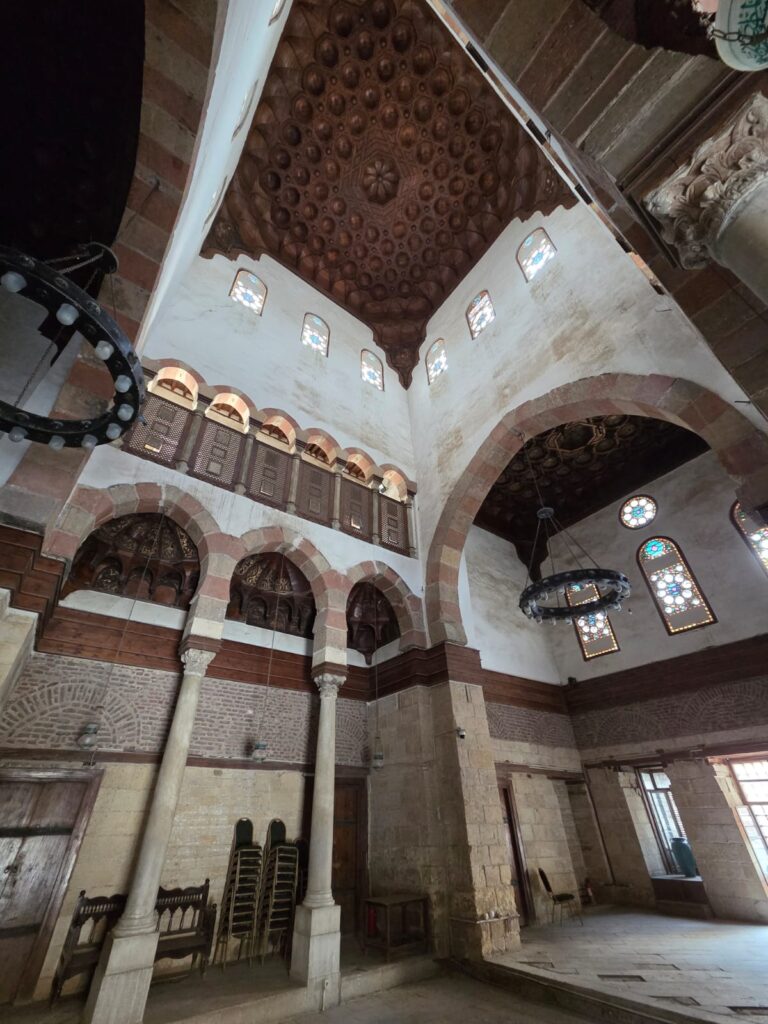
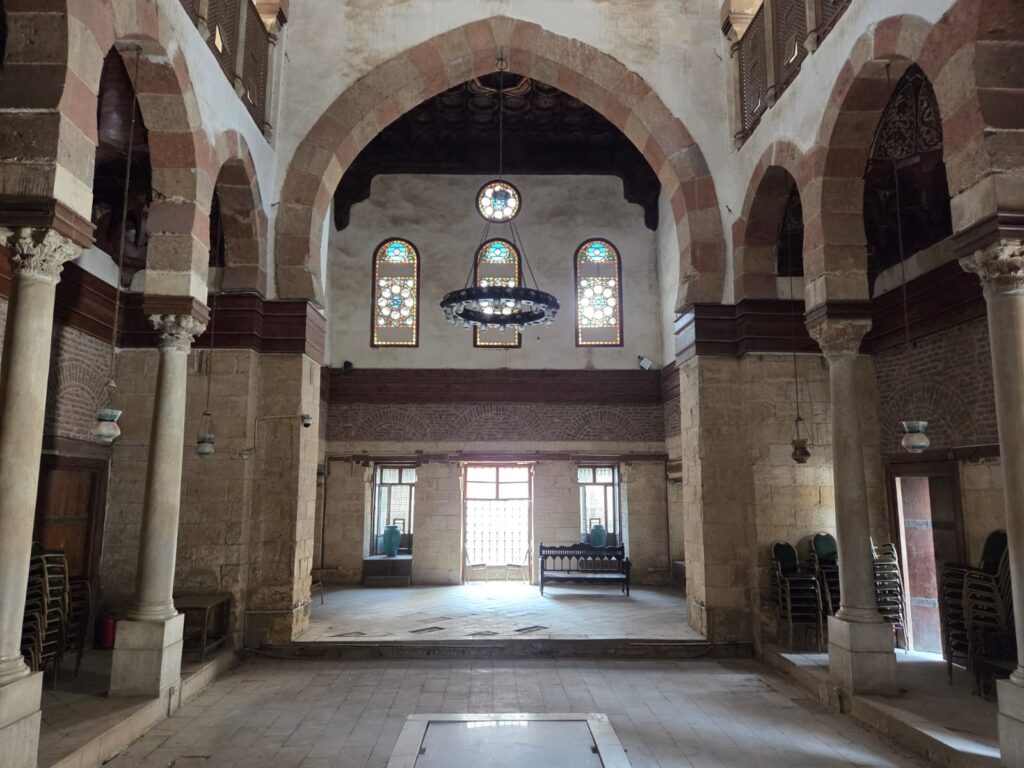
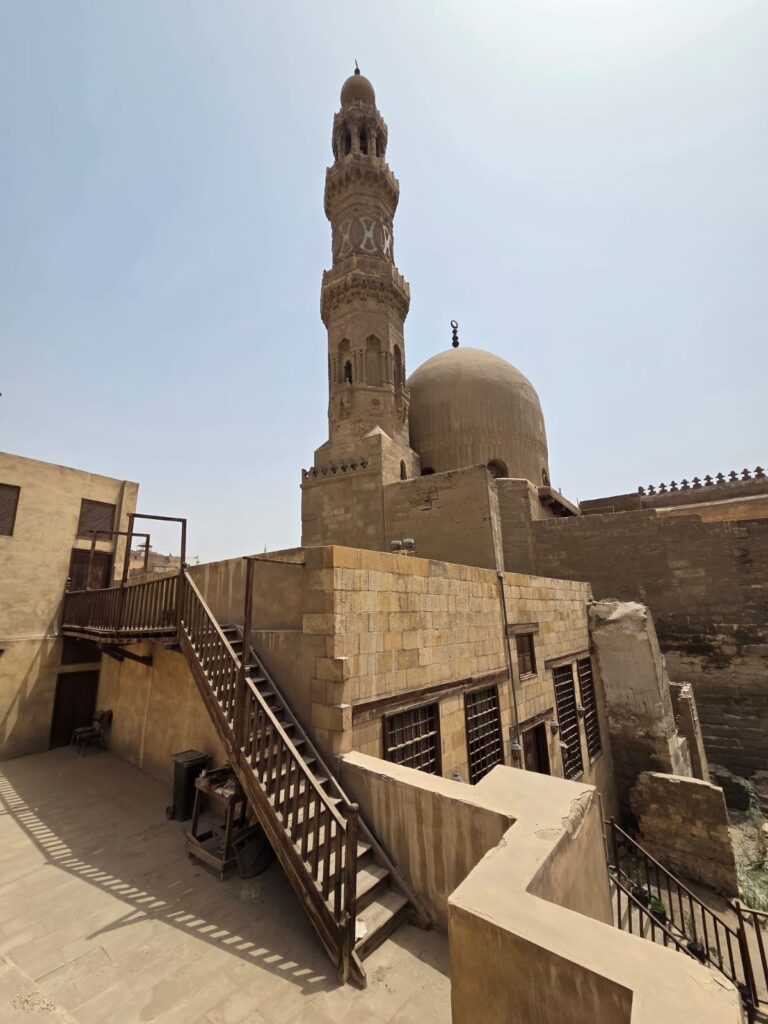
The Palace of Beshtak was the last sight in al-Mu’izz street that I visited. It’s possible there were a couple more I missed – instructions once you have your ticket weren’t exactly comprehensive. But no matter – I’d already seen a lot of exceptional Islamic architecture by this point. And the Urban Geographer had got tired a while back and I needed to go and collect him from a bench somewhere.
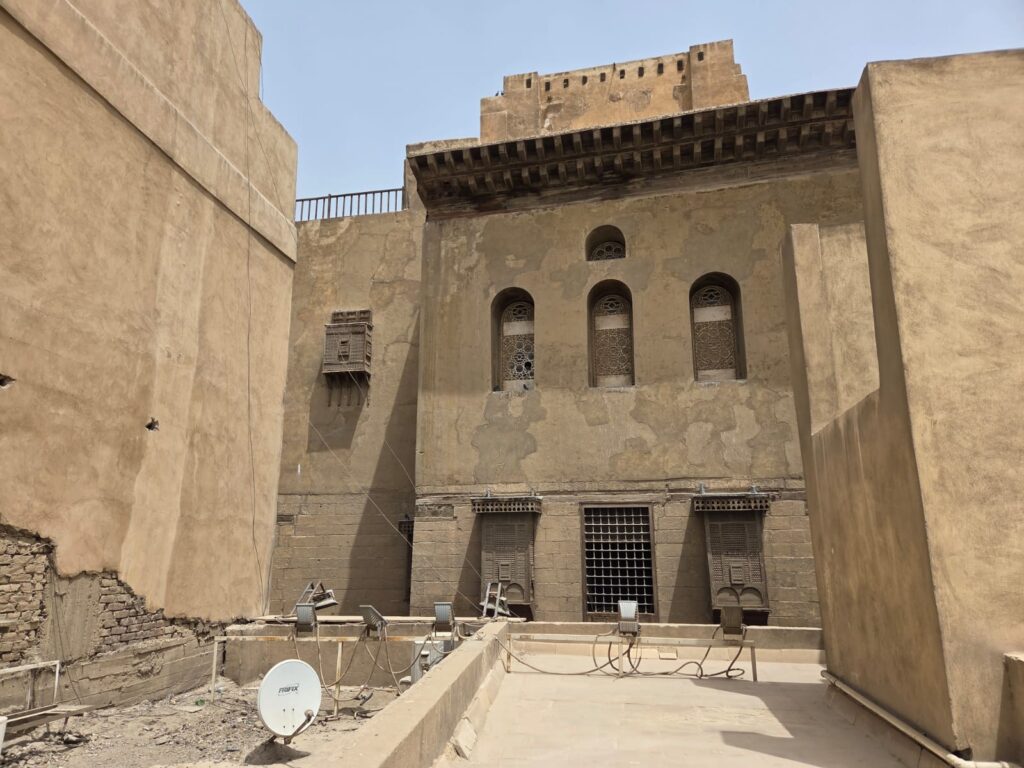
The Palace of Beshtak (or Qasr Bashtak) is another 14th century Mamluk-era building. Not one built by a sultan, though. Beshtak was an emir (ie. Mamluk officer), who was married to a daughter of Sultan al-Nasir Muhammed (see above – the one with the Crusader portal). Like many of the buildings in this area, its on a site where Fatimid palaces once stood. Sultan al-Zahir Baybars had allowed for the sale and development of plots of land in the area back in 1262. Beshtak built his residence and stables here between 1334 and 1339.
This is a rare surviving example of 14th century domestic architecture in Cairo. Compared to the beautiful decoration of some of the religious complexes it feels a bit plain. And also a bit boxy, somehow – I think it’s the lack of domes and niches. It was a place of comfort, though, originally over five floors which all had running water. The most impressive room today is a large reception hall, or qa’a. Again you get quite good views of the surrounding area from the higher floors.
Other Sights and Final Thoughts
So there we have it. We’ve come to the end of my exploration of al-Mu’izz Street. Or almost. Because, as we know, there is more here to explore. If I’d done more research before wandering over here, I would have sought out the city gates. And tried to understand if there were more sights to see on my ticket, or not. The latter I don’t take full responsibility for, though. They really need to give you a pamphlet with a map, or something.
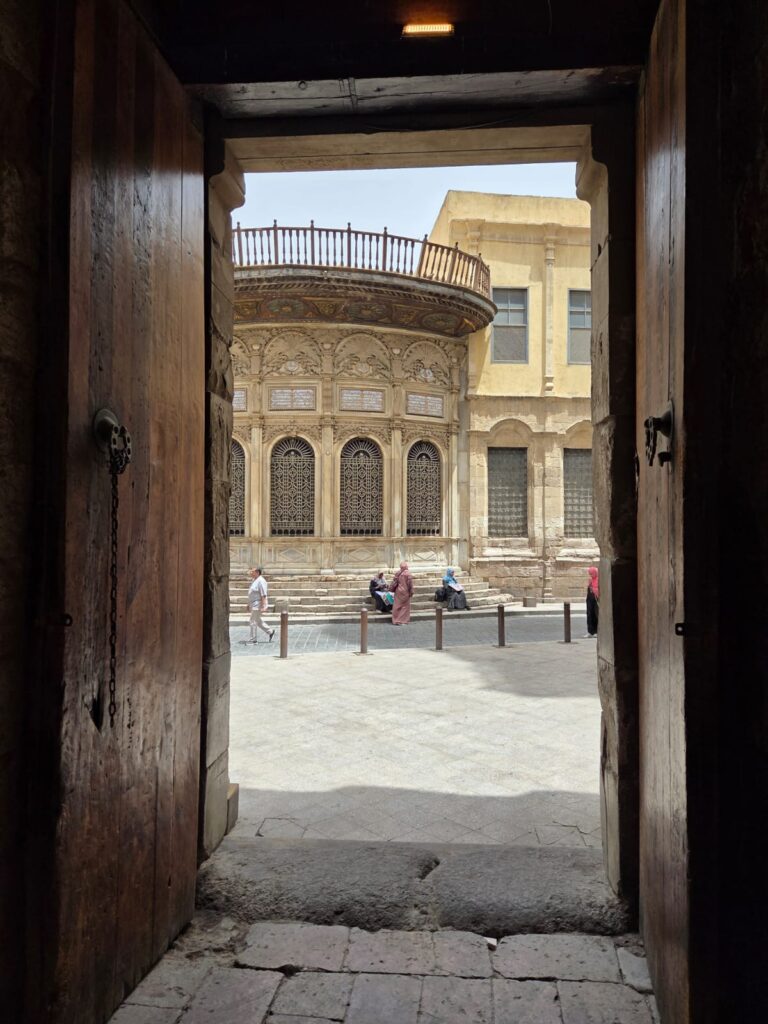
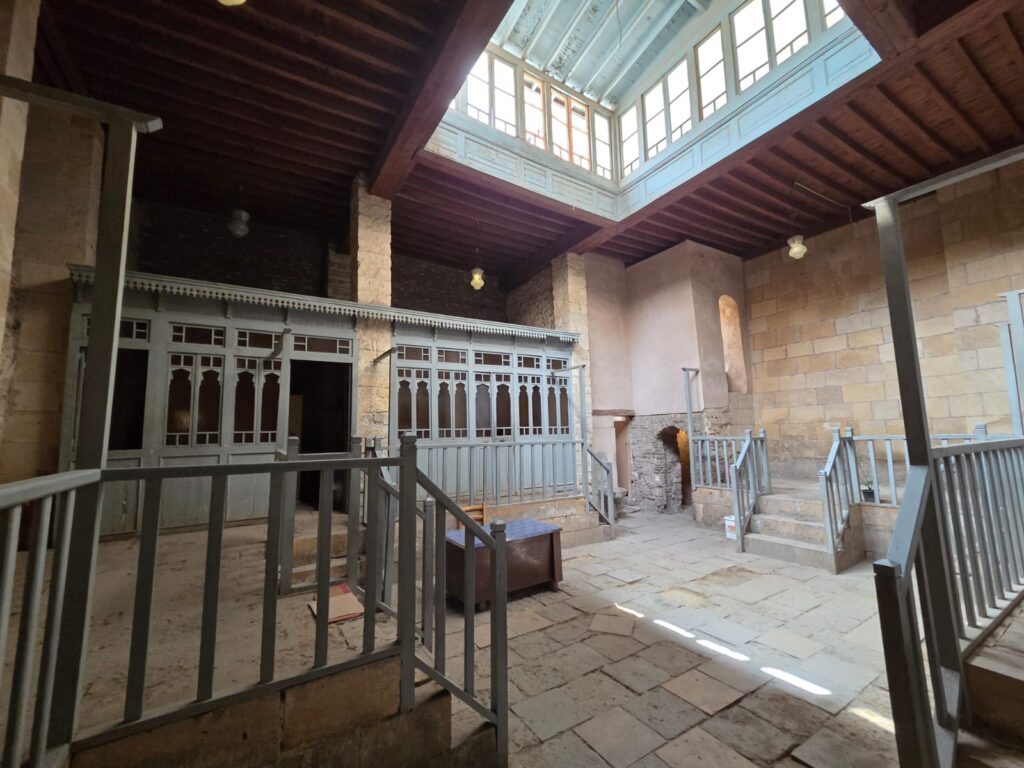
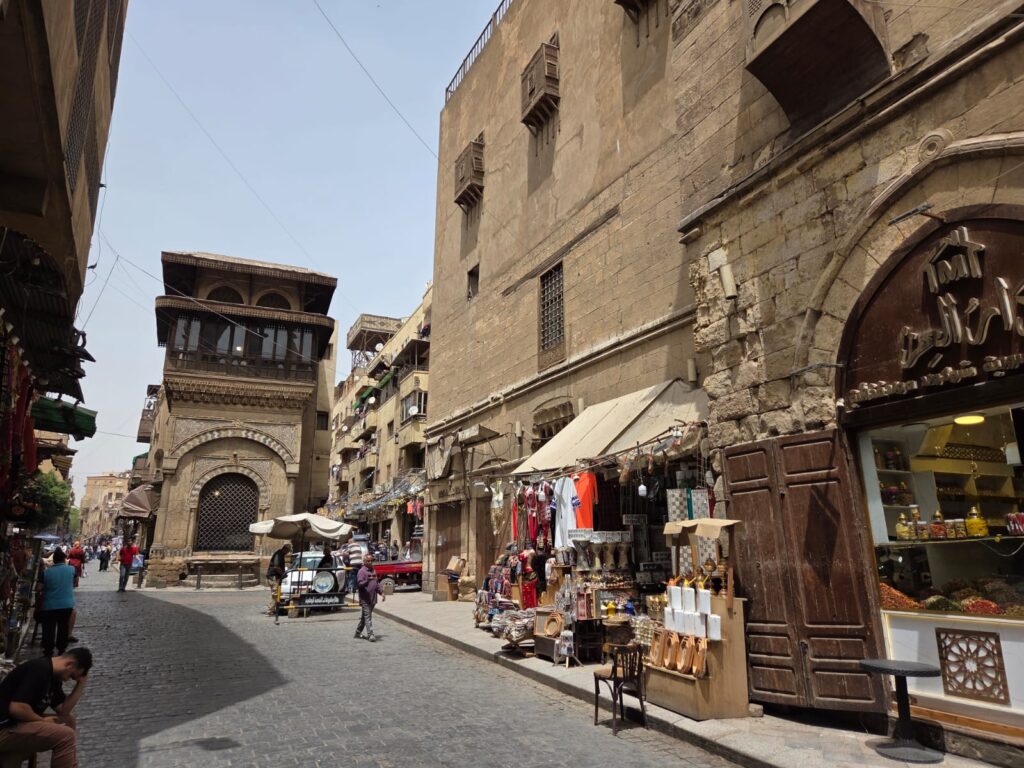
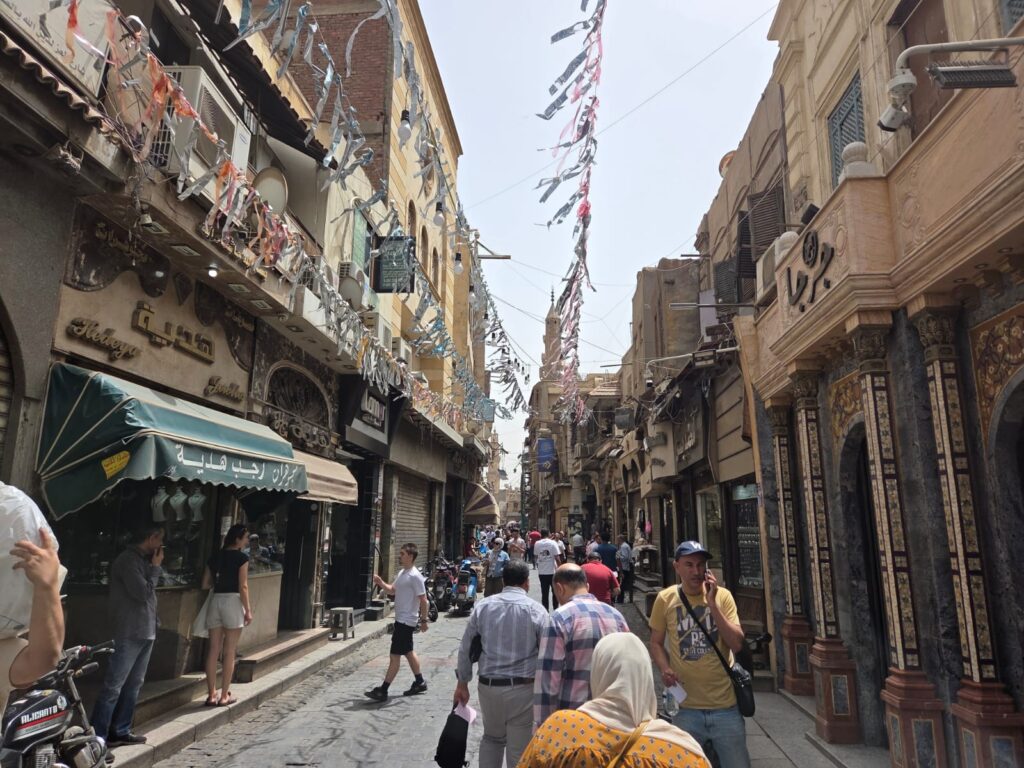
Before I went to collect the Urban Geographer,* I popped my head into one more place – the Sabil-Kuttab of Abd al-Rahman Katkhuda. What is a one of those, you ask? Well it’s a few constituent parts. A sabil is a public fountain. A kuttab is a Quran school, like a primary school. And there’s a residential wing. There were lots of sabil and kuttab in medieval Cairo. This example is again in the decorative Mamluk style. Unless I misunderstood it seemed to be a shop now, so I just had a quick look through the door before admiring the exterior. You can see a picture of it with its projecting wooden windows in the top image of the set just above.
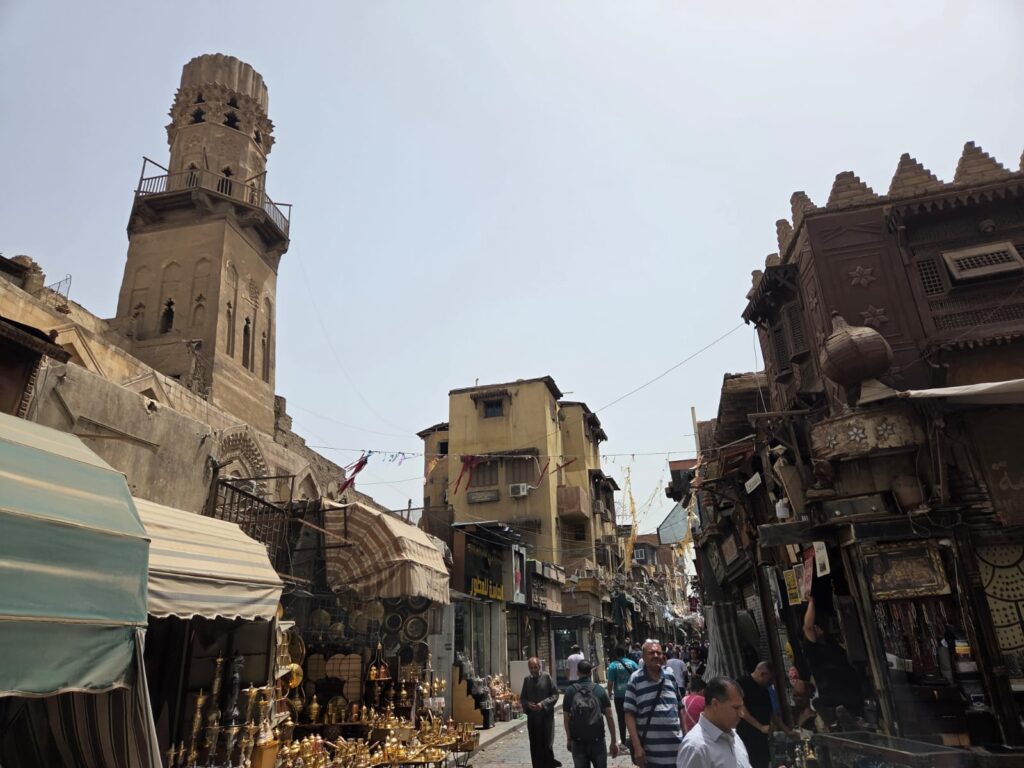
The point is that we’ve just scratched the surface of Islamic Cairo. If you have a week or so in the city, you should plan to spend a day here. You would then incorporate the Citadel, some mosques, and probably the Khan el-Khalili bazaar. There are lots of tours available if you don’t fancy making your own way around. It is doable as an independent activity, though, with public transport (and a walk) or a taxi both viable options to get here. In a week that was otherwise very much about the wonders of Ancient Egypt, I appreciated an afternoon which was about something different entirely.
*Perhaps I shouldn’t have delayed, because the Urban Geographer was at that very moment drinking beverages purchased from street vendors and giving himself food poisoning.
Trending
If you see this after your page is loaded completely, leafletJS files are missing.