
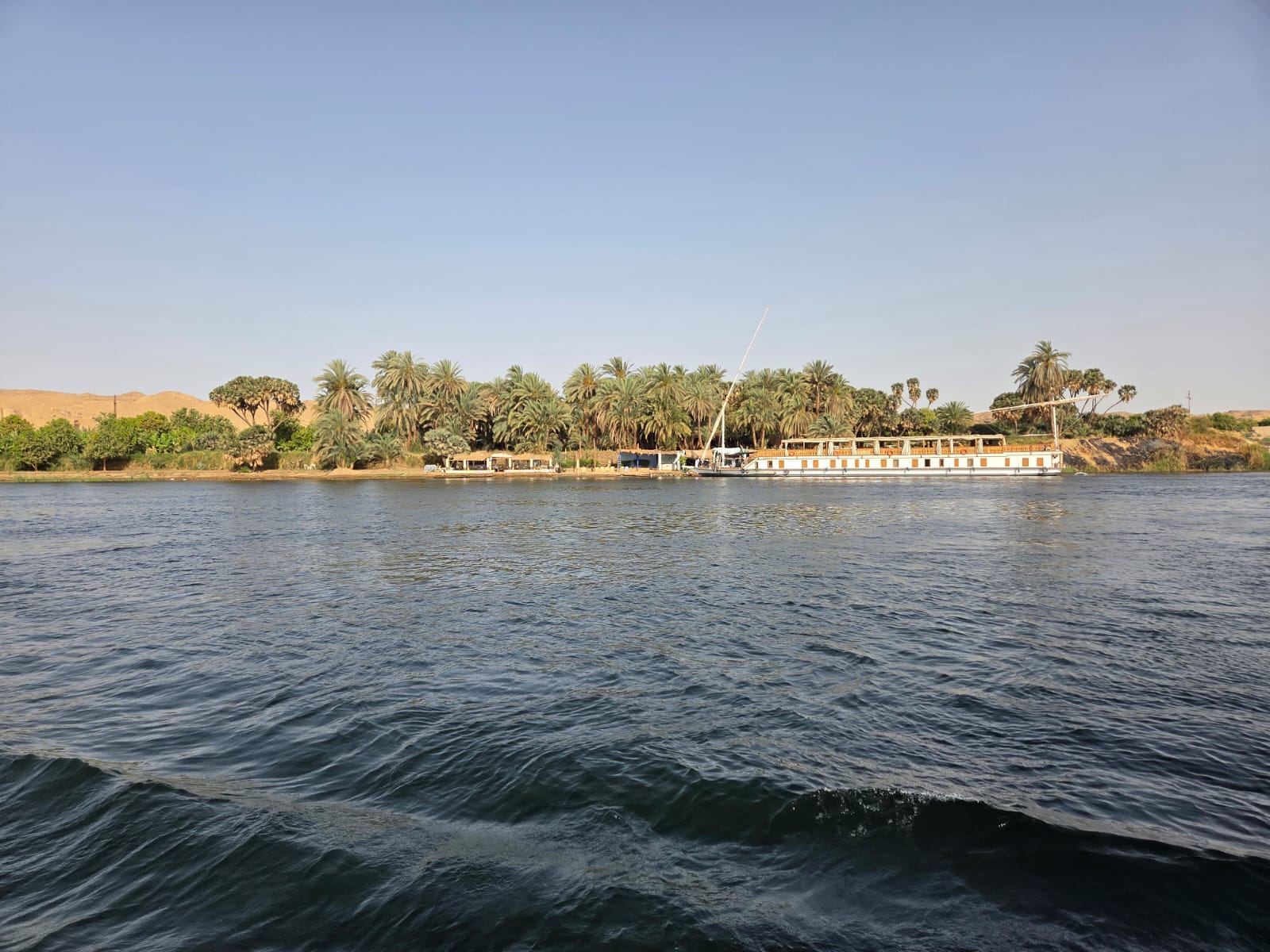
A Nile Cruise from Aswan to Luxor
A boat trip from Aswan to Luxor was a highlight of our trip to Egypt. In this post I’ll cover the different options for Nile cruises, as well as what to expect on and off the water.
Cruising on the Nile – Which Experience is Right for You?
One of my favourite parts of our recent trip to Egypt was a two day cruise, from Aswan (more or less) to Luxor. It was wonderful in part because it broke up the week nicely. We’d had a busy first two days, seeing the Pyramids and Grand Egyptian Museum, and then flying to Aswan and continuing on by coach to Abu Simbel. The following day, after a visit to Philae Temple, we headed to meet our boat. We were ready for a couple of days of relative relaxation.
We went on this G Adventures trip, which meant we were travelling by dahabiya (or dahabeah, or ذهبية). But you may be putting together your own itinerary, and want to know a bit more about the options for a Nile cruise. Broadly speaking, there are three options.
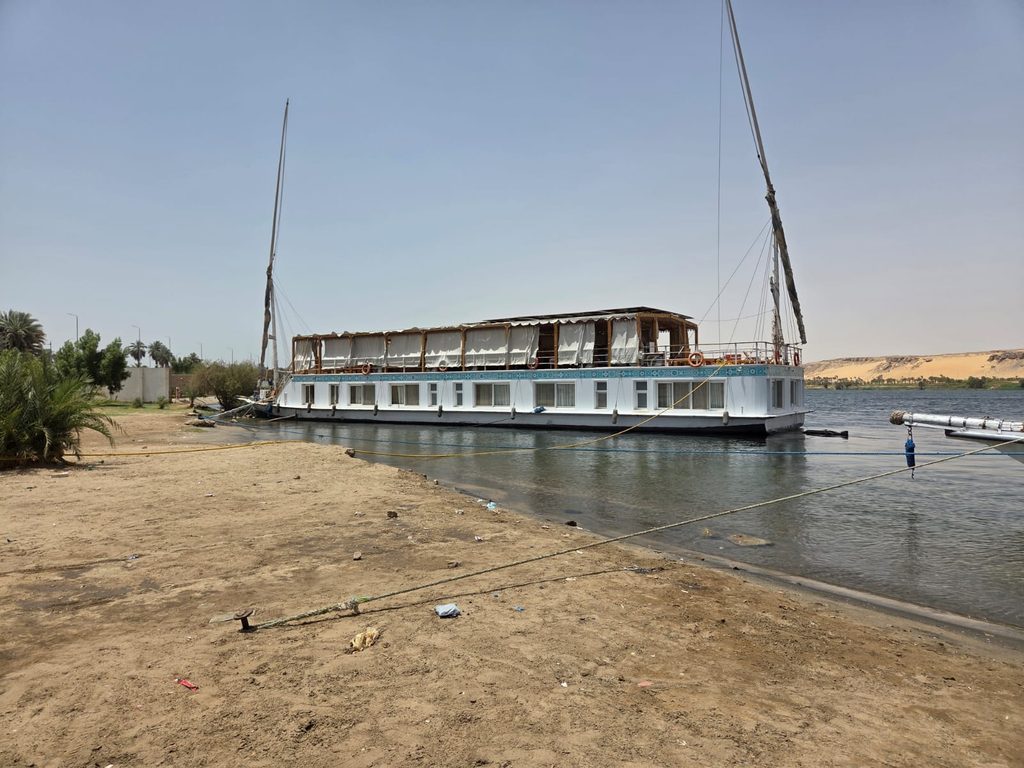
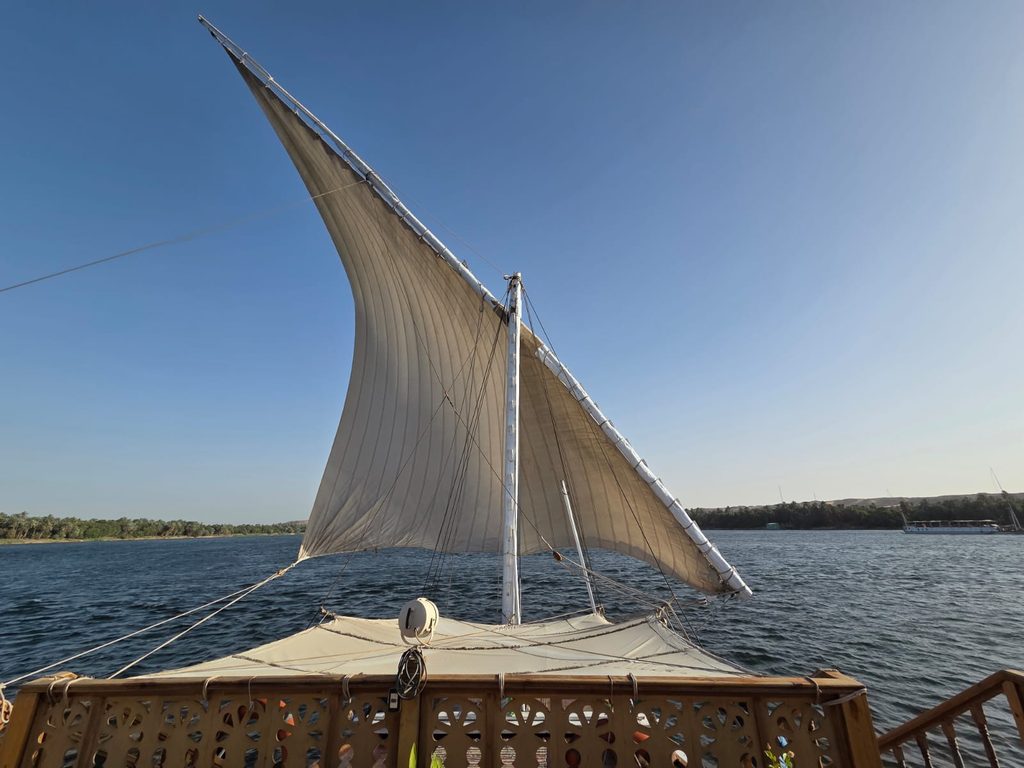
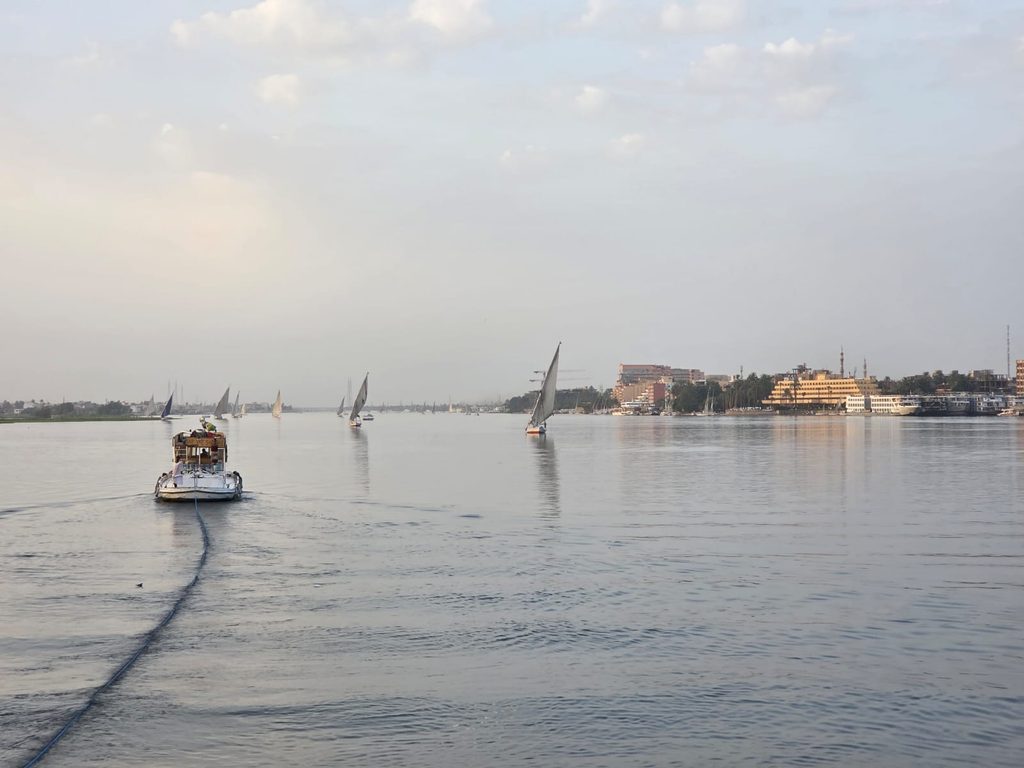
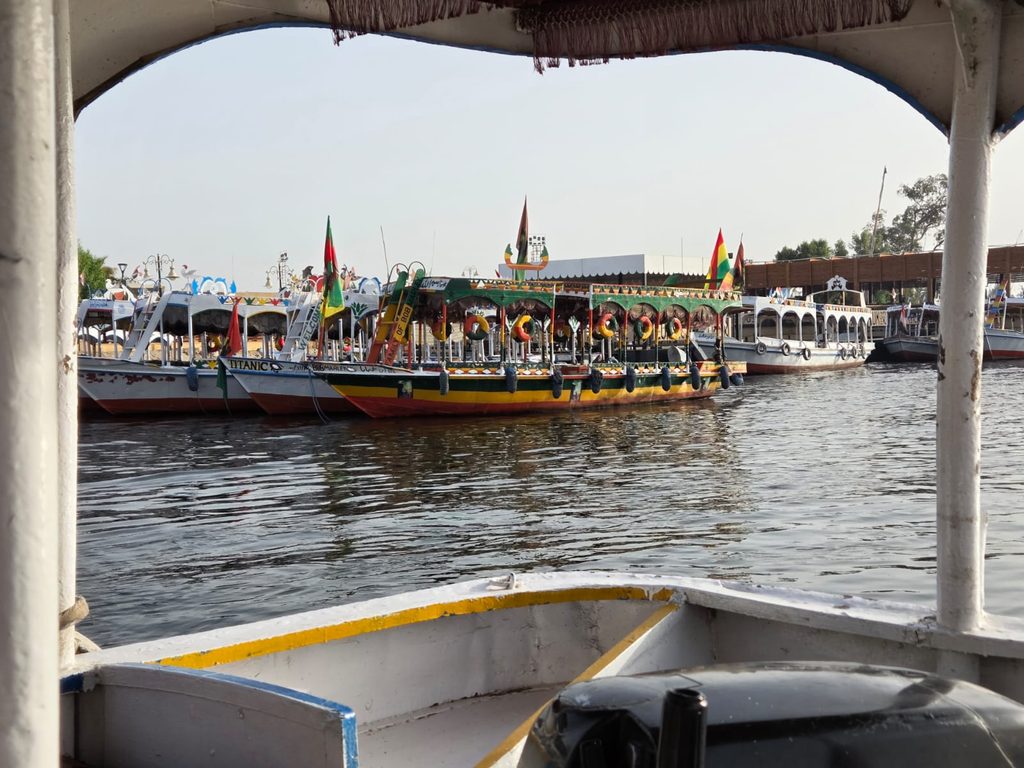
Going from largest to smallest, the first is a cruise ship. These are often modelled on or converted from the steam ships first introduced to Egypt by Thomas Cook in the 19th century. They probably have their advantages. But they are more or less floating hotels, lacking the charm of some of the smaller options. Next in line is the dahabiya. This was once the primary mode of tourist transport for Nile tourists – a sail-powered wooden ship with private cabins. But note that, unless you’re travelling at a leisurely pace, most dahabiya are towed by a diesel-powered tug boat. And the smallest option of all is the felucca. A felucca is a wooden boat with a single sail. They are basic, normally lacking private sleeping quarters or toilet facilities.
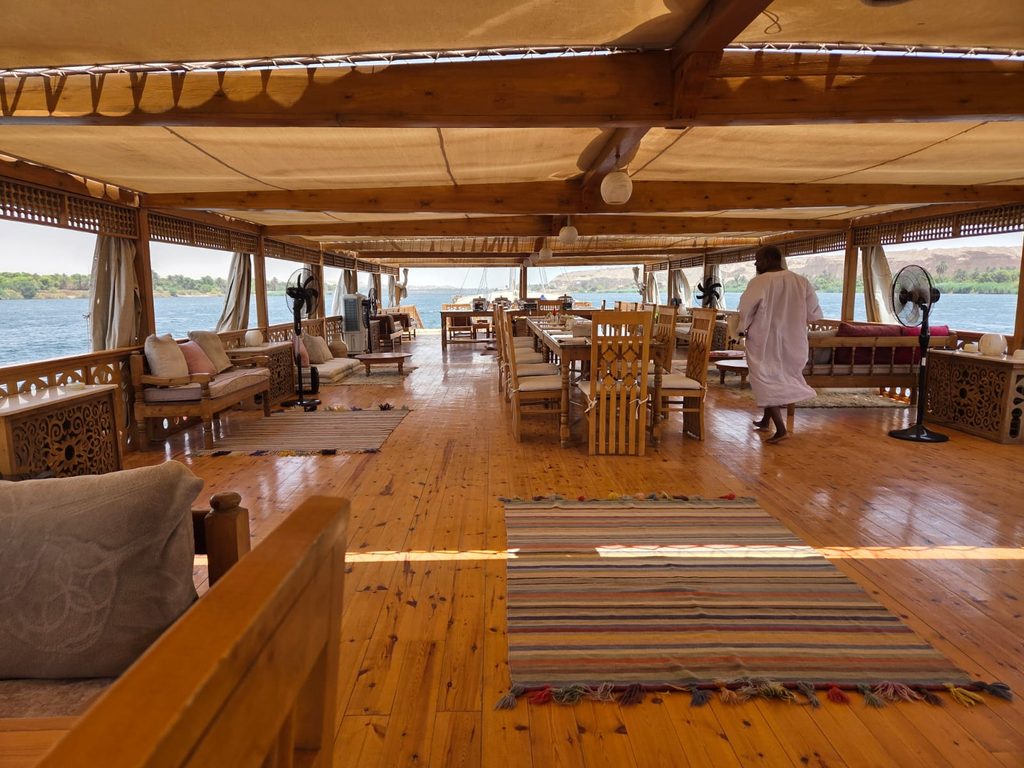
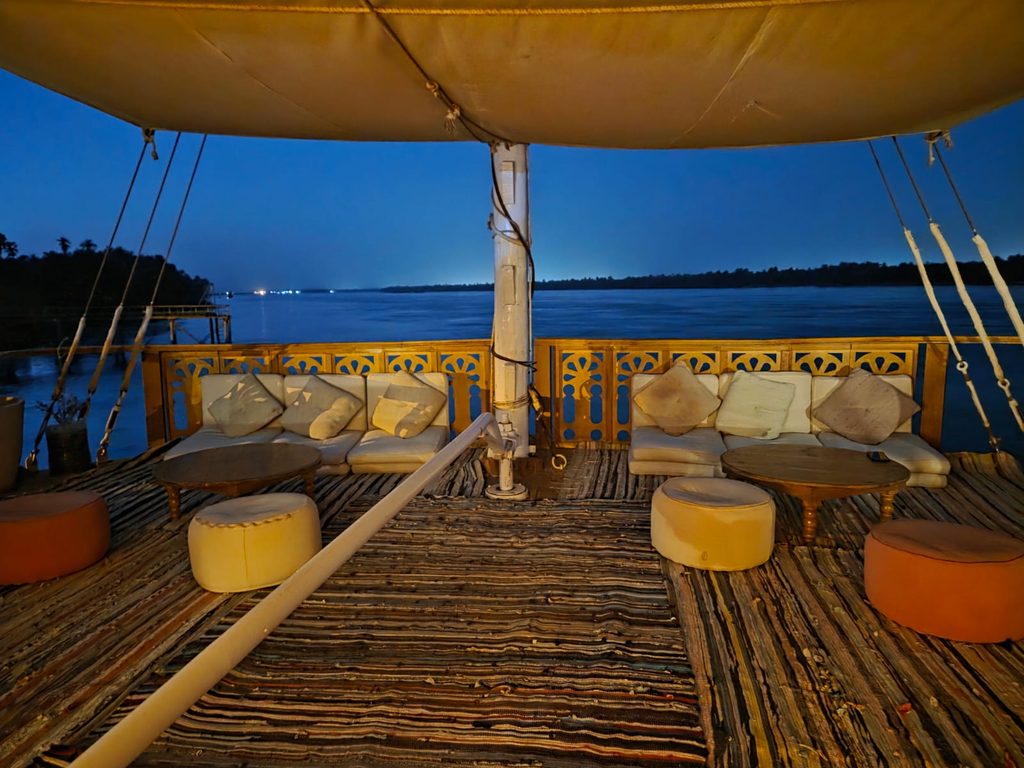
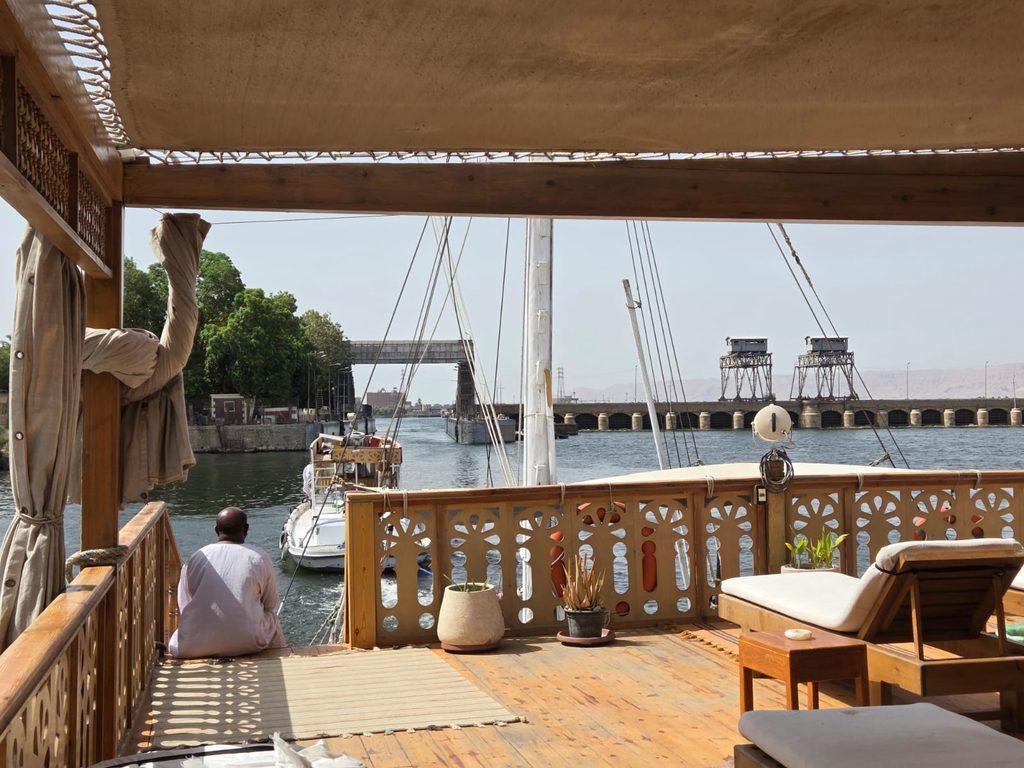
I could be prejudiced because I had such a nice time, but I heartily endorse the dahabiya. Our group had a boat to ourselves, with meals served onboard (apart from one barbecue dinner on shore) and en suite cabins. We had space to relax and chat as we sailed along, as well as deck chairs to relax on. I only wish we could have had longer. The ideal way to travel along the Nile, in my opinion, would be on a dahabiya, under sail power, stopping in to visit different towns and archaeological sites along the way.
On the Water
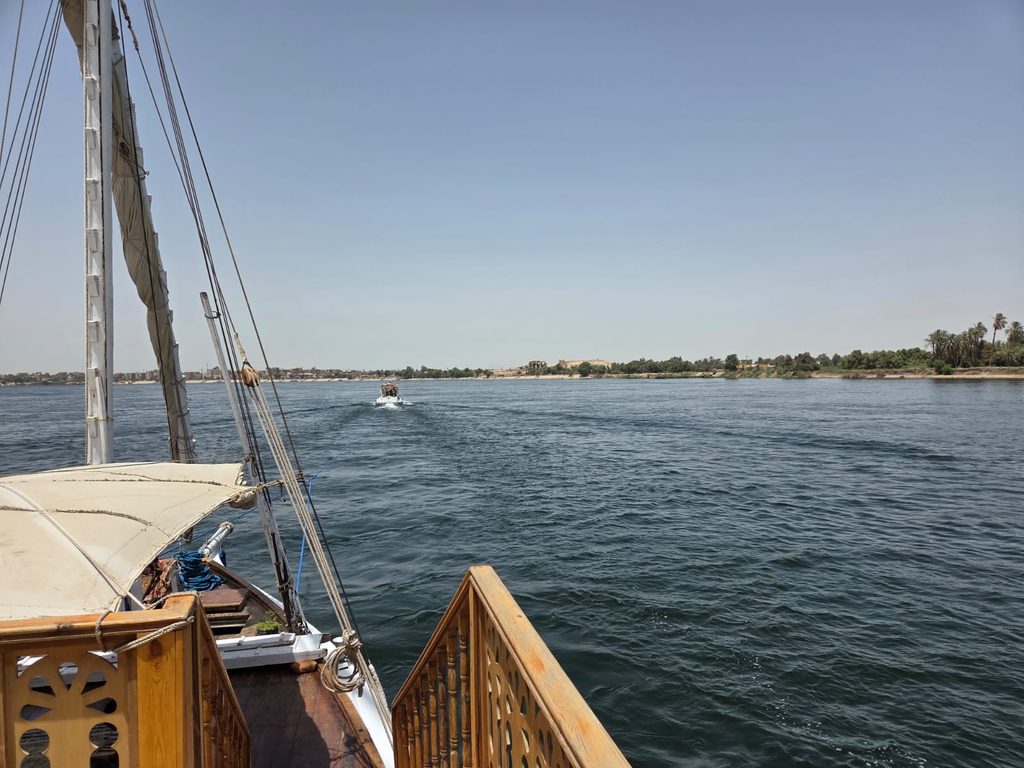
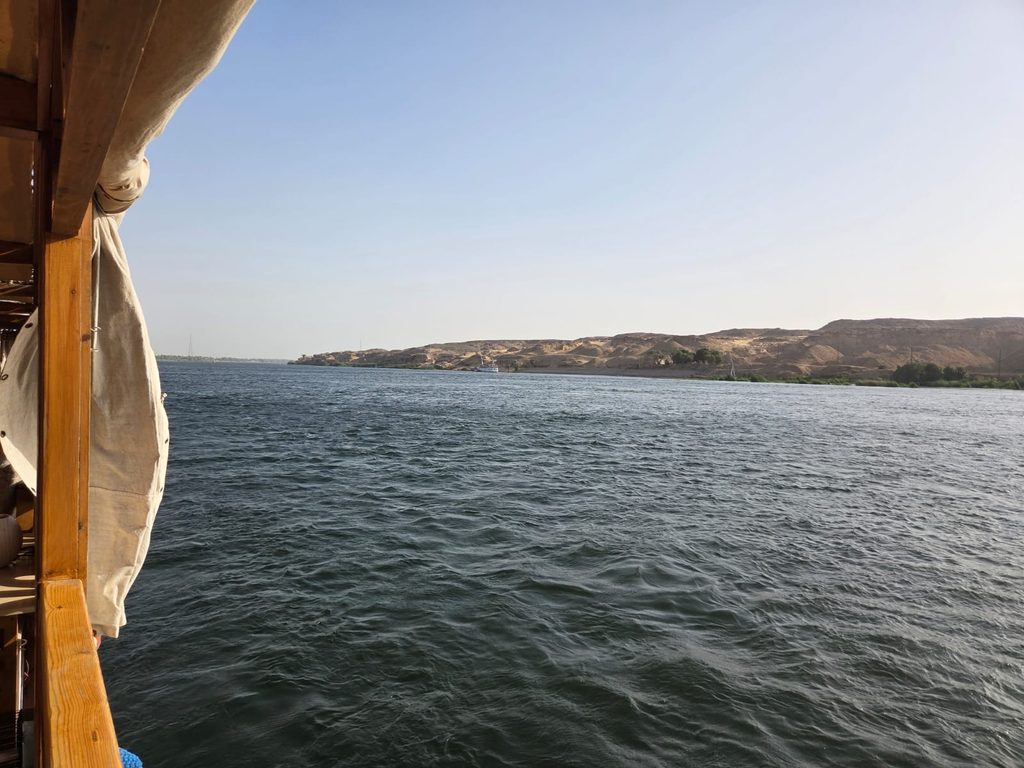
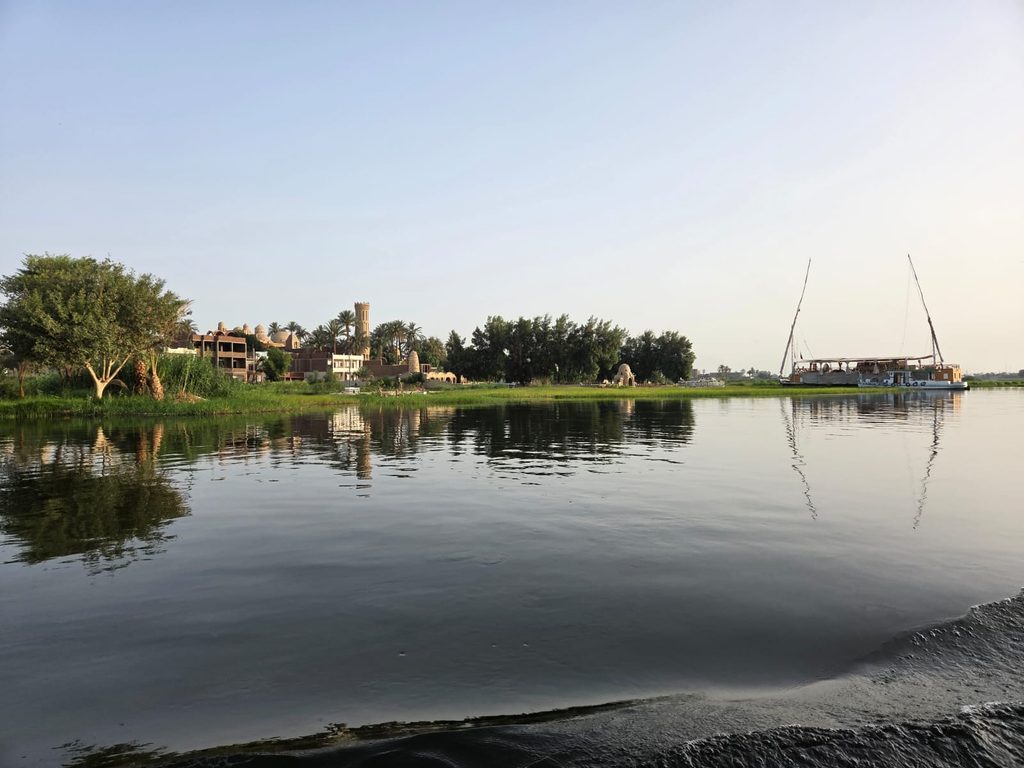
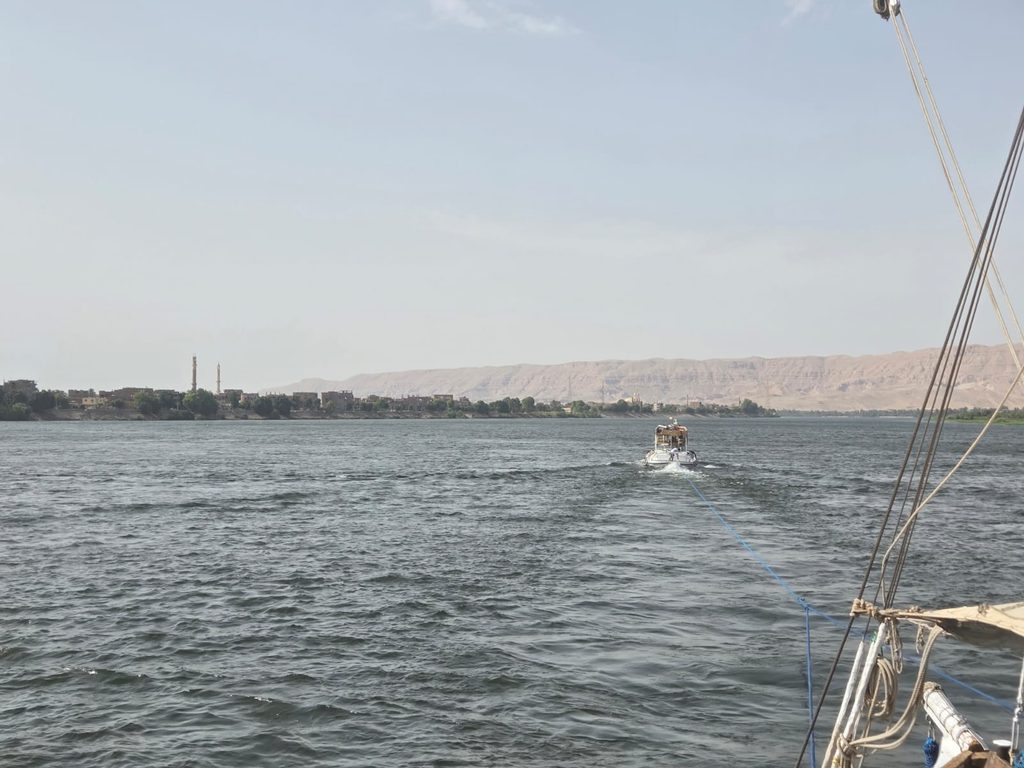
In order to fit most tour itineraries, tug boats tow many/most dahabiyas as I mentioned previously. This can seem like a bit of a shame to begin with, but you soon cease to notice it. The experience of sailing along the Nile, even at pace, soon becomes engrossing enough to make you forget all travel logistics.
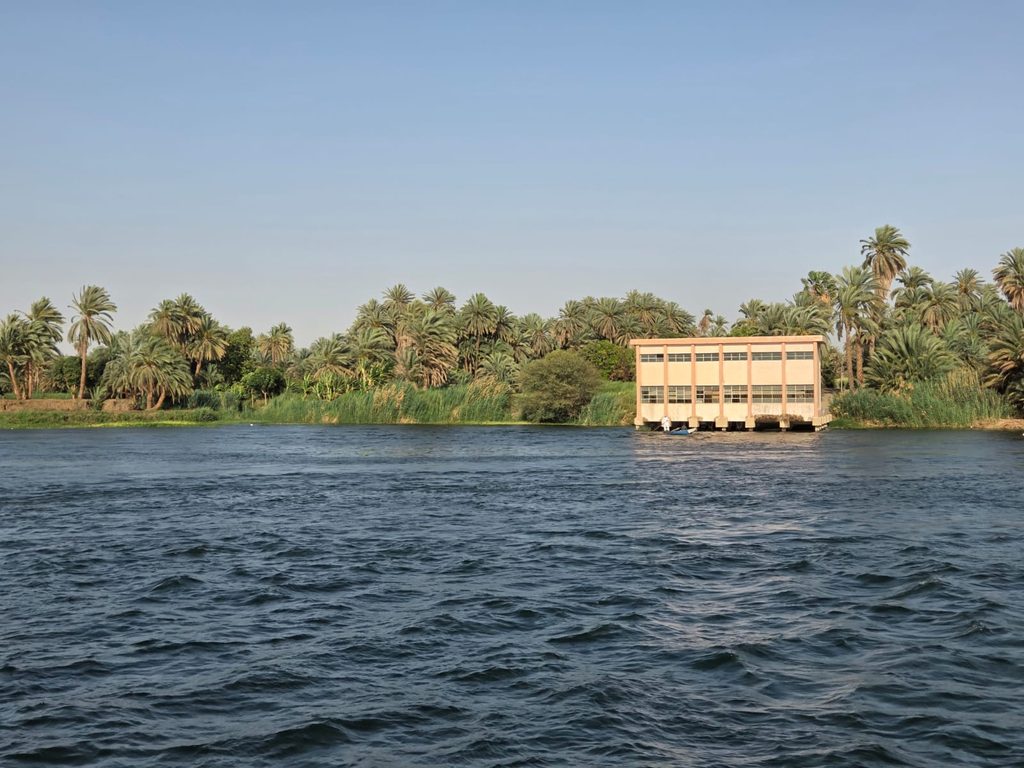
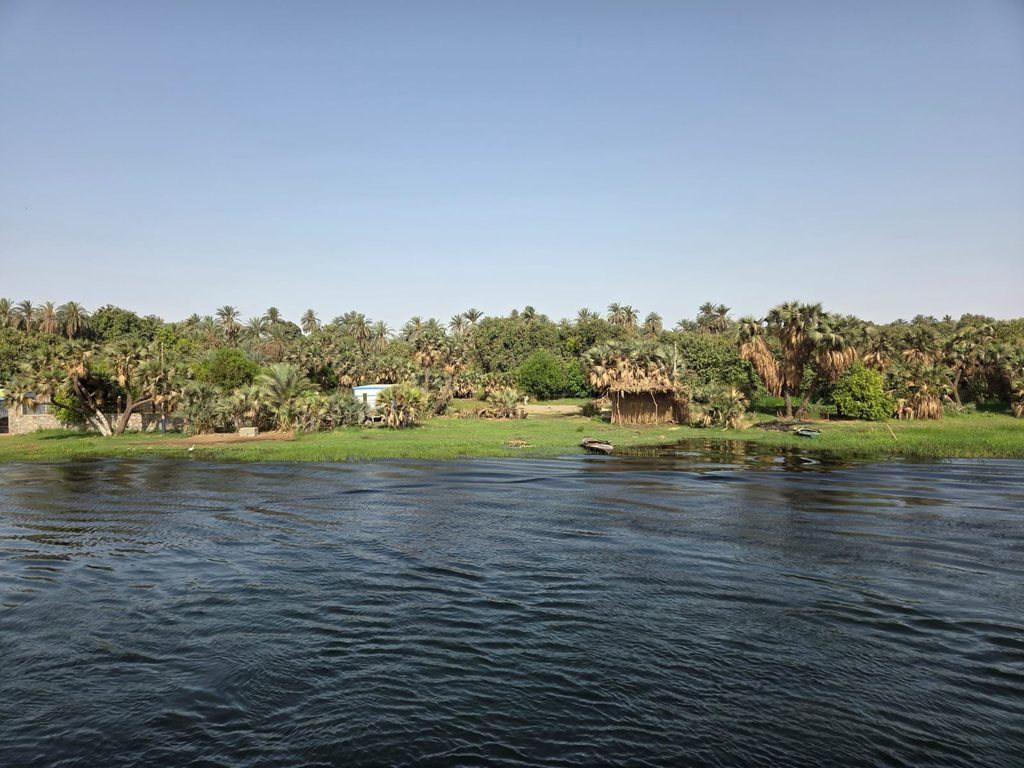
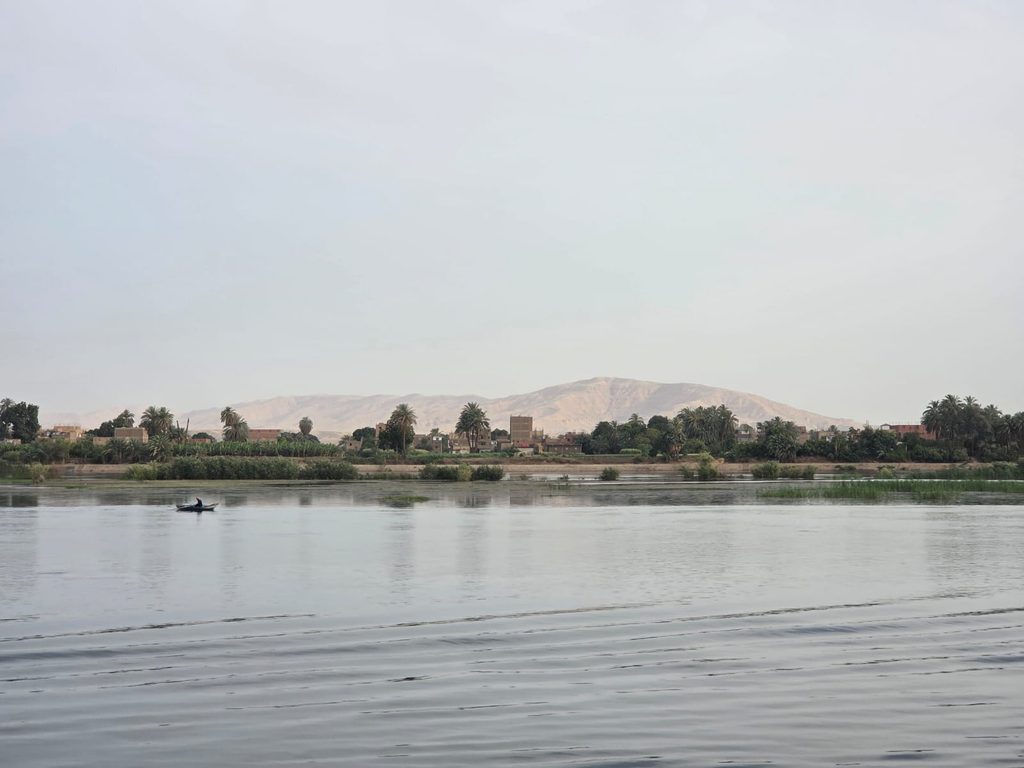
The fertile corridor of the Nile Valley has been the secret to life in Egypt for millennia. Even without the annual floods that carried the nutrients that supported farming, the Nile still supports lush, greenery on its banks. And, given that about 95% of Egypt’s population of 119 million people live along the Nile and its delta, it’s surprisingly peaceful. In fact, there are times when you can imagine that the landscape would be recognisable to an Ancient Egyptian. That’s probably an Orientalist fantasy, but you have time for such indulgences on a trip like this.
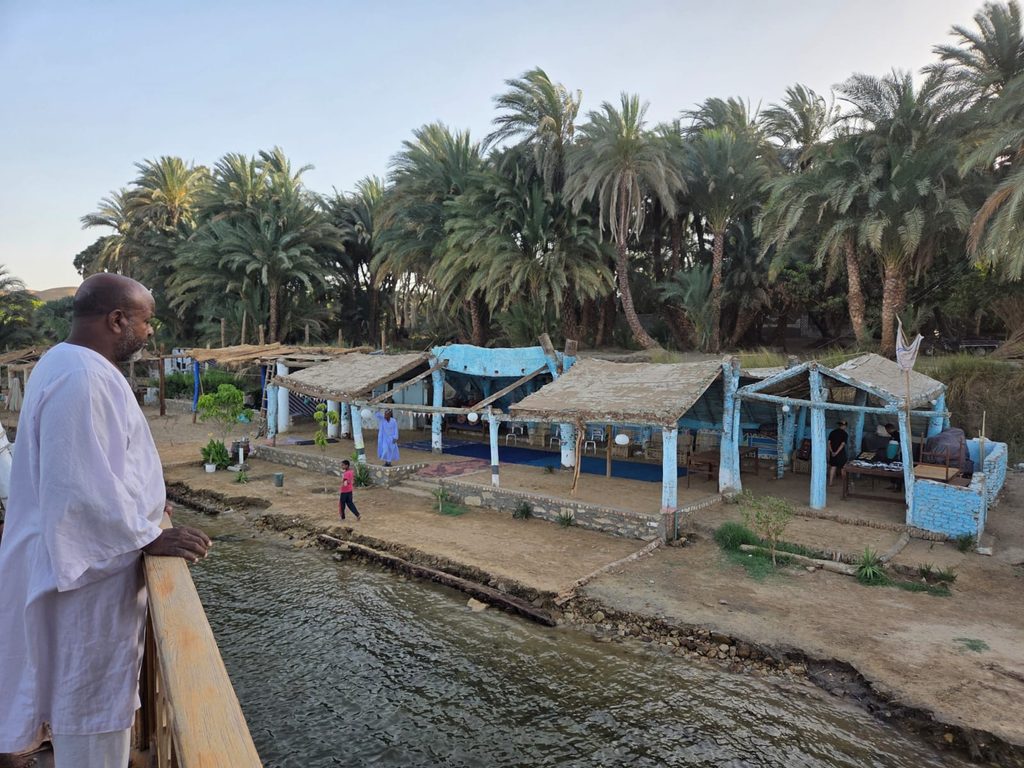
Watch out for farms or fishermen, and the odd historic or archaeological site as you sail along. The packing guide for our trip recommended binoculars, and they do come in useful for a bit of bird watching. Some enterprising owners of land along the riverbanks have set up spots for tourist boats to moor for the night, with basic facilities. This is where we had our barbecue dinner. A few too many bugs, if I’m honest. But a different perspective on things and an opportunity for a dip in the Nile for those who fancied it.
For me, as someone whose instinct is always to pack more and more into a trip, being on the water is a perfect excuse to relax and go slow. Bring some books or just watch the river go by. The landscape will change several times over a bit more than 200KM. Most itineraries end on an evening arrival into Luxor, ready for another day of sightseeing to begin.
Sights Along the Way
You probably won’t spend the entire duration of a Nile cruise on the water. I’ve already mentioned that you might moor up at a place with facilities for the crew to prepare a casual dinner on shore. And there will likely also be sights you will stop and see along the way. Again, your choice of boat is important here. Some of the sites are accessible for smaller vessels but don’t have the ability to accommodate large ones, which once again makes a dahabiya look appealing!
On our two days sailing from Aswan to Luxor, we stopped at three archaeological sites. I am also going to mention a fourth that is a common stopping-off point. Two of the ones I visited will be the subject of their own posts in the coming days. But below, I’m ordering them in terms of their position between Aswan and Luxor.
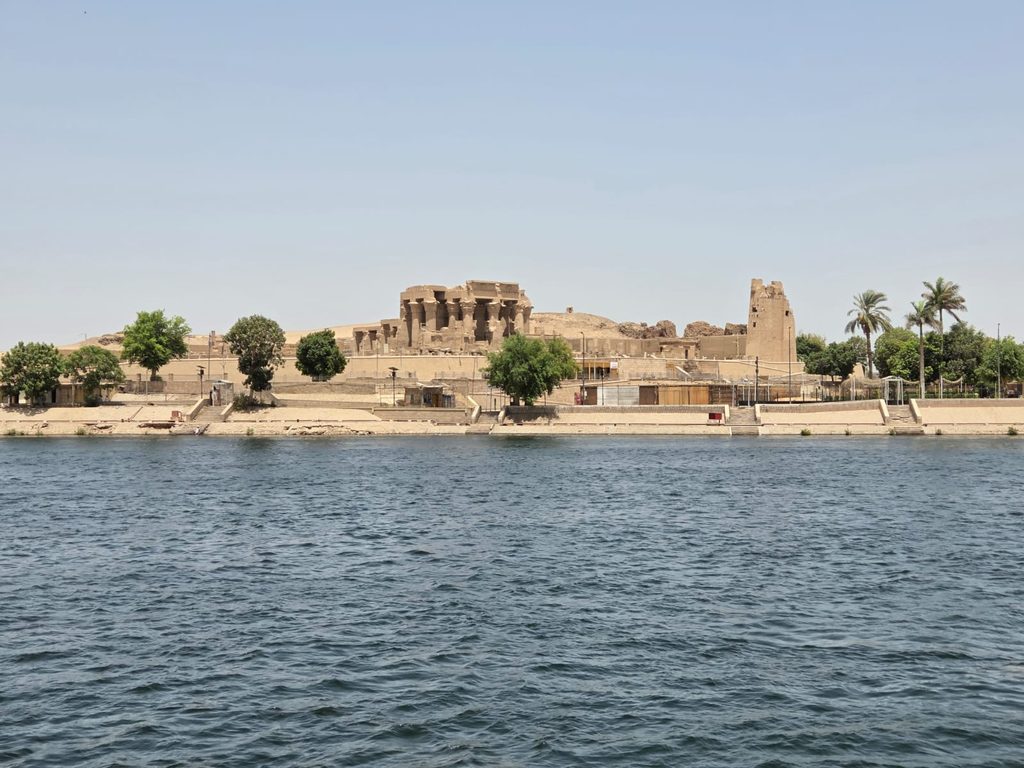
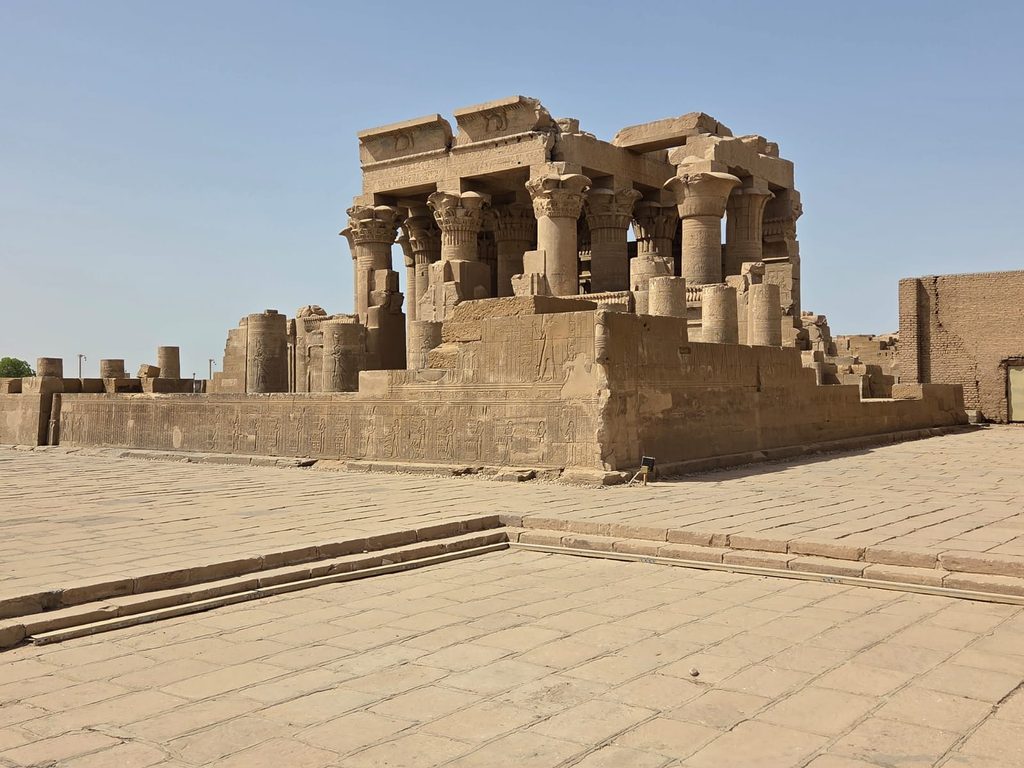
- Kom Ombo Temple & the Crocodile Museum. This temple has a lovely approach from the river. It is unique in Egypt in being dedicated to two gods – the crocodile god Sobek, and Haroeris (meaning Horus the Elder). The temple originally had a perfectly symmetrical layout, with linked halls for each god and twin sanctuaries. Although its origins are earlier, it dates to the time of Ptolemy VI Philometor, who we heard about at Philae. Most of the decoration dates from the time of Cleopatra’s father, Ptolemy XII Neos Dionysus. There is a new crocodile museum next to the temple complex. This is worth a visit to see the mummified crocodiles. More on all this soon.
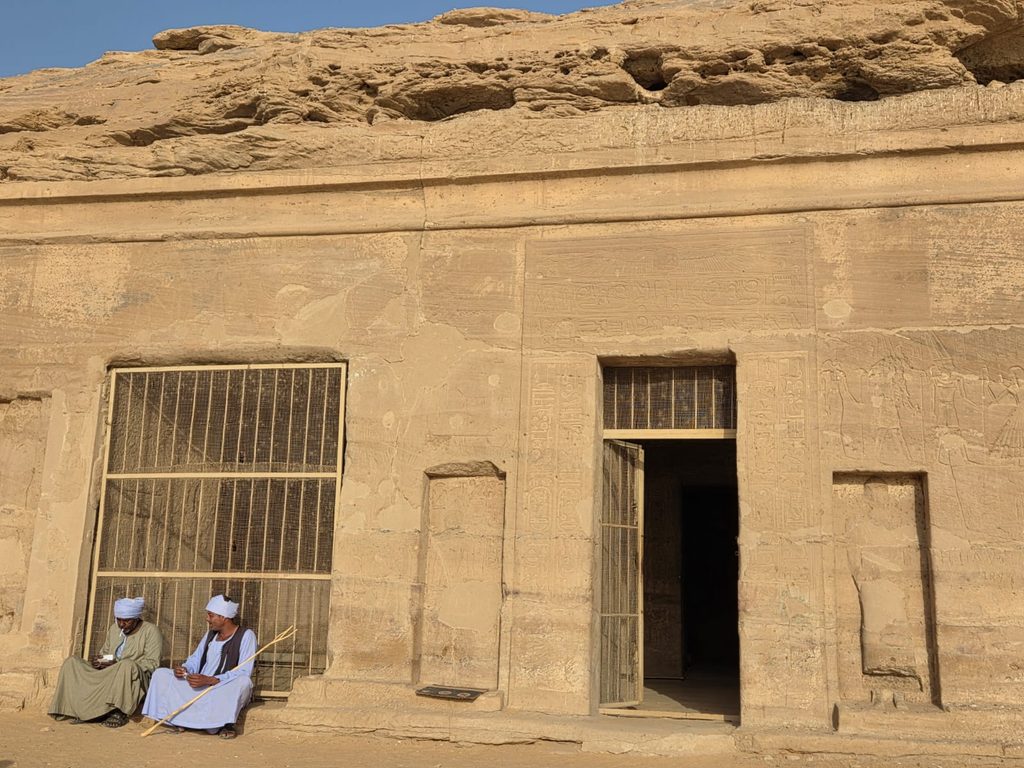
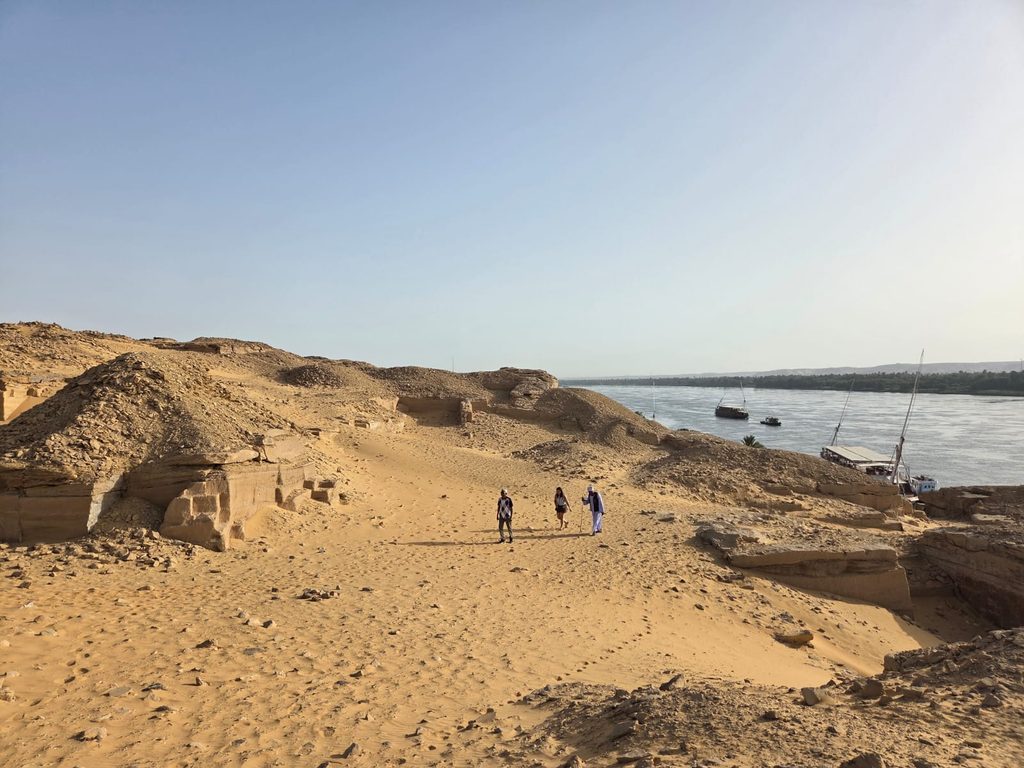
- The Temple of Horemheb at Gebel el-Silsila. We had a very charming, early morning visit here. Gebel el-Silsila is a quarry: this region was Egypt’s primary source of sandstone in the New Kingdom. The Temple of Horemheb is also known as the Great Speos, a speos being a sanctuary cut directly into rock. Horemheb was the last pharaoh of the 18th dynasty. The temple is dedicated to Horemheb himself, and to multiple deities. We were lucky that the attendants arrived early that day, so we could go and have a look inside. We then climbed some dunes for a view of the quarry and the Nile. Highly recommended as a slightly different kind of site than the usual temples.
- Edfu Temple. This is the one we did not visit, but hope to see on a future trip. The Temple of Edfu. dedicated to Horus, is the second-largest temple in Egypt. It is also well-preserved, having been buried under sand until French archaeologist Auguste Mariette uncovered it in the 1860s. It’s another Ptolemaic temple (ie. Egypt’s Greek rulers), built on the location, according to legend, of the battle between Horus and Seth. It shows a mix of Egyptian and Greek influences.
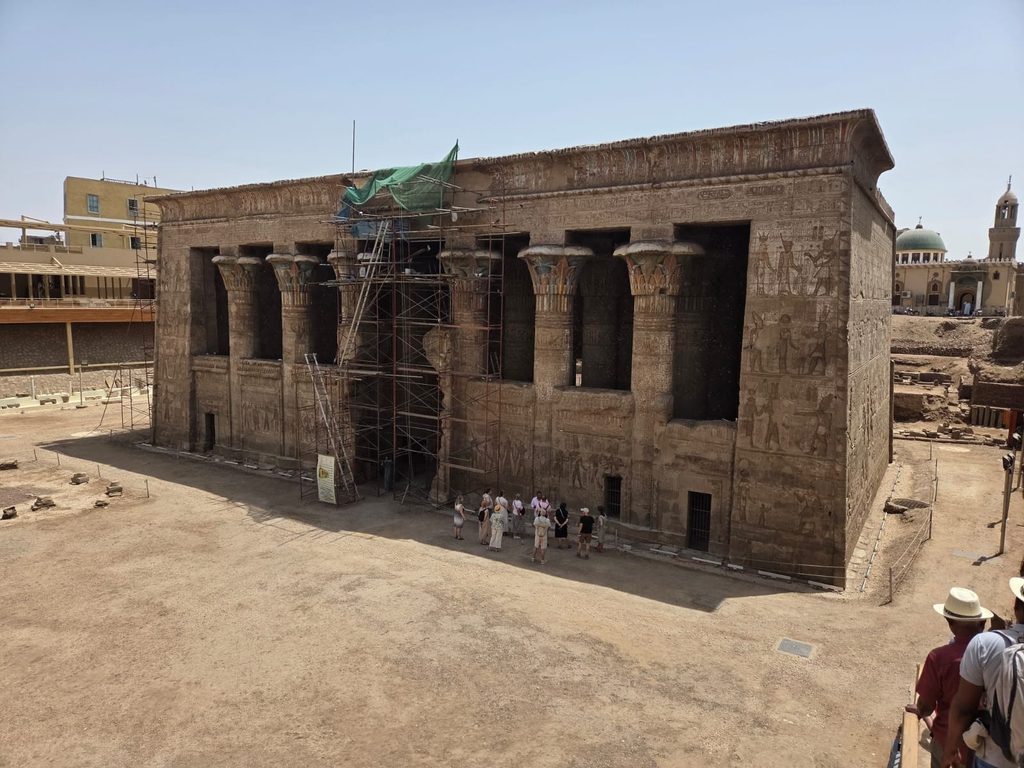
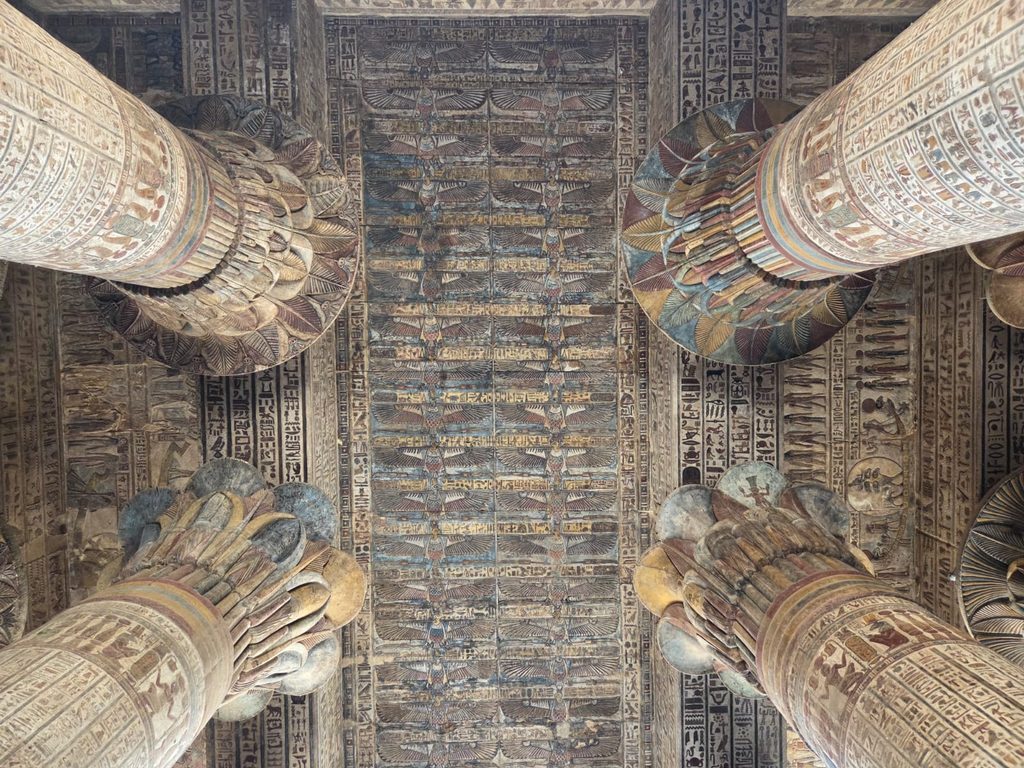
- Esna Temple. This was perhaps my favourite archaeological site during my week in Egypt, because it felt so unexpected. The Temple of Esna sits back from the banks of the Nile. Your boat will moor and you will have a short walk past various shops to get there. The temple is another example of Graeco-Roman design, and today is far below the current street level. The fact that it was long buried under the modern city is what preserved Esna’s remarkable colours – like Edfu, excavations took place in the 1860s. Esna Temple is dedicated to the ram-headed god Khnum. More of the complex remains beneath the modern city.
I think these are the main sites that form part of many Nile cruise itineraries. I’m sure if you’re moving at a slower pace, there are more you can add. But three sites over two days was perfect for me. I could enjoy the novelty of arriving by boat to see ancient history, explore marvellous sites, and still have plenty of time to relax.
Final Thoughts on our Nile Cruise
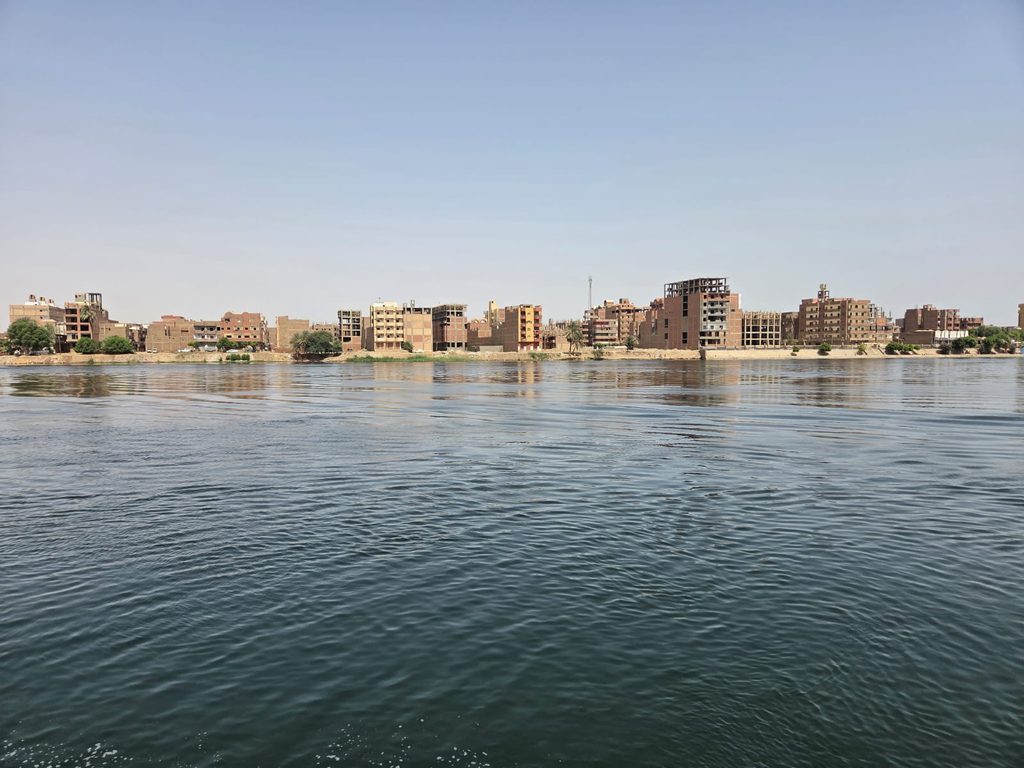
If you plan a trip to Egypt and don’t spend any time on the Nile, I’d say you’re missing out. This river has been the lifeblood of Egypt since before the time of the pharaohs. And travelling along it today, you can see how it is still central to the lives of so many Egyptians, whether for transport, food, washing laundry, watering livestock, or simply gathering to chat and pass the time on its banks.
The Orientalist fantasy that this is some untouched link to history is a nice dream, but reality will also interject itself. There are the diesel tugs I mentioned – you can tune out the motor’s hum, but it’s still going to be there. And let’s not forget the major impact on the Nile of the High and Low Aswan Dams. The river no longer has the power over life and death it once did. On your way from Aswan to Luxor you will also encounter a lock that helps ships pass the Esna Barrage. Completed in 1906 and renovated in the 1990s, the lock is a definite reminder that you are on a modern, navigable river.
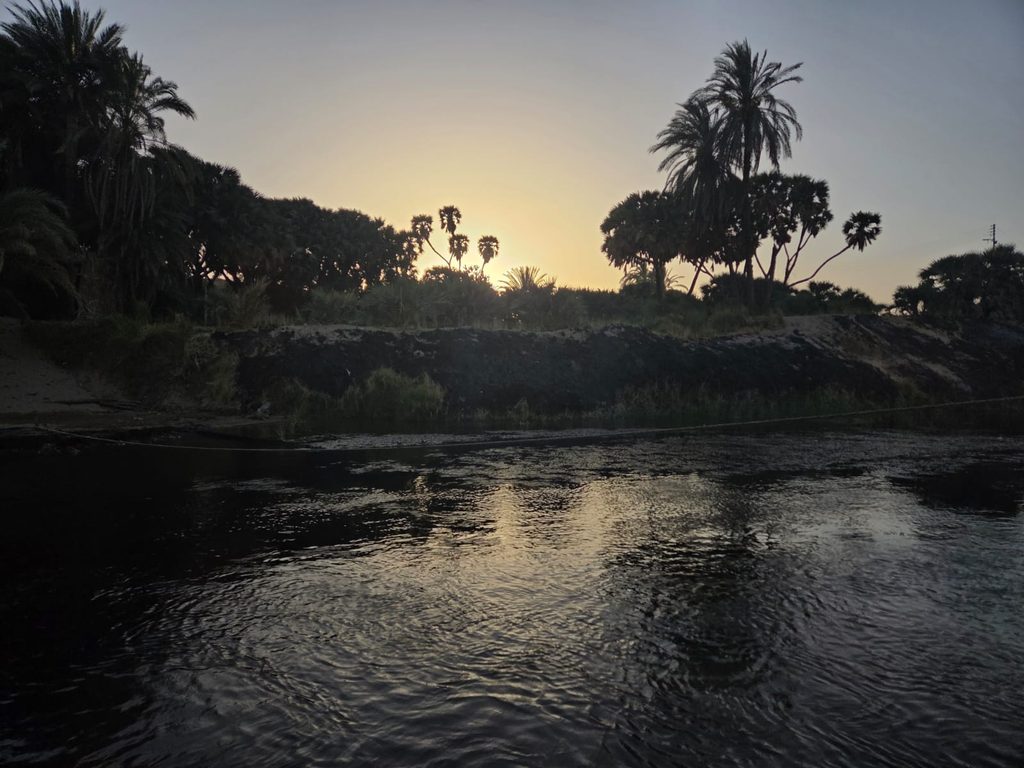
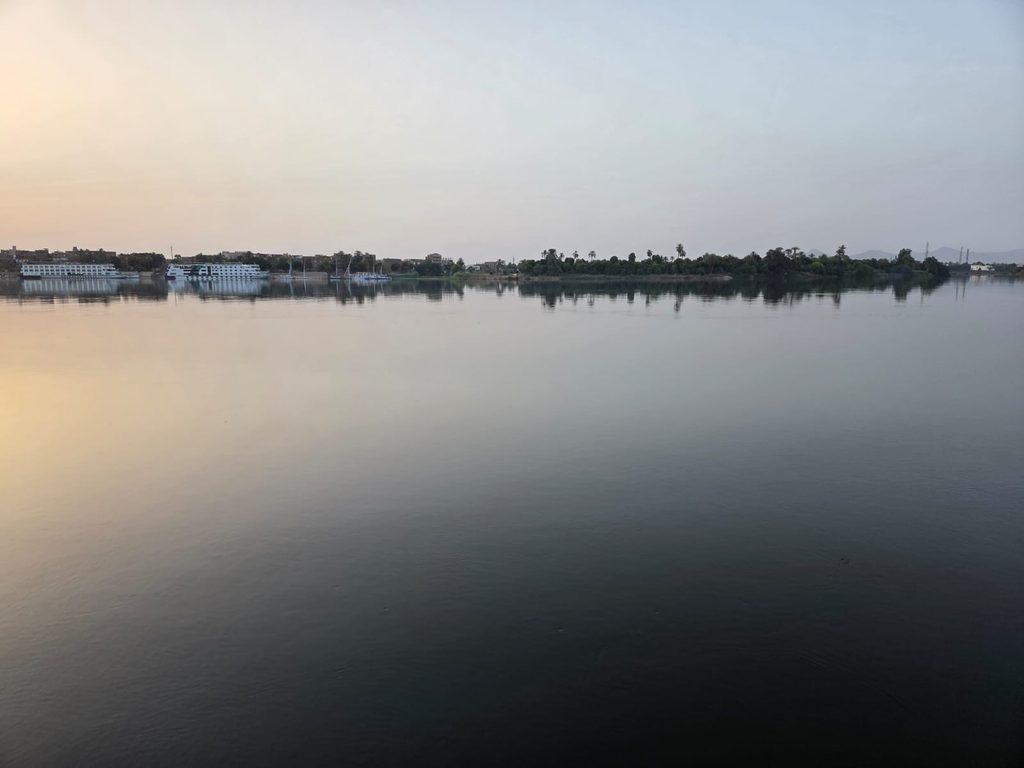
But don’t let all that realism get you down. There is still something a little romantic about spending time on a boat like this, and a river like this. Enjoy seeing a different side to Egypt: different flora and fauna, different views of towns and cities, and lovely sunrises and sunsets. Although we had an exciting day ahead when we left our dahabiya, I was loathe to leave it behind. I hope one day to have an opportunity to repeat the journey, perhaps at a more leisurely pace to take it all in.
Trending
If you see this after your page is loaded completely, leafletJS files are missing.