
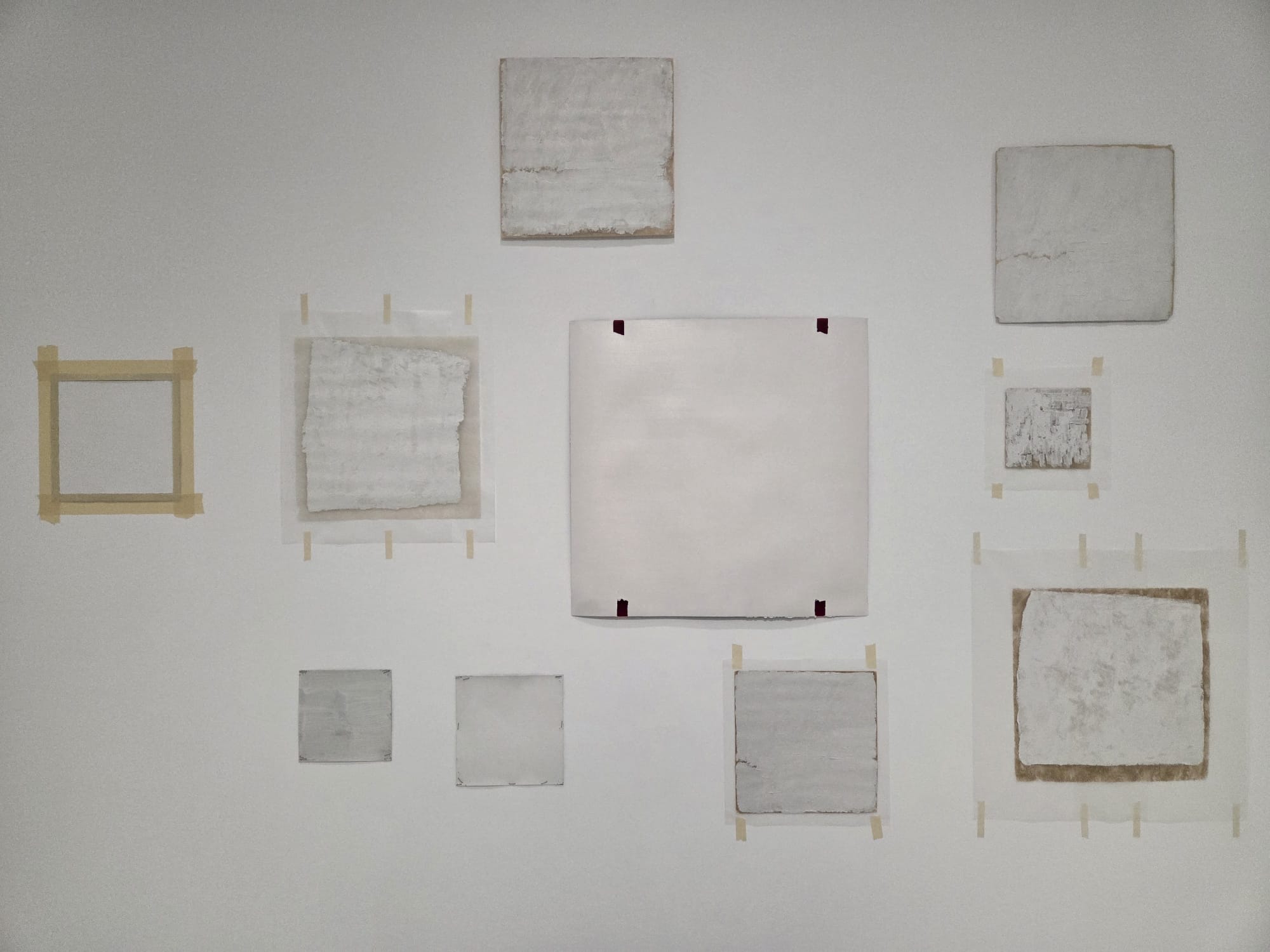
Robert Ryman: The Real Thing – Barbican, London
The Barbican dig into the boundaries of painting in Robert Ryman: The Real Thing.
My Pick of Current Exhibitions
It’s happened again, folks. I missed a lot of the London exhibitions through the late summer and autumn. There’s been a lot of travel going on this year on the Salterton Arts Review. Quite a lot of theatre. But I’ve been slacking off when it comes to art.
So when I had a weekend spare, I then had the immediate pressure of choosing what to see. There were a couple of exhibitions that were about to close. That felt a bit rushed. I decided to give myself a clean slate and just look ahead to the newly opened ones. And my pick was the Robert Ryman exhibition at the Barbican. I’d seen somewhat mixed reviews of it, and an exhibition with so many white paintings is always going to be a bit divisive. But I really like seeing 20th century American art when it’s on offer, particularly in a gallery with such a good curatorial track record as the Barbican.
And so I headed over there, Urban Geographer in tow. The fact remains that I have a lot of art to get around for the remainder of the year. Renoir I could take or leave, but the Van Eyck exhibition I want to see. The French Riviera at the Royal Academy sounds like a nice bit of summer as we head into the colder months. And I’ve been terrible at getting to the Tate and want to see several things there (Britain and Modern). Must try harder.
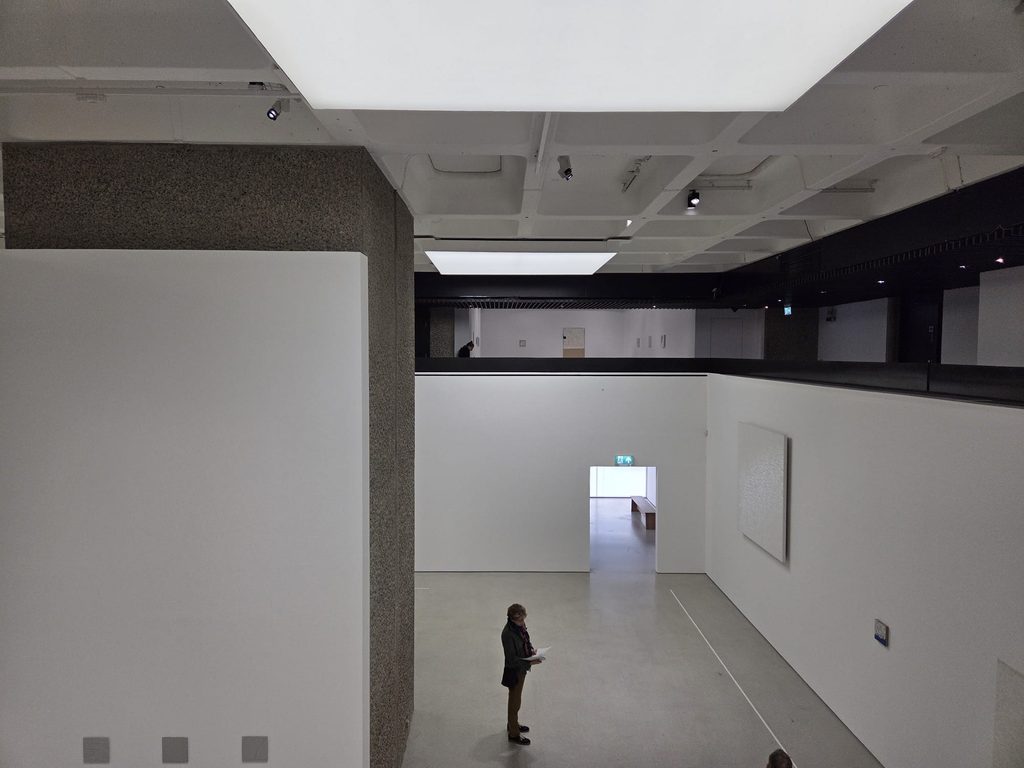
An Introduction to Robert Ryman
So if you didn’t know anything about Robert Ryman before embarking on this post, you know two things already. He was a 20th century American artist. And he used a lot of white paint. That’s not quite enough of a grounding for the discussion we’re about to have, though, so let me tell you a bit more.
Robert Ryman was born in 1930 in Nashville, Tennessee, but lived and worked in New York. He originally moved to New York in 1953 to become a professional jazz saxophone player. That was after studying saxophone at the Tennessee Polytechnic Institute, followed by the George Peabody College for Teachers and then a stint in an army reserve band during the Korean War. Like many creative folks, Ryman needed a dayjob while he got his jazz career started, and started working as a security guard at the Museum of Modern Art (MoMA). He apparently had some fairly interesting colleagues, including Sol LeWitt, and Dan Flavin.
While at MoMA, Ryman developed an appreciation for the gallery’s more contemporary works, particularly the Abstract Expressionists. He continued working at MoMA until 1960, but began to experiment with painting in his spare time, and even entered staff art shows. MoMA curator Orrin Riley encouraged these early experiments, for instance giving suggestions about materials.
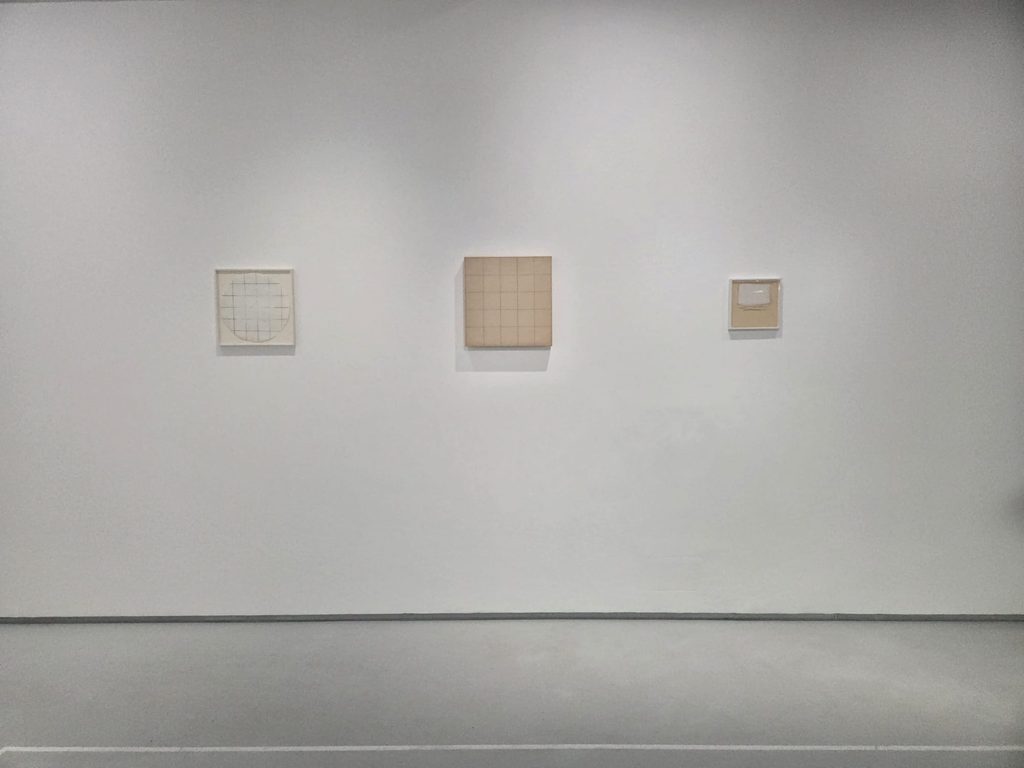
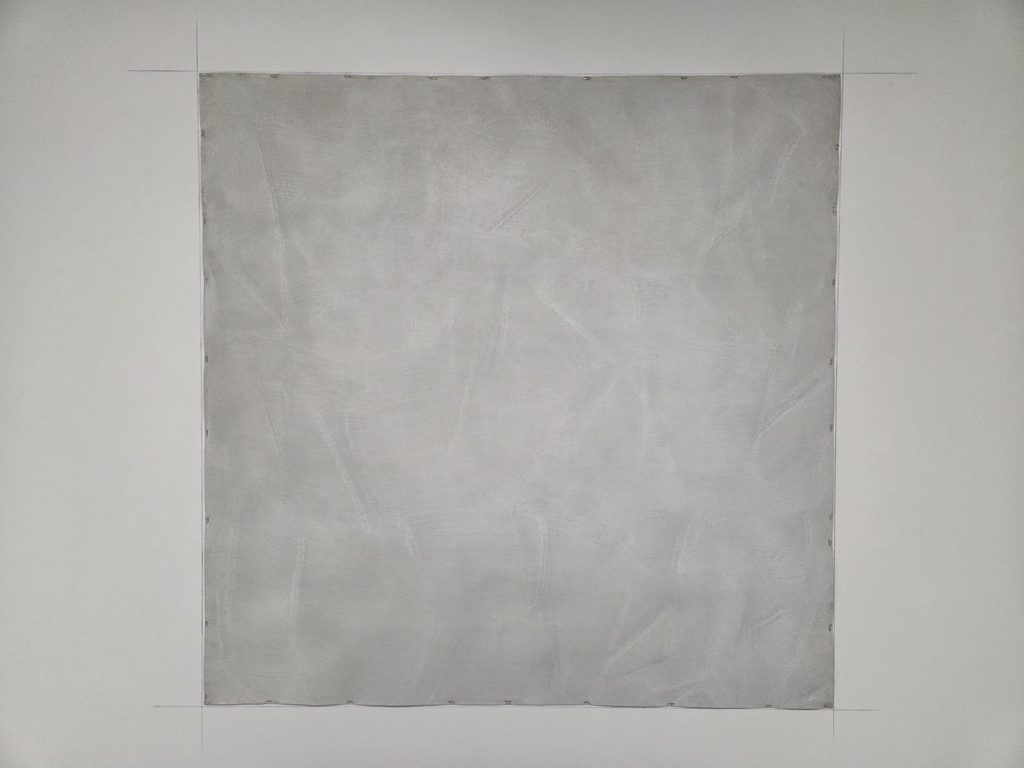
As his career progressed, Ryman preferred to be known as a ‘realist’ rather than a minimalist. For him, presenting the materials themselves was the thing, working with space and light. It’s possible to see the impact of Abstract Expressionist techniques and ideas in his work, particularly artists like Mark Rothko and Barnett Newman who also played with the idea of painting itself. While Ryman continued to produce works in white to explore his ideas, he found endless ways to do this, using canvas, plexiglass, vinyl, newsprint, jute, aluminium, copper, metal brackets, masking tape, and more as supports, and oil, acrylic, pastel, gouache, graphite, encaustic, and more as media.
Ryman was married twice: to art historian Lucy Lippard in 1961, and artist Merrill Wagner in 1969. Between these marriages he had three children. He died in 2019, aged 88.
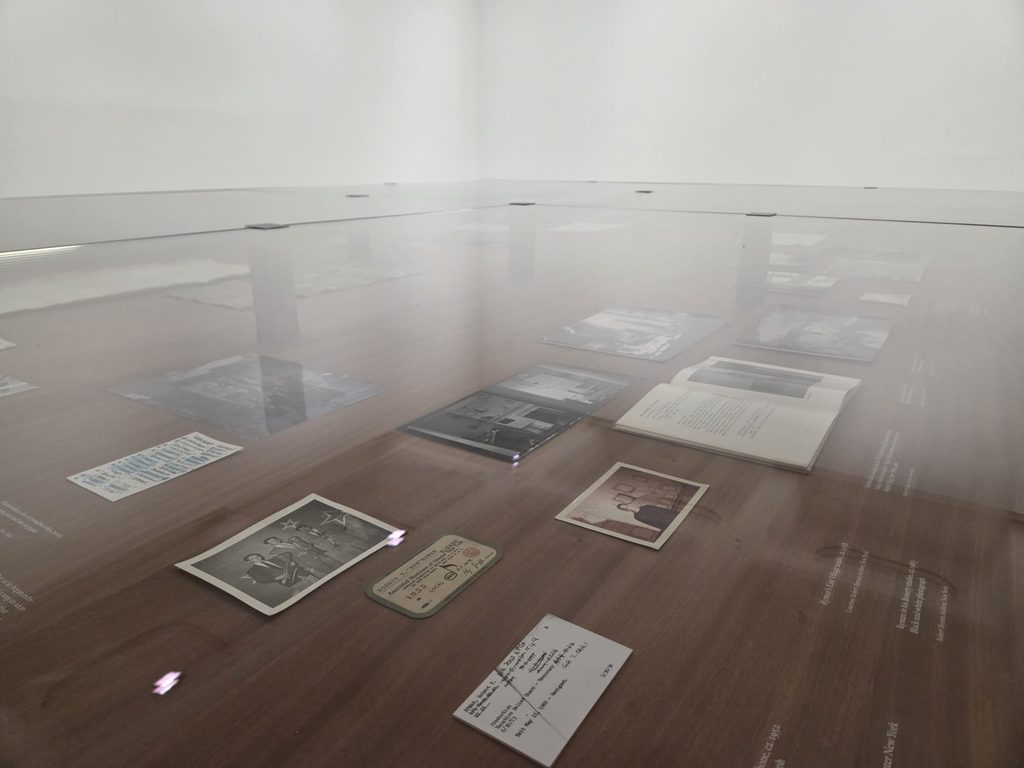
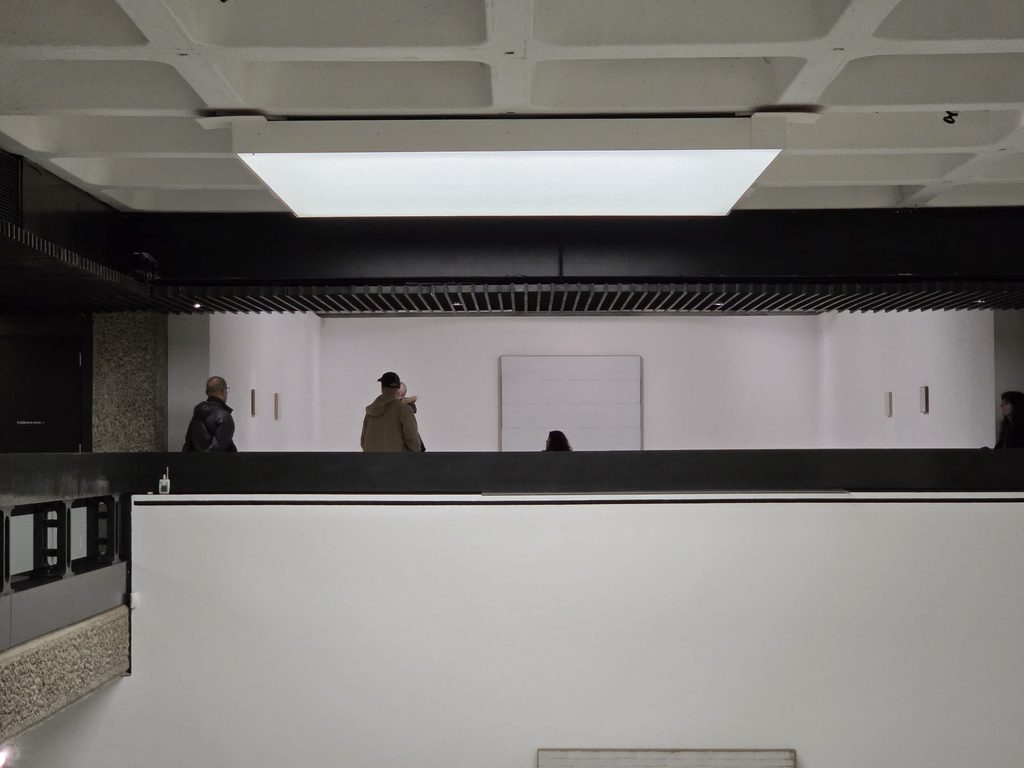
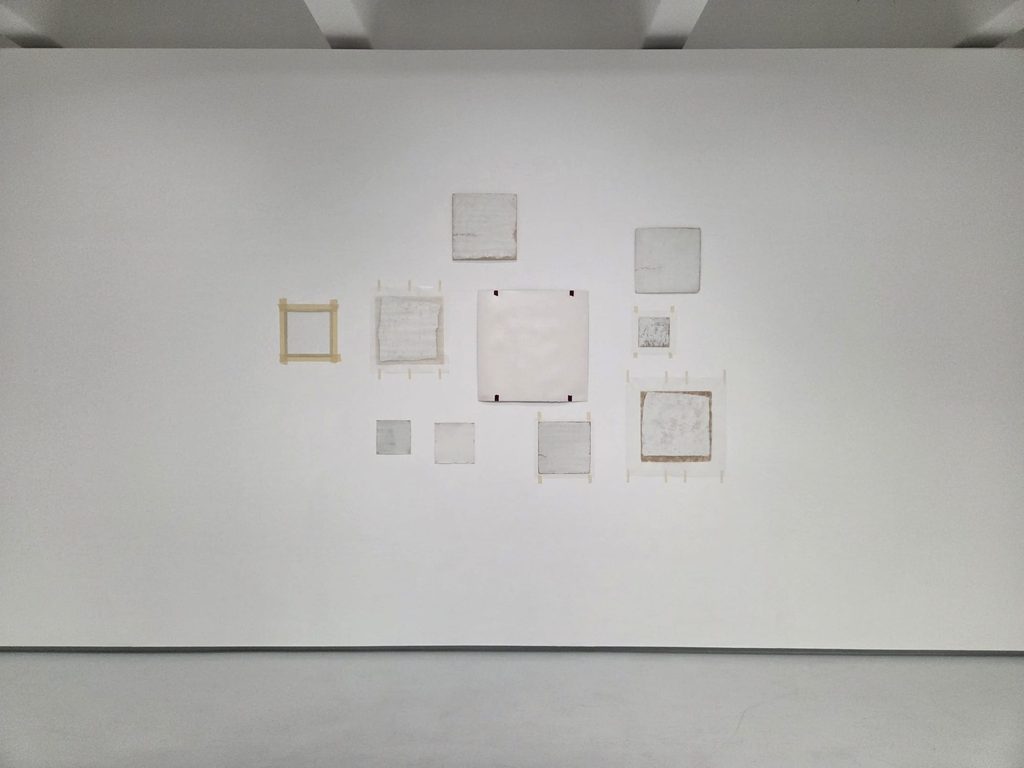
Testing the Limits of Painting
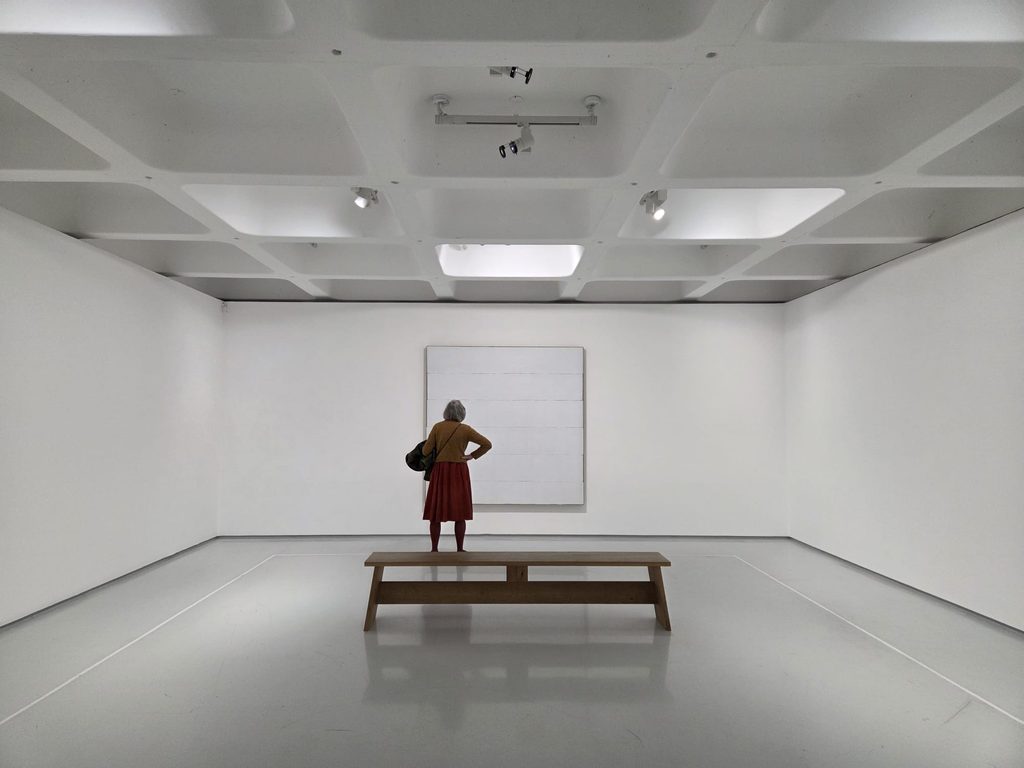
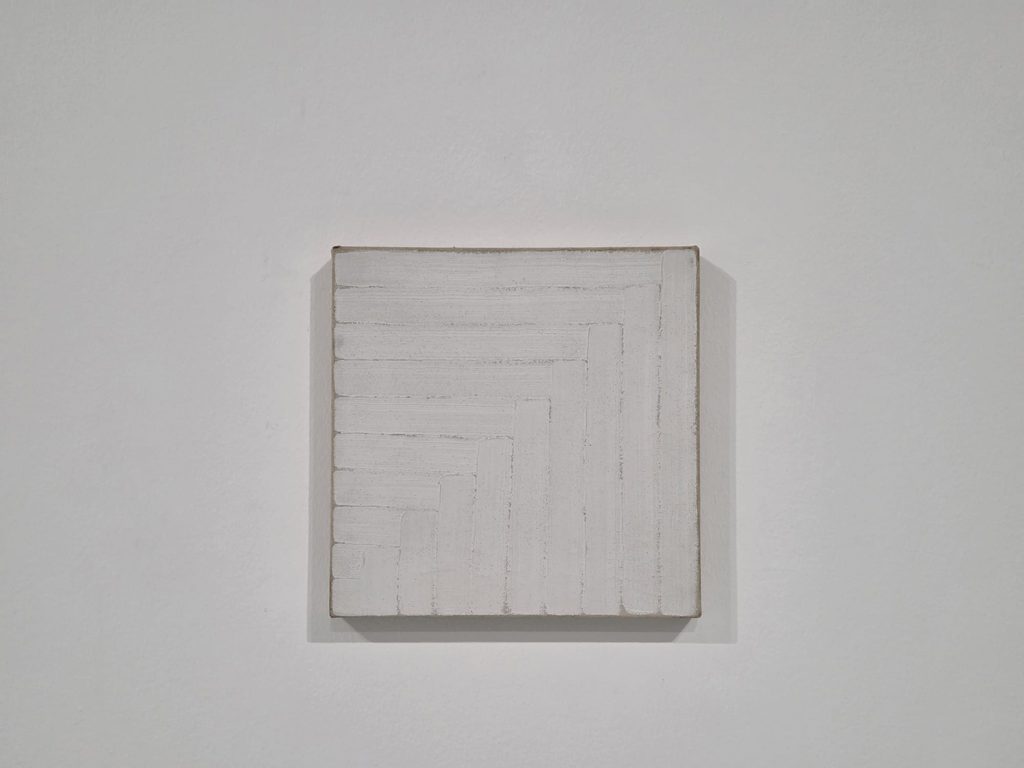
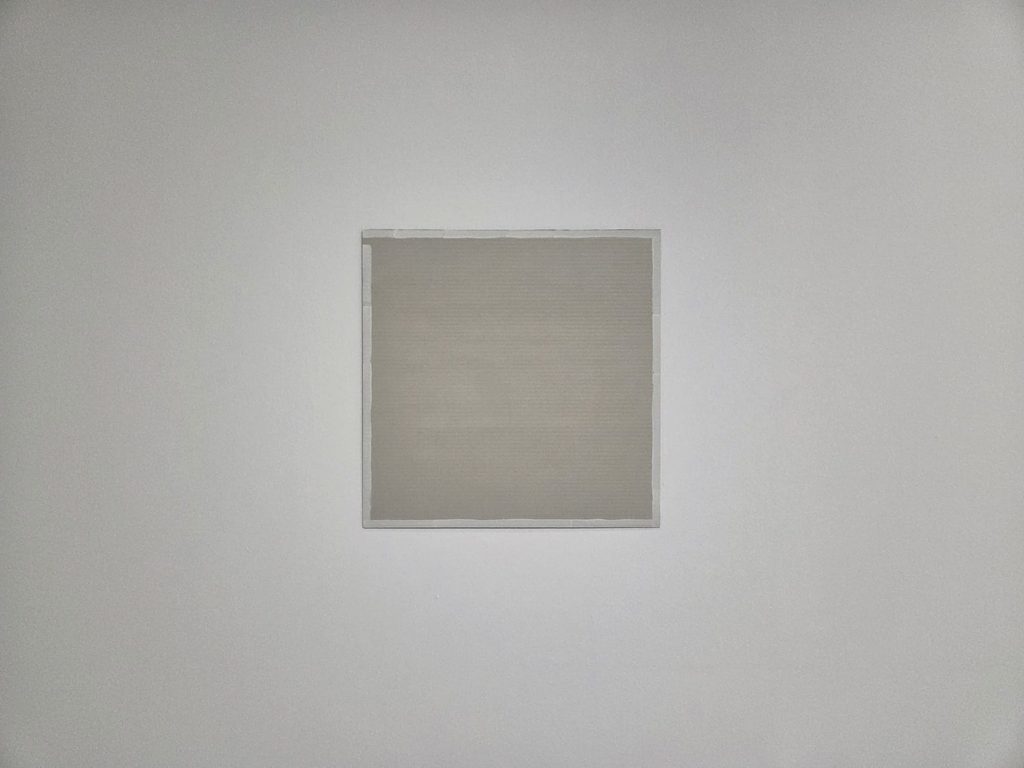
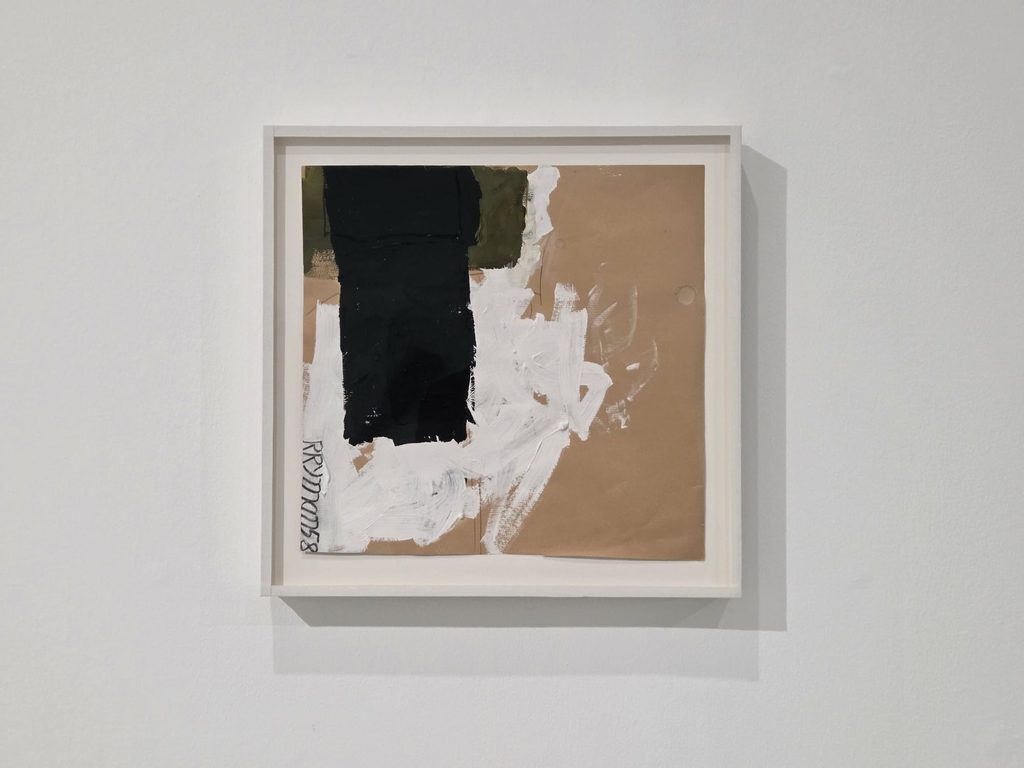
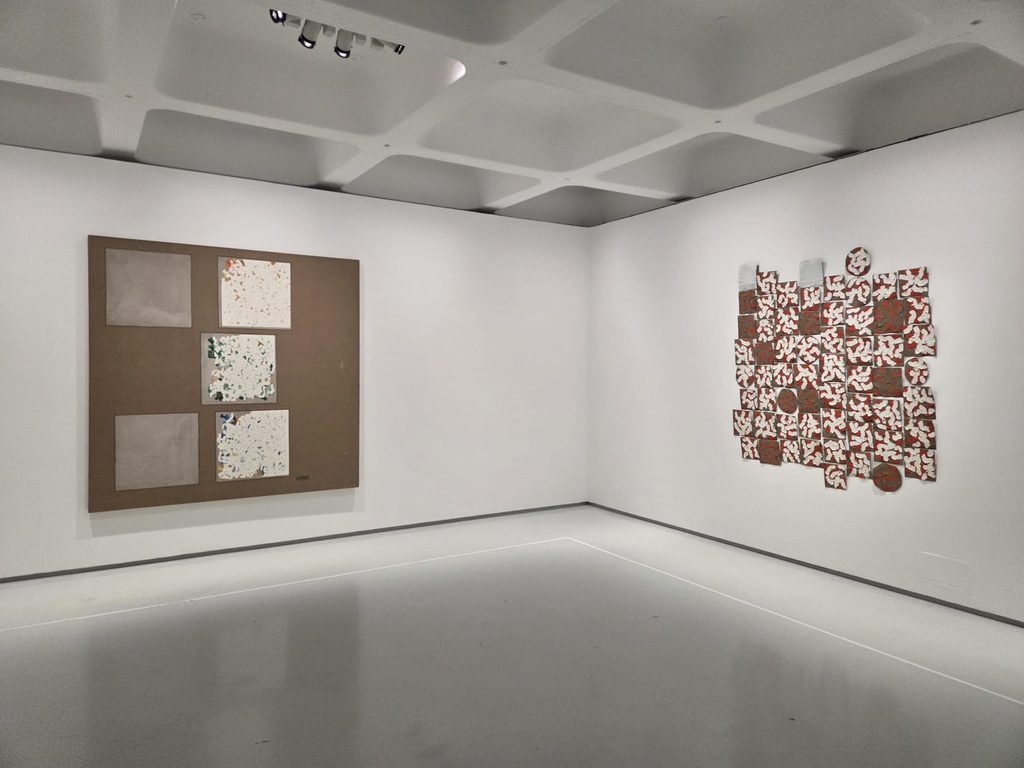
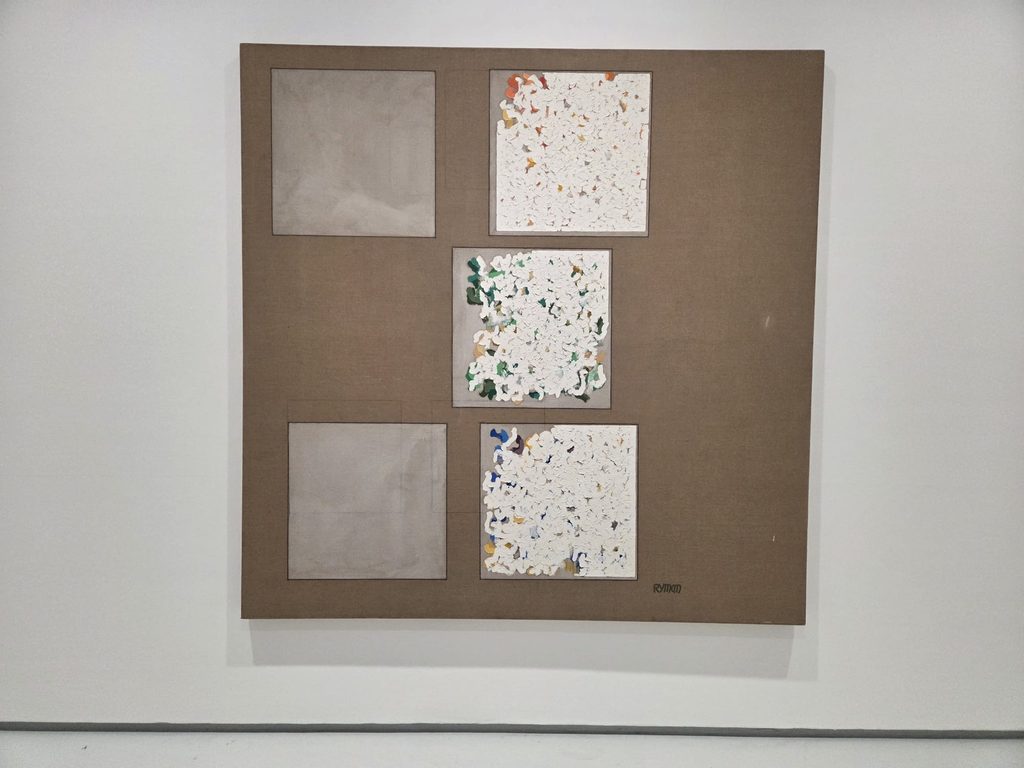
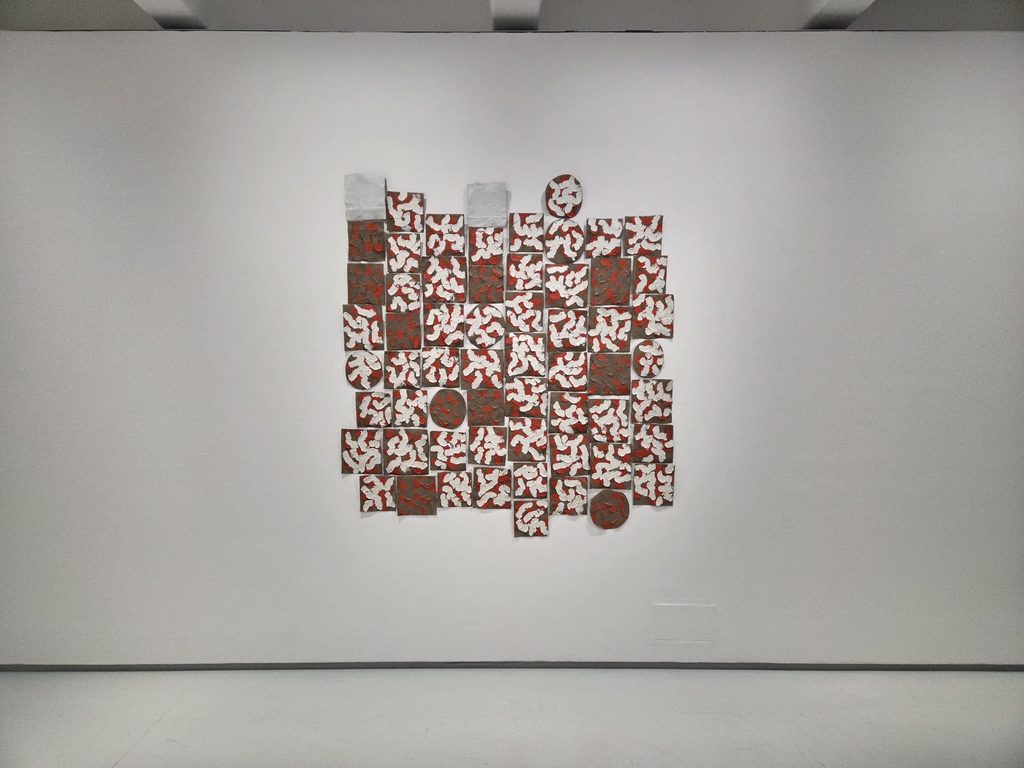
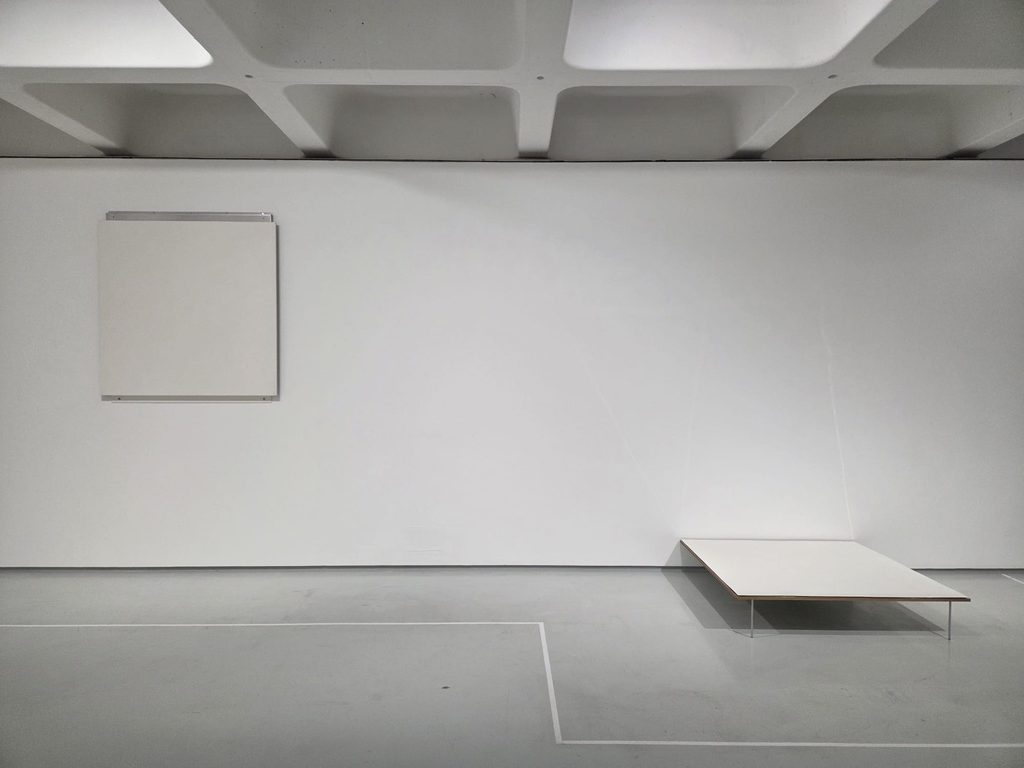
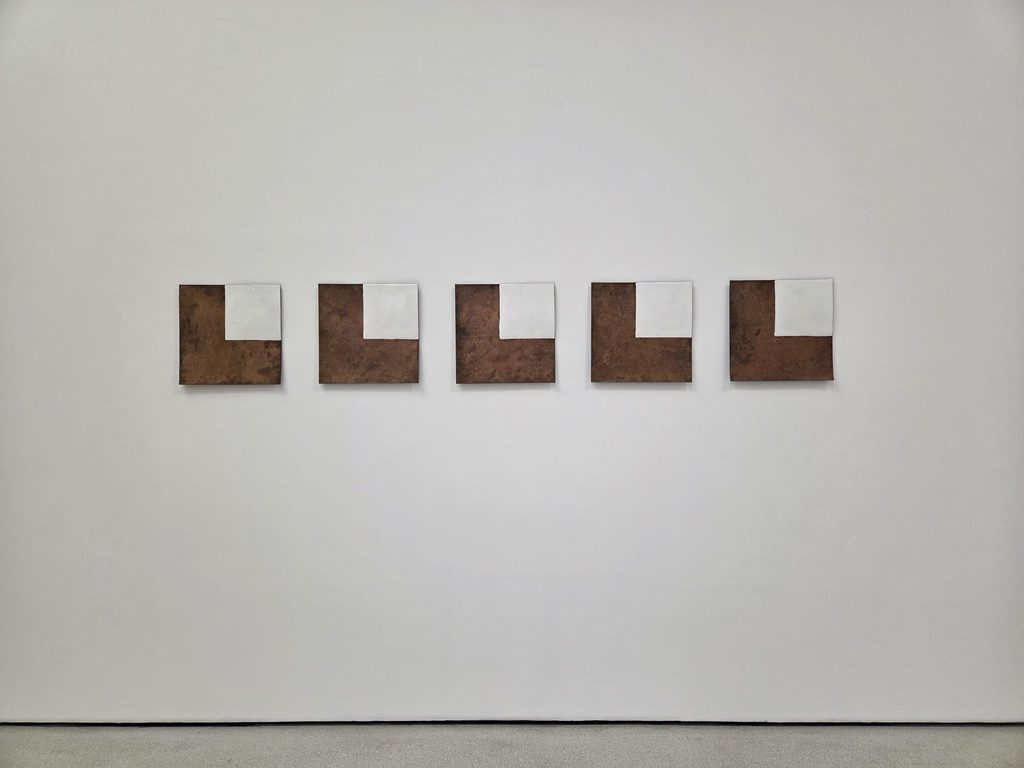
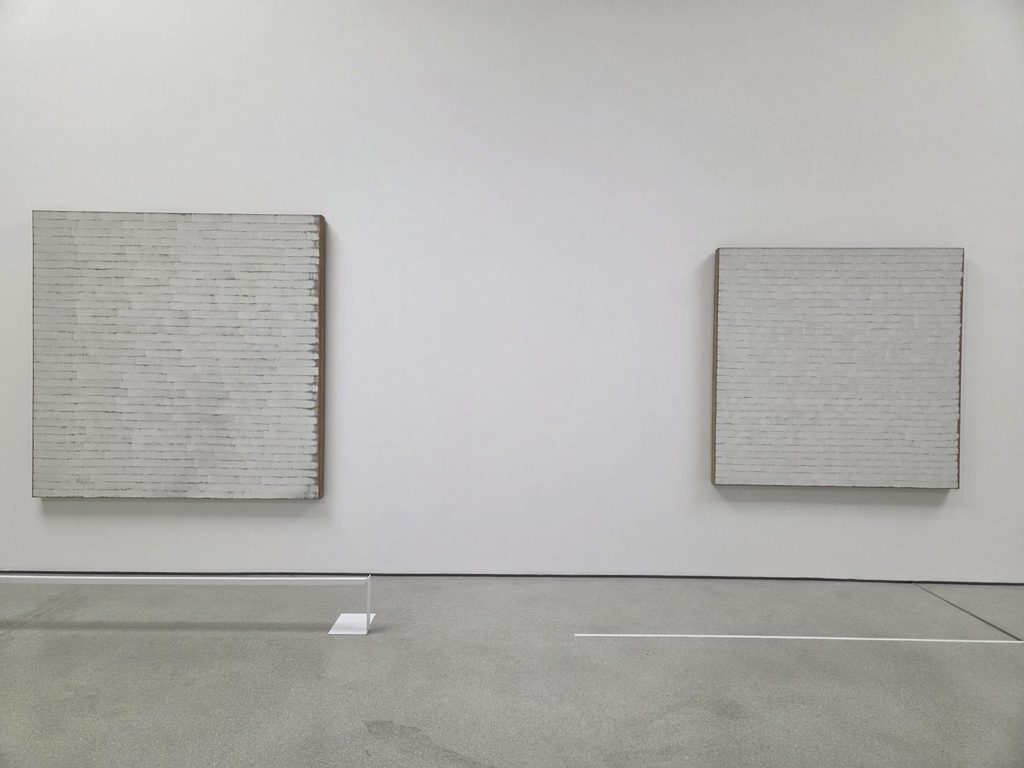
As you’ve already seen in the images so far, Ryman’s really is a lot of white paintings. But, as I walked around the Barbican galleries, I started to feel like I got it. Other artists had already started testing the limits of painting and paintings: aside from those already mentioned, consider Jackson Pollock, even Lucio Fontana. By sticking to white, removing all colour (although not quite, as we’ll see), Ryman could really get at the essentials.
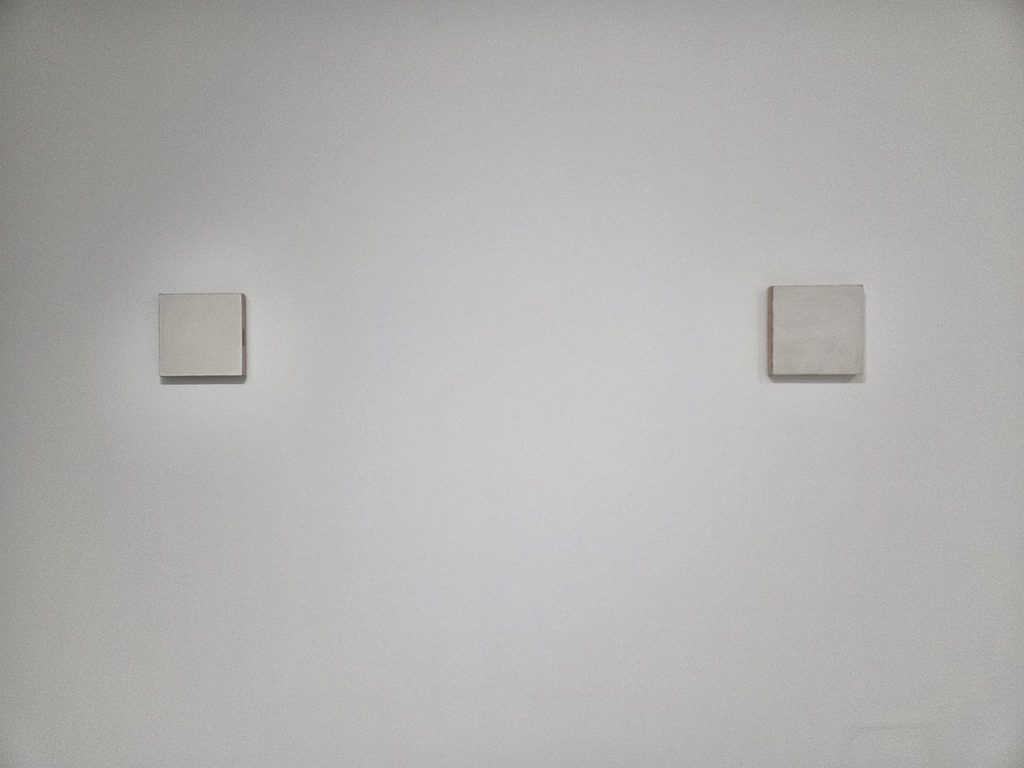
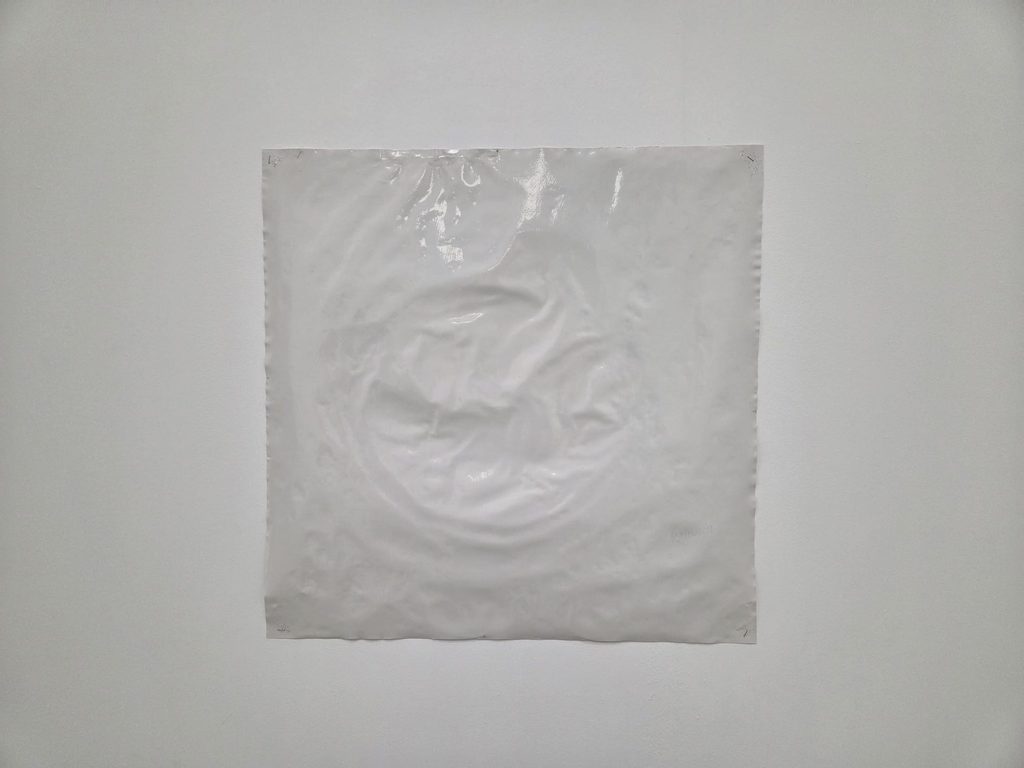
First of all, there is the play of light over the painted surface. Ryman was an ultimate Benjaminian – for him seeing “the real thing”, ie. a real painting, was what was important. He cared deeply about the presentation of his works, even sprucing up some gallery spaces to ensure the right backdrop. But we come back to the fact that the physical painting, and the play of light upon it, are important. He thus played around with different patterns, brushstrokes, and media, as we’ve discussed.
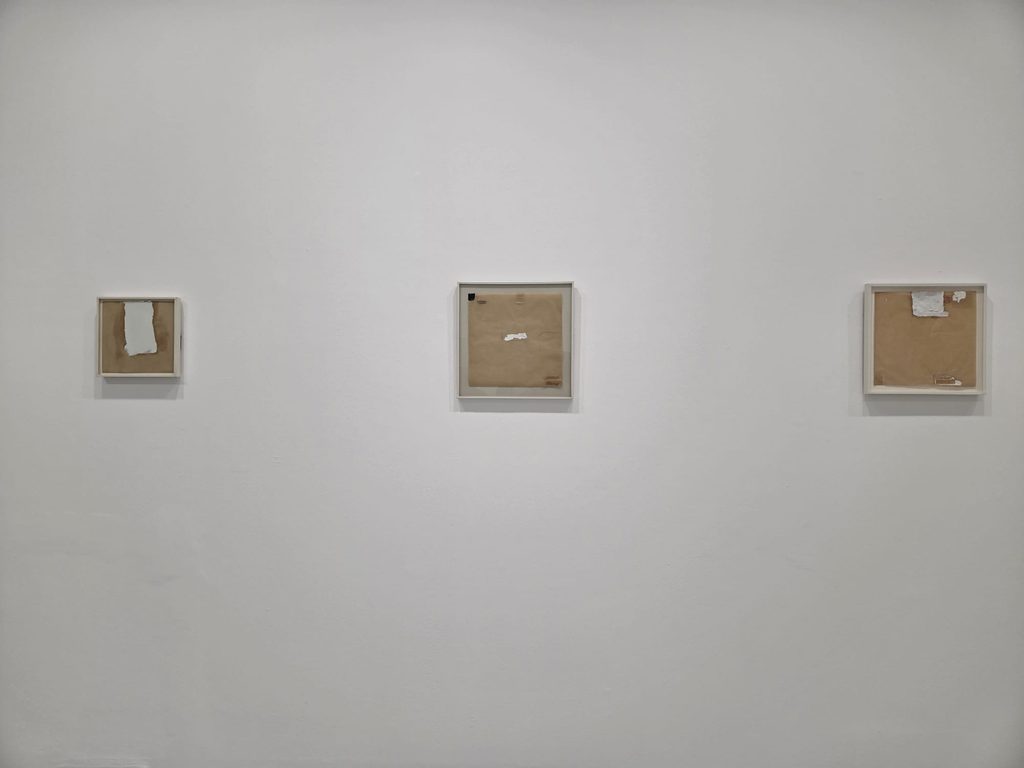
Next is the question of ‘what makes a painting’? Paint on a canvas on a wall is definitely a painting. Even if it’s white. How about paint on paper, held against the wall by another layer of paper and some masking tape. Is that still a painting? How about if the canvas touches its side to the wall, rather than laying flat on it? How about if the paint goes onto the gallery wall itself?
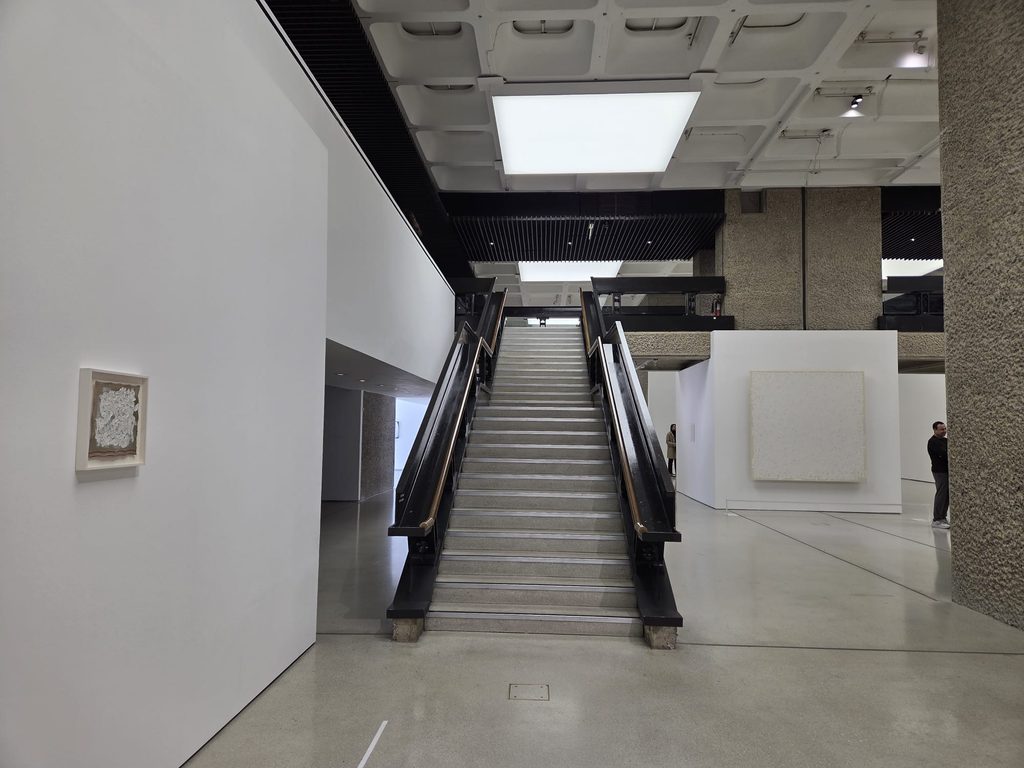
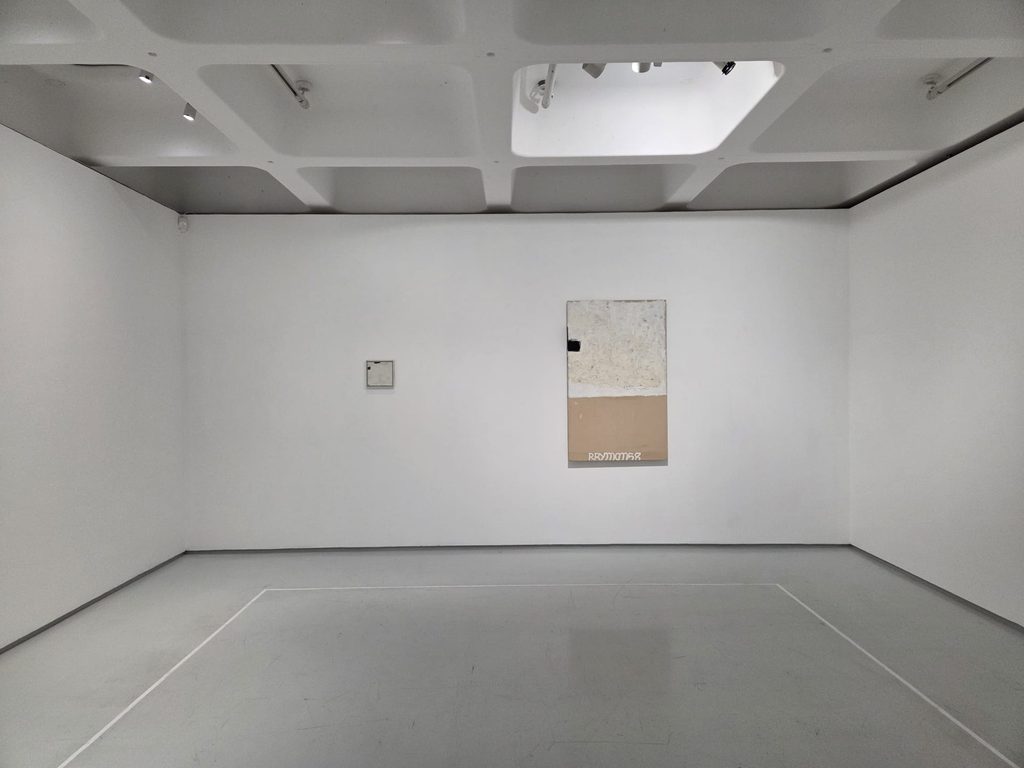
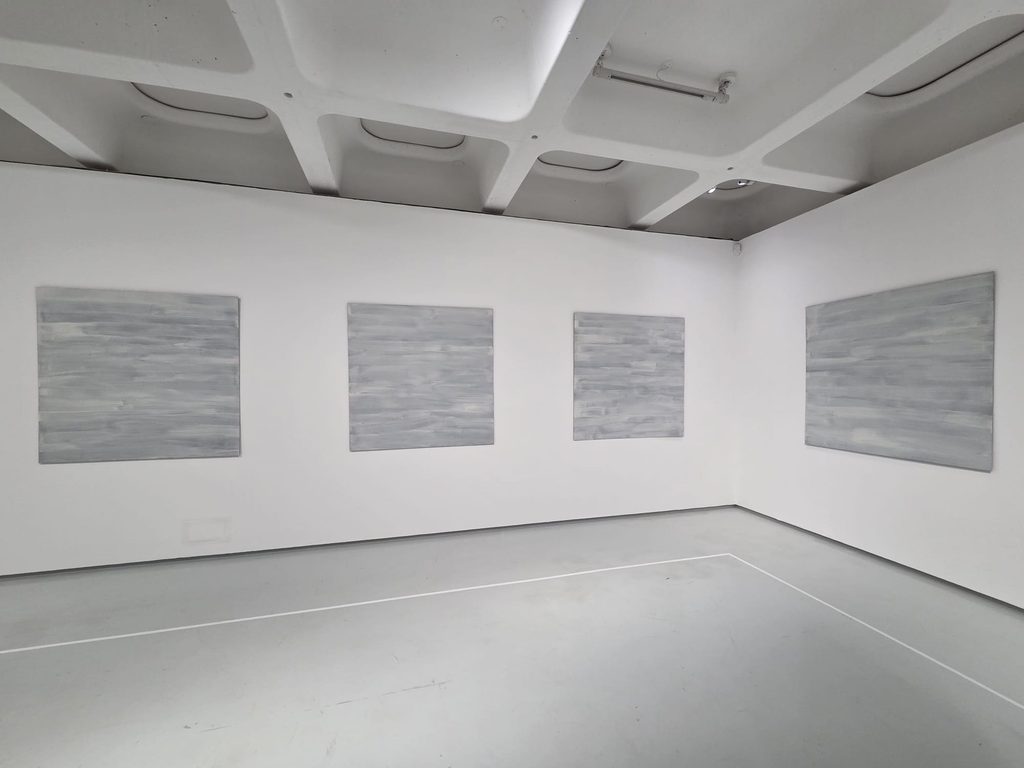
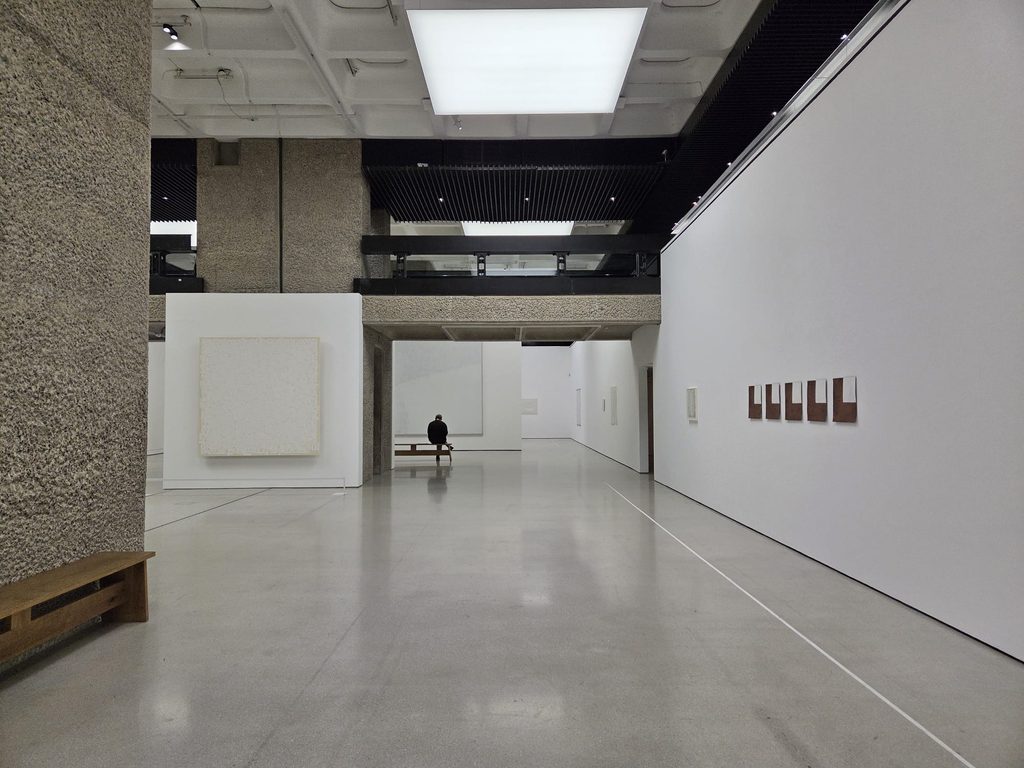
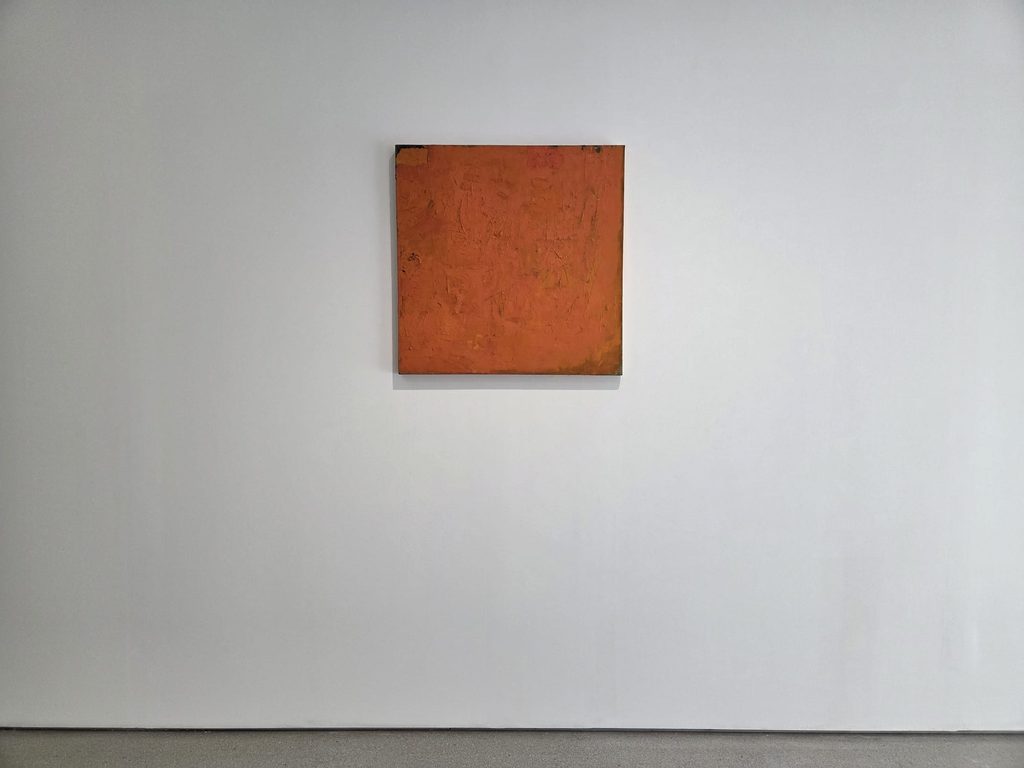
I like the typical Barbican Centre layout of an exhibition, with small galleries upstairs to learn about different aspects of an artist’s work, and then the big spaces downstairs to be wowed by larger-scale works. In Robert Ryman: The Real Thing I didn’t tire of all the white. I began to find it quite exciting, as I noticed the different textures, shades, effects. And it wasn’t all white either. There were the colours of the different supports for the works. Although by the time you reach Untitled (Orange Work), which Ryman considered to be his first professional painting, its colour seems a bit shocking.
A Few Final Thoughts
If you have the time, it’s worth watching the video in the final room right through. It shows Ryman later in life, installing an exhibition in I forget which American city. He works with gallery staff to carefully measure and prepare, and then applies tape and paint to create the desired result. I understand from some of the exhibition texts that Ryman was otherwise fairly secretive about his methods, downing tools if anyone came into his studio, so watching him at work is a fascinating and rare treat.
For me, it’s almost always worth seeing a retrospective of work by an artist not much represented in UK collections. Well, the Tate have a few, that kind of thing. But he’s a very American artist, somehow. Not as well known over here. I hope this exhibition is an opportunity for him to be better known in the UK. When the Urban Geographer and I visited, I have to say it was a little quiet for a weekend. Maybe the free festival of South Asian performance was a bigger draw. But the other visitors seemed to be art afficionados like us, so I wonder if this monochromatic exhibition is not quite pulling in the crowds.
If that is the case (and it’s based purely on circumstantial evidence and speculation), it would be a shame. Robert Ryman: The Real Thing is another high-quality Barbican exhibition, which is well-curated, introduces interesting perspectives on the artist’s work, and has pulled together great examples from around the world. I was pleased with my exhibition pick, and had a good conversation with the Urban Geographer about it in the Barbican canteen. Seeing the real thing really brought Ryman’s work to life.
Salterton Arts Review’s rating: 4/5
Robert Ryman: The Real Thing on until 28 February 2027.
Trending
If you see this after your page is loaded completely, leafletJS files are missing.