
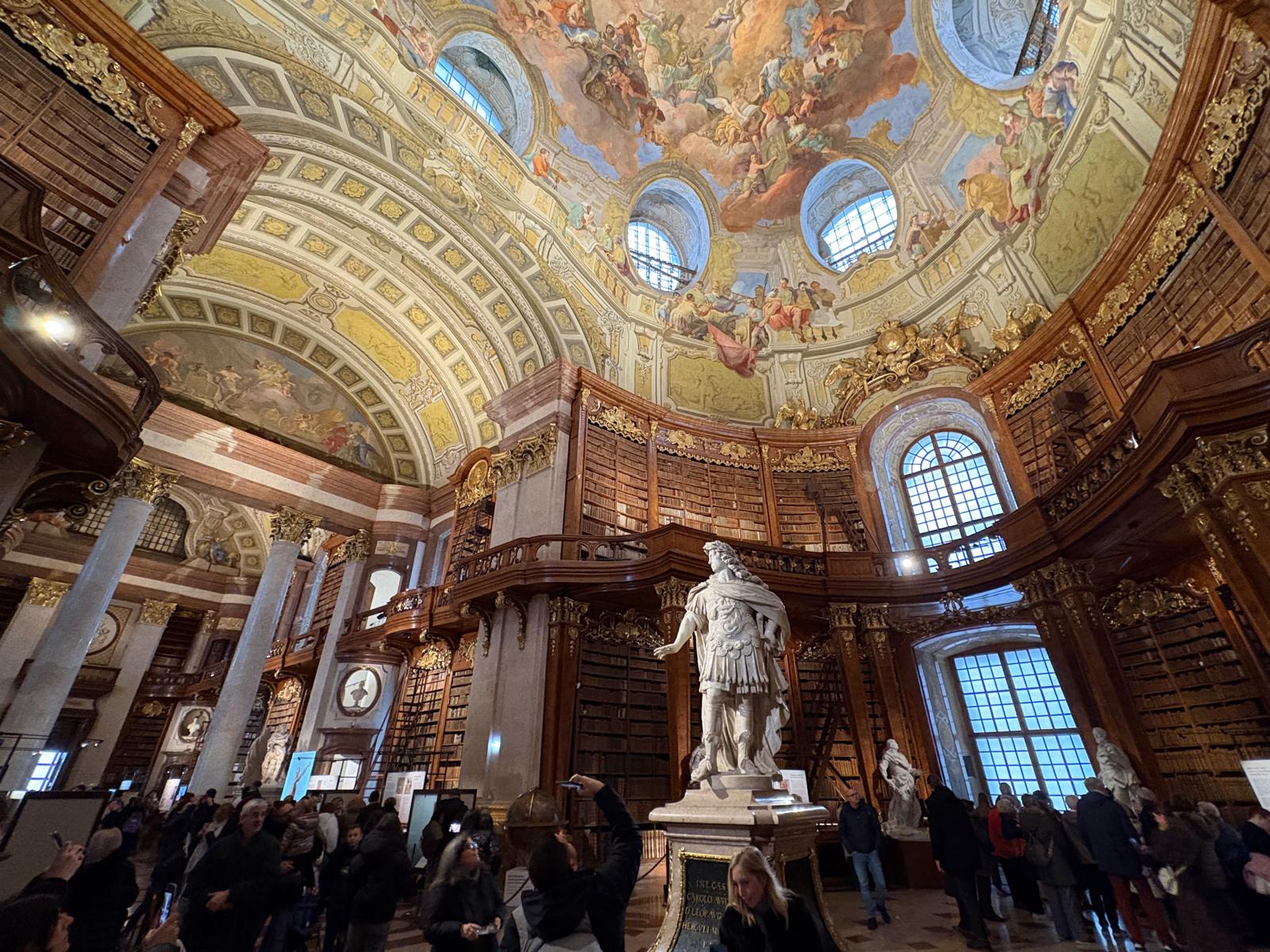
State Room, Austrian National Library (Prunksaal, Österreichische Nationalbibliothek), Vienna
Today we see the jewel in the crown of Austria’s national library: the Prunksaal, or State Room.
A Slight Miscalculation, But We Went With It
Today’s post continues in the Habsburg theme of the Salterton Arts Review’s trip to Vienna. We started with the Kunsthistorisches Museum, whose collections come from centuries of imperial art collecting. Next up was the Kaisergruft, or Imperial Crypt, where we saw royal sarcophagi ranging from modest to high Baroque. And today we will visit the Prunksaal.
The Prunksaal, or State Room, is part of Austria’s National Library. Formerly the Imperial Library, as we will learn shortly. Notably, it’s just one part of the National Library. The library is vast, with departments covering rare books, maps, music, languages, and folksong. And the Prunksaal is far from the only museum! There’s also the Literature Museum, Papyrus Museum, Globe Museum, Esperanto Museum, and House of Austrian History.
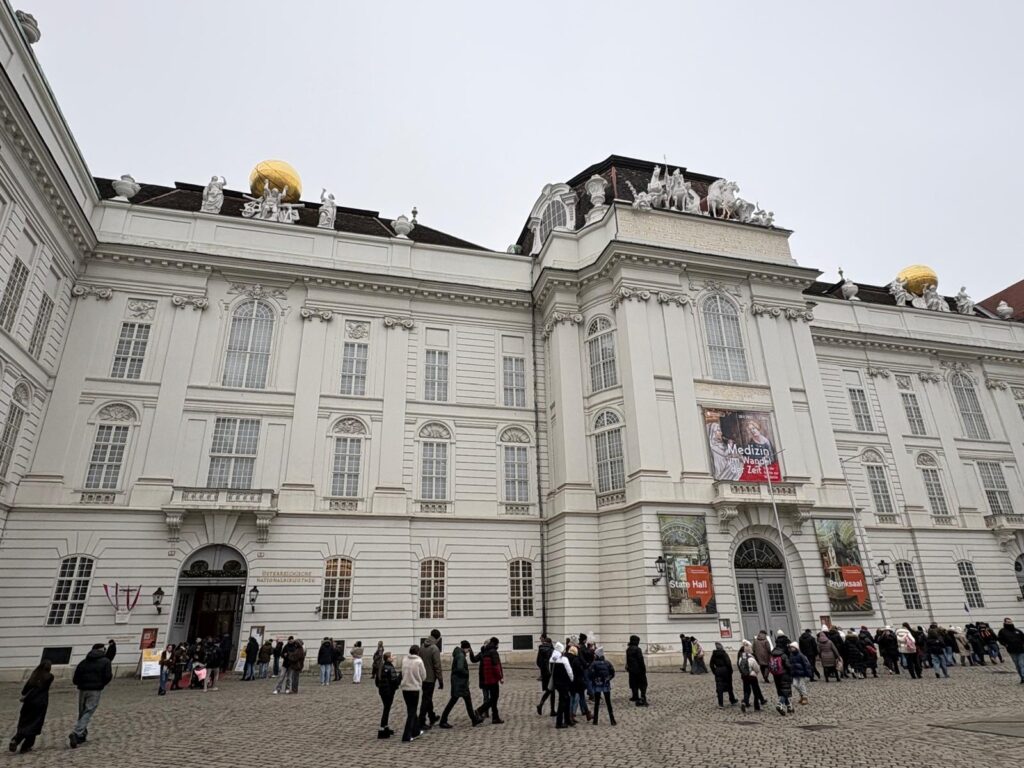
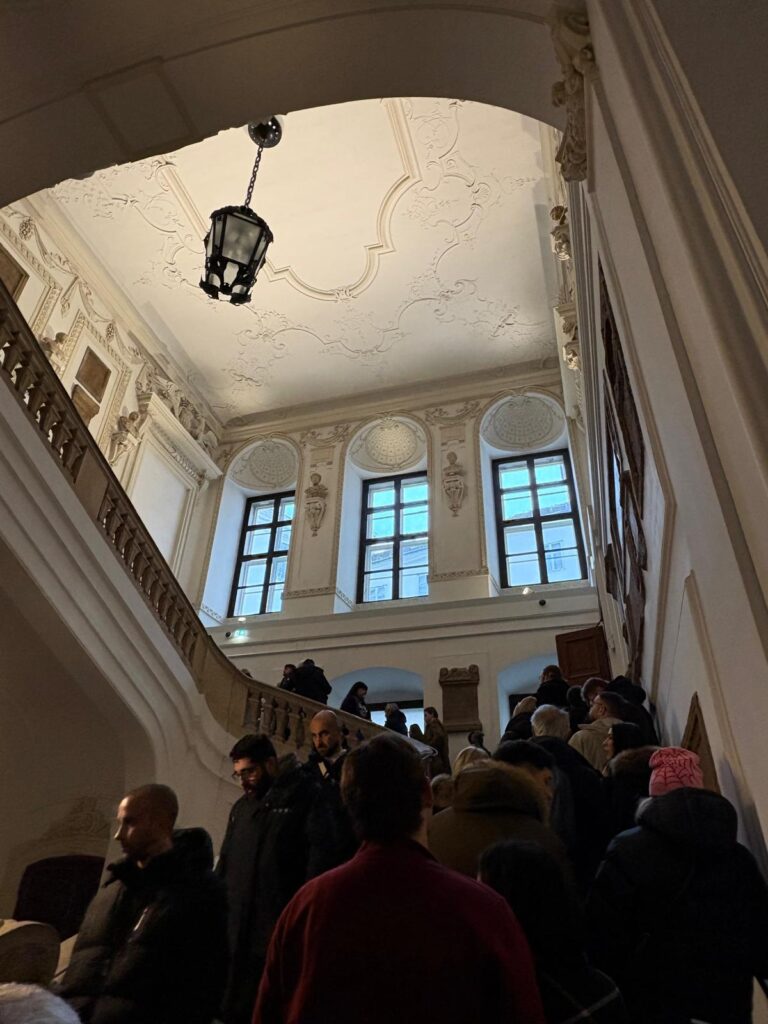
But more than one person had recommended the State Room to us, so on a Saturday morning with no plans, we decided to head over there. That was our first mistake. If you can avoid visiting on a weekend, I highly recommend it. Upon arrival we had a short wait for tickets. The next step was queueing up an internal staircase to get into the State Room (which was one in/one out by this point). You can imagine how busy it was inside. By the time we left, the ticket queue had moved outside to an external courtyard. So this is one sight in Vienna I recommend with caveats. Either find a quiet time to visit, or just accept that you’re not exactly going to have a peaceful library experience.
The Austrian National Library: A Brief History
To understand the origins of the Austrian National Library, we have to look back to Albert III, Duke of Austria, who in the 14th century brought various imperial books together into a library. He also ordered the translation of some works into German, and founded a workshop for the illumination of manuscripts, so was a proto-library champion indeed. Holy Roman Emperor Frederick III continued consolidation efforts in the 15th century, bringing books to Vienna from other locations including Prague. Also in the 15th century Mary of Burgundy, known as Mary the Rich, married into the Habsburgs bringing with her a dowry full of books amongst other riches.
From these early beginnings, things got a bit more scientific in the 16th century. The first Head Librarian, Hugo Blotius, was appointed in 1575. He drew up an inventory of the collection, which then numbered around 9,000 books. In the 17th century the library began to consistently receive copies of new works, as well as continuing to expand through purchases. It was only in 1722 that the library found its first permanent home, within the inner-city Hofburg Palace.
Napoleon had an impact on Vienna as he did through much of Europe. In this case, he signalled the end of the Holy Roman Empire, and the start of the Austrian Empire (which had existed previously, but this was a new beginning). A new beginning for the library too, which took this opportunity to reflect on its purpose. It came up with a three-fold aim: to hold resources for the instruction of the imperial establishment; to be the national library of the Empire and hold literary rarities; and to be the local library of the Hofburg. Subsequent political changes have also enacted change upon the library: the gathering and dispersal of Hungarian-language books, for instance.
Today, the Austrian National Library collection has more than three million printed objects out of around seven million in total. We have already discussed the different focuses of the collection, each of which has its treasures.
The Prunksaal
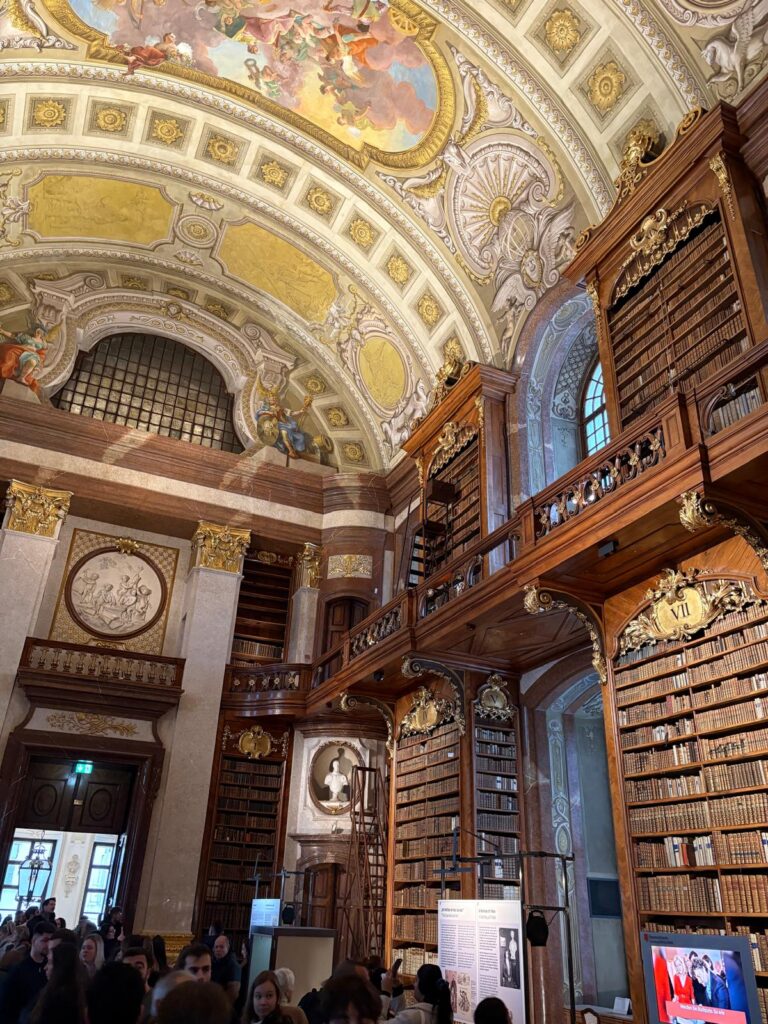
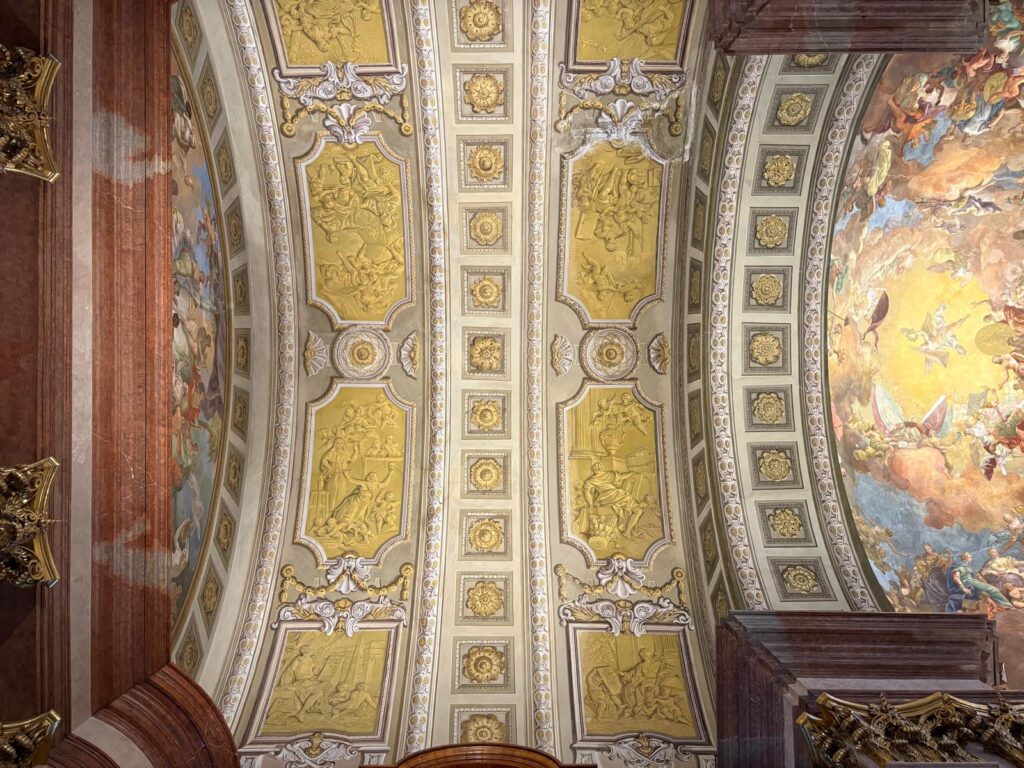
The Prunksaal, or State Room, sits within the Hofburg Palace. It is the central structure of the old Imperial Library. Architect Johann Bernhard Fischer von Erlach began working on the wing in 1721, and his son Joseph Emanuel finished it in 1723 following his father’s death.
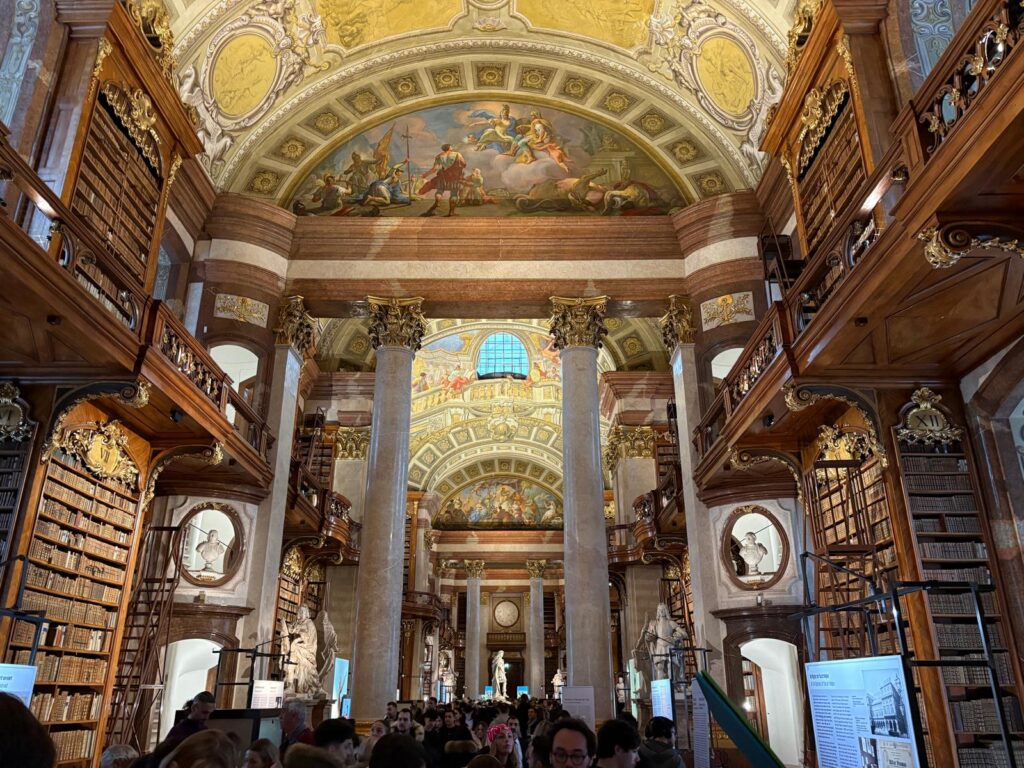
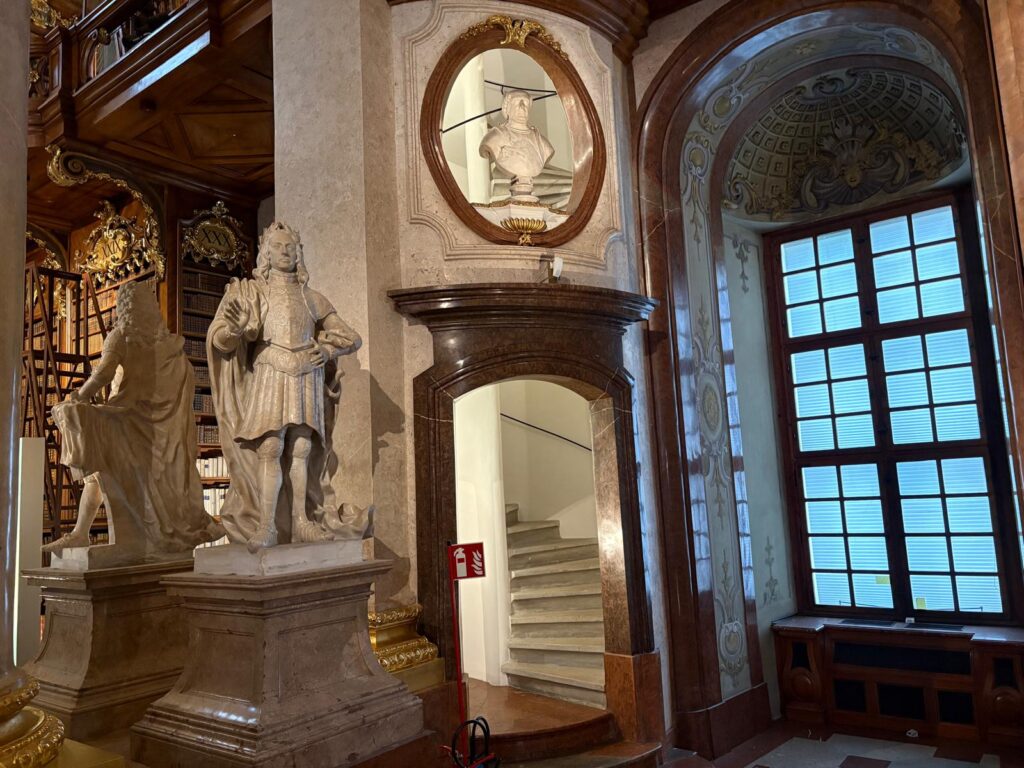
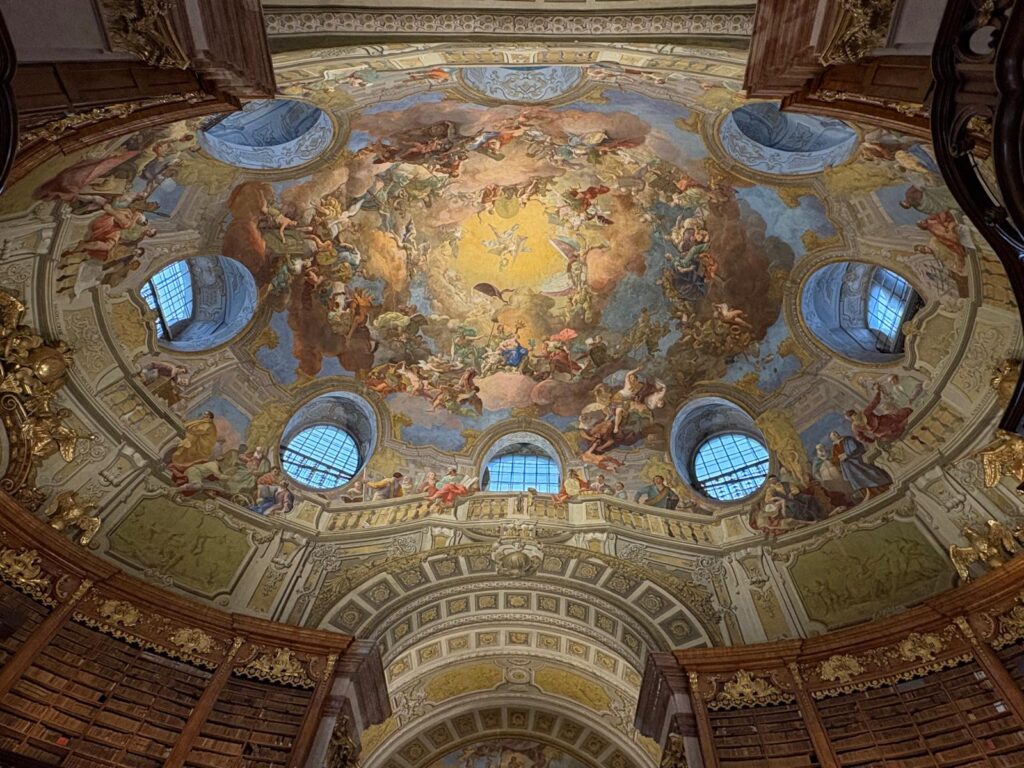
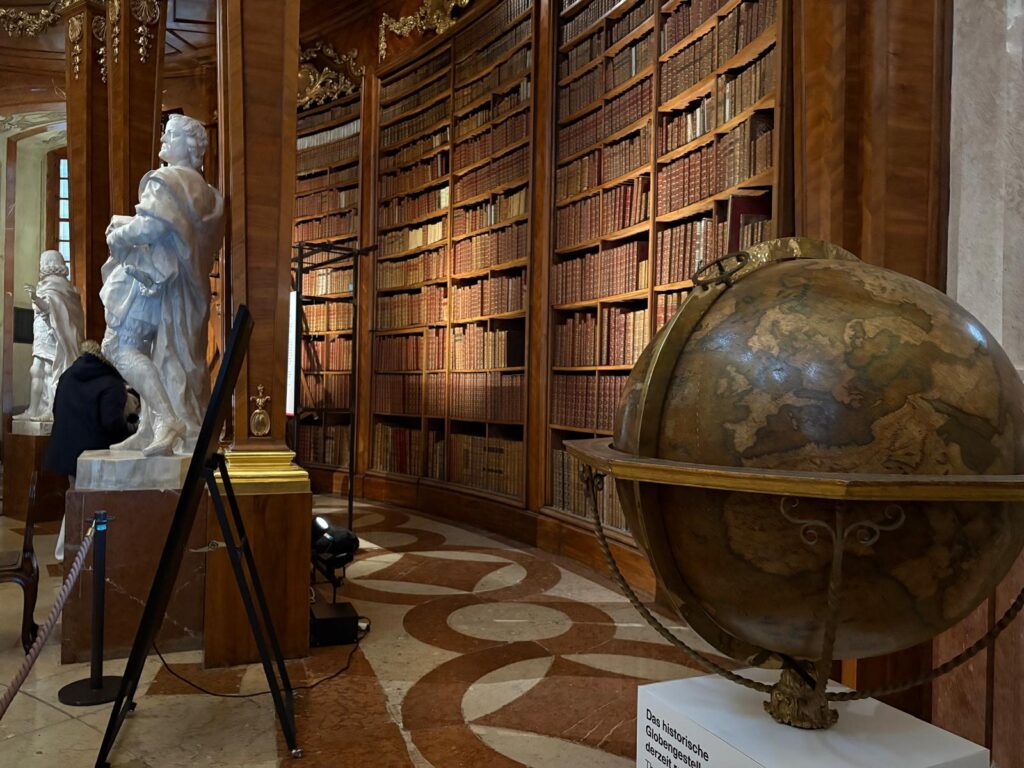
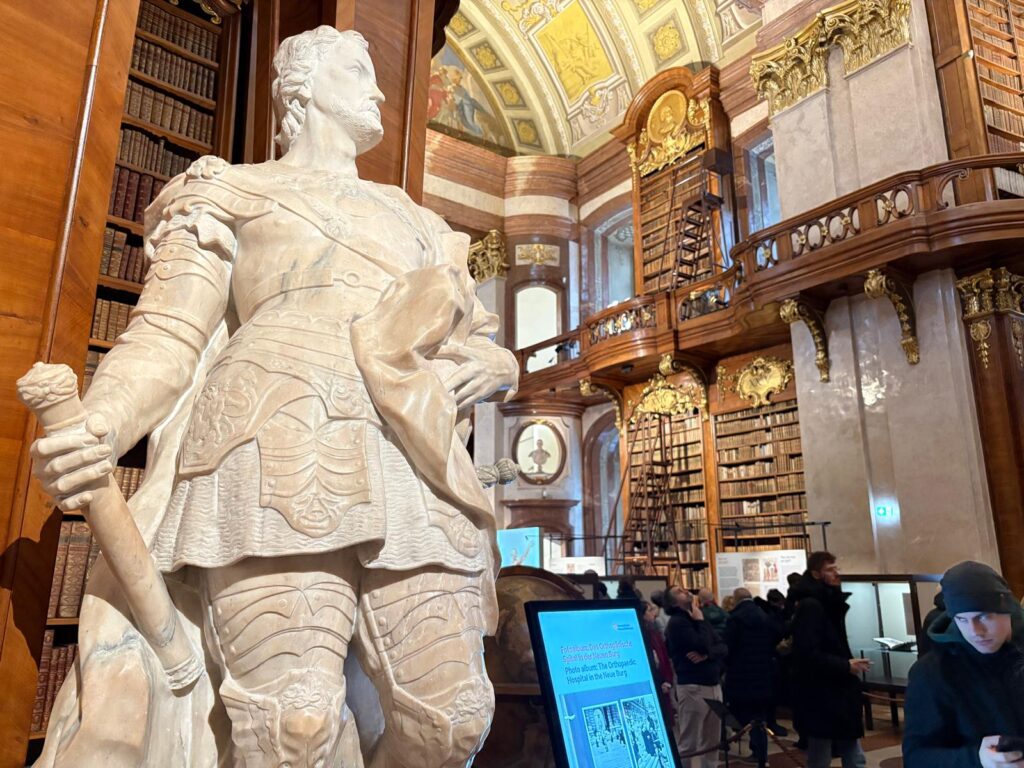
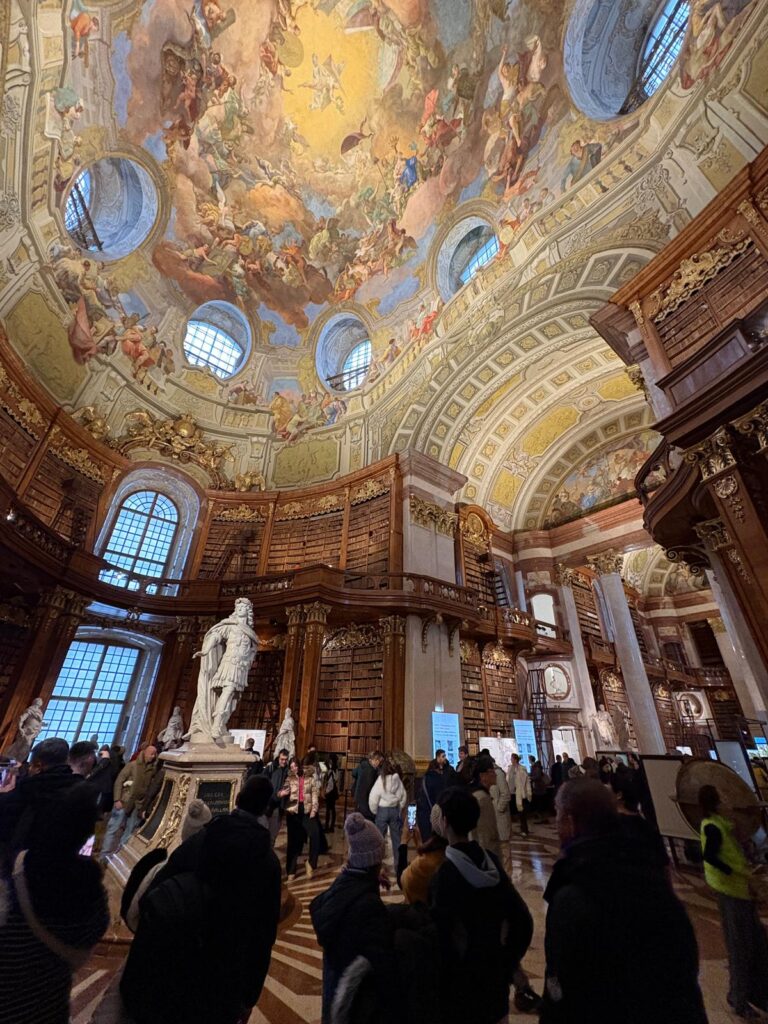
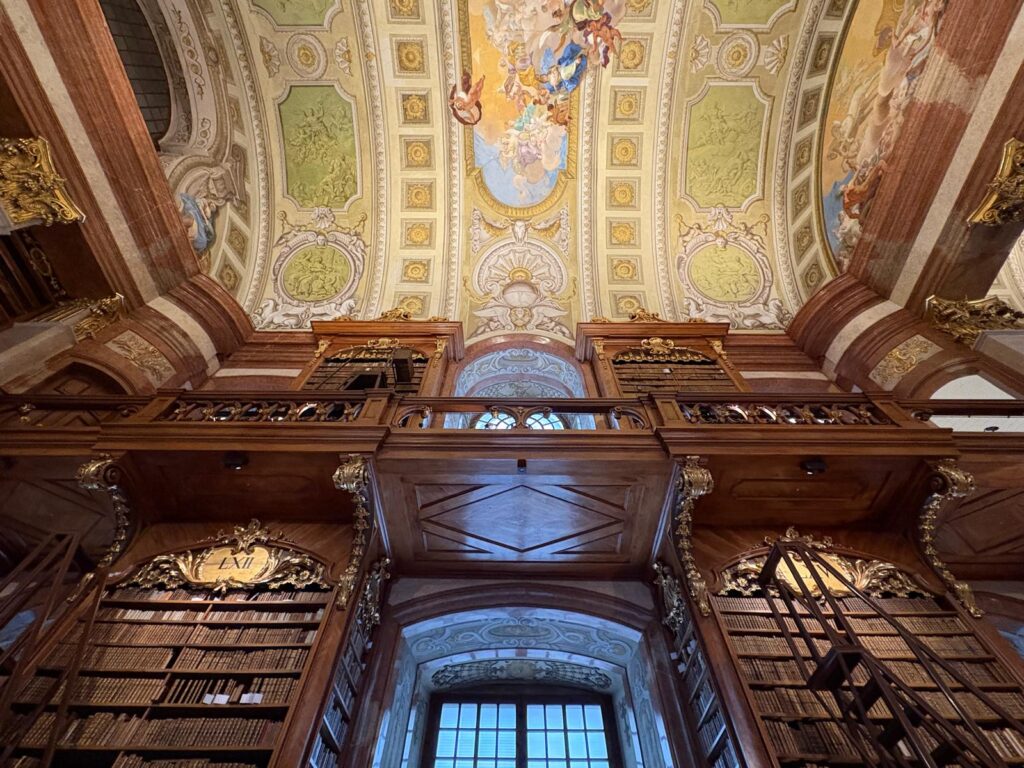
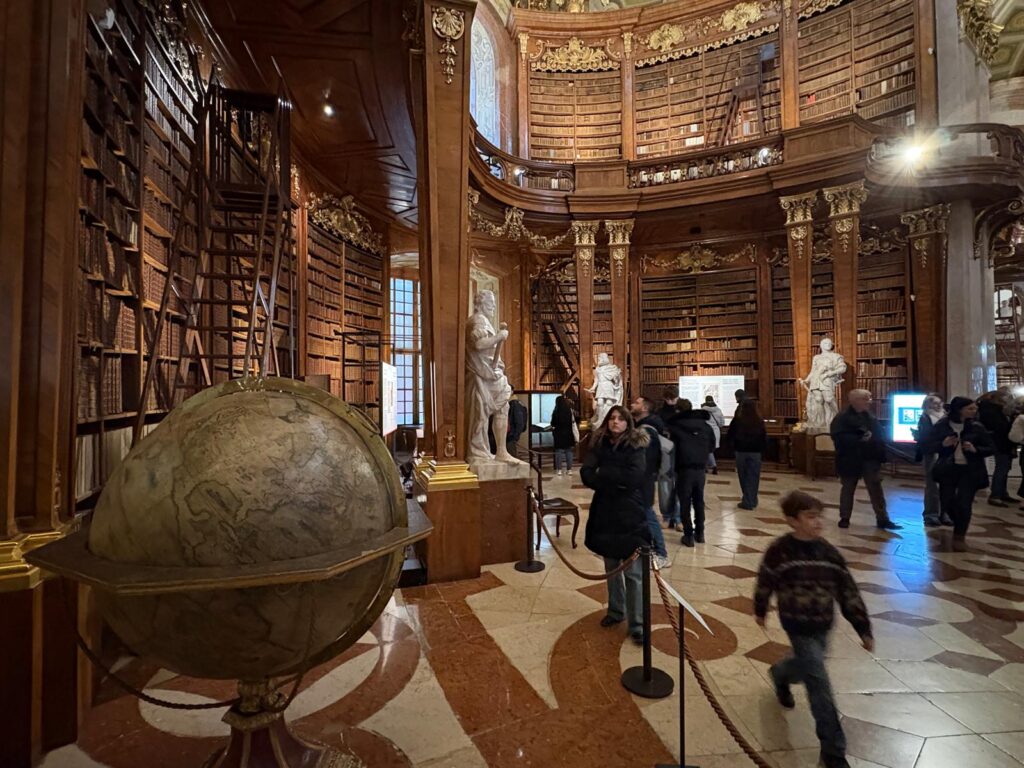
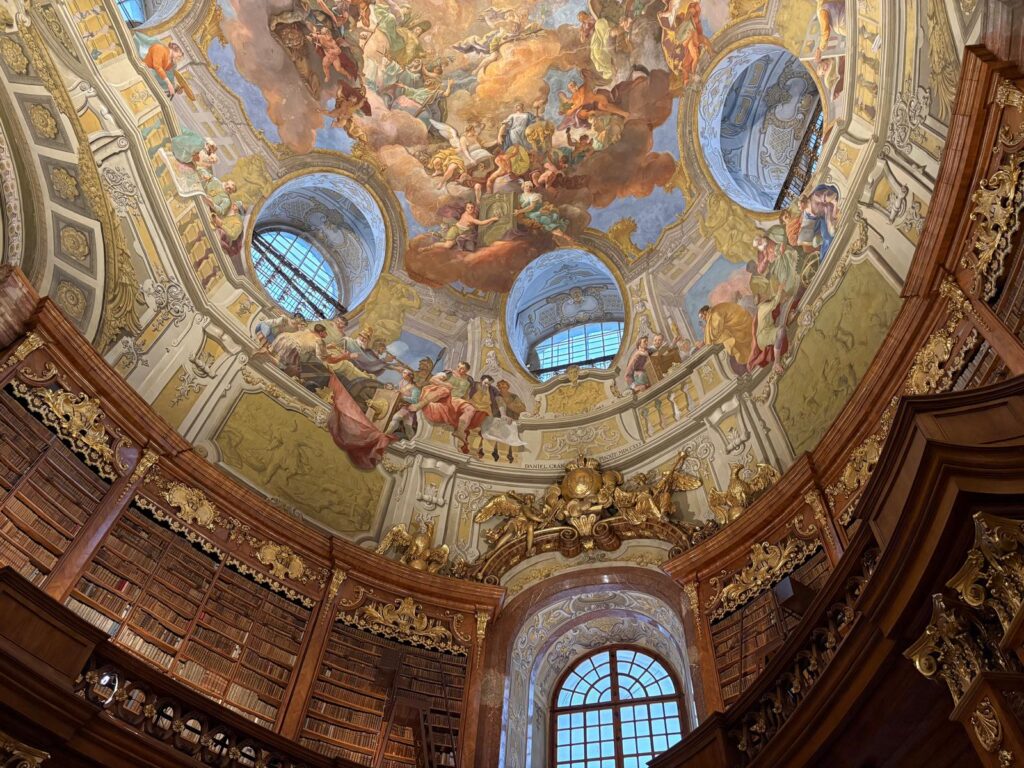
The hall is divided into ‘war’ and ‘peace’ sides. This division reflected the content of the books originally stored here, as well as in the decoration. The walls above the bookshelves have frescoes by Daniel Gran, including an apotheosis (deification or glorification) of Emperor Charles VI. Surrounding him are various Greek gods and allegorical figures telling the story of the Habsburgs and their wealth. The Prunksaal also features sculptures by Lorenzo Mattielli, marble statues of emperors by the wonderfully-named Peter and Paul Strudel, and four globes by Vincenzo Coronelli.
The Prunksaal has undergone restoration several times. In the 18th century cracks began appearing in the dome, necessitating an iron ring to shore it up, and restoration to the frescoes. Around the same time, the library wing was extended, joining it to the Hofburg and St Augustine’s Church to form Josefplatz. In more recent times, major restoration works were completed in 1955 and again in 2022.
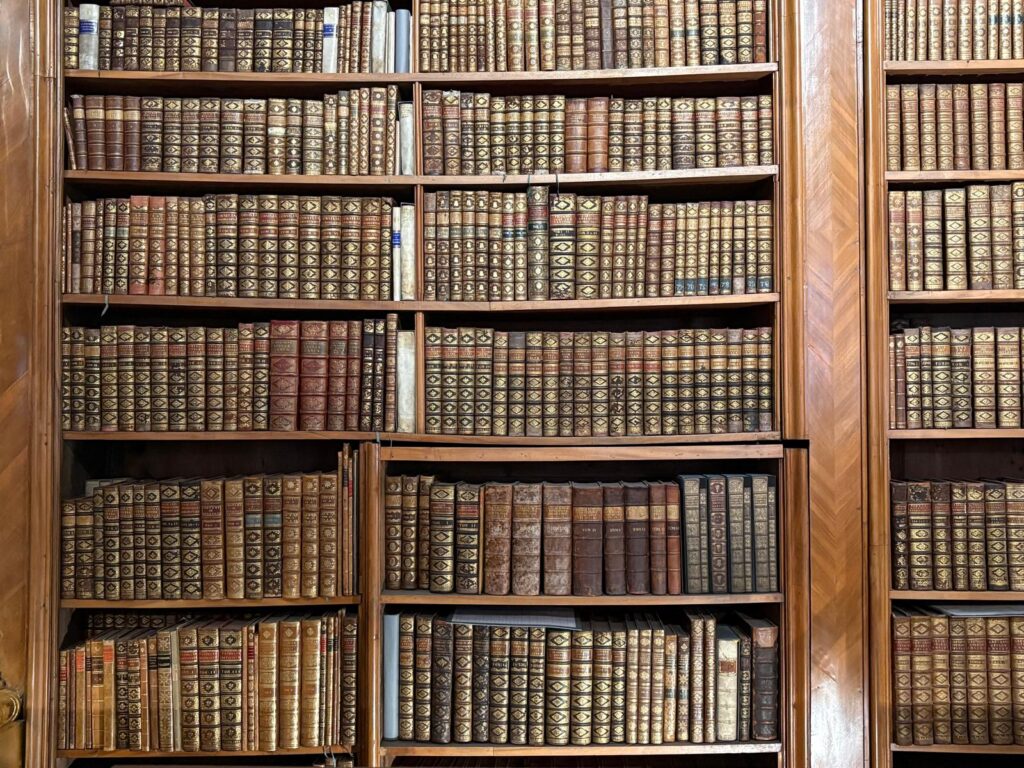
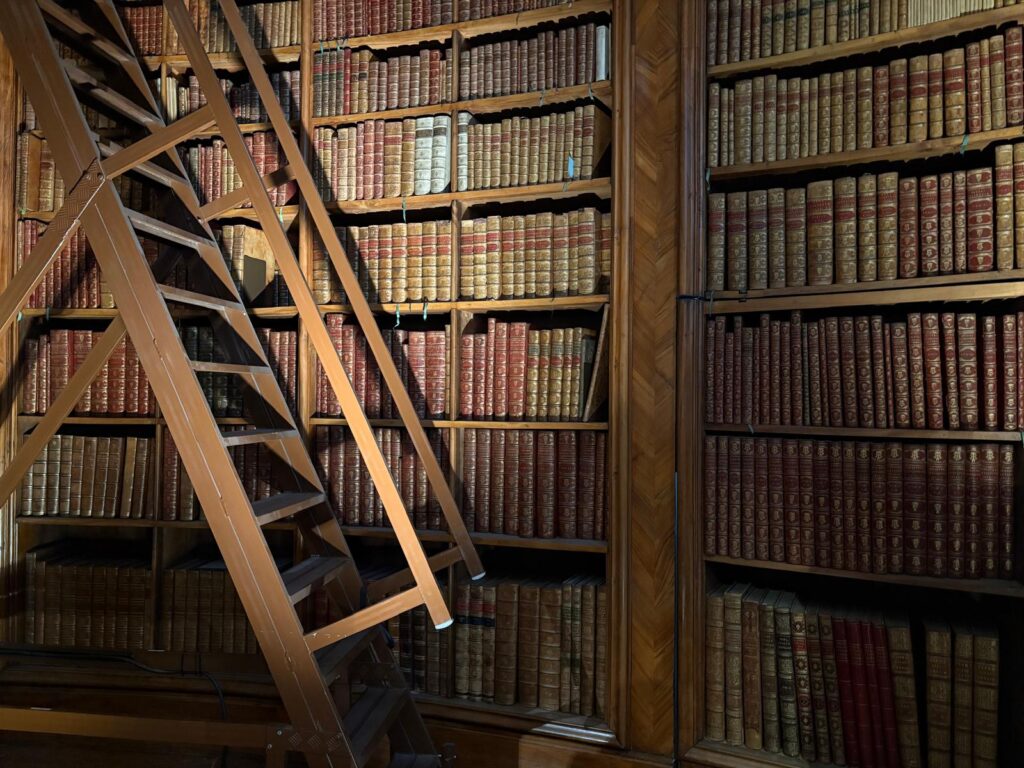
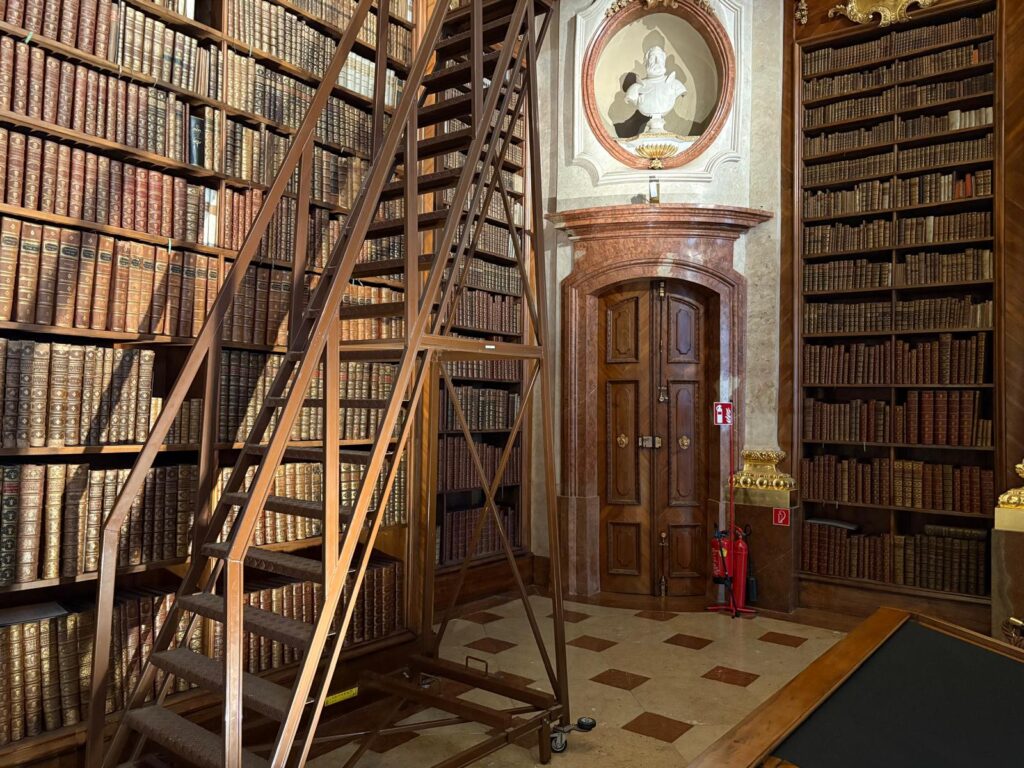
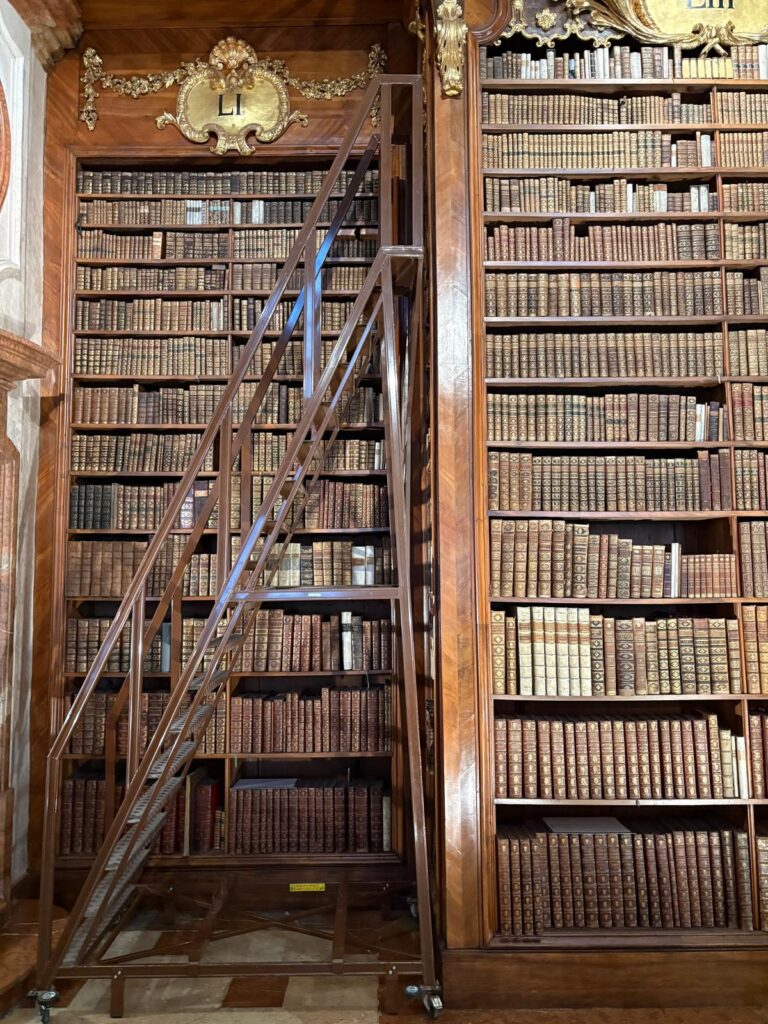
The Prunksaal today is a wonderful place to admire some 200,000 books lining the walls, dating from 1501-1850. They are offset by walnut fittings, stone floors, and gold and ormolu decoration. Truly, a library fit for a king (or emperor, as it were).
And Finally, the Visitor Experience
As I’ve already mentioned, my visitor experience at the Prunksaal was a slightly hectic one. A queue up a staircase as the room was at capacity, and then one in/one out controls in place at the entrance. Once inside, it was a crush. It was a matter of trying to get a look at the room, the fittings, the decoration, and the books, while being constantly jostled by fellow visitors, or being in the way of photos.
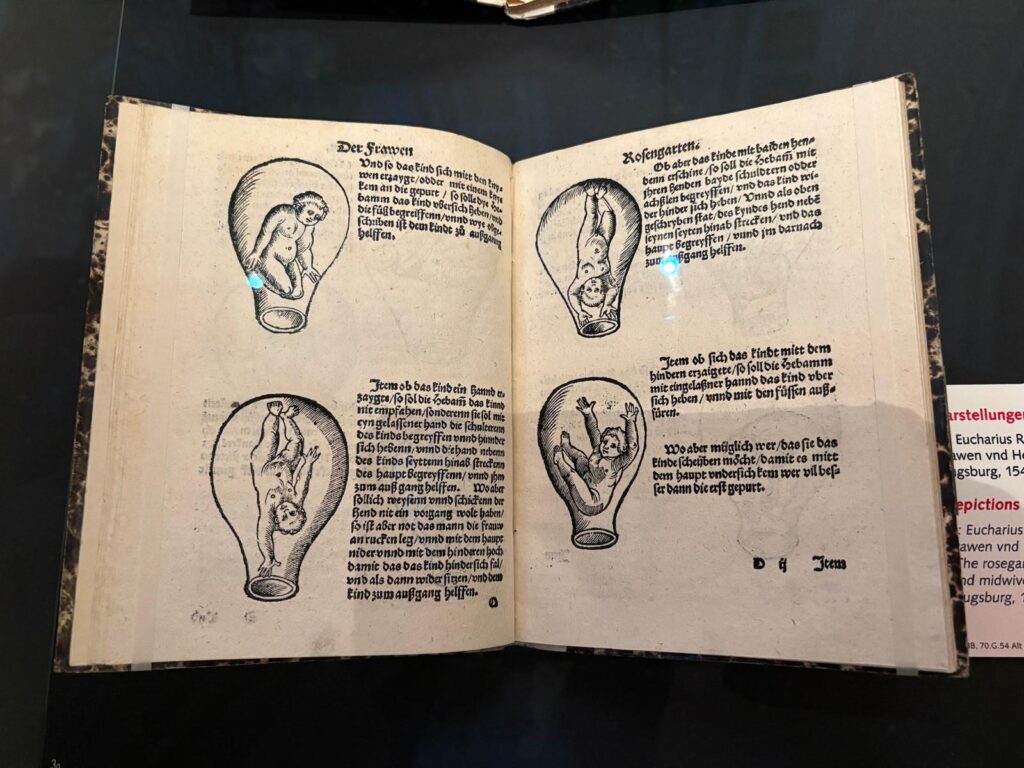
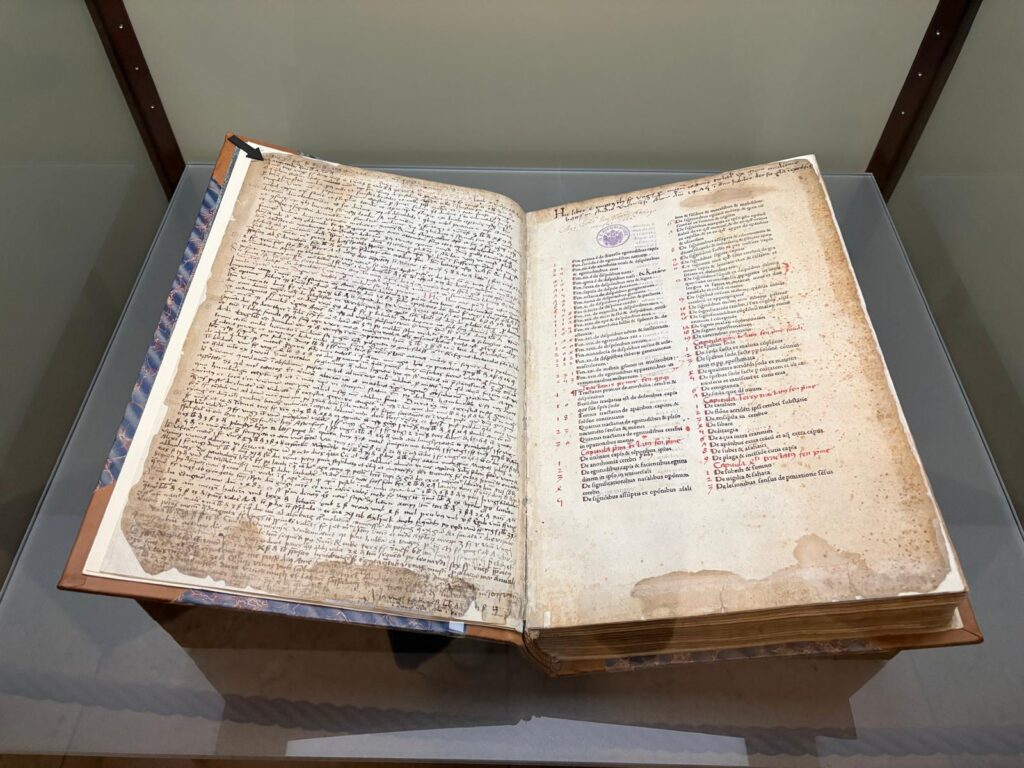
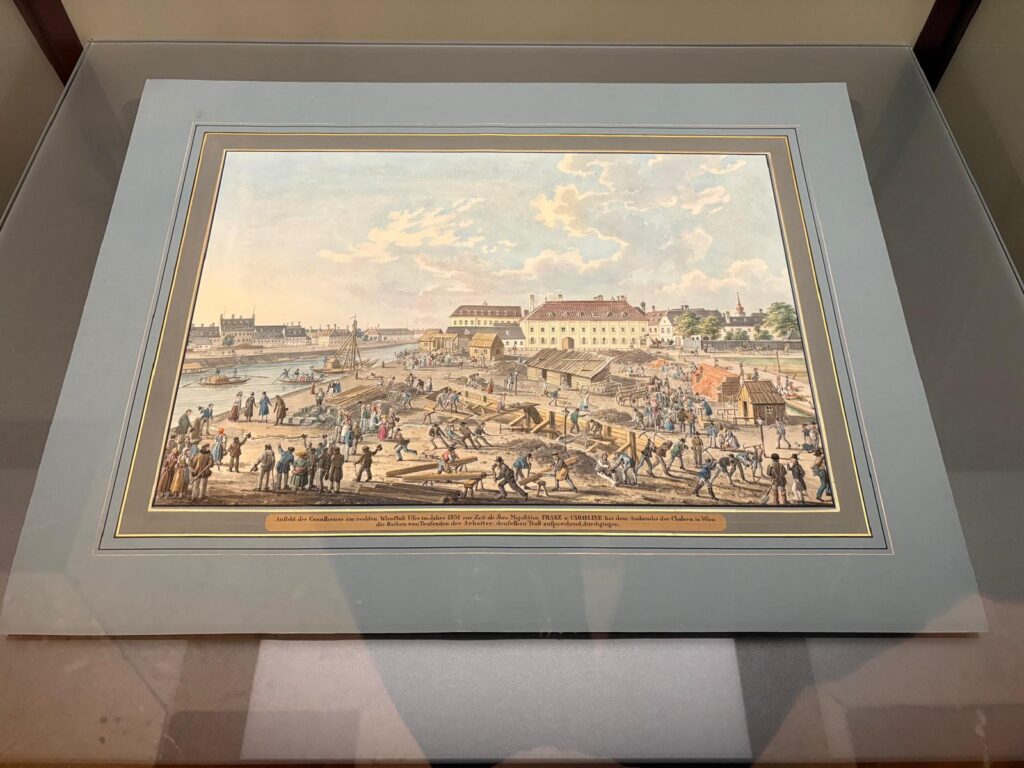
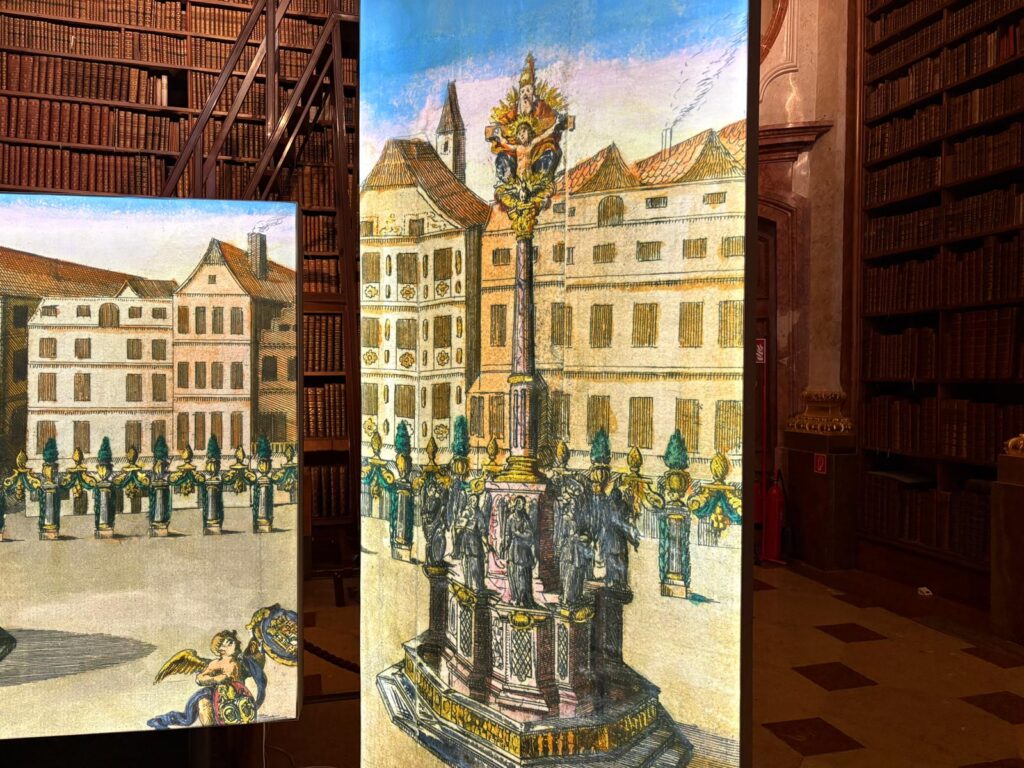
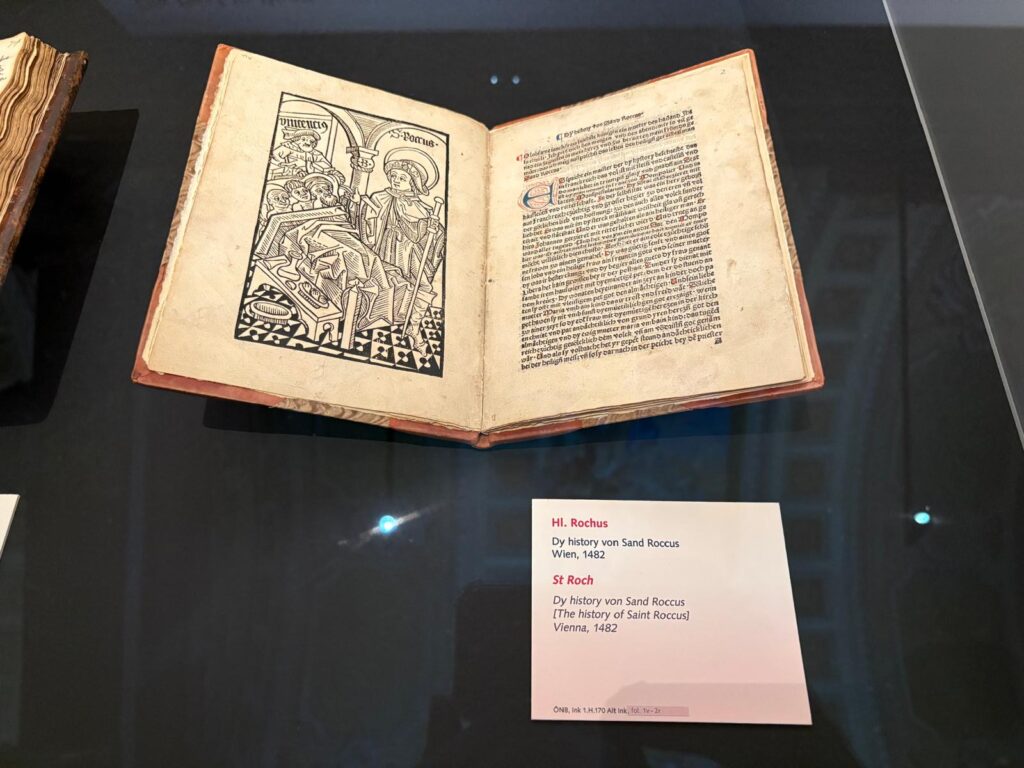
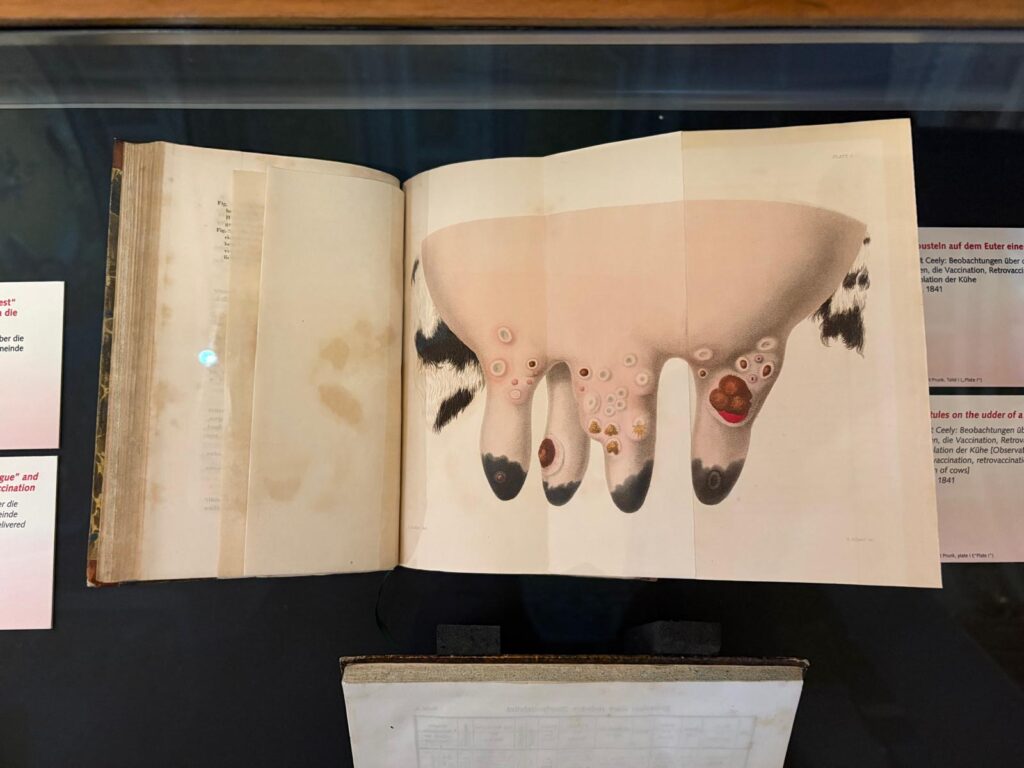
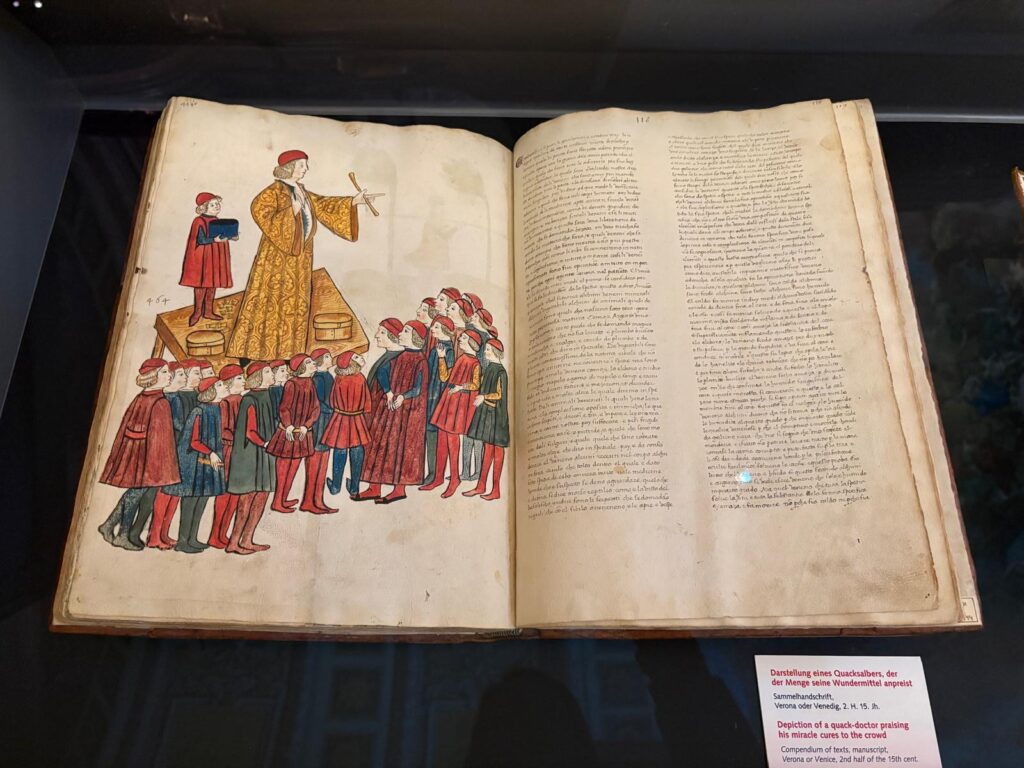
This was a great shame, as I can imagine a visit during a quiet time would be a wonderful thing. You can’t really get a sense of wonder and awe when it’s that busy. The Prunksaal also plays host to temporary exhibitions. When we visited, the exhibition was Medicine through the Ages. From Anquity to the Age of Modernism. A really interesting topic supported by a range of objects from the collection, from medical volumes to images of Vienna’s Plague Column. But again – hard to fully appreciate when you don’t feel you have time or space to properly look at the exhibits and read the labels.
But what to do? When you visit Vienna on a weekend in the leadup to Christmas, some of the places you visit are bound to be this busy. Should you make choices based on what is quietest? That sounds like a way to have a peaceful life, but miss things you would have enjoyed. One tip is to look at opening hours – our visit to the Kaisergruft around dinner time one evening was fairly sedate and didn’t feel pressed. But another tip is to weigh up whether you’re willing to see something under less than ideal conditions, or whether you’d rather take a risk on a return journey in future. In the end, I was happy to see the Prunksaal, can see why friends recommended it, and will probably remember the splendour rather than the crowds, in the end.
Trending
If you see this after your page is loaded completely, leafletJS files are missing.