
V&A East, London
I visit one of London’s newest museums, V&A East, part of the development of Stratford as a cultural quarter.
London, I Can’t Keep Up
No, I’m serious. Between exhibitions, theatre, other sights to see in London – before you even start thinking about doing things outside London once in a while – I can’t keep up. So when you add new museums into the mix, the task becomes daunting indeed. The Moco Museum opened in London in 2024, for goodness sake, and I still haven’t made it there. The V&A started their Stratford endeavours over a year ago, opening the V&A East Storehouse in May 2025. Nope, I haven’t been there either. I did try one day, but hadn’t booked a ticket and left again when I saw a queue around the block. I haven’t been to the Brown Collection, haven’t been to the Vagina Museum (which has had a fixed location since 2019). The list goes on.
Poor me, too many cultural institutions to frequent! If that’s not a first world problem, I don’t know what is. Nonetheless, it is something I’m conscious of in my attempt to bring my readers new and interesting things to see and do all over London (and beyond). So you will be pleased, I’m sure, to see that I visited the new V&A East only a couple of months after it opened. It wasn’t my idea, actually. I was just planning to meet a friend somewhere around Stratford. It was this friend who made the excellent suggestion to visit the V&A.
In the end we had time to see both the permanent exhibition and the temporary one. I’ve split those into separate posts, so The Music is Black will be the subject of my next post. Today, we’re going to take a look at the museum itself, what’s on view, and the visitor experience.
A New Location for the V&A
The opening of the V&A East actually brings the V&A to six locations in total. There is the OG V&A in South Kensington. Young V&A. V&A outposts in Dundee and in Stoke-on-Trent (the latter with a Wedgewood focus). And now two in the Olympic Park in Stratford. That’s quite a portfolio of different institutions to look after!
The V&A’s website describes this newest location as “a new kind of museum”. Is this true? Let’s come back to that question at the end. I think the V&A see this point of difference vs. other museums as being about collaboration and co-creation: being, as they put it, “rooted in the communities and voices that are shaping global culture right now.” Interesting, certainly.
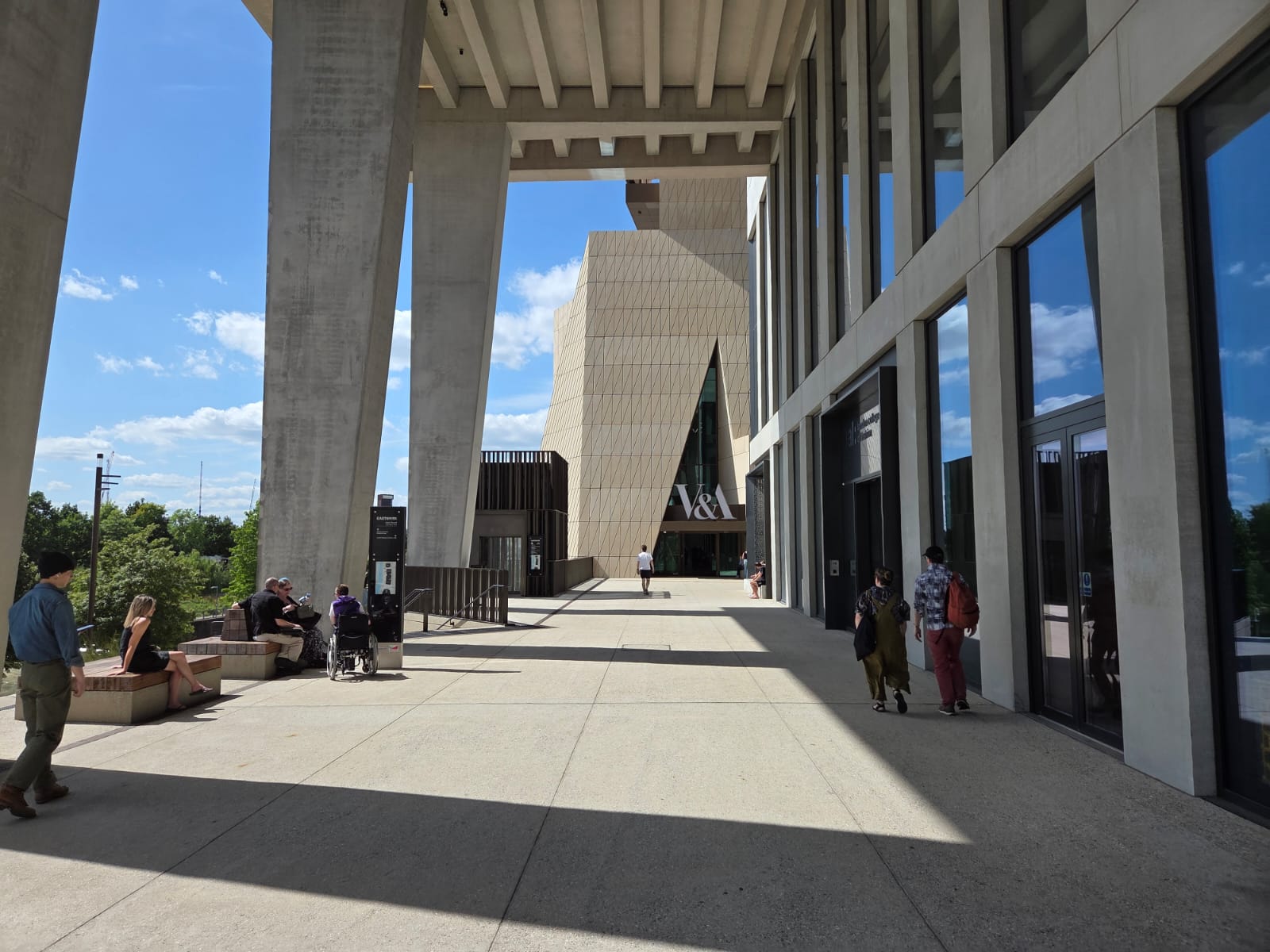
They do have a nice new building in which do this work. The museum forms part of the Mayor of London’s East Bank project, which draws on the history of London’s other intentionally-created cultural quarters: South Kensington and the South Bank. The V&A’s immediate neighbours are Sadler’s Wells East, BBC Music, the University of the Arts London (UAL) and the London College of Fashion.
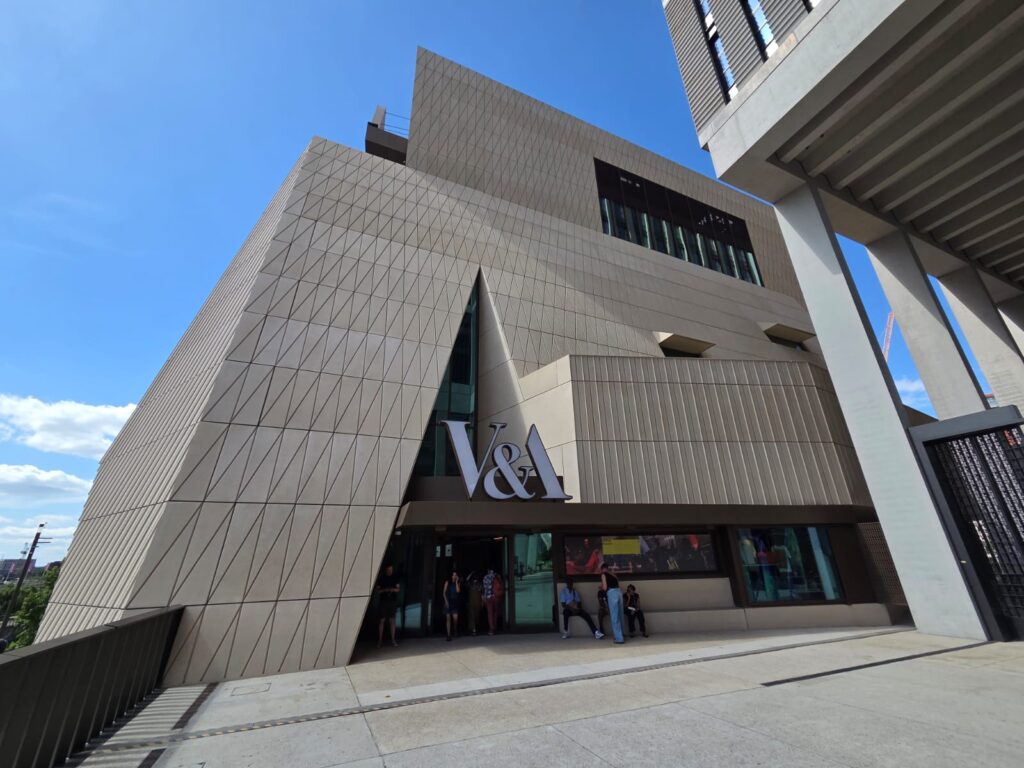
Architects O’Donnell + Tuomey won the competition to design the museum back in 2015. Their vision for it was a building which would be truly welcoming to young people, East London communities, and people who may not have felt comfortable previously in museum spaces. The V&A East should be “a place for people to meet, find ideas, and encounter making in all its forms”. O’Donnell + Tuomey thus wanted to design an open façade that would draw people inside while also protecting the precious objects within – they took inspiration for this from the V&A collection and global concepts of space and its usage.
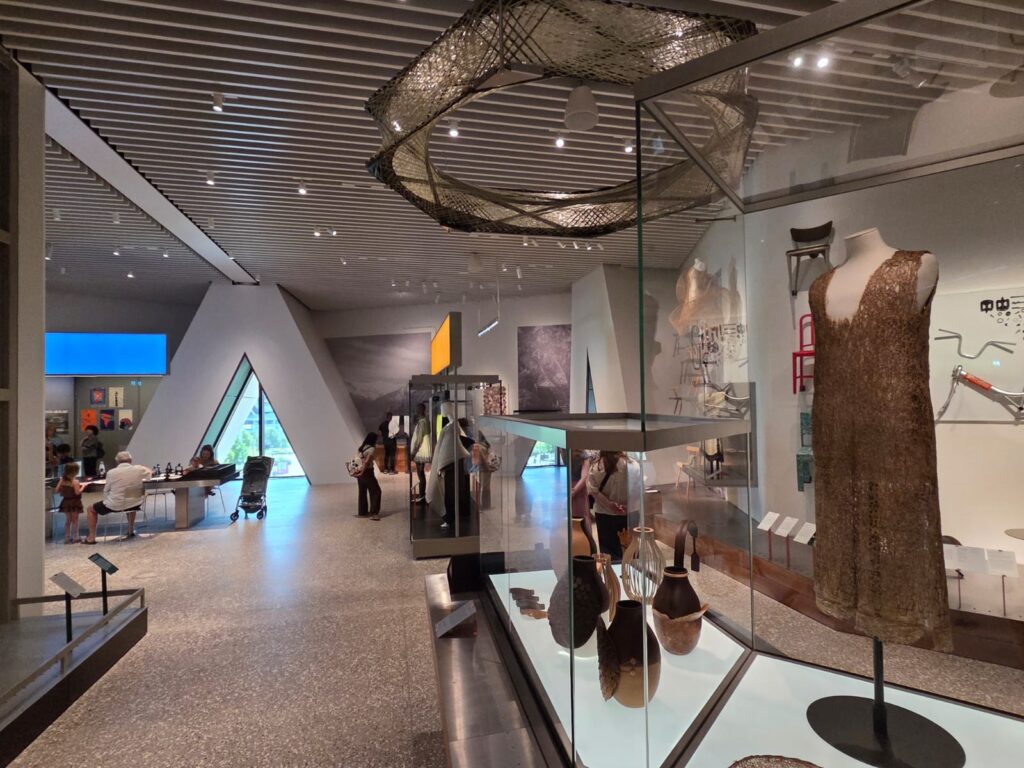
The finished product is a building over five levels. It has two permanent galleries, and a 900 square metre temporary exhibition space. It has a lovely cafe downstairs, and a beautiful view from the terrace upstairs. There are offices, educational spaces, and event spaces. I don’t know what the co-creation looked like with those target audiences, but the architecture is certainly striking.
New Exhibition Space for an Extensive and Historic Collection
Opened as a Museum of Manufactures in 1852, the Victoria and Albert Museum grew out of the Great Exhibition’s focus on industry and skilled trades. In 2026, its mission is to champion design and creativity. A new branch museum is thus an opportunity to fulfil this mission anew, extending how much of its collection the museum can display and the stories it can tell.
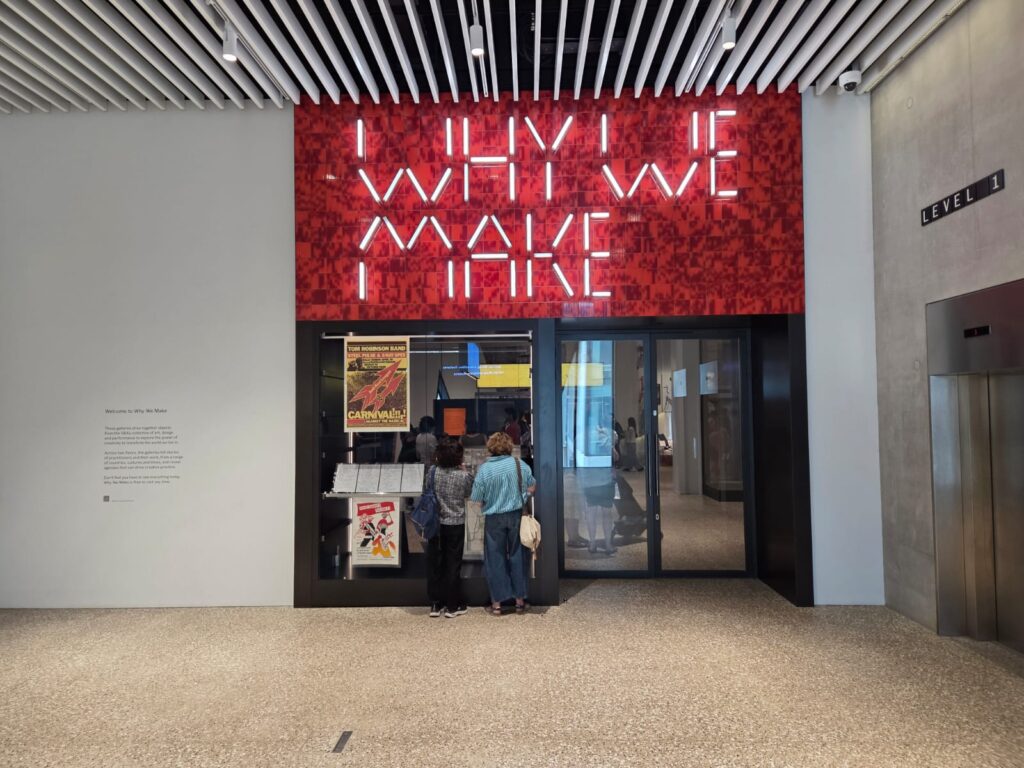
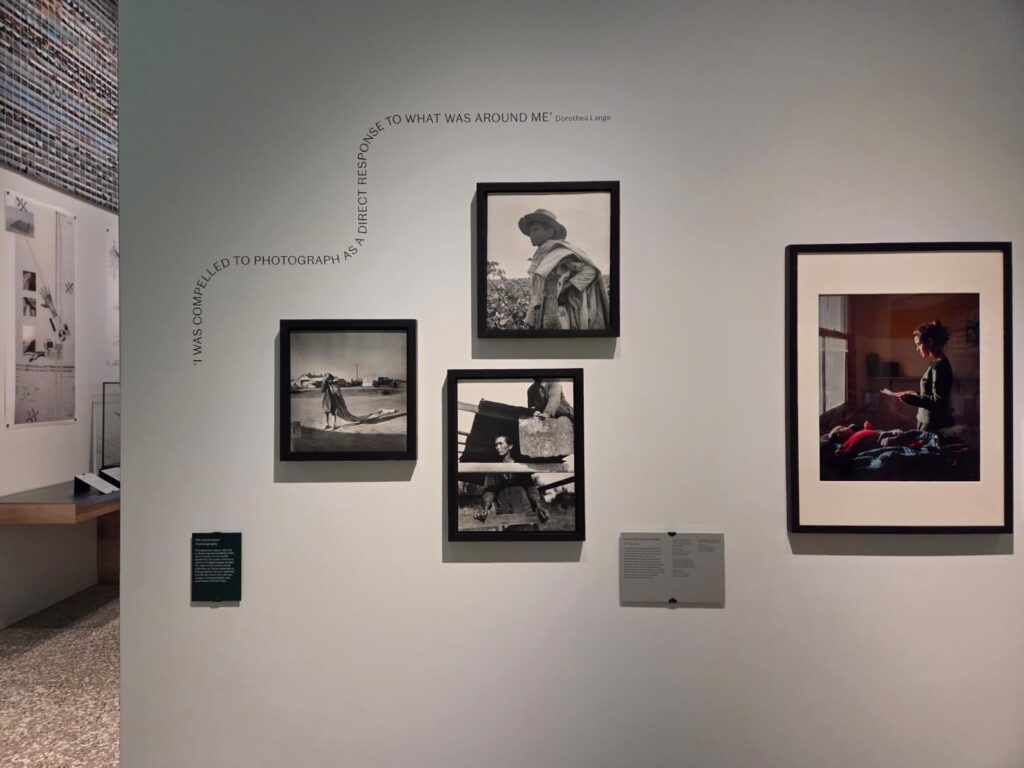
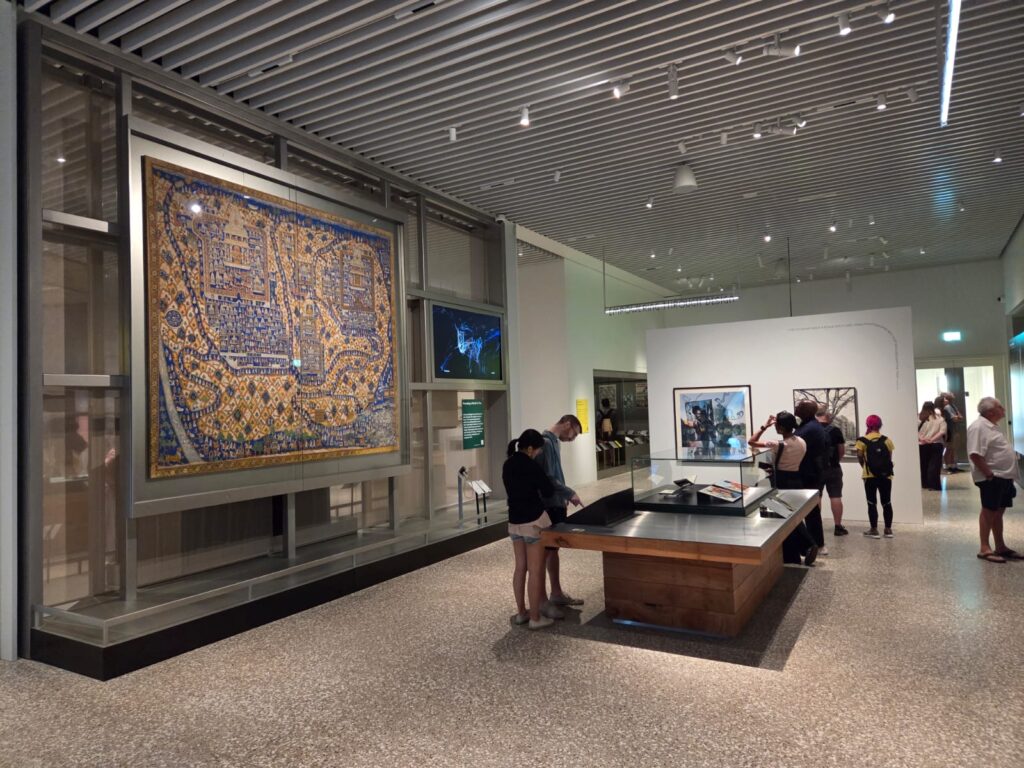
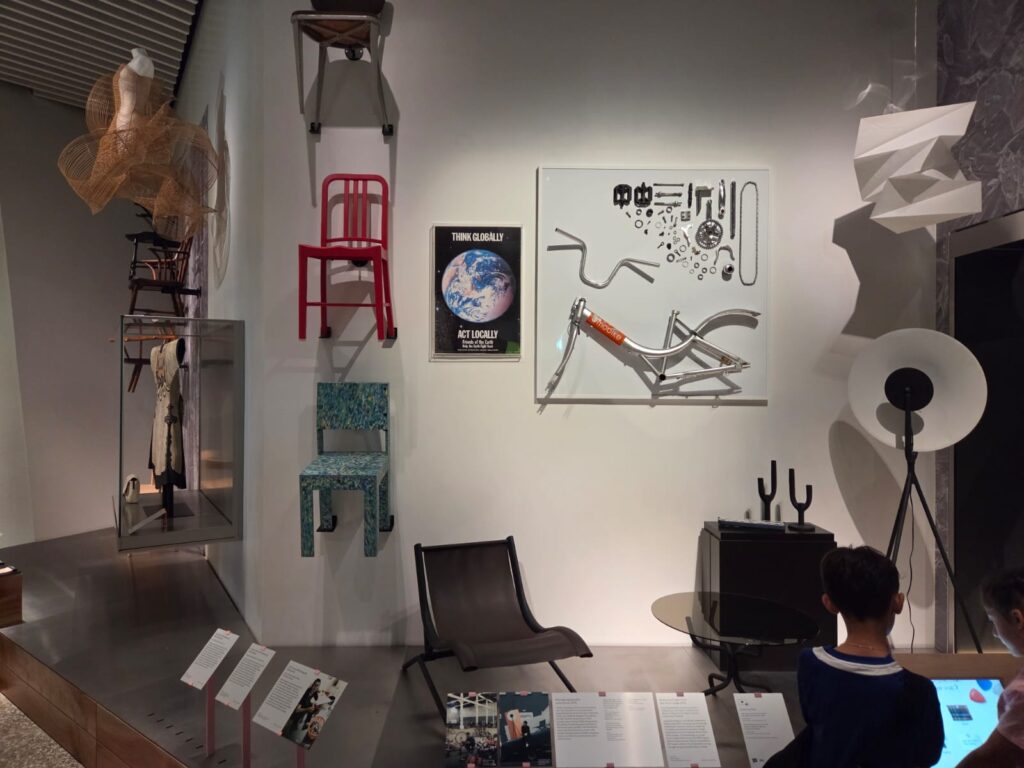
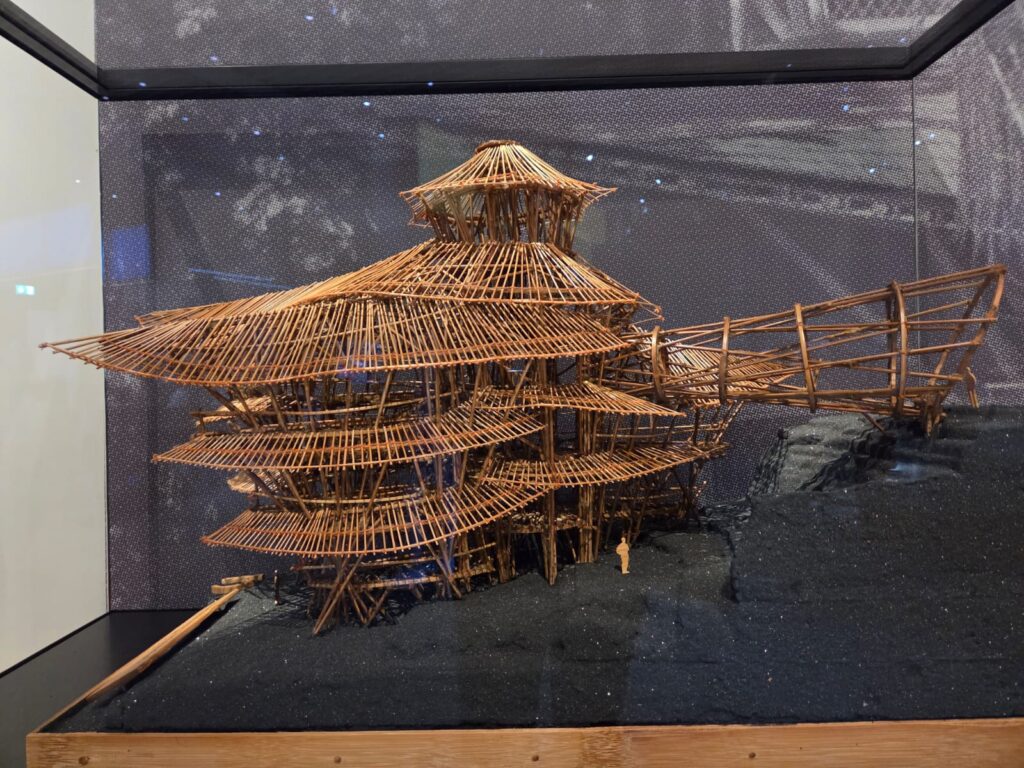
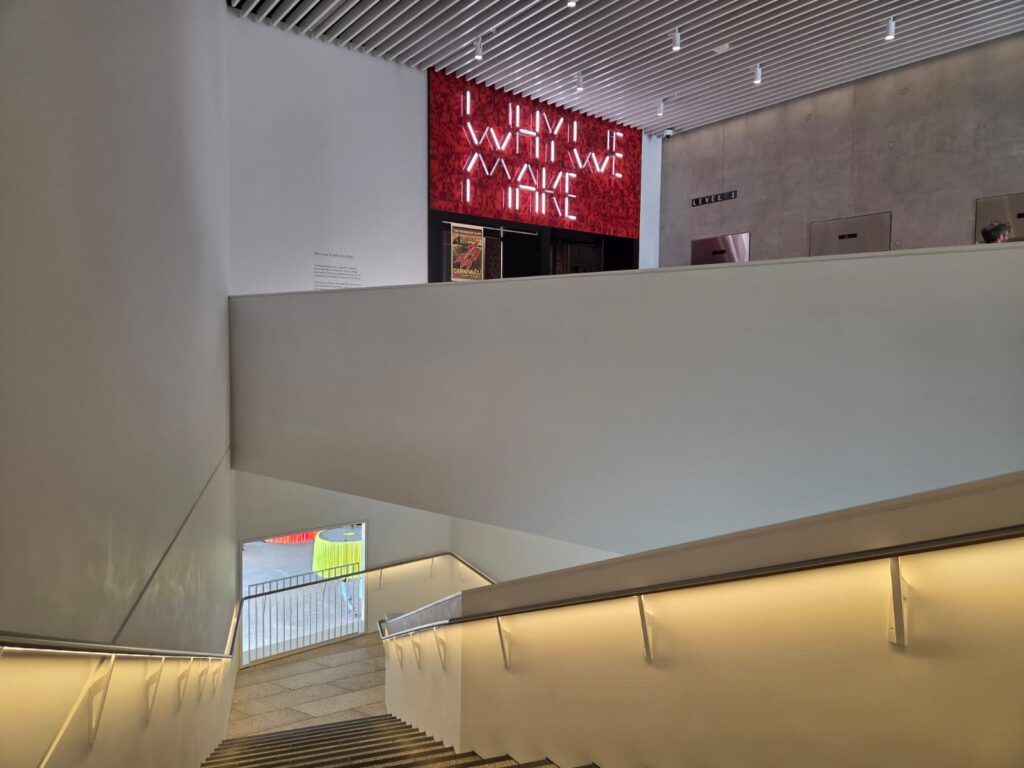
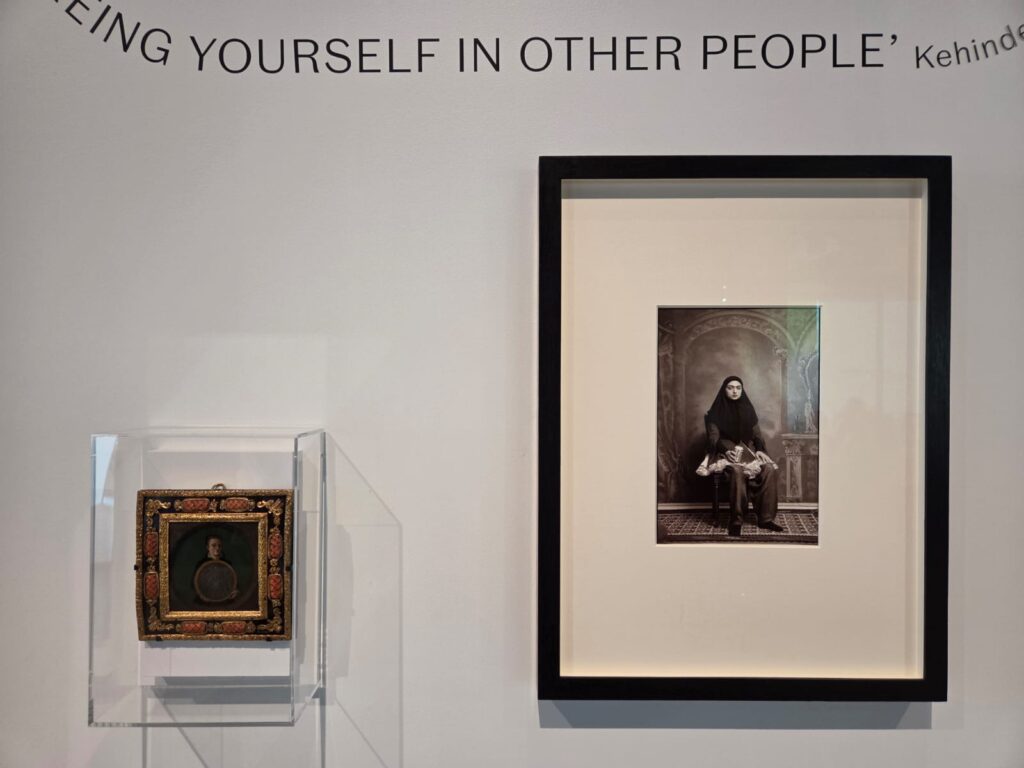
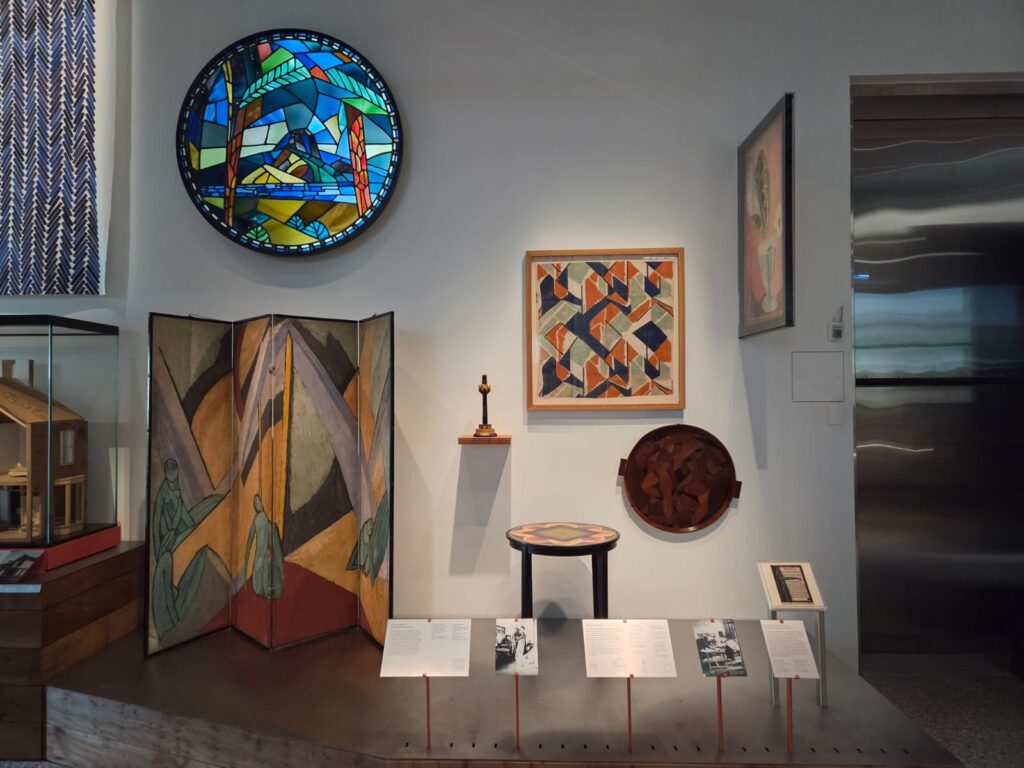
Of the five floors in the new museum, one is a cafe, one a terrace with a nominal exhibition space, and one a temporary exhibition space. That leaves two floors for the permanent collection. The opening collection display across these spaces is Why We Make. The V&A worked with local populations (particularly young people) and East London creative firms to collaboratively construct this exhibition.
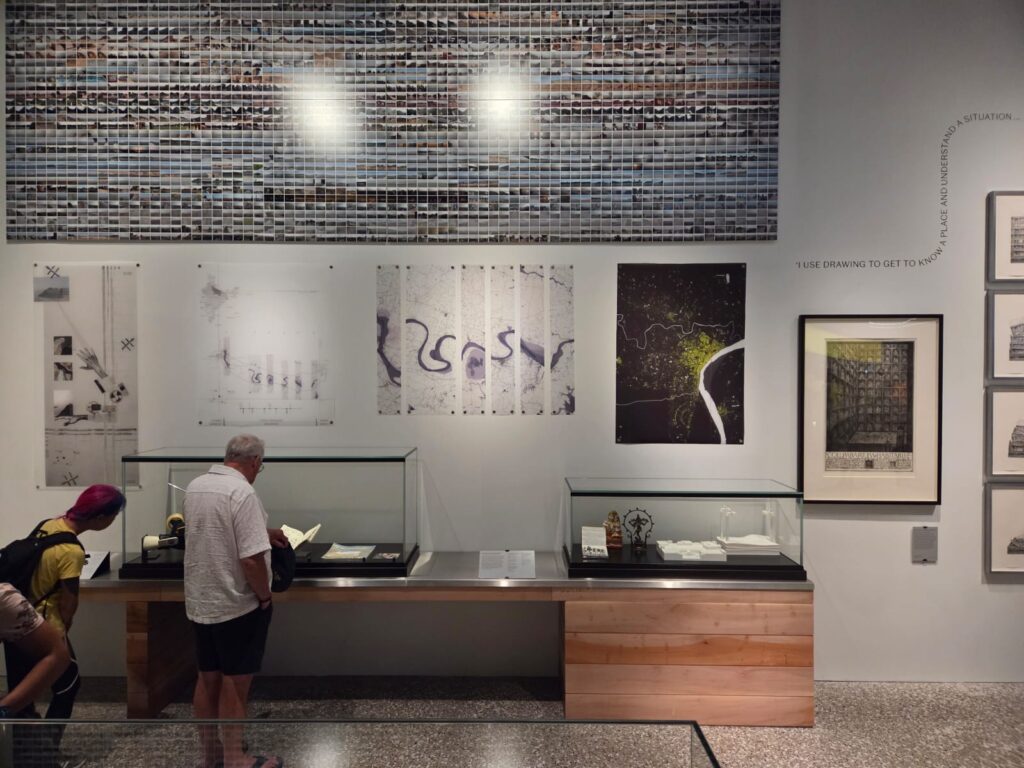
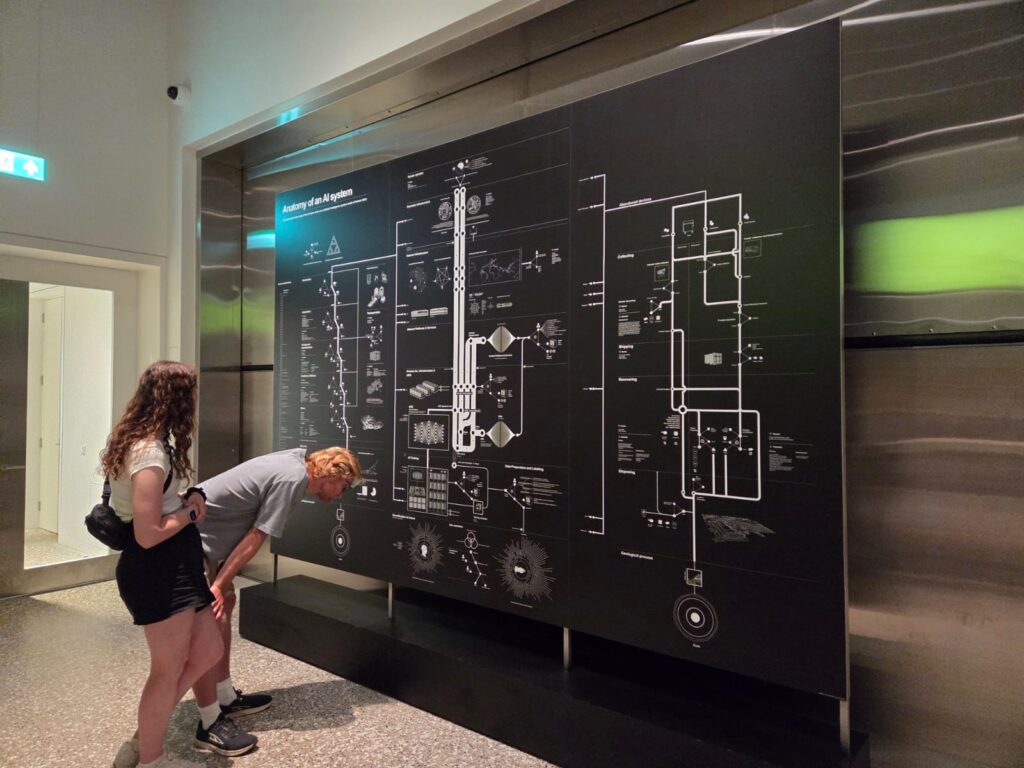
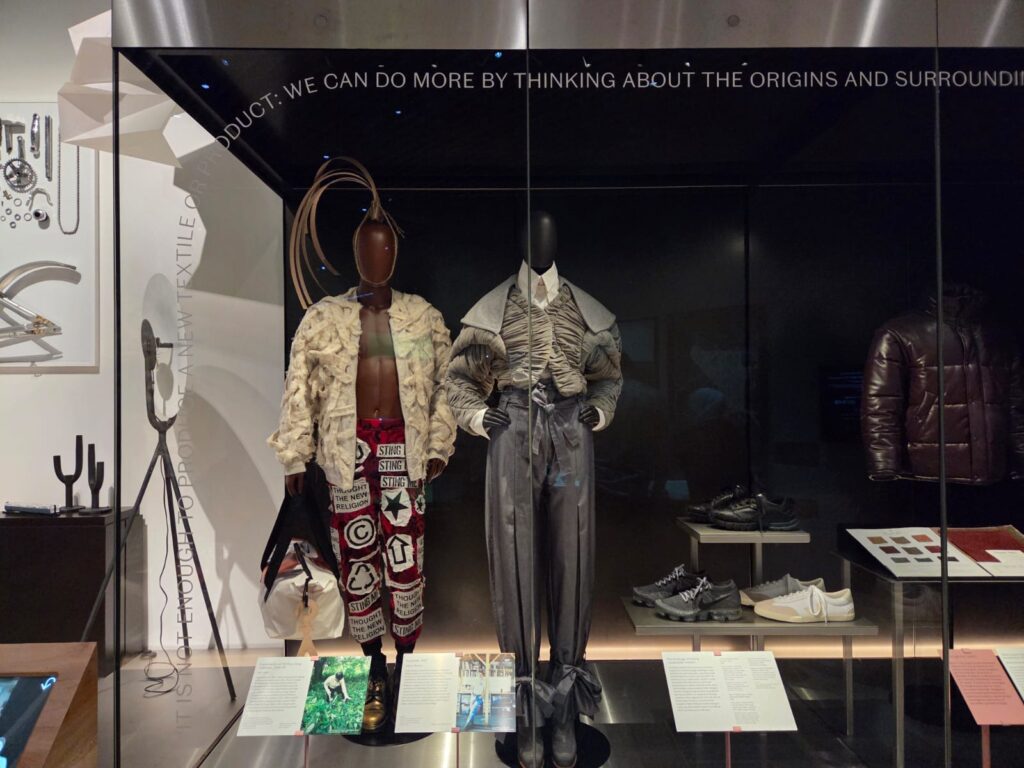
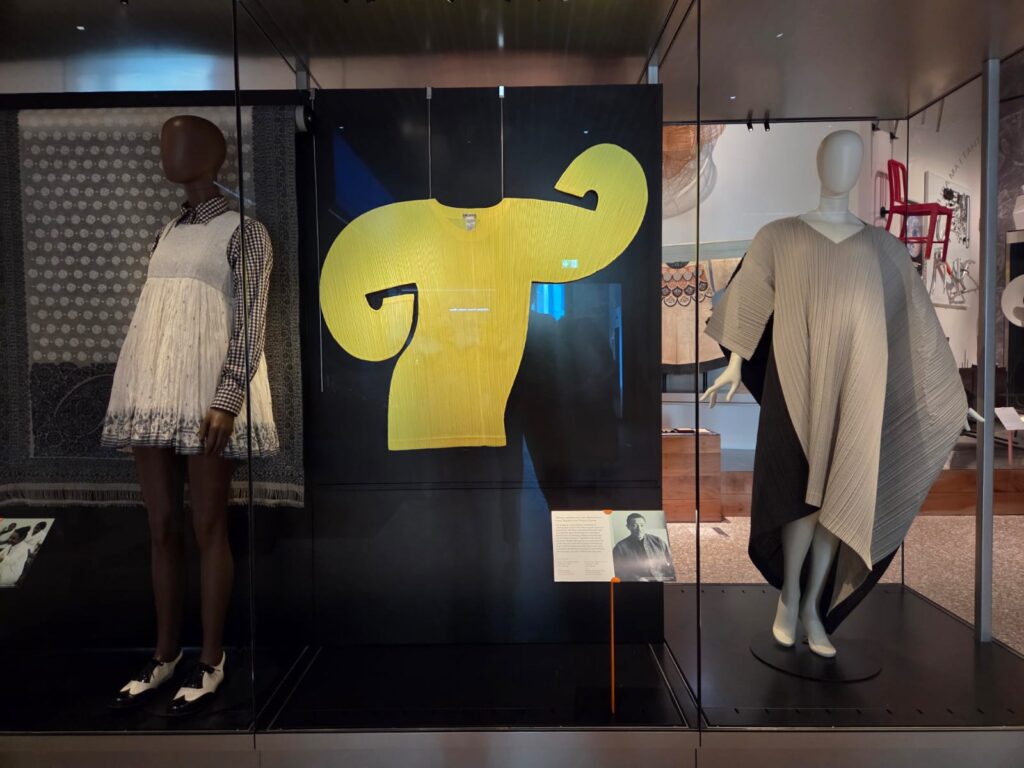
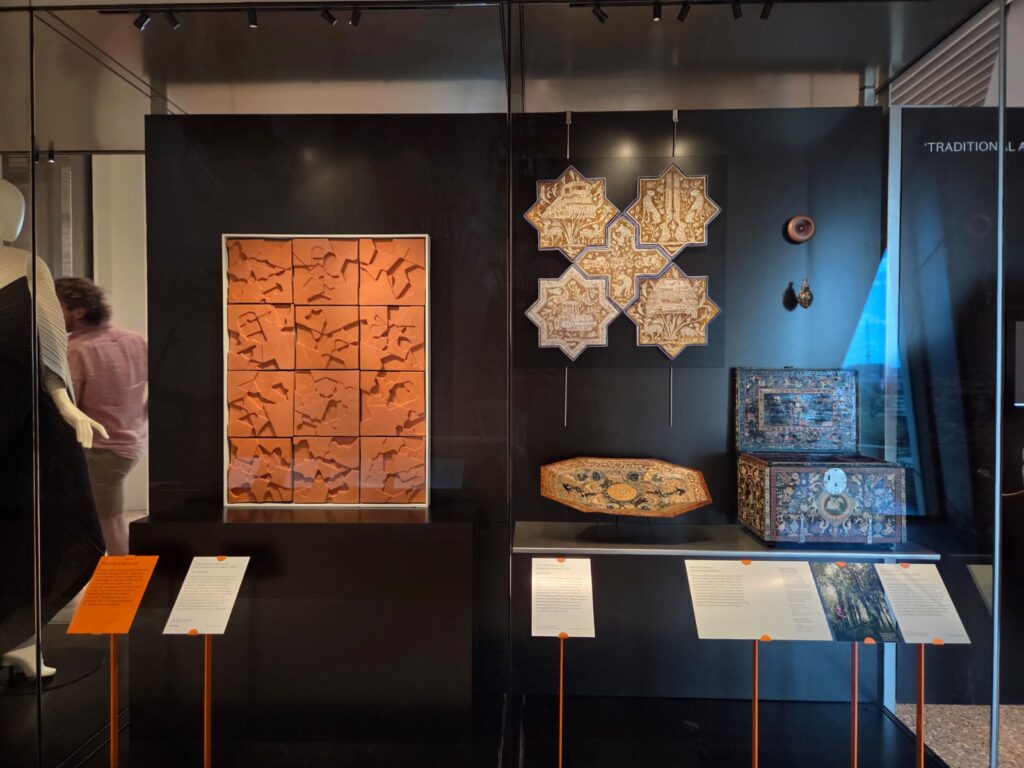
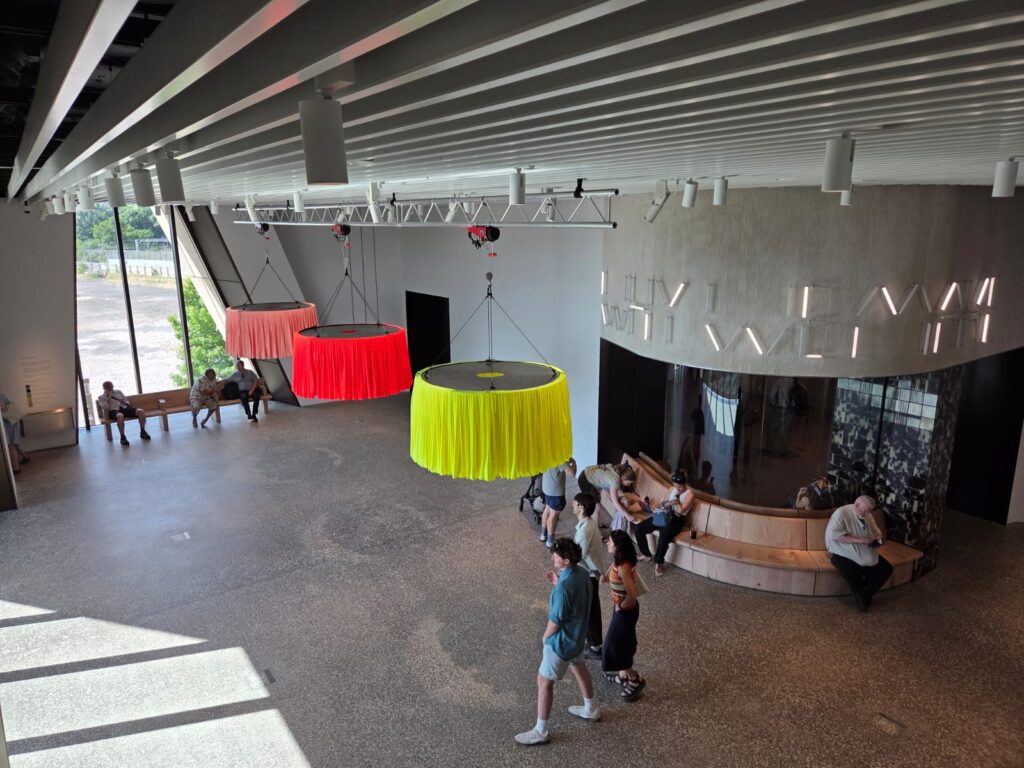
The aim of Why We Make is to celebrate “the power of making and creativity to bring change”. It brings together the V&A’s global collection in unexpected ways, juxtaposing cultures, time periods, types of objects, and perspectives. It also includes new commissions by contemporary artists. The galleries were created by JA Projects working with the V&A East Youth Collective. JA Projects has the following to say about their work:
“The result is a suite of spaces that feel new and familiar at the same time, with displays embracing contrast and encouraging visitors to seek out stories that resonate with them. Within the galleries, incredible objects sit side by side with moments of making and interaction, allowing visitors to engage with the museum collection in new ways.
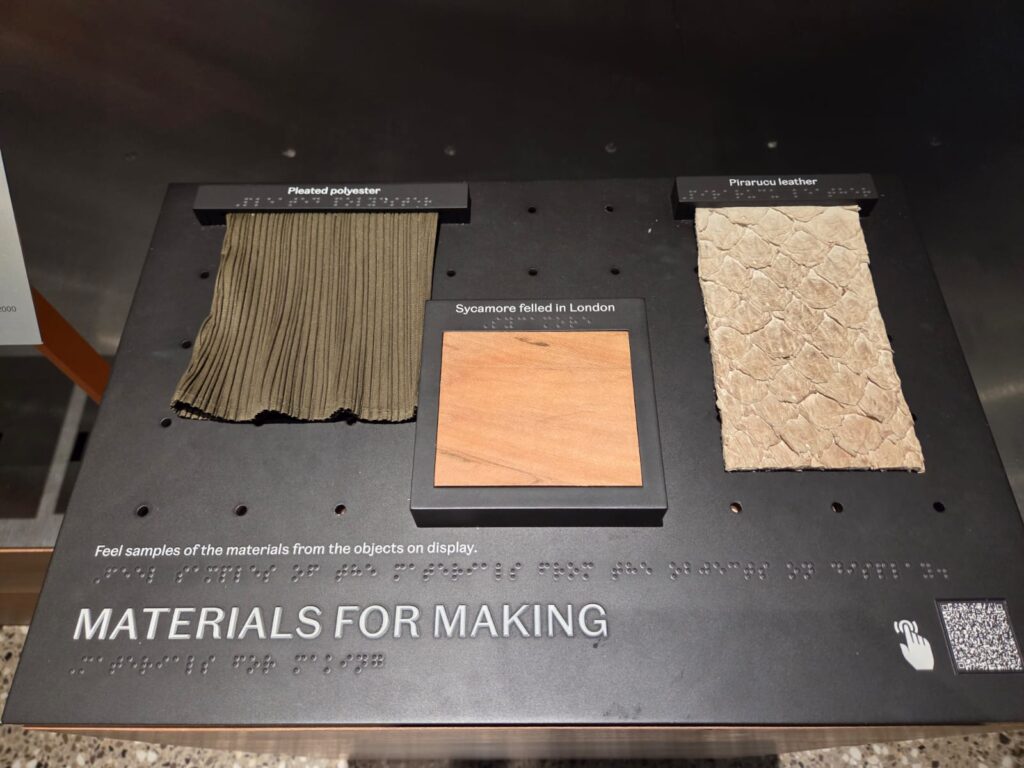
Our approach rethinks the infrastructure of a contemporary museum – how galleries are designed, assembled and adapted over time. Principles of longevity and flexibility inform designs that are modular and adaptable, while materials – such as naturally fallen London Plane timber and bespoke 100% recycled plastics – are rich in narrative and light in ecological footprint.”
WHY WE MAKE GALLERIES AT THE NEW V&A EAST MUSEUM — JA Projects
What Does This Actually Mean for Visitors?
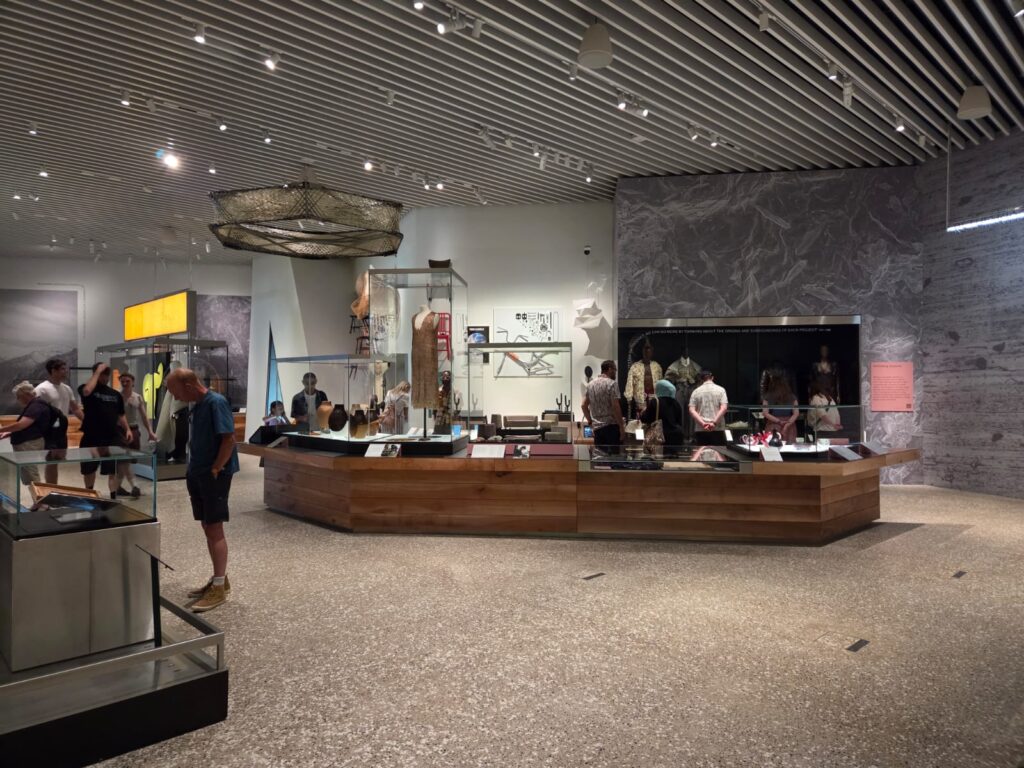
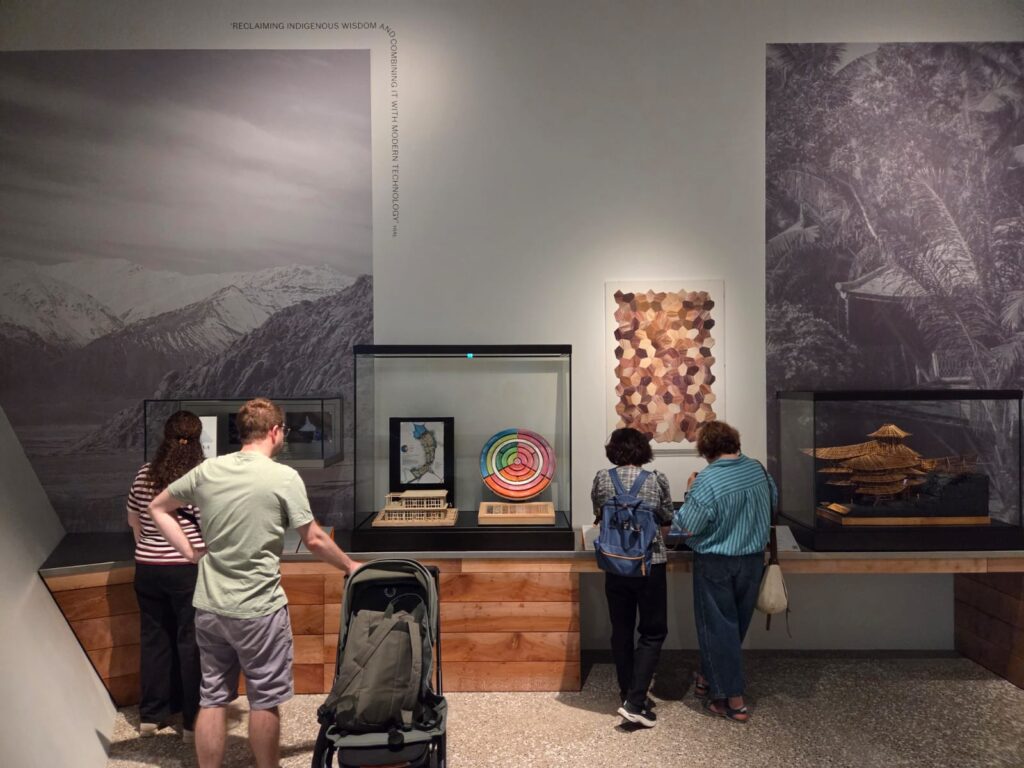
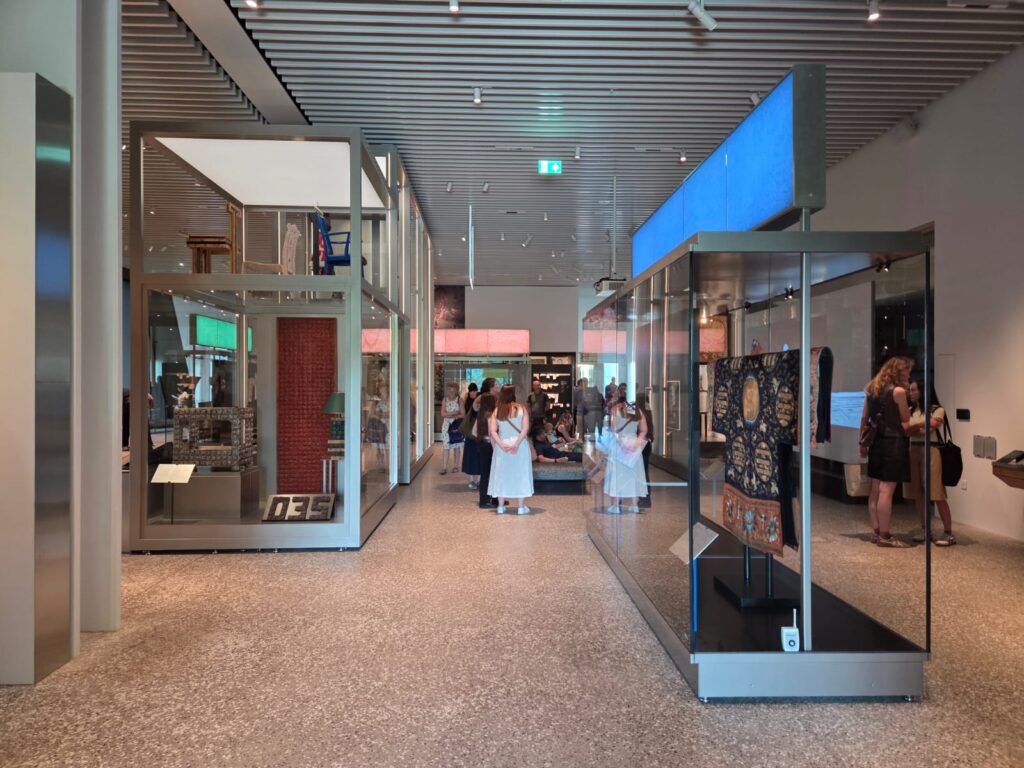
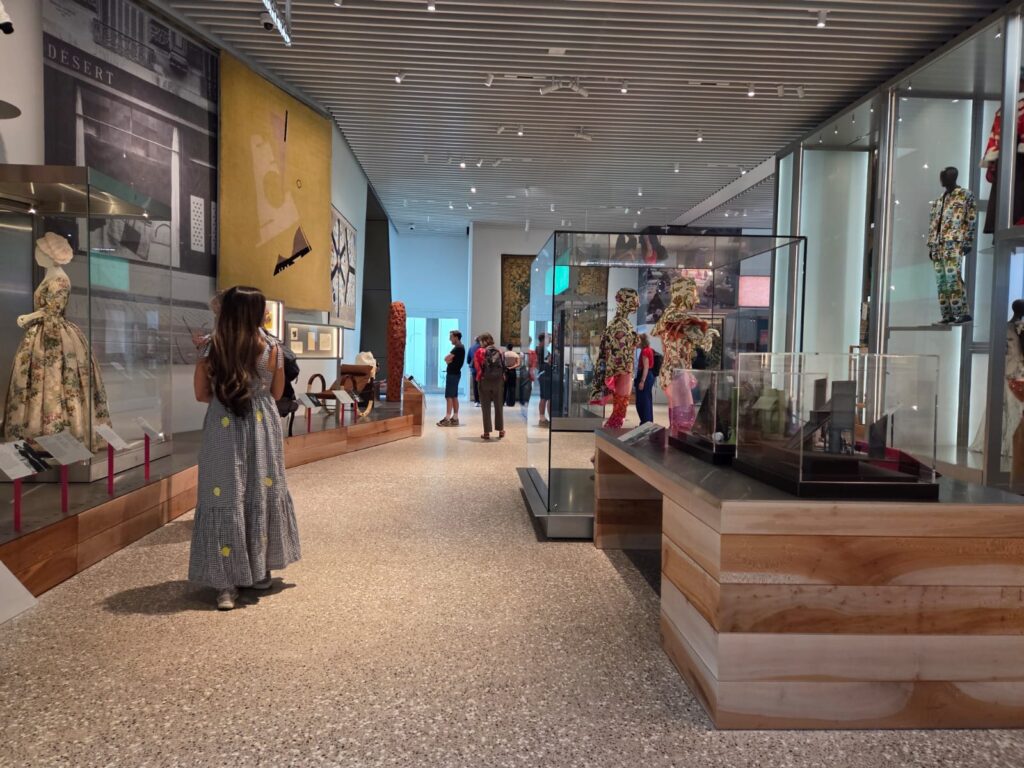
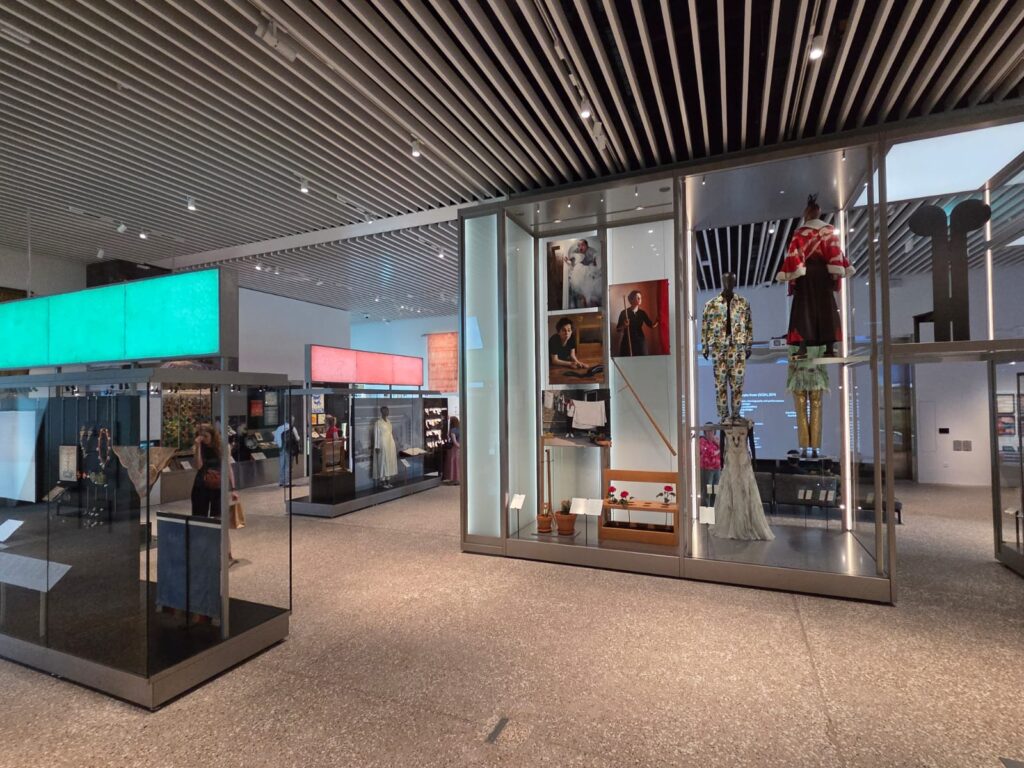
One thing to note about Why We Make is that it contains around 500 objects – some from the museum’s existing collection, and some new acquisitions. 500 is not really that many in the grand scheme of things. And the first thing I noticed about Why We Make is that it feels a little small. OK, the original V&A in South Kensington does have a large footprint, so it’s probably not reasonable to compare the two. But it’s not often you get to design a brand new museum, and I was surprised there wasn’t more space for the V&A’s core mission and collection. The temporary exhibition space, by contrast, is immense. More on this in my next post.
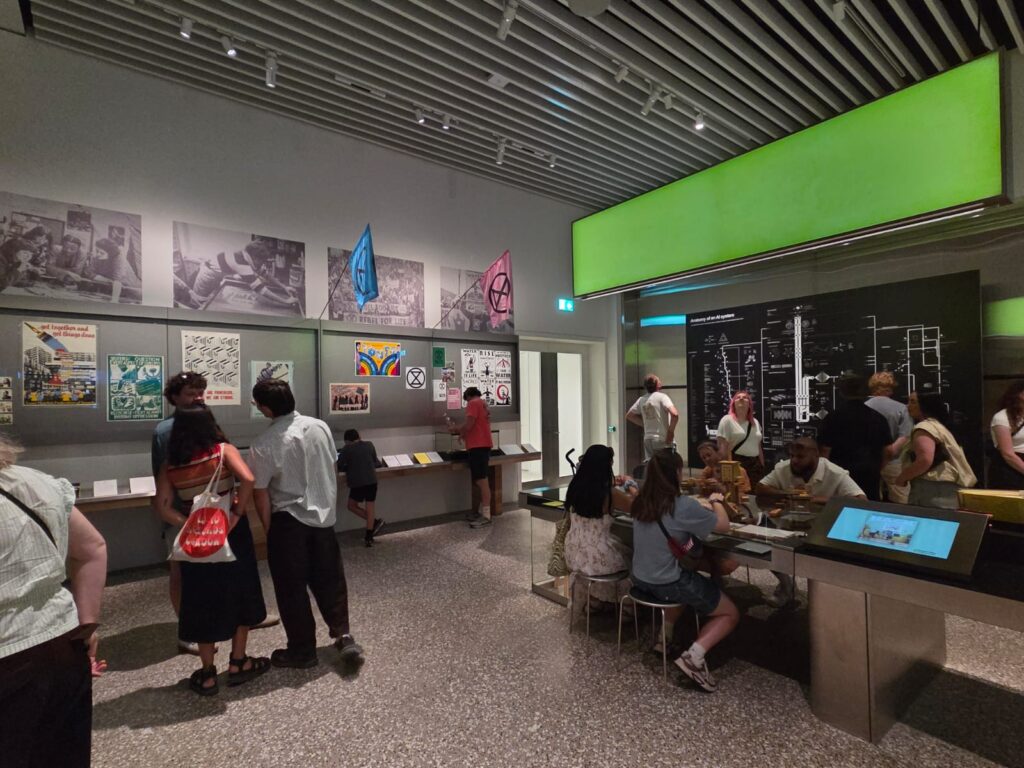
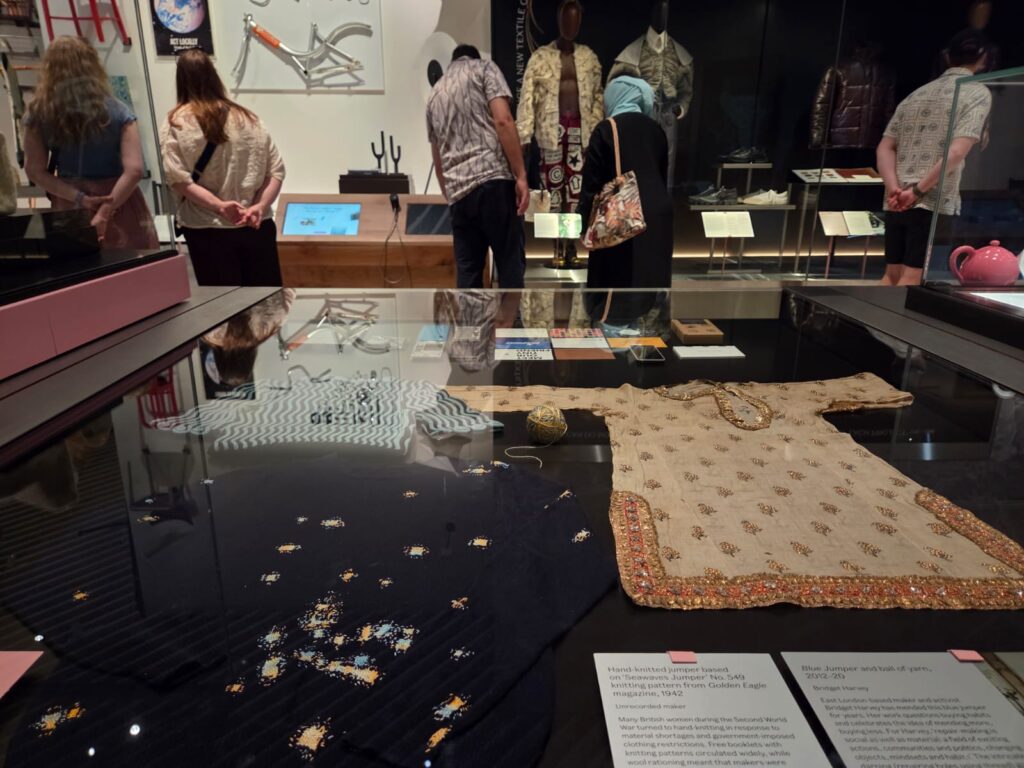
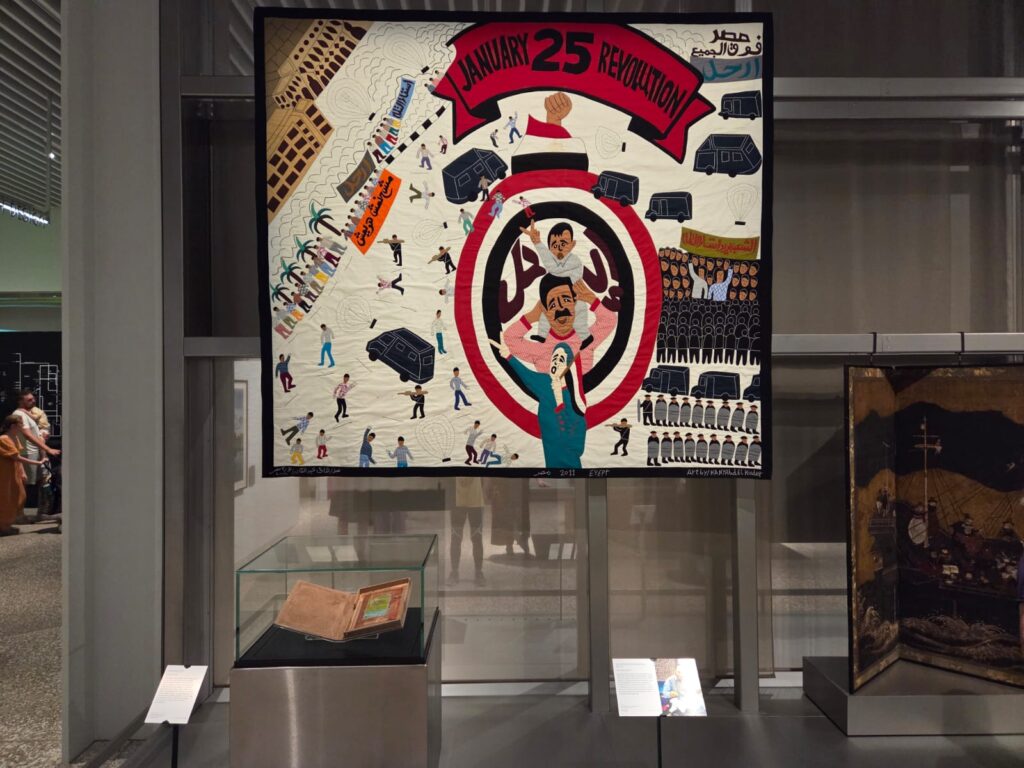
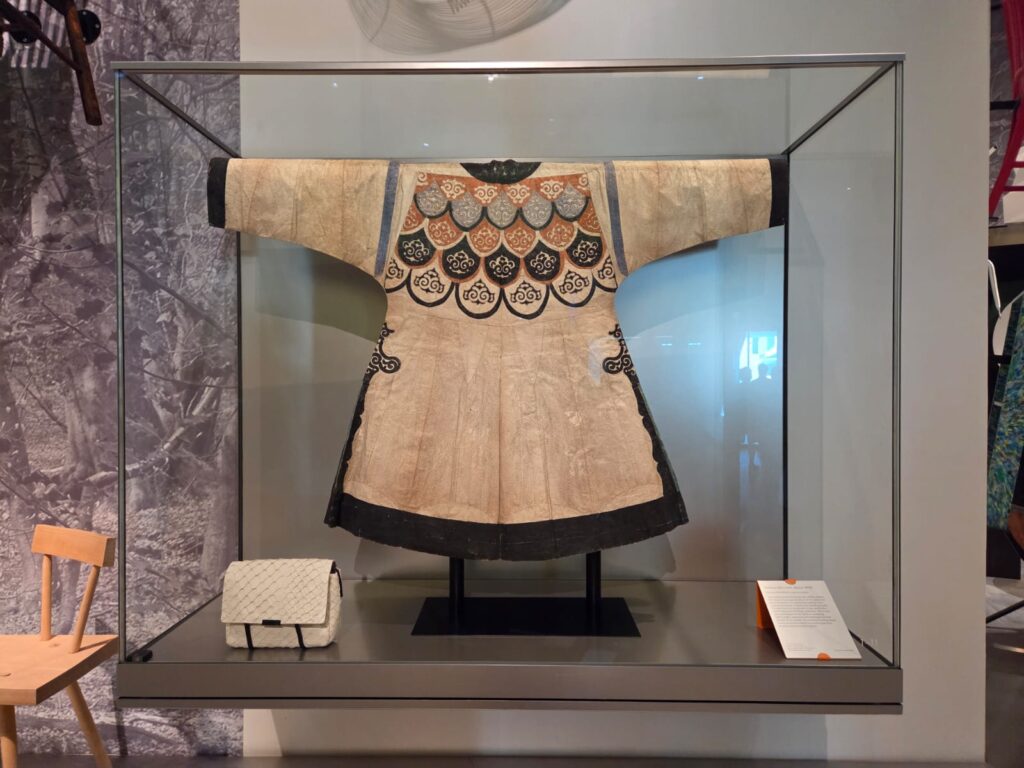
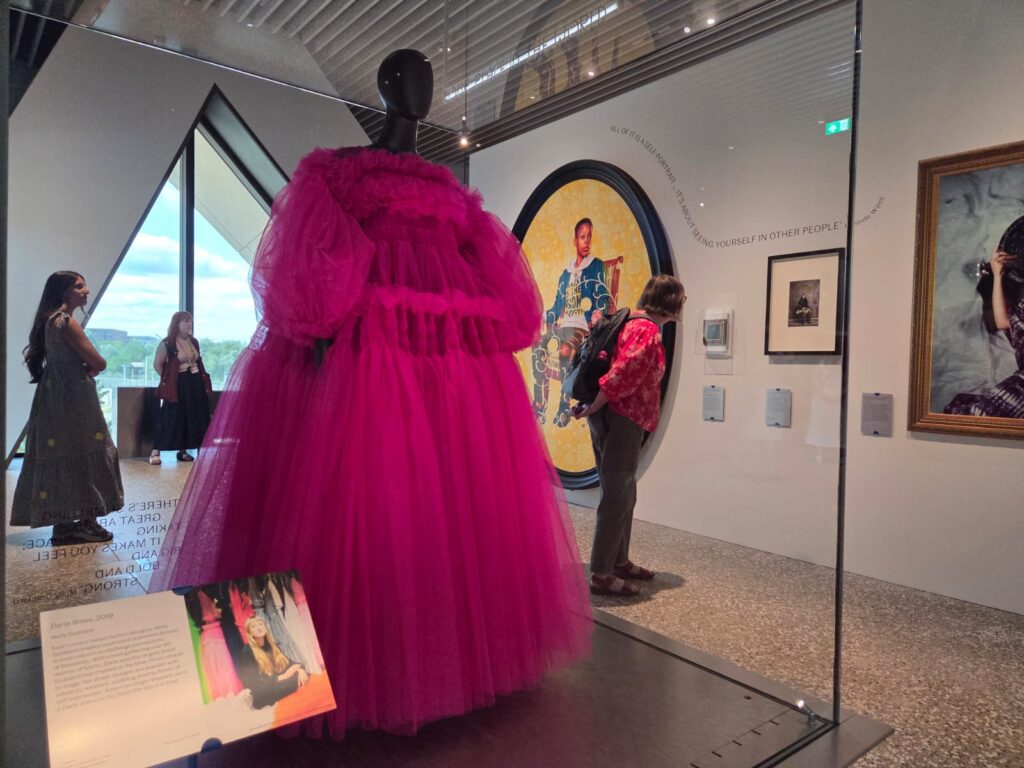
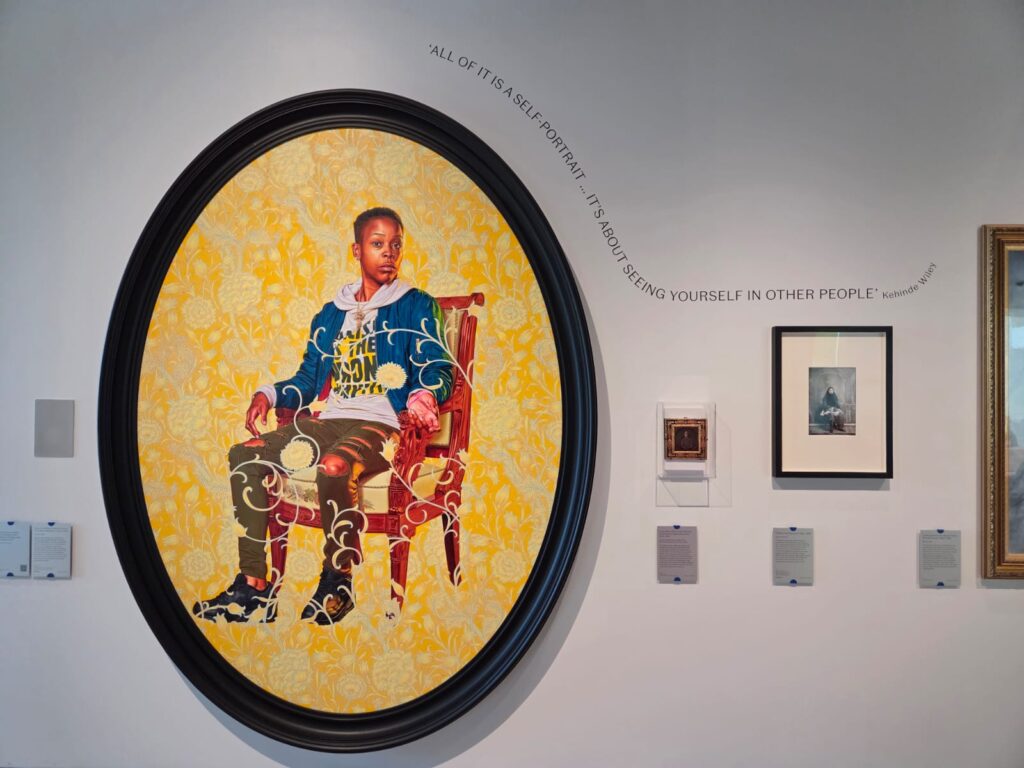
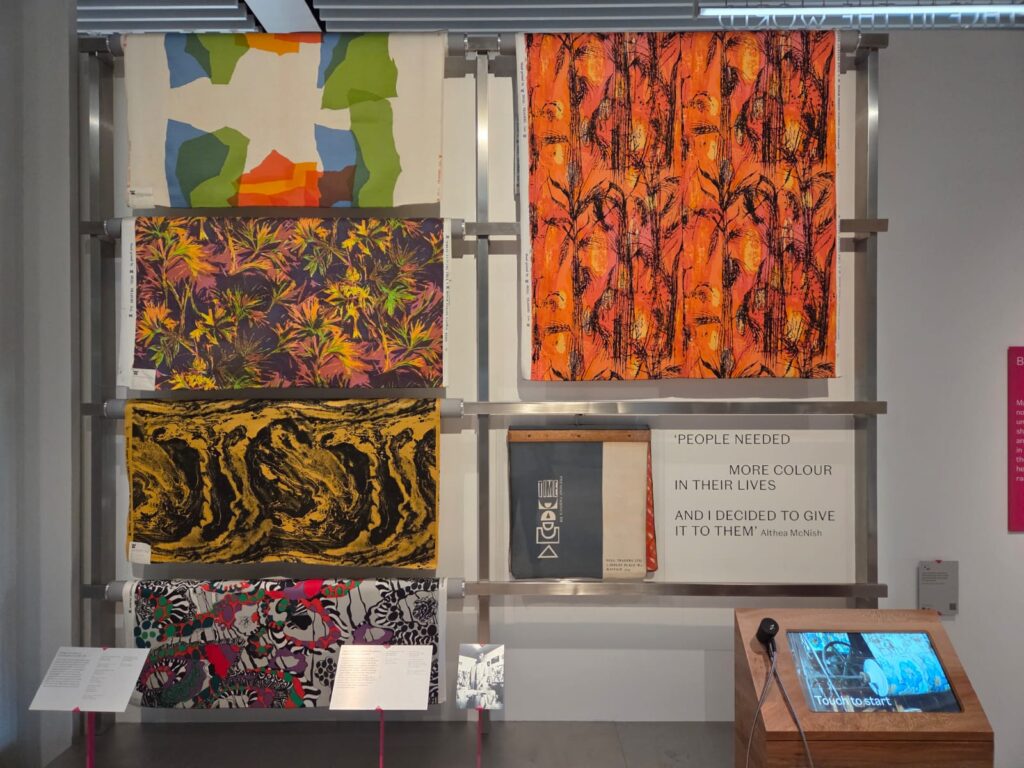
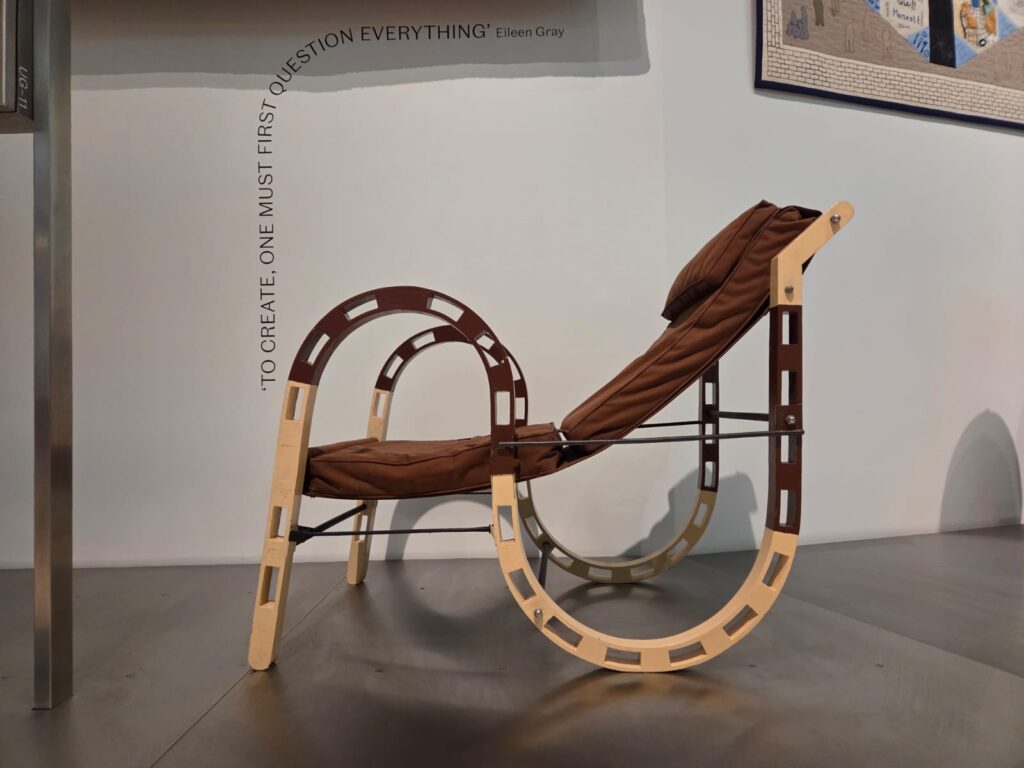
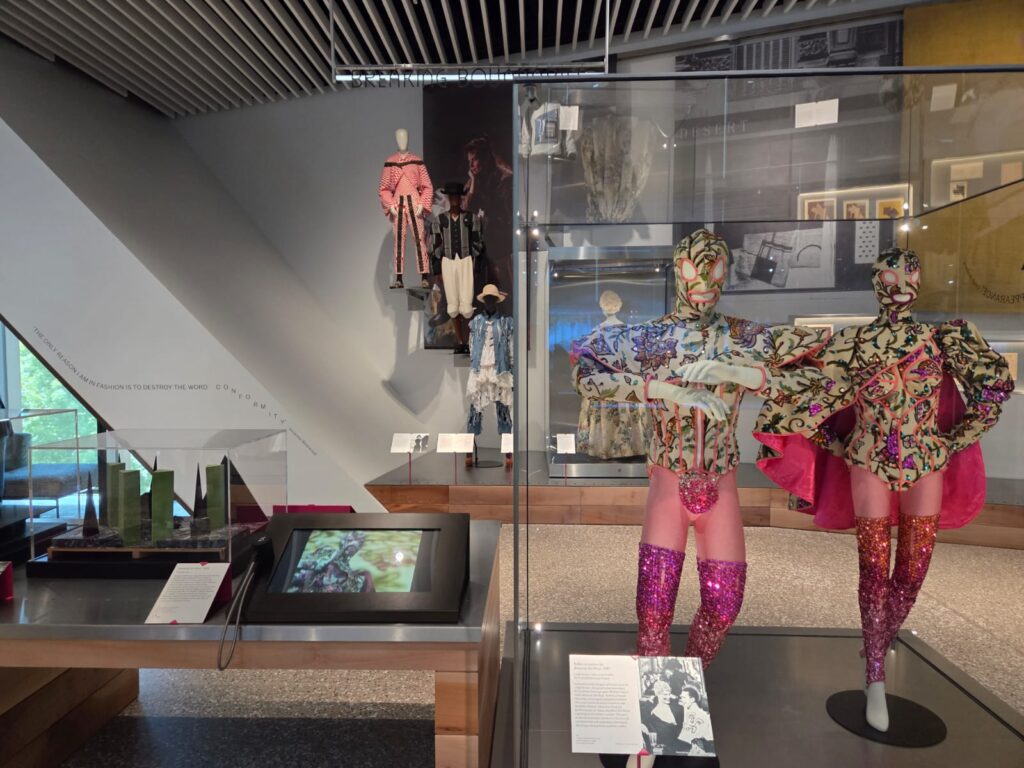
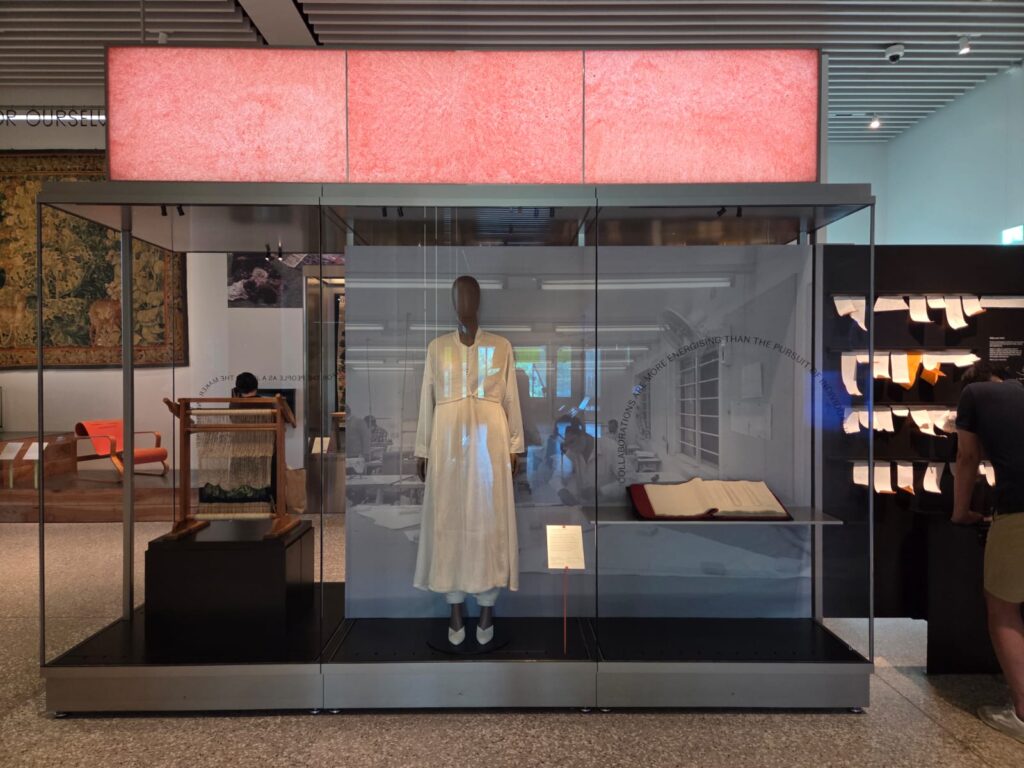
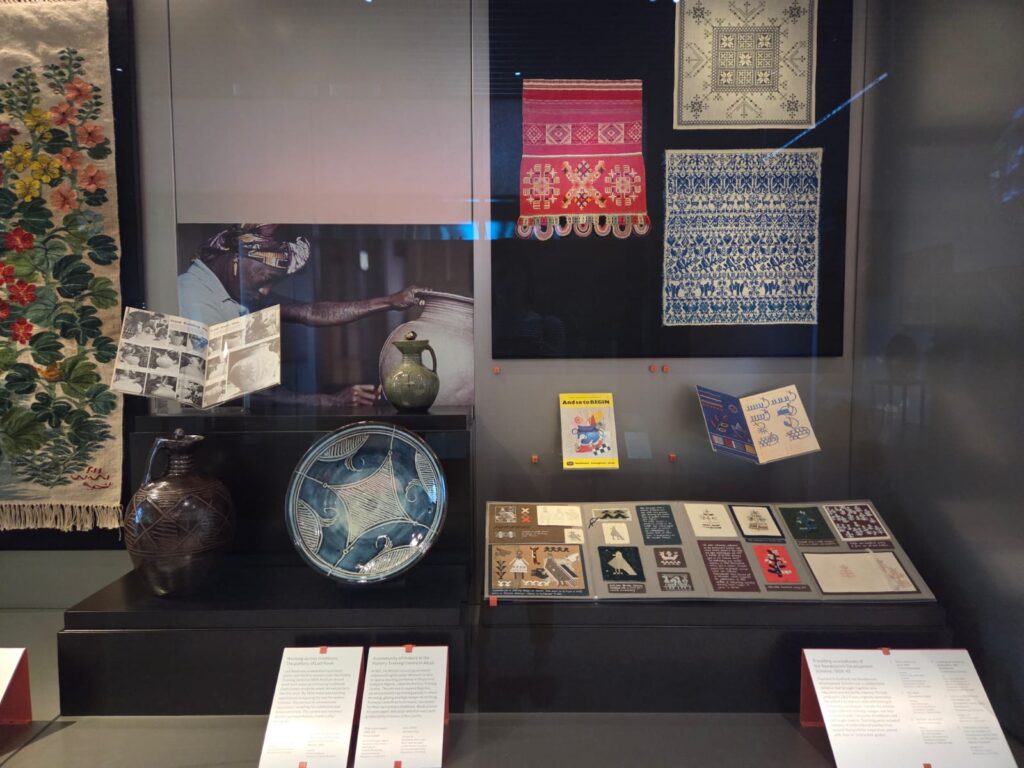
The two spaces over two floors is a good way to establish the non-hierarchical intention of the display. It doesn’t much matter which section you start with, or the path you take through them. This emphasis on personal meaning-making is definitely in-keeping with the stated aims of the project. Unexpected connections are what it is all about, with historic textiles next to contemporary fashion, a collection of historic pottery sherds below protest signs, and a whole range of different techniques and materials.
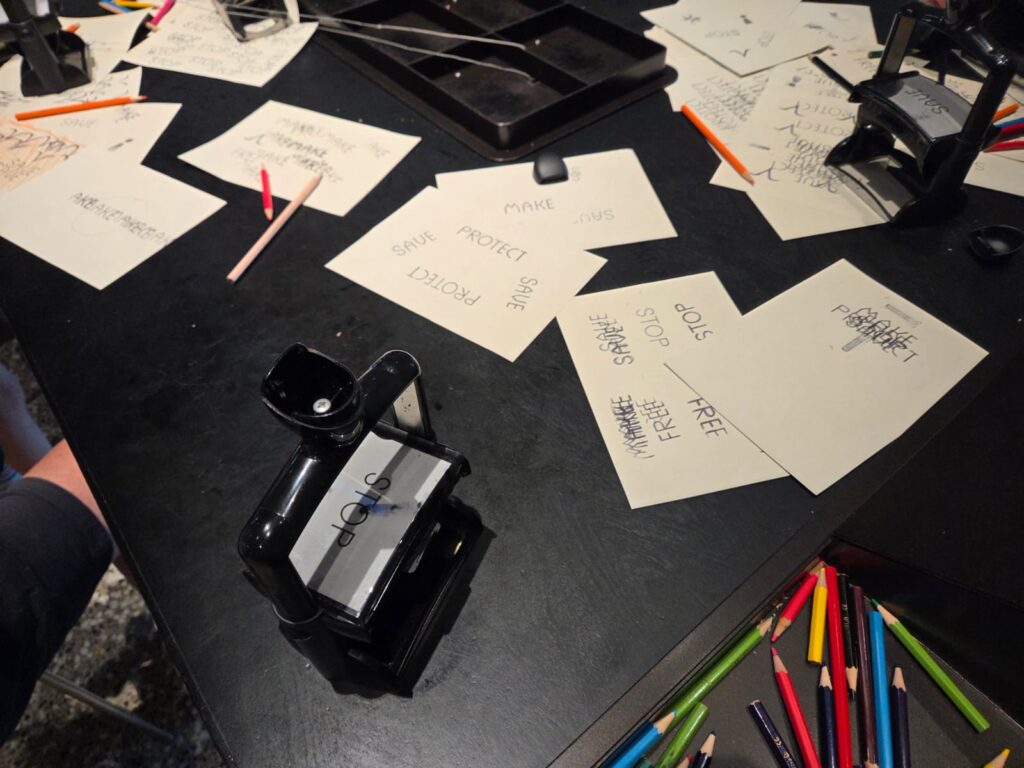
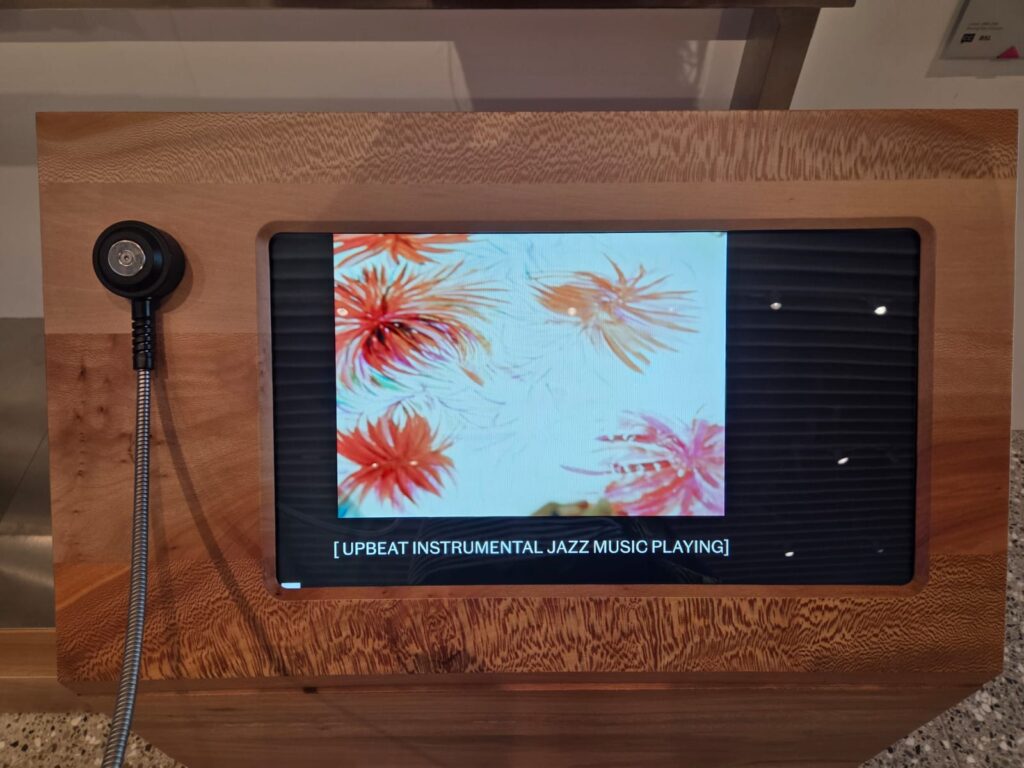
And, overall, this is a bright, engaging, multi-sensory display. There are a few places where visitors can get involved, using stamps to create a take-home artwork, building with blocks, or watching or listening to audiovisual materials.
Is It So Different From A Typical Museum?
I’m going to come right out and say it – I don’t believe so. Approaching from the uppermost of the two entrances, I would say there are the usual barriers to entry of a museum space. OK, it’s not a Neoclassical temple to culture where you have to walk up steps to enter. But I didn’t quite feel the architecture pulled me in, and when I entered the museum it took me a moment to get my bearings. I’m a confident museum-goer and don’t mind that, but for those who may already feel uncomfortable in a museum setting, that can be a real hurdle. There are visitor hosts stationed at the entrances to help you figure out where you’re going.
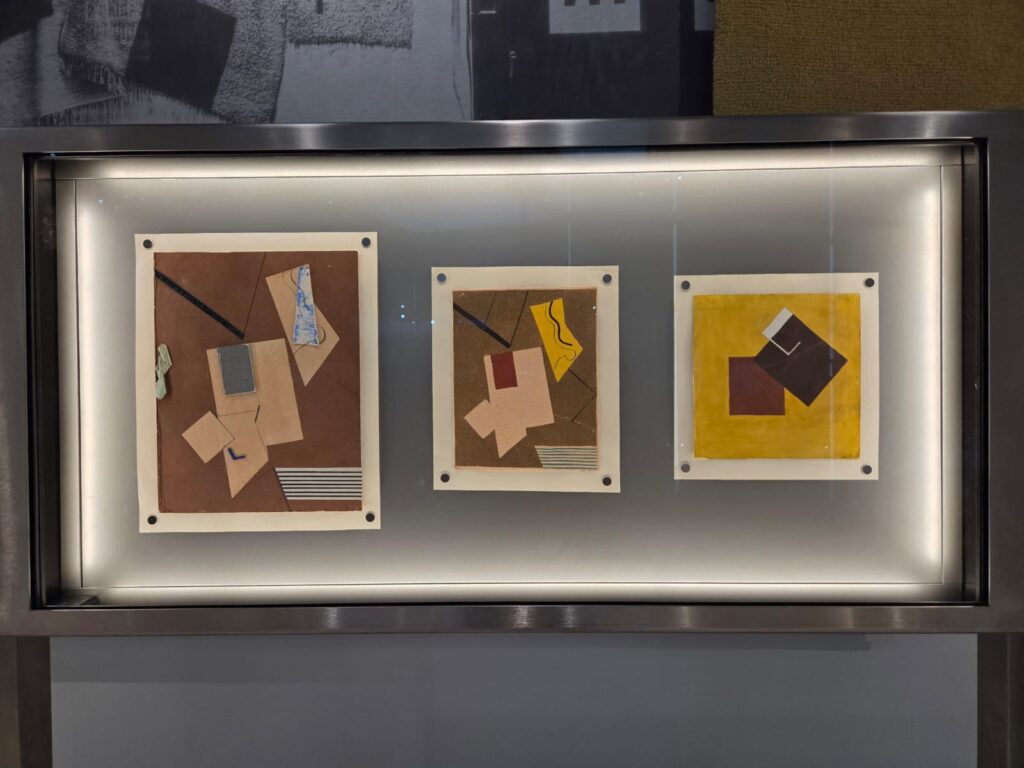
And inside, in Why We Make, I felt the displays were those of a high-quality, socially-engaged museum, but as for it being “a new kind of museum”, I don’t see what it is that makes that so. The V&A East team have absolutely collaborated (with local communities) on a broad selection of items, presented with as little curatorial interjection as possible, and representing different perspectives. The information is accessible, and touches on important issues like social justice, climate action, and wellbeing. But is that so different to other good museums? We’re still talking about objects in display cases, curated, with accompanying texts.
Jen McLachlan, V&A East Project Director, stated that this is “not just a museum, but a civic space for dialogue, discovery, and shared experience.” This is actually something I see at Sadler’s Wells East. A lot of times when I walk past there is an open, public dance session or class going on. It’s so much more inviting than the original Sadler’s Wells, and immediately more community-focused. The site of the V&A East is a little less good for foot traffic and thus casual visitors, but hopefully as it integrates even further into the neighbourhood, it fulfils that vision as a civic space.
V&A East: Final Thoughts
Do I judge too harshly? Probably. I expect that, actually, my perspective might shift when I finally visit the V&A East Storehouse and can see the two sites as complementary halves of a whole. I need to find time to head back out to Stratford and hope there’s not a queue for entry this time.
At the end of the day I think it’s about my own expectations as a museologist. When I hear that a new museum is positioning itself as not just a typical museum, I want it to be really radical. Let’s get back to some of those mid-century concepts like ecomuseums, or something more contemporary like radical decolonisation. In the context of a national museum – under more scrutiny and with different accountability/ies than smaller institutions – this probably is quite a departure for the V&A. Hopefully whatever they learn from their engagement with communities and local creatives benefits the whole V&A network.
As a visitor, I suspect I will be back for two reasons. To see future temporary exhibitions. And to visit the lovely cafe. Let’s remember, though – I am not one of the museum’s target audiences. I am not young people, I’m not part of East London communities, and I’m not someone who previously hasn’t felt comfortable in museum spaces. So if I’m just an occasional and incidental visitor, maybe that’s just fine!
Trending
If you see this after your page is loaded completely, leafletJS files are missing.